


Scintillator

Encyclopedia
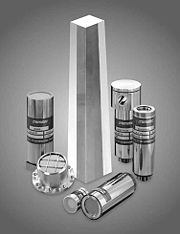

Scintillation (physics)
Scintillation is a flash of light produced in a transparent material by an ionization event. See scintillator and scintillation counter for practical applications.-Overview:...
—the property of luminescence
Luminescence
Luminescence is emission of light by a substance not resulting from heat; it is thus a form of cold body radiation. It can be caused by chemical reactions, electrical energy, subatomic motions, or stress on a crystal. This distinguishes luminescence from incandescence, which is light emitted by a...
when excited by ionizing radiation
Ionizing radiation
Ionizing radiation is radiation composed of particles that individually have sufficient energy to remove an electron from an atom or molecule. This ionization produces free radicals, which are atoms or molecules containing unpaired electrons...
. Luminescent materials, when struck by an incoming particle, absorb its energy and scintillate, i.e., reemit the absorbed energy in the form of light. Sometimes, the excited state is metastable
Metastability
Metastability describes the extended duration of certain equilibria acquired by complex systems when leaving their most stable state after an external action....
, so the relaxation back out of the excited state is delayed (necessitating anywhere from a few microseconds to hours depending on the material): the process then corresponds to either one of two phenomena, depending on the type of transition and hence the wavelength of the emitted optical photon: delayed fluorescence or phosphorescence
Phosphorescence
Phosphorescence is a specific type of photoluminescence related to fluorescence. Unlike fluorescence, a phosphorescent material does not immediately re-emit the radiation it absorbs. The slower time scales of the re-emission are associated with "forbidden" energy state transitions in quantum...
, also called after-glow.
A scintillation detector or scintillation counter
Scintillation counter
A scintillation counter measures ionizing radiation. The sensor, called a scintillator, consists of a transparent crystal, usually phosphor, plastic , or organic liquid that fluoresces when struck by ionizing radiation. A sensitive photomultiplier tube measures the light from the crystal...
is obtained when a scintillator is coupled to an electronic light sensor such as a photomultiplier tube
Photomultiplier
Photomultiplier tubes , members of the class of vacuum tubes, and more specifically phototubes, are extremely sensitive detectors of light in the ultraviolet, visible, and near-infrared ranges of the electromagnetic spectrum...
(PMT) or a photodiode
Photodiode
A photodiode is a type of photodetector capable of converting light into either current or voltage, depending upon the mode of operation.The common, traditional solar cell used to generateelectric solar power is a large area photodiode....
. PMTs absorb the light emitted by the scintillator and reemit it in the form of electrons via the photoelectric effect
Photoelectric effect
In the photoelectric effect, electrons are emitted from matter as a consequence of their absorption of energy from electromagnetic radiation of very short wavelength, such as visible or ultraviolet light. Electrons emitted in this manner may be referred to as photoelectrons...
. The subsequent multiplication of those electrons (sometimes called photo-electrons) results in an electrical pulse which can then be analyzed and yield meaningful information about the particle that originally struck the scintillator. Vacuum photodiodes are similar but do not amplify the signal while silicon photodiodes accomplish the same thing directly in the silicon.
The first device which used a scintillator was built in 1903 by Sir William Crookes
William Crookes
Sir William Crookes, OM, FRS was a British chemist and physicist who attended the Royal College of Chemistry, London, and worked on spectroscopy...
and used a ZnS
Zinc sulfide
Zinc sulfide is a inorganic compound with the formula ZnS. ZnS is the main form of zinc in nature, where it mainly occurs as the mineral sphalerite...
screen. The scintillations produced by the screen were visible to the naked eye if viewed by a microscope in a darkened room; the device was known as a spinthariscope
Spinthariscope
A Spinthariscope is a device for observing individual nuclear disintegrations caused by the interaction of ionizing radiation with a phosphor or scintillator.The spinthariscope was invented by William Crookes in 1903...
. The technique led to a number of important discoveries but was obviously tedious. Scintillators gained additional attention in 1944, when Curran
Samuel Curran
Sir Samuel Crowe Curran , FRS, FRSE, was a physicist and the first Principal and Vice-Chancellor of the University of Strathclyde - the first of the new technical universities in Britain....
and Baker replaced the naked eye measurement with the newly developed PMT. This was the birth of the modern scintillation detector.
Applications for scintillators:
Scintillators are used by the American government as Homeland Security radiation detectors. This application has a huge impact on Homeland security inspection.Scintillators can also be used in monitoring systems, neutron and high energy particle physics experiments, new energy resource exploration, X-ray security, nuclear cameras, computed tomography and gas exploration. CT scanners and gamma cameras in medical diagnostics are another way scintillators are used. A few more applications of scintillators are how they are used as screens in computer monitors and television sets. Nuclear material can be monitored using certain types of scintillators. Scintillators also generate light in fluorescent tubes.
Scintillation detectors are also used in the petroleum industry as detectors for Gamma Ray logs.
Implications for scintillator development
Resolution of gamma rays for 60Co & 137Cslinearity,
density,
speed,
transparency and
cost
Properties of scintillators
There are many desired properties of scintillators, such as high density, fast operation speed, low cost, radiation hardness, production capability and durability of operational parameters.High density reduces the material size of showers for high-energy γ-quanta and electrons. The range of Compton scattered photons for lower energy γ-rays is also decreased via high density materials. This results in high segmentation of the detector and leads to better spatial resolution. Usually high density materials have heavy ions in the lattice, significantly increasing the photo-fraction (~Z4). The increased photo-fraction is important for some applications such as positron emission tomography. High stopping power for electromagnetic component of the ionizing radiation needs greater photo-fraction; this allows for a compact detector.
High operating speed is needed for good resolution of spectra. Precision of time measurement with a scintillation detector is proportional to √(τ_sc ). Short decay times are important for the measurement of time intervals and for the operation in fast coincidence circuits. High density and fast response time can allow detection of rare events in particle physics.
Particle energy deposited in the material of a scintillator is proportional to the scintillator’s response. Charged particles, γ-quanta and ions have different slopes when their response is measured. Thus, scintillators could be used to identify various types of γ-quanta and particles in fluxes of mixed radiation.
Another consideration of scintillators is the cost of producing them. Most crystal scintillators require high-purity chemicals and sometimes rare-earth metals that are fairly expensive. Not only are the materials an expenditure, but many crystals require expensive furnaces and almost six months of growth and analyzing time. Currently, other scintillators are being researched for reduced production cost.
Several other properties are also desirable in a good detector scintillator: a low gamma output (i.e., a high efficiency for converting the energy of incident radiation into scintillation photons), transparency to its own scintillation light (for good light collection), efficient detection of the radiation being studied, a high stopping power
Stopping power (particle radiation)
In passing through matter, fast charged particles ionize the atoms or molecules which they encounter. Thus, the fast particles gradually lose energy in many small steps. Stopping power is defined as the average energy loss of the particle per unit path length, measured for example in MeV/cm...
, good linearity over a wide range of energy, a short rise time for fast timing applications (e.g., coincidence measurements), a short decay time to reduce detector dead-time and accommodate high event rates, emission in a spectral range matching the spectral sensitivity of existing PMTs (although wavelength shifter
Wavelength shifter
A wavelength shifter is a photofluorescent material that absorbs higher frequency photons and emits lower frequency photons. In most cases, the material absorbs one photon, and emits multiple lower-energy photons....
s can sometimes be used), an index of refraction near that of glass (≈1.5) to allow optimum coupling to the PMT window. Ruggedness and good behavior under high temperature may be desirable where resistance to vibration and high temperature is necessary (e.g., oil exploration). The practical choice of a scintillator material is usually a compromise among those properties to best fit a given application.
Among the properties listed above, the light output is the most important, as it affects both the efficiency and the resolution of the detector (the efficiency is the ratio of detected particles to the total number of particles impinging upon the detector; the energy resolution is the ratio of the full width at half maximum of a given energy peak to the peak position, usually expressed in %). The light output is a strong function of the type of incident particle or photon and of its energy, which therefore strongly influences the type of scintillation material to be used for a particular application. The presence of quenching effects
Quenching (fluorescence)
Quenching refers to any process which decreases the fluorescence intensity of a given substance. A variety of processes can result in quenching, such as excited state reactions, energy transfer, complex-formation and collisional quenching. As a consequence, quenching is often heavily dependent on...
results in reduced light output (i.e., reduced scintillation efficiency). Quenching refers to all radiationless deexcitation processes in which the excitation is degraded mainly to heat. The overall signal production efficiency of the detector, however, also depends on the quantum efficiency
Quantum efficiency
Quantum efficiency is a quantity defined for a photosensitive device such as photographic film or a charge-coupled device as the percentage of photons hitting the photoreactive surface that will produce an electron–hole pair. It is an accurate measurement of the device's electrical sensitivity to...
of the PMT (typically ~30% at peak), and on the efficiency of light transmission and collection (which depends on the type of reflector material covering the scintillator and light guides, the length/shape of the light guides, any light absorption, etc.). The light output is often quantified as a number of scintillation photons produced per keV of deposited energy. Typical numbers are (when the incident particle is an electron): ≈40 photons/keV for NaI(Tl)
Sodium iodide
Sodium iodide is a white, crystalline salt with chemical formula NaI used in radiation detection, treatment of iodine deficiency, and as a reactant in the Finkelstein reaction.-Uses:Sodium iodide is commonly used to treat and prevent iodine deficiency....
, ~10 photons/keV for plastic scintillators, and ~4 photons/keV for bismuth germanate
Bismuth germanate
Bismuth germanium oxide is an inorganic chemical compound with main use as a scintillator. It forms cubic crystals....
(BGO).
Scintillation detectors are generally assumed to be linear. This assumption is based on two requirements: (1) that the light output of the scintillator is proportional to the energy of the incident radiation; (2) that the electrical pulse produced by the photomultiplier tube is proportional to the emitted scintillation light. The linearity assumption is usually a good rough approximation, although deviations can occur (especially pronounced for particles heavier than the proton
Proton
The proton is a subatomic particle with the symbol or and a positive electric charge of 1 elementary charge. One or more protons are present in the nucleus of each atom, along with neutrons. The number of protons in each atom is its atomic number....
at low energies).
Resistance and good behavior under high-temperature, high-vibration environments is especially important for applications such as oil exploration (wireline logging, measurement while drilling). For most scintillators, light output depends on the temperature. This dependence can largely be ignored for room-temperature applications since it is usually weak. The dependence on the temperature is also weaker for organic scintillators than it is for inorganic crystals, such as ZnS(Ag)
Zinc sulfide
Zinc sulfide is a inorganic compound with the formula ZnS. ZnS is the main form of zinc in nature, where it mainly occurs as the mineral sphalerite...
or BGO. The coupled PMTs also exhibit temperature sensitivity, and can be damaged if submitted to mechanical shock. Hence, high temperature rugged PMTs should be used for high-temperature, high-vibration applications.
The time evolution of the number of emitted scintillation photons N in a single scintillation event can often be described by the linear superposition of one or two exponential decays. For two decays, we have the form:

where τf and τs are the fast (or prompt) and the slow (or delayed) decay constants.
Many scintillators are characterized by 2 time components: one fast (or prompt), the other slow (or delayed). While the fast component usually dominates, the relative amplitude A and B of the two components depend on the scintillating material. Both of these components can also be a function the energy loss dE/dx. In cases where this energy loss dependence is strong, the overall decay time constant varies with the type of incident particle. Such scintillators enable pulse shape discrimination, i.e., particle identification based on the decay characteristics of the PMT electric pulse. For instance, when BaF2
Barium fluoride
Barium fluoride is a chemical compound of barium and fluorine. It is a solid which can be a transparent crystal. It occurs in nature as the mineral frankdicksonite.-Structure:...
is used, γ rays typically excite the fast component, while α particles
Alpha particle
Alpha particles consist of two protons and two neutrons bound together into a particle identical to a helium nucleus, which is classically produced in the process of alpha decay, but may be produced also in other ways and given the same name...
excite the slow component: it is thus possible to identify them based on the decay time of the PMT signal.
Organic crystals
Organic scintillators are aromatic hydrocarbonAromatic hydrocarbon
An aromatic hydrocarbon or arene is a hydrocarbon with alternating double and single bonds between carbon atoms. The term 'aromatic' was assigned before the physical mechanism determining aromaticity was discovered, and was derived from the fact that many of the compounds have a sweet scent...
compounds which contain benzene
Benzene
Benzene is an organic chemical compound. It is composed of 6 carbon atoms in a ring, with 1 hydrogen atom attached to each carbon atom, with the molecular formula C6H6....
ring structures interlinked in various ways. Their luminescence typically decays within a few nanoseconds.
Some organic scintillators are pure crystals. The most common types are anthracene
Anthracene
Anthracene is a solid polycyclic aromatic hydrocarbon consisting of three fused benzene rings. It is a component of coal-tar. Anthracene is used in the production of the red dye alizarin and other dyes...
(C14H10, decay time ≈30 ns), stilbene
Stilbene
-Stilbene, is a diarylethene, i.e., a hydrocarbon consisting of a trans ethene double bond substituted with a phenyl group on both carbon atoms of the double bond. The name stilbene is derived from the Greek word stilbos, which means shining....
(C14H12, few ns decay time), and naphthalene
Naphthalene
Naphthalene is an organic compound with formula . It is a white crystalline solid with a characteristic odor that is detectable at concentrations as low as 0.08 ppm by mass. As an aromatic hydrocarbon, naphthalene's structure consists of a fused pair of benzene rings...
(C10H8, few ns decay time). They are very durable, but their response is anisotropic (which spoils energy resolution when the source is not collimated), and they cannot be easily machined, nor can they be grown in large sizes; hence they are not very often used. Anthracene has the highest light output of all organic scintillators and is therefore chosen as a reference: the light outputs of other scintillators are sometimes expressed as a percent of anthracene light.
Organic liquids
These are liquid solutions of one or more organic scintillators in an organic solvent. The typical solutes are fluors such as p-terphenylTerphenyl
Terphenyls are a group of closely related aromatic hydrocarbons. Also known as diphenylbenzenes or triphenyls, they consist of a central benzene ring substituted with two phenyl groups. The three isomers are ortho-terphenyl, meta-terphenyl, and para-terphenyl. Commercial grade terphenyl is...
(C18H14), PBD (C20H14N2O), butyl PBD
Butyl PBD
Butyl PBD or b-PBD is a fluorescent organic compound used in the Liquid Scintillator Neutrino Detector at Los Alamos National Laboratory, USA....
(C24H22N2O), PPO (C15H11NO), and wavelength shifter
Wavelength shifter
A wavelength shifter is a photofluorescent material that absorbs higher frequency photons and emits lower frequency photons. In most cases, the material absorbs one photon, and emits multiple lower-energy photons....
such as POPOP
POPOP
POPOP or 1,4-bis benzene is a scintillator. It is used as a wavelength shifter , which means that it converts shorter wavelength light to longer wavelength light. Its output spectrum peaks at 410nm, which is violet. POPOP is used in both solid and liquid organic scintillators....
(C24H16N2O). The most widely used solvents are toluene
Toluene
Toluene, formerly known as toluol, is a clear, water-insoluble liquid with the typical smell of paint thinners. It is a mono-substituted benzene derivative, i.e., one in which a single hydrogen atom from the benzene molecule has been replaced by a univalent group, in this case CH3.It is an aromatic...
, xylene
Xylene
Xylene encompasses three isomers of dimethylbenzene. The isomers are distinguished by the designations ortho- , meta- , and para- , which specify to which carbon atoms the two methyl groups are attached...
, benzene
Benzene
Benzene is an organic chemical compound. It is composed of 6 carbon atoms in a ring, with 1 hydrogen atom attached to each carbon atom, with the molecular formula C6H6....
, phenylcyclohexane, triethylbenzene, and decalin
Decahydronaphthalene
Decalin , a bicyclic organic compound, is an industrial solvent. A colorless liquid with an aromatic odor, it is used as a solvent for many resins or fuel additive. It is the saturated analog of naphthalene and can be prepared from it by hydrogenation in a fused state in the presence of a catalyst...
. Liquid scintillators are easily loaded with other additives such as wavelength shifters to match the spectral sensitivity range of a particular PMT, or 10B
Boron
Boron is the chemical element with atomic number 5 and the chemical symbol B. Boron is a metalloid. Because boron is not produced by stellar nucleosynthesis, it is a low-abundance element in both the solar system and the Earth's crust. However, boron is concentrated on Earth by the...
to increase the neutron detection
Neutron detection
Neutron detection is the effective detection of neutrons entering a well-positioned detector. There are two key aspects to effective neutron detection: hardware and software. Detection hardware refers to the kind of neutron detector used and to the electronics used in the detection setup...
efficiency of the scintillation counter
Scintillation counter
A scintillation counter measures ionizing radiation. The sensor, called a scintillator, consists of a transparent crystal, usually phosphor, plastic , or organic liquid that fluoresces when struck by ionizing radiation. A sensitive photomultiplier tube measures the light from the crystal...
itself (since 10B has a high interaction cross section with thermal neutrons). For many liquids, dissolved oxygen
Oxygen
Oxygen is the element with atomic number 8 and represented by the symbol O. Its name derives from the Greek roots ὀξύς and -γενής , because at the time of naming, it was mistakenly thought that all acids required oxygen in their composition...
can act as a quenching agent and lead to reduced light output, hence the necessity to seal the solution in an oxygen-free, air-tight enclosure.
Plastic scintillators
The term "plastic scintillator" typically refers to a scintillating material in which the primary fluorescent emitter, called a fluor, is suspended in the base, a solid polymer matrix. While this combination is typically accomplished though the dissolution of the fluor prior to bulk polymerization, the fluor is sometimes associated with the polymer directly, either covalently or through coordination, as is the case with many Li6 plastic scintillators. Polyethylene naphthalatePolyethylene naphthalate
Polyethylene naphthalate Polyethylene naphthalate (PEN) Polyethylene naphthalate (PEN) (Poly(ethylene 2,6-naphthalate) is a polyester with good barrier properties (even better than Polyethylene terephthalate). Because it provides a very good oxygen barrier, it is particularly well-suited for...
has been found to exhibit scintillation by itself without any additives and is expected to replace existing plastic scintillators due to higher performance and lower price. The advantages of plastic scintillators include fairly high light output and a relatively quick signal, with a decay time between 2-4 nanoseconds, but perhaps the biggest advantage of plastic scintillators is their ability to be shaped, through the use of molds or other means, into almost any desired form with what is often a high degree of durability.
Bases
The most common bases are the aromatic plastics, polymers with aromatic rings as pendant groups along the polymer backbone, amongst which polyvinyltoluene (PVT) and polystyrene (PS) are the most prominent. While the base does fluoresce in the presence of ionizing radiation, its low yield and negligible transparency to its own emission make the use of fluors necessary in the construction of a practical scintillator.Aside from the aromatic plastics, the most common base is polymethylmethacrylate (PMMA), which carries two advantages over many other bases: high ultraviolet and visible light transparency and mechanical properties and higher durability with respect to brittleness. The lack of fluorescence associated with PMMA is often compensated through the addition of an aromatic co-solvent, usually naphthalene. A plastic scintillators bassed on PMMA in this way boasts transparency to its own radiation, helping to ensure uniform collection of light.
Other common bases include polyvinyl xylene (PVX) polymethyl, 2,4-dimethyl, 2,4,5-trimethyl styrenes, polyvinyl diphenyl, polyvinyl naphthalene, polyvinyl tetrahydronaphthalene, and copolymers of these and other bases.
Fluors
Also known as luminophors, these compounds absorb the scintillation of the base and then emit at larger wavelength, effectively converting the ultraviolet radiation of the base into the more easily transferred visible light. Further increasing the attenuation length can be accomplished through the addition of a second fluor, referred to as a spectrum shifter or converter, often resulting in the emission of blue or green light.Common fluors include polyphenyl hydrocarbons, oxazole and oxadiazole aryls, especially, n-terphenyl (PPP), 2,5-diphenyloxazole (PPO), 1,4-di-(5-phenyl-2-oxazolyl)-benzene (POPOP), 2-phenyl-5-(4-biphenylyl)-1,3,4-oxadiazole (PBD), and 2-(4’-tert-butylphenyl)-5-(4’’-biphenylyl)-1,3,4-oxadiazole (B-PBD).
Inorganic crystals

Furnace
A furnace is a device used for heating. The name derives from Latin fornax, oven.In American English and Canadian English, the term furnace on its own is generally used to describe household heating systems based on a central furnace , and sometimes as a synonym for kiln, a device used in the...
s, for example, alkali metal
Alkali metal
The alkali metals are a series of chemical elements in the periodic table. In the modern IUPAC nomenclature, the alkali metals comprise the group 1 elements, along with hydrogen. The alkali metals are lithium , sodium , potassium , rubidium , caesium , and francium...
halide
Halide
A halide is a binary compound, of which one part is a halogen atom and the other part is an element or radical that is less electronegative than the halogen, to make a fluoride, chloride, bromide, iodide, or astatide compound. Many salts are halides...
s, often with a small amount of activator
Activator
Activator may mean:* Activator , a DNA-binding protein that regulates one or more genes by increasing the rate of transcription* Activator , a type of effector that increases the rate of enzyme mediated reactions...
impurity. The most widely used is NaI(Tl) (sodium iodide
Sodium iodide
Sodium iodide is a white, crystalline salt with chemical formula NaI used in radiation detection, treatment of iodine deficiency, and as a reactant in the Finkelstein reaction.-Uses:Sodium iodide is commonly used to treat and prevent iodine deficiency....
doped with thallium
Thallium
Thallium is a chemical element with the symbol Tl and atomic number 81. This soft gray poor metal resembles tin but discolors when exposed to air. The two chemists William Crookes and Claude-Auguste Lamy discovered thallium independently in 1861 by the newly developed method of flame spectroscopy...
). Other inorganic alkali halide crystals are: CsI(Tl), CsI(Na), CsI
Caesium iodide
Caesium iodide is an ionic compound often used as the input phosphor of an x-ray image intensifier tube found in fluoroscopy equipment....
(pure), CsF
Caesium fluoride
Caesium fluoride , is an inorganic compound usually encountered as a hygroscopic white solid. It is more soluble and more readily dissociated than sodium fluoride or potassium fluoride. It is available in anhydrous form, and if water has been absorbed it is easy to dry by heating at 100 °C for...
, KI(Tl)
Potassium iodide
Potassium iodide is an inorganic compound with the chemical formula KI. This white salt is the most commercially significant iodide compound, with approximately 37,000 tons produced in 1985. It is less hygroscopic than sodium iodide, making it easier to work with...
, LiI(Eu)
Lithium iodide
Lithium iodide, or LiI, is a compound of lithium and iodine. When exposed to air, it becomes yellow in color, due to the oxidation of iodide to iodine.-Applications:...
. Some non-alkali crystals include: BaF2
Barium fluoride
Barium fluoride is a chemical compound of barium and fluorine. It is a solid which can be a transparent crystal. It occurs in nature as the mineral frankdicksonite.-Structure:...
, CaF2(Eu)
Calcium fluoride
Calcium fluoride is the inorganic compound with the formula CaF2. This ionic compound of calcium and fluorine occurs naturally as the mineral fluorite . It is the source of most of the world's fluorine. This insoluble solid adopts a cubic structure wherein calcium is coordinated to eight fluoride...
, ZnS(Ag)
Zinc sulfide
Zinc sulfide is a inorganic compound with the formula ZnS. ZnS is the main form of zinc in nature, where it mainly occurs as the mineral sphalerite...
, CaWO4, CdWO4
Cadmium tungstate
Cadmium tungstate , the cadmium salt of tungstic acid, is a dense, chemically inert solid which is used as a scintillation crystal to detect gamma rays. It has density of 7.9 g/cm3 and melting point of 1325 °C. It is toxic if inhaled or swallowed. Its crystals are transparent, colorless,...
, YAG(Ce) (Y3Al5O12(Ce)), GSO, LSO. (For more examples, see also phosphors).
Newly developed products include LaCl3(Ce), lanthanum chloride doped with Cerium, as well as a Cerium-doped lanthanum bromide, LaBr3(Ce). They are both very hygroscopic (i.e., damaged when exposed to moisture in the air) but offer excellent light output and energy resolution (63 photons/keV γ for LaBr3(Ce) versus 38 photons/keV γ for NaI(Tl)), a fast response (16 ns for LaBr3(Ce) versus 250 ns for NaI(Tl)), excellent linearity, and a very stable light output over a wide range of temperatures. In addition LaBr3(Ce) offers a higher stopping power for γ rays (density of 5.08 g/cm3 versus 3.67 g/cm3 for NaI(Tl)). LYSO (Lu1.8Y0.2SiO5(Ce)) has an even higher density (7.1 g/cm3, comparable to BGO
Bismuth germanate
Bismuth germanium oxide is an inorganic chemical compound with main use as a scintillator. It forms cubic crystals....
), is non-hygroscopic, and has a higher light output than BGO (32 photons/keV γ), in addition to being rather fast (41 ns decay time versus 300 ns for BGO).
A disadvantage of some inorganic crystals, e.g., NaI, is their hygroscopicity, a property which requires them to be housed in an air-tight enclosure to protect them from moisture. CsI(Tl) and BaF2 are only slightly hygroscopic and do not usually need protection. CsF, NaI(Tl), LaCl3(Ce), LaBr3(Ce) are hygroscopic, while BGO, CaF2(Eu), LYSO, and YAG(Ce) are not.
Inorganic crystals can be cut to small sizes and arranged in an array configuration so as to provide position sensitivity. Such arrays are often used in medical physics or security applications to detect X-rays or γ rays: high-Z, high density materials (e.g. LYSO, BGO) are typically preferred for this type of applications.
Scintillation in inorganic crystals is typically slower than in organic ones, ranging typically from 250 ns for NaI(Tl) to 1000 ns for CsI(Tl). Exceptions are CsF (~5 ns), fast BaF2 (0.7 ns; the slow component is at 630 ns), as well as the newer products (LaCl3(Ce), 28 ns; LaBr3(Ce), 16 ns; LYSO, 41 ns).
Gaseous scintillators
Gaseous scintillators consist of nitrogenNitrogen
Nitrogen is a chemical element that has the symbol N, atomic number of 7 and atomic mass 14.00674 u. Elemental nitrogen is a colorless, odorless, tasteless, and mostly inert diatomic gas at standard conditions, constituting 78.08% by volume of Earth's atmosphere...
and the noble gas
Noble gas
The noble gases are a group of chemical elements with very similar properties: under standard conditions, they are all odorless, colorless, monatomic gases, with very low chemical reactivity...
es helium
Helium
Helium is the chemical element with atomic number 2 and an atomic weight of 4.002602, which is represented by the symbol He. It is a colorless, odorless, tasteless, non-toxic, inert, monatomic gas that heads the noble gas group in the periodic table...
, argon
Argon
Argon is a chemical element represented by the symbol Ar. Argon has atomic number 18 and is the third element in group 18 of the periodic table . Argon is the third most common gas in the Earth's atmosphere, at 0.93%, making it more common than carbon dioxide...
, krypton
Krypton
Krypton is a chemical element with the symbol Kr and atomic number 36. It is a member of Group 18 and Period 4 elements. A colorless, odorless, tasteless noble gas, krypton occurs in trace amounts in the atmosphere, is isolated by fractionally distilling liquified air, and is often used with other...
, and xenon
Xenon
Xenon is a chemical element with the symbol Xe and atomic number 54. The element name is pronounced or . A colorless, heavy, odorless noble gas, xenon occurs in the Earth's atmosphere in trace amounts...
, with helium and xenon receiving the most attention. The scintillation process is due to the de-excitation of single atoms excited by the passage of an incoming particle. This de-excitation is very rapid (~1 ns), so the detector response is quite fast. Coating the walls of the container with a wavelength shifter
Wavelength shifter
A wavelength shifter is a photofluorescent material that absorbs higher frequency photons and emits lower frequency photons. In most cases, the material absorbs one photon, and emits multiple lower-energy photons....
is generally necessary as those gases typically emit in the ultraviolet
Ultraviolet
Ultraviolet light is electromagnetic radiation with a wavelength shorter than that of visible light, but longer than X-rays, in the range 10 nm to 400 nm, and energies from 3 eV to 124 eV...
and PMTs respond better to the visible blue-green region. In nuclear physics, gaseous detectors have been used to detect fission fragments or heavy charged particle
Charged particle
In physics, a charged particle is a particle with an electric charge. It may be either a subatomic particle or an ion. A collection of charged particles, or even a gas containing a proportion of charged particles, is called a plasma, which is called the fourth state of matter because its...
s.
Glasses
The most common glassGlass
Glass is an amorphous solid material. Glasses are typically brittle and optically transparent.The most familiar type of glass, used for centuries in windows and drinking vessels, is soda-lime glass, composed of about 75% silica plus Na2O, CaO, and several minor additives...
scintillators are cerium-activated lithium or boron silicates
Borosilicate glass
Borosilicate glass is a type of glass with the main glass-forming constituents silica and boron oxide. Borosilicate glasses are known for having very low coefficients of thermal expansion , making them resistant to thermal shock, more so than any other common glass...
. Since both lithium and boron have large neutron cross-section
Neutron cross-section
In nuclear and particle physics, the concept of a neutron cross section is used to express the likelihood of interaction between an incident neutron and a target nucleus. In conjunction with the neutron flux, it enables the calculation of the reaction rate, for example to derive the thermal power...
s, glass detectors are particularly well suited to the detection of thermal (slow) neutrons. Lithium is more widely used than boron since it has a greater energy release on capturing a neutron and therefore greater light output. Glass scintillators are however sensitive to electrons and γ rays as well (pulse height discrimination can be used for particle identification). Being very robust, they are also well-suited to harsh environmental conditions. Their response time is ≈10 ns, their light output is however low, typically ≈30% of that of anthracene.
Organic scintillators
Transitions made by the free valence electronValence electron
In chemistry, valence electrons are the electrons of an atom that can participate in the formation of chemical bonds with other atoms. Valence electrons are the "own" electrons, present in the free neutral atom, that combine with valence electrons of other atoms to form chemical bonds. In a single...
s of the molecule
Molecule
A molecule is an electrically neutral group of at least two atoms held together by covalent chemical bonds. Molecules are distinguished from ions by their electrical charge...
s are responsible for the production of scintillation light in organic crystals. These electrons are associated with the whole molecule rather than any particular atom and occupy the so-called -molecular orbital
Molecular orbital
In chemistry, a molecular orbital is a mathematical function describing the wave-like behavior of an electron in a molecule. This function can be used to calculate chemical and physical properties such as the probability of finding an electron in any specific region. The term "orbital" was first...
s. The ground state
Ground state
The ground state of a quantum mechanical system is its lowest-energy state; the energy of the ground state is known as the zero-point energy of the system. An excited state is any state with energy greater than the ground state...
S0 is a singlet state above which are the excited singlet states (S*, S**,…), the lowest triplet state
Triplet state
A spin triplet is a set of three quantum states of a system, each with total spin S = 1 . The system could consist of a single elementary massive spin 1 particle such as a W or Z boson, or be some multiparticle state with total spin angular momentum of one.In physics, spin is the angular momentum...
(T0), and its excited levels (T*, T**,…). A fine structure
Fine structure
In atomic physics, the fine structure describes the splitting of the spectral lines of atoms due to first order relativistic corrections.The gross structure of line spectra is the line spectra predicted by non-relativistic electrons with no spin. For a hydrogenic atom, the gross structure energy...
corresponding to molecular vibration
Molecular vibration
A molecular vibration occurs when atoms in a molecule are in periodic motion while the molecule as a whole has constant translational and rotational motion...
al modes is associated with each of those electron levels. The energy spacing between electron levels is ≈1 eV; the spacing between the vibrational levels is about 1/10 of that for electron levels.
An incoming particle can excite
Excited state
Excitation is an elevation in energy level above an arbitrary baseline energy state. In physics there is a specific technical definition for energy level which is often associated with an atom being excited to an excited state....
either an electron level or a vibrational level. The singlet excitations immediately decay (< 10 ps) to the S* state without the emission of radiation (internal degradation). The S* state then decays to the ground state S0 (typically to one of the vibrational levels above S0) by emitting a scintillation photon
Photon
In physics, a photon is an elementary particle, the quantum of the electromagnetic interaction and the basic unit of light and all other forms of electromagnetic radiation. It is also the force carrier for the electromagnetic force...
. This is the prompt component or fluorescence
Fluorescence
Fluorescence is the emission of light by a substance that has absorbed light or other electromagnetic radiation of a different wavelength. It is a form of luminescence. In most cases, emitted light has a longer wavelength, and therefore lower energy, than the absorbed radiation...
. The transparency of the scintillator to the emitted photon is due to the fact that the energy of the photon is less than that required for a S* → S0 transition (the transition is usually being to a vibrational level above S0).
When one of triplet states gets excited, it immediately decays to the T0 state with no emission of radiation (internal degradation). Since the T0 → S0 transition is very improbable, the T0 state instead decays by interacting with another T0 molecule:

and leaves one of the molecules in the S* state, which then decays to S0 with the release of a scintillation photon. Since the T0-T0 interaction takes time, the scintillation light is delayed: this is the slow or delayed component (corresponding to delayed fluorescence). Sometimes, a direct T0 → S0 transition occurs (also delayed), and corresponds to the phenomenon of phosphorescence
Phosphorescence
Phosphorescence is a specific type of photoluminescence related to fluorescence. Unlike fluorescence, a phosphorescent material does not immediately re-emit the radiation it absorbs. The slower time scales of the re-emission are associated with "forbidden" energy state transitions in quantum...
(note that the difference between delayed-fluorescence and phosphorescence lies in the difference in the wavelength
Wavelength
In physics, the wavelength of a sinusoidal wave is the spatial period of the wave—the distance over which the wave's shape repeats.It is usually determined by considering the distance between consecutive corresponding points of the same phase, such as crests, troughs, or zero crossings, and is a...
s of the emitted optical photon in a S* → S0 transition versus a T0 → S0 transition).
Organic scintillators can be dissolved in an organic solvent to form either a liquid or plastic scintillator. The scintillation process is the same as described for organic crystals (above); what differs is the mechanism of energy absorption: energy is first absorbed by the solvent, then passed onto the scintillation solute
Solution
In chemistry, a solution is a homogeneous mixture composed of only one phase. In such a mixture, a solute is dissolved in another substance, known as a solvent. The solvent does the dissolving.- Types of solutions :...
(the details of the transfer are not clearly understood).
Inorganic scintillators
The scintillation process in inorganic materials is due to the electronic band structureElectronic band structure
In solid-state physics, the electronic band structure of a solid describes those ranges of energy an electron is "forbidden" or "allowed" to have. Band structure derives from the diffraction of the quantum mechanical electron waves in a periodic crystal lattice with a specific crystal system and...
found in crystal
Crystal
A crystal or crystalline solid is a solid material whose constituent atoms, molecules, or ions are arranged in an orderly repeating pattern extending in all three spatial dimensions. The scientific study of crystals and crystal formation is known as crystallography...
s and is not molecular in nature as is the case with organic scintillators. An incoming particle can excite an electron from the valence band
Valence band
In solids, the valence band is the highest range of electron energies in which electrons are normally present at absolute zero temperature....
to either the conduction band
Conduction band
In the solid-state physics field of semiconductors and insulators, the conduction band is the range of electron energies, higher than that of the valence band, sufficient to free an electron from binding with its individual atom and allow it to move freely within the atomic lattice of the material...
or the exciton
Exciton
An exciton is a bound state of an electron and hole which are attracted to each other by the electrostatic Coulomb force. It is an electrically neutral quasiparticle that exists in insulators, semiconductors and some liquids...
band (located just below the conduction band and separated from the valence band by an energy gap; see picture). This leaves an associated hole
Electron hole
An electron hole is the conceptual and mathematical opposite of an electron, useful in the study of physics, chemistry, and electrical engineering. The concept describes the lack of an electron at a position where one could exist in an atom or atomic lattice...
behind, in the valence band. Impurities create electronic levels in the forbidden gap. The excitons are loosely bound electron-hole pairs which wander through the crystal lattice until they are captured as a whole by impurity centers. The latter then rapidly de-excite by emitting scintillation light (fast component). The activator
Activator (phosphor)
In phosphors and scintillators, the activator is the element added as dopant to the crystal of the material to create desired type of nonhomogeneities....
impurities are typically chosen so that the emitted light is in the visible range or near-UV where photomultiplier
Photomultiplier
Photomultiplier tubes , members of the class of vacuum tubes, and more specifically phototubes, are extremely sensitive detectors of light in the ultraviolet, visible, and near-infrared ranges of the electromagnetic spectrum...
s are effective. The holes associated with electrons in the conduction band are independent from the latter. Those holes and electrons are captured successively by impurity centers exciting certain metastable states not accessible to the excitons. The delayed de-excitation of those metastable impurity states again results in scintillation light (slow component).
BGO is a pure inorganic scintillator without any activator impurity. There, the scintillation process is due to an optical transition of the Bi3+
Bismuth
Bismuth is a chemical element with symbol Bi and atomic number 83. Bismuth, a trivalent poor metal, chemically resembles arsenic and antimony. Elemental bismuth may occur naturally uncombined, although its sulfide and oxide form important commercial ores. The free element is 86% as dense as lead...
ion, a major constituent of the crystal. A similar process exists in CdWO4
Cadmium tungstate
Cadmium tungstate , the cadmium salt of tungstic acid, is a dense, chemically inert solid which is used as a scintillation crystal to detect gamma rays. It has density of 7.9 g/cm3 and melting point of 1325 °C. It is toxic if inhaled or swallowed. Its crystals are transparent, colorless,...
.
Gases
In gases, the scintillation process is due to the de-excitation of single atoms excited by the passage of an incoming particle (a very rapid process: ≈1 ns).Heavy ions
Scintillation counters are usually not ideal for the detection of heavy ionHeavy ion
Heavy ion refers to an ionized atom which is usually heavier than helium. Heavy-ion physics is devoted to the study of extremely hot nuclear matter and the collective effects appearing in such systems, differing from particle physics, which studies the interactions between elementary particles...
s for three reasons:
- the very high ionizing power of heavy ions induces quenching effects which result in a reduced light output (e.g. for equal energies, a protonProtonThe proton is a subatomic particle with the symbol or and a positive electric charge of 1 elementary charge. One or more protons are present in the nucleus of each atom, along with neutrons. The number of protons in each atom is its atomic number....
will produce 1/4 to 1/2 the light of on electronElectronThe electron is a subatomic particle with a negative elementary electric charge. It has no known components or substructure; in other words, it is generally thought to be an elementary particle. An electron has a mass that is approximately 1/1836 that of the proton...
, while alphasAlpha particleAlpha particles consist of two protons and two neutrons bound together into a particle identical to a helium nucleus, which is classically produced in the process of alpha decay, but may be produced also in other ways and given the same name...
will produce only about 1/10 the light; - the high dE/dx also results in a reduction of the fast component relative to the slow component, increasing detector dead-time;
- strong non-linearities are observed in the detector response especially at lower energies.
The reduction in light output is stronger for organics than for inorganic crystals. Therefore, where needed, inorganic crystals, e.g. CsI(Tl), ZnS(Ag) (typically used in thin sheets as α-particle monitors) , CaF2(Eu), should be preferred to organic materials. Typical applications are α-survey instruments
Survey meter
Survey meters are portable radiation detection and measurement instruments used to check personnel, equipment, and facilities for radioactive contamination, or check external or ambient ionizing radiation fields...
, dosimetry
Dosimetry
Radiation dosimetry is the measurement and calculation of the absorbed dose in matter and tissue resulting from the exposure to indirect and direct ionizing radiation...
instruments, and heavy ion dE/dx detectors. Gaseous scintillators have also been used in nuclear physics
Nuclear physics
Nuclear physics is the field of physics that studies the building blocks and interactions of atomic nuclei. The most commonly known applications of nuclear physics are nuclear power generation and nuclear weapons technology, but the research has provided application in many fields, including those...
experiments.
Electrons
The detection efficiency for electronElectron
The electron is a subatomic particle with a negative elementary electric charge. It has no known components or substructure; in other words, it is generally thought to be an elementary particle. An electron has a mass that is approximately 1/1836 that of the proton...
s is essentially 100% for most scintillators. But because electrons can make large angle scattering
Scattering
Scattering is a general physical process where some forms of radiation, such as light, sound, or moving particles, are forced to deviate from a straight trajectory by one or more localized non-uniformities in the medium through which they pass. In conventional use, this also includes deviation of...
s (sometimes backscatter
Backscatter
In physics, backscatter is the reflection of waves, particles, or signals back to the direction they came from. It is a diffuse reflection due to scattering, as opposed to specular reflection like a mirror...
ings), they can exit the detector without depositing their full energy in it. The back-scattering is a rapidly increasing function of the atomic number Z of the scintillator material. Organic scintillators, having a lower Z than inorganic crystals, are therefore best suited for the detection of low-energy (< 10 MeV) beta particle
Beta particle
Beta particles are high-energy, high-speed electrons or positrons emitted by certain types of radioactive nuclei such as potassium-40. The beta particles emitted are a form of ionizing radiation also known as beta rays. The production of beta particles is termed beta decay...
s. The situation is different for high energy electrons: since they mostly lose their energy by bremsstrahlung
Bremsstrahlung
Bremsstrahlung is electromagnetic radiation produced by the deceleration of a charged particle when deflected by another charged particle, typically an electron by an atomic nucleus. The moving particle loses kinetic energy, which is converted into a photon because energy is conserved. The term is...
at the higher energies, a higher-Z material is better suited for the detection of the bremsstrahlung photon and the production of the electromagnetic shower
Particle shower
In particle physics, a shower is a cascade of secondary particles produced as the result of a high-energy particle interacting with dense matter. The incoming particle interacts, producing multiple new particles with lesser energy; each of these then interacts in the same way, a process that...
which it can induce.
Gamma rays
High-ZAtomic number
In chemistry and physics, the atomic number is the number of protons found in the nucleus of an atom and therefore identical to the charge number of the nucleus. It is conventionally represented by the symbol Z. The atomic number uniquely identifies a chemical element...
materials, e.g. inorganic crystals, are best suited for the detection of gamma ray
Gamma ray
Gamma radiation, also known as gamma rays or hyphenated as gamma-rays and denoted as γ, is electromagnetic radiation of high frequency . Gamma rays are usually naturally produced on Earth by decay of high energy states in atomic nuclei...
s. The three basic ways that a gamma ray interacts with matter are: the photoelectric effect
Photoelectric effect
In the photoelectric effect, electrons are emitted from matter as a consequence of their absorption of energy from electromagnetic radiation of very short wavelength, such as visible or ultraviolet light. Electrons emitted in this manner may be referred to as photoelectrons...
, Compton scattering
Compton scattering
In physics, Compton scattering is a type of scattering that X-rays and gamma rays undergo in matter. The inelastic scattering of photons in matter results in a decrease in energy of an X-ray or gamma ray photon, called the Compton effect...
, and pair production
Pair production
Pair production refers to the creation of an elementary particle and its antiparticle, usually from a photon . For example an electron and its antiparticle, the positron, may be created...
. The photon is completely absorbed in photoelectric effect and pair production, while only partial energy is deposited in any given Compton scattering. The cross section
Cross section (physics)
A cross section is the effective area which governs the probability of some scattering or absorption event. Together with particle density and path length, it can be used to predict the total scattering probability via the Beer-Lambert law....
for the photoelectric process is proportional to Z5, that for pair production proportional to Z2, whereas Compton scattering goes roughly as Z. A high-Z material therefore favors the former two processes, enabling the detection of the full energy of the gamma ray.
Neutrons
Since the neutronNeutron
The neutron is a subatomic hadron particle which has the symbol or , no net electric charge and a mass slightly larger than that of a proton. With the exception of hydrogen, nuclei of atoms consist of protons and neutrons, which are therefore collectively referred to as nucleons. The number of...
is not charged it does not interact via the Coulomb force and therefore does not ionize the scintillation material. It must first transfer some or all of its energy via the strong force to a charged atomic nucleus
Atomic nucleus
The nucleus is the very dense region consisting of protons and neutrons at the center of an atom. It was discovered in 1911, as a result of Ernest Rutherford's interpretation of the famous 1909 Rutherford experiment performed by Hans Geiger and Ernest Marsden, under the direction of Rutherford. The...
. The positively charged nucleus then produces ionization
Ionization
Ionization is the process of converting an atom or molecule into an ion by adding or removing charged particles such as electrons or other ions. This is often confused with dissociation. A substance may dissociate without necessarily producing ions. As an example, the molecules of table sugar...
. Fast neutrons (generally >0.5 MeV ) primarily rely on the recoil
Atomic Recoil
Atomic recoil is the result of the interaction of an atom with an energetic elementary particle, when the momentum of the interacting particle is transferred to the atom as whole without altering non-translational degrees of freedom of the atom...
proton
Proton
The proton is a subatomic particle with the symbol or and a positive electric charge of 1 elementary charge. One or more protons are present in the nucleus of each atom, along with neutrons. The number of protons in each atom is its atomic number....
in (n,p) reactions; materials rich in hydrogen
Hydrogen
Hydrogen is the chemical element with atomic number 1. It is represented by the symbol H. With an average atomic weight of , hydrogen is the lightest and most abundant chemical element, constituting roughly 75% of the Universe's chemical elemental mass. Stars in the main sequence are mainly...
, e.g. plastic scintillators, are therefore best suited for their detection. Slow neutrons rely on nuclear reaction
Nuclear reaction
In nuclear physics and nuclear chemistry, a nuclear reaction is semantically considered to be the process in which two nuclei, or else a nucleus of an atom and a subatomic particle from outside the atom, collide to produce products different from the initial particles...
s such as the (n,γ) or (n,α) reactions, to produce ionization. Their mean free path
Mean free path
In physics, the mean free path is the average distance covered by a moving particle between successive impacts which modify its direction or energy or other particle properties.-Derivation:...
is therefore quite large unless the scintillator material is loaded with elements having a high cross section
Nuclear cross section
The nuclear cross section of a nucleus is used to characterize the probability that a nuclear reaction will occur. The concept of a nuclear cross section can be quantified physically in terms of "characteristic area" where a larger area means a larger probability of interaction...
for these nuclear reactions such as 6Li or 10B. Materials such as LiI(Eu) or glass
Glass
Glass is an amorphous solid material. Glasses are typically brittle and optically transparent.The most familiar type of glass, used for centuries in windows and drinking vessels, is soda-lime glass, composed of about 75% silica plus Na2O, CaO, and several minor additives...
silicate
Silicate
A silicate is a compound containing a silicon bearing anion. The great majority of silicates are oxides, but hexafluorosilicate and other anions are also included. This article focuses mainly on the Si-O anions. Silicates comprise the majority of the earth's crust, as well as the other...
s are therefore particularly good for the detection of slow (thermal) neutrons.
List of inorganic scintillators
The following is a list of commonly used inorganic crystals:- BaF2 or barium fluorideBarium fluorideBarium fluoride is a chemical compound of barium and fluorine. It is a solid which can be a transparent crystal. It occurs in nature as the mineral frankdicksonite.-Structure:...
: BaF2 contains a very fast and a slow component. The fast scintillation light is emitted in the UV band (220 nm) and has a 0.7 ns decay time (smallest decay time for any scintillator), while the slow scintillation light is emitted at longer wavelengths (310 nm) and has a 630 ns decay time. It is used in for fast timing applications, as well as applications for which pulse shape discrimination is needed. BaF2 is not hygroscopic. - CaF2(Eu) or calcium fluorideCalcium fluorideCalcium fluoride is the inorganic compound with the formula CaF2. This ionic compound of calcium and fluorine occurs naturally as the mineral fluorite . It is the source of most of the world's fluorine. This insoluble solid adopts a cubic structure wherein calcium is coordinated to eight fluoride...
doped with europiumEuropiumEuropium is a chemical element with the symbol Eu and atomic number 63. It is named after the continent of Europe. It is a moderately hard silvery metal which readily oxidizes in air and water...
: The material is not hygroscopic, has a 940 ns decay time, and is relatively low-Z. The latter property makes it ideal for detection of low energy β particles because of low backscattering, but not very suitable for γ detection. Thin layers of CaF2(Eu) have also been used with a thicker slab of NaI(Tl) to make phoswiches capable of discriminating between α, β, and γ particles. - BGO or bismuth germanateBismuth germanateBismuth germanium oxide is an inorganic chemical compound with main use as a scintillator. It forms cubic crystals....
: Bismuth germanate has a higher stopping power, but a lower optical yield than NaI(Tl). It is often used in coincidence detectors for detecting back-to-back gamma rays emitted upon positronPositronThe positron or antielectron is the antiparticle or the antimatter counterpart of the electron. The positron has an electric charge of +1e, a spin of ½, and has the same mass as an electron...
annihilationAnnihilationAnnihilation is defined as "total destruction" or "complete obliteration" of an object; having its root in the Latin nihil . A literal translation is "to make into nothing"....
in positron emission tomographyPositron emission tomographyPositron emission tomography is nuclear medicine imaging technique that produces a three-dimensional image or picture of functional processes in the body. The system detects pairs of gamma rays emitted indirectly by a positron-emitting radionuclide , which is introduced into the body on a...
machines. - CdWO4 or cadmium tungstateCadmium tungstateCadmium tungstate , the cadmium salt of tungstic acid, is a dense, chemically inert solid which is used as a scintillation crystal to detect gamma rays. It has density of 7.9 g/cm3 and melting point of 1325 °C. It is toxic if inhaled or swallowed. Its crystals are transparent, colorless,...
: a high density, high atomic number scintillator with a very long decay time (14 μs), and relatively high light output (about 1/3 of that of NaI(Tl)). CdWO4 is routinely used for X-ray detection (CT scanners). Having very little 228Th and 226Ra contamination, it is also suitable for low activity counting applications. - CaWO4 or calcium tungstate
- CsI(Tl) or cesium iodide doped with thalliumThalliumThallium is a chemical element with the symbol Tl and atomic number 81. This soft gray poor metal resembles tin but discolors when exposed to air. The two chemists William Crookes and Claude-Auguste Lamy discovered thallium independently in 1861 by the newly developed method of flame spectroscopy...
: these crystals are one of the brightest scintillators. The maximum wavelength of light emission is rather high (550 nm), however, making CsI(Tl) best coupled to red-enhanced PMTs or to photo-diodes. CsI(Tl) is only slightly hygroscopic and does not usually require an air-tight enclosure. - CsI(Na) or cesium iodide doped with sodium: the crystal is less bright than CsI(Tl), but comparable in light output to NaI(Tl). The wavelength of maximum emission is at 420 nm, well matched to the photocathode sensitivity of bialkali PMTs. It has a slightly shorter decay time than CsI(Tl) (630 ns versus 1000 ns for CsI(Tl)). CsI(Na) is hygroscopic and needs an air-tight enclosure for protection against moisture.
- CsI: undoped cesium iodide emits predominantly at 315 nm, is only slightly hygroscopic, and has a very short decay time (16 ns), making it suitable for fast timing applications. The light output is quite low, however, and very sensitive to variations in temperature.
- LaBr3(Ce) (or lanthanum bromide doped with cerium): a better (novel) alternative to NaI(Tl); denser, much faster, offers superior energy resolution due to its very high light output. Moreover, the light output is very stable and quite high over a very wide range of temperatures, making it particularly attractive for high temperature applications. LaBr3(Ce) is very hygroscopic.
- LaCl3(Ce) (or lanthanum chloride doped with ceriumCeriumCerium is a chemical element with the symbol Ce and atomic number 58. It is a soft, silvery, ductile metal which easily oxidizes in air. Cerium was named after the dwarf planet . Cerium is the most abundant of the rare earth elements, making up about 0.0046% of the Earth's crust by weight...
): very fast, high light output. LaCl3(Ce) is a cheaper alternative to LaBr3(Ce). It is also quite hygroscopic. - PbWO4 or Lead tungstate: due to its high-Z, PbWO4 is suitable for applications where a high stopping power is required (e.g. γ ray detection).
- LuI3 or lutetium iodide
- LSO or lutetium oxyorthosilicate (Lu2SiO5): used in positron emission tomographyPositron emission tomographyPositron emission tomography is nuclear medicine imaging technique that produces a three-dimensional image or picture of functional processes in the body. The system detects pairs of gamma rays emitted indirectly by a positron-emitting radionuclide , which is introduced into the body on a...
because it exhibits properties similar to bismuth germanate (BGO), but with a higher light yield. Its only disadvantage is the intrinsic background from the beta decayBeta decayIn nuclear physics, beta decay is a type of radioactive decay in which a beta particle is emitted from an atom. There are two types of beta decay: beta minus and beta plus. In the case of beta decay that produces an electron emission, it is referred to as beta minus , while in the case of a...
of natural 176Lu. - LYSO (Lu1.8Y0.2SiO5(Ce)): comparable in density to BGO, but much faster and with much higher light output; excellent for medical imaging applications. LYSO is non-hygroscopic.
- NaI(Tl) or sodium iodideSodium iodideSodium iodide is a white, crystalline salt with chemical formula NaI used in radiation detection, treatment of iodine deficiency, and as a reactant in the Finkelstein reaction.-Uses:Sodium iodide is commonly used to treat and prevent iodine deficiency....
doped with thalliumThalliumThallium is a chemical element with the symbol Tl and atomic number 81. This soft gray poor metal resembles tin but discolors when exposed to air. The two chemists William Crookes and Claude-Auguste Lamy discovered thallium independently in 1861 by the newly developed method of flame spectroscopy...
: NaI(Tl) is by far the most widely used scintillator material. It is available in single crystal form or the more rugged polycrystalline form (used in high vibration environments, e.g. wireline logging in the oil industry). Other applications include nuclear medicine, basic research, environmental monitoring, and aerial surveys. NaI(Tl) is very hygroscopic and needs to be housed in an air-tight enclosure. - YAG(Ce) or yttrium aluminum garnet: YAG(Ce) is non-hygroscopic. The wavelength of maximum emission is at 550 nm, well-matched to red-resistive PMTs or photo-diodes. It is relatively fast (70 ns decay time). Its light output is about 1/3 of that of NaI(Tl). The material exhibits some properties that make it particularly attractive for electron microscopy applications (e.g. high electron conversion efficiency, good resolution, mechanical ruggedness and long lifetime).
- ZnS(Ag) or zinc sulfideZinc sulfideZinc sulfide is a inorganic compound with the formula ZnS. ZnS is the main form of zinc in nature, where it mainly occurs as the mineral sphalerite...
: ZnS(Ag) is one of the older inorganic scintillators (the first experiment making use of a scintillator by Sir William CrookesWilliam CrookesSir William Crookes, OM, FRS was a British chemist and physicist who attended the Royal College of Chemistry, London, and worked on spectroscopy...
(1903) involved a ZnS screen). It is only available as a polycrystalline powder, however. Its use is therefore limited to thin screens used primarily for α particle detection. - ZnWO4 or zinc tungstate
See also
- Gamma spectroscopyGamma spectroscopyGamma-ray spectroscopy is the quantitative study of the energy spectra of gamma-ray sources, both nuclear laboratory, geochemical, and astrophysical. Gamma rays are the highest-energy form of electromagnetic radiation, being physically exactly like all other forms except for higher photon energy...
- Liquid scintillation countingLiquid scintillation countingLiquid scintillation counting is a standard laboratory method in the life-sciences for measuring radiation from beta-emitting nuclides. Scintillating materials are also used in differently constructed "counters" in many other fields....
- Scintillation counterScintillation counterA scintillation counter measures ionizing radiation. The sensor, called a scintillator, consists of a transparent crystal, usually phosphor, plastic , or organic liquid that fluoresces when struck by ionizing radiation. A sensitive photomultiplier tube measures the light from the crystal...
- Scintillating bolometerScintillating bolometerA scintillating bolometer is a scientific instrument used in the search for dark matter. It works by simultaneously measuring both the light pulse and heat pulse generated by a particle interaction within its internal scintillator crystal....
External links
- Crystal Clear Collaboration at CERNCERNThe European Organization for Nuclear Research , known as CERN , is an international organization whose purpose is to operate the world's largest particle physics laboratory, which is situated in the northwest suburbs of Geneva on the Franco–Swiss border...
- Gamma Ray and Neutron Spectrometer
- Scintillation crystals and their general characteristics
- Scintillation Properties, from Lawrence Berkeley National LaboratoryLawrence Berkeley National LaboratoryThe Lawrence Berkeley National Laboratory , is a U.S. Department of Energy national laboratory conducting unclassified scientific research. It is located on the grounds of the University of California, Berkeley, in the Berkeley Hills above the central campus...