

Same-sex marriage in Canada

Encyclopedia
On July 20, 2005, Canada became the fourth country in the world and the first country in the Americas
to legalize same-sex marriage nationwide with the enactment of the Civil Marriage Act
which provided a gender-neutral marriage definition. Court decisions, starting in 2003, each already legalized same-sex marriage
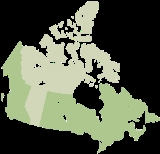
in eight out of ten provinces
and one of three territories, whose residents comprised about 90% of Canada
's population. Before passage of the Act, more than 3,000 same-sex couples had already married in those areas. Most legal benefits commonly associated with marriage
had been extended to cohabiting same-sex couples since 1999.
The Civil Marriage Act
was introduced by Prime Minister Paul Martin's
Liberal
government in the Canadian House of Commons
on February 1, 2005 as Bill C-38. It was passed by the House of Commons on June 28, 2005, by the Senate
on July 19, 2005, and it received Royal Assent
the following day. On December 7, 2006, the House of Commons effectively reaffirmed the legislation by a vote of 175 to 123, defeating a Conservative government motion to examine the matter again. This was the third vote supporting same-sex marriage taken by three Parliaments under three Prime Ministers in three different years.
Note that in some of these cases, the marriage was in fact legal at an earlier date (for example, the Ontario ruling held that marriages performed in January 2001 were legal when performed), but the legality was questioned. As of the given dates, the legality was authoritatively established.
The decision by the Ontario government to recognize the marriage that took place in Toronto, Ontario, on January 14, 2001, makes Canada the first country in the world to have a same-sex marriage (the Netherlands and Belgium, which legalized same-sex marriage before Canada, had their first in April 2001 and January 2003, respectively).
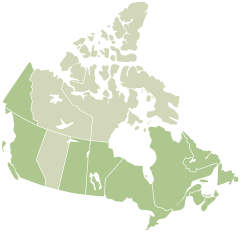 The status of marriages for same-sex couples created in these jurisdictions existed in somewhat of an interim legal capacity
. According to the Constitution of Canada
, the definition of marriage is the exclusive responsibility of the federal government—this interpretation was upheld by a December 9, 2004 opinion of the Supreme Court of Canada
(Re Same-Sex Marriage
). Until July 20, 2005, the federal government had not yet passed a law redefining marriage to conform to recent provincial court decisions. Until the passage of Bill C-38, the previous definition of marriage was binding in the four jurisdictions where courts had not yet ruled it unconstitutional, but void in the nine jurisdictions where it had been successfully challenged. Given the Supreme Court ruling, the role of precedent in Canadian law
, and the overall legal climate, it was very likely that any challenges in the remaining four jurisdictions to result in same-sex marriage becoming legal there as well. Indeed, federal lawyers had ceased to contest such cases and only Alberta's
Conservative provincial government remained officially opposed. Alberta Premier Ralph Klein threatened to invoke the notwithstanding clause
of the Canadian Charter of Rights and Freedoms
, which many law experts argued would not work. Later, Ralph Klein, now former premier of Alberta, changed his mind; Alberta now allows same-sex marriage providing that government officials or marriage commissioners who oppose same-sex marriage can refuse to do their jobs.
On June 17, 2003, Liberal Prime Minister Jean Chretien announced that the Government would present the bill, which would allow same-sex couples equal rights to marry.
A draft of what would become Bill C-38 was released on July 17, 2003, by the Liberal Minister of Justice, Martin Cauchon
. Before introducing it into Parliament, the federal Cabinet submitted the bill as a reference
to the Supreme Court (Re Same-Sex Marriage
), asking the court to rule on whether limiting marriage to heterosexual couples was consistent with the Canadian Charter of Rights and Freedoms and if same-sex civil union
s are an acceptable alternative. On December 9, 2004, the Supreme Court of Canada
ruled that the marriage of same-sex couples is constitutional, that the federal government has the sole authority to amend the definition of marriage, and the Charter's protection of freedom of religion
grants religious institutions the right to refuse to perform the marriage ceremonies for same-sex couples.
Following the Supreme Court's decision, Liberal Justice Minister
Irwin Cotler
, introduced Bill C-38 on February 1, 2005, to legalize marriage between persons of the same sex across Canada. The Paul Martin government supported the bill but allowed a free vote by its backbench
MPs in the House of Commons. Defeat of the bill in Parliament would have continued the status quo and probably incremental legalization, jurisdiction by jurisdiction, via court challenges. This trend could have been reversed only through Parliament passing a new law that explicitly restricted marriage to opposite sex couples notwithstanding
the protection of equality rights
afforded by the Canadian Charter of Rights and Freedoms
or by amending the Canadian constitution
by inserting the clause "marriage is defined as being between a man and a woman", as was recommended by several conservative religious groups and politicians. Given the composition of the House of Commons at the time, such a measure would have been very unlikely to pass. Conservative Alberta Premier Ralph Klein proposed putting the question to the public at large via a national referendum, but his suggestion was rejected by all four party leaders.
In 1999, the Supreme Court of Canada
ruled in M. v. H.
[1999] 2 S.C.R. 3 that same-sex couples in Canada were entitled to receive many of the financial and legal benefits commonly associated with marriage. However this decision stopped short of giving them the right to full legal marriage. Most laws which affect couples are within provincial rather than federal jurisdiction. As a result, rights varied somewhat from province to province.
In 2002 and 2003, court decisions in the superior courts of three provinces then required the federal government to implement full same-sex marriage within the next two years:
The federal Liberal government had sought leave to appeal the constitutionality of these rulings to the Supreme Court of Canada
, though as above the government in June 2003 indicated that they would stop appealing.
. Consequently, the City of Toronto
announced that the city clerk would begin issuing marriage licences to same-sex couples. The next day, the Ontario attorney general
announced that his government would comply with the ruling.
The court also ruled that two couples who had previously had a wedding ceremony in the Metropolitan Community Church of Toronto
using an ancient common-law procedure called the reading of the bann
s would be considered legally married.
On September 13, 2004, the Ontario Court of Appeal declared the Divorce Act also unconstitutional for excluding same-sex marriages. It ordered same-sex marriages read into that act, permitting the plaintiffs, a lesbian couple, to divorce
.
 On March 19, 2004, the Quebec Court of Appeals ruled similarly to the Ontario and B.C. courts, upholding Hendricks and Leboeuf v. Quebec and ordering that it take effect immediately. The couple who brought the suit, Michael Hendricks and René Leboeuf
, immediately sought a marriage licence; the usual 20-day waiting period was waived, and they were wed on April 1 at the Palais de justice de Montréal
.
Given the populations of Ontario, British Columbia, and Quebec, more than two-thirds of Canada's population lived in provinces where same-sex marriage had been legalized after the Quebec decision.
On August 16, 2004, federal justice minister Irwin Cotler indicated that the federal government would no longer resist court cases to implement same-sex marriage in the provinces or territories.
requesting that they be issued marriage licences. Both the provincial and federal governments had made it known that they would not oppose the court bid. One of the couples, Chris Vogel and Richard North, had legally sought marriage in a high-profile case in 1974 but had been denied.
brought suit in Boutilier v. Canada (A.G) and Nova Scotia (A.G) against the provincial government requesting that it issue same-sex marriage licences. On September 24, 2004, Justice Heather Robertson of the Nova Scotia Supreme Court
ruled the then-current law unconstitutional. Neither the federal nor the provincial governments opposed the ruling.
for the recognition of their marriage in a case that was heard by the Saskatchewan Court of Queen's Bench
in chambers on November 3, 2004. On 5 November 2004, the judge ruled that excluding same-sex couples from marriage violated the Charter's right to equality and that the common-law definition was discriminatory, thereby bringing same-sex marriage to Saskatchewan.
recognize same-sex marriage. As with the previous decisions, the provincial government did not oppose the suit; moreover, the federal government actually supported it. The case went to trial on December 20 and the next day, Mr. Justice Derek Green ordered the provincial government to begin issuing marriage licences to same-sex couples, an order with which the provincial government announced it would comply.
The Progressive Conservative premier of New Brunswick
, Bernard Lord
, who personally opposed same-sex marriage, pledged to follow a directive to provide for same-sex marriages from the courts or from Parliament.
, had previously said that the government would not contest such a lawsuit. The case was to be heard on May 27 but ended when the federal government legalized same-sex marriage.
to reverse its position on the issue in recent years.
One recent study by Mark W. Lehman suggests that between 1997 and 2004, Canadian public opinion on legalizing same-sex marriage underwent a dramatic shift: moving from minority-support to majority support and that this support was the result of a significant shift in positive feelings towards gays and lesbians
.
The first bill to legalize same-sex marriage was a private member's bill
tabled in the House of Commons by New Democratic MP Svend Robinson
on March 25, 1998. Like most private members' bills it did not progress past first reading, and was reintroduced in several subsequent Parliaments.
In 1999, the House of Commons overwhelmingly passed a resolution to re-affirm the definition of marriage as "the union of one man and one woman to the exclusion of all others". The following year this definition of marriage was included in the revised Bill C-23, the Modernization of Benefits and Obligations Act 2000, which continued to bar same-sex couples from full marriage rights.
In early 2003, the issue once again resurfaced, and the House of Commons Standing Committee on Justice and Human Rights
proceeded to undertake a formal study of same-sex marriage, including a cross-country series of public hearings. Just after the Ontario court decision, it voted to recommend that the federal government not appeal the ruling. *Proceedings of the Standing Committee on Justice and Human Rights during the same-sex unions hearings]
Civil status is of provincial jurisdiction in Canada. However, the definition of marriage is a federal law. On June 17, 2003, then Prime Minister Chrétien announced that the government would not appeal the Ontario ruling, and that his government would introduce legislation to recognize same-sex marriage but protect the rights of churches to decide which marriages they would solemnize.
A draft of the bill was issued on 17 July. It read:
The draft bill was subsequently referred to the Supreme Court; see below.
On 16 September 2003, a motion was brought to Parliament by the Canadian Alliance
(now the Conservative Party) to once again reaffirm the heterosexual definition of marriage. The same language that had been passed in 1999 was brought to a free vote, with members asked to vote for or against the 1999 definition of marriage as "the union of one man and one woman to the exclusion of all others." Motions are not legislatively binding in Canada, and are mostly done for symbolic purposes. The September vote was extremely divisive, however. Prime Minister Chrétien reversed his previous stance and voted against the motion, as did Paul Martin
(who later became Prime Minister) and many other prominent Liberals. Several Liberals retained their original stance, however, and thus the vote was not defined purely along party lines. Controversially, over 30 members of the House did not attend the vote, the majority of whom were Liberals who had voted against legalizing same-sex marriage in 1999. It was speculated that they had ignored the vote on the wishes of Chrétien, who did not want to have the symbolic importance of the moment undermined by his own party. In the end, the motion was narrowly rejected by a vote of 137-132.
, essentially asking it to review the bill's constitutionality before it is introduced. The reference
as originally posed by Prime Minister Chrétien asked three questions:
Prime Minister Paul Martin
later added a fourth in January 2004:
The addition of a fourth question considerably delayed the opening of the court reference until well after the June 2004 general election, raising accusations of stalling. The consultative process was held in the autumn of 2004.
In its hearings that began in October 2004, the Supreme Court of Canada accused the government of using the court for other goals when the Government declined to appeal rulings that altered the definition of marriage in several provinces.
"Justice Ian Binnie said it 'may not fulfil any useful purpose' to examine traditional marriage all over again, 'given the policy decision of the government'".
The Supreme Court of Canada ruled that the government has the authority to amend the definition of marriage, but did not rule on whether or not such a change is required by the equality provisions of the Canadian Charter of Rights and Freedoms
. The Court stated that such a ruling is not necessary because the federal government had accepted the rulings of provincial courts to the effect that the change was required. The Court also ruled that given freedom of religion in the Charter of Rights, and wording of provincial human rights codes, it was highly unlikely that religious institutions could be compelled to perform same-sex marriages, though because solemnization of marriage is a matter for provincial governments, the proposed Bill could not actually guarantee such a protections.
The Parliamentary bill caused rifts in the House of Commons, especially among the governing Liberals
. Many Liberal MPs indicated that they would oppose the government's position in favour of same-sex marriage at a free vote. The majority of each of the Liberal Party, New Democratic Party, and Bloc Québécois voted in favour of the bill; the majority of the Conservative Party voted against the bill.
In 2000, Alberta
had amended its Marriage Act to define marriage as being between a man and a woman. The law included a notwithstanding clause
in an attempt to protect the amendment from being invalidated under the Charter. However, the amendment was invalid since, under the Canadian constitution
, the definition of marriage is a federal right.
Complicating matters, Conservative Party leader Stephen Harper
indicated that a Tory government would work to restore the prohibition on same-sex marriage if Parliament voted to do so in a free vote.
Following the court decision on December 9, Premier Klein suggested that a national referendum
be held on same-sex marriage, a measure Prime Minister Martin rejected.
The bill passed second reading on May 4 and third reading on June 28, with votes of 164-137 and 158-133, respectively. It then moved to the Senate
, and received its first reading on June 29. Debate was launched on July 4, and a Liberal closure
motion limited debate on the bill to only four hours. Second reading and committing the bill occurred on July 6, with a vote of 43-12. The Senate passed Bill C-38 on third reading by a margin of 47 to 21 on July 19, 2005. It received Royal Assent, at the hand of the Rt. Hon. Beverley McLachlin
(in her capacity as the Deputy of the Governor General of Canada), on July 20, 2005.
, led by Stephen Harper
, won a minority government
in the federal election on 23 January 2006
. Harper had campaigned on the promise of holding a free vote
on a motion to re-open the debate on same-sex marriage. The motion would re-open the same-sex marriage debate, but did not prescribe restoring the "traditional" definition of marriage.
A news report from CTV on May 31, 2006, showed that a growing number of Conservatives were wary about re-opening the debate over same-sex marriage. One cabinet minister stated he just wanted the issue "to go away", while others including Chuck Strahl and Bill Casey were undecided, instead of directly opposed. Foreign Affairs Minister Peter MacKay
noted that not a single constituent had approached him on the issue, and Tory Cabinet Minister Loyola Hearn was against re-opening the debate. On June 2, 2006, Prime Minister Stephen Harper was asked by a reporter about the issue while he was in Montreal. He responded that the vote on whether or not to open up debate over same-sex marriage would take place sometime in the fall.
By November of 2006 the debate had shifted and it was the supporters of same sex marriage that were arguing for a Fall vote on the issue and the opponents who were lobbying for a delay.
On December 6, 2006, the government brought in a motion asking if the issue of same-sex marriage debate should be re-opened. This motion was defeated the next day in a vote of 175 (nays) to 123 (yeas). Prime Minister Stephen Harper
afterwards told reporters that he "[didn't] see reopening this question in the future".
, the Supreme Court of Canada
declared that same-sex partners
must also be extended the rights and benefits of common-law relationships.
The province of Quebec
also offers civil union
s to same-sex partners. Nova Scotia
's Domestic partnership
s offer similar benefits. Legislative changes in 2001-2004 extended the benefits of common-law relationships in Manitoba
to same-sex couples as well as those of different sex.
In 2003, Alberta passed a law recognizing Adult Interdependent Relationships
. These relationships provide specific financial benefits to interdependent adults, including blood relations.
The Premier of Alberta
, Ralph Klein, wanted to prevent same-sex marriages from being performed or recognized in Alberta
, but eventually admitted that the province's chances of doing so were slim to none, and said Alberta would obey the legislation. By contrast, the other remaining province without SSM, Prince Edward Island
, announced that it would voluntarily bring its laws into compliance with the federal legislation.
(CIC) acknowledges same-sex marriages contracted in Canada between immigration applicants and Canadian citizens
or permanent residents. Canadians may also sponsor their same-sex common-law or civil union partners for family-class immigration
, provided they meet various requirements, including proof of legitimacy, and co-habitation for at least one year.
After the enactment of the Civil Marriage Act
, CIC adopted an interim immigration policy which did not recognize same-sex marriages which took place outside Canada. For example, a Canadian citizen, legally married in the Netherlands
to his or her same-sex Dutch partner, might not sponsor his or her Dutch partner for immigration as a spouse, despite the fact that both Dutch law and Canadian law made no distinction between opposite-sex and same-sex civil marriages, and despite the fact that CIC did recognize a Dutch opposite-sex marriage.
On December 12, 2006, New Democratic Party
MP
Bill Siksay
introduced a motion in the House of Commons
Standing Committee on Citizenship and Immigration calling on the CIC to immediately rescind the interim policy and "recognize legal marriages of gay and lesbian couples performed in jurisdictions outside Canada for purposes of immigration in exactly the same way as the legal marriages of heterosexual couples are recognized"; the committee voted to recommend that the government do this. In late January 2007, Citizenship and Immigration Minister Diane Finley
informed the committee that this would be done. In February 2007, the CIC website was updated to reflect the fact that the policy has been updated.
s have been allowed to bless same-sex unions
and to perform these ceremonies on a military base.
ruled that the federal government must pay Canada Pension Plan
benefits to surviving same-sex spouses. Initial news reports indicated that the court limited retroactive benefits to only 12 months' worth, but in fact, some survivors may be entitled to benefits dating back to 2000.
On September 13, 2004, a lesbian couple known as "M.M." and "J.H." in Ontario were granted Canada's first same-sex divorce. Their initial divorce application had been denied based on the fact that the federal Divorce Act defines spouse as "either of a man or a woman who are married to each other". However, Madam Justice Ruth Mesbur of the Ontario Superior Court of Justice
ruled that the definition of "spouse" in the Divorce Act was unconstitutional.
In June 2005, a lesbian couple in British Columbia
, whose names cannot be released, obtained a similar ruling.
Bloc Québécois
MP Richard Marceau
, who has advocated in favour of same-sex marriage, requested that Justice Minister Irwin Cotler add a provision to the same-sex marriage bill altering the Divorce Act to permit same-sex divorce. Section 8 of the Civil Marriage Act amended the Divorce Act to permit same-sex divorce.
, Islam
, and Christianity
) represent 80% of the Canadian population. All three have texts that have sections interpreted by some to declare sexual relations between people of the same sex as forbidden and sinful. For example, the Koran (7:80-81, 26:165) and the Bible (Leviticus 18:22, Romans 1:26-27, I Timothy 1:9-10, etc.) are frequently interpreted to explicitly forbid homosexuality
. (see related article, Homosexuality and religion
).
In July 2003, the hierarchy of the Catholic Church
in Canada protested the Chrétien government's plans to include same-sex couples in civil marriage
. This is significant because Catholicism has a larger number of adherents in Canada than any other religion or denomination, with 43.6% of the population identifying themselves as Catholic. The church criticisms were accompanied by Vatican claims that Catholic politicians should vote according to their personal beliefs rather than the policy of the government.
Amid a subsequent backlash in opinion, the Church remained remarkably quiet on the subject, at least in public, until late 2004, when two Catholic bishops clearly stated their opposition to same-sex marriage. The Bishop of Calgary, Frederick Henry
, in a pastoral letter urged Catholics to fight against the legalization of same-sex marriage, calling homosexual behaviour "an evil act". Bishop Henry's letter also seemed to urge the outlawing of homosexual acts, saying "Since homosexuality, adultery, prostitution and pornography undermine the foundations of the family, the basis of society, then the State must use its coercive power to proscribe or curtail them in the interests of the common good." Two human rights complaints were filed against Henry soon afterward under the Alberta Human Rights act, one of which was dropped at the conciliation stage.
Some major religious groups spoke in favour of legalizing same-sex marriage. The largest Protestant denomination in the country, the United Church of Canada
, offers church weddings to same-sex couples and supports same-sex marriages, testifying to this effect during the cross-country Justice Committee hearings. Unitarian Universalist congregations also solemnize same-sex marriages, as do the Religious Society of Friends
(Quakers) and the Metropolitan Community Church
. Some progressive Jewish congregations and some within the Anglican Church
have also supported same-sex marriage.
The Hutterite
Brethren spoke out against same-sex marriage in a letter written to Prime Minister Martin in February 2005. The group has historically not involved themselves with politics.
The Humanist Association of Canada
, which endorses a non-theistic, non-religious ethical philosophy to life and full separation of church and state
, has been supportive of same-sex marriage. Local affiliate groups of the Humanist Association offer officiancy (marriage commissioner) services across Canada.
Representatives of the World Sikh Organization
testified before the Senate Committee on Legal and Constitutional Affairs in favour of the Civil Marriage Act.
Americas
The Americas, or America , are lands in the Western hemisphere, also known as the New World. In English, the plural form the Americas is often used to refer to the landmasses of North America and South America with their associated islands and regions, while the singular form America is primarily...
to legalize same-sex marriage nationwide with the enactment of the Civil Marriage Act
Civil Marriage Act
The Civil Marriage Act was legislation legalizing same-sex marriage across Canada...
which provided a gender-neutral marriage definition. Court decisions, starting in 2003, each already legalized same-sex marriage
Same-sex marriage
Same-sex marriage is marriage between two persons of the same biological sex or social gender. Supporters of legal recognition for same-sex marriage typically refer to such recognition as marriage equality....
in eight out of ten provinces
Provinces and territories of Canada
The provinces and territories of Canada combine to make up the world's second-largest country by area. There are ten provinces and three territories...
and one of three territories, whose residents comprised about 90% of Canada
Canada
Canada is a North American country consisting of ten provinces and three territories. Located in the northern part of the continent, it extends from the Atlantic Ocean in the east to the Pacific Ocean in the west, and northward into the Arctic Ocean...
's population. Before passage of the Act, more than 3,000 same-sex couples had already married in those areas. Most legal benefits commonly associated with marriage
Marriage
Marriage is a social union or legal contract between people that creates kinship. It is an institution in which interpersonal relationships, usually intimate and sexual, are acknowledged in a variety of ways, depending on the culture or subculture in which it is found...
had been extended to cohabiting same-sex couples since 1999.
The Civil Marriage Act
Civil Marriage Act
The Civil Marriage Act was legislation legalizing same-sex marriage across Canada...
was introduced by Prime Minister Paul Martin's
Paul Martin
Paul Edgar Philippe Martin, PC , also known as Paul Martin, Jr. is a Canadian politician who was the 21st Prime Minister of Canada, as well as leader of the Liberal Party of Canada....
Liberal
Liberal Party of Canada
The Liberal Party of Canada , colloquially known as the Grits, is the oldest federally registered party in Canada. In the conventional political spectrum, the party sits between the centre and the centre-left. Historically the Liberal Party has positioned itself to the left of the Conservative...
government in the Canadian House of Commons
Canadian House of Commons
The House of Commons of Canada is a component of the Parliament of Canada, along with the Sovereign and the Senate. The House of Commons is a democratically elected body, consisting of 308 members known as Members of Parliament...
on February 1, 2005 as Bill C-38. It was passed by the House of Commons on June 28, 2005, by the Senate
Canadian Senate
The Senate of Canada is a component of the Parliament of Canada, along with the House of Commons, and the monarch . The Senate consists of 105 members appointed by the governor general on the advice of the prime minister...
on July 19, 2005, and it received Royal Assent
Royal Assent
The granting of royal assent refers to the method by which any constitutional monarch formally approves and promulgates an act of his or her nation's parliament, thus making it a law...
the following day. On December 7, 2006, the House of Commons effectively reaffirmed the legislation by a vote of 175 to 123, defeating a Conservative government motion to examine the matter again. This was the third vote supporting same-sex marriage taken by three Parliaments under three Prime Ministers in three different years.
Same-sex marriage by province
Same-sex marriage was legally recognized in the provinces and territories as of the following dates:- 10 June 2003: OntarioSame-sex marriage in OntarioThe first legal same-sex marriages performed in Ontario were of Kevin Bourassa to Joe Varnell, and Elaine Vautour to Anne Vautour, by Rev. Brent Hawkes on January 14, 2001....
- 8 July 2003: British ColumbiaSame-sex marriage in British ColumbiaSame-sex marriage in British Columbia became legal on July 8, 2003, becoming the second region in Canada to legalize same-sex marriage, behind Ontario, after a series of court rulings which ultimately landed in favour of same-sex couples seeking marriage licenses.Canada became the fourth country in...
- 16 March 2004: QuebecSame-sex marriage in QuebecOn March 19, 2004, the Quebec Court of Appeals ruled similarly to the Ontario and B.C. courts, upholding Hendricks and Leboeuf v. Quebec and ordering that it take effect immediately...
- 14 July 2004: YukonSame-sex marriage in YukonSame-sex marriage in Yukon began on July 14, 2004, when Yukon Territory became the fourth jurisdiction in Canada to legalize same-sex marriage, after the provinces of Ontario, British Columbia, and Quebec....
territory - 16 September 2004: ManitobaSame-sex marriage in ManitobaSame-sex marriage in Manitoba began on September 16, 2004, when Manitoba became the fifth jurisdiction in Canada to legalize same-sex marriage, after the provinces of Ontario, British Columbia, and Quebec, and Yukon Territory....
- 24 September 2004: Nova ScotiaSame-sex marriage in Nova ScotiaSame-sex marriage in Nova Scotia dates from August 2004, when three couples in Nova Scotia brought the suit Boutilier et al. v. Canada and Nova Scotia against the provincial and federal governments requesting that it issue same-sex marriage licences.The partners who brought suit were:*Brian...
- 5 November 2004: SaskatchewanSame-sex marriage in SaskatchewanSaskatchewan has recognized same-sex marriage, as of November 5, 2004.On September 27, 2004, Saskatchewan Justice Minister Frank Quennell told CBC News that neither he nor the province will take a stand on the issue of same-sex marriage....
- 21 December 2004: Newfoundland and LabradorSame-sex marriage in Newfoundland and LabradorSame-sex marriage in Newfoundland and Labrador: Newfoundland and Labrador has issued marriage licences to same-sex couples since December 21, 2004....
- 23 June 2005: New BrunswickSame-sex marriage in New BrunswickSame-sex marriage in New Brunswick: The province of New Brunswick began issuing marriage licences to same-sex couples on July 4, 2005, pursuant to a June 23 court ruling.-Background:...
- 20 July 2005 (Civil Marriage Act): AlbertaSame-sex marriage in AlbertaSame-sex marriage in Alberta has been available since July 20, 2005, upon the granting of Royal Assent to the federal Civil Marriage Act.-Amendment to the Provincial Marriage Act:...
, Prince Edward IslandSame-sex marriage in Prince Edward IslandThe Canadian province of Prince Edward Island began the process of updating its laws to recognize same-sex marriage after the passage in the House of Commons of Bill C-38, the Civil Marriage Act, the federal law recognizing same-sex marriage...
, NunavutSame-sex marriage in NunavutNunavut Territory began granting marriage licences to same-sex couples upon the passage of the federal Civil Marriage Act on July 20, 2005.On 30 October 2003, Premier Paul Okalik made the following statement:...
territory, and the Northwest TerritoriesSame-sex marriage in the Northwest TerritoriesSame-sex marriage in the Northwest Territories: The Northwest Territories began granting marriage licences to same-sex couples on July 20, 2005 upon the granting of Royal Assent to the Civil Marriage Act...
Note that in some of these cases, the marriage was in fact legal at an earlier date (for example, the Ontario ruling held that marriages performed in January 2001 were legal when performed), but the legality was questioned. As of the given dates, the legality was authoritatively established.
The decision by the Ontario government to recognize the marriage that took place in Toronto, Ontario, on January 14, 2001, makes Canada the first country in the world to have a same-sex marriage (the Netherlands and Belgium, which legalized same-sex marriage before Canada, had their first in April 2001 and January 2003, respectively).
Overview
Same-sex marriage was originally legalized as a result of court cases in which provincial or territorial justices ruled existing bans on same-sex marriage unconstitutional. Thereafter, many gay and lesbian couples obtained marriage licences in those provinces; like opposite-sex couples, they did not need to be residents of any of those provinces to marry there.Capacity (law)
The capacity of both natural and legal persons determines whether they may make binding amendments to their rights, duties and obligations, such as getting married or merging, entering into contracts, making gifts, or writing a valid will...
. According to the Constitution of Canada
Constitution of Canada
The Constitution of Canada is the supreme law in Canada; the country's constitution is an amalgamation of codified acts and uncodified traditions and conventions. It outlines Canada's system of government, as well as the civil rights of all Canadian citizens and those in Canada...
, the definition of marriage is the exclusive responsibility of the federal government—this interpretation was upheld by a December 9, 2004 opinion of the Supreme Court of Canada
Supreme Court of Canada
The Supreme Court of Canada is the highest court of Canada and is the final court of appeals in the Canadian justice system. The court grants permission to between 40 and 75 litigants each year to appeal decisions rendered by provincial, territorial and federal appellate courts, and its decisions...
(Re Same-Sex Marriage
Re Same-Sex Marriage
Reference re Same-Sex Marriage [2004] 3 S.C.R. 698, 2004 SCC 79, was a reference question to the Supreme Court of Canada regarding the constitutional validity of same-sex marriage in Canada...
). Until July 20, 2005, the federal government had not yet passed a law redefining marriage to conform to recent provincial court decisions. Until the passage of Bill C-38, the previous definition of marriage was binding in the four jurisdictions where courts had not yet ruled it unconstitutional, but void in the nine jurisdictions where it had been successfully challenged. Given the Supreme Court ruling, the role of precedent in Canadian law
Law of Canada
The Canadian legal system has its foundation in the British common law system, inherited from being a former colony of the United Kingdom and later a member of the Commonwealth of Nations. Quebec, however, still retains a civil system for issues of private law...
, and the overall legal climate, it was very likely that any challenges in the remaining four jurisdictions to result in same-sex marriage becoming legal there as well. Indeed, federal lawyers had ceased to contest such cases and only Alberta's
Alberta
Alberta is a province of Canada. It had an estimated population of 3.7 million in 2010 making it the most populous of Canada's three prairie provinces...
Conservative provincial government remained officially opposed. Alberta Premier Ralph Klein threatened to invoke the notwithstanding clause
Section Thirty-three of the Canadian Charter of Rights and Freedoms
Section Thirty-three of the Canadian Charter of Rights and Freedoms is part of the Constitution of Canada. It is commonly known as the notwithstanding clause , or as the override power, and it allows Parliament or provincial legislatures to override certain portions of the Charter...
of the Canadian Charter of Rights and Freedoms
Canadian Charter of Rights and Freedoms
The Canadian Charter of Rights and Freedoms is a bill of rights entrenched in the Constitution of Canada. It forms the first part of the Constitution Act, 1982...
, which many law experts argued would not work. Later, Ralph Klein, now former premier of Alberta, changed his mind; Alberta now allows same-sex marriage providing that government officials or marriage commissioners who oppose same-sex marriage can refuse to do their jobs.
On June 17, 2003, Liberal Prime Minister Jean Chretien announced that the Government would present the bill, which would allow same-sex couples equal rights to marry.
A draft of what would become Bill C-38 was released on July 17, 2003, by the Liberal Minister of Justice, Martin Cauchon
Martin Cauchon
Martin Cauchon, PC is a Canadian lawyer and politician. He is a former Liberal Cabinet Minister.Cauchon was born in La Malbaie, Quebec and studied law at the University of Ottawa and the University of Exeter...
. Before introducing it into Parliament, the federal Cabinet submitted the bill as a reference
Reference question
In Canadian law, a Reference Question is a submission by the federal or a provincial government to the courts asking for an advisory opinion on a major legal issue. Typically the question concerns the constitutionality of legislation....
to the Supreme Court (Re Same-Sex Marriage
Re Same-Sex Marriage
Reference re Same-Sex Marriage [2004] 3 S.C.R. 698, 2004 SCC 79, was a reference question to the Supreme Court of Canada regarding the constitutional validity of same-sex marriage in Canada...
), asking the court to rule on whether limiting marriage to heterosexual couples was consistent with the Canadian Charter of Rights and Freedoms and if same-sex civil union
Civil union
A civil union, also referred to as a civil partnership, is a legally recognized form of partnership similar to marriage. Beginning with Denmark in 1989, civil unions under one name or another have been established by law in many developed countries in order to provide same-sex couples rights,...
s are an acceptable alternative. On December 9, 2004, the Supreme Court of Canada
Supreme Court of Canada
The Supreme Court of Canada is the highest court of Canada and is the final court of appeals in the Canadian justice system. The court grants permission to between 40 and 75 litigants each year to appeal decisions rendered by provincial, territorial and federal appellate courts, and its decisions...
ruled that the marriage of same-sex couples is constitutional, that the federal government has the sole authority to amend the definition of marriage, and the Charter's protection of freedom of religion
Freedom of religion
Freedom of religion is a principle that supports the freedom of an individual or community, in public or private, to manifest religion or belief in teaching, practice, worship, and observance; the concept is generally recognized also to include the freedom to change religion or not to follow any...
grants religious institutions the right to refuse to perform the marriage ceremonies for same-sex couples.
Following the Supreme Court's decision, Liberal Justice Minister
Minister of Justice (Canada)
The Minister of Justice is the Minister of the Crown in the Canadian Cabinet who is responsible for the Department of Justice and is also Attorney General of Canada .This cabinet position is usually reserved for someone with formal legal training...
Irwin Cotler
Irwin Cotler
Irwin Cotler, PC, OC, MP was Canada's Minister of Justice and Attorney General of Canada from 2003 until the Liberal government of Paul Martin lost power following the 2006 federal election. He was first elected to the Canadian House of Commons for the constituency of Mount Royal in a by-election...
, introduced Bill C-38 on February 1, 2005, to legalize marriage between persons of the same sex across Canada. The Paul Martin government supported the bill but allowed a free vote by its backbench
Backbencher
In Westminster parliamentary systems, a backbencher is a Member of Parliament or a legislator who does not hold governmental office and is not a Front Bench spokesperson in the Opposition...
MPs in the House of Commons. Defeat of the bill in Parliament would have continued the status quo and probably incremental legalization, jurisdiction by jurisdiction, via court challenges. This trend could have been reversed only through Parliament passing a new law that explicitly restricted marriage to opposite sex couples notwithstanding
Section Thirty-three of the Canadian Charter of Rights and Freedoms
Section Thirty-three of the Canadian Charter of Rights and Freedoms is part of the Constitution of Canada. It is commonly known as the notwithstanding clause , or as the override power, and it allows Parliament or provincial legislatures to override certain portions of the Charter...
the protection of equality rights
Social equality
Social equality is a social state of affairs in which all people within a specific society or isolated group have the same status in a certain respect. At the very least, social equality includes equal rights under the law, such as security, voting rights, freedom of speech and assembly, and the...
afforded by the Canadian Charter of Rights and Freedoms
Canadian Charter of Rights and Freedoms
The Canadian Charter of Rights and Freedoms is a bill of rights entrenched in the Constitution of Canada. It forms the first part of the Constitution Act, 1982...
or by amending the Canadian constitution
Constitution of Canada
The Constitution of Canada is the supreme law in Canada; the country's constitution is an amalgamation of codified acts and uncodified traditions and conventions. It outlines Canada's system of government, as well as the civil rights of all Canadian citizens and those in Canada...
by inserting the clause "marriage is defined as being between a man and a woman", as was recommended by several conservative religious groups and politicians. Given the composition of the House of Commons at the time, such a measure would have been very unlikely to pass. Conservative Alberta Premier Ralph Klein proposed putting the question to the public at large via a national referendum, but his suggestion was rejected by all four party leaders.
Background
In 1999, the Supreme Court of Canada
Supreme Court of Canada
The Supreme Court of Canada is the highest court of Canada and is the final court of appeals in the Canadian justice system. The court grants permission to between 40 and 75 litigants each year to appeal decisions rendered by provincial, territorial and federal appellate courts, and its decisions...
ruled in M. v. H.
M. v. H.
M. v. H. [1999] 2 S.C.R. 3, is a landmark decision of the Supreme Court of Canada on the rights of same-sex couples to equal treatment under the Constitution of Canada....
[1999] 2 S.C.R. 3 that same-sex couples in Canada were entitled to receive many of the financial and legal benefits commonly associated with marriage. However this decision stopped short of giving them the right to full legal marriage. Most laws which affect couples are within provincial rather than federal jurisdiction. As a result, rights varied somewhat from province to province.
In 2002 and 2003, court decisions in the superior courts of three provinces then required the federal government to implement full same-sex marriage within the next two years:
- in OntarioOntarioOntario is a province of Canada, located in east-central Canada. It is Canada's most populous province and second largest in total area. It is home to the nation's most populous city, Toronto, and the nation's capital, Ottawa....
: Halpern et al. v. CanadaHalpern v. Canada (Attorney General)Halpern v. Canada, [2003] O.J. No. 2268 is a notable June 10, 2003 decision of the Court of Appeal for Ontario where the Court found that the common law definition of marriage, which defined marriage as between one man and one woman, violated section 15 of the Canadian Charter of Rights and...
95 C.R.R. (2d) 1 (Ontario Superior Court, July 12, 2002) - in QuebecQuebecQuebec or is a province in east-central Canada. It is the only Canadian province with a predominantly French-speaking population and the only one whose sole official language is French at the provincial level....
: Hendricks v. Quebec [2002] R.J.Q. 2506 (Quebec Superior Court, September 6, 2002) - in British ColumbiaBritish ColumbiaBritish Columbia is the westernmost of Canada's provinces and is known for its natural beauty, as reflected in its Latin motto, Splendor sine occasu . Its name was chosen by Queen Victoria in 1858...
: Barbeau v. British Columbia 2003 BCCA 251 (Court of Appeal for BC, May 1, 2003)
The federal Liberal government had sought leave to appeal the constitutionality of these rulings to the Supreme Court of Canada
Supreme Court of Canada
The Supreme Court of Canada is the highest court of Canada and is the final court of appeals in the Canadian justice system. The court grants permission to between 40 and 75 litigants each year to appeal decisions rendered by provincial, territorial and federal appellate courts, and its decisions...
, though as above the government in June 2003 indicated that they would stop appealing.
Ontario decision
In 2003, the couples in Halpern v. Canada appealed the decision, requesting that the decision take effect immediately instead of after a delay. On 10 June 2003, the Court of Appeal for Ontario confirmed that current Canadian law on marriage violated the equality provisions in the Canadian Charter of Rights and Freedoms in being restricted to heterosexual couples. The court did not allow the province any grace time to bring its laws in line with the ruling, making Ontario the first jurisdiction in North America to recognize same-sex marriage. The first same-sex couple married after the decision were Michael Leshner and Michael StarkThe Michaels
The Michaels is a public name used to refer to the couple Michael Stark and Michael Leshner. They were the men who in 2003 entered into the first legal same-sex marriage in Canada, and were consequently named the Canadian Newsmakers of the Year by Time magazine.-Background:Leshner is a lawyer and...
. Consequently, the City of Toronto
Toronto
Toronto is the provincial capital of Ontario and the largest city in Canada. It is located in Southern Ontario on the northwestern shore of Lake Ontario. A relatively modern city, Toronto's history dates back to the late-18th century, when its land was first purchased by the British monarchy from...
announced that the city clerk would begin issuing marriage licences to same-sex couples. The next day, the Ontario attorney general
Attorney General of Ontario
The Attorney General of Ontario is a senior member of the Executive Council of Ontario and governs the Ministry of the Attorney General of Ontario - the department responsible for the oversight of the justice system within the province. The Attorney General is an elected Member of Provincial...
announced that his government would comply with the ruling.
The court also ruled that two couples who had previously had a wedding ceremony in the Metropolitan Community Church of Toronto
Metropolitan Community Church of Toronto
The Metropolitan Community Church of Toronto is a congregation of the worldwide Metropolitan Community Church movement located in Toronto, Ontario, Canada and is an welcoming congregation openly affirming lesbian, gay, bisexual, heterosexual and transgender people...
using an ancient common-law procedure called the reading of the bann
Banns of marriage
The banns of marriage, commonly known simply as the "banns" or "bans" are the public announcement in a Christian parish church of an impending marriage between two specified persons...
s would be considered legally married.
On September 13, 2004, the Ontario Court of Appeal declared the Divorce Act also unconstitutional for excluding same-sex marriages. It ordered same-sex marriages read into that act, permitting the plaintiffs, a lesbian couple, to divorce
Divorce
Divorce is the final termination of a marital union, canceling the legal duties and responsibilities of marriage and dissolving the bonds of matrimony between the parties...
.
British Columbia decision
A ruling, quite similar to the Ontario ruling, was issued by the B.C. Court of Appeal on 8 July 2003. Another decision in B.C. in May of that year had required the federal government to change the law to permit same-sex marriages (see above). The July ruling stated that "any further delay... will result in an unequal application of the law between Ontario and British Columbia". A few hours after the announcement, Antony Porcino and Tom Graff became the first two men to be legally wed in British Columbia.Quebec decision
Michael Hendricks and René Leboeuf
Michael Hendricks and René Leboeuf are Canadian gay rights advocates, known for their advocacy of same-sex marriage in Canada. They were the first same-sex couple to be legally married in Quebec.- Background :...
, immediately sought a marriage licence; the usual 20-day waiting period was waived, and they were wed on April 1 at the Palais de justice de Montréal
Palais de justice de Montréal
The Palais de justice de Montréal at 1 Notre-Dame Street East in Montreal, Quebec, Canada was completed in 1971. Though located in the Old Montreal historic district, it is a modernist structure, featuring the outdoor sculpture Allegrocube. The black metal and granite building is adjacent to the...
.
Given the populations of Ontario, British Columbia, and Quebec, more than two-thirds of Canada's population lived in provinces where same-sex marriage had been legalized after the Quebec decision.
Yukon decision
On July 14, 2004, in Dunbar & Edge v. Yukon (Government of) & Canada (A.G.), 2004 YKSC 54, the Yukon Territorial Supreme Court issued another similar ruling with immediate effect. Rather than reproducing the Charter equality arguments used by the other courts, the Court ruled that since the provincial courts of appeal had ruled that the heterosexual definition of marriage was unconstitutional, it was unconstitutional across Canada. The position was strengthened by the Attorney General's refusal to appeal those rulings. It further ruled that to continue to restrict marriages in Yukon to opposite-sex couples would result in an unacceptable state of a provision's being in force in one jurisdiction and not another.On August 16, 2004, federal justice minister Irwin Cotler indicated that the federal government would no longer resist court cases to implement same-sex marriage in the provinces or territories.
Manitoba decision
On September 16, 2004, Justice Douglas Yard of the Manitoba Court of Queen's Bench declared the then-current definition of marriage unconstitutional. The judge said that his decision had been influenced by the previous decisions in B.C., Ontario, and Quebec. This decision followed suits brought by three couples in ManitobaManitoba
Manitoba is a Canadian prairie province with an area of . The province has over 110,000 lakes and has a largely continental climate because of its flat topography. Agriculture, mostly concentrated in the fertile southern and western parts of the province, is vital to the province's economy; other...
requesting that they be issued marriage licences. Both the provincial and federal governments had made it known that they would not oppose the court bid. One of the couples, Chris Vogel and Richard North, had legally sought marriage in a high-profile case in 1974 but had been denied.
Nova Scotia decision
In August 2004, three couples in Nova ScotiaNova Scotia
Nova Scotia is one of Canada's three Maritime provinces and is the most populous province in Atlantic Canada. The name of the province is Latin for "New Scotland," but "Nova Scotia" is the recognized, English-language name of the province. The provincial capital is Halifax. Nova Scotia is the...
brought suit in Boutilier v. Canada (A.G) and Nova Scotia (A.G) against the provincial government requesting that it issue same-sex marriage licences. On September 24, 2004, Justice Heather Robertson of the Nova Scotia Supreme Court
Nova Scotia Supreme Court
The Nova Scotia Supreme Court is a superior court in the province of Nova Scotia.The Court comprises the Chief Justice , the Associate Chief justice, twenty-one judges and six supernumerary Justices, who sit in 18 different locations around the province.-Jurisdiction:As with all superior courts...
ruled the then-current law unconstitutional. Neither the federal nor the provincial governments opposed the ruling.
Saskatchewan decision
Five couples brought suit in SaskatchewanSaskatchewan
Saskatchewan is a prairie province in Canada, which has an area of . Saskatchewan is bordered on the west by Alberta, on the north by the Northwest Territories, on the east by Manitoba, and on the south by the U.S. states of Montana and North Dakota....
for the recognition of their marriage in a case that was heard by the Saskatchewan Court of Queen's Bench
Court of Queen's Bench for Saskatchewan
The Court of Queen's Bench of Saskatchewan is the superior trial court for the Canadian province of Saskatchewan. The Court hears civil and criminal law cases. It is a court of inherent jurisdiction and there is no monetary limit on the claims which it may hear. It also has original jurisdiction...
in chambers on November 3, 2004. On 5 November 2004, the judge ruled that excluding same-sex couples from marriage violated the Charter's right to equality and that the common-law definition was discriminatory, thereby bringing same-sex marriage to Saskatchewan.
Newfoundland and Labrador decision
Two lesbian couples brought suit on November 4, 2004 to have Newfoundland and LabradorNewfoundland and Labrador
Newfoundland and Labrador is the easternmost province of Canada. Situated in the country's Atlantic region, it incorporates the island of Newfoundland and mainland Labrador with a combined area of . As of April 2011, the province's estimated population is 508,400...
recognize same-sex marriage. As with the previous decisions, the provincial government did not oppose the suit; moreover, the federal government actually supported it. The case went to trial on December 20 and the next day, Mr. Justice Derek Green ordered the provincial government to begin issuing marriage licences to same-sex couples, an order with which the provincial government announced it would comply.
New Brunswick decision
Two same-sex couples brought suit in April 2005 to request an order requiring the government of New Brunswick to issue same-sex marriage licences. This was granted in June 2005.The Progressive Conservative premier of New Brunswick
Premier of New Brunswick
The Premier of New Brunswick is the first minister for the Canadian province of New Brunswick. They are the province's head of government and de facto chief executive....
, Bernard Lord
Bernard Lord
Bernard Lord, ONB, QC, is a Canadian politician and lobbyist. Lord served as the 30th Premier of New Brunswick from 1999 to 2006.-Early life:...
, who personally opposed same-sex marriage, pledged to follow a directive to provide for same-sex marriages from the courts or from Parliament.
Proceedings in the Northwest Territories
On May 20, 2005, a gay male couple with a daughter brought suit in the Northwest Territories for the right to marry. The territorial justice minister, Charles DentCharles Dent
Charles Dent may refer to:* Charlie Dent , American politician* John Charles Dent , Canadian author and journalist* Charles Dent , Northwest Territories politician...
, had previously said that the government would not contest such a lawsuit. The case was to be heard on May 27 but ended when the federal government legalized same-sex marriage.
Discussion in Parliament, 1997-2003
The shift in Canadian attitudes towards acceptance of same-sex marriage and recent court rulings have caused the Parliament of CanadaParliament of Canada
The Parliament of Canada is the federal legislative branch of Canada, seated at Parliament Hill in the national capital, Ottawa. Formally, the body consists of the Canadian monarch—represented by her governor general—the Senate, and the House of Commons, each element having its own officers and...
to reverse its position on the issue in recent years.
One recent study by Mark W. Lehman suggests that between 1997 and 2004, Canadian public opinion on legalizing same-sex marriage underwent a dramatic shift: moving from minority-support to majority support and that this support was the result of a significant shift in positive feelings towards gays and lesbians
Sexuality and gender identity-based cultures
Sexuality and gender identity-based cultures are subcultures and communities composed of persons who have shared experiences, background, or interests due to a common sexual or gender identity. Among the first to argue that members of sexual minorities can constitute cultural minorities as well as...
.
The first bill to legalize same-sex marriage was a private member's bill
Private Member's Bill
A member of parliament’s legislative motion, called a private member's bill or a member's bill in some parliaments, is a proposed law introduced by a member of a legislature. In most countries with a parliamentary system, most bills are proposed by the government, not by individual members of the...
tabled in the House of Commons by New Democratic MP Svend Robinson
Svend Robinson
Svend Robinson is a former Canadian politician. He was a Member of Parliament in the Canadian House of Commons from 1979 to 2004, representing the suburban Vancouver-area constituency of Burnaby for the New Democratic Party...
on March 25, 1998. Like most private members' bills it did not progress past first reading, and was reintroduced in several subsequent Parliaments.
In 1999, the House of Commons overwhelmingly passed a resolution to re-affirm the definition of marriage as "the union of one man and one woman to the exclusion of all others". The following year this definition of marriage was included in the revised Bill C-23, the Modernization of Benefits and Obligations Act 2000, which continued to bar same-sex couples from full marriage rights.
In early 2003, the issue once again resurfaced, and the House of Commons Standing Committee on Justice and Human Rights
Human rights
Human rights are "commonly understood as inalienable fundamental rights to which a person is inherently entitled simply because she or he is a human being." Human rights are thus conceived as universal and egalitarian . These rights may exist as natural rights or as legal rights, in both national...
proceeded to undertake a formal study of same-sex marriage, including a cross-country series of public hearings. Just after the Ontario court decision, it voted to recommend that the federal government not appeal the ruling. *Proceedings of the Standing Committee on Justice and Human Rights during the same-sex unions hearings]
Civil status is of provincial jurisdiction in Canada. However, the definition of marriage is a federal law. On June 17, 2003, then Prime Minister Chrétien announced that the government would not appeal the Ontario ruling, and that his government would introduce legislation to recognize same-sex marriage but protect the rights of churches to decide which marriages they would solemnize.
A draft of the bill was issued on 17 July. It read:
- 1. Marriage, for civil purposes, is the lawful union of two persons to the exclusion of all others.
- 2. Nothing in this Act affects the freedom of officials of religious groups to refuse to perform marriages that are not in accordance with their religious beliefs.
The draft bill was subsequently referred to the Supreme Court; see below.
On 16 September 2003, a motion was brought to Parliament by the Canadian Alliance
Canadian Alliance
The Canadian Alliance , formally the Canadian Reform Conservative Alliance , was a Canadian conservative political party that existed from 2000 to 2003. The party was the successor to the Reform Party of Canada and inherited its position as the Official Opposition in the House of Commons and held...
(now the Conservative Party) to once again reaffirm the heterosexual definition of marriage. The same language that had been passed in 1999 was brought to a free vote, with members asked to vote for or against the 1999 definition of marriage as "the union of one man and one woman to the exclusion of all others." Motions are not legislatively binding in Canada, and are mostly done for symbolic purposes. The September vote was extremely divisive, however. Prime Minister Chrétien reversed his previous stance and voted against the motion, as did Paul Martin
Paul Martin
Paul Edgar Philippe Martin, PC , also known as Paul Martin, Jr. is a Canadian politician who was the 21st Prime Minister of Canada, as well as leader of the Liberal Party of Canada....
(who later became Prime Minister) and many other prominent Liberals. Several Liberals retained their original stance, however, and thus the vote was not defined purely along party lines. Controversially, over 30 members of the House did not attend the vote, the majority of whom were Liberals who had voted against legalizing same-sex marriage in 1999. It was speculated that they had ignored the vote on the wishes of Chrétien, who did not want to have the symbolic importance of the moment undermined by his own party. In the end, the motion was narrowly rejected by a vote of 137-132.
Supreme Court Reference re Same-Sex Marriage
In 2003, the Liberal government referred a draft bill on same-sex marriage to the Supreme Court of CanadaSupreme Court of Canada
The Supreme Court of Canada is the highest court of Canada and is the final court of appeals in the Canadian justice system. The court grants permission to between 40 and 75 litigants each year to appeal decisions rendered by provincial, territorial and federal appellate courts, and its decisions...
, essentially asking it to review the bill's constitutionality before it is introduced. The reference
Reference question
In Canadian law, a Reference Question is a submission by the federal or a provincial government to the courts asking for an advisory opinion on a major legal issue. Typically the question concerns the constitutionality of legislation....
as originally posed by Prime Minister Chrétien asked three questions:
- 1. Is the annexed Proposal for an Act respecting certain aspects of legal capacity for marriage for civil purposes within the exclusive legislative authority of the Parliament of Canada? If not, in what particular or particulars, and to what extent?
- 2. If the answer to question 1 is yes, is section 1 of the proposal, which extends capacity to marry to persons of the same sex, consistent with the Canadian Charter of Rights and Freedoms? If not, in what particular or particulars, and to what extent?
- 3. Does the freedom of religion guaranteed by paragraph 2(a) of the Canadian Charter of Rights and Freedoms protect religious officials from being compelled to perform a marriage between two persons of the same sex that is contrary to their religious beliefs?
Prime Minister Paul Martin
Paul Martin
Paul Edgar Philippe Martin, PC , also known as Paul Martin, Jr. is a Canadian politician who was the 21st Prime Minister of Canada, as well as leader of the Liberal Party of Canada....
later added a fourth in January 2004:
- 4. Is the opposite-sex requirement for marriage for civil purposes, as established by the common law and set out for Quebec in s. 5 of the Federal Law-Civil Law Harmonization Act, No. 1, consistent with the Canadian Charter of Rights and Freedoms? If not, in what particular or particulars and to what extent?
The addition of a fourth question considerably delayed the opening of the court reference until well after the June 2004 general election, raising accusations of stalling. The consultative process was held in the autumn of 2004.
In its hearings that began in October 2004, the Supreme Court of Canada accused the government of using the court for other goals when the Government declined to appeal rulings that altered the definition of marriage in several provinces.
"Justice Ian Binnie said it 'may not fulfil any useful purpose' to examine traditional marriage all over again, 'given the policy decision of the government'".
The Supreme Court of Canada ruled that the government has the authority to amend the definition of marriage, but did not rule on whether or not such a change is required by the equality provisions of the Canadian Charter of Rights and Freedoms
Canadian Charter of Rights and Freedoms
The Canadian Charter of Rights and Freedoms is a bill of rights entrenched in the Constitution of Canada. It forms the first part of the Constitution Act, 1982...
. The Court stated that such a ruling is not necessary because the federal government had accepted the rulings of provincial courts to the effect that the change was required. The Court also ruled that given freedom of religion in the Charter of Rights, and wording of provincial human rights codes, it was highly unlikely that religious institutions could be compelled to perform same-sex marriages, though because solemnization of marriage is a matter for provincial governments, the proposed Bill could not actually guarantee such a protections.
Debate prior to C-38's introduction
On December 9, 2004, Prime Minister Paul Martin indicated that the federal government would introduce legislation expanding marriage to same-sex couples. The government's decision was announced immediately following the court's answer in the Reference re: Same-Sex Marriage reference question.The Parliamentary bill caused rifts in the House of Commons, especially among the governing Liberals
Liberal Party of Canada
The Liberal Party of Canada , colloquially known as the Grits, is the oldest federally registered party in Canada. In the conventional political spectrum, the party sits between the centre and the centre-left. Historically the Liberal Party has positioned itself to the left of the Conservative...
. Many Liberal MPs indicated that they would oppose the government's position in favour of same-sex marriage at a free vote. The majority of each of the Liberal Party, New Democratic Party, and Bloc Québécois voted in favour of the bill; the majority of the Conservative Party voted against the bill.
In 2000, Alberta
Alberta
Alberta is a province of Canada. It had an estimated population of 3.7 million in 2010 making it the most populous of Canada's three prairie provinces...
had amended its Marriage Act to define marriage as being between a man and a woman. The law included a notwithstanding clause
Section Thirty-three of the Canadian Charter of Rights and Freedoms
Section Thirty-three of the Canadian Charter of Rights and Freedoms is part of the Constitution of Canada. It is commonly known as the notwithstanding clause , or as the override power, and it allows Parliament or provincial legislatures to override certain portions of the Charter...
in an attempt to protect the amendment from being invalidated under the Charter. However, the amendment was invalid since, under the Canadian constitution
Constitution of Canada
The Constitution of Canada is the supreme law in Canada; the country's constitution is an amalgamation of codified acts and uncodified traditions and conventions. It outlines Canada's system of government, as well as the civil rights of all Canadian citizens and those in Canada...
, the definition of marriage is a federal right.
Complicating matters, Conservative Party leader Stephen Harper
Stephen Harper
Stephen Joseph Harper is the 22nd and current Prime Minister of Canada and leader of the Conservative Party. Harper became prime minister when his party formed a minority government after the 2006 federal election...
indicated that a Tory government would work to restore the prohibition on same-sex marriage if Parliament voted to do so in a free vote.
Following the court decision on December 9, Premier Klein suggested that a national referendum
Referendum
A referendum is a direct vote in which an entire electorate is asked to either accept or reject a particular proposal. This may result in the adoption of a new constitution, a constitutional amendment, a law, the recall of an elected official or simply a specific government policy. It is a form of...
be held on same-sex marriage, a measure Prime Minister Martin rejected.
Legislative progress of the Civil Marriage Act
Bill C-38, the Civil Marriage Act, was introduced to Parliament for its first reading in the House on February 1, 2005. Prime Minister Martin launched the debate on February 16.The bill passed second reading on May 4 and third reading on June 28, with votes of 164-137 and 158-133, respectively. It then moved to the Senate
Canadian Senate
The Senate of Canada is a component of the Parliament of Canada, along with the House of Commons, and the monarch . The Senate consists of 105 members appointed by the governor general on the advice of the prime minister...
, and received its first reading on June 29. Debate was launched on July 4, and a Liberal closure
Cloture
In parliamentary procedure, cloture is a motion or process aimed at bringing debate to a quick end. It is also called closure or, informally, a guillotine. The cloture procedure originated in the French National Assembly, from which the name is taken. Clôture is French for "ending" or "conclusion"...
motion limited debate on the bill to only four hours. Second reading and committing the bill occurred on July 6, with a vote of 43-12. The Senate passed Bill C-38 on third reading by a margin of 47 to 21 on July 19, 2005. It received Royal Assent, at the hand of the Rt. Hon. Beverley McLachlin
Beverley McLachlin
Beverley McLachlin, PC is the Chief Justice of Canada, the first woman to hold this position. She also serves as a Deputy of the Governor General of Canada.-Early life:...
(in her capacity as the Deputy of the Governor General of Canada), on July 20, 2005.
Same-sex marriage in the 39th Parliament
The Conservative PartyConservative Party of Canada
The Conservative Party of Canada , is a political party in Canada which was formed by the merger of the Canadian Alliance and the Progressive Conservative Party of Canada in 2003. It is positioned on the right of the Canadian political spectrum...
, led by Stephen Harper
Stephen Harper
Stephen Joseph Harper is the 22nd and current Prime Minister of Canada and leader of the Conservative Party. Harper became prime minister when his party formed a minority government after the 2006 federal election...
, won a minority government
Minority government
A minority government or a minority cabinet is a cabinet of a parliamentary system formed when a political party or coalition of parties does not have a majority of overall seats in the parliament but is sworn into government to break a Hung Parliament election result. It is also known as a...
in the federal election on 23 January 2006
Canadian federal election, 2006
The 2006 Canadian federal election was held on January 23, 2006, to elect members of the Canadian House of Commons of the 39th Parliament of Canada. The Conservative Party of Canada won the greatest number of seats: 40.3% of seats, or 124 out of 308, up from 99 seats in 2004, and 36.3% of votes:...
. Harper had campaigned on the promise of holding a free vote
Conscience vote
A conscience vote or free vote is a type of vote in a legislative body where legislators are allowed to vote according to their own personal conscience rather than according to an official line set down by their political party....
on a motion to re-open the debate on same-sex marriage. The motion would re-open the same-sex marriage debate, but did not prescribe restoring the "traditional" definition of marriage.
A news report from CTV on May 31, 2006, showed that a growing number of Conservatives were wary about re-opening the debate over same-sex marriage. One cabinet minister stated he just wanted the issue "to go away", while others including Chuck Strahl and Bill Casey were undecided, instead of directly opposed. Foreign Affairs Minister Peter MacKay
Peter MacKay
Peter Gordon MacKay, PC, QC, MP is a lawyer and politician from Nova Scotia, Canada. He is the Member of Parliament for Central Nova and currently serves as Minister of National Defence in the Cabinet of Canada....
noted that not a single constituent had approached him on the issue, and Tory Cabinet Minister Loyola Hearn was against re-opening the debate. On June 2, 2006, Prime Minister Stephen Harper was asked by a reporter about the issue while he was in Montreal. He responded that the vote on whether or not to open up debate over same-sex marriage would take place sometime in the fall.
By November of 2006 the debate had shifted and it was the supporters of same sex marriage that were arguing for a Fall vote on the issue and the opponents who were lobbying for a delay.
On December 6, 2006, the government brought in a motion asking if the issue of same-sex marriage debate should be re-opened. This motion was defeated the next day in a vote of 175 (nays) to 123 (yeas). Prime Minister Stephen Harper
Stephen Harper
Stephen Joseph Harper is the 22nd and current Prime Minister of Canada and leader of the Conservative Party. Harper became prime minister when his party formed a minority government after the 2006 federal election...
afterwards told reporters that he "[didn't] see reopening this question in the future".
Statistics on same-sex marriage
From June 2003 (date of the first legal same-sex marriages in Ontario) to October 2006, there were 12,438 same-sex marriages contracted in Canada.| Province | Date of legalization | Number of same-sex marriages |
|---|---|---|
| Ontario | June 10, 2003 | 6,524 |
| British Columbia | July 8, 2003 | 3,927 |
| Quebec | March 19, 2004 | 947 |
| Alberta | July 20, 2005 | 409 |
| Nova Scotia | September 24, 2004 | 273 |
| Manitoba | September 16, 2004 | 193 |
| Saskatchewan | November 5, 2004 | 83 |
| New Brunswick | June 23, 2005 | 44 |
| Newfoundland and Labrador | December 21, 2004 | 14 |
| Yukon | July 14, 2004 | 13 |
| Prince Edward Island | July 20, 2005 | 8 |
| Northwest Territories | July 20, 2005 | 2 |
| Nunavut | July 20, 2005 | 1 |
Other kinds of partnership
As mentioned above, Canadian cohabiting same-sex couples are entitled to many of the same legal and financial benefits as married opposite-sex couples. In 1999, after the court case M. v. H.M. v. H.
M. v. H. [1999] 2 S.C.R. 3, is a landmark decision of the Supreme Court of Canada on the rights of same-sex couples to equal treatment under the Constitution of Canada....
, the Supreme Court of Canada
Supreme Court of Canada
The Supreme Court of Canada is the highest court of Canada and is the final court of appeals in the Canadian justice system. The court grants permission to between 40 and 75 litigants each year to appeal decisions rendered by provincial, territorial and federal appellate courts, and its decisions...
declared that same-sex partners
Same-sex marriage
Same-sex marriage is marriage between two persons of the same biological sex or social gender. Supporters of legal recognition for same-sex marriage typically refer to such recognition as marriage equality....
must also be extended the rights and benefits of common-law relationships.
The province of Quebec
Quebec
Quebec or is a province in east-central Canada. It is the only Canadian province with a predominantly French-speaking population and the only one whose sole official language is French at the provincial level....
also offers civil union
Civil union
A civil union, also referred to as a civil partnership, is a legally recognized form of partnership similar to marriage. Beginning with Denmark in 1989, civil unions under one name or another have been established by law in many developed countries in order to provide same-sex couples rights,...
s to same-sex partners. Nova Scotia
Nova Scotia
Nova Scotia is one of Canada's three Maritime provinces and is the most populous province in Atlantic Canada. The name of the province is Latin for "New Scotland," but "Nova Scotia" is the recognized, English-language name of the province. The provincial capital is Halifax. Nova Scotia is the...
's Domestic partnership
Domestic partnership
A domestic partnership is a legal or personal relationship between two individuals who live together and share a common domestic life but are neither joined by marriage nor a civil union...
s offer similar benefits. Legislative changes in 2001-2004 extended the benefits of common-law relationships in Manitoba
Common-law relationships in Manitoba
Common-law relationships in Manitoba are government-sanctioned relationships available to both same-sex and different-sex unmarried couples in the Canadian province of Manitoba. While not as extensive as the rights and benefits of marriage, these relationships provide some important benefits to...
to same-sex couples as well as those of different sex.
In 2003, Alberta passed a law recognizing Adult Interdependent Relationships
Adult interdependent relationship in Alberta
Since 2003, Adult interdependent relationships have been available to both same-sex and opposite-sex couples in the Canadian province of Alberta, imposing some but not all of the obligations of marriage and providing some but not all the rights and benefits thereof.According to the Alberta Ministry...
. These relationships provide specific financial benefits to interdependent adults, including blood relations.
Recognition in other provinces and territories
The legal status of same-sex marriages in provinces and territories that did not perform them was uncertain prior to the passage of the Civil Marriage Act. One of the couples that brought suit in Nova Scotia acted so that their Ontario marriage would be recognized.The Premier of Alberta
Premier of Alberta
The Premier of Alberta is the first minister for the Canadian province of Alberta. He or she is the province's head of government and de facto chief executive. The current Premier of Alberta is Alison Redford. She became Premier by winning the Progressive Conservative leadership elections on...
, Ralph Klein, wanted to prevent same-sex marriages from being performed or recognized in Alberta
Alberta
Alberta is a province of Canada. It had an estimated population of 3.7 million in 2010 making it the most populous of Canada's three prairie provinces...
, but eventually admitted that the province's chances of doing so were slim to none, and said Alberta would obey the legislation. By contrast, the other remaining province without SSM, Prince Edward Island
Prince Edward Island
Prince Edward Island is a Canadian province consisting of an island of the same name, as well as other islands. The maritime province is the smallest in the nation in both land area and population...
, announced that it would voluntarily bring its laws into compliance with the federal legislation.
Immigration
The Department of Citizenship and Immigration CanadaCitizenship and Immigration Canada
Citizenship and Immigration Canada is the department of the government of Canada with responsibility for issues dealing with immigration and citizenship...
(CIC) acknowledges same-sex marriages contracted in Canada between immigration applicants and Canadian citizens
Canadian nationality law
Canadian citizenship is typically obtained by birth in Canada, birth abroad when at least one parent is a Canadian citizen and was born or naturalized in Canada, or by adoption abroad by at least one Canadian citizen. It can also be granted to a permanent resident who lives in Canada for three out...
or permanent residents. Canadians may also sponsor their same-sex common-law or civil union partners for family-class immigration
Immigration
Immigration is the act of foreigners passing or coming into a country for the purpose of permanent residence...
, provided they meet various requirements, including proof of legitimacy, and co-habitation for at least one year.
After the enactment of the Civil Marriage Act
Civil Marriage Act
The Civil Marriage Act was legislation legalizing same-sex marriage across Canada...
, CIC adopted an interim immigration policy which did not recognize same-sex marriages which took place outside Canada. For example, a Canadian citizen, legally married in the Netherlands
Netherlands
The Netherlands is a constituent country of the Kingdom of the Netherlands, located mainly in North-West Europe and with several islands in the Caribbean. Mainland Netherlands borders the North Sea to the north and west, Belgium to the south, and Germany to the east, and shares maritime borders...
to his or her same-sex Dutch partner, might not sponsor his or her Dutch partner for immigration as a spouse, despite the fact that both Dutch law and Canadian law made no distinction between opposite-sex and same-sex civil marriages, and despite the fact that CIC did recognize a Dutch opposite-sex marriage.
On December 12, 2006, New Democratic Party
New Democratic Party
The New Democratic Party , commonly referred to as the NDP, is a federal social-democratic political party in Canada. The interim leader of the NDP is Nycole Turmel who was appointed to the position due to the illness of Jack Layton, who died on August 22, 2011. The provincial wings of the NDP in...
MP
Member of Parliament
A Member of Parliament is a representative of the voters to a :parliament. In many countries with bicameral parliaments, the term applies specifically to members of the lower house, as upper houses often have a different title, such as senate, and thus also have different titles for its members,...
Bill Siksay
Bill Siksay
William Livingstone Siksay, former MP is a Canadian politician, and was the Member of Parliament who represented the British Columbia riding of Burnaby—Douglas for the New Democratic Party from 2004 to 2011.Receiving his high school diploma from McLaughlin Collegiate and Vocational Institute in...
introduced a motion in the House of Commons
Canadian House of Commons
The House of Commons of Canada is a component of the Parliament of Canada, along with the Sovereign and the Senate. The House of Commons is a democratically elected body, consisting of 308 members known as Members of Parliament...
Standing Committee on Citizenship and Immigration calling on the CIC to immediately rescind the interim policy and "recognize legal marriages of gay and lesbian couples performed in jurisdictions outside Canada for purposes of immigration in exactly the same way as the legal marriages of heterosexual couples are recognized"; the committee voted to recommend that the government do this. In late January 2007, Citizenship and Immigration Minister Diane Finley
Diane Finley
Diane Finley, PC, MP is a Canadian politician. She serves as Minister of Human Resources and Skills Development in the cabinet of Prime Minister Stephen Harper. Of the 12 MPs in the Priorities and Planning Committee of cabinet , known as the inner cabinet, she is the only woman...
informed the committee that this would be done. In February 2007, the CIC website was updated to reflect the fact that the policy has been updated.
Military
Since September 2003, military chaplainChaplain
Traditionally, a chaplain is a minister in a specialized setting such as a priest, pastor, rabbi, or imam or lay representative of a religion attached to a secular institution such as a hospital, prison, military unit, police department, university, or private chapel...
s have been allowed to bless same-sex unions
Blessing of same-sex unions in Christian churches
The blessing of same-sex unions is currently an issue about which some Christian churches are at present in disagreement with other Christian churches...
and to perform these ceremonies on a military base.
Survivor benefits
On December 19, 2003, an Ontario court ruled that survivor benefits for Canadians whose same-sex partners died should be retroactive to April 1985, the date the Charter of Rights came into effect. The federal government appealed. On March 1, 2007, the Supreme Court of CanadaSupreme Court of Canada
The Supreme Court of Canada is the highest court of Canada and is the final court of appeals in the Canadian justice system. The court grants permission to between 40 and 75 litigants each year to appeal decisions rendered by provincial, territorial and federal appellate courts, and its decisions...
ruled that the federal government must pay Canada Pension Plan
Canada Pension Plan
The Canada Pension Plan is a contributory, earnings-related social insurance program. It forms one of the two major components of Canada's public retirement income system, the other component being Old Age Security...
benefits to surviving same-sex spouses. Initial news reports indicated that the court limited retroactive benefits to only 12 months' worth, but in fact, some survivors may be entitled to benefits dating back to 2000.
Same-sex divorce in Canada
As of 2009, a married couple can only file for divorce in Canada if at least one spouse is then residing in Canada and has been for at least one full (continuous) year when the divorce is filed.On September 13, 2004, a lesbian couple known as "M.M." and "J.H." in Ontario were granted Canada's first same-sex divorce. Their initial divorce application had been denied based on the fact that the federal Divorce Act defines spouse as "either of a man or a woman who are married to each other". However, Madam Justice Ruth Mesbur of the Ontario Superior Court of Justice
Ontario Superior Court of Justice
The Superior Court of Justice is the superior court of general jurisdiction for the Province of Ontario, Canada. It is the successor to the former Ontario Court of Justice , and was created on April 19, 1999...
ruled that the definition of "spouse" in the Divorce Act was unconstitutional.
In June 2005, a lesbian couple in British Columbia
British Columbia
British Columbia is the westernmost of Canada's provinces and is known for its natural beauty, as reflected in its Latin motto, Splendor sine occasu . Its name was chosen by Queen Victoria in 1858...
, whose names cannot be released, obtained a similar ruling.
Bloc Québécois
Bloc Québécois
The Bloc Québécois is a federal political party in Canada devoted to the protection of Quebec's interests in the House of Commons of Canada, and the promotion of Quebec sovereignty. The Bloc was originally a party made of Quebec nationalists who defected from the federal Progressive Conservative...
MP Richard Marceau
Richard Marceau
Richard Marceau is a Canadian politician.A lawyer in both Québec and Ontario, Marceau was first elected to the Canadian House of Commons in the Canadian federal election, 1997 for the Bloc Québécois in the riding of Charlesbourg at the age of 26...
, who has advocated in favour of same-sex marriage, requested that Justice Minister Irwin Cotler add a provision to the same-sex marriage bill altering the Divorce Act to permit same-sex divorce. Section 8 of the Civil Marriage Act amended the Divorce Act to permit same-sex divorce.
Church and State
Based on the 2001 census, three main Abrahamic religions (JudaismJudaism
Judaism ) is the "religion, philosophy, and way of life" of the Jewish people...
, Islam
Islam
Islam . The most common are and . : Arabic pronunciation varies regionally. The first vowel ranges from ~~. The second vowel ranges from ~~~...
, and Christianity
Christianity
Christianity is a monotheistic religion based on the life and teachings of Jesus as presented in canonical gospels and other New Testament writings...
) represent 80% of the Canadian population. All three have texts that have sections interpreted by some to declare sexual relations between people of the same sex as forbidden and sinful. For example, the Koran (7:80-81, 26:165) and the Bible (Leviticus 18:22, Romans 1:26-27, I Timothy 1:9-10, etc.) are frequently interpreted to explicitly forbid homosexuality
Homosexuality
Homosexuality is romantic or sexual attraction or behavior between members of the same sex or gender. As a sexual orientation, homosexuality refers to "an enduring pattern of or disposition to experience sexual, affectional, or romantic attractions" primarily or exclusively to people of the same...
. (see related article, Homosexuality and religion
Homosexuality and religion
The relationship between religion and homosexuality can vary greatly across time and place, within and between different religions and sects, and regarding different forms of homosexuality and bisexuality...
).
In July 2003, the hierarchy of the Catholic Church
Catholicism
Catholicism is a broad term for the body of the Catholic faith, its theologies and doctrines, its liturgical, ethical, spiritual, and behavioral characteristics, as well as a religious people as a whole....
in Canada protested the Chrétien government's plans to include same-sex couples in civil marriage
Civil marriage
Civil marriage is marriage performed by a government official and not a religious organization.-History:Every country maintaining a population registry of its residents keeps track of marital status, and most countries believe that it is their responsibility to register married couples. Most...
. This is significant because Catholicism has a larger number of adherents in Canada than any other religion or denomination, with 43.6% of the population identifying themselves as Catholic. The church criticisms were accompanied by Vatican claims that Catholic politicians should vote according to their personal beliefs rather than the policy of the government.
Amid a subsequent backlash in opinion, the Church remained remarkably quiet on the subject, at least in public, until late 2004, when two Catholic bishops clearly stated their opposition to same-sex marriage. The Bishop of Calgary, Frederick Henry
Frederick Henry (bishop)
Frederick Bernard Henry is the seventh and current Roman Catholic bishop of the diocese of Calgary, in the province of Alberta, Canada.-Biography:...
, in a pastoral letter urged Catholics to fight against the legalization of same-sex marriage, calling homosexual behaviour "an evil act". Bishop Henry's letter also seemed to urge the outlawing of homosexual acts, saying "Since homosexuality, adultery, prostitution and pornography undermine the foundations of the family, the basis of society, then the State must use its coercive power to proscribe or curtail them in the interests of the common good." Two human rights complaints were filed against Henry soon afterward under the Alberta Human Rights act, one of which was dropped at the conciliation stage.
Some major religious groups spoke in favour of legalizing same-sex marriage. The largest Protestant denomination in the country, the United Church of Canada
United Church of Canada
The United Church of Canada is a Protestant Christian denomination in Canada. It is the largest Protestant church and, after the Roman Catholic Church, the second-largest Christian church in Canada...
, offers church weddings to same-sex couples and supports same-sex marriages, testifying to this effect during the cross-country Justice Committee hearings. Unitarian Universalist congregations also solemnize same-sex marriages, as do the Religious Society of Friends
Religious Society of Friends
The Religious Society of Friends, or Friends Church, is a Christian movement which stresses the doctrine of the priesthood of all believers. Members are known as Friends, or popularly as Quakers. It is made of independent organisations, which have split from one another due to doctrinal differences...
(Quakers) and the Metropolitan Community Church
Metropolitan Community Church
The Metropolitan Community Church or The Universal Fellowship of Metropolitan Community Churches is an international Protestant Christian denomination...
. Some progressive Jewish congregations and some within the Anglican Church
Anglican Church of Canada
The Anglican Church of Canada is the Province of the Anglican Communion in Canada. The official French name is l'Église Anglicane du Canada. The ACC is the third largest church in Canada after the Roman Catholic Church and the United Church of Canada, consisting of 800,000 registered members...
have also supported same-sex marriage.
The Hutterite
Hutterite
Hutterites are a communal branch of Anabaptists who, like the Amish and Mennonites, trace their roots to the Radical Reformation of the 16th century. Since the death of their founder Jakob Hutter in 1536, the beliefs of the Hutterites, especially living in a community of goods and absolute...
Brethren spoke out against same-sex marriage in a letter written to Prime Minister Martin in February 2005. The group has historically not involved themselves with politics.
The Humanist Association of Canada
Humanist Association of Canada
Humanist Canada is a national not-for-profit charitable organization promoting the separation of religion from public policy and fostering the development of reason, compassion and critical thinking for all Canadians through secular education and community support...
, which endorses a non-theistic, non-religious ethical philosophy to life and full separation of church and state
Separation of church and state
The concept of the separation of church and state refers to the distance in the relationship between organized religion and the nation state....
, has been supportive of same-sex marriage. Local affiliate groups of the Humanist Association offer officiancy (marriage commissioner) services across Canada.
Representatives of the World Sikh Organization
World Sikh Organization
The World Sikh Organisation is a non-profit organization whose 1984 founding goal was "to provide an effective, credible voice to represent Sikh interests on the world stage", after Operation Bluestar. Its stated goal is "to promote and protect the interests of the Sikh Diaspora", and "promote...
testified before the Senate Committee on Legal and Constitutional Affairs in favour of the Civil Marriage Act.
See also
- LGBT rights in Canada
- Marriage in CanadaMarriage in CanadaThe Government of Canada has exclusive authority governing marriage and divorce in Canada under section 91 of the Constitution of Canada. However section 92 of the Constitution gives the provinces the power to pass laws regulating the solemnization of marriage.In 2001 there were 146,618 marriages...
- Members of the 38th Canadian Parliament and same-sex marriageMembers of the 38th Canadian Parliament and same-sex marriageThis article lists the members of the 38th Parliament of Canada and how they voted on Bill C-38, now known as the Civil Marriage Act. Bill C-38 amended the Marriage Act of Canada to recognize same-sex marriage . The 38th Parliament began with the federal election of June 28, 2004, and was dissolved...
- Members of the 39th Canadian Parliament and same-sex marriageMembers of the 39th Canadian Parliament and same-sex marriageThis article lists the members of the 39th Parliament of Canada and their voting records in regards to the Civil Marriage Act. Bill C-38 amended the Marriage Act of Canada to recognize same-sex marriage . The 39th Parliament was elected at the federal election of January 23, 2006...
- Religion in CanadaReligion in CanadaReligion in Canada encompasses a wide range of groups. The preamble to the Canadian Charter of Rights and Freedoms references "God", and the monarch carries the title of "Defender of the Faith". However, Canada has no official religion, and support for religious pluralism is an important part of...
- Timeline of LGBT historyTimeline of LGBT historyThe following is a timeline of lesbian, gay, bisexual, and transgender related history.-9660 to 5000 BC:* Mesolithic rock art in Sicily depicts phallic male figures in pairs that have been interpreted variously, including as depictions of homosexual intercourse.-7000 to 1700 BC:*Among the sexual...
- 2005 in LGBT rights
External links
- Egale Canada Inc.
- Canadians for Equal Marriage
- Same-Sex Marriage Canada
- Marriage Vote Canada
- Defend Marriage Canada
- Redefining Marriage? A Case for Caution Brief to the Parliamentary Justice Committee
- CBC News Indepth: Same-Sex Marriage in Canada
- Full text of NFO CF Group survey (PDF)
- CTV news item
- Supreme Court OK's same-sex marriage
- Institute of Marriage and Family Canada