


Religious Society of Friends

Encyclopedia
The Religious Society of Friends, or Friends Church, is a Christian
movement which stresses the doctrine of the priesthood of all believers
. Members are known as Friends, or popularly as Quakers. It is made of independent organisations, which have split from one another due to doctrinal differences. The movement began in mid-17th century England when travelling preachers
including George Fox
, James Naylor, Margaret Fell
and Francis Howgill
, broke away from the Church of England
and set out to convert others to what they believed were the practices of the early Church
. They emphasised a direct personal experience of God, informed by the scriptures, within a distinctly Christian framework..
Some Quakers today hold most or some of the beliefs and practices of early Quakers, but most have been influenced to some extent by other movements within Christianity, particularly the evangelical movement
from the nineteenth century onwards; and liberal Christian theology
among some Friends in the late twentieth century. Smaller groups of Quakers have been influenced by the holiness movement
, non theism and other movements within Christian thought.
Worship varies between services co-ordinated by a pastor or recorded minister
(known as pastoral or programmed worship) and meetings with no fixed programme which are predominantly silent (known as waiting worship or unprogrammed worship).
Historically, Quakers have been known for their refusal to participate in war; plain dress
; refusal to swear oaths; opposition to alcohol
; and participation in anti-slavery, prison reform, and social justice movements. Quakers are also known historically for founding Barclays and Lloyds
banks, financial institutions such as Friends Provident
and manufacturing companies including Clarks, Cadbury
, Rowntree
and Fry's.
Christian groups in England
in the late 1640s, following the English Civil War
. George Fox
was a young man who, like others at the time, became convinced that it was possible to have a direct experience of Christ
without the mediation of clergy. He travelled around England
, preaching, and found several pre-existing groups of like-minded people, and he gathered them together. Their central teaching that Christ has come to teach his people himself forms the basis of modern Quaker faith and practice. This group thought of themselves as part of the restoration of the true Christian church after centuries of apostasy
, and not as a separate movement. They described themselves using terms such as true Christianity, Saints, Children of the Light, and Friends of the Truth, reflecting terms used in the New Testament
by members of the early Christian church. The numbers of Friends increased fast, to a peak of 60 000 Quakers in England and Wales
in 1680 (1.15% of the total population of England and Wales
).
In 1650, George Fox
, was brought before magistrates
Gervase Bennet
and Nathaniel Barton, on a charge of blasphemy
. According to Fox
's autobiography, it was Bennet
"who was the first that called us Quakers, because I bade them tremble at the word of the Lord", It is thought that Fox
was referring to or . Therefore, what began apparently as a way to make fun of Fox's admonition by those outside the Society became a nickname that today is widely used. At the popular and scholarly level the usual term is "Quaker", which originated in ridicule but soon became widely accepted.
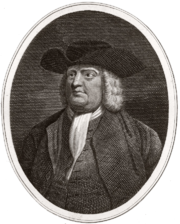 Quakers were officially persecuted
in England under the Quaker Act (1662) and the Conventicle Act 1664
, with persecution being relaxed after the Declaration of Indulgence
in 1687-1688 and stopped under the Act of Toleration 1689
. Some Quakers escaped to America, and whilst some also suffered persecution there (eg Mary Dyer
hanged in Massachusetts Bay colony
), they were tolerated in Rhode Island
(with 36 of the governors for the first 100 years being Quakers), West Jersey
and Pennsylvania
(which was set up by affluent Quaker William Penn
in 1682 as a holy experiment of a state run under Quaker principles). From these areas Quakerism spread across the eastern seaboard. William Penn
signed a peace treaty with Tammany
, leader of the Delaware tribe, and additional treaties between Quakers and other tribes followed.
One of their most radical innovations was a greater, nearly equal, role for women. Despite the survival of strong patriarchal elements, Friends believed in the spiritual equality of women, who were allowed to take a far more active role than had ordinarily existed before the emergence of radical civil war sects. Early Quaker defenses of their female members were sometimes equivocal, however, and after the Restoration of 1660 the Quakers, became increasingly unwilling to publicly defend women when they adopted tactics such as disrupting services. Women's meetings were organized as a means to involve women in more modest, feminine pursuits. Some Quaker men sought to exclude them from church public concerns with which they had some powers and responsibilities, such as allocating poor relief and in ensuring that Quaker marriages could not be attacked as immoral. In spite of legal persecution the Quakers continued to meet openly, even in the dangerous year of 1683. Heavy fines were exacted and, as in earlier years, women were treated as severely as men by the authorities.
 During the eighteenth century, the Society of Friends became a more closed group, less active in converting others. The numbers of Friends dwindled, for example in England and Wales
dropping to 19 800 in 1800 (0.21% of population) and 13 859 in 1860 (0.07% of population). This period of Quaker history is known as Quietism. Marrying outside of the Society became outlawed. Dynasties of Quakers grew up who were successful in business including banking and manufacturing. This included the fuelling of the industrial revolution
by Abraham Darby I
and his family
, founding major banking chains Lloyds Banking Group
(founded by Sampson Lloyd
), Barclays PLC
. Barclays
now also incorporates two other Quaker banks Backhouse's Bank
and Gurney's Bank
) and life assurance company Friends Provident
, founding pharmaceutical company Allen & Hanburys
(now part of GlaxoSmithKline
), founding several major manufacturing companies including chocolate manufacturers Cadbury
, Terry's
, Fry's
, confectionary manufacturer Rowntree
, shoe manufacturers Clarks and biscuit manufacturer Huntley & Palmers
. Some Quakers in America became well known for their involvement in the abolition of slavery. The formal name "Religious Society of Friends", dates from the 18th century and is still in use. The term Religious Society of Friends, harks back to the "Friends of the Truth".
In the nineteenth century, the Religious Society of Friends started its series of large splits which still dominates Quakerism internationally today. The Great Separation of 1827 in several American yearly meeting
s was precipitated by a division which occurred within Philadelphia Yearly Meeting
when its members could not agree on who was to be clerk. The background issue involved the visits and preaching of Elias Hicks
, whose views were claimed to be Universalist and contradicted the historical tradition of Friends. In the same and following year, a number of Friends from Philadelphia, New York, Ohio, Indiana, and Baltimore Yearly Meetings in sympathy with him separated to form a parallel system of yearly meetings in America. They were referred to by their opponents as Hicksites, and the others as Orthodox; neither side embraced its nickname, preferring to style themselves simply Friends.
Isaac Crewdson
. a Recorded Minister
in Manchester
, UK published A Beacon to the Society of Friends in 1835. This led to doctrinal controversy which led in 1836–1837 to the resignation of Isaac Crewdson, 48 fellow members of Manchester Meeting and about 250 other British Quakers, a number of whom joined the Plymouth Brethren
, including John Eliot Howard
and Robert Mackenzie Beverley.
The orthodox Friends (who made up the vast majority of Quakers on both sides of the Atlantic), together with Anglicans
and Methodists
, became progressively more evangelical
during the nineteenth century, led by the British Quaker, Joseph John Gurney
, of London Yearly Meeting. Friends enthusiastically held Revival meeting
s and becoming involved in the Holiness movement
, influenced in part by the Second Great Awakening
which was sweeping America at the time.
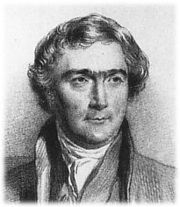 Some Quakers in America disliked this move and wanted to retain their Quietist ways - these yearly meetings led by John Wilbur, an American Friend who worked to prevent what he saw as the dilution of the Friends' tradition of being led by the Holy Spirit
. Wilbur was expelled from his yearly meeting in 1842, and he and his supporters went on to form their own separate yearly meeting. In the UK, in 1868, some Friends split off from London Yearly Meeting, as they felt this organization was becoming too evangelical and abandoning traditional Quaker ways, forming the separate Fritchley General Meeting which remained separated from London Yearly Meeting until 1968. Similar splits also took place in Canada. The remainder of London Yearly Meeting and the remaining American yearly meetings were called Gurneyite yearly meetings, after Joseph John Gurney
, and eventually collectively became called Five Years Meeting and then Friends United Meeting
.
In 1887, a British Quaker, Joseph Bevan Braithwaite proposed a declaration of faith known as the Richmond Declaration
. This was agreed by 95 representatives at a meeting of Five Years Meeting
] but unexpectedly the declaration was not adopted by London Yearly Meeting, because a vocal minority of Friends, including Edward Grubb
opposed it.
In the early days, Friends had no ordained priests and thus needed no seminaries for theological training. The first major Quaker colleges were all founded much later - in America they founded Haverford College
(1833), Guilford College
(1837), Earlham College
(1844), Swarthmore College
(1864), Wilmington College (Ohio) (1870), Bryn Mawr College
(1885), Friends Pacific Academy (now George Fox University
) (1885), Cleveland Bible College (now Malone University) (1892), Friends University
(1898), Training School for Christian Workers (now Azusa Pacific University
) (1899), Friends Bible College
(now Barclay College
) (1917); in Britain, Woodbrooke College in 1903; and in Kenya, Friends Bible Institute (now Friends Theological College in Kaimosi
, Kenya
in 1942.
Missionary activity started in the late nineteenth century, for example with the Friends Foreign Mission Society from Britain sending missionaries to India forming what is now Mid-India Yearly Meeting, and Friends Churches from Ohio Yearly Meeting sent missionaries to India in 1896 forming what is now Bundelkhand Yearly Meeting
. Friends from Cleveland meeting went to Mombasa
, Kenya
, starting what has been Friends most successful mission field. Quakerism spread within Kenya
and to Uganda
, Tanzania
, Burundi
and Rwanda
.
In the very late nineteenth and early twentieth century there began to be a move within London Yearly Meeting away from evangelicalism
and towards liberal Christianity
(such as starting to explore the theory of evolution
, modern biblical criticism
, and the social meaning of Jesus
's teaching), following the Manchester Conference of 1895 where 1000 British Friends met to consider the future of British Quakerism, heavily influenced by John Wilhelm Rowntree
.
The first world war and second world war called Friends' opposition to war to test in the twentieth century. Many Quakers were conscientious objectors and some formed the Friends Ambulance Unit and American Friends Service Committee
. These brought together Friends from different yearly meetings to work together for service. Following this Friends from across the theological splits worked together with several World Conferences, and the subsequent creation of the Friends World Committee for Consultation
which brought together Friends from different yearly meetings.
After World War I
, growing desire for a more fundamentalist approach among some Friends began to split Five Years Meeting
. In 1926, Oregon Yearly Meeting seceded from Five Years Meeting
, bringing several other yearly meetings and scattered monthly meetings. In 1947, the Association of Evangelical Friends was formed, with triennial meetings which lasted until 1970. In 1965 this was replaced by the Evangelical Friends Association, which since 1989 has been Evangelical Friends Church International.
, with authority with the Holy Spirit
rather than the Bible
. Prior to the mid-eighteenth century, all Quakers were what would now be described as Conservative, but splits and developments in the nineteenth and twentieth century have resulted in the majority of Friends moving away from this branch.
Today, Conservative Friends exist in the US as the conservative yearly meetings
of Ohio, Iowa, and North Carolina; the conservative Ohio Yearly Meeting is generally considered the most traditional in this regard, retaining more rural Quakers who use the plain language and continue wearing plain dress more than the other two. There are also groups of Conservative Friends
in the UK (Ripley Quaker Meeting) and Greece (Athens Meeting), and Canada.
.
of England and John Wilbur of Rhode Island. Gurney emphasized scriptural authority and favored working closely with other Christian groups. Gurneyite Friends today (especially those in parts of the US and Africa affiliated to Friends United Meeting
) regard Christ
as their teacher and Lord. Over the next several decades, a number of Wilburite-Gurneyite separations occurred. Gurneyite Friends today often have a pastor and combine traditional Quaker "waiting worship" (unprogrammed worship) with practices common to Protestant services, such as scripture reading, hymns and choirs. A minority continue to practice entirely unprogrammed worship.
argued that it was possible to be led in ways contrary to the Bible). Today, the Hicksite yearly meetings are affiliated to Friends General Conference
. There are also other yearly meetings which are also sometimes termed liberal, having formerly had more orthodox views, such as the Beanite yearly meetings (e.g., Pacific Yearly Meeting, North Pacific Yearly Meeting) on the western side of the USA, and and some yearly meetings in Canada, Europe, Australia, New Zealand, South Africa, India,—have all become progressively more liberal in belief and practice during the twentieth century.
There is often a very wide range of theological beliefs in these liberal Quaker yearly meetings, which often share a similar mix of theological ideas as other liberal Christian
denominations. Similar to Conservative Friends
, there is often a strong emphasis on listening to the inward Christ, inward light or inner light
, although there is not always a shared understanding of what these terms mean. Common ideas among members of liberal yearly meetings include stating a belief of "that of God in everyone", and stating belief in truth/integrity, peace, equality and simplicity. However, again, what individual Friends mean by these phrases often varies quite dramatically. Amongst liberal Quakers one will find liberal Christians
, universalist Christians
, non-theists, agnostics, and atheists. The proportions of people with different views is not known, and is difficult to define as different people define the same beliefs with different labels, and is likely to vary within different yearly meetings and who one were to ask. In Britain Yearly Meeting
(which has become more liberal during the twentieth century), around 30% of Quakers have views which might be described as non-theistic, agnostic or atheist.
, 1671), An Apology for the True Christian Divinity (Robert Barclay
, 1678), A Catechism and Confession of Faith (Robert Barclay
, 1690), The Testimony of the Society of Friends on the Continent of America (adopted jointly by all orthodox yearly meetings in USA, 1830), Richmond Declaration of Faith
(Adopted by Five Years Meeting
, 1887), Essential Truths (Rufus Jones
and James Wood
, adopted by Five Years Meeting
, 1922). As a public statement of faith today, many yearly meetings publish their own Book of Discipline
- often called Faith and Practice - that expresses their senses of truth and purpose.
The theological beliefs of different yearly meetings vary considerably, ranging from evangelical Christianity to universalist and new thought
beliefs. In addition, there is wide variation in a meetings' acceptance of dissent expressed by individuals and local constituencies. While the predominant theological beliefs of different yearly meetings do not tally exactly with the style of service, there is often some correspondence, with yearly meetings that employ programmed worship tending to have more evangelical theologies, and those with unprogrammed worship tending to have more conservative or liberal theologies.
Most Friends believe in continuing revelation, which is the idea that truth is continuously revealed directly to individuals from God without a need for any intermediary, objective logic or systematic theology. For this reason, many Quakers reject the idea of priest
s, believing in the priesthood of all believers
. Some Friends express this idea of God revealing truth to them directly using the phrase Inner Light, or Inward Light of Christ
, whilst others talk of the Holy Spirit
or use other phrases. George Fox, an early Friend
described it as "Christ has come to teach His people Himself." Friends often focus on trying to hear God. As Isaac Penington
wrote in 1670, "It is not enough to hear of Christ, or read of Christ, but this is the thing — to feel him my root, my life, my foundation..."
and outward sacraments, such as water baptism or the Eucharist
. Conservative Friends do not believe in the reliance upon practice of the outward rites and sacrament
s, believing that holiness can exist in all the activities of one's life — that all of life is sacred. Many Friends believe that any meal with others could be a form of communion. Like conservative Friends, liberal Friends also reject forms of religious symbolism
and sacraments, such as water baptism and the Eucharist
. While Friends may recognize the potential of these outward forms for awakening experiences of the Inner Light, they are not an incorporated part of Friends worship, and are by no means regarded as necessary to authentic spirituality.
Beginning in the 1880s, some Friends began using outward sacraments, first in Evangelical Friends Church - Eastern Region (then known as Ohio Yearly Meeting [Damascus]). Friends Church Southwest approved the practice of outward sacraments. In places where Evangelical Friends have done mission work, including in Africa, Asia, and Latin America, baptism with water is carried out. This practice differs from Friends in liberal and conservative yearly meetings.
, that the Bible is self-authenticating, clear and its own interpreter; instead, they believed that Christ, instead of the Bible, is the Word of God. Robert Barclay
wrote in his Apology
that the scriptures "are only a declaration of the fountain, and not the fountain itself, therefore they are not to be esteemed the principal ground of all Truth and knowledge, nor yet the adequate primary rule of faith and manners". Similarly, George Fox recounted an incident in his Journal in which when a minister claimed that the Scriptures were authoritative, Fox "...was commanded to tell them God did not dwell in temples made with hands. But I told them what it was, namely, the Holy Spirit, by which the holy men of God gave forth the scriptures, whereby opinions, religions and judgments were to be tried; for it led into all Truth, and so gave the knowledge of all Truth". Like early Friends, conservative Friends believe that Christ would not lead them in ways that contradicted the Bible.
Gurneyite yearly meetings put more emphasis on the authority of the Bible
over the direct experience of God, often seeing the Bible
as the direct word of God. Both children and adults participate in ongoing religious education emphasising Bible and its relationship to Quaker testimonies and Quaker history. Evangelical Friends regard the Bible as the literal and self-authenticating word of God.
Within liberal Friends meetings one will encounter various approaches to the Bible
. The Bible
remains central to many liberal Friends' worship, and almost all meetings for worship in liberal yearly meetings will have a copy or copies of the Bible available in the meeting house
(often on a table in the centre of the room) which Friends may read privately or publicly during worship. However, unlike evangelical or Gurneyite Friends, many liberal Friends have decided that if they feel led by God in a way which is contrary to the Bible, that Scripture should give way. Many Friends are also influenced by liberal Christian
theologians and modern Biblical criticism
, often holding non-propositional Biblical hermeneutics (eg believing that the Bible is an anthology of human authors' beliefs and feelings about God at the time of its writing) and that multiple different interpretations of scripture are possible.
, and George Fox's Letter to the Governor of Barbados. Due in part to the emphasis on reliance on the immediate guidance of the Spirit, diverse statements of "faith and practice" and diverse understandings of the "leading of the Spirit" have always existed among Friends. Liberal Friends believe a corporate confession of faith would be an obstacle — both to authentic listening and to the recognition of new insight. As a non-creedal form of Christianity, Quakerism is especially receptive to a wide range of faith understandings. Most liberal yearly meetings publish a Faith and Practice book with a range of experiences of what it means to be a Friend in that yearly meeting.
Orthodox Friends have enumerated and subscribed to a set of doctrines, such as the Richmond Declaration
. While there has been conflict over the role of the Richmond Declaration
in subsequent years, it was "adopted," "accepted" or "approved" by nearly all of the Gurneyite yearly meetings at the time. The Five Years Meeting of Friends reaffirmed the Richmond Declaration in 1912 but specifically stated that it was not to constitute a creed. The "Beliefs of Friends" statement by Evangelical Friends International
, is comparable to other evangelical churches'
confessions of faith
.
A common set of practices emerged which spoke of key principles and beliefs held by Friends. These are "testimonies", for Friends believe these principles and practices testify to the truth of God among Friends as well as others, in deed. (See Testimonies for a list and description of several testimonies.) Rooted in the immediate experience of the community of Friends, for many Friends these values are verified by the Bible, especially in the life and teachings of Jesus.
, Orthodox
, or Protestant
. Many conservative Friends, whilst fully seeing themselves as a Christian group, choose to remain separate from other Christian groups.
Many Friends in the liberal Friends' meetings are actively involved in the ecumenical movement
, often particularly working closely with other Mainline Protestant and liberal Christian
churches with whom they share common ground, particularly a concern for peace and social justice, and often work together with other churches and Christian groups on social justice projects and campaigns. Some liberal yearly meetings are members of ecumenical pan-Christian organizations which include Protestant, Orthodox and Anglican churches - for example Philadelphia Yearly Meeting
is a member of the National Council of Churches
, Britain Yearly Meeting
is a member of Churches Together in Britain and Ireland
, and Friends General Conference
is a member of the World Council of Churches
. All Guerneyite Friends would see themselves as part of a Christian movement, and work closely with other Christian groups. Friends United Meeting
(the international organization of Gurneyite yearly meetings) is a member of the National Council of Churches
and the World Council of Churches
, which are pan-Christian organizations which include Protestant, Orthodox and Anglican churches. Evangelical Friends work closely with other evangelical churches
from other Christian traditions. The North American branch of Evangelical Friends Church International is a member church of the National Association of Evangelicals
. Like other evangelical churches, evangelical Friends tend to be less involved with ecumenical work with non-evangelical churches, and are not members of the World Council of Churches
or National Council of Churches
.
The majority of other Christian groups are happy to recognize Friends amongst their fellow-Christians. The Bible Theology Ministries (a small charismatic church in Swansea
) does not recognise Quakers as Christian, but then they also do not recognise Roman Catholics as Christian, regarding both Quakers and Roman Catholics as 'cults'. Some people who attend Friends meetings assume that Quakers are not Christian because they may not hear anyone using overtly Christian language during the meeting for worship.
There are Friends in some liberal unprogrammed Meetings who no longer feel happy to call themselves Christian and instead consider themselves unitarian
, agnostic
, atheist
, secular humanist
, postchristian
, or nontheist
. In 1870, Richard Price Hallowell argued that the logical extension of Quakerism is to establish a universal Church, which demands a religion which embraces Jew, Pagan and Christian, and which cannot be limited by the dogmas of one or the other, and there are now a few Friends in liberal meetings who actively identify as members of a faith other than Christianity, such as Judaism
, Islam
, Buddhism
or Paganism, although this is controversial, even in liberal yearly meetings.
' advice that faith by itself, if it is not accompanied by action, is dead.
They may do this in many ways, according to how they are led by God, however there are some shared ways in which many Quakers relate to God and the world. These ways of acting often mirror common Christian ethical codes, e.g. the Sermon on the Mount
or the Sermon on the Plain
, however Friends would argue that they feel personally moved by God or Christ to act in these ways rather than simply following an ethical code.
Some theologians have attempted to classify the ways in which Friends commonly testify to their faith into categories of common ways in which Friends behave - these are known by some as testimonies. As these are not centrally drawn up in any way but are simply individuals' descriptions of the way in which many Friends are currently led to act, lists of testimonies are continuously evolving, and vary between different theologians and traditions. In his book Quaker Speak, the British Friend Alastair Heron lists the following ways in which Friends do, or have, witness(ed) or testify/testified to God:
Testimony which opposes:
Testimony which promotes:
In the USA, children and Friends school students are often taught the acronym SPICES, which stands for Simplicity, Peace, Integrity, Community, Equality and Stewardship. In the UK, the acronym STEP or PEST is used, for Peace, Equality, Simplicity and Truth. These are known by some as testimonies. As these are not centrally drawn up in any way but are simply individuals' descriptions of the way in which many Friends are currently led to act, lists of testimonies are continuously evolving, and vary between different theologians and traditions. In his book Quaker Speak, the British Friend Alastair Heron lists the following ways in which Friends do, or have, witness(ed) or testify/testified to God:
Several groups of Quaker meeting houses in the US, particularly Delaware and Pennsylvania, have extended the testimony opposing hat honor to include an opposition to modern-day honorifics bestowed to corporate officer titles, corporate hierarchies, and publicizing salary history for employees.
Friends have also eschewed the traditional church calendar of holy days, not observing religious festivals such as Christmas
, Lent
, or Easter
at particular times of the year, but instead believing that Christ
's birth, crucifixion
and resurrection
should be commemorated every day of the year. For example, many Quakers feel that fasting
at Lent
but then eating in excess at other times of the year is hypocrisy, and therefore many Quakers, rather than observing Lent, live a simple lifestyle all the year round (see Testimony of Simplicity
). These beliefs tie in with Quakers' beliefs on sacraments and the belief that all of life is sacred.
Similarly, Friends traditionally are non-Sabbatarians, holding that "every day is the Lord's day
", and that what should be done on a First Day should be done every day of the week. Meeting for Worship
is often held on a First Day, however this is more because of convenience rather than because it is believed that Sunday is Sabbath (or the appointed day), and many Friends hold Meeting for Worship
on other days of the week.
These beliefs are often referred to as the testimony against time and season.
Additionally, Quaker mysticism as it has been expressed after the late 19th century includes a strong emphasis on its outwardly directed witness. Rather than seeking withdrawal from the world, the Quaker mystic translates his or her mysticism into action. They believe this action leads to greater spiritual understanding — both by individuals and by the Meeting as a whole. This view of mysticism includes social and political activities.
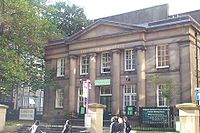 Most groups of Quakers meet for regular worship. There are two main types of worship worldwide:
While the different styles of worship are often associated with the theological splits, with conservative (Wilburite) and liberal (Hicksite) Friends generally worshiping in unprogrammed meetings, and Gurneyite and evangelical Friends worshiping in programmed Friends church services, this is not a strict rule. Many meetings hold both programmed and unprogrammed services or other activities.
). During an unprogrammed meeting for worship, Friends gather together in "expectant waiting" for God's leading. Sometimes a meeting is entirely silent, sometimes quite a few people speak. Meeting for Worship generally lasts about an hour.
When they feel they are led by the spirit of God a participant will rise and share a message (give "vocal ministry") with those gathered. Typically, messages, testimonies, ministry, or other speech are not prepared as a "speech". Speakers are expected to discern the source of their inspiration — whether divine or self. After someone has spoken, it is expected that more than a few moments will pass in silence before further Ministry; there should be no spirit of debate.
Unprogrammed worship is generally deemed to start as soon as the first participant is seated, the others entering the room in silence. The Meeting for Worship ends when one person (usually predetermined) shakes the hand of another person present. All the members of the assembly then shake hands with their neighbors, after which one member usually rises and extends greetings and makes announcements.
Within the unprogrammed tradition, Friends do not practice water baptism
, Christening
ceremony or other ceremony for the birth of a child. The child is welcomed into the meeting by everyone present at their first attendance. Formerly, it was the practice that children born to Quaker parents automatically became members of the Religious Society of Friends (sometimes called Birthright membership), but this is no longer the case in most areas, and most parents now leave it up to the child to decide whether to become a member when they are an older child or adult.
A meeting for worship for the solemnisation of marriage in an unprogrammed Friends meeting is similar to any other unprogrammed Meeting for Worship. The meeting for worship is conducted exactly as a normal meeting for worship, and the pair marry one another before God and gathered witnesses. After exchanging vows, the meeting returns to open worship and guests are free to speak as they are led. At the rise of meeting all the witnesses, who comprise everyone present at the meeting including the youngest children, are asked to sign the wedding certificate as a record of the event. In Britain, Quakers have their own registrars who keep a separate record of the union and notify the General Register Office
.
In the early days of the United States, there was doubt whether a marriage solemnized in such a manner was entitled to legal recognition, so that over the years each state set its own rules for the procedure. Most US states (Pennsylvania being the prominent exception) expect that the marriage document filed with local authorities will be signed by a single officiant (a priest, rabbi, minister, Justice of the Peace, etc.). Quakers routinely modify the document to allow several Friends to sign as the officiant. Often these are the members of a committee of oversight of the marriage ceremony, 3 or 4 individuals that have helped the couple plan their marriage. Usually a separate document containing their vows and the signatures of all present is kept by the couple, and often displayed prominently in their home.
In many Friends meetings, the couple will also have met with a "clearness committee" prior to getting married. This committee's purpose is to discuss with the couple the many aspects of being married and being a couple. If the couple seems clear in their commitment to marry, then the couple will be recommended to the meeting for marriage and the marriage will take place. "Clearness committees" are used in other contexts as well, where individuals or groups need to obtain guidance on a particular action to be taken.
In recent years, Friends within the liberal, unprogrammed meetings in Australia, Britain and some meetings in North America have celebrated weddings or civil union
s between partners of the same sex. Britain Yearly Meeting
decided in 2009 to recognise marriages between same-sex couples, making them the first mainstream religious body in the UK to do so. As true same-sex marriage
(as distinct from civil partnership) is not recognized in law or by civil authorities in the United Kingdom
these marriages will not be recognized in civil courts. However, they stated that the law does not preclude Friends from "playing a central role in the celebration and recording" of marriage between same-sex couples, and asked the government to change the law so that marriage between same-sex couples would be recognized in the same way as opposite-sex marriages. In parts of the United States where same-sex marriages are not legal, some meetings follow the practice of early Quakers in overseeing the union without reference to the state at all. Many Friends meetings in the US have celebrated "union" ceremonies for same-sex couples; sometimes other Friends meetings geographically nearby have quite different views on the topic. Many Friends in the US are also involved in the movement to allow same-sex marriage legally.
Traditional Quaker memorial services are also held as a form of worship and are known as memorial meetings. Friends gather for worship and offer remembrances about the person who has died. In some traditions, the coffin or ashes of the deceased are not present, and these memorial meetings are often held many weeks after the death, which can enable wider attendance and can also allow spiritual reflection and celebration of life, rather than emotional grief, to dominate. However in some traditions memorial meetings take place immediately after death and may occur prior to burial or cremation with the coffin present in the meeting for worship. Memorial meetings can last over an hour, particularly if there are a large number of people in attendance. Memorial services give everyone a chance to remember the lost individual in his own way, thus bringing comfort to those present, and re-affirmation of the larger community of Friends.
Business decisions on a local level within unprogrammed meetings are conducted at a monthly meeting for worship which may be variously called a "Meeting for Worship with a Concern for Business", "meeting for worship for church affairs" or simply "Business Meeting". A business meeting is a form of worship, and conducted in the manner of meeting for worship, all decisions are reached so that they are consistent with the guidance of the Spirit.
Instead of voting, the Meeting attempts to gain a sense of God's will for the community. Each member of the meeting is expected to listen to that of God within themselves and, if led, to contribute it to the group for reflection and consideration. This ministry is, unlike in meeting for worship, regulated. A friend will stand if they feel moved to speak but must wait to be called upon by the Clerk of the meeting before speaking. Each member listens to others' contributions carefully, in an attitude of seeking Truth rather than of attempting to prevail or to debate. Direct replies to someone's contribution are not permitted and all contributions must be addressed to the clerk or the meeting as a whole.
A decision is reached when the Meeting, as a whole, feels that the "way forward" has been discerned (also called "coming to unity") or there is a consensus. On some occasions a single Friend will hold up a decision because they feel the meeting is not following God's will; occasionally, some members of the Meeting will "stand aside" on an issue, meaning that these members do not share in the general sense of the meeting but are willing to allow the group to move forward.
Many Quakers describe the search for unity as the gathering of believers who "wait upon the Lord" to discover God's will. When seeking unity, Friends are not attempting to seek a position with which everyone is willing to live (as is often the case in consensual models) but in determining God's will. It is assumed that if everyone is listening to God's Spirit, the way forward will become clear.
The business conducted "in the manner of Friends" can seem time-consuming and impractical. The process can be frustrating and slow, but Friends believe it works well, allowing the group to come to decisions even around the most difficult matters. By the time a decision is recognized, the important issues have been worked out and the group supports the decision; there is no "losing" side.
Many non-Friends express doubts as to whether this process of decision making can work in a large group, although many yearly meetings have successfully employed this practice for generations.
The Friends meetings started in Africa and Latin America were generally started by Friends from programmed elements of the society, therefore most African and Latin American Friends worship in a programmed style.
Some Friends also hold what is termed Semi-Programmed Worship, which brings programmed elements like hymns and readings into an otherwise unprogrammed worship service.
Since its beginnings in the United Kingdom
, Quakerism has spread to other countries, chiefly Australia
, Bolivia
, Burundi
, Costa Rica
, Ireland
, Japan
, Kenya
, Philippines
, Rwanda
, South Africa
, South Korea
, Taiwan
, Uganda
, and the United States
. Although the total number of Quakers is relatively small, around 360,000 worldwide, there are places, such as Philadelphia, Pennsylvania;Kaimosi
, Kenya
; Newberg, Oregon
; Greenleaf, Idaho
; Whittier, California
; Richmond, Indiana
; Friendswood, Texas
; Birmingham, UK; Ramallah
, Palestine
and Greensboro, North Carolina
in which Quaker influence is concentrated.
Unlike many other groups that emerged within Christianity, the Religious Society of Friends has tended away from creed
s, and away from hierarchical structure.
The various branches have widely divergent beliefs and practices, but the central concept to most Friends is the "Inner Light
" or "Light of Christ within". Accordingly, individual Quakers may develop individual religious beliefs arising from their personal conscience and revelation coming from "God within"; Quakers feel compelled to live by such individual religious beliefs and inner revelations. Throughout their history, Quakers have also founded other charities or organizations for many causes they felt are in keeping with their faith. Within the last century there have been some 100 organizations founded by either individual Friends, groups of Friends or Friends working with or amongst others: Amnesty International
, Greenpeace
, OXFAM
, Peace Action
, WILPF. (SEE List of Quaker Businesses)
(FWCC) is the international Quaker organization which loosely unifies the diverse groups of Friends; FWCC brings together the largest variety of Friends in the world.
There are various organizations associated with Friends including a U.S. lobbying organization based in Washington, D.C.
called the Friends Committee on National Legislation
(FCNL); several service organizations like the American Friends Service Committee
(AFSC), the Quaker United Nations Office
s, Quaker Peace and Social Witness
, Friends Committee on Scouting
, the Quaker Peace Centre in Cape Town, South Africa and the Alternatives to Violence Project
.
Friends World Committee for Consultation is divided into four Sections to represent different regions of the world: Africa, Asia West Pacific, Europe and Middle East, and Americas.
, practice programmed worship, and employ pastors. There are also Friends meetings in Rwanda and Burundi, as well as new work beginning in North Africa. Small unprogrammed meetings exist also in Botswana, Ghana, Lesotho, Namibia, Nigeria, South Africa and Zimbabwe.
Considerable distances between the colonies, and a low immigration of Quakers, meant that the organization of Friends in Australia was quite dependent on London until the 20th century. The Society has remained unprogrammed and is constituted as the Australia Yearly Meeting, with local organization around seven Regional Meetings: Canberra (which extends into southern New South Wales), New South Wales, Queensland, South Australia (which extends into Northern Territory), Tasmania, Victoria and Western Australia. There is an annual meeting each January hosted by a different Regional Meeting over a seven year cycle, with a Standing Committee each July or August. The 2006 Australian Census recorded 1984 Quakers in Australia, which was an increase of 11% since the 2001 Census.
Meetings for worship in New Zealand started in Nelson
in 1842, and in Auckland
in 1885.
India has four yearly meetings - the unprogrammed Mid-India Yearly Meeting
, programmed Bhopal Yearly Meeting and Mahoba Yearly Meeting. Bundelkhand Yearly Meeting
is an evangelical Friends Church affiliated to Evangelical Friends International
. There are also a number of separate programmed and unprogrammed worship groups not affiliated to any yearly meeting.
There are also evangelical Friends Churches in the Philippines and Nepal, affiliated to Evangelical Friends International
.
, where there are 25,000 worshippers in around 500 Local Meetings.
These meetings used to be called Preparative Meetings, and the groups they formed were previously known as Monthly Meeting
s: now they are Area Meetings. This change, made in Britain Yearly Meeting 2007, was intended to simplify Quaker jargon. The structure extends into several Area Meetings becoming a General Meeting — formerly Quarterly Meeting — Some General Meetings now call themselves Regional Gatherings (e.g. Bristol & Wessex Regional Gathering, was Bristol & Somerset GM) which each continue to meet up to three times per year, but now play no direct role in church government. Instead, Area Meetings are represented directly in Meeting for Sufferings, which meets in between Yearly meetings.
There is also small groups of Conservative Friends meeting in Ripley and Greenwich in England, and Arbroath in Scotland, and Athens in Greece, who follow Ohio Yearly Meeting's Book of Discipline.
The first French Quaker community was founded in Congénies
, in the south of France in 1788.
Friends meetings also exist in the Netherlands, Russia,Switzerland(www.swiss-quakers.ch) and Germany. Some of these meetings are small and do not meet weekly.
Friends in the United States have diverse practices, though united by many common bonds. Along with the division of worship style (see "Quaker Worship" above) come several differences of theology, vocabulary and practice.
A local congregation in the unprogrammed tradition is called a meeting, or a monthly meeting (e.g., Smalltown Meeting or Smalltown Monthly Meeting). The reference to "monthly" is because the meeting meets monthly to conduct the business of the meeting. Most "monthly meetings" meet for worship at least once a week; some meetings have several worship meetings during the week. In programmed traditions, the local congregations are often referred to as "Friends Churches".
Several local monthly meetings are often part of a regional group called a quarterly meeting, which is usually part of an even larger group called a yearly meeting; with the adjectives "quarterly" and "yearly" referring specifically to the frequency of meetings for worship with a concern for business.
Some yearly meetings belong to larger organizations to help maintain order and communication within the society, the three chief ones being Friends General Conference
(FGC), Friends United Meeting
(FUM), and Evangelical Friends Church International (EFCI) (in all three groups, most member organizations, though not necessarily people are from the United States). FGC is theologically the most liberal of the three groups, while EFCI is the most evangelical. FUM is the largest. Friends United Meeting
was originally known as "Five Years Meeting." Some monthly meetings belong to more than one of these larger organizations, while others are independent, not joining any.
Christian
A Christian is a person who adheres to Christianity, an Abrahamic, monotheistic religion based on the life and teachings of Jesus of Nazareth as recorded in the Canonical gospels and the letters of the New Testament...
movement which stresses the doctrine of the priesthood of all believers
Priesthood of all believers
The universal priesthood or the priesthood of all believers, as it would come to be known in the present day, is a Christian doctrine believed to be derived from several passages of the New Testament...
. Members are known as Friends, or popularly as Quakers. It is made of independent organisations, which have split from one another due to doctrinal differences. The movement began in mid-17th century England when travelling preachers
Valiant Sixty
The Valiant Sixty were a group of early leaders and activists in the Religious Society of Friends . They were itinerant preachers, mostly from northern England who spread the ideas of the Friends during the second half of the Seventeenth Century, and were also called the First Publishers of Truth...
including George Fox
George Fox
George Fox was an English Dissenter and a founder of the Religious Society of Friends, commonly known as the Quakers or Friends.The son of a Leicestershire weaver, Fox lived in a time of great social upheaval and war...
, James Naylor, Margaret Fell
Margaret Fell
Margaret Fell or Margaret Fox was a founder of the Religious Society of Friends. Known popularly as the "mother of Quakerism", she is considered one of the Valiant Sixty early Quaker preachers and missionaries.-Life:...
and Francis Howgill
Francis Howgill
Francis Howgill was a prominent early member of the Religious Society of Friends in England. He preached and wrote on the teachings of the Friends and is considered one of the Valiant Sixty--men and women who were early proponents of Friends beliefs and who suffered for those...
, broke away from the Church of England
Church of England
The Church of England is the officially established Christian church in England and the Mother Church of the worldwide Anglican Communion. The church considers itself within the tradition of Western Christianity and dates its formal establishment principally to the mission to England by St...
and set out to convert others to what they believed were the practices of the early Church
Early Christianity
Early Christianity is generally considered as Christianity before 325. The New Testament's Book of Acts and Epistle to the Galatians records that the first Christian community was centered in Jerusalem and its leaders included James, Peter and John....
. They emphasised a direct personal experience of God, informed by the scriptures, within a distinctly Christian framework..
Some Quakers today hold most or some of the beliefs and practices of early Quakers, but most have been influenced to some extent by other movements within Christianity, particularly the evangelical movement
Evangelicalism
Evangelicalism is a Protestant Christian movement which began in Great Britain in the 1730s and gained popularity in the United States during the series of Great Awakenings of the 18th and 19th century.Its key commitments are:...
from the nineteenth century onwards; and liberal Christian theology
Liberal Christianity
Liberal Christianity, sometimes called liberal theology, is an umbrella term covering diverse, philosophically and biblically informed religious movements and ideas within Christianity from the late 18th century and onward...
among some Friends in the late twentieth century. Smaller groups of Quakers have been influenced by the holiness movement
Holiness movement
The holiness movement refers to a set of beliefs and practices emerging from the Methodist Christian church in the mid 19th century. The movement is distinguished by its emphasis on John Wesley's doctrine of "Christian perfection" - the belief that it is possible to live free of voluntary sin - and...
, non theism and other movements within Christian thought.
Worship varies between services co-ordinated by a pastor or recorded minister
Recorded Minister
A Recorded Minister was originally a male or female Quaker who was acknowledged to have a gift of spoken ministry.The practice of recording, in a Monthly Meeting Minute, the acknowledgement that a Friend had a gift of spoken ministry began in the 1730s in London Yearly Meeting, according to...
(known as pastoral or programmed worship) and meetings with no fixed programme which are predominantly silent (known as waiting worship or unprogrammed worship).
Historically, Quakers have been known for their refusal to participate in war; plain dress
Plain dress
Plain dress is a religious practice in which people dress in clothes of traditional modest design, sturdy fabric, and conservative cut. It is used to show humility and to preserve communal separateness from the rest of the world. It is practiced by some Amish, Brethren, Hutterites, Mennonites,...
; refusal to swear oaths; opposition to alcohol
Teetotalism
Teetotalism refers to either the practice of or the promotion of complete abstinence from alcoholic beverages. A person who practices teetotalism is called a teetotaler or is simply said to be teetotal...
; and participation in anti-slavery, prison reform, and social justice movements. Quakers are also known historically for founding Barclays and Lloyds
Lloyds Banking Group
Lloyds Banking Group plc is a major British financial institution, formed through the acquisition of HBOS by Lloyds TSB in 2009. As at February 2010, HM Treasury held a 41% shareholding through UK Financial Investments Limited . The Group headquarters is located at 25 Gresham Street in London, with...
banks, financial institutions such as Friends Provident
Friends Provident
Friends Provident was an organisation offering life insurance based in the United Kingdom. It was founded as a mutual Friendly Society for Quakers, although it was demutualised in 2001 and became a publicly listed company, no longer linked with the Religious Society of Friends...
and manufacturing companies including Clarks, Cadbury
Cadbury
-Businesses:*Cadbury Adams, the company's North American subsidiary*Cadbury Ireland, the company's Irish subsidiary*Cadbury UK, the company's UK subsidiary*Cadbury India, the company's Indian subsidiary*Cadbury New Zealand, the company's New Zealand subsidiary...
, Rowntree
Rowntree
-Companies:*Rowntree's, the confectionery company owned in the 19th & 20th centuries in York by members of the Rowntree family**Directors and employees of this company***Oliver Sheldon *Rowntree trusts**Joseph Rowntree Charitable Trust...
and Fry's.
History
There were many dissentingEnglish Dissenters
English Dissenters were Christians who separated from the Church of England in the 16th, 17th and 18th centuries.They originally agitated for a wide reaching Protestant Reformation of the Established Church, and triumphed briefly under Oliver Cromwell....
Christian groups in England
England
England is a country that is part of the United Kingdom. It shares land borders with Scotland to the north and Wales to the west; the Irish Sea is to the north west, the Celtic Sea to the south west, with the North Sea to the east and the English Channel to the south separating it from continental...
in the late 1640s, following the English Civil War
English Civil War
The English Civil War was a series of armed conflicts and political machinations between Parliamentarians and Royalists...
. George Fox
George Fox
George Fox was an English Dissenter and a founder of the Religious Society of Friends, commonly known as the Quakers or Friends.The son of a Leicestershire weaver, Fox lived in a time of great social upheaval and war...
was a young man who, like others at the time, became convinced that it was possible to have a direct experience of Christ
Christ
Christ is the English term for the Greek meaning "the anointed one". It is a translation of the Hebrew , usually transliterated into English as Messiah or Mashiach...
without the mediation of clergy. He travelled around England
England
England is a country that is part of the United Kingdom. It shares land borders with Scotland to the north and Wales to the west; the Irish Sea is to the north west, the Celtic Sea to the south west, with the North Sea to the east and the English Channel to the south separating it from continental...
, preaching, and found several pre-existing groups of like-minded people, and he gathered them together. Their central teaching that Christ has come to teach his people himself forms the basis of modern Quaker faith and practice. This group thought of themselves as part of the restoration of the true Christian church after centuries of apostasy
Apostasy
Apostasy , 'a defection or revolt', from ἀπό, apo, 'away, apart', στάσις, stasis, 'stand, 'standing') is the formal disaffiliation from or abandonment or renunciation of a religion by a person. One who commits apostasy is known as an apostate. These terms have a pejorative implication in everyday...
, and not as a separate movement. They described themselves using terms such as true Christianity, Saints, Children of the Light, and Friends of the Truth, reflecting terms used in the New Testament
New Testament
The New Testament is the second major division of the Christian biblical canon, the first such division being the much longer Old Testament....
by members of the early Christian church. The numbers of Friends increased fast, to a peak of 60 000 Quakers in England and Wales
England and Wales
England and Wales is a jurisdiction within the United Kingdom. It consists of England and Wales, two of the four countries of the United Kingdom...
in 1680 (1.15% of the total population of England and Wales
England and Wales
England and Wales is a jurisdiction within the United Kingdom. It consists of England and Wales, two of the four countries of the United Kingdom...
).
In 1650, George Fox
George Fox
George Fox was an English Dissenter and a founder of the Religious Society of Friends, commonly known as the Quakers or Friends.The son of a Leicestershire weaver, Fox lived in a time of great social upheaval and war...
, was brought before magistrates
Magistrates of England and Wales
In the legal system of England and Wales, there is a history of involving lay people, namely people from the local community who hold no legal qualifications, in the judicial decision-making process of the courts...
Gervase Bennet
Gervase Bennet
Gervase Bennet was an English politician who sat in the House of Commons of England between 1653 and 1659. Bennet coined the term "Quakers" to refer to the Religious Society of Friends....
and Nathaniel Barton, on a charge of blasphemy
Blasphemy
Blasphemy is irreverence towards religious or holy persons or things. Some countries have laws to punish blasphemy, while others have laws to give recourse to those who are offended by blasphemy...
. According to Fox
George Fox
George Fox was an English Dissenter and a founder of the Religious Society of Friends, commonly known as the Quakers or Friends.The son of a Leicestershire weaver, Fox lived in a time of great social upheaval and war...
's autobiography, it was Bennet
Gervase Bennet
Gervase Bennet was an English politician who sat in the House of Commons of England between 1653 and 1659. Bennet coined the term "Quakers" to refer to the Religious Society of Friends....
"who was the first that called us Quakers, because I bade them tremble at the word of the Lord", It is thought that Fox
George Fox
George Fox was an English Dissenter and a founder of the Religious Society of Friends, commonly known as the Quakers or Friends.The son of a Leicestershire weaver, Fox lived in a time of great social upheaval and war...
was referring to or . Therefore, what began apparently as a way to make fun of Fox's admonition by those outside the Society became a nickname that today is widely used. At the popular and scholarly level the usual term is "Quaker", which originated in ridicule but soon became widely accepted.
Persecution
Persecution is the systematic mistreatment of an individual or group by another group. The most common forms are religious persecution, ethnic persecution, and political persecution, though there is naturally some overlap between these terms. The inflicting of suffering, harassment, isolation,...
in England under the Quaker Act (1662) and the Conventicle Act 1664
Conventicle Act 1664
The Conventicle Act of 1664 was an Act of the Parliament of England that forbade conventicles...
, with persecution being relaxed after the Declaration of Indulgence
Declaration of Indulgence
The Declaration of Indulgence was two proclamations made by James II of England and VII of Scotland in 1687. The Indulgence was first issued for Scotland on 12 February, and then for England on 4 April 1687...
in 1687-1688 and stopped under the Act of Toleration 1689
Act of Toleration 1689
The Act of Toleration was an act of the English Parliament , the long title of which is "An Act for Exempting their Majestyes Protestant Subjects dissenting from the Church of England from the Penalties of certaine Lawes".The Act allowed freedom of worship to Nonconformists who had pledged to the...
. Some Quakers escaped to America, and whilst some also suffered persecution there (eg Mary Dyer
Mary Dyer
Mary Baker Dyer was an English Puritan turned Quaker who was hanged in Boston, Massachusetts Bay Colony , for repeatedly defying a Puritan law banning Quakers from the colony...
hanged in Massachusetts Bay colony
Massachusetts Bay Colony
The Massachusetts Bay Colony was an English settlement on the east coast of North America in the 17th century, in New England, situated around the present-day cities of Salem and Boston. The territory administered by the colony included much of present-day central New England, including portions...
), they were tolerated in Rhode Island
Rhode Island
The state of Rhode Island and Providence Plantations, more commonly referred to as Rhode Island , is a state in the New England region of the United States. It is the smallest U.S. state by area...
(with 36 of the governors for the first 100 years being Quakers), West Jersey
West Jersey
West Jersey and East Jersey were two distinct parts of the Province of New Jersey. The political division existed for 28 years, between 1674 and 1702...
and Pennsylvania
Pennsylvania
The Commonwealth of Pennsylvania is a U.S. state that is located in the Northeastern and Mid-Atlantic regions of the United States. The state borders Delaware and Maryland to the south, West Virginia to the southwest, Ohio to the west, New York and Ontario, Canada, to the north, and New Jersey to...
(which was set up by affluent Quaker William Penn
William Penn
William Penn was an English real estate entrepreneur, philosopher, and founder of the Province of Pennsylvania, the English North American colony and the future Commonwealth of Pennsylvania. He was an early champion of democracy and religious freedom, notable for his good relations and successful...
in 1682 as a holy experiment of a state run under Quaker principles). From these areas Quakerism spread across the eastern seaboard. William Penn
William Penn
William Penn was an English real estate entrepreneur, philosopher, and founder of the Province of Pennsylvania, the English North American colony and the future Commonwealth of Pennsylvania. He was an early champion of democracy and religious freedom, notable for his good relations and successful...
signed a peace treaty with Tammany
Tamanend
Tamanend or Tammany or Tammamend, the "affable", was a chief of one of the clans that made up the Lenni-Lenape nation in the Delaware Valley at the time Philadelphia was established...
, leader of the Delaware tribe, and additional treaties between Quakers and other tribes followed.
One of their most radical innovations was a greater, nearly equal, role for women. Despite the survival of strong patriarchal elements, Friends believed in the spiritual equality of women, who were allowed to take a far more active role than had ordinarily existed before the emergence of radical civil war sects. Early Quaker defenses of their female members were sometimes equivocal, however, and after the Restoration of 1660 the Quakers, became increasingly unwilling to publicly defend women when they adopted tactics such as disrupting services. Women's meetings were organized as a means to involve women in more modest, feminine pursuits. Some Quaker men sought to exclude them from church public concerns with which they had some powers and responsibilities, such as allocating poor relief and in ensuring that Quaker marriages could not be attacked as immoral. In spite of legal persecution the Quakers continued to meet openly, even in the dangerous year of 1683. Heavy fines were exacted and, as in earlier years, women were treated as severely as men by the authorities.
England and Wales
England and Wales is a jurisdiction within the United Kingdom. It consists of England and Wales, two of the four countries of the United Kingdom...
dropping to 19 800 in 1800 (0.21% of population) and 13 859 in 1860 (0.07% of population). This period of Quaker history is known as Quietism. Marrying outside of the Society became outlawed. Dynasties of Quakers grew up who were successful in business including banking and manufacturing. This included the fuelling of the industrial revolution
Industrial Revolution
The Industrial Revolution was a period from the 18th to the 19th century where major changes in agriculture, manufacturing, mining, transportation, and technology had a profound effect on the social, economic and cultural conditions of the times...
by Abraham Darby I
Abraham Darby I
Abraham Darby I was the first, and most famous, of three generations with that name in an English Quaker family that played an important role in the Industrial Revolution. He developed a method of producing pig iron in a blast furnace fuelled by coke rather than charcoal...
and his family
Abraham Darby
Abraham Darby may refer to:*Abraham Darby I *Abraham Darby II *Abraham Darby III *Abraham Darby IV , High Sheriff of BuckinghamshireAbraham Darby may also refer to:...
, founding major banking chains Lloyds Banking Group
Lloyds Banking Group
Lloyds Banking Group plc is a major British financial institution, formed through the acquisition of HBOS by Lloyds TSB in 2009. As at February 2010, HM Treasury held a 41% shareholding through UK Financial Investments Limited . The Group headquarters is located at 25 Gresham Street in London, with...
(founded by Sampson Lloyd
Sampson Lloyd
There are three generations of Sampson Lloyd in the Lloyd family of Birmingham, England. The second co-founded Lloyds Bank.Sampson Lloyd I and Mary , Quakers of Welsh origin, moved from their Leominster, Herefordshire farm in 1698 to Edgbaston Street in Birmingham.After the death of Sampson I in...
), Barclays PLC
Barclays plc
Barclays PLC is a global banking and financial services company headquartered in London, United Kingdom. As of 2010 it was the world's 10th-largest banking and financial services group and 21st-largest company according to a composite measure by Forbes magazine...
. Barclays
Barclays plc
Barclays PLC is a global banking and financial services company headquartered in London, United Kingdom. As of 2010 it was the world's 10th-largest banking and financial services group and 21st-largest company according to a composite measure by Forbes magazine...
now also incorporates two other Quaker banks Backhouse's Bank
Backhouse's Bank
Backhouse's Bank of Darlington was founded in 1774 by James Backhouse , a Quaker flax dresser and linen manufacturer, and his sons Jonathan and James ....
and Gurney's Bank
Gurney's bank
Gurney's bank was a well-respected family-run bank headquartered in Norwich, England. It merged into Barclays Bank in 1896.-History:The bank was founded in 1770 by John and Henry Gurney, sons of John Gurney , who passed the business to Henry's son, Bartlett Gurney, in 1777...
) and life assurance company Friends Provident
Friends Provident
Friends Provident was an organisation offering life insurance based in the United Kingdom. It was founded as a mutual Friendly Society for Quakers, although it was demutualised in 2001 and became a publicly listed company, no longer linked with the Religious Society of Friends...
, founding pharmaceutical company Allen & Hanburys
Allen & Hanburys
Allen and Hanburys Ltd was a British pharmaceutical manufacturer, absorbed by Glaxo Laboratories in 1958.-History:The business was founded in 1715 in Old Plough Court, Lombard Street, London, by Silvanus Bevan, a Welshman, apothecary and a Quaker...
(now part of GlaxoSmithKline
GlaxoSmithKline
GlaxoSmithKline plc is a global pharmaceutical, biologics, vaccines and consumer healthcare company headquartered in London, United Kingdom...
), founding several major manufacturing companies including chocolate manufacturers Cadbury
Cadbury
-Businesses:*Cadbury Adams, the company's North American subsidiary*Cadbury Ireland, the company's Irish subsidiary*Cadbury UK, the company's UK subsidiary*Cadbury India, the company's Indian subsidiary*Cadbury New Zealand, the company's New Zealand subsidiary...
, Terry's
Terry's
Terry's was a chocolate and confectionery maker in York, England. Its history stretched back to 1823, but in 1993 it was taken over by Kraft Foods. The York factory closed in 2005 and Terry's products are now produced in other Kraft facilities in Poland, Sweden, Belgium, and...
, Fry's
J. S. Fry & Sons
J. S. Fry & Sons, Ltd. was a British chocolate company owned by Joseph Storrs Fry and his family.This business moved through several names and hands before ending up as J. S. Fry & Sons.- History :*circa 1759 — Joseph Fry starts making chocolate...
, confectionary manufacturer Rowntree
Rowntree
-Companies:*Rowntree's, the confectionery company owned in the 19th & 20th centuries in York by members of the Rowntree family**Directors and employees of this company***Oliver Sheldon *Rowntree trusts**Joseph Rowntree Charitable Trust...
, shoe manufacturers Clarks and biscuit manufacturer Huntley & Palmers
Huntley & Palmers
Huntley & Palmers was a British firm of biscuit makers originally based in Reading, Berkshire. The company created one of the world's first global brands and ran what was once the world’s largest biscuit factory. Over the years, the company was also known as J...
. Some Quakers in America became well known for their involvement in the abolition of slavery. The formal name "Religious Society of Friends", dates from the 18th century and is still in use. The term Religious Society of Friends, harks back to the "Friends of the Truth".
In the nineteenth century, the Religious Society of Friends started its series of large splits which still dominates Quakerism internationally today. The Great Separation of 1827 in several American yearly meeting
Yearly Meeting
Yearly Meeting is a term used by members of the Religious Society of Friends, or Quakers, to refer to an organization composed of a collection of smaller, more frequent constituent meetings within a geographical area. These constituent meetings go by various names such as Quarterly Meetings, which...
s was precipitated by a division which occurred within Philadelphia Yearly Meeting
Philadelphia Yearly Meeting
Philadelphia Yearly Meeting of the Religious Society of Friends, or simply Philadelphia Yearly Meeting or PYM, is the central organizing body for Quaker meetings in the Philadelphia, Pennsylvania, USA, area....
when its members could not agree on who was to be clerk. The background issue involved the visits and preaching of Elias Hicks
Elias Hicks
Elias Hicks was an itinerant Quaker preacher from Long Island, New York. He promoted doctrines that embroiled him in controversy that led to the first major schism within the Religious Society of Friends...
, whose views were claimed to be Universalist and contradicted the historical tradition of Friends. In the same and following year, a number of Friends from Philadelphia, New York, Ohio, Indiana, and Baltimore Yearly Meetings in sympathy with him separated to form a parallel system of yearly meetings in America. They were referred to by their opponents as Hicksites, and the others as Orthodox; neither side embraced its nickname, preferring to style themselves simply Friends.
Isaac Crewdson
Isaac Crewdson
Isaac Crewdson was a minister of the Quaker meeting in Manchester who published a book, A Beacon to the Society of Friends, that triggered a split that affected Quakers throughout England. The book was said to have "set off ... a volcanic explosion".-Life:Isaac Crewdson was born in 1780 in...
. a Recorded Minister
Recorded Minister
A Recorded Minister was originally a male or female Quaker who was acknowledged to have a gift of spoken ministry.The practice of recording, in a Monthly Meeting Minute, the acknowledgement that a Friend had a gift of spoken ministry began in the 1730s in London Yearly Meeting, according to...
in Manchester
Manchester
Manchester is a city and metropolitan borough in Greater Manchester, England. According to the Office for National Statistics, the 2010 mid-year population estimate for Manchester was 498,800. Manchester lies within one of the UK's largest metropolitan areas, the metropolitan county of Greater...
, UK published A Beacon to the Society of Friends in 1835. This led to doctrinal controversy which led in 1836–1837 to the resignation of Isaac Crewdson, 48 fellow members of Manchester Meeting and about 250 other British Quakers, a number of whom joined the Plymouth Brethren
Plymouth Brethren
The Plymouth Brethren is a conservative, Evangelical Christian movement, whose history can be traced to Dublin, Ireland, in the late 1820s. Although the group is notable for not taking any official "church name" to itself, and not having an official clergy or liturgy, the title "The Brethren," is...
, including John Eliot Howard
John Eliot Howard
John Eliot Howard was an English chemist of the nineteenth century, who conducted pioneering work with the development of quinine....
and Robert Mackenzie Beverley.
The orthodox Friends (who made up the vast majority of Quakers on both sides of the Atlantic), together with Anglicans
Anglicanism
Anglicanism is a tradition within Christianity comprising churches with historical connections to the Church of England or similar beliefs, worship and church structures. The word Anglican originates in ecclesia anglicana, a medieval Latin phrase dating to at least 1246 that means the English...
and Methodists
Methodism
Methodism is a movement of Protestant Christianity represented by a number of denominations and organizations, claiming a total of approximately seventy million adherents worldwide. The movement traces its roots to John Wesley's evangelistic revival movement within Anglicanism. His younger brother...
, became progressively more evangelical
Evangelicalism
Evangelicalism is a Protestant Christian movement which began in Great Britain in the 1730s and gained popularity in the United States during the series of Great Awakenings of the 18th and 19th century.Its key commitments are:...
during the nineteenth century, led by the British Quaker, Joseph John Gurney
Joseph John Gurney
Joseph John Gurney was a banker in Norwich, England and an evangelical Minister of the Religious Society of Friends , whose views and actions led, ultimately, to a schism among American Quakers.-Biography:...
, of London Yearly Meeting. Friends enthusiastically held Revival meeting
Revival meeting
A revival meeting is a series of Christian religious services held in order to inspire active members of a church body, to raise funds and to gain new converts...
s and becoming involved in the Holiness movement
Holiness movement
The holiness movement refers to a set of beliefs and practices emerging from the Methodist Christian church in the mid 19th century. The movement is distinguished by its emphasis on John Wesley's doctrine of "Christian perfection" - the belief that it is possible to live free of voluntary sin - and...
, influenced in part by the Second Great Awakening
Second Great Awakening
The Second Great Awakening was a Christian revival movement during the early 19th century in the United States. The movement began around 1800, had begun to gain momentum by 1820, and was in decline by 1870. The Second Great Awakening expressed Arminian theology, by which every person could be...
which was sweeping America at the time.
Holy Spirit
Holy Spirit is a term introduced in English translations of the Hebrew Bible, but understood differently in the main Abrahamic religions.While the general concept of a "Spirit" that permeates the cosmos has been used in various religions Holy Spirit is a term introduced in English translations of...
. Wilbur was expelled from his yearly meeting in 1842, and he and his supporters went on to form their own separate yearly meeting. In the UK, in 1868, some Friends split off from London Yearly Meeting, as they felt this organization was becoming too evangelical and abandoning traditional Quaker ways, forming the separate Fritchley General Meeting which remained separated from London Yearly Meeting until 1968. Similar splits also took place in Canada. The remainder of London Yearly Meeting and the remaining American yearly meetings were called Gurneyite yearly meetings, after Joseph John Gurney
Joseph John Gurney
Joseph John Gurney was a banker in Norwich, England and an evangelical Minister of the Religious Society of Friends , whose views and actions led, ultimately, to a schism among American Quakers.-Biography:...
, and eventually collectively became called Five Years Meeting and then Friends United Meeting
Friends United Meeting
Friends United Meeting is an association of twenty-six yearly meetings of the Religious Society of Friends in North America, Africa, and the Caribbean. In addition there are several individual Monthly meetings and organizations that are members of FUM...
.
In 1887, a British Quaker, Joseph Bevan Braithwaite proposed a declaration of faith known as the Richmond Declaration
Richmond Declaration
The Richmond Declaration was made by 95 Quakers in September 1887, at a conference in Richmond, Indiana...
. This was agreed by 95 representatives at a meeting of Five Years Meeting
Friends United Meeting
Friends United Meeting is an association of twenty-six yearly meetings of the Religious Society of Friends in North America, Africa, and the Caribbean. In addition there are several individual Monthly meetings and organizations that are members of FUM...
] but unexpectedly the declaration was not adopted by London Yearly Meeting, because a vocal minority of Friends, including Edward Grubb
Edward Grubb (Quaker)
Edward Grubb was an influential British Quaker who made significant contributions to revitalizing pacifism and a concern for social issues in the Religious Society of Friends in the late 19th century as a leader of the movement known as the "Quaker Renaissance." Like most pacifists of his...
opposed it.
In the early days, Friends had no ordained priests and thus needed no seminaries for theological training. The first major Quaker colleges were all founded much later - in America they founded Haverford College
Haverford College
Haverford College is a private, coeducational liberal arts college located in Haverford, Pennsylvania, United States, a suburb of Philadelphia...
(1833), Guilford College
Guilford College
Guilford College, founded in 1837 by members of the Religious Society of Friends , is an independent college whose stated mission is to: provide a transformative, practical and excellent liberal arts education that produces critical thinkers in an inclusive, diverse environment, guided by Quaker...
(1837), Earlham College
Earlham College
Earlham College is a liberal arts college in Richmond, Indiana. It was founded in 1847 by Quakers and has approximately 1,200 students.The president is John David Dawson...
(1844), Swarthmore College
Swarthmore College
Swarthmore College is a private, independent, liberal arts college in the United States with an enrollment of about 1,500 students. The college is located in the borough of Swarthmore, Pennsylvania, 11 miles southwest of Philadelphia....
(1864), Wilmington College (Ohio) (1870), Bryn Mawr College
Bryn Mawr College
Bryn Mawr College is a women's liberal arts college located in Bryn Mawr, a community in Lower Merion Township, Pennsylvania, ten miles west of Philadelphia. The name "Bryn Mawr" means "big hill" in Welsh....
(1885), Friends Pacific Academy (now George Fox University
George Fox University
George Fox University is a Christian university of the liberal arts and sciences, and professional studies located in Newberg, Oregon, United States. Founded as a school for Quakers in 1885, the private school has more than 3,400 students combined between its main campus in Newberg and its centers...
) (1885), Cleveland Bible College (now Malone University) (1892), Friends University
Friends University
Friends University is a private non-denominational Christian university in Wichita, Kansas.Friends University was founded in 1898. The main building was originally built in 1886 for Garfield University, but was donated in 1898 to the Religious Society of Friends by James Davis, a St. Louis...
(1898), Training School for Christian Workers (now Azusa Pacific University
Azusa Pacific University
Azusa Pacific University is a private, inter-denominational, evangelical Christian university located near Los Angeles in suburban Azusa, California. It was founded in 1899, with classes opening on March 3, 1900 in Whittier, California. It began offering degrees in 1939...
) (1899), Friends Bible College
Barclay College
Barclay College is a private, Religious Society of Friends four-year college in Haviland, Kansas. The mission of Barclay College is to prepare students in a Bible-centered environment for effective Christian life, service and leadership. It is known for ministry degrees, but the school also offers...
(now Barclay College
Barclay College
Barclay College is a private, Religious Society of Friends four-year college in Haviland, Kansas. The mission of Barclay College is to prepare students in a Bible-centered environment for effective Christian life, service and leadership. It is known for ministry degrees, but the school also offers...
) (1917); in Britain, Woodbrooke College in 1903; and in Kenya, Friends Bible Institute (now Friends Theological College in Kaimosi
Kaimosi
Kaimosi is a town in western Kenya, heavily influenced by Quakers.It is located along the C39 road, 10 kilometres east of Chavakali and 30 kilometres west of Kapsabet...
, Kenya
Kenya
Kenya , officially known as the Republic of Kenya, is a country in East Africa that lies on the equator, with the Indian Ocean to its south-east...
in 1942.
Missionary activity started in the late nineteenth century, for example with the Friends Foreign Mission Society from Britain sending missionaries to India forming what is now Mid-India Yearly Meeting, and Friends Churches from Ohio Yearly Meeting sent missionaries to India in 1896 forming what is now Bundelkhand Yearly Meeting
Bundelkhand Yearly Meeting
Bundelkhand Yearly Meeting is a yearly meeting of the Religious Society of Friends in the Bundelkhand region of Madhya Pradesh state in mid-India. It was formed from Friends Churches set up by missionaries from Ohio Yearly Meeting in 1896, and the first independent yearly meeting was held in...
. Friends from Cleveland meeting went to Mombasa
Mombasa
Mombasa is the second-largest city in Kenya. Lying next to the Indian Ocean, it has a major port and an international airport. The city also serves as the centre of the coastal tourism industry....
, Kenya
Kenya
Kenya , officially known as the Republic of Kenya, is a country in East Africa that lies on the equator, with the Indian Ocean to its south-east...
, starting what has been Friends most successful mission field. Quakerism spread within Kenya
Kenya
Kenya , officially known as the Republic of Kenya, is a country in East Africa that lies on the equator, with the Indian Ocean to its south-east...
and to Uganda
Uganda
Uganda , officially the Republic of Uganda, is a landlocked country in East Africa. Uganda is also known as the "Pearl of Africa". It is bordered on the east by Kenya, on the north by South Sudan, on the west by the Democratic Republic of the Congo, on the southwest by Rwanda, and on the south by...
, Tanzania
Tanzania
The United Republic of Tanzania is a country in East Africa bordered by Kenya and Uganda to the north, Rwanda, Burundi, and the Democratic Republic of the Congo to the west, and Zambia, Malawi, and Mozambique to the south. The country's eastern borders lie on the Indian Ocean.Tanzania is a state...
, Burundi
Burundi
Burundi , officially the Republic of Burundi , is a landlocked country in the Great Lakes region of Eastern Africa bordered by Rwanda to the north, Tanzania to the east and south, and the Democratic Republic of the Congo to the west. Its capital is Bujumbura...
and Rwanda
Rwanda
Rwanda or , officially the Republic of Rwanda , is a country in central and eastern Africa with a population of approximately 11.4 million . Rwanda is located a few degrees south of the Equator, and is bordered by Uganda, Tanzania, Burundi and the Democratic Republic of the Congo...
.
In the very late nineteenth and early twentieth century there began to be a move within London Yearly Meeting away from evangelicalism
Evangelicalism
Evangelicalism is a Protestant Christian movement which began in Great Britain in the 1730s and gained popularity in the United States during the series of Great Awakenings of the 18th and 19th century.Its key commitments are:...
and towards liberal Christianity
Liberal Christianity
Liberal Christianity, sometimes called liberal theology, is an umbrella term covering diverse, philosophically and biblically informed religious movements and ideas within Christianity from the late 18th century and onward...
(such as starting to explore the theory of evolution
Evolution
Evolution is any change across successive generations in the heritable characteristics of biological populations. Evolutionary processes give rise to diversity at every level of biological organisation, including species, individual organisms and molecules such as DNA and proteins.Life on Earth...
, modern biblical criticism
Biblical criticism
Biblical criticism is the scholarly "study and investigation of Biblical writings that seeks to make discerning judgments about these writings." It asks when and where a particular text originated; how, why, by whom, for whom, and in what circumstances it was produced; what influences were at work...
, and the social meaning of Jesus
Jesus
Jesus of Nazareth , commonly referred to as Jesus Christ or simply as Jesus or Christ, is the central figure of Christianity...
's teaching), following the Manchester Conference of 1895 where 1000 British Friends met to consider the future of British Quakerism, heavily influenced by John Wilhelm Rowntree
John Wilhelm Rowntree
John Wilhelm Rowntree was a chocolate and confectionery manufacturer and Quaker religious activist and reformer....
.
The first world war and second world war called Friends' opposition to war to test in the twentieth century. Many Quakers were conscientious objectors and some formed the Friends Ambulance Unit and American Friends Service Committee
American Friends Service Committee
The American Friends Service Committee is a Religious Society of Friends affiliated organization which works for peace and social justice in the United States and around the world...
. These brought together Friends from different yearly meetings to work together for service. Following this Friends from across the theological splits worked together with several World Conferences, and the subsequent creation of the Friends World Committee for Consultation
Friends World Committee for Consultation
The Friends World Committee for Consultation is a Quaker organization that works to communicate between all parts of Quakerism. FWCC's world headquarters is based in London. It has Consultative NGO status with the Economic and Social Council of the United Nations...
which brought together Friends from different yearly meetings.
After World War I
World War I
World War I , which was predominantly called the World War or the Great War from its occurrence until 1939, and the First World War or World War I thereafter, was a major war centred in Europe that began on 28 July 1914 and lasted until 11 November 1918...
, growing desire for a more fundamentalist approach among some Friends began to split Five Years Meeting
Friends United Meeting
Friends United Meeting is an association of twenty-six yearly meetings of the Religious Society of Friends in North America, Africa, and the Caribbean. In addition there are several individual Monthly meetings and organizations that are members of FUM...
. In 1926, Oregon Yearly Meeting seceded from Five Years Meeting
Friends United Meeting
Friends United Meeting is an association of twenty-six yearly meetings of the Religious Society of Friends in North America, Africa, and the Caribbean. In addition there are several individual Monthly meetings and organizations that are members of FUM...
, bringing several other yearly meetings and scattered monthly meetings. In 1947, the Association of Evangelical Friends was formed, with triennial meetings which lasted until 1970. In 1965 this was replaced by the Evangelical Friends Association, which since 1989 has been Evangelical Friends Church International.
Conservative / "Wilburite"
Conservative Friends share the beliefs of early Friends, stressing their trust in the immediate guidance of the inward ChristInner light
Inner Light is a concept which many Quakers, members of the Religious Society of Friends, use to express their conscience, faith and beliefs. Each Quaker has a different idea of what they mean by "inner light", and this also varies internationally between Yearly Meetings, but the idea is often...
, with authority with the Holy Spirit
Holy Spirit
Holy Spirit is a term introduced in English translations of the Hebrew Bible, but understood differently in the main Abrahamic religions.While the general concept of a "Spirit" that permeates the cosmos has been used in various religions Holy Spirit is a term introduced in English translations of...
rather than the Bible
Bible
The Bible refers to any one of the collections of the primary religious texts of Judaism and Christianity. There is no common version of the Bible, as the individual books , their contents and their order vary among denominations...
. Prior to the mid-eighteenth century, all Quakers were what would now be described as Conservative, but splits and developments in the nineteenth and twentieth century have resulted in the majority of Friends moving away from this branch.
Today, Conservative Friends exist in the US as the conservative yearly meetings
Conservative Friends
Conservative Friends refers to members of a certain branch of the Religious Society of Friends . In the United States of America Conservative Friends belong to three Yearly Meetings—Iowa Yearly Meeting , North Carolina Yearly Meeting , and Ohio Yearly Meeting...
of Ohio, Iowa, and North Carolina; the conservative Ohio Yearly Meeting is generally considered the most traditional in this regard, retaining more rural Quakers who use the plain language and continue wearing plain dress more than the other two. There are also groups of Conservative Friends
Conservative Friends
Conservative Friends refers to members of a certain branch of the Religious Society of Friends . In the United States of America Conservative Friends belong to three Yearly Meetings—Iowa Yearly Meeting , North Carolina Yearly Meeting , and Ohio Yearly Meeting...
in the UK (Ripley Quaker Meeting) and Greece (Athens Meeting), and Canada.
Evangelical
The largest proportion of Friends worldwide are in the evangelical group of yearly meetings (mainly in the US, Asia and Central America which are affiliated with Evangelical Friends Church International). They regard Christ as their Lord and savior, and have similar theological views to other evangelical churchesEvangelism
Evangelism refers to the practice of relaying information about a particular set of beliefs to others who do not hold those beliefs. The term is often used in reference to Christianity....
.
Gurneyite
The Orthodox Friends in America were exercised by a transatlantic dispute between Joseph John GurneyJoseph John Gurney
Joseph John Gurney was a banker in Norwich, England and an evangelical Minister of the Religious Society of Friends , whose views and actions led, ultimately, to a schism among American Quakers.-Biography:...
of England and John Wilbur of Rhode Island. Gurney emphasized scriptural authority and favored working closely with other Christian groups. Gurneyite Friends today (especially those in parts of the US and Africa affiliated to Friends United Meeting
Friends United Meeting
Friends United Meeting is an association of twenty-six yearly meetings of the Religious Society of Friends in North America, Africa, and the Caribbean. In addition there are several individual Monthly meetings and organizations that are members of FUM...
) regard Christ
Christ
Christ is the English term for the Greek meaning "the anointed one". It is a translation of the Hebrew , usually transliterated into English as Messiah or Mashiach...
as their teacher and Lord. Over the next several decades, a number of Wilburite-Gurneyite separations occurred. Gurneyite Friends today often have a pastor and combine traditional Quaker "waiting worship" (unprogrammed worship) with practices common to Protestant services, such as scripture reading, hymns and choirs. A minority continue to practice entirely unprogrammed worship.
Liberal / "Hicksite"
Today, there are a number of liberal yearly meetings - these have inherited from the tradition of the nineteenth century Hicksite yearly meetings in the USA (Elias HicksElias Hicks
Elias Hicks was an itinerant Quaker preacher from Long Island, New York. He promoted doctrines that embroiled him in controversy that led to the first major schism within the Religious Society of Friends...
argued that it was possible to be led in ways contrary to the Bible). Today, the Hicksite yearly meetings are affiliated to Friends General Conference
Friends General Conference
Friends General Conference is a North American Quaker organization primarily serving the Quaker yearly and monthly meetings in the United States and Canada that choose to be members...
. There are also other yearly meetings which are also sometimes termed liberal, having formerly had more orthodox views, such as the Beanite yearly meetings (e.g., Pacific Yearly Meeting, North Pacific Yearly Meeting) on the western side of the USA, and and some yearly meetings in Canada, Europe, Australia, New Zealand, South Africa, India,—have all become progressively more liberal in belief and practice during the twentieth century.
There is often a very wide range of theological beliefs in these liberal Quaker yearly meetings, which often share a similar mix of theological ideas as other liberal Christian
Liberal Christianity
Liberal Christianity, sometimes called liberal theology, is an umbrella term covering diverse, philosophically and biblically informed religious movements and ideas within Christianity from the late 18th century and onward...
denominations. Similar to Conservative Friends
Conservative Friends
Conservative Friends refers to members of a certain branch of the Religious Society of Friends . In the United States of America Conservative Friends belong to three Yearly Meetings—Iowa Yearly Meeting , North Carolina Yearly Meeting , and Ohio Yearly Meeting...
, there is often a strong emphasis on listening to the inward Christ, inward light or inner light
Inner light
Inner Light is a concept which many Quakers, members of the Religious Society of Friends, use to express their conscience, faith and beliefs. Each Quaker has a different idea of what they mean by "inner light", and this also varies internationally between Yearly Meetings, but the idea is often...
, although there is not always a shared understanding of what these terms mean. Common ideas among members of liberal yearly meetings include stating a belief of "that of God in everyone", and stating belief in truth/integrity, peace, equality and simplicity. However, again, what individual Friends mean by these phrases often varies quite dramatically. Amongst liberal Quakers one will find liberal Christians
Liberal Christianity
Liberal Christianity, sometimes called liberal theology, is an umbrella term covering diverse, philosophically and biblically informed religious movements and ideas within Christianity from the late 18th century and onward...
, universalist Christians
Universalism
Universalism in its primary meaning refers to religious, theological, and philosophical concepts with universal application or applicability...
, non-theists, agnostics, and atheists. The proportions of people with different views is not known, and is difficult to define as different people define the same beliefs with different labels, and is likely to vary within different yearly meetings and who one were to ask. In Britain Yearly Meeting
Britain Yearly Meeting
The Yearly Meeting of the Religious Society of Friends in Britain, also known as Britain Yearly Meeting , is a religious organisation in England, Scotland, Wales, the Channel Islands and the Isle of Man, often defined as a denomination of Christianity.It is a part of the international religious...
(which has become more liberal during the twentieth century), around 30% of Quakers have views which might be described as non-theistic, agnostic or atheist.
Systematic theology
Quakerism has always had doctrines, some of which have been codified declarations of faith, confessions or theological texts - for example Letter to the Governor of Barbados (George FoxGeorge Fox
George Fox was an English Dissenter and a founder of the Religious Society of Friends, commonly known as the Quakers or Friends.The son of a Leicestershire weaver, Fox lived in a time of great social upheaval and war...
, 1671), An Apology for the True Christian Divinity (Robert Barclay
Robert Barclay
Robert Barclay was a Scottish Quaker, one of the most eminent writers belonging to the Religious Society of Friends and a member of the Clan Barclay. He was also governor of the East Jersey colony in North America through most of the 1680s, although he himself never resided in the...
, 1678), A Catechism and Confession of Faith (Robert Barclay
Robert Barclay
Robert Barclay was a Scottish Quaker, one of the most eminent writers belonging to the Religious Society of Friends and a member of the Clan Barclay. He was also governor of the East Jersey colony in North America through most of the 1680s, although he himself never resided in the...
, 1690), The Testimony of the Society of Friends on the Continent of America (adopted jointly by all orthodox yearly meetings in USA, 1830), Richmond Declaration of Faith
Richmond Declaration
The Richmond Declaration was made by 95 Quakers in September 1887, at a conference in Richmond, Indiana...
(Adopted by Five Years Meeting
Friends United Meeting
Friends United Meeting is an association of twenty-six yearly meetings of the Religious Society of Friends in North America, Africa, and the Caribbean. In addition there are several individual Monthly meetings and organizations that are members of FUM...
, 1887), Essential Truths (Rufus Jones
Rufus Jones
Rufus Matthew Jones was an American writer, magazine editor, philosopher, and college professor. He was instrumental in the establishment of the Haverford Emergency Unit . One of the most influential Quakers of the 20th century, he was a Quaker historian and theologian as well as a philosopher...
and James Wood
James Wood
James Wood was an officer of the U.S. Continental Army during the American Revolution and the 11th Governor of Virginia.-Personal life:...
, adopted by Five Years Meeting
Friends United Meeting
Friends United Meeting is an association of twenty-six yearly meetings of the Religious Society of Friends in North America, Africa, and the Caribbean. In addition there are several individual Monthly meetings and organizations that are members of FUM...
, 1922). As a public statement of faith today, many yearly meetings publish their own Book of Discipline
Book of Discipline
A Book of Discipline or Book of Order is a book detailing the beliefs, practices, doctrines, laws, organisational structure and government of many Christian denominations...
- often called Faith and Practice - that expresses their senses of truth and purpose.
The theological beliefs of different yearly meetings vary considerably, ranging from evangelical Christianity to universalist and new thought
New Thought
New Thought promotes the ideas that "Infinite Intelligence" or "God" is ubiquitous, spirit is the totality of real things, true human selfhood is divine, divine thought is a force for good, sickness originates in the mind, and "right thinking" has a healing effect.Although New Thought is neither...
beliefs. In addition, there is wide variation in a meetings' acceptance of dissent expressed by individuals and local constituencies. While the predominant theological beliefs of different yearly meetings do not tally exactly with the style of service, there is often some correspondence, with yearly meetings that employ programmed worship tending to have more evangelical theologies, and those with unprogrammed worship tending to have more conservative or liberal theologies.
Most Friends believe in continuing revelation, which is the idea that truth is continuously revealed directly to individuals from God without a need for any intermediary, objective logic or systematic theology. For this reason, many Quakers reject the idea of priest
Priest
A priest is a person authorized to perform the sacred rites of a religion, especially as a mediatory agent between humans and deities. They also have the authority or power to administer religious rites; in particular, rites of sacrifice to, and propitiation of, a deity or deities...
s, believing in the priesthood of all believers
Priesthood of all believers
The universal priesthood or the priesthood of all believers, as it would come to be known in the present day, is a Christian doctrine believed to be derived from several passages of the New Testament...
. Some Friends express this idea of God revealing truth to them directly using the phrase Inner Light, or Inward Light of Christ
Inner light
Inner Light is a concept which many Quakers, members of the Religious Society of Friends, use to express their conscience, faith and beliefs. Each Quaker has a different idea of what they mean by "inner light", and this also varies internationally between Yearly Meetings, but the idea is often...
, whilst others talk of the Holy Spirit
Holy Spirit
Holy Spirit is a term introduced in English translations of the Hebrew Bible, but understood differently in the main Abrahamic religions.While the general concept of a "Spirit" that permeates the cosmos has been used in various religions Holy Spirit is a term introduced in English translations of...
or use other phrases. George Fox, an early Friend
Valiant Sixty
The Valiant Sixty were a group of early leaders and activists in the Religious Society of Friends . They were itinerant preachers, mostly from northern England who spread the ideas of the Friends during the second half of the Seventeenth Century, and were also called the First Publishers of Truth...
described it as "Christ has come to teach His people Himself." Friends often focus on trying to hear God. As Isaac Penington
Isaac Penington (Quaker)
Isaac Penington was one of the early members of the Religious Society of Friends .Penington was the oldest son of Isaac Penington, a Puritan who had served as the Lord Mayor of London. Penington married a widow named Mary Springett and they had five children. Penington's stepdaughter Gulielma...
wrote in 1670, "It is not enough to hear of Christ, or read of Christ, but this is the thing — to feel him my root, my life, my foundation..."
Sacraments
Conservative Friends completely reject all forms of religious symbolismReligious symbolism
Religious symbolism is the use of symbols, including archetypes, acts, artwork, events, or natural phenomena, by a religion. Religions view religious texts, rituals, and works of art as symbols of compelling ideas or ideals...
and outward sacraments, such as water baptism or the Eucharist
Eucharist
The Eucharist , also called Holy Communion, the Sacrament of the Altar, the Blessed Sacrament, the Lord's Supper, and other names, is a Christian sacrament or ordinance...
. Conservative Friends do not believe in the reliance upon practice of the outward rites and sacrament
Sacrament
A sacrament is a sacred rite recognized as of particular importance and significance. There are various views on the existence and meaning of such rites.-General definitions and terms:...
s, believing that holiness can exist in all the activities of one's life — that all of life is sacred. Many Friends believe that any meal with others could be a form of communion. Like conservative Friends, liberal Friends also reject forms of religious symbolism
Religious symbolism
Religious symbolism is the use of symbols, including archetypes, acts, artwork, events, or natural phenomena, by a religion. Religions view religious texts, rituals, and works of art as symbols of compelling ideas or ideals...
and sacraments, such as water baptism and the Eucharist
Eucharist
The Eucharist , also called Holy Communion, the Sacrament of the Altar, the Blessed Sacrament, the Lord's Supper, and other names, is a Christian sacrament or ordinance...
. While Friends may recognize the potential of these outward forms for awakening experiences of the Inner Light, they are not an incorporated part of Friends worship, and are by no means regarded as necessary to authentic spirituality.
Beginning in the 1880s, some Friends began using outward sacraments, first in Evangelical Friends Church - Eastern Region (then known as Ohio Yearly Meeting [Damascus]). Friends Church Southwest approved the practice of outward sacraments. In places where Evangelical Friends have done mission work, including in Africa, Asia, and Latin America, baptism with water is carried out. This practice differs from Friends in liberal and conservative yearly meetings.
Bible
Conservative Friends have continued early Friends' rejection of the mainstream Protestant idea of sola scripturaSola scriptura
Sola scriptura is the doctrine that the Bible contains all knowledge necessary for salvation and holiness. Consequently, sola scriptura demands that only those doctrines are to be admitted or confessed that are found directly within or indirectly by using valid logical deduction or valid...
, that the Bible is self-authenticating, clear and its own interpreter; instead, they believed that Christ, instead of the Bible, is the Word of God. Robert Barclay
Robert Barclay
Robert Barclay was a Scottish Quaker, one of the most eminent writers belonging to the Religious Society of Friends and a member of the Clan Barclay. He was also governor of the East Jersey colony in North America through most of the 1680s, although he himself never resided in the...
wrote in his Apology
Christian apologetics
Christian apologetics is a field of Christian theology that aims to present a rational basis for the Christian faith, defend the faith against objections, and expose the perceived flaws of other world views...
that the scriptures "are only a declaration of the fountain, and not the fountain itself, therefore they are not to be esteemed the principal ground of all Truth and knowledge, nor yet the adequate primary rule of faith and manners". Similarly, George Fox recounted an incident in his Journal in which when a minister claimed that the Scriptures were authoritative, Fox "...was commanded to tell them God did not dwell in temples made with hands. But I told them what it was, namely, the Holy Spirit, by which the holy men of God gave forth the scriptures, whereby opinions, religions and judgments were to be tried; for it led into all Truth, and so gave the knowledge of all Truth". Like early Friends, conservative Friends believe that Christ would not lead them in ways that contradicted the Bible.
Gurneyite yearly meetings put more emphasis on the authority of the Bible
Bible
The Bible refers to any one of the collections of the primary religious texts of Judaism and Christianity. There is no common version of the Bible, as the individual books , their contents and their order vary among denominations...
over the direct experience of God, often seeing the Bible
Bible
The Bible refers to any one of the collections of the primary religious texts of Judaism and Christianity. There is no common version of the Bible, as the individual books , their contents and their order vary among denominations...
as the direct word of God. Both children and adults participate in ongoing religious education emphasising Bible and its relationship to Quaker testimonies and Quaker history. Evangelical Friends regard the Bible as the literal and self-authenticating word of God.
Within liberal Friends meetings one will encounter various approaches to the Bible
Bible
The Bible refers to any one of the collections of the primary religious texts of Judaism and Christianity. There is no common version of the Bible, as the individual books , their contents and their order vary among denominations...
. The Bible
Bible
The Bible refers to any one of the collections of the primary religious texts of Judaism and Christianity. There is no common version of the Bible, as the individual books , their contents and their order vary among denominations...
remains central to many liberal Friends' worship, and almost all meetings for worship in liberal yearly meetings will have a copy or copies of the Bible available in the meeting house
Friends meeting house
A Friends meeting house is a meeting house of the Religious Society of Friends , where meeting for worship may be held.-History:Quakers do not believe that meeting for worship should take place in any special place. They believe that "where two or three meet together in my name, I am there among...
(often on a table in the centre of the room) which Friends may read privately or publicly during worship. However, unlike evangelical or Gurneyite Friends, many liberal Friends have decided that if they feel led by God in a way which is contrary to the Bible, that Scripture should give way. Many Friends are also influenced by liberal Christian
Liberal Christianity
Liberal Christianity, sometimes called liberal theology, is an umbrella term covering diverse, philosophically and biblically informed religious movements and ideas within Christianity from the late 18th century and onward...
theologians and modern Biblical criticism
Biblical criticism
Biblical criticism is the scholarly "study and investigation of Biblical writings that seeks to make discerning judgments about these writings." It asks when and where a particular text originated; how, why, by whom, for whom, and in what circumstances it was produced; what influences were at work...
, often holding non-propositional Biblical hermeneutics (eg believing that the Bible is an anthology of human authors' beliefs and feelings about God at the time of its writing) and that multiple different interpretations of scripture are possible.
Creed
Conservative Friends reject any formal written creed. Statements of faith made by early Friends include the Catechism and Confession of Faith by Robert BarclayRobert Barclay
Robert Barclay was a Scottish Quaker, one of the most eminent writers belonging to the Religious Society of Friends and a member of the Clan Barclay. He was also governor of the East Jersey colony in North America through most of the 1680s, although he himself never resided in the...
, and George Fox's Letter to the Governor of Barbados. Due in part to the emphasis on reliance on the immediate guidance of the Spirit, diverse statements of "faith and practice" and diverse understandings of the "leading of the Spirit" have always existed among Friends. Liberal Friends believe a corporate confession of faith would be an obstacle — both to authentic listening and to the recognition of new insight. As a non-creedal form of Christianity, Quakerism is especially receptive to a wide range of faith understandings. Most liberal yearly meetings publish a Faith and Practice book with a range of experiences of what it means to be a Friend in that yearly meeting.
Orthodox Friends have enumerated and subscribed to a set of doctrines, such as the Richmond Declaration
Richmond Declaration
The Richmond Declaration was made by 95 Quakers in September 1887, at a conference in Richmond, Indiana...
. While there has been conflict over the role of the Richmond Declaration
Richmond Declaration
The Richmond Declaration was made by 95 Quakers in September 1887, at a conference in Richmond, Indiana...
in subsequent years, it was "adopted," "accepted" or "approved" by nearly all of the Gurneyite yearly meetings at the time. The Five Years Meeting of Friends reaffirmed the Richmond Declaration in 1912 but specifically stated that it was not to constitute a creed. The "Beliefs of Friends" statement by Evangelical Friends International
Evangelical Friends International
Evangelical Friends Church International is a branch of Quaker yearly meetings around the world that profess evangelical Christian beliefs.- History :...
, is comparable to other evangelical churches'
Evangelism
Evangelism refers to the practice of relaying information about a particular set of beliefs to others who do not hold those beliefs. The term is often used in reference to Christianity....
confessions of faith
Confession of Faith
A Confession of Faith is a statement of doctrine very similar to a creed, but usually longer and polemical, as well as didactic.Confessions of Faith are in the main, though not exclusively, associated with Protestantism...
.
A common set of practices emerged which spoke of key principles and beliefs held by Friends. These are "testimonies", for Friends believe these principles and practices testify to the truth of God among Friends as well as others, in deed. (See Testimonies for a list and description of several testimonies.) Rooted in the immediate experience of the community of Friends, for many Friends these values are verified by the Bible, especially in the life and teachings of Jesus.
Ecumenical relations
All Quakers prior to the 20th century considered the Religious Society of Friends to be a Christian movement, but did not feel their faith fit within categories of CatholicCatholicism
Catholicism is a broad term for the body of the Catholic faith, its theologies and doctrines, its liturgical, ethical, spiritual, and behavioral characteristics, as well as a religious people as a whole....
, Orthodox
Eastern Christianity
Eastern Christianity comprises the Christian traditions and churches that developed in the Balkans, Eastern Europe, Asia Minor, the Middle East, Northeastern Africa, India and parts of the Far East over several centuries of religious antiquity. The term is generally used in Western Christianity to...
, or Protestant
Protestantism
Protestantism is one of the three major groupings within Christianity. It is a movement that began in Germany in the early 16th century as a reaction against medieval Roman Catholic doctrines and practices, especially in regards to salvation, justification, and ecclesiology.The doctrines of the...
. Many conservative Friends, whilst fully seeing themselves as a Christian group, choose to remain separate from other Christian groups.
Many Friends in the liberal Friends' meetings are actively involved in the ecumenical movement
Ecumenism
Ecumenism or oecumenism mainly refers to initiatives aimed at greater Christian unity or cooperation. It is used predominantly by and with reference to Christian denominations and Christian Churches separated by doctrine, history, and practice...
, often particularly working closely with other Mainline Protestant and liberal Christian
Liberal Christianity
Liberal Christianity, sometimes called liberal theology, is an umbrella term covering diverse, philosophically and biblically informed religious movements and ideas within Christianity from the late 18th century and onward...
churches with whom they share common ground, particularly a concern for peace and social justice, and often work together with other churches and Christian groups on social justice projects and campaigns. Some liberal yearly meetings are members of ecumenical pan-Christian organizations which include Protestant, Orthodox and Anglican churches - for example Philadelphia Yearly Meeting
Philadelphia Yearly Meeting
Philadelphia Yearly Meeting of the Religious Society of Friends, or simply Philadelphia Yearly Meeting or PYM, is the central organizing body for Quaker meetings in the Philadelphia, Pennsylvania, USA, area....
is a member of the National Council of Churches
National Council of Churches
The National Council of the Churches of Christ in the USA is an ecumenical partnership of 37 Christian faith groups in the United States. Its member denominations, churches, conventions, and archdioceses include Mainline Protestant, Orthodox, African American, Evangelical, and historic peace...
, Britain Yearly Meeting
Britain Yearly Meeting
The Yearly Meeting of the Religious Society of Friends in Britain, also known as Britain Yearly Meeting , is a religious organisation in England, Scotland, Wales, the Channel Islands and the Isle of Man, often defined as a denomination of Christianity.It is a part of the international religious...
is a member of Churches Together in Britain and Ireland
Churches Together in Britain and Ireland
Churches Together in Britain and Ireland is an ecumenical organisation. The members include most of the major churches in England, Scotland, Wales and Ireland. It was formerly known as the Council of Churches of Britain and Ireland...
, and Friends General Conference
Friends General Conference
Friends General Conference is a North American Quaker organization primarily serving the Quaker yearly and monthly meetings in the United States and Canada that choose to be members...
is a member of the World Council of Churches
World Council of Churches
The World Council of Churches is a worldwide fellowship of 349 global, regional and sub-regional, national and local churches seeking unity, a common witness and Christian service. It is a Christian ecumenical organization that is based in the Ecumenical Centre in Geneva, Switzerland...
. All Guerneyite Friends would see themselves as part of a Christian movement, and work closely with other Christian groups. Friends United Meeting
Friends United Meeting
Friends United Meeting is an association of twenty-six yearly meetings of the Religious Society of Friends in North America, Africa, and the Caribbean. In addition there are several individual Monthly meetings and organizations that are members of FUM...
(the international organization of Gurneyite yearly meetings) is a member of the National Council of Churches
National Council of Churches
The National Council of the Churches of Christ in the USA is an ecumenical partnership of 37 Christian faith groups in the United States. Its member denominations, churches, conventions, and archdioceses include Mainline Protestant, Orthodox, African American, Evangelical, and historic peace...
and the World Council of Churches
World Council of Churches
The World Council of Churches is a worldwide fellowship of 349 global, regional and sub-regional, national and local churches seeking unity, a common witness and Christian service. It is a Christian ecumenical organization that is based in the Ecumenical Centre in Geneva, Switzerland...
, which are pan-Christian organizations which include Protestant, Orthodox and Anglican churches. Evangelical Friends work closely with other evangelical churches
Evangelism
Evangelism refers to the practice of relaying information about a particular set of beliefs to others who do not hold those beliefs. The term is often used in reference to Christianity....
from other Christian traditions. The North American branch of Evangelical Friends Church International is a member church of the National Association of Evangelicals
National Association of Evangelicals
The National Association of Evangelicals is a fellowship of member denominations, churches, organizations, and individuals. Its goal is to honor God by connecting and representing evangelicals in the United States. Today it works in four main areas: Church & Faith Partners, Government Relations,...
. Like other evangelical churches, evangelical Friends tend to be less involved with ecumenical work with non-evangelical churches, and are not members of the World Council of Churches
World Council of Churches
The World Council of Churches is a worldwide fellowship of 349 global, regional and sub-regional, national and local churches seeking unity, a common witness and Christian service. It is a Christian ecumenical organization that is based in the Ecumenical Centre in Geneva, Switzerland...
or National Council of Churches
National Council of Churches
The National Council of the Churches of Christ in the USA is an ecumenical partnership of 37 Christian faith groups in the United States. Its member denominations, churches, conventions, and archdioceses include Mainline Protestant, Orthodox, African American, Evangelical, and historic peace...
.
The majority of other Christian groups are happy to recognize Friends amongst their fellow-Christians. The Bible Theology Ministries (a small charismatic church in Swansea
Swansea
Swansea is a coastal city and county in Wales. Swansea is in the historic county boundaries of Glamorgan. Situated on the sandy South West Wales coast, the county area includes the Gower Peninsula and the Lliw uplands...
) does not recognise Quakers as Christian, but then they also do not recognise Roman Catholics as Christian, regarding both Quakers and Roman Catholics as 'cults'. Some people who attend Friends meetings assume that Quakers are not Christian because they may not hear anyone using overtly Christian language during the meeting for worship.
There are Friends in some liberal unprogrammed Meetings who no longer feel happy to call themselves Christian and instead consider themselves unitarian
Unitarianism
Unitarianism is a Christian theological movement, named for its understanding of God as one person, in direct contrast to Trinitarianism which defines God as three persons coexisting consubstantially as one in being....
, agnostic
Agnosticism
Agnosticism is the view that the truth value of certain claims—especially claims about the existence or non-existence of any deity, but also other religious and metaphysical claims—is unknown or unknowable....
, atheist
Atheism
Atheism is, in a broad sense, the rejection of belief in the existence of deities. In a narrower sense, atheism is specifically the position that there are no deities...
, secular humanist
Secular humanism
Secular Humanism, alternatively known as Humanism , is a secular philosophy that embraces human reason, ethics, justice, and the search for human fulfillment...
, postchristian
Postchristianity
Postchristianity is the decline of Christianity, particularly in Europe and Australia, in the 20th century, considered in terms of postmodernism...
, or nontheist
Nontheist Friend
A nontheist Friend or an atheist Quaker is someone who affiliates with, identifies with, engages in and/or affirms Quaker practices and processes, but who does not necessarily accept a belief in a theistic understanding of God, a Supreme Being, the divine, the soul or the supernatural...
. In 1870, Richard Price Hallowell argued that the logical extension of Quakerism is to establish a universal Church, which demands a religion which embraces Jew, Pagan and Christian, and which cannot be limited by the dogmas of one or the other, and there are now a few Friends in liberal meetings who actively identify as members of a faith other than Christianity, such as Judaism
Judaism
Judaism ) is the "religion, philosophy, and way of life" of the Jewish people...
, Islam
Islam
Islam . The most common are and . : Arabic pronunciation varies regionally. The first vowel ranges from ~~. The second vowel ranges from ~~~...
, Buddhism
Buddhism
Buddhism is a religion and philosophy encompassing a variety of traditions, beliefs and practices, largely based on teachings attributed to Siddhartha Gautama, commonly known as the Buddha . The Buddha lived and taught in the northeastern Indian subcontinent some time between the 6th and 4th...
or Paganism, although this is controversial, even in liberal yearly meetings.
Practical theology
Quakers try to bear witness or testify to their beliefs in their every day life — an expression of "spirituality in action", drawing on JamesEpistle of James
The Epistle of James, usually referred to simply as James, is a book in the New Testament. The author identifies himself as "James, a servant of God and of the Lord Jesus Christ", with "the earliest extant manuscripts of James usually dated to mid-to-late third century."There are four views...
' advice that faith by itself, if it is not accompanied by action, is dead.
They may do this in many ways, according to how they are led by God, however there are some shared ways in which many Quakers relate to God and the world. These ways of acting often mirror common Christian ethical codes, e.g. the Sermon on the Mount
Sermon on the Mount
The Sermon on the Mount is a collection of sayings and teachings of Jesus, which emphasizes his moral teaching found in the Gospel of Matthew...
or the Sermon on the Plain
Sermon on the Plain
In Christianity, the Sermon on the Plain refers to a set of teachings by Jesus in the Gospel of Luke, in 6:17-49.This sermon may be compared to the longer Sermon on the Mount in the Gospel of Matthew....
, however Friends would argue that they feel personally moved by God or Christ to act in these ways rather than simply following an ethical code.
Some theologians have attempted to classify the ways in which Friends commonly testify to their faith into categories of common ways in which Friends behave - these are known by some as testimonies. As these are not centrally drawn up in any way but are simply individuals' descriptions of the way in which many Friends are currently led to act, lists of testimonies are continuously evolving, and vary between different theologians and traditions. In his book Quaker Speak, the British Friend Alastair Heron lists the following ways in which Friends do, or have, witness(ed) or testify/testified to God:
Testimony which opposes:
- betting and gambling
- capital punishment
- conscription
- hat honor
- oaths
- slavery
- times and seasons
- tithing
Testimony which promotes:
- integrityTestimony of IntegrityTestimony to integrity and truth, refers to the way many members of the Religious Society of Friends testify or bear witness to their belief that one should live a life that is true to God, true to oneself, and true to others. To Friends, the concept of integrity includes personal wholeness and...
(or truth) - peacePeace TestimonyPeace testimony, or testimony against war, is a shorthand description of the action generally taken by members of the Religious Society of Friends for peace and against participation in war. Like other Quaker testimonies, it is not a "belief", but a description of committed actions, in this case...
- penal reform
- plain language
- relief of suffering
- simplicityTestimony of SimplicityTestimony of Simplicity is a shorthand description of the actions generally taken by members of the Religious Society of Friends to testify or bear witness to their beliefs that a person ought to live his or her life simply in order to focus on what is most important and ignore or play down what...
- social order
- Sunday observance
- sustainabilitySustainabilitySustainability is the capacity to endure. For humans, sustainability is the long-term maintenance of well being, which has environmental, economic, and social dimensions, and encompasses the concept of union, an interdependent relationship and mutual responsible position with all living and non...
- temperance and moderation
In the USA, children and Friends school students are often taught the acronym SPICES, which stands for Simplicity, Peace, Integrity, Community, Equality and Stewardship. In the UK, the acronym STEP or PEST is used, for Peace, Equality, Simplicity and Truth. These are known by some as testimonies. As these are not centrally drawn up in any way but are simply individuals' descriptions of the way in which many Friends are currently led to act, lists of testimonies are continuously evolving, and vary between different theologians and traditions. In his book Quaker Speak, the British Friend Alastair Heron lists the following ways in which Friends do, or have, witness(ed) or testify/testified to God:
Several groups of Quaker meeting houses in the US, particularly Delaware and Pennsylvania, have extended the testimony opposing hat honor to include an opposition to modern-day honorifics bestowed to corporate officer titles, corporate hierarchies, and publicizing salary history for employees.
Calendar and church holy days
The "plain calendar," sometimes called the "scriptural calendar," differs from what Friends referred to as the "world's calendar" in that it uses numbers to denominate the names of the months and days of the week. The plain calendar does not use names of calendar units derived from the traditional names due to their derivation from pagan deities. Instead, it uses ancient terminology as found in the bible where the days of the week were numbered; for example, Jesus' followers went to the tomb early on the First Day of the week. From this, the plain calendar week begins with First Day (Sunday) and ends on Seventh Day (Saturday). Similarly the calendar's months run concurrently with the traditional months albeit named First Month, Second Month, etc. The calendar emerged in the 17th century in England in the general non-conformist movement but became closely identified with Friends by the end of the 1650s and was commonly employed into the 20th century. However, most Friends today regard its continued usage as somewhat pedantic and it is rarely encountered, except in certain parts of the Society. The term "First Day School" is still in quite common among Quakers, for what is called by most churches "Sunday School".Friends have also eschewed the traditional church calendar of holy days, not observing religious festivals such as Christmas
Christmas
Christmas or Christmas Day is an annual holiday generally celebrated on December 25 by billions of people around the world. It is a Christian feast that commemorates the birth of Jesus Christ, liturgically closing the Advent season and initiating the season of Christmastide, which lasts twelve days...
, Lent
Lent
In the Christian tradition, Lent is the period of the liturgical year from Ash Wednesday to Easter. The traditional purpose of Lent is the preparation of the believer – through prayer, repentance, almsgiving and self-denial – for the annual commemoration during Holy Week of the Death and...
, or Easter
Easter
Easter is the central feast in the Christian liturgical year. According to the Canonical gospels, Jesus rose from the dead on the third day after his crucifixion. His resurrection is celebrated on Easter Day or Easter Sunday...
at particular times of the year, but instead believing that Christ
Christ
Christ is the English term for the Greek meaning "the anointed one". It is a translation of the Hebrew , usually transliterated into English as Messiah or Mashiach...
's birth, crucifixion
Crucifixion
Crucifixion is an ancient method of painful execution in which the condemned person is tied or nailed to a large wooden cross and left to hang until dead...
and resurrection
Resurrection
Resurrection refers to the literal coming back to life of the biologically dead. It is used both with respect to particular individuals or the belief in a General Resurrection of the dead at the end of the world. The General Resurrection is featured prominently in Jewish, Christian, and Muslim...
should be commemorated every day of the year. For example, many Quakers feel that fasting
Fasting
Fasting is primarily the act of willingly abstaining from some or all food, drink, or both, for a period of time. An absolute fast is normally defined as abstinence from all food and liquid for a defined period, usually a single day , or several days. Other fasts may be only partially restrictive,...
at Lent
Lent
In the Christian tradition, Lent is the period of the liturgical year from Ash Wednesday to Easter. The traditional purpose of Lent is the preparation of the believer – through prayer, repentance, almsgiving and self-denial – for the annual commemoration during Holy Week of the Death and...
but then eating in excess at other times of the year is hypocrisy, and therefore many Quakers, rather than observing Lent, live a simple lifestyle all the year round (see Testimony of Simplicity
Testimony of Simplicity
Testimony of Simplicity is a shorthand description of the actions generally taken by members of the Religious Society of Friends to testify or bear witness to their beliefs that a person ought to live his or her life simply in order to focus on what is most important and ignore or play down what...
). These beliefs tie in with Quakers' beliefs on sacraments and the belief that all of life is sacred.
Similarly, Friends traditionally are non-Sabbatarians, holding that "every day is the Lord's day
Lord's Day
Lord's Day is a Christian name for Sunday, the day of communal worship. It is observed by most Christians as the weekly memorial of the resurrection of Jesus Christ, who is said in the four canonical Gospels of the New Testament to have been witnessed alive from the dead early on the first day of...
", and that what should be done on a First Day should be done every day of the week. Meeting for Worship
Meeting for worship
A meeting for worship is a practice of the Religious Society of Friends in many ways comparable to a church service. These services have a wide variety of forms, creating a spectrum from typical Protestant liturgy to silent waiting for the Spirit .A Meeting for Worship may start with a query;...
is often held on a First Day, however this is more because of convenience rather than because it is believed that Sunday is Sabbath (or the appointed day), and many Friends hold Meeting for Worship
Meeting for worship
A meeting for worship is a practice of the Religious Society of Friends in many ways comparable to a church service. These services have a wide variety of forms, creating a spectrum from typical Protestant liturgy to silent waiting for the Spirit .A Meeting for Worship may start with a query;...
on other days of the week.
These beliefs are often referred to as the testimony against time and season.
Mysticism
Quakerism differs from other mystical religions in at least two important ways. For one, Quaker mysticism is primarily group-oriented rather than focused on the individual. The Friends' traditional meeting for worship may be considered an expression of that group mysticism, where all the members of the meeting listen together for the Spirit of God, speaking when that Spirit moves them.Additionally, Quaker mysticism as it has been expressed after the late 19th century includes a strong emphasis on its outwardly directed witness. Rather than seeking withdrawal from the world, the Quaker mystic translates his or her mysticism into action. They believe this action leads to greater spiritual understanding — both by individuals and by the Meeting as a whole. This view of mysticism includes social and political activities.
Worship
- Unprogrammed worship - This, constituting about 11% of Quakers worldwide, is based in silence. It is practiced in yearly meetings in Europe, Asia, southern Africa, Oceania and parts of the US. It is usually held with others, and those who feel "moved to speak by God" can ministerChristian ministryIn Christianity, ministry is an activity carried out by Christians to express or spread their faith. 2003's Encyclopedia of Christianity defines it as "carrying forth Christ's mission in the world", indicating that it is "conferred on each Christian in baptism." It is performed by all Christians...
for as long as they feel is right. There is usually space to reflect between spoken contributions, and the meetings normally last for one hour. There is no (human) leader in such a service, Quakers who worship in this tradition often believing that each person is equal before God and is capable of knowing "the light" directly. The event where this happens is usually called meeting for worshipMeeting for worshipA meeting for worship is a practice of the Religious Society of Friends in many ways comparable to a church service. These services have a wide variety of forms, creating a spectrum from typical Protestant liturgy to silent waiting for the Spirit .A Meeting for Worship may start with a query;... - Programmed worship - this makes up around 89% of Friends worldwide. The event is sometimes called a meeting for worshipMeeting for worshipA meeting for worship is a practice of the Religious Society of Friends in many ways comparable to a church service. These services have a wide variety of forms, creating a spectrum from typical Protestant liturgy to silent waiting for the Spirit .A Meeting for Worship may start with a query;...
or sometimes called a Friends Church service. In many yearly meetings in Africa, Asia and parts of the US, worship is programmed. Here there is often a prepared message, which may be delivered by an individual with theological training. There may be hymns, a sermon, Bible readings and prayers, and a period of silent worship. There is often a paid pastor responsible for pastoral carePastoral carePastoral care is the ministry of care and counseling provided by pastors, chaplains and other religious leaders to members of their church or congregation, or to persons of all faiths and none within institutional settings. This can range anywhere from home visitation to formal counseling provided...
of the members of the local church. This style of worship is particularly common with meetings affiliated to Friends United MeetingFriends United MeetingFriends United Meeting is an association of twenty-six yearly meetings of the Religious Society of Friends in North America, Africa, and the Caribbean. In addition there are several individual Monthly meetings and organizations that are members of FUM...
(who make up around 50% of Friends worldwide) and Evangelical Friends InternationalEvangelical Friends InternationalEvangelical Friends Church International is a branch of Quaker yearly meetings around the world that profess evangelical Christian beliefs.- History :...
, who make up around 30% of Friends worldwide.
While the different styles of worship are often associated with the theological splits, with conservative (Wilburite) and liberal (Hicksite) Friends generally worshiping in unprogrammed meetings, and Gurneyite and evangelical Friends worshiping in programmed Friends church services, this is not a strict rule. Many meetings hold both programmed and unprogrammed services or other activities.
Unprogrammed worship
Unprogrammed worship is the more traditional style of worship among Friends and remains the norm in Britain, Ireland, continental Europe, Australia, New Zealand, Canada and parts of the United States (particularly yearly meetings associated with Friends General ConferenceFriends General Conference
Friends General Conference is a North American Quaker organization primarily serving the Quaker yearly and monthly meetings in the United States and Canada that choose to be members...
). During an unprogrammed meeting for worship, Friends gather together in "expectant waiting" for God's leading. Sometimes a meeting is entirely silent, sometimes quite a few people speak. Meeting for Worship generally lasts about an hour.
When they feel they are led by the spirit of God a participant will rise and share a message (give "vocal ministry") with those gathered. Typically, messages, testimonies, ministry, or other speech are not prepared as a "speech". Speakers are expected to discern the source of their inspiration — whether divine or self. After someone has spoken, it is expected that more than a few moments will pass in silence before further Ministry; there should be no spirit of debate.
Unprogrammed worship is generally deemed to start as soon as the first participant is seated, the others entering the room in silence. The Meeting for Worship ends when one person (usually predetermined) shakes the hand of another person present. All the members of the assembly then shake hands with their neighbors, after which one member usually rises and extends greetings and makes announcements.
Birth
Within the unprogrammed tradition, Friends do not practice water baptism
Baptism
In Christianity, baptism is for the majority the rite of admission , almost invariably with the use of water, into the Christian Church generally and also membership of a particular church tradition...
, Christening
Infant baptism
Infant baptism is the practice of baptising infants or young children. In theological discussions, the practice is sometimes referred to as paedobaptism or pedobaptism from the Greek pais meaning "child." The practice is sometimes contrasted with what is called "believer's baptism", or...
ceremony or other ceremony for the birth of a child. The child is welcomed into the meeting by everyone present at their first attendance. Formerly, it was the practice that children born to Quaker parents automatically became members of the Religious Society of Friends (sometimes called Birthright membership), but this is no longer the case in most areas, and most parents now leave it up to the child to decide whether to become a member when they are an older child or adult.
Marriage
A meeting for worship for the solemnisation of marriage in an unprogrammed Friends meeting is similar to any other unprogrammed Meeting for Worship. The meeting for worship is conducted exactly as a normal meeting for worship, and the pair marry one another before God and gathered witnesses. After exchanging vows, the meeting returns to open worship and guests are free to speak as they are led. At the rise of meeting all the witnesses, who comprise everyone present at the meeting including the youngest children, are asked to sign the wedding certificate as a record of the event. In Britain, Quakers have their own registrars who keep a separate record of the union and notify the General Register Office
General Register Office
The General Register Office for England and Wales is the section of the UK Identity and Passport Service responsible for the civil registration of births , adoptions, marriages, civil partnerships and deaths in England and Wales and for those same events outwith the UK if they involve a UK citizen...
.
In the early days of the United States, there was doubt whether a marriage solemnized in such a manner was entitled to legal recognition, so that over the years each state set its own rules for the procedure. Most US states (Pennsylvania being the prominent exception) expect that the marriage document filed with local authorities will be signed by a single officiant (a priest, rabbi, minister, Justice of the Peace, etc.). Quakers routinely modify the document to allow several Friends to sign as the officiant. Often these are the members of a committee of oversight of the marriage ceremony, 3 or 4 individuals that have helped the couple plan their marriage. Usually a separate document containing their vows and the signatures of all present is kept by the couple, and often displayed prominently in their home.
In many Friends meetings, the couple will also have met with a "clearness committee" prior to getting married. This committee's purpose is to discuss with the couple the many aspects of being married and being a couple. If the couple seems clear in their commitment to marry, then the couple will be recommended to the meeting for marriage and the marriage will take place. "Clearness committees" are used in other contexts as well, where individuals or groups need to obtain guidance on a particular action to be taken.
In recent years, Friends within the liberal, unprogrammed meetings in Australia, Britain and some meetings in North America have celebrated weddings or civil union
Civil union
A civil union, also referred to as a civil partnership, is a legally recognized form of partnership similar to marriage. Beginning with Denmark in 1989, civil unions under one name or another have been established by law in many developed countries in order to provide same-sex couples rights,...
s between partners of the same sex. Britain Yearly Meeting
Britain Yearly Meeting
The Yearly Meeting of the Religious Society of Friends in Britain, also known as Britain Yearly Meeting , is a religious organisation in England, Scotland, Wales, the Channel Islands and the Isle of Man, often defined as a denomination of Christianity.It is a part of the international religious...
decided in 2009 to recognise marriages between same-sex couples, making them the first mainstream religious body in the UK to do so. As true same-sex marriage
Same-sex marriage
Same-sex marriage is marriage between two persons of the same biological sex or social gender. Supporters of legal recognition for same-sex marriage typically refer to such recognition as marriage equality....
(as distinct from civil partnership) is not recognized in law or by civil authorities in the United Kingdom
Same-sex marriage in the United Kingdom
Same-sex marriage is not currently legal in the United Kingdom. Marriage laws vary in the countries of the UK, however they all currently prohibit marriages between same-sex couples. Since 2005, same-sex couples are allowed to enter into civil partnerships, a separate union which provides the legal...
these marriages will not be recognized in civil courts. However, they stated that the law does not preclude Friends from "playing a central role in the celebration and recording" of marriage between same-sex couples, and asked the government to change the law so that marriage between same-sex couples would be recognized in the same way as opposite-sex marriages. In parts of the United States where same-sex marriages are not legal, some meetings follow the practice of early Quakers in overseeing the union without reference to the state at all. Many Friends meetings in the US have celebrated "union" ceremonies for same-sex couples; sometimes other Friends meetings geographically nearby have quite different views on the topic. Many Friends in the US are also involved in the movement to allow same-sex marriage legally.
Memorial services
Traditional Quaker memorial services are also held as a form of worship and are known as memorial meetings. Friends gather for worship and offer remembrances about the person who has died. In some traditions, the coffin or ashes of the deceased are not present, and these memorial meetings are often held many weeks after the death, which can enable wider attendance and can also allow spiritual reflection and celebration of life, rather than emotional grief, to dominate. However in some traditions memorial meetings take place immediately after death and may occur prior to burial or cremation with the coffin present in the meeting for worship. Memorial meetings can last over an hour, particularly if there are a large number of people in attendance. Memorial services give everyone a chance to remember the lost individual in his own way, thus bringing comfort to those present, and re-affirmation of the larger community of Friends.
Decision making
Business decisions on a local level within unprogrammed meetings are conducted at a monthly meeting for worship which may be variously called a "Meeting for Worship with a Concern for Business", "meeting for worship for church affairs" or simply "Business Meeting". A business meeting is a form of worship, and conducted in the manner of meeting for worship, all decisions are reached so that they are consistent with the guidance of the Spirit.
Instead of voting, the Meeting attempts to gain a sense of God's will for the community. Each member of the meeting is expected to listen to that of God within themselves and, if led, to contribute it to the group for reflection and consideration. This ministry is, unlike in meeting for worship, regulated. A friend will stand if they feel moved to speak but must wait to be called upon by the Clerk of the meeting before speaking. Each member listens to others' contributions carefully, in an attitude of seeking Truth rather than of attempting to prevail or to debate. Direct replies to someone's contribution are not permitted and all contributions must be addressed to the clerk or the meeting as a whole.
A decision is reached when the Meeting, as a whole, feels that the "way forward" has been discerned (also called "coming to unity") or there is a consensus. On some occasions a single Friend will hold up a decision because they feel the meeting is not following God's will; occasionally, some members of the Meeting will "stand aside" on an issue, meaning that these members do not share in the general sense of the meeting but are willing to allow the group to move forward.
Many Quakers describe the search for unity as the gathering of believers who "wait upon the Lord" to discover God's will. When seeking unity, Friends are not attempting to seek a position with which everyone is willing to live (as is often the case in consensual models) but in determining God's will. It is assumed that if everyone is listening to God's Spirit, the way forward will become clear.
The business conducted "in the manner of Friends" can seem time-consuming and impractical. The process can be frustrating and slow, but Friends believe it works well, allowing the group to come to decisions even around the most difficult matters. By the time a decision is recognized, the important issues have been worked out and the group supports the decision; there is no "losing" side.
Many non-Friends express doubts as to whether this process of decision making can work in a large group, although many yearly meetings have successfully employed this practice for generations.
Programmed worship
Programmed worship resembles a typical Protestant worship service in the United States. This tradition arose among Friends in the United States in the 19th century in response to large numbers of converts to Quakerism during the national spiritual revivalism of the time. Typically there are readings from scripture, hymns, and a sermon from the pastor. A period of silence (similar in practice to that of unprogrammed meetings, though generally shorter) is included in some Programmed Friends worship services. Most Friends in the southern and central United States worship in this way.The Friends meetings started in Africa and Latin America were generally started by Friends from programmed elements of the society, therefore most African and Latin American Friends worship in a programmed style.
Some Friends also hold what is termed Semi-Programmed Worship, which brings programmed elements like hymns and readings into an otherwise unprogrammed worship service.
National and international divisions and organization
Like many movements, the Religious Society of Friends has evolved, changed, and split into various smaller subgroups.Since its beginnings in the United Kingdom
United Kingdom
The United Kingdom of Great Britain and Northern IrelandIn the United Kingdom and Dependencies, other languages have been officially recognised as legitimate autochthonous languages under the European Charter for Regional or Minority Languages...
, Quakerism has spread to other countries, chiefly Australia
Australia
Australia , officially the Commonwealth of Australia, is a country in the Southern Hemisphere comprising the mainland of the Australian continent, the island of Tasmania, and numerous smaller islands in the Indian and Pacific Oceans. It is the world's sixth-largest country by total area...
, Bolivia
Bolivia
Bolivia officially known as Plurinational State of Bolivia , is a landlocked country in central South America. It is the poorest country in South America...
, Burundi
Burundi
Burundi , officially the Republic of Burundi , is a landlocked country in the Great Lakes region of Eastern Africa bordered by Rwanda to the north, Tanzania to the east and south, and the Democratic Republic of the Congo to the west. Its capital is Bujumbura...
, Costa Rica
Costa Rica
Costa Rica , officially the Republic of Costa Rica is a multilingual, multiethnic and multicultural country in Central America, bordered by Nicaragua to the north, Panama to the southeast, the Pacific Ocean to the west and the Caribbean Sea to the east....
, Ireland
Ireland
Ireland is an island to the northwest of continental Europe. It is the third-largest island in Europe and the twentieth-largest island on Earth...
, Japan
Japan
Japan is an island nation in East Asia. Located in the Pacific Ocean, it lies to the east of the Sea of Japan, China, North Korea, South Korea and Russia, stretching from the Sea of Okhotsk in the north to the East China Sea and Taiwan in the south...
, Kenya
Kenya
Kenya , officially known as the Republic of Kenya, is a country in East Africa that lies on the equator, with the Indian Ocean to its south-east...
, Philippines
Philippines
The Philippines , officially known as the Republic of the Philippines , is a country in Southeast Asia in the western Pacific Ocean. To its north across the Luzon Strait lies Taiwan. West across the South China Sea sits Vietnam...
, Rwanda
Rwanda
Rwanda or , officially the Republic of Rwanda , is a country in central and eastern Africa with a population of approximately 11.4 million . Rwanda is located a few degrees south of the Equator, and is bordered by Uganda, Tanzania, Burundi and the Democratic Republic of the Congo...
, South Africa
South Africa
The Republic of South Africa is a country in southern Africa. Located at the southern tip of Africa, it is divided into nine provinces, with of coastline on the Atlantic and Indian oceans...
, South Korea
South Korea
The Republic of Korea , , is a sovereign state in East Asia, located on the southern portion of the Korean Peninsula. It is neighbored by the People's Republic of China to the west, Japan to the east, North Korea to the north, and the East China Sea and Republic of China to the south...
, Taiwan
Taiwan
Taiwan , also known, especially in the past, as Formosa , is the largest island of the same-named island group of East Asia in the western Pacific Ocean and located off the southeastern coast of mainland China. The island forms over 99% of the current territory of the Republic of China following...
, Uganda
Uganda
Uganda , officially the Republic of Uganda, is a landlocked country in East Africa. Uganda is also known as the "Pearl of Africa". It is bordered on the east by Kenya, on the north by South Sudan, on the west by the Democratic Republic of the Congo, on the southwest by Rwanda, and on the south by...
, and the United States
United States
The United States of America is a federal constitutional republic comprising fifty states and a federal district...
. Although the total number of Quakers is relatively small, around 360,000 worldwide, there are places, such as Philadelphia, Pennsylvania;Kaimosi
Kaimosi
Kaimosi is a town in western Kenya, heavily influenced by Quakers.It is located along the C39 road, 10 kilometres east of Chavakali and 30 kilometres west of Kapsabet...
, Kenya
Kenya
Kenya , officially known as the Republic of Kenya, is a country in East Africa that lies on the equator, with the Indian Ocean to its south-east...
; Newberg, Oregon
Newberg, Oregon
-Demographics:As of the census of 2000, there were 18,064 people, 6,099 households, and 4,348 families residing in the city. The population density was 3,599.4 people per square mile . There were 6,435 housing units at an average density of 1,282.2 per square mile...
; Greenleaf, Idaho
Greenleaf, Idaho
Greenleaf is a city in Canyon County, Idaho, United States. The population was 862 at the 2000 census. Named after Quaker poet and abolitionist John Greenleaf Whittier.Greenleaf is part of the Boise City–Nampa, Idaho Metropolitan Statistical Area....
; Whittier, California
Whittier, California
Whittier is a city in Los Angeles County, California about southeast of Los Angeles. The city had a population of 85,331 at the 2010 census, up from 83,680 as of the 2000 census, and encompasses 14.7 square miles . Like nearby Montebello, the city constitutes part of the Gateway Cities...
; Richmond, Indiana
Richmond, Indiana
Richmond is a city largely within Wayne Township, Wayne County, in east central Indiana, United States, which borders Ohio. The city also includes the Richmond Municipal Airport, which is in Boston Township and separated from the rest of the city...
; Friendswood, Texas
Friendswood, Texas
Friendswood is a city in the U.S. state of Texas within the Houston–Sugar Land–Baytown metropolitan area. The city lies in Galveston and Harris counties. As of the 2000 U.S...
; Birmingham, UK; Ramallah
Ramallah
Ramallah is a Palestinian city in the central West Bank located 10 kilometers north of Jerusalem, adjacent to al-Bireh. It currently serves as the de facto administrative capital of the Palestinian National Authority...
, Palestine
Palestine
Palestine is a conventional name, among others, used to describe the geographic region between the Mediterranean Sea and the Jordan River, and various adjoining lands....
and Greensboro, North Carolina
Greensboro, North Carolina
Greensboro is a city in the U.S. state of North Carolina. It is the third-largest city by population in North Carolina and the largest city in Guilford County and the surrounding Piedmont Triad metropolitan region. According to the 2010 U.S...
in which Quaker influence is concentrated.
Unlike many other groups that emerged within Christianity, the Religious Society of Friends has tended away from creed
Creed
A creed is a statement of belief—usually a statement of faith that describes the beliefs shared by a religious community—and is often recited as part of a religious service. When the statement of faith is longer and polemical, as well as didactic, it is not called a creed but a Confession of faith...
s, and away from hierarchical structure.
The various branches have widely divergent beliefs and practices, but the central concept to most Friends is the "Inner Light
Inner light
Inner Light is a concept which many Quakers, members of the Religious Society of Friends, use to express their conscience, faith and beliefs. Each Quaker has a different idea of what they mean by "inner light", and this also varies internationally between Yearly Meetings, but the idea is often...
" or "Light of Christ within". Accordingly, individual Quakers may develop individual religious beliefs arising from their personal conscience and revelation coming from "God within"; Quakers feel compelled to live by such individual religious beliefs and inner revelations. Throughout their history, Quakers have also founded other charities or organizations for many causes they felt are in keeping with their faith. Within the last century there have been some 100 organizations founded by either individual Friends, groups of Friends or Friends working with or amongst others: Amnesty International
Amnesty International
Amnesty International is an international non-governmental organisation whose stated mission is "to conduct research and generate action to prevent and end grave abuses of human rights, and to demand justice for those whose rights have been violated."Following a publication of Peter Benenson's...
, Greenpeace
Greenpeace
Greenpeace is a non-governmental environmental organization with offices in over forty countries and with an international coordinating body in Amsterdam, The Netherlands...
, OXFAM
Oxfam
Oxfam is an international confederation of 15 organizations working in 98 countries worldwide to find lasting solutions to poverty and related injustice around the world. In all Oxfam’s actions, the ultimate goal is to enable people to exercise their rights and manage their own lives...
, Peace Action
Peace Action
Peace Action is a peace organization formed through the merger of The Committee for a SANE Nuclear Policy and the Nuclear Weapons Freeze Campaign...
, WILPF. (SEE List of Quaker Businesses)
International organization
Friends World Committee for ConsultationFriends World Committee for Consultation
The Friends World Committee for Consultation is a Quaker organization that works to communicate between all parts of Quakerism. FWCC's world headquarters is based in London. It has Consultative NGO status with the Economic and Social Council of the United Nations...
(FWCC) is the international Quaker organization which loosely unifies the diverse groups of Friends; FWCC brings together the largest variety of Friends in the world.
There are various organizations associated with Friends including a U.S. lobbying organization based in Washington, D.C.
Washington, D.C.
Washington, D.C., formally the District of Columbia and commonly referred to as Washington, "the District", or simply D.C., is the capital of the United States. On July 16, 1790, the United States Congress approved the creation of a permanent national capital as permitted by the U.S. Constitution....
called the Friends Committee on National Legislation
Friends Committee on National Legislation
The Friends Committee on National Legislation a 501 lobbying organization in the public interest founded in 1943 by members of the Religious Society of Friends...
(FCNL); several service organizations like the American Friends Service Committee
American Friends Service Committee
The American Friends Service Committee is a Religious Society of Friends affiliated organization which works for peace and social justice in the United States and around the world...
(AFSC), the Quaker United Nations Office
Quaker United Nations Office
The Quaker United Nations Office is a non-governmental organisation representing the Religious Society of Friends at the United Nations. Parent bodies of QUNO are the Friends World Committee for Consultation, American Friends Service Committee and Quaker Peace and Social Witness...
s, Quaker Peace and Social Witness
Quaker Peace and Social Witness
Quaker Peace & Social Witness , previously known as the Friends Service Council, and then as Quaker Peace and Service, is one of the central committees of Britain Yearly Meeting of the Religious Society of Friends - the national organisation of Quakers in Britain. It works to promote British...
, Friends Committee on Scouting
Friends Committee on Scouting
The Friends Committee on Scouting of the Religious Society of Friends is responsible for developing curricula for the religious awards programs of Scout groups, and to promulgate their use....
, the Quaker Peace Centre in Cape Town, South Africa and the Alternatives to Violence Project
Alternatives to Violence Project
The Alternatives to Violence Project is a volunteer-run conflict transformation program. Teams of trained AVP facilitators conduct experiential workshops to develop participants' abilities to resolve conflicts without resorting to manipulation, coercian, or violence. Typically, each workshop...
.
Friends World Committee for Consultation is divided into four Sections to represent different regions of the world: Africa, Asia West Pacific, Europe and Middle East, and Americas.
Africa
The highest concentration of Quakers is in Africa. The Friends of East Africa were at one time part of a single East Africa Yearly Meeting, then the largest yearly meeting in the world. Today, this region is served by several distinct yearly meetings. Most of these are affiliated with the Friends United MeetingFriends United Meeting
Friends United Meeting is an association of twenty-six yearly meetings of the Religious Society of Friends in North America, Africa, and the Caribbean. In addition there are several individual Monthly meetings and organizations that are members of FUM...
, practice programmed worship, and employ pastors. There are also Friends meetings in Rwanda and Burundi, as well as new work beginning in North Africa. Small unprogrammed meetings exist also in Botswana, Ghana, Lesotho, Namibia, Nigeria, South Africa and Zimbabwe.
Australia and New Zealand
Friends in Australia and New Zealand are based around the unprogrammed tradition, similar to Britain Yearly MeetingBritain Yearly Meeting
The Yearly Meeting of the Religious Society of Friends in Britain, also known as Britain Yearly Meeting , is a religious organisation in England, Scotland, Wales, the Channel Islands and the Isle of Man, often defined as a denomination of Christianity.It is a part of the international religious...
Considerable distances between the colonies, and a low immigration of Quakers, meant that the organization of Friends in Australia was quite dependent on London until the 20th century. The Society has remained unprogrammed and is constituted as the Australia Yearly Meeting, with local organization around seven Regional Meetings: Canberra (which extends into southern New South Wales), New South Wales, Queensland, South Australia (which extends into Northern Territory), Tasmania, Victoria and Western Australia. There is an annual meeting each January hosted by a different Regional Meeting over a seven year cycle, with a Standing Committee each July or August. The 2006 Australian Census recorded 1984 Quakers in Australia, which was an increase of 11% since the 2001 Census.
Meetings for worship in New Zealand started in Nelson
Nelson, New Zealand
Nelson is a city on the eastern shores of Tasman Bay, and is the economic and cultural centre of the Nelson-Tasman region. Established in 1841, it is the second oldest settled city in New Zealand and the oldest in the South Island....
in 1842, and in Auckland
Auckland
The Auckland metropolitan area , in the North Island of New Zealand, is the largest and most populous urban area in the country with residents, percent of the country's population. Auckland also has the largest Polynesian population of any city in the world...
in 1885.
Asia
There are Quaker meetings in India, Hong Kong, Korea, Philippines, Japan and Nepal.India has four yearly meetings - the unprogrammed Mid-India Yearly Meeting
Mid-India Yearly Meeting
Mid-India Yearly Meeting is a yearly meeting of the Religious Society of Friends in Madhya Pradesh state in mid-India. Quakerism came to mid-India as a result of missionaries from London Yearly Meeting who were members of the Friends Foreign Mission Association. Missions were established in...
, programmed Bhopal Yearly Meeting and Mahoba Yearly Meeting. Bundelkhand Yearly Meeting
Bundelkhand Yearly Meeting
Bundelkhand Yearly Meeting is a yearly meeting of the Religious Society of Friends in the Bundelkhand region of Madhya Pradesh state in mid-India. It was formed from Friends Churches set up by missionaries from Ohio Yearly Meeting in 1896, and the first independent yearly meeting was held in...
is an evangelical Friends Church affiliated to Evangelical Friends International
Evangelical Friends International
Evangelical Friends Church International is a branch of Quaker yearly meetings around the world that profess evangelical Christian beliefs.- History :...
. There are also a number of separate programmed and unprogrammed worship groups not affiliated to any yearly meeting.
There are also evangelical Friends Churches in the Philippines and Nepal, affiliated to Evangelical Friends International
Evangelical Friends International
Evangelical Friends Church International is a branch of Quaker yearly meetings around the world that profess evangelical Christian beliefs.- History :...
.
Europe
In the United Kingdom, Quakers follow unprogrammed worship and are part of Britain Yearly MeetingBritain Yearly Meeting
The Yearly Meeting of the Religious Society of Friends in Britain, also known as Britain Yearly Meeting , is a religious organisation in England, Scotland, Wales, the Channel Islands and the Isle of Man, often defined as a denomination of Christianity.It is a part of the international religious...
, where there are 25,000 worshippers in around 500 Local Meetings.
These meetings used to be called Preparative Meetings, and the groups they formed were previously known as Monthly Meeting
Monthly meeting
Monthly Meetings are, traditionally, the basic unit of administration in the Religious Society of Friends .For some Friends a Monthly Meeting is a single Meeting , while for others it is a grouping of Meetings which come together for administrative purposes. Membership in the Religious Society of...
s: now they are Area Meetings. This change, made in Britain Yearly Meeting 2007, was intended to simplify Quaker jargon. The structure extends into several Area Meetings becoming a General Meeting — formerly Quarterly Meeting — Some General Meetings now call themselves Regional Gatherings (e.g. Bristol & Wessex Regional Gathering, was Bristol & Somerset GM) which each continue to meet up to three times per year, but now play no direct role in church government. Instead, Area Meetings are represented directly in Meeting for Sufferings, which meets in between Yearly meetings.
There is also small groups of Conservative Friends meeting in Ripley and Greenwich in England, and Arbroath in Scotland, and Athens in Greece, who follow Ohio Yearly Meeting's Book of Discipline.
The first French Quaker community was founded in Congénies
Congénies
Congénies is a commune in the Gard department in southern France.It is situated between Nîmes, Montpellier, the Cevennes and the Camargue and has a strong Protestant Quaker history...
, in the south of France in 1788.
Friends meetings also exist in the Netherlands, Russia,Switzerland(www.swiss-quakers.ch) and Germany. Some of these meetings are small and do not meet weekly.
North America
Quakers can be found throughout the provinces of Canada, with some of the largest concentrations of Quakers in Southern Ontario.Friends in the United States have diverse practices, though united by many common bonds. Along with the division of worship style (see "Quaker Worship" above) come several differences of theology, vocabulary and practice.
A local congregation in the unprogrammed tradition is called a meeting, or a monthly meeting (e.g., Smalltown Meeting or Smalltown Monthly Meeting). The reference to "monthly" is because the meeting meets monthly to conduct the business of the meeting. Most "monthly meetings" meet for worship at least once a week; some meetings have several worship meetings during the week. In programmed traditions, the local congregations are often referred to as "Friends Churches".
Several local monthly meetings are often part of a regional group called a quarterly meeting, which is usually part of an even larger group called a yearly meeting; with the adjectives "quarterly" and "yearly" referring specifically to the frequency of meetings for worship with a concern for business.
Some yearly meetings belong to larger organizations to help maintain order and communication within the society, the three chief ones being Friends General Conference
Friends General Conference
Friends General Conference is a North American Quaker organization primarily serving the Quaker yearly and monthly meetings in the United States and Canada that choose to be members...
(FGC), Friends United Meeting
Friends United Meeting
Friends United Meeting is an association of twenty-six yearly meetings of the Religious Society of Friends in North America, Africa, and the Caribbean. In addition there are several individual Monthly meetings and organizations that are members of FUM...
(FUM), and Evangelical Friends Church International (EFCI) (in all three groups, most member organizations, though not necessarily people are from the United States). FGC is theologically the most liberal of the three groups, while EFCI is the most evangelical. FUM is the largest. Friends United Meeting
Friends United Meeting
Friends United Meeting is an association of twenty-six yearly meetings of the Religious Society of Friends in North America, Africa, and the Caribbean. In addition there are several individual Monthly meetings and organizations that are members of FUM...
was originally known as "Five Years Meeting." Some monthly meetings belong to more than one of these larger organizations, while others are independent, not joining any.
Further reading
- Bacon, Margaret Hope. "Quakers and Colonization," Quaker History, 95 (Spring 2006), 26–43.
- Barbour, Hugh; Frost, J. William. The Quakers. (1988), 412pp; historical survey, including many capsule biographies online edition
- Benjamin, Philip. Philadelphia Quakers in an Age of Industrialism, 1870-1920 (1976),
- Bill, J. Brent, Holy Silence: The Gift of Quaker Spirituality ISBN 1-55725-420-6
- Boulton, David (ed.) 2006. Godless for God's Sake: Nontheism in Contemporary Quakerism. Dales Historical Monographs. ISBN 0-9511578-6-8
- Birkel, Michael L., Silence and Witness: The Quaker Tradition ISBN 1-57075-518-3 (in the UK, ISBN 0-232-52448-3)
- Braithwaite, William C. The Beginnings of Quakerism (1912); revised by Henry J. Cadbury (1955) online edition
- Braithwaite, William C. Second Period of Quakerism (1919); revised by Henry Cadbury (1961), covers 1660 to 1720s in Britain
- Brinton, Howard H., Friends for 350 Years ISBN 0-87574-903-8
- Brock, Peter. Pioneers of the Peaceable Kingdom (1968), on Peace Testimony from the 1650s to 1900.
- Bronner, Edwin B. William Penn's Holy Experiment (1962)
- Burnet, G.B., Story of Quakerism in Scotland The Lutterworth Press 2007, Cambridge. ISBN 978-0-7188-9176-3
- Connerley, Jennifer. "Friendly Americans: Representing Quakers in the United States, 1850-1920." PhD dissertation U. of North Carolina, Chapel Hill 2006. 277 pp. Citation: DAI 2006 67(2): 600-A. DA3207363 online at ProQuest Dissertations & Theses
- Cooper, Wilmer A., A Living Faith: An Historical and Comparative Study of Quaker Beliefs. 2nd ed. ISBN 0-944350-53-4
- Dandelion, Pink, The Quakers: A Very Short Introduction ISBN 978-0-19-920679-7
- Davies, Adrian. The Quakers in English Society, 1655-1725. (2000). 261 pp.
- Doherty, Robert. The Hicksite Separation (1967), uses the new social history to inquire who joined which side
- Dunn, Mary Maples. William Penn: Politics and Conscience (1967)
- Frost, J. William. The Quaker Family in Colonial America: A Portrait of the Society of Friends (1973), emphasis on social structure and family life
- Frost, J. William. "The Origins of the Quaker Crusade against Slavery: A Review of Recent Literature," Quaker History 67 (1978): 42-58,
- Gillman, Harvey, A Light that is Shining: Introduction to the Quakers ISBN 0-85245-213-6
- Guiton, Gerard, The Growth and Development of Quaker Testimony' ISBN 0-7734-6002-0
- Hamm, Thomas. The Quakers in America. (2003). 293 pp., strong analysis of current situation, with brief history
- Hamm, Thomas. The Transformation of American Quakerism: Orthodox Friends, 1800-1907 (1988), looks at the impact of the Holiness movement on the Orthodox faction
- Hamm, Thomas D. Earlham College: A History, 1847-1997. (1997). 448 pp.
- Hubbard, Geoffrey, Quaker by Convincement ISBN 0-85245-189-X and ISBN 0-14-021663-4
- Illick, Joseph E. Colonial Pennsylvania: A History. 1976. online edition
- Ingle, H. Larry, First Among Friends: George Fox and the Creation of Quakerism ISBN 0-19-507803-9 and ISBN 0-19-510117-0
- Ingle, H. Larry, Quakers in Conflict: The Hicksite Reformation ISBN 0-87574-926-7
- James, Sydney. A People among Peoples: Quaker Benevolence in Eighteenth-Century America (1963), a broad ranging study that remains the best history in America before 1800
- Jones, Rufus M., Amelia M. Gummere, and Isaac Sharpless. Quakers in the American Colonies (1911), history to 1775 online edition
- Jones, Rufus M. Later Periods of Quakerism, 2 vols. (1921), covers England and America until World War I.
- Jones, Rufus M. The Story of George Fox (1919) 169 pages online edition
- Jones, Rufus M. A Service of Love in War Time: American Friends Relief Work in Europe, 1917-1919 (1922) online edition
- Jordan, Ryan. "The Dilemma of Quaker Pacifism in a Slaveholding Republic, 1833-1865," Civil War History, Vol. 53, 2007 online edition
- Jordan, Ryan. Slavery and the Meetinghouse: The Quakers and the Abolitionist Dilemma, 1820–1865. (2007) 191pp
- Kennedy, Thomas C. British Quakerism, 1860-1920: The Transformation of a Religious Community. (2001). 477 pp.
- Larson, Rebecca. Daughters of LightDaughters of LightDaughters of Light: Quaker Women Preaching and Prophesying in the Colonies and Abroad, 1700-1775 is a book by Rebecca Larson, published in 1999 . It provides specific studies of 18th century women ministers, evidencing the progressive nature of Quaker views on women.-Author:Rebecca Larson was born...
: Quaker Women Preaching and Prophesying in the Colonies and Abroad, 1700-1775. (1999). 399 pp. - LeShana, James David. "'Heavenly Plantations': Quakers in Colonial North Carolina." PhD dissertation: U. of California, Riverside 1998. 362 pp. DAI 2000 61(5): 2005-A. DA9974014 Fulltext: ProQuest Dissertations & Theses
- Minear, Mark., "Richmond, 1887: A Quaker Drama Unfolds" ISBN (0913408980) ISBN (9780913408988)
- Moore, Rosemary, The Light in Their Consciences: The Early Quakers in Britain 1646-1666 (2000) 314pp ISBN 0-271-01989-1
- Moretta, John A., William Penn and the Quaker Legacy ISBN 0-321-16392-3
- Mullet, Michael, editor, New Light on George Fox ISBN 1-85072-142-4
- Nash, Gary. Quakers and Politics: Pennsylvania, 1680-1726 (1968)
- Punshon, John, Portrait in Grey : a short history of the Quakers (1994) ISBN 0-85245-180-6
- Punshon, John. Portrait in Grey: A short history of the Quakers. (Quaker Home Service, 1984).
- Rasmussen, Ane Marie Bak. A History of the Quaker Movement in Africa. (1994). 168 pp.
- Russell, Elbert. The History of Quakerism (1942). online edition
- Smuck, Harold. Friends in East Africa (Richmond, Indiana: 1987)
- Steere, Douglas. 1967. On Being Present Where You Are. Wallingford, Pa: Pendle Hill Pamphlet No. 151.
- Tolles, Frederick B. Meeting House and Counting House (1948), on Quaker businessmen in colonial Philadelphia
- Tolles, Frederick B. Quakers and the Atlantic Culture (1960)
- Trueblood, D. Elton The People Called Quakers (1966)
- Vlach, John Michael. "Quaker Tradition and the Paintings of Edward Hicks: A Strategy for the Study of Folk Art," Journal of American Folklore, Vol. 94, 1981 online edition
- Walvin, James. The Quakers: Money and Morals. (1997). 243 pp.
- Yarrow, Clarence H. The Quaker Experience in International Conciliation (1979), for post-1945
Primary sources
- Bill, J. Brent, Imagination and Spirit: A Contemporary Quaker Reader ISBN 0-944350-61-5
- Gummere, Amelia, ed. The Journal and Essays of John Woolman (1922) online edition
- Jones, Rufus M., ed. The Journal of George Fox: An Autobiography online edition
- Mott, Lucretia Coffin. Selected Letters of Lucretia Coffin Mott. edited by Beverly Wilson Palmer, U. of Illinois Press, 2002. 580 pp
- Smith, Robert Lawrence, A Quaker Book of Wisdom ISBN 0-688-17233-4
- West, JessamynJessamyn West (writer)Mary Jessamyn West was an American Quaker who wrote numerous stories and novels, notably The Friendly Persuasion ....
, editor, The Quaker Reader (1962) ISBN 0-87574-916-X collection of essays by Fox, Penn, and other notable Quakers
Children's books
- De Angeli, Marguerite Thee, Hannah! ISBN 0-8361-9106-4
- Turkle, Brinton
- The Adventures of Obadiah ISBN 0-670-10614-3
- Obadiah the Bold ISBN 1-893103-19-6
- Rachel and Obadiah ISBN 1-893103-18-8
- Thy Friend, Obadiah ISBN 0-14-050393-5
External links
Information
- Exhaustive list of links, websites, mailing lists, and other information on Quakers
- FWCC: Worldwide umbrella group, with information on different types of Quakers
- QuakerMaps: a directory of Friends Meetings and churches, complete with embedded Google maps
- QuakerFinder: online locator tool for local meetings and worship groups in North America
- Quaker Quaker: daily magazine, discussion boards, Convergent Friends
- Quaker Library at Friends General Conference (FGC)
- Ohio Yearly Meeting of Conservative Friends
- Christian Quaker Internet Mission
- Primitive Quakers
- Quaker Information Center
- About Quaker Worship – explanation for non-Quakers
- Quakers in the Deep South
- Quaker Electronic Archive
- Quaker Heritage Press Online Texts
- U.S. Friends/Quakers map, by county
- Religious Society of Friends. Records, 1828-2009
- Argenta Friends Press - information about Quakers and publication of the Canadian Quaker Pamphlet Series
- University of Tasmania Library Quaker Resources Collection
- LiberalQuakers.org: Fostering understanding of liberal Quakerism and helping people find their way to a liberal Friends meeting.
- Museum at the Friends Home, Waynesville, Ohio USA
Documentary films
- Quaker Video Collection, QuakerQuaker.org
- Art 21: James Turrell, Live Oak Friends Meeting house, PBS Documentary, Biography in text and online clip.
- Quakers – Seeking the Light Within, 2003. Documentary. In: Compass, TV, ABC (Australia), 2003. September 28. 22:00hrs.
- An Introduction to Watford Quakers, 2007.