


Civil union

Encyclopedia
A civil union, also referred to as a civil partnership, is a legally recognized form of partnership similar to marriage
. Beginning with Denmark in 1989, civil unions under one name or another have been established by law in many developed countries in order to provide same-sex couples
right
s, benefits, and responsibilities
similar (in some countries, identical) to opposite-sex civil marriage. In some jurisdiction
s, such as Brazil, New Zealand, and Uruguay
, civil unions are also open to opposite-sex couples.
Many countries with civil unions recognize foreign unions if those are essentially equivalent to their own; for example, the United Kingdom
lists equivalent unions in Civil Partnership Act Schedule 20.
Supporters of civil unions contend that civil unions grant same-sex couples equal rights to married couples. Some commentators, such as Ian Ayres
, are critical of civil unions because they say they represent a separate status unequal to marriage. According to an American history scholar Nancy Cott "there really is no comparison, because there is nothing that is like marriage except marriage." Others, such as Robert Knight
, are critical because they say civil unions endow the same rights and privileges of heterosexual marriages — alleging that they allow same-sex marriage
by using a different name.
s, significant relationship
s, reciprocal beneficiary relationships, common-law marriage
, adult interdependent relationships
, life partnerships, stable unions
, civil solidarity pacts
, and so on. The exact level of rights, benefits, obligations, and responsibilities also varies, depending on the laws of a particular country. Some jurisdictions allow same-sex couples to adopt, while others forbid them to do so, or allow adoption only in specified circumstances.
As used in the United States
, beginning with the state of Vermont
in 2000, the term civil union has connoted a status equivalent to marriage for same-sex couples; domestic partnership
, offered by some states, counties, cities, and employers since as early as 1985, has generally connoted a lesser status with fewer benefits. However, the legislatures of the West Coast
states of California, Oregon
and Washington
have preferred the term domestic partnership for enactments similar or equivalent to civil union laws in East Coast
states.
Civil unions are not seen as a replacement for marriage by many in the gay community. "Marriage in the United States is a civil union; but a civil union, as it has come to be called, is not marriage," said Evan Wolfson
of Freedom to Marry
. "It is a proposed hypothetical legal mechanism, since it doesn’t exist in most places, to give some of the protections but also withhold something precious from gay people. There’s no good reason to do that." However, some opponents of same-sex marriage view the matter differently; Randy Thomasson, Executive Director of the Campaign for California Families, calls civil unions “homosexual marriage by another name” and contends that civil unions provide same-sex couples “all the rights of marriage available under state law.” The California Supreme Court, in the In Re Marriage Cases
decision, noted nine differences in state law.
Civil unions are commonly criticised as being 'separate but equal
', critics say they segregate same-sex couples by forcing them to use a separate institution. Supporters of same-sex marriage contend that treating same-sex couples differently from other couples under the law allows for inferior treatment and that if civil unions were the same as marriage there would be no reason for two separate laws. A New Jersey commission which reviewed the state's civil union law reported that the law "invites and encourages unequal treatment of same-sex couples and their children". Some have suggested that creating civil unions which are open to opposite-sex couples would avoid the accusations of apartheid. These have still been criticised as being 'separate but equal' by former New Zealand
MP and feminist Marilyn Waring
as same-sex couples remain excluded from the right to marry.
Proponents of civil unions say that they provide practical equality for same-sex couples and solve the problems over areas such as hospital visitation rights and transfer of property caused by lack of legal recognition. Proponents also say that creating civil unions is a more pragmatic way to ensure that same-sex couples have legal rights as it avoids the more controversial issues surrounding marriage.
Many supporters of same-sex marriage state that the word 'marriage' matters and that the term 'civil union' (and its equivalents) do not convey the emotional meaning or bring the respect that comes with marriage. Former US Solicitor General and attorney in the Perry v. Schwarzenegger
case Theodore Olsen said that recognising same-sex couples under the term 'domestic partnership' stigmatizes gay people's relationships treating them as if they were "something akin to a commercial venture, not a loving union". Many also contend that the fact that civil unions are often not understood can cause difficulty for same-sex couples in emergency situations.
and the city of Buenos Aires
allow domestic partnerships. The City of Villa Carlos Paz
(Córdoba) allowed it from 2007. And since 2009 the city of Río Cuarto
(Córdoba) allows Civil Unions too.
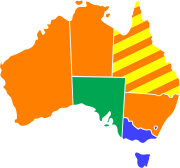 Since 13 August 2004 (after assent) under the Marriage Amendment Act 2004 (Commonwealth law) which amended the Marriage Act 1961, the Australian Government has banned same-sex marriages from being performed or recognised in Australia and overseas at a Commonwealth level http://www.austlii.edu.au/au/legis/cth/consol_act/ma196185/.
All levels of Australian Governments under nearly all Australian statutes do recognise same-sex couples as de facto couples as unregistered co-habitation or de facto status since 2009 http://www.austlii.edu.au/au/legis/cth/num_act/srticllra2008769/. From 1 July 2009 Centrelink recognised same-sex couples equally regarding social security – under the common-law marriage, de facto status or unregistered cohabitation http://www.centrelink.gov.au/internet/internet.nsf/individuals/same_sex.htm.
Registered partnership recognition in state Governments:
Australian legislation
Registered partnership recognition in local governments:
was approved by 10-0 with one abstention. The ruling will give gay couples in "stable" partnerships the same financial and social rights enjoyed by those in opposite-sex relationships.
:
were extended to same-sex couples before the enactment (2005) nationwide of same-sex marriage in Canada
.
came close to passing a law granting legal recognition to same-sex couples, but the bill failed on final passage in one house of the national legislature.
However, a court decision in October 2007 extended social security and health insurance rights to same-sex couples. On January 29, 2009, the Constitutional Court ruled that cohabitating same-sex couples must be given all rights offered to unmarried heterosexual couples. Making Colombia the first Latin American country to fully grant this right to all its citizens. Couples can claim these rights after living together for two years.
by law on June 7, 1989, the world's first such law, and came into effect October 1 that year. It has the name of a registered partnership (Danish: "registreret partnerskab"), but has almost all the same qualities as marriage. Today it provides all the same legal and fiscal rights and obligations that come with a heterosexual marriage, with two exceptions:
Registered partnership is by civil ceremony only. The Church of Denmark
has yet to decide how to handle the issue, but the general attitude of the church seems positive but hesitant. Some priests perform blessings of gay couples, and this is accepted by the church, which states that the church blesses people, not institutions.
Divorce for registered partners follows the same rules as ordinary divorces.
Only citizens of Denmark, Finland, Sweden, Norway and Iceland can enter into a registered partnership in Denmark. This list is adjusted whenever a new country legalizes same-sex unions. This rule excludes foreigners from gaining a registered partnership status that would not be legally recognised in their home country or state.
As of January 1, 2002, there were more than 2,000 registered partnerships in Denmark, of which 220 had children.
On March 17, 2009, the Folketing
introduced a bill that gives same-sex couples in registered partnerships the right to adopt jointly. This bill was approved on 4 May 2010 and took effect on 1 July 2010.
law providing benefits to same-sex couples also applies to opposite-sex couples who choose this form of partnership over marriage. Known as the "Pacte civil de solidarité" (PACS), it is more easily dissolved than the divorce process applying to marriage. Tax benefits accrue immediately (only from 2007 on *Ref), while immigration benefits accrue only after the contract has been in effect for one year. The partners are required to have a common address, making it difficult for foreigners to use this law as a means to a residence permit, and difficult for French citizens to gain the right to live with a foreign partner – especially since the contract does not automatically give immigration rights, as does marriage.
(2011)
 On 9 November 2006, Mexico City
's unicameral Legislative Assembly
passed and approved (43–17) a bill legalizing same-sex civil unions
, under the name Ley de Sociedades de Convivencia (Law for Co-existence Partnerships), which became effective in 16 March 2007. The law recognizes property
and inheritance
rights to same-sex couples. On 11 January 2007, the northern state of Coahuila
, which borders Texas, passed a similar bill (20–13), under the name Pacto Civil de Solidaridad (Civil Pact of Solidarity). Unlike Mexico City's law, once same-sex couples have registered in Coahuila, the state protects their rights no matter where they live in the country. Twenty days after the law had passed, the country's first same-sex civil union took place in Saltillo, Coahuila. Civil unions have been proposed in at least six states since 2006.
In Colima
, governor
Mario Anguiano Moreno has agreed to discuss the legalization of civil unions and adoption by same-sex couples.
passed a law allowing same-sex couples to marry, in addition to its 1998 "registered partnership" law (civil union) for both same-sex and opposite-sex couples.
Parliament passed the Civil Union Bill, establishing civil unions for same-sex and opposite-sex couples. The debate over Civil Unions was highly divisive in New Zealand, inspiring great public emotion both for and against the passing. A companion bill, the Relationships (Statutory References) Bill was passed shortly thereafter to remove discriminatory provisions on the basis of relationship status from a range of statutes and regulations. As a result of these bills, all couples in New Zealand, whether married, in a civil union, or in a de facto partnership, now generally enjoy the same rights and undertake the same obligations. These rights extend to immigration, next-of-kin status, social welfare, matrimonial property and other areas.
The Civil Union Act came into effect on 26 April 2005 with the first unions able to occur from Friday 29 April 2005.
on an opposition Bill to introduce civil unions, the government of the Republic of Ireland
announced that it will be introducing its own legislation to create civil unions in March 2008. This was delayed but was released in June 2008. The Civil Partnership Bill, 2009 is expected to become law by October 2010 at the latest.
On Thursday, July 1, 2010 the lower house of the Irish Parliament Dáil Éireann
passed the bill on Civil Partnerships unanimously. This bill allows civil partnerships of same-sex couples, and establishes an extensive package of rights, obligations and protections for same-sex couples who register as civil partners. The bill passed all stages of in both Houses of the Oireachtas http://www.irishtimes.com/newspaper/breaking/2010/0708/breaking59.html, and came into effect on 1 January 2011. It had been expected that the first Civil Partnerships would take place in April 2011 due to : the need for further legislation to update Ireland's tax code and social welfare laws, and a legal requirement to give three months notice. However, the legislation does provide a mechanism for exemptions to be sought through the courts, and the first partnership between two men was registered on the 7th of February 2011.
legalized same-sex marriage in 2006. Same-sex and opposite-sex couples may register their unions either as marriages or as civil partnerships, but there is no legal difference other than the name.
has a law on cantonal level, the Partenariat cantonal (the Cantonal Domestic Partnership), since 2001. It grants unmarried couples
, whether same-sex or opposite-sex, many rights, responsibilities and protections that married couples have. However, it does not allow benefits in taxation, social security, or health insurance premiums (unlike the federal law). Geneva was the first Canton to recognise same-sex couples through this law.
On September 22, 2002, voters in the Swiss
canton of Zürich
voted to extend a number of marriage rights to same-sex partners, including tax, inheritance, and social security benefits. The law is limited to same-sex couples, and both partners must have lived in the canton for six months and formally commit to running a household together and supporting and aiding each another.
On June 5, 2005, voters extended this right to the whole of Switzerland, through a federal referendum. This was the first time that the civil union laws were affirmed in a nationwide referendum in any country. The Federal Domestic Partnership Law, reserved to same-sex couples came into force on January 1, 2007. Although it represents progress for gays and lesbians in Switzerland, adoption rights and medically assisted procreation are explicitly forbidden for same-sex domestic partners.
government announced plans to introduce civil partnerships which would allow same-sex couples the rights and responsibilities resulting from marriage. The Civil Partnership Bill
was introduced into the House of Lords
on March 30, 2004. After considering amendments made by the House of Commons, it was passed by the House of Lords, its final legislative hurdle, on November 17, 2004, and received Royal Assent
on November 18. The Act came into force on 5 December 2005, and same-sex, but not opposite-sex, couples were able to form the civil partnerships from 19 December 2005 in Northern Ireland
, 20 December 2005 in Scotland
and 21 December 2005 in England
and Wales
. Separate provisions were included in the first Finance Act 2005 to allow regulations to be made to amend tax laws to give the same tax advantages and disadvantages to couples in civil partnerships as apply to married couples.
In order to counter claims that this is instituting same-sex marriage, government spokespersons emphasised that civil partnership is quite separate from marriage. However, in September 2011, the UK Government Announced that Same-Sex Civil Marriage would be legalised, by 2015 at the latest. . The future status of civil partnerships is unclear.
Aside from the manner in which couples register and the non-use of the word "marriage", civil partnerships and civil marriages give exactly the same legal rights and operate under the same constrictions and it is not legal to be in both a civil partnership and a marriage at the same time. Nevertheless, some of those in favour of legal same-sex marriage object that civil partnerships fall short of granting equality. They see legal marriage and civil partnerships as artificially segregated institutions, and draw parallels with the racial segregation
of the United States
' past. Civil partnership ceremonies are prohibited by law from including religious readings, symbols or music, even if the church involved supports such use.
Both same-sex marriages and civil unions of other nations will be automatically considered civil partnerships under UK law providing they came within Section 20 of the Act. This means, in some cases, non-Britons from nations with civil unions will have greater rights in the UK than in their native countries. For example, a Vermont civil union would have legal standing in the UK, however in cases where one partner was American and the other British, the Vermont civil union would not provide the Briton with right of abode in Vermont (or any other US state or territory), whereas it would provide the American with right of abode in the UK.
In 2007, the Christian Party stood in the Scottish Parliament elections
and criticised civil partnership in its manifesto as "inequitable, partial, and thus unfair" and demanded to change it to allow committed people that live together such as siblings, friends and parents and offsprings.
of 1996 (DOMA), other U.S. states are not obligated to recognize them. By the end of 2006, Connecticut
and New Jersey had also enacted civil union laws; New Hampshire followed in 2007. Furthermore, California's domestic partnership law had been expanded to the point that it became practically a civil union law, as well. The same might be said for domestic partnership in the District of Columbia, domestic partnership in Washington
, and domestic partnership in Oregon
.
Jurisdictions in the U.S. that offer civil unions or domestic partnerships granting nearly all of the state-recognized rights of marriage to same-sex couples include:
States in the U.S. with domestic partnerships or similar status granting some of the rights of marriage include:
 In California, where domestic partnership (DP) has been available to same-sex couples since 2000, a wholesale revision of the law in 2005 made it substantially equivalent to marriage at the state level. In 2007, the Legislature took a further step toward equality when it required same-sex DP couples to file state income taxes jointly. (Couples must continue to file federal taxes as individuals.) In the May 2008 In Re Marriage Cases
decision, the state supreme court noted nine differences between Domestic Partnerships and same-sex marriage in state law, including a cohabitation requirement for domestic partners, access to CalPERS long-term care insurance (but not CalPERS in general), and the lack of an equivalent to California's "confidential marriage" institution.
passed a bill to adopt civil unions in Connecticut. Connecticut's civil unions were identical to marriage and provided all of the same rights and responsibilities except for the title. Connecticut was the first state in the U.S. to voluntarily pass a same-sex civil unions law through the legislature without any immediate court intervention. The law was repealed on October 1, 2010, and replaced with a law making marriage gender-neutral.
(state legislature) passed a civil union bill, and Governor John Lynch signed the bill into law on May 31, 2007. At the time, New Hampshire was "...the first state to embrace same-sex unions without a court order or the threat of one." The New Hampshire civil union legislation became effective on January 1, 2008. The law was replaced by the same-sex marriage law on January 1, 2010.
180 days to rewrite the state's marriage laws, either including same-sex couples or creating a new system of civil unions for them. On December 14 the Legislature passed a bill establishing civil unions in New Jersey, which was signed into law by Governor
Jon Corzine
on December 21, 2006. The first civil unions took place on February 19, 2007.
There are differences between civil unions and domestic partnerships. In 2004, the state of New Jersey
enacted a domestic partnership law, offering certain limited rights and benefits to same-sex and different-sex couples. In 2006, however, after a state Supreme Court ruling
that same-sex couples must be extended all the rights and benefits of marriage, the Legislature passed a civil unions law, effective in 2007, which is an attempt to satisfy the court's ruling.
See: Domestic partnership in Oregon
in 2000 was a response to the Vermont Supreme Court
ruling in Baker v. Vermont
, requiring that the state grant same-sex couples the same rights and privileges accorded to married couples under the law. There were still many people who were strongly opposed to the idea of same-sex marriage, so the legislature enacted civil unions as a compromise between groups seeking identical rights for homosexual
couples and groups objecting to same-sex marriage
. One of the most instrumental champions of the bill in the Vermont House was a three-term legislator from Washington, Marion Milne. As happened to many other proponents of the law, her conservative home district responded by not re-electing her in the 2000 elections.
A Vermont civil union is nearly identical to a legal marriage, as far as the rights and responsibilities for which state law, not federal law, is responsible are concerned. It grants partners next-of-kin rights and other protections that heterosexual married couples also receive. However, despite the "full faith and credit" clause
of the United States Constitution
, civil unions are generally not recognized outside Vermont in the absence of specific legislation. Opponents of the law have supported the Defense of Marriage Act
and the proposed Federal Marriage Amendment
in order to prevent obligatory recognition of same-sex couples in other jurisdictions. This means that many of the advantages of marriage, which fall in the federal jurisdiction (over 1,100 federal laws, such as joint federal income tax returns, visas and work permits for the foreign partner of a U.S. citizen, etc.), are not extended to the partners of a Vermont civil union.
As far as voluntary recognition of the civil union in other jurisdictions is concerned, New York City
's Domestic Partnership Law, passed in 2002, recognizes civil unions formalized in other jurisdictions. Germany
's international civil law (EGBGB) also accords to Vermont civil unions the same benefits and responsibilities that apply in Vermont, as long as they do not exceed the standard accorded by German law to a German civil union. The law was replaced by the same-sex marriage law on September 1, 2009.
Marriage
Marriage is a social union or legal contract between people that creates kinship. It is an institution in which interpersonal relationships, usually intimate and sexual, are acknowledged in a variety of ways, depending on the culture or subculture in which it is found...
. Beginning with Denmark in 1989, civil unions under one name or another have been established by law in many developed countries in order to provide same-sex couples
Homosexuality
Homosexuality is romantic or sexual attraction or behavior between members of the same sex or gender. As a sexual orientation, homosexuality refers to "an enduring pattern of or disposition to experience sexual, affectional, or romantic attractions" primarily or exclusively to people of the same...
right
Right
Rights are legal, social, or ethical principles of freedom or entitlement; that is, rights are the fundamental normative rules about what is allowed of people or owed to people, according to some legal system, social convention, or ethical theory...
s, benefits, and responsibilities
Moral responsibility
Moral responsibility usually refers to the idea that a person has moral obligations in certain situations. Disobeying moral obligations, then, becomes grounds for justified punishment. Deciding what justifies punishment, if anything, is a principle concern of ethics.People who have moral...
similar (in some countries, identical) to opposite-sex civil marriage. In some jurisdiction
Jurisdiction
Jurisdiction is the practical authority granted to a formally constituted legal body or to a political leader to deal with and make pronouncements on legal matters and, by implication, to administer justice within a defined area of responsibility...
s, such as Brazil, New Zealand, and Uruguay
Civil unions in Uruguay
On January 1, 2008, Uruguay became the first Latin American country to have a national civil union law, titled Ley de Unión Concubinaria.The bill for legalization, proposed by Senator Margarita Percovich of the Broad Front, was passed in Chamber of Deputies on 29 November 2007 after having been...
, civil unions are also open to opposite-sex couples.
Many countries with civil unions recognize foreign unions if those are essentially equivalent to their own; for example, the United Kingdom
United Kingdom
The United Kingdom of Great Britain and Northern IrelandIn the United Kingdom and Dependencies, other languages have been officially recognised as legitimate autochthonous languages under the European Charter for Regional or Minority Languages...
lists equivalent unions in Civil Partnership Act Schedule 20.
Supporters of civil unions contend that civil unions grant same-sex couples equal rights to married couples. Some commentators, such as Ian Ayres
Ian Ayres
Ian Ayres is an American academic who is the William K. Townsend Professor at the Yale Law School and a Professor at the Yale School of Management.-Biography:...
, are critical of civil unions because they say they represent a separate status unequal to marriage. According to an American history scholar Nancy Cott "there really is no comparison, because there is nothing that is like marriage except marriage." Others, such as Robert Knight
Robert H. Knight
Robert H. Knight is an American conservative activist and writer. He was a draftsman of the federal Defense of Marriage Act, the law that defines marriage as the union of one man and one woman for all federal purposes and allows states to resist demands to recognize same-sex marriages performed...
, are critical because they say civil unions endow the same rights and privileges of heterosexual marriages — alleging that they allow same-sex marriage
Same-sex marriage
Same-sex marriage is marriage between two persons of the same biological sex or social gender. Supporters of legal recognition for same-sex marriage typically refer to such recognition as marriage equality....
by using a different name.
Overview and terminology
The terms used to designate civil unions are not standardized, and vary widely from country to country. Government-sanctioned relationships that may be similar or equivalent to civil unions include civil partnerships, registered partnerships, domestic partnershipDomestic partnership
A domestic partnership is a legal or personal relationship between two individuals who live together and share a common domestic life but are neither joined by marriage nor a civil union...
s, significant relationship
Domestic partnership in Tasmania
Tasmania's Relationships Act 2003 provided for registration and recognition of a type of registered partnership in two distinct categories: Significant Relationships and Caring Relationships. The same Act also amended 73 pieces of legislation to provide registered partners with nearly all of the...
s, reciprocal beneficiary relationships, common-law marriage
Common-law marriage
Common-law marriage, sometimes called sui juris marriage, informal marriage or marriage by habit and repute, is a form of interpersonal status that is legally recognized in limited jurisdictions as a marriage even though no legally recognized marriage ceremony is performed or civil marriage...
, adult interdependent relationships
Adult interdependent relationship in Alberta
Since 2003, Adult interdependent relationships have been available to both same-sex and opposite-sex couples in the Canadian province of Alberta, imposing some but not all of the obligations of marriage and providing some but not all the rights and benefits thereof.According to the Alberta Ministry...
, life partnerships, stable unions
Recognition of same-sex unions in Andorra
In March 2005, the Principality of Andorra legalised the stable union of a couple.This new law took effect without the signature of the episcopal co-prince Joan Enric, the current Bishop of Urgell...
, civil solidarity pacts
Pacte civil de solidarité
In France, a pacte civil de solidarité commonly known as a PACS /paks/ , is a form of civil union between two adults for organising their joint life. It brings rights and responsibilities, but less so than marriage...
, and so on. The exact level of rights, benefits, obligations, and responsibilities also varies, depending on the laws of a particular country. Some jurisdictions allow same-sex couples to adopt, while others forbid them to do so, or allow adoption only in specified circumstances.
As used in the United States
United States
The United States of America is a federal constitutional republic comprising fifty states and a federal district...
, beginning with the state of Vermont
Civil unions in Vermont
Same-sex marriage in Vermont began on September 1, 2009. Vermont was the first state to introduce civil unions in July 2000, and the first state to introduce same-sex marriage by enacting a statute without being required to do so by a court decision....
in 2000, the term civil union has connoted a status equivalent to marriage for same-sex couples; domestic partnership
Domestic partnership
A domestic partnership is a legal or personal relationship between two individuals who live together and share a common domestic life but are neither joined by marriage nor a civil union...
, offered by some states, counties, cities, and employers since as early as 1985, has generally connoted a lesser status with fewer benefits. However, the legislatures of the West Coast
West Coast of the United States
West Coast or Pacific Coast are terms for the westernmost coastal states of the United States. The term most often refers to the states of California, Oregon, and Washington. Although not part of the contiguous United States, Alaska and Hawaii do border the Pacific Ocean but can't be included in...
states of California, Oregon
Domestic partnership in Oregon
In April and May 2007, following a previous attempt in 2005, the Oregon state legislature passed legislation to make virtually all of the rights afforded to married couples available to same-sex couples. The new status will be referred to in Oregon law as a domestic partnership, avoiding the use...
and Washington
Domestic partnership in Washington
State Registered Domestic Partnerships in Washington were created in the aftermath of the Andersen v. King County decision. Subsequent legislation has made a SRDP the equivalent of marriage under state law.-Beginnings:...
have preferred the term domestic partnership for enactments similar or equivalent to civil union laws in East Coast
East Coast of the United States
The East Coast of the United States, also known as the Eastern Seaboard, refers to the easternmost coastal states in the United States, which touch the Atlantic Ocean and stretch up to Canada. The term includes the U.S...
states.
Civil unions are not seen as a replacement for marriage by many in the gay community. "Marriage in the United States is a civil union; but a civil union, as it has come to be called, is not marriage," said Evan Wolfson
Evan Wolfson
Evan Wolfson is an American civil rights attorney and advocate. He is founder and executive director of Freedom to Marry, a group favoring same-sex marriage in the United States...
of Freedom to Marry
Freedom to Marry
Freedom to Marry is a non-profit organization leading the campaign for same-sex marriages to be recognized nationwide in the United States of America...
. "It is a proposed hypothetical legal mechanism, since it doesn’t exist in most places, to give some of the protections but also withhold something precious from gay people. There’s no good reason to do that." However, some opponents of same-sex marriage view the matter differently; Randy Thomasson, Executive Director of the Campaign for California Families, calls civil unions “homosexual marriage by another name” and contends that civil unions provide same-sex couples “all the rights of marriage available under state law.” The California Supreme Court, in the In Re Marriage Cases
In re Marriage Cases
In re Marriage Cases 43 Cal.4th 757 [76 Cal.Rptr.3d 683, 183 P.3d 384], was a California Supreme Court case with the dual holding that "statutes that treat persons differently because of their sexual orientation should be subjected to strict scrutiny" and the existing "California legislative and...
decision, noted nine differences in state law.
Civil unions are commonly criticised as being 'separate but equal
Separate but equal
Separate but equal was a legal doctrine in United States constitutional law that justified systems of segregation. Under this doctrine, services, facilities and public accommodations were allowed to be separated by race, on the condition that the quality of each group's public facilities was to...
', critics say they segregate same-sex couples by forcing them to use a separate institution. Supporters of same-sex marriage contend that treating same-sex couples differently from other couples under the law allows for inferior treatment and that if civil unions were the same as marriage there would be no reason for two separate laws. A New Jersey commission which reviewed the state's civil union law reported that the law "invites and encourages unequal treatment of same-sex couples and their children". Some have suggested that creating civil unions which are open to opposite-sex couples would avoid the accusations of apartheid. These have still been criticised as being 'separate but equal' by former New Zealand
New Zealand
New Zealand is an island country in the south-western Pacific Ocean comprising two main landmasses and numerous smaller islands. The country is situated some east of Australia across the Tasman Sea, and roughly south of the Pacific island nations of New Caledonia, Fiji, and Tonga...
MP and feminist Marilyn Waring
Marilyn Waring
Marilyn Waring, CNZM, D.Phil., D.Litt. is a New Zealand feminist, a politician, an activist for female human rights and environmental issues, an author and an academic, known for her contributions to feminist economics....
as same-sex couples remain excluded from the right to marry.
Proponents of civil unions say that they provide practical equality for same-sex couples and solve the problems over areas such as hospital visitation rights and transfer of property caused by lack of legal recognition. Proponents also say that creating civil unions is a more pragmatic way to ensure that same-sex couples have legal rights as it avoids the more controversial issues surrounding marriage.
Many supporters of same-sex marriage state that the word 'marriage' matters and that the term 'civil union' (and its equivalents) do not convey the emotional meaning or bring the respect that comes with marriage. Former US Solicitor General and attorney in the Perry v. Schwarzenegger
Perry v. Schwarzenegger
Perry v. Schwarzenegger is a federal lawsuit filed in the United States District Court for the Northern District of California challenging the federal constitutionality of Proposition 8, a 2008 ballot initiative that amended the California Constitution to restrict marriage to opposite-sex couples,...
case Theodore Olsen said that recognising same-sex couples under the term 'domestic partnership' stigmatizes gay people's relationships treating them as if they were "something akin to a commercial venture, not a loving union". Many also contend that the fact that civil unions are often not understood can cause difficulty for same-sex couples in emergency situations.
List of jurisdictions recognising same-sex unions
Argentina
From 2003 the Argentine province of Rio NegroRío Negro Province
Río Negro is a province of Argentina, located at the northern edge of Patagonia. Neighboring provinces are from the south clockwise Chubut, Neuquén, Mendoza, La Pampa and Buenos Aires. To the east lies the Atlantic Ocean.Its capital is Viedma...
and the city of Buenos Aires
Buenos Aires
Buenos Aires is the capital and largest city of Argentina, and the second-largest metropolitan area in South America, after São Paulo. It is located on the western shore of the estuary of the Río de la Plata, on the southeastern coast of the South American continent...
allow domestic partnerships. The City of Villa Carlos Paz
Villa Carlos Paz
Villa Carlos Paz is a city in the center-north of the province of Córdoba, Argentina, in the south of the Punilla Valley, lying on the western slope of the Sierras Chicas. It has a population of about 56,000 as per the...
(Córdoba) allowed it from 2007. And since 2009 the city of Río Cuarto
Río Cuarto, Córdoba
-References:* - Official website....
(Córdoba) allows Civil Unions too.
Australia
All levels of Australian Governments under nearly all Australian statutes do recognise same-sex couples as de facto couples as unregistered co-habitation or de facto status since 2009 http://www.austlii.edu.au/au/legis/cth/num_act/srticllra2008769/. From 1 July 2009 Centrelink recognised same-sex couples equally regarding social security – under the common-law marriage, de facto status or unregistered cohabitation http://www.centrelink.gov.au/internet/internet.nsf/individuals/same_sex.htm.
Registered partnership recognition in state Governments:
| Official relationship status | Year of enactment | |
|---|---|---|
| ACT Australian Capital Territory The Australian Capital Territory, often abbreviated ACT, is the capital territory of the Commonwealth of Australia and is the smallest self-governing internal territory... |
 |
2008 |
| New South Wales New South Wales New South Wales is a state of :Australia, located in the east of the country. It is bordered by Queensland, Victoria and South Australia to the north, south and west respectively. To the east, the state is bordered by the Tasman Sea, which forms part of the Pacific Ocean. New South Wales... |
|
2010 |
| Northern Territory Northern Territory The Northern Territory is a federal territory of Australia, occupying much of the centre of the mainland continent, as well as the central northern regions... |
Defined as 'De facto', no registry | – |
| Queensland Queensland Queensland is a state of Australia, occupying the north-eastern section of the mainland continent. It is bordered by the Northern Territory, South Australia and New South Wales to the west, south-west and south respectively. To the east, Queensland is bordered by the Coral Sea and Pacific Ocean... |
|
2011 |
| South Australia South Australia South Australia is a state of Australia in the southern central part of the country. It covers some of the most arid parts of the continent; with a total land area of , it is the fourth largest of Australia's six states and two territories.South Australia shares borders with all of the mainland... |
|
2007 |
| Tasmania Tasmania Tasmania is an Australian island and state. It is south of the continent, separated by Bass Strait. The state includes the island of Tasmania—the 26th largest island in the world—and the surrounding islands. The state has a population of 507,626 , of whom almost half reside in the greater Hobart... |
|
2004 |
| Victoria Victoria (Australia) Victoria is the second most populous state in Australia. Geographically the smallest mainland state, Victoria is bordered by New South Wales, South Australia, and Tasmania on Boundary Islet to the north, west and south respectively.... |
|
2008 |
| Western Australia Western Australia Western Australia is a state of Australia, occupying the entire western third of the Australian continent. It is bounded by the Indian Ocean to the north and west, the Great Australian Bight and Indian Ocean to the south, the Northern Territory to the north-east and South Australia to the south-east... |
Defined as 'De facto', no registry | – |
Australian legislation
- Recognition of same-sex unions in Australia at federal level
- Recognition of same-sex unions in the Australian Capital TerritoryRecognition of same-sex unions in the Australian Capital TerritoryThe Australian Capital Territory was the first jurisdiction in Australia to legally recognise same-sex couples in 1994. It was the second to allow joint adoption petitions by same-sex couples in 2003, following Western Australia...
- LGBT rights in New South WalesLGBT rights in New South Wales-Activism and decriminalization:The Campaign Against Moral Persecution, also known as C.A.M.P., was founded in Sydney in September 1970 and was one of Australia's fist gay rights organisations. C.A.M.P...
- Domestic partnership in TasmaniaDomestic partnership in TasmaniaTasmania's Relationships Act 2003 provided for registration and recognition of a type of registered partnership in two distinct categories: Significant Relationships and Caring Relationships. The same Act also amended 73 pieces of legislation to provide registered partners with nearly all of the...
Registered partnership recognition in local governments:
- City of SydneyCity of SydneyThe City of Sydney is the Local Government Area covering the Sydney central business district and surrounding inner city suburbs of the greater metropolitan area of Sydney, Australia...
, New South WalesNew South WalesNew South Wales is a state of :Australia, located in the east of the country. It is bordered by Queensland, Victoria and South Australia to the north, south and west respectively. To the east, the state is bordered by the Tasman Sea, which forms part of the Pacific Ocean. New South Wales...
– Registered partnerships since 2004; - City of MelbourneCity of MelbourneThe City of Melbourne is a Local Government Area in Victoria, Australia, located in the central city area of Melbourne. The city has an area of 36 square kilometres and has an estimated population of 93,105 people. The city's motto is "Vires acquirit eundo" which means "She gathers strength as she...
, VictoriaVictoria (Australia)Victoria is the second most populous state in Australia. Geographically the smallest mainland state, Victoria is bordered by New South Wales, South Australia, and Tasmania on Boundary Islet to the north, west and south respectively....
– Registered partnerships since 2007; - City of YarraCity of YarraThe City of Yarra is a Local Government Area in Victoria, Australia, located in the inner eastern and northern suburbs of Melbourne. It has an area of 19.5 square kilometres, and at the 2006 census it had a population of 69,330...
, VictoriaVictoria (Australia)Victoria is the second most populous state in Australia. Geographically the smallest mainland state, Victoria is bordered by New South Wales, South Australia, and Tasmania on Boundary Islet to the north, west and south respectively....
– Registered partnerships since 2007.
Brazil
Same-sex civil unions in Brazil are legal since May 5, 2011. Brazil's Supreme Court has voted overwhelmingly in favour of allowing same-sex couples the same legal rights as married couples. The decisionDecision
A decision is the selection between possible actions.A choice is the selection between two or more objects.The term decision may refer to:* Judgment , as the outcome of a legal case...
was approved by 10-0 with one abstention. The ruling will give gay couples in "stable" partnerships the same financial and social rights enjoyed by those in opposite-sex relationships.
Canada
In CanadaCanada
Canada is a North American country consisting of ten provinces and three territories. Located in the northern part of the continent, it extends from the Atlantic Ocean in the east to the Pacific Ocean in the west, and northward into the Arctic Ocean...
:
- Domestic partnerships in Nova ScotiaDomestic partnership in Nova ScotiaSince June 4, 2001, the Canadian province of Nova Scotia has offered Domestic partnership registration to unmarried couples, both same-sex and different-sex, thereby entitling them to some, but not all, of the rights and benefits of marriage.-Legislation:...
(2001), - Civil unions in QuebecCivil unions in QuebecCivil unions in Quebec are available in Quebec to both opposite-sex and same-sex couples and generally creates the same rights for the partners as a traditional marriage.As a result of a range of activism and to the M. v...
(2002), - Common-law relationships in ManitobaCommon-law relationships in ManitobaCommon-law relationships in Manitoba are government-sanctioned relationships available to both same-sex and different-sex unmarried couples in the Canadian province of Manitoba. While not as extensive as the rights and benefits of marriage, these relationships provide some important benefits to...
(2002), and - Adult interdependent relationships in AlbertaAdult interdependent relationship in AlbertaSince 2003, Adult interdependent relationships have been available to both same-sex and opposite-sex couples in the Canadian province of Alberta, imposing some but not all of the obligations of marriage and providing some but not all the rights and benefits thereof.According to the Alberta Ministry...
(2003)
were extended to same-sex couples before the enactment (2005) nationwide of same-sex marriage in Canada
Same-sex marriage in Canada
On July 20, 2005, Canada became the fourth country in the world and the first country in the Americas to legalize same-sex marriage nationwide with the enactment of the Civil Marriage Act which provided a gender-neutral marriage definition...
.
Colombia
In 2007, ColombiaColombia
Colombia, officially the Republic of Colombia , is a unitary constitutional republic comprising thirty-two departments. The country is located in northwestern South America, bordered to the east by Venezuela and Brazil; to the south by Ecuador and Peru; to the north by the Caribbean Sea; to the...
came close to passing a law granting legal recognition to same-sex couples, but the bill failed on final passage in one house of the national legislature.
However, a court decision in October 2007 extended social security and health insurance rights to same-sex couples. On January 29, 2009, the Constitutional Court ruled that cohabitating same-sex couples must be given all rights offered to unmarried heterosexual couples. Making Colombia the first Latin American country to fully grant this right to all its citizens. Couples can claim these rights after living together for two years.
Denmark
Civil unions were introduced in DenmarkDenmark
Denmark is a Scandinavian country in Northern Europe. The countries of Denmark and Greenland, as well as the Faroe Islands, constitute the Kingdom of Denmark . It is the southernmost of the Nordic countries, southwest of Sweden and south of Norway, and bordered to the south by Germany. Denmark...
by law on June 7, 1989, the world's first such law, and came into effect October 1 that year. It has the name of a registered partnership (Danish: "registreret partnerskab"), but has almost all the same qualities as marriage. Today it provides all the same legal and fiscal rights and obligations that come with a heterosexual marriage, with two exceptions:
- laws making explicit reference to the sexes of a married couple don't apply to registered partnerships
- regulations by international treaties do not apply unless all signatories agree.
Registered partnership is by civil ceremony only. The Church of Denmark
Church of Denmark
The Evangelical Lutheran Church in Denmark, Church of Denmark or Danish National Church, is the state church and largest denomination in Denmark and Greenland...
has yet to decide how to handle the issue, but the general attitude of the church seems positive but hesitant. Some priests perform blessings of gay couples, and this is accepted by the church, which states that the church blesses people, not institutions.
Divorce for registered partners follows the same rules as ordinary divorces.
Only citizens of Denmark, Finland, Sweden, Norway and Iceland can enter into a registered partnership in Denmark. This list is adjusted whenever a new country legalizes same-sex unions. This rule excludes foreigners from gaining a registered partnership status that would not be legally recognised in their home country or state.
As of January 1, 2002, there were more than 2,000 registered partnerships in Denmark, of which 220 had children.
On March 17, 2009, the Folketing
Folketing
The Folketing , is the national parliament of Denmark. The name literally means "People's thing"—that is, the people's governing assembly. It is located in Christiansborg Palace, on the islet of Slotsholmen in central Copenhagen....
introduced a bill that gives same-sex couples in registered partnerships the right to adopt jointly. This bill was approved on 4 May 2010 and took effect on 1 July 2010.
Ecuador
The 2008 Constitution of Ecuador enacted civil unions between two people without regard to gender, giving same-sex couples the same rights as legally married heterosexual couples except for the right to adopt.Europe
In Europe,- Denmark (1989)
- NorwaySame-sex marriage in NorwaySame-sex marriage became legal in Norway on January 1, 2009 when a gender neutral marriage bill was enacted after being passed by the Norwegian legislature in June 2008...
(1993) - SwedenSame-sex marriage in SwedenSame-sex marriage in Sweden has been legal since 1 May 2009, following the adoption of a new, gender-neutral law on marriage by the Swedish parliament on 1 April 2009, making Sweden the seventh country in the world to open marriage to same sex couples nationwide...
(1995) - Iceland (1996)
- GreenlandLGBT rights in GreenlandLesbian, gay, bisexual, transgender rights in Greenland are very similar to those in Denmark, and are among the most liberal in the world, but do not allow full marriage. Same-sex sexual activity is legal, with an equal age of consent, and there are broad anti-discrimination laws...
(1996) - NetherlandsSame-sex marriage in the NetherlandsSame-sex marriage has been legal in the Netherlands since 1 April 2001...
(1998) - FrancePacte civil de solidaritéIn France, a pacte civil de solidarité commonly known as a PACS /paks/ , is a form of civil union between two adults for organising their joint life. It brings rights and responsibilities, but less so than marriage...
(1999) - BelgiumSame-sex marriage in BelgiumOn June 1, 2003, Belgium became the second country in the world to legally recognize same-sex marriage, with some restrictions. Originally, Belgium allowed the marriages of foreign same-sex couples only if their country of origin also allowed these unions...
(2000) - Finland (2002)
- Germany (2001)
- Luxembourg (2004)
- AndorraRecognition of same-sex unions in AndorraIn March 2005, the Principality of Andorra legalised the stable union of a couple.This new law took effect without the signature of the episcopal co-prince Joan Enric, the current Bishop of Urgell...
(2005) - United Kingdom (2005)
- Czech Republic (2006)
- Slovenia (2006)
- Switzerland (2007)
- HungaryRecognition of same-sex unions in HungaryHungary provides registered partnerships to same-sex couples since 1 July 2009. This institution offers nearly all the benefits of marriage. The unregistered cohabitation of same-sex couples was recognised and placed on equal footing with the unregistered cohabitation of different-sex couples in...
(2009) - Austria (2010)
- Ireland (2011)
- Liechtenstein (2011)
France
The FrenchFrance
The French Republic , The French Republic , The French Republic , (commonly known as France , is a unitary semi-presidential republic in Western Europe with several overseas territories and islands located on other continents and in the Indian, Pacific, and Atlantic oceans. Metropolitan France...
law providing benefits to same-sex couples also applies to opposite-sex couples who choose this form of partnership over marriage. Known as the "Pacte civil de solidarité" (PACS), it is more easily dissolved than the divorce process applying to marriage. Tax benefits accrue immediately (only from 2007 on *Ref), while immigration benefits accrue only after the contract has been in effect for one year. The partners are required to have a common address, making it difficult for foreigners to use this law as a means to a residence permit, and difficult for French citizens to gain the right to live with a foreign partner – especially since the contract does not automatically give immigration rights, as does marriage.
Liechtenstein
LiechtensteinLiechtenstein
The Principality of Liechtenstein is a doubly landlocked alpine country in Central Europe, bordered by Switzerland to the west and south and by Austria to the east. Its area is just over , and it has an estimated population of 35,000. Its capital is Vaduz. The biggest town is Schaan...
(2011)
Mexico
Mexico City
Mexico City is the Federal District , capital of Mexico and seat of the federal powers of the Mexican Union. It is a federal entity within Mexico which is not part of any one of the 31 Mexican states but belongs to the federation as a whole...
's unicameral Legislative Assembly
Legislative Assembly of the Federal District
The Legislative Assembly of the Federal District is the legislative branch of government of the Mexican Federal District. Between 1988 and 1993, it was known as the Assembly of Representatives of the Federal District , during which period it had reduced powers with respect to the current...
passed and approved (43–17) a bill legalizing same-sex civil unions
Recognition of same-sex unions in Mexico
In Mexico, only civil marriages are recognized by the law and all its proceedings fall under local state legislation. Same-sex marriages are legally performed in Mexico City and same-sex civil unions are legally performed in Mexico City and the northern state of Coahuila , whose legal residents...
, under the name Ley de Sociedades de Convivencia (Law for Co-existence Partnerships), which became effective in 16 March 2007. The law recognizes property
Property
Property is any physical or intangible entity that is owned by a person or jointly by a group of people or a legal entity like a corporation...
and inheritance
Inheritance
Inheritance is the practice of passing on property, titles, debts, rights and obligations upon the death of an individual. It has long played an important role in human societies...
rights to same-sex couples. On 11 January 2007, the northern state of Coahuila
Coahuila
Coahuila, formally Coahuila de Zaragoza , officially Estado Libre y Soberano de Coahuila de Zaragoza is one of the 31 states which, with the Federal District, comprise the 32 Federal Entities of Mexico...
, which borders Texas, passed a similar bill (20–13), under the name Pacto Civil de Solidaridad (Civil Pact of Solidarity). Unlike Mexico City's law, once same-sex couples have registered in Coahuila, the state protects their rights no matter where they live in the country. Twenty days after the law had passed, the country's first same-sex civil union took place in Saltillo, Coahuila. Civil unions have been proposed in at least six states since 2006.
In Colima
Colima
Colima is one of the 31 states which, with the Federal District, make up the 32 Federal Entities of Mexico. It shares its name with its capital and main city, Colima....
, governor
Governor of Colima
According to the Political Constitution of the Free and Sovereign State of Colima, the exercise of the Executive Power of this Mexican entity is placed in a single individual, called the Constitutional Governor of the Free and Sovereign State of Colima who is chosen for a period of 6 years and is...
Mario Anguiano Moreno has agreed to discuss the legalization of civil unions and adoption by same-sex couples.
Netherlands
In 2001, the NetherlandsNetherlands
The Netherlands is a constituent country of the Kingdom of the Netherlands, located mainly in North-West Europe and with several islands in the Caribbean. Mainland Netherlands borders the North Sea to the north and west, Belgium to the south, and Germany to the east, and shares maritime borders...
passed a law allowing same-sex couples to marry, in addition to its 1998 "registered partnership" law (civil union) for both same-sex and opposite-sex couples.
New Zealand
On 9 December 2004 the New ZealandNew Zealand
New Zealand is an island country in the south-western Pacific Ocean comprising two main landmasses and numerous smaller islands. The country is situated some east of Australia across the Tasman Sea, and roughly south of the Pacific island nations of New Caledonia, Fiji, and Tonga...
Parliament passed the Civil Union Bill, establishing civil unions for same-sex and opposite-sex couples. The debate over Civil Unions was highly divisive in New Zealand, inspiring great public emotion both for and against the passing. A companion bill, the Relationships (Statutory References) Bill was passed shortly thereafter to remove discriminatory provisions on the basis of relationship status from a range of statutes and regulations. As a result of these bills, all couples in New Zealand, whether married, in a civil union, or in a de facto partnership, now generally enjoy the same rights and undertake the same obligations. These rights extend to immigration, next-of-kin status, social welfare, matrimonial property and other areas.
The Civil Union Act came into effect on 26 April 2005 with the first unions able to occur from Friday 29 April 2005.
Republic of Ireland
On 31 October 2007, during a parliamentary debate in Dáil ÉireannDáil Éireann
Dáil Éireann is the lower house, but principal chamber, of the Oireachtas , which also includes the President of Ireland and Seanad Éireann . It is directly elected at least once in every five years under the system of proportional representation by means of the single transferable vote...
on an opposition Bill to introduce civil unions, the government of the Republic of Ireland
Republic of Ireland
Ireland , described as the Republic of Ireland , is a sovereign state in Europe occupying approximately five-sixths of the island of the same name. Its capital is Dublin. Ireland, which had a population of 4.58 million in 2011, is a constitutional republic governed as a parliamentary democracy,...
announced that it will be introducing its own legislation to create civil unions in March 2008. This was delayed but was released in June 2008. The Civil Partnership Bill, 2009 is expected to become law by October 2010 at the latest.
On Thursday, July 1, 2010 the lower house of the Irish Parliament Dáil Éireann
Dáil Éireann
Dáil Éireann is the lower house, but principal chamber, of the Oireachtas , which also includes the President of Ireland and Seanad Éireann . It is directly elected at least once in every five years under the system of proportional representation by means of the single transferable vote...
passed the bill on Civil Partnerships unanimously. This bill allows civil partnerships of same-sex couples, and establishes an extensive package of rights, obligations and protections for same-sex couples who register as civil partners. The bill passed all stages of in both Houses of the Oireachtas http://www.irishtimes.com/newspaper/breaking/2010/0708/breaking59.html, and came into effect on 1 January 2011. It had been expected that the first Civil Partnerships would take place in April 2011 due to : the need for further legislation to update Ireland's tax code and social welfare laws, and a legal requirement to give three months notice. However, the legislation does provide a mechanism for exemptions to be sought through the courts, and the first partnership between two men was registered on the 7th of February 2011.
South Africa
South AfricaSouth Africa
The Republic of South Africa is a country in southern Africa. Located at the southern tip of Africa, it is divided into nine provinces, with of coastline on the Atlantic and Indian oceans...
legalized same-sex marriage in 2006. Same-sex and opposite-sex couples may register their unions either as marriages or as civil partnerships, but there is no legal difference other than the name.
Switzerland
The Canton of GenevaCanton of Geneva
The Republic and Canton of Geneva is the French speaking westernmost canton or state of Switzerland, surrounded on almost all sides by France. As is the case in several other Swiss cantons The Republic and Canton of Geneva is the French speaking westernmost canton or state of Switzerland,...
has a law on cantonal level, the Partenariat cantonal (the Cantonal Domestic Partnership), since 2001. It grants unmarried couples
Cohabitation
Cohabitation usually refers to an arrangement whereby two people decide to live together on a long-term or permanent basis in an emotionally and/or sexually intimate relationship. The term is most frequently applied to couples who are not married...
, whether same-sex or opposite-sex, many rights, responsibilities and protections that married couples have. However, it does not allow benefits in taxation, social security, or health insurance premiums (unlike the federal law). Geneva was the first Canton to recognise same-sex couples through this law.
On September 22, 2002, voters in the Swiss
Switzerland
Switzerland name of one of the Swiss cantons. ; ; ; or ), in its full name the Swiss Confederation , is a federal republic consisting of 26 cantons, with Bern as the seat of the federal authorities. The country is situated in Western Europe,Or Central Europe depending on the definition....
canton of Zürich
Canton of Zürich
The Canton of Zurich has a population of . The canton is located in the northeast of Switzerland and the city of Zurich is its capital. The official language is German, but people speak the local Swiss German dialect called Züritüütsch...
voted to extend a number of marriage rights to same-sex partners, including tax, inheritance, and social security benefits. The law is limited to same-sex couples, and both partners must have lived in the canton for six months and formally commit to running a household together and supporting and aiding each another.
On June 5, 2005, voters extended this right to the whole of Switzerland, through a federal referendum. This was the first time that the civil union laws were affirmed in a nationwide referendum in any country. The Federal Domestic Partnership Law, reserved to same-sex couples came into force on January 1, 2007. Although it represents progress for gays and lesbians in Switzerland, adoption rights and medically assisted procreation are explicitly forbidden for same-sex domestic partners.
United Kingdom
In 2003, the BritishUnited Kingdom
The United Kingdom of Great Britain and Northern IrelandIn the United Kingdom and Dependencies, other languages have been officially recognised as legitimate autochthonous languages under the European Charter for Regional or Minority Languages...
government announced plans to introduce civil partnerships which would allow same-sex couples the rights and responsibilities resulting from marriage. The Civil Partnership Bill
Civil Partnership Act 2004
The Civil Partnership Act 2004 is an Act of the Parliament of the United Kingdom. The Bill for this Act was introduced by the Labour government and supported by the Conservative and Liberal Democrat opposition. The Act grants civil partnerships in the United Kingdom with rights and...
was introduced into the House of Lords
House of Lords
The House of Lords is the upper house of the Parliament of the United Kingdom. Like the House of Commons, it meets in the Palace of Westminster....
on March 30, 2004. After considering amendments made by the House of Commons, it was passed by the House of Lords, its final legislative hurdle, on November 17, 2004, and received Royal Assent
Royal Assent
The granting of royal assent refers to the method by which any constitutional monarch formally approves and promulgates an act of his or her nation's parliament, thus making it a law...
on November 18. The Act came into force on 5 December 2005, and same-sex, but not opposite-sex, couples were able to form the civil partnerships from 19 December 2005 in Northern Ireland
Northern Ireland
Northern Ireland is one of the four countries of the United Kingdom. Situated in the north-east of the island of Ireland, it shares a border with the Republic of Ireland to the south and west...
, 20 December 2005 in Scotland
Scotland
Scotland is a country that is part of the United Kingdom. Occupying the northern third of the island of Great Britain, it shares a border with England to the south and is bounded by the North Sea to the east, the Atlantic Ocean to the north and west, and the North Channel and Irish Sea to the...
and 21 December 2005 in England
England
England is a country that is part of the United Kingdom. It shares land borders with Scotland to the north and Wales to the west; the Irish Sea is to the north west, the Celtic Sea to the south west, with the North Sea to the east and the English Channel to the south separating it from continental...
and Wales
Wales
Wales is a country that is part of the United Kingdom and the island of Great Britain, bordered by England to its east and the Atlantic Ocean and Irish Sea to its west. It has a population of three million, and a total area of 20,779 km²...
. Separate provisions were included in the first Finance Act 2005 to allow regulations to be made to amend tax laws to give the same tax advantages and disadvantages to couples in civil partnerships as apply to married couples.
In order to counter claims that this is instituting same-sex marriage, government spokespersons emphasised that civil partnership is quite separate from marriage. However, in September 2011, the UK Government Announced that Same-Sex Civil Marriage would be legalised, by 2015 at the latest. . The future status of civil partnerships is unclear.
Aside from the manner in which couples register and the non-use of the word "marriage", civil partnerships and civil marriages give exactly the same legal rights and operate under the same constrictions and it is not legal to be in both a civil partnership and a marriage at the same time. Nevertheless, some of those in favour of legal same-sex marriage object that civil partnerships fall short of granting equality. They see legal marriage and civil partnerships as artificially segregated institutions, and draw parallels with the racial segregation
Racial segregation
Racial segregation is the separation of humans into racial groups in daily life. It may apply to activities such as eating in a restaurant, drinking from a water fountain, using a public toilet, attending school, going to the movies, or in the rental or purchase of a home...
of the United States
United States
The United States of America is a federal constitutional republic comprising fifty states and a federal district...
' past. Civil partnership ceremonies are prohibited by law from including religious readings, symbols or music, even if the church involved supports such use.
Both same-sex marriages and civil unions of other nations will be automatically considered civil partnerships under UK law providing they came within Section 20 of the Act. This means, in some cases, non-Britons from nations with civil unions will have greater rights in the UK than in their native countries. For example, a Vermont civil union would have legal standing in the UK, however in cases where one partner was American and the other British, the Vermont civil union would not provide the Briton with right of abode in Vermont (or any other US state or territory), whereas it would provide the American with right of abode in the UK.
In 2007, the Christian Party stood in the Scottish Parliament elections
Scottish Parliament election, 2007
The 2007 Scottish Parliament election was held on Thursday 3 May 2007 to elect members to the Scottish Parliament. It was the third general election to the devolved Scottish Parliament since it was created in 1999...
and criticised civil partnership in its manifesto as "inequitable, partial, and thus unfair" and demanded to change it to allow committed people that live together such as siblings, friends and parents and offsprings.
United States
The first civil unions in the United States were offered by the state of Vermont in 2000. The federal government does not recognize these unions, and under the U.S. Defense of Marriage ActDefense of Marriage Act
The Defense of Marriage Act is a United States federal law whereby the federal government defines marriage as a legal union between one man and one woman. Under the law, no U.S. state may be required to recognize as a marriage a same-sex relationship considered a marriage in another state...
of 1996 (DOMA), other U.S. states are not obligated to recognize them. By the end of 2006, Connecticut
Same-sex marriage in Connecticut
Connecticut joined Massachusetts as one of two states in the U.S. to perform marriages of same-sex couples on November 12, 2008. Connecticut was the third state to do so, but only the second where the decision was not repealed.-Civil union:...
and New Jersey had also enacted civil union laws; New Hampshire followed in 2007. Furthermore, California's domestic partnership law had been expanded to the point that it became practically a civil union law, as well. The same might be said for domestic partnership in the District of Columbia, domestic partnership in Washington
Domestic partnership in Washington
State Registered Domestic Partnerships in Washington were created in the aftermath of the Andersen v. King County decision. Subsequent legislation has made a SRDP the equivalent of marriage under state law.-Beginnings:...
, and domestic partnership in Oregon
Domestic partnership in Oregon
In April and May 2007, following a previous attempt in 2005, the Oregon state legislature passed legislation to make virtually all of the rights afforded to married couples available to same-sex couples. The new status will be referred to in Oregon law as a domestic partnership, avoiding the use...
.
Jurisdictions in the U.S. that offer civil unions or domestic partnerships granting nearly all of the state-recognized rights of marriage to same-sex couples include:
- Domestic partnership in California (2000 – expanded over time)
- Civil union in New Jersey (2007)
- Domestic partnership in OregonDomestic partnership in OregonIn April and May 2007, following a previous attempt in 2005, the Oregon state legislature passed legislation to make virtually all of the rights afforded to married couples available to same-sex couples. The new status will be referred to in Oregon law as a domestic partnership, avoiding the use...
(2008) - Domestic partnership in the District of Columbia (1992 law implemented, 2002 became effective – expanded over time)
- Domestic partnership in WashingtonDomestic partnership in WashingtonState Registered Domestic Partnerships in Washington were created in the aftermath of the Andersen v. King County decision. Subsequent legislation has made a SRDP the equivalent of marriage under state law.-Beginnings:...
(2007 – expanded over time) - Domestic partnership in NevadaRecognition of same-sex unions in NevadaSame-sex marriage in Nevada was banned in 2002 through Question 2, an amendment to the Constitution of Nevada, which passed with almost 67 percent of the vote. In 2009, the Nevada Legislature passed a bill to create legal recognition of same-sex unions in Nevada...
(2009) - Civil union in Illinois (2011)
- Civil union in Rhode Island (2011)
- Civil union in HawaiiRecognition of same-sex unions in HawaiiThe U.S. state of Hawaii currently recognizes same-sex couples in reciprocal beneficiary relationships, which provide limited rights and benefits. Civil unions that provide benefits similar to marriage were legalized in 2011, and will become available in 2012...
(2012) - Civil union in DelawareLGBT rights in DelawareLesbian, gay, bisexual, and transgender persons in the U.S. state of Delaware have many legal protections, though transgender persons lack certain protections. Same-sex sexual activity is legal in Delaware...
(2012)
States in the U.S. with domestic partnerships or similar status granting some of the rights of marriage include:
- Reciprocal beneficiary relationship in Hawaii (1997)
- Domestic partnership in MaineDomestic partnership in MaineDomestic partnerships were established in the state of Maine by statute in April 2004, taking effect on 30 July 2004. This placed Maine in the category of U.S. states that offer limited recognition of same-sex relationships, but not all of the legal protections of marriage...
(2004); - Domestic partnership in Maryland (2008);
- Domestic partnership in New Jersey (2004);
- Designated beneficiary agreement in ColoradoRecognition of same-sex unions in ColoradoRecognition of same-sex unions in Colorado occurs within the framework of designated beneficiary agreements, effectual since July 1, 2009. These agreements grant limited rights, such as funeral arrangements and death benefits for same-sex partners...
(2009). - Domestic partnership in WisconsinRecognition of same-sex unions in WisconsinDomestic partnerships for same-sex couples have been recognized in Wisconsin since August 3, 2009 despite same-sex marriage and "a legal status identical or substantially similar to that of marriage for unmarried individuals" being banned by Wisconsin statutes and a constitutional amendment in...
(2009).
California
In re Marriage Cases
In re Marriage Cases 43 Cal.4th 757 [76 Cal.Rptr.3d 683, 183 P.3d 384], was a California Supreme Court case with the dual holding that "statutes that treat persons differently because of their sexual orientation should be subjected to strict scrutiny" and the existing "California legislative and...
decision, the state supreme court noted nine differences between Domestic Partnerships and same-sex marriage in state law, including a cohabitation requirement for domestic partners, access to CalPERS long-term care insurance (but not CalPERS in general), and the lack of an equivalent to California's "confidential marriage" institution.
Connecticut
In 2005, the Connecticut General AssemblyConnecticut General Assembly
The Connecticut General Assembly is the state legislature of the U.S. state of Connecticut. It is a bicameral body composed of the 151-member House of Representatives and the 36-member Senate. It meets in the state capital, Hartford. There are no term limits for either chamber.During...
passed a bill to adopt civil unions in Connecticut. Connecticut's civil unions were identical to marriage and provided all of the same rights and responsibilities except for the title. Connecticut was the first state in the U.S. to voluntarily pass a same-sex civil unions law through the legislature without any immediate court intervention. The law was repealed on October 1, 2010, and replaced with a law making marriage gender-neutral.
Delaware
Delaware Governor Jack Markell signed a civil union bill on May 12, 2011, that establishes civil unions in the state effective January 1, 2012.District of Columbia
Same-sex marriage in the District of Columbia was legalized on December 18, 2009. Marriage licenses became available on March 3, 2010, and marriages began on March 9, 2010. *Domestic Partnerships in the District of Columbia (1992 law implemented, 2002 law came into effect – expanded over time to 2009)Illinois
On December 1, 2010 the Illinois state senate passed, in a 32-24-1 vote, SB1716 the "Illinois Religious Freedom Protection and Civil Union Act" just one day after the Illinois House of Representatives did the same in a 61-52-2 vote. On January 31, 2011, Illinois state Governor Pat Quinn signed into law bill SB1716 establishing same-sex civil unions. The new law came into effect on June 1, 2011. It is unique among civil union laws in the U.S. by extending civil unions to opposite-sex couples, which doubles as a tool for widowed seniors to keep survivor's benefits from a marriage while uniting at the state level with another partner.New Hampshire
On April 26, 2007, the New Hampshire General CourtNew Hampshire General Court
The General Court of New Hampshire is the bicameral state legislature of the U.S. state of New Hampshire. The lower house is the New Hampshire House of Representatives with 400 members. The upper house is the New Hampshire Senate with 24 members...
(state legislature) passed a civil union bill, and Governor John Lynch signed the bill into law on May 31, 2007. At the time, New Hampshire was "...the first state to embrace same-sex unions without a court order or the threat of one." The New Hampshire civil union legislation became effective on January 1, 2008. The law was replaced by the same-sex marriage law on January 1, 2010.
New Jersey
On October 25, 2006, the Supreme Court of New Jersey gave New Jersey lawmakersNew Jersey Legislature
The New Jersey Legislature is the legislative branch of the government of the U.S. state of New Jersey. In its current form, as defined by the New Jersey Constitution of 1947, the Legislature consists of two houses: the General Assembly and the Senate...
180 days to rewrite the state's marriage laws, either including same-sex couples or creating a new system of civil unions for them. On December 14 the Legislature passed a bill establishing civil unions in New Jersey, which was signed into law by Governor
Governor of New Jersey
The Office of the Governor of New Jersey is the executive branch for the U.S. state of New Jersey. The office of Governor is an elected position, for which elected officials serve four year terms. While individual politicians may serve as many terms as they can be elected to, Governors cannot be...
Jon Corzine
Jon Corzine
Jon Stevens Corzine is the former CEO of Goldman Sachs and of MF Global, and a one time American politician, who served as the 54th Governor of New Jersey from 2006 to 2010. A Democrat, Corzine served five years of a six-year U.S. Senate term representing New Jersey before being elected Governor...
on December 21, 2006. The first civil unions took place on February 19, 2007.
There are differences between civil unions and domestic partnerships. In 2004, the state of New Jersey
New Jersey
New Jersey is a state in the Northeastern and Middle Atlantic regions of the United States. , its population was 8,791,894. It is bordered on the north and east by the state of New York, on the southeast and south by the Atlantic Ocean, on the west by Pennsylvania and on the southwest by Delaware...
enacted a domestic partnership law, offering certain limited rights and benefits to same-sex and different-sex couples. In 2006, however, after a state Supreme Court ruling
Lewis v. Harris
Lewis v. Harris, 188 N.J. 415; 908 A.2d 196 , is a New Jersey Supreme Court case that held that same-sex couples are entitled to the same equal protection as heterosexual couples under the state constitution....
that same-sex couples must be extended all the rights and benefits of marriage, the Legislature passed a civil unions law, effective in 2007, which is an attempt to satisfy the court's ruling.
Nevada
On May 31, 2009, the Nevada legislature overrode Gov. Jim Gibbons' veto of a domestic partnership bill. The bill allows that domestic partners, gay or straight, may register and have many of the rights afforded to married couples. The law did take effect from 1 October 2009.Oregon
Since 4 February 2008, Oregon offers domestic partnerships which grant nearly all of the state-recognized rights of marriage to same-sex couples.See: Domestic partnership in Oregon
Domestic partnership in Oregon
In April and May 2007, following a previous attempt in 2005, the Oregon state legislature passed legislation to make virtually all of the rights afforded to married couples available to same-sex couples. The new status will be referred to in Oregon law as a domestic partnership, avoiding the use...
Rhode Island
Civil Unions are permitted in the State of Rhode Island as of July 1, 2011.Vermont
The controversial civil unions law that was passed in the Vermont General AssemblyVermont General Assembly
The Vermont General Assembly is the legislative body of the U.S. state of Vermont. The Legislature is formally known as the "General Assembly," but the style of "Legislature" is commonly used, including by the body itself...
in 2000 was a response to the Vermont Supreme Court
Vermont Supreme Court
The Vermont Supreme Court is the highest judicial authority of the U.S. state of Vermont and is one of seven state courts of Vermont.The Court consists of a chief justice and four associate justices; the Court mostly hears appeals of cases that have been decided by other courts...
ruling in Baker v. Vermont
Baker v. Vermont
Baker v. Vermont, 744 A.2d 864 , was handed down on December 20, 1999 by the Vermont Supreme Court. The decision represented one of the first high-level judicial affirmations of same-sex couples' right to treatment equivalent to that of traditionally married couples...
, requiring that the state grant same-sex couples the same rights and privileges accorded to married couples under the law. There were still many people who were strongly opposed to the idea of same-sex marriage, so the legislature enacted civil unions as a compromise between groups seeking identical rights for homosexual
Homosexuality
Homosexuality is romantic or sexual attraction or behavior between members of the same sex or gender. As a sexual orientation, homosexuality refers to "an enduring pattern of or disposition to experience sexual, affectional, or romantic attractions" primarily or exclusively to people of the same...
couples and groups objecting to same-sex marriage
Same-sex marriage in the United States
The federal government does not recognize same-sex marriage in the United States, but such marriages are recognized by some individual states. The lack of federal recognition was codified in 1996 by the Defense of Marriage Act, before Massachusetts became the first state to grant marriage licenses...
. One of the most instrumental champions of the bill in the Vermont House was a three-term legislator from Washington, Marion Milne. As happened to many other proponents of the law, her conservative home district responded by not re-electing her in the 2000 elections.
A Vermont civil union is nearly identical to a legal marriage, as far as the rights and responsibilities for which state law, not federal law, is responsible are concerned. It grants partners next-of-kin rights and other protections that heterosexual married couples also receive. However, despite the "full faith and credit" clause
Full Faith and Credit Clause
The Full Faith and Credit Clause is the familiar name used to refer to Article IV, Section 1 of the United States Constitution, which addresses the duties that states within the United States have to respect the "public acts, records, and judicial proceedings of every other state." According to...
of the United States Constitution
United States Constitution
The Constitution of the United States is the supreme law of the United States of America. It is the framework for the organization of the United States government and for the relationship of the federal government with the states, citizens, and all people within the United States.The first three...
, civil unions are generally not recognized outside Vermont in the absence of specific legislation. Opponents of the law have supported the Defense of Marriage Act
Defense of Marriage Act
The Defense of Marriage Act is a United States federal law whereby the federal government defines marriage as a legal union between one man and one woman. Under the law, no U.S. state may be required to recognize as a marriage a same-sex relationship considered a marriage in another state...
and the proposed Federal Marriage Amendment
Federal Marriage Amendment
The Federal Marriage Amendment H.J. Res. 56 was a proposed amendment to the United States Constitution which would have limited marriage in the United States to unions of one man and one woman...
in order to prevent obligatory recognition of same-sex couples in other jurisdictions. This means that many of the advantages of marriage, which fall in the federal jurisdiction (over 1,100 federal laws, such as joint federal income tax returns, visas and work permits for the foreign partner of a U.S. citizen, etc.), are not extended to the partners of a Vermont civil union.
As far as voluntary recognition of the civil union in other jurisdictions is concerned, New York City
New York City
New York is the most populous city in the United States and the center of the New York Metropolitan Area, one of the most populous metropolitan areas in the world. New York exerts a significant impact upon global commerce, finance, media, art, fashion, research, technology, education, and...
's Domestic Partnership Law, passed in 2002, recognizes civil unions formalized in other jurisdictions. Germany
Germany
Germany , officially the Federal Republic of Germany , is a federal parliamentary republic in Europe. The country consists of 16 states while the capital and largest city is Berlin. Germany covers an area of 357,021 km2 and has a largely temperate seasonal climate...
's international civil law (EGBGB) also accords to Vermont civil unions the same benefits and responsibilities that apply in Vermont, as long as they do not exceed the standard accorded by German law to a German civil union. The law was replaced by the same-sex marriage law on September 1, 2009.
Washington
Washington offers domestic partnerships which grant nearly all of the state-recognized rights of marriage to same-sex couples. Washington is the first state to have passed a same sex union bill by a popular vote.- Domestic partnership in WashingtonDomestic partnership in WashingtonState Registered Domestic Partnerships in Washington were created in the aftermath of the Andersen v. King County decision. Subsequent legislation has made a SRDP the equivalent of marriage under state law.-Beginnings:...
(2007 law implemented and effective – expanded over time to 2009).
Uruguay
Civil unions in Uruguay were allowed nationwide from January 1, 2008.See also
- Common-law marriageCommon-law marriageCommon-law marriage, sometimes called sui juris marriage, informal marriage or marriage by habit and repute, is a form of interpersonal status that is legally recognized in limited jurisdictions as a marriage even though no legally recognized marriage ceremony is performed or civil marriage...
- Deputy marriage commissionerDeputy marriage commissionerThe duties of a Deputy Marriage Commissioner vary from county to county and from state to state within the United States but are generally empowered to perform Civil Marriage ceremonies during a fixed time and/or in a fixed place...
- Domestic partnershipDomestic partnershipA domestic partnership is a legal or personal relationship between two individuals who live together and share a common domestic life but are neither joined by marriage nor a civil union...
- Marriage privatizationMarriage privatizationMarriage privatization is the concept that the state should have no authority to define the terms of personal relationships such as marriage. Proponents of marriage privatization, including certain minarchists, anarchists, libertarians, and opponents of government interventionism, claim that such...
- Same-sex marriageSame-sex marriageSame-sex marriage is marriage between two persons of the same biological sex or social gender. Supporters of legal recognition for same-sex marriage typically refer to such recognition as marriage equality....
- Same-sex unionSame-sex unionSame-sex unions are legal or religious unions between two persons of the same sex.In legal contexts, their recognition varies based upon the region in which the union is formed. Some regions allow same-sex marriage, civil marriage between two persons of the same sex. Others recognize civil unions...
- Convention on the recognition of registered partnershipsConvention on the recognition of registered partnershipsThe Convention on the recognition of registered partnerships is a multilateral convention, drafted by the International Commission on Civil Status which provides the acceptance in other countries of any form of registered partnership, which is not a marriage Parties to the convention should...
External links
- The European Laboratory on Marriage and Registered Partnership
- The Vermont Guide to Civil Unions, Vermont Secretary of State
- Civil Union Fact Sheet, Australian Capital Territory web site
- Same-Sex Marriage, Civil Unions, and Domestic Partnerships topic page from The New York TimesThe New York TimesThe New York Times is an American daily newspaper founded and continuously published in New York City since 1851. The New York Times has won 106 Pulitzer Prizes, the most of any news organization...