

Hat

Encyclopedia
Fashion accessory
Fashion accessories are decorative items that supplement and complement clothes, such as jewelery, gloves, handbags, hats, belts, scarves, wigs, watches, sunglasses, pins, stockings, bow ties, hand fans, leg warmers, leggings, neckties, suspenders, and tights....
. In the past, hats were an indicator of social status
Social status
In sociology or anthropology, social status is the honor or prestige attached to one's position in society . It may also refer to a rank or position that one holds in a group, for example son or daughter, playmate, pupil, etc....
. In the military
Military
A military is an organization authorized by its greater society to use lethal force, usually including use of weapons, in defending its country by combating actual or perceived threats. The military may have additional functions of use to its greater society, such as advancing a political agenda e.g...
, they may denote nationality, branch of service, rank and/or regiment
Regiment
A regiment is a major tactical military unit, composed of variable numbers of batteries, squadrons or battalions, commanded by a colonel or lieutenant colonel...
.
History
One of the first pictorial depictions of a hat appears in a ThebesAncient Thebes (Boeotia)
See Thebes, Greece for the modern city built on the ancient ruins.Ancient Thebes was a Boeotian city-state , situated to the north of the Cithaeron range, which divides Boeotia from Attica, and on the southern edge of the Boeotian plain...
tomb painting which shows a man wearing a coolie-style straw hat. Other early hats were the Pileus, a simple skull cap; the Phrygian cap, worn by freed slaves in Greece and Rome; and the Greek Pestasos, the first known hat with a brim. Women wore veils, kerchiefs, hoods, caps and wimples. St. Clement, the patron saint of felt
Felt
Felt is a non-woven cloth that is produced by matting, condensing and pressing woollen fibres. While some types of felt are very soft, some are tough enough to form construction materials. Felt can be of any colour, and made into any shape or size....
hatmakers, is said to have discovered wool felt when he filled his sandals with flax
Flax
Flax is a member of the genus Linum in the family Linaceae. It is native to the region extending from the eastern Mediterranean to India and was probably first domesticated in the Fertile Crescent...
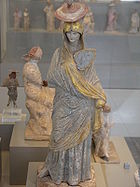
fibers to protect his feet.Structured hats for women similar to those of male courtiers began to be worn in the late 16th century. The term ‘milliner’ comes from the Italian city of Milan, where the best quality hats were made in the 18th century. Millinery was traditionally a woman’s occupation, with the milliner not only creating hats and bonnets but also choosing lace, trimmings and accessories to complete an outfit.
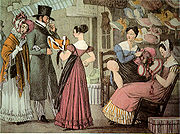
In the first half of the 19th century, women wore bonnets that gradually became larger, decorated with ribbons, flowers, feathers and gauze trims. By the end of the century, many other styles were introduced, among them hats with wide brims and flat crowns, the flower pot and the toque. By the middle of the 1920s, when women began to cut their hair short, they chose hats that hugged the head like a helmet.
Since the early 21st century, flamboyant hats have made a comeback, with a new wave of competitive young milliners designing creations that include turban caps, tromp l'oeil effect felt hats and tall headpieces made of human hair. Some new hat collections have been described as "wearable sculpture." Many pop stars, among them Lady Gaga
Lady GaGa
Stefani Joanne Angelina Germanotta , better known by her stage name Lady Gaga, is an American singer and songwriter. Born and raised in New York City, she primarily studied at the Convent of the Sacred Heart and briefly attended New York University's Tisch School of the Arts before withdrawing to...
, have commissioned hats as publicity stunts.
Hat design
A hat consists of four main parts:- Crown - The portion of a hat covering the top of the head
- Peak (British EnglishBritish EnglishBritish English, or English , is the broad term used to distinguish the forms of the English language used in the United Kingdom from forms used elsewhere...
), visorVisorA visor is a surface that protects the eyes, such as shading them from the sun or other bright light or protecting them from objects....
(American EnglishAmerican EnglishAmerican English is a set of dialects of the English language used mostly in the United States. Approximately two-thirds of the world's native speakers of English live in the United States....
), or bill, a stiff projection at the front, to shade or shield the eyes from sun and rain - Brim, an optional projection of stiff material from the bottom of the hat's crown horizontally all around the circumference of the hat
- Puggaree (British) or sweatband or hatband (American), a ribbon or band that runs around the bottom of the torso of the hat. The sweatband may be adjustable with a cord or rope at the top and is on the inside of the hat touching the skin while the hatband and puggaree are around the outside.
Famous hatmakers
One of the most famous London hatters is James Lock & Co of St James's Street. Another was Sharp & Davis of 6 Fish Street Hill. StetsonJohn B. Stetson Company
The John B. Stetson Company, founded by John B. Stetson in 1865, was the maker of the Stetson cowboy hats, but ceased manufacturing in 1970. Stetson hats are now being manufactured in Garland, Texas by Hatco Inc who also produce Resistol, and Charlie 1 Horse, hats. Stetson reentered manufacturing...
is a well-known American hat company.In the late 20th century museums credited London-based David Shilling
David Shilling
David Shilling is an English milliner, sculpturer, fashion and interior designer synonymous with designing extravagant hats and clothing displayed on Ladies' Day at Royal Ascot.- Childhood :...
with reinventing hats worldwide. Notable Belgian hat designers are Elvis Pompilio
Elvis Pompilio
Elvis Pompilio is a Belgian fashion designer who specialises in hats. He was born in Liège to a family of Italian origin.Pompilio entered business in 1987, with a workshop in Brussels where he produced designs for use in fashion shows by marques such as Dior and Valentino. In 1990, he opened a...
and Fabienne Delvigne, whose hats are worn by European royals.Philip Treacy
Philip Treacy
Philip Treacy OBE is an Irish milliner.Born in Ahascragh,in the West of Ireland, he lived with his parents, seven brothers and sister across the road from the village church...
OBE
Order of the British Empire
The Most Excellent Order of the British Empire is an order of chivalry established on 4 June 1917 by George V of the United Kingdom. The Order comprises five classes in civil and military divisions...
is an award-winning Irish milliner whose hats have been commissioned by top designers and worn at royal weddings.
Hat styles
| Image | Name | Description |
|---|---|---|
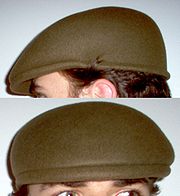 |
Ascot cap Ascot cap The Ascot cap, also known as the Cuffley cap, is a hard men's cap similar to the flat cap, but distinguished by its hardness and rounded shape... |
A hard men's cap, similar to the flat cap, but distinguished by its hardness and rounded shape. |
 |
Akubra Akubra Akubra is an Australian brand of bush hat, whose wide-brimmed styles are a distinctive part of Australian culture, especially in rural areas. The name is believed to be derived from an Aboriginal word for head covering.... |
Australian felt hat with a wide brim. |
| Ayam Ayam (cap) An ayam is a Korean traditional winter cap mostly worn by women in the Joseon period for protection against the cold. It is also called aegeom which literally means "covering a forehead" in Korean. There is a historical record which mentions that officials in a low class called iseo wore ayam in... |
A Korean traditional winter cap mostly worn by women in the Joseon period from 1392 – 1910. | |
 |
Balaclava | A form of headgear Headgear Headgear, headwear or headdress is the name given to any element of clothing which is worn on one's head.Headgear serve a variety of purposes:... covering the whole head, exposing only the face Face The face is a central sense organ complex, for those animals that have one, normally on the ventral surface of the head, and can, depending on the definition in the human case, include the hair, forehead, eyebrow, eyelashes, eyes, nose, ears, cheeks, mouth, lips, philtrum, temple, teeth, skin, and... or upper part of it, and sometimes only the eyes. Also known as a ski Ski A ski is a long, flat device worn on the foot, usually attached through a boot, designed to help the wearer slide smoothly over snow. Originally intended as an aid to travel in snowy regions, they are now mainly used for recreational and sporting purposes... mask. |
| Balmoral bonnet Balmoral bonnet The Balmoral is a traditional Scottish hat that can be worn as part of formal or informal Highland dress. Dating back to at least the 16th century, it takes the form of a knitted, soft wool cap with a flat crown... |
Traditional Scottish bonnet or cap worn with Scottish Highland dress. | |
| Barretina Barretina A barretina is a traditional hat that was frequently worn by men in parts of the Christian cultures of the Mediterranean sea such as Catalonia, the Valencian Community, the Balearic Islands, Provence, Corsica, Sicily, Sardinia, part of Naples, part of the Balkans and parts of Portugal.In Catalonia... |
A traditional style, in red it is now used as a symbol of Catalan Catalan people The Catalans or Catalonians are the people from, or with origins in, Catalonia that form a historical nationality in Spain. The inhabitants of the adjacent portion of southern France are sometimes included in this definition... identity. It is worn with the top flopping down. |
|
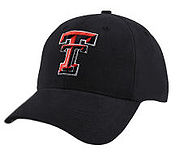 |
Baseball cap Baseball cap A baseball cap is a type of soft cap with a rounded stiff brim. The front of the cap typically contains designs or logos of sports teams ,... |
A type of soft cap with a long, stiffened and curved peak. |
| Beanie Beanie A beanie is a head-hugging brimless cap with or without a visor that was once popular among school boys.-Description:In the United States of America, beanies are made by triangular sections of cloth joined by a button at the crown and seamed together around the sides.They can also be made from... |
A brimless cap with or without a small visor Visor A visor is a surface that protects the eyes, such as shading them from the sun or other bright light or protecting them from objects.... once popular among school boys. Sometimes includes a propeller. In New Zealand, Australia, the United States and the United Kingdom, the term "beanie" may also be applied to a knit cap known as a tuque Tuque A – variously known as a knit hat or stocking cap among other names – is a knitted cap, originally of wool though now often of synthetic fibers, that is designed to provide warmth in winter... , see below. |
|
 |
Bearskin Bearskin A bearskin is a tall fur cap, usually worn as part of a ceremonial military uniform. Traditionally, the bearskin was the headgear of grenadiers, and is still worn by grenadier and guards regiments in various armies.-Origins:... |
The tall, furry, full dress uniform hat of the Brigade of Guards Brigade of Guards The Brigade of Guards is a historical elite unit of the British Army, which has existed sporadically since the 17th century.... designed to protect the footguards against sword-cuts, commonly seen at Buckingham Palace Buckingham Palace Buckingham Palace, in London, is the principal residence and office of the British monarch. Located in the City of Westminster, the palace is a setting for state occasions and royal hospitality... . |
 |
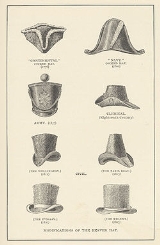
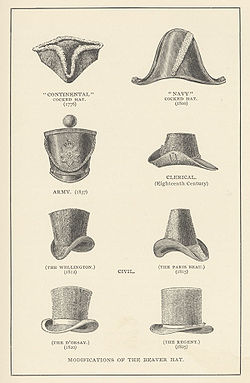
Beaver hat Beaver hat A beaver hat is a hat made from felted beaver fur. They were fashionable across much of Europe during the period 1550-1850 because the soft yet resilient material could be easily combed to make a variety of hat shapes... |
Hats made of felted beaver fur. |
 |
Beret Beret A beret is a soft, round, flat-crowned hat, designated a "cap", usually of woven, hand-knitted wool, crocheted cotton, or wool felt, or acrylic fiber.... |
Soft round cap, usually of wool felt, with a flat crown, worn by both men and women and traditionally associated with France. Also used in the military. |
 |
Bicorne Bicorne The bicorne or bicorn is an archaic form of hat widely adopted in the 1790s as an item of uniform by European and American military and naval officers... |
Military hat with two corners, also known as a cocked hat. |
| Biretta Biretta The biretta is a square cap with three or four peaks or horns, sometimes surmounted by a tuft. Traditionally the three peaked biretta is worn by Roman Catholic clergy and some Anglican and Lutheran clergy. The four peaked biretta is worn as academic dress by those holding a doctoral degree from a... |
A square cap with three or four ridges or peaks worn by Roman Catholic clergy Clergy Clergy is the generic term used to describe the formal religious leadership within a given religion. A clergyman, churchman or cleric is a member of the clergy, especially one who is a priest, preacher, pastor, or other religious professional.... and some Anglican and Lutheran clergy. |
|
 |
Boater Boater (hat) A boater is a kind of men's formal summer hat.... |
Flat-brimmed and flat-topped straw Straw Straw is an agricultural by-product, the dry stalks of cereal plants, after the grain and chaff have been removed. Straw makes up about half of the yield of cereal crops such as barley, oats, rice, rye and wheat. It has many uses, including fuel, livestock bedding and fodder, thatching and... hat, formerly worn by seamen, and now mostly at summer regattas or garden parties, often with a ribbon Ribbon A ribbon or riband is a thin band of material, typically cloth but also plastic or sometimes metal, used primarily for binding and tying. Cloth ribbons, most commonly silk, are often used in connection with clothing, but are also applied for innumerable useful, ornamental and symbolic purposes... in club or college colors. |
| Boonie hat Boonie hat A boonie hat, also known as a bush hat, is a form of wide-brim hat commonly used by military forces. Its design is similar to a bucket hat but with a stiffer brim. Often a fabric tape band of 'branch loops' is sewn around the crown of the hat. This 'foliage ring' is meant to hold additional... |
A soft cotton wide-brim hat commonly used by militaries. Similar to a bucket hat. | |
 |
Boss of the plains Boss of the plains The Boss of the Plains was a lightweight all-weather hat designed by John B. Stetson for the demands of the American west. It was intended to be durable, waterproof and elegant... |
A lightweight all-weather hat designed by John B. Stetson for the demands of the American west. |
 |
Bowler / Derby Bowler hat The bowler hat, also known as a coke hat, derby , billycock or bombin, is a hard felt hat with a rounded crown originally created in 1849 for the English soldier and politician Edward Coke, the younger brother of the 2nd Earl of Leicester... |
A hard felt hat with a rounded crown created in 1850 by Lock's of St James's, the hatters to Thomas Coke, 2nd Earl of Leicester Earl of Leicester The title Earl of Leicester was created in the 12th century in the Peerage of England , and is currently a title in the Peerage of the United Kingdom, created in 1837.-Early creations:... , for his servants. Sometimes known as a derby hat. |
 |
Bucket hat Bucket hat A bucket hat, or fishing hat, is a soft cotton hat with a wide and downwards sloping brim which is worn by both men and women. The brim offers shade from the sun for the eyes and face. The hat is usually made from heavy-duty cotton fabric such as denim or canvas... |
A soft cotton Cotton Cotton is a soft, fluffy staple fiber that grows in a boll, or protective capsule, around the seeds of cotton plants of the genus Gossypium. The fiber is almost pure cellulose. The botanical purpose of cotton fiber is to aid in seed dispersal.... hat with a wide, downwards-sloping brim. |
.jpg) |
Busby Busby Busby is the English name for the Hungarian prémes csákó or kucsma, a military head-dress made of fur, worn by Hungarian hussars. In its original Hungarian form the busby was a cylindrical fur cap, having a bag of coloured cloth hanging from the top. The end of this bag was attached to the right... |
A small fur military hat. |
 |
Campaign hat Campaign hat A campaign cover is a broad-brimmed felt or straw hat, with a high crown, pinched symmetrically at the four corners .It is associated with the New Zealand Army, the Royal Canadian... |
A broad-brimmed felt or straw hat, with a high crown, pinched symmetrically at the four corners (the "Montana crease"). |
| Capotain Capotain A capotain, capatain or copotain is a tall-crowned, narrow-brimmed, slightly conical hat, usually black, worn by men and women from the 1590s into the mid-seventeenth century in England and northwestern Europe... |
A hat worn from the 1590s through the 1640s in England and Northwestern Europe Europe Europe is, by convention, one of the world's seven continents. Comprising the westernmost peninsula of Eurasia, Europe is generally 'divided' from Asia to its east by the watershed divides of the Ural and Caucasus Mountains, the Ural River, the Caspian and Black Seas, and the waterways connecting... . It is also commonly called a Pilgrim Pilgrim A pilgrim is a traveler who is on a journey to a holy place. Typically, this is a physical journeying to some place of special significance to the adherent of a particular religious belief system... hat. |
|
| Casquette Casquette Casquette is French for "cap". In cycling jargon, it is used to refer to the traditional peaked cotton cap worn by racing cyclists.With the introduction of compulsory cycle helmets for massed-start racing, casquettes have become less common, but most professional race outfits still have them... |
A small-peaked cap often worn by cyclists. | |
 |
Caubeen Caubeen The caubeen is an Irish beret. It was formerly worn by peasants; however, it has since been adopted as the headdress of the Irish regiments of the British and Commonwealth armies, where its formal name is the "Bonnet, Irish, Green".-Name:... |
An Irish beret Beret A beret is a soft, round, flat-crowned hat, designated a "cap", usually of woven, hand-knitted wool, crocheted cotton, or wool felt, or acrylic fiber.... . |
| Chilote cap Chilote cap thumb|200px|Picture of a common design of Chilote capsA Chilote cap is woven cap typical of Chiloé Archipelago. The caps are made of coarse raw wool and has usually a pom-pon at the top... |
A woven cap typical of Chiloé Archipelago Chiloé Archipelago Chiloé Archipelago consists of several islands lying off the coast of Chile. It is separated from mainland Chile by Chacao Channel in the north, the Sea of Chiloé in the east and Gulf of Corcovado to the southeast. All of the archipelago except Desertores Islands, which are part of Palena... made of coarse raw wool, usually with a pom-pom at the top. |
|
 |
Chullo Chullo Chullo is an andean style of hat with earflaps, made from vicuña, alpaca, llama or sheep's wool. Alpaca has wool-like qualities that help to insulate its wearer from the harsh elements in the Andean Mountain region... |
Peruvian or Bolivia Bolivia Bolivia officially known as Plurinational State of Bolivia , is a landlocked country in central South America. It is the poorest country in South America... n hat with ear-flaps made from vicuña Vicuña The vicuña or vicugna is one of two wild South American camelids, along with the guanaco, which live in the high alpine areas of the Andes. It is a relative of the llama, and is now believed to share a wild ancestor with domesticated alpacas, which are raised for their fibre... , alpaca Alpaca An alpaca is a domesticated species of South American camelid. It resembles a small llama in appearance.Alpacas are kept in herds that graze on the level heights of the Andes of southern Peru, northern Bolivia, Ecuador, and northern Chile at an altitude of to above sea level, throughout the year... , llama Llama The llama is a South American camelid, widely used as a meat and pack animal by Andean cultures since pre-Hispanic times.... or sheep's wool Wool Wool is the textile fiber obtained from sheep and certain other animals, including cashmere from goats, mohair from goats, qiviut from muskoxen, vicuña, alpaca, camel from animals in the camel family, and angora from rabbits.... . |
 |
Chupalla Chupalla The chupalla is a traditional Chilean horseman's hat made of straw. Many people in rural areas of Central Chile use it as well. In addition, it is often used when dancing the cueca and during Chilean rodeos.... |
Straw hat made in Chile Chile Chile ,officially the Republic of Chile , is a country in South America occupying a long, narrow coastal strip between the Andes mountains to the east and the Pacific Ocean to the west. It borders Peru to the north, Bolivia to the northeast, Argentina to the east, and the Drake Passage in the far... . |
 |
Cloche hat Cloche hat The cloche hat is a fitted, bell-shaped hat for women that was invented by milliner Caroline Reboux in 1908, became especially popular during the 1920s, and continued to be commonly seen until about 1933. Cloche is the French word for "bell".... |
Popular bell Bell (instrument) A bell is a simple sound-making device. The bell is a percussion instrument and an idiophone. Its form is usually a hollow, cup-shaped object, which resonates upon being struck... -shaped ladies hat of the 1920s. |
 |
Cricket cap Cricket cap A cricket cap is a type of soft cap, often made from felt that is a traditional form of headwear for players of the game of cricket, regardless of age or gender. It is usually a tight-fitting skullcap, usually made of six or eight sections, with a small crescent shaped brim that points downwards... |
A type of soft cap that is a traditional form of headwear for players of the game of cricket Cricket Cricket is a bat-and-ball game played between two teams of 11 players on an oval-shaped field, at the centre of which is a rectangular 22-yard long pitch. One team bats, trying to score as many runs as possible while the other team bowls and fields, trying to dismiss the batsmen and thus limit the... . |
| Cordobés | Flat-brimmed and flat-topped traditional hat originating from Córdoba Córdoba, Spain -History:The first trace of human presence in the area are remains of a Neanderthal Man, dating to c. 32,000 BC. In the 8th century BC, during the ancient Tartessos period, a pre-urban settlement existed. The population gradually learned copper and silver metallurgy... , Spain, associated with Flamenco Flamenco Flamenco is a genre of music and dance which has its foundation in Andalusian music and dance and in whose evolution Andalusian Gypsies played an important part.... and popularized by characters such as the fictional Zorro Zorro Zorro is a fictional character created in 1919 by New York-based pulp writer Johnston McCulley. The character has been featured in numerous books, films, television series, and other media.... . |
|
| Conical Asian hat | Simple straw hat associated with East and Southeast Asia. | |
 |
Coonskin cap Coonskin cap A coonskin cap is a hat fashioned from the skin and fur of a raccoon. The original coonskin cap consisted of the entire skin of the raccoon including its head and tail... |
Hat fashioned from the skin and fur of a raccoon that became associated with American and Canadian frontiersmen of the 18th and 19th centuries. |
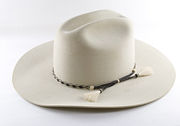 |
Cowboy hat Cowboy hat The cowboy hat is a high-crowned, wide-brimmed hat best known as the defining piece of attire for the North American cowboy. Today it is worn by many people, and is particularly associated with ranch workers in the western and southern United States, western Canada and northern Mexico, with... |
High-crowned, wide-brimmed hat, with a sweatband on the inside, and a decorative hat band on the outside. Customized by creasing the crown and rolling the brim. |
 |
Custodian helmet Custodian helmet Custodian helmet or centurion helmet, technically known as a 'Home Office pattern helmet', is a helmet worn by many policemen in England and Wales.-History:... |
Police helmet worn by British constables while on foot patrol. |
 |
Deerstalker Deerstalker A deerstalker is a type of hat that is typically worn in rural areas, often for hunting, especially deer stalking. Because of the hat's popular association with Sherlock Holmes, it is also a stereotypical hat of a detective.-Construction:... |
Warm close-fitting tweed cap designed for hunting in the wet and windy Scottish Scotland Scotland is a country that is part of the United Kingdom. Occupying the northern third of the island of Great Britain, it shares a border with England to the south and is bounded by the North Sea to the east, the Atlantic Ocean to the north and west, and the North Channel and Irish Sea to the... climate, with brims in front and behind, and ear flaps which can be tied together either over the crown or under the chin; closely associated with Sherlock Holmes Sherlock Holmes Sherlock Holmes is a fictional detective created by Scottish author and physician Sir Arthur Conan Doyle. The fantastic London-based "consulting detective", Holmes is famous for his astute logical reasoning, his ability to take almost any disguise, and his use of forensic science skills to solve... . |
 |
Dunce cap Dunce cap A dunce cap, also variously known as a dunce hat, dunce's cap, or dunce's hat, is a pointed hat. In popular culture, it is typically made of paper and often marked with a D or the word "dunce", and given to schoolchildren to wear as punishment by public humiliation for misbehavior and, as the name... |
A hat that was used to punish and humiliate students in school during the late 19th and early 20th centuries. It is shaped like a cone and often has a big capital 'D' inscribed on the front. |
 |
Fascinator Fascinator A fascinator is a headpiece, a style of millinery. The word originally referred to a fine, lacy head covering akin to a shawl and made from wool or lace, but mostly feathers.The term had fallen almost into disuse by the 1970s... |
A small hat commonly made with feathers, flowers and/or beads. It attaches to the hair by a comb, headband or clip. |
 |
Fedora Fedora (hat) A fedora is a men's felt hat. In reality, "fedora" describes most any men's hat that does not already have another name; quite a few fedoras have famous names of their own including the famous Trilby.... |
A soft felt hat with a lengthwise crease. |
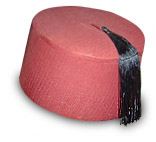 |
Fez Fez (clothing) The fez , or tarboosh is a felt hat either in the shape of a red truncated cone or in the shape of a short cylinder made of kilim fabric. Both usually have tassels... |
Red felt hat in the shape of a truncated cone. |
 |
Flat cap Flat cap A flat cap is a rounded men or women's cap with a small stiff brim in front. Cloths used to make the cap include original wool, tweed , and cotton. Less common materials may include leather. Cord flat caps are also worn in various colours. The inside of the cap is usually lined with silk for... |
A soft, round men's cap with a small brim in front. |
| Gat | A traditional Korean hat worn by men. | |
 |
Gatsby Newsboy cap The newsboy cap or newsy cap is a casual-wear cap similar in style to the flat cap. Sometimes also referred to as the: Baker Boy, Apple Cap, Eight Panel, Cabbie, Jay Gatsby , Fisherman's Cap, Pageboy and Lundberg Stetson.It has the same overall shape and stiff peak in front as a flat cap, but the... |
A soft brimmed hat popular in New York after the turn of the century made from eight quarter panels. Also known as a newsboy cap. |
 |
Garrison or Forage cap Garrison cap A Side cap is a foldable military cap with straight sides and a creased or hollow crown sloping to the back where it is parted. It is known as a garrison cap , a wedge cap , or officially field service cap, , but it is more generally known as the side cap.It follows the style which... |
A foldable cloth cap with straight sides and a creased or hollow crown. |
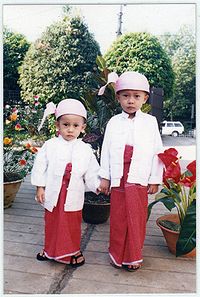 |
Gaung Paung Gaung Paung The gaung baung is a traditional Burmese turban and part of the traditional attire of many ethnic groups inhabiting modern day Burma, particularly among most of the Buddhist-professing ethnic groups: the Bamar, Mon, Rakhine and Shan peoples... |
Headwrap worn by the Bamar Bamar The Bamar are the dominant ethnic group of Burma , constituting approximately two-thirds of the population. The Bamar live primarily in the Irrawaddy basin, and speak the Burmese language, which is also the official language of Burma. Bamar customs and identity are closely intertwined with general... , Mon people Mon people The Mon are an ethnic group from Burma , living mostly in Mon State, Bago Division, the Irrawaddy Delta, and along the southern Thai–Burmese border. One of the earliest peoples to reside in Southeast Asia, the Mon were responsible for the spread of Theravada Buddhism in Burma and Thailand... , Rakhine Rakhine people The Rakhine , is a nationality in Myanmar forming the majority along the coastal region of present day Rakhine State or Arakan State. They possibly constitute 5.53% or more of Myanmar's total population but no accurate census figures exist. Rakhine people also live in the southeastern parts of... and Shan peoples. |
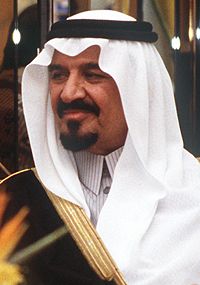 |
Ghutrah | Three piece ensemble consisting of a Thagiyah skull cap, Gutrah scarf, and Ogal black band. Gutrahs are plain white or checkered, denoting ethnic or national identities.. |
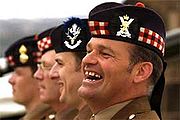 |
Glengarry Glengarry The glengarry bonnet is a traditional boat-shaped hat without a peak made of thick-milled woollen material with a toorie on top, a rosette cockade on the left, and ribbons hanging down behind... |
A traditional Scottish boat-shaped hat without a peak made of thick-milled woollen material with a toorie on top, a rosette cockade Cockade A cockade is a knot of ribbons, or other circular- or oval-shaped symbol of distinctive colors which is usually worn on a hat.-Eighteenth century:... on the left, and (usually) ribbons hanging down behind. It is normally worn as part of Scottish military or civilian Highland dress. |
 |
Hard hat Hard hat A hard hat is a type of helmet predominantly used in workplace environments, such as construction sites, to protect the head from injury by falling objects, impact with other objects, debris, bad weather and electric shock. Inside the helmet is a suspension that spreads the helmet's weight over the... |
A helmet predominantly used in workplace environments, such as construction sites, to protect the head from injury by falling objects, debris and bad weather. |
 |
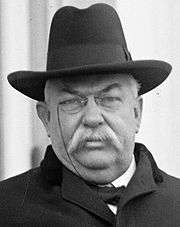
Hardee hat Hardee hat The Hardee hat, also known as the Model 1858 Dress Hat and sometimes nicknamed the "Jeff Davis", was the regulation dress hat for enlisted men in the Union Army during the American Civil War. The Hardee hat was also worn by Confederate soldiers. However, most soldiers found the black felt hat to... |
Also known as the 1858 Dress Hat. Regulation hat for Union soldiers during the American Civil War. |
 |
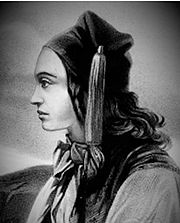
Homburg Homburg (hat) A homburg is a felt hat, a Tyrolean hat-style fedora, characterized by a single dent running down the center of the crown and a stiff brim shaped in a "kettle curl". The Homburg is a stiff, formal felt hat.... |
A semi-formal Semi-formal In Western clothing semi-formal is a grouping of dress codes, indicating the sort of clothes worn to events with a level of protocol between informal and formal... hat with a crease and no dents. |
 |
Icelandic tail-cap Icelandic tail-cap The Icelandic tail-cap or skotthúfa is a typical part of the Icelandic national costume. Originally it was only worn by men, but starting in the 18th century women started to wear it along with the peysa, a men's jacket with a single row of buttons creating the proto-peysuföt... |
Part of the national costume of Iceland Iceland Iceland , described as the Republic of Iceland, is a Nordic and European island country in the North Atlantic Ocean, on the Mid-Atlantic Ridge. Iceland also refers to the main island of the country, which contains almost all the population and almost all the land area. The country has a population... . |
| Jaapi Jaapi Jaapi is a traditional Assamese headgear or hat of Assam, India.-About Jaapi:Typical regular use Jaapi is made out of tightly woven bamboo and/or cane and taku paat . The name, jaapi comes after the word jaap, bundle of taku leaves... |
A traditional hat of Assam Assam Assam , also, rarely, Assam Valley and formerly the Assam Province , is a northeastern state of India and is one of the most culturally and geographically distinct regions of the country... , India India India , officially the Republic of India , is a country in South Asia. It is the seventh-largest country by geographical area, the second-most populous country with over 1.2 billion people, and the most populous democracy in the world... . There both plain and decorative japies are Available. |
|
| Karakul (Qaraqul) | A hat made from the fur of the Qaraqul breed of sheep, typically worn by men in Central and South Asia and popular among Soviet leaders. | |
 |
Kepi Kepi The kepi is a cap with a flat circular top and a visor or peak . Etymologically, the word is a borrowing of the French képi, itself a respelling of the Alemannic Käppi: a diminutive form of Kappe, meaning "cap".... |
A French military hat with a flat, circular top and visor. |
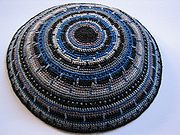 |
Kippah or Yarmulke Kippah A kippah or kipa , also known as a yarmulke , kapele , is a hemispherical or platter-shaped head cover, usually made of cloth, often worn by Orthodox Jewish men to fulfill the customary requirement that their head be covered at all times, and sometimes worn by both men and, less frequently, women... |
A small close-fitting skullcap worn by religious Jews. |
 |
Kolpik Kolpik A kolpik is a type of traditional headgear worn in families of some Chassidic Rebbes , by unmarried children on Shabbat, and by some Rebbes on special occasions. It is made from brown fur, as opposed to a spodik, worn by Polish chassidic dynasties, which is fashioned out of black fur.The word... |
Brown fur hat worn by Hassidic Jews. |
| Kofia Kofia (hat) The kofia is a brimless cylindrical cap with a flat crown, worn by men in East Africa, especially Swahili-speaking cultures. Kofia is a Swahili word that means hat. The kofia is worn with a dashiki, a colorful African shirt which is called a kitenge shirt in some regions of East Africa. In... |
Brimless cylindrical cap with a flat crown, worn by men in East Africa. | |
| Kova tembel | Cloth hat worn by Israel Israel The State of Israel is a parliamentary republic located in the Middle East, along the eastern shore of the Mediterranean Sea... i pioneers and kibbutzniks. |
|
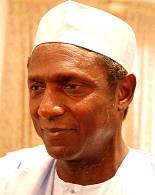 |
Kufi Kufi A kufi or kufi cap is a brimless, short, rounded cap worn by many populations in West Africa of all religions and throughout the African diaspora.-African and African-American Usage:... |
A brimless, short, rounded cap worn by Africans and people throughout the African diaspora. |
 |
Montera Montera A montera is the hat traditionally worn by many males and females in the folk costumes of the Iberian peninsula.It has come to name also but not exclusively the ones used by bullfighters, introduced to the ritual event in 1835 by Francisco 'Paquiro' Montes as accompaniment to the traje de luces, or... |
A crocheted hat worn by bullfighters. |
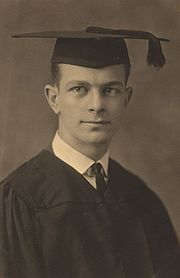 |
Mortarboard | Flat, square hat with a tassel worn as part of academic dress Academic dress Academic dress or academical dress is a traditional form of clothing for academic settings, primarily tertiary education, worn mainly by those that have been admitted to a university degree or hold a status that entitles them to assume them... . |
| Mother of the Bride Hat | A large yet lightweight lady's hat with a wide-brim worn regularly in pre-victorian era Britain, and now mostly at garden parties and weddings. | |
 |
Pakul Pakul The Pakol also spelled Pakul or Khapol, from Nurestan is a soft, round-topped men's hat, typically of wool and found in any of a variety of earthy colors: brown, black, gray, or ivory. Before it is fitted, it resembles a bag with a round, flat bottom. The wearer rolls up the sides nearly to the... |
Round, rolled wool hat with a flat top, common in Pakistan Pakistan Pakistan , officially the Islamic Republic of Pakistan is a sovereign state in South Asia. It has a coastline along the Arabian Sea and the Gulf of Oman in the south and is bordered by Afghanistan and Iran in the west, India in the east and China in the far northeast. In the north, Tajikistan... and Afghanistan Afghanistan Afghanistan , officially the Islamic Republic of Afghanistan, is a landlocked country located in the centre of Asia, forming South Asia, Central Asia and the Middle East. With a population of about 29 million, it has an area of , making it the 42nd most populous and 41st largest nation in the world... . |
 |
Panama Panama hat A Panama hat is a traditional brimmed hat of Ecuadorian origin that is made from the plaited leaves of the toquilla straw plant... |
Straw hat made in Ecuador Ecuador Ecuador , officially the Republic of Ecuador is a representative democratic republic in South America, bordered by Colombia on the north, Peru on the east and south, and by the Pacific Ocean to the west. It is one of only two countries in South America, along with Chile, that do not have a border... . |
| Papakhi Papakhi Papakhi , also known as Astrakhan hat in English, is a male wool hat worn throughout the Caucasus.For example, Georgian papakhi are made of wool and have a circular shape.... |
Also known as astrakhan hat in English, a male wool hat worn throughout the Caucasus Caucasus The Caucasus, also Caucas or Caucasia , is a geopolitical region at the border of Europe and Asia, and situated between the Black and the Caspian sea... . |
|
| Party Hat Party hat A party hat is generally a playful conical hat made with a rolled up piece of thin cardboard, usually with designs printed on the outside and a long string of elastic going from one side of the cone's bottom to another to secure the cone to the person's head. In Britain the hat is made of paper and... |
A conical hat, similar to the Dunce cap, typically worn at birthday parties. It is frequently emblazoned with bright patterns or messages. | |
| Patrol cap Patrol cap A patrol cap, also known as a field cap is a soft cap with a stiff, rounded visor, and flat top, worn by the military personnel of some countries in the field when a combat helmet is not required.-M1951 Field Cap and Ridgeway Cap:... |
Also known as a field cap,a scout cap, or in the United States a mosh cap.; a soft cap with a stiff, rounded visor, and flat top, worn by military personnel in the field when a combat helmet is not required. | |
 |
Peaked cap Peaked cap A peaked cap, forage cap, barracks cover, or combination cap is a form of headgear worn by the armed forces of many nations and also by many uniformed civilian organizations such as law enforcement agencies... |
A military style cap with a crown, band and peak (also called a visor). It is used by many militaries of the world as well as law enforcement, as well as some people in service professions who wear uniforms. |
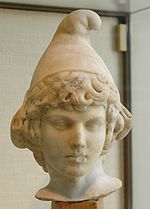 |
Phrygian Cap Phrygian cap The Phrygian cap is a soft conical cap with the top pulled forward, associated in antiquity with the inhabitants of Phrygia, a region of central Anatolia. In the western provinces of the Roman Empire it came to signify freedom and the pursuit of liberty, perhaps through a confusion with the pileus,... |
A soft conical cap pulled forward. In sculpture, paintings and caricatures it represents freedom and the pursuit of liberty. The popular cartoon characters The Smurfs The Smurfs The Smurfs is a comic and television franchise centred on a group of small blue fictional creatures called Smurfs, created and first introduced as a series of comic strips by the Belgian cartoonist Peyo on October 23, 1958... wear white Phrygian caps. |
 |
Pith Helmet Pith helmet The pith helmet is a lightweight cloth-covered helmet made of cork or pith... |
A lightweight cloth-covered helmet made of cork or pith. |
 |
Porkpie Pork pie hat A pork pie hat is a type of hat made of felt or straw. It is a type of fedora which has a cylindrical crown and flattish top. This style of crown is called a "telescopic crown", but the hat overall resembles the boater hat. It is short and has an indentation all the way around its top, allowing... |
Circular, flat topped hat. |
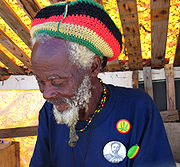 |
Rastacap | A tall, round, usually crocheted and brightly colored, cap worn by Rastafarians and others with dreadlocks to tuck their locks away. |
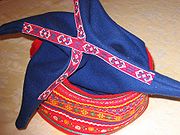 |
Sami hat Four Winds hat thumb|Four Winds hatThe Four Winds hat is one version of traditional man's hat of the Sami. The basis is a simple blue cylinder, decorated with a red band with braid patterns, but the top is a large, four-cornered star, colored bright blue with parts bright red and yellow... |
Also known as a "Four Winds" hat, traditional men's hat of the Sami people. |
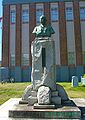 |
Šajkača Šajkaca The Šajkača is the Serbian national hat or cap.-History:The Šajkača originated in the 18th century. It was originally worn by the Serbian river fleet as a military headgear in the service of the Habsburg Empire around the Danube and Sava Rivers... |
Serbian Serbs The Serbs are a South Slavic ethnic group of the Balkans and southern Central Europe. Serbs are located mainly in Serbia, Montenegro and Bosnia and Herzegovina, and form a sizable minority in Croatia, the Republic of Macedonia and Slovenia. Likewise, Serbs are an officially recognized minority in... national hat. |
 |
Salakot Salakot The salakot is a traditional wide-brimmed hat in the Philippines. It is usually made of either rattan or reeds. It is one of the traditional hats worn by Filipinos besides the conical Asian hat which is worn widely in East Asia and other Southeast Asian countries.An ancient tradition recounts that... |
A traditional hat in the Philippines. |
 |
Santa Hat Santa Claus Santa Claus is a folklore figure in various cultures who distributes gifts to children, normally on Christmas Eve. Each name is a variation of Saint Nicholas, but refers to Santa Claus... |
A floppy pointed red hat trimmed in white fur traditionally associated with Christmas Christmas Christmas or Christmas Day is an annual holiday generally celebrated on December 25 by billions of people around the world. It is a Christian feast that commemorates the birth of Jesus Christ, liturgically closing the Advent season and initiating the season of Christmastide, which lasts twelve days... . |
 |
Shako Shako A shako is a tall, cylindrical military cap, usually with a peak or visor and sometimes tapered at the top... |
A tall cylindrical military cap, usually with a visor, badge, and plume. |
 |
Shtreimel Shtreimel A shtreimel is a fur hat worn by many married haredi Jewish men, particularly members of Hasidic groups, on Shabbat and Jewish holidays and other festive occasions. In Jerusalem, the shtreimel is also worn by 'Yerushalmi' Jews... |
A fur hat worn by married Hassidic men on Shabbat Shabbat Shabbat is the seventh day of the Jewish week and a day of rest in Judaism. Shabbat is observed from a few minutes before sunset on Friday evening until a few minutes after when one would expect to be able to see three stars in the sky on Saturday night. The exact times, therefore, differ from... and holidays. |
 |
Slouch Slouch hat A slouch hat is a wide-brimmed felt or cloth hat with a chinstrap, most commonly worn as part of a military uniform. It is a survivor of the felt hats worn by certain 18th century armies. Since then, the slouch hat has been worn by military personnel from many nations including Australia, Britain,... |
Generic term covering wide-brimmed felt-crowned hats often worn by military leaders. |
 |
Sombrero Sombrero Sombrero in English refers to a type of wide-brimmed hat originating in Mexico. In Spanish, however, it is the generic word for "hat", which originates from "sombra", meaning "shade".... |
A Mexican hat with a conical crown and a saucer-shaped brim, highly embroidered made of plush felt. |
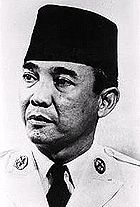 |
Songkok | A cap widely worn in Indonesia, Brunei, Malaysia, Singapore, the southern Philippines and southern Thailand, mostly among Muslim males. May be related to the taqiyah. |
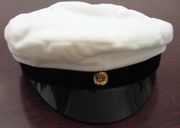 |
Student cap Student cap In various European countries, student caps of different types are or have been worn, either as a marker of a common identity, as is the case in the Nordic countries, or to identify the bearer as member of a smaller corporation within the larger group of students, as is the case with the caps worn... |
A cap worn by university students in various European countries. |
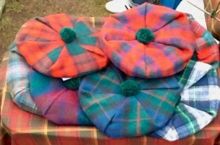 |
Tam o' Shanter | A Scottish wool hat originally worn by men. |
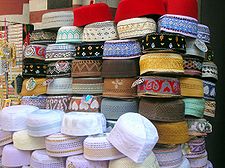 |
Taqiyah Taqiyah (cap) The taqiyah is a short, rounded cap worn by some observant Muslim men. When worn by itself, the taqiyah can be any color. When worn under the keffiyah scarf, it is always white. Some Muslims wrap the turban around the cap. The turban is called an imama in Arabic... |
A round fabric cap worn by Muslim men. |
 |
Top hat Top hat A top hat, beaver hat, high hat silk hat, cylinder hat, chimney pot hat or stove pipe hat is a tall, flat-crowned, broad-brimmed hat, predominantly worn from the latter part of the 18th to the middle of the 20th century... |
A tall, flat-crowned, cylindrical hat worn by men in the 19th and early 20th centuries, now worn only with morning dress or evening dress. |
| Toque Toque A toque is a type of hat with a narrow brim or no brim at all. They were popular from the 13th to the 16th century in Europe, especially France. Now, it is primarily known as the traditional headgear for professional cooks.- Etymology :... |
A tall, pleated, brimless, cylindrical hat traditionally worn by chefs. | |
 |
Trilby Trilby A trilby hat is a type of fedora. The trilby is viewed as the rich man's favored hat; it is commonly called the "brown trilby" in England and is much seen at the horse races. It is described as a "crumpled" fedora... |
A soft felt men's hat with a deeply indented crown and a narrow brim often upturned at the back. |
 |
Tricorne Tricorne The tricorne or tricorn is a style of hat that was popular during the 18th century, falling out of style by 1800. At the peak of its popularity, the tricorne was worn as civilian dress and as part of military and naval uniforms... |
A soft hat with a broad brim, pinned up on either side of the head and at the back, producing a triangular shape. |
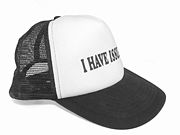 |
Trucker hat Trucker hat A trucker hat or mesh hat is a type of baseball cap. It is also sometimes known as a "gimme cap" or a "feed cap" because this style of hat originated as a promotional give-away from feed or farming supply companies to farmers, truck drivers, or other rural workers.The design of a trucker hat is... |
Similar to a baseball cap, usually with a foam brim and front section and a breathable mesh back section. |
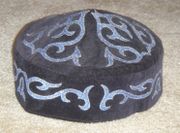 |
Tubeteika Tubeteika A tubeteika or tübätäy is a Central Asian cap, today worn in Tajikistan, Kazakhstan, Kyrgyzstan, and Uzbekistan, as well as in Muslim-populated regions of Russia . The tubeteika is worn typically by the Turkic ethnic groups of the region. It bears some superficial resemblance to the yurt, another... |
A round, slightly pointed cap with embroidered or applique patterns worn throughout Central Asia. |
 |
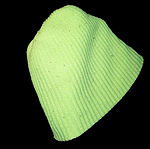
Tudor bonnet Tudor bonnet A Tudor bonnet is a traditional soft round cap, with a tassel hanging from a cord encircling the puggaree of the hat... |
A soft round black academic cap, with a tassel hanging from a cord attached to the centre of the top of the hat. |
 |
Tuque Tuque A – variously known as a knit hat or stocking cap among other names – is a knitted cap, originally of wool though now often of synthetic fibers, that is designed to provide warmth in winter... |
In Canada, a knitted hat, worn in winter, usually made from wool or acrylic. Also known as a ski cap, knit hat, knit cap, sock cap, stocking cap, toboggan, watch cap, or goobalini. In New Zealand, Australia, the United States and the United Kingdom, the term "beanie Beanie A beanie is a head-hugging brimless cap with or without a visor that was once popular among school boys.-Description:In the United States of America, beanies are made by triangular sections of cloth joined by a button at the crown and seamed together around the sides.They can also be made from... " is applied to this cap. |
 |
Turban Turban In English, Turban refers to several types of headwear popularly worn in the Middle East, North Africa, Punjab, Jamaica and Southwest Asia. A commonly used synonym is Pagri, the Indian word for turban.-Styles:... |
A headdress consisting of a scarf-like single piece of cloth wound around either the head itself or an inner hat. |
 |
Tyrolean hat Tyrolean hat The Tyrolean hat is a type of fedora hat named for the Tyrol in the Alps. It is essentially the shape known as the Trilby. Tyrolean hats are made of felt, traditionally having a corded hatband and a feather on the side as trim.... |
A felt hat originating from the Alps. |
 |
Ushanka Ushanka An ushanka , also known as a trooper, is a Russian fur cap with ear flaps that can be tied up to the crown of the cap, or tied at the chin to protect the ears, jaw and lower chin from the cold. The thick dense fur also offers some protection against blunt impacts to the head... |
Russian fur hat with fold down ear flaps. |
 |
Vueltiao Sombrero Vueltiao The sombrero vueltiao or sombrero vueltiado is a traditional hat from Colombia and one of its symbols. It is made out of Gynerium sagittatum known locally as caña flecha, a type of cane that grows in the region... |
A Colombian hat of woven and sewn black and khaki dried palm braids with indigenous figures. |
 |
Zucchetto Zucchetto The zucchetto , a/k/a pileolus in Latin and calotte/calotta in France, Italy and Hispanic nations, is a small skullcap worn by clerics of the Roman Catholic Church, as well as in Anglicanism.... |
Skullcap worn by clerics. |
Hat size
Hat sizes are determined by measuring the circumferenceCircumference
The circumference is the distance around a closed curve. Circumference is a special perimeter.-Circumference of a circle:The circumference of a circle is the length around it....
of a person's head about 1/2 inch (1.3 cm) above the ears. Inches or centimeters may be used depending on the manufacturer. Felt hats can be stretched for a custom fit. Some hats, like hard hat
Hard hat
A hard hat is a type of helmet predominantly used in workplace environments, such as construction sites, to protect the head from injury by falling objects, impact with other objects, debris, bad weather and electric shock. Inside the helmet is a suspension that spreads the helmet's weight over the...
s and baseball cap
Baseball cap
A baseball cap is a type of soft cap with a rounded stiff brim. The front of the cap typically contains designs or logos of sports teams ,...
s, are adjustable.
Cheaper hats come in "standard sizes", such as small, medium, large, extra large: the mapping of measured size to the various "standard sizes" varies from maker to maker and style to style, as can be seen by studying various catalogues, such as Hammacher-Schlemmer
Hammacher-Schlemmer
Hammacher Schlemmer is a retailer and mail order dealer founded in 1848. They claim to be the oldest continuously published catalog in the United States, with a claimed annual catalog circulation exceeding 30 million. It is based in Niles, Illinois. The company is owned by the heir of J...
.
Traditional hat size is worked out by adding the fore and aft and side to side measurements (in inches) then dividing by two. In the UK, an equivalent hat size is an eighth of an inch smaller than in the US.
External links
- Different Sizing Schemes
- Hats UK has a Hat Bible and other resources
- Witty, whimsical, wacky, wonderful, International Herald Tribune, Suzy Menkes
- Hat History
- When Did Men Stop Wearing Hats?. February 21, 2011 by The DailySkew.