

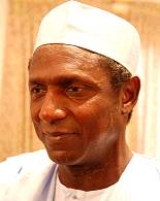
Kufi

Encyclopedia
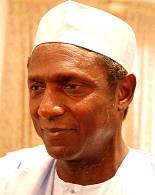
Cap
A cap is a form of headgear. Caps have crowns that fit very close to the head and have no brim or only a visor. They are typically designed for warmth and, when including a visor, blocking sunlight from the eyes...
worn by many populations in West Africa
West Africa
West Africa or Western Africa is the westernmost region of the African continent. Geopolitically, the UN definition of Western Africa includes the following 16 countries and an area of approximately 5 million square km:-Flags of West Africa:...
of all religions and throughout the African diaspora
African diaspora
The African diaspora was the movement of Africans and their descendants to places throughout the world—predominantly to the Americas also to Europe, the Middle East and other places around the globe...
.
African and African-American Usage
In West AfricaWest Africa
West Africa or Western Africa is the westernmost region of the African continent. Geopolitically, the UN definition of Western Africa includes the following 16 countries and an area of approximately 5 million square km:-Flags of West Africa:...
, a kufi cap is the traditional hat for men, and is part of the national costume
National costume
Folk costume expresses an identity through costume which usually to a geographic area or a period of time in history, but can also indicate social, marital and/or religious status...
of most of the countries in the region. It is worn by Christian
Christian
A Christian is a person who adheres to Christianity, an Abrahamic, monotheistic religion based on the life and teachings of Jesus of Nazareth as recorded in the Canonical gospels and the letters of the New Testament...
s, Muslim
Muslim
A Muslim, also spelled Moslem, is an adherent of Islam, a monotheistic, Abrahamic religion based on the Quran, which Muslims consider the verbatim word of God as revealed to prophet Muhammad. "Muslim" is the Arabic term for "submitter" .Muslims believe that God is one and incomparable...
s, and African Jews
African Jews
Some Jewish communities in Africa are among the oldest in the world, dating back more than 2700 years. African Jews have ethnic and religious diversity and richness. African Jewish communities include:...
. Many grandfathers and other older men wear a kufi every day to symbolize their status as wise elders, religious people, or family patriarchs.
Within the United States
United States
The United States of America is a federal constitutional republic comprising fifty states and a federal district...
, it has become identified primarily with persons of West African heritage, who wear it to show pride in their culture, history, and religion (whether Christianity
Christianity
Christianity is a monotheistic religion based on the life and teachings of Jesus as presented in canonical gospels and other New Testament writings...
, Islam
Islam
Islam . The most common are and . : Arabic pronunciation varies regionally. The first vowel ranges from ~~. The second vowel ranges from ~~~...
or Traditional African religions). Often made of kente cloth
Kente cloth
Kente cloth, known locally as nwentoma, is a type of silk and cotton fabric made of interwoven cloth strips and is native to the Akan people of Ghana and the Ivory Coast.- Etymology :...
, mudcloth, or knitted or crocheted in a variety of yarns.
Crown style kufis are the traditional hat worn with formal West African attire, see Dashiki
Dashiki
The dashiki is a colorful men's garment widely worn in West Africa that covers the top half of the body. It has formal and informal versions and varies from simple draped clothing to fully tailored suits. Traditional female attire is called a caftan, or kaftan...
. A formal dashiki suit will always include a crown style kufi, while the knitted style is most appropriate for non-formal occasions. Other caps worn with the Dashiki, Senegalese kaftan
Senegalese kaftan
A Senegalese kaftan is a pullover men's robe with long bell sleeves. In the Wolof language, this robe is called a mbubb and in French it is called a boubou. The Senegalese caftan is an ankle length garment. It is worn with matching drawstring pants called tubay. Normally made of cotton brocade,...
, and Grand boubou
Boubou (clothing)
The Grand Boubou/Bubu is one of the names for a flowing wide sleeved robe worn by men in much of West Africa, and to a lesser extent in North Africa, related to the Dashiki suit...
, include:
- The Aso Oke hatAso Oke HatAn Aso Oke Hat is a traditional Yoruba hat that is made of hand woven African fabric, see Aso Oke fabric, cotton, velvet, or damask. In the Yoruba language, this hat is called a fila. Although these hats originated in Nigeria they are worn by all men of African descent. Typically, the top of the...
, from NigeriaNigeriaNigeria , officially the Federal Republic of Nigeria, is a federal constitutional republic comprising 36 states and its Federal Capital Territory, Abuja. The country is located in West Africa and shares land borders with the Republic of Benin in the west, Chad and Cameroon in the east, and Niger in... - The Fez, a wool cap with a stem from, North AfricaNorth AfricaNorth Africa or Northern Africa is the northernmost region of the African continent, linked by the Sahara to Sub-Saharan Africa. Geopolitically, the United Nations definition of Northern Africa includes eight countries or territories; Algeria, Egypt, Libya, Morocco, South Sudan, Sudan, Tunisia, and...
, also called a tarboush - The Abeti-aja, a triangular YorubaYoruba peopleThe Yoruba people are one of the largest ethnic groups in West Africa. The majority of the Yoruba speak the Yoruba language...
hat, whose name means, like the ears of a dog, from NigeriaNigeriaNigeria , officially the Federal Republic of Nigeria, is a federal constitutional republic comprising 36 states and its Federal Capital Territory, Abuja. The country is located in West Africa and shares land borders with the Republic of Benin in the west, Chad and Cameroon in the east, and Niger in...
However, the crown style kufi is most common.
In the United States
United States
The United States of America is a federal constitutional republic comprising fifty states and a federal district...
today, many African-Americans wear the kufi during wedding
Wedding
A wedding is the ceremony in which two people are united in marriage or a similar institution. Wedding traditions and customs vary greatly between cultures, ethnic groups, religions, countries, and social classes...
s, funeral
Funeral
A funeral is a ceremony for celebrating, sanctifying, or remembering the life of a person who has died. Funerary customs comprise the complex of beliefs and practices used by a culture to remember the dead, from interment itself, to various monuments, prayers, and rituals undertaken in their honor...
s, graduations and Kwanzaa
Kwanzaa
Kwanzaa is a week long celebration held in the United States honoring universal African-American heritage and culture, observed from December 26 to January 1 each year. It features activities such as lighting a candle holder with seven candles and culminates in a feast and gift giving...
celebrations. Furthermore, people of mainly West African heritage of all faiths wear the kufi, although it is associated with members of the Islamic faith more.
A West African king or tribal chief may have royal or noble arms embroidered on the kufi (see Heraldry in Sub-Saharan Africa
Heraldry in Sub-Saharan Africa
Heraldry in Sub-Saharan Africa includes the study and creation of coats of arms, badges, and achievements for individuals, countries, and tribes in Sub-Saharan Africa.Three main types of arms are seen throughout Africa.* national coats of arms...
).
For members of the Christian
Christian
A Christian is a person who adheres to Christianity, an Abrahamic, monotheistic religion based on the life and teachings of Jesus of Nazareth as recorded in the Canonical gospels and the letters of the New Testament...
faith, the kufi is unisex, and is also worn by women. Crochet and knitted styles are preferred by young girls and infants.
Traditionally, when worn by men, the kufi is a sign of peace, mourning, renewal or protection of the mind.
Etymology
In the Yoruba languageYoruba language
Yorùbá is a Niger–Congo language spoken in West Africa by approximately 20 million speakers. The native tongue of the Yoruba people, it is spoken, among other languages, in Nigeria, Benin, and Togo and in communities in other parts of Africa, Europe and the Americas...
, kufi means crown, and fila means cap. The city of Kufi is located in Yoruba
Yoruba people
The Yoruba people are one of the largest ethnic groups in West Africa. The majority of the Yoruba speak the Yoruba language...
land near Ibadan
Ibadan
Ibadan is the capital city of Oyo State and the third largest metropolitan area in Nigeria, after Lagos and Kano, with a population of 1,338,659 according to the 2006 census. Ibadan is also the largest metropolitan geographical area...
. Other West African names include fula, fila, and malo hat. This cap is called a kofia
Kofia (hat)
The kofia is a brimless cylindrical cap with a flat crown, worn by men in East Africa, especially Swahili-speaking cultures. Kofia is a Swahili word that means hat. The kofia is worn with a dashiki, a colorful African shirt which is called a kitenge shirt in some regions of East Africa. In...
in the Swahili language
Swahili language
Swahili or Kiswahili is a Bantu language spoken by various ethnic groups that inhabit several large stretches of the Mozambique Channel coastline from northern Kenya to northern Mozambique, including the Comoro Islands. It is also spoken by ethnic minority groups in Somalia...
of East Africa
East Africa
East Africa or Eastern Africa is the easterly region of the African continent, variably defined by geography or geopolitics. In the UN scheme of geographic regions, 19 territories constitute Eastern Africa:...
(see the kanzu
Kanzu
A kanzu is a white or cream colored robe worn by men in East African countries. In English, the robe is called a tunic. In Arab countries this clothing is known as Thawb. The kanzu is an ankle or floor length garment. The kanzu is the national costume of Tanzania, and the Comoros, and it is worn...
article for further information). In the United States
United States
The United States of America is a federal constitutional republic comprising fifty states and a federal district...
, the West African name, kufi, is most commonly used.
Zulu crown
The Zulu crown is a hat that is worn by the Zulu people of Southern AfricaSouthern Africa
Southern Africa is the southernmost region of the African continent, variably defined by geography or geopolitics. Within the region are numerous territories, including the Republic of South Africa ; nowadays, the simpler term South Africa is generally reserved for the country in English.-UN...
. It is usually worn by women.
In the Zulu language
Zulu language
Zulu is the language of the Zulu people with about 10 million speakers, the vast majority of whom live in South Africa. Zulu is the most widely spoken home language in South Africa as well as being understood by over 50% of the population...
, this hat is called an isicholo.
See also
- KofiaKofia (hat)The kofia is a brimless cylindrical cap with a flat crown, worn by men in East Africa, especially Swahili-speaking cultures. Kofia is a Swahili word that means hat. The kofia is worn with a dashiki, a colorful African shirt which is called a kitenge shirt in some regions of East Africa. In...
- cap worn in East AfricaEast AfricaEast Africa or Eastern Africa is the easterly region of the African continent, variably defined by geography or geopolitics. In the UN scheme of geographic regions, 19 territories constitute Eastern Africa:... - Taqiyah (cap)Taqiyah (cap)The taqiyah is a short, rounded cap worn by some observant Muslim men. When worn by itself, the taqiyah can be any color. When worn under the keffiyah scarf, it is always white. Some Muslims wrap the turban around the cap. The turban is called an imama in Arabic...
- DashikiDashikiThe dashiki is a colorful men's garment widely worn in West Africa that covers the top half of the body. It has formal and informal versions and varies from simple draped clothing to fully tailored suits. Traditional female attire is called a caftan, or kaftan...
- Women's wrapper and kaftanWrapper (clothing)The wrapper or pagne is a colorful women's garment widely worn in West Africa. It has formal and informal versions and varies from simple draped clothing to fully tailored ensembles. The formality of the wrapper depends on the fabric used to create it. The wrapper is called an Iro in the Yoruba...
- National costumeNational costumeFolk costume expresses an identity through costume which usually to a geographic area or a period of time in history, but can also indicate social, marital and/or religious status...
- List of hats
Further reading
- Thony C. Anyiam, Jumping the Broom in Style (Authorhouse 2007).
- Diane Hoyt-Goldsmith, Celebrating Kwanzaa (Holiday House 1993).