

Gullah

Encyclopedia
The Gullah are African American
s who live in the Lowcountry
region of South Carolina
and Georgia
, which includes both the coastal plain and the Sea Islands
.
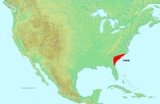
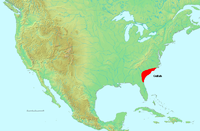
Historically, the Gullah region once extended north to the Cape Fear area on the coast of North Carolina
and south to the vicinity of Jacksonville
on the coast of Florida
; but today the Gullah area is confined to the South Carolina and Georgia Lowcountry. The Gullah people and their language are also called Geechee, which some scholars speculate is related to the Ogeechee River
near Savannah, Georgia
. The term "Geechee" is an emic term used by speakers (and can have a derogatory connotation depending on usage) and "Gullah" is a term that was generally used by outsiders but that has become a way for speakers to formally identify themselves and their language. The Georgia communities further identify themselves as either "Saltwater Geechee" or "Freshwater Geechee" depending on proximity to the coast.
The Gullah are known for preserving more of their African linguistic and cultural heritage than any other African-American community in the United States. They speak an English-based creole language
containing many African loanwords and significant influences from African languages in grammar and sentence structure. Properly referred to as "Sea Island Creole" the Gullah language
is related to Jamaican Creole
, Barbadian Dialect, Bahamian Dialect, and the Krio language
of Sierra Leone
in West Africa
. Gullah storytelling, cuisine, music, folk beliefs, crafts, farming and fishing traditions, all exhibit strong influences from West and Central African cultures.
, where some Gullah people may have originated. Some scholars have also suggested it comes from Gola, an ethnic group living in the border area between Sierra Leone and Liberia in West Africa, another region where many of the Gullahs' ancestors originated. The name "Geechee", another common name for the Gullah people, may come from Kissi, an ethnic group living in the border area between Sierra Leone, Guinea
and Liberia.
Some scholars have also suggested Native American
origins for these words. The Spanish called the South Carolina and Georgia coastal region Guale
after a Native American tribe. The Ogeechee River
, a prominent geographical feature in coastal Georgia, takes its name from a Creek Indian word.
through the ports of Charleston
and Savannah
as slaves, making their way from Sierra Leone by way of Brazil. Charleston was one of the most important ports in North America for the Transatlantic slave trade
. Up to half of the enslaved Africans brought into what is now the United States came through that port. A great majority of the remaining flowed through Savannah, which was also active in the slave trade.
The largest group of enslaved Africans brought into Charleston and Savannah came from the West African rice-growing region, centered primarily in Sierra Leone through the most significant slave castle for the modern day United States called Bunce Island. The people had cultivated African rice
in this section of West Africa for possibly up to 3,000 years. South Carolina and Georgia rice planters once called this region the "Rice Coast", indicating its importance as a source of skilled African labor for the North American rice industry. Once it was discovered that rice would grow in the southern U.S. regions, it was assumed that enslaved Africans from rice-growing regions in Africa would be beneficial, due to their knowledge of rice-growing techniques.
In 1750, Henry Laurens and Richard Oswald opened the most significant slave castle just up the Sierra Leone river on what was then called Bance Island, and is now called Bunce Island. Here is where up to 80% of African Americans in the United States whose heritage comes from the slave trade are believed to have derived.
 The Gullah people have been able to preserve much of their African cultural heritage because of geography, climate, and patterns of importation of enslaved Africans. Taken from the Western region of Africa as slaves and transported to some areas of Brazil (including Bahia) the Gullah-Gheechee slaves were then sold to slave owners in what was then Charlestowne, South Carolina. By the middle of the 18th century, the South Carolina
and Georgia
Lowcountry was covered by thousands of acres of rice
fields. African farmers from the "Rice Coast" brought the skills for cultivation and tidal irrigation that made rice one of the most successful industries in early America.
The subtropical climate that made the Lowcountry
such an excellent place for rice production also made it vulnerable to the spread of malaria
and yellow fever
. These tropical diseases, endemic
in Africa, were carried by slaves transported to the colonies by slave ships. Mosquitoes in the swamps and inundated rice fields of the Lowcountry picked up and spread the diseases to English and European settlers, as well. Malaria and yellow fever soon became endemic in the region.
Because of having built some immunity in their homeland, Africans were more resistant to tropical fevers than the Europeans. In addition, because planters devoted large areas of land to plantations for rice and indigo, the white population of the Lowcountry and Sea Islands grew at a slower rate than the black population. More and more enslaved Africans were brought as laborers onto the Sea Islands and into the Lowcountry as the rice industry expanded. By about 1708, South Carolina had a black majority. Coastal Georgia later acquired its own black majority after rice cultivation expanded there in the mid-18th century, and malaria and yellow fever became endemic. Fearing disease, many white planters left the Lowcountry during the rainy spring and summer months when fever ran rampant. Others lived mostly in cities such as Charleston.
They left their African "rice drivers," or overseers, in charge of the plantations. Working on large plantations with hundreds of laborers, and with African traditions reinforced by new imports from the same regions, the Gullahs developed a culture in which elements of African languages, cultures, and community life were preserved to a high degree. Their culture was quite different from that of slaves in states like Virginia and North Carolina, where slaves lived in smaller settlements and had more sustained and frequent interactions with whites.
began, the Union rushed to blockade Confederate
shipping. White planters on the Sea Islands, fearing an invasion by the US naval forces, abandoned their plantations and fled to the mainland. When Union forces arrived on the Sea Islands in 1861, they found the Gullah people eager for their freedom, and eager as well to defend it. Many Gullahs served with distinction in the Union Army
's First South Carolina Volunteers. The Sea Islands were the first place in the South where slaves were freed. Long before the War ended, Unitarian missionaries from Pennsylvania
came down to start schools for the newly freed slaves. Penn Center, now a Gullah community organization on Saint Helena Island
, South Carolina, began as the very first school for freed slaves.
After the Civil War ended, the Gullahs' isolation from the outside world actually increased in some respects. The rice planters on the mainland gradually abandoned their farms and moved away from the area because of labor issues and hurricane damage to crops. Free blacks were unwilling to work in the dangerous and disease-ridden rice fields. A series of hurricanes
devastated the crops in the 1890s. Left alone in remote rural areas in the Lowcountry, the Gullahs continued to practice their traditional culture with little influence from the outside world well into the 20th Century.
. They have fought back against uncontrolled development on the islands through community action, the courts, and the political process.
The Gullahs have struggled to preserve their traditional culture. In 1979, a translation of the New Testament
in the Gullah language began. The American Bible Society
published De Nyew Testament in 2005. In November 2011, Healin fa de Soul, a five-CD collection of readings from the Gullah Bible was released. This collection includes Scipcha Wa De Bring Healing ("Scripture That Heals") and the Gospel of John
(De Good Nyews Bout Jedus Christ Wa John Write). This was also the most extensive collection of Gullah recordings, surpassing those of Lorenzo Dow Turner
. The recordings help people develop an interest in the culture because people might not have known how to pronounce some words.
The Gullahs achieved another victory in 2006 when the U.S. Congress passed the "Gullah/Geechee Cultural Heritage Corridor Act" that provides $10 million over ten years for the preservation and interpretation of historic sites relating to Gullah culture. The "heritage corridor" will extend from southern North Carolina to northern Florida. The project will be administered by the US National Park Service
with extensive consultation with the Gullah community.
Gullahs have also reached out to West Africa
. Gullah groups made three celebrated "homecomings" to Sierra Leone
in 1989, 1997, and 2005. Sierra Leone is at the heart of the traditional rice-growing region of West Africa where many of the Gullahs' ancestors originated. Bunce Island
, the British slave castle in Sierra Leone, sent many African captives to Charleston and Savannah during the mid- and late 18th century. These dramatic homecomings were the subject of three documentary films—Family Across the Sea (1990), The Language You Cry In (1998), and Priscilla's Homecoming (in production).
s, linguists, folklorists, and anthropologists interested in their rich cultural heritage. Many academic books on that subject have been published. The Gullah have also become a symbol of cultural pride for blacks throughout the United States and a subject of general interest in the media. This has given rise to countless newspaper and magazine articles, documentary films, and children's books on Gullah culture, and to a number of popular novels set in the Gullah region.
Gullah people now organize cultural festival
s every year in towns up and down the Lowcountry. Hilton Head Island, South Carolina
, for instance, hosts a "Gullah Celebration" in February. It includes "De Aarts ob We People" show; the "Ol’ Fashioned Gullah Breakfast"; "National Freedom Day," the "Gullah Film Fest", "A Taste of Gullah" food and entertainment, a "Celebration of Lowcountry Authors and Books," an "Arts, Crafts & Food Expo," and "De Gullah Playhouse". Beaufort, South Carolina
hosts the oldest and the largest celebration "The Original Gullah Festival" in May, and nearby Penn Center on St. Helena Island, South Carolina holds "Heritage Days" in November. Other Gullah festivals are celebrated on James Island, South Carolina
and Sapelo Island, Georgia
.
But Gullah culture is also being celebrated elsewhere throughout the United States. Purdue University
in West Lafayette, Indiana
recently held an event to showcase the Gullah culture. Purdue's Black Cultural Center maintains a bibliography of Gullah publications as well. Metro State College in Denver, Colorado
recently hosted a conference on Gullah culture, called "The Water Brought Us: Gullah History and Culture", which featured a panel of Gullah scholars and cultural activists. These events in Indiana
and Colorado are typical of the attention Gullah culture now receives on a regular basis throughout the United States.
, Brooklyn
, and Queens
. Typically they send their children back to rural communities in South Carolina and Georgia during the summer months to be reared by grandparents, uncles and aunts. Gullah people living in New York also frequently return to the Lowcountry to retire. Second- and third-generation Gullahs in New York often maintain many of their traditional customs and sometimes still speak the Gullah language.
Gullah language and storytelling
Gullah culture
Historical photos of the Gullah
Children's books on the Gullah
Works of fiction set in the Gullah region
Gullah Gullah Island
; Children's show on Nickelodeon.
Films
Radio programs
African American
African Americans are citizens or residents of the United States who have at least partial ancestry from any of the native populations of Sub-Saharan Africa and are the direct descendants of enslaved Africans within the boundaries of the present United States...
s who live in the Lowcountry
South Carolina Lowcountry
The Lowcountry is a geographic and cultural region located along South Carolina's coast. The region includes the South Carolina Sea Islands...
region of South Carolina
South Carolina
South Carolina is a state in the Deep South of the United States that borders Georgia to the south, North Carolina to the north, and the Atlantic Ocean to the east. Originally part of the Province of Carolina, the Province of South Carolina was one of the 13 colonies that declared independence...
and Georgia
Georgia (U.S. state)
Georgia is a state located in the southeastern United States. It was established in 1732, the last of the original Thirteen Colonies. The state is named after King George II of Great Britain. Georgia was the fourth state to ratify the United States Constitution, on January 2, 1788...
, which includes both the coastal plain and the Sea Islands
Sea Islands
The Sea Islands are a chain of tidal and barrier islands on the Atlantic Ocean coast of the United States. They number over 100, and are located between the mouths of the Santee and St. Johns Rivers along the coast of the U.S...
.
Historically, the Gullah region once extended north to the Cape Fear area on the coast of North Carolina
North Carolina
North Carolina is a state located in the southeastern United States. The state borders South Carolina and Georgia to the south, Tennessee to the west and Virginia to the north. North Carolina contains 100 counties. Its capital is Raleigh, and its largest city is Charlotte...
and south to the vicinity of Jacksonville
Jacksonville, Florida
Jacksonville is the largest city in the U.S. state of Florida in terms of both population and land area, and the largest city by area in the contiguous United States. It is the county seat of Duval County, with which the city government consolidated in 1968...
on the coast of Florida
Florida
Florida is a state in the southeastern United States, located on the nation's Atlantic and Gulf coasts. It is bordered to the west by the Gulf of Mexico, to the north by Alabama and Georgia and to the east by the Atlantic Ocean. With a population of 18,801,310 as measured by the 2010 census, it...
; but today the Gullah area is confined to the South Carolina and Georgia Lowcountry. The Gullah people and their language are also called Geechee, which some scholars speculate is related to the Ogeechee River
Ogeechee River
Ogeechee River is a river in the U.S. state of Georgia. It heads at the confluence of its North and South Forks, about south-southwest of Crawfordville and flowing generally southeast to Ossabaw Sound about south of Savannah. Its largest tributary is the Canoochee River...
near Savannah, Georgia
Savannah, Georgia
Savannah is the largest city and the county seat of Chatham County, in the U.S. state of Georgia. Established in 1733, the city of Savannah was the colonial capital of the Province of Georgia and later the first state capital of Georgia. Today Savannah is an industrial center and an important...
. The term "Geechee" is an emic term used by speakers (and can have a derogatory connotation depending on usage) and "Gullah" is a term that was generally used by outsiders but that has become a way for speakers to formally identify themselves and their language. The Georgia communities further identify themselves as either "Saltwater Geechee" or "Freshwater Geechee" depending on proximity to the coast.
The Gullah are known for preserving more of their African linguistic and cultural heritage than any other African-American community in the United States. They speak an English-based creole language
Creole language
A creole language, or simply a creole, is a stable natural language developed from the mixing of parent languages; creoles differ from pidgins in that they have been nativized by children as their primary language, making them have features of natural languages that are normally missing from...
containing many African loanwords and significant influences from African languages in grammar and sentence structure. Properly referred to as "Sea Island Creole" the Gullah language
Gullah language
Gullah is a creole language spoken by the Gullah people , an African American population living on the Sea Islands and the coastal region of the U.S...
is related to Jamaican Creole
Jamaican Creole
Jamaican Patois, known locally as Patois or Jamaican, and called Jamaican Creole by linguists, is an English-lexified creole language with West African influences spoken primarily in Jamaica and the Jamaican diaspora. It is not to be confused with Jamaican English nor with the Rastafarian use of...
, Barbadian Dialect, Bahamian Dialect, and the Krio language
Krio language
Sierra Leone Krio is the lingua franca and the de facto national language spoken throughout the West African nation of Sierra Leone. Krio is spoken by 97% of Sierra Leone's population and unites the different ethnic groups in the country, especially in their trade and social interaction with each...
of Sierra Leone
Sierra Leone
Sierra Leone , officially the Republic of Sierra Leone, is a country in West Africa. It is bordered by Guinea to the north and east, Liberia to the southeast, and the Atlantic Ocean to the west and southwest. Sierra Leone covers a total area of and has an estimated population between 5.4 and 6.4...
in West Africa
West Africa
West Africa or Western Africa is the westernmost region of the African continent. Geopolitically, the UN definition of Western Africa includes the following 16 countries and an area of approximately 5 million square km:-Flags of West Africa:...
. Gullah storytelling, cuisine, music, folk beliefs, crafts, farming and fishing traditions, all exhibit strong influences from West and Central African cultures.
History
The name "Gullah" may derive from AngolaAngola
Angola, officially the Republic of Angola , is a country in south-central Africa bordered by Namibia on the south, the Democratic Republic of the Congo on the north, and Zambia on the east; its west coast is on the Atlantic Ocean with Luanda as its capital city...
, where some Gullah people may have originated. Some scholars have also suggested it comes from Gola, an ethnic group living in the border area between Sierra Leone and Liberia in West Africa, another region where many of the Gullahs' ancestors originated. The name "Geechee", another common name for the Gullah people, may come from Kissi, an ethnic group living in the border area between Sierra Leone, Guinea
Guinea
Guinea , officially the Republic of Guinea , is a country in West Africa. Formerly known as French Guinea , it is today sometimes called Guinea-Conakry to distinguish it from its neighbour Guinea-Bissau. Guinea is divided into eight administrative regions and subdivided into thirty-three prefectures...
and Liberia.
Some scholars have also suggested Native American
Indigenous peoples of the Americas
The indigenous peoples of the Americas are the pre-Columbian inhabitants of North and South America, their descendants and other ethnic groups who are identified with those peoples. Indigenous peoples are known in Canada as Aboriginal peoples, and in the United States as Native Americans...
origins for these words. The Spanish called the South Carolina and Georgia coastal region Guale
Guale
Guale was an historic Native American chiefdom along the coast of present-day Georgia and the Sea Islands. Spanish Florida established its Roman Catholic missionary system in the chiefdom in the late 16th century. During the late 17th century and early 18th century, Guale society was shattered...
after a Native American tribe. The Ogeechee River
Ogeechee River
Ogeechee River is a river in the U.S. state of Georgia. It heads at the confluence of its North and South Forks, about south-southwest of Crawfordville and flowing generally southeast to Ossabaw Sound about south of Savannah. Its largest tributary is the Canoochee River...
, a prominent geographical feature in coastal Georgia, takes its name from a Creek Indian word.
African roots
Most of the Gullahs' early ancestors in what is now the United States were brought to the South Carolina and Georgia LowcountrySouth Carolina Lowcountry
The Lowcountry is a geographic and cultural region located along South Carolina's coast. The region includes the South Carolina Sea Islands...
through the ports of Charleston
Charleston, South Carolina
Charleston is the second largest city in the U.S. state of South Carolina. It was made the county seat of Charleston County in 1901 when Charleston County was founded. The city's original name was Charles Towne in 1670, and it moved to its present location from a location on the west bank of the...
and Savannah
Savannah, Georgia
Savannah is the largest city and the county seat of Chatham County, in the U.S. state of Georgia. Established in 1733, the city of Savannah was the colonial capital of the Province of Georgia and later the first state capital of Georgia. Today Savannah is an industrial center and an important...
as slaves, making their way from Sierra Leone by way of Brazil. Charleston was one of the most important ports in North America for the Transatlantic slave trade
Atlantic slave trade
The Atlantic slave trade, also known as the trans-atlantic slave trade, refers to the trade in slaves that took place across the Atlantic ocean from the sixteenth through to the nineteenth centuries...
. Up to half of the enslaved Africans brought into what is now the United States came through that port. A great majority of the remaining flowed through Savannah, which was also active in the slave trade.
The largest group of enslaved Africans brought into Charleston and Savannah came from the West African rice-growing region, centered primarily in Sierra Leone through the most significant slave castle for the modern day United States called Bunce Island. The people had cultivated African rice
African rice
Oryza glaberrima, commonly known as African rice, is a domesticated rice species. African rice is believed to have been domesticated 2,000-3,000 years ago in the inland delta of the Upper Niger river, in what is now Mali...
in this section of West Africa for possibly up to 3,000 years. South Carolina and Georgia rice planters once called this region the "Rice Coast", indicating its importance as a source of skilled African labor for the North American rice industry. Once it was discovered that rice would grow in the southern U.S. regions, it was assumed that enslaved Africans from rice-growing regions in Africa would be beneficial, due to their knowledge of rice-growing techniques.
In 1750, Henry Laurens and Richard Oswald opened the most significant slave castle just up the Sierra Leone river on what was then called Bance Island, and is now called Bunce Island. Here is where up to 80% of African Americans in the United States whose heritage comes from the slave trade are believed to have derived.
Origin of Gullah culture
South Carolina
South Carolina is a state in the Deep South of the United States that borders Georgia to the south, North Carolina to the north, and the Atlantic Ocean to the east. Originally part of the Province of Carolina, the Province of South Carolina was one of the 13 colonies that declared independence...
and Georgia
Georgia (U.S. state)
Georgia is a state located in the southeastern United States. It was established in 1732, the last of the original Thirteen Colonies. The state is named after King George II of Great Britain. Georgia was the fourth state to ratify the United States Constitution, on January 2, 1788...
Lowcountry was covered by thousands of acres of rice
Rice
Rice is the seed of the monocot plants Oryza sativa or Oryza glaberrima . As a cereal grain, it is the most important staple food for a large part of the world's human population, especially in East Asia, Southeast Asia, South Asia, the Middle East, and the West Indies...
fields. African farmers from the "Rice Coast" brought the skills for cultivation and tidal irrigation that made rice one of the most successful industries in early America.
The subtropical climate that made the Lowcountry
South Carolina Lowcountry
The Lowcountry is a geographic and cultural region located along South Carolina's coast. The region includes the South Carolina Sea Islands...
such an excellent place for rice production also made it vulnerable to the spread of malaria
Malaria
Malaria is a mosquito-borne infectious disease of humans and other animals caused by eukaryotic protists of the genus Plasmodium. The disease results from the multiplication of Plasmodium parasites within red blood cells, causing symptoms that typically include fever and headache, in severe cases...
and yellow fever
Yellow fever
Yellow fever is an acute viral hemorrhagic disease. The virus is a 40 to 50 nm enveloped RNA virus with positive sense of the Flaviviridae family....
. These tropical diseases, endemic
Endemic (epidemiology)
In epidemiology, an infection is said to be endemic in a population when that infection is maintained in the population without the need for external inputs. For example, chickenpox is endemic in the UK, but malaria is not...
in Africa, were carried by slaves transported to the colonies by slave ships. Mosquitoes in the swamps and inundated rice fields of the Lowcountry picked up and spread the diseases to English and European settlers, as well. Malaria and yellow fever soon became endemic in the region.
Because of having built some immunity in their homeland, Africans were more resistant to tropical fevers than the Europeans. In addition, because planters devoted large areas of land to plantations for rice and indigo, the white population of the Lowcountry and Sea Islands grew at a slower rate than the black population. More and more enslaved Africans were brought as laborers onto the Sea Islands and into the Lowcountry as the rice industry expanded. By about 1708, South Carolina had a black majority. Coastal Georgia later acquired its own black majority after rice cultivation expanded there in the mid-18th century, and malaria and yellow fever became endemic. Fearing disease, many white planters left the Lowcountry during the rainy spring and summer months when fever ran rampant. Others lived mostly in cities such as Charleston.
They left their African "rice drivers," or overseers, in charge of the plantations. Working on large plantations with hundreds of laborers, and with African traditions reinforced by new imports from the same regions, the Gullahs developed a culture in which elements of African languages, cultures, and community life were preserved to a high degree. Their culture was quite different from that of slaves in states like Virginia and North Carolina, where slaves lived in smaller settlements and had more sustained and frequent interactions with whites.
Gullah customs and traditions
African influences are found in every aspect of the Gullahs' traditional way of life:- The Gullah word guber for peanutPeanutThe peanut, or groundnut , is a species in the legume or "bean" family , so it is not a nut. The peanut was probably first cultivated in the valleys of Peru. It is an annual herbaceous plant growing tall...
derives from the KiKongoKongo languageThe Kongo language, or Kikongo, is the Bantu language spoken by the Bakongo and Bandundu people living in the tropical forests of the Democratic Republic of the Congo, the Republic of the Congo and Angola. It is a tonal language and formed the base for Kituba, a Bantu creole and lingua franca...
word N'guba.
- Gullah rice dishes called "red rice" and "okraOkraOkra is a flowering plant in the mallow family. It is valued for its edible green seed pods. The geographical origin of okra is disputed, with supporters of South Asian, Ethiopian and West African origins...
soup" are similar to West African "jollof riceJollof riceJollof rice, also called 'Benachin' meaning one pot in the Wolof language, is a popular dish all over West Africa. It is thought to have originated in The Gambia but has since spread to the whole of West Africa, especially Nigeria and Ghana amongst members of the Wolof ethnic group.There are many...
" and "okra soup". Jollof rice is a style of cooking brought by the WolofWolof peopleThe Wolof are an ethnic group found in Senegal, The Gambia, and Mauritania.In Senegal, the Wolof form an ethnic plurality with about 43.3% of the population are Wolofs...
people of West Africa.
- The Gullah version of "gumboGumboGumbo is a stew or soup that originated in southern Louisiana during the 18th century. It consists primarily of a strongly-flavored stock, meat or shellfish, a thickener, and the vegetable holy trinity of celery, bell peppers, and onions...
" has its roots in African cooking. "Gumbo" is derived from a word in the UmbunduUmbunduSouth Mbundu, or Umbundu, is a language spoken by the Southern Mbundu people - now generally referred to by the way they call themselves, Ovimbundu - in the central highlands of Angola. Umbundu is the most widespread Bantu language in Angola. About one third of Angola is represented by Ovimbundu...
language of Angola, meaning okra, one of the dish's main ingredients.
- Gullah rice farmers once made and used mortar and pestleMortar and pestleA mortar and pestle is a tool used to crush, grind, and mix solid substances . The pestle is a heavy bat-shaped object, the end of which is used for crushing and grinding. The mortar is a bowl, typically made of hard wood, ceramic or stone...
s and winnowing fanners similar in style to tools used by West African rice farmers.
- Gullah beliefs about "hagsBoo HagA Boo Hag is a mythical creature in the folklore of South Carolina's Gullah culture. It is a regionalized version of the Hag myth.-The legend:...
" and "haunts" are similar to African beliefs about malevolent ancestors, witchesWitchcraftWitchcraft, in historical, anthropological, religious, and mythological contexts, is the alleged use of supernatural or magical powers. A witch is a practitioner of witchcraft...
, and "devils" (forest spirits).
- Gullah "root doctors" protect their clients against dangerous spiritual forces by using ritualRitualA ritual is a set of actions, performed mainly for their symbolic value. It may be prescribed by a religion or by the traditions of a community. The term usually excludes actions which are arbitrarily chosen by the performers....
objects similar to those employed by African medicine menWitch doctorA witch doctor originally referred to a type of healer who treated ailments believed to be caused by witchcraft. It is currently used to refer to healers in some third world regions, who use traditional healing rather than contemporary medicine...
.
- Gullah herbal medicinesHerbalismHerbalism is a traditional medicinal or folk medicine practice based on the use of plants and plant extracts. Herbalism is also known as botanical medicine, medical herbalism, herbal medicine, herbology, herblore, and phytotherapy...
are similar to traditional African remedies.
- The Gullah "seekin" ritual is similar to coming of ageComing of ageComing of age is a young person's transition from childhood to adulthood. The age at which this transition takes place varies in society, as does the nature of the transition. It can be a simple legal convention or can be part of a ritual, as practiced by many societies...
ceremonies in West African secret societies, such as the PoroPoroThe Poro, or Purrah or Purroh, is a secret society of Sierra Leone and Liberia.-Structure:Only males are admitted to its ranks, but two other affiliated and secret associations exist, the Yassi and the Bundu, the first of which is nominally reserved for females, but members of the Poro are admitted...
and SandeSande societySande, also known as zadεgi, bundu, bundo and bondo, is a women's association found in Liberia, Sierra Leone and Guinea that initiates girls into adulthood, confers fertility, instills notions of morality and proper sexual comportment, and maintains an interest in the well-being of its members...
.
- The Gullah ring shoutRing shoutA shout or ring shout is an ecstatic, transcendent religious ritual, first practiced by African slaves in the West Indies and the United States, in which worshipers move in a circle while shuffling and stomping their feet and clapping their hands...
is similar to ecstatic religious rituals performed in West and Central Africa.
- Gullah stories about "Bruh RabbitBr'er RabbitBr'er Rabbit is a central figure in the Uncle Remus stories of the Southern United States. He is a trickster character who succeeds by his wits rather than by brawn, tweaking authority figures and bending social mores as he sees fit...
" are similar to West and Central African tricksterTricksterIn mythology, and in the study of folklore and religion, a trickster is a god, goddess, spirit, man, woman, or anthropomorphic animal who plays tricks or otherwise disobeys normal rules and conventional behavior. It is suggested by Hansen that the term "Trickster" was probably first used in this...
tales about the clever and conniving rabbit, spider, and tortoise.
- Gullah spirituals, shouts, and other musical forms employ the "call and responseCall and responseCall and response is a form of "spontaneous verbal and non-verbal interaction between speaker and listener in which all of the statements are punctuated by expressions from the listener."...
" method commonly used in African music.
- Gullah "sweetgrass baskets" are coil straw basketBasketA basket is a container which is traditionally constructed from stiff fibres, which can be made from a range of materials, including wood splints, runners, and cane. While most baskets are made from plant materials, other materials such as horsehair, baleen, or metal wire can be used. Baskets are...
s made by the descendants of slaves in the South Carolina LowcountrySouth Carolina LowcountryThe Lowcountry is a geographic and cultural region located along South Carolina's coast. The region includes the South Carolina Sea Islands...
.
- Gullah "sweetgrass baskets" are almost identical to coil basketBasketA basket is a container which is traditionally constructed from stiff fibres, which can be made from a range of materials, including wood splints, runners, and cane. While most baskets are made from plant materials, other materials such as horsehair, baleen, or metal wire can be used. Baskets are...
s made by the Wolof peopleWolof peopleThe Wolof are an ethnic group found in Senegal, The Gambia, and Mauritania.In Senegal, the Wolof form an ethnic plurality with about 43.3% of the population are Wolofs...
in SenegalSenegalSenegal , officially the Republic of Senegal , is a country in western Africa. It owes its name to the Sénégal River that borders it to the east and north...
.
- Gullah "strip quiltQuiltA quilt is a type of bed cover, traditionally composed of three layers of fiber: a woven cloth top, a layer of batting or wadding and a woven back, combined using the technique of quilting. “Quilting” refers to the technique of joining at least two fabric layers by stitches or ties...
s" mimic the design of cloth woven with the traditional strip loomLoomA loom is a device used to weave cloth. The basic purpose of any loom is to hold the warp threads under tension to facilitate the interweaving of the weft threads...
used throughout West Africa. The famous kente cloth from Ghana is woven on the strip loom.
- The folk song Michael Row the Boat AshoreMichael Row the Boat AshoreMichael, Row the Boat Ashore is an African-American spiritual. It was first noted during the American Civil War at St. Helena Island, one of the Sea Islands of South Carolina....
(or Michael Row Your Boat Ashore) comes from the Gullah culture.
Civil War period
When the U.S. Civil WarAmerican Civil War
The American Civil War was a civil war fought in the United States of America. In response to the election of Abraham Lincoln as President of the United States, 11 southern slave states declared their secession from the United States and formed the Confederate States of America ; the other 25...
began, the Union rushed to blockade Confederate
Confederate States of America
The Confederate States of America was a government set up from 1861 to 1865 by 11 Southern slave states of the United States of America that had declared their secession from the U.S...
shipping. White planters on the Sea Islands, fearing an invasion by the US naval forces, abandoned their plantations and fled to the mainland. When Union forces arrived on the Sea Islands in 1861, they found the Gullah people eager for their freedom, and eager as well to defend it. Many Gullahs served with distinction in the Union Army
Union Army
The Union Army was the land force that fought for the Union during the American Civil War. It was also known as the Federal Army, the U.S. Army, the Northern Army and the National Army...
's First South Carolina Volunteers. The Sea Islands were the first place in the South where slaves were freed. Long before the War ended, Unitarian missionaries from Pennsylvania
Pennsylvania
The Commonwealth of Pennsylvania is a U.S. state that is located in the Northeastern and Mid-Atlantic regions of the United States. The state borders Delaware and Maryland to the south, West Virginia to the southwest, Ohio to the west, New York and Ontario, Canada, to the north, and New Jersey to...
came down to start schools for the newly freed slaves. Penn Center, now a Gullah community organization on Saint Helena Island
Saint Helena Island, South Carolina
St. Helena Island is one of the Sea Islands in Beaufort County, South Carolina that are historic sites of early European colonization of North America. St. Helena is also the center of African-American Gullah culture and language. It is sometimes claimed to be the oldest settlement in the United...
, South Carolina, began as the very first school for freed slaves.
After the Civil War ended, the Gullahs' isolation from the outside world actually increased in some respects. The rice planters on the mainland gradually abandoned their farms and moved away from the area because of labor issues and hurricane damage to crops. Free blacks were unwilling to work in the dangerous and disease-ridden rice fields. A series of hurricanes
1893 Sea Islands Hurricane
On August 27, 1893 a major hurricane which came to be known as the Sea Islands Hurricane struck the United States near Savannah, Georgia. It was one of two deadly hurricanes during the 1893 Atlantic hurricane season; the storm killed an estimated 1,000–2,000 people, mostly from storm surge...
devastated the crops in the 1890s. Left alone in remote rural areas in the Lowcountry, the Gullahs continued to practice their traditional culture with little influence from the outside world well into the 20th Century.
Modern times
In recent years the Gullah people—led by Penn Center and other determined community groups—have been fighting to keep control of their traditional lands. Since the 1960s, resort development on the Sea Islands has threatened to push Gullahs off family lands they have owned since emancipationEmancipation Proclamation
The Emancipation Proclamation is an executive order issued by United States President Abraham Lincoln on January 1, 1863, during the American Civil War using his war powers. It proclaimed the freedom of 3.1 million of the nation's 4 million slaves, and immediately freed 50,000 of them, with nearly...
. They have fought back against uncontrolled development on the islands through community action, the courts, and the political process.
The Gullahs have struggled to preserve their traditional culture. In 1979, a translation of the New Testament
New Testament
The New Testament is the second major division of the Christian biblical canon, the first such division being the much longer Old Testament....
in the Gullah language began. The American Bible Society
American Bible Society
The American Bible Society is an interconfessional, non-denominational, nonprofit organization, founded in 1816 in New York City, which publishes, distributes and translates the Bible and provides study aids and other tools to help people engage with the Bible.It is probably best known for its...
published De Nyew Testament in 2005. In November 2011, Healin fa de Soul, a five-CD collection of readings from the Gullah Bible was released. This collection includes Scipcha Wa De Bring Healing ("Scripture That Heals") and the Gospel of John
Gospel of John
The Gospel According to John , commonly referred to as the Gospel of John or simply John, and often referred to in New Testament scholarship as the Fourth Gospel, is an account of the public ministry of Jesus...
(De Good Nyews Bout Jedus Christ Wa John Write). This was also the most extensive collection of Gullah recordings, surpassing those of Lorenzo Dow Turner
Lorenzo Dow Turner
Lorenzo Dow Turner was an African-American academic and linguist who did seminal research on the Gullah language of the Low Country of coastal South Carolina and Georgia. His studies included recordings of Gullah speakers in the 1930s...
. The recordings help people develop an interest in the culture because people might not have known how to pronounce some words.
The Gullahs achieved another victory in 2006 when the U.S. Congress passed the "Gullah/Geechee Cultural Heritage Corridor Act" that provides $10 million over ten years for the preservation and interpretation of historic sites relating to Gullah culture. The "heritage corridor" will extend from southern North Carolina to northern Florida. The project will be administered by the US National Park Service
National Park Service
The National Park Service is the U.S. federal agency that manages all national parks, many national monuments, and other conservation and historical properties with various title designations...
with extensive consultation with the Gullah community.
Gullahs have also reached out to West Africa
West Africa
West Africa or Western Africa is the westernmost region of the African continent. Geopolitically, the UN definition of Western Africa includes the following 16 countries and an area of approximately 5 million square km:-Flags of West Africa:...
. Gullah groups made three celebrated "homecomings" to Sierra Leone
Sierra Leone
Sierra Leone , officially the Republic of Sierra Leone, is a country in West Africa. It is bordered by Guinea to the north and east, Liberia to the southeast, and the Atlantic Ocean to the west and southwest. Sierra Leone covers a total area of and has an estimated population between 5.4 and 6.4...
in 1989, 1997, and 2005. Sierra Leone is at the heart of the traditional rice-growing region of West Africa where many of the Gullahs' ancestors originated. Bunce Island
Bunce Island
Bunce Island is the site of an 18th century British slave castle in the Republic of Sierra Leone in West Africa....
, the British slave castle in Sierra Leone, sent many African captives to Charleston and Savannah during the mid- and late 18th century. These dramatic homecomings were the subject of three documentary films—Family Across the Sea (1990), The Language You Cry In (1998), and Priscilla's Homecoming (in production).
Celebrating Gullah culture
Over the years, the Gullahs have attracted many historianHistorian
A historian is a person who studies and writes about the past and is regarded as an authority on it. Historians are concerned with the continuous, methodical narrative and research of past events as relating to the human race; as well as the study of all history in time. If the individual is...
s, linguists, folklorists, and anthropologists interested in their rich cultural heritage. Many academic books on that subject have been published. The Gullah have also become a symbol of cultural pride for blacks throughout the United States and a subject of general interest in the media. This has given rise to countless newspaper and magazine articles, documentary films, and children's books on Gullah culture, and to a number of popular novels set in the Gullah region.
Gullah people now organize cultural festival
Festival
A festival or gala is an event, usually and ordinarily staged by a local community, which centers on and celebrates some unique aspect of that community and the Festival....
s every year in towns up and down the Lowcountry. Hilton Head Island, South Carolina
Hilton Head Island, South Carolina
Hilton Head Island or Hilton Head is a resort town in Beaufort County, South Carolina, United States. It is north of Savannah, Georgia, and south of Charleston. The island gets its name from Captain William Hilton...
, for instance, hosts a "Gullah Celebration" in February. It includes "De Aarts ob We People" show; the "Ol’ Fashioned Gullah Breakfast"; "National Freedom Day," the "Gullah Film Fest", "A Taste of Gullah" food and entertainment, a "Celebration of Lowcountry Authors and Books," an "Arts, Crafts & Food Expo," and "De Gullah Playhouse". Beaufort, South Carolina
Beaufort, South Carolina
Beaufort is a city in and the county seat of Beaufort County, South Carolina, United States. Chartered in 1711, it is the second-oldest city in South Carolina, behind Charleston. The city's population was 12,361 in the 2010 census. It is located in the Hilton Head Island-Beaufort Micropolitan...
hosts the oldest and the largest celebration "The Original Gullah Festival" in May, and nearby Penn Center on St. Helena Island, South Carolina holds "Heritage Days" in November. Other Gullah festivals are celebrated on James Island, South Carolina
James Island, South Carolina
James Island is a former town in Charleston County, South Carolina, United States. It is located in the central and southern parts of James Island. As defined by the U.S. Office of Management and Budget, and used by the U.S...
and Sapelo Island, Georgia
Sapelo Island
Sapelo Island is a state-protected island located in McIntosh County, Georgia. The island is reachable only by airplane or boat, with the primary ferry coming from the Sapelo Island Visitors Center in McIntosh County, Georgia, a seven mile , twenty-minute trip.Approximately 97 percent of the...
.
But Gullah culture is also being celebrated elsewhere throughout the United States. Purdue University
Purdue University
Purdue University, located in West Lafayette, Indiana, U.S., is the flagship university of the six-campus Purdue University system. Purdue was founded on May 6, 1869, as a land-grant university when the Indiana General Assembly, taking advantage of the Morrill Act, accepted a donation of land and...
in West Lafayette, Indiana
West Lafayette, Indiana
As of the census of 2010, there were 29,596 people, 12,591 households, and 3,588 families residing in the city. The population density was 5,381.1 people per square mile . The racial makeup of the city was 74.3% White, 17.3% Asian, 2.7% African American, 0.16% Native American, 0.03% Pacific...
recently held an event to showcase the Gullah culture. Purdue's Black Cultural Center maintains a bibliography of Gullah publications as well. Metro State College in Denver, Colorado
Colorado
Colorado is a U.S. state that encompasses much of the Rocky Mountains as well as the northeastern portion of the Colorado Plateau and the western edge of the Great Plains...
recently hosted a conference on Gullah culture, called "The Water Brought Us: Gullah History and Culture", which featured a panel of Gullah scholars and cultural activists. These events in Indiana
Indiana
Indiana is a US state, admitted to the United States as the 19th on December 11, 1816. It is located in the Midwestern United States and Great Lakes Region. With 6,483,802 residents, the state is ranked 15th in population and 16th in population density. Indiana is ranked 38th in land area and is...
and Colorado are typical of the attention Gullah culture now receives on a regular basis throughout the United States.
Cultural survival
Gullah culture has proven to be particularly resilient. Gullah traditions are strong not only in the rural areas of the Lowcountry mainland and on the Sea Islands, but also in urban areas like Charleston and Savannah. But some of the old fashioned ways have persisted even among Gullah people who have left the Lowcountry and moved far away. Many Gullahs migrated to New York starting at the beginning of the 20th century, and these urban migrants have not lost their identity. Gullahs have their own neighborhood churches in HarlemHarlem
Harlem is a neighborhood in the New York City borough of Manhattan, which since the 1920s has been a major African-American residential, cultural and business center. Originally a Dutch village, formally organized in 1658, it is named after the city of Haarlem in the Netherlands...
, Brooklyn
Brooklyn
Brooklyn is the most populous of New York City's five boroughs, with nearly 2.6 million residents, and the second-largest in area. Since 1896, Brooklyn has had the same boundaries as Kings County, which is now the most populous county in New York State and the second-most densely populated...
, and Queens
Queens
Queens is the easternmost of the five boroughs of New York City. The largest borough in area and the second-largest in population, it is coextensive with Queens County, an administrative division of New York state, in the United States....
. Typically they send their children back to rural communities in South Carolina and Georgia during the summer months to be reared by grandparents, uncles and aunts. Gullah people living in New York also frequently return to the Lowcountry to retire. Second- and third-generation Gullahs in New York often maintain many of their traditional customs and sometimes still speak the Gullah language.
Gullah cultural topics
- Gullah Gullah IslandGullah Gullah IslandGullah Gullah Island is an American children's television series starring Ron Daise and his wife Natalie Daise. It was the first show designed for preschoolers to feature a Gullah family.-Background:...
- Daughters of the DustDaughters of the DustDaughters of the Dust is a 1991 independent film written, directed and produced by Julie Dash. It tells the story of three generations of Gullah women at the turn of the 20th century and focuses on the family's migration from the Sea Islands to the American mainland.Featuring an unusual narrative...
- Golden Isles of Georgia
Gullah historical topics
- List of topics related to Black and African people
- Lorenzo Dow TurnerLorenzo Dow TurnerLorenzo Dow Turner was an African-American academic and linguist who did seminal research on the Gullah language of the Low Country of coastal South Carolina and Georgia. His studies included recordings of Gullah speakers in the 1930s...
- Gullah LanguageGullah languageGullah is a creole language spoken by the Gullah people , an African American population living on the Sea Islands and the coastal region of the U.S...
- Ambrose E. GonzalesAmbrose E. GonzalesAmbrose Elliott Gonzales was born on a plantation in Colleton County, South Carolina. Gonzales was the son of Colonel Ambrosio José Gonzales and Harriet Rutledge Elliot. His father was a Colonel in the Confederate Army who played an instrumental role in the defenses of South Carolina during the...
- Virginia Mixson GeratyVirginia Mixson GeratyVirginia Mixson Geraty was a writer and outspoken defender of the Gullah language. She authored poetry and books in the Gullah language and produced popular recordings in Gullah...
- Peter H. WoodPeter H. WoodPeter H. Wood is an American historian and author of Black Majority: Negroes in Colonial South Carolina from 1670 through the Stono Rebellion . It has been described as one of the most influential books on the history of the American South of the past 50 years. He is a professor at Duke...
- Joseph OpalaJoseph OpalaJoseph A. Opala is an American historian who documented the "Gullah Connection," the historical link between the Gullah people in South Carolina and Georgia, and the West African nation of Sierra Leone...
- Bunce IslandBunce IslandBunce Island is the site of an 18th century British slave castle in the Republic of Sierra Leone in West Africa....
- Bilali DocumentBilali DocumentThe Bilali Muhammad Document is a handwritten, Arabic manuscript on West African Islamic law. It was written by Bilali Mohammet in the nineteenth century. The document is currently housed in the library at the University of Georgia.-History:...
- Stono RebellionStono RebellionThe Stono Rebellion was a slave rebellion that commenced on 9 September 1739, in the colony of South Carolina...
- Black SeminolesBlack SeminolesThe Black Seminoles is a term used by modern historians for the descendants of free blacks and some runaway slaves , mostly Gullahs who escaped from coastal South Carolina and Georgia rice plantations into the Spanish Florida wilderness beginning as early as the late 17th century...
- Port Royal ExperimentPort Royal ExperimentThe Port Royal Experiment was a program begun during the American Civil War in which former slaves successfully worked on the land abandoned by plantation owners. In 1861 the Union liberated the Sea Islands off the coast of South Carolina and their main harbor, Port Royal. The white residents fled,...
Gullah leaders, artists, and cultural activists
- Emory CampbellEmory CampbellEmory Campbell is a renowned community leader among the Gullah people, African Americans who live in the coastal low country region of South Carolina and Georgia...
- Sam DoyleSam DoyleSam Doyle was a Gullah folk artist bornon Saint Helena Island, South Carolina. He painted on scraps of wood and metal, documenting both St. Helena firsts and prominent members of the island community....
- Marquetta GoodwineMarquetta GoodwineMarquetta L. Goodwine, is Queen Quet, Chieftess of the Gullah/Geechee Nation, is a native of St. Helena Island, South Carolina She is an author, mathematician, computer scientist, historic preservationist, and "The Art-ivist." She is the elected and enstooled Head-of-State for the Gullah/Geechee...
Famous African Americans with Gullah roots
- Robert Sengstacke AbbottRobert Sengstacke AbbottRobert Sengstacke Abbott was an African American lawyer and newspaper publisher.-Biography:Born on November 24, 1870 in St. Island, Georgia to former slave parents. Abbott was still a baby when his father, Thomas Abbott, died...
- Jim BrownJim BrownJames Nathaniel "Jim" Brown is an American former professional football player who has also made his mark as an actor. He is best known for his exceptional and record-setting nine-year career as a running back for the NFL Cleveland Browns from 1957 to 1965. In 2002, he was named by Sporting News...
- Chubby CheckerChubby CheckerChubby Checker is an American singer-songwriter. He is widely known for popularizing the twist dance style, with his 1960 hit cover of Hank Ballard's R&B hit "The Twist"...
- Joe FrazierJoe FrazierJoseph William "Joe" Frazier , also known as Smokin' Joe, was an Olympic and Undisputed World Heavyweight boxing champion, whose professional career lasted from 1965 to 1976, with a one-fight comeback in 1981....
- James JamersonJames JamersonJames Lee Jamerson was an American bass player. He was the uncredited bassist on most of Motown Records' hits in the 1960s and early 1970s , and he is now regarded as one of the most influential bass players in modern music history...
- Jazzy JayJazzy JayJazzy Jay born in Beaufort, South Carolina, United States, November 18, 1961), also known as The Original Jazzy Jay or DJ Jazzy Jay, is a pioneering American hip hop DJ and producer. He has collected roughly 400,000 records.-Background:...
- Greg Jones
- Michelle ObamaMichelle ObamaMichelle LaVaughn Robinson Obama is the wife of the 44th and incumbent President of the United States, Barack Obama, and is the first African-American First Lady of the United States...
- Clarence ThomasClarence ThomasClarence Thomas is an Associate Justice of the Supreme Court of the United States. Succeeding Thurgood Marshall, Thomas is the second African American to serve on the Court....
- James BrownJames BrownJames Joseph Brown was an American singer, songwriter, musician, and recording artist. He is the originator of Funk and is recognized as a major figure in the 20th century popular music for both his vocals and dancing. He has been referred to as "The Godfather of Soul," "Mr...
- Roddy WhiteRoddy WhiteSharod Lamor White is an American football wide receiver playing for the Atlanta Falcons in the National Football League...
- Dan DriessenDan DriessenDaniel Driessen is a former Major League Baseball infielder who played for five teams in his eighteen year career, and is best known as a member of the Cincinnati Reds "Big Red Machine" of the 1970s....
- Chris RockChris RockChristopher Julius "Chris" Rock III is an American comedian, actor, screenwriter, television producer, film producer and director. He was voted in the US as the 5th greatest stand-up comedian of all time by Comedy Central...
- Big BoiBig BoiAntwan André Patton , better known by his stage name Big Boi, is an American rapper, song-writer, record producer and actor, best known for being a member of American hip hop duo OutKast alongside André 3000. His work in the duo has produced six studio albums. During the duo's hiatus, he and André...
Further reading
Gullah history- Ball, Edward (1998) "Slaves in the Family,” New York: Farrar, Straus, & Giroux.
- Carney, Judith (2001) "Black Rice: The African Origins of Rice Cultivation in the Americas," Cambridge: Harvard University Press.
- Fields-Black, Edda (2008) "Deep Roots: Rice Farmers in West Africa and the African Diaspora," Bloomington: Indiana University Press.
- Littlefield, Daniel (1981) Rice and Slaves: Ethnicity and the Slave Trade in Colonial South Carolina," Baton Rouge: Louisiana State University Press.
- Miller, Edward (1995) "Gullah Statesman: Robert Smalls from Slavery to Congress, 1839-1915," Columbia: University of South Carolina Press.
- Pollitzer, WilliamWilliam S. PollitzerDr. William Sprott Pollitzer was an US anatomist. He was a professor of the University of North Carolina at Chapel Hill, and past president of the American Association of Physical Anthropologists , and the Human Biology Council .The William S. Pollitzer Prize was created in honor of him.- External...
(1999) "The Gullah People and their African Heritage," Athens: University of Georgia Press. - Smith, Julia Floyd (1985) "Slavery and Rice Culture in Low Country Georgia: 1750-1860," Knoxville: University of Tennessee Press.
- Smith, Mark M. (2005) "Stono: Documenting and Interpreting a Southern Slave Revolt," Columbia: University of South Carolina Press.
- Wood, Peter (1974) "Black Majority: Negroes in Colonial South Carolina from 1670 through the Stono Rebellion," New York: Knopf.
Gullah language and storytelling
- Bailey, Cornelia & Christena Bledsoe (2000) "God, Dr. Buzzard, and the Bolito Man: A Saltwater Geechee Talks about Life on Sapelo Island," New York: Doubleday.
- Geraty, Virginia Mixon (1997) "Gulluh fuh Oonuh: A Guide to the Gullah Language," Orangeburg, SC: Sandlapper Publishing Company.
- Jones, Charles Colcock (2000) "Gullah Folktales from the Georgia Coast," Athens: University of Georgia Press.
- Jones-Jackson, Patricia (1987) "When Roots Die: Endangered Traditions on the Sea Islands," Athens: University of Georgia Press.
- Mills, Peterkin and McCollough (2008) "Coming Through: Voices of a South Carolina Gullah Community from WPA Oral Histories collected by Genevieve W. Chandler," The University of South Carolina Press.
- Montgomery, Michael (ed.) (1994) "The Crucible of Carolina: Essays in the Development of Gullah Language and Culture," Athens: University of Georgia Press.
- Sea Island Translation Team (2005) "De Nyew Testament (The New Testament in Gullah)," New York: American Bible Society.
- Stoddard, Albert Henry (1995) "Gullah Animal Tales from Daufuskie Island, South Carolina," Hilton Head Island, SC: Push Button Publishing Company.
- Turner, Lorenzo Dow (2002) "Africanisms in the Gullah Dialect," Columbia: University of South Carolina Press.
Gullah culture
- Campbell, Emory (2008) "Gullah Cultural Legacies," Hilton Head South Carolina: Gullah Heritage Counsulting Services.
- Carawan, Guy and Candie (1989) "Ain't You Got a Right to the Tree of Life: The People of Johns Island, South Carolina, their Faces, their Words, and their Songs," Athens: University of Georgia Press.
- Creel, Margaret Washington (1988) "A Peculiar People: Slave Religion and Community Culture among the Gullahs," New York: New York University Press.
- Cross, Wilbur (2008) "Gullah Culture in America," Westport, Connecticut: Praeger.
- Joyner, Charles (1984) "Down by the Riverside: A South Carolina Slave Community," Urbana: University of Illinois Press.
- Kiser, Clyde Vernon (1969) "Sea Island to City: A Study of St. Helena Islanders in Harlem and Other Urban Centers," New York: Atheneum.
- McFeely, William (1994) "Sapelo's People: A Long Walk into Freedom," New York: W.W. Norton.
- Parish, Lydia (1992) "Slave Songs of the Georgia Sea Islands," Athens: University of Georgia Press.
- Robinson, Sallie Ann (2003) "Gullah Home Cooking the Daufuskie Way" and (2006) "Cooking the Gullah Way Morning,Noon, and Night." Charlotte: University of North Carolina Press.
- Rosenbaum, Art (1998) "Shout Because You're Free: The African American Ring Shout Tradition in Coastal Georgia," Athens: University of Georgia Press.
- Rosengarten, Dale (1986) "Sea Grass Baskets of the South Carolina Lowcountry," Columbia, South Carolina: McKissick Museum, University of South Carolina.
- Twining, Mary & Keigh Baird (1991) "Sea Island Roots: The African Presence in the Carolinas and Georgia," Trenton, New Jersey: Africa World Press.
- Young, Jason (2007) "Rituals of Resistance: African Atlantic Religion in Kongo and the Lowcountry South in the Era of Slavery," Baton Rouge: Louisiana State University.
Historical photos of the Gullah
- Georgia Writer's Project (1986) "Drums and Shadows: Survival Studies among the Georgia Coastal Negroes," Athens: University of Georgia Press.
- Johnson, Thomas L. & Nina J. Root (2002) "Camera Man's Journey: Julian Dimock's South," Athens: University of Georgia Press.
- Minor, Leigh Richmond & Edith Dabbs (2003) "Face of an Island: Leigh Richmond Miner's Photographs of Saint Helena Island," Charleston, South Carolina: Wyrick & Company.
- Ulmann, Doris & Suzanna Krout Millerton, New York: Aperture, Inc.
Children's books on the Gullah
- Branch, Muriel (1995) "The Water Brought Us: The Story of the Gullah-Speaking People," New York: Cobblehill Books.
- Clary, Margie Willis (1995) "A Sweet, Sweet Basket," Orangeburg, South Carolina: Sandlapper Publishing Company.
- Geraty, Virginia (1998) "Gullah Night Before Christmas," Gretna, Louisiana: Pelican Publishing Company.
- Graham, Lorenz (2000) "How God Fix Jonah," Honesdale, PA: Boyds Mill Press.
- Jaquith, Priscilla (1995) "Bo Rabbit Smart for True: Tall Tales from the Gullah," New York: Philomel Books.
- Krull, Kathleen (1995) "Bridges to Change: How Kids Live on a South Carolina Sea Island," New York: Lodestar Books.
- Seabrooke, Brenda (1994) "The Bridges of Summer," New York: Puffin Books.
- Raven, Margot Theis (2004) "Circle Unbroken," New York: Farrar, Straus and Giroux.
- Siegelson, Kim L. (1999) "In The Time of The Drums," New York: Jump At The Sun/ Hyperion Books for Children.
- Siegelson, Kim L. (2003) "Dancing The Ring Shout," New York: Jump At The Sun/ Hyperion Books for Children.
Works of fiction set in the Gullah region
- Conroy, Pat (1972) "The Water Is Wide," Boston: Houghton Mifflin.
- Dash, Julie (1999) "Daughters of the Dust," New York: Plume Books.
- Gershwin, George (1935) "Porgy and Bess," New York:Alfred Publishing.
- Heyward, Dubose (1925)"Porgy," Charleston, S.C.: Wyrick & Company.
- Hurston, Zora Neale (1937) "Their Eyes Were Watching God," New York: Harper Perennial.
- Kidd, Sue Monk (2005) "The Mermaid Chair," Viking Press
- Siddons, Anne Rivers (1998) "Low Country," New York: HarperCollinsPublishers.
- Naylor, Gloria (1988) "Mama Day," New York: Ticknor & Fields.
- Siegelson, Kim (1996) "The Terrible, Wonderful Tellin' at Hog Hammock," New York: HarperCollins Publishers.
- Straight, Susan (1993) "I Been in Sorrow's Kitchen and Licked Out All the Pots," New York: Hyperion.
Other media
TelevisionGullah Gullah Island
Gullah Gullah Island
Gullah Gullah Island is an American children's television series starring Ron Daise and his wife Natalie Daise. It was the first show designed for preschoolers to feature a Gullah family.-Background:...
; Children's show on Nickelodeon.
Films
- Bin Yah: There's No Place Like Home (2008)
- There is a River (2003) (Episode 1 of PBS Series "This Far by Faith")
- The Language You Cry In (1998)
- God's Gonna Trouble the Water (1997)
- Home Across the Water (1992) (Streaming video)
- Daughters of the Dust (1991)
- Family Across the Sea (1990)
- When Rice Was King (1990)]
- Gullah Tales (1988)
- Tales of the Unknown South (1984)] (One of these short films is a Gullah ghost story.)
- Conrack (1974)
Radio programs
- NPR programs on the Gullah
- "Finding Priscilla's Children"
- Gullah/Geechee Cultural Heritage Act