


Cirrhosis

Encyclopedia
Cirrhosis is a consequence of chronic liver
disease characterized by replacement of liver tissue
by fibrosis
, scar
tissue and regenerative nodules
(lumps that occur as a result of a process in which damaged tissue is regenerated), leading to loss of liver function. Cirrhosis is most commonly caused by alcoholism
, hepatitis B and C
, and fatty liver disease
, but has many other possible causes. Some cases are idiopathic
, i.e., of unknown cause.
Ascites
(fluid retention in the abdominal cavity) is the most common complication of cirrhosis, and is associated with a poor quality of life, increased risk of infection, and a poor long-term outcome. Other potentially life-threatening complications are hepatic encephalopathy
(confusion and coma) and bleeding from esophageal varices
. Cirrhosis is generally irreversible, and treatment usually focuses on preventing progression and complications. In advanced stages of cirrhosis the only option is a liver transplant.
The word "cirrhosis" derives from Greek
κιρρός [kirrhós] meaning yellowish, tawny (the orange-yellow colour of the diseased liver) + Eng. med. suff. -osis. While the clinical entity was known before, it was René Laennec
who gave it the name "cirrhosis" in his 1819 work in which he also describes the stethoscope
.
As the disease progresses, complications may develop. In some people, these may be the first signs of the disease.
, clotting factors
and complement
), detoxification and storage (e.g., vitamin A
). In addition, it participates in the metabolism of lipid
s and carbohydrate
s.
Cirrhosis is often preceded by hepatitis and fatty liver (steatosis), independent of the cause. If the cause is removed at this stage, the changes are still fully reversible.
The pathological hallmark of cirrhosis is the development of scar tissue that replaces normal parenchyma
, blocking the portal flow of blood through the organ and disturbing normal function. Recent research shows the pivotal role of the stellate cell
, a cell type that normally stores vitamin A
, in the development of cirrhosis. Damage to the hepatic parenchyma leads to activation of the stellate cell, which becomes contractile (called myofibroblast
) and obstructs blood flow in the circulation. In addition, it secretes TGF-β1
, which leads to a fibrotic response and proliferation of connective tissue
. Furthermore, it secretes TIMP 1 and 2, naturally occurring inhibitors of matrix metalloproteinase
s, which prevents them from breaking down fibrotic material in the extracellular matrix
.
The fibrous tissue bands (septa) separate hepatocyte nodules, which eventually replace the entire liver architecture, leading to decreased blood flow throughout. The spleen
becomes congested, which leads to hypersplenism and increased sequestration of platelet
s. Portal hypertension is responsible for most severe complications of cirrhosis.
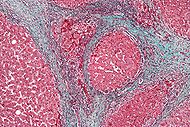 The gold standard
for diagnosis of cirrhosis is a liver biopsy
, through a percutaneous
, transjugular, laparoscopic, or fine-needle approach. A biopsy is not necessary if the clinical, laboratory, and radiologic data suggests cirrhosis. Furthermore, there is a small but significant risk to liver biopsy, and cirrhosis itself predisposes for complications due to liver biopsy.
There is now a validated and patented combination of 6 of these markers as non-invasive biomarker of fibrosis (and so of cirrhosis) : FibroTest
.
Other laboratory studies performed in newly diagnosed cirrhosis may include:
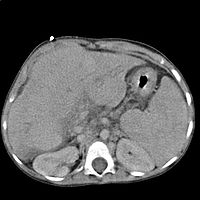 Ultrasound
is routinely used in the evaluation of cirrhosis, where it may show a small and nodular liver in advanced cirrhosis along with increased echogenicity with irregular appearing areas. Ultrasound may also screen for hepatocellular carcinoma, portal hypertension and Budd-Chiari syndrome
(by assessing flow in the hepatic vein).
A new type of device, the FibroScan (transient elastography), uses elastic waves to determine liver stiffness which theoretically can be converted into a liver score based on the METAVIR scale. The FibroScan produces an ultrasound image of the liver (from 20–80 mm) along with a pressure reading (in kPa.) The test is much faster than a biopsy (usually last 2.5–5 minutes) and is completely painless. It shows reasonable correlation with the severity of cirrhosis.
Other tests performed in particular circumstances include abdominal CT
and liver/bile duct MRI
(MRCP
).
) is performed in patients with established cirrhosis to exclude the possibility of esophageal varices. If these are found, prophylactic local therapy may be applied (sclerotherapy or banding) and beta blocker
treatment may be commenced.
Rarely diseases of the bile ducts, such as primary sclerosing cholangitis
, can be causes of cirrhosis. Imaging of the bile ducts, such as ERCP
or MRCP
(MRI of biliary tract and pancreas) can show abnormalities in these patients, and may aid in the diagnosis.
 Macroscopically, the liver is initially enlarged, but with progression of the disease, it becomes smaller. Its surface is irregular, the consistency is firm and the color is often yellow (if associates steatosis
). Depending on the size of the nodules there are three macroscopic types: micronodular, macronodular and mixed cirrhosis. In micronodular form (Laennec's cirrhosis or portal cirrhosis) regenerating nodules are under 3 mm. In macronodular cirrhosis (post-necrotic cirrhosis), the nodules are larger than 3 mm. The mixed cirrhosis consists in a variety of nodules with different sizes.
However, cirrhosis is defined by its pathological features on microscopy: (1) the presence of regenerating nodules of hepatocytes and (2) the presence of fibrosis
, or the deposition of connective tissue
between these nodules. The pattern of fibrosis seen can depend upon the underlying insult that led to cirrhosis; fibrosis can also proliferate even if the underlying process that caused it has resolved or ceased. The fibrosis in cirrhosis can lead to destruction of other normal tissues in the liver: including the sinusoids, the space of Disse
, and other vascular structures, which leads to altered resistance to blood flow in the liver and portal hypertension
.
As cirrhosis can be caused by many different entities which injure the liver in different ways, different cause-specific patterns of cirrhosis, and other cause-specific abnormalities can be seen in cirrhosis. For example, in chronic hepatitis B, there is infiltration of the liver parenchyma with lymphocytes; in cardiac cirrhosis there are erythrocytes and a greater amount of fibrosis in the tissue surrounding the hepatic vein
s; in primary biliary cirrhosis
, there is fibrosis around the bile duct, the presence of granulomas and pooling of bile
; and in alcoholic cirrhosis, there is infiltration of the liver with neutrophils.
. This score uses bilirubin
, albumin
, INR
, presence and severity of ascites
and encephalopathy
to classify patients in class A, B or C; class A has a favourable prognosis, while class C is at high risk of death. It was devised in 1964 by Child and Turcotte and modified in 1973 by Pugh et al..
More modern scores, used in the allocation of liver transplants but also in other contexts, are the Model for End-Stage Liver Disease
(MELD) score and its pediatric counterpart, the Pediatric End-Stage Liver Disease
(PELD) score.
The hepatic venous pressure gradient, i.e., the difference in venous pressure between afferent and efferent blood to the liver, also determines severity of cirrhosis, although hard to measure. A value of 16 mm or more means a greatly increased risk of dying.
, decrease risk of constipation; their role in preventing encephalopathy is limited.
Alcoholic cirrhosis caused by alcohol abuse is treated by abstaining from alcohol. Treatment for hepatitis-related cirrhosis involves medications used to treat the different types of hepatitis, such as interferon for viral hepatitis and corticosteroids for autoimmune hepatitis. Cirrhosis caused by Wilson's disease
, in which copper builds up in organs, is treated with chelation therapy
(e.g., penicillamine
) to remove the copper.
, as well as other potentially damaging substances, are discouraged. Vaccination of susceptible patients should be considered for Hepatitis A
and Hepatitis B.
is necessary. Survival from liver transplantation has been improving over the 1990s, and the five-year survival rate is now around 80%, depending largely on the severity of disease and other medical problems in the recipient. In the United States, the MELD score
is used to prioritize patients for transplantation. Transplantation necessitates the use of immune suppressants (cyclosporine or tacrolimus
).
, infection
(of any source), increased alcohol intake, medication
, bleeding from esophageal varices or dehydration. It may take the form of any of the complications of cirrhosis listed above.
Patients with decompensated cirrhosis generally require admission to hospital
, with close monitoring of the fluid balance
, mental status, and emphasis on adequate nutrition and medical treatment - often with diuretic
s, antibiotic
s, laxative
s and/or enema
s, thiamine
and occasionally steroids
, acetylcysteine and pentoxifylline. Administration of saline
is generally avoided as it would add to the already high total body sodium content that typically occurs in cirrhosis.
s may be necessary to suppress ascites
.
ing is occasionally indicated to relieve pressure on the portal vein. As this can worsen encephalopathy, it is reserved for those at low risk of encephalopathy, and is generally regarded only as a bridge to liver transplantation or as a palliative measure.
, and would theoretically increase encephalopathy
; in the past, this was therefore eliminated as much as possible from the diet. Recent studies show that this assumption was incorrect, and high-protein foods are even encouraged to maintain adequate nutrition.
is defined as a urine sodium less than 10 mmol/L and a serum creatinine > 1.5 mg/dl (or 24 hourcreatinine clearance less than 40 ml/min) after a trial of volume expansion without diuretics.
are at risk of spontaneous bacterial peritonitis
.
Established cirrhosis has a 10-year mortality of 34-66%, largely dependent on the cause of the cirrhosis; alcoholic cirrhosis has a worse prognosis than primary biliary cirrhosis and cirrhosis due to hepatitis. The risk of death due to all causes is increased twelvefold; if one excludes the direct consequences of the liver disease, there is still a fivefold increased risk of death in all disease categories.
Little is known on modulators of cirrhosis risk, apart from other diseases that cause liver injury (such as the combination of alcoholic liver disease and chronic viral hepatitis, which may act synergistically in leading to cirrhosis). Studies have recently suggested that coffee consumption may protect against cirrhosis, especially alcoholic cirrhosis.
Liver
The liver is a vital organ present in vertebrates and some other animals. It has a wide range of functions, including detoxification, protein synthesis, and production of biochemicals necessary for digestion...
disease characterized by replacement of liver tissue
Tissue (biology)
Tissue is a cellular organizational level intermediate between cells and a complete organism. A tissue is an ensemble of cells, not necessarily identical, but from the same origin, that together carry out a specific function. These are called tissues because of their identical functioning...
by fibrosis
Fibrosis
Fibrosis is the formation of excess fibrous connective tissue in an organ or tissue in a reparative or reactive process. This is as opposed to formation of fibrous tissue as a normal constituent of an organ or tissue...
, scar
Scar
Scars are areas of fibrous tissue that replace normal skin after injury. A scar results from the biological process of wound repair in the skin and other tissues of the body. Thus, scarring is a natural part of the healing process. With the exception of very minor lesions, every wound results in...
tissue and regenerative nodules
Nodule (medicine)
For use of the term nodule in dermatology, see Nodule In medicine, a nodule refers to a relatively hard, roughly spherical abnormal structure....
(lumps that occur as a result of a process in which damaged tissue is regenerated), leading to loss of liver function. Cirrhosis is most commonly caused by alcoholism
Alcoholism
Alcoholism is a broad term for problems with alcohol, and is generally used to mean compulsive and uncontrolled consumption of alcoholic beverages, usually to the detriment of the drinker's health, personal relationships, and social standing...
, hepatitis B and C
Hepatitis C
Hepatitis C is an infectious disease primarily affecting the liver, caused by the hepatitis C virus . The infection is often asymptomatic, but chronic infection can lead to scarring of the liver and ultimately to cirrhosis, which is generally apparent after many years...
, and fatty liver disease
Non-alcoholic fatty liver disease
Non-alcoholic fatty liver disease is one cause of a fatty liver, occurring when fat is deposited in the liver not due to excessive alcohol use. It is related to insulin resistance and the metabolic syndrome and may respond to treatments originally developed for other insulin-resistant states...
, but has many other possible causes. Some cases are idiopathic
Idiopathic
Idiopathic is an adjective used primarily in medicine meaning arising spontaneously or from an obscure or unknown cause. From Greek ἴδιος, idios + πάθος, pathos , it means approximately "a disease of its own kind". It is technically a term from nosology, the classification of disease...
, i.e., of unknown cause.
Ascites
Ascites
Ascites is a gastroenterological term for an accumulation of fluid in the peritoneal cavity.The medical condition is also known as peritoneal cavity fluid, peritoneal fluid excess, hydroperitoneum or more archaically as abdominal dropsy. Although most commonly due to cirrhosis and severe liver...
(fluid retention in the abdominal cavity) is the most common complication of cirrhosis, and is associated with a poor quality of life, increased risk of infection, and a poor long-term outcome. Other potentially life-threatening complications are hepatic encephalopathy
Hepatic encephalopathy
Hepatic encephalopathy is the occurrence of confusion, altered level of consciousness and coma as a result of liver failure. In the advanced stages it is called hepatic coma or coma hepaticum...
(confusion and coma) and bleeding from esophageal varices
Esophageal varices
In medicine , esophageal varices are extremely dilated sub-mucosal veins in the lower esophagus...
. Cirrhosis is generally irreversible, and treatment usually focuses on preventing progression and complications. In advanced stages of cirrhosis the only option is a liver transplant.
The word "cirrhosis" derives from Greek
Ancient Greek
Ancient Greek is the stage of the Greek language in the periods spanning the times c. 9th–6th centuries BC, , c. 5th–4th centuries BC , and the c. 3rd century BC – 6th century AD of ancient Greece and the ancient world; being predated in the 2nd millennium BC by Mycenaean Greek...
κιρρός [kirrhós] meaning yellowish, tawny (the orange-yellow colour of the diseased liver) + Eng. med. suff. -osis. While the clinical entity was known before, it was René Laennec
René Laennec
René-Théophile-Hyacinthe Laennec was a French physician. He invented the stethoscope in 1816, while working at the Hôpital Necker and pioneered its use in diagnosing various chest conditions....
who gave it the name "cirrhosis" in his 1819 work in which he also describes the stethoscope
Stethoscope
The stethoscope is an acoustic medical device for auscultation, or listening to the internal sounds of an animal body. It is often used to listen to lung and heart sounds. It is also used to listen to intestines and blood flow in arteries and veins...
.
Signs and symptoms
Some of the following signs and symptoms may occur in the presence of cirrhosis or as a result of the complications of cirrhosis. Many are nonspecific and may occur in other diseases and do not necessarily point to cirrhosis. Likewise, the absence of any does not rule out the possibility of cirrhosis.- Spider angiomaSpider angiomaA spider angioma is a type of telangiectasis found slightly beneath the skin surface, often containing a central red spot and reddish extensions which radiate outwards like a spider's web...
ta or spider nevi. Vascular lesions consisting of a central arteriole surrounded by many smaller vessels because of an increase in estradiolEstradiolEstradiol is a sex hormone. Estradiol is abbreviated E2 as it has 2 hydroxyl groups in its molecular structure. Estrone has 1 and estriol has 3 . Estradiol is about 10 times as potent as estrone and about 80 times as potent as estriol in its estrogenic effect...
. These occur in about 1/3 of cases. - Palmar erythemaPalmar erythemaPalmar erythema is reddening of the palms at the thenar and hypothenar eminences.-Causes:It is associated with various physiological as well as pathological changes, the principal one of which is portal hypertension. It is also seen in patients with liver dysfunction, such as chronic liver disease...
. Exaggerations of normal speckled mottling of the palm, because of altered sex hormone metabolism. - Nail changes.
- Muehrcke's linesMuehrcke's linesMuehrcke's nails, Muehrcke's lines, or leukonychia striata, are changes in the fingernail that may be a sign of an underlying medical disorder or condition. Muehrcke's lines are white lines that extend all the way across the nail and lie parallel to the lunula . In contrast to Beau's lines, they...
- paired horizontal bands separated by normal color resulting from hypoalbuminemiaHypoalbuminemiaHypoalbuminemia is a medical condition where levels of albumin in blood serum are abnormally low. It is a specific form of hypoproteinemia.Albumin is a major protein in the human body, making up about 60% of total human plasma protein by mass...
(inadequate production of albuminHuman serum albuminHuman serum albumin is the most abundant protein in human blood plasma. It is produced in the liver. Albumin constitutes about half of the blood serum protein...
). - Terry's nailsTerry's nailsTerry's nails is a physical finding in which fingernails and/or toenails appear white with a characteristic "ground glass" appearance, with no lunula. The condition is thought to be due to a decrease in vascularity and an increase in connective tissue within the nail bed...
- proximal two-thirds of the nail plate appears white with distal one-third red, also due to hypoalbuminemia - Clubbing - angle between the nail plate and proximal nail fold > 180 degrees
- Muehrcke's lines
- Hypertrophic osteoarthropathy. Chronic proliferative periostitisPeriostitisPeriostitis, also known as periostalgia, is a medical condition caused by inflammation of the periosteum, a layer of connective tissue that surrounds bone...
of the long bones that can cause considerable pain. - Dupuytren's contractureDupuytren's contractureDupuytren's contracture , is a fixed flexion contracture of the hand where the fingers bend towards the palm and cannot be fully extended...
. Thickening and shortening of palmar fascia that leads to flexion deformities of the fingers. Thought to be caused by fibroblastic proliferation and disorderly collagen deposition. It is relatively common (33% of patients). - GynecomastiaGynecomastiaGynecomastia or Gynaecomastia, , is the abnormal development of large mammary glands in males resulting in breast enlargement. The term comes from the Greek γυνή gyné meaning "woman" and μαστός mastós meaning "breast"...
. Benign proliferation of glandular tissue of male breasts presenting with a rubbery or firm mass extending concentrically from the nipples. This is caused by increased estradiol and can occur in up to 66% of patients. - HypogonadismHypogonadismHypogonadism is a medical term for decreased functional activity of the gonads. Low testosterone is caused by a decline or deficiency in gonadal production of testosterone in males...
. Manifested as impotence, infertility, loss of sexual drive, and testicular atrophy because of primary gonadal injury or suppression of hypothalamic or pituitary function. - Liver size. Can be enlargedHepatomegalyHepatomegaly is the condition of having an enlarged liver. It is a nonspecific medical sign having many causes, which can broadly be broken down into infection, direct toxicity, hepatic tumours, or metabolic disorder. Often, hepatomegaly will present as an abdominal mass...
, normal, or shrunken. - SplenomegalySplenomegalySplenomegaly is an enlargement of the spleen. The spleen usually lies in the left upper quadrant of the human abdomen. It is one of the four cardinal signs of hypersplenism, some reduction in the number of circulating blood cells affecting granulocytes, erythrocytes or platelets in any...
(increase in size of the spleen). Caused by congestion of the red pulp as a result of portal hypertension. - AscitesAscitesAscites is a gastroenterological term for an accumulation of fluid in the peritoneal cavity.The medical condition is also known as peritoneal cavity fluid, peritoneal fluid excess, hydroperitoneum or more archaically as abdominal dropsy. Although most commonly due to cirrhosis and severe liver...
. Accumulation of fluid in the peritoneal cavity giving rise to flank dullness (needs about 1500 mL to detect flank dullness). - Caput medusa. In portal hypertension, periumbilical collateral veins may dilate. Blood from the portal venous system may be shunted through the periumbilical veins and ultimately to the abdominal wall veins, manifesting as caput medusa.
- Cruveilhier-Baumgarten murmur. Venous hum heard in epigastric region (on examination by stethoscope) because of collateral connections between portal system and the periumbilical veins in portal hypertension.
- Fetor hepaticusFetor hepaticusFetor hepaticus or foetor hepaticus , also known as breath of the dead, is a condition seen in portal hypertension where portosystemic shunting allows mercaptans to pass directly into the lungs. It is a late sign in liver failure. Other possible causes are the presence of ammonia and ketones in the...
. Musty odor in breath as a result of increased dimethyl sulfideDimethyl sulfideDimethyl sulfide or methylthiomethane is an organosulfur compound with the formula 2S. Dimethyl sulfide is a water-insoluble flammable liquid that boils at and has a characteristic disagreeable odor. It is a component of the smell produced from cooking of certain vegetables, notably maize,...
. - JaundiceJaundiceJaundice is a yellowish pigmentation of the skin, the conjunctival membranes over the sclerae , and other mucous membranes caused by hyperbilirubinemia . This hyperbilirubinemia subsequently causes increased levels of bilirubin in the extracellular fluid...
. Yellow discoloring of the skin, eye, and mucus membranes because of increased bilirubin (at least 2–3 mg/dL or 30 mmol/L). Urine may also appear dark. - AsterixisAsterixisAsterixis is a tremor of the wrist when the wrist is extended , sometimes said to resemble a bird flapping its wings. This motor disorder is characterized by jerking movements and is associated with various encephalopathies due especially to faulty metabolism...
. Bilateral asynchronous flapping of outstretched, dorsiflexed hands seen in patients with hepatic encephalopathyHepatic encephalopathyHepatic encephalopathy is the occurrence of confusion, altered level of consciousness and coma as a result of liver failure. In the advanced stages it is called hepatic coma or coma hepaticum...
. - Other. Weakness, fatigue, anorexia, weight loss.
As the disease progresses, complications may develop. In some people, these may be the first signs of the disease.
- Bruising and bleeding resulting from decreased production of coagulationCoagulationCoagulation is a complex process by which blood forms clots. It is an important part of hemostasis, the cessation of blood loss from a damaged vessel, wherein a damaged blood vessel wall is covered by a platelet and fibrin-containing clot to stop bleeding and begin repair of the damaged vessel...
factors. - Jaundice as a result of decreased processing of bilirubinBilirubinBilirubin is the yellow breakdown product of normal heme catabolism. Heme is found in hemoglobin, a principal component of red blood cells. Bilirubin is excreted in bile and urine, and elevated levels may indicate certain diseases...
. - ItchItchItch is a sensation that causes the desire or reflex to scratch. Itch has resisted many attempts to classify it as any one type of sensory experience. Modern science has shown that itch has many similarities to pain, and while both are unpleasant sensory experiences, their behavioral response...
ing (pruritus) because of bile salt products deposited in the skin. - Hepatic encephalopathyHepatic encephalopathyHepatic encephalopathy is the occurrence of confusion, altered level of consciousness and coma as a result of liver failure. In the advanced stages it is called hepatic coma or coma hepaticum...
- the liver does not clear ammoniaAmmoniaAmmonia is a compound of nitrogen and hydrogen with the formula . It is a colourless gas with a characteristic pungent odour. Ammonia contributes significantly to the nutritional needs of terrestrial organisms by serving as a precursor to food and fertilizers. Ammonia, either directly or...
and related nitrogenous substances from the blood, which are carried to the brain, affecting cerebral functioning: neglect of personal appearance, unresponsiveness, forgetfulness, trouble concentrating, or changes in sleep habits. - Sensitivity to medication caused by decreased metabolism of the active compounds.
- Hepatocellular carcinomaHepatocellular carcinomaHepatocellular carcinoma is the most common type of liver cancer. Most cases of HCC are secondary to either a viral hepatitide infection or cirrhosis .Compared to other cancers, HCC is quite a rare tumor in the United States...
is primary liver cancer, a frequent complication of cirrhosis. It has a high mortality rate. - Portal hypertensionPortal hypertensionIn medicine, portal hypertension is hypertension in the portal vein and its tributaries.It is often defined as a portal pressure gradient of 10 mmHg or greater.-Causes:Causes can be divided into prehepatic, intrahepatic, and posthepatic...
- blood normally carried from the intestines and spleen through the hepatic portal veinHepatic portal veinThe hepatic portal vein is not a true vein, because it does not conduct blood directly to the heart. It is a vessel in the abdominal cavity that drains blood from the gastrointestinal tract and spleen to capillary beds in the liver...
flows more slowly and the pressure increases; this leads to the following complications:- Ascites - fluid leaks through the vasculature into the abdominal cavity.
- Esophageal varicesEsophageal varicesIn medicine , esophageal varices are extremely dilated sub-mucosal veins in the lower esophagus...
- collateral portal blood flow through vessels in the stomach and esophagus (Portacaval anastomosisPortacaval anastomosisA portacaval anastomosis is a specific type of anastomosis that occurs between the veins of portal circulation and those of systemic circulation....
). These blood vessels may become enlarged and are more likely to burst.
- Problems in other organs.
- Cirrhosis can cause immune system dysfunction, leading to infectionInfectionAn infection is the colonization of a host organism by parasite species. Infecting parasites seek to use the host's resources to reproduce, often resulting in disease...
. Signs and symptoms of infection may be aspecific are more difficult to recognize (e.g., worsening encephalopathy but no fever). - Fluid in the abdomen (ascites) may become infected with bacteria normally present in the intestines (spontaneous bacterial peritonitisSpontaneous bacterial peritonitisSpontaneous bacterial peritonitis is the development of peritonitis despite the absence of an obvious source for the infection. It occurs almost exclusively in people with portal hypertension , usually as a result of cirrhosis of the liver...
). - Hepatorenal syndromeHepatorenal syndromeHepatorenal syndrome is a life-threatening medical condition that consists of rapid deterioration in kidney function in individuals with cirrhosis or fulminant liver failure...
- insufficient blood supply to the kidneys, causing acute renal failureAcute renal failureAcute kidney injury , previously called acute renal failure , is a rapid loss of kidney function. Its causes are numerous and include low blood volume from any cause, exposure to substances harmful to the kidney, and obstruction of the urinary tract...
. This complication has a very high mortality (over 50%). - Hepatopulmonary syndromeHepatopulmonary syndromeIn medicine, hepatopulmonary syndrome is a syndrome of shortness of breath and hypoxemia caused by vasodilation in the lungs of patients with liver disease...
- blood bypassing the normal lung circulation (shunting), leading to cyanosisCyanosisCyanosis is the appearance of a blue or purple coloration of the skin or mucous membranes due to the tissues near the skin surface being low on oxygen. The onset of cyanosis is 2.5 g/dL of deoxyhemoglobin. The bluish color is more readily apparent in those with high hemoglobin counts than it is...
and dyspneaDyspneaDyspnea , shortness of breath , or air hunger, is the subjective symptom of breathlessness.It is a normal symptom of heavy exertion but becomes pathological if it occurs in unexpected situations...
(shortness of breath), characteristically worse on sitting up. - Portopulmonary hypertensionPortopulmonary hypertensionPortopulmonary hypertension is defined by the coexistence of portal and pulmonary hypertension. PPH is a serious complication of liver disease, present in 0.25 to 4% of all patients suffering from cirrhosis. Once an absolute contraindication to liver transplantation, it is no longer, thanks to...
- increased blood pressure over the lungs as a consequence of portal hypertension. - Portal hypertensive gastropathyPortal hypertensive gastropathyPortal hypertensive gastropathy refers to changes in the mucosa of the stomach in patients with portal hypertension; by far the most common cause of this is cirrhosis of the liver. These changes in the mucosa include friability of the mucosa and the presence of ectatic blood vessels at the surface...
which refers to changes in the mucosa of the stomachStomachThe stomach is a muscular, hollow, dilated part of the alimentary canal which functions as an important organ of the digestive tract in some animals, including vertebrates, echinoderms, insects , and molluscs. It is involved in the second phase of digestion, following mastication .The stomach is...
in patients with portal hypertension, and is associated with cirrhosis severity.
- Cirrhosis can cause immune system dysfunction, leading to infection
Causes
Cirrhosis has many possible causes; sometimes more than one cause is present in the same patient. In the Western World, chronic alcoholism and hepatitis C are the most common causes.- Alcoholic liver diseaseAlcoholic liver diseaseAlcoholic liver disease is a term that encompasses the hepatic manifestations of alcohol overconsumption, including fatty liver, alcoholic hepatitis, and chronic hepatitis with hepatic fibrosis or cirrhosis. It is the major cause of liver disease in Western countries...
(ALD). Alcoholic cirrhosis develops for between 10% and 20% of individuals who drink heavily for a decade or more. Alcohol seems to injure the liverLiverThe liver is a vital organ present in vertebrates and some other animals. It has a wide range of functions, including detoxification, protein synthesis, and production of biochemicals necessary for digestion...
by blocking the normal metabolism of protein, fats, and carbohydrates. Patients may also have concurrent alcoholic hepatitisAlcoholic hepatitisAlcoholic hepatitis is hepatitis due to excessive intake of alcohol. While distinct from cirrhosis, it is regarded as the earliest stage of alcoholic liver disease. Symptoms are jaundice, ascites , fatigue and hepatic encephalopathy...
with fever, hepatomegaly, jaundice, and anorexia. AST and ALT are both elevated but less than 300 IU/L with a AST:ALT ratio > 2.0, a value rarely seen in other liver diseases. Liver biopsyLiver biopsyLiver biopsy is the biopsy from the liver. It is a medical test that is done to aid diagnosis of liver disease, to assess the severity of known liver disease, and to monitor the progress of treatment.-History:...
may show hepatocyte necrosis, Mallory bodies, neutrophilic infiltration with perivenular inflammation. - Non-alcoholic steatohepatitis (NASH). In NASH, fat builds up in the liver and eventually causes scar tissue. This type of hepatitis appears to be associated with diabetes, protein malnutrition, obesity, coronary artery disease, and treatment with corticosteroid medications. This disorder is similar to that of alcoholic liver disease but patient does not have an alcohol history. Biopsy is needed for diagnosis.
- Chronic hepatitis CHepatitis CHepatitis C is an infectious disease primarily affecting the liver, caused by the hepatitis C virus . The infection is often asymptomatic, but chronic infection can lead to scarring of the liver and ultimately to cirrhosis, which is generally apparent after many years...
. Infection with the hepatitis C virusHepatitis C virusHepatitis C virus is a small , enveloped, positive-sense single-stranded RNA virus of the family Flaviviridae...
causes inflammation of the liver and a variable grade of damage to the organ that over several decades can lead to cirrhosis. Cirrhosis caused by hepatitis C is the most common reason for liver transplant. Can be diagnosed with serologic assays that detect hepatitis C antibody or viral RNA. The enzyme immunoassay, EIA-2, is the most commonly used screening test in the US. - Chronic hepatitis B. The hepatitis B virusHepatitis B virusHepatitis B is an infectious illness caused by hepatitis B virus which infects the liver of hominoidea, including humans, and causes an inflammation called hepatitis. Originally known as "serum hepatitis", the disease has caused epidemics in parts of Asia and Africa, and it is endemic in China...
causes liver inflammation and injury that over several decades can lead to cirrhosis. Hepatitis D is dependent on the presence of hepatitis B and accelerates cirrhosis in co-infection. Chronic hepatitis B can be diagnosed with detection of HBsAG > 6 months after initial infection. HBeAG and HBV DNA are determined to assess whether patient will need antiviral therapy. - Primary biliary cirrhosisPrimary biliary cirrhosisPrimary biliary cirrhosis, often abbreviated PBC, is an autoimmune disease of the liver marked by the slow progressive destruction of the small bile ducts within the liver. When these ducts are damaged, bile builds up in the liver and over time damages the tissue. This can lead to scarring,...
. May be asymptomatic or complain of fatigue, pruritus, and non-jaundice skin hyperpigmentation with hepatomegaly. There is prominent alkaline phosphatase elevation as well as elevations in cholesterol and bilirubin. Gold standard diagnosis is antimitochondrial antibodies with liver biopsy as confirmation if showing florid bile duct lesions. It is more common in women. - Primary sclerosing cholangitisPrimary sclerosing cholangitisPrimary sclerosing cholangitis is a chronic liver disease caused by progressive inflammation and scarring of the bile ducts of the liver. The inflammation impedes the flow of bile to the gut, which can ultimately lead to liver cirrhosis, liver failure and liver cancer...
. PSC is a progressive cholestatic disorder presenting with pruritus, steatorrheaSteatorrheaSteatorrhea is the presence of excess fat in feces. Stools may also float due to excess lipid, have an oily appearance and be especially foul-smelling. An oily anal leakage or some level of fecal incontinence may occur. There is increased fat excretion, which can be measured by determining the...
, fat soluble vitamin deficiencies, and metabolic bone disease. There is a strong association with inflammatory bowel disease (IBD), especially ulcerative colitis. Diagnosis is best with contrast cholangiography showing diffuse, multifocal strictures and focal dilation of bile ductBile ductA bile duct is any of a number of long tube-like structures that carry bile.Bile, required for the digestion of food, is excreted by the liver into passages that carry bile toward the hepatic duct, which joins with the cystic duct to form the common bile duct, which opens into the intestine.The...
s, leading to a beaded appearance. Non-specific serum immunoglobulins may also be elevated. - Autoimmune hepatitisAutoimmune hepatitisAutoimmune Hepatitis is a disease of the liver that occurs when the body's immune system attacks cells of the liver. Anomalous presentation of human leukocyte antigen class II on the surface of hepatocytes, possibly due to genetic predisposition or acute liver infection, causes a cell-mediated...
. This disease is caused by the immunologic damage to the liver causing inflammation and eventually scarring and cirrhosis. Findings include elevations in serum globulins, especially gamma globulins. Therapy with prednisone and/or azathioprine is beneficial. Cirrhosis due to autoimmune hepatitis still has 10-year survival of 90%+. There is no specific tool to diagnose autoimmune but it can be beneficial to initiate a trial of corticosteroids. - Hereditary hemochromatosis. Usually presents with family history of cirrhosis, skin hyperpigmentation, diabetes mellitus, pseudogout, and/or cardiomyopathy, all due to signs of iron overload. Labs will show fasting transferrin saturation of > 60% and ferritin > 300 ng/mL. Genetic testing may be used to identify HFE mutations. If these are present, biopsy may not need to be performed. Treatment is with phlebotomyVenipunctureIn medicine, venepuncture, venopuncture or venipuncture is the process of obtaining intravenous access for the purpose of intravenous therapy or for blood sampling of venous blood. This procedure is performed by medical laboratory scientists, medical practitioners, some EMTs, paramedics,...
to lower total body iron levels. - Wilson's diseaseWilson's diseaseWilson's disease or hepatolenticular degeneration is an autosomal recessive genetic disorder in which copper accumulates in tissues; this manifests as neurological or psychiatric symptoms and liver disease...
. Autosomal recessive disorder characterized by low serum ceruloplasminCeruloplasminCeruloplasmin is a ferroxidase enzyme that in humans is encoded by the CP gene.Ceruloplasmin is the major copper-carrying protein in the blood, and in addition plays a role in iron metabolism. It was first described in 1948...
and increased hepatic copper content on liver biopsy. May also have Kayser-Fleischer rings in the cornea and altered mental status. - Alpha 1-antitrypsin deficiencyAlpha 1-antitrypsin deficiencyAlpha 1-antitrypsin deficiency is an autosomal recessive genetic disorder caused by defective production of alpha 1-antitrypsin , leading to decreased A1AT activity in the blood and lungs, and deposition of excessive abnormal A1AT protein in liver cells...
(AAT). Autosomal recessive disorder. Patients may also have COPD, especially if they have a history of tobacco smokingTobacco smokingTobacco smoking is the practice where tobacco is burned and the resulting smoke is inhaled. The practice may have begun as early as 5000–3000 BCE. Tobacco was introduced to Eurasia in the late 16th century where it followed common trade routes...
. Serum AAT levels are low. Recombinant AAT is used to prevent lung disease due to AAT deficiency. - Cardiac cirrhosis. Due to chronic right sided heart failure which leads to liver congestion.
- GalactosemiaGalactosemiaGalactosemia is a rare genetic metabolic disorder that affects an individual's ability to metabolize the sugar galactose properly. Although the sugar lactose can metabolize to galactose, galactosemia is not related to and should not be confused with lactose intolerance...
- Glycogen storage disease type IVGlycogen storage disease type IV-Synonyms:It is also known as:-*Glycogenosis type IV,*Glycogen Branching Enzyme Deficiency ,*polyglucosan body disease.*Amylopectinosis-Human pathology:...
- Cystic fibrosisCystic fibrosisCystic fibrosis is a recessive genetic disease affecting most critically the lungs, and also the pancreas, liver, and intestine...
- Hepatotoxic drugs or toxins
- Certain parasitic infections (such as schistosomiasisSchistosomiasisSchistosomiasis is a parasitic disease caused by several species of trematodes , a parasitic worm of the genus Schistosoma. Snails often act as an intermediary agent for the infectious diseases until a new human host is found...
) - Lysosomal acid lipase deficiencyLysosomal Acid Lipase DeficiencyLysosomal Acid Lipase Deficiency happens when the body does not produce enough active LAL enzyme. Under normal conditions, the body produces an enzyme called lysosomal acid lipase . This enzyme plays an important role in breaking down fatty material in the body...
(LAL Deficiency) is a rare autosomal recessive genetic condition and is characterized by hepatomegaly, persistently abnormal LFTs and type II hyperlipidemia. Splenomegaly and evidence of mild hypersplenism may affect some patients. Untreated, LAL Deficiency may lead to fibrosis, cirrhosis, liver failure and death.
Pathophysiology
The liver plays a vital role in synthesis of proteins (e.g., albuminSerum albumin
Serum albumin, often referred to simply as albumin is a protein that in humans is encoded by the ALB gene.Serum albumin is the most abundant plasma protein in mammals. Albumin is essential for maintaining the osmotic pressure needed for proper distribution of body fluids between intravascular...
, clotting factors
Coagulation
Coagulation is a complex process by which blood forms clots. It is an important part of hemostasis, the cessation of blood loss from a damaged vessel, wherein a damaged blood vessel wall is covered by a platelet and fibrin-containing clot to stop bleeding and begin repair of the damaged vessel...
and complement
Complement system
The complement system helps or “complements” the ability of antibodies and phagocytic cells to clear pathogens from an organism. It is part of the immune system called the innate immune system that is not adaptable and does not change over the course of an individual's lifetime...
), detoxification and storage (e.g., vitamin A
Vitamin A
Vitamin A is a vitamin that is needed by the retina of the eye in the form of a specific metabolite, the light-absorbing molecule retinal, that is necessary for both low-light and color vision...
). In addition, it participates in the metabolism of lipid
Lipid
Lipids constitute a broad group of naturally occurring molecules that include fats, waxes, sterols, fat-soluble vitamins , monoglycerides, diglycerides, triglycerides, phospholipids, and others...
s and carbohydrate
Carbohydrate
A carbohydrate is an organic compound with the empirical formula ; that is, consists only of carbon, hydrogen, and oxygen, with a hydrogen:oxygen atom ratio of 2:1 . However, there are exceptions to this. One common example would be deoxyribose, a component of DNA, which has the empirical...
s.
Cirrhosis is often preceded by hepatitis and fatty liver (steatosis), independent of the cause. If the cause is removed at this stage, the changes are still fully reversible.
The pathological hallmark of cirrhosis is the development of scar tissue that replaces normal parenchyma
Parenchyma
Parenchyma is a term used to describe a bulk of a substance. It is used in different ways in animals and in plants.The term is New Latin, f. Greek παρέγχυμα - parenkhuma, "visceral flesh", f. παρεγχεῖν - parenkhein, "to pour in" f. para-, "beside" + en-, "in" + khein, "to pour"...
, blocking the portal flow of blood through the organ and disturbing normal function. Recent research shows the pivotal role of the stellate cell
Hepatic stellate cell
Hepatic stellate cells , also known as perisinusoidal cells or Ito cells , are pericytes found in the perisinusoidal space of the liver also known as the space of Disse...
, a cell type that normally stores vitamin A
Vitamin A
Vitamin A is a vitamin that is needed by the retina of the eye in the form of a specific metabolite, the light-absorbing molecule retinal, that is necessary for both low-light and color vision...
, in the development of cirrhosis. Damage to the hepatic parenchyma leads to activation of the stellate cell, which becomes contractile (called myofibroblast
Myofibroblast
A Myofibroblast is a cell that is in between a fibroblast and a smooth muscle cell in differentiation.-Developmental origin:There are many possible ways of myofibroblast development:#Partial smooth muscle differentiation of a fibroblastic cell...
) and obstructs blood flow in the circulation. In addition, it secretes TGF-β1
TGF beta 1
Transforming growth factor beta 1 or TGF-β1 is a polypeptide member of the transforming growth factor beta superfamily of cytokines. It is a secreted protein that performs many cellular functions, including the control of cell growth, cell proliferation, cell differentiation and apoptosis...
, which leads to a fibrotic response and proliferation of connective tissue
Connective tissue
"Connective tissue" is a fibrous tissue. It is one of the four traditional classes of tissues . Connective Tissue is found throughout the body.In fact the whole framework of the skeleton and the different specialized connective tissues from the crown of the head to the toes determine the form of...
. Furthermore, it secretes TIMP 1 and 2, naturally occurring inhibitors of matrix metalloproteinase
Matrix metalloproteinase
Matrix metalloproteinases are zinc-dependent endopeptidases; other family members are adamalysins, serralysins, and astacins. The MMPs belong to a larger family of proteases known as the metzincin superfamily....
s, which prevents them from breaking down fibrotic material in the extracellular matrix
Matrix (biology)
In biology, matrix is the material between animal or plant cells, in which more specialized structures are embedded, and a specific part of the mitochondrion that is the site of oxidation of organic molecules. The internal structure of connective tissues is an extracellular matrix...
.
The fibrous tissue bands (septa) separate hepatocyte nodules, which eventually replace the entire liver architecture, leading to decreased blood flow throughout. The spleen
Spleen
The spleen is an organ found in virtually all vertebrate animals with important roles in regard to red blood cells and the immune system. In humans, it is located in the left upper quadrant of the abdomen. It removes old red blood cells and holds a reserve of blood in case of hemorrhagic shock...
becomes congested, which leads to hypersplenism and increased sequestration of platelet
Platelet
Platelets, or thrombocytes , are small,irregularly shaped clear cell fragments , 2–3 µm in diameter, which are derived from fragmentation of precursor megakaryocytes. The average lifespan of a platelet is normally just 5 to 9 days...
s. Portal hypertension is responsible for most severe complications of cirrhosis.
Diagnosis
Gold standard (test)
In medicine and statistics, gold standard test refers to a diagnostic test or benchmark that is the best available under reasonable conditions. It does not have to be necessarily the best possible test for the condition in absolute terms...
for diagnosis of cirrhosis is a liver biopsy
Liver biopsy
Liver biopsy is the biopsy from the liver. It is a medical test that is done to aid diagnosis of liver disease, to assess the severity of known liver disease, and to monitor the progress of treatment.-History:...
, through a percutaneous
Percutaneous
In surgery, percutaneous pertains to any medical procedure where access to inner organs or other tissue is done via needle-puncture of the skin, rather than by using an "open" approach where inner organs or tissue are exposed .The percutaneous approach is commonly used in vascular procedures...
, transjugular, laparoscopic, or fine-needle approach. A biopsy is not necessary if the clinical, laboratory, and radiologic data suggests cirrhosis. Furthermore, there is a small but significant risk to liver biopsy, and cirrhosis itself predisposes for complications due to liver biopsy.
Lab findings
The following findings are typical in cirrhosis:- Aminotransferases - AST and ALT are moderately elevated, with AST > ALT. However, normal aminotransferases do not preclude cirrhosis.
- Alkaline phosphataseAlkaline phosphataseAlkaline phosphatase is a hydrolase enzyme responsible for removing phosphate groups from many types of molecules, including nucleotides, proteins, and alkaloids. The process of removing the phosphate group is called dephosphorylation...
- usually slightly elevated. - Gamma-glutamyl transferase – correlates with AP levels. Typically much higher in chronic liver disease from alcohol.
- BilirubinBilirubinBilirubin is the yellow breakdown product of normal heme catabolism. Heme is found in hemoglobin, a principal component of red blood cells. Bilirubin is excreted in bile and urine, and elevated levels may indicate certain diseases...
- may elevate as cirrhosis progresses. - AlbuminAlbuminAlbumin refers generally to any protein that is water soluble, which is moderately soluble in concentrated salt solutions, and experiences heat denaturation. They are commonly found in blood plasma, and are unique to other blood proteins in that they are not glycosylated...
- levels fall as the synthetic function of the liver declines with worsening cirrhosis since albumin is exclusively synthesized in the liver - Prothrombin timeProthrombin timeThe prothrombin time and its derived measures of prothrombin ratio and international normalized ratio are measures of the extrinsic pathway of coagulation. This test is also called "ProTime INR" and "INR PT". They are used to determine the clotting tendency of blood, in the measure of warfarin...
- increases since the liver synthesizes clotting factors. - GlobulinGlobulinGlobulin is one of the three types of serum proteins, the others being albumin and fibrinogen. Some globulins are produced in the liver, while others are made by the immune system. The term globulin encompasses a heterogeneous group of proteins with typical high molecular weight, and both...
s - increased due to shunting of bacterial antigens away from the liver to lymphoid tissue. - Serum sodiumSodiumSodium is a chemical element with the symbol Na and atomic number 11. It is a soft, silvery-white, highly reactive metal and is a member of the alkali metals; its only stable isotope is 23Na. It is an abundant element that exists in numerous minerals, most commonly as sodium chloride...
- hyponatremiaHyponatremiaHyponatremia is an electrolyte disturbance in which the sodium concentration in the serum is lower than normal. In the vast majority of cases, hyponatremia occurs as a result of excess body water diluting the serum sodium and is not due to sodium deficiency. Sodium is the dominant extracellular...
due to inability to excrete free water resulting from high levels of ADHVasopressinArginine vasopressin , also known as vasopressin, argipressin or antidiuretic hormone , is a neurohypophysial hormone found in most mammals, including humans. Vasopressin is a peptide hormone that controls the reabsorption of molecules in the tubules of the kidneys by affecting the tissue's...
and aldosteroneAldosteroneAldosterone is a hormone that increases the reabsorption of sodium ions and water and the release of potassium in the collecting ducts and distal convoluted tubule of the kidneys' functional unit, the nephron. This increases blood volume and, therefore, increases blood pressure. Drugs that...
. - Thrombocytopenia - due to both congestive splenomegaly as well as decreased thrombopoietinThrombopoietinThrombopoietin also known as megakaryocyte growth and development factor is a protein that in humans is encoded by the THPO gene....
from the liver. However, this rarely results in platelet count < 50,000/mL. - LeukopeniaLeukopeniaLeukopenia is a decrease in the number of white blood cells found in the blood, which places individuals at increased risk of infection....
and neutropeniaNeutropeniaNeutropenia, from Latin prefix neutro- and Greek suffix -πενία , is a granulocyte disorder characterized by an abnormally low number of neutrophils, the most important type of white blood cell...
- due to splenomegaly with splenic margination. - CoagulationCoagulationCoagulation is a complex process by which blood forms clots. It is an important part of hemostasis, the cessation of blood loss from a damaged vessel, wherein a damaged blood vessel wall is covered by a platelet and fibrin-containing clot to stop bleeding and begin repair of the damaged vessel...
defects - the liver produces most of the coagulation factors and thus coagulopathy correlates with worsening liver disease.
There is now a validated and patented combination of 6 of these markers as non-invasive biomarker of fibrosis (and so of cirrhosis) : FibroTest
FibroTest
FibroTest, known as FibroSure in the US, is a patented biomarker test that uses the results of six blood serum tests to generate a score that is correlated with the degree of liver damage in people with a variety of liver diseases...
.
Other laboratory studies performed in newly diagnosed cirrhosis may include:
- Serology for hepatitisHepatitisHepatitis is a medical condition defined by the inflammation of the liver and characterized by the presence of inflammatory cells in the tissue of the organ. The name is from the Greek hepar , the root being hepat- , meaning liver, and suffix -itis, meaning "inflammation"...
viruses, autoantibodiesAutoantibodyAn autoantibody is an antibody manufactured by the immune system that is directed against one or more of the individual's own proteins. It is derived from the Greek "auto" which means "self", "anti" which means "against" and "body"...
(ANAAnti-nuclear antibodyAnti-nuclear antibodies are autoantibodies directed against contents of the cell nucleus....
, anti-smooth muscle, anti-mitochondria, anti-LKM) - FerritinFerritinFerritin is a ubiquitous intracellular protein that stores iron and releases it in a controlled fashion. The amount of ferritin stored reflects the amount of iron stored. The protein is produced by almost all living organisms, including bacteria, algae and higher plants, and animals...
and transferrin saturationTransferrin saturationTransferrin saturation, abbreviated as TSAT and measured as a percentage, is a medical laboratory value. It is the ratio of serum iron and total iron-binding capacity, multiplied by 100. Of the transferrin that is available to bind iron, this value tells a clinician how much serum iron is actually...
(markers of iron overload), copperCopperCopper is a chemical element with the symbol Cu and atomic number 29. It is a ductile metal with very high thermal and electrical conductivity. Pure copper is soft and malleable; an exposed surface has a reddish-orange tarnish...
and ceruloplasminCeruloplasminCeruloplasmin is a ferroxidase enzyme that in humans is encoded by the CP gene.Ceruloplasmin is the major copper-carrying protein in the blood, and in addition plays a role in iron metabolism. It was first described in 1948...
(markers of copper overload) - Immunoglobulin levels (IgG, IgM, IgA) - these are non-specific but may assist in distinguishing various causes
- CholesterolCholesterolCholesterol is a complex isoprenoid. Specifically, it is a waxy steroid of fat that is produced in the liver or intestines. It is used to produce hormones and cell membranes and is transported in the blood plasma of all mammals. It is an essential structural component of mammalian cell membranes...
and glucoseGlucoseGlucose is a simple sugar and an important carbohydrate in biology. Cells use it as the primary source of energy and a metabolic intermediate... - Alpha 1-antitrypsinAlpha 1-antitrypsinAlpha 1-Antitrypsin or α1-antitrypsin is a protease inhibitor belonging to the serpin superfamily. It is generally known as serum trypsin inhibitor. Alpha 1-antitrypsin is also referred to as alpha-1 proteinase inhibitor because it inhibits a wide variety of proteases...
Imaging
Medical ultrasonography
Diagnostic sonography is an ultrasound-based diagnostic imaging technique used for visualizing subcutaneous body structures including tendons, muscles, joints, vessels and internal organs for possible pathology or lesions...
is routinely used in the evaluation of cirrhosis, where it may show a small and nodular liver in advanced cirrhosis along with increased echogenicity with irregular appearing areas. Ultrasound may also screen for hepatocellular carcinoma, portal hypertension and Budd-Chiari syndrome
Budd-Chiari syndrome
In medicine , Budd–Chiari syndrome is the clinical picture caused by occlusion of the hepatic veins. It presents with the classical triad of abdominal pain, ascites and hepatomegaly. Examples of occlusion include thrombosis of hepatic veins. The syndrome can be fulminant, acute, chronic, or...
(by assessing flow in the hepatic vein).
A new type of device, the FibroScan (transient elastography), uses elastic waves to determine liver stiffness which theoretically can be converted into a liver score based on the METAVIR scale. The FibroScan produces an ultrasound image of the liver (from 20–80 mm) along with a pressure reading (in kPa.) The test is much faster than a biopsy (usually last 2.5–5 minutes) and is completely painless. It shows reasonable correlation with the severity of cirrhosis.
Other tests performed in particular circumstances include abdominal CT
Computed tomography
X-ray computed tomography or Computer tomography , is a medical imaging method employing tomography created by computer processing...
and liver/bile duct MRI
Magnetic resonance imaging
Magnetic resonance imaging , nuclear magnetic resonance imaging , or magnetic resonance tomography is a medical imaging technique used in radiology to visualize detailed internal structures...
(MRCP
Magnetic resonance cholangiopancreatography
Magnetic resonance cholangiopancreatography is a medical imaging technique that uses magnetic resonance imaging to visualise the biliary and pancreatic ducts in a non-invasive manner...
).
Endoscopy
Gastroscopy (endoscopic examination of the esophagus, stomach and duodenumDuodenum
The duodenum is the first section of the small intestine in most higher vertebrates, including mammals, reptiles, and birds. In fish, the divisions of the small intestine are not as clear and the terms anterior intestine or proximal intestine may be used instead of duodenum...
) is performed in patients with established cirrhosis to exclude the possibility of esophageal varices. If these are found, prophylactic local therapy may be applied (sclerotherapy or banding) and beta blocker
Beta blocker
Beta blockers or beta-adrenergic blocking agents, beta-adrenergic antagonists, beta-adrenoreceptor antagonists or beta antagonists, are a class of drugs used for various indications. They are particularly for the management of cardiac arrhythmias, cardioprotection after myocardial infarction ,...
treatment may be commenced.
Rarely diseases of the bile ducts, such as primary sclerosing cholangitis
Primary sclerosing cholangitis
Primary sclerosing cholangitis is a chronic liver disease caused by progressive inflammation and scarring of the bile ducts of the liver. The inflammation impedes the flow of bile to the gut, which can ultimately lead to liver cirrhosis, liver failure and liver cancer...
, can be causes of cirrhosis. Imaging of the bile ducts, such as ERCP
Endoscopic retrograde cholangiopancreatography
Endoscopic retrograde cholangiopancreatography is a technique that combines the use of endoscopy and fluoroscopy to diagnose and treat certain problems of the biliary or pancreatic ductal systems...
or MRCP
Magnetic resonance cholangiopancreatography
Magnetic resonance cholangiopancreatography is a medical imaging technique that uses magnetic resonance imaging to visualise the biliary and pancreatic ducts in a non-invasive manner...
(MRI of biliary tract and pancreas) can show abnormalities in these patients, and may aid in the diagnosis.
Pathology
Steatosis
In cellular pathology, steatosis is the process describing the abnormal retention of lipids within a cell. It reflects an impairment of the normal processes of synthesis and elimination of triglyceride fat. Excess lipid accumulates in vesicles that displace the cytoplasm...
). Depending on the size of the nodules there are three macroscopic types: micronodular, macronodular and mixed cirrhosis. In micronodular form (Laennec's cirrhosis or portal cirrhosis) regenerating nodules are under 3 mm. In macronodular cirrhosis (post-necrotic cirrhosis), the nodules are larger than 3 mm. The mixed cirrhosis consists in a variety of nodules with different sizes.
However, cirrhosis is defined by its pathological features on microscopy: (1) the presence of regenerating nodules of hepatocytes and (2) the presence of fibrosis
Fibrosis
Fibrosis is the formation of excess fibrous connective tissue in an organ or tissue in a reparative or reactive process. This is as opposed to formation of fibrous tissue as a normal constituent of an organ or tissue...
, or the deposition of connective tissue
Connective tissue
"Connective tissue" is a fibrous tissue. It is one of the four traditional classes of tissues . Connective Tissue is found throughout the body.In fact the whole framework of the skeleton and the different specialized connective tissues from the crown of the head to the toes determine the form of...
between these nodules. The pattern of fibrosis seen can depend upon the underlying insult that led to cirrhosis; fibrosis can also proliferate even if the underlying process that caused it has resolved or ceased. The fibrosis in cirrhosis can lead to destruction of other normal tissues in the liver: including the sinusoids, the space of Disse
Space of Disse
The space of Disse is a location in the liver between a hepatocyte and a sinusoid. It contains the blood plasma. Microvilli of hepatocytes extend into this space, allowing proteins and other plasma components from the sinusoids to be absorbed by the hepatocytes. Fenestration and discontinuity of...
, and other vascular structures, which leads to altered resistance to blood flow in the liver and portal hypertension
Portal hypertension
In medicine, portal hypertension is hypertension in the portal vein and its tributaries.It is often defined as a portal pressure gradient of 10 mmHg or greater.-Causes:Causes can be divided into prehepatic, intrahepatic, and posthepatic...
.
As cirrhosis can be caused by many different entities which injure the liver in different ways, different cause-specific patterns of cirrhosis, and other cause-specific abnormalities can be seen in cirrhosis. For example, in chronic hepatitis B, there is infiltration of the liver parenchyma with lymphocytes; in cardiac cirrhosis there are erythrocytes and a greater amount of fibrosis in the tissue surrounding the hepatic vein
Hepatic vein
In human anatomy, the hepatic veins are the blood vessels that drain de-oxygenated blood from the liver and blood cleaned by the liver into the inferior vena cava....
s; in primary biliary cirrhosis
Primary biliary cirrhosis
Primary biliary cirrhosis, often abbreviated PBC, is an autoimmune disease of the liver marked by the slow progressive destruction of the small bile ducts within the liver. When these ducts are damaged, bile builds up in the liver and over time damages the tissue. This can lead to scarring,...
, there is fibrosis around the bile duct, the presence of granulomas and pooling of bile
Bile
Bile or gall is a bitter-tasting, dark green to yellowish brown fluid, produced by the liver of most vertebrates, that aids the process of digestion of lipids in the small intestine. In many species, bile is stored in the gallbladder and upon eating is discharged into the duodenum...
; and in alcoholic cirrhosis, there is infiltration of the liver with neutrophils.
Grading
The severity of cirrhosis is commonly classified with the Child-Pugh scoreChild-Pugh score
In medicine , the Child-Pugh score is used to assess the prognosis of chronic liver disease, mainly cirrhosis...
. This score uses bilirubin
Bilirubin
Bilirubin is the yellow breakdown product of normal heme catabolism. Heme is found in hemoglobin, a principal component of red blood cells. Bilirubin is excreted in bile and urine, and elevated levels may indicate certain diseases...
, albumin
Human serum albumin
Human serum albumin is the most abundant protein in human blood plasma. It is produced in the liver. Albumin constitutes about half of the blood serum protein...
, INR
Prothrombin time
The prothrombin time and its derived measures of prothrombin ratio and international normalized ratio are measures of the extrinsic pathway of coagulation. This test is also called "ProTime INR" and "INR PT". They are used to determine the clotting tendency of blood, in the measure of warfarin...
, presence and severity of ascites
Ascites
Ascites is a gastroenterological term for an accumulation of fluid in the peritoneal cavity.The medical condition is also known as peritoneal cavity fluid, peritoneal fluid excess, hydroperitoneum or more archaically as abdominal dropsy. Although most commonly due to cirrhosis and severe liver...
and encephalopathy
Hepatic encephalopathy
Hepatic encephalopathy is the occurrence of confusion, altered level of consciousness and coma as a result of liver failure. In the advanced stages it is called hepatic coma or coma hepaticum...
to classify patients in class A, B or C; class A has a favourable prognosis, while class C is at high risk of death. It was devised in 1964 by Child and Turcotte and modified in 1973 by Pugh et al..
More modern scores, used in the allocation of liver transplants but also in other contexts, are the Model for End-Stage Liver Disease
Model for End-Stage Liver Disease
The Model for End-Stage Liver Disease, or MELD, is a scoring system for assessing the severity of chronic liver disease. It was initially developed to predict death within three months of surgery in patients who had undergone a transjugular intrahepatic portosystemic shunt procedure, and was...
(MELD) score and its pediatric counterpart, the Pediatric End-Stage Liver Disease
Pediatric end-stage liver disease
Pediatric end-stage liver disease is a disease severity scoring system for children under 12 years of age. It is calculated from the patient's albumin, bilirubin, and international normalized ratio together with the patient's age and degree of growth failure...
(PELD) score.
The hepatic venous pressure gradient, i.e., the difference in venous pressure between afferent and efferent blood to the liver, also determines severity of cirrhosis, although hard to measure. A value of 16 mm or more means a greatly increased risk of dying.
Management
Generally, liver damage from cirrhosis cannot be reversed, but treatment could stop or delay further progression and reduce complications. A healthy diet is encouraged, as cirrhosis may be an energy-consuming process. Close follow-up is often necessary. Antibiotics will be prescribed for infections, and various medications can help with itching. Laxatives, such as lactuloseLactulose
Lactulose is a synthetic, non-digestible sugar used in the treatment of chronic constipation and hepatic encephalopathy, a complication of liver disease. It is a disaccharide formed from one molecule each of the simple sugars fructose and galactose...
, decrease risk of constipation; their role in preventing encephalopathy is limited.
Alcoholic cirrhosis caused by alcohol abuse is treated by abstaining from alcohol. Treatment for hepatitis-related cirrhosis involves medications used to treat the different types of hepatitis, such as interferon for viral hepatitis and corticosteroids for autoimmune hepatitis. Cirrhosis caused by Wilson's disease
Wilson's disease
Wilson's disease or hepatolenticular degeneration is an autosomal recessive genetic disorder in which copper accumulates in tissues; this manifests as neurological or psychiatric symptoms and liver disease...
, in which copper builds up in organs, is treated with chelation therapy
Chelation therapy
Chelation therapy is the administration of chelating agents to remove heavy metals from the body. For the most common forms of heavy metal intoxication—those involving lead, arsenic or mercury—the standard of care in the United States dictates the use of dimercaptosuccinic acid...
(e.g., penicillamine
Penicillamine
Penicillamine is a pharmaceutical of the chelator class. It is sold under the trade names of Cuprimine and Depen. The pharmaceutical form is D-penicillamine, as L-penicillamine is toxic...
) to remove the copper.
Preventing further liver damage
Regardless of underlying cause of cirrhosis, alcohol and paracetamolParacetamol
Paracetamol INN , or acetaminophen USAN , is a widely used over-the-counter analgesic and antipyretic . It is commonly used for the relief of headaches and other minor aches and pains and is a major ingredient in numerous cold and flu remedies...
, as well as other potentially damaging substances, are discouraged. Vaccination of susceptible patients should be considered for Hepatitis A
Hepatitis A
Hepatitis A is an acute infectious disease of the liver caused by the hepatitis A virus , an RNA virus, usually spread the fecal-oral route; transmitted person-to-person by ingestion of contaminated food or water or through direct contact with an infectious person...
and Hepatitis B.
Transplantation
If complications cannot be controlled or when the liver ceases functioning, liver transplantationLiver transplantation
Liver transplantation or hepatic transplantation is the replacement of a diseased liver with a healthy liver allograft. The most commonly used technique is orthotopic transplantation, in which the native liver is removed and replaced by the donor organ in the same anatomic location as the original...
is necessary. Survival from liver transplantation has been improving over the 1990s, and the five-year survival rate is now around 80%, depending largely on the severity of disease and other medical problems in the recipient. In the United States, the MELD score
Model for End-Stage Liver Disease
The Model for End-Stage Liver Disease, or MELD, is a scoring system for assessing the severity of chronic liver disease. It was initially developed to predict death within three months of surgery in patients who had undergone a transjugular intrahepatic portosystemic shunt procedure, and was...
is used to prioritize patients for transplantation. Transplantation necessitates the use of immune suppressants (cyclosporine or tacrolimus
Tacrolimus
Tacrolimus is an immunosuppressive drug that is mainly used after allogeneic organ transplant to reduce the activity of the patient's immune system and so lower the risk of organ rejection...
).
Decompensated cirrhosis
In patients with previously stable cirrhosis, decompensation may occur due to various causes, such as constipationConstipation
Constipation refers to bowel movements that are infrequent or hard to pass. Constipation is a common cause of painful defecation...
, infection
Infection
An infection is the colonization of a host organism by parasite species. Infecting parasites seek to use the host's resources to reproduce, often resulting in disease...
(of any source), increased alcohol intake, medication
Medication
A pharmaceutical drug, also referred to as medicine, medication or medicament, can be loosely defined as any chemical substance intended for use in the medical diagnosis, cure, treatment, or prevention of disease.- Classification :...
, bleeding from esophageal varices or dehydration. It may take the form of any of the complications of cirrhosis listed above.
Patients with decompensated cirrhosis generally require admission to hospital
Hospital
A hospital is a health care institution providing patient treatment by specialized staff and equipment. Hospitals often, but not always, provide for inpatient care or longer-term patient stays....
, with close monitoring of the fluid balance
Fluid balance
Fluid balance is the concept of human homeostasis that the amount of fluid lost from the body is equal to the amount of fluid taken in. Euvolemia is the state of normal body fluid volume. Water is necessary for all life on Earth...
, mental status, and emphasis on adequate nutrition and medical treatment - often with diuretic
Diuretic
A diuretic provides a means of forced diuresis which elevates the rate of urination. There are several categories of diuretics. All diuretics increase the excretion of water from bodies, although each class does so in a distinct way.- Medical uses :...
s, antibiotic
Antibiotic
An antibacterial is a compound or substance that kills or slows down the growth of bacteria.The term is often used synonymously with the term antibiotic; today, however, with increased knowledge of the causative agents of various infectious diseases, antibiotic has come to denote a broader range of...
s, laxative
Laxative
Laxatives are foods, compounds, or drugs taken to induce bowel movements or to loosen the stool, most often taken to treat constipation. Certain stimulant, lubricant, and saline laxatives are used to evacuate the colon for rectal and/or bowel examinations, and may be supplemented by enemas under...
s and/or enema
Enema
An enema is the procedure of introducing liquids into the rectum and colon via the anus. The increasing volume of the liquid causes rapid expansion of the lower intestinal tract, often resulting in very uncomfortable bloating, cramping, powerful peristalsis, a feeling of extreme urgency and...
s, thiamine
Thiamine
Thiamine or thiamin or vitamin B1 , named as the "thio-vitamine" is a water-soluble vitamin of the B complex. First named aneurin for the detrimental neurological effects if not present in the diet, it was eventually assigned the generic descriptor name vitamin B1. Its phosphate derivatives are...
and occasionally steroids
Glucocorticoid
Glucocorticoids are a class of steroid hormones that bind to the glucocorticoid receptor , which is present in almost every vertebrate animal cell...
, acetylcysteine and pentoxifylline. Administration of saline
Saline (medicine)
In medicine, saline is a general term referring to a sterile solution of sodium chloride in water but is only sterile when it is to be placed intravenously, otherwise, a saline solution is a salt water solution...
is generally avoided as it would add to the already high total body sodium content that typically occurs in cirrhosis.
Ascites
Salt restriction is often necessary, as cirrhosis leads to accumulation of salt (sodium retention). DiureticDiuretic
A diuretic provides a means of forced diuresis which elevates the rate of urination. There are several categories of diuretics. All diuretics increase the excretion of water from bodies, although each class does so in a distinct way.- Medical uses :...
s may be necessary to suppress ascites
Ascites
Ascites is a gastroenterological term for an accumulation of fluid in the peritoneal cavity.The medical condition is also known as peritoneal cavity fluid, peritoneal fluid excess, hydroperitoneum or more archaically as abdominal dropsy. Although most commonly due to cirrhosis and severe liver...
.
Esophageal variceal bleeding
For portal hypertension, propranolol is a commonly used agent to lower blood pressure over the portal system. In severe complications from portal hypertension, transjugular intrahepatic portosystemic shuntTransjugular intrahepatic portosystemic shunt
A Transjugular Intrahepatic Portosystemic Shunt is an artificial channel within the liver that establishes communication between the inflow portal vein and the outflow hepatic vein...
ing is occasionally indicated to relieve pressure on the portal vein. As this can worsen encephalopathy, it is reserved for those at low risk of encephalopathy, and is generally regarded only as a bridge to liver transplantation or as a palliative measure.
Hepatic encephalopathy
High-protein food increases the nitrogen balanceNitrogen balance
Nitrogen balance is the measure of nitrogen output subtracted from nitrogen input.Blood urea nitrogen can be used in estimating nitrogen balance, as can the urea concentration in urine....
, and would theoretically increase encephalopathy
Encephalopathy
Encephalopathy means disorder or disease of the brain. In modern usage, encephalopathy does not refer to a single disease, but rather to a syndrome of global brain dysfunction; this syndrome can be caused by many different illnesses.-Terminology:...
; in the past, this was therefore eliminated as much as possible from the diet. Recent studies show that this assumption was incorrect, and high-protein foods are even encouraged to maintain adequate nutrition.
Hepatorenal syndrome
The hepatorenal syndromeHepatorenal syndrome
Hepatorenal syndrome is a life-threatening medical condition that consists of rapid deterioration in kidney function in individuals with cirrhosis or fulminant liver failure...
is defined as a urine sodium less than 10 mmol/L and a serum creatinine > 1.5 mg/dl (or 24 hourcreatinine clearance less than 40 ml/min) after a trial of volume expansion without diuretics.
Spontaneous bacterial peritonitis
Cirrhotic patients with ascitesAscites
Ascites is a gastroenterological term for an accumulation of fluid in the peritoneal cavity.The medical condition is also known as peritoneal cavity fluid, peritoneal fluid excess, hydroperitoneum or more archaically as abdominal dropsy. Although most commonly due to cirrhosis and severe liver...
are at risk of spontaneous bacterial peritonitis
Spontaneous bacterial peritonitis
Spontaneous bacterial peritonitis is the development of peritonitis despite the absence of an obvious source for the infection. It occurs almost exclusively in people with portal hypertension , usually as a result of cirrhosis of the liver...
.
Epidemiology
Cirrhosis and chronic liver disease were the 10th leading cause of death for men and the 12th for women in the United States in 2001, killing about 27,000 people each year. Also, the cost of cirrhosis in terms of human suffering, hospital costs, and lost productivity is high.Established cirrhosis has a 10-year mortality of 34-66%, largely dependent on the cause of the cirrhosis; alcoholic cirrhosis has a worse prognosis than primary biliary cirrhosis and cirrhosis due to hepatitis. The risk of death due to all causes is increased twelvefold; if one excludes the direct consequences of the liver disease, there is still a fivefold increased risk of death in all disease categories.
Little is known on modulators of cirrhosis risk, apart from other diseases that cause liver injury (such as the combination of alcoholic liver disease and chronic viral hepatitis, which may act synergistically in leading to cirrhosis). Studies have recently suggested that coffee consumption may protect against cirrhosis, especially alcoholic cirrhosis.
External links
- Cirrhosis of the Liver at the National Digestive Diseases Information Clearinghouse (NDDIC). NIH Publication No. 04-1134, December 2003.