


Schistosomiasis

Encyclopedia
Schistosomiasis is a parasitic disease
caused by several species of trematodes
(platyhelminth infection, or "flukes"), a parasitic worm
of the genus Schistosoma
. Snails often act as an intermediary agent for the infectious diseases until a new human host is found. Individuals within developing countries who cannot afford proper sanitation facilities are often exposed to contaminated water that contains the Schistosomiasis parasite.
Although it has a low mortality rate
, schistosomiasis often is a chronic illness that can damage internal organs and, in children, impair growth and cognitive development
. The urinary form of schistosomiasis is associated with increased risks for bladder cancer
in adults. Schistosomiasis is the second most socioeconomically devastating parasitic disease after malaria
.
This disease is most commonly found in Asia
, Africa
, and South America
, especially in areas where the water contains numerous freshwater snail
s, which may carry the parasite.
The disease affects many people in developing countries, particularly children who may acquire the disease by swimming or playing in infected water. As children come into contact with the contaminated water source the parasitic snail larva easily enter through the human skin and further mature within organ tissues. As of 2009, 74 developing countries statistically identified epidemics of Schistosomiasis within their respective populations.
Avian schistosomiasis species cause swimmer's itch
and clam digger itch
Species of Schistosoma that can infect other animals:
S. bovis — normally infects cattle, sheep and goats in Africa, parts of Southern Europe and the Middle East
S. mattheei — normally infects cattle, sheep and goats in Central and Southern Africa
S. margrebowiei — normally infects antelope, buffalo and waterbuck in Southern and Central Africa
S. curassoni — normally infects domestic ruminants in West Africa
S. rodhaini — normally infects rodents and carnivores in parts of Central Africa
Occasionally central nervous system
lesions occur: cerebral granulomatous disease may be caused by ectopic S. japonicum eggs in the brain
, and granulomatous lesions around ectopic eggs in the spinal cord
from S. mansoni and S. haematobium infections may result in a transverse myelitis
with flaccid paraplegia
.
Continuing infection may cause granulomatous reactions and fibrosis
in the affected organs, which may result in manifestations that include:
Bladder cancer
diagnosis and mortality are generally elevated in affected areas.
. Miracidia infect fresh-water snails
by penetrating the snail's foot. After infection, close to the site of penetration, the miracidium transforms into a primary (mother) sporocyst. Germ cells within the primary sporocyst will then begin dividing to produce secondary (daughter) sporocysts, which migrate to the snail's hepatopancreas
. Once at the hepatopancreas, germ cells within the secondary sporocyst begin to divide again, this time producing thousands of new parasites, known as cercariae, which are the larvae capable of infecting mammals.
Cercariae emerge daily from the snail host in a circadian rhythm, dependent on ambient temperature and light. Young cercariae are highly mobile, alternating between vigorous upward movement and sinking to maintain their position in the water. Cercarial activity is particularly stimulated by water turbulence, by shadows and by chemicals found on human skin.
 The newly transformed schistosomulum may remain in the skin for 2 days before locating a post-capillary venule
; from here the schistosomulum travels to the lungs where it undergoes further developmental changes necessary for subsequent migration to the liver. Eight to ten days after penetration of the skin, the parasite migrates to the liver sinusoid
s. S. japonicum migrates more quickly than S. mansoni, and usually reaches the liver within 8 days of penetration. Juvenile S. mansoni and S. japonicum worms develop an oral sucker after arriving at the liver, and it is during this period that the parasite begins to feed on red blood cells. The nearly-mature worms pair, with the longer female worm residing in the gynaecophoric channel of the shorter male. Adult worms are about 10 mm long. Worm pairs of S. mansoni and S. japonicum relocate to the mesenteric or rectal veins. S. haematobium schistosomula ultimately migrate from the liver to the perivesical venous plexus of the bladder, ureters, and kidneys through the hemorrhoidal plexus.
Parasites reach maturity in six to eight weeks, at which time they begin to produce eggs. Adult S. mansoni pairs residing in the mesenteric vessels may produce up to 300 eggs per day during their reproductive lives. S. japonicum may produce up to 3000 eggs per day. Many of the eggs pass through the walls of the blood vessels, and through the intestinal wall, to be passed out of the body in feces. S. haematobium eggs pass through the ureteral or bladder wall and into the urine. Only mature eggs are capable of crossing into the digestive tract, possibly through the release of proteolytic enzymes, but also as a function of host immune response, which fosters local tissue ulceration. Up to half the eggs released by the worm pairs become trapped in the mesenteric veins, or will be washed back into the liver, where they will become lodged. Worm pairs can live in the body for an average of four and a half years, but may persist up to 20 years.
Trapped eggs mature normally, secreting antigens that elicit a vigorous immune response. The eggs themselves do not damage the body. Rather it is the cellular infiltration resultant from the immune response that causes the pathology classically associated with schistosomiasis.
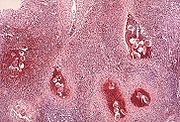
_histopathology.jpg) Microscopic identification of eggs in stool
Microscopic identification of eggs in stool
or urine
is the most practical method for diagnosis. The stool exam is the more common of the two. For the measurement of eggs in the feces of presenting patients the scientific unit used is eggs per gram
(epg). Stool examination should be performed when infection with S. mansoni or S. japonicum is suspected, and urine examination should be performed if S. haematobium is suspected.
Eggs can be present in the stool in infections with all Schistosoma species. The examination can be performed on a simple smear (1 to 2 mg of fecal material). Since eggs may be passed intermittently or in small amounts, their detection will be enhanced by repeated examinations and/or concentration procedures (such as the formalin-ethyl acetate technique). In addition, for field surveys and investigational purposes, the egg output can be quantified by using the Kato-Katz technique (20 to 50 mg of fecal material) or the Ritchie technique.
Eggs can be found in the urine in infections with S. japonicum and with S. intercalatum (recommended time for collection: between noon and 3 PM). Detection will be enhanced by centrifugation
and examination of the sediment. Quantification is possible by using filtration through a nucleopore membrane of a standard volume of urine followed by egg counts on the membrane. Investigation of S. haematobium should also include a pelvic x-ray as bladder wall calcificaition is highly characteristic of chronic infection.
Recently a field evaluation of a novel handheld microscope was undertaken in Uganda for the diagnosis of intestinal schistosomiasis by a team led by Dr. Russell Stothard from the Natural History Museum of London, working with the Schistosomiasis Control Initiative, London.
Tissue biopsy
(rectal biopsy for all species and biopsy of the bladder for S. haematobium) may demonstrate eggs when stool or urine examinations are negative.
The eggs of S. haematobium are ellipsoidal with a terminal spine, S. mansoni eggs are also ellipsoidal but with a lateral spine, S. japonicum eggs are spheroidal with a small knob.
Antibody
detection can be useful in both clinical management and for epidemiologic surveys.
of the disease. Acrolein
, copper sulfate, and niclosamide
can be used for this purpose. Recent studies have suggested that snail populations can be controlled by the introduction of, or augmentation of existing, crayfish
populations; as with all ecological interventions, however, this technique must be approached with caution.
In 1989, Aklilu Lemma
and Legesse Wolde-Yohannes
received the Right Livelihood Award
for their research on the sarcoca
plant, as a preventative measure for the disease by controlling the snail. Concurrently, Dr Chidzere of Zimbabwe researched the similar gopo berry
during the 1980s and found that it could be used in the control of infected freshwater snails. In 1989 he drew attention to his concerns that big chemical companies denigrated the gopo berry alternative for snail control. Gopo berries from hotter Ethiopia climates reputedly yield the best results. Later studies were conducted between 1993 and 1995 by the Danish Research Network for international health.
For many years from the 1950s onwards, civil engineers built vast dam and irrigation schemes, oblivious to the fact that they would cause a massive rise in water-borne infections from schistosomiasis. The detailed specifications laid out in various UN documents since the 1950s could have minimized this problem. Irrigation schemes can be designed to make it hard for the snails to colonize the water, and to reduce the contact with the local population.
This has been cited as a classic case of the relevance paradox
because guidelines on how to design these schemes to minimise the spread of the disease had been published years before, but the designers were unaware of them.
annually. As with other major parasitic diseases, there is ongoing and extensive research into developing a schistosomiasis vaccine
that will prevent the parasite from completing its life cycle in humans. In 2009, Eurogentec
Biologics developed a vaccine against bilharziosis in partnership with INSERM and researchers from the Pasteur Institute
.
The World Health Organization has developed guidelines for community treatment of schistosomiasis based on the impact the disease has on children in endemic villages:
The Bill & Melinda Gates Foundation
has recently funded an operational research program---the Schistosomiasis Consortium for Operational Research and Evaluation (SCORE) to answer strategic questions about how to move forward with schistosomiasis control and elimination. The focus of SCORE is on development of tools and evaluation of strategies for use in mass drug administration campaigns.
Antimony
has been used in the past to treat the disease. In low doses, this toxic metalloid
bonds to sulfur
atoms in enzymes used by the parasite and kills it without harming the host. This treatment is not referred to in present-day peer-review scholarship; praziquantel is universally used. Outside of the U.S., there is a drug available exclusively for treating Schistosoma mansoni (oxamniquine
) and one exclusively for treating S.hematobium (metrifonate
). While metrifonate has been discontinued for use by the British National Health Service
, a Cochrane review found it equally effective in treating urinary schistosomiasis as the leading drug, praziquantel.
Mirazid, an Egypt
ian drug made from myrrh
, was under investigation for oral treatment of the disease up until 2005. The efficacy of praziquantel was proven to be about 8 times than that of Mirazid and therefore Mirazid was not recommended as a suitable agent to control schistosomiasis.
countries in Africa
, the Caribbean
, eastern South America
, Southeast Asia
and in the Middle East
. Schistosoma mansoni
is found in parts of South America and the Caribbean, Africa, and the Middle East; S. haematobium in Africa and the Middle East; and S. japonicum in the Far East
. S. mekongi and S. intercalatum are found locally in Southeast Asia
and central West Africa
, respectively.
Among human parasitic diseases, schistosomiasis (sometimes called bilharziasis) ranks second behind malaria
in terms of socio-economic and public health importance in tropical and subtropical areas. The disease is endemic in 74-76 developing countries, infecting more than 200 million people, half of whom live in Africa. They live in rural agricultural and peri-urban areas, and placing more than 600 million people at risk.
Of the infected patients, 20 million suffer severe consequences from the disease. Some estimate that there are approximately 20,000 deaths related to schistosomiasis yearly. In many areas, schistosomiasis infects a large proportion of children under 14 years of age. An estimated 600 million people worldwide are at risk from the disease.
A few countries have eradicated the disease, and many more are working toward it. The World Health Organization
is promoting these efforts. In some cases, urbanization, pollution, and/or consequent destruction of snail habitat has reduced exposure, with a subsequent decrease in new infections. The most common way of getting schistosomiasis in developing countries is by wading or swimming in lakes, ponds and other bodies of water that are infested with the snail
s (usually of the genera Biomphalaria
, Bulinus
, or Oncomelania
) that are the natural reservoir
s of the Schistosoma pathogen.
, who first described the cause of urinary schistosomiasis in 1851.
The first doctor who described the entire disease cycle was Pirajá da Silva
in 1908.
It was a common cause of death for Ancient Egypt
ians in the Greco-Roman Period.
, exacerbated by the country's dam and irrigation projects along the Nile
. From the late 1950s through the early 1980s, infected villagers were treated with repeated shots of tartar emetic. Epidemiological evidence suggests that this campaign unintentionally contributed to the spread of the hepatitis C virus
via unclean needles. Egypt has the world's highest hepatitis C infection rate, and the infection rates in various regions of the country closely track the timing and intensity of the anti-schistosomiasis campaign.
Parasitic disease
A parasitic disease is an infectious disease caused or transmitted by a parasite. Many parasites do not cause diseases. Parasitic diseases can affect practically all living organisms, including plants and mammals...
caused by several species of trematodes
Trematoda
Trematoda is a class within the phylum Platyhelminthes that contains two groups of parasitic flatworms, commonly referred to as "flukes".-Taxonomy and biodiversity:...
(platyhelminth infection, or "flukes"), a parasitic worm
Parasitic worm
Parasitic worms or helminths are a division of eukaryoticparasites that, unlike external parasites such as lice and fleas, live inside their host. They are worm-like organisms that live and feed off living hosts, receiving nourishment and protection while disrupting their hosts' nutrient...
of the genus Schistosoma
Schistosoma
A genus of trematodes, Schistosoma, commonly known as blood-flukes and bilharzia, includes flatworms which are responsible for a highly significant parasitic infection of humans by causing the disease schistosomiasis, and are considered by the World Health Organization as the second most...
. Snails often act as an intermediary agent for the infectious diseases until a new human host is found. Individuals within developing countries who cannot afford proper sanitation facilities are often exposed to contaminated water that contains the Schistosomiasis parasite.
Although it has a low mortality rate
Mortality rate
Mortality rate is a measure of the number of deaths in a population, scaled to the size of that population, per unit time...
, schistosomiasis often is a chronic illness that can damage internal organs and, in children, impair growth and cognitive development
Cognitive development
Cognitive development is a field of study in neuroscience and psychology focusing on a child's development in terms of information processing, conceptual resources, perceptual skill, language learning, and other aspects of brain development and cognitive psychology compared to an adult's point of...
. The urinary form of schistosomiasis is associated with increased risks for bladder cancer
Bladder cancer
Bladder cancer is any of several types of malignant growths of the urinary bladder. It is a disease in which abnormal cells multiply without control in the bladder. The bladder is a hollow, muscular organ that stores urine; it is located in the pelvis...
in adults. Schistosomiasis is the second most socioeconomically devastating parasitic disease after malaria
Malaria
Malaria is a mosquito-borne infectious disease of humans and other animals caused by eukaryotic protists of the genus Plasmodium. The disease results from the multiplication of Plasmodium parasites within red blood cells, causing symptoms that typically include fever and headache, in severe cases...
.
This disease is most commonly found in Asia
Asia
Asia is the world's largest and most populous continent, located primarily in the eastern and northern hemispheres. It covers 8.7% of the Earth's total surface area and with approximately 3.879 billion people, it hosts 60% of the world's current human population...
, Africa
Africa
Africa is the world's second largest and second most populous continent, after Asia. At about 30.2 million km² including adjacent islands, it covers 6% of the Earth's total surface area and 20.4% of the total land area...
, and South America
South America
South America is a continent situated in the Western Hemisphere, mostly in the Southern Hemisphere, with a relatively small portion in the Northern Hemisphere. The continent is also considered a subcontinent of the Americas. It is bordered on the west by the Pacific Ocean and on the north and east...
, especially in areas where the water contains numerous freshwater snail
Freshwater snail
A freshwater snail is one kind of freshwater mollusc, the other kind being freshwater clams and mussels, i.e. freshwater bivalves. Specifically a freshwater snail is a gastropod that lives in a watery non-marine habitat. The majority of freshwater gastropods have a shell, with very few exceptions....
s, which may carry the parasite.
The disease affects many people in developing countries, particularly children who may acquire the disease by swimming or playing in infected water. As children come into contact with the contaminated water source the parasitic snail larva easily enter through the human skin and further mature within organ tissues. As of 2009, 74 developing countries statistically identified epidemics of Schistosomiasis within their respective populations.
Classification
Species of Schistosoma that can infect humans:- Schistosoma mansoniSchistosoma mansoniSchistosoma mansoni is a significant parasite of humans, a trematode that is one of the major agents of the disease schistosomiasis. The schistosomiasis caused by Schistosoma mansoni is intestinal schistosomiasis....
(ICD-10ICDThe International Statistical Classification of Diseases and Related Health Problems is a medical classification that provides codes to classify diseases and a wide variety of signs, symptoms, abnormal findings, complaints, social circumstances, and external causes of injury or disease...
B65.1) and Schistosoma intercalatumSchistosoma intercalatumSchistosoma intercalatum is an important parasite. It is one of the major agents of schistosomiasis.A freshwater snail Bulinus forskalii is an intermediate host for Schistosoma intercalatum....
(B65.8) cause intestinal schistosomiasis - Schistosoma haematobiumSchistosoma haematobiumSchistosoma haematobium is an important digenetic trematode, and is found in the Middle East, India, Portugal and Africa. It is a major agent of schistosomiasis; more specifically, it is associated with urinary schistosomiasis....
(B65.0) causes urinaryUrineUrine is a typically sterile liquid by-product of the body that is secreted by the kidneys through a process called urination and excreted through the urethra. Cellular metabolism generates numerous by-products, many rich in nitrogen, that require elimination from the bloodstream...
schistosomiasis - Schistosoma japonicumSchistosoma japonicumSchistosoma japonicum is an important parasite and one of the major infectious agents of schistosomiasis.This parasite has a very wide host range, infecting at least 31 species of wild mammals, including 9 carnivores, 16 rodents, one primate , two insectivores and three artiodactyls and therefore...
(B65.2) and Schistosoma mekongiSchistosoma mekongiSchistosoma mekongi is a trematode, also known as a flatworm or fluke. It is one of the five major schistosomes that account for all human infections, the other four being S. haematobium, S. mansoni, S. japonicum, and S. intercalatum...
(B65.8) cause AsiaAsiaAsia is the world's largest and most populous continent, located primarily in the eastern and northern hemispheres. It covers 8.7% of the Earth's total surface area and with approximately 3.879 billion people, it hosts 60% of the world's current human population...
n intestinal schistosomiasis
Avian schistosomiasis species cause swimmer's itch
Swimmer's itch
Swimmer’s itch, also known as lake itch, duck itch, cercarial dermatitis, and Schistosome cercarial dermatitis, is a short-term, immune reaction occurring in the skin of humans that have been infected by water-borne schistosomatidae...
and clam digger itch
Species of Schistosoma that can infect other animals:
S. bovis — normally infects cattle, sheep and goats in Africa, parts of Southern Europe and the Middle East
S. mattheei — normally infects cattle, sheep and goats in Central and Southern Africa
S. margrebowiei — normally infects antelope, buffalo and waterbuck in Southern and Central Africa
S. curassoni — normally infects domestic ruminants in West Africa
S. rodhaini — normally infects rodents and carnivores in parts of Central Africa
Signs and symptoms
Above all, schistosomiasis is a chronic disease. Many infections are subclinically symptomatic, with mild anemia and malnutrition being common in endemic areas. Acute schistosomiasis (Katayama's fever) may occur weeks after the initial infection, especially by S. mansoni and S. japonicum. Manifestations include:- Abdominal painAbdominal painAbdominal pain can be one of the symptoms associated with transient disorders or serious disease. Making a definitive diagnosis of the cause of abdominal pain can be difficult, because many diseases can result in this symptom. Abdominal pain is a common problem...
- CoughCoughA cough is a sudden and often repetitively occurring reflex which helps to clear the large breathing passages from secretions, irritants, foreign particles and microbes...
- DiarrheaDiarrheaDiarrhea , also spelled diarrhoea, is the condition of having three or more loose or liquid bowel movements per day. It is a common cause of death in developing countries and the second most common cause of infant deaths worldwide. The loss of fluids through diarrhea can cause dehydration and...
- EosinophiliaEosinophiliaEosinophilia is a condition in which the eosinophil count in the peripheral blood exceeds 0.45×10⁹/L . A marked increase in non-blood tissue eosinophil count noticed upon histopathologic examination is diagnostic for tissue eosinophilia. Several causes are known, with the most common being...
— extremely high eosinophil granulocyteEosinophil granulocyteEosinophil granulocytes, usually called eosinophils or eosinophiles , are white blood cells that are one of the immune system components responsible for combating multicellular parasites and certain infections in vertebrates. Along with mast cells, they also control mechanisms associated with...
(white blood cell) count. - FeverFeverFever is a common medical sign characterized by an elevation of temperature above the normal range of due to an increase in the body temperature regulatory set-point. This increase in set-point triggers increased muscle tone and shivering.As a person's temperature increases, there is, in...
- FatigueFatigue (physical)Fatigue is a state of awareness describing a range of afflictions, usually associated with physical and/or mental weakness, though varying from a general state of lethargy to a specific work-induced burning sensation within one's muscles...
- HepatosplenomegalyHepatosplenomegalyHepatosplenomegaly is the simultaneous enlargement of both the liver and the spleen . Hepatosplenomegaly can occur as the result of acute viral hepatitis or infectious mononucleosis, or it can be the sign of a serious and life threatening lysosomal storage disease...
— the enlargement of both the liverLiverThe liver is a vital organ present in vertebrates and some other animals. It has a wide range of functions, including detoxification, protein synthesis, and production of biochemicals necessary for digestion...
and the spleenSpleenThe spleen is an organ found in virtually all vertebrate animals with important roles in regard to red blood cells and the immune system. In humans, it is located in the left upper quadrant of the abdomen. It removes old red blood cells and holds a reserve of blood in case of hemorrhagic shock...
. Hepatic schistosomiasis is the second most common cause of esophageal varicesEsophageal varicesIn medicine , esophageal varices are extremely dilated sub-mucosal veins in the lower esophagus...
worldwide. - Genital sores — lesions that increase vulnerability to HIVHIVHuman immunodeficiency virus is a lentivirus that causes acquired immunodeficiency syndrome , a condition in humans in which progressive failure of the immune system allows life-threatening opportunistic infections and cancers to thrive...
infection. Lesions caused by schistosomiasis may continue to be a problem after control of the schistosomiasis infection itself. Early treatment, especially of children, which is relatively inexpensive, prevents formation of the sores. - Skin symptoms: At the start of infection, mild itching and a papularPapuleA papule is a circumscribed, solid elevation of skin with no visible fluid, varying in size from a pinhead to 1 cm.With regard to the quote "...varying in size from a pinhead to 1cm," depending on which text is referenced, some authors state the cutoff between a papule and a plaque as 0.5cm,...
dermatitis of the feet and other parts after swimming in polluted streams containing cercariae.
Occasionally central nervous system
Central nervous system
The central nervous system is the part of the nervous system that integrates the information that it receives from, and coordinates the activity of, all parts of the bodies of bilaterian animals—that is, all multicellular animals except sponges and radially symmetric animals such as jellyfish...
lesions occur: cerebral granulomatous disease may be caused by ectopic S. japonicum eggs in the brain
Brain
The brain is the center of the nervous system in all vertebrate and most invertebrate animals—only a few primitive invertebrates such as sponges, jellyfish, sea squirts and starfishes do not have one. It is located in the head, usually close to primary sensory apparatus such as vision, hearing,...
, and granulomatous lesions around ectopic eggs in the spinal cord
Spinal cord
The spinal cord is a long, thin, tubular bundle of nervous tissue and support cells that extends from the brain . The brain and spinal cord together make up the central nervous system...
from S. mansoni and S. haematobium infections may result in a transverse myelitis
Myelitis
Myelitis is a disease involving inflammation of the spinal cord, which disrupts central nervous system functions linking the brain and limbs. The name is derived from Greek referring to the "spinal cord", and the suffix -itis, which denotes inflammation....
with flaccid paraplegia
Paraplegia
Paraplegia is an impairment in motor or sensory function of the lower extremities. The word comes from Ionic Greek: παραπληγίη "half-striking". It is usually the result of spinal cord injury or a congenital condition such as spina bifida that affects the neural elements of the spinal canal...
.
Continuing infection may cause granulomatous reactions and fibrosis
Fibrosis
Fibrosis is the formation of excess fibrous connective tissue in an organ or tissue in a reparative or reactive process. This is as opposed to formation of fibrous tissue as a normal constituent of an organ or tissue...
in the affected organs, which may result in manifestations that include:
- Colonic polyposis with bloody diarrhea (Schistosoma mansoni mostly);
- Portal hypertensionPortal hypertensionIn medicine, portal hypertension is hypertension in the portal vein and its tributaries.It is often defined as a portal pressure gradient of 10 mmHg or greater.-Causes:Causes can be divided into prehepatic, intrahepatic, and posthepatic...
with hematemesisHematemesisHematemesis or haematemesis is the vomiting of blood. The source is generally the upper gastrointestinal tract. Patients can easily confuse it with hemoptysis , although the latter is more common.-Signs:...
and splenomegalySplenomegalySplenomegaly is an enlargement of the spleen. The spleen usually lies in the left upper quadrant of the human abdomen. It is one of the four cardinal signs of hypersplenism, some reduction in the number of circulating blood cells affecting granulocytes, erythrocytes or platelets in any...
(S. mansoni, S. japonicum); - CystitisCystitisCystitis is a term that refers to urinary bladder inflammation that results from any one of a number of distinct syndromes. It is most commonly caused by a bacterial infection in which case it is referred to as a urinary tract infection.-Signs and symptoms:...
and ureteritisUreteritisUreteritis refers to a medical condition of the ureter that involves inflammation.One form is known as "ureteritis cystica".Eosinophilic ureteritis has been observed.Ureteritis is often considered part of a urinary tract infection....
(S. haematobium) with hematuriaHematuriaIn medicine, hematuria, or haematuria, is the presence of red blood cells in the urine. It may be idiopathic and/or benign, or it can be a sign that there is a kidney stone or a tumor in the urinary tract , ranging from trivial to lethal...
, which can progress to bladder cancerBladder cancerBladder cancer is any of several types of malignant growths of the urinary bladder. It is a disease in which abnormal cells multiply without control in the bladder. The bladder is a hollow, muscular organ that stores urine; it is located in the pelvis...
; - Pulmonary hypertensionPulmonary hypertensionIn medicine, pulmonary hypertension is an increase in blood pressure in the pulmonary artery, pulmonary vein, or pulmonary capillaries, together known as the lung vasculature, leading to shortness of breath, dizziness, fainting, and other symptoms, all of which are exacerbated by exertion...
(S. mansoni, S. japonicum, more rarely S. haematobium); - GlomerulonephritisGlomerulonephritisGlomerulonephritis, also known as glomerular nephritis, abbreviated GN, is a renal disease characterized by inflammation of the glomeruli, or small blood vessels in the kidneys...
; and central nervous system lesions.
Bladder cancer
Bladder cancer
Bladder cancer is any of several types of malignant growths of the urinary bladder. It is a disease in which abnormal cells multiply without control in the bladder. The bladder is a hollow, muscular organ that stores urine; it is located in the pelvis...
diagnosis and mortality are generally elevated in affected areas.
Life cycle
Schistosomes have a typical trematode vertebrate-invertebrate lifecycle, with humans being the definitive host.Snails
The life cycles of all five human schistosomes are broadly similar: parasite eggs are released into the environment from infected individuals, hatching on contact with fresh water to release the free-swimming miracidiumMiracidium
Trematodes are small parasitic flatworms that use vertebrates as their definitive host, and molluscs as their intermediate host. In order to accomplish this, they have several varied lifecyle stages....
. Miracidia infect fresh-water snails
Freshwater snail
A freshwater snail is one kind of freshwater mollusc, the other kind being freshwater clams and mussels, i.e. freshwater bivalves. Specifically a freshwater snail is a gastropod that lives in a watery non-marine habitat. The majority of freshwater gastropods have a shell, with very few exceptions....
by penetrating the snail's foot. After infection, close to the site of penetration, the miracidium transforms into a primary (mother) sporocyst. Germ cells within the primary sporocyst will then begin dividing to produce secondary (daughter) sporocysts, which migrate to the snail's hepatopancreas
Hepatopancreas
The hepatopancreas, digestive gland or midgut gland is an organ of the digestive tract of arthropods, molluscs and fish. It provides the functions which in mammals are provided separately by the liver and pancreas, including the production of digestive enzymes, and absorption of digested...
. Once at the hepatopancreas, germ cells within the secondary sporocyst begin to divide again, this time producing thousands of new parasites, known as cercariae, which are the larvae capable of infecting mammals.
Cercariae emerge daily from the snail host in a circadian rhythm, dependent on ambient temperature and light. Young cercariae are highly mobile, alternating between vigorous upward movement and sinking to maintain their position in the water. Cercarial activity is particularly stimulated by water turbulence, by shadows and by chemicals found on human skin.
Humans
Penetration of the human skin occurs after the cercaria have attached to and explored the skin. The parasite secretes enzymes that break down the skin's protein to enable penetration of the cercarial head through the skin. As the cercaria penetrates the skin it transforms into a migrating schistosomulum stage.Venule
A venule is a very small blood vessel in the microcirculation that allows deoxygenated blood to return from the capillary beds to the larger blood vessels called veins. Venules range from 8 to 100μm in diameter and are formed when capillaries unite .Venules are blood vessels that drain blood...
; from here the schistosomulum travels to the lungs where it undergoes further developmental changes necessary for subsequent migration to the liver. Eight to ten days after penetration of the skin, the parasite migrates to the liver sinusoid
Liver sinusoid
A liver sinusoid is a type of sinusoidal blood vessel that serves as a location for the oxygen-rich blood from the hepatic artery and the nutrient-rich blood from the portal vein....
s. S. japonicum migrates more quickly than S. mansoni, and usually reaches the liver within 8 days of penetration. Juvenile S. mansoni and S. japonicum worms develop an oral sucker after arriving at the liver, and it is during this period that the parasite begins to feed on red blood cells. The nearly-mature worms pair, with the longer female worm residing in the gynaecophoric channel of the shorter male. Adult worms are about 10 mm long. Worm pairs of S. mansoni and S. japonicum relocate to the mesenteric or rectal veins. S. haematobium schistosomula ultimately migrate from the liver to the perivesical venous plexus of the bladder, ureters, and kidneys through the hemorrhoidal plexus.
Parasites reach maturity in six to eight weeks, at which time they begin to produce eggs. Adult S. mansoni pairs residing in the mesenteric vessels may produce up to 300 eggs per day during their reproductive lives. S. japonicum may produce up to 3000 eggs per day. Many of the eggs pass through the walls of the blood vessels, and through the intestinal wall, to be passed out of the body in feces. S. haematobium eggs pass through the ureteral or bladder wall and into the urine. Only mature eggs are capable of crossing into the digestive tract, possibly through the release of proteolytic enzymes, but also as a function of host immune response, which fosters local tissue ulceration. Up to half the eggs released by the worm pairs become trapped in the mesenteric veins, or will be washed back into the liver, where they will become lodged. Worm pairs can live in the body for an average of four and a half years, but may persist up to 20 years.
Trapped eggs mature normally, secreting antigens that elicit a vigorous immune response. The eggs themselves do not damage the body. Rather it is the cellular infiltration resultant from the immune response that causes the pathology classically associated with schistosomiasis.
Diagnosis
Feces
Feces, faeces, or fæces is a waste product from an animal's digestive tract expelled through the anus or cloaca during defecation.-Etymology:...
or urine
Urine
Urine is a typically sterile liquid by-product of the body that is secreted by the kidneys through a process called urination and excreted through the urethra. Cellular metabolism generates numerous by-products, many rich in nitrogen, that require elimination from the bloodstream...
is the most practical method for diagnosis. The stool exam is the more common of the two. For the measurement of eggs in the feces of presenting patients the scientific unit used is eggs per gram
Eggs per gram
Eggs per gram is a laboratory test that determines the number of eggs per gram of feces in patients suspected of having a parasitological infection, such as schistosomiasis. EPG is the primary diagnostic method for schistosomiasis, as opposed to a blood test...
(epg). Stool examination should be performed when infection with S. mansoni or S. japonicum is suspected, and urine examination should be performed if S. haematobium is suspected.
Eggs can be present in the stool in infections with all Schistosoma species. The examination can be performed on a simple smear (1 to 2 mg of fecal material). Since eggs may be passed intermittently or in small amounts, their detection will be enhanced by repeated examinations and/or concentration procedures (such as the formalin-ethyl acetate technique). In addition, for field surveys and investigational purposes, the egg output can be quantified by using the Kato-Katz technique (20 to 50 mg of fecal material) or the Ritchie technique.
Eggs can be found in the urine in infections with S. japonicum and with S. intercalatum (recommended time for collection: between noon and 3 PM). Detection will be enhanced by centrifugation
Centrifugation
Centrifugation is a process that involves the use of the centrifugal force for the sedimentation of mixtures with a centrifuge, used in industry and in laboratory settings. More-dense components of the mixture migrate away from the axis of the centrifuge, while less-dense components of the mixture...
and examination of the sediment. Quantification is possible by using filtration through a nucleopore membrane of a standard volume of urine followed by egg counts on the membrane. Investigation of S. haematobium should also include a pelvic x-ray as bladder wall calcificaition is highly characteristic of chronic infection.
Recently a field evaluation of a novel handheld microscope was undertaken in Uganda for the diagnosis of intestinal schistosomiasis by a team led by Dr. Russell Stothard from the Natural History Museum of London, working with the Schistosomiasis Control Initiative, London.
Tissue biopsy
Biopsy
A biopsy is a medical test involving sampling of cells or tissues for examination. It is the medical removal of tissue from a living subject to determine the presence or extent of a disease. The tissue is generally examined under a microscope by a pathologist, and can also be analyzed chemically...
(rectal biopsy for all species and biopsy of the bladder for S. haematobium) may demonstrate eggs when stool or urine examinations are negative.
The eggs of S. haematobium are ellipsoidal with a terminal spine, S. mansoni eggs are also ellipsoidal but with a lateral spine, S. japonicum eggs are spheroidal with a small knob.
Antibody
Antibody
An antibody, also known as an immunoglobulin, is a large Y-shaped protein used by the immune system to identify and neutralize foreign objects such as bacteria and viruses. The antibody recognizes a unique part of the foreign target, termed an antigen...
detection can be useful in both clinical management and for epidemiologic surveys.
Eliminating or avoiding the snails
Prevention is best accomplished by eliminating the water-dwelling snails that are the natural reservoirNatural reservoir
Natural reservoir or nidus, refers to the long-term host of the pathogen of an infectious disease. It is often the case that hosts do not get the disease carried by the pathogen or it is carried as a subclinical infection and so asymptomatic and non-lethal...
of the disease. Acrolein
Acrolein
Acrolein is the simplest unsaturated aldehyde. It is produced widely but is most often immediately reacted with other products due to its instability and toxicity...
, copper sulfate, and niclosamide
Niclosamide
Niclosamide is a teniacide in the anthelmintic family especially effective against cestodes that infect humans...
can be used for this purpose. Recent studies have suggested that snail populations can be controlled by the introduction of, or augmentation of existing, crayfish
Crayfish
Crayfish, crawfish, or crawdads – members of the superfamilies Astacoidea and Parastacoidea – are freshwater crustaceans resembling small lobsters, to which they are related...
populations; as with all ecological interventions, however, this technique must be approached with caution.
In 1989, Aklilu Lemma
Aklilu Lemma
Aklilu Lemma was an Ethiopian physician. He was awarded the Right Livelihood Award in 1989, jointly with Legesse Wolde-Yohannes, for their work and discoveries on how to prevent the parasitic disease bilharzia.-References:...
and Legesse Wolde-Yohannes
Legesse Wolde-Yohannes
Legesse Wolde-Yohannes is an Ethiopian horticultural scientist. He cooperated with Aklilu Lemma on the discovery and research on how to use the plant endod as a means of preventing the parasitic disease bilharzia. He was awarded the Right Livelihood Award in 1989, jointly with Lemma.-References:...
received the Right Livelihood Award
Right Livelihood Award
The Right Livelihood Award, also referred to as the "Alternative Nobel Prize", is a prestigious international award to honour those "working on practical and exemplary solutions to the most urgent challenges facing the world today". The prize was established in 1980 by Jakob von Uexkull, and is...
for their research on the sarcoca
Sapindus
Sapindus is a genus of about five to twelve species of shrubs and small trees in the Lychee family, Sapindaceae, native to warm temperate to tropical regions in both the Old World and New World. The genus includes both deciduous and evergreen species. Members of the genus are commonly known as...
plant, as a preventative measure for the disease by controlling the snail. Concurrently, Dr Chidzere of Zimbabwe researched the similar gopo berry
Sarcoca dodecandra
Sarcoca dodecandra, basionym Phytolacca dodecandra, commonly known as endod, Gopo Berry, or African soapberry, is a trailing shrub or climber native to Tropical Africa, Southern Africa, and Madagascar....
during the 1980s and found that it could be used in the control of infected freshwater snails. In 1989 he drew attention to his concerns that big chemical companies denigrated the gopo berry alternative for snail control. Gopo berries from hotter Ethiopia climates reputedly yield the best results. Later studies were conducted between 1993 and 1995 by the Danish Research Network for international health.
For many years from the 1950s onwards, civil engineers built vast dam and irrigation schemes, oblivious to the fact that they would cause a massive rise in water-borne infections from schistosomiasis. The detailed specifications laid out in various UN documents since the 1950s could have minimized this problem. Irrigation schemes can be designed to make it hard for the snails to colonize the water, and to reduce the contact with the local population.
This has been cited as a classic case of the relevance paradox
Relevance Paradox
The relevance paradox describes an attempt to gather information relevant to a decision, which fails because the elimination of information perceived as distracting or unnecessary and thus detrimental to making an optimal decision, also excludes information that is actually crucial.-Definition:In...
because guidelines on how to design these schemes to minimise the spread of the disease had been published years before, but the designers were unaware of them.
Treatment
Schistosomiasis is readily treated using a single oral dose of the drug praziquantelPraziquantel
Praziquantel is an anthelmintic effective against flatworms. Praziquantel is not licensed for use in humans in the UK; it is, however, available as a veterinary anthelmintic, and is available for use in humans on a named-patient basis....
annually. As with other major parasitic diseases, there is ongoing and extensive research into developing a schistosomiasis vaccine
Schistosomiasis vaccine
A Schistosomiasis vaccine is a vaccine against Schistosomiasis , a parasitic disease caused by several species of fluke of the genus Schistosoma...
that will prevent the parasite from completing its life cycle in humans. In 2009, Eurogentec
Eurogentec
Eurogentec is an international biotechnology supplier, based in Belgium, who specialize in genomics and proteomics kits and reagents. The company was founded in 1985 as a spin-off from the University of Liège. Eurogentec is also a contract manufacturing organization, licensed by the Belgian...
Biologics developed a vaccine against bilharziosis in partnership with INSERM and researchers from the Pasteur Institute
Pasteur Institute
The Pasteur Institute is a French non-profit private foundation dedicated to the study of biology, micro-organisms, diseases, and vaccines. It is named after Louis Pasteur, who made some of the greatest breakthroughs in modern medicine at the time, including pasteurization and vaccines for anthrax...
.
The World Health Organization has developed guidelines for community treatment of schistosomiasis based on the impact the disease has on children in endemic villages:
- When a village reports more than 50 percent of children have blood in their urine, everyone in the village receives treatment.
- When 20 to 50 percent of children have bloody urine, only school-age children are treated.
- When less than 20 percent of children have symptoms, mass treatment is not implemented.
The Bill & Melinda Gates Foundation
Bill & Melinda Gates Foundation
The Bill & Melinda Gates Foundation is the largest transparently operated private foundation in the world, founded by Bill and Melinda Gates. It is "driven by the interests and passions of the Gates family"...
has recently funded an operational research program---the Schistosomiasis Consortium for Operational Research and Evaluation (SCORE) to answer strategic questions about how to move forward with schistosomiasis control and elimination. The focus of SCORE is on development of tools and evaluation of strategies for use in mass drug administration campaigns.
Antimony
Antimony
Antimony is a toxic chemical element with the symbol Sb and an atomic number of 51. A lustrous grey metalloid, it is found in nature mainly as the sulfide mineral stibnite...
has been used in the past to treat the disease. In low doses, this toxic metalloid
Metalloid
Metalloid is a term used in chemistry when classifying the chemical elements. On the basis of their general physical and chemical properties, each element can usually be classified as a metal or a nonmetal. However, some elements with intermediate or mixed properties can be harder to characterize...
bonds to sulfur
Sulfur
Sulfur or sulphur is the chemical element with atomic number 16. In the periodic table it is represented by the symbol S. It is an abundant, multivalent non-metal. Under normal conditions, sulfur atoms form cyclic octatomic molecules with chemical formula S8. Elemental sulfur is a bright yellow...
atoms in enzymes used by the parasite and kills it without harming the host. This treatment is not referred to in present-day peer-review scholarship; praziquantel is universally used. Outside of the U.S., there is a drug available exclusively for treating Schistosoma mansoni (oxamniquine
Oxamniquine
Oxamniquine is an anthelmintic with schistosomicidal activity against Schistosoma mansoni, but not against other Schistosoma spp. Oxamniquine is a potent single-dose agent for treatment of S...
) and one exclusively for treating S.hematobium (metrifonate
Metrifonate
Metrifonate or trichlorfon is an irreversible organophosphate acetylcholinesterase inhibitor.it is a prodrug which is activated non-enzymatically into 2,2-dichlorovinyl dimethyl phosphate ....
). While metrifonate has been discontinued for use by the British National Health Service
National Health Service
The National Health Service is the shared name of three of the four publicly funded healthcare systems in the United Kingdom. They provide a comprehensive range of health services, the vast majority of which are free at the point of use to residents of the United Kingdom...
, a Cochrane review found it equally effective in treating urinary schistosomiasis as the leading drug, praziquantel.
Mirazid, an Egypt
Egypt
Egypt , officially the Arab Republic of Egypt, Arabic: , is a country mainly in North Africa, with the Sinai Peninsula forming a land bridge in Southwest Asia. Egypt is thus a transcontinental country, and a major power in Africa, the Mediterranean Basin, the Middle East and the Muslim world...
ian drug made from myrrh
Myrrh
Myrrh is the aromatic oleoresin of a number of small, thorny tree species of the genus Commiphora, which grow in dry, stony soil. An oleoresin is a natural blend of an essential oil and a resin. Myrrh resin is a natural gum....
, was under investigation for oral treatment of the disease up until 2005. The efficacy of praziquantel was proven to be about 8 times than that of Mirazid and therefore Mirazid was not recommended as a suitable agent to control schistosomiasis.
Epidemiology
The disease is found in tropicalTropics
The tropics is a region of the Earth surrounding the Equator. It is limited in latitude by the Tropic of Cancer in the northern hemisphere at approximately N and the Tropic of Capricorn in the southern hemisphere at S; these latitudes correspond to the axial tilt of the Earth...
countries in Africa
Africa
Africa is the world's second largest and second most populous continent, after Asia. At about 30.2 million km² including adjacent islands, it covers 6% of the Earth's total surface area and 20.4% of the total land area...
, the Caribbean
Caribbean
The Caribbean is a crescent-shaped group of islands more than 2,000 miles long separating the Gulf of Mexico and the Caribbean Sea, to the west and south, from the Atlantic Ocean, to the east and north...
, eastern South America
South America
South America is a continent situated in the Western Hemisphere, mostly in the Southern Hemisphere, with a relatively small portion in the Northern Hemisphere. The continent is also considered a subcontinent of the Americas. It is bordered on the west by the Pacific Ocean and on the north and east...
, Southeast Asia
Southeast Asia
Southeast Asia, South-East Asia, South East Asia or Southeastern Asia is a subregion of Asia, consisting of the countries that are geographically south of China, east of India, west of New Guinea and north of Australia. The region lies on the intersection of geological plates, with heavy seismic...
and in the Middle East
Middle East
The Middle East is a region that encompasses Western Asia and Northern Africa. It is often used as a synonym for Near East, in opposition to Far East...
. Schistosoma mansoni
Schistosoma mansoni
Schistosoma mansoni is a significant parasite of humans, a trematode that is one of the major agents of the disease schistosomiasis. The schistosomiasis caused by Schistosoma mansoni is intestinal schistosomiasis....
is found in parts of South America and the Caribbean, Africa, and the Middle East; S. haematobium in Africa and the Middle East; and S. japonicum in the Far East
Far East
The Far East is an English term mostly describing East Asia and Southeast Asia, with South Asia sometimes also included for economic and cultural reasons.The term came into use in European geopolitical discourse in the 19th century,...
. S. mekongi and S. intercalatum are found locally in Southeast Asia
Southeast Asia
Southeast Asia, South-East Asia, South East Asia or Southeastern Asia is a subregion of Asia, consisting of the countries that are geographically south of China, east of India, west of New Guinea and north of Australia. The region lies on the intersection of geological plates, with heavy seismic...
and central West Africa
West Africa
West Africa or Western Africa is the westernmost region of the African continent. Geopolitically, the UN definition of Western Africa includes the following 16 countries and an area of approximately 5 million square km:-Flags of West Africa:...
, respectively.
Among human parasitic diseases, schistosomiasis (sometimes called bilharziasis) ranks second behind malaria
Malaria
Malaria is a mosquito-borne infectious disease of humans and other animals caused by eukaryotic protists of the genus Plasmodium. The disease results from the multiplication of Plasmodium parasites within red blood cells, causing symptoms that typically include fever and headache, in severe cases...
in terms of socio-economic and public health importance in tropical and subtropical areas. The disease is endemic in 74-76 developing countries, infecting more than 200 million people, half of whom live in Africa. They live in rural agricultural and peri-urban areas, and placing more than 600 million people at risk.
Of the infected patients, 20 million suffer severe consequences from the disease. Some estimate that there are approximately 20,000 deaths related to schistosomiasis yearly. In many areas, schistosomiasis infects a large proportion of children under 14 years of age. An estimated 600 million people worldwide are at risk from the disease.
A few countries have eradicated the disease, and many more are working toward it. The World Health Organization
World Health Organization
The World Health Organization is a specialized agency of the United Nations that acts as a coordinating authority on international public health. Established on 7 April 1948, with headquarters in Geneva, Switzerland, the agency inherited the mandate and resources of its predecessor, the Health...
is promoting these efforts. In some cases, urbanization, pollution, and/or consequent destruction of snail habitat has reduced exposure, with a subsequent decrease in new infections. The most common way of getting schistosomiasis in developing countries is by wading or swimming in lakes, ponds and other bodies of water that are infested with the snail
Snail
Snail is a common name applied to most of the members of the molluscan class Gastropoda that have coiled shells in the adult stage. When the word is used in its most general sense, it includes sea snails, land snails and freshwater snails. The word snail without any qualifier is however more often...
s (usually of the genera Biomphalaria
Biomphalaria
Biomphalaria is a genus of air-breathing freshwater snails, aquatic pulmonate gastropod mollusks in the family Planorbidae, the ram's horn snails and their allies.Biomphalaria is the type genus of the tribe Biomphalariini....
, Bulinus
Bulinus
Bulinus is a genus of small tropical freshwater snails, aquatic gastropod mollusks in the family Planorbidae, the ramshorn snails and their allies....
, or Oncomelania
Oncomelania
Oncomelania is a genus of very small tropical freshwater snails, aquatic gastropod mollusks in the family Pomatiopsidae.These Oncomelania snails are distantly related to the marine periwinkle, and more closely related to the small marine snails of the family Rissoidae.-Species:There are two species...
) that are the natural reservoir
Natural reservoir
Natural reservoir or nidus, refers to the long-term host of the pathogen of an infectious disease. It is often the case that hosts do not get the disease carried by the pathogen or it is carried as a subclinical infection and so asymptomatic and non-lethal...
s of the Schistosoma pathogen.
History
Schistosomiasis is known as bilharzia or bilharziosis in many countries, after Theodor BilharzTheodor Bilharz
Theodor Maximilian Bilharz was a German physician and an important pioneer in the field of parasitology.-Education:...
, who first described the cause of urinary schistosomiasis in 1851.
The first doctor who described the entire disease cycle was Pirajá da Silva
Pirajá da Silva
Manuel Augusto Pirajá da Silva was a Brazilian parasitologist, medical researcher and physician.-Biography:...
in 1908.
It was a common cause of death for Ancient Egypt
Ancient Egypt
Ancient Egypt was an ancient civilization of Northeastern Africa, concentrated along the lower reaches of the Nile River in what is now the modern country of Egypt. Egyptian civilization coalesced around 3150 BC with the political unification of Upper and Lower Egypt under the first pharaoh...
ians in the Greco-Roman Period.
Egypt treatment campaign and Hepatitis C
Schistosomiasis is endemic in EgyptEgypt
Egypt , officially the Arab Republic of Egypt, Arabic: , is a country mainly in North Africa, with the Sinai Peninsula forming a land bridge in Southwest Asia. Egypt is thus a transcontinental country, and a major power in Africa, the Mediterranean Basin, the Middle East and the Muslim world...
, exacerbated by the country's dam and irrigation projects along the Nile
Nile
The Nile is a major north-flowing river in North Africa, generally regarded as the longest river in the world. It is long. It runs through the ten countries of Sudan, South Sudan, Burundi, Rwanda, Democratic Republic of the Congo, Tanzania, Kenya, Ethiopia, Uganda and Egypt.The Nile has two major...
. From the late 1950s through the early 1980s, infected villagers were treated with repeated shots of tartar emetic. Epidemiological evidence suggests that this campaign unintentionally contributed to the spread of the hepatitis C virus
Hepatitis C virus
Hepatitis C virus is a small , enveloped, positive-sense single-stranded RNA virus of the family Flaviviridae...
via unclean needles. Egypt has the world's highest hepatitis C infection rate, and the infection rates in various regions of the country closely track the timing and intensity of the anti-schistosomiasis campaign.
See also
- Genital schistosomiasisGenital schistosomiasisGenital schistosomiasis is a parasitic infection of the genitals which affects women, causing chronic illness. The infectious agent is transmitted via tainted water. It is the eggs shed by the worm and not the worm itself, however, which cause the damage...
- Tropical diseaseTropical diseaseTropical diseases are diseases that are prevalent in or unique to tropical and subtropical regions. The diseases are less prevalent in temperate climates, due in part to the occurrence of a cold season, which controls the insect population by forcing hibernation. Insects such as mosquitoes and...
- Male menstruationMale menstruationMale menstruation is a term occasionally unofficially used for a type of bleeding in the urine or faeces, reported in some tropical countries. It is actually caused by parasite infestation of the urinary tract or intestines by Schistosoma haematobium, and cases of it are actually schistosomiasis,...
, a misunderstood symptom caused by schistosomiasis
Further reading
- Brasil. Ministério da Saúde. Secretaria de Vigilância em Saúde. Departamento de Vigilância Epidemiológica. 2007. Vigilância e controle de moluscos de importância epidemiológica : diretrizes técnicas : Programa de Vigilância e Controle da Esquistossomose (PCE). Ministério da Saúde, Secretaria de Vigilância em Saúde, Departamento de Vigilância Epidemiológica. 2. ed. Brasília : Editora do Ministério da Saúde. 178 pp. ISBN 978-85-334-1438-9. (in Portuguese) (Surveillance and Control of Mollusks with Epidemiological Importance: technical directives: Schistosomiasis Control and Surveillance Program)