

Castrato

Encyclopedia
A castrato is a man with a singing voice
equivalent to that of a soprano
, mezzo-soprano
, or contralto
voice produced either by castration
of the singer before puberty
or one who, because of an endocrinological
condition, never reaches sexual maturity.
Castration before puberty (or in its early stages) prevents a boy's larynx
from being transformed by the normal physiological events of puberty. As a result, the vocal range
of prepubescence (shared by both sexes) is largely retained, and the voice develops into adulthood in a unique way. Prepubescent castration for this purpose diminished greatly in the late 18th century and was made illegal in Italy in 1870.
As the castrato's body grew, his lack of testosterone meant that his epiphyses (bone-joints) did not harden in the normal manner. Thus the limb
s of the castrati often grew unusually long, as did the bones of their rib
s. This, combined with intensive training, gave them unrivalled lung-power and breath capacity. Operating through small, child-sized vocal cords, their voices were also extraordinarily flexible, and quite different from the equivalent adult female voice, as well as higher vocal ranges of the uncastrated adult male (see soprano
, mezzo-soprano
, alto, sopranist
, countertenor
and contralto
). Listening to the only surviving recordings of a castrato (see below), one can hear that the lower part of the voice sounds like a "super-high" tenor, with a more falsetto
-like upper register above that.
Castrati were rarely referred to as such: in the 18th century, the euphemism
musico
(pl musici) was much more generally used, although it usually carried derogatory implications; another synonym was evirato (literally meaning "emasculated"). Eunuch
is a more general term, since historically many eunuchs were castrated after puberty, castration thus having no effect on their voices.
 Castration as a means of subjugation, enslavement or other punishment has a very long pedigree, dating back to ancient Sumer
(see also Eunuch
). In a Western context, eunuch
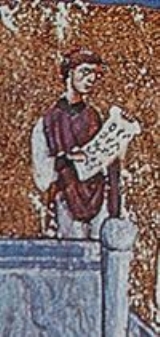
singers are known to have existed from the early Byzantine Empire
. In Constantinople
around 400 AD the empress Aelia Eudoxia
had a eunuch choir-master, Brison, who may have established the use of castrati in Byzantine choirs, though whether Brison himself was a singer, and whether he had colleagues who were eunuch singers, is not certain. By the 9th century, eunuch singers were well-known (not least in the choir of Hagia Sophia
), and remained so until the sack of Constantinople by the Western forces of the Fourth Crusade
in 1204. Their fate from then until their reappearance in Italy more than three hundred years later is by no means clear, though it seems likely that the Spanish tradition of soprano falsettists may have "hidden" castrati (it should be remembered that much of Spain was under Arab sovereignty at various times during the Middle Ages, and that castration has a history going back to the ancient near east—stereotypically Eunuchs are supposed to have served as harem "guards", but more importantly they served as governors and high-level political appointees—they could not start a dynasty which would threaten the ruler from a powerful position).
(famed as the builder of the Villa d'Este at Tivoli), wrote to Guglielmo Gonzaga, Duke of Mantua (1538–1587), that he has heard that His Grace is interested in his cantoretti, and offering to send him two, so that he could choose one for his own service. This is a rare term, but probably does equate to castrato. The Cardinal's brother, Alfonso II d'Este, Duke of Ferrara
, was another early enthusiast, enquiring about castrati in 1556. There were certainly castrati in the Sistine Chapel
choir in 1558, although not described as such: on 27 April of that year, Hernando Bustamante, a Spaniard from Palencia
, was admitted (the first castrati so termed who joined the Sistine choir were Pietro Paolo Folignato and Girolamo Rossini, admitted in 1599). Surprisingly, considering the later French distaste for castrati they certainly existed in France at this time also, being known of in Paris, Orléans
, Picardy
and Normandy
, though they were not abundant: the King of France himself had difficulty in obtaining them. By 1574 there were castrati in the Ducal court chapel at Munich
, where the Kapellmeister
(music director) was the famous Orlando di Lasso. In 1589, by the bull Cum pro nostri temporali munere, Pope Sixtus V
re-organised the choir of St Peter's, Rome specifically to include castrati. Thus the castrati came to supplant both boys (whose voices broke after only a few years) and falsettists (whose voices were weaker and less reliable) from the top line in such choirs. Women were banned by the Pauline dictum mulieres in ecclesiis taceant ("let women keep silent in church"; see I Corinthians, ch 14, v 34).
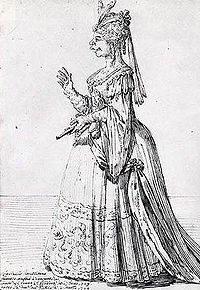 Although the castrato (or musico) predates opera, there is some evidence that castrati had parts in the earliest operas. In the first performance of Monteverdi's Orfeo (1607), for example, they played subsidiary roles, including Speranza and (possibly) that of Euridice. Although female roles were performed by castrati in some of the papal states, this was increasingly rare; by 1680, they had supplanted "normal" male voices in lead roles, and retained their position as primo uomo for about a hundred years; an Italian opera not featuring at least one renowned castrato in a lead part would be doomed to fail. Because of the popularity of Italian opera throughout 18th-century Europe (except France), singers such as Ferri, Farinelli
, Senesino
and Pacchierotti became the first operatic superstars, earning enormous fees and hysterical public adulation. The strictly hierarchical organisation of opera seria
favoured their high voices as symbols of heroic virtue, though they were frequently mocked for their strange appearance and bad acting:
More modern objections to the existence of castrati in Europe might centre on the means by which the preparation of future singers could lead to premature death. To prevent the child from experiencing the intense pain of castration, many were inadvertently administered lethal doses of opium or some other narcotic, or were killed by overlong compression of the carotid artery in the neck (intended to render them unconscious during the castration procedure).
During the 18th century itself, the music historian Charles Burney
was sent from pillar to post in search of places where the operation was carried out: "I enquired throughout Italy at what place boys were chiefly qualified for singing by castration, but could get no certain intelligence. I was told at Milan that it was at Venice; at Venice that it was at Bologna; but at Bologna the fact was denied, and I was referred to Florence; from Florence to Rome, and from Rome I was sent to Naples ... it is said that there are shops in Naples with this inscription: 'QUI SI CASTRANO RAGAZZI' ("Here boys are castrated"); but I was utterly unable to see or hear of any such shops during my residence in that city."
The training of the boys was rigorous. The regime of one singing school in Rome (c. 1700) consisted of one hour of singing difficult and awkward pieces, one hour practising trills, one hour practising ornamented passaggi, one hour of singing exercises in their teacher's presence and in front of a mirror so as to avoid unnecessary movement of the body or facial grimaces, and one hour of literary study; all this, moreover, before lunch. After, half-an-hour would be devoted to musical theory, another to writing counterpoint, an hour copying down the same from dictation, and another hour of literary study. During the remainder of the day, the young castrati had to find time to practice their harpsichord playing, and to compose vocal music, either sacred or secular depending on their inclination. This demanding schedule meant that, if sufficiently talented, they were able to make a debut in their mid-teens with a perfect technique and a voice of a flexibility and power no woman or ordinary male singer could match.
 In the 1720s and 1730s, at the height of the craze for these voices, it has been estimated that upwards of 4,000 boys were castrated annually in the service of art. Many came from poor homes and were castrated by their parents in the hope that their child might be successful and lift them from poverty (this was the case with Senesino
). There are, though, records of some young boys asking to be operated on to preserve their voices (e.g. Caffarelli, who was from a wealthy family: his grandmother gave him the income from two vineyards to pay for his studies). Caffarelli was also typical of many castrati in being famous for tantrums on and off-stage, and for amorous adventures with noble ladies. Some, as described by Casanova, preferred gentlemen (noble or otherwise). Modern endocrinology would suggest that the castrati's much-vaunted sexual prowess was more the stuff of legend than reality – in addition to lacking a hormonal (but not a socio-psychological) sex drive, a castrato's remaining genitalia will not develop in size. Only a small percentage of boys castrated to preserve their voices had successful careers on the operatic stage; the better "also-rans" sang in cathedral or church choirs, but because of their marked appearance and the ban on their marrying, there was little room for them in society outside a musical context.
The castrati came in for a great amount of scurrilous and unkind abuse, and as their fame increased, so did the hatred of them. They were often castigated as malign creatures who lured men into homosexuality
, and there were admittedly homosexual castrati, as Casanova's accounts of 18th-century Italy
bear witness. He mentions meeting an abbé whom he took for a girl in disguise, only later discovering that "she" was a famous castrato. In Rome
in 1762 he attended a performance at which the prima donna
was a castrato, "the favourite pathic" of Cardinal Borghese, who dined every evening with his protector. From his behaviour on stage "it was obvious that he hoped to inspire the love of those who liked him as a man, and probably would not have done so as a woman".
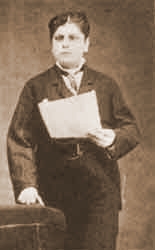 By the late 18th century, changes in operatic taste and social attitudes spelled the end for castrati. They lingered on past the end of the ancien régime (which their style of opera parallels), and two of their number, Pacchierotti
and Crescentini, even entranced the iconoclastic Napoleon. The last great operatic castrato was Giovanni Battista Velluti (1781–1861), who performed the last operatic castrato role ever written: Armando in Il crociato in Egitto
by Meyerbeer
(Venice, 1824). Soon after this they were replaced definitively as the first men of the operatic stage by a new breed of heroic tenor, as first incarnated by the Frenchman Gilbert-Louis Duprez, the earliest so-called "king of the high Cs". His successors have included such singers as Enrico Tamberlik
, Jean de Reszke
, Francesco Tamagno
, Enrico Caruso, Giovanni Martinelli
, Beniamino Gigli
, Jussi Björling
, Franco Corelli
and Luciano Pavarotti
, among others.
After the unification of Italy in 1861, castration for musical purposes was officially made illegal (the new Italian state had adopted a French legal code which expressly forbade the practice). In 1878, Pope Leo XIII
prohibited the hiring of new castrati by the church: only in the Sistine Chapel and in other papal basilicas in Rome did a few castrati linger. A group photo of the Sistine Choir taken in 1898 shows that by then only six remained (plus the Direttore Perpetuo, the fine soprano castrato Domenico Mustafà), and in 1902 a ruling was extracted from Pope Leo that no further castrati should be admitted. The official end to the castrati came on St. Cecilia's Day, 22 November 1903, when the new pope, Pius X, issued his motu proprio, Tra le Sollecitudini ('Amongst the Cares'), which contained this instruction: "Whenever ... it is desirable to employ the high voices of sopranos and contraltos, these parts must be taken by boys, according to the most ancient usage of the Church."
The last Sistine castrato to survive was Alessandro Moreschi
, the only castrato to have made solo recordings. While an interesting historical record, these discs of his give us only a glimpse of the castrato voice – although he had been renowned as "The Angel of Rome" at the beginning of his career, some would say he was past his prime when the recordings were made in 1902 and 1904 and he never attempted to sing opera. He retired officially in March 1913, and died in 1922.
The Catholic Church's involvement in the castrato phenomenon has long been controversial, and there have recently been calls for it to issue an official apology for its role. As early as 1748, Pope Benedict XIV
tried to ban castrati from churches, but such was their popularity at the time that he realised that doing so might result in a drastic decline in church attendance.
The rumours of another castrato sequestered in the Vatican for the personal delectation of the Pontiff until as recently as 1959 have been proven false. The singer in question was a pupil of Moreschi's, Domenico Mancini, such a successful imitator of his teacher's voice that even Lorenzo Perosi, Direttore Perpetuo of the Sistine Choir from 1898 to 1956 and a lifelong opponent of castrati, thought he was a castrato. Mancini was in fact a moderately skilful falsettist and professional double-bass player.
anomalies such as Kallmann's syndrome, or have undergone unusual physical or medical events during their early lives that reproduce the vocal effects of castration without being castrated. Jimmy Scott
, and Radu Marian
are examples of this type of high male voice. Michael Maniaci
is somewhat different, in that he has no hormonal or other anomalies, but for some unknown reason, his voice did not "break" in the usual manner, leaving him still able to sing in the soprano register. Other uncastrated male adults sing soprano, generally using some form of falsetto
, but in a much higher range than most countertenor
s. Examples are Aris Christofellis
, Jörg Waschinski, and Ghio Nannini. However, it is believed the castrati possessed more of a tenorial chest register (the aria "Navigante che non spera" in Leonardo Leo
's opera Il Medo, written for Farinelli, requires notes down to C3). Similar low-voiced singing can be heard from the jazz
vocalist Jimmy Scott
whose range matches approximately that used by female blues
singers, while the Turkish popular singer Cem Adrian
has the ability to sing from bass to soprano, his vocal folds having been reported to be three times the average length. Actor Chris Colfer
has a similar range. Colfer has stated in interviews that, when his voice began to change at puberty, he sang in a high voice "constantly" in an effort to retain his range.
Human voice
The human voice consists of sound made by a human being using the vocal folds for talking, singing, laughing, crying, screaming, etc. Its frequency ranges from about 60 to 7000 Hz. The human voice is specifically that part of human sound production in which the vocal folds are the primary...
equivalent to that of a soprano
Soprano
A soprano is a voice type with a vocal range from approximately middle C to "high A" in choral music, or to "soprano C" or higher in operatic music. In four-part chorale style harmony, the soprano takes the highest part, which usually encompasses the melody...
, mezzo-soprano
Mezzo-soprano
A mezzo-soprano is a type of classical female singing voice whose range lies between the soprano and the contralto singing voices, usually extending from the A below middle C to the A two octaves above...
, or contralto
Contralto
Contralto is the deepest female classical singing voice, with the lowest tessitura, falling between tenor and mezzo-soprano. It typically ranges between the F below middle C to the second G above middle C , although at the extremes some voices can reach the E below middle C or the second B above...
voice produced either by castration
Castration
Castration is any action, surgical, chemical, or otherwise, by which a male loses the functions of the testicles or a female loses the functions of the ovaries.-Humans:...
of the singer before puberty
Puberty
Puberty is the process of physical changes by which a child's body matures into an adult body capable of reproduction, as initiated by hormonal signals from the brain to the gonads; the ovaries in a girl, the testes in a boy...
or one who, because of an endocrinological
Endocrinology
Endocrinology is a branch of biology and medicine dealing with the endocrine system, its diseases, and its specific secretions called hormones, the integration of developmental events such as proliferation, growth, and differentiation and the coordination of...
condition, never reaches sexual maturity.
Castration before puberty (or in its early stages) prevents a boy's larynx
Larynx
The larynx , commonly called the voice box, is an organ in the neck of amphibians, reptiles and mammals involved in breathing, sound production, and protecting the trachea against food aspiration. It manipulates pitch and volume...
from being transformed by the normal physiological events of puberty. As a result, the vocal range
Vocal range
Vocal range is the measure of the breadth of pitches that a human voice can phonate. Although the study of vocal range has little practical application in terms of speech, it is a topic of study within linguistics, phonetics, and speech and language pathology, particularly in relation to the study...
of prepubescence (shared by both sexes) is largely retained, and the voice develops into adulthood in a unique way. Prepubescent castration for this purpose diminished greatly in the late 18th century and was made illegal in Italy in 1870.
As the castrato's body grew, his lack of testosterone meant that his epiphyses (bone-joints) did not harden in the normal manner. Thus the limb
Limb (anatomy)
A limb is a jointed, or prehensile , appendage of the human or other animal body....
s of the castrati often grew unusually long, as did the bones of their rib
Rib
In vertebrate anatomy, ribs are the long curved bones which form the rib cage. In most vertebrates, ribs surround the chest, enabling the lungs to expand and thus facilitate breathing by expanding the chest cavity. They serve to protect the lungs, heart, and other internal organs of the thorax...
s. This, combined with intensive training, gave them unrivalled lung-power and breath capacity. Operating through small, child-sized vocal cords, their voices were also extraordinarily flexible, and quite different from the equivalent adult female voice, as well as higher vocal ranges of the uncastrated adult male (see soprano
Soprano
A soprano is a voice type with a vocal range from approximately middle C to "high A" in choral music, or to "soprano C" or higher in operatic music. In four-part chorale style harmony, the soprano takes the highest part, which usually encompasses the melody...
, mezzo-soprano
Mezzo-soprano
A mezzo-soprano is a type of classical female singing voice whose range lies between the soprano and the contralto singing voices, usually extending from the A below middle C to the A two octaves above...
, alto, sopranist
Sopranist
A sopranist is a male singer who is able to sing in the vocal tessitura of a soprano usually through the use of falsetto vocal production. This voice type is a specific kind of countertenor...
, countertenor
Countertenor
A countertenor is a male singing voice whose vocal range is equivalent to that of a contralto, mezzo-soprano, or a soprano, usually through use of falsetto, or far more rarely than normal, modal voice. A pre-pubescent male who has this ability is called a treble...
and contralto
Contralto
Contralto is the deepest female classical singing voice, with the lowest tessitura, falling between tenor and mezzo-soprano. It typically ranges between the F below middle C to the second G above middle C , although at the extremes some voices can reach the E below middle C or the second B above...
). Listening to the only surviving recordings of a castrato (see below), one can hear that the lower part of the voice sounds like a "super-high" tenor, with a more falsetto
Falsetto
Falsetto is the vocal register occupying the frequency range just above the modal voice register and overlapping with it by approximately one octave. It is produced by the vibration of the ligamentous edges of the vocal folds, in whole or in part...
-like upper register above that.
Castrati were rarely referred to as such: in the 18th century, the euphemism
Euphemism
A euphemism is the substitution of a mild, inoffensive, relatively uncontroversial phrase for another more frank expression that might offend or otherwise suggest something unpleasant to the audience...
musico
Musico
The Italian term musico has a number of meanings:* Originally, the term referred to any trained, as opposed to amateur, musician....
(pl musici) was much more generally used, although it usually carried derogatory implications; another synonym was evirato (literally meaning "emasculated"). Eunuch
Eunuch
A eunuch is a person born male most commonly castrated, typically early enough in his life for this change to have major hormonal consequences...
is a more general term, since historically many eunuchs were castrated after puberty, castration thus having no effect on their voices.
History of castration
Sumer
Sumer was a civilization and historical region in southern Mesopotamia, modern Iraq during the Chalcolithic and Early Bronze Age....
(see also Eunuch
Eunuch
A eunuch is a person born male most commonly castrated, typically early enough in his life for this change to have major hormonal consequences...
). In a Western context, eunuch
Eunuch
A eunuch is a person born male most commonly castrated, typically early enough in his life for this change to have major hormonal consequences...
singers are known to have existed from the early Byzantine Empire
Byzantine Empire
The Byzantine Empire was the Eastern Roman Empire during the periods of Late Antiquity and the Middle Ages, centred on the capital of Constantinople. Known simply as the Roman Empire or Romania to its inhabitants and neighbours, the Empire was the direct continuation of the Ancient Roman State...
. In Constantinople
Constantinople
Constantinople was the capital of the Roman, Eastern Roman, Byzantine, Latin, and Ottoman Empires. Throughout most of the Middle Ages, Constantinople was Europe's largest and wealthiest city.-Names:...
around 400 AD the empress Aelia Eudoxia
Aelia Eudoxia
Aelia Eudoxia was the Empress consort of the Byzantine Emperor Arcadius.-Family:She was a daughter of Flavius Bauto, a Romanised Frank who served as magister militum in the Western Roman army during the 380s. The identity of her father is mentioned by Philostorgius...
had a eunuch choir-master, Brison, who may have established the use of castrati in Byzantine choirs, though whether Brison himself was a singer, and whether he had colleagues who were eunuch singers, is not certain. By the 9th century, eunuch singers were well-known (not least in the choir of Hagia Sophia
Hagia Sophia
Hagia Sophia is a former Orthodox patriarchal basilica, later a mosque, and now a museum in Istanbul, Turkey...
), and remained so until the sack of Constantinople by the Western forces of the Fourth Crusade
Fourth Crusade
The Fourth Crusade was originally intended to conquer Muslim-controlled Jerusalem by means of an invasion through Egypt. Instead, in April 1204, the Crusaders of Western Europe invaded and conquered the Christian city of Constantinople, capital of the Eastern Roman Empire...
in 1204. Their fate from then until their reappearance in Italy more than three hundred years later is by no means clear, though it seems likely that the Spanish tradition of soprano falsettists may have "hidden" castrati (it should be remembered that much of Spain was under Arab sovereignty at various times during the Middle Ages, and that castration has a history going back to the ancient near east—stereotypically Eunuchs are supposed to have served as harem "guards", but more importantly they served as governors and high-level political appointees—they could not start a dynasty which would threaten the ruler from a powerful position).
Castrati in the European classical tradition
Castrati first appeared in Italy in the mid-16th century, though at first the terms describing them were not always clear. The phrase Soprano maschio (male soprano), which could also mean falsettist, occurs in the Due Dialoghi della Musica of Luigi Dentini, an Oratorian priest, published in Rome in 1553. On 9 November 1555 Cardinal Ippolito II d'EsteIppolito II d'Este
Ippolito d'Este was an Italian cardinal and statesman. He was a member of the House of Este, and nephew of the other Ippolito d'Este, also a cardinal.-Biography:...
(famed as the builder of the Villa d'Este at Tivoli), wrote to Guglielmo Gonzaga, Duke of Mantua (1538–1587), that he has heard that His Grace is interested in his cantoretti, and offering to send him two, so that he could choose one for his own service. This is a rare term, but probably does equate to castrato. The Cardinal's brother, Alfonso II d'Este, Duke of Ferrara
Alfonso II, Duke of Ferrara
Alfonso II d'Este was duke of Ferrara from 1559 to 1597. He was a member of the house of Este.-Biography:...
, was another early enthusiast, enquiring about castrati in 1556. There were certainly castrati in the Sistine Chapel
Sistine Chapel
Sistine Chapel is the best-known chapel in the Apostolic Palace, the official residence of the Pope in Vatican City. It is famous for its architecture and its decoration that was frescoed throughout by Renaissance artists including Michelangelo, Sandro Botticelli, Pietro Perugino, Pinturicchio...
choir in 1558, although not described as such: on 27 April of that year, Hernando Bustamante, a Spaniard from Palencia
Palencia
Palencia is a city south of Tierra de Campos, in north-northwest Spain, the capital of the province of Palencia in the autonomous community of Castile-Leon...
, was admitted (the first castrati so termed who joined the Sistine choir were Pietro Paolo Folignato and Girolamo Rossini, admitted in 1599). Surprisingly, considering the later French distaste for castrati they certainly existed in France at this time also, being known of in Paris, Orléans
Orléans
-Prehistory and Roman:Cenabum was a Gallic stronghold, one of the principal towns of the Carnutes tribe where the Druids held their annual assembly. It was conquered and destroyed by Julius Caesar in 52 BC, then rebuilt under the Roman Empire...
, Picardy
Picardy
This article is about the historical French province. For other uses, see Picardy .Picardy is a historical province of France, in the north of France...
and Normandy
Normandy
Normandy is a geographical region corresponding to the former Duchy of Normandy. It is in France.The continental territory covers 30,627 km² and forms the preponderant part of Normandy and roughly 5% of the territory of France. It is divided for administrative purposes into two régions:...
, though they were not abundant: the King of France himself had difficulty in obtaining them. By 1574 there were castrati in the Ducal court chapel at Munich
Munich
Munich The city's motto is "" . Before 2006, it was "Weltstadt mit Herz" . Its native name, , is derived from the Old High German Munichen, meaning "by the monks' place". The city's name derives from the monks of the Benedictine order who founded the city; hence the monk depicted on the city's coat...
, where the Kapellmeister
Kapellmeister
Kapellmeister is a German word designating a person in charge of music-making. The word is a compound, consisting of the roots Kapelle and Meister . The words Kapelle and Meister derive from the Latin: capella and magister...
(music director) was the famous Orlando di Lasso. In 1589, by the bull Cum pro nostri temporali munere, Pope Sixtus V
Pope Sixtus V
Pope Sixtus V , born Felice Peretti di Montalto, was Pope from 1585 to 1590.-Early life:The chronicler Andrija Zmajević states that Felice's family originated from modern-day Montenegro...
re-organised the choir of St Peter's, Rome specifically to include castrati. Thus the castrati came to supplant both boys (whose voices broke after only a few years) and falsettists (whose voices were weaker and less reliable) from the top line in such choirs. Women were banned by the Pauline dictum mulieres in ecclesiis taceant ("let women keep silent in church"; see I Corinthians, ch 14, v 34).
Castrati in opera
Farinelli
Farinelli , was the stage name of Carlo Maria Broschi, celebrated Italian castrato singer of the 18th century and one of the greatest singers in the history of opera.- Early years :...
, Senesino
Senesino
Senesino was a celebrated Italian contralto castrato, particularly remembered today for his long collaboration with the composer George Frideric Handel.-Early life and career:...
and Pacchierotti became the first operatic superstars, earning enormous fees and hysterical public adulation. The strictly hierarchical organisation of opera seria
Opera seria
Opera seria is an Italian musical term which refers to the noble and "serious" style of Italian opera that predominated in Europe from the 1710s to c. 1770...
favoured their high voices as symbols of heroic virtue, though they were frequently mocked for their strange appearance and bad acting:
- Farinelli drew every Body to the Haymarket. What a Pipe ! What Modulation! What Extasy to the Ear ! But, Heavens ! What Clumsiness ! What Stupidity! What Offence to the Eye! Reader, if of the City, thou mayest probably have seen in the Fields of Islington or Mile-End or, If thou art in the environs of St James', thou must have observed in the Park with what Ease and Agility a cow, heavy with calf, has rose up at the command of the milkwoman's foot: thus from the mossy bank sprang the DIVINE FARINELLI.
More modern objections to the existence of castrati in Europe might centre on the means by which the preparation of future singers could lead to premature death. To prevent the child from experiencing the intense pain of castration, many were inadvertently administered lethal doses of opium or some other narcotic, or were killed by overlong compression of the carotid artery in the neck (intended to render them unconscious during the castration procedure).
During the 18th century itself, the music historian Charles Burney
Charles Burney
Charles Burney FRS was an English music historian and father of authors Frances Burney and Sarah Burney.-Life and career:...
was sent from pillar to post in search of places where the operation was carried out: "I enquired throughout Italy at what place boys were chiefly qualified for singing by castration, but could get no certain intelligence. I was told at Milan that it was at Venice; at Venice that it was at Bologna; but at Bologna the fact was denied, and I was referred to Florence; from Florence to Rome, and from Rome I was sent to Naples ... it is said that there are shops in Naples with this inscription: 'QUI SI CASTRANO RAGAZZI' ("Here boys are castrated"); but I was utterly unable to see or hear of any such shops during my residence in that city."
The training of the boys was rigorous. The regime of one singing school in Rome (c. 1700) consisted of one hour of singing difficult and awkward pieces, one hour practising trills, one hour practising ornamented passaggi, one hour of singing exercises in their teacher's presence and in front of a mirror so as to avoid unnecessary movement of the body or facial grimaces, and one hour of literary study; all this, moreover, before lunch. After, half-an-hour would be devoted to musical theory, another to writing counterpoint, an hour copying down the same from dictation, and another hour of literary study. During the remainder of the day, the young castrati had to find time to practice their harpsichord playing, and to compose vocal music, either sacred or secular depending on their inclination. This demanding schedule meant that, if sufficiently talented, they were able to make a debut in their mid-teens with a perfect technique and a voice of a flexibility and power no woman or ordinary male singer could match.
Senesino
Senesino was a celebrated Italian contralto castrato, particularly remembered today for his long collaboration with the composer George Frideric Handel.-Early life and career:...
). There are, though, records of some young boys asking to be operated on to preserve their voices (e.g. Caffarelli, who was from a wealthy family: his grandmother gave him the income from two vineyards to pay for his studies). Caffarelli was also typical of many castrati in being famous for tantrums on and off-stage, and for amorous adventures with noble ladies. Some, as described by Casanova, preferred gentlemen (noble or otherwise). Modern endocrinology would suggest that the castrati's much-vaunted sexual prowess was more the stuff of legend than reality – in addition to lacking a hormonal (but not a socio-psychological) sex drive, a castrato's remaining genitalia will not develop in size. Only a small percentage of boys castrated to preserve their voices had successful careers on the operatic stage; the better "also-rans" sang in cathedral or church choirs, but because of their marked appearance and the ban on their marrying, there was little room for them in society outside a musical context.
The castrati came in for a great amount of scurrilous and unkind abuse, and as their fame increased, so did the hatred of them. They were often castigated as malign creatures who lured men into homosexuality
Homosexuality
Homosexuality is romantic or sexual attraction or behavior between members of the same sex or gender. As a sexual orientation, homosexuality refers to "an enduring pattern of or disposition to experience sexual, affectional, or romantic attractions" primarily or exclusively to people of the same...
, and there were admittedly homosexual castrati, as Casanova's accounts of 18th-century Italy
Italy
Italy , officially the Italian Republic languages]] under the European Charter for Regional or Minority Languages. In each of these, Italy's official name is as follows:;;;;;;;;), is a unitary parliamentary republic in South-Central Europe. To the north it borders France, Switzerland, Austria and...
bear witness. He mentions meeting an abbé whom he took for a girl in disguise, only later discovering that "she" was a famous castrato. In Rome
Rome
Rome is the capital of Italy and the country's largest and most populated city and comune, with over 2.7 million residents in . The city is located in the central-western portion of the Italian Peninsula, on the Tiber River within the Lazio region of Italy.Rome's history spans two and a half...
in 1762 he attended a performance at which the prima donna
Prima donna
Originally used in opera or Commedia dell'arte companies, "prima donna" is Italian for "first lady." The term was used to designate the leading female singer in the opera company, the person to whom the prime roles would be given. The prima donna was normally, but not necessarily, a soprano...
was a castrato, "the favourite pathic" of Cardinal Borghese, who dined every evening with his protector. From his behaviour on stage "it was obvious that he hoped to inspire the love of those who liked him as a man, and probably would not have done so as a woman".
Decline
Gaspare Pacchierotti
Gaspare Pacchierotti was a great mezzo-soprano castrato, and one of the most famous singers of his time.-Training and first appearances:...
and Crescentini, even entranced the iconoclastic Napoleon. The last great operatic castrato was Giovanni Battista Velluti (1781–1861), who performed the last operatic castrato role ever written: Armando in Il crociato in Egitto
Il crociato in Egitto
Il crociato in Egitto is an opera in two acts by Giacomo Meyerbeer, with a libretto by Gaetano Rossi. It was first performed at La Fenice theatre, Venice on 7 March, 1824. The part of Armando was sung by the famous castrato, Giovanni Battista Velluti; the opera was probably the last ever written...
by Meyerbeer
Giacomo Meyerbeer
Giacomo Meyerbeer was a noted German opera composer, and the first great exponent of "grand opera." At his peak in the 1830s and 1840s, he was the most famous and successful composer of opera in Europe, yet he is rarely performed today.-Early years:He was born to a Jewish family in Tasdorf , near...
(Venice, 1824). Soon after this they were replaced definitively as the first men of the operatic stage by a new breed of heroic tenor, as first incarnated by the Frenchman Gilbert-Louis Duprez, the earliest so-called "king of the high Cs". His successors have included such singers as Enrico Tamberlik
Enrico Tamberlik
Enrico Tamberlik was an Italian tenor who sang to great acclaim at Europe and America's leading opera venues. He excelled in the heroic roles of the Italian and French repertories and was renowned for his powerful declamation and clarion high notes.-Career:Born in Rome, some sources claim that...
, Jean de Reszke
Jean de Reszke
Jean de Reszke, born Jan Mieczyslaw, , was a Polish tenor. Renowned internationally for the high quality of his singing and the elegance of his bearing, he became the biggest male opera star of the late 19th century....
, Francesco Tamagno
Francesco Tamagno
Francesco Tamagno was an operatic tenor from Italy who sang with enormous success throughout Europe and America. On 5 February 1887, he cemented his place in musical history by creating the role of Otello in Giuseppe Verdi's masterpiece of the same name...
, Enrico Caruso, Giovanni Martinelli
Giovanni Martinelli
Giovanni Martinelli was a celebrated Italian operatic tenor. He was particularly associated with the Italian lyric-dramatic repertory, although he performed French operatic roles to great acclaim as well...
, Beniamino Gigli
Beniamino Gigli
Beniamino Gigli was an Italian opera singer. The most famous tenor of his generation, he was renowned internationally for the great beauty of his voice and the soundness of his vocal technique. Music critics sometimes took him to task, however, for what was perceived to be the over-emotionalism...
, Jussi Björling
Jussi Björling
Johan Jonatan "Jussi" Björling was a Swedish tenor. One of the leading operatic singers of the 20th Century, Björling appeared frequently at the Royal Opera House in London, La Scala in Milan, and the Metropolitan Opera in New York City as well as at other major European opera...
, Franco Corelli
Franco Corelli
Franco Corelli was a famous Italian tenor who had a major international opera career between 1951 and 1976. Associated in particular with the spinto and dramatic tenor roles of the Italian repertory, he was celebrated universally for his powerhouse voice, electrifying top notes, clear timbre, a...
and Luciano Pavarotti
Luciano Pavarotti
right|thumb|Luciano Pavarotti performing at the opening of the Constantine Palace in [[Strelna]], 31 May 2003. The concert was part of the celebrations for the 300th anniversary of [[St...
, among others.
After the unification of Italy in 1861, castration for musical purposes was officially made illegal (the new Italian state had adopted a French legal code which expressly forbade the practice). In 1878, Pope Leo XIII
Pope Leo XIII
Pope Leo XIII , born Vincenzo Gioacchino Raffaele Luigi Pecci to an Italian comital family, was the 256th Pope of the Roman Catholic Church, reigning from 1878 to 1903...
prohibited the hiring of new castrati by the church: only in the Sistine Chapel and in other papal basilicas in Rome did a few castrati linger. A group photo of the Sistine Choir taken in 1898 shows that by then only six remained (plus the Direttore Perpetuo, the fine soprano castrato Domenico Mustafà), and in 1902 a ruling was extracted from Pope Leo that no further castrati should be admitted. The official end to the castrati came on St. Cecilia's Day, 22 November 1903, when the new pope, Pius X, issued his motu proprio, Tra le Sollecitudini ('Amongst the Cares'), which contained this instruction: "Whenever ... it is desirable to employ the high voices of sopranos and contraltos, these parts must be taken by boys, according to the most ancient usage of the Church."
The last Sistine castrato to survive was Alessandro Moreschi
Alessandro Moreschi
Alessandro Moreschi was the most famous castrato singer of the late 19th century, and the only castrato of the classic bel canto tradition to make solo sound recordings.-Life:...
, the only castrato to have made solo recordings. While an interesting historical record, these discs of his give us only a glimpse of the castrato voice – although he had been renowned as "The Angel of Rome" at the beginning of his career, some would say he was past his prime when the recordings were made in 1902 and 1904 and he never attempted to sing opera. He retired officially in March 1913, and died in 1922.
The Catholic Church's involvement in the castrato phenomenon has long been controversial, and there have recently been calls for it to issue an official apology for its role. As early as 1748, Pope Benedict XIV
Pope Benedict XIV
Pope Benedict XIV , born Prospero Lorenzo Lambertini, was Pope from 17 August 1740 to 3 May 1758.-Life:...
tried to ban castrati from churches, but such was their popularity at the time that he realised that doing so might result in a drastic decline in church attendance.
The rumours of another castrato sequestered in the Vatican for the personal delectation of the Pontiff until as recently as 1959 have been proven false. The singer in question was a pupil of Moreschi's, Domenico Mancini, such a successful imitator of his teacher's voice that even Lorenzo Perosi, Direttore Perpetuo of the Sistine Choir from 1898 to 1956 and a lifelong opponent of castrati, thought he was a castrato. Mancini was in fact a moderately skilful falsettist and professional double-bass player.
Modern castrati and similar voices
So-called "natural" or "endocrinological castrati" are born with hormonalHormone
A hormone is a chemical released by a cell or a gland in one part of the body that sends out messages that affect cells in other parts of the organism. Only a small amount of hormone is required to alter cell metabolism. In essence, it is a chemical messenger that transports a signal from one...
anomalies such as Kallmann's syndrome, or have undergone unusual physical or medical events during their early lives that reproduce the vocal effects of castration without being castrated. Jimmy Scott
Jimmy Scott
Jimmy Scott , aka "Little" Jimmy Scott, is an American jazz vocalist famous for his unusually high contralto voice which is due to Kallmann's syndrome, a very rare genetic condition. The condition stunted his growth at four feet eleven inches until, at age 37, he grew another 8 inches to the...
, and Radu Marian
Radu Marian
Radu Marian is a Romanian/Moldovan male soprano or sopranist.Marian possesses a pure soprano voice in the range of C4 to C6, and he is considered an important singer in Baroque music. His repertoire incorporates cantatas written for soprano by composers like Handel, Bononcini, Carissimi, and...
are examples of this type of high male voice. Michael Maniaci
Michael Maniaci
Michael Maniaci is an American opera singer who has appeared at many of the world's best opera houses. Possessing a unique male soprano voice, Maniaci is noted for his unusual ability to sing into the upper soprano register without using falsetto...
is somewhat different, in that he has no hormonal or other anomalies, but for some unknown reason, his voice did not "break" in the usual manner, leaving him still able to sing in the soprano register. Other uncastrated male adults sing soprano, generally using some form of falsetto
Falsetto
Falsetto is the vocal register occupying the frequency range just above the modal voice register and overlapping with it by approximately one octave. It is produced by the vibration of the ligamentous edges of the vocal folds, in whole or in part...
, but in a much higher range than most countertenor
Countertenor
A countertenor is a male singing voice whose vocal range is equivalent to that of a contralto, mezzo-soprano, or a soprano, usually through use of falsetto, or far more rarely than normal, modal voice. A pre-pubescent male who has this ability is called a treble...
s. Examples are Aris Christofellis
Aris Christofellis
Aris Christofellis is a sopranist who was born in Athens on 5 February 1960. After studying piano in Athens and Paris, he decided to concentrate on developing his singing voice.He made his debut in Bordeaux in 1984...
, Jörg Waschinski, and Ghio Nannini. However, it is believed the castrati possessed more of a tenorial chest register (the aria "Navigante che non spera" in Leonardo Leo
Leonardo Leo
Leonardo Leo , more correctly Lionardo Oronzo Salvatore de Leo, was an Italian Baroque composer.-Biography:...
's opera Il Medo, written for Farinelli, requires notes down to C3). Similar low-voiced singing can be heard from the jazz
Jazz
Jazz is a musical style that originated at the beginning of the 20th century in African American communities in the Southern United States. It was born out of a mix of African and European music traditions. From its early development until the present, jazz has incorporated music from 19th and 20th...
vocalist Jimmy Scott
Jimmy Scott
Jimmy Scott , aka "Little" Jimmy Scott, is an American jazz vocalist famous for his unusually high contralto voice which is due to Kallmann's syndrome, a very rare genetic condition. The condition stunted his growth at four feet eleven inches until, at age 37, he grew another 8 inches to the...
whose range matches approximately that used by female blues
Blues
Blues is the name given to both a musical form and a music genre that originated in African-American communities of primarily the "Deep South" of the United States at the end of the 19th century from spirituals, work songs, field hollers, shouts and chants, and rhymed simple narrative ballads...
singers, while the Turkish popular singer Cem Adrian
Cem Adrian
Cem Adrian is a Turkish singer, song writer, author, producer and director. He is known for his ability to sing from bass to soprano, as his vocal cords are three times the length of an average person's.-Early life and education:...
has the ability to sing from bass to soprano, his vocal folds having been reported to be three times the average length. Actor Chris Colfer
Chris Colfer
Christopher Paul "Chris" Colfer is an American actor and singer known for his portrayal of Kurt Hummel on the television series Glee, for which he won a 2011 Golden Globe for Best Supporting Actor and was also nominated twice for an Emmy...
has a similar range. Colfer has stated in interviews that, when his voice began to change at puberty, he sang in a high voice "constantly" in an effort to retain his range.
Famous castrati
- Girolamo BacchiniGirolamo BacchiniGirolamo Bacchini was an Italian castrato, composer, writer on music, and Roman Catholic priest who flourished during the late 16th century and early 17th century.-Life and career:...
- Loreto VittoriLoreto VittoriLoreto Vittori was an Italian castrato and composer. From 1622 until his death he was as a soprano singer in the papal chapel in Rome.-Life:...
(1604–1670) - Baldassare FerriBaldassare FerriBaldassare Ferri was an Italian castrato singer.He was an Italian male sopranist and one of the most extraordinary singers that ever lived....
(1610–1680) - Atto MelaniAtto MelaniAtto Melani was a famous Italian castrato opera singer, also employed as a diplomat and a spy.-Life:...
(d. 1714) - Giovanni GrossiGiovanni Francesco GrossiGiovanni Francesco Grossi , one of the greatest Italian singers of the age of bel canto, better known as Siface, was born at Pescia in Tuscany....
better known as Siface (1653–1697) - Pier Francesco TosiPier Francesco TosiPier Francesco Tosi was a castrato singer, composer, and writer on music. His Opinoni de' cantori antichi e moderni... was the first full-length treatise on singing and provides a unique glimpse into the technical and social aspects of Baroque vocal music.-Life and career:Pier Francesco Tosi was...
(1654–1732) - Francisco Pistocchi (1659–1726)
- Matteo Sassano (1667–1737)
- Nicolò Grimaldi known as Nicolini (1673–1732)
- Antonio BernacchiAntonio BernacchiAntonio Maria Bernacchi was an Italian castrato, composer, and teacher of singing. He studied with Francesco Antonio Pistocchi. His pupils included Farinelli, for a brief period during 1727, and the tenor Anton Raaff...
(1685–1756) - Francesco Bernardi (SenesinoSenesinoSenesino was a celebrated Italian contralto castrato, particularly remembered today for his long collaboration with the composer George Frideric Handel.-Early life and career:...
) (1686–1758) - Valentino UrbaniValentino UrbaniValentino Urbani was an Italian alto castrato who sang for the composer George Frideric Handel in the 18th century. He sang the role of Eustazio at the premiere of Handel's Rinaldo, the role of Silvio at the premiere of Il pastor fido, and the role of Egeo at the first performance of Teseo...
(1690–1722) - Giovanni CarestiniGiovanni CarestiniGiovanni Carestini was an Italian castrato of the 18th century, who sang in the operas and oratorios of George Frideric Handel...
(Cusanino) (c. 1704 - c. 1760) - Carlo Broschi (FarinelliFarinelliFarinelli , was the stage name of Carlo Maria Broschi, celebrated Italian castrato singer of the 18th century and one of the greatest singers in the history of opera.- Early years :...
) (1705–1782) - Domenico AnnibaliDomenico AnnibaliDomenico Annibali was an Italian castrato who had an active international career from 1725-1764. He began his career in his native country and was then committed to the Grosses Königliches Opernhaus in Dresden from 1729 until his retirement from the stage 35 years later...
known as Domenichino(1705–1779) - Gaetano Majorano (Caffarelli) (1710–1783)
- Felice Salimbeni (1712–1752)
- Giaocchino Conti known as Gizziello (1714–1761)
- Mariano Nicolini known as Marianino (c. 1715–58)
- Giovanni ManzuoliGiovanni ManzuoliGiovanni Manzuoli was an Italian castrato who sang as a soprano at the beginning of his career, and later as a contralto.-History:...
(1720–1782) - Gaetano GuadagniGaetano GuadagniGaetano Guadagni was an Italian mezzo-soprano castrato singer, most famous for singing the role of Orpheus at the premiere of Gluck's opera Orfeo ed Euridice in 1762.- Career :...
(1725–1792) - Silvio Giorgetti (1733-ca.1802)
- Giusto Fernando TenducciGiusto Fernando TenducciGiusto Fernando Tenducci was a soprano opera singer and composer, who passed his career partly in Italy but chiefly in Britain.-Biography:...
(ca. 1736-1790) - Gasparo Pacchierotti (1740–1821)
- Luigi MarchesiLuigi MarchesiLuigi Marchesi was an Italian castrato singer, one of the most prominent and charismatic to appear in Europe during the second half of the eighteenth century.-Biography:Luigi Ludovico Marchesi was born in Milan...
(1754–1829) - Vincenzo dal PratoVincenzo dal PratoVincenzo dal Prato was an Italian castrato singer, famous for his work with Mozart.-Early life:Dal Prato was born in Imola, Italy. Here he studied under Lorenzo Gibelli and made his debut at sixteen years of age in 1777 at Fano. In 1779 he was invited to sing for the Russian Crown Prince in...
(1756–1828) - Girolamo CrescentiniGirolamo CrescentiniGirolamo Crescentini was a noted Italian singer castrato , a singing teacher and a composer.-Biography:He studied in Bologna with the noted teacher Lorenzo Gibelli and made his debut in 1783, quite advanced in years as a castrato...
(1762–1848) - Giovanni Velluti (1781–1861)
- Domenico MustafàDomenico MustafaDomenico Mustafà was an Italian castrato singer, composer and choir director. He was born in the comune of Sellano, province of Perugia....
(1829–1912) - Domenico SalvatoriDomenico SalvatoriDomenico Salvatori along with Alessandro Moreschi, Domenico Mustafà and Giovanni Cesari, was one of the famous castrati singers of the late 19th century....
(1855–1909) - Alessandro MoreschiAlessandro MoreschiAlessandro Moreschi was the most famous castrato singer of the late 19th century, and the only castrato of the classic bel canto tradition to make solo sound recordings.-Life:...
(1858–1922)
External links
- Castrati Exhibition
- All you would like to know about Castrati
- Castrados por amor al arte
- Singing Voice: Castrati
- Recordings:
- Antonio Maria BononciniAntonio Maria BononciniAntonio Maria Bononcini was an Italian cellist and composer, the younger brother of the better-known Giovanni Battista Bononcini....
's Vorrei pupille belle, sung by Radu MarianRadu MarianRadu Marian is a Romanian/Moldovan male soprano or sopranist.Marian possesses a pure soprano voice in the range of C4 to C6, and he is considered an important singer in Baroque music. His repertoire incorporates cantatas written for soprano by composers like Handel, Bononcini, Carissimi, and... - 1904 Recording of Alessandro Moreschi singing Bach/Gounod Ave MariaAve Maria (Gounod)The Bach/Gounod Ave Maria is a popular and much-recorded setting of the Latin text Ave Maria.Written by French Romantic composer Charles Gounod in 1859, his Ave Maria consists of a melody superimposed over the Prelude No. 1 in C major, BWV 846, from Book I of The Well-Tempered Clavier, written by...
- Javier Medina Avila, including an audio sample (Riccardo Broschi: Ombra fedele anch'io)
- Antonio Maria Bononcini