


Yisroel ben Eliezer (The Baal Shem Tov)

Encyclopedia
Rabbi Yisroel ben Eliezer (רבי ישראל בן אליעזר August 27, 1698 (18 Elul) – May 22, 1760), often called Baal Shem Tov (ˌ or ˌ) or Besht, was a Jewish
mystical
rabbi
. He is considered to be the founder of Hasidic Judaism
(see also Mezhbizh Hasidic dynasty
).
The Besht was born to Eliezer and Sara in Okopy
a small village that over the centuries has been part of Poland
, Russia
, and is now part of Ukraine
, (located in the Borschiv Raion (district
) of the Ternopil
Oblast
). He died in Medzhybizh
, , which had once been part Poland
and Russia
, and is also now in Ukraine
, in the Khmelnytskyi
Oblast
(not to be confused with other cities of the same name).
The Besht is better known to many religious Jews as “the holy Baal Shem” (der heyliger baal shem in Yiddish
), or most commonly, the Baal Shem Tov (בעל שם טוב). The title Baal Shem Tov is usually translated into English as “Master of the Good Name,” but at least two other translations are possible:
The name Besht (בעש"ט) — the acronym from the words comprising that name, bet ayin shin tes—is typically used in print rather than speech. The appellation “Baal Shem
” was not unique to Rabbi Yisroel ben Eliezer; however, it is Rabbi Yisroel ben Eliezer who is most closely identified as a “Baal Shem”, as he was the founder of the spiritual movement of Hasidic Judaism
.
The little biographical information that is known about Besht is so interwoven with legends of miracles that in many cases it is hard to arrive at the historical facts. The attitude of the Chassidim themselves towards these legends is an unusual blend of suspicion on one hand, and childlike, almost naïve belief on the other. The Rebbe Shlomo of Rodomsk pithily declared, "Whoever believes all the miracle stories about the Baal Shem Tov in Shivhei HaBaal Shem Tov is a fool, but whoever denies them is an apikoros [a nonbeliever]." Similarly, the Rebbe Mordechai of Neshkiz explains, "Even if a story about him never actually occurred, and there was no such miracle, it was in the power of the Baal Shem Tov, may his memory be a blessing for the life of the World-to-Come, to perform everything."
Nevertheless, from the numerous legends connected with his birth it appears that his parents were poor, upright, and pious. When he was orphaned, his community cared for him. At school, he distinguished himself only by his frequent disappearances, being always found in the lonely woods surrounding the place, rapturously enjoying the beauties of nature. Many of his disciples believed that he came from the Davidic line
tracing its lineage to the royal house
of King David
, and by extension with the institution of the Jewish Messiah.
, the Besht became its leader at the age of 18. Caring for the Jewish poor, they encouraged Jews to move to agrarian lifestyles as alternatives to the chronic poverty which was the lot of city Jews. In continuation of this policy they decided that they needed to look after the educational needs of the children living in small farm communities. If a suitable teacher could not be sourced they themselves would do so until an alternative arrangement emerged. As such — and in keeping with Jewish doctrine "the letter bearer should fulfill its contents" — the Baal Shem Tov became a teacher’s assistant — and with unconditional love he tried to install honor for their parents, a love of God, and fellow beings in these children. He later commented "this one of the most joyous times in my life". Later he became shammash
(sexton
) in the same community, and at about eighteen he married. When his young wife died he left the place, and after serving for a long time as helper in various small communities of Podolia
, he settled as a teacher at Tluste (Tovste) near Zalishchyky
.
The Besht at the age of 5, his father gave the Besht his last words before passing on. They were "fear absolutly no one or no thing but G-d, and love every single jew no matter who he/she is and no matter what he/she is doing."
Due to his recognized honesty and his knowledge of human nature
, he was chosen to act as arbitrator
and mediator
for people conducting suits against each other; and his services were brought into frequent requisition because the Jews had their own civil courts
in Poland. In this avocation
he succeeded in making so deep an impression upon the rich and learned Ephraim of Brody that the latter promised The Besht his daughter Chana in marriage. The man died, however, without telling his daughter of her betrothal; but when she heard of her father's wishes, she did not hesitate to comply with them.
The courtship was characteristic. In the shabby clothes of a peasant he presented himself at Brody before Avraham Gershon of Kitov
(Kuty
), brother of the girl, head of a rabbinical court
in Brody, and a recognized authority in the Kabbalah
and the Talmud
. Avraham Gershon was about to give him alms
, when The Besht produced a letter from his pocket, showing that he was the designated bridegroom. Avraham Gershon tried in vain to dissuade his sister Chana from shaming their family by marrying him, but she regarded her father's will alone as authoritative.
After his marriage Israel ben Eliezer did not remain long with his brother-in-law
, who was ashamed of him (for he kept up the pretense of being an ignorant fellow); and he went to a village in the Carpathians
between Brody and Kassowa. His earthly possessions consisted of a horse given him by his brother-in-law. Israel ben Eliezer worked as a laborer, digging clay
and lime, which his wife delivered every week by the wagonload to the surrounding villages, and from this they derived their entire support. The magnificent scenery in this, the finest region of the Carpathians, and the possibility of enjoying it without the interruptions of city life, compensated him for his great privations.
Israel ben Eliezer and Chana had two children: Udl (born in 1720) and Zvi Hersh.
. He wrote amulet
s and prescribed cures.
After many trips in Podolia
and Volhynia
as a Baal Shem, Besht, considering his following large enough and his authority established, decided (about 1740) to expound his teachings in the shtetl
of Medzhybizh
and people, mostly from the spiritual elite, came to listen to him. Medzhybizh became the seat of the movement and of the Medzybizh
Hasidic dynasty. His following gradually increased, and with it the dislike, not to say hostility, of the Talmudists. Nevertheless, Besht was supported at the beginning of his career by two prominent Talmudists, the brothers Meïr and Isaac Dov Margalios. Later he won over great and universally recognized rabbinic authorities who became his disciples and attested to both his scholarship and saintliness. These include Rabbi Meir
Margolius, chief rabbi
of Lemberg and later Ostroha, and author of Meir Netivim (a work of halachic responsa) and other works; Rabbi Yaakov Yosef Hakohen, rabbi of Polnoy; Rabbi Dovid Halperin, rabbi of Ostroha; Rabbi Israel of Satinov, author of Tiferet Yisrael; Rabbi Yoseph Heilperin of Slosowitz; and Rabbi Dov Ber of Mezrich to whose great authority as a Talmudist it was chiefly due that Besht’s doctrines (though in an essentially altered form) were introduced into learned circles. Noteworthy is that the renowned Sefardic Rabbi Chaim Dovid Azulai (Chida) cites the Baal Shem Tov in his works in great laudatory terms.
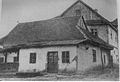 Some direct historical evidence remains of the Besht during the days he lived in Medzhybizh. Rosman discovered numerous legal documents that shed light on this period from the Polish Czartoryski noble family
archives. The Besht’s house is mentioned on several tax registers and his house is given tax-free status, thus indicating that he was well-known to the Polish Magnate as an important town resource. Several of the Besht’s colleagues in his stories from Shivhei HaBesht also appear in Polish court records, notably, Ze'ev Wolf Kitses and Dovid Surkes. Rosman contends that the Polish documents show the Besht and his followers were not outcasts or pariahs, but rather a respected part of the mainstream Jewish communal life. Medzhybizh at the time was not some backwater village, but a thriving, prosperous, and important community in the Czartorysky estate.
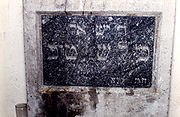 Other direct evidence
includes the Besht's daily prayer-book (siddur
, owned by the Agudas Chabad Library in New York) with his handwritten personal notes in the margins. His grave can be seen today in the old Jewish cemetery in Medzhybizh.
Over the past few years, the "Agudas Ohalei Tzadikim" organization (based in Israel) has restored many graves of Tzadikim (Ohelim) in Ukraine, including Baal Shem Tov's.
A new guesthouse and synagogue is also being built next to the Ohel of Baal Shem Tov.
). In fact, the Besht considered himself and his disciples as mainstream. Besht took sides with the Talmudists in their disputes against the Frankists (Jacob Frank
’s cultist movement that considered Frank to be the Messiah
). It was only in keeping with Besht’s character that he welcomed baptism
by the Frankists as an end to its threat to mainstream Judaism of the day, for it is related that he said: “As long as a diseased limb is connected with the body, there is hope that it may be saved; but, once amputated, it is gone, and there is no hope.” The upheaval caused by the threats of the Frankist movement to destroy mainstream Judaism seemed to undermine Besht’s health, however, and he died shortly after the conversion
of many Frankists to Christianity
.
 Israel ben Eliezer left no books; for the Kabbalistic
commentary on Ps. cvii., ascribed to him (Zhitomir
, 1804), Sefer mi-Rabbi Yisrael Baal Shem-tov, may not be genuine. In order to get at his teachings, it is therefore necessary to turn to his utterances as given in the works of his disciples Hasidim
. Most are found in the works of Rabbi Jacob Joseph of Polnoy. But since Hasidism, immediately after the death of its founder, was divided into various parties, each claiming for itself the authority of Besht, the utmost of caution is necessary in judging as to the authenticity of utterances ascribed to Besht.
Chapin and Weinstock contend that the Besht was essentially the right person, in the right place, at the right time. Eighteenth century Podolia
was an ideal place to foster a sea-change in Jewish thinking. It had been depopulated one generation earlier due to the Khmelnitsky
Massacres. A Turkish occupation of Podolia
occurred within the Besht’s lifetime and along with it the influence within this frontier territory of Shabbetai Zvi
and his latter day spiritual descendants such as Malach and Frank
. Once the Polish Magnates regained control from the Turks, Podolia
essentially went through an economic boom. The Magnates were benevolent to the economic benefits the Jews provided and encouraged Jewish resettlement to help protect the frontier from future invasions. Thus, the Jewish community itself was essentially starting over. Within this context, the Jews of Podolia
were open to new ideas. The Besht’s refreshing new approaches to Judaism were welcome, expanding with little resistance in a community hungry for change.
conception of God. He declared the whole universe, mind and matter, to be a manifestation of the Divine Being; that this manifestation is not an emanation from God, as is the conception of the Kabbalah by Mitnagdim
, for nothing can be separated from God: all things are rather forms in which God reveals Himself. When man speaks, said Besht, he should remember that his speech is an element of life, and that life itself is a manifestation of God
. Even evil exists in God. This seeming contradiction is explained on the ground that evil is not bad in itself, but only in its relation to man. It is wrong to look with desire upon a woman; but it is divine to admire her beauty: it is wrong only insofar as man does not regard beauty as a manifestation of God, but misconceives it, and thinks of it in reference to himself. Nevertheless, sin
is nothing positive, but is identical with the imperfections of human deeds and thought. Whoever does not believe that God resides in all things, but separates God and them in his thoughts, has not the right conception of God. It is equally fallacious to think of a creation in time: creation, that is, God’s activity, has no end. God is ever active in the changes of nature: in fact, it is in these changes that God’s continuous creativeness consists.
This panentheism
would have been ignored, had Besht not been a man of the people. He gave his metaphysical conception of God an eminently practical significance.
The first result of his principles was a remarkable optimism
. Since God is immanent in all things, all things must possess something good in which God manifests Himself as the source of good. For this reason, the Besht taught, every man must be considered good, and his sins must be explained, not condemned. One of his favorite sayings was that no man has sunk too low to be able to raise himself to God. Naturally, then, it was his chief endeavor to convince sinners that God stood as near to them as to the righteous, and that their misdeeds were chiefly the consequences of their folly.
Another important result of his doctrines, which was of great practical importance, was his denial that asceticism
is pleasing to God. “Whoever maintains that this life is worthless is in error: it is worth a great deal; only one must know how to use it properly.” From the very beginning Besht fought against that contempt for the world which, through the influence of Isaac Luria
’s Kabbalah, had almost become a dogma among the Jews. He considered care of the body as necessary as care of the soul; since matter is also a manifestation of God, and must not be considered as hostile or opposed to Him.
As Besht fought ascetics, so he fought the rigidity and sanctimony that had accreted to strict Talmudic viewpoints while not abrogating a single religious ceremony or observance. His target was the great importance which the Talmudic view attaches to the fulfillment of a law, while almost entirely disregarding sentiment or the growth of man’s inner life. While the rabbis of his day considered the study of the Talmud as the most important religious activity, Besht laid all the stress on prayer
. “All that I have achieved,” he once remarked, “I have achieved not through study, but through prayer”. Prayer, however, is not merely petitioning God to grant a request, nor even necessarily speaking to God, but rather (“cleaving”, dvekut)— the glorious feeling of ’Oneness with God Almighty’, the state of the soul wherein a man or woman gives up their consciousness of separate existence, and join their own selves to the Eternal Being of God Supreme. Such a state produces indescribable bliss, which is the foremost fruit of the true worship of God.
A second and more important result of the doctrine is that through his oneness with God, man forms a connecting link between the Creator and creation. Thus, slightly modifying the Bible verse, Hab. ii. 4, Besht said, “The righteous can vivify by his faith.” Besht’s followers enlarged upon this idea and consistently deduced from it the source of divine mercy, of blessings, of life; and that therefore, if one love him, one may partake of God’s mercy.
On the opposite side of the coin, the Baal Shem Tov warned the Hasidim:
Though Besht may not be held responsible for the later conceptions, there is no doubt that his self-reliance was an important factor in winning adherents. It may be said of Hasidism that there is no other Jewish sect in which the founder is as important as his doctrines. Besht himself is still the real center for the chasidim; his teachings have almost sunk into oblivion. As Schechter (“Studies in Judaism,” p. 4) finely observes: “To the Hasidim, Baal-Shem [Besht]…was the incarnation of a theory, and his whole life the revelation of a system.”
; it was the spirit of the practice which he opposed. His teachings being the result not of speculation, but of a deep, religious temperament, he laid stress upon a religious spirit, and not upon the forms of religion. Though he considered the Law to be holy and inviolable, and emphasized the importance of Torah-study, he held that one’s entire life should be a service of God, and that this would constitute true worship of Him.
Since every act in life is a manifestation of God, and must perforce be divine, it is man’s duty so to live that the things called “earthly” may also become noble and pure, that is, divine. Besht tried to realize his ideal in his own career. His life provided the best example for his disciples; and his relationships with the innkeepers (a number of whom he raised to a higher level) furnished a silent but effective protest against the practice of the rabbis, who, in their inexorable sense of strict righteousness, would have no dealings with people fallen morally. The Hasidim tell of a woman whom her relatives sought to kill on account of her shameful life, but who was saved in body and soul by Besht. The story may be a myth, but it is characteristic of Besht’s activity in healing those in greatest need of relief. More important to him than prayer was a friendly relationship with sinners; though the former constituted an essential factor in the religious life. The story of Besht’s career affords many examples of unselfishness and high-minded benevolence. And while these qualities equally characterize a number of the rabbis of his day, his distinguishing traits were a merciful judgment of others, fearlessness combined with dislike of strife, and a boundless joy in life.
Moreover, Besht’s methods of teaching differed essentially from those of his opponents and contributed not a little to his success. He directed many satirical remarks at his opponents, an especially characteristic one being his designation of the typical Talmudist of his day as “a man who through sheer study of the Law has no time to think about God”. Besht illustrated his views of asceticism by the following parable:
Not by fleeing from earthly enjoyments through fear is the soul’s power assured, but by holding the passions under control.
Much of Besht’s success was also due to his firm conviction that God had entrusted him with a special mission to spread his doctrines. In his enthusiasm and ecstasy he believed that he often had heavenly visions revealing his mission to him. In fact, for him every intuition was a divine revelation
; and divine messages were daily occurrences.
Besht is quite naturally one of the most interesting figures in modern Jewish history
. As a man of the people and for the people, it is not strange that he should have been honored and glorified in story and in tradition. Of the many narratives that cluster about him, the following are given as the most characteristic:
About his parentage, legend tells that his father, Eliezer, whose wife was still living, was seized during an attack (by the Tatars
perhaps), carried from his home in Wallachia
, and sold as a slave to a prince. On account of his wisdom, he found favor with the prince, who gave him to the king to be his minister. During an expedition undertaken by the king, when other counsel failed, and all were disheartened, Eliezer’s advice was accepted; and the result was a successful battle of decisive importance. Eliezer was made a general and afterward prime minister
, and the king gave him the daughter of the viceroy in marriage. But, being mindful of his duty as a Jew and as the husband of a Jewess in Wallachia, he married the princess only in name. After being questioned for a long time as to his strange conduct, he confessed to the princess that he was a Jew, who loaded him with costly presents and aided him to escape to his own country.
On the way, the prophet Elijah appeared to Eliezer and said: “On account of thy piety and steadfastness, thou wilt have a son who will lighten the eyes of all Israel; and Israel shall be his name, because in him shall be fulfilled the verse (Isaiah
xlix. 3): ’Thou art my servant, O Israel, in whom I will be glorified.’” Eliezer and his wife Sarah, however, reached old age childless and had given up all hope of ever having a child. But when they were nearly a hundred years old, the promised son (Besht) was born.
Besht’s parents died soon after his birth; bequeathing to him only the deathbed exhortation of Eliezer, “Always believe that God is with you, and fear nothing.” Besht ever remained true to this injunction. Thus, on one occasion, when he was escorting schoolchildren to synagogue, a wolf was seen, to the terror of old and young, so that the children were kept at home. But Besht, faithful to the bequest of his father, knew no fear; and, on the second appearance of the wolf, he assailed it so vigorously as to cause it to turn and flee. Now, says the legend, this wolf was Satan
(or, in some versions, a werewolf
inspired by Satan). Satan had been very much perturbed when he saw that the prayers of the children reached God, who took more delight in the childish songs from their pure hearts than in the hymns of the Levite
s in the Temple in Jerusalem
; and it was for this reason that Satan tried to put a stop to Besht’s training the children in prayers and taking them to synagogue. From this time on, successful struggles with Satan, demon
s, and all manner of evil spirit
s were daily occurrences with Besht.The true meaning of the story is that even the wolf/(Satan) had a spark of the Divine that was in a shell.
Judaism
Judaism ) is the "religion, philosophy, and way of life" of the Jewish people...
mystical
Mysticism
Mysticism is the knowledge of, and especially the personal experience of, states of consciousness, i.e. levels of being, beyond normal human perception, including experience and even communion with a supreme being.-Classical origins:...
rabbi
Rabbi
In Judaism, a rabbi is a teacher of Torah. This title derives from the Hebrew word רבי , meaning "My Master" , which is the way a student would address a master of Torah...
. He is considered to be the founder of Hasidic Judaism
Hasidic Judaism
Hasidic Judaism or Hasidism, from the Hebrew —Ḥasidut in Sephardi, Chasidus in Ashkenazi, meaning "piety" , is a branch of Orthodox Judaism that promotes spirituality and joy through the popularisation and internalisation of Jewish mysticism as the fundamental aspects of the Jewish faith...
(see also Mezhbizh Hasidic dynasty
Mezhbizh (Hasidic dynasty)
Mezhbizh is the name of the town of Medzhybizh in the present Ukraine which is significant as both the source of a Hasidic dynasty that bears its name and as a symbolic name for the roots of Hasidism.The Mezhbizh dynasty served as the earliest "trunk" of...
).
The Besht was born to Eliezer and Sara in Okopy
Okopy, Ternopil Oblast
Okopy is a village in western Ukraine. It is located in the Borshchiv Raion of the Ternopil Oblast , and had its origins as a Polish fortress at the meeting of the Zbruch and Dniester rivers....
a small village that over the centuries has been part of Poland
Poland
Poland , officially the Republic of Poland , is a country in Central Europe bordered by Germany to the west; the Czech Republic and Slovakia to the south; Ukraine, Belarus and Lithuania to the east; and the Baltic Sea and Kaliningrad Oblast, a Russian exclave, to the north...
, Russia
Russia
Russia or , officially known as both Russia and the Russian Federation , is a country in northern Eurasia. It is a federal semi-presidential republic, comprising 83 federal subjects...
, and is now part of Ukraine
Ukraine
Ukraine is a country in Eastern Europe. It has an area of 603,628 km², making it the second largest contiguous country on the European continent, after Russia...
, (located in the Borschiv Raion (district
Raion
A raion is a type of administrative unit of several post-Soviet countries. The term, which is from French rayon 'honeycomb, department,' describes both a type of a subnational entity and a division of a city, and is commonly translated in English as "district"...
) of the Ternopil
Ternopil Oblast
Ternopil Oblast is an oblast' of Ukraine. Its administrative center is Ternopil, through which flows the Seret River, a tributary of the Dnister.-Geography:...
Oblast
Oblast
Oblast is a type of administrative division in Slavic countries, including some countries of the former Soviet Union. The word "oblast" is a loanword in English, but it is nevertheless often translated as "area", "zone", "province", or "region"...
). He died in Medzhybizh
Medzhybizh
Medzhybizh, previously known as Mezhybozhe, population 1731, is a town in the Khmelnytskyi Oblast of western Ukraine. It is located in the Letychivsky Raion , 25 kilometres from the Khmelnytskyi on the main highway between Khmelnytskyi and Vinnytsia at the confluence of the Southern Buh and...
, , which had once been part Poland
Poland
Poland , officially the Republic of Poland , is a country in Central Europe bordered by Germany to the west; the Czech Republic and Slovakia to the south; Ukraine, Belarus and Lithuania to the east; and the Baltic Sea and Kaliningrad Oblast, a Russian exclave, to the north...
and Russia
Russia
Russia or , officially known as both Russia and the Russian Federation , is a country in northern Eurasia. It is a federal semi-presidential republic, comprising 83 federal subjects...
, and is also now in Ukraine
Ukraine
Ukraine is a country in Eastern Europe. It has an area of 603,628 km², making it the second largest contiguous country on the European continent, after Russia...
, in the Khmelnytskyi
Khmelnytskyi Oblast
Khmelnytskyi Oblast is an oblast of western Ukraine. The administrative center of the oblast is the city of Khmelnytskyi.The current estimated population is around 1,401,140 .-Geography:...
Oblast
Oblast
Oblast is a type of administrative division in Slavic countries, including some countries of the former Soviet Union. The word "oblast" is a loanword in English, but it is nevertheless often translated as "area", "zone", "province", or "region"...
(not to be confused with other cities of the same name).
The Besht is better known to many religious Jews as “the holy Baal Shem” (der heyliger baal shem in Yiddish
Yiddish language
Yiddish is a High German language of Ashkenazi Jewish origin, spoken throughout the world. It developed as a fusion of German dialects with Hebrew, Aramaic, Slavic languages and traces of Romance languages...
), or most commonly, the Baal Shem Tov (בעל שם טוב). The title Baal Shem Tov is usually translated into English as “Master of the Good Name,” but at least two other translations are possible:
- "Good Master of the Name," taking "Baal ShemBaal ShemThe traditional Baal Shem healer and exorcist used Kabbalistic methods in sanctity. Nistarim mystical brotherhoods sought wider outreach, from which Hasidism emerged...
" as a unit, meaning one who uses Divine namesNames of God in JudaismIn Judaism, the name of God is more than a distinguishing title; it represents the Jewish conception of the divine nature, and of the relationship of God to the Jewish people and to the world. To demonstrate the sacredness of the names of God, and as a means of showing respect and reverence for...
to cure illnesses and perform miracles. I.e., a righteous baal shem. - "One who has a good reputation in the community," since in Hebrew idiom, "Baal" can mean "one characterized by" and "Shem" can mean "reputation," thus "one characterized by a good reputation."
The name Besht (בעש"ט) — the acronym from the words comprising that name, bet ayin shin tes—is typically used in print rather than speech. The appellation “Baal Shem
Baal Shem
The traditional Baal Shem healer and exorcist used Kabbalistic methods in sanctity. Nistarim mystical brotherhoods sought wider outreach, from which Hasidism emerged...
” was not unique to Rabbi Yisroel ben Eliezer; however, it is Rabbi Yisroel ben Eliezer who is most closely identified as a “Baal Shem”, as he was the founder of the spiritual movement of Hasidic Judaism
Hasidic Judaism
Hasidic Judaism or Hasidism, from the Hebrew —Ḥasidut in Sephardi, Chasidus in Ashkenazi, meaning "piety" , is a branch of Orthodox Judaism that promotes spirituality and joy through the popularisation and internalisation of Jewish mysticism as the fundamental aspects of the Jewish faith...
.
The little biographical information that is known about Besht is so interwoven with legends of miracles that in many cases it is hard to arrive at the historical facts. The attitude of the Chassidim themselves towards these legends is an unusual blend of suspicion on one hand, and childlike, almost naïve belief on the other. The Rebbe Shlomo of Rodomsk pithily declared, "Whoever believes all the miracle stories about the Baal Shem Tov in Shivhei HaBaal Shem Tov is a fool, but whoever denies them is an apikoros [a nonbeliever]." Similarly, the Rebbe Mordechai of Neshkiz explains, "Even if a story about him never actually occurred, and there was no such miracle, it was in the power of the Baal Shem Tov, may his memory be a blessing for the life of the World-to-Come, to perform everything."
Nevertheless, from the numerous legends connected with his birth it appears that his parents were poor, upright, and pious. When he was orphaned, his community cared for him. At school, he distinguished himself only by his frequent disappearances, being always found in the lonely woods surrounding the place, rapturously enjoying the beauties of nature. Many of his disciples believed that he came from the Davidic line
Davidic line
The Davidic line refers to the tracing of lineage to the King David referred to in the Hebrew Bible, as well as the New Testament...
tracing its lineage to the royal house
Royal House
A royal house or royal dynasty consists of at least one, but usually more monarchs who are related to one another, as well as their non-reigning descendants and spouses. Monarchs of the same realm who are not related to one another are usually deemed to belong to different houses, and each house is...
of King David
David
David was the second king of the united Kingdom of Israel according to the Hebrew Bible and, according to the Gospels of Matthew and Luke, an ancestor of Jesus Christ through both Saint Joseph and Mary...
, and by extension with the institution of the Jewish Messiah.
Early life and marriage
Inducted into the secret society of mystics called Tzaddikim NistarimTzadikim Nistarim
The Tzadikim Nistarim or Lamed Vav Tzadikim , often abbreviated to Lamed Vav, refers to 36 Righteous people, a notion rooted within the more mystical dimensions of Judaism. The singular form is Tzadik Nistar .-Origins:...
, the Besht became its leader at the age of 18. Caring for the Jewish poor, they encouraged Jews to move to agrarian lifestyles as alternatives to the chronic poverty which was the lot of city Jews. In continuation of this policy they decided that they needed to look after the educational needs of the children living in small farm communities. If a suitable teacher could not be sourced they themselves would do so until an alternative arrangement emerged. As such — and in keeping with Jewish doctrine "the letter bearer should fulfill its contents" — the Baal Shem Tov became a teacher’s assistant — and with unconditional love he tried to install honor for their parents, a love of God, and fellow beings in these children. He later commented "this one of the most joyous times in my life". Later he became shammash
Gabbai
A Gabbai is a person who assists in the running of a synagogue and ensures that the needs are met, for example the Jewish prayer services run smoothly, or an assistant to a rabbi...
(sexton
Sexton (office)
A sexton is a church, congregation or synagogue officer charged with the maintenance of its buildings and/or the surrounding graveyard. In smaller places of worship, this office is often combined with that of verger...
) in the same community, and at about eighteen he married. When his young wife died he left the place, and after serving for a long time as helper in various small communities of Podolia
Podolia
The region of Podolia is an historical region in the west-central and south-west portions of present-day Ukraine, corresponding to Khmelnytskyi Oblast and Vinnytsia Oblast. Northern Transnistria, in Moldova, is also a part of Podolia...
, he settled as a teacher at Tluste (Tovste) near Zalishchyky
Zalischyky
Zalischyky is a small city located on the Dniester River in the southern part of the Ternopil Oblast , in western Ukraine. It is the administrative center of the Zalishchytskyi Raion ....
.
The Besht at the age of 5, his father gave the Besht his last words before passing on. They were "fear absolutly no one or no thing but G-d, and love every single jew no matter who he/she is and no matter what he/she is doing."
Due to his recognized honesty and his knowledge of human nature
Human nature
Human nature refers to the distinguishing characteristics, including ways of thinking, feeling and acting, that humans tend to have naturally....
, he was chosen to act as arbitrator
Arbitral tribunal
An arbitral tribunal is a panel of one or more adjudicators which is convened and sits to resolve a dispute by way of arbitration. The tribunal may consist of a sole arbitrator, or there may be two or more arbitrators, which might include either a chairman or an umpire...
and mediator
Mediation
Mediation, as used in law, is a form of alternative dispute resolution , a way of resolving disputes between two or more parties. A third party, the mediator, assists the parties to negotiate their own settlement...
for people conducting suits against each other; and his services were brought into frequent requisition because the Jews had their own civil courts
Private law
Private law is that part of a civil law legal system which is part of the jus commune that involves relationships between individuals, such as the law of contracts or torts, as it is called in the common law, and the law of obligations as it is called in civilian legal systems...
in Poland. In this avocation
Avocation
An avocation is an activity that one engages in as a hobby outside one's main occupation. There are many examples of people whose professions were the ways that they made their livings, but for whom their activities outside of their workplaces were their true passions in life...
he succeeded in making so deep an impression upon the rich and learned Ephraim of Brody that the latter promised The Besht his daughter Chana in marriage. The man died, however, without telling his daughter of her betrothal; but when she heard of her father's wishes, she did not hesitate to comply with them.
The courtship was characteristic. In the shabby clothes of a peasant he presented himself at Brody before Avraham Gershon of Kitov
Abraham Gershon of Kitov
Abraham Gershon of Kitov, also known as Rabbi Gershon of Brody, was probably born in or near Kuty , Poland around 1701 and died in Jerusalem in 1761. He is best known as the Baal Shem Tov's brother-in-law.- Rabbinical career :...
(Kuty
Kuty
Kuty is a town in Ukraine, on the Cheremosh river, located in the Ivano-Frankivsk Oblast. It is notable as one of the historical centres and the namesake of a historical region of Pokuttya. Population is 4,272 ....
), brother of the girl, head of a rabbinical court
Beth din
A beth din, bet din, beit din or beis din is a rabbinical court of Judaism. In ancient times, it was the building block of the legal system in the Biblical Land of Israel...
in Brody, and a recognized authority in the Kabbalah
Kabbalah
Kabbalah/Kabala is a discipline and school of thought concerned with the esoteric aspect of Rabbinic Judaism. It was systematized in 11th-13th century Hachmei Provence and Spain, and again after the Expulsion from Spain, in 16th century Ottoman Palestine...
and the Talmud
Talmud
The Talmud is a central text of mainstream Judaism. It takes the form of a record of rabbinic discussions pertaining to Jewish law, ethics, philosophy, customs and history....
. Avraham Gershon was about to give him alms
Tzedakah
Tzedakah or Ṣ'daqah in Classical Hebrew is a Hebrew word commonly translated as charity, though it is based on the Hebrew word meaning righteousness, fairness or justice...
, when The Besht produced a letter from his pocket, showing that he was the designated bridegroom. Avraham Gershon tried in vain to dissuade his sister Chana from shaming their family by marrying him, but she regarded her father's will alone as authoritative.
After his marriage Israel ben Eliezer did not remain long with his brother-in-law
Brother-in-law
A brother-in-law is the brother of one's spouse, the husband of one's sibling, or the husband of one's spouse's sibling.-See also:*Affinity *Sister-in-law*Brothers in Law , a 1955 British comedy novel...
, who was ashamed of him (for he kept up the pretense of being an ignorant fellow); and he went to a village in the Carpathians
Carpathian Mountains
The Carpathian Mountains or Carpathians are a range of mountains forming an arc roughly long across Central and Eastern Europe, making them the second-longest mountain range in Europe...
between Brody and Kassowa. His earthly possessions consisted of a horse given him by his brother-in-law. Israel ben Eliezer worked as a laborer, digging clay
Clay
Clay is a general term including many combinations of one or more clay minerals with traces of metal oxides and organic matter. Geologic clay deposits are mostly composed of phyllosilicate minerals containing variable amounts of water trapped in the mineral structure.- Formation :Clay minerals...
and lime, which his wife delivered every week by the wagonload to the surrounding villages, and from this they derived their entire support. The magnificent scenery in this, the finest region of the Carpathians, and the possibility of enjoying it without the interruptions of city life, compensated him for his great privations.
Israel ben Eliezer and Chana had two children: Udl (born in 1720) and Zvi Hersh.
Development as leader and challenges
The Besht bettered his condition when he took a position as a ritual butcher in Kshilowice, near Iaslowice. He soon gave up this position in order to conduct a village tavern that his brother-in-law bought for him. During the many years that he lived in the woods and came into contact with the peasants, Israel ben Eliezer had learned how to use plants for healing purposes and to effect wonderful cures. In fact, his first appearance in public was that of an “ordinary” Baal ShemBaal Shem
The traditional Baal Shem healer and exorcist used Kabbalistic methods in sanctity. Nistarim mystical brotherhoods sought wider outreach, from which Hasidism emerged...
. He wrote amulet
Amulet
An amulet, similar to a talisman , is any object intended to bring good luck or protection to its owner.Potential amulets include gems, especially engraved gems, statues, coins, drawings, pendants, rings, plants and animals; even words said in certain occasions—for example: vade retro satana—, to...
s and prescribed cures.
After many trips in Podolia
Podolia
The region of Podolia is an historical region in the west-central and south-west portions of present-day Ukraine, corresponding to Khmelnytskyi Oblast and Vinnytsia Oblast. Northern Transnistria, in Moldova, is also a part of Podolia...
and Volhynia
Volhynia
Volhynia, Volynia, or Volyn is a historic region in western Ukraine located between the rivers Prypiat and Southern Bug River, to the north of Galicia and Podolia; the region is named for the former city of Volyn or Velyn, said to have been located on the Southern Bug River, whose name may come...
as a Baal Shem, Besht, considering his following large enough and his authority established, decided (about 1740) to expound his teachings in the shtetl
Shtetl
A shtetl was typically a small town with a large Jewish population in Central and Eastern Europe until The Holocaust. Shtetls were mainly found in the areas which constituted the 19th century Pale of Settlement in the Russian Empire, the Congress Kingdom of Poland, Galicia and Romania...
of Medzhybizh
Medzhybizh
Medzhybizh, previously known as Mezhybozhe, population 1731, is a town in the Khmelnytskyi Oblast of western Ukraine. It is located in the Letychivsky Raion , 25 kilometres from the Khmelnytskyi on the main highway between Khmelnytskyi and Vinnytsia at the confluence of the Southern Buh and...
and people, mostly from the spiritual elite, came to listen to him. Medzhybizh became the seat of the movement and of the Medzybizh
Mezhbizh (Hasidic dynasty)
Mezhbizh is the name of the town of Medzhybizh in the present Ukraine which is significant as both the source of a Hasidic dynasty that bears its name and as a symbolic name for the roots of Hasidism.The Mezhbizh dynasty served as the earliest "trunk" of...
Hasidic dynasty. His following gradually increased, and with it the dislike, not to say hostility, of the Talmudists. Nevertheless, Besht was supported at the beginning of his career by two prominent Talmudists, the brothers Meïr and Isaac Dov Margalios. Later he won over great and universally recognized rabbinic authorities who became his disciples and attested to both his scholarship and saintliness. These include Rabbi Meir
Rabbi Meir
Rabbi Meir or Rabbi Meir Baal Hanes was a Jewish sage who lived in the time of the Mishna. He was considered one of the greatest of the Tannaim of the fourth generation . According to legend , his father was a descendant of the Roman Emperor Nero who had converted to Judaism. His wife Bruriah is...
Margolius, chief rabbi
Chief Rabbi
Chief Rabbi is a title given in several countries to the recognized religious leader of that country's Jewish community, or to a rabbinic leader appointed by the local secular authorities...
of Lemberg and later Ostroha, and author of Meir Netivim (a work of halachic responsa) and other works; Rabbi Yaakov Yosef Hakohen, rabbi of Polnoy; Rabbi Dovid Halperin, rabbi of Ostroha; Rabbi Israel of Satinov, author of Tiferet Yisrael; Rabbi Yoseph Heilperin of Slosowitz; and Rabbi Dov Ber of Mezrich to whose great authority as a Talmudist it was chiefly due that Besht’s doctrines (though in an essentially altered form) were introduced into learned circles. Noteworthy is that the renowned Sefardic Rabbi Chaim Dovid Azulai (Chida) cites the Baal Shem Tov in his works in great laudatory terms.
Szlachta
The szlachta was a legally privileged noble class with origins in the Kingdom of Poland. It gained considerable institutional privileges during the 1333-1370 reign of Casimir the Great. In 1413, following a series of tentative personal unions between the Grand Duchy of Lithuania and the Kingdom of...
archives. The Besht’s house is mentioned on several tax registers and his house is given tax-free status, thus indicating that he was well-known to the Polish Magnate as an important town resource. Several of the Besht’s colleagues in his stories from Shivhei HaBesht also appear in Polish court records, notably, Ze'ev Wolf Kitses and Dovid Surkes. Rosman contends that the Polish documents show the Besht and his followers were not outcasts or pariahs, but rather a respected part of the mainstream Jewish communal life. Medzhybizh at the time was not some backwater village, but a thriving, prosperous, and important community in the Czartorysky estate.
Direct evidence
Direct evidence supports the truth of an assertion directly, i.e., without an intervening inference...
includes the Besht's daily prayer-book (siddur
Siddur
A siddur is a Jewish prayer book, containing a set order of daily prayers. This article discusses how some of these prayers evolved, and how the siddur, as it is known today has developed...
, owned by the Agudas Chabad Library in New York) with his handwritten personal notes in the margins. His grave can be seen today in the old Jewish cemetery in Medzhybizh.
Over the past few years, the "Agudas Ohalei Tzadikim" organization (based in Israel) has restored many graves of Tzadikim (Ohelim) in Ukraine, including Baal Shem Tov's.
A new guesthouse and synagogue is also being built next to the Ohel of Baal Shem Tov.
Disputes with the Frankists and death
While the Besht was alive, there was very little antagonism between different styles of Judaism (Talmudism and HasidismHasidic philosophy
Hasidic philosophy or Hasidus , alternatively transliterated as Hassidism, Chassidism, Chassidut etc. is the teachings, interpretations of Judaism, and mysticism articulated by the modern Hasidic movement...
). In fact, the Besht considered himself and his disciples as mainstream. Besht took sides with the Talmudists in their disputes against the Frankists (Jacob Frank
Jacob Frank
Jacob Frank was an 18th century Jewish religious leader who claimed to be the reincarnation of the self-proclaimed messiah Sabbatai Zevi and also of the biblical patriarch Jacob...
’s cultist movement that considered Frank to be the Messiah
Messiah
A messiah is a redeemer figure expected or foretold in one form or another by a religion. Slightly more widely, a messiah is any redeemer figure. Messianic beliefs or theories generally relate to eschatological improvement of the state of humanity or the world, in other words the World to...
). It was only in keeping with Besht’s character that he welcomed baptism
Baptism
In Christianity, baptism is for the majority the rite of admission , almost invariably with the use of water, into the Christian Church generally and also membership of a particular church tradition...
by the Frankists as an end to its threat to mainstream Judaism of the day, for it is related that he said: “As long as a diseased limb is connected with the body, there is hope that it may be saved; but, once amputated, it is gone, and there is no hope.” The upheaval caused by the threats of the Frankist movement to destroy mainstream Judaism seemed to undermine Besht’s health, however, and he died shortly after the conversion
Religious conversion
Religious conversion is the adoption of a new religion that differs from the convert's previous religion. Changing from one denomination to another within the same religion is usually described as reaffiliation rather than conversion.People convert to a different religion for various reasons,...
of many Frankists to Christianity
Christianity
Christianity is a monotheistic religion based on the life and teachings of Jesus as presented in canonical gospels and other New Testament writings...
.
His legacy
Kabbalah
Kabbalah/Kabala is a discipline and school of thought concerned with the esoteric aspect of Rabbinic Judaism. It was systematized in 11th-13th century Hachmei Provence and Spain, and again after the Expulsion from Spain, in 16th century Ottoman Palestine...
commentary on Ps. cvii., ascribed to him (Zhitomir
Zhytomyr
Zhytomyr is a city in the North of the western half of Ukraine. It is the administrative center of the Zhytomyr Oblast , as well as the administrative center of the surrounding Zhytomyr Raion...
, 1804), Sefer mi-Rabbi Yisrael Baal Shem-tov, may not be genuine. In order to get at his teachings, it is therefore necessary to turn to his utterances as given in the works of his disciples Hasidim
Hasidic Judaism
Hasidic Judaism or Hasidism, from the Hebrew —Ḥasidut in Sephardi, Chasidus in Ashkenazi, meaning "piety" , is a branch of Orthodox Judaism that promotes spirituality and joy through the popularisation and internalisation of Jewish mysticism as the fundamental aspects of the Jewish faith...
. Most are found in the works of Rabbi Jacob Joseph of Polnoy. But since Hasidism, immediately after the death of its founder, was divided into various parties, each claiming for itself the authority of Besht, the utmost of caution is necessary in judging as to the authenticity of utterances ascribed to Besht.
Chapin and Weinstock contend that the Besht was essentially the right person, in the right place, at the right time. Eighteenth century Podolia
Podolia
The region of Podolia is an historical region in the west-central and south-west portions of present-day Ukraine, corresponding to Khmelnytskyi Oblast and Vinnytsia Oblast. Northern Transnistria, in Moldova, is also a part of Podolia...
was an ideal place to foster a sea-change in Jewish thinking. It had been depopulated one generation earlier due to the Khmelnitsky
Bohdan Khmelnytsky
Bohdan Zynoviy Mykhailovych Khmelnytsky was a hetman of the Zaporozhian Cossack Hetmanate of Polish–Lithuanian Commonwealth . He led an uprising against the Commonwealth and its magnates which resulted in the creation of a Cossack state...
Massacres. A Turkish occupation of Podolia
Podolia
The region of Podolia is an historical region in the west-central and south-west portions of present-day Ukraine, corresponding to Khmelnytskyi Oblast and Vinnytsia Oblast. Northern Transnistria, in Moldova, is also a part of Podolia...
occurred within the Besht’s lifetime and along with it the influence within this frontier territory of Shabbetai Zvi
Sabbatai Zevi
Sabbatai Zevi, , was a Sephardic Rabbi and kabbalist who claimed to be the long-awaited Jewish Messiah. He was the founder of the Jewish Sabbatean movement...
and his latter day spiritual descendants such as Malach and Frank
Jacob Frank
Jacob Frank was an 18th century Jewish religious leader who claimed to be the reincarnation of the self-proclaimed messiah Sabbatai Zevi and also of the biblical patriarch Jacob...
. Once the Polish Magnates regained control from the Turks, Podolia
Podolia
The region of Podolia is an historical region in the west-central and south-west portions of present-day Ukraine, corresponding to Khmelnytskyi Oblast and Vinnytsia Oblast. Northern Transnistria, in Moldova, is also a part of Podolia...
essentially went through an economic boom. The Magnates were benevolent to the economic benefits the Jews provided and encouraged Jewish resettlement to help protect the frontier from future invasions. Thus, the Jewish community itself was essentially starting over. Within this context, the Jews of Podolia
Podolia
The region of Podolia is an historical region in the west-central and south-west portions of present-day Ukraine, corresponding to Khmelnytskyi Oblast and Vinnytsia Oblast. Northern Transnistria, in Moldova, is also a part of Podolia...
were open to new ideas. The Besht’s refreshing new approaches to Judaism were welcome, expanding with little resistance in a community hungry for change.
Elements of Besht’s doctrines
The foundation-stone of Hasidism as laid by Besht is a strongly marked panentheisticPanentheism
Panentheism is a belief system which posits that God exists, interpenetrates every part of nature and timelessly extends beyond it...
conception of God. He declared the whole universe, mind and matter, to be a manifestation of the Divine Being; that this manifestation is not an emanation from God, as is the conception of the Kabbalah by Mitnagdim
Misnagdim
Misnagdim or Mitnagdim is a Hebrew word meaning "opponents". It is the plural of misnaged or mitnaged. Most prominent among the Misnagdim was Rabbi Elijah ben Shlomo Zalman , commonly known as the Vilna Gaon or the Gra...
, for nothing can be separated from God: all things are rather forms in which God reveals Himself. When man speaks, said Besht, he should remember that his speech is an element of life, and that life itself is a manifestation of God
Manifestation of God
The Manifestation of God is a concept in the Bahá'í Faith that refers to what are commonly called prophets. The Manifestations of God are a series of personages who reflect the attributes of the divine into the human world for the progress and advancement of human morals and civilization...
. Even evil exists in God. This seeming contradiction is explained on the ground that evil is not bad in itself, but only in its relation to man. It is wrong to look with desire upon a woman; but it is divine to admire her beauty: it is wrong only insofar as man does not regard beauty as a manifestation of God, but misconceives it, and thinks of it in reference to himself. Nevertheless, sin
Sin
In religion, sin is the violation or deviation of an eternal divine law or standard. The term sin may also refer to the state of having committed such a violation. Christians believe the moral code of conduct is decreed by God In religion, sin (also called peccancy) is the violation or deviation...
is nothing positive, but is identical with the imperfections of human deeds and thought. Whoever does not believe that God resides in all things, but separates God and them in his thoughts, has not the right conception of God. It is equally fallacious to think of a creation in time: creation, that is, God’s activity, has no end. God is ever active in the changes of nature: in fact, it is in these changes that God’s continuous creativeness consists.
This panentheism
Panentheism
Panentheism is a belief system which posits that God exists, interpenetrates every part of nature and timelessly extends beyond it...
would have been ignored, had Besht not been a man of the people. He gave his metaphysical conception of God an eminently practical significance.
The first result of his principles was a remarkable optimism
Optimism
The Oxford English Dictionary defines optimism as having "hopefulness and confidence about the future or successful outcome of something; a tendency to take a favourable or hopeful view." The word is originally derived from the Latin optimum, meaning "best." Being optimistic, in the typical sense...
. Since God is immanent in all things, all things must possess something good in which God manifests Himself as the source of good. For this reason, the Besht taught, every man must be considered good, and his sins must be explained, not condemned. One of his favorite sayings was that no man has sunk too low to be able to raise himself to God. Naturally, then, it was his chief endeavor to convince sinners that God stood as near to them as to the righteous, and that their misdeeds were chiefly the consequences of their folly.
Another important result of his doctrines, which was of great practical importance, was his denial that asceticism
Asceticism
Asceticism describes a lifestyle characterized by abstinence from various sorts of worldly pleasures often with the aim of pursuing religious and spiritual goals...
is pleasing to God. “Whoever maintains that this life is worthless is in error: it is worth a great deal; only one must know how to use it properly.” From the very beginning Besht fought against that contempt for the world which, through the influence of Isaac Luria
Isaac Luria
Isaac Luria , also called Yitzhak Ben Shlomo Ashkenazi acronym "The Ari" "Ari-Hakadosh", or "Arizal", meaning "The Lion", was a foremost rabbi and Jewish mystic in the community of Safed in the Galilee region of Ottoman Palestine...
’s Kabbalah, had almost become a dogma among the Jews. He considered care of the body as necessary as care of the soul; since matter is also a manifestation of God, and must not be considered as hostile or opposed to Him.
As Besht fought ascetics, so he fought the rigidity and sanctimony that had accreted to strict Talmudic viewpoints while not abrogating a single religious ceremony or observance. His target was the great importance which the Talmudic view attaches to the fulfillment of a law, while almost entirely disregarding sentiment or the growth of man’s inner life. While the rabbis of his day considered the study of the Talmud as the most important religious activity, Besht laid all the stress on prayer
Prayer
Prayer is a form of religious practice that seeks to activate a volitional rapport to a deity through deliberate practice. Prayer may be either individual or communal and take place in public or in private. It may involve the use of words or song. When language is used, prayer may take the form of...
. “All that I have achieved,” he once remarked, “I have achieved not through study, but through prayer”. Prayer, however, is not merely petitioning God to grant a request, nor even necessarily speaking to God, but rather (“cleaving”, dvekut)— the glorious feeling of ’Oneness with God Almighty’, the state of the soul wherein a man or woman gives up their consciousness of separate existence, and join their own selves to the Eternal Being of God Supreme. Such a state produces indescribable bliss, which is the foremost fruit of the true worship of God.
Influence on Hasidism
The later developments of Hasidism are unintelligible without consideration of Besht’s opinion concerning man’s proper relation with the universe. True worship of God, as above explained, consists in the cleaving to, and the unification with, God. To use his own words, “the ideal of man is to be a revelation himself, clearly to recognize himself as a manifestation of God.” Mysticism, he said, is not the Kabbalah, which everyone may learn; but that sense of true oneness, which is usually as strange, unintelligible, and incomprehensible to mankind as dancing is to a dove. However, the man who is capable of this feeling is endowed with a genuine intuition, and it is the perception of such a man which is called prophecy, according to the degree of his insight. From this it results, in the first place, that the ideal man may lay claim to authority equal, in a certain sense, to the authority of the Prophets. This focus on oneness and personal revelation helps earn his mystical interpretation of Judaism the title of panentheism.A second and more important result of the doctrine is that through his oneness with God, man forms a connecting link between the Creator and creation. Thus, slightly modifying the Bible verse, Hab. ii. 4, Besht said, “The righteous can vivify by his faith.” Besht’s followers enlarged upon this idea and consistently deduced from it the source of divine mercy, of blessings, of life; and that therefore, if one love him, one may partake of God’s mercy.
On the opposite side of the coin, the Baal Shem Tov warned the Hasidim:
- AmalekAmalekThe Amalekites are a people mentioned a number of times in the Hebrew Bible. They are considered to be descended from an ancestor Amalek....
is still alive today.…Every time you experience a worry or doubt about how God is running the world—that’s Amalek launching an attack against your soul. We must wipe Amalek out of our hearts whenever—and wherever—he attacks so that we cannot serve God with complete joy.
Though Besht may not be held responsible for the later conceptions, there is no doubt that his self-reliance was an important factor in winning adherents. It may be said of Hasidism that there is no other Jewish sect in which the founder is as important as his doctrines. Besht himself is still the real center for the chasidim; his teachings have almost sunk into oblivion. As Schechter (“Studies in Judaism,” p. 4) finely observes: “To the Hasidim, Baal-Shem [Besht]…was the incarnation of a theory, and his whole life the revelation of a system.”
Characteristics
Besht did not combat the practice of rabbinical JudaismRabbinic Judaism
Rabbinic Judaism or Rabbinism has been the mainstream form of Judaism since the 6th century CE, after the codification of the Talmud...
; it was the spirit of the practice which he opposed. His teachings being the result not of speculation, but of a deep, religious temperament, he laid stress upon a religious spirit, and not upon the forms of religion. Though he considered the Law to be holy and inviolable, and emphasized the importance of Torah-study, he held that one’s entire life should be a service of God, and that this would constitute true worship of Him.
Since every act in life is a manifestation of God, and must perforce be divine, it is man’s duty so to live that the things called “earthly” may also become noble and pure, that is, divine. Besht tried to realize his ideal in his own career. His life provided the best example for his disciples; and his relationships with the innkeepers (a number of whom he raised to a higher level) furnished a silent but effective protest against the practice of the rabbis, who, in their inexorable sense of strict righteousness, would have no dealings with people fallen morally. The Hasidim tell of a woman whom her relatives sought to kill on account of her shameful life, but who was saved in body and soul by Besht. The story may be a myth, but it is characteristic of Besht’s activity in healing those in greatest need of relief. More important to him than prayer was a friendly relationship with sinners; though the former constituted an essential factor in the religious life. The story of Besht’s career affords many examples of unselfishness and high-minded benevolence. And while these qualities equally characterize a number of the rabbis of his day, his distinguishing traits were a merciful judgment of others, fearlessness combined with dislike of strife, and a boundless joy in life.
Moreover, Besht’s methods of teaching differed essentially from those of his opponents and contributed not a little to his success. He directed many satirical remarks at his opponents, an especially characteristic one being his designation of the typical Talmudist of his day as “a man who through sheer study of the Law has no time to think about God”. Besht illustrated his views of asceticism by the following parable:
- A thief once tried to break into a house, the owner of which, crying out, frightened the thief away. The same thief soon afterward broke into the house of a very strong man, who, on seeing him enter, kept quite still. When the thief had come near enough, the man caught him and put him in prison, thus depriving him of all opportunity to do further harm.
Not by fleeing from earthly enjoyments through fear is the soul’s power assured, but by holding the passions under control.
Much of Besht’s success was also due to his firm conviction that God had entrusted him with a special mission to spread his doctrines. In his enthusiasm and ecstasy he believed that he often had heavenly visions revealing his mission to him. In fact, for him every intuition was a divine revelation
Revelation
In religion and theology, revelation is the revealing or disclosing, through active or passive communication with a supernatural or a divine entity...
; and divine messages were daily occurrences.
Besht is quite naturally one of the most interesting figures in modern Jewish history
Jewish history
Jewish history is the history of the Jews, their religion and culture, as it developed and interacted with other peoples, religions and cultures. Since Jewish history is over 4000 years long and includes hundreds of different populations, any treatment can only be provided in broad strokes...
. As a man of the people and for the people, it is not strange that he should have been honored and glorified in story and in tradition. Of the many narratives that cluster about him, the following are given as the most characteristic:
In legend
In Chassidic tradition, there’s a saying, “Someone who believes in all the stories of the Baal Shem Tov and the other mystics and holy men is a fool; someone who looks at any single story and says “That one could not be true” is a heretic.”About his parentage, legend tells that his father, Eliezer, whose wife was still living, was seized during an attack (by the Tatars
Tatars
Tatars are a Turkic speaking ethnic group , numbering roughly 7 million.The majority of Tatars live in the Russian Federation, with a population of around 5.5 million, about 2 million of which in the republic of Tatarstan.Significant minority populations are found in Uzbekistan, Kazakhstan,...
perhaps), carried from his home in Wallachia
Wallachia
Wallachia or Walachia is a historical and geographical region of Romania. It is situated north of the Danube and south of the Southern Carpathians...
, and sold as a slave to a prince. On account of his wisdom, he found favor with the prince, who gave him to the king to be his minister. During an expedition undertaken by the king, when other counsel failed, and all were disheartened, Eliezer’s advice was accepted; and the result was a successful battle of decisive importance. Eliezer was made a general and afterward prime minister
Prime minister
A prime minister is the most senior minister of cabinet in the executive branch of government in a parliamentary system. In many systems, the prime minister selects and may dismiss other members of the cabinet, and allocates posts to members within the government. In most systems, the prime...
, and the king gave him the daughter of the viceroy in marriage. But, being mindful of his duty as a Jew and as the husband of a Jewess in Wallachia, he married the princess only in name. After being questioned for a long time as to his strange conduct, he confessed to the princess that he was a Jew, who loaded him with costly presents and aided him to escape to his own country.
On the way, the prophet Elijah appeared to Eliezer and said: “On account of thy piety and steadfastness, thou wilt have a son who will lighten the eyes of all Israel; and Israel shall be his name, because in him shall be fulfilled the verse (Isaiah
Isaiah
Isaiah ; Greek: ', Ēsaïās ; "Yahu is salvation") was a prophet in the 8th-century BC Kingdom of Judah.Jews and Christians consider the Book of Isaiah a part of their Biblical canon; he is the first listed of the neviim akharonim, the later prophets. Many of the New Testament teachings of Jesus...
xlix. 3): ’Thou art my servant, O Israel, in whom I will be glorified.’” Eliezer and his wife Sarah, however, reached old age childless and had given up all hope of ever having a child. But when they were nearly a hundred years old, the promised son (Besht) was born.
Besht’s parents died soon after his birth; bequeathing to him only the deathbed exhortation of Eliezer, “Always believe that God is with you, and fear nothing.” Besht ever remained true to this injunction. Thus, on one occasion, when he was escorting schoolchildren to synagogue, a wolf was seen, to the terror of old and young, so that the children were kept at home. But Besht, faithful to the bequest of his father, knew no fear; and, on the second appearance of the wolf, he assailed it so vigorously as to cause it to turn and flee. Now, says the legend, this wolf was Satan
Satan
Satan , "the opposer", is the title of various entities, both human and divine, who challenge the faith of humans in the Hebrew Bible...
(or, in some versions, a werewolf
Werewolf
A werewolf, also known as a lycanthrope , is a mythological or folkloric human with the ability to shapeshift into a wolf or an anthropomorphic wolf-like creature, either purposely or after being placed under a curse...
inspired by Satan). Satan had been very much perturbed when he saw that the prayers of the children reached God, who took more delight in the childish songs from their pure hearts than in the hymns of the Levite
Levite
In Jewish tradition, a Levite is a member of the Hebrew tribe of Levi. When Joshua led the Israelites into the land of Canaan, the Levites were the only Israelite tribe that received cities but were not allowed to be landowners "because the Lord the God of Israel himself is their inheritance"...
s in the Temple in Jerusalem
Temple in Jerusalem
The Temple in Jerusalem or Holy Temple , refers to one of a series of structures which were historically located on the Temple Mount in the Old City of Jerusalem, the current site of the Dome of the Rock. Historically, these successive temples stood at this location and functioned as the centre of...
; and it was for this reason that Satan tried to put a stop to Besht’s training the children in prayers and taking them to synagogue. From this time on, successful struggles with Satan, demon
Demon
call - 1347 531 7769 for more infoIn Ancient Near Eastern religions as well as in the Abrahamic traditions, including ancient and medieval Christian demonology, a demon is considered an "unclean spirit" which may cause demonic possession, to be addressed with an act of exorcism...
s, and all manner of evil spirit
Demon
call - 1347 531 7769 for more infoIn Ancient Near Eastern religions as well as in the Abrahamic traditions, including ancient and medieval Christian demonology, a demon is considered an "unclean spirit" which may cause demonic possession, to be addressed with an act of exorcism...
s were daily occurrences with Besht.The true meaning of the story is that even the wolf/(Satan) had a spark of the Divine that was in a shell.
Legacy
The Baal Shem Tov directly imparted his teachings to his students, some of whom founded their own respective Hasidic dynasties. These students include:- Rabbi Yaakov Yosef of Polonoy (1710–1784)
- Rabbi Ze'ev Wolf KitzesZe'ev Wolf KitzesZe'ev Wolf Kitzes וואלף קיצעס was a noted Hassidic rabbi.He was the rabbi of the Tulchin community. Later he moved to Medzhibozh where he, together with Rabbi David Purkes, stood at the head of the group of Chassidim that preceded the Baal Shem Tov...
of MedzhybizhMedzhybizhMedzhybizh, previously known as Mezhybozhe, population 1731, is a town in the Khmelnytskyi Oblast of western Ukraine. It is located in the Letychivsky Raion , 25 kilometres from the Khmelnytskyi on the main highway between Khmelnytskyi and Vinnytsia at the confluence of the Southern Buh and...
(~1685-1788) - Rabbi Yechiel Michel of ZlotchovZolochivZolochiv is a town located in the Lviv Oblast of western Ukraine. It is the administrative center of the Zolochiv Raion ....
(1721–1786) - Rabbi Dov Ber of Mezeritch (1704–1772) traced to King David by way of Rabbi Yohanan, the sandle-maker and master in the Talmud
- Rabbi Pinchas of KoretsKoretsKorets is a city in the Rivne Oblast in Ukraine. The city is located on the Korchyk river, 66 kilometers to the east of Rivne. It is administrative center of the Korets Raion. As of 2001, the population of Korets was 8,649....
(1728–1790) - Rabbi Nachum TwerskiMenachem Nachum TwerskyRabbi Menachem Nochum Twerski of Chernobyl was the founder of the Chernobyl Hasidic dynasty. He was a disciple of the Baal Shem Tov and the Maggid of Mezritch, and published one of the first works of Hasidic thought...
of ChernobylChernobylChernobyl or Chornobyl is an abandoned city in northern Ukraine, in Kiev Oblast, near the border with Belarus. The city had been the administrative centre of the Chernobyl Raion since 1932....
(1730–1797) founder of the Chernobyl Hasidic dynastyChernobyl (Hasidic dynasty)Chernobyl is a Hasidic dynasty that was founded by Grand Rabbi Menachem Nachum Twersky, known by the name of his work as the "Meor Einayim Chernobyl is a Hasidic dynasty that was founded by Grand Rabbi Menachem Nachum Twersky, known by the name of his work as the "Meor Einayim Chernobyl is a...
. - Rabbi Leib of ShpolaShpolaShpola is a city located in the Cherkasy Oblast in central Ukraine. It is the administrative center of the Shpoliansky Raion , and is situated at . As of 2004 the estimated population is 18,400.-History:...
(1725–1812) - Rabbi Avraham Gershon of KitovAbraham Gershon of KitovAbraham Gershon of Kitov, also known as Rabbi Gershon of Brody, was probably born in or near Kuty , Poland around 1701 and died in Jerusalem in 1761. He is best known as the Baal Shem Tov's brother-in-law.- Rabbinical career :...
, brother-in-law of The Baal Shem Tov (1701–1761); descendant (possibly the grandson) of Shabbatai ha-KohenShabbatai ha-KohenShabbatai ben Meir ha-Kohen was a noted 17th Century talmudist and halakhist. He became known as the Shakh, which is an abbreviation of his most important work, Siftei Kohen , and his rulings were considered authoritative by later halakhists.- Biography :Shabbatai ha-Kohen was born either in ...
(“the ShACh”) (1625–1663). - Rabbi Meir Margolius of Ostroha
- Rabbi Moshe Chaim Ephraim of SudilkovMoshe Chaim Ephraim of SudilkovRabbi Moshe Chaim Ephraim of Sudilkov was born in Medzhybizh, Poland 1748 and died there on the 17th of Iyar in 1800. He was best known as the Baal Shem Tov's grandson and for the work Degel Machaneh Ephraim, first published in Korets, 1810.-His life:...
/Ephrayim of Sudylkov (his grandson) - Rabbi Boruch of MedzhybizhBoruch of MedzhybizhRabbi Boruch of Medzhybizh , was a grandson of the Baal Shem Tov.Reb Boruch was the first major "rebbe" of the Hasidic movement to hold court in Mezhbizh in his grandfather's hometown and Beis Medrash, which he inherited.As recorded in the early Hasidic work...
{his grandson} - Rabbi Meir Hagadol of Premishlan (1703–1773)
See also
- Hasidic JudaismHasidic JudaismHasidic Judaism or Hasidism, from the Hebrew —Ḥasidut in Sephardi, Chasidus in Ashkenazi, meaning "piety" , is a branch of Orthodox Judaism that promotes spirituality and joy through the popularisation and internalisation of Jewish mysticism as the fundamental aspects of the Jewish faith...
- JudaismJudaismJudaism ) is the "religion, philosophy, and way of life" of the Jewish people...
- KabbalahKabbalahKabbalah/Kabala is a discipline and school of thought concerned with the esoteric aspect of Rabbinic Judaism. It was systematized in 11th-13th century Hachmei Provence and Spain, and again after the Expulsion from Spain, in 16th century Ottoman Palestine...
- List of Hasidic dynasties
- Hasidim and Mitnagdim
- MysticismMysticismMysticism is the knowledge of, and especially the personal experience of, states of consciousness, i.e. levels of being, beyond normal human perception, including experience and even communion with a supreme being.-Classical origins:...
Further reading
- Dubnow, Yevreiskaya Istoria, ii. 426–431
- idem, in Voskhod, viii. Nos. 5–10
- Heinrich GrätzHeinrich GraetzHeinrich Graetz was amongst the first historians to write a comprehensive history of the Jewish people from a Jewish perspective....
, Gesch. der Juden, 2d ed., xi. 94–98, 546–554 - Jost, Gesch. des Judenthums und Seiner Sekten, iii. 185 et seq.
- A. Kahana, Rabbi Yisrael Baal Shem, Jitomir, 1900
- D. Kohan, in Ha-Sh. ;ar, v. 500–504, 553–554
- Rodkinson, Toledot Baale Shem-Tov;ob, Königsberg, 1876
- Schechter, Studies in Judaism, 1896, pp. 1–45
- Zweifel, Shalom ’al-Yisrael, i.–iii.
- ZederbaumAleksander ZederbaumAleksander Ossypovich Zederbaum was a Polish-Russian Jewish journalist. He was founder and editor of Ha-Meliẓ, and other periodicals published in Russian and Yiddish; he wrote in Hebrew.A son of poor parents, he was apprenticed to a tailor...
, Keter Kehunah, pp. 80–103 - Frumkin, ’Adat ...;..Hasidim, Lemberg, 1860, 1865 (?)
- Buxbaum, Y, Light and Fire of the Baal Shem Tov, ISBN 0-826-41772-8, Continuum International Publishing Group, NY, 2005 (420 pp).
- Israel ZangwillIsrael ZangwillIsrael Zangwill was a British humorist and writer.-Biography:Zangwill was born in London on January 21, 1864 in a family of Jewish immigrants from Czarist Russia, to Moses Zangwill from what is now Latvia and Ellen Hannah Marks Zangwill from what is now Poland. He dedicated his life to championing...
, Dreamers of the Ghetto, pp. 221–288 (fiction). - Chapin, David A. and Weinstock, Ben, The Road from Letichev: The history and culture of a forgotten Jewish community in Eastern EuropeEastern EuropeEastern Europe is the eastern part of Europe. The term has widely disparate geopolitical, geographical, cultural and socioeconomic readings, which makes it highly context-dependent and even volatile, and there are "almost as many definitions of Eastern Europe as there are scholars of the region"...
, Volume 1. ISBN 0-595-00666-3 iUniverse, Lincoln, NE, 2000. - Rabinowicz, Tzvi M. The Encyclopedia of Hasidism: ISBN 1-56821-123-6 Jason AronsonJason AronsonJason Aronson is an American publisher of books in the field of psychotherapy. Topics dealt with in these books include child therapy, family therapy, couple therapy, object relations therapy, play therapy, depression, eating disorders, personality disorders, substance abuse, sexual abuse, stress,...
, Inc., 1996. - Rosman, Moshe, Founder of Hasidism: ISBN 0-520-20191-4 Univ. of Calif. Press, 1996. (Founder of Hasidism by Moshe Rosman)
- Rosman, Moshe, “Miedzyboz and Rabbi Israel Baal Shem Tov”, Zion, Vol. 52, No. 2, 1987, p. 177-89. Reprinted within Essential Papers on Hasidism ed, G.D. Hundert ISBN 0-814-73470-7, New York, 1991.
- Schochet, Jacob Immanuel, Rabbi Israel Baal Shem Tov, Liebermann, Toronto 1961
- Schochet, Jacob Immanuel, Tzava’at Harivash — The Testament of Rabbi Israel Baal Shem Tov (annotated English translation with an introduction on the history and impact of this work and the controversy it evoked in the battle between Hasidism and its opponents), Kehot, Brooklyn NY 1998
- Schochet, Jacob Immanuel, The Mystical Dimension, 3 volumes, Kehot, Brooklyn NY 1990 (2nd ed. 1995)
- Sears, David, The Path of the Baal Shem Tov: Early Chasidic Teachings and Customs Jason Aronson, Queens NY 1997 ISBN 1-56821-972-5
External links
- The Baal Shem Tov Foundation
- Brief biography
- Tzava’at Harivash — The Testament of Rabbi Israel Baal Shem Tov translated to English
- Baal Shem Tov minisite on chabad.org
- Map of the Baal Shem Tov and his disciple’s travels from Routledge Publishing
- Thirty Six Aphorisms of the Baal Shem Tov
- Jewish Encyclopedia article
