

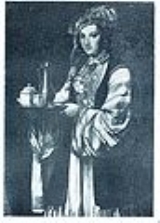
Volga Tatars

Encyclopedia
The Volga Tatars are the largest subgroup of the Tatars
, native to the Volga region
.
They account for roughly six out of seven million Tatars worldwide.
They are in turn subdivided into various subgroups, the largest being the Kazan Tatars, native to Tatarstan
proper.
, one of the constituent republics of Russia
.
During the 11th-16th centuries, numerous Turkic
tribes lived in what is now Russia
and Kazakhstan
. The present territory of Tatarstan was inhabited by the Volga Bulgars
, a people with uncertain origins The Bulgars settled on the Volga River in the 8th century and converted to Islam in 922 during the missionary work of Ahmad ibn Fadlan
. After the Mongol invasion of Europe
from 1241, Volga Bulgaria
was defeated, ruined, and incorporated into the Golden Horde
.
Few of the population survived, nearly all of them moved to northern territories, but it is possible that there was (or wasn't) also some degree of mixing between it and the Cuman-Kipchaks
of the Horde during the ensuing period. The group as a whole accepted the language of the Kipchaks and the ethnonym "Tatars" (although the name Bulgars
persisted in some places), while the invaders eventually converted to Islam. Two centuries later, as the Horde disintegrated, the area became the territory of the Kazan khanate, which was ultimately conquered by Russia in 1552.
and Tatarstan. Their dialect have many Kozla Mari
words and they have admixture of Finno Ugrian Maris. Their number in 2002 was around 5.000 people.
. Some also comprise an admixture of Komi Permyaks. Some Tatar scholars (as Zakiev) name them Ostyak
Tatars. Their number is (2002) c.130.000 people.
during the 16th century, and later, during the 18th century.
Some scientists suppose that Suars
were ancestors of the Keräşen Tatars, and they had been converted to Christianity by Armenians
in the 6th century while they lived in the Caucasus. Suars, like other tribes which later converted to Islam, became Volga Bulgars, and later the modern Chuvash
(who are mostly Christian) and Kazan Tatars (mostly Muslims).
Keräşen Tatars live all over Tatarstan. Now they tend to be assimilated among Chuvash
and Tatars
. Eighty years of Atheistic
Soviet rule made Tatars of both faiths not as religious as they once were. Russian names are largely the only remaining difference between Tatars and Keräşen Tatars.
Some Turkic (Kuman
) tribes in Golden Horde
were converted to Christianity in the 13th and 14th centuries (Nestorianism
). Some prayers, written in that time in the Codex Cumanicus
, sound like modern Keräşen prayers, but there is no information about the connection between Christian Kumans and modern Keräşens.
. Some 15,000 belonging to the same stem had either migrated to Ryazan
in the center of Russia (what is now European Russia) or had been settled as prisoners during the 16th and 17th centuries in Lithuania
(Vilnius
, Grodno
, and Podolia
). Some 2,000 resided in St. Petersburg
Volga-Ural Tatars number nearly 7 million, mostly in Russia and the republics of the former Soviet Union
. While the bulk of the population is found in Tatarstan (nearly 2 million) and neighbouring regions, significant number of Kazan Volga-Ural Tatars live in Siberia, Central Asia, and the Caucasus. Outside of Tatarstan, urban Tatars usually speak Russian
as their first language (in cities such as Moscow
, Saint-Petersburg, Nizhniy Novgorod, Ufa
, and cities of the Ural
and western Siberia).
Places where Volga Tatars live include:
The alternative position assumes that Tatar ethnogenesis was only completed upon the arrival of the Cumans and Kipchaks. Tatarstan was called Bolgaristan until 1919.
The "Bulgarist" position espouses the view that there was very little, or no mixing with Mongol and Turkic aliens after the conquest of Volga Bulgaria, especially in the northern regions that ultimately became Tatarstan
.
Tatars
Tatars are a Turkic speaking ethnic group , numbering roughly 7 million.The majority of Tatars live in the Russian Federation, with a population of around 5.5 million, about 2 million of which in the republic of Tatarstan.Significant minority populations are found in Uzbekistan, Kazakhstan,...
, native to the Volga region
Volga Region
Volga Region is a historical region of Russia that encompasses the territories adjacent to the flow of Volga River. According to the flow of the river, it is usually classified into the Middle Volga Region and Lower Volga Region...
.
They account for roughly six out of seven million Tatars worldwide.
They are in turn subdivided into various subgroups, the largest being the Kazan Tatars, native to Tatarstan
Tatarstan
The Republic of Tatarstan is a federal subject of Russia located in the Volga Federal District. Its capital is the city of Kazan, which is one of Russia's largest and most prosperous cities. The republic borders with Kirov, Ulyanovsk, Samara, and Orenburg Oblasts, and with the Mari El, Udmurt,...
proper.
Kazan (Qazan) Tatars
The majority of Volga Tatars are Kazan (Qazan) Tatars. They are the majority of the population of TatarstanTatarstan
The Republic of Tatarstan is a federal subject of Russia located in the Volga Federal District. Its capital is the city of Kazan, which is one of Russia's largest and most prosperous cities. The republic borders with Kirov, Ulyanovsk, Samara, and Orenburg Oblasts, and with the Mari El, Udmurt,...
, one of the constituent republics of Russia
Republics of Russia
The Russian Federation is divided into 83 federal subjects , 21 of which are republics. The republics represent areas of non-Russian ethnicity. The indigenous ethnic group of a republic that gives it its name is referred to as the "titular nationality"...
.
During the 11th-16th centuries, numerous Turkic
Turkic peoples
The Turkic peoples are peoples residing in northern, central and western Asia, southern Siberia and northwestern China and parts of eastern Europe. They speak languages belonging to the Turkic language family. They share, to varying degrees, certain cultural traits and historical backgrounds...
tribes lived in what is now Russia
Russia
Russia or , officially known as both Russia and the Russian Federation , is a country in northern Eurasia. It is a federal semi-presidential republic, comprising 83 federal subjects...
and Kazakhstan
Kazakhstan
Kazakhstan , officially the Republic of Kazakhstan, is a transcontinental country in Central Asia and Eastern Europe. Ranked as the ninth largest country in the world, it is also the world's largest landlocked country; its territory of is greater than Western Europe...
. The present territory of Tatarstan was inhabited by the Volga Bulgars
Volga Bulgaria
Volga Bulgaria, or Volga–Kama Bolghar, is a historic Bulgar state that existed between the seventh and thirteenth centuries around the confluence of the Volga and Kama rivers in what is now Russia.-Origin:...
, a people with uncertain origins The Bulgars settled on the Volga River in the 8th century and converted to Islam in 922 during the missionary work of Ahmad ibn Fadlan
Ahmad ibn Fadlan
Ahmad ibn Fadlān ibn al-Abbās ibn Rāšid ibn Hammād was a 10th century Arab traveler, famous for his account of his travels as a member of an embassy of the Arab Abbasid Caliph of Baghdad to the king of the Volga Bulgars...
. After the Mongol invasion of Europe
Mongol invasion of Europe
The resumption of the Mongol invasion of Europe, during which the Mongols attacked medieval Rus' principalities and the powers of Poland and Hungary, was marked by the Mongol invasion of Rus starting in 21 December 1237...
from 1241, Volga Bulgaria
Volga Bulgaria
Volga Bulgaria, or Volga–Kama Bolghar, is a historic Bulgar state that existed between the seventh and thirteenth centuries around the confluence of the Volga and Kama rivers in what is now Russia.-Origin:...
was defeated, ruined, and incorporated into the Golden Horde
Golden Horde
The Golden Horde was a Mongol and later Turkicized khanate that formed the north-western sector of the Mongol Empire...
.
Few of the population survived, nearly all of them moved to northern territories, but it is possible that there was (or wasn't) also some degree of mixing between it and the Cuman-Kipchaks
Kipchaks
Kipchaks were a Turkic tribal confederation...
of the Horde during the ensuing period. The group as a whole accepted the language of the Kipchaks and the ethnonym "Tatars" (although the name Bulgars
Bulgars
The Bulgars were a semi-nomadic who flourished in the Pontic Steppe and the Volga basin in the 7th century.The Bulgars emerge after the collapse of the Hunnic Empire in the 5th century....
persisted in some places), while the invaders eventually converted to Islam. Two centuries later, as the Horde disintegrated, the area became the territory of the Kazan khanate, which was ultimately conquered by Russia in 1552.
Noqrat Tatars
Tatars live in Russia's Kirov OblastKirov Oblast
Kirov Oblast is a federal subject of Russia . Its administrative center is the city of Kirov. Population: -History:In the late 19th and early 20th centuries, Vyatka remained a place of exile for opponents of the tsarist regime, including many prominent revolutionary figures.In 1920, a number of...
and Tatarstan. Their dialect have many Kozla Mari
Mari language
The Mari language , spoken by more than 600,000 people, belongs to the Uralic language family. It is spoken primarily in the Mari Republic of the Russian Federation as well as in the area along the Vyatka river basin and eastwards to the Urals...
words and they have admixture of Finno Ugrian Maris. Their number in 2002 was around 5.000 people.
Perm (Ostyak) Tatars
Kazan Tatars live in Russia's Perm KraiPerm Krai
Perm Krai is a federal subject of Russia that came into existence on December 1, 2005 as a result of the 2004 referendum on the merger of Perm Oblast and Komi-Permyak Autonomous Okrug. The city of Perm became the administrative center of the new federal subject...
. Some also comprise an admixture of Komi Permyaks. Some Tatar scholars (as Zakiev) name them Ostyak
Ostyak
Ostyak on its own or in combination, can refer, especially in older literature, to several Siberian peoples and languages:* Ostyak:** Khanty people** Khanty language* Yenisei Ostyak:** Ket people** Ket language* Ostyak-Samoyed:...
Tatars. Their number is (2002) c.130.000 people.
Keräşens
Many Kazan Tatars were forcibly Christianized by Ivan the TerribleIvan IV of Russia
Ivan IV Vasilyevich , known in English as Ivan the Terrible , was Grand Prince of Moscow from 1533 until his death. His long reign saw the conquest of the Khanates of Kazan, Astrakhan, and Siberia, transforming Russia into a multiethnic and multiconfessional state spanning almost one billion acres,...
during the 16th century, and later, during the 18th century.
Some scientists suppose that Suars
Suars
The Suars were a Turkic-speaking people, probably of Hunnish descent, who lived in Eastern Europe in the Middle Ages....
were ancestors of the Keräşen Tatars, and they had been converted to Christianity by Armenians
Armenians
Armenian people or Armenians are a nation and ethnic group native to the Armenian Highland.The largest concentration is in Armenia having a nearly-homogeneous population with 97.9% or 3,145,354 being ethnic Armenian....
in the 6th century while they lived in the Caucasus. Suars, like other tribes which later converted to Islam, became Volga Bulgars, and later the modern Chuvash
Chuvash people
The Chuvash people are a Turkic ethnic group, native to an area stretching from the Volga Region to Siberia. Most of them live in Republic of Chuvashia and surrounding areas, although Chuvash communities may be found throughout all Russia.- Etymology :...
(who are mostly Christian) and Kazan Tatars (mostly Muslims).
Keräşen Tatars live all over Tatarstan. Now they tend to be assimilated among Chuvash
Chuvash people
The Chuvash people are a Turkic ethnic group, native to an area stretching from the Volga Region to Siberia. Most of them live in Republic of Chuvashia and surrounding areas, although Chuvash communities may be found throughout all Russia.- Etymology :...
and Tatars
Tatars
Tatars are a Turkic speaking ethnic group , numbering roughly 7 million.The majority of Tatars live in the Russian Federation, with a population of around 5.5 million, about 2 million of which in the republic of Tatarstan.Significant minority populations are found in Uzbekistan, Kazakhstan,...
. Eighty years of Atheistic
Atheism
Atheism is, in a broad sense, the rejection of belief in the existence of deities. In a narrower sense, atheism is specifically the position that there are no deities...
Soviet rule made Tatars of both faiths not as religious as they once were. Russian names are largely the only remaining difference between Tatars and Keräşen Tatars.
Some Turkic (Kuman
Kuman
Kuman may refer to:*Kuman, Albania, a municipality in the Fier District, Fier County, southwestern Albania*Küman, a municipality in Azerbaijan*Cumans, an ancient people*Cuman language, their language*Kuman language in Papua New Guinea...
) tribes in Golden Horde
Golden Horde
The Golden Horde was a Mongol and later Turkicized khanate that formed the north-western sector of the Mongol Empire...
were converted to Christianity in the 13th and 14th centuries (Nestorianism
Nestorianism
Nestorianism is a Christological doctrine advanced by Nestorius, Patriarch of Constantinople from 428–431. The doctrine, which was informed by Nestorius's studies under Theodore of Mopsuestia at the School of Antioch, emphasizes the disunion between the human and divine natures of Jesus...
). Some prayers, written in that time in the Codex Cumanicus
Codex Cumanicus
The Codex Cumanicus was a linguistic manual of the Middle Ages, designed to help Catholic missionaries communicate with the Cumans, a nomadic Turkic people. It is currently housed in the Library of St. Mark, in Venice ....
, sound like modern Keräşen prayers, but there is no information about the connection between Christian Kumans and modern Keräşens.
Population figures
In the 1910s, they numbered about half a million in the area of KazanKazan
Kazan is the capital and largest city of the Republic of Tatarstan, Russia. With a population of 1,143,546 , it is the eighth most populous city in Russia. Kazan lies at the confluence of the Volga and Kazanka Rivers in European Russia. In April 2009, the Russian Patent Office granted Kazan the...
. Some 15,000 belonging to the same stem had either migrated to Ryazan
Ryazan
Ryazan is a city and the administrative center of Ryazan Oblast, Russia. It is located on the Oka River southeast of Moscow. Population: The strategic bomber base Dyagilevo is just west of the city, and the air base of Alexandrovo is to the southeast as is the Ryazan Turlatovo Airport...
in the center of Russia (what is now European Russia) or had been settled as prisoners during the 16th and 17th centuries in Lithuania
Lithuania
Lithuania , officially the Republic of Lithuania is a country in Northern Europe, the biggest of the three Baltic states. It is situated along the southeastern shore of the Baltic Sea, whereby to the west lie Sweden and Denmark...
(Vilnius
Vilnius
Vilnius is the capital of Lithuania, and its largest city, with a population of 560,190 as of 2010. It is the seat of the Vilnius city municipality and of the Vilnius district municipality. It is also the capital of Vilnius County...
, Grodno
Hrodna
Grodno or Hrodna , is a city in Belarus. It is located on the Neman River , close to the borders of Poland and Lithuania . It has 327,540 inhabitants...
, and Podolia
Podolia
The region of Podolia is an historical region in the west-central and south-west portions of present-day Ukraine, corresponding to Khmelnytskyi Oblast and Vinnytsia Oblast. Northern Transnistria, in Moldova, is also a part of Podolia...
). Some 2,000 resided in St. Petersburg
Volga-Ural Tatars number nearly 7 million, mostly in Russia and the republics of the former Soviet Union
Soviet Union
The Soviet Union , officially the Union of Soviet Socialist Republics , was a constitutionally socialist state that existed in Eurasia between 1922 and 1991....
. While the bulk of the population is found in Tatarstan (nearly 2 million) and neighbouring regions, significant number of Kazan Volga-Ural Tatars live in Siberia, Central Asia, and the Caucasus. Outside of Tatarstan, urban Tatars usually speak Russian
Russian language
Russian is a Slavic language used primarily in Russia, Belarus, Uzbekistan, Kazakhstan, Tajikistan and Kyrgyzstan. It is an unofficial but widely spoken language in Ukraine, Moldova, Latvia, Turkmenistan and Estonia and, to a lesser extent, the other countries that were once constituent republics...
as their first language (in cities such as Moscow
Moscow
Moscow is the capital, the most populous city, and the most populous federal subject of Russia. The city is a major political, economic, cultural, scientific, religious, financial, educational, and transportation centre of Russia and the continent...
, Saint-Petersburg, Nizhniy Novgorod, Ufa
Ufa
-Demographics:Nationally, dominated by Russian , Bashkirs and Tatars . In addition, numerous are Ukrainians , Chuvash , Mari , Belarusians , Mordovians , Armenian , Germans , Jews , Azeris .-Government and administration:Local...
, and cities of the Ural
Ural (region)
Ural is a geographical region located around the Ural Mountains, between the East European and West Siberian plains. It extends approximately from north to south, from the Arctic Ocean to the bend of Ural River near Orsk city. The boundary between Europe and Asia runs along the eastern side of...
and western Siberia).
Volga Tatar diaspora
Places where Volga Tatars live include:
- UralUral (region)Ural is a geographical region located around the Ural Mountains, between the East European and West Siberian plains. It extends approximately from north to south, from the Arctic Ocean to the bend of Ural River near Orsk city. The boundary between Europe and Asia runs along the eastern side of...
and Upper KamaKamaKāma is often translated from Sanskrit as sexual desire, sexual pleasure, sensual gratification, sexual fulfillment, or eros54654564+more broadly mean desire, wish, passion, longing, pleasure of the senses, the aesthetic enjoyment of life, affection, or love, without sexual connotations.-Kama in...
(since 15th century) 15th century—colonization, 16th-17th century—re-settled by Russians; 17th-19th—exploring of the Urals, working in the plants - West Siberia (since 16th century): 16th—from Russian repressions after conquering of Khanate of Kazan by Russians 17th–19th—exploring of West Siberia; end of 19th—first half of 20th—industrialization, railways constructing; 1930s–Joseph StalinJoseph StalinJoseph Vissarionovich Stalin was the Premier of the Soviet Union from 6 May 1941 to 5 March 1953. He was among the Bolshevik revolutionaries who brought about the October Revolution and had held the position of first General Secretary of the Communist Party of the Soviet Union's Central Committee...
's repressions; 1970s–1990s—oil workers - Moscow (since 17th century): Tatar feudals in the service of Russia, tradesmen, since 18th—Saint-Petersburg
- Kazakhstan (since 18th century): 18th–19th centuries—Russian army officers and soldiers; 1930s–industrialization, since 1950s—settlers on virgin lands - re-emigration in 1990s
- FinlandFinnish TatarsThe Tatars of Finland are a Turkic people who espouse the Muslim faith. They number approximately 1000 and form a well-established and homogeneous religious, cultural and linguistic minority. The Tatars are the oldest Muslim minority in Finland and throughout the Nordic countries and the Finnish...
(since 1804): (mostly Mişärs) – 19th – Russian military forces officers and soldiers, and others - Central Asia (since 19th century) (UzbekistanUzbekistanUzbekistan , officially the Republic of Uzbekistan is a doubly landlocked country in Central Asia and one of the six independent Turkic states. It shares borders with Kazakhstan to the west and to the north, Kyrgyzstan and Tajikistan to the east, and Afghanistan and Turkmenistan to the south....
, TurkmenistanTurkmenistanTurkmenistan , formerly also known as Turkmenia is one of the Turkic states in Central Asia. Until 1991, it was a constituent republic of the Soviet Union, the Turkmen Soviet Socialist Republic . Turkmenistan is one of the six independent Turkic states...
, TajikistanTajikistanTajikistan , officially the Republic of Tajikistan , is a mountainous landlocked country in Central Asia. Afghanistan borders it to the south, Uzbekistan to the west, Kyrgyzstan to the north, and China to the east....
, KyrgyzstanKyrgyzstanKyrgyzstan , officially the Kyrgyz Republic is one of the world's six independent Turkic states . Located in Central Asia, landlocked and mountainous, Kyrgyzstan is bordered by Kazakhstan to the north, Uzbekistan to the west, Tajikistan to the southwest and China to the east...
; for XinjiangXinjiangXinjiang is an autonomous region of the People's Republic of China. It is the largest Chinese administrative division and spans over 1.6 million km2...
see Chinese TatarsChinese TatarsThe Chinese Tatars form one of the 56 ethnic groups officially recognized by the People's Republic of China.Their ancestors are Volga Tatar tradesmen who settled mostly in Xinjiang....
) – 19th Russian officers and soldiers, tradesmen, religious emigrants, 1920-1930s – industrialization, Soviet education program for Central Asia peoples, 1948, 1960 – help for Ashgabat and Tashkent ruined by earthquakes. - re-emigration in 1980s - Caucasus, especially AzerbaijanAzerbaijanAzerbaijan , officially the Republic of Azerbaijan is the largest country in the Caucasus region of Eurasia. Located at the crossroads of Western Asia and Eastern Europe, it is bounded by the Caspian Sea to the east, Russia to the north, Georgia to the northwest, Armenia to the west, and Iran to...
(since 19th century) – oil workers (1890s), bread tradesmen - Northern China (since 1910s) – railway builders (1910s) - re-emigrated in 1950s
- East Siberia (since 19th century) - resettled farmers (19th), railroad builders (1910s, 1980s), exiled by the Soviet government in 1930s
- Germany and Austria - 1914, 1941 – prisoners of war, 1990s - emigration
- Turkey, Japan, Iran, China, Egypt (since 1918) – emigration
- England, USA, Australia, Canada, Argentina, Mexico – (1920s) re-emigration from Germany, Turkey, Japan, China and others. 1950s – prisoners of war from Germany, which did not go back to the USSR, 1990s – emigration after the breakup of USSR
- Sakhalin, Kaliningrad, Belarus, Ukraine, Latvia, Estonia, Lithuania, Karelia – after 1944-45 builders, Soviet military personnel
- Murmansk Oblast, Khabarovsk Krai, Northern Poland and Northern Germany (1945–1990) - Soviet military personnel
- Israel – wives or husbands of Jews (1990s)
Bulgarism
"Bulgarism" is a term for the position that the Kazan Tatars are significantly descended from the Volga Bulgars or are actual Bulgars that have not mixed.The alternative position assumes that Tatar ethnogenesis was only completed upon the arrival of the Cumans and Kipchaks. Tatarstan was called Bolgaristan until 1919.
The "Bulgarist" position espouses the view that there was very little, or no mixing with Mongol and Turkic aliens after the conquest of Volga Bulgaria, especially in the northern regions that ultimately became Tatarstan
Tatarstan
The Republic of Tatarstan is a federal subject of Russia located in the Volga Federal District. Its capital is the city of Kazan, which is one of Russia's largest and most prosperous cities. The republic borders with Kirov, Ulyanovsk, Samara, and Orenburg Oblasts, and with the Mari El, Udmurt,...
.
See also
- BulgarsBulgarsThe Bulgars were a semi-nomadic who flourished in the Pontic Steppe and the Volga basin in the 7th century.The Bulgars emerge after the collapse of the Hunnic Empire in the 5th century....
- Volga BulgariaVolga BulgariaVolga Bulgaria, or Volga–Kama Bolghar, is a historic Bulgar state that existed between the seventh and thirteenth centuries around the confluence of the Volga and Kama rivers in what is now Russia.-Origin:...
- Mari people
- Bulgarism
- Tatar languageTatar languageThe Tatar language , or more specifically Kazan Tatar, is a Turkic language spoken by the Tatars of historical Kazan Khanate, including modern Tatarstan and Bashkiria...
- Tatar alphabetTatar alphabetTwo scripts are currently used for the Tatar language: Cyrillic and Latin.-Introduction:While a Tatar version of the Latin alphabet called Jaŋalif had been in use during the 1930s, there is controversy in the matter of Latin-based Tatar alphabet for İdel-Ural Tatar. One dimension of the...
- Finnish TatarsFinnish TatarsThe Tatars of Finland are a Turkic people who espouse the Muslim faith. They number approximately 1000 and form a well-established and homogeneous religious, cultural and linguistic minority. The Tatars are the oldest Muslim minority in Finland and throughout the Nordic countries and the Finnish...
- Tatars of KazakhstanTatars of KazakhstanThe Volga Tatars of Kazakhstan are a minority in Kazakhstan, and make up 1.5% of the population. There are 249,000 Volga Tatars living in Kazakhstan accordingly to 1999 census ....
- Chinese TatarsChinese TatarsThe Chinese Tatars form one of the 56 ethnic groups officially recognized by the People's Republic of China.Their ancestors are Volga Tatar tradesmen who settled mostly in Xinjiang....
- TatarsTatarsTatars are a Turkic speaking ethnic group , numbering roughly 7 million.The majority of Tatars live in the Russian Federation, with a population of around 5.5 million, about 2 million of which in the republic of Tatarstan.Significant minority populations are found in Uzbekistan, Kazakhstan,...
- Crimean TatarsCrimean TatarsCrimean Tatars or Crimeans are a Turkic ethnic group that originally resided in Crimea. They speak the Crimean Tatar language...
- Lipka TatarsLipka TatarsThe Lipka Tatars are a group of Tatars who originally settled in the Grand Duchy of Lithuania at the beginning of 14th century. The first settlers tried to preserve their shamanistic religion and sought asylum amongst the non-Christian Lithuanians...
- NağaybäkNagaybäkNağaybäk are an ethnoconfessional group in Russia. They are Christian descendents of Volga Tatars , and former cossacks of the Orenburg Host. The majority of the Nağaybäks live in Nagaybaksky and Chebarkulsky Districts of Chelyabinsk Oblast. They speak a sub-dialect of Tatar language's Middle dialect...
- TartaryTartaryTartary or Great Tartary was a name used by Europeans from the Middle Ages until the twentieth century to designate the Great Steppe, that is the great tract of northern and central Asia stretching from the Caspian Sea and the Ural Mountains to the Pacific Ocean inhabited mostly by Turkic, Mongol...
- Little TartaryLittle TartaryLittle Tartary is a historical designation for areas north of the Black Sea under the suzerainty of the Crimean Khanate and inhabited by nomadic Tatars of the Lesser Nogai Horde from the 16th to the 18th centuries. Little Tartary was designated such vis-à-vis Tartary, areas of central and...
- Tatar nobilityMorzaMorza is a Princely title in Tatar states, such as Khanate of Kazan, Khanate of Astrakhan and others, and in Russia....
- TatarstanTatarstanThe Republic of Tatarstan is a federal subject of Russia located in the Volga Federal District. Its capital is the city of Kazan, which is one of Russia's largest and most prosperous cities. The republic borders with Kirov, Ulyanovsk, Samara, and Orenburg Oblasts, and with the Mari El, Udmurt,...