

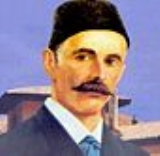
Crimean Tatars

Encyclopedia
Crimean Tatars or Crimeans (sg. Qırım, Qırımlı, pl. Qırımlar, Qırımlılar) are a Turkic
ethnic group that originally resided in Crimea
. They speak the Crimean Tatar language
. They are not to be confused with the Volga Tatars
.
In modern times, in addition to living in Crimea
, Ukraine
, there is a large diaspora
of Crimean Tatars in Turkey
, Romania
, Bulgaria
, Uzbekistan
, Western Europe
, the Middle East and North America
, as well as small communities in Finland
, Lithuania
, Russia
, Belarus
and Poland
. (See Crimean Tatar diaspora
)
, mainly in Uzbekistan
. There is an unspecified number of people of Crimean Tatar origin living in Turkey, descendants of those who emigrated in the 19th and early 20th centuries. In the Dobruja
region straddling Romania and Bulgaria, there are more than 27,000 Crimean Tatars: 24,000 on the Romanian side, and 3,000 on the Bulgarian side.
The Tats and Yalıboyus have a Caucasoid physical appearance, while the Noğays retain some Mongoloid physical appearance.
. The Crimean Khanate
was a Turkic-speaking Muslim state which was among the strongest powers in Eastern Europe until the beginning of the 18th century. The Crimean Tatars adopted Islam
in the 13th century and thereafter Crimea became one of the centers of Islamic civilization. According to Baron Iosif Igelström
, in 1783 there were close to 1600 mosques and religious schools in Crimea. In Bakhchisaray
, the khan Meñli I Giray
built Zıncırlı Medrese (literally "Chain Madrassah"), an Islamic seminary where one has to bow while entering from its door because of the chain hanging over. This symbolized the Crimean society's respect for learning. Meñli I Giray
also constructed a large mosque on the model of Hagia Sophia
(which was ruined in 1850s). Later, the khans built a greater palace, Hansaray in Bakhchisaray
, which survives to this day. Sahib I Giray
patronized many scholars and artists in this palace. During the reign of Devlet I Giray
the architect Mimar Sinan built a mosque, Cuma Cami, in Kezlev. The Crimean Khanate became a protectorate
of the Ottoman Empire in 1475, when the Ottoman general Gedik Ahmed Pasha
conquered the southern coast of Crimea. The alliance with the Ottomans became an important factor in the survival of the khanate until the 18th century.
(1682–1725) However, Cossack raids continued during that time, Ottoman Grand Vizier
complained to the Russian consul about raids to Crimea and Özi in 1761.
(1774) signed after the war, Crimea became independent and Ottomans renounced their political right to protect the Crimean Khanate. After a period of political unrest in Crimea and a number of violations of the treaty by Crimeans and Ottomans, Russia also violated the treaty and annexed the Crimean Khanate in 1783. After the annexation, under pressure of Slavic colonization, Crimean Tatars began to abandon their homes and move to the Ottoman Empire
in continuing waves of emigration. Particularly, the Crimean War
of 1853-1856, the laws of 1860-63 and the Russo-Turkish War of 1877-1878 caused an exodus of the Crimean Tatars. Of total Tatar population 300,000 of the Tauride Province about 200,000 Crimean Tatars emigrated. Many Crimean Tatars perished in the process of emigration, including those who drowned while crossing the Black Sea. Today the descendants of these Crimeans form the Crimean Tatar diaspora
in Bulgaria
, Romania
and Turkey
.
Ismail Gasprinski (1851–1914) was a renowned Crimean Tatar intellectual, whose efforts laid the foundation for the modernization of Muslim culture and the emergence of the Crimean Tatar national identity. The bilingual Crimean Tatar-Russian newspaper Terciman-Perevodchik he published in 1883-1914, functioned as an educational tool through which a national consciousness and modern thinking emerged among the entire Turkic-speaking population of the Russian Empire
. His New Method (Usul-i Cedid) schools, numbered 350 across the Crimean peninsula helped create a new Crimean Tatar elite. After the Russian Revolution of 1917
this new elite, which included Noman Çelebicihan
and Cafer Seydamet proclaimed the first democratic republic in the Islamic world, named the Crimean People's Republic
on December 26, 1917. However, this republic was short-lived and destroyed by the Bolshevik uprising in January 1918.
 During Stalin
's Great Purge
, statesmen and intellectuals such as Veli Ibraimov and Bekir Çoban-zade (1893–1937), were imprisoned or executed on various charges.
Soviet collectivization of the peninsula led to widespread starvation in 1921. Food was confiscated for shipment to central Russia, while more than 100,000 Tatars starved to death, and tens of thousands fled to Turkey or Romania. Thousands more were deported or slaughtered during the collectivization in 1928-29.
The government campaign led to another famine in 1931-33. No other Soviet nationality suffered the decline imposed on the Crimean Tatars; between 1917 and 1933 half the Crimean Tatar population had been killed or deported.
During World War II
, the entire Crimean Tatar population in Crimea fell victim to Soviet policies. Although a great number of Crimean Tatar men served in the Red Army
and took part in the partisan movement in Crimea during the war, the existence of the Tatar Legion in the Nazi
army and the collaboration of Crimean Tatar religious and political leaders with Hitler during the German occupation of Crimea provided the Soviets with a pretext for accusing the whole Crimean Tatar population of being Nazi collaborators. Modern researchers also point to the fact that a further reason was the geopolitical position of Crimea where Crimean Tatars were perceived as a threat. This belief is based in part on an analogy with numerous other cases of deportations of non-Russians from boundary territories (see, e.g., Involuntary settlements in the Soviet Union
), as well as the fact that other non-Russian populations, such as Greeks
, Armenians
and Bulgarians
were also been removed from Crimea.
All Crimean Tatars were deported en masse, in a form of collective punishment
, on 18 May 1944 as special settlers to Uzbek SSR
and other distant parts of the Soviet Union
. The decree "On Crimean Tatars" describes the resettlement as a very humane procedure. The reality described by the victims in their memoirs was different. 46.3% of the resettled population died of diseases and malnutrition. This event is called Sürgün in the Crimean Tatar language
. Many of them were re-located to toil as indentured workers in the Soviet GULAG
system.
Although a 1967 Soviet decree removed the charges against Crimean Tatars, the Soviet government did nothing to facilitate their resettlement in Crimea and to make reparations for lost lives and confiscated property. Crimean Tatars, differing from other Soviet nations like Ukrainians
, having definite tradition of non-communist political dissent, succeeded in creating a truly independent network of activists, values and political experience. Crimean Tatars, led by Crimean Tatar National Movement Organization, were not allowed to return to Crimea from exile until the beginning of the Perestroika
in the mid 1980s.
 Today, more than 250,000 Crimean Tatars have returned to their homeland, struggling to re-establish their lives and reclaim their national and cultural rights against many social and economic obstacles. In 1991, the Crimean Tatar leadership founded the Qurultay, or Parliament, to act as a representative body for the Crimean Tatars which could address grievances to the Ukrainian central government, the Crimean government, and international bodies. Mejlis of the Crimean Tatar People
is the executive body of the Qurultay.
Since the 1990s, the political leader of the Crimean Tatars and the chairman of the Mejlis of the Crimean Tatar People
is a former Soviet dissident Mustafa Abdülcemil Qırımoğlu
.
Turkic peoples
The Turkic peoples are peoples residing in northern, central and western Asia, southern Siberia and northwestern China and parts of eastern Europe. They speak languages belonging to the Turkic language family. They share, to varying degrees, certain cultural traits and historical backgrounds...
ethnic group that originally resided in Crimea
Crimea
Crimea , or the Autonomous Republic of Crimea , is a sub-national unit, an autonomous republic, of Ukraine. It is located on the northern coast of the Black Sea, occupying a peninsula of the same name...
. They speak the Crimean Tatar language
Crimean Tatar language
The Crimean Tatar language is the language of the Crimean Tatars. It is a Turkic language spoken in Crimea, Central Asia , and the Crimean Tatar diasporas in Turkey, Romania, Bulgaria...
. They are not to be confused with the Volga Tatars
Volga Tatars
The Volga Tatars are the largest subgroup of the Tatars, native to the Volga region.They account for roughly six out of seven million Tatars worldwide....
.
In modern times, in addition to living in Crimea
Crimea
Crimea , or the Autonomous Republic of Crimea , is a sub-national unit, an autonomous republic, of Ukraine. It is located on the northern coast of the Black Sea, occupying a peninsula of the same name...
, Ukraine
Ukraine
Ukraine is a country in Eastern Europe. It has an area of 603,628 km², making it the second largest contiguous country on the European continent, after Russia...
, there is a large diaspora
Diaspora
A diaspora is "the movement, migration, or scattering of people away from an established or ancestral homeland" or "people dispersed by whatever cause to more than one location", or "people settled far from their ancestral homelands".The word has come to refer to historical mass-dispersions of...
of Crimean Tatars in Turkey
Turkey
Turkey , known officially as the Republic of Turkey , is a Eurasian country located in Western Asia and in East Thrace in Southeastern Europe...
, Romania
Romania
Romania is a country located at the crossroads of Central and Southeastern Europe, on the Lower Danube, within and outside the Carpathian arch, bordering on the Black Sea...
, Bulgaria
Bulgaria
Bulgaria , officially the Republic of Bulgaria , is a parliamentary democracy within a unitary constitutional republic in Southeast Europe. The country borders Romania to the north, Serbia and Macedonia to the west, Greece and Turkey to the south, as well as the Black Sea to the east...
, Uzbekistan
Uzbekistan
Uzbekistan , officially the Republic of Uzbekistan is a doubly landlocked country in Central Asia and one of the six independent Turkic states. It shares borders with Kazakhstan to the west and to the north, Kyrgyzstan and Tajikistan to the east, and Afghanistan and Turkmenistan to the south....
, Western Europe
Western Europe
Western Europe is a loose term for the collection of countries in the western most region of the European continents, though this definition is context-dependent and carries cultural and political connotations. One definition describes Western Europe as a geographic entity—the region lying in the...
, the Middle East and North America
North America
North America is a continent wholly within the Northern Hemisphere and almost wholly within the Western Hemisphere. It is also considered a northern subcontinent of the Americas...
, as well as small communities in Finland
Finland
Finland , officially the Republic of Finland, is a Nordic country situated in the Fennoscandian region of Northern Europe. It is bordered by Sweden in the west, Norway in the north and Russia in the east, while Estonia lies to its south across the Gulf of Finland.Around 5.4 million people reside...
, Lithuania
Lithuania
Lithuania , officially the Republic of Lithuania is a country in Northern Europe, the biggest of the three Baltic states. It is situated along the southeastern shore of the Baltic Sea, whereby to the west lie Sweden and Denmark...
, Russia
Russia
Russia or , officially known as both Russia and the Russian Federation , is a country in northern Eurasia. It is a federal semi-presidential republic, comprising 83 federal subjects...
, Belarus
Belarus
Belarus , officially the Republic of Belarus, is a landlocked country in Eastern Europe, bordered clockwise by Russia to the northeast, Ukraine to the south, Poland to the west, and Lithuania and Latvia to the northwest. Its capital is Minsk; other major cities include Brest, Grodno , Gomel ,...
and Poland
Poland
Poland , officially the Republic of Poland , is a country in Central Europe bordered by Germany to the west; the Czech Republic and Slovakia to the south; Ukraine, Belarus and Lithuania to the east; and the Baltic Sea and Kaliningrad Oblast, a Russian exclave, to the north...
. (See Crimean Tatar diaspora
Crimean Tatar diaspora
The Crimean Tatar diaspora dates back to the annexation of Crimea by Russia in 1783, after which Crimean Tatars were forced to emigrate in a series of waves spanning the period from 1783 to 1917...
)
Distribution
Today, more than 240,000 Crimean Tatars live in Crimea and about 150,000 remain in exile in Central AsiaCentral Asia
Central Asia is a core region of the Asian continent from the Caspian Sea in the west, China in the east, Afghanistan in the south, and Russia in the north...
, mainly in Uzbekistan
Uzbekistan
Uzbekistan , officially the Republic of Uzbekistan is a doubly landlocked country in Central Asia and one of the six independent Turkic states. It shares borders with Kazakhstan to the west and to the north, Kyrgyzstan and Tajikistan to the east, and Afghanistan and Turkmenistan to the south....
. There is an unspecified number of people of Crimean Tatar origin living in Turkey, descendants of those who emigrated in the 19th and early 20th centuries. In the Dobruja
Dobruja
Dobruja is a historical region shared by Bulgaria and Romania, located between the lower Danube river and the Black Sea, including the Danube Delta, Romanian coast and the northernmost part of the Bulgarian coast...
region straddling Romania and Bulgaria, there are more than 27,000 Crimean Tatars: 24,000 on the Romanian side, and 3,000 on the Bulgarian side.
Subethnic groups
The Crimean Tatars are subdivided into three sub-ethnic groups:- the Tats (not to be confused with Tat peopleTatsTats are an Iranian people, presently living within Azerbaijan, Armenia, and Russia ....
, living in the CaucasusCaucasusThe Caucasus, also Caucas or Caucasia , is a geopolitical region at the border of Europe and Asia, and situated between the Black and the Caspian sea...
region) who used to inhabit the mountainous Crimea before 1944 (about 55%), - the Yalıboyu who lived on the southern coast of the peninsula (about 30%),
- the Noğay (not to be confused with Nogai peopleNogaisThe Nogai people are a Turkic ethnic group in Southern Russia: northern Dagestan and Stavropol Krai, as well as in Karachay-Cherkessia and the Astrakhan Oblast; undefined number live in Chechnya...
, living now in Southern Russia) - former inhabitants of the Crimean steppe (about 15%).
The Tats and Yalıboyus have a Caucasoid physical appearance, while the Noğays retain some Mongoloid physical appearance.
Crimean Khanate
The Crimean Tatars emerged as a nation at the time of the Crimean KhanateCrimean Khanate
Crimean Khanate, or Khanate of Crimea , was a state ruled by Crimean Tatars from 1441 to 1783. Its native name was . Its khans were the patrilineal descendants of Toqa Temür, the thirteenth son of Jochi and grandson of Genghis Khan...
. The Crimean Khanate
Crimean Khanate
Crimean Khanate, or Khanate of Crimea , was a state ruled by Crimean Tatars from 1441 to 1783. Its native name was . Its khans were the patrilineal descendants of Toqa Temür, the thirteenth son of Jochi and grandson of Genghis Khan...
was a Turkic-speaking Muslim state which was among the strongest powers in Eastern Europe until the beginning of the 18th century. The Crimean Tatars adopted Islam
Islam
Islam . The most common are and . : Arabic pronunciation varies regionally. The first vowel ranges from ~~. The second vowel ranges from ~~~...
in the 13th century and thereafter Crimea became one of the centers of Islamic civilization. According to Baron Iosif Igelström
Iosif Igelström
Count Otto Heinrich Igelström was a Russian general from the noble Swedish family of Igelström.Otto Heinrich Igelström, son of Landmarschall in the Governorate of Livonia freiherr Gustaf Henrik Igelström and Margarethe Elisabeth von Albedyll, got education in Riga and Germany...
, in 1783 there were close to 1600 mosques and religious schools in Crimea. In Bakhchisaray
Bakhchisaray
Bakhchisaray is a town in Central Crimea, centre of the Bakhchisaray raion , best known as the former capital of the Crimean Khanate...
, the khan Meñli I Giray
Meñli I Giray
Meñli I Giray , also spelled as Mengli I Giray, was a khan of the Crimean Khanate and the sixth son of the khanate founder Haci I Giray....
built Zıncırlı Medrese (literally "Chain Madrassah"), an Islamic seminary where one has to bow while entering from its door because of the chain hanging over. This symbolized the Crimean society's respect for learning. Meñli I Giray
Meñli I Giray
Meñli I Giray , also spelled as Mengli I Giray, was a khan of the Crimean Khanate and the sixth son of the khanate founder Haci I Giray....
also constructed a large mosque on the model of Hagia Sophia
Hagia Sophia
Hagia Sophia is a former Orthodox patriarchal basilica, later a mosque, and now a museum in Istanbul, Turkey...
(which was ruined in 1850s). Later, the khans built a greater palace, Hansaray in Bakhchisaray
Bakhchisaray
Bakhchisaray is a town in Central Crimea, centre of the Bakhchisaray raion , best known as the former capital of the Crimean Khanate...
, which survives to this day. Sahib I Giray
Sahib I Giray
Sahib I Giray — a khan of the Crimean Khanate in 1532 –1551.Son of Meñli I Giray. In 1521 his brother, then Khan of Crimea, Mehmed I Giray, took Kazan, and gave it to Sahib. Together their army defeated Vasili III of Russia near Moscow....
patronized many scholars and artists in this palace. During the reign of Devlet I Giray
Devlet I Giray
Devlet I Giray was a khan of the Crimean Khanate during whose long reign the khanate rose to the pinnacle of its power....
the architect Mimar Sinan built a mosque, Cuma Cami, in Kezlev. The Crimean Khanate became a protectorate
Protectorate
In history, the term protectorate has two different meanings. In its earliest inception, which has been adopted by modern international law, it is an autonomous territory that is protected diplomatically or militarily against third parties by a stronger state or entity...
of the Ottoman Empire in 1475, when the Ottoman general Gedik Ahmed Pasha
Gedik Ahmed Pasha
Gedik Ahmed Pasha was an Ottoman grand vizier as well as an army and navy commander during the reigns of sultans Mehmed the Conqueror and Beyazid II....
conquered the southern coast of Crimea. The alliance with the Ottomans became an important factor in the survival of the khanate until the 18th century.
Slave trade
Until the beginning of the 18th century, Crimean Tatars were known for frequent, at some periods almost annual, devastating raids into Ukraine and Russia. For a long time, until the early 18th century, the Crimean Khanate maintained a massive slave trade with the Ottoman Empire and the Middle East which was the most important basis of its economy. One of the most important trading ports and slave markets was Kefe. Some researchers estimate that altogether more than 3 million people, predominantly Ukrainians but also Russians, Belarusians and Poles, were captured and enslaved during the time of the Crimean Khanate in what was called "the harvest of the steppe". On the other hand, lands of Crimean Tatars were also being raided by Cossacks. A constant threat from Crimean Tatars was one of the reasons for the formation of Cossacks, armed Slavic horsemen, who often repelled attacks and liberated captives from Crimean Tatars. The Don and Zaporozhian Cossacks also managed to raid Crimean Tatars land. The last recorded major Crimean raid, before those in the Russo-Turkish War (1768–1774) took place during the reign of Peter IPeter I of Russia
Peter the Great, Peter I or Pyotr Alexeyevich Romanov Dates indicated by the letters "O.S." are Old Style. All other dates in this article are New Style. ruled the Tsardom of Russia and later the Russian Empire from until his death, jointly ruling before 1696 with his half-brother, Ivan V...
(1682–1725) However, Cossack raids continued during that time, Ottoman Grand Vizier
Grand Vizier
Grand Vizier, in Turkish Vezir-i Azam or Sadr-ı Azam , deriving from the Arabic word vizier , was the greatest minister of the Sultan, with absolute power of attorney and, in principle, dismissable only by the Sultan himself...
complained to the Russian consul about raids to Crimea and Özi in 1761.
In the Russian Empire
The Russo-Turkish War of 1768-1774 resulted in the defeat of the Ottomans by the Russians, and according to the Treaty of Küçük KaynarcaTreaty of Kucuk Kaynarca
The Treaty of Küçük Kaynarca was signed on 21 July 1774, in Küçük Kaynarca , Dobruja between the Russian Empire and the Ottoman Empire after the Ottoman Empire was defeated in the...
(1774) signed after the war, Crimea became independent and Ottomans renounced their political right to protect the Crimean Khanate. After a period of political unrest in Crimea and a number of violations of the treaty by Crimeans and Ottomans, Russia also violated the treaty and annexed the Crimean Khanate in 1783. After the annexation, under pressure of Slavic colonization, Crimean Tatars began to abandon their homes and move to the Ottoman Empire
Ottoman Empire
The Ottoman EmpireIt was usually referred to as the "Ottoman Empire", the "Turkish Empire", the "Ottoman Caliphate" or more commonly "Turkey" by its contemporaries...
in continuing waves of emigration. Particularly, the Crimean War
Crimean War
The Crimean War was a conflict fought between the Russian Empire and an alliance of the French Empire, the British Empire, the Ottoman Empire, and the Kingdom of Sardinia. The war was part of a long-running contest between the major European powers for influence over territories of the declining...
of 1853-1856, the laws of 1860-63 and the Russo-Turkish War of 1877-1878 caused an exodus of the Crimean Tatars. Of total Tatar population 300,000 of the Tauride Province about 200,000 Crimean Tatars emigrated. Many Crimean Tatars perished in the process of emigration, including those who drowned while crossing the Black Sea. Today the descendants of these Crimeans form the Crimean Tatar diaspora
Crimean Tatar diaspora
The Crimean Tatar diaspora dates back to the annexation of Crimea by Russia in 1783, after which Crimean Tatars were forced to emigrate in a series of waves spanning the period from 1783 to 1917...
in Bulgaria
Bulgaria
Bulgaria , officially the Republic of Bulgaria , is a parliamentary democracy within a unitary constitutional republic in Southeast Europe. The country borders Romania to the north, Serbia and Macedonia to the west, Greece and Turkey to the south, as well as the Black Sea to the east...
, Romania
Romania
Romania is a country located at the crossroads of Central and Southeastern Europe, on the Lower Danube, within and outside the Carpathian arch, bordering on the Black Sea...
and Turkey
Turkey
Turkey , known officially as the Republic of Turkey , is a Eurasian country located in Western Asia and in East Thrace in Southeastern Europe...
.
Ismail Gasprinski (1851–1914) was a renowned Crimean Tatar intellectual, whose efforts laid the foundation for the modernization of Muslim culture and the emergence of the Crimean Tatar national identity. The bilingual Crimean Tatar-Russian newspaper Terciman-Perevodchik he published in 1883-1914, functioned as an educational tool through which a national consciousness and modern thinking emerged among the entire Turkic-speaking population of the Russian Empire
Russian Empire
The Russian Empire was a state that existed from 1721 until the Russian Revolution of 1917. It was the successor to the Tsardom of Russia and the predecessor of the Soviet Union...
. His New Method (Usul-i Cedid) schools, numbered 350 across the Crimean peninsula helped create a new Crimean Tatar elite. After the Russian Revolution of 1917
Russian Revolution of 1917
The Russian Revolution is the collective term for a series of revolutions in Russia in 1917, which destroyed the Tsarist autocracy and led to the creation of the Soviet Union. The Tsar was deposed and replaced by a provisional government in the first revolution of February 1917...
this new elite, which included Noman Çelebicihan
Noman Çelebicihan
Noman Çelebicihan was one of the most popular Crimean Tatar leaders of all time. He was the first President of the short-lived independent Crimean People's Republic, established on November 26 , 1917.In January 1918, just barely two months after he was elected to lead his nation at the historic...
and Cafer Seydamet proclaimed the first democratic republic in the Islamic world, named the Crimean People's Republic
Crimean People's Republic
The Crimean People's Republic existed during December, 1917, and January, 1918, in the Crimean peninsula, located in the south of the present-day Ukraine. The Republic was the first attempt in the Muslim world to establish a state that was both democratic and secular...
on December 26, 1917. However, this republic was short-lived and destroyed by the Bolshevik uprising in January 1918.
In the Soviet Union: 1917-1991
Joseph Stalin
Joseph Vissarionovich Stalin was the Premier of the Soviet Union from 6 May 1941 to 5 March 1953. He was among the Bolshevik revolutionaries who brought about the October Revolution and had held the position of first General Secretary of the Communist Party of the Soviet Union's Central Committee...
's Great Purge
Great Purge
The Great Purge was a series of campaigns of political repression and persecution in the Soviet Union orchestrated by Joseph Stalin from 1936 to 1938...
, statesmen and intellectuals such as Veli Ibraimov and Bekir Çoban-zade (1893–1937), were imprisoned or executed on various charges.
Soviet collectivization of the peninsula led to widespread starvation in 1921. Food was confiscated for shipment to central Russia, while more than 100,000 Tatars starved to death, and tens of thousands fled to Turkey or Romania. Thousands more were deported or slaughtered during the collectivization in 1928-29.
The government campaign led to another famine in 1931-33. No other Soviet nationality suffered the decline imposed on the Crimean Tatars; between 1917 and 1933 half the Crimean Tatar population had been killed or deported.
During World War II
World War II
World War II, or the Second World War , was a global conflict lasting from 1939 to 1945, involving most of the world's nations—including all of the great powers—eventually forming two opposing military alliances: the Allies and the Axis...
, the entire Crimean Tatar population in Crimea fell victim to Soviet policies. Although a great number of Crimean Tatar men served in the Red Army
Red Army
The Workers' and Peasants' Red Army started out as the Soviet Union's revolutionary communist combat groups during the Russian Civil War of 1918-1922. It grew into the national army of the Soviet Union. By the 1930s the Red Army was among the largest armies in history.The "Red Army" name refers to...
and took part in the partisan movement in Crimea during the war, the existence of the Tatar Legion in the Nazi
Nazism
Nazism, the common short form name of National Socialism was the ideology and practice of the Nazi Party and of Nazi Germany...
army and the collaboration of Crimean Tatar religious and political leaders with Hitler during the German occupation of Crimea provided the Soviets with a pretext for accusing the whole Crimean Tatar population of being Nazi collaborators. Modern researchers also point to the fact that a further reason was the geopolitical position of Crimea where Crimean Tatars were perceived as a threat. This belief is based in part on an analogy with numerous other cases of deportations of non-Russians from boundary territories (see, e.g., Involuntary settlements in the Soviet Union
Involuntary settlements in the Soviet Union
Forced settlements in the Soviet Union took several forms. Though the most notorious was the Gulag labor camp system of penal labor, resettling of entire categories of population was another method of political repression implemented by the Soviet Union. At the same time, involuntary settlement...
), as well as the fact that other non-Russian populations, such as Greeks
Greeks
The Greeks, also known as the Hellenes , are a nation and ethnic group native to Greece, Cyprus and neighboring regions. They also form a significant diaspora, with Greek communities established around the world....
, Armenians
Armenians
Armenian people or Armenians are a nation and ethnic group native to the Armenian Highland.The largest concentration is in Armenia having a nearly-homogeneous population with 97.9% or 3,145,354 being ethnic Armenian....
and Bulgarians
Bulgarians
The Bulgarians are a South Slavic nation and ethnic group native to Bulgaria and neighbouring regions. Emigration has resulted in immigrant communities in a number of other countries.-History and ethnogenesis:...
were also been removed from Crimea.
All Crimean Tatars were deported en masse, in a form of collective punishment
Collective punishment
Collective punishment is the punishment of a group of people as a result of the behavior of one or more other individuals or groups. The punished group may often have no direct association with the other individuals or groups, or direct control over their actions...
, on 18 May 1944 as special settlers to Uzbek SSR
Uzbek SSR
The Uzbek Soviet Socialist Republic , also known as the Uzbek SSR for short, was one of the republics of the Soviet Union since its creation in 1924...
and other distant parts of the Soviet Union
Soviet Union
The Soviet Union , officially the Union of Soviet Socialist Republics , was a constitutionally socialist state that existed in Eurasia between 1922 and 1991....
. The decree "On Crimean Tatars" describes the resettlement as a very humane procedure. The reality described by the victims in their memoirs was different. 46.3% of the resettled population died of diseases and malnutrition. This event is called Sürgün in the Crimean Tatar language
Crimean Tatar language
The Crimean Tatar language is the language of the Crimean Tatars. It is a Turkic language spoken in Crimea, Central Asia , and the Crimean Tatar diasporas in Turkey, Romania, Bulgaria...
. Many of them were re-located to toil as indentured workers in the Soviet GULAG
Gulag
The Gulag was the government agency that administered the main Soviet forced labor camp systems. While the camps housed a wide range of convicts, from petty criminals to political prisoners, large numbers were convicted by simplified procedures, such as NKVD troikas and other instruments of...
system.
Although a 1967 Soviet decree removed the charges against Crimean Tatars, the Soviet government did nothing to facilitate their resettlement in Crimea and to make reparations for lost lives and confiscated property. Crimean Tatars, differing from other Soviet nations like Ukrainians
Ukrainians
Ukrainians are an East Slavic ethnic group native to Ukraine, which is the sixth-largest nation in Europe. The Constitution of Ukraine applies the term 'Ukrainians' to all its citizens...
, having definite tradition of non-communist political dissent, succeeded in creating a truly independent network of activists, values and political experience. Crimean Tatars, led by Crimean Tatar National Movement Organization, were not allowed to return to Crimea from exile until the beginning of the Perestroika
Perestroika
Perestroika was a political movement within the Communist Party of the Soviet Union during 1980s, widely associated with the Soviet leader Mikhail Gorbachev...
in the mid 1980s.
After Ukrainian independence
Mejlis of the Crimean Tatar People
The Mejlis of the Crimean Tatar People is the central executive body of the Kurultai of Crimean Tatars, living in their homeland of Crimea, Ukraine...
is the executive body of the Qurultay.
Since the 1990s, the political leader of the Crimean Tatars and the chairman of the Mejlis of the Crimean Tatar People
Mejlis of the Crimean Tatar People
The Mejlis of the Crimean Tatar People is the central executive body of the Kurultai of Crimean Tatars, living in their homeland of Crimea, Ukraine...
is a former Soviet dissident Mustafa Abdülcemil Qırımoğlu
Mustafa Abdülcemil Qirimoglu
Mustafa Abdülcemil Qırımoğlu , also known as Mustafa Jemilev , is Chairman of the Mejlis of the Crimean Tatar People and a member of the Ukrainian Parliament since 1998...
.
See also
- Index of Crimean Tatars related articlesIndex of Crimean Tatars related articlesBelow is the list of articles related to Crimean Tatars-History and people :Crimean Karaites - Crimean Khanate - Crimean People's Republic - Crimean Tatar diaspora - Crimean Tatar language - Crimean Tatars - Cumania - Deportation of the Crimean Tatars - Golden Horde - Kipchak people - Krymchaks...
- Crimean KaraitesCrimean KaraitesThe Crimean Karaites , also known as Karaim and Qarays, are a community of ethnic Turkic adherents of Karaite Judaism in Eastern Europe...
- Giray dynastyGiray dynastyGiray , alternative spellings Guirey, Ghirai, Ghiray, Geray, is the Genghisid dynasty, which reigned in the Khanate of Crimea from its formation in 1427 until its downfall in 1783. The dynasty also supplied several khans of Kazan and Astrakhan between 1521 and 1550...
- BaibarsBaibarsBaibars or Baybars , nicknamed Abu l-Futuh , was a Mamluk Sultan of Egypt. He was one of the commanders of the forces which inflicted a devastating defeat on the Seventh Crusade of King Louis IX of France and he led the vanguard of the Egyptian army at the Battle of Ain Jalut in 1260, which marked...
- KrymchaksKrymchaksThe Krymchaks are a Turkic people, community of Turkic languages and adherents of Rabbinic Judaism living in Crimea. They have historically lived in close proximity to the Crimean Karaites...
- Lipka TatarsLipka TatarsThe Lipka Tatars are a group of Tatars who originally settled in the Grand Duchy of Lithuania at the beginning of 14th century. The first settlers tried to preserve their shamanistic religion and sought asylum amongst the non-Christian Lithuanians...
- Mustafa Edige KirimalMustafa Edige KirimalMustafa Edige Kirimal was an Crimean-born politician.Kirimal is best known for his meticulous research and publications on the history of Crimean Tatars in the first half of the 20th century...
- Nogay
- TatarsTatarsTatars are a Turkic speaking ethnic group , numbering roughly 7 million.The majority of Tatars live in the Russian Federation, with a population of around 5.5 million, about 2 million of which in the republic of Tatarstan.Significant minority populations are found in Uzbekistan, Kazakhstan,...
- Volga TatarsVolga TatarsThe Volga Tatars are the largest subgroup of the Tatars, native to the Volga region.They account for roughly six out of seven million Tatars worldwide....
Literature
- Conquest, Robert. 1970. The Nation Killers: The Soviet Deportation of Nationalities (London: MacmillanMacmillan PublishersMacmillan Publishers Ltd, also known as The Macmillan Group, is a privately held international publishing company owned by Georg von Holtzbrinck Publishing Group. It has offices in 41 countries worldwide and operates in more than thirty others.-History:...
). (ISBN 0-333-10575-3) - Fisher, Alan W. 1978. The Crimean Tatars. Stanford, CA: Hoover Institution Press. (ISBN 0-8179-6661-7)
- Fisher, Alan W. 1998. Between Russians, Ottomans and Turks: Crimea and Crimean Tatars (Istanbul: Isis Press, 1998). (ISBN 975-428-126-2)
- Nekrich, AlexanderAlexander NekrichAleksandr Moiseyevich Nekrich was a Soviet Russian historian, since 1976 in emigration to the United States, known for his works on the history of the Soviet Union, especially under Joseph Stalin’s rule....
. 1978. The Punished Peoples: The Deportation and Fate of Soviet Minorities at the End of the Second World War (New Yk: W. W. NortonW. W. NortonW. W. Norton & Company is an independent American book publishing company based in New York City. It is well known for its "Norton Anthologies", particularly the Norton Anthology of English Literature and the "Norton Critical Editions" series of texts which are frequently assigned in university...
). (ISBN 0-393-00068-0) Valery Vozgrin "Исторические судьбы крымских татар"
External links
- Official web-site of Qirim Tatar Cultural Association of Canada
- Official web-site of Bizim QIRIM International Nongovernmental Organization
- International Committee for Crimea
- UNDP Crimea Integration and Development Programme
- Crimean Tatar Home Page
- Crimean Tatars
- Crimean Tatar words (Turkish)
- Crimean Tatar words (English)
- State Defense Committee Decree No. 5859ss: On Crimean Tatars (See also Three answers to the Decree No. 5859ss)