

Friulian language

Encyclopedia
Friulan (also Eastern Ladin), is a Romance language
belonging to the Rhaeto-Romance
family, spoken in the Friuli
region of northeastern Italy
. Friulan has around 800,000 speakers, the vast majority of whom also speak Italian
. It is sometimes called Eastern Ladin, since it shares the same roots as Ladin, although over the centuries it has diverged under the influence of surrounding languages, including German
, Italian
, Venetian
, and Slovene. Documents in Friulan are attested from the 11th century, and poetry and literature dating as far back as 1300. By the 20th century, there was a revival of interest in the language, which has continued to this day.
and surrounding areas. Some claim that it had peculiar features that later passed into Friulan. Epigraphs and inscriptions from that period show some variants if compared to the standard Latin language, but most of these are common to other areas of the Roman Empire; often it is cited that Fortunatianus, bishop of Aquileia
from 342 till circa 357, wrote a commentary to the Gospel
in sermo rusticus, that is in the language spoken by the people, which therefore should have been quite different from Standard Latin. We don't know the language of the text, but it shows a shift between languages that didn't exist for example in other important communities of Northern Italy. The language spoken before the arrival of the Romans in 181 BC was of Celtic origin, since the inhabitants belonged to the Carni
, a Celtic population. In modern Friulan the words of Celtic origins are few, while much influence of the original population is showed in toponyms (names of villages which end in -acco, -icco are an example). Even influences from Longobardic language—Friuli was one of their strongholds—are very few. From this evidence, scholars today agree that the formation of Friulan dates back to around 1000, at the same time as other dialects derived from Latin (see Vulgar Latin
). The first written records of Friulan have been found in administrative acts of the 13th century, but these documents became more frequent in the following century, when literary works also emerged (Frammenti letterari for example). The main center at that time was Cividale. The Friulan language has never acquired official status: legal statutes were first written in Latin, then in Venetian, and finally in Italian.
has written a book entitled, Politics Still Matters: Globalization, Governance, and the Revival of Regional Minorities, that investigates the developments of Friulans in Italy, along with other languages.
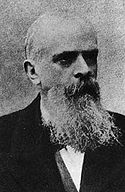 The idea of unity among Ladin
, Romansh and Friulan comes from the Italian historical linguist
Graziadio Isaia Ascoli
, who was born in Gorizia
. In 1871 he presented his theory that these three languages are part of one family, which in the past stretched from Switzerland
to Muggia
and perhaps also Istria
. These three languages are the only survivors of this family, and they all developed differently - in particular, Friulan was much less influenced by German
. The scholar Francescato claimed subsequently that until the 14th century the Venetian language
shared many phonetic features with Friulan and Ladin; therefore he thought that Friulan was a much more conservative
language. It is also interesting to note that before the arrival of the Romans, the border between Carni
and Venetic populations was the river Liquentia (nowadays Livenza), which is still the border between Friulan and Venetian today. Many features that Ascoli thought were peculiar to the Rhaeto-Romance languages can in fact be found in other languages of northern Italy
.
in the Second World War, pro-Nazi German scholars presented supposed evidence for the "profound influence" German culture and language have had on the Friulians, including loan words and medieval place-names. Historical evidence was also found for the Friuli being active in the Carolingian
and the early German empires, as well as for the role the German feudal lords played in the region before its annexation to the Duchy of Carinthia in the late 10th century. It was thus concluded that the Friulians "belong to the German cultural field", and that their land was an ancient part of the German empire and has ever since been part of the German "vital space". These theories indicate a Nazi intention to attempt a "Germanization" of the Friulian speakers, but such plans were cut off by their defeat in the war.
including the area of the Carnia Alps
, but widely throughout the province of Pordenone
, in half of the province of Gorizia
, and in the eastern part of the province of Venice
. In the past, the language borders were wider since also in Trieste
and Muggia
particular variants of Friulan were spoken—the main document about the dialect of Trieste, or tergestino, is "Dialoghi piacevoli in dialetto vernacolo triestino", published by G. Mainati in 1828.
, Belgium
, and Switzerland
or outside Europe
, to Canada
, Mexico
, Australia
, Argentina
, Brazil
, Venezuela
, the United States
, and South Africa
. In these countries, there are associations of Friulan immigrants (called Fogolâr furlan), who try to protect their traditions and language.
. The most notable work is Piruç myò doç inculurit (which means "My sweet, coloured pear"), composed by an anonymous author from Cividale, probably in 1380.
There are few differences in the first two rows, which demonstrates that there has not been a great evolution in the language except for several words which are no longer used (for example, dum(n) lo, a word which means "child", which was used frequently in the past). A modern Friulan speaker can understand these texts with only a little difficulty.
The second important period for Friulan literature is the 16th century. The main author of this period was Ermes di Colorêt
, who composed over 200 poems.
Friulan distinguishes between short and long vowels, e.g. in the following minimal pairs (long vowels are marked in the official orthography with a circumflex accent):
The Friulan dialects differ in their treatment of long vowels. In certain dialects, some of the long vowels are actually diphthongs. The following chart shows how four words (sêt thirst, pît foot, pôc (a) little, fûc fire) are pronounced in four dialects. Each dialect uses a unique pattern of diphthongs (yellow) and monophthongs (blue) for the long vowels:
The double consonants (ll, rr, and so on), used frequently in Italian, are nearly absent in Friulan.
, noun
s are either masculine or feminine
(for example "il mûr" ("the wall", masculine), "la cjadree" ("the chair", feminine).
Most feminine nouns end in -e, which is pronounced.
Examples:
Some feminine nouns, however, end in a consonant, including those ending in -zion (from Latin
).
Most masculine nouns end either in a consonant or in -i.
A few masculine nouns end in -e, including sisteme (system) and probleme (problem). These are usually words coming from ancient Greek. However, because most masculine nouns end in a consonant, it is not uncommon to find the forms sistem and problem instead—though this is more likely to occur in print than in speech.
There are also a number of masculine nouns which have been borrowed intact from Italian
, that is, with a final -o, like treno (train). Many of these words have been fully absorbed into the language, even forming their plurals with the regular Friulan -s rather than the Italian -i. Still, there are some purists, including those influential in Friulan publishing, who frown on such words, insisting that the "proper" Friulan terms should be without the final -o. So despite the fact that one almost always hear treno, chances are that if you see the word in print it will be seen as tren.
(which corresponds to "the" in English) is derived from the Latin ille and takes the following forms:
Before a vowel, both il and la can be abbreviated to l'. These are the standard forms. In the spoken language, various articles are used.
The indefinite article in Friulan (which corresponds to "a" in English) derives from the Latin unus and varies according to gender:
An invariable partitive article also exists: des: des vacjis - some cows.
must agree in gender and number with the noun it qualifies. Most adjectives have four forms for singular (masculine and feminine) and plural (masculine and feminine), for example brut (ugly):
Note that, in some part of Friuli
, the feminine is pronounced with no-standard substituted vowels, i.e. like the plurals brutes, brutas, or the singulars bruta or bruto.
To form the plural, normal rules are followed; given a masculine singular form, the corresponding feminine form is not so straightforward:
To form the plural of almost all other nouns, simply add a final s. Note: this final s is always pronounced as a soft s, that is, like the s of the English
word cats, and never with the hard z-sound of the s in dogs.
In some Friulan dialects there are many words whose final consonant becomes silent when the +s is added. These words include just about all those whose singular form ends in -t. The plural of gjat, for example, is written as gjats, but is pronounced in much of Friuli as though it were gjas, and that of plat (that means dish), though written as plats, is often pronounced as plas. Other words in this category include clâf (key) and clap (stone), whose plural forms, clâfs and claps, are often pronounced with a silent f and p, respectively (clâs, clas), so that the longer a in the former is all that distinguishes it from the latter. Note also that a final -ç, which is pronounced either as the English
"-ch" (in central Friulan) or as "-s", is pluralized in writing as -çs, regardless of whether the pluralized pronunciation is "-s" or "-ts" (it varies according to dialect); an example is messaç / messaçs (message).
Masculine nouns ending in -l or -li form their plurals by dropping the -l or -li and adding -i.
Feminine nouns ending in -l are pluralized regularly.
Some masculine nouns which end in -t are pluralized by changing the final -t to -cj.
Nouns ending in s do not change spelling when pluralized (even though some speakers may pronounce the plural -s differently from the singular -s).
The plural of an (year) has several forms depending on dialect, including ain, ains, agn and agns. Regardless of pronunciation, the written form is agns.
pronoun
s. These, known in Friulan as pleonastics, are never stressed; they are used together with the verbs to express the subject, and can be found before the verb
in declarative sentences or immediately after it in case of interrogative
or vocative (otative) sentences.
An example: jo o lavori means I work; jo lavorio? means Do I work?, while lavorassio means I wish I worked.
by adding -mentri to the ending of the feminine singular form of the adjective (lente becomes lentementri, slowly), though it can sometimes lose the -e of the adjective (facile becomes facilmentri, easily). These type of formation is more common in written language; in spoken language people use frequently other forms or locutions (i.e. a planc for slowly).
, but other languages have contributed too:
, supported by law 482/1999, which protects linguistic minorities. Therefore, teaching of Friulan has been introduced in many primary schools. An online newspaper is active, and there are also a number of musical groups which use Friulan for their songs as well as some theatrical companies. Recently two movies have been made in Friulan (Tierç lion, Lidrîs cuadrade di trê), with positive reviews in Italian newspapers. In about 40% of the communities in the Province of Udine
, road signs are in both Friulan and Italian. There is also an official translation of the Bible
. In 2005, a notable brand of beer used Friulan for one of its commercials.
The main association to foster the use and development of Friulan is the Societât filologjiche furlane, founded in Gorizia
in 1919.
and one in Friulan. Only the Italian is official and used in administration, although it is widely expected that the Friulan ones will receive partial acknowledgement in the near future. For example, the city of Udine
is called Udin in Friulan, the town of Tolmezzo
is called Tumieç, the town of Aviano
is called Avian.
Standard Friulan is called in Friulan furlan standard, furlan normalizât, or, using a Greek
word coinè
.
in the neologisms, which pose a serious threat to Friulan's future development. They also explain it is a written standard without affecting pronunciation, which can follow local variants.
For example, the word home becomes cjase in Central Friulan, and cjasa or cjaso in other areas. Pier Paolo Pasolini
wrote his works in Western Friulan, since he learned the language from his mother who was from Casarsa/Cjasarsa
, near Pordenone
.
In the 13th century, early literary works in Friulan were based on the language spoken in Cividale, which was at that time the most important town in Friuli. These works show endings in -o, which, interestingly, nowadays is restricted to some villages in Carnia
. Later, the main city of Friuli
became Udine
and the most common ending was -a; only from the 16th century on, -e endings were used in standard Friulan.
and used in official documents, Friulan is written using the Latin alphabet
, plus the c-cedilla
(ç). The letter q is used only for personal names and historical toponyms, in every other case is replaced by c. Besides that, k, x, w, and y appear only in loan words, so they are not considered part of the alphabet.
There are also grave accent
s (à, è, ì, ò and ù) and circumflex accents (â, ê, î, ô, and û), which are put above the vowel
s to distinguish between homophonic words or to show where there is stress (the former) and show long vowels (the latter).
from the names of the scholars who proposed it. It is less common, probably also because it is more difficult for a beginner due to its use of letters such as č that are typical of Slavic languages
, but seem foreign to native Italian speakers.
Romance languages
The Romance languages are a branch of the Indo-European language family, more precisely of the Italic languages subfamily, comprising all the languages that descend from Vulgar Latin, the language of ancient Rome...
belonging to the Rhaeto-Romance
Rhaeto-Romance languages
Rhaeto-Romance languages are a Romance language sub-family which includes multiple languages spoken in north and north-eastern Italy, and Switzerland...
family, spoken in the Friuli
Friuli
Friuli is an area of northeastern Italy with its own particular cultural and historical identity. It comprises the major part of the autonomous region Friuli-Venezia Giulia, i.e. the province of Udine, Pordenone, Gorizia, excluding Trieste...
region of northeastern Italy
Italy
Italy , officially the Italian Republic languages]] under the European Charter for Regional or Minority Languages. In each of these, Italy's official name is as follows:;;;;;;;;), is a unitary parliamentary republic in South-Central Europe. To the north it borders France, Switzerland, Austria and...
. Friulan has around 800,000 speakers, the vast majority of whom also speak Italian
Italian language
Italian is a Romance language spoken mainly in Europe: Italy, Switzerland, San Marino, Vatican City, by minorities in Malta, Monaco, Croatia, Slovenia, France, Libya, Eritrea, and Somalia, and by immigrant communities in the Americas and Australia...
. It is sometimes called Eastern Ladin, since it shares the same roots as Ladin, although over the centuries it has diverged under the influence of surrounding languages, including German
German language
German is a West Germanic language, related to and classified alongside English and Dutch. With an estimated 90 – 98 million native speakers, German is one of the world's major languages and is the most widely-spoken first language in the European Union....
, Italian
Italian language
Italian is a Romance language spoken mainly in Europe: Italy, Switzerland, San Marino, Vatican City, by minorities in Malta, Monaco, Croatia, Slovenia, France, Libya, Eritrea, and Somalia, and by immigrant communities in the Americas and Australia...
, Venetian
Venetian language
Venetian or Venetan is a Romance language spoken as a native language by over two million people, mostly in the Veneto region of Italy, where of five million inhabitants almost all can understand it. It is sometimes spoken and often well understood outside Veneto, in Trentino, Friuli, Venezia...
, and Slovene. Documents in Friulan are attested from the 11th century, and poetry and literature dating as far back as 1300. By the 20th century, there was a revival of interest in the language, which has continued to this day.
History
A question which causes many debates is the influence of the Latin spoken in AquileiaAquileia
Aquileia is an ancient Roman city in what is now Italy, at the head of the Adriatic at the edge of the lagoons, about 10 km from the sea, on the river Natiso , the course of which has changed somewhat since Roman times...
and surrounding areas. Some claim that it had peculiar features that later passed into Friulan. Epigraphs and inscriptions from that period show some variants if compared to the standard Latin language, but most of these are common to other areas of the Roman Empire; often it is cited that Fortunatianus, bishop of Aquileia
Aquileia
Aquileia is an ancient Roman city in what is now Italy, at the head of the Adriatic at the edge of the lagoons, about 10 km from the sea, on the river Natiso , the course of which has changed somewhat since Roman times...
from 342 till circa 357, wrote a commentary to the Gospel
Gospel
A gospel is an account, often written, that describes the life of Jesus of Nazareth. In a more general sense the term "gospel" may refer to the good news message of the New Testament. It is primarily used in reference to the four canonical gospels of Matthew, Mark, Luke, and John...
in sermo rusticus, that is in the language spoken by the people, which therefore should have been quite different from Standard Latin. We don't know the language of the text, but it shows a shift between languages that didn't exist for example in other important communities of Northern Italy. The language spoken before the arrival of the Romans in 181 BC was of Celtic origin, since the inhabitants belonged to the Carni
Carni
The Carni were a tribe of the Eastern Alps in classical antiquity, settling in the mountains separating Noricum and Venetia....
, a Celtic population. In modern Friulan the words of Celtic origins are few, while much influence of the original population is showed in toponyms (names of villages which end in -acco, -icco are an example). Even influences from Longobardic language—Friuli was one of their strongholds—are very few. From this evidence, scholars today agree that the formation of Friulan dates back to around 1000, at the same time as other dialects derived from Latin (see Vulgar Latin
Vulgar Latin
Vulgar Latin is any of the nonstandard forms of Latin from which the Romance languages developed. Because of its nonstandard nature, it had no official orthography. All written works used Classical Latin, with very few exceptions...
). The first written records of Friulan have been found in administrative acts of the 13th century, but these documents became more frequent in the following century, when literary works also emerged (Frammenti letterari for example). The main center at that time was Cividale. The Friulan language has never acquired official status: legal statutes were first written in Latin, then in Venetian, and finally in Italian.
Scholarship on Friulan minority in Friuli-Venezia Giulia
Dr. Kevin L. Dooley, Assistant Professor of Political Science at Monmouth UniversityMonmouth University
Monmouth University is a private university located in West Long Branch, New Jersey, United States.Founded in 1933 as Monmouth Junior College, it became Monmouth College in 1956, and later Monmouth University in 1995 after receiving its charter....
has written a book entitled, Politics Still Matters: Globalization, Governance, and the Revival of Regional Minorities, that investigates the developments of Friulans in Italy, along with other languages.
The "Ladin Question"
Ladin
Ladin is a language consisting of a group of dialects spoken in the Dolomite Mountains in Northern Italy in the border regions of the provinces Trentino, South Tyrol and Belluno...
, Romansh and Friulan comes from the Italian historical linguist
Historical linguistics
Historical linguistics is the study of language change. It has five main concerns:* to describe and account for observed changes in particular languages...
Graziadio Isaia Ascoli
Graziadio Isaia Ascoli
Graziadio Isaia Ascoli was an Italian linguist.- Life and work :Ascoli was born in an Italian-speaking Jewish family in the multiethnic town of Gorizia, then part of the Austrian Empire...
, who was born in Gorizia
Gorizia
Gorizia is a town and comune in northeastern Italy, in the autonomous region of Friuli Venezia Giulia. It is located at the foot of the Julian Alps, bordering Slovenia. It is the capital of the Province of Gorizia, and it is a local center of tourism, industry, and commerce. Since 1947, a twin...
. In 1871 he presented his theory that these three languages are part of one family, which in the past stretched from Switzerland
Switzerland
Switzerland name of one of the Swiss cantons. ; ; ; or ), in its full name the Swiss Confederation , is a federal republic consisting of 26 cantons, with Bern as the seat of the federal authorities. The country is situated in Western Europe,Or Central Europe depending on the definition....
to Muggia
Muggia
Muggia is a small Italian comune in the extreme south-east of Trieste lying on the border with Slovenia.Muggia is the last and only flap of Istria still in Italian territory, after the dissolution of the Free Territory of Trieste in 1954....
and perhaps also Istria
Istria
Istria , formerly Histria , is the largest peninsula in the Adriatic Sea. The peninsula is located at the head of the Adriatic between the Gulf of Trieste and the Bay of Kvarner...
. These three languages are the only survivors of this family, and they all developed differently - in particular, Friulan was much less influenced by German
German language
German is a West Germanic language, related to and classified alongside English and Dutch. With an estimated 90 – 98 million native speakers, German is one of the world's major languages and is the most widely-spoken first language in the European Union....
. The scholar Francescato claimed subsequently that until the 14th century the Venetian language
Venetian language
Venetian or Venetan is a Romance language spoken as a native language by over two million people, mostly in the Veneto region of Italy, where of five million inhabitants almost all can understand it. It is sometimes spoken and often well understood outside Veneto, in Trentino, Friuli, Venezia...
shared many phonetic features with Friulan and Ladin; therefore he thought that Friulan was a much more conservative
Conservative (language)
In linguistics, a conservative form, variety, or modality is one that has changed relatively little over its history, or which is relatively resistant to change...
language. It is also interesting to note that before the arrival of the Romans, the border between Carni
Carni
The Carni were a tribe of the Eastern Alps in classical antiquity, settling in the mountains separating Noricum and Venetia....
and Venetic populations was the river Liquentia (nowadays Livenza), which is still the border between Friulan and Venetian today. Many features that Ascoli thought were peculiar to the Rhaeto-Romance languages can in fact be found in other languages of northern Italy
Italy
Italy , officially the Italian Republic languages]] under the European Charter for Regional or Minority Languages. In each of these, Italy's official name is as follows:;;;;;;;;), is a unitary parliamentary republic in South-Central Europe. To the north it borders France, Switzerland, Austria and...
.
Nazi Theories
During the Nazi Occupation of ItalyItalian Campaign (World War II)
The Italian Campaign of World War II was the name of Allied operations in and around Italy, from 1943 to the end of the war in Europe. Joint Allied Forces Headquarters AFHQ was operationally responsible for all Allied land forces in the Mediterranean theatre, and it planned and commanded the...
in the Second World War, pro-Nazi German scholars presented supposed evidence for the "profound influence" German culture and language have had on the Friulians, including loan words and medieval place-names. Historical evidence was also found for the Friuli being active in the Carolingian
Carolingian
The Carolingian dynasty was a Frankish noble family with origins in the Arnulfing and Pippinid clans of the 7th century AD. The name "Carolingian", Medieval Latin karolingi, an altered form of an unattested Old High German *karling, kerling The Carolingian dynasty (known variously as the...
and the early German empires, as well as for the role the German feudal lords played in the region before its annexation to the Duchy of Carinthia in the late 10th century. It was thus concluded that the Friulians "belong to the German cultural field", and that their land was an ancient part of the German empire and has ever since been part of the German "vital space". These theories indicate a Nazi intention to attempt a "Germanization" of the Friulian speakers, but such plans were cut off by their defeat in the war.
Italy
Today, Friulan is spoken in the province of UdineProvince of Udine
The Province of Udine is a province in the autonomous Friuli-Venezia Giulia region of Italy, bordering Austria and Slovenia. Its capital is the city of Udine....
including the area of the Carnia Alps
Alps
The Alps is one of the great mountain range systems of Europe, stretching from Austria and Slovenia in the east through Italy, Switzerland, Liechtenstein and Germany to France in the west....
, but widely throughout the province of Pordenone
Pordenone
Pordenone is a comune of Pordenone province of northeast Italy in the Friuli-Venezia Giulia region.The name comes from the Latin "Portus Naonis" meaning the port on the river Noncello - History :...
, in half of the province of Gorizia
Province of Gorizia
The Province of Gorizia is a province in the autonomous Friuli–Venezia Giulia region of Italy.-Overview:Its capital is the city of Gorizia. It belonged to the Province of Udine between 1924 and 1927 and the communes of Sonzia, Plezzo, Bergogna, Caporetto, Tolmino, Circhina, Santa Lucia d'Isonzo,...
, and in the eastern part of the province of Venice
Province of Venice
The Province of Venice is a province in the Veneto region of northern Italy. Its capital is the city of Venice.It has an area of 2,467 km², and a total population of 829,418 . There are 44 comuni in the province . As of 2005, the main comuni by population are:-External links:* * : photos of...
. In the past, the language borders were wider since also in Trieste
Trieste
Trieste is a city and seaport in northeastern Italy. It is situated towards the end of a narrow strip of land lying between the Adriatic Sea and Italy's border with Slovenia, which lies almost immediately south and east of the city...
and Muggia
Muggia
Muggia is a small Italian comune in the extreme south-east of Trieste lying on the border with Slovenia.Muggia is the last and only flap of Istria still in Italian territory, after the dissolution of the Free Territory of Trieste in 1954....
particular variants of Friulan were spoken—the main document about the dialect of Trieste, or tergestino, is "Dialoghi piacevoli in dialetto vernacolo triestino", published by G. Mainati in 1828.
World
Friuli was until the 1960s an area of deep poverty, causing a large number of Friulan speakers to emigrate. Most went to FranceFrance
The French Republic , The French Republic , The French Republic , (commonly known as France , is a unitary semi-presidential republic in Western Europe with several overseas territories and islands located on other continents and in the Indian, Pacific, and Atlantic oceans. Metropolitan France...
, Belgium
Belgium
Belgium , officially the Kingdom of Belgium, is a federal state in Western Europe. It is a founding member of the European Union and hosts the EU's headquarters, and those of several other major international organisations such as NATO.Belgium is also a member of, or affiliated to, many...
, and Switzerland
Switzerland
Switzerland name of one of the Swiss cantons. ; ; ; or ), in its full name the Swiss Confederation , is a federal republic consisting of 26 cantons, with Bern as the seat of the federal authorities. The country is situated in Western Europe,Or Central Europe depending on the definition....
or outside Europe
Europe
Europe is, by convention, one of the world's seven continents. Comprising the westernmost peninsula of Eurasia, Europe is generally 'divided' from Asia to its east by the watershed divides of the Ural and Caucasus Mountains, the Ural River, the Caspian and Black Seas, and the waterways connecting...
, to Canada
Canada
Canada is a North American country consisting of ten provinces and three territories. Located in the northern part of the continent, it extends from the Atlantic Ocean in the east to the Pacific Ocean in the west, and northward into the Arctic Ocean...
, Mexico
Mexico
The United Mexican States , commonly known as Mexico , is a federal constitutional republic in North America. It is bordered on the north by the United States; on the south and west by the Pacific Ocean; on the southeast by Guatemala, Belize, and the Caribbean Sea; and on the east by the Gulf of...
, Australia
Australia
Australia , officially the Commonwealth of Australia, is a country in the Southern Hemisphere comprising the mainland of the Australian continent, the island of Tasmania, and numerous smaller islands in the Indian and Pacific Oceans. It is the world's sixth-largest country by total area...
, Argentina
Argentina
Argentina , officially the Argentine Republic , is the second largest country in South America by land area, after Brazil. It is constituted as a federation of 23 provinces and an autonomous city, Buenos Aires...
, Brazil
Brazil
Brazil , officially the Federative Republic of Brazil , is the largest country in South America. It is the world's fifth largest country, both by geographical area and by population with over 192 million people...
, Venezuela
Venezuela
Venezuela , officially called the Bolivarian Republic of Venezuela , is a tropical country on the northern coast of South America. It borders Colombia to the west, Guyana to the east, and Brazil to the south...
, the United States
United States
The United States of America is a federal constitutional republic comprising fifty states and a federal district...
, and South Africa
South Africa
The Republic of South Africa is a country in southern Africa. Located at the southern tip of Africa, it is divided into nine provinces, with of coastline on the Atlantic and Indian oceans...
. In these countries, there are associations of Friulan immigrants (called Fogolâr furlan), who try to protect their traditions and language.
Literature
The first texts in Friulan date back to the 13th century and are mainly commercial or juridical acts. We can see in these examples that Friulan was used together with Latin, which was still the administrative language. The prime examples of literature that have survived—much from this period has been lost—are poems from the 14th century, which are mainly dedicated to the theme of love and were probably inspired by the Italian poetic movement Dolce Stil NovoDolce Stil Novo
Dolce Stil Novo , or stilnovismo, is the name given to the most important literary movement of 13th century in Italy. Influenced by both Sicilian and Tuscan poetry, its main theme is Love . Gentilezza and Amore are indeed topoi in the major works of the period...
. The most notable work is Piruç myò doç inculurit (which means "My sweet, coloured pear"), composed by an anonymous author from Cividale, probably in 1380.
| Original text | Version in modern Friulan |
|---|---|
| Piruç myò doç inculurit quant yò chi viot, dut stoi ardit |
Piruç gno dolç inculurît cuant che jo ti viôt, dut o stoi ardît |
There are few differences in the first two rows, which demonstrates that there has not been a great evolution in the language except for several words which are no longer used (for example, dum(n) lo, a word which means "child", which was used frequently in the past). A modern Friulan speaker can understand these texts with only a little difficulty.
The second important period for Friulan literature is the 16th century. The main author of this period was Ermes di Colorêt
Ermes di Colorêt
Ermes di Colorêt was an Italian nobleman and writer who served the Grand Duke of Tuscany and the Holy Roman Emperor....
, who composed over 200 poems.
| Name | Century |
|---|---|
| Ermes di Colorêt Ermes di Colorêt Ermes di Colorêt was an Italian nobleman and writer who served the Grand Duke of Tuscany and the Holy Roman Emperor.... |
16th |
| Pietro Zorutti | 19th |
| Pier Paolo Pasolini Pier Paolo Pasolini Pier Paolo Pasolini was an Italian film director, poet, writer, and intellectual. Pasolini distinguished himself as a poet, journalist, philosopher, linguist, novelist, playwright, filmmaker, newspaper and magazine columnist, actor, painter and political figure... |
20th |
Phonology
Long vowels are typical of the Friulan language and this has a great influence also on Friulan pronunciation of Italian.Friulan distinguishes between short and long vowels, e.g. in the following minimal pairs (long vowels are marked in the official orthography with a circumflex accent):
- lat (milk)
- lât (gone)
- fis (fixed, dense)
- fîs (sons)
- lus (luxury)
- lûs (light n.)
The Friulan dialects differ in their treatment of long vowels. In certain dialects, some of the long vowels are actually diphthongs. The following chart shows how four words (sêt thirst, pît foot, pôc (a) little, fûc fire) are pronounced in four dialects. Each dialect uses a unique pattern of diphthongs (yellow) and monophthongs (blue) for the long vowels:
| West | Codroipo | Carnia | Central | |
| sêt | [seit] | [seːt] | [seit] | [seːt] |
| pît | [peit] | [peit] | [piːt] | [piːt] |
| pôc | [pouk] | [poːk] | [pouk] | [poːk] |
| fûc | [fouk] | [fouk] | [fuːk] | [fuːk] |
The double consonants (ll, rr, and so on), used frequently in Italian, are nearly absent in Friulan.
Nouns
In Friulan as in other Romance languagesRomance languages
The Romance languages are a branch of the Indo-European language family, more precisely of the Italic languages subfamily, comprising all the languages that descend from Vulgar Latin, the language of ancient Rome...
, noun
Noun
In linguistics, a noun is a member of a large, open lexical category whose members can occur as the main word in the subject of a clause, the object of a verb, or the object of a preposition .Lexical categories are defined in terms of how their members combine with other kinds of...
s are either masculine or feminine
Grammatical gender
Grammatical gender is defined linguistically as a system of classes of nouns which trigger specific types of inflections in associated words, such as adjectives, verbs and others. For a system of noun classes to be a gender system, every noun must belong to one of the classes and there should be...
(for example "il mûr" ("the wall", masculine), "la cjadree" ("the chair", feminine).
Feminine
Most feminine nouns end in -e, which is pronounced.
Examples:
- cjase = house (from Latin "casa, -ae" hut)
- lune = moon (from Latin "luna, -ae")
- scuele = school (from Latin "schola, -ae")
Some feminine nouns, however, end in a consonant, including those ending in -zion (from Latin
Latin
Latin is an Italic language originally spoken in Latium and Ancient Rome. It, along with most European languages, is a descendant of the ancient Proto-Indo-European language. Although it is considered a dead language, a number of scholars and members of the Christian clergy speak it fluently, and...
).
- man = hand (from Latin "manŭs, -ūs" f)
- lezion = lesson (from Latin "lectio, -nis" f)
Masculine
Most masculine nouns end either in a consonant or in -i.
- cjan = dog
- gjat = cat
- fradi = brother
- libri = book
A few masculine nouns end in -e, including sisteme (system) and probleme (problem). These are usually words coming from ancient Greek. However, because most masculine nouns end in a consonant, it is not uncommon to find the forms sistem and problem instead—though this is more likely to occur in print than in speech.
There are also a number of masculine nouns which have been borrowed intact from Italian
Italian language
Italian is a Romance language spoken mainly in Europe: Italy, Switzerland, San Marino, Vatican City, by minorities in Malta, Monaco, Croatia, Slovenia, France, Libya, Eritrea, and Somalia, and by immigrant communities in the Americas and Australia...
, that is, with a final -o, like treno (train). Many of these words have been fully absorbed into the language, even forming their plurals with the regular Friulan -s rather than the Italian -i. Still, there are some purists, including those influential in Friulan publishing, who frown on such words, insisting that the "proper" Friulan terms should be without the final -o. So despite the fact that one almost always hear treno, chances are that if you see the word in print it will be seen as tren.
Articles
The Friulan definite articleArticle (grammar)
An article is a word that combines with a noun to indicate the type of reference being made by the noun. Articles specify the grammatical definiteness of the noun, in some languages extending to volume or numerical scope. The articles in the English language are the and a/an, and some...
(which corresponds to "the" in English) is derived from the Latin ille and takes the following forms:
| Definite article Definite Article Definite Article is the title of British comedian Eddie Izzard's 1996 performance released on VHS. It was recorded on different nights at the Shaftesbury Theatre... s |
||
|---|---|---|
| Number | Masculine | Feminine |
| Singular | il | la |
| Plural | i | lis |
Before a vowel, both il and la can be abbreviated to l'. These are the standard forms. In the spoken language, various articles are used.
The indefinite article in Friulan (which corresponds to "a" in English) derives from the Latin unus and varies according to gender:
| Indefinite articles | |
|---|---|
| Masculine | un |
| Feminine | une |
An invariable partitive article also exists: des: des vacjis - some cows.
Adjectives
A Friulan adjectiveAdjective
In grammar, an adjective is a 'describing' word; the main syntactic role of which is to qualify a noun or noun phrase, giving more information about the object signified....
must agree in gender and number with the noun it qualifies. Most adjectives have four forms for singular (masculine and feminine) and plural (masculine and feminine), for example brut (ugly):
| Declination | ||
|---|---|---|
| Number | Masculine | Feminine |
| Singular | brut | brute |
| Plural | bruts | brutis |
Note that, in some part of Friuli
Friuli
Friuli is an area of northeastern Italy with its own particular cultural and historical identity. It comprises the major part of the autonomous region Friuli-Venezia Giulia, i.e. the province of Udine, Pordenone, Gorizia, excluding Trieste...
, the feminine is pronounced with no-standard substituted vowels, i.e. like the plurals brutes, brutas, or the singulars bruta or bruto.
To form the plural, normal rules are followed; given a masculine singular form, the corresponding feminine form is not so straightforward:
- in most cases, just add an ending -e (curt, curte)
- if the final letter is a -c, feminine is in -cje, -cje, -che, -ghe
- if the final letter is a -f, feminine is in -ve
- if the final letter is a -p, feminine is in -be
- if the final letter is a -t, feminine is in -de
Rules for the formation of plurals
To form the plural of nouns ending in -e, whether feminine or masculine, change the final -e to -is.- taule, taulis = table, tables
- cjase, cjasis = house, houses
- lune, lunis = moon, moons
- scuele, scuelis = school, schools
- sisteme, sistemis = system, systems
To form the plural of almost all other nouns, simply add a final s. Note: this final s is always pronounced as a soft s, that is, like the s of the English
English language
English is a West Germanic language that arose in the Anglo-Saxon kingdoms of England and spread into what was to become south-east Scotland under the influence of the Anglian medieval kingdom of Northumbria...
word cats, and never with the hard z-sound of the s in dogs.
- man, mans = hand, hands
- lezion, lezions = lesson, lessons
- cjan, cjans = dog, dogs
- gjat, gjats = cat, cats
- fradi, fradis = brother, brothers
- libri, libris = book, books
- treno, trenos = train, trains
- braç, braçs = arm, arms (from Latin "bracchium")
- guant, guants = glove, gloves (compare English "gauntlet")
In some Friulan dialects there are many words whose final consonant becomes silent when the +s is added. These words include just about all those whose singular form ends in -t. The plural of gjat, for example, is written as gjats, but is pronounced in much of Friuli as though it were gjas, and that of plat (that means dish), though written as plats, is often pronounced as plas. Other words in this category include clâf (key) and clap (stone), whose plural forms, clâfs and claps, are often pronounced with a silent f and p, respectively (clâs, clas), so that the longer a in the former is all that distinguishes it from the latter. Note also that a final -ç, which is pronounced either as the English
English language
English is a West Germanic language that arose in the Anglo-Saxon kingdoms of England and spread into what was to become south-east Scotland under the influence of the Anglian medieval kingdom of Northumbria...
"-ch" (in central Friulan) or as "-s", is pluralized in writing as -çs, regardless of whether the pluralized pronunciation is "-s" or "-ts" (it varies according to dialect); an example is messaç / messaçs (message).
Exceptions
Masculine nouns ending in -l or -li form their plurals by dropping the -l or -li and adding -i.
- cjaval, cjavai = horse, horses (from Latin "caballus")
- fîl, fîi = string, strings (from Latin "filum")
- cjapiel, cjapiei = hat, hats
- cjaveli, cjavei = hair, hairs
- voli, voi = eye, eyes
- zenoli, zenoi = knee, knees (from Latin "genu")
Feminine nouns ending in -l are pluralized regularly.
- piel, piels = skin, skins
- val, vals = valley, valleys
Some masculine nouns which end in -t are pluralized by changing the final -t to -cj.
- dint, dincj = tooth, teeth (from Latin "dens, -tis")
- dut, ducj = all (of one thing), all (of several things) (from Latin "totus")
Nouns ending in s do not change spelling when pluralized (even though some speakers may pronounce the plural -s differently from the singular -s).
- vues = bone, bones
- pes = fish (singular or plural) (from Latin "piscis")
- mês = month, months (from Latin "mensis")
The plural of an (year) has several forms depending on dialect, including ain, ains, agn and agns. Regardless of pronunciation, the written form is agns.
Clitic subject pronouns
A feature of Friulan are the clitic subjectSubject (grammar)
The subject is one of the two main constituents of a clause, according to a tradition that can be tracked back to Aristotle and that is associated with phrase structure grammars; the other constituent is the predicate. According to another tradition, i.e...
pronoun
Pronoun
In linguistics and grammar, a pronoun is a pro-form that substitutes for a noun , such as, in English, the words it and he...
s. These, known in Friulan as pleonastics, are never stressed; they are used together with the verbs to express the subject, and can be found before the verb
Verb
A verb, from the Latin verbum meaning word, is a word that in syntax conveys an action , or a state of being . In the usual description of English, the basic form, with or without the particle to, is the infinitive...
in declarative sentences or immediately after it in case of interrogative
Question
A question may be either a linguistic expression used to make a request for information, or else the request itself made by such an expression. This information may be provided with an answer....
or vocative (otative) sentences.
| Weak pronouns | |||
|---|---|---|---|
| Declaration | Question | Invocation | |
| I | o | -io | -io |
| You | tu | -tu | -tu |
| He | al | -ial | -ial |
| She | e | -ie | -ie |
| We | o | -o | -o |
| You | o | -o | -o |
| They | -a | -o | -o |
An example: jo o lavori means I work; jo lavorio? means Do I work?, while lavorassio means I wish I worked.
Verbs
- Friulan verbal infinitiveInfinitiveIn grammar, infinitive is the name for certain verb forms that exist in many languages. In the usual description of English, the infinitive of a verb is its basic form with or without the particle to: therefore, do and to do, be and to be, and so on are infinitives...
s have one of four endings, either -â, -ê, -i, -î; if you remove the ending you get the root which is used to form the other forms (fevel - â, to speak). In the case of irregular verbs, even the root changes. These kind of verbs are commonly used (jessi, to be, vê, to have, podê, to be able to). Frequently people use verbs in combination with adverbs to restrict the meaning.
| Verbs, present, declarative form | |||
|---|---|---|---|
| Person | fevelâ (to speak) | lâ (to go) | jessi (to be) |
| Jo | o fevel-i | o v-oi | o soi |
| Tu | tu fevel-is | tu v-âs | tu sês |
| Lui | al fevel-e | al v-a | al è |
| Nô | o fevel-ìn | o l-in | o sin |
| Vô | o fevel-ais | o v-ais (l-ais) | o sês |
| Lôr | a fevel-in | a v-an | a son |
Adverbs
An adjective can be made into an adverbAdverb
An adverb is a part of speech that modifies verbs or any part of speech other than a noun . Adverbs can modify verbs, adjectives , clauses, sentences, and other adverbs....
by adding -mentri to the ending of the feminine singular form of the adjective (lente becomes lentementri, slowly), though it can sometimes lose the -e of the adjective (facile becomes facilmentri, easily). These type of formation is more common in written language; in spoken language people use frequently other forms or locutions (i.e. a planc for slowly).
Vocabulary
Most of the Friulan vocabulary is derived from Latin. Needless to say, there have been substantial phonological and morphological changes throughout its history. Therefore many words are shared with Romance languagesRomance languages
The Romance languages are a branch of the Indo-European language family, more precisely of the Italic languages subfamily, comprising all the languages that descend from Vulgar Latin, the language of ancient Rome...
, but other languages have contributed too:
- GermanGerman languageGerman is a West Germanic language, related to and classified alongside English and Dutch. With an estimated 90 – 98 million native speakers, German is one of the world's major languages and is the most widely-spoken first language in the European Union....
words were introduced in particular in the Middle AgesMiddle AgesThe Middle Ages is a periodization of European history from the 5th century to the 15th century. The Middle Ages follows the fall of the Western Roman Empire in 476 and precedes the Early Modern Era. It is the middle period of a three-period division of Western history: Classic, Medieval and Modern...
, during the Patrie dal Friûl, when the influence from this culture was quite strong (i.e. bearç, backyard; bussâ, to kiss). - SlavicSlavic languagesThe Slavic languages , a group of closely related languages of the Slavic peoples and a subgroup of Indo-European languages, have speakers in most of Eastern Europe, in much of the Balkans, in parts of Central Europe, and in the northern part of Asia.-Branches:Scholars traditionally divide Slavic...
words were brought by South Slavic (mostly Alpine Slavic) immigrants that were called several times to FriuliFriuliFriuli is an area of northeastern Italy with its own particular cultural and historical identity. It comprises the major part of the autonomous region Friuli-Venezia Giulia, i.e. the province of Udine, Pordenone, Gorizia, excluding Trieste...
to repopulate lands devastated by Hungarian invasions in the 10th century (i.e. cjast, barn; zigâ, to shout). Furthermore, many Slavic words have entered Friulan through the century-long neighbourhood between Friulans and Slovenes, especially in north-eastern Friuli (Slavia Friulana) and in the Gorizia and GradiscaGorizia and GradiscaThe County of Gorizia and Gradisca was a Habsburg county in Central Europe, in what is now a multilingual border area of Italy and Slovenia. It was named for its two major urban centers, Gorizia and Gradisca d'Isonzo.-Province of the Habsburg Empire:...
area. Words such as colaç (cake), cudiç (devil) and cos (basket) are all of Slovene origin. There are also many toponyms with Slavic roots. - There are many words that have Germanic (probably Longobardic origins) and Celtic roots (what still remains of the languages spoken before Roman colonizations). Examples of the first category are sbregâ, to tear; sedon, spoon; taponâ, to cover. For the latter category, troi, path; bragons, trousers.
- The Venetian languageVenetian languageVenetian or Venetan is a Romance language spoken as a native language by over two million people, mostly in the Veneto region of Italy, where of five million inhabitants almost all can understand it. It is sometimes spoken and often well understood outside Veneto, in Trentino, Friuli, Venezia...
influenced Friulan vocabulary, for example canucje, straw. - scientific terms are often of Greek origin, and there are also some ArabArabic languagesThe Arabic language family consists of*Classical Arabic and its descendants, including** Modern Standard Arabic and colloquial varieties of Arabic **The various Judeo-Arabic languages **Maltese...
terms in Friulan (lambic, still) - Some FrenchFrench languageFrench is a Romance language spoken as a first language in France, the Romandy region in Switzerland, Wallonia and Brussels in Belgium, Monaco, the regions of Quebec and Acadia in Canada, and by various communities elsewhere. Second-language speakers of French are distributed throughout many parts...
words entered the Friulan vocabulary: examples include pardabon, really and gustâ, to have lunch - Many EnglishEnglish languageEnglish is a West Germanic language that arose in the Anglo-Saxon kingdoms of England and spread into what was to become south-east Scotland under the influence of the Anglian medieval kingdom of Northumbria...
words (such as computer, monitor, mouse and so on) have entered the Friulan vocabulary through Italian. - ItalianItalian languageItalian is a Romance language spoken mainly in Europe: Italy, Switzerland, San Marino, Vatican City, by minorities in Malta, Monaco, Croatia, Slovenia, France, Libya, Eritrea, and Somalia, and by immigrant communities in the Americas and Australia...
itself has a growing influence on Friulan vocabulary, especially as far as neologisms are concerned (e.g. treno meaning train, aereo meaning airplane). Such neologisms are currently used, although not accepted in the official dictionary.
Present condition
Nowadays, Friulan is officially recognized in ItalyItaly
Italy , officially the Italian Republic languages]] under the European Charter for Regional or Minority Languages. In each of these, Italy's official name is as follows:;;;;;;;;), is a unitary parliamentary republic in South-Central Europe. To the north it borders France, Switzerland, Austria and...
, supported by law 482/1999, which protects linguistic minorities. Therefore, teaching of Friulan has been introduced in many primary schools. An online newspaper is active, and there are also a number of musical groups which use Friulan for their songs as well as some theatrical companies. Recently two movies have been made in Friulan (Tierç lion, Lidrîs cuadrade di trê), with positive reviews in Italian newspapers. In about 40% of the communities in the Province of Udine
Province of Udine
The Province of Udine is a province in the autonomous Friuli-Venezia Giulia region of Italy, bordering Austria and Slovenia. Its capital is the city of Udine....
, road signs are in both Friulan and Italian. There is also an official translation of the Bible
Bible
The Bible refers to any one of the collections of the primary religious texts of Judaism and Christianity. There is no common version of the Bible, as the individual books , their contents and their order vary among denominations...
. In 2005, a notable brand of beer used Friulan for one of its commercials.
The main association to foster the use and development of Friulan is the Societât filologjiche furlane, founded in Gorizia
Gorizia
Gorizia is a town and comune in northeastern Italy, in the autonomous region of Friuli Venezia Giulia. It is located at the foot of the Julian Alps, bordering Slovenia. It is the capital of the Province of Gorizia, and it is a local center of tourism, industry, and commerce. Since 1947, a twin...
in 1919.
Toponyms
Every city and village in Friuli has two names, one in ItalianItalian language
Italian is a Romance language spoken mainly in Europe: Italy, Switzerland, San Marino, Vatican City, by minorities in Malta, Monaco, Croatia, Slovenia, France, Libya, Eritrea, and Somalia, and by immigrant communities in the Americas and Australia...
and one in Friulan. Only the Italian is official and used in administration, although it is widely expected that the Friulan ones will receive partial acknowledgement in the near future. For example, the city of Udine
Udine
Udine is a city and comune in northeastern Italy, in the middle of Friuli-Venezia Giulia region, between the Adriatic sea and the Alps , less than 40 km from the Slovenian border. Its population was 99,439 in 2009, and that of its urban area was 175,000.- History :Udine is the historical...
is called Udin in Friulan, the town of Tolmezzo
Tolmezzo
Tolmezzo is a town and comune in the province of Udine, part of the Friuli-Venezia Giulia region of north-eastern Italy.-Geography:Tolmezzo is located at the feet of the Strabut Mountain, between the Tagliamento River and the Bût stream. Nearby is the Mount Amariana...
is called Tumieç, the town of Aviano
Aviano
Aviano is a town and comune of province of Pordenone at the foot of the Dolomites mountain range in Friuli-Venezia Giulia, northern Italy.-History:...
is called Avian.
Challenges of standardisation
A challenge that Friulan shares with other minorities is to create a standard language and a unique writing system. The regional law 15/1996 approved a standard orthography, which represents the basis of a common variant and should be used in toponyms, official acts, written documents. These standard is based on Central Friulan, which was traditionally the language used in literature already in 1700 and afterwards (the biggest examples are probably Pieri Çorut's works), but with some changes:- the diphthongDiphthongA diphthong , also known as a gliding vowel, refers to two adjacent vowel sounds occurring within the same syllable. Technically, a diphthong is a vowel with two different targets: That is, the tongue moves during the pronunciation of the vowel...
ie replaces ia, e.g. fier (iron) instead of fiar or tiere (soil, Earth) instead of tiare. - the use of vu instead of u at the beginning of word, e.g. vueli (oil) instead of ueli or vueit (empty) instead of ueit.
- the use of i between vocals, for example ploie (rain) instead of ploe.
Standard Friulan is called in Friulan furlan standard, furlan normalizât, or, using a Greek
Greek language
Greek is an independent branch of the Indo-European family of languages. Native to the southern Balkans, it has the longest documented history of any Indo-European language, spanning 34 centuries of written records. Its writing system has been the Greek alphabet for the majority of its history;...
word coinè
Koine language
In linguistics, a koiné language is a standard language or dialect that has arisen as a result of contact between two mutually intelligible varieties of the same language. Since the speakers have understood one another from before the advent of the koiné, the koineization process is not as rapid...
.
Criticism against standard Friulan
There have been several critics of the standardization of Friulan, mainly from speakers of local variants which can differ a lot from it; they also argue that the standard could eventually kill local variants. The supporters of standardization answer about the various advantages that a unique form can bring to the language: above all, it can help to stop the influence of Italian languageItalian language
Italian is a Romance language spoken mainly in Europe: Italy, Switzerland, San Marino, Vatican City, by minorities in Malta, Monaco, Croatia, Slovenia, France, Libya, Eritrea, and Somalia, and by immigrant communities in the Americas and Australia...
in the neologisms, which pose a serious threat to Friulan's future development. They also explain it is a written standard without affecting pronunciation, which can follow local variants.
Variants of Friulan
Four dialects of Friulan can be distinguished, all mutually intelligible. They are usually distinguished by the last vowel of many parts of speech (including nouns, adjectives, adverbs), following this scheme:- Central Friulan, spoken around UdineUdineUdine is a city and comune in northeastern Italy, in the middle of Friuli-Venezia Giulia region, between the Adriatic sea and the Alps , less than 40 km from the Slovenian border. Its population was 99,439 in 2009, and that of its urban area was 175,000.- History :Udine is the historical...
- words end in -e
- used in official documents and generally considered standard
- some people see it as the less original, since it doesn't show interesting features which can be found in other variants
- Northern Friulan, spoken in CarniaCarniaCarnia is a historical-geographic region of Friuli, whose municipalities all belong to the province of Udine, which is part of the Friuli-Venezia Giulia Region.It covers the western and central part of the mountainous region of the Province of Udine...
- several variants; language can vary with the valleys; words can end in -o, -e, or -a
- South-eastern Friulan, spoken in Bassa FriulanaBassa FriulanaThe Bassa Friulana is a low-lying and level area of Friuli, specifically the very southern part of the province of Udine, in the north-eastern Italian region of Friuli-Venezia Giulia....
, and Isontino, spoken in the area along the Isonzo River (the area of the old Contea di Gorizia e GradiscaGorizia and GradiscaThe County of Gorizia and Gradisca was a Habsburg county in Central Europe, in what is now a multilingual border area of Italy and Slovenia. It was named for its two major urban centers, Gorizia and Gradisca d'Isonzo.-Province of the Habsburg Empire:...
)- words end in -a
- some features of the pronunciation have been lost; this dialect is closer to Italian
- Western Friulan, including Pordenonese, spoken in the Province of PordenoneProvince of PordenoneThe Province of Pordenone is a province in the autonomous Friuli-Venezia Giulia region of Italy. Its capital is the city of Pordenone. The territory was carved out of the Province of Udine in 1968....
, also called concordiese, from Concordia SagittariaConcordia SagittariaConcordia Sagittaria is a town and comune in the province of Venezia, Veneto, Italy.-History:The town was founded in 42 BC as Iulia Concordia by the Romans, where the Via Annia and the Via Postumia crossed each other...
- words end in -a
- Venetian influence
- some claim that this is the more conservative variant
For example, the word home becomes cjase in Central Friulan, and cjasa or cjaso in other areas. Pier Paolo Pasolini
Pier Paolo Pasolini
Pier Paolo Pasolini was an Italian film director, poet, writer, and intellectual. Pasolini distinguished himself as a poet, journalist, philosopher, linguist, novelist, playwright, filmmaker, newspaper and magazine columnist, actor, painter and political figure...
wrote his works in Western Friulan, since he learned the language from his mother who was from Casarsa/Cjasarsa
Casarsa della Delizia
Casarsa della Delizia, simply known as Casarsa, is a comune in the Province of Pordenone in the Italian region Friuli-Venezia Giulia, located about 80 km northwest of Trieste and about 15 km east of Pordenone....
, near Pordenone
Pordenone
Pordenone is a comune of Pordenone province of northeast Italy in the Friuli-Venezia Giulia region.The name comes from the Latin "Portus Naonis" meaning the port on the river Noncello - History :...
.
In the 13th century, early literary works in Friulan were based on the language spoken in Cividale, which was at that time the most important town in Friuli. These works show endings in -o, which, interestingly, nowadays is restricted to some villages in Carnia
Carnia
Carnia is a historical-geographic region of Friuli, whose municipalities all belong to the province of Udine, which is part of the Friuli-Venezia Giulia Region.It covers the western and central part of the mountainous region of the Province of Udine...
. Later, the main city of Friuli
Friuli
Friuli is an area of northeastern Italy with its own particular cultural and historical identity. It comprises the major part of the autonomous region Friuli-Venezia Giulia, i.e. the province of Udine, Pordenone, Gorizia, excluding Trieste...
became Udine
Udine
Udine is a city and comune in northeastern Italy, in the middle of Friuli-Venezia Giulia region, between the Adriatic sea and the Alps , less than 40 km from the Slovenian border. Its population was 99,439 in 2009, and that of its urban area was 175,000.- History :Udine is the historical...
and the most common ending was -a; only from the 16th century on, -e endings were used in standard Friulan.
Writing systems
In the official writing system, approved by the Province of UdineProvince of Udine
The Province of Udine is a province in the autonomous Friuli-Venezia Giulia region of Italy, bordering Austria and Slovenia. Its capital is the city of Udine....
and used in official documents, Friulan is written using the Latin alphabet
Latin alphabet
The Latin alphabet, also called the Roman alphabet, is the most recognized alphabet used in the world today. It evolved from a western variety of the Greek alphabet called the Cumaean alphabet, which was adopted and modified by the Etruscans who ruled early Rome...
, plus the c-cedilla
Cedilla
A cedilla , also known as cedilha or cédille, is a hook added under certain letters as a diacritical mark to modify their pronunciation.-Origin:...
(ç). The letter q is used only for personal names and historical toponyms, in every other case is replaced by c. Besides that, k, x, w, and y appear only in loan words, so they are not considered part of the alphabet.
- Aa Bb Cc Çç Dd Ee Ff Gg Hh Ii Jj Ll Mm Nn Oo Pp Qq Rr Ss Tt Uu Vv Zz
There are also grave accent
Grave accent
The grave accent is a diacritical mark used in written Breton, Catalan, Corsican, Dutch, French, Greek , Italian, Mohawk, Norwegian, Occitan, Portuguese, Scottish Gaelic, Vietnamese, Welsh, Romansh, and other languages.-Greek:The grave accent was first used in the polytonic orthography of Ancient...
s (à, è, ì, ò and ù) and circumflex accents (â, ê, î, ô, and û), which are put above the vowel
Vowel
In phonetics, a vowel is a sound in spoken language, such as English ah! or oh! , pronounced with an open vocal tract so that there is no build-up of air pressure at any point above the glottis. This contrasts with consonants, such as English sh! , where there is a constriction or closure at some...
s to distinguish between homophonic words or to show where there is stress (the former) and show long vowels (the latter).
Other systems
An alternative system is called Faggin-NazziFaggin-Nazzi
The Faggin-Nazzi alphabet is an orthographic system proposed to write the Friulian language, named after its creators, Gianni Nazzi and Giorgio Faggin. It was created before the orthography which is today standard for Friulian, that was developed by Catalan linguist Xavier Lamuela...
from the names of the scholars who proposed it. It is less common, probably also because it is more difficult for a beginner due to its use of letters such as č that are typical of Slavic languages
Slavic languages
The Slavic languages , a group of closely related languages of the Slavic peoples and a subgroup of Indo-European languages, have speakers in most of Eastern Europe, in much of the Balkans, in parts of Central Europe, and in the northern part of Asia.-Branches:Scholars traditionally divide Slavic...
, but seem foreign to native Italian speakers.
| English | Friulan |
|---|---|
| Hello, my name is Jack! | Mandi, jo mi clami Jacum! |
| Today the weather is really hot! | Vuê al è propite cjalt! |
| I really have to go now, see you | O scugni propite lâ cumò, ariviodisi |
| I can’t go out with you tonight, I have to study | No pues vignî fûr cun te usgnot, o ai di studiâ |
Notations
The grammar section is based on An introduction to Friulan by R. Pontisso. Some parts are also based loosely on Gramatiche furlane by Fausto Zof, Edizioni Leonardo, Udine 2002.External links
- Short video showing bilingual Italian/Friulian road signs
- Radio Onde Furlane. Radio in Friulan language.
- Grafie uficiâl de lenghe furlane — Agjenzie regjonal pe lenghe furlane (different other language resources)
- eBooks: different language resources)
- Grafie lenghe furlane: Free downloads in different formats
- Provincie di Udin-Provincia di Udine: La lingua friulana
- La Patrie dal Friûl; Magazine and News in Friulan language since 1946
- Lenghe.net – Online bilingual magazine in Friulan language (2004-2010)
- Online magazine and resources
- The juridical defence of Friulan (in English)
- Ethnologue report for Friulan
- Course of Friulan
- Friulan Journal of Science – an association to foster the use of Friulan in the scientific world
- Fogolâr furlan of Toronto
- Fogolâr Furlan of Windsor
- Societat Filologjiche Furlane
- Centri interdipartimentâl pe ricercje su la culture e la lenghe dal Friûl "Josef Marchet"
- Friulan version of Firefox browser
- Centri Friûl Lenghe 2000, Online bilingual dictionary (Italian/Friulan) with online tools
- Friulans in South America
- Furlan English Dictionary from Webster's Online Dictionary – The Rosetta Edition
- C-evo Furlan – a computer game in Friulan
- Italian-Friulan Dictionary
- Friulan-Italian-Slovenian-German-English-Spanish-French Multilingual Dictionary
- Friulan-English English-Friulan dictionary