


Special Period

Encyclopedia
The Special Period in Time of Peace in Cuba
was an extended period of economic crisis
that began in 1991 after the dissolution of the Soviet Union
and, by extension, the Comecon
. The economic depression of the Special Period was at its most severe in the early-to-mid 1990s before slightly declining in severity towards the end of the decade. It was defined primarily by the severe shortages of hydrocarbon
energy resources in the form of gasoline
, diesel, and other petroleum
derivatives that occurred upon the implosion of economic agreements between the petroleum-rich Soviet Union
and Cuba. The period radically transformed Cuban society and the economy, as it necessitated the successful introduction of sustainable agriculture
, decreased use of automobile
s, and overhauled industry, health, and diet countrywide. People were forced to live without many goods they had become used to.
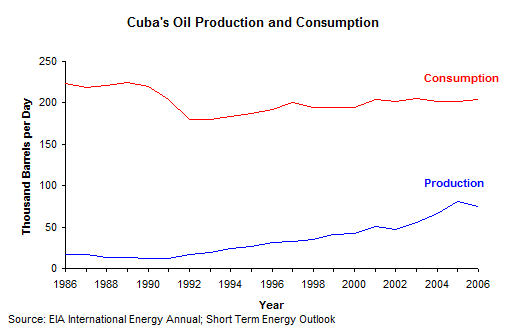 The dissolution of the Soviet Union
hit the Cuban economy
severely. The country lost approximately 80% of its imports, 80% of its exports and its Gross Domestic Product dropped by 34 percent. Food
and medicine
imports stopped or severely slowed. The largest immediate impact was the loss of nearly all of the petroleum
imports from the USSR; Cuba's oil imports dropped to 10% of pre-1990 amounts. Before this, Cuba had been re-exporting any Soviet petroleum it did not consume to other nations for profit, meaning that petroleum had been Cuba's second largest export product before 1990. Once the restored Russian Federation emerged from the former Soviet Union
, its administration immediately made clear that it had no intention of delivering petroleum that had been guaranteed the island by the USSR; this resulted in a decrease in Cuban consumption to 20% of its previous level within two years. The effect was felt immediately. Entirely dependent on fossil fuel
s to operate, the major underpinnings of Cuban society—its transportation, industrial and agricultural systems—were paralyzed. There were extensive losses of productivity in both Cuban agriculture — which was dominated by modern industrial tractor
s, combines
, and harvester
s, all of which required petroleum to run — and in Cuban industrial capacity.
The early stages of the Special Period were defined by a general breakdown in transportation and agricultural sectors, fertilizer and pesticide stocks (both of those being manufactured primarily from petroleum derivatives), and widespread food shortages. Australia
n and other permaculturists
arriving in Cuba at the time began to distribute aid and taught their techniques to locals, who soon implemented them in Cuban fields, raised beds, and urban rooftops across the nation. Organic agriculture was soon after mandated by the Cuban government, supplanting the old industrialized form of agriculture Cubans had grown accustomed to. Relocalization, permaculture
, and innovative modes of mass transit had to be rapidly developed. For a time, waiting for a bus
could take three hours, power outages could last up to sixteen hours, food
consumption was cut back to one-fifth of their previous levels and the average Cuban lost about nine kilograms (twenty pounds). Although starvation
was avoided, persistent hunger
, something not seen since before the Cuban Revolution
, suddenly became a daily experience, and initially, malnutrition
in children under five was evident after just a few weeks of these food shortages.
At the time, United States law allowed humanitarian aid
in the form of food
and medicine by private groups. Then in March 1996, the Helms-Burton Act
imposed further penalties on foreign companies doing business
in Cuba, and allowed U.S. citizens to sue foreign investors who use American-owned property seized by the Cuban government. Due to the external factors contributing to the energy crisis in Cuba, the collapse of the USSR who had been their main source of petroleum and food
imports, along with the various stages of the US embargo
, this is referred to as an "artificial" peak oil
.
The Cuban government was also forced to contract out more lucrative economic and tourism
deals with various Western Europe
an and South America
n nations in an attempt to earn the foreign currency necessary to replace the lost Soviet petroleum via the international markets. Additionally faced with a near-elimination of imported steel
and other ore
-based supplies, Cuba closed refineries and factories across the country, eliminating the country's industrial arm and millions of jobs. The government then proceeded to replace these lost jobs with employment in industrial agriculture
and other homegrown initiatives, but these jobs often did not pay as well, and Cubans on the whole became economically poorer. Alternative transportation, most notably the Cuban "camels" — immense 18-wheeler tractor trailers retrofitted as passenger bus
es meant to carry hundreds of Cubans each — flourished. Food-wise, meat and dairy products, having been extremely fossil fuel dependent in their former factory farming
methods, soon diminished in the Cuban diet. In a shift notable for being generally anathema to Latin America
n food habits, the people of the island by necessity adopted diets higher in fiber
, fresh produce, and ultimately more vegan in character. No longer needing sugar
as desperately for a cash crop
— the oil-for-sugar program the Soviets had contracted with Cuba had, of course, dissipated — Cuba hurriedly diversified its agricultural production, utilizing former cane
fields to grow things like oranges
and other fruit
and vegetable
s. The Cuban government also focused more intensely on cooperation with Venezuela
once the socialist Hugo Chávez
was elected president
in 1998.
The Special Period's malnutrition created epidemics, but it had positive effects too. Manuel Franco describes the Special Period as "the first, and probably the only, natural experiment, born of unfortunate circumstances, where large effects on diabetes, cardiovascular disease and all-cause mortality have been related to sustained population-wide weight loss as a result of increased physical activity and reduced caloric intake".
A paper in the American Journal of Epidemiology
, says that "during 1997-2002, there were declines in deaths attributed to diabetes (51%), coronary heart disease (35%), stroke (20%), and all causes (18%). An outbreak of neuropathy and a modest increase in the all-cause death rate among the elderly were also observed." This was caused by how the population tried to reduce the energy store without reducing the nutritional value of the food.
A letter published in the Canadian Medical Association Journal
(CMAJ) criticizes the American Journal of Epidemiology for not taking all factors into account and says that "The famine in Cuba during the Special Period was caused by political and economic factors similar to the ones that caused a famine in North Korea
in the mid-1990s. Both countries were run by authoritarian regimes that denied ordinary people the food to which they were entitled when the public food distribution collapsed; priority was given to the elite classes and the military. In North Korea, 3%–5% of the population died; in Cuba the death rate among the elderly increased by 20% from 1982 to 1993." The regime did not accept American donations of food, medicines and cash until 1993. Thirty thousand Cubans fled the country.
a week before the USSR notified the Cuban government that they would not be delivering the expected quota of crude oil. Citizens were asked to reduce their consumption
in all areas and to use public transportation and carpooling. As time went on, more structured strategies were developed to manage what would turn out to be a long-term energy/economic crisis which would take them into the 21st century.
. However, at the worst of times, the rations were only 1/5 of these consumption amounts.
s, and building materials, and the cost of producing cement
increased the pressure on already overcrowded housing. Even before the energy crisis
, extended families lived in small apartments (many of which were in very poor condition) to be closer to an urban area. To help alleviate this situation, the government engaged in land-distribution where they supplemented larger government owned farm
s with privately owned ones. Small homes were built in rural areas and land was provided to encourage families to move and assist in food
production for themselves and to sell in local farmers' market
s. As the film "The Power of Community: How Cuba Survived Peak Oil" discusses, co-ops
were developed which were owned and managed by groups, as well as creating opportunities for allowing them to form "service co-ops" where credit was exchanged and group purchasing power was used to buy seed
s and other necessary items.
s as a convenient mode of transportation. It was a difficult shift during the Special Period to adjust to a new way of managing the transportation of thousands of people to school
, to work
and to other daily activities. With the realization that food was the key to survival, transportation became a secondary worry and walking
, hitch-hiking
, and carpooling became the norm. Privately owned vehicles are not common; ownership is not seen as a right but as a privilege awarded for performance. Public transportation is creative and takes on the following forms:
and overuse of its agricultural land. Before the crisis
, Cuba
used more pesticide
s than the U.S.
. Much of their land was so damaged (de-mineralized and almost sand-like) that it took three to five years of intensely "healing" the soil with amendments, compost
, "green manure
", and practices such as crop rotation
and inter-planting (mixed crops grown in same plot) to return it to a healthy state. Bio-fertilizers and bio-pesticides
have replaced most chemicals. Today, 80% of Cuba's produce is organically grown, successes that those interviewed in the documentary The Power of Community: How Cuba Survived Peak Oil
were very proud of.
Another reason Cuba
survived this crisis
is the shift in their thinking from machine to manual labour
. Abandoning their previous industrialized agricultural methods, tractor
s and other machinery were replaced with human and animal labor. Older farmers familiar with raising and training oxen trained others to increase those involved in food production. Chemical fertilizers were replaced with organic farming techniques which require more labor but less fossil fuels. Initially, this was a very difficult situation for Cubans to accept; many came home from studying abroad to find that there were no jobs in their fields. It was pure survival that motivated them to continue and contribute to survive through this crisis. The documentary states that today, farmers make more money than most other occupations.
Due to a poor economy, there were many crumbling buildings that could not be repaired. These were torn down and the empty lots lay idle for years until the food shortages forced Cuban citizens to make use of every piece of land. Initially, this was an ad-hoc process where ordinary Cubans took the initiative to grow their own food in whatever piece of land was available. The government encouraged this practice and later assisted in promoting it. Urban gardens sprung up throughout the capital of Havana and other urban centers on roof-tops, patios, and unused parking lots in raised beds as well as "squatting" on empty lots. These efforts were furthered by Australian agriculturalists that came to the island in 1993 to teach permaculture
, a sustainable agricultural system, and to "train the trainers". The Cuban government then sent these teams throughout the country to train others.
"Kiosks" (farmers' market
s) were set up in all communities to provide easy access to locally grown produce; less travel time required less energy use. These local markets provide 80-100% of the produce needed for that local community.
Whereas timba music was a Cuban genre that evolved out of traditional son and jazz, emphasizing blackness and sexuality through sensual dancing, with lyrics that reflected the socio-cultural situation of the period with humor [Hernandez-Reguant 2006], Cuban hip hop
evolved as a socially conscious movement influenced heavily by its kin genre in the United States. Thus it was not so much a product of the Special Period -as timba was- as one of globalization.[Fernandes 2004] The Revolution and the blockage of all imports from the US had made the dissemination of American music difficult during the sixties and seventies, as it was often "tainted as music of the enemy and began to disappear from the public view." But all of that changed in the 1990s, when American rappers flocked regularly to Cuba, tourists brought CDs, and North American stations, perfectly audible in Cuba, brought its sounds. Nonetheless, hip hop circulated through informal networks, thus creating a small underground scene of rap enthusiasts located mostly in Havana's Eastern neighborhoods that called the attention of foreign scholars and journalists. Eventually, rappers were offered a space within state cultural networks. The lack of resources to purchase the electronic equipment to produce beats and tracks gives Cuban rap a raw feel that paralleled that of 'old school' music in the US.
Cuba
The Republic of Cuba is an island nation in the Caribbean. The nation of Cuba consists of the main island of Cuba, the Isla de la Juventud, and several archipelagos. Havana is the largest city in Cuba and the country's capital. Santiago de Cuba is the second largest city...
was an extended period of economic crisis
Crisis
A crisis is any event that is, or expected to lead to, an unstable and dangerous situation affecting an individual, group, community or whole society...
that began in 1991 after the dissolution of the Soviet Union
Dissolution of the Soviet Union
The dissolution of the Soviet Union was the disintegration of the federal political structures and central government of the Union of Soviet Socialist Republics , resulting in the independence of all fifteen republics of the Soviet Union between March 11, 1990 and December 25, 1991...
and, by extension, the Comecon
Comecon
The Council for Mutual Economic Assistance , 1949–1991, was an economic organisation under hegemony of Soviet Union comprising the countries of the Eastern Bloc along with a number of communist states elsewhere in the world...
. The economic depression of the Special Period was at its most severe in the early-to-mid 1990s before slightly declining in severity towards the end of the decade. It was defined primarily by the severe shortages of hydrocarbon
Hydrocarbon
In organic chemistry, a hydrocarbon is an organic compound consisting entirely of hydrogen and carbon. Hydrocarbons from which one hydrogen atom has been removed are functional groups, called hydrocarbyls....
energy resources in the form of gasoline
Gasoline
Gasoline , or petrol , is a toxic, translucent, petroleum-derived liquid that is primarily used as a fuel in internal combustion engines. It consists mostly of organic compounds obtained by the fractional distillation of petroleum, enhanced with a variety of additives. Some gasolines also contain...
, diesel, and other petroleum
Petroleum
Petroleum or crude oil is a naturally occurring, flammable liquid consisting of a complex mixture of hydrocarbons of various molecular weights and other liquid organic compounds, that are found in geologic formations beneath the Earth's surface. Petroleum is recovered mostly through oil drilling...
derivatives that occurred upon the implosion of economic agreements between the petroleum-rich Soviet Union
Soviet Union
The Soviet Union , officially the Union of Soviet Socialist Republics , was a constitutionally socialist state that existed in Eurasia between 1922 and 1991....
and Cuba. The period radically transformed Cuban society and the economy, as it necessitated the successful introduction of sustainable agriculture
Sustainable agriculture
Sustainable agriculture is the practice of farming using principles of ecology, the study of relationships between organisms and their environment...
, decreased use of automobile
Automobile
An automobile, autocar, motor car or car is a wheeled motor vehicle used for transporting passengers, which also carries its own engine or motor...
s, and overhauled industry, health, and diet countrywide. People were forced to live without many goods they had become used to.
Overview
Dissolution of the Soviet Union
The dissolution of the Soviet Union was the disintegration of the federal political structures and central government of the Union of Soviet Socialist Republics , resulting in the independence of all fifteen republics of the Soviet Union between March 11, 1990 and December 25, 1991...
hit the Cuban economy
Economy of Cuba
The economy of Cuba is a largely centrally planned economy dominated by state-run enterprises overseen by the Cuban government, though there remains significant foreign investment and private enterprise in Cuba...
severely. The country lost approximately 80% of its imports, 80% of its exports and its Gross Domestic Product dropped by 34 percent. Food
Food
Food is any substance consumed to provide nutritional support for the body. It is usually of plant or animal origin, and contains essential nutrients, such as carbohydrates, fats, proteins, vitamins, or minerals...
and medicine
Medicine
Medicine is the science and art of healing. It encompasses a variety of health care practices evolved to maintain and restore health by the prevention and treatment of illness....
imports stopped or severely slowed. The largest immediate impact was the loss of nearly all of the petroleum
Petroleum
Petroleum or crude oil is a naturally occurring, flammable liquid consisting of a complex mixture of hydrocarbons of various molecular weights and other liquid organic compounds, that are found in geologic formations beneath the Earth's surface. Petroleum is recovered mostly through oil drilling...
imports from the USSR; Cuba's oil imports dropped to 10% of pre-1990 amounts. Before this, Cuba had been re-exporting any Soviet petroleum it did not consume to other nations for profit, meaning that petroleum had been Cuba's second largest export product before 1990. Once the restored Russian Federation emerged from the former Soviet Union
Soviet Union
The Soviet Union , officially the Union of Soviet Socialist Republics , was a constitutionally socialist state that existed in Eurasia between 1922 and 1991....
, its administration immediately made clear that it had no intention of delivering petroleum that had been guaranteed the island by the USSR; this resulted in a decrease in Cuban consumption to 20% of its previous level within two years. The effect was felt immediately. Entirely dependent on fossil fuel
Fossil fuel
Fossil fuels are fuels formed by natural processes such as anaerobic decomposition of buried dead organisms. The age of the organisms and their resulting fossil fuels is typically millions of years, and sometimes exceeds 650 million years...
s to operate, the major underpinnings of Cuban society—its transportation, industrial and agricultural systems—were paralyzed. There were extensive losses of productivity in both Cuban agriculture — which was dominated by modern industrial tractor
Tractor
A tractor is a vehicle specifically designed to deliver a high tractive effort at slow speeds, for the purposes of hauling a trailer or machinery used in agriculture or construction...
s, combines
Combine harvester
The combine harvester, or simply combine, is a machine that harvests grain crops. The name derives from the fact that it combines three separate operations, reaping, threshing, and winnowing, into a single process. Among the crops harvested with a combine are wheat, oats, rye, barley, corn ,...
, and harvester
Harvester (forestry)
A harvester is a type of heavy forestry vehicle employed in cut-to-length logging operations for felling, delimbing and bucking trees. A forest harvester is typically employed together with a forwarder that hauls the logs to a roadside landing.- History :...
s, all of which required petroleum to run — and in Cuban industrial capacity.
The early stages of the Special Period were defined by a general breakdown in transportation and agricultural sectors, fertilizer and pesticide stocks (both of those being manufactured primarily from petroleum derivatives), and widespread food shortages. Australia
Australia
Australia , officially the Commonwealth of Australia, is a country in the Southern Hemisphere comprising the mainland of the Australian continent, the island of Tasmania, and numerous smaller islands in the Indian and Pacific Oceans. It is the world's sixth-largest country by total area...
n and other permaculturists
Permaculture
Permaculture is an approach to designing human settlements and agricultural systems that is modeled on the relationships found in nature. It is based on the ecology of how things interrelate rather than on the strictly biological concerns that form the foundation of modern agriculture...
arriving in Cuba at the time began to distribute aid and taught their techniques to locals, who soon implemented them in Cuban fields, raised beds, and urban rooftops across the nation. Organic agriculture was soon after mandated by the Cuban government, supplanting the old industrialized form of agriculture Cubans had grown accustomed to. Relocalization, permaculture
Permaculture
Permaculture is an approach to designing human settlements and agricultural systems that is modeled on the relationships found in nature. It is based on the ecology of how things interrelate rather than on the strictly biological concerns that form the foundation of modern agriculture...
, and innovative modes of mass transit had to be rapidly developed. For a time, waiting for a bus
Bus
A bus is a road vehicle designed to carry passengers. Buses can have a capacity as high as 300 passengers. The most common type of bus is the single-decker bus, with larger loads carried by double-decker buses and articulated buses, and smaller loads carried by midibuses and minibuses; coaches are...
could take three hours, power outages could last up to sixteen hours, food
Food
Food is any substance consumed to provide nutritional support for the body. It is usually of plant or animal origin, and contains essential nutrients, such as carbohydrates, fats, proteins, vitamins, or minerals...
consumption was cut back to one-fifth of their previous levels and the average Cuban lost about nine kilograms (twenty pounds). Although starvation
Starvation
Starvation is a severe deficiency in caloric energy, nutrient and vitamin intake. It is the most extreme form of malnutrition. In humans, prolonged starvation can cause permanent organ damage and eventually, death...
was avoided, persistent hunger
Hunger
Hunger is the most commonly used term to describe the social condition of people who frequently experience the physical sensation of desiring food.-Malnutrition, famine, starvation:...
, something not seen since before the Cuban Revolution
Cuban Revolution
The Cuban Revolution was an armed revolt by Fidel Castro's 26th of July Movement against the regime of Cuban dictator Fulgencio Batista between 1953 and 1959. Batista was finally ousted on 1 January 1959, and was replaced by a revolutionary government led by Castro...
, suddenly became a daily experience, and initially, malnutrition
Malnutrition
Malnutrition is the condition that results from taking an unbalanced diet in which certain nutrients are lacking, in excess , or in the wrong proportions....
in children under five was evident after just a few weeks of these food shortages.
At the time, United States law allowed humanitarian aid
Humanitarian aid
Humanitarian aid is material or logistical assistance provided for humanitarian purposes, typically in response to humanitarian crises including natural disaster and man-made disaster. The primary objective of humanitarian aid is to save lives, alleviate suffering, and maintain human dignity...
in the form of food
Food
Food is any substance consumed to provide nutritional support for the body. It is usually of plant or animal origin, and contains essential nutrients, such as carbohydrates, fats, proteins, vitamins, or minerals...
and medicine by private groups. Then in March 1996, the Helms-Burton Act
Helms-Burton Act
The Cuban Liberty and Democratic Solidarity Act of 1996 is a United States federal law which strengthens and continues the United States embargo against Cuba...
imposed further penalties on foreign companies doing business
Business
A business is an organization engaged in the trade of goods, services, or both to consumers. Businesses are predominant in capitalist economies, where most of them are privately owned and administered to earn profit to increase the wealth of their owners. Businesses may also be not-for-profit...
in Cuba, and allowed U.S. citizens to sue foreign investors who use American-owned property seized by the Cuban government. Due to the external factors contributing to the energy crisis in Cuba, the collapse of the USSR who had been their main source of petroleum and food
Food
Food is any substance consumed to provide nutritional support for the body. It is usually of plant or animal origin, and contains essential nutrients, such as carbohydrates, fats, proteins, vitamins, or minerals...
imports, along with the various stages of the US embargo
United States embargo against Cuba
The United States embargo against Cuba is a commercial, economic, and financial embargo partially imposed on Cuba in October 1960...
, this is referred to as an "artificial" peak oil
Peak oil
Peak oil is the point in time when the maximum rate of global petroleum extraction is reached, after which the rate of production enters terminal decline. This concept is based on the observed production rates of individual oil wells, projected reserves and the combined production rate of a field...
.
The Cuban government was also forced to contract out more lucrative economic and tourism
Tourism
Tourism is travel for recreational, leisure or business purposes. The World Tourism Organization defines tourists as people "traveling to and staying in places outside their usual environment for not more than one consecutive year for leisure, business and other purposes".Tourism has become a...
deals with various Western Europe
Western Europe
Western Europe is a loose term for the collection of countries in the western most region of the European continents, though this definition is context-dependent and carries cultural and political connotations. One definition describes Western Europe as a geographic entity—the region lying in the...
an and South America
South America
South America is a continent situated in the Western Hemisphere, mostly in the Southern Hemisphere, with a relatively small portion in the Northern Hemisphere. The continent is also considered a subcontinent of the Americas. It is bordered on the west by the Pacific Ocean and on the north and east...
n nations in an attempt to earn the foreign currency necessary to replace the lost Soviet petroleum via the international markets. Additionally faced with a near-elimination of imported steel
Steel
Steel is an alloy that consists mostly of iron and has a carbon content between 0.2% and 2.1% by weight, depending on the grade. Carbon is the most common alloying material for iron, but various other alloying elements are used, such as manganese, chromium, vanadium, and tungsten...
and other ore
Ore
An ore is a type of rock that contains minerals with important elements including metals. The ores are extracted through mining; these are then refined to extract the valuable element....
-based supplies, Cuba closed refineries and factories across the country, eliminating the country's industrial arm and millions of jobs. The government then proceeded to replace these lost jobs with employment in industrial agriculture
Industrial agriculture
Industrial farming is a form of modern farming that refers to the industrialized production of livestock, poultry, fish, and crops. The methods of industrial agriculture are technoscientific, economic, and political...
and other homegrown initiatives, but these jobs often did not pay as well, and Cubans on the whole became economically poorer. Alternative transportation, most notably the Cuban "camels" — immense 18-wheeler tractor trailers retrofitted as passenger bus
Bus
A bus is a road vehicle designed to carry passengers. Buses can have a capacity as high as 300 passengers. The most common type of bus is the single-decker bus, with larger loads carried by double-decker buses and articulated buses, and smaller loads carried by midibuses and minibuses; coaches are...
es meant to carry hundreds of Cubans each — flourished. Food-wise, meat and dairy products, having been extremely fossil fuel dependent in their former factory farming
Factory farming
Factory farming is a term referring to the process of raising livestock in confinement at high stocking density, where a farm operates as a factory — a practice typical in industrial farming by agribusinesses. The main products of this industry are meat, milk and eggs for human consumption...
methods, soon diminished in the Cuban diet. In a shift notable for being generally anathema to Latin America
Latin America
Latin America is a region of the Americas where Romance languages – particularly Spanish and Portuguese, and variably French – are primarily spoken. Latin America has an area of approximately 21,069,500 km² , almost 3.9% of the Earth's surface or 14.1% of its land surface area...
n food habits, the people of the island by necessity adopted diets higher in fiber
Fiber
Fiber is a class of materials that are continuous filaments or are in discrete elongated pieces, similar to lengths of thread.They are very important in the biology of both plants and animals, for holding tissues together....
, fresh produce, and ultimately more vegan in character. No longer needing sugar
Sugar
Sugar is a class of edible crystalline carbohydrates, mainly sucrose, lactose, and fructose, characterized by a sweet flavor.Sucrose in its refined form primarily comes from sugar cane and sugar beet...
as desperately for a cash crop
Cash crop
In agriculture, a cash crop is a crop which is grown for profit.The term is used to differentiate from subsistence crops, which are those fed to the producer's own livestock or grown as food for the producer's family...
— the oil-for-sugar program the Soviets had contracted with Cuba had, of course, dissipated — Cuba hurriedly diversified its agricultural production, utilizing former cane
Sugarcane
Sugarcane refers to any of six to 37 species of tall perennial grasses of the genus Saccharum . Native to the warm temperate to tropical regions of South Asia, they have stout, jointed, fibrous stalks that are rich in sugar, and measure two to six metres tall...
fields to grow things like oranges
Orange (fruit)
An orange—specifically, the sweet orange—is the citrus Citrus × sinensis and its fruit. It is the most commonly grown tree fruit in the world....
and other fruit
Fruit
In broad terms, a fruit is a structure of a plant that contains its seeds.The term has different meanings dependent on context. In non-technical usage, such as food preparation, fruit normally means the fleshy seed-associated structures of certain plants that are sweet and edible in the raw state,...
and vegetable
Vegetable
The noun vegetable usually means an edible plant or part of a plant other than a sweet fruit or seed. This typically means the leaf, stem, or root of a plant....
s. The Cuban government also focused more intensely on cooperation with Venezuela
Venezuela
Venezuela , officially called the Bolivarian Republic of Venezuela , is a tropical country on the northern coast of South America. It borders Colombia to the west, Guyana to the east, and Brazil to the south...
once the socialist Hugo Chávez
Hugo Chávez
Hugo Rafael Chávez Frías is the 56th and current President of Venezuela, having held that position since 1999. He was formerly the leader of the Fifth Republic Movement political party from its foundation in 1997 until 2007, when he became the leader of the United Socialist Party of Venezuela...
was elected president
President
A president is a leader of an organization, company, trade union, university, or country.Etymologically, a president is one who presides, who sits in leadership...
in 1998.
Famine
Nutrition fell from 3,052 calories per day in 1989 to 2,099 calories per day in 1993. Other reports indicate even lower figures, 1,863 calories per day. Some estimated that the very old and children received only 1,450 calories per day. The recommended minimum is 2,100–2,300 calories.The Special Period's malnutrition created epidemics, but it had positive effects too. Manuel Franco describes the Special Period as "the first, and probably the only, natural experiment, born of unfortunate circumstances, where large effects on diabetes, cardiovascular disease and all-cause mortality have been related to sustained population-wide weight loss as a result of increased physical activity and reduced caloric intake".
A paper in the American Journal of Epidemiology
American Journal of Epidemiology
The American Journal of Epidemiology is a peer reviewed journal for empirical research findings, opinion pieces and methodological developments in the field of epidemiological research. It is published semimonthly, and has an impact of 5.454, ranking it 6th out of 105 Journals in the field....
, says that "during 1997-2002, there were declines in deaths attributed to diabetes (51%), coronary heart disease (35%), stroke (20%), and all causes (18%). An outbreak of neuropathy and a modest increase in the all-cause death rate among the elderly were also observed." This was caused by how the population tried to reduce the energy store without reducing the nutritional value of the food.
A letter published in the Canadian Medical Association Journal
Canadian Medical Association Journal
The Canadian Medical Association Journal is a general medical journal that is published biweekly by the Canadian Medical Association . It covers research and ideas aimed at improving health for people in Canada and globally. CMAJ publishes original clinical research, analyses and reviews, news,...
(CMAJ) criticizes the American Journal of Epidemiology for not taking all factors into account and says that "The famine in Cuba during the Special Period was caused by political and economic factors similar to the ones that caused a famine in North Korea
North Korean famine
'The North Korean famine was a famine in North Korea which began in the early 1990s...
in the mid-1990s. Both countries were run by authoritarian regimes that denied ordinary people the food to which they were entitled when the public food distribution collapsed; priority was given to the elite classes and the military. In North Korea, 3%–5% of the population died; in Cuba the death rate among the elderly increased by 20% from 1982 to 1993." The regime did not accept American donations of food, medicines and cash until 1993. Thirty thousand Cubans fled the country.
August 5th, 1994 protest
Hundreds of Cubans protested in Havana on August 5, 1994, some chanting "Libertad!" ("Freedom"). The protest, in which some threw rocks at police, was dispersed by the police after a few hours. A paper published in the Journal of Democracy argues that this was the closest that the Cuban opposition could come to asserting itself decisively.Government response
Immediate actions taken by the government included televising an announcement of the expected energy crisisEnergy crisis
An energy crisis is any great bottleneck in the supply of energy resources to an economy. In popular literature though, it often refers to one of the energy sources used at a certain time and place, particularly those that supply national electricity grids or serve as fuel for vehicles...
a week before the USSR notified the Cuban government that they would not be delivering the expected quota of crude oil. Citizens were asked to reduce their consumption
Consumption (economics)
Consumption is a common concept in economics, and gives rise to derived concepts such as consumer debt. Generally, consumption is defined in part by comparison to production. But the precise definition can vary because different schools of economists define production quite differently...
in all areas and to use public transportation and carpooling. As time went on, more structured strategies were developed to manage what would turn out to be a long-term energy/economic crisis which would take them into the 21st century.
Food rations
Food rations were intensified. Monthly allocations for families were based on basic minimum requirements as recommended by the United NationsUnited Nations
The United Nations is an international organization whose stated aims are facilitating cooperation in international law, international security, economic development, social progress, human rights, and achievement of world peace...
. However, at the worst of times, the rations were only 1/5 of these consumption amounts.
Housing, land distribution, and urban planning
The scarcity of toolTool
A tool is a device that can be used to produce an item or achieve a task, but that is not consumed in the process. Informally the word is also used to describe a procedure or process with a specific purpose. Tools that are used in particular fields or activities may have different designations such...
s, and building materials, and the cost of producing cement
Cement
In the most general sense of the word, a cement is a binder, a substance that sets and hardens independently, and can bind other materials together. The word "cement" traces to the Romans, who used the term opus caementicium to describe masonry resembling modern concrete that was made from crushed...
increased the pressure on already overcrowded housing. Even before the energy crisis
Energy crisis
An energy crisis is any great bottleneck in the supply of energy resources to an economy. In popular literature though, it often refers to one of the energy sources used at a certain time and place, particularly those that supply national electricity grids or serve as fuel for vehicles...
, extended families lived in small apartments (many of which were in very poor condition) to be closer to an urban area. To help alleviate this situation, the government engaged in land-distribution where they supplemented larger government owned farm
Farm
A farm is an area of land, or, for aquaculture, lake, river or sea, including various structures, devoted primarily to the practice of producing and managing food , fibres and, increasingly, fuel. It is the basic production facility in food production. Farms may be owned and operated by a single...
s with privately owned ones. Small homes were built in rural areas and land was provided to encourage families to move and assist in food
Food
Food is any substance consumed to provide nutritional support for the body. It is usually of plant or animal origin, and contains essential nutrients, such as carbohydrates, fats, proteins, vitamins, or minerals...
production for themselves and to sell in local farmers' market
Market
A market is one of many varieties of systems, institutions, procedures, social relations and infrastructures whereby parties engage in exchange. While parties may exchange goods and services by barter, most markets rely on sellers offering their goods or services in exchange for money from buyers...
s. As the film "The Power of Community: How Cuba Survived Peak Oil" discusses, co-ops
Cooperative
A cooperative is a business organization owned and operated by a group of individuals for their mutual benefit...
were developed which were owned and managed by groups, as well as creating opportunities for allowing them to form "service co-ops" where credit was exchanged and group purchasing power was used to buy seed
Seed
A seed is a small embryonic plant enclosed in a covering called the seed coat, usually with some stored food. It is the product of the ripened ovule of gymnosperm and angiosperm plants which occurs after fertilization and some growth within the mother plant...
s and other necessary items.
Transportation
Cubans were accustomed to carČar
Čar is a village in the municipality of Bujanovac, Serbia. According to the 2002 census, the town has a population of 296 people.-References:...
s as a convenient mode of transportation. It was a difficult shift during the Special Period to adjust to a new way of managing the transportation of thousands of people to school
School
A school is an institution designed for the teaching of students under the direction of teachers. Most countries have systems of formal education, which is commonly compulsory. In these systems, students progress through a series of schools...
, to work
Employment
Employment is a contract between two parties, one being the employer and the other being the employee. An employee may be defined as:- Employee :...
and to other daily activities. With the realization that food was the key to survival, transportation became a secondary worry and walking
Walking
Walking is one of the main gaits of locomotion among legged animals, and is typically slower than running and other gaits. Walking is defined by an 'inverted pendulum' gait in which the body vaults over the stiff limb or limbs with each step...
, hitch-hiking
Hitchhiking
Hitchhiking is a means of transportation that is gained by asking people, usually strangers, for a ride in their automobile or other road vehicle to travel a distance that may either be short or long...
, and carpooling became the norm. Privately owned vehicles are not common; ownership is not seen as a right but as a privilege awarded for performance. Public transportation is creative and takes on the following forms:
- Cars - old US cars common in Cuba are used as taxisTaxicabA taxicab, also taxi or cab, is a type of vehicle for hire with a driver, used by a single passenger or small group of passengers, often for a non-shared ride. A taxicab conveys passengers between locations of their choice...
to transport from six to eight passengers, stopping at locations as needed. - TruckTruckA truck or lorry is a motor vehicle designed to transport cargo. Trucks vary greatly in size, power, and configuration, with the smallest being mechanically similar to an automobile...
s - canopies and steps were added to accommodate more passengers and protect them from the natural elements or open "dump-truck buses" are used. - BikesBicycleA bicycle, also known as a bike, pushbike or cycle, is a human-powered, pedal-driven, single-track vehicle, having two wheels attached to a frame, one behind the other. A person who rides a bicycle is called a cyclist, or bicyclist....
- 1.2 million bicycles were purchased from ChinaChinaChinese civilization may refer to:* China for more general discussion of the country.* Chinese culture* Greater China, the transnational community of ethnic Chinese.* History of China* Sinosphere, the area historically affected by Chinese culture...
and distributed as well as another half a million produced in Cuba. - "Camels" - Conversion of semi-truck flatbeds into bus-like vehicles that hold up to 300 passengers.
- Government vehicles pick up passengers as needed.
- HorseHorseThe horse is one of two extant subspecies of Equus ferus, or the wild horse. It is a single-hooved mammal belonging to the taxonomic family Equidae. The horse has evolved over the past 45 to 55 million years from a small multi-toed creature into the large, single-toed animal of today...
s and muleMuleA mule is the offspring of a male donkey and a female horse. Horses and donkeys are different species, with different numbers of chromosomes. Of the two F1 hybrids between these two species, a mule is easier to obtain than a hinny...
s are used as well as bike and horse drawn carriages with taxi licenses are numerous both in rural and urban areas. - Convenience for the individual is secondary to efficient use of energy.
Agriculture
Cuba's history of colonization included deforestationDeforestation
Deforestation is the removal of a forest or stand of trees where the land is thereafter converted to a nonforest use. Examples of deforestation include conversion of forestland to farms, ranches, or urban use....
and overuse of its agricultural land. Before the crisis
Crisis
A crisis is any event that is, or expected to lead to, an unstable and dangerous situation affecting an individual, group, community or whole society...
, Cuba
Cuba
The Republic of Cuba is an island nation in the Caribbean. The nation of Cuba consists of the main island of Cuba, the Isla de la Juventud, and several archipelagos. Havana is the largest city in Cuba and the country's capital. Santiago de Cuba is the second largest city...
used more pesticide
Pesticide
Pesticides are substances or mixture of substances intended for preventing, destroying, repelling or mitigating any pest.A pesticide may be a chemical unicycle, biological agent , antimicrobial, disinfectant or device used against any pest...
s than the U.S.
United States
The United States of America is a federal constitutional republic comprising fifty states and a federal district...
. Much of their land was so damaged (de-mineralized and almost sand-like) that it took three to five years of intensely "healing" the soil with amendments, compost
Compost
Compost is organic matter that has been decomposed and recycled as a fertilizer and soil amendment. Compost is a key ingredient in organic farming. At its most essential, the process of composting requires simply piling up waste outdoors and waiting for the materials to break down from anywhere...
, "green manure
Green manure
In agriculture, a green manure is a type of cover crop grown primarily to add nutrients and organic matter to the soil. Typically, a green manure crop is grown for a specific period of time , and then plowed under and incorporated into the soil while green or shortly after flowering...
", and practices such as crop rotation
Crop rotation
Crop rotation is the practice of growing a series of dissimilar types of crops in the same area in sequential seasons.Crop rotation confers various benefits to the soil. A traditional element of crop rotation is the replenishment of nitrogen through the use of green manure in sequence with cereals...
and inter-planting (mixed crops grown in same plot) to return it to a healthy state. Bio-fertilizers and bio-pesticides
Pesticide
Pesticides are substances or mixture of substances intended for preventing, destroying, repelling or mitigating any pest.A pesticide may be a chemical unicycle, biological agent , antimicrobial, disinfectant or device used against any pest...
have replaced most chemicals. Today, 80% of Cuba's produce is organically grown, successes that those interviewed in the documentary The Power of Community: How Cuba Survived Peak Oil
The Power of Community: How Cuba Survived Peak Oil
The Power of Community: How Cuba Survived Peak Oil is an American documentary film that explores the Special Period in Peacetime and its aftermath; the economic collapse and eventual recovery of Cuba following the fall of the Soviet Union in 1991...
were very proud of.
Another reason Cuba
Cuba
The Republic of Cuba is an island nation in the Caribbean. The nation of Cuba consists of the main island of Cuba, the Isla de la Juventud, and several archipelagos. Havana is the largest city in Cuba and the country's capital. Santiago de Cuba is the second largest city...
survived this crisis
Crisis
A crisis is any event that is, or expected to lead to, an unstable and dangerous situation affecting an individual, group, community or whole society...
is the shift in their thinking from machine to manual labour
Manual labour
Manual labour , manual or manual work is physical work done by people, most especially in contrast to that done by machines, and also to that done by working animals...
. Abandoning their previous industrialized agricultural methods, tractor
Tractor
A tractor is a vehicle specifically designed to deliver a high tractive effort at slow speeds, for the purposes of hauling a trailer or machinery used in agriculture or construction...
s and other machinery were replaced with human and animal labor. Older farmers familiar with raising and training oxen trained others to increase those involved in food production. Chemical fertilizers were replaced with organic farming techniques which require more labor but less fossil fuels. Initially, this was a very difficult situation for Cubans to accept; many came home from studying abroad to find that there were no jobs in their fields. It was pure survival that motivated them to continue and contribute to survive through this crisis. The documentary states that today, farmers make more money than most other occupations.
Due to a poor economy, there were many crumbling buildings that could not be repaired. These were torn down and the empty lots lay idle for years until the food shortages forced Cuban citizens to make use of every piece of land. Initially, this was an ad-hoc process where ordinary Cubans took the initiative to grow their own food in whatever piece of land was available. The government encouraged this practice and later assisted in promoting it. Urban gardens sprung up throughout the capital of Havana and other urban centers on roof-tops, patios, and unused parking lots in raised beds as well as "squatting" on empty lots. These efforts were furthered by Australian agriculturalists that came to the island in 1993 to teach permaculture
Permaculture
Permaculture is an approach to designing human settlements and agricultural systems that is modeled on the relationships found in nature. It is based on the ecology of how things interrelate rather than on the strictly biological concerns that form the foundation of modern agriculture...
, a sustainable agricultural system, and to "train the trainers". The Cuban government then sent these teams throughout the country to train others.
"Kiosks" (farmers' market
Farmers' market
A farmers' market consists of individual vendors—mostly farmers—who set up booths, tables or stands, outdoors or indoors, to sell produce, meat products, fruits and sometimes prepared foods and beverages...
s) were set up in all communities to provide easy access to locally grown produce; less travel time required less energy use. These local markets provide 80-100% of the produce needed for that local community.
Other effects
The ideological changes of the Special Period had effects on Cuban society and culture, beyond those on the country. A comprehensive review of these effects concerning ideology, art and popular culture can be found in Hernandez-Reguant's Cuba in the Special Period. As a result of increased travel and tourism, popular culture developed in new ways. Lisa Knauer, in that volume, describes the circulation of rumba between New York and Havana, and their mutual influences. Antonio Eligio Tonel has described the contemporary art networks that shaped the Cuban art market, and Esther Whitfield the channels through which Cuban literature accessed the wider Spanish speaking world during that period. Elsewhere, Deborah Pacini, Marc Perry, Geoffrey Baker and Sujatha Fernandes extensively wrote about rap music as a result of these transnational exchanges. In recent years, that is, not in the 1990s which is the period identified with the Special Period, reggaeton has replaced timba as the genre of choice among youth, taking on the explicitly sexual dance moves that originated with timba.Whereas timba music was a Cuban genre that evolved out of traditional son and jazz, emphasizing blackness and sexuality through sensual dancing, with lyrics that reflected the socio-cultural situation of the period with humor [Hernandez-Reguant 2006], Cuban hip hop
Cuban hip hop
Hip hop music arrived in Cuba via radio and TV broadcasts from Miami. During the 1980s hip hop culture in Cuba was mainly centred around breakdancing...
evolved as a socially conscious movement influenced heavily by its kin genre in the United States. Thus it was not so much a product of the Special Period -as timba was- as one of globalization.[Fernandes 2004] The Revolution and the blockage of all imports from the US had made the dissemination of American music difficult during the sixties and seventies, as it was often "tainted as music of the enemy and began to disappear from the public view." But all of that changed in the 1990s, when American rappers flocked regularly to Cuba, tourists brought CDs, and North American stations, perfectly audible in Cuba, brought its sounds. Nonetheless, hip hop circulated through informal networks, thus creating a small underground scene of rap enthusiasts located mostly in Havana's Eastern neighborhoods that called the attention of foreign scholars and journalists. Eventually, rappers were offered a space within state cultural networks. The lack of resources to purchase the electronic equipment to produce beats and tracks gives Cuban rap a raw feel that paralleled that of 'old school' music in the US.
See also
- The Power of Community: How Cuba Survived Peak OilThe Power of Community: How Cuba Survived Peak OilThe Power of Community: How Cuba Survived Peak Oil is an American documentary film that explores the Special Period in Peacetime and its aftermath; the economic collapse and eventual recovery of Cuba following the fall of the Soviet Union in 1991...
, a documentary film paralleling the Special Period's changes with the rest of the world's choices regarding global warmingGlobal warmingGlobal warming refers to the rising average temperature of Earth's atmosphere and oceans and its projected continuation. In the last 100 years, Earth's average surface temperature increased by about with about two thirds of the increase occurring over just the last three decades... - Economy of CubaEconomy of CubaThe economy of Cuba is a largely centrally planned economy dominated by state-run enterprises overseen by the Cuban government, though there remains significant foreign investment and private enterprise in Cuba...
- Rationing in CubaRationing in CubaRationing in Cuba refers to the system of food distribution known in Cuba as the Libreta de Abastecimiento . The system establishes the rations each person is allowed to buy through that system, and the frequency of supplies....
- Hubbert peak theoryHubbert peak theoryThe Hubbert peak theory posits that for any given geographical area, from an individual oil-producing region to the planet as a whole, the rate of petroleum production tends to follow a bell-shaped curve...
Other sources
- Chavez, L. (2005). Capitalism, God, and a Good Cigar; Cuba Enters the Twenty-First Century. Durham and London: Duke University Press.
- Chiddister, Diane. (2006, April 27). Film shows many ways Cuba reacted to peak oil crisis Yellow Springs News. Retrieved October 18, 2006
- Heinberg, R. (2003). The Party's Over: Oil, War and the Fate of Industrial Societies. Canada: New Societies Publishers
- Hernandez-Reguant, A., ed.(2009). Cuba in the Special Period. Culture and Ideology in the 1990s. New York: Palgrave -Mac Millan.
- Lopez, M. Vigil. (1999). Cuba; Neither Heaven Nor Hell. Washington, D.C.: The Ecumenical Program of Central America and the Caribbean (EPICA).
- Pineiro-Hall, E. (2003) Seattle Delegation US Women and Cuba@ 5th International Women’s Conference, University of Havana.
- Sierra, J.A. Time Table of Cuba 1980–2005, Retrieved December 12, 2006
- Zuckerman, S. (2003). Lessons From Cuba: What Can We Learn From Cuba's Two-Tier Tourism Economy?, Retrieved November 26, 2006