
Encyclopedia
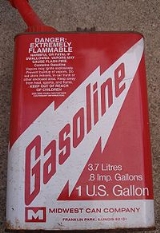
Gasoline, also called
petrol, is a
petroleum-derived
liquid mixture consisting primarily of
hydrocarbons and enhanced with benzenes to increase
octane ratings, used as
fuel in
internal combustion engines.
Most
Commonwealth countries, with the exception of
Canada, use the term
petrol . The term
gasoline is commonly used in
North America where it is commonly shortened in colloquial usage to "gas". The term
mogas, short for
motor gasoline, for use in cars is used to distinguish it from avgas,
aviation gasoline used in
aircraft. This should be distinguished in usage from genuinely gaseous fuels used in internal combustion engines such as
LPG.
The word
gasoline can also be used in
British English to refer to a different petroleum derivative historically used in lamps. However this use is now uncommon.
Pharmaceutical
Before
internal combustion engines were invented in the mid-1800s, gasoline was sold in small bottles as a treatment against
lice and their eggs. At that time, the word "Petrol" was a trade name. This treatment method is no longer common because of the inherent fire hazard and the risk of dermatitis.
The word petroleum may be derived from
Old French pétrole, meaning
petroleum: see Etymology.
During the
Franco-Prussian War of 1870-71,
pétrole was stockpiled in
Paris for use against a possible Prussian attack on the city. Later in 1871, during the revolutionary
Paris Commune, rumours spread around the city of
pétroleuses, women using bottles of petrol to commit
arson against city buildings.
It is also used as a psychoactive
inhalant.
Etymology
The word "gasolene" was coined in 1865 from the word gas and the chemical suffix -ine/-ene. The modern spelling was first used in 1871. The shortened form "gas" was first recorded in American English in 1905.
Gasoline originally referred to any liquid used as the fuel for a gasoline-powered engine, other than diesel fuel or liquefied gas. Methanol racing fuel would have been classed as a type of gasoline.
The word "petrol" was first used in reference to the refined substance as early as 1892 , and was registered as a trade name by English wholesaler Carless, Capel & Leonard. Although it was never officially registered as a trademark, Carless's competitors used the term "Motor Spirit" until the 1930s.
Bertha Benz purchased gasoline for her famous drive from
Mannheim to
Pforzheim and back from chemists' shops. In
Germany, gasoline is called
Benzin. The usage does not derive from Bertha Benz, but from the chemical
benzene.
World War II and octane
One interesting historical issue involving octane rating took place during
WWII.
Germany received nearly all its oil from
Romania, and set up huge distilling plants in Germany to produce gasoline from
coal. In the
US the oil was not "as good" and the oil industry had to invest heavily in various expensive boosting systems. This turned out to have benefits. The US industry started delivering fuels of ever-increasing
octane ratings by adding more of the boosting agents and the infrastructure was in place for post war octane agents additive industry. Good crude oil was no longer a factor during wartime and by war's end, American aviation fuel was commonly 130 to 150 octane. This high octane could easily be used in existing engines to deliver much more power by increasing the pressure delivered by the
superchargers. The Germans, relying entirely on "good" gasoline, had no such industry, and instead had to rely on ever-larger engines to deliver more power.
However, German aviation engines were of the direct fuel injection type and could use methanol-water injection and
nitrous oxide injection, which gave 50% more engine power for five minutes of dogfight. This could be done only five times or after 40 hours run-time and then the engine would have to be rebuilt. Most German aero engines used 87 octane fuel , while some high-powered engines used 100 octane fuel.
This historical "issue" is based on a very common misapprehension about wartime fuel octane numbers. There are two octane numbers for each fuel, one for lean mix and one for rich mix, rich being always greater. So, for example, a common British aviation fuel of the later part of the war was 100/125. The misapprehension that German fuels have a lower octane number arises because the Germans quoted the lean mix octane number for their fuels while the Allies quoted the rich mix number for their fuels. Standard German high-grade aviation fuel used in the later part of the war had lean/rich octane numbers of 100/130. The Germans would list this as a 100 octane fuel while the Allies would list it as 130 octane.
After the war the US Navy sent a Technical Mission to Germany to interview German petrochemists and examine German fuel quality. Their report entitled "Technical Report 145-45 Manufacture of Aviation Gasoline in Germany" chemically analyzed the different fuels and concluded that "Toward the end of the war the quality of fuel being used by the German fighter planes was quite similar to that being used by the Allies".
Chemical analysis and production
Gasoline is produced in
oil refineries. Material that is separated from
crude oil via
distillation, called natural gasoline, does not meet the required specifications for modern engines , but will form part of the blend.
The bulk of a typical gasoline consists of
hydrocarbons with between 5 and 12
carbon atoms per
molecule.
Many of these hydrocarbons are considered hazardous substances and are regulated by OSHA. The MSDS for unleaded gasoline shows at least 15 hazardous chemicals occurring in various amounts from 5% to 35% by volume of gasoline. These include big names like
benzene ,
toluene ,
naphthalene ,
trimethylbenzene ,
MTBE and about 10 others.
Ref:
The various refinery streams blended together to make gasoline all have different characteristics. Some important streams are:
- Reformate, produced in a catalytic reformer with a high octane rating and high aromatic content, and very low olefins .
- Cat Cracked Gasoline or Cat Cracked Naphtha, produced from a catalytic cracker, with a moderate octane rating, high olefins content, and moderate aromatics level. Here, "cat" is short for "catalyst".
- Hydrocrackate , produced from a hydrocracker, with medium to low octane rating and moderate aromatic levels.
- Natural Gasoline , directly from crude oil with low octane rating, low aromatics , some naphthenes and zero olefins .
- Alkylate, produced in an alkylation unit, with a high octane rating and which is pure paraffin , mainly branched chains.
- Isomerate which is made by isomerising Natural Gasoline to increase its octane rating and is very low in aromatics.
Overall a typical gasoline is predominantly a mixture of paraffins , naphthenes ,
aromatics and olefins . The exact ratios can depend on
- the oil refinery that makes the gasoline, as not all refineries have the same set of processing units.
- the crude oil used by the refinery on a particular day.
- the grade of gasoline, in particular the octane rating.
Currently many countries set tight limits on gasoline
aromatics in general,
benzene in particular, and olefins content. This is increasing the demand for high octane pure paraffin components, such as alkylate, and is forcing refineries to add processing units to reduce the benzene content.
Gasoline can also contain some other
organic compounds: such as
organic ethers , plus small levels of contaminants, in particular
sulfur compounds such as disulfides and
thiophenes. Some contaminants, in particular thiols and
hydrogen sulfide, must be removed because they cause corrosion in engines.
Volatility
Gasoline is more volatile than
diesel oil, Jet-A or kerosene, not only because of the base constituents, but because of the additives that are put into it. The desired volatility depends on the ambient temperature: in hotter climates, gasoline components of higher molecular weight and thus lower volatility are used. In cold climates, too little volatility results in cars failing to start. In hot climates, excessive volatility results in what is known as "vapour lock" where combustion fails to occur. In
Australia the volatility limit changes every month and differs for each main distribution center, but most countries simply have a summer, winter and perhaps intermediate limit. In the United States, volatility is regulated in large urban centres to reduce the emission of unburned hydrocarbons. In large cities, so-called reformulated gasoline that is less prone to evaporation, among other properties, is required.
Volatility standards may be relaxed during emergency anticipated gasoline shortages. For example, on 31 August 2005 in response to
Hurricane Katrina, the United States permitted the sale of non-reformulated gasoline in some urban areas, which effectively permitted an early switch from summer to winter-grade gasoline. As mandated by
EPA administrator
Stephen L. Johnson, this "fuel waiver" was made effective through 15 September 2005 . Though relaxed volatility standards damage
ozone and pollute the air, higher volatility gasoline effectively increases a nation's gasoline supply by making it easier for oil refiners to produce gasoline.
Octane rating
The most important characteristic of gasoline is its
octane rating, which is a measure of how resistant gasoline is to premature detonation which causes knocking. It is measured relative to a mixture of
2,2,4-trimethylpentane and n-
heptane. There are a number of different conventions for expressing the octane rating therefore the same fuel may be labeled with a different number depending upon the system used.
Energy content
Gasoline contains about 32 megajoules per litre or 131MJ/US gallon.
Volumetric energy density of some fuels compared to gasoline:
| Fuel type | MJ/l | BTU/imp gal | BTU/US gal | Research octane number |
|---|
| Naphthalene | 47.14 | ---,--- | 169,100 | 90 |
| Diesel | 40.9 | 176,000 | 147,000 | 25 |
| Gasoline | 32.0 | 150,000 | 125,000 | 91–98 |
| Gasohol | 28.06 | 145,200 | 120,900 | 93/94 |
| LPG | 22.16 | 114,660 | 95,475 | 115 |
| Ethanol | 19.59 | 101,360 | 84,400 | 129 |
| Methanol | 14.57 | 75,420 | 62,800 | 123 |
Diesel is not used in a gasoline engine, so its low octane rating is not an issueA high octane fuel such as LPG has a lower energy content than lower octane gasoline, resulting in an overall lower power output at the regular compression ratio an engine ran at on gasoline. However, with an engine tuned to the use of LPG , this lower power output can be overcome. This is because higher-octane fuels allow for a higher compression ratio - this means less space in a cylinder on its combustion stroke, hence a higher cylinder temperature which improves efficiency according to
Carnot's theorem, along with fewer wasted hydrocarbons , bringing higher power levels coupled with less pollution overall because of the greater efficiency.
The main reason for the lower energy content of LPG in comparison to gasoline is that it has a lower density. Energy content per kilogram is higher than for gasoline . The weight-density of gasoline is about 737.22 kg/m
3.
Different countries have some variation in what RON is standard for gasoline, or petrol. In the UK, ordinary regular unleaded petrol is 91 RON , premium unleaded petrol is always 95 RON, and super unleaded is usually 97-98 RON. However both Shell and BP produce fuel at 102 RON for cars with hi-performance engines. In the US, octane ratings in fuels can vary between 86-87 AKI for regular, through 89-90 for mid-grade , up to 90-94 for premium unleaded or E10
Additives
Lead
The mixture known as gasoline, when used in high compression internal combustion engines, has a tendency to ignite early causing a damaging "engine knocking" noise. Early research into this effect was led by A.H. Gibson and
Harry Ricardo in England and Thomas Midgley and Thomas Boyd in the United States. The discovery that
lead additives modified this behavior led to the widespread adoption of the practice in the 1920s and therefore more powerful higher compression engines. The most popular additive was
tetra-ethyl lead. However, with the discovery of the environmental and health damage caused by the lead, and the incompatibility of lead with
catalytic converters found on virtually all automobiles since 1975, this practice began to wane in the 1980s. Most countries are phasing out leaded fuel; different additives have replaced the lead compounds. The most popular additives include
aromatic hydrocarbons,
ethers and
alcohol .
In the U.S., where lead was blended with gasoline—primarily to boost octane levels—since the early 1920s, standards to phase out leaded gasoline were first implemented in 1973. In 1995, leaded fuel accounted for only 0.6 % of total gasoline sales and less than 2,000 tons of lead per year. From January 1, 1996, the Clean Air Act banned the sale of leaded fuel for use in on-road vehicles. Possession and use of leaded gasoline in a regular on-road vehicle now carries a maximum $10,000 fine in the United States. However, fuel containing lead may continue to be sold for off-road uses, including aircraft, racing cars, farm equipment, and marine engines until 2008. The ban on leaded gasoline was presumed to lower levels of lead in people's
bloodstream and led to thousands of tons of lead not being released in the air by automobiles.
A side effect of the lead additives was protection of the
valve seats from erosion. Many
classic cars' engines have needed modification to use lead-free fuels since leaded fuels became unavailable. However, "Lead substitute" products are also produced and can sometimes be found at auto parts stores.
Gasoline, as delivered at the pump, also contains additives to reduce internal engine carbon buildups, improve combustion, and to allow easier starting in cold climates.
In most of
South America,
Africa, and some parts of
Asia and the
Middle East, leaded gasoline is common.
MMT
Methylcyclopentadienyl manganese tricarbonyl has been used for many years in
Canada and recently in
Australia to boost octane. It also helps old cars designed for leaded fuel run on unleaded fuel without need for additives to prevent valve problems.
There are currently ongoing debates as to whether or not MMT is harmful to the environment and toxic to humans. However, US Federal sources state that MMT is suspected to be a powerful neurotoxin and respiratory toxin.
Dye
Sometimes dyes are added to fuel for identification. However there are different systems in use and this has led to confusion. In the
United States one color scheme dyed one kind of aircraft fuel red while in another color scheme red dye was used for indicating untaxed agricultural diesel.
The UK uses Red Dye to differentiate between regular diesel fuel, , which is undyed, and diesel intended for Agricultural and construction vehicles . Red Diesel is still occasionally used on HGV's which use a separate engine to power a loader crane. This is a declining practice however, as many loader cranes are powered directly by the tractor unit.
Oxygenate blending
Oxygenate blending adds oxygen to the fuel in
oxygen-bearing compounds such as
MTBE,
ethanol and
ETBE, and so reduces the amount of carbon monoxide and unburned fuel in the exhaust gas, thus reducing smog. In many areas throughout the US oxygenate blending is mandatory. For example, in Southern California, fuel must contain 2% oxygen by weight. The resulting fuel is often known as
reformulated gasoline or
oxygenated gasoline. The federal requirement
that RFG contain oxygen was dropped May 6, 2006.
MTBE use is being phased out in some states due to issues with contamination of ground water. In some places it is already banned. Ethanol and to a lesser extent the ethanol derived ETBE are a common replacements. Especially ethanol derived from biomatter such as corn, sugar cane or grain is frequent, this will often be referred to as
bio-ethanol. An ethanol-gasoline mix of 10% ethanol mixed with gasoline is called
gasohol. An ethanol-gasoline mix of 85% ethanol mixed with gasoline is called
E85. The most extensive use of ethanol takes place in
Brazil, where the ethanol is derived from
sugarcane. Over 3,400 million US gallons of ethanol mostly produced from corn was produced in the United States in 2004 for fuel use, and E85 is fast becoming available in much of the United States. The use of
bioethanol, either directly or indirectly by conversion of such ethanol to
bio-ETBE, is encouraged by the European Union Biofuels Directive. However since producing bio-ethanol from fermented sugars and starches involves distillation, ordinary people in much of Europe cannot ferment and distill their own bio-ethanol at present
Health concerns
Many of the non-aliphatic hydrocarbons naturally present in gasoline , as well as many anti-knocking additives, are carcinogenic. Because of this, any large-scale or ongoing leaks of gasoline pose a threat to the public's health and the environment, should the gasoline reach a public supply of
drinking water. The chief risks of such leaks come not from vehicles, but from gasoline delivery truck accidents and leaks from storage tanks. Because of this risk, most storage tanks now have extensive measures in place to detect and prevent any such leaks, such as sacrificial anodes. Gasoline is rather volatile , requiring that storage tanks on land and in vehicles be properly sealed. The high volatility also means that it will easily ignite in cold weather conditions, unlike diesel for example. Appropriate venting is needed to ensure the level of pressure is similar on the inside and outside. Gasoline also reacts dangerously with certain common chemicals; for example, gasoline and
crystal Drano react together in a spontaneous combustion.
Gasoline is also one of the sources of pollutant gases. Even gasoline which does not contain
lead or
sulfur compounds produces
carbon dioxide, nitrogen oxides, and
carbon monoxide in the exhaust of the
engine which is running on it. Furthermore, unburnt gasoline and evaporation from the tank, when in the atmosphere, react in sunlight to produce
photochemical smog. Addition of ethanol increases the volatility of gasoline.
Through misuse as an
inhalant, gasoline also contributes to damage to health. Petrol sniffing is a common way of obtaining a high for many people and has become epidemic in many poorer communities such as with
Indigenous Australians. In response,
Opal fuel has been developed by the
BP Kwinana Refinery in Australia, and contains only 5%
aromatics which inhibits the effects of inhalation.
Usage and pricing
The
United States uses 360 million US liquid gallons of gasoline each day. Western countries have among the highest usage rates per person. On average, U.S. consumers spend a smaller fraction of their incomes on gasoline today than in previous decades.
Some countries, e.g. in Europe and Japan, impose heavy fuel taxes on fuels such as gasoline. Because a greater proportion of the price of gasoline in the United States is due to the cost of oil, rather than taxes, the price of the retail product is subject to greater fluctuations when calculated as a
percentage of cost-per-unit, but is actually less variable in
absolute terms).
According to national figures from the U.S.
Department of Energy, in March 2006, 55% of the cost of gasoline went to pay for
crude oil, 22% for
refining, 19% to taxes, and 4% for distribution and marketing.
Average gasoline prices around the world
|
|---|
| Country | USD/USgal | Local measure | As of | Source |
|---|
| Australia | $4.01/gal | A$1.40/litre | 23 May 2006 | |
| Belgium | $6.33/gal | | May 2006 | CNN Money/ |
| Brazil | $3.85/gal | | Aug 2006 | |
| Canada | $3.24/gal | C$0.95/litre | 14 September 2006 | / |
| Denmark | $5.93/gal | | March 2005 | CNN Money/ |
| Egypt | $0.93/gal | | March 2005 | CNN Money/ |
| Finland | $6.16/US gal | 1.28€/litre | 11 September 2006 | polttoaine.net average price on 95 octane |
| Greece | $4.93/gal | €1/litre | 13 March 2006 | |
| Iceland | $7.24/gal | 135.90 ISK/ltr. | 8 August 2006 | Esso/ |
| India | $4.12/gal | INR 50/litre | July 2006 | |
| Israel | $5.52/gal | 6.40 NIS/ltr | 1 August 2006 | Israel Min. of National Infrastructures |
| Italy | $6.15/gal | | May 2006 | Howstuffworks/ |
| Japan | $4.56/gal | 134.9 yen/litre | 1 May 2006 | Japan Oil Information Center |
| Kuwait | $0.78/gal | | April 2006 | CNN Money/ |
| Malaysia | $2.01/gal | RM1.92/litre | February 2006 | /Google exchange calculator on 15 May 2006 |
| Mexico | $2.3/gal | $MX 6.6/litre | 20 July 2006 | Banco de México/ |
| Netherlands | $6.82/gal | €1.40/litre | 4 August 2005 | Athlon Car Lease/ |
| New Zealand | $4.09/gal | NZ$1.71/litre | 29 May 2006 | / on 29 May 2006 |
| Nigeria | $0.38/gal | | March 2005 | CNN Money/ |
| Norway | $7.68/gal | 12.49 NOK/ltr. | 8 August 2006 | Shell/ |
| Saudi Arabia | $0.40/gal | | April 2006 | CNN Money/ |
| United Kingdom | $6.36/gal | | May 2006 | Howstuffworks/ |
| United States | $2.49/gal | US$2.49/USgal | 22 September 2006 | |
| Venezuela | $0.12/gal | | April 2006 | CNN Money/ |
|
See also
- Gasoline price website
- Zone pricing
Stability
When gasoline is left for a certain period of time, gums and varnishes may build up and precipitate in the gasoline, causing "stale fuel." This will cause gums to build up in the cylinders and also the fuel lines, making it harder to start the engine. Gums and varnishes should be removed by a professional to extend engine life. Motor gasoline may be stored up to 60 days in an approved container. If it is to be stored for a longer period of time, a fuel stabilizer may be used. This will extend the life of the fuel to about 1-2 years, and keep it fresh for the next uses. Fuel stabilizer is commonly used for small engines such as lawnmower and tractor engines to promote quicker and more reliable starting.
Substitutes
- Main article: Alternative fuel
See also
Notes
References
-
-
-
-
- An , and to the Russian-Ukrainian theory of deep, abiotic petroleum origins.
-
- with diesel and gasoline prices of 172 countries
-
-
-
-
External links
-
- includes composition, flash point, handling precautions, etc.
-
Images- "" Handy Jam Organization, 1935