

Speaker of the United States House of Representatives

Encyclopedia
The Speaker of the United States House of Representatives, or Speaker of the House, is the presiding officer
of the United States House of Representatives
. The office was established in 1789 by Article I
, Section 2 of the United States Constitution
, which states in part, "The House of Representatives shall choose their Speaker..." The current speaker is John Boehner
, a Republican
who represents Ohio's 8th congressional district
. The Constitution does not require that the Speaker be an elected Member of Congress, but no non-member has ever been elected Speaker.
The Speaker is second in the United States presidential line of succession
, after the Vice President
and before the President pro tempore of the U.S. Senate
. Unlike in some Westminster System
parliaments, the Speaker is a leadership position in the majority party and actively works to set that party's legislative agenda, therefore endowing the office with considerable power. The Speaker does not usually personally preside over debates, instead delegating the duty to other members of Congress
of the same political party.
Aside from duties relating to heading the House and the majority political party, the Speaker also performs administrative and procedural functions, and represents his or her congressional district.
, the chamber's longest-serving member.
In modern practice, the Speaker is chosen by the majority party from among its senior leaders, either when a vacancy in the office arrives, or when the majority party changes. It is usually obvious within two or three weeks of a House election who the new Speaker will be. Previous Speakers have been minority leaders (when the majority party changes, as they are already the House party leader, and as the minority leader is usually their party's nominee for speaker), or majority leaders (upon departure of the current speaker in the majority party), assuming that the party leadership hierarchy is followed. In the past, other potent candidates have included chairman of influential standing committees.
So far the Democrats have always elevated their minority leader to the speakership upon reclaiming majority control of the House, however Republicans have not always followed this leadership succession pattern. In 1919, for instance, Republicans bypassed James R. Mann
, R-IL, who had been minority leader for eight years, and elected Frederick Gillett
, R-MA, to be Speaker. Mann "had angered many Republicans by objecting to their private bill
s on the floor;" also he was a protégé of autocratic Speaker Joseph Cannon
, R-IL (1903–1911), and many Members "suspected that he would try to re-centralize power in his hands if elected Speaker." More recently, although Robert H. Michel
was the Minority Leader in 1994 when the Republicans regained control of the House
in the 1994 midterm elections
, he had already announced his retirement and had little or no involvement in the campaign, including the Contract with America
which was unveiled six weeks before voting day. Michel opted not to seek re-election because he had been isolated in the caucus by Minority Whip Newt Gingrich
and other younger and more aggressive congressmen; so it would have been unlikely that Michel could have retained a House leadership post in the succeeding session of Congress.
It is expected that members of the House vote for their party's candidate. If they do not do so, they usually vote for someone else in their party or vote "present". Those who vote for the other party's candidate often face serious consequences, up to and including the loss of seniority. The last major instance where a representative voted for the other party's candidate was in 2000, when Democrat Jim Traficant of Ohio
voted for Republican Dennis Hastert
. In response, the Democrats stripped him of his seniority and he lost all of his committee posts.
If the Speaker's party loses control of the House in an election, and if the Speaker and Majority Leader both remain in the leadership hierarchy, that would mean that they would become the Minority Leader and Minority Whip, respectively. As the minority party has one less leadership position after losing the speaker's chair, there may be a contest for the remaining leadership positions. Most Speakers whose party has lost control of the House had not returned to the party leadership (Tom Foley
lost his seat, Dennis Hastert
returned to the backbenches and resigned from the House in late 2007). However, Speakers Joseph William Martin, Jr.
and Sam Rayburn
did seek the Minority Leader post to retain the House party leadership, as their parties swapped control of the House in the late 1940s and early 1950s. Nancy Pelosi
is the most recent example of an outgoing Speaker who was elected Minority Leader, after the Democrats lost control of the House in the 2010 elections.
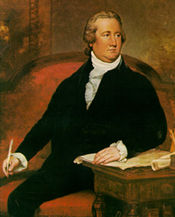 The first Speaker was Frederick Muhlenberg
, who was elected as a Federalist for the first four U.S. Congresses.
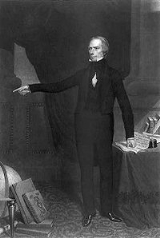
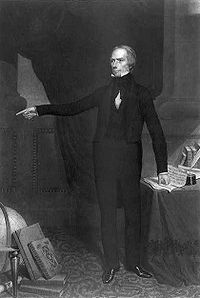
The position of Speaker first gained power under Henry Clay
(1811–1814, 1815–1820, and 1823–1825). In contrast to many of his predecessors, Clay participated in several debates, and used his influence to procure the passage of measures he supported—for instance, the declaration of the War of 1812
, and various laws relating to Clay's "American System
". Furthermore, when no candidate received an Electoral College majority in the 1824 presidential election causing the president to be decided by the House, Speaker Clay threw his support to John Quincy Adams
instead of Andrew Jackson
, thereby ensuring the former's victory. Following Clay's retirement in 1825, the power of the Speakership once again began to decline; at the same time, however, Speakership elections became increasingly bitter. As the Civil War
approached, several sectional factions nominated their own candidates, often making it difficult for any candidate to attain a majority. In 1855 and again in 1859, for example, the contest for Speaker lasted for two months before the House achieved a result. Speakers tended to have very short tenures; for example, from 1839 to 1863 there were eleven Speakers, only one of whom served for more than one term. To date, James K. Polk
is the only Speaker of the House to be later elected President of the United States.
 Towards the end of the 19th century, the office of Speaker began to develop into a very powerful one. One of the most important sources of the Speaker's power was his position as Chairman of the Committee on Rules
, which, after the reorganization of the committee system in 1880, became one of the most powerful standing committees of the House. Furthermore, several Speakers became leading figures in their political parties; examples include Democrats Samuel J. Randall
, John Griffin Carlisle
, and Charles F. Crisp
, and Republicans James G. Blaine
, Thomas Brackett Reed
, and Joseph Gurney Cannon
.
The power of the Speaker was greatly augmented during the tenure of the Republican Thomas Brackett Reed
(1889–1891, 1895–1899). "Czar Reed", as he was called by his opponents, sought to end the obstruction of bills by the minority, in particular by countering the tactic known as the "disappearing quorum". By refusing to vote on a motion, the minority could ensure that a quorum would not be achieved, and that the result would be invalid. Reed, however, declared that members who were in the chamber but refused to vote would still count for the purposes of determining a quorum. Through these and other rulings, Reed ensured that the Democrats could not block the Republican agenda.
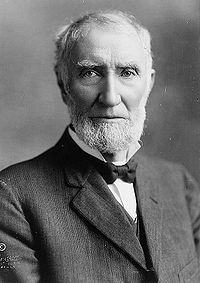
The Speakership reached its apogee during the term of Republican Joseph Gurney Cannon
(1903–1911). Cannon exercised extraordinary control over the legislative process; he determined the agenda of the House, appointed the members of all committees, chose committee chairmen, headed the Rules Committee, and determined which committee heard each bill. He vigorously used his powers to ensure that the proposals of the Republican Party were passed by the House. In 1910, however, Democrats and several dissatisfied Republicans joined together to strip the Speaker of many of his powers, including the ability to name committee members and chairmanship of the Rules Committee. Fifteen years later, Speaker Nicholas Longworth
restored much—but not all—of the lost influence of the position.
 One of the most influential Speakers in history was Democrat Sam Rayburn
. Rayburn was the longest-serving Speaker in history, holding office from 1940 to 1947, 1949 to 1953, and 1955 to 1961. He helped shape many bills, working quietly in the background with House committees. He also helped ensure the passage of several domestic measures and foreign assistance programs advocated by Presidents Franklin D. Roosevelt
and Harry Truman. Rayburn's successor, Democrat John William McCormack
(served 1962–1971), was a somewhat less influential Speaker, particularly because of dissent from younger members of the Democratic Party. During the mid-1970s, the power of the Speakership once again grew under Democrat Carl Albert
. The Committee on Rules ceased to be a semi-independent panel, as it had been since the Revolt of 1910; instead, it once again became an arm of the party leadership. Moreover, in 1975, the Speaker was granted the authority to appoint a majority of the members of the Rules Committee. Meanwhile, the power of committee chairmen was curtailed, further increasing the relative influence of the Speaker.
Albert's successor, Democrat Tip O'Neill
, was a prominent Speaker because of his public opposition to the policies of President Ronald Reagan
. O'Neill is the longest-serving Speaker without a break (1977 through 1987). He challenged Reagan on domestic programs and on defense expenditures. Republicans made O'Neill the target of their election campaigns in 1980 and 1982; nevertheless, Democrats managed to retain their majorities in both years.
The roles of the parties were reversed in 1994 when, after spending forty years in the minority, the Republicans regained control of the House with the platform "Contract with America
" which was spearheaded by Minority Whip Newt Gingrich
. Speaker Gingrich would regularly clash with Democratic President Bill Clinton
, leading to the United States federal government shutdown of 1995 and 1996, in which Clinton was largely seen to have prevailed. Gingrich's hold on the leadership was weakened significantly by that and several other controversies, as he faced a caucus revolt in 1997, and after the Republicans lost House seats in 1998 (although retaining a majority) he did not stand for a third term as Speaker. His successor, Dennis Hastert
, had been chosen as a compromise candidate, since the other Republicans in the leadership were more controversial. Hastert played a much less prominent role than other contemporary Speakers, being overshadowed by House Majority Leader Tom DeLay
and President George W. Bush
. The Republicans came out of the 2000 elections with a further reduced majority, but made small gains in 2002 and 2004. The periods of 2001-2002 and 2003-2007 were the first times since 1953-1955 that there was single-party Republican leadership in Washington, interrupted from 2001-2003 as Senator Jim Jeffords
of Vermont
left the Republicans to become independent and caucused with the Democrats to give them the 51-49 Senate majority.
In the 2006 midterm elections
, the Democrats won majority of the House. Nancy Pelosi
became the Speaker when the 110th Congress
convened on January 4, 2007, making her the first female Speaker. With the election of Barack Obama and Democratic gains in both houses of Congress, Pelosi became the first speaker since Tom Foley
to hold the office during single-party Democratic leadership in Washington. During the 111th Congress, Pelosi was the driving force behind several of Obama's major initiatives which proved controversial. The Republicans campaigned against Pelosi and the Democrats' legislation and regained control of the House in the 2010 midterm elections, with John Boehner
taking over as Speaker.
House section convened on December 2, it could not begin the Speakership election until December 14 because of an election dispute in New Jersey
known as the "Broad Seal War
". Two rival delegations—one Whig
and the other Democrat—had been certified as elected by different branches of the New Jersey government. The problem was compounded because the result of the dispute would determine whether the Whigs or the Democrats held the majority. Neither party agreed to permit a Speakership election with the opposite party's delegation participating. Finally, it was agreed to exclude both delegations from the election; a Speaker was finally chosen on December 17.
Another, more prolonged fight occurred in 1855 in the 34th United States Congress
. The new Republican Party
was not fully formed, and significant numbers of politicians, mostly former Whigs, ran for office under the Opposition
label. This label was likely used because the Whig name had been discredited and abandoned, but former Whigs still needed to advertise that they were opposed to the Democrats. Following the election, the Opposition Party actually was the largest party in the U.S. House of Representatives, with the party makeup of the 234 Representatives being 100 Oppositionists, 83 Democrats, and 51 Americans
(Know Nothing). Neither the Republican nor the Democratic candidate could attain a majority because of the American Party
. As a compromise, the Republicans nominated Nathaniel Prentiss Banks, an American candidate. This is the first example in U.S. history of a form of coalition
government in either house of Congress. The House found itself in the same dilemma in the 36th
, 37th
and the 38th United States Congress
. The three speakers elected during these House sessions where William Pennington
, ironically the New Jersey governor who certified the disputed Whig candidates during the earlier Broad Seal War controversy, Galusha A. Grow
, and Schuyler Colfax
, who later became Vice-President under Ulysses Grant.
The last Speakership elections in which the House had to vote more than once occurred in the 65th
and 72nd United States Congress
. In 1917, neither the Republican nor the Democratic candidate could attain a majority because 3 members of the Progressive Party
and other single members of other parties voted for their own party. The Republicans had a plurality in the House but James "Champ" Clark remained Speaker of the House because of the support of the Progressive Party members. In 1931, both the Republicans and the Democrats had 217 members with the Minnesota Farmer-Labor Party
having one member to decide who would be the deciding vote. The Farmer-Labor Party eventually voted for the Democrats' candidate for speaker John Nance Garner
, who later became Vice-President under Franklin Roosevelt.
In 1997, several Republican Congressional leaders tried to force Speaker Newt Gingrich
to resign; however Gingrich refused since that would have required a new election for Speaker, which could led to the possibility that Democrats—along with dissenting Republicans—would vote for the Democrat Dick Gephardt
(then Minority Leader) as Speaker. After the 1998 midterm elections where the Republicans lost seats, Gingrich did not stand for re-election. The next two figures in the House Republican leadership hierarchy, majority leader Richard Armey and majority whip Tom DeLay
, chose not to contest the Speaker's office. The chairman of a powerful standing committee, Bob Livingston
, who chaired the Appropriations Committee
, declared his bid for speakership which was unopposed, making him Speaker-elect. Then it was revealed that Livingston—who had been publicly critical of President Bill Clinton
's perjury during his sexual harassment-had engaged in an extramarital affair himself, and he opted to resign from the House despite being urged to stay on by House Democratic leader Gephardt. Subsequently, the chief deputy whip Dennis Hastert
was selected as the Speaker.
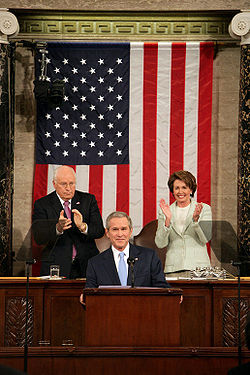 On November 16, 2006, Nancy Pelosi
, who was then the House Minority Leader, was designated as Speaker-elect by the House Democrats. When the 110th Congress convened on January 4, 2007, she was nominated and elected as the 60th Speaker by a vote of 233-202, becoming the first woman to be elected Speaker of the House. Pelosi remained speaker through the 111th Congress. For the 112th Congress, Republican John Boehner was unanimously designated Speaker-elect by House Republicans and was elected the 61st Speaker of the House. Nineteen Democratic representatives voted for Democrats other than Pelosi, who had been chosen as House Minority Leader and the Democrats' candidate for Speaker, as a show of dissent.
The Speaker is responsible for ensuring that the House passes legislation supported by the majority party. In pursuing this goal, the Speaker may use his or her power to determine when each bill reaches the floor. They also chair the majority party's House steering committee. While the Speaker is the functioning head of the House majority party, the same is not true of the President pro tempore of the Senate, whose office is primarily ceremonial and honorary.
When the Speaker and the President belong to the same party, the Speaker normally plays a less prominent role as the leader of the majority party. For example, Speaker Dennis Hastert
played a very low-key role during the presidency of fellow Republican George W. Bush
. Sometimes however, the Speaker will play a big role even when they belong to the same party as the President, such as when Speaker Nancy Pelosi
played a role in continuing the push for health care reform during the presidency of fellow Democrat Barack Obama
. On the other hand, when the Speaker and the President belong to opposite parties, the public role and influence of the Speaker tend to increase. The Speaker is the highest-ranking member of the opposition party and is normally the chief public opponent of the President's agenda. Recent examples include Tip O'Neill
, who was a vocal opponent of President Ronald Reagan
's domestic and defense policies; Newt Gingrich
, who fought a bitter battle with President Bill Clinton
for control of domestic policy; Nancy Pelosi
, who clashed with President George W. Bush
over domestic policy and the Iraq War. and Current Speaker John Boehner
, who regularly clashes with President Barack Obama
over budget issues as well as social issues such as defending the Defense of Marriage Act.
On the floor of the House, the presiding officer is always addressed as "Mister Speaker" or "Madam Speaker" (even if the Speaker him- or herself is not the individual presiding). When the House resolves itself into a Committee of the Whole
, the Speaker designates a member to preside over the Committee as the Chairman, who is addressed as "Mister Chairman" or "Madam Chairwoman." To speak, members must seek the presiding officer's recognition. The presiding officer may call on members as they please, and may therefore control the flow of debate. The presiding officer also rules on all points of order, but such rulings may be appealed to the whole House. The Speaker is responsible for maintaining decorum in the House, and may order the Sergeant-at-Arms
to enforce the rules.
The Speaker's powers and duties extend beyond presiding in the chamber. In particular, the Speaker has great influence over the committee process. The Speaker selects nine of the thirteen members of the powerful Committee on Rules, subject to the approval of the conference of the majority party. (The leadership of the minority party chooses remaining four members.) Furthermore, the Speaker appoints all members of select committees and conference committees. Moreover, when a bill is introduced, the Speaker determines which committee shall consider it. As a member of the House, the Speaker is entitled to participate in debate and to vote but, by custom, only does so in exceptional circumstances. Ordinarily, the Speaker votes only when their vote would be decisive, and on matters of great importance (such as constitutional amendments).
and , however, require that the President of the Senate preside over joint sessions of Congress assembled to count electoral votes
and to certify the results of a presidential election.
The Speaker is further responsible for overseeing the officers of the House: the Clerk
, the Sergeant-at-Arms, the Chief Administrative Officer
, and the Chaplain
. The Speaker can dismiss any of these officers. The Speaker appoints the House Historian
and the General Counsel and, jointly with the Majority and Minority Leaders, appoints the House's Inspector General.
The Speaker is second in the presidential line of succession
, immediately after the Vice President, under the Presidential Succession Act of 1947
. The Speaker is followed in the line of succession by the President pro tempore of the Senate and by the heads of federal executive departments. Some scholars, however, argue that this provision of the succession statute is unconstitutional.
To date, the implementation of the Presidential Succession Act has never been necessary; thus, no Speaker has ever acted as president. Implementation of the law almost became necessary in 1973, after the resignation of Vice President Spiro Agnew
. Many at the time believed that President Richard Nixon
would resign because of the Watergate scandal
, allowing Speaker Carl Albert
to succeed. However, before he resigned, Nixon appointed Gerald Ford
to the Vice Presidency in accordance with the Twenty-fifth Amendment
. Nevertheless, the United States government takes the place of the Speaker in the line of succession seriously enough that, for example, since shortly after the terrorist attacks of September 11, 2001, Speakers have used military jets to fly back and forth to their districts and for other travel. The Speaker of the House is one of the officers to whom declarations of presidential inability of or ability to resume the presidency must be addressed under the Twenty-fifth Amendment.
Finally, the Speaker continues to represent voters in his or her congressional district.
Speaker (politics)
The term speaker is a title often given to the presiding officer of a deliberative assembly, especially a legislative body. The speaker's official role is to moderate debate, make rulings on procedure, announce the results of votes, and the like. The speaker decides who may speak and has the...
of the United States House of Representatives
United States House of Representatives
The United States House of Representatives is one of the two Houses of the United States Congress, the bicameral legislature which also includes the Senate.The composition and powers of the House are established in Article One of the Constitution...
. The office was established in 1789 by Article I
Article One of the United States Constitution
Article One of the United States Constitution describes the powers of Congress, the legislative branch of the federal government. The Article establishes the powers of and limitations on the Congress, consisting of a House of Representatives composed of Representatives, with each state gaining or...
, Section 2 of the United States Constitution
United States Constitution
The Constitution of the United States is the supreme law of the United States of America. It is the framework for the organization of the United States government and for the relationship of the federal government with the states, citizens, and all people within the United States.The first three...
, which states in part, "The House of Representatives shall choose their Speaker..." The current speaker is John Boehner
John Boehner
John Andrew Boehner is the 61st and current Speaker of the United States House of Representatives. A member of the Republican Party, he is the U.S. Representative from , serving since 1991...
, a Republican
Republican Party (United States)
The Republican Party is one of the two major contemporary political parties in the United States, along with the Democratic Party. Founded by anti-slavery expansion activists in 1854, it is often called the GOP . The party's platform generally reflects American conservatism in the U.S...
who represents Ohio's 8th congressional district
Ohio's 8th congressional district
Ohio's 8th congressional district sits on the west side of Ohio, bordering Indiana. The cities of Hamilton, Fairfield, Middletown, Huber Heights, Eaton, Greenville, Piqua, Troy, and parts of Dayton, Riverside, and Wright Patterson Air Force Base are part of the district...
. The Constitution does not require that the Speaker be an elected Member of Congress, but no non-member has ever been elected Speaker.
The Speaker is second in the United States presidential line of succession
United States presidential line of succession
The United States presidential line of succession defines who may become or act as President of the United States upon the incapacity, death, resignation, or removal from office of a sitting president or a president-elect.- Current order :This is a list of the current presidential line of...
, after the Vice President
Vice President of the United States
The Vice President of the United States is the holder of a public office created by the United States Constitution. The Vice President, together with the President of the United States, is indirectly elected by the people, through the Electoral College, to a four-year term...
and before the President pro tempore of the U.S. Senate
President pro tempore of the United States Senate
The President pro tempore is the second-highest-ranking official of the United States Senate. The United States Constitution states that the Vice President of the United States is the President of the Senate and the highest-ranking official of the Senate despite not being a member of the body...
. Unlike in some Westminster System
Westminster System
The Westminster system is a democratic parliamentary system of government modelled after the politics of the United Kingdom. This term comes from the Palace of Westminster, the seat of the Parliament of the United Kingdom....
parliaments, the Speaker is a leadership position in the majority party and actively works to set that party's legislative agenda, therefore endowing the office with considerable power. The Speaker does not usually personally preside over debates, instead delegating the duty to other members of Congress
United States Congress
The United States Congress is the bicameral legislature of the federal government of the United States, consisting of the Senate and the House of Representatives. The Congress meets in the United States Capitol in Washington, D.C....
of the same political party.
Aside from duties relating to heading the House and the majority political party, the Speaker also performs administrative and procedural functions, and represents his or her congressional district.
Selection
The House of Representatives elects the Speaker of the House on the first day of every new Congress. Each party nominates a candidate. There is usually some degree of consensus within each party's leadership as to who the favored candidate will be. Whoever receives a simple majority of the votes is elected. The new Speaker is then sworn in by the Dean of the HouseDean of the United States House of Representatives
The Dean of the United States House of Representatives is the longest continuously serving member of the House. The present Dean is John Dingell, a Democrat of Michigan....
, the chamber's longest-serving member.
In modern practice, the Speaker is chosen by the majority party from among its senior leaders, either when a vacancy in the office arrives, or when the majority party changes. It is usually obvious within two or three weeks of a House election who the new Speaker will be. Previous Speakers have been minority leaders (when the majority party changes, as they are already the House party leader, and as the minority leader is usually their party's nominee for speaker), or majority leaders (upon departure of the current speaker in the majority party), assuming that the party leadership hierarchy is followed. In the past, other potent candidates have included chairman of influential standing committees.
So far the Democrats have always elevated their minority leader to the speakership upon reclaiming majority control of the House, however Republicans have not always followed this leadership succession pattern. In 1919, for instance, Republicans bypassed James R. Mann
James Robert Mann
James Robert Mann was an American legislator and U.S. Representative from Illinois, 1897–1922. He was a member of the Republican party, and served as House Minority Leader from 1911 to 1919.- Early life :...
, R-IL, who had been minority leader for eight years, and elected Frederick Gillett
Frederick H. Gillett
Frederick Huntington Gillett was an American politician during the early 20th century. Frederick H. Gillett was born in Westfield, Massachusetts to Edward Bates Gillett and Lucy Fowler Gillett . He graduated from Amherst College in 1874 and Harvard Law School in 1877. He began the practice of...
, R-MA, to be Speaker. Mann "had angered many Republicans by objecting to their private bill
Private bill
A private bill is a proposal for a law that would apply to a particular individual or group of individuals, or corporate entity. If enacted, it becomes a private Act . This is unlike public bills which apply to everyone within their jurisdiction...
s on the floor;" also he was a protégé of autocratic Speaker Joseph Cannon
Joseph Gurney Cannon
Joseph Gurney Cannon was a United States politician from Illinois and leader of the Republican Party. Cannon served as Speaker of the United States House of Representatives from 1903 to 1911, and historians generally consider him to be the most dominant Speaker in United States history, with such...
, R-IL (1903–1911), and many Members "suspected that he would try to re-centralize power in his hands if elected Speaker." More recently, although Robert H. Michel
Robert H. Michel
Robert Henry "Bob" Michel is an American Republican Party politician who was a member of the United States House of Representatives for 38 years. He represented central Illinois' 18th congressional district, and was the GOP leader in Congress, serving as Minority Leader for 14 years during an era...
was the Minority Leader in 1994 when the Republicans regained control of the House
Republican Revolution
The Republican Revolution or Revolution of '94 is what the media dubbed Republican Party success in the 1994 U.S. midterm elections, which resulted in a net gain of 54 seats in the House of Representatives, and a pickup of eight seats in the Senate...
in the 1994 midterm elections
United States elections, 1994
The 1994 elections in the United States were held on November 8, 1994. This was the year known as the Republican Revolution, in which members of the Republican Party stormed back to majorities in the House and Senate...
, he had already announced his retirement and had little or no involvement in the campaign, including the Contract with America
Contract with America
The Contract with America was a document released by the United States Republican Party during the 1994 Congressional election campaign. Written by Larry Hunter, who was aided by Newt Gingrich, Robert Walker, Richard Armey, Bill Paxon, Tom DeLay, John Boehner and Jim Nussle, and in part using text...
which was unveiled six weeks before voting day. Michel opted not to seek re-election because he had been isolated in the caucus by Minority Whip Newt Gingrich
Newt Gingrich
Newton Leroy "Newt" Gingrich is a U.S. Republican Party politician who served as the House Minority Whip from 1989 to 1995 and as the 58th Speaker of the U.S. House of Representatives from 1995 to 1999....
and other younger and more aggressive congressmen; so it would have been unlikely that Michel could have retained a House leadership post in the succeeding session of Congress.
It is expected that members of the House vote for their party's candidate. If they do not do so, they usually vote for someone else in their party or vote "present". Those who vote for the other party's candidate often face serious consequences, up to and including the loss of seniority. The last major instance where a representative voted for the other party's candidate was in 2000, when Democrat Jim Traficant of Ohio
Ohio
Ohio is a Midwestern state in the United States. The 34th largest state by area in the U.S.,it is the 7th‑most populous with over 11.5 million residents, containing several major American cities and seven metropolitan areas with populations of 500,000 or more.The state's capital is Columbus...
voted for Republican Dennis Hastert
Dennis Hastert
John Dennis "Denny" Hastert was the 59th Speaker of the House serving from 1999 to 2007. He represented as a Republican for twenty years, 1987 to 2007.He is the longest-serving Republican Speaker in history...
. In response, the Democrats stripped him of his seniority and he lost all of his committee posts.
If the Speaker's party loses control of the House in an election, and if the Speaker and Majority Leader both remain in the leadership hierarchy, that would mean that they would become the Minority Leader and Minority Whip, respectively. As the minority party has one less leadership position after losing the speaker's chair, there may be a contest for the remaining leadership positions. Most Speakers whose party has lost control of the House had not returned to the party leadership (Tom Foley
Tom Foley
Thomas Stephen Foley was the 57th Speaker of the United States House of Representatives, serving from 1989 to 1995. He represented Washington's 5th congressional district for 30 years as a Democratic member from 1965 to 1995....
lost his seat, Dennis Hastert
Dennis Hastert
John Dennis "Denny" Hastert was the 59th Speaker of the House serving from 1999 to 2007. He represented as a Republican for twenty years, 1987 to 2007.He is the longest-serving Republican Speaker in history...
returned to the backbenches and resigned from the House in late 2007). However, Speakers Joseph William Martin, Jr.
Joseph William Martin, Jr.
Joseph William Martin, Jr. was a Republican Congressman and Speaker of the House from North Attleborough, Massachusetts. He was notably the only Republican to serve as Speaker between 1931 and 1995....
and Sam Rayburn
Sam Rayburn
Samuel Taliaferro Rayburn , often called "Mr. Sam," or "Mr. Democrat," was a Democratic lawmaker from Bonham, Texas, who served as the Speaker of the U.S. House of Representatives for seventeen years, the longest tenure in U.S. history.- Background :Rayburn was born in Roane County, Tennessee, and...
did seek the Minority Leader post to retain the House party leadership, as their parties swapped control of the House in the late 1940s and early 1950s. Nancy Pelosi
Nancy Pelosi
Nancy Patricia D'Alesandro Pelosi is the Minority Leader of the United States House of Representatives and served as the 60th Speaker of the United States House of Representatives from 2007 to 2011...
is the most recent example of an outgoing Speaker who was elected Minority Leader, after the Democrats lost control of the House in the 2010 elections.
History
Frederick Muhlenberg
Frederick Augustus Conrad Muhlenberg was an American minister and politician who was the first Speaker of the United States House of Representatives. A delegate and a member of the U.S...
, who was elected as a Federalist for the first four U.S. Congresses.
The position of Speaker first gained power under Henry Clay
Henry Clay
Henry Clay, Sr. , was a lawyer, politician and skilled orator who represented Kentucky separately in both the Senate and in the House of Representatives...
(1811–1814, 1815–1820, and 1823–1825). In contrast to many of his predecessors, Clay participated in several debates, and used his influence to procure the passage of measures he supported—for instance, the declaration of the War of 1812
War of 1812
The War of 1812 was a military conflict fought between the forces of the United States of America and those of the British Empire. The Americans declared war in 1812 for several reasons, including trade restrictions because of Britain's ongoing war with France, impressment of American merchant...
, and various laws relating to Clay's "American System
American System (economic plan)
The American System, originally called "The American Way", was a mercantilist economic plan that played a prominent role in American policy during the first half of the 19th century...
". Furthermore, when no candidate received an Electoral College majority in the 1824 presidential election causing the president to be decided by the House, Speaker Clay threw his support to John Quincy Adams
John Quincy Adams
John Quincy Adams was the sixth President of the United States . He served as an American diplomat, Senator, and Congressional representative. He was a member of the Federalist, Democratic-Republican, National Republican, and later Anti-Masonic and Whig parties. Adams was the son of former...
instead of Andrew Jackson
Andrew Jackson
Andrew Jackson was the seventh President of the United States . Based in frontier Tennessee, Jackson was a politician and army general who defeated the Creek Indians at the Battle of Horseshoe Bend , and the British at the Battle of New Orleans...
, thereby ensuring the former's victory. Following Clay's retirement in 1825, the power of the Speakership once again began to decline; at the same time, however, Speakership elections became increasingly bitter. As the Civil War
American Civil War
The American Civil War was a civil war fought in the United States of America. In response to the election of Abraham Lincoln as President of the United States, 11 southern slave states declared their secession from the United States and formed the Confederate States of America ; the other 25...
approached, several sectional factions nominated their own candidates, often making it difficult for any candidate to attain a majority. In 1855 and again in 1859, for example, the contest for Speaker lasted for two months before the House achieved a result. Speakers tended to have very short tenures; for example, from 1839 to 1863 there were eleven Speakers, only one of whom served for more than one term. To date, James K. Polk
James K. Polk
James Knox Polk was the 11th President of the United States . Polk was born in Mecklenburg County, North Carolina. He later lived in and represented Tennessee. A Democrat, Polk served as the 17th Speaker of the House of Representatives and the 12th Governor of Tennessee...
is the only Speaker of the House to be later elected President of the United States.
United States House Committee on Rules
The Committee on Rules, or Rules Committee, is a committee of the United States House of Representatives. Rather than being responsible for a specific area of policy, as most other committees are, it is in charge of determining under what rule other bills will come to the floor...
, which, after the reorganization of the committee system in 1880, became one of the most powerful standing committees of the House. Furthermore, several Speakers became leading figures in their political parties; examples include Democrats Samuel J. Randall
Samuel J. Randall
Samuel Jackson Randall was a Pennsylvania politician, attorney, soldier, and a prominent Democratic member of the United States House of Representatives during the late 19th century. He served as the 33rd Speaker of the House and a contender for his party's nomination for the President of the...
, John Griffin Carlisle
John Griffin Carlisle
John Griffin Carlisle was a prominent American politician in the Democratic Party during the last quarter of the 19th century. He served as the Speaker of the United States House of Representatives from 1883 to 1889 and as United States Secretary of the Treasury from 1893 to 1897 during the Panic...
, and Charles F. Crisp
Charles Frederick Crisp
Charles Frederick Crisp was a United States political figure. A Democrat, he was elected as a Congressman from Georgia in 1882, and served until his death in 1896. From 1890 until his death, he was leader of the Democratic Party in the House, as either the House Minority Leader or the Speaker of...
, and Republicans James G. Blaine
James G. Blaine
James Gillespie Blaine was a U.S. Representative, Speaker of the United States House of Representatives, U.S. Senator from Maine, two-time Secretary of State...
, Thomas Brackett Reed
Thomas Brackett Reed
Thomas Brackett Reed, , occasionally ridiculed as Czar Reed, was a U.S. Representative from Maine, and Speaker of the U.S. House of Representatives from 1889–1891 and from 1895–1899...
, and Joseph Gurney Cannon
Joseph Gurney Cannon
Joseph Gurney Cannon was a United States politician from Illinois and leader of the Republican Party. Cannon served as Speaker of the United States House of Representatives from 1903 to 1911, and historians generally consider him to be the most dominant Speaker in United States history, with such...
.
The power of the Speaker was greatly augmented during the tenure of the Republican Thomas Brackett Reed
Thomas Brackett Reed
Thomas Brackett Reed, , occasionally ridiculed as Czar Reed, was a U.S. Representative from Maine, and Speaker of the U.S. House of Representatives from 1889–1891 and from 1895–1899...
(1889–1891, 1895–1899). "Czar Reed", as he was called by his opponents, sought to end the obstruction of bills by the minority, in particular by countering the tactic known as the "disappearing quorum". By refusing to vote on a motion, the minority could ensure that a quorum would not be achieved, and that the result would be invalid. Reed, however, declared that members who were in the chamber but refused to vote would still count for the purposes of determining a quorum. Through these and other rulings, Reed ensured that the Democrats could not block the Republican agenda.
The Speakership reached its apogee during the term of Republican Joseph Gurney Cannon
Joseph Gurney Cannon
Joseph Gurney Cannon was a United States politician from Illinois and leader of the Republican Party. Cannon served as Speaker of the United States House of Representatives from 1903 to 1911, and historians generally consider him to be the most dominant Speaker in United States history, with such...
(1903–1911). Cannon exercised extraordinary control over the legislative process; he determined the agenda of the House, appointed the members of all committees, chose committee chairmen, headed the Rules Committee, and determined which committee heard each bill. He vigorously used his powers to ensure that the proposals of the Republican Party were passed by the House. In 1910, however, Democrats and several dissatisfied Republicans joined together to strip the Speaker of many of his powers, including the ability to name committee members and chairmanship of the Rules Committee. Fifteen years later, Speaker Nicholas Longworth
Nicholas Longworth
Nicholas Longworth IV was a prominent American politician in the Republican Party during the first few decades of the 20th century...
restored much—but not all—of the lost influence of the position.
Sam Rayburn
Samuel Taliaferro Rayburn , often called "Mr. Sam," or "Mr. Democrat," was a Democratic lawmaker from Bonham, Texas, who served as the Speaker of the U.S. House of Representatives for seventeen years, the longest tenure in U.S. history.- Background :Rayburn was born in Roane County, Tennessee, and...
. Rayburn was the longest-serving Speaker in history, holding office from 1940 to 1947, 1949 to 1953, and 1955 to 1961. He helped shape many bills, working quietly in the background with House committees. He also helped ensure the passage of several domestic measures and foreign assistance programs advocated by Presidents Franklin D. Roosevelt
Franklin D. Roosevelt
Franklin Delano Roosevelt , also known by his initials, FDR, was the 32nd President of the United States and a central figure in world events during the mid-20th century, leading the United States during a time of worldwide economic crisis and world war...
and Harry Truman. Rayburn's successor, Democrat John William McCormack
John William McCormack
John William McCormack was an American politician from Boston, Massachusetts.McCormack served as a member of United States House of Representatives from 1928 until he retired from political life in 1971...
(served 1962–1971), was a somewhat less influential Speaker, particularly because of dissent from younger members of the Democratic Party. During the mid-1970s, the power of the Speakership once again grew under Democrat Carl Albert
Carl Albert
Carl Bert Albert was a lawyer and a Democratic American politician from Oklahoma.Albert represented the southeastern portion of Oklahoma as a Democrat for 30 years, starting in 1947. He is best known for his service as Speaker of the United States House of Representatives from 1971 to 1977...
. The Committee on Rules ceased to be a semi-independent panel, as it had been since the Revolt of 1910; instead, it once again became an arm of the party leadership. Moreover, in 1975, the Speaker was granted the authority to appoint a majority of the members of the Rules Committee. Meanwhile, the power of committee chairmen was curtailed, further increasing the relative influence of the Speaker.
Albert's successor, Democrat Tip O'Neill
Tip O'Neill
Thomas Phillip "Tip" O'Neill, Jr. was an American politician. O'Neill was an outspoken liberal Democrat and influential member of the U.S. Congress, serving in the House of Representatives for 34 years and representing two congressional districts in Massachusetts...
, was a prominent Speaker because of his public opposition to the policies of President Ronald Reagan
Ronald Reagan
Ronald Wilson Reagan was the 40th President of the United States , the 33rd Governor of California and, prior to that, a radio, film and television actor....
. O'Neill is the longest-serving Speaker without a break (1977 through 1987). He challenged Reagan on domestic programs and on defense expenditures. Republicans made O'Neill the target of their election campaigns in 1980 and 1982; nevertheless, Democrats managed to retain their majorities in both years.
The roles of the parties were reversed in 1994 when, after spending forty years in the minority, the Republicans regained control of the House with the platform "Contract with America
Contract with America
The Contract with America was a document released by the United States Republican Party during the 1994 Congressional election campaign. Written by Larry Hunter, who was aided by Newt Gingrich, Robert Walker, Richard Armey, Bill Paxon, Tom DeLay, John Boehner and Jim Nussle, and in part using text...
" which was spearheaded by Minority Whip Newt Gingrich
Newt Gingrich
Newton Leroy "Newt" Gingrich is a U.S. Republican Party politician who served as the House Minority Whip from 1989 to 1995 and as the 58th Speaker of the U.S. House of Representatives from 1995 to 1999....
. Speaker Gingrich would regularly clash with Democratic President Bill Clinton
Bill Clinton
William Jefferson "Bill" Clinton is an American politician who served as the 42nd President of the United States from 1993 to 2001. Inaugurated at age 46, he was the third-youngest president. He took office at the end of the Cold War, and was the first president of the baby boomer generation...
, leading to the United States federal government shutdown of 1995 and 1996, in which Clinton was largely seen to have prevailed. Gingrich's hold on the leadership was weakened significantly by that and several other controversies, as he faced a caucus revolt in 1997, and after the Republicans lost House seats in 1998 (although retaining a majority) he did not stand for a third term as Speaker. His successor, Dennis Hastert
Dennis Hastert
John Dennis "Denny" Hastert was the 59th Speaker of the House serving from 1999 to 2007. He represented as a Republican for twenty years, 1987 to 2007.He is the longest-serving Republican Speaker in history...
, had been chosen as a compromise candidate, since the other Republicans in the leadership were more controversial. Hastert played a much less prominent role than other contemporary Speakers, being overshadowed by House Majority Leader Tom DeLay
Tom DeLay
Thomas Dale "Tom" DeLay is a former member of the United States House of Representatives, representing Texas's 22nd congressional district from 1984 until 2006. He was Republican Party House Majority Leader from 2003 to 2005, when he resigned because of criminal money laundering charges in...
and President George W. Bush
George W. Bush
George Walker Bush is an American politician who served as the 43rd President of the United States, from 2001 to 2009. Before that, he was the 46th Governor of Texas, having served from 1995 to 2000....
. The Republicans came out of the 2000 elections with a further reduced majority, but made small gains in 2002 and 2004. The periods of 2001-2002 and 2003-2007 were the first times since 1953-1955 that there was single-party Republican leadership in Washington, interrupted from 2001-2003 as Senator Jim Jeffords
Jim Jeffords
James Merrill "Jim" Jeffords is a former U.S. Senator from Vermont. He served as a Republican until 2001, when he left the party to become an independent. He retired from the Senate in 2006.-Background:...
of Vermont
Vermont
Vermont is a state in the New England region of the northeastern United States of America. The state ranks 43rd in land area, , and 45th in total area. Its population according to the 2010 census, 630,337, is the second smallest in the country, larger only than Wyoming. It is the only New England...
left the Republicans to become independent and caucused with the Democrats to give them the 51-49 Senate majority.
In the 2006 midterm elections
United States House elections, 2006
- House of Representatives prior to the election :As of November 7, 2006, the U.S. House of the 109th Congress was composed of 229 Republicans, 201 Democrats and 1 Independent . There were also four vacancies...
, the Democrats won majority of the House. Nancy Pelosi
Nancy Pelosi
Nancy Patricia D'Alesandro Pelosi is the Minority Leader of the United States House of Representatives and served as the 60th Speaker of the United States House of Representatives from 2007 to 2011...
became the Speaker when the 110th Congress
110th United States Congress
The One Hundred Tenth United States Congress was the meeting of the legislative branch of the United States federal government, between January 3, 2007, and January 3, 2009, during the last two years of the second term of President George W. Bush. It was composed of the Senate and the House of...
convened on January 4, 2007, making her the first female Speaker. With the election of Barack Obama and Democratic gains in both houses of Congress, Pelosi became the first speaker since Tom Foley
Tom Foley
Thomas Stephen Foley was the 57th Speaker of the United States House of Representatives, serving from 1989 to 1995. He represented Washington's 5th congressional district for 30 years as a Democratic member from 1965 to 1995....
to hold the office during single-party Democratic leadership in Washington. During the 111th Congress, Pelosi was the driving force behind several of Obama's major initiatives which proved controversial. The Republicans campaigned against Pelosi and the Democrats' legislation and regained control of the House in the 2010 midterm elections, with John Boehner
John Boehner
John Andrew Boehner is the 61st and current Speaker of the United States House of Representatives. A member of the Republican Party, he is the U.S. Representative from , serving since 1991...
taking over as Speaker.
Notable elections
Historically, there have been several controversial elections to the Speakership, such as the contest of 1839. In that case, even though the 26th United States Congress26th United States Congress
-House of Representatives:- Leadership :- Senate :*President: Richard M. Johnson *President pro tempore: William R. King - House of Representatives :*Speaker: Robert M.T. Hunter -Members:This list is arranged by chamber, then by state...
House section convened on December 2, it could not begin the Speakership election until December 14 because of an election dispute in New Jersey
New Jersey
New Jersey is a state in the Northeastern and Middle Atlantic regions of the United States. , its population was 8,791,894. It is bordered on the north and east by the state of New York, on the southeast and south by the Atlantic Ocean, on the west by Pennsylvania and on the southwest by Delaware...
known as the "Broad Seal War
Broad Seal War
The Broad Seal War was a controversy over the results of a Congressional election in the U.S. state of New Jersey in 1838.Following the closely contested election of 1838, two groups sought admission to the United States Congress from New Jersey...
". Two rival delegations—one Whig
Whig Party (United States)
The Whig Party was a political party of the United States during the era of Jacksonian democracy. Considered integral to the Second Party System and operating from the early 1830s to the mid-1850s, the party was formed in opposition to the policies of President Andrew Jackson and his Democratic...
and the other Democrat—had been certified as elected by different branches of the New Jersey government. The problem was compounded because the result of the dispute would determine whether the Whigs or the Democrats held the majority. Neither party agreed to permit a Speakership election with the opposite party's delegation participating. Finally, it was agreed to exclude both delegations from the election; a Speaker was finally chosen on December 17.
Another, more prolonged fight occurred in 1855 in the 34th United States Congress
34th United States Congress
The Thirty-fourth United States Congress was a meeting of the legislative branch of the United States federal government, consisting of the United States Senate and the United States House of Representatives. It met in Washington, D.C. from March 4, 1855 to March 4, 1857, during the last two years...
. The new Republican Party
Republican Party (United States)
The Republican Party is one of the two major contemporary political parties in the United States, along with the Democratic Party. Founded by anti-slavery expansion activists in 1854, it is often called the GOP . The party's platform generally reflects American conservatism in the U.S...
was not fully formed, and significant numbers of politicians, mostly former Whigs, ran for office under the Opposition
Opposition Party (United States)
The Opposition Party in the United States is a label with two different applications in Congressional history, as a majority party in Congress 1854-58, and as a Third Party in the South 1858-1860....
label. This label was likely used because the Whig name had been discredited and abandoned, but former Whigs still needed to advertise that they were opposed to the Democrats. Following the election, the Opposition Party actually was the largest party in the U.S. House of Representatives, with the party makeup of the 234 Representatives being 100 Oppositionists, 83 Democrats, and 51 Americans
Know Nothing
The Know Nothing was a movement by the nativist American political faction of the 1840s and 1850s. It was empowered by popular fears that the country was being overwhelmed by German and Irish Catholic immigrants, who were often regarded as hostile to Anglo-Saxon Protestant values and controlled by...
(Know Nothing). Neither the Republican nor the Democratic candidate could attain a majority because of the American Party
Know Nothing
The Know Nothing was a movement by the nativist American political faction of the 1840s and 1850s. It was empowered by popular fears that the country was being overwhelmed by German and Irish Catholic immigrants, who were often regarded as hostile to Anglo-Saxon Protestant values and controlled by...
. As a compromise, the Republicans nominated Nathaniel Prentiss Banks, an American candidate. This is the first example in U.S. history of a form of coalition
Coalition
A coalition is a pact or treaty among individuals or groups, during which they cooperate in joint action, each in their own self-interest, joining forces together for a common cause. This alliance may be temporary or a matter of convenience. A coalition thus differs from a more formal covenant...
government in either house of Congress. The House found itself in the same dilemma in the 36th
36th United States Congress
The Thirty-sixth United States Congress was a meeting of the legislative branch of the United States federal government, consisting of the United States Senate and the United States House of Representatives. It met in Washington, D.C. from March 4, 1859 to March 4, 1861, during the third and fourth...
, 37th
37th United States Congress
The Thirty-seventh United States Congress was a meeting of the legislative branch of the United States federal government, consisting of the United States Senate and the United States House of Representatives. It met in Washington, D.C. from March 4, 1861 to March 4, 1863, during the first two...
and the 38th United States Congress
38th United States Congress
-House of Representatives:Before this Congress, the 1860 United States Census and resulting reapportionment changed the size of the House to 241 members...
. The three speakers elected during these House sessions where William Pennington
William Pennington
William Pennington was an American politician and lawyer, the Governor of New Jersey, and Speaker of the House during his one term in Congress....
, ironically the New Jersey governor who certified the disputed Whig candidates during the earlier Broad Seal War controversy, Galusha A. Grow
Galusha A. Grow
Galusha Aaron Grow was a prominent U.S. politician, lawyer, writer and businessman, and was Speaker of the House of Representatives from 1861 to 1863. He was defeated for reelection in 1862...
, and Schuyler Colfax
Schuyler Colfax
Schuyler Colfax, Jr. was a United States Representative from Indiana , Speaker of the House of Representatives , and the 17th Vice President of the United States . To date, he is one of only two Americans to have served as both House speaker and vice president.President Ulysses S...
, who later became Vice-President under Ulysses Grant.
The last Speakership elections in which the House had to vote more than once occurred in the 65th
65th United States Congress
The Sixty-fifth United States Congress was a meeting of the legislative branch of the United States federal government, composed of the United States Senate and the United States House of Representatives. It met in Washington, DC from March 4, 1917 to March 4, 1919, during the fourth and fifth...
and 72nd United States Congress
72nd United States Congress
The Seventy-second United States Congress was a meeting of the legislative branch of the United States federal government, consisting of the United States Senate and the United States House of Representatives. It met in Washington, D.C. from March 4, 1931 to March 4, 1933, during the last two years...
. In 1917, neither the Republican nor the Democratic candidate could attain a majority because 3 members of the Progressive Party
Progressive Party (United States, 1912)
The Progressive Party of 1912 was an American political party. It was formed after a split in the Republican Party between President William Howard Taft and former President Theodore Roosevelt....
and other single members of other parties voted for their own party. The Republicans had a plurality in the House but James "Champ" Clark remained Speaker of the House because of the support of the Progressive Party members. In 1931, both the Republicans and the Democrats had 217 members with the Minnesota Farmer-Labor Party
Minnesota Farmer-Labor Party
The Minnesota Farmer–Labor Party was a political party in the United States state of Minnesota, the most successful and longest-lasting of the constituent elements of the national Farmer–Labor Party movement, which had a presence in other states...
having one member to decide who would be the deciding vote. The Farmer-Labor Party eventually voted for the Democrats' candidate for speaker John Nance Garner
John Nance Garner
John Nance Garner, IV , was the 32nd Vice President of the United States and the 44th Speaker of the United States House of Representatives .- Early life and family :...
, who later became Vice-President under Franklin Roosevelt.
In 1997, several Republican Congressional leaders tried to force Speaker Newt Gingrich
Newt Gingrich
Newton Leroy "Newt" Gingrich is a U.S. Republican Party politician who served as the House Minority Whip from 1989 to 1995 and as the 58th Speaker of the U.S. House of Representatives from 1995 to 1999....
to resign; however Gingrich refused since that would have required a new election for Speaker, which could led to the possibility that Democrats—along with dissenting Republicans—would vote for the Democrat Dick Gephardt
Dick Gephardt
Richard Andrew "Dick" Gephardt is a lobbyist and former prominent American politician of the Democratic Party. Gephardt served as a U.S. Representative from Missouri from January 3, 1977, until January 3, 2005, serving as House Majority Leader from 1989 to 1995, and as Minority Leader from 1995 to...
(then Minority Leader) as Speaker. After the 1998 midterm elections where the Republicans lost seats, Gingrich did not stand for re-election. The next two figures in the House Republican leadership hierarchy, majority leader Richard Armey and majority whip Tom DeLay
Tom DeLay
Thomas Dale "Tom" DeLay is a former member of the United States House of Representatives, representing Texas's 22nd congressional district from 1984 until 2006. He was Republican Party House Majority Leader from 2003 to 2005, when he resigned because of criminal money laundering charges in...
, chose not to contest the Speaker's office. The chairman of a powerful standing committee, Bob Livingston
Bob Livingston
Robert Linlithgow "Bob" Livingston Jr. is a Washington, D.C.-based lobbyist and a former Republican U.S. Representative from Louisiana...
, who chaired the Appropriations Committee
United States House Committee on Appropriations
The Committee on Appropriations is a committee of the United States House of Representatives. It is in charge of setting the specific expenditures of money by the government of the United States...
, declared his bid for speakership which was unopposed, making him Speaker-elect. Then it was revealed that Livingston—who had been publicly critical of President Bill Clinton
Bill Clinton
William Jefferson "Bill" Clinton is an American politician who served as the 42nd President of the United States from 1993 to 2001. Inaugurated at age 46, he was the third-youngest president. He took office at the end of the Cold War, and was the first president of the baby boomer generation...
's perjury during his sexual harassment-had engaged in an extramarital affair himself, and he opted to resign from the House despite being urged to stay on by House Democratic leader Gephardt. Subsequently, the chief deputy whip Dennis Hastert
Dennis Hastert
John Dennis "Denny" Hastert was the 59th Speaker of the House serving from 1999 to 2007. He represented as a Republican for twenty years, 1987 to 2007.He is the longest-serving Republican Speaker in history...
was selected as the Speaker.
Nancy Pelosi
Nancy Patricia D'Alesandro Pelosi is the Minority Leader of the United States House of Representatives and served as the 60th Speaker of the United States House of Representatives from 2007 to 2011...
, who was then the House Minority Leader, was designated as Speaker-elect by the House Democrats. When the 110th Congress convened on January 4, 2007, she was nominated and elected as the 60th Speaker by a vote of 233-202, becoming the first woman to be elected Speaker of the House. Pelosi remained speaker through the 111th Congress. For the 112th Congress, Republican John Boehner was unanimously designated Speaker-elect by House Republicans and was elected the 61st Speaker of the House. Nineteen Democratic representatives voted for Democrats other than Pelosi, who had been chosen as House Minority Leader and the Democrats' candidate for Speaker, as a show of dissent.
Partisan role
The Constitution does not spell out the political role of the Speaker. As the office has developed historically, however, it has taken on a clearly partisan cast, very different from the speakership of most Westminster-style legislatures, such as the Speaker of the British House of Commons, which is meant to be scrupulously non-partisan. The Speaker in the United States, by tradition, is the head of the majority party in the House of Representatives, outranking the Majority Leader. However, despite having the right to vote, the Speaker usually does not participate in debate and rarely votes on the floor.The Speaker is responsible for ensuring that the House passes legislation supported by the majority party. In pursuing this goal, the Speaker may use his or her power to determine when each bill reaches the floor. They also chair the majority party's House steering committee. While the Speaker is the functioning head of the House majority party, the same is not true of the President pro tempore of the Senate, whose office is primarily ceremonial and honorary.
When the Speaker and the President belong to the same party, the Speaker normally plays a less prominent role as the leader of the majority party. For example, Speaker Dennis Hastert
Dennis Hastert
John Dennis "Denny" Hastert was the 59th Speaker of the House serving from 1999 to 2007. He represented as a Republican for twenty years, 1987 to 2007.He is the longest-serving Republican Speaker in history...
played a very low-key role during the presidency of fellow Republican George W. Bush
George W. Bush
George Walker Bush is an American politician who served as the 43rd President of the United States, from 2001 to 2009. Before that, he was the 46th Governor of Texas, having served from 1995 to 2000....
. Sometimes however, the Speaker will play a big role even when they belong to the same party as the President, such as when Speaker Nancy Pelosi
Nancy Pelosi
Nancy Patricia D'Alesandro Pelosi is the Minority Leader of the United States House of Representatives and served as the 60th Speaker of the United States House of Representatives from 2007 to 2011...
played a role in continuing the push for health care reform during the presidency of fellow Democrat Barack Obama
Barack Obama
Barack Hussein Obama II is the 44th and current President of the United States. He is the first African American to hold the office. Obama previously served as a United States Senator from Illinois, from January 2005 until he resigned following his victory in the 2008 presidential election.Born in...
. On the other hand, when the Speaker and the President belong to opposite parties, the public role and influence of the Speaker tend to increase. The Speaker is the highest-ranking member of the opposition party and is normally the chief public opponent of the President's agenda. Recent examples include Tip O'Neill
Tip O'Neill
Thomas Phillip "Tip" O'Neill, Jr. was an American politician. O'Neill was an outspoken liberal Democrat and influential member of the U.S. Congress, serving in the House of Representatives for 34 years and representing two congressional districts in Massachusetts...
, who was a vocal opponent of President Ronald Reagan
Ronald Reagan
Ronald Wilson Reagan was the 40th President of the United States , the 33rd Governor of California and, prior to that, a radio, film and television actor....
's domestic and defense policies; Newt Gingrich
Newt Gingrich
Newton Leroy "Newt" Gingrich is a U.S. Republican Party politician who served as the House Minority Whip from 1989 to 1995 and as the 58th Speaker of the U.S. House of Representatives from 1995 to 1999....
, who fought a bitter battle with President Bill Clinton
Bill Clinton
William Jefferson "Bill" Clinton is an American politician who served as the 42nd President of the United States from 1993 to 2001. Inaugurated at age 46, he was the third-youngest president. He took office at the end of the Cold War, and was the first president of the baby boomer generation...
for control of domestic policy; Nancy Pelosi
Nancy Pelosi
Nancy Patricia D'Alesandro Pelosi is the Minority Leader of the United States House of Representatives and served as the 60th Speaker of the United States House of Representatives from 2007 to 2011...
, who clashed with President George W. Bush
George W. Bush
George Walker Bush is an American politician who served as the 43rd President of the United States, from 2001 to 2009. Before that, he was the 46th Governor of Texas, having served from 1995 to 2000....
over domestic policy and the Iraq War. and Current Speaker John Boehner
John Boehner
John Andrew Boehner is the 61st and current Speaker of the United States House of Representatives. A member of the Republican Party, he is the U.S. Representative from , serving since 1991...
, who regularly clashes with President Barack Obama
Barack Obama
Barack Hussein Obama II is the 44th and current President of the United States. He is the first African American to hold the office. Obama previously served as a United States Senator from Illinois, from January 2005 until he resigned following his victory in the 2008 presidential election.Born in...
over budget issues as well as social issues such as defending the Defense of Marriage Act.
Presiding officer
The Speaker holds a variety of powers as the presiding officer of the House of Representatives, but usually delegates them to another member of the majority party. The Speaker may designate any Member of the House to act as Speaker pro tempore and preside over the House. During important debates, the Speaker pro tempore is ordinarily a senior member of the majority party who may be chosen for their skill in presiding. At other times, more junior members may be assigned to preside to give them experience with the rules and procedures of the House. The Speaker may also designate a Speaker pro tempore for special purposes; for example, during long recesses, a Representative whose district is near Washington, D.C. may be designated as Speaker pro tempore to sign enrolled bills.On the floor of the House, the presiding officer is always addressed as "Mister Speaker" or "Madam Speaker" (even if the Speaker him- or herself is not the individual presiding). When the House resolves itself into a Committee of the Whole
Committee of the Whole (United States House of Representatives)
In the United States House of Representatives, the Committee of the Whole, short for Committee of the Whole House on the State of the Union, is a parliamentary device in which the House of Representatives is considered one large congressional committee...
, the Speaker designates a member to preside over the Committee as the Chairman, who is addressed as "Mister Chairman" or "Madam Chairwoman." To speak, members must seek the presiding officer's recognition. The presiding officer may call on members as they please, and may therefore control the flow of debate. The presiding officer also rules on all points of order, but such rulings may be appealed to the whole House. The Speaker is responsible for maintaining decorum in the House, and may order the Sergeant-at-Arms
Sergeant at Arms of the United States House of Representatives
The United States House of Representatives Sergeant at Arms is an officer of the House with law enforcement, protocol, and administrative responsibilities. The Sergeant at Arms is elected at the beginning of each Congress by the membership of the chamber...
to enforce the rules.
The Speaker's powers and duties extend beyond presiding in the chamber. In particular, the Speaker has great influence over the committee process. The Speaker selects nine of the thirteen members of the powerful Committee on Rules, subject to the approval of the conference of the majority party. (The leadership of the minority party chooses remaining four members.) Furthermore, the Speaker appoints all members of select committees and conference committees. Moreover, when a bill is introduced, the Speaker determines which committee shall consider it. As a member of the House, the Speaker is entitled to participate in debate and to vote but, by custom, only does so in exceptional circumstances. Ordinarily, the Speaker votes only when their vote would be decisive, and on matters of great importance (such as constitutional amendments).
Other functions
Because joint sessions and joint meetings of both houses of Congress are held in the Hall of the House of Representatives, the Speaker presides over all such joint sessions and meetings. The Twelfth AmendmentTwelfth Amendment to the United States Constitution
The Twelfth Amendment to the United States Constitution provides the procedure for electing the President and Vice President. It replaced Article II, Section 1, Clause 3, which provided the original procedure by which the Electoral College functioned. Problems with the original procedure arose in...
and , however, require that the President of the Senate preside over joint sessions of Congress assembled to count electoral votes
United States Electoral College
The Electoral College consists of the electors appointed by each state who formally elect the President and Vice President of the United States. Since 1964, there have been 538 electors in each presidential election...
and to certify the results of a presidential election.
The Speaker is further responsible for overseeing the officers of the House: the Clerk
Clerk of the United States House of Representatives
The Clerk of the United States House of Representatives is an officer of the United States House of Representatives, whose primary duty is to act as the chief record-keeper for the House....
, the Sergeant-at-Arms, the Chief Administrative Officer
Chief Administrative Officer of the United States House of Representatives
The Chief Administrative Officer of the United States House of Representatives is the chief administrative officer of the United States House of Representatives, charged with carrying out administrative functions for the House, including human resources, information resources, payroll, finance,...
, and the Chaplain
Chaplain of the United States House of Representatives
The election of William Linn as Chaplain of the House on May 1, 1789, continued the tradition established by the Continental Congresses of each day's proceedings opening with a prayer by a chaplain. The early Chaplains alternated duties with their Senate counterparts on a weekly basis, covering the...
. The Speaker can dismiss any of these officers. The Speaker appoints the House Historian
Historian of the United States House of Representatives
The Historian of the United States House of Representatives is an official appointed by the United States House of Representatives to study and document its past....
and the General Counsel and, jointly with the Majority and Minority Leaders, appoints the House's Inspector General.
The Speaker is second in the presidential line of succession
United States presidential line of succession
The United States presidential line of succession defines who may become or act as President of the United States upon the incapacity, death, resignation, or removal from office of a sitting president or a president-elect.- Current order :This is a list of the current presidential line of...
, immediately after the Vice President, under the Presidential Succession Act of 1947
Presidential Succession Act
The Presidential Succession Act establishes the line of succession to the powers and duties of the office of President of the United States in the event that neither a President nor Vice President is able to "discharge the powers and duties of the office." The current Presidential Succession Act...
. The Speaker is followed in the line of succession by the President pro tempore of the Senate and by the heads of federal executive departments. Some scholars, however, argue that this provision of the succession statute is unconstitutional.
To date, the implementation of the Presidential Succession Act has never been necessary; thus, no Speaker has ever acted as president. Implementation of the law almost became necessary in 1973, after the resignation of Vice President Spiro Agnew
Spiro Agnew
Spiro Theodore Agnew was the 39th Vice President of the United States , serving under President Richard Nixon, and the 55th Governor of Maryland...
. Many at the time believed that President Richard Nixon
Richard Nixon
Richard Milhous Nixon was the 37th President of the United States, serving from 1969 to 1974. The only president to resign the office, Nixon had previously served as a US representative and senator from California and as the 36th Vice President of the United States from 1953 to 1961 under...
would resign because of the Watergate scandal
Watergate scandal
The Watergate scandal was a political scandal during the 1970s in the United States resulting from the break-in of the Democratic National Committee headquarters at the Watergate office complex in Washington, D.C., and the Nixon administration's attempted cover-up of its involvement...
, allowing Speaker Carl Albert
Carl Albert
Carl Bert Albert was a lawyer and a Democratic American politician from Oklahoma.Albert represented the southeastern portion of Oklahoma as a Democrat for 30 years, starting in 1947. He is best known for his service as Speaker of the United States House of Representatives from 1971 to 1977...
to succeed. However, before he resigned, Nixon appointed Gerald Ford
Gerald Ford
Gerald Rudolph "Jerry" Ford, Jr. was the 38th President of the United States, serving from 1974 to 1977, and the 40th Vice President of the United States serving from 1973 to 1974...
to the Vice Presidency in accordance with the Twenty-fifth Amendment
Twenty-fifth Amendment to the United States Constitution
The Twenty-fifth Amendment to the United States Constitution deals with succession to the Presidency and establishes procedures both for filling a vacancy in the office of the Vice President, as well as responding to Presidential disabilities...
. Nevertheless, the United States government takes the place of the Speaker in the line of succession seriously enough that, for example, since shortly after the terrorist attacks of September 11, 2001, Speakers have used military jets to fly back and forth to their districts and for other travel. The Speaker of the House is one of the officers to whom declarations of presidential inability of or ability to resume the presidency must be addressed under the Twenty-fifth Amendment.
Finally, the Speaker continues to represent voters in his or her congressional district.
See also
- List of Speakers of the United States House of Representatives
- Minority leader of the United States House of RepresentativesMinority leader of the United States House of RepresentativesThe House Minority Leader is one of the party leaders of the United States House of Representatives. This title is currently held by Democratic Representative Nancy Pelosi of California....
External links
- "Capitol Questions." C-SPAN (2003). Notable elections and role.
- The Cannon Centenary Conference: The Changing Nature of the Speakership. (2003). House Document 108-204. History, nature and role of the Speakership.
- Congressional Quarterly's Guide to Congress, 5th ed. (2000). Washington, D.C.: Congressional Quarterly Press.
- Speaker of the House of Representatives. (2005). Official Website. Information about role as party leader, powers as presiding officer.
- Wilson, WoodrowWoodrow WilsonThomas Woodrow Wilson was the 28th President of the United States, from 1913 to 1921. A leader of the Progressive Movement, he served as President of Princeton University from 1902 to 1910, and then as the Governor of New Jersey from 1911 to 1913...
. (1885). Congressional Government. New York: Houghton Mifflin.