


List of Speakers of the United States House of Representatives

Encyclopedia
This is a complete list of the Speaker of the United States House of Representatives . Each was chosen since the First United States Congress
session in 1789. It includes the congressional district
of each speaker
as well as the time they spent in the position.
This is based on the difference between dates; if counted by number of calendar days all the figures would be one greater. Time after adjournment of one Congress but before the convening of the next Congress is not counted. For example, Nathaniel Macon
was Speaker in both the 8th
and 9th
Congresses, but the eight-month gap between the two Congresses is not counted toward his service.
Sam Rayburn
is the only person to have served as Speaker of the House
for more than ten years.
Theodore Medad Pomeroy
served as Speaker of the House for one day after Speaker Schuyler Colfax
resigned to become Vice President of the United States
; Pomeroy's term as a Member of Congress ended the next day.
Sam Rayburn
, Henry Clay
, Thomas Brackett Reed
, Joseph W. Martin, Jr., Frederick Muhlenberg
, and John W. Taylor
are the only Speakers of the House to have ever served in non-consecutive Congresses (i.e. another Speaker served in between each tenure).
(1971–1977), on February 4, 2000. The most recently serving Speaker to die was Tip O'Neill
(1977–1987), on January 5, 1994.
1st United States Congress
-House of Representatives:During this congress, five House seats were added for North Carolina and one House seat was added for Rhode Island when they ratified the Constitution.-Senate:* President: John Adams * President pro tempore: John Langdon...
session in 1789. It includes the congressional district
Congressional district
A congressional district is “a geographical division of a state from which one member of the House of Representatives is elected.”Congressional Districts are made up of three main components, a representative, constituents, and the specific land area that both the representative and the...
of each speaker
Speaker of the United States House of Representatives
The Speaker of the United States House of Representatives, or Speaker of the House, is the presiding officer of the United States House of Representatives...
as well as the time they spent in the position.
List of Speakers
| # | Speaker | Party | District | Congress | Tenure |
|---|---|---|---|---|---|
| 1 | 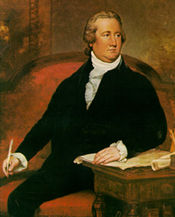 Frederick Muhlenberg Frederick MuhlenbergFrederick Muhlenberg Frederick Augustus Conrad Muhlenberg was an American minister and politician who was the first Speaker of the United States House of Representatives. A delegate and a member of the U.S... |
Pro-Administration Pro-Administration Party (United States) Pro-Administration "Party" is a term by historians to describe the supporters of the policies of George Washington's administration — especially Treasury Secretary Alexander Hamilton's financial policies — prior to the formation of the Federalist and Democratic-Republican Parties.Almost the entire... |
1st 1st United States Congress -House of Representatives:During this congress, five House seats were added for North Carolina and one House seat was added for Rhode Island when they ratified the Constitution.-Senate:* President: John Adams * President pro tempore: John Langdon... |
April 1, 1789 — March 4, 1791 |
|
| 2 | 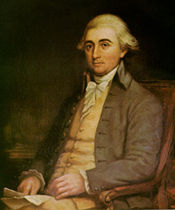 Jonathan Trumbull, Jr. Jonathan Trumbull, Jr.Jonathan Trumbull, Jr. Jonathan Trumbull, Jr. was an American politician who served as the second Speaker of the United States House of Representatives.... |
Pro-Administration Pro-Administration Party (United States) Pro-Administration "Party" is a term by historians to describe the supporters of the policies of George Washington's administration — especially Treasury Secretary Alexander Hamilton's financial policies — prior to the formation of the Federalist and Democratic-Republican Parties.Almost the entire... |
2nd 2nd United States Congress -House of Representatives:During this congress, two new House seats were added for each of the new states of Vermont and Kentucky. -Leadership:-Senate:*President: John Adams *President pro tempore:** Richard Henry Lee... |
October 24, 1791 — March 4, 1793 |
|
| 3 | Frederick Muhlenberg Frederick Muhlenberg Frederick Augustus Conrad Muhlenberg was an American minister and politician who was the first Speaker of the United States House of Representatives. A delegate and a member of the U.S... |
Anti-Administration Anti-Administration Party (United States) Anti-Administration "Party" was the informal faction comprising the opponents of the policies of Treasury Secretary Alexander Hamilton in the first term of President George Washington. This was not an organized political party but an unorganized faction... |
3rd 3rd United States Congress The Third United States Congress was a meeting of the legislative branch of the United States federal government, consisting of the United States Senate and the United States House of Representatives... |
December 2, 1793 — March 4, 1795 |
|
| 4 | 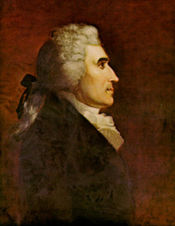 Jonathan Dayton Jonathan DaytonJonathan Dayton Jonathan Dayton was an American politician from the U.S. state of New Jersey. He was the youngest person to sign the United States Constitution and a member of the U.S. House of Representatives, serving as the fourth Speaker of the United States House of Representatives, and later the U.S. Senate... |
Federalist | 4th 4th United States Congress -House of Representatives:- Senate :* President: John Adams * President pro tempore:** Henry Tazewell , first elected December 7, 1795** Samuel Livermore , first elected May 6, 1796** William Bingham , first elected February 16, 1797... |
December 7, 1795 — March 4, 1797 |
|
| 5th 5th United States Congress The Fifth United States Congress was a meeting of the legislative branch of the United States federal government, consisting of the United States Senate and the United States House of Representatives... |
May 15, 1797 — March 4, 1799 |
||||
| 5 |  Theodore Sedgwick Theodore SedgwickTheodore Sedgwick Theodore Sedgwick was an attorney, politician and jurist, who served in elected state government and as a Delegate to the Continental Congress, a US Representative, and a United States Senator from Massachusetts. He served as the fifth Speaker of the United States House of Representatives... |
Federalist | 6th 6th United States Congress The Sixth United States Congress was a meeting of the legislative branch of the United States federal government, consisting of the United States Senate and the United States House of Representatives. It met at Congress Hall in Philadelphia, Pennsylvania and in Washington, D.C. from March 4, 1799... |
December 2, 1799 — March 4, 1801 |
|
| 6 | 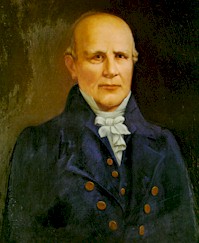 Nathaniel Macon Nathaniel MaconNathaniel Macon Nathaniel Macon was a spokesman for the Old Republican faction of the Democratic-Republican Party that wanted to strictly limit the United States federal government. Macon was born near Warrenton, North Carolina, and attended the College of New Jersey and served briefly in the American... |
Democratic-Republican | 7th 7th United States Congress - House of Representatives :-Senate:* President: Aaron Burr * President pro tempore:** Abraham Baldwin , first elected December 7, 1801** Stephen R. Bradley , first elected December 14, 1802-House of Representatives:... |
December 7, 1801 — March 4, 1803 |
|
| 8th 8th United States Congress - Senate :* President: Aaron Burr * President pro tempore: John Brown , October 17, 1803 – February 26, 1804** Jesse Franklin , March 10, 1804 – November 4, 1804** Joseph Anderson , January 15, 1805 – December 1, 1805- House of Representatives :... |
October 17, 1803 — March 4, 1805 |
||||
| 9th 9th United States Congress - Senate :* President: George Clinton * President pro tempore: Samuel Smith - House of Representatives :* Speaker: Nathaniel Macon -Members:This list is arranged by chamber, then by state... |
December 2, 1805 — March 4, 1807 |
||||
| 7 | 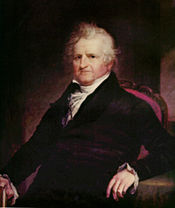 Joseph Bradley Varnum Joseph Bradley VarnumJoseph Bradley Varnum Joseph Bradley Varnum was a U.S. politician of the Democratic-Republican Party from Massachusetts.-Biography:... |
Democratic-Republican | 10th 10th United States Congress - House of Representatives :- Senate :*President: George Clinton *President pro tempore: Samuel Smith , elected April 16, 1808** Stephen R. Bradley , elected December 28, 1808** John Milledge , elected January 30, 1809... |
October 26, 1807 — March 4, 1809 |
|
| 11th 11th United States Congress - House of Representatives :-Leadership:- Senate :* President: George Clinton * President pro tempore:** John Milledge ** Andrew Gregg , elected June 26, 1809** John Gaillard , elected February 28, 1810... |
May 22, 1809 — March 4, 1811 |
||||
| 8 |  Henry Clay Henry ClayHenry Clay Henry Clay, Sr. , was a lawyer, politician and skilled orator who represented Kentucky separately in both the Senate and in the House of Representatives... |
Democratic-Republican | 12th 12th United States Congress - House of Representatives :During this congress, one new House seat was added for the new state of Louisiana.- Senate :*President: George Clinton *President pro tempore: William H. Crawford -House of Representatives:*Speaker: Henry Clay... |
November 4, 1811 — March 4, 1813 |
|
| 13th 13th United States Congress - Senate :* President: Elbridge Gerry , until November 23, 1814, thereafter vacant.* President pro tempore: Joseph B. Varnum , December 6, 1813 – February 3, 1814** John Gaillard , elected November 25, 1814- House of Representatives :... |
May 24, 1813 — January 19, 1814 |
||||
| 9 |  Langdon Cheves Langdon ChevesLangdon Cheves Langdon Cheves was an American politician and a president of the Second Bank of the United States.Cheves was born at Rocky River, South Carolina and died in Columbia, South Carolina. His father, Alexander, was a native of Scotland; his mother, Mary Langdon, was from Virginia... |
Democratic-Republican | January 19, 1814 — March 4, 1815 |
||
| 10 | Henry Clay Henry Clay Henry Clay, Sr. , was a lawyer, politician and skilled orator who represented Kentucky separately in both the Senate and in the House of Representatives... |
Democratic-Republican | 14th 14th United States Congress - Senate :* President: Vacant* President pro tempore: John Gaillard of South Carolina, first elected December 4, 1815- House of Representatives :* Speaker: Henry Clay of Kentucky-Members:This list is arranged by chamber, then by state... |
December 4, 1815 — March 4, 1817 |
|
| 15th 15th United States Congress -Leadership:- Senate :* President: Daniel D. Tompkins * President pro tempore:** John Gaillard , elected March 4, 1817** James Barbour , elected February 15, 1819- House of Representatives :*Speaker: Henry Clay -Members:... |
December 1, 1817 — March 4, 1819 |
||||
| 16th 16th United States Congress -House of Representatives:During this congress, one House seat was added for the new state of Alabama and one seat was reapportioned from Massachusetts to the new state of Maine. For the beginning of the next congress, six more seats from Massachusetts would be reapportioned to... |
December 6, 1819 — October 28, 1820 |
||||
| 11 |  John W. Taylor John W. TaylorJohn W. Taylor (politician) John W. Taylor was an early 19th century U.S. politician from New York.-Life:He was born in 1784 in that part of the Town of Ballston, then in Albany County, New York, which was, upon the creation of Saratoga County in 1791, split off to form the Town of Charlton... |
Democratic-Republican | November 15, 1820 — March 4, 1821 |
||
| 12 | 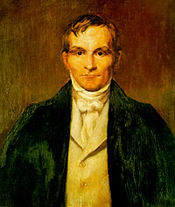 Philip Pendleton Barbour Philip Pendleton BarbourPhilip Pendleton Barbour Philip Pendleton Barbour was a U.S. Congressman from Virginia and an Associate Justice of the United States Supreme Court. He was also the brother of Virginia governor and U.S. Secretary of War James Barbour as well as the first cousin of John S. Barbour and first cousin, once removed of John S... |
Democratic-Republican | 17th 17th United States Congress The Seventeenth United States Congress was a meeting of the legislative branch of the United States federal government, consisting of the United States Senate and the United States House of Representatives. It met in Washington, D.C. from March 4, 1821 to March 3, 1823, during the fifth and sixth... |
December 4, 1821 — March 4, 1823 |
|
| 13 | Henry Clay Henry Clay Henry Clay, Sr. , was a lawyer, politician and skilled orator who represented Kentucky separately in both the Senate and in the House of Representatives... |
Democratic-Republican | 18th 18th United States Congress The Eighteenth United States Congress was a meeting of the legislative branch of the United States federal government, consisting of the United States Senate and the United States House of Representatives. It met in Washington, D.C. from March 4, 1823 to March 3, 1825, during the seventh and eighth... |
December 1, 1823 — March 4, 1825 |
|
| 14 | John W. Taylor John W. Taylor (politician) John W. Taylor was an early 19th century U.S. politician from New York.-Life:He was born in 1784 in that part of the Town of Ballston, then in Albany County, New York, which was, upon the creation of Saratoga County in 1791, split off to form the Town of Charlton... |
National Republican | 19th 19th United States Congress -House of Representatives:-Leadership:- Senate :* President: John C. Calhoun * President pro tempore: John Gaillard , until December 4, 1825** Nathaniel Macon , from May 20, 1826- House of Representatives :* Speaker: John W. Taylor -Members:... |
December 5, 1825 — March 4, 1827 |
|
| 15 |  Andrew Stevenson Andrew StevensonAndrew Stevenson Andrew Stevenson was a Democratic politician in the United States. Educated at the College of William and Mary, he married three times. His second wife, Sarah Coles, was a cousin of Dolley Madison and sister of Edward Coles, a governor of Illinois... |
Democratic Democratic Party (United States) The Democratic Party is one of two major contemporary political parties in the United States, along with the Republican Party. The party's socially liberal and progressive platform is largely considered center-left in the U.S. political spectrum. The party has the lengthiest record of continuous... |
20th 20th United States Congress -House of Representatives:-Leadership:- Senate :* President: John C. Calhoun * President pro tempore: Samuel Smith - House of Representatives :* Speaker: Andrew Stevenson -Members:This list is arranged by chamber, then by state... |
December 3, 1827 — March 4, 1829 |
|
| 21st 21st United States Congress -House of Representatives:-Leadership:- Senate :* President: John C. Calhoun * President pro tempore: Samuel Smith - House of Representatives :* Speaker: Andrew Stevenson -Members:This list is arranged by chamber, then by state... |
December 7, 1829 — March 4, 1831 |
||||
| 22nd 22nd United States Congress -House of Representatives:-Leadership:- Senate :* President:** John C. Calhoun , resigned December 28, 1832, thereafter vacant.* President pro tempore:** Samuel Smith , first elected December 5, 1831** Littleton W... |
December 5, 1831 — March 4, 1833 |
||||
| 23rd 23rd United States Congress -House of Representatives:For the beginning of this congress, the size of the House was increased from 213 seats to 240 seats, following the 1830 United States Census .- Leadership :- Senate :* President: Martin Van Buren... |
December 2, 1833 — June 2, 1834 |
||||
| 16 | 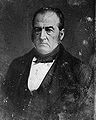 John Bell John BellJohn Bell (Tennessee politician) John Bell was a U.S. politician, attorney, and plantation owner. A wealthy slaveholder from Tennessee, Bell served in the United States Congress in both the House of Representatives and Senate. He began his career as a Democrat, he eventually fell out with Andrew Jackson and became a Whig... |
Whig Whig Party (United States) The Whig Party was a political party of the United States during the era of Jacksonian democracy. Considered integral to the Second Party System and operating from the early 1830s to the mid-1850s, the party was formed in opposition to the policies of President Andrew Jackson and his Democratic... |
23rd 23rd United States Congress -House of Representatives:For the beginning of this congress, the size of the House was increased from 213 seats to 240 seats, following the 1830 United States Census .- Leadership :- Senate :* President: Martin Van Buren... |
June 2, 1834 — March 4, 1835 |
|
| 17 | 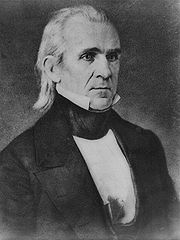 James Polk James PolkJames K. Polk James Knox Polk was the 11th President of the United States . Polk was born in Mecklenburg County, North Carolina. He later lived in and represented Tennessee. A Democrat, Polk served as the 17th Speaker of the House of Representatives and the 12th Governor of Tennessee... |
Democratic Democratic Party (United States) The Democratic Party is one of two major contemporary political parties in the United States, along with the Republican Party. The party's socially liberal and progressive platform is largely considered center-left in the U.S. political spectrum. The party has the lengthiest record of continuous... |
24th 24th United States Congress -House of Representatives:During this congress one House seat was added for each of the new states of Arkansas and Michigan.-Leadership:- Senate :* President: Martin Van Buren * President pro tempore: William R. King - House of Representatives :... |
December 7, 1835 — March 4, 1837 |
|
| 25th 25th United States Congress -House of Representatives:-Leadership:- Senate :* President: Richard Mentor Johnson * President pro tempore: William R. King - House of Representatives :* Speaker: James K. Polk -Members:This list is arranged by chamber, then by state... |
September 4, 1837 — March 4, 1839 |
||||
| 18 | 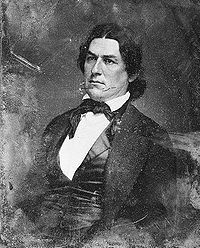 Robert M. T. Hunter Robert M. T. Hunter |
Whig Whig Party (United States) The Whig Party was a political party of the United States during the era of Jacksonian democracy. Considered integral to the Second Party System and operating from the early 1830s to the mid-1850s, the party was formed in opposition to the policies of President Andrew Jackson and his Democratic... |
26th 26th United States Congress -House of Representatives:- Leadership :- Senate :*President: Richard M. Johnson *President pro tempore: William R. King - House of Representatives :*Speaker: Robert M.T. Hunter -Members:This list is arranged by chamber, then by state... |
December 16, 1839 — March 4, 1841 |
|
| 19 | 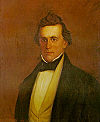 John White John WhiteJohn White (Kentucky politician) John White was a prominent U.S. politician during the 1840s.White was a native of Kentucky and practiced law there. White was elected to the Kentucky House of Representatives in 1832... |
Whig Whig Party (United States) The Whig Party was a political party of the United States during the era of Jacksonian democracy. Considered integral to the Second Party System and operating from the early 1830s to the mid-1850s, the party was formed in opposition to the policies of President Andrew Jackson and his Democratic... |
27th 27th United States Congress The Twenty-seventh United States Congress was a meeting of the legislative branch of the United States federal government, consisting of the United States Senate and the United States House of Representatives. It met in Washington, D.C. from March 4, 1841 to March 3, 1843, during the one-month... |
May 31, 1841 — March 4, 1843 |
|
| 20 | 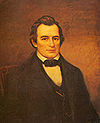 John Winston Jones John Winston JonesJohn Winston Jones John Winston Jones was an American politician and lawyer.Born 22 November 1791 in Amelia County, Virginia, he graduated from the College of William and Mary in 1813. He practiced law in Chesterfield County, Virginia before being appointed Prosecuting Attorney for Virginia's 5th Judicial Circuit... |
Democratic | 28th 28th United States Congress -House of Representatives:Following the 1840 United States Census, Congress reapportioned the House to include 223 seats . During this congress, one House seat was added for the new state of Florida .- Senate :*President: Vacant... |
December 4, 1843 — March 4, 1845 |
|
| 21 | 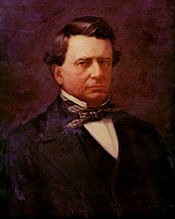 John Wesley Davis John Wesley DavisJohn Wesley Davis John Wesley Davis was a doctor and a prominent U.S. politician during the 1840s.-Early life and education:... |
Democratic | 29th 29th United States Congress -House of Representatives:During this congress, two House seats were added for each of the new states of Texas and Iowa.-Leadership:-Senate:* President: George M. Dallas * President pro tempore: Willie P. Mangum... |
December 1, 1845 — March 4, 1847 |
|
| 22 | 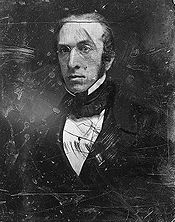 Robert Charles Winthrop Robert Charles WinthropRobert Charles Winthrop Robert Charles Winthrop was an American lawyer and philanthropist and one time Speaker of the United States House of Representatives.... |
Whig | 30th 30th United States Congress The Thirtieth United States Congress was a meeting of the legislative branch of the United States federal government, consisting of the United States Senate and the United States House of Representatives. It met in Washington, D.C. from March 4, 1847 to March 3, 1849, during the last two years of... |
December 6, 1847 — March 4, 1849 |
|
| 23 |  Howell Cobb Howell CobbHowell Cobb Howell Cobb was an American political figure. A Southern Democrat, Cobb was a five-term member of the United States House of Representatives and Speaker of the House from 1849 to 1851... |
Democratic | 31st 31st United States Congress The Thirty-first United States Congress was a meeting of the legislative branch of the United States federal government, consisting of the United States Senate and the United States House of Representatives. It met in Washington, D.C. from March 4, 1849 to March 3, 1851, during the last 17 months... |
December 22, 1849 — March 4, 1851 |
|
| 24 | 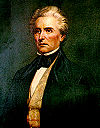 Linn Boyd Linn BoydLinn Boyd Linn Boyd was a prominent U.S. politician of the 1840s and 1850s, and served as Speaker of the United States House of Representatives from 1851 to 1855. Boyd was elected to the House as a Democrat from Kentucky from 1835 to 1837 and again from 1839 to 1855, serving seven terms in the House... |
Democratic | 32nd 32nd United States Congress The Thirty-second United States Congress was a meeting of the legislative branch of the United States federal government, consisting of the United States Senate and the United States House of Representatives. It met in Washington, D.C. from March 4, 1851 to March 3, 1853, during the third and... |
December 1, 1851 — March 4, 1853 |
|
| 33rd 33rd United States Congress The Thirty-third United States Congress was a meeting of the legislative branch of the United States federal government, consisting of the United States Senate and the United States House of Representatives. It met in Washington, D.C. from March 4, 1853 to March 3, 1855, during the first two years... |
December 5, 1853 — March 4, 1855 |
||||
| 25 | Nathaniel Prentice Banks Nathaniel Prentice Banks Nathaniel Prentice Banks was an American politician and soldier, served as the 24th Governor of Massachusetts, Speaker of the U.S. House of Representatives and as a Union general during the American Civil War.... |
American Know Nothing The Know Nothing was a movement by the nativist American political faction of the 1840s and 1850s. It was empowered by popular fears that the country was being overwhelmed by German and Irish Catholic immigrants, who were often regarded as hostile to Anglo-Saxon Protestant values and controlled by... /Republican Republican Party (United States) The Republican Party is one of the two major contemporary political parties in the United States, along with the Democratic Party. Founded by anti-slavery expansion activists in 1854, it is often called the GOP . The party's platform generally reflects American conservatism in the U.S... * |
34th 34th United States Congress The Thirty-fourth United States Congress was a meeting of the legislative branch of the United States federal government, consisting of the United States Senate and the United States House of Representatives. It met in Washington, D.C. from March 4, 1855 to March 4, 1857, during the last two years... |
February 2, 1856 — March 4, 1857 |
|
| 26 | 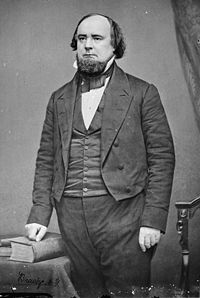 James Lawrence Orr James Lawrence OrrJames Lawrence Orr James Lawrence Orr was an American politician who served as Speaker of the United States House of Representatives in the United States Congress... |
Democratic | 35th 35th United States Congress The 35th United States Congress was a meeting of the legislative branch of the United States federal government, consisting of the United States Senate and the United States House of Representatives. It met in Washington, D.C. from March 4, 1857 to March 3, 1859, during the first two years of James... |
December 7, 1857 — March 4, 1859 |
|
| 27 |  William Pennington William PenningtonWilliam Pennington William Pennington was an American politician and lawyer, the Governor of New Jersey, and Speaker of the House during his one term in Congress.... |
Republican | 36th 36th United States Congress The Thirty-sixth United States Congress was a meeting of the legislative branch of the United States federal government, consisting of the United States Senate and the United States House of Representatives. It met in Washington, D.C. from March 4, 1859 to March 4, 1861, during the third and fourth... |
February 1, 1860 — March 4, 1861 |
|
| 28 | 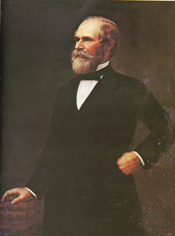 Galusha A. Grow Galusha A. GrowGalusha A. Grow Galusha Aaron Grow was a prominent U.S. politician, lawyer, writer and businessman, and was Speaker of the House of Representatives from 1861 to 1863. He was defeated for reelection in 1862... |
Republican | 37th 37th United States Congress The Thirty-seventh United States Congress was a meeting of the legislative branch of the United States federal government, consisting of the United States Senate and the United States House of Representatives. It met in Washington, D.C. from March 4, 1861 to March 4, 1863, during the first two... |
July 4, 1861 — March 4, 1863 |
|
| 29 | 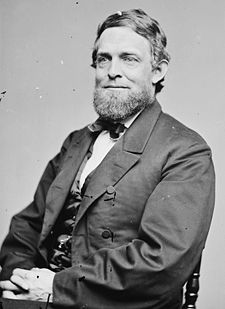 Schuyler Colfax Schuyler ColfaxSchuyler Colfax Schuyler Colfax, Jr. was a United States Representative from Indiana , Speaker of the House of Representatives , and the 17th Vice President of the United States . To date, he is one of only two Americans to have served as both House speaker and vice president.President Ulysses S... |
Republican | 38th 38th United States Congress -House of Representatives:Before this Congress, the 1860 United States Census and resulting reapportionment changed the size of the House to 241 members... |
December 7, 1863 — March 4, 1865 |
|
| 39th 39th United States Congress The Thirty-ninth United States Congress was a meeting of the legislative branch of the United States federal government, consisting of the United States Senate and the United States House of Representatives. It met in Washington, D.C. from March 4, 1865 to March 4, 1867, during the first month of... |
December 4, 1865 — March 4, 1867 |
||||
| 40th 40th United States Congress The Fortieth United States Congress was a meeting of the legislative branch of the United States federal government, consisting of the United States Senate and the United States House of Representatives. It met in Washington, D.C. from March 4, 1867 to March 4, 1869, during the third and fourth... |
March 4, 1867 — March 3, 1869 |
||||
| 30 | 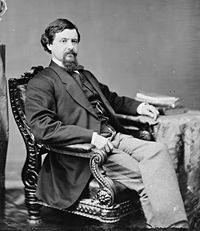 Theodore Medad Pomeroy Theodore Medad PomeroyTheodore Medad Pomeroy Theodore Medad Pomeroy was a United States politician. He served in the House of Representatives as a Republican from New York from 1861 to 1869. He also served as the Speaker of the House for about a day... |
Republican | March 3, 1869 — March 4, 1869 |
||
| 31 | 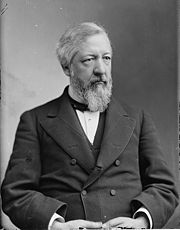 James G. Blaine James G. BlaineJames G. Blaine James Gillespie Blaine was a U.S. Representative, Speaker of the United States House of Representatives, U.S. Senator from Maine, two-time Secretary of State... |
Republican | 41st 41st United States Congress -House of Representatives:- Senate :* President : Schuyler Colfax* President pro tempore: Henry B. Anthony - House of Representatives :* Speaker: James G. Blaine -Members:This list is arranged by chamber, then by state... |
March 4, 1869 — March 4, 1871 |
|
| 42nd 42nd United States Congress The Forty-second United States Congress was a meeting of the legislative branch of the United States federal government, consisting of the United States Senate and the United States House of Representatives. It met in Washington, D.C. from March 4, 1871 to March 3, 1873, during the third and fourth... |
March 4, 1871 — March 4, 1873 |
||||
| 43rd 43rd United States Congress The Forty-third United States Congress was a meeting of the legislative branch of the United States federal government, consisting of the United States Senate and the United States House of Representatives. It met in Washington, D.C. from March 4, 1873 to March 4, 1875, during the fifth and sixth... |
March 4, 1873 — May 13, 1874 |
||||
| 31.1 | Joseph H. Rainey | Republican | May 13, 1874 | ||
| 31 | James G. Blaine James G. Blaine James Gillespie Blaine was a U.S. Representative, Speaker of the United States House of Representatives, U.S. Senator from Maine, two-time Secretary of State... |
Republican | May 14, 1874 — March 4, 1875 |
||
| 32 | 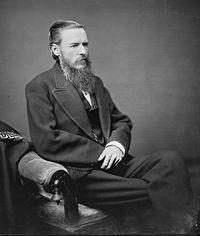 Michael C. Kerr Michael C. KerrMichael C. Kerr Michael Crawford Kerr was an American legislator.He was born at Titusville, Pennsylvania and educated at the Erie Academy. He graduated from Louisville University's Law School in 1851... |
Democratic | 44th 44th United States Congress The Forty-fourth United States Congress was a meeting of the legislative branch of the United States federal government, consisting of the United States Senate and the United States House of Representatives. It met in Washington, D.C. from March 4, 1875 to March 4, 1877, during the seventh and... |
December 6, 1875 — August 19, 1876 |
|
| 33 | 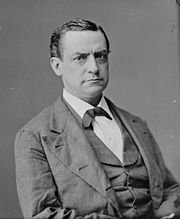 Samuel J. Randall Samuel J. RandallSamuel J. Randall Samuel Jackson Randall was a Pennsylvania politician, attorney, soldier, and a prominent Democratic member of the United States House of Representatives during the late 19th century. He served as the 33rd Speaker of the House and a contender for his party's nomination for the President of the... |
Democratic | December 4, 1876 — March 4, 1877 |
||
| 45th 45th United States Congress -House of Representatives:-Leadership:-Senate:*President: William A. Wheeler *President pro tempore: Thomas W. Ferry -House of Representatives:*Speaker: Samuel J. Randall -Members:This list is arranged by chamber, then by state... |
October 15, 1877 — March 4, 1879 |
||||
| 46th 46th United States Congress The Forty-sixth United States Congress was a meeting of the legislative branch of the United States federal government, consisting of the United States Senate and the United States House of Representatives. It met in Washington, D.C. from March 4, 1879 to March 4, 1881, during the last two years of... |
March 18, 1879 — March 4, 1881 |
||||
| 34 |  J. Warren Keifer J. Warren KeiferJ. Warren Keifer Joseph Warren Keifer was a brigadier general in the Union Army during the American Civil War and a prominent U.S. politician during the 1880s. He served in the United States House of Representatives as a Republican from Ohio from 1877 to 1885 and from 1905 to 1911... |
Republican | 47th 47th United States Congress The Forty-seventh United States Congress was a meeting of the legislative branch of the United States federal government, consisting of the United States Senate and the United States House of Representatives. It met in Washington, D.C. from March 4, 1881 to March 4, 1883, during the administration... |
December 5, 1881 — March 4, 1883 |
|
| 35 |  John Griffin Carlisle John Griffin CarlisleJohn Griffin Carlisle John Griffin Carlisle was a prominent American politician in the Democratic Party during the last quarter of the 19th century. He served as the Speaker of the United States House of Representatives from 1883 to 1889 and as United States Secretary of the Treasury from 1893 to 1897 during the Panic... |
Democratic | 48th 48th United States Congress The Forty-eighth United States Congress was a meeting of the legislative branch of the United States federal government, consisting of the United States Senate and the United States House of Representatives. It met in Washington, D.C. from March 4, 1883 to March 4, 1885, during the last two years... |
December 3, 1883 — March 4, 1885 |
|
| 49th 49th United States Congress The Forty-ninth United States Congress was a meeting of the legislative branch of the United States federal government, consisting of the United States Senate and the United States House of Representatives. It met in Washington, D.C. from March 4, 1885 to March 4, 1887, during the first two years... |
December 7, 1885 — March 4, 1887 |
||||
| 50th 50th United States Congress The Fiftieth United States Congress was a meeting of the legislative branch of the United States federal government, consisting of the United States Senate and the United States House of Representatives. It met in Washington, D.C. from March 4, 1887 to March 4, 1889, during the third and fourth... |
December 5, 1887 — March 4, 1889 |
||||
| 36 | 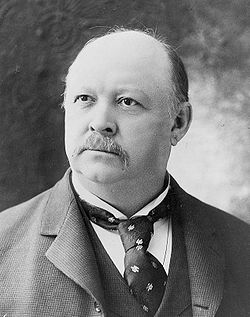 Thomas Brackett Reed Thomas Brackett ReedThomas Brackett Reed Thomas Brackett Reed, , occasionally ridiculed as Czar Reed, was a U.S. Representative from Maine, and Speaker of the U.S. House of Representatives from 1889–1891 and from 1895–1899... |
Republican | 51st 51st United States Congress The Fifty-first United States Congress, referred to by some critics as the Billion Dollar Congress, was a meeting of the legislative branch of the United States federal government, consisting of the United States Senate and the United States House of Representatives. It met in Washington, D.C... |
December 2, 1889 — March 4, 1891 |
|
| 37 | 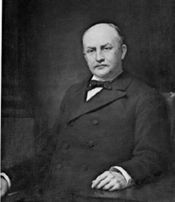 Charles Frederick Crisp Charles Frederick CrispCharles Frederick Crisp Charles Frederick Crisp was a United States political figure. A Democrat, he was elected as a Congressman from Georgia in 1882, and served until his death in 1896. From 1890 until his death, he was leader of the Democratic Party in the House, as either the House Minority Leader or the Speaker of... |
Democratic | 52nd 52nd United States Congress The Fifty-second United States Congress was a meeting of the legislative branch of the United States federal government, consisting of the United States Senate and the United States House of Representatives. It met in Washington, D.C... |
December 8, 1891 — March 4, 1893 |
|
| 53rd 53rd United States Congress The Fifty-third United States Congress was a meeting of the legislative branch of the United States federal government, consisting of the United States Senate and the United States House of Representatives. It met in Washington, D.C. from March 4, 1893 to March 4, 1895, during the fifth and sixth... |
August 7, 1893 — March 4, 1895 |
||||
| 38 | Thomas Brackett Reed Thomas Brackett Reed Thomas Brackett Reed, , occasionally ridiculed as Czar Reed, was a U.S. Representative from Maine, and Speaker of the U.S. House of Representatives from 1889–1891 and from 1895–1899... |
Republican | 54th 54th United States Congress - House of Representatives :-Leadership:- Senate :* President: Adlai E. Stevenson * President pro tempore: William P. Frye - Majority leadership :* Republican Conference Chairman: John Sherman- Minority leadership :... |
December 2, 1895 — March 4, 1897 |
|
| 55th 55th United States Congress -House of Representatives:* Republican: 206 * Democratic: 124* Populist: 22* Silver Republican: 3* Silver: 1* Independent Republican: 1TOTAL members: 357-Leadership:-Senate:* President: Garret Hobart * President pro tempore: William P... |
March 15, 1897 — March 4, 1899 |
||||
| 39 | David B. Henderson David B. Henderson David Bremner Henderson , a ten-term Republican Congressman from Dubuque, Iowa, was the Speaker of the United States House of Representatives from 1899 to 1903... |
Republican | 56th 56th United States Congress -House of Representatives:- Leadership :- Senate :* President: Garret Hobart , until November 21, 1899 , vacant thereafter.* President pro tempore: William P. Frye * Democratic Caucus Chairman: James K. Jones... |
December 4, 1899 — March 4, 1901 |
|
| 57th 57th United States Congress -House of Representatives:*Democratic: 151*Republican: 200 *Populist: 5*Silver : 1TOTAL members: 357-Leadership:-Senate:* President: Theodore Roosevelt , until September 14, 1901, vacant thereafter.... |
December 2, 1901 — March 4, 1903 |
||||
| 40 | 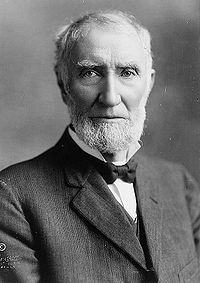 Joseph Gurney Cannon Joseph Gurney CannonJoseph Gurney Cannon Joseph Gurney Cannon was a United States politician from Illinois and leader of the Republican Party. Cannon served as Speaker of the United States House of Representatives from 1903 to 1911, and historians generally consider him to be the most dominant Speaker in United States history, with such... |
Republican | 58th 58th United States Congress - House of Representatives :* Republican : 209 * Democratic : 176* Silver Republican : 1TOTAL members: 386-Senate:* President: Vacant* President pro tempore: William P. Frye -Members:... |
November 9, 1903 — March 4, 1905 |
|
| 59th 59th United States Congress The Fifty-ninth United States Congress was a meeting of the legislative branch of the United States federal government, composed of the United States Senate and the United States House of Representatives. It met in Washington, DC from March 4, 1905 to March 4, 1907, during the fifth and sixth... |
December 4, 1905 — March 4, 1907 |
||||
| 60th 60th United States Congress The Sixtieth United States Congress was a meeting of the legislative branch of the United States federal government, composed of the United States Senate and the United States House of Representatives. It met in Washington, DC from March 4, 1907 to March 4, 1909, during the last two years of... |
December 2, 1907 — March 4, 1909 |
||||
| 61st 61st United States Congress The Sixty-first United States Congress was a meeting of the legislative branch of the United States federal government, composed of the United States Senate and the United States House of Representatives. It met in Washington, DC from March 4, 1909 to March 4, 1911, during the first two years of... |
March 15, 1909 — March 4, 1911 |
||||
| 41 |  Champ Clark Champ Clark |
Democratic | 62nd 62nd United States Congress - House of Representatives :* Democratic : 230 * Republican : 162* Socialist : 1* Independent : 1TOTAL members: 394-Senate:* President: James S... |
April 4, 1911 — March 4, 1913 |
|
| 63rd 63rd United States Congress - House of Representatives:*Democratic : 291 *Republican : 134*Progressive : 9*Independent : 1TOTAL members: 435-Senate:*President of the Senate: Thomas R. Marshall*President pro tempore: James P. Clarke-Senate:... |
April 7, 1913 — March 4, 1915 |
||||
| 64th 64th United States Congress The Sixty-fourth United States Congress was a meeting of the legislative branch of the United States federal government, composed of the United States Senate and the United States House of Representatives. It met in Washington, DC from March 4, 1915 to March 4, 1917, during the third and fourth... |
December 6, 1915 — March 4, 1917 |
||||
| 65th 65th United States Congress The Sixty-fifth United States Congress was a meeting of the legislative branch of the United States federal government, composed of the United States Senate and the United States House of Representatives. It met in Washington, DC from March 4, 1917 to March 4, 1919, during the fourth and fifth... |
April 2, 1917 — March 4, 1919 |
||||
| 42 | 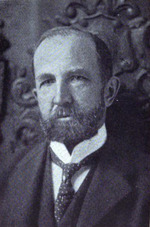 Frederick Gillett Frederick GillettFrederick H. Gillett Frederick Huntington Gillett was an American politician during the early 20th century. Frederick H. Gillett was born in Westfield, Massachusetts to Edward Bates Gillett and Lucy Fowler Gillett . He graduated from Amherst College in 1874 and Harvard Law School in 1877. He began the practice of... |
Republican | 66th 66th United States Congress The Sixty-sixth United States Congress was a meeting of the legislative branch of the United States federal government, comprising the United States Senate and the United States House of Representatives. It met in Washington, DC from March 4, 1919 to March 4, 1921, during the last two years of... |
May 19, 1919 — March 4, 1921 |
|
| 67th 67th United States Congress The Sixty-seventh United States Congress was a meeting of the legislative branch of the United States federal government, consisting of the United States Senate and the United States House of Representatives. It met in Washington, D.C. from March 4, 1921 to March 4, 1923, during the first two years... |
April 11, 1921 — March 4, 1923 |
||||
| 68th 68th United States Congress The Sixty-eighth United States Congress was a meeting of the legislative branch of the United States federal government, consisting of the United States Senate and the United States House of Representatives. It met in Washington, D.C. from March 4, 1923 to March 4, 1925, during the last months of... |
December 3, 1923 — March 4, 1925 |
||||
| 43 | 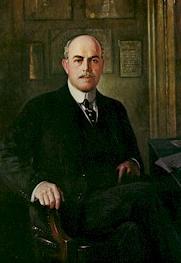 Nicholas Longworth Nicholas LongworthNicholas Longworth Nicholas Longworth IV was a prominent American politician in the Republican Party during the first few decades of the 20th century... |
Republican | Ohio-1 Ohio's 1st congressional district Ohio's 1st congressional district is currently represented by Republican Steve Chabot. This district includes parts of Cincinnati, and borders both Kentucky and Indiana.-Cities:Cincinnati Cheviot Deer Park Forest Park Harrison Mount Healthy... |
69th 69th United States Congress The Sixty-ninth United States Congress was a meeting of the legislative branch of the United States federal government, consisting of the United States Senate and the United States House of Representatives. It met in Washington, D.C. from March 4, 1925 to March 4, 1927, during the third and fourth... |
December 7, 1925 — March 4, 1927 |
| 70th 70th United States Congress The Seventieth United States Congress was a meeting of the legislative branch of the United States federal government, consisting of the United States Senate and the United States House of Representatives. It met in Washington, D.C. from March 4, 1927 to March 3, 1929, during the last two years of... |
December 5, 1927 — March 4, 1929 |
||||
| 71st 71st United States Congress The Seventy-first United States Congress was a meeting of the legislative branch of the United States federal government, consisting of the United States Senate and the United States House of Representatives. It met in Washington, D.C. from March 4, 1929 to March 4, 1931, during the first two years... |
April 15, 1929 — March 4, 1931 |
||||
| 44 |  John Nance Garner John Nance GarnerJohn Nance Garner John Nance Garner, IV , was the 32nd Vice President of the United States and the 44th Speaker of the United States House of Representatives .- Early life and family :... |
Democratic | 72nd 72nd United States Congress The Seventy-second United States Congress was a meeting of the legislative branch of the United States federal government, consisting of the United States Senate and the United States House of Representatives. It met in Washington, D.C. from March 4, 1931 to March 4, 1933, during the last two years... |
December 7, 1931 — March 4, 1933 |
|
| 45 |  Henry T. Rainey Henry T. RaineyHenry T. Rainey Henry Thomas Rainey was a prominent U.S. politician during the first third of the 20th century. He served in the United States House of Representatives from 1903 to 1921 and from 1923 to his death as a Democrat from Illinois, and was its Speaker during the famous Hundred days of Franklin D... |
Democratic | 73rd 73rd United States Congress The Seventy-third United States Congress was a meeting of the legislative branch of the United States federal government, composed of the United States Senate and the United States House of Representatives. It met in Washington, DC from March 4, 1933 to January 3, 1935, during the first two years... |
March 9, 1933 — August 19, 1934 |
|
| 46 | 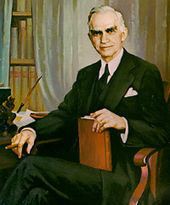 Joseph Wellington Byrns Joseph Wellington Byrns |
Democratic | 74th 74th United States Congress -House:Also 2 Delegates, 3 Resident Commissioners-Senate:*President of the Senate: John N. Garner *President pro tempore: Key Pittman -Majority leadership:*Majority leader: Joseph T. Robinson... |
January 3, 1935 — June 4, 1936 |
|
| 47 | 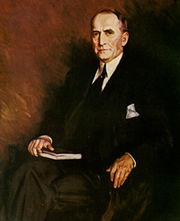 William B. Bankhead William B. BankheadWilliam B. Bankhead William Brockman Bankhead was an American politician from Alabama who served as U.S. Representative and Speaker of the House. He was a Democrat. Bankhead was a prominent supporter of President Franklin Roosevelt's New Deal of pro-labor union legislation, thus clashing with most other southern... |
Democratic | Alabama-7 Alabama's 7th congressional district Alabama's 7th congressional district is a U.S. congressional district in Alabama, which elects a representative to the United States House of Representatives. The district encompasses the counties of Greene, Choctaw, Sumter, Marengo, Dallas, Wilcox, Perry and Hale... |
June 4, 1936 — January 3, 1937 |
|
| 75th 75th United States Congress The Seventy-fifth United States Congress was a meeting of the legislative branch of the United States federal government, composed of the United States Senate and the United States House of Representatives. It met in Washington, DC from January 3, 1937 to January 3, 1939, during the first two years... |
January 5, 1937 — January 3, 1939 |
||||
| 76th 76th United States Congress The Seventy-sixth United States Congress was a meeting of the legislative branch of the United States federal government, composed of the United States Senate and the United States House of Representatives. It met in Washington, DC from January 3, 1939 to January 3, 1941, during the seventh and... |
January 3, 1939 — September 15, 1940 |
||||
| 48 | 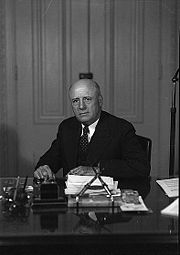 Sam Rayburn Sam RayburnSam Rayburn Samuel Taliaferro Rayburn , often called "Mr. Sam," or "Mr. Democrat," was a Democratic lawmaker from Bonham, Texas, who served as the Speaker of the U.S. House of Representatives for seventeen years, the longest tenure in U.S. history.- Background :Rayburn was born in Roane County, Tennessee, and... |
Democratic | Texas-4 Texas's 4th congressional district Texas District 4 of the United States House of Representatives is a Congressional district that serves an area that includes some counties along the Red River north of the Dallas/Fort Worth Metroplex, including semi-rural Rockwall County and the large non-urbanized portion of Collin County. It also... |
September 16, 1940 — January 3, 1941 |
|
| 77th 77th United States Congress -Major events:* December 7, 1941: Attack on Pearl Harbor* December 8, 1941: Joint Session of Congress met to hear President Roosevelt deliver his "Day of Infamy" speech... |
January 3, 1941 — January 3, 1943 |
||||
| 78th 78th United States Congress The Seventy-eighth United States Congress was a meeting of the legislative branch of the United States federal government, composed of the United States Senate and the United States House of Representatives. It met in Washington, DC from January 3, 1943 to January 3, 1945, during the last two years... |
January 6, 1943 — January 3, 1945 |
||||
| 79th 79th United States Congress The Seventy-ninth United States Congress was a meeting of the legislative branch of the United States federal government, composed of the United States Senate and the United States House of Representatives. It met in Washington, DC from January 3, 1945 to January 3, 1947, during the last months of... |
January 3, 1945 — January 3, 1947 |
||||
| 49 | Joseph W. Martin, Jr. | Republican | Massachusetts-14 Massachusetts's 14th congressional district Massachusetts Congressional District 14 is an obsolete congressional district which was in eastern Massachusetts and the Maine District. It was eliminated in 1963 after the 1960 U.S. Census. Its last Congressman was Joseph William Martin, Jr., who was redistricted into the tenth district.-List of... |
80th 80th United States Congress The Eightieth United States Congress was a meeting of the legislative branch of the United States federal government, composed of the United States Senate and the United States House of Representatives. It met in Washington, DC from January 3, 1947 to January 3, 1949, during the third and fourth... |
January 3, 1947 — January 3, 1949 |
| 50 | Sam Rayburn Sam Rayburn Samuel Taliaferro Rayburn , often called "Mr. Sam," or "Mr. Democrat," was a Democratic lawmaker from Bonham, Texas, who served as the Speaker of the U.S. House of Representatives for seventeen years, the longest tenure in U.S. history.- Background :Rayburn was born in Roane County, Tennessee, and... |
Democratic | Texas-4 Texas's 4th congressional district Texas District 4 of the United States House of Representatives is a Congressional district that serves an area that includes some counties along the Red River north of the Dallas/Fort Worth Metroplex, including semi-rural Rockwall County and the large non-urbanized portion of Collin County. It also... |
81st 81st United States Congress The Eighty-first United States Congress was a meeting of the legislative branch of the United States federal government, composed of the United States Senate and the United States House of Representatives... |
January 3, 1949 — January 3, 1951 |
| 82nd 82nd United States Congress The Eighty-second United States Congress was a meeting of the legislative branch of the United States federal government, composed of the United States Senate and the United States House of Representatives. It met in Washington, DC from January 3, 1951 to January 3, 1953, during the last two years... |
January 3, 1951 — January 3, 1953 |
||||
| 51 | Joseph W. Martin, Jr. | Republican | Massachusetts-14 Massachusetts's 14th congressional district Massachusetts Congressional District 14 is an obsolete congressional district which was in eastern Massachusetts and the Maine District. It was eliminated in 1963 after the 1960 U.S. Census. Its last Congressman was Joseph William Martin, Jr., who was redistricted into the tenth district.-List of... |
83rd 83rd United States Congress The Eighty-third United States Congress was a meeting of the legislative branch of the United States federal government, composed of the United States Senate and the United States House of Representatives. It met in Washington, DC from January 3, 1953 to January 3, 1955, during the first two years... |
January 3, 1953 — January 3, 1955 |
| 52 | Sam Rayburn Sam Rayburn Samuel Taliaferro Rayburn , often called "Mr. Sam," or "Mr. Democrat," was a Democratic lawmaker from Bonham, Texas, who served as the Speaker of the U.S. House of Representatives for seventeen years, the longest tenure in U.S. history.- Background :Rayburn was born in Roane County, Tennessee, and... |
Democratic | Texas-4 Texas's 4th congressional district Texas District 4 of the United States House of Representatives is a Congressional district that serves an area that includes some counties along the Red River north of the Dallas/Fort Worth Metroplex, including semi-rural Rockwall County and the large non-urbanized portion of Collin County. It also... |
84th 84th United States Congress The Eighty-fourth United States Congress was a meeting of the legislative branch of the United States federal government, composed of the United States Senate and the United States House of Representatives. It met in Washington, DC from January 3, 1955 to January 3, 1957, during the third and... |
January 3, 1955 — January 3, 1957 |
| 85th 85th United States Congress The Eighty-fifth United States Congress was a meeting of the legislative branch of the United States federal government, composed of the United States Senate and the United States House of Representatives. It met in Washington, DC from January 3, 1957 to January 3, 1959, during the fifth and sixth... |
January 3, 1957 — January 3, 1959 |
||||
| 86th 86th United States Congress The Eighty-sixth United States Congress was a meeting of the legislative branch of the United States federal government, composed of the United States Senate and the United States House of Representatives. It met in Washington, DC from January 3, 1959 to January 3, 1961, during the last two years... |
January 7, 1959 — January 3, 1961 |
||||
| 87th 87th United States Congress -House of Representatives :-Senate:* President: Richard Nixon , until January 20, 1961** Lyndon Johnson , from January 20, 1961* President pro tempore: Carl Hayden -House of Representatives:... |
January 3, 1961 — November 16, 1961 |
||||
| 53 | 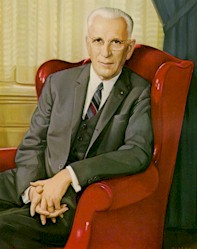 John W. McCormack John W. McCormack |
Democratic | Massachusetts-12 Massachusetts's 12th congressional district Massachusetts's twelfth congressional district is an obsolete district. It was eliminated in 1983 after the 1980 U.S. Census. Its last location was in southeastern Massachusetts and its last Congressman was Gerry Studds, who was redistricted into the tenth district.- List of representatives... |
January 10, 1962 — January 3, 1963 |
|
| Massachusetts-9 Massachusetts's 9th congressional district Massachusetts's 9th congressional district is in eastern Massachusetts, including part of Boston and some of its southern suburbs. It is currently represented by Stephen Lynch, who has served the district since 2001. It has subsumed much of the former 11th District in the south suburbs of Boston... |
88th 88th United States Congress The Eighty-eighth United States Congress was a meeting of the legislative branch of the United States federal government, composed of the United States Senate and the United States House of Representatives. It met in Washington, DC from January 3, 1963 to January 3, 1965, during the last year of... |
January 9, 1963 — January 3, 1965 |
|||
| 89th 89th United States Congress -House of Representatives:- Senate :* President of the Senate: Hubert Humphrey , starting January 20, 1965* President pro tempore: Carl Hayden - Majority leadership :* Majority Leader and Democratic Conference Chairman: Mike Mansfield... |
January 4, 1965 — January 3, 1967 |
||||
| 90th 90th United States Congress The Ninetieth United States Congress was a meeting of the legislative branch of the United States federal government, composed of the United States Senate and the United States House of Representatives. It met in Washington, DC from January 3, 1967 to January 3, 1969, during the last two years of... |
January 10, 1967 — January 3, 1969 |
||||
| 91st 91st United States Congress The Ninety-first United States Congress was a meeting of the legislative branch of the United States federal government, composed of the United States Senate and the United States House of Representatives. It met in Washington, DC from January 3, 1969 to January 3, 1971, during the first two years... |
January 3, 1969 — January 3, 1971 |
||||
| 54 |  Carl Albert Carl AlbertCarl Albert Carl Bert Albert was a lawyer and a Democratic American politician from Oklahoma.Albert represented the southeastern portion of Oklahoma as a Democrat for 30 years, starting in 1947. He is best known for his service as Speaker of the United States House of Representatives from 1971 to 1977... |
Democratic | Oklahoma-3 Oklahoma's 3rd congressional district Oklahoma's Third Congressional District is the largest congressional district in Oklahoma and also one of the largest congressional districts in the United States. It borders New Mexico, Colorado, Kansas, and the Texas panhandle... |
92nd 92nd United States Congress The Ninety-second United States Congress was a meeting of the legislative branch of the United States federal government, composed of the United States Senate and the United States House of Representatives... |
January 21, 1971 — January 3, 1973 |
| 93rd 93rd United States Congress The Ninety-third United States Congress was a meeting of the legislative branch of the United States federal government, composed of the United States Senate and the United States House of Representatives. It met in Washington, DC from January 3, 1973 to January 3, 1975, during the end of Richard... |
January 3, 1973 — January 3, 1975 |
||||
| 94th 94th United States Congress The Ninety-fourth United States Congress was a meeting of the legislative branch of the United States federal government, composed of the United States Senate and the United States House of Representatives. It met in Washington, DC from January 3, 1975 to January 3, 1977, during the administration... |
January 14, 1975 — January 3, 1977 |
||||
| 55 |  Tip O'Neill Tip O'NeillTip O'Neill Thomas Phillip "Tip" O'Neill, Jr. was an American politician. O'Neill was an outspoken liberal Democrat and influential member of the U.S. Congress, serving in the House of Representatives for 34 years and representing two congressional districts in Massachusetts... |
Democratic | Massachusetts-8 Massachusetts's 8th congressional district Massachusetts's 8th congressional district is in eastern Massachusetts, including part of Boston and the immediately adjacent cities of Cambridge, Somerville, and Chelsea. With an area of just , it is the smallest by area of Massachusetts's ten congressional districts. It is currently represented... |
95th 95th United States Congress The Ninety-fifth United States Congress was a meeting of the legislative branch of the United States federal government, composed of the United States Senate and the United States House of Representatives. It met in Washington, DC from January 3, 1977 to January 3, 1979, during the first two years... |
January 4, 1977 — January 3, 1979 |
| 96th 96th United States Congress The Ninety-sixth United States Congress was a meeting of the legislative branch of the United States federal government, composed of the United States Senate and the United States House of Representatives. It met in Washington, DC from January 3, 1979 to January 3, 1981, during the last two years... |
January 15, 1979 — January 3, 1981 |
||||
| 97th 97th United States Congress The Ninety-seventh United States Congress was a meeting of the legislative branch of the United States federal government, composed of the United States Senate and the United States House of Representatives. It met in Washington, DC from January 3, 1981 to January 3, 1983, during the final weeks of... |
January 5, 1981 — January 3, 1983 |
||||
| 98th 98th United States Congress The Ninety-eighth United States Congress was a meeting of the legislative branch of the United States federal government, composed of the United States Senate and the United States House of Representatives. It met in Washington, DC from January 3, 1983 to January 3, 1985, during the third and... |
January 3, 1983 — January 3, 1985 |
||||
| 99th 99th United States Congress The Ninety-ninth United States Congress was a meeting of the legislative branch of the United States federal government, composed of the United States Senate and the United States House of Representatives. It met in Washington, DC from January 3, 1985 to January 3, 1987, during the fifth and sixth... |
January 3, 1985 — January 3, 1987 |
||||
| 56 |  Jim Wright Jim WrightJim Wright James Claude Wright, Jr. , usually known as Jim Wright, is a former Democratic U.S. Congressman from Texas who served 34 years in the U.S. House of Representatives and was the Speaker of the House from 1987 to 1989.-Early life:... |
Democratic | Texas-12 Texas's 12th congressional district Texas District 12 of the United States House of Representatives is a Congressional district that serves the western half of Tarrant County as well as all of Parker and Wise counties in the state of Texas. The current Representative from District 12 is Kay Granger.-List of representatives:-Election... |
100th 100th United States Congress -House of Representatives:- Senate :* President: George H.W. Bush * President pro tempore: John Stennis - Majority leadership :* Majority Leader, Democratic Conference Chairman, and Democratic Policy Committee Chairman: Robert Byrd... |
January 6, 1987 — January 3, 1989 |
| 101st 101st United States Congress The One Hundred First United States Congress was a meeting of the legislative branch of the United States federal government, composed of the United States Senate and the United States House of Representatives. It met in Washington, DC from January 3, 1989 to January 3, 1991, during the first two... |
January 3, 1989 — June 6, 1989 |
||||
| 57 | 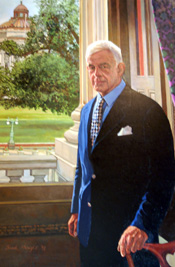 Tom Foley Tom FoleyTom Foley Thomas Stephen Foley was the 57th Speaker of the United States House of Representatives, serving from 1989 to 1995. He represented Washington's 5th congressional district for 30 years as a Democratic member from 1965 to 1995.... |
Democratic | Washington-5 Washington's 5th congressional district Washington's 5th congressional district encompasses the Eastern Washington counties of Okanogan, Ferry, Stevens, Pend Oreille, Lincoln, Spokane, Adams, Whitman, Walla Walla, Columbia, Garfield, and Asotin. It is centered around Spokane, the state's second largest city.Since 2005, the 5th District... |
June 6, 1989 — January 3, 1991 |
|
| 102nd 102nd United States Congress -House of Representatives:- Senate :* President:Dan Quayle * President pro tempore: Robert Byrd - Majority leadership :* Majority Leader: George Mitchell* Majority Whip: Wendell Ford- Minority leadership :... |
January 3, 1991 — January 3, 1993 |
||||
| 103rd 103rd United States Congress - House of Representatives :- Leadership :- Senate :* President: Dan Quayle , until January 20, 1993** Al Gore , from January 20, 1993* President pro tempore: Robert Byrd - Majority leadership :* Majority Leader: George Mitchell... |
January 5, 1993 — January 3, 1995 |
||||
| 58 | 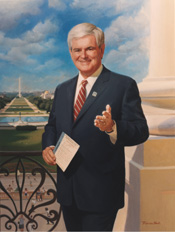 Newt Gingrich Newt GingrichNewt Gingrich Newton Leroy "Newt" Gingrich is a U.S. Republican Party politician who served as the House Minority Whip from 1989 to 1995 and as the 58th Speaker of the U.S. House of Representatives from 1995 to 1999.... |
Republican | Georgia-6 Georgia's 6th congressional district Georgia's 6th congressional district is a congressional district in the U.S. state of Georgia. The district consists of many of the northern suburbs of Atlanta and includes eastern Cobb County, northern Fulton County, the Dunwoody area of northern Dekalb County, as well as all of Cherokee County.... |
104th 104th United States Congress The One Hundred Fourth United States Congress was a meeting of the legislative branch of the United States federal government, composed of the United States Senate and the United States House of Representatives. It met in Washington, DC from January 3, 1995 to January 3, 1997, during the third and... |
January 4, 1995 — January 3, 1997 |
| 105th 105th United States Congress The One Hundred Fifth United States Congress was a meeting of the legislative branch of the United States federal government, composed of the United States Senate and the United States House of Representatives. It met in Washington, DC from January 3, 1997 to January 3, 1999, during the fifth and... |
January 7, 1997 — January 3, 1999 |
||||
| 59 | Dennis Hastert Dennis Hastert John Dennis "Denny" Hastert was the 59th Speaker of the House serving from 1999 to 2007. He represented as a Republican for twenty years, 1987 to 2007.He is the longest-serving Republican Speaker in history... |
Republican | Illinois-14 | 106th 106th United States Congress The One Hundred Sixth United States Congress was a meeting of the legislative branch of the United States federal government, composed of the United States Senate and the United States House of Representatives. It met in Washington, DC from January 3, 1999 to January 3, 2001, during the last two... |
January 6, 1999 — January 3, 2001 |
| 107th 107th United States Congress The One Hundred Seventh United States Congress was a meeting of the legislative branch of the United States federal government, composed of the United States Senate and the United States House of Representatives. It met in Washington, D.C. from January 3, 2001 to January 3, 2003, during the final... |
January 3, 2001 — January 3, 2003 |
||||
| 108th 108th United States Congress The One Hundred Eighth United States Congress was the legislative branch of the United States federal government, composed of the United States Senate and the United States House of Representatives from January 3, 2003 to January 3, 2005, during the third and fourth years of George W. Bush's... |
January 7, 2003 — January 3, 2005 |
||||
| 109th 109th United States Congress The One Hundred Ninth United States Congress was the legislative branch of the United States, composed of the United States Senate and the United States House of Representatives, from January 3, 2005 to January 3, 2007, during the fifth and sixth years of George W. Bush's presidency. House members... |
January 3, 2005 — January 3, 2007 |
||||
| 60 | Nancy Pelosi Nancy Pelosi Nancy Patricia D'Alesandro Pelosi is the Minority Leader of the United States House of Representatives and served as the 60th Speaker of the United States House of Representatives from 2007 to 2011... |
Democratic | California-8 California's 8th congressional district California's 8th congressional district is a congressional district in the U.S. state of California that covers most of the city and county of San Francisco except for the southwestern parts of the city which are included in the 12th Congressional District.... |
110th 110th United States Congress The One Hundred Tenth United States Congress was the meeting of the legislative branch of the United States federal government, between January 3, 2007, and January 3, 2009, during the last two years of the second term of President George W. Bush. It was composed of the Senate and the House of... |
January 4, 2007 — January 3, 2009 |
| 111th 111th United States Congress The One Hundred Eleventh United States Congress was the meeting of the legislative branch of the United States federal government from January 3, 2009 until January 3, 2011. It began during the last two weeks of the George W. Bush administration, with the remainder spanning the first two years of... |
January 6, 2009 — January 3, 2011 |
||||
| 61 | 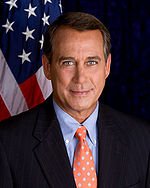 John Boehner John BoehnerJohn Boehner John Andrew Boehner is the 61st and current Speaker of the United States House of Representatives. A member of the Republican Party, he is the U.S. Representative from , serving since 1991... |
Republican | Ohio-8 Ohio's 8th congressional district Ohio's 8th congressional district sits on the west side of Ohio, bordering Indiana. The cities of Hamilton, Fairfield, Middletown, Huber Heights, Eaton, Greenville, Piqua, Troy, and parts of Dayton, Riverside, and Wright Patterson Air Force Base are part of the district... |
112th 112th United States Congress The One Hundred Twelfth United States Congress is the current meeting of the legislative branch of the United States federal government, composed of the United States Senate and the United States House of Representatives. It convened in Washington, D.C. on January 3, 2011, and will end on January... |
January 5, 2011 – Present |
- Note: Banks, a former Democrat originally elected as a Know Nothing, had come to be associated with the Republicans by the time the 34th Congress convened. Because the Republicans did not command a majority in Congress, and Banks did not receive any votes from Democrats or southern Know Nothings, Banks, after two months of deadlocked balloting, could only be elected after a motion was passed allowing the election of a speaker by plurality vote.
List of Speakers by time in office
| |
| |
| |
| |
| |
This is based on the difference between dates; if counted by number of calendar days all the figures would be one greater. Time after adjournment of one Congress but before the convening of the next Congress is not counted. For example, Nathaniel Macon
Nathaniel Macon
Nathaniel Macon was a spokesman for the Old Republican faction of the Democratic-Republican Party that wanted to strictly limit the United States federal government. Macon was born near Warrenton, North Carolina, and attended the College of New Jersey and served briefly in the American...
was Speaker in both the 8th
8th United States Congress
- Senate :* President: Aaron Burr * President pro tempore: John Brown , October 17, 1803 – February 26, 1804** Jesse Franklin , March 10, 1804 – November 4, 1804** Joseph Anderson , January 15, 1805 – December 1, 1805- House of Representatives :...
and 9th
9th United States Congress
- Senate :* President: George Clinton * President pro tempore: Samuel Smith - House of Representatives :* Speaker: Nathaniel Macon -Members:This list is arranged by chamber, then by state...
Congresses, but the eight-month gap between the two Congresses is not counted toward his service.
Sam Rayburn
Sam Rayburn
Samuel Taliaferro Rayburn , often called "Mr. Sam," or "Mr. Democrat," was a Democratic lawmaker from Bonham, Texas, who served as the Speaker of the U.S. House of Representatives for seventeen years, the longest tenure in U.S. history.- Background :Rayburn was born in Roane County, Tennessee, and...
is the only person to have served as Speaker of the House
Speaker of the United States House of Representatives
The Speaker of the United States House of Representatives, or Speaker of the House, is the presiding officer of the United States House of Representatives...
for more than ten years.
Theodore Medad Pomeroy
Theodore Medad Pomeroy
Theodore Medad Pomeroy was a United States politician. He served in the House of Representatives as a Republican from New York from 1861 to 1869. He also served as the Speaker of the House for about a day...
served as Speaker of the House for one day after Speaker Schuyler Colfax
Schuyler Colfax
Schuyler Colfax, Jr. was a United States Representative from Indiana , Speaker of the House of Representatives , and the 17th Vice President of the United States . To date, he is one of only two Americans to have served as both House speaker and vice president.President Ulysses S...
resigned to become Vice President of the United States
Vice President of the United States
The Vice President of the United States is the holder of a public office created by the United States Constitution. The Vice President, together with the President of the United States, is indirectly elected by the people, through the Electoral College, to a four-year term...
; Pomeroy's term as a Member of Congress ended the next day.
Sam Rayburn
Sam Rayburn
Samuel Taliaferro Rayburn , often called "Mr. Sam," or "Mr. Democrat," was a Democratic lawmaker from Bonham, Texas, who served as the Speaker of the U.S. House of Representatives for seventeen years, the longest tenure in U.S. history.- Background :Rayburn was born in Roane County, Tennessee, and...
, Henry Clay
Henry Clay
Henry Clay, Sr. , was a lawyer, politician and skilled orator who represented Kentucky separately in both the Senate and in the House of Representatives...
, Thomas Brackett Reed
Thomas Brackett Reed
Thomas Brackett Reed, , occasionally ridiculed as Czar Reed, was a U.S. Representative from Maine, and Speaker of the U.S. House of Representatives from 1889–1891 and from 1895–1899...
, Joseph W. Martin, Jr., Frederick Muhlenberg
Frederick Muhlenberg
Frederick Augustus Conrad Muhlenberg was an American minister and politician who was the first Speaker of the United States House of Representatives. A delegate and a member of the U.S...
, and John W. Taylor
John W. Taylor (politician)
John W. Taylor was an early 19th century U.S. politician from New York.-Life:He was born in 1784 in that part of the Town of Ballston, then in Albany County, New York, which was, upon the creation of Saratoga County in 1791, split off to form the Town of Charlton...
are the only Speakers of the House to have ever served in non-consecutive Congresses (i.e. another Speaker served in between each tenure).
| # in office | | Speaker | | Time | Rank |
|---|---|---|---|
| 48/50/52 | Sam Rayburn Sam Rayburn Samuel Taliaferro Rayburn , often called "Mr. Sam," or "Mr. Democrat," was a Democratic lawmaker from Bonham, Texas, who served as the Speaker of the U.S. House of Representatives for seventeen years, the longest tenure in U.S. history.- Background :Rayburn was born in Roane County, Tennessee, and... |
17 years, 53 days | 1 |
| 55 | Tip O'Neill Tip O'Neill Thomas Phillip "Tip" O'Neill, Jr. was an American politician. O'Neill was an outspoken liberal Democrat and influential member of the U.S. Congress, serving in the House of Representatives for 34 years and representing two congressional districts in Massachusetts... |
9 years, 350 days | 2 |
| 53 | John W. McCormack John William McCormack John William McCormack was an American politician from Boston, Massachusetts.McCormack served as a member of United States House of Representatives from 1928 until he retired from political life in 1971... |
8 years, 344 days | 3 |
| 59 | Dennis Hastert Dennis Hastert John Dennis "Denny" Hastert was the 59th Speaker of the House serving from 1999 to 2007. He represented as a Republican for twenty years, 1987 to 2007.He is the longest-serving Republican Speaker in history... |
4 | |
| 41 | Champ Clark | 6 years, 357 days | 5 |
| 8/10/13 | Henry Clay Henry Clay Henry Clay, Sr. , was a lawyer, politician and skilled orator who represented Kentucky separately in both the Senate and in the House of Representatives... |
6 years, 231 days | 6 |
| 54 | Carl Albert Carl Albert Carl Bert Albert was a lawyer and a Democratic American politician from Oklahoma.Albert represented the southeastern portion of Oklahoma as a Democrat for 30 years, starting in 1947. He is best known for his service as Speaker of the United States House of Representatives from 1971 to 1977... |
5 years, 337 days | 7 |
| 40 | Joseph Gurney Cannon Joseph Gurney Cannon Joseph Gurney Cannon was a United States politician from Illinois and leader of the Republican Party. Cannon served as Speaker of the United States House of Representatives from 1903 to 1911, and historians generally consider him to be the most dominant Speaker in United States history, with such... |
5 years, 285 days | 8 |
| 57 | Tom Foley Tom Foley Thomas Stephen Foley was the 57th Speaker of the United States House of Representatives, serving from 1989 to 1995. He represented Washington's 5th congressional district for 30 years as a Democratic member from 1965 to 1995.... |
9 | |
| 31 | James G. Blaine James G. Blaine James Gillespie Blaine was a U.S. Representative, Speaker of the United States House of Representatives, U.S. Senator from Maine, two-time Secretary of State... |
5 years, 93 days | 10 |
| 42 | Frederick H. Gillett Frederick H. Gillett Frederick Huntington Gillett was an American politician during the early 20th century. Frederick H. Gillett was born in Westfield, Massachusetts to Edward Bates Gillett and Lucy Fowler Gillett . He graduated from Amherst College in 1874 and Harvard Law School in 1877. He began the practice of... |
4 years, 341 days | 11 |
| 29 | Schuyler Colfax Schuyler Colfax Schuyler Colfax, Jr. was a United States Representative from Indiana , Speaker of the House of Representatives , and the 17th Vice President of the United States . To date, he is one of only two Americans to have served as both House speaker and vice president.President Ulysses S... |
4 years, 176 days | 12 |
| 36/38 | Thomas Brackett Reed Thomas Brackett Reed Thomas Brackett Reed, , occasionally ridiculed as Czar Reed, was a U.S. Representative from Maine, and Speaker of the U.S. House of Representatives from 1889–1891 and from 1895–1899... |
4 years, 172 days | 13 |
| 43 | Nicholas Longworth Nicholas Longworth Nicholas Longworth IV was a prominent American politician in the Republican Party during the first few decades of the 20th century... |
4 years, 133 days | 14 |
| 47 | William B. Bankhead William B. Bankhead William Brockman Bankhead was an American politician from Alabama who served as U.S. Representative and Speaker of the House. He was a Democrat. Bankhead was a prominent supporter of President Franklin Roosevelt's New Deal of pro-labor union legislation, thus clashing with most other southern... |
15 | |
| 15 | Andrew Stevenson Andrew Stevenson Andrew Stevenson was a Democratic politician in the United States. Educated at the College of William and Mary, he married three times. His second wife, Sarah Coles, was a cousin of Dolley Madison and sister of Edward Coles, a governor of Illinois... |
4 years, 83 days | 16 |
| 49/51 | Joseph W. Martin, Jr. | 4 years | 17 |
| 60 | Nancy Pelosi Nancy Pelosi Nancy Patricia D'Alesandro Pelosi is the Minority Leader of the United States House of Representatives and served as the 60th Speaker of the United States House of Representatives from 2007 to 2011... |
18 | |
| 58 | Newt Gingrich Newt Gingrich Newton Leroy "Newt" Gingrich is a U.S. Republican Party politician who served as the House Minority Whip from 1989 to 1995 and as the 58th Speaker of the U.S. House of Representatives from 1995 to 1999.... |
19 | |
| 6 | Nathaniel Macon Nathaniel Macon Nathaniel Macon was a spokesman for the Old Republican faction of the Democratic-Republican Party that wanted to strictly limit the United States federal government. Macon was born near Warrenton, North Carolina, and attended the College of New Jersey and served briefly in the American... |
3 years, 317 days | 20 |
| 35 | John Griffin Carlisle John Griffin Carlisle John Griffin Carlisle was a prominent American politician in the Democratic Party during the last quarter of the 19th century. He served as the Speaker of the United States House of Representatives from 1883 to 1889 and as United States Secretary of the Treasury from 1893 to 1897 during the Panic... |
3 years, 267 days | 21 |
| 33 | Samuel J. Randall Samuel J. Randall Samuel Jackson Randall was a Pennsylvania politician, attorney, soldier, and a prominent Democratic member of the United States House of Representatives during the late 19th century. He served as the 33rd Speaker of the House and a contender for his party's nomination for the President of the... |
3 years, 215 days | 22 |
| 1/3 | Frederick Muhlenberg Frederick Muhlenberg Frederick Augustus Conrad Muhlenberg was an American minister and politician who was the first Speaker of the United States House of Representatives. A delegate and a member of the U.S... |
3 years, 64 days | 23 |
| 7 | Joseph Bradley Varnum Joseph Bradley Varnum Joseph Bradley Varnum was a U.S. politician of the Democratic-Republican Party from Massachusetts.-Biography:... |
3 years, 49 days | 24 |
| 4 | Jonathan Dayton Jonathan Dayton Jonathan Dayton was an American politician from the U.S. state of New Jersey. He was the youngest person to sign the United States Constitution and a member of the U.S. House of Representatives, serving as the fourth Speaker of the United States House of Representatives, and later the U.S. Senate... |
3 years, 14 days | 25 |
| 37 | Charles Frederick Crisp Charles Frederick Crisp Charles Frederick Crisp was a United States political figure. A Democrat, he was elected as a Congressman from Georgia in 1882, and served until his death in 1896. From 1890 until his death, he was leader of the Democratic Party in the House, as either the House Minority Leader or the Speaker of... |
2 years, 295 days | 26 |
| 17 | James K. Polk James K. Polk James Knox Polk was the 11th President of the United States . Polk was born in Mecklenburg County, North Carolina. He later lived in and represented Tennessee. A Democrat, Polk served as the 17th Speaker of the House of Representatives and the 12th Governor of Tennessee... |
2 years, 268 days | 27 |
| 24 | Linn Boyd Linn Boyd Linn Boyd was a prominent U.S. politician of the 1840s and 1850s, and served as Speaker of the United States House of Representatives from 1851 to 1855. Boyd was elected to the House as a Democrat from Kentucky from 1835 to 1837 and again from 1839 to 1855, serving seven terms in the House... |
2 years, 182 days | 28 |
| 39 | David B. Henderson David B. Henderson David Bremner Henderson , a ten-term Republican Congressman from Dubuque, Iowa, was the Speaker of the United States House of Representatives from 1899 to 1903... |
2 years, 182 days | 29 |
| 56 | Jim Wright Jim Wright James Claude Wright, Jr. , usually known as Jim Wright, is a former Democratic U.S. Congressman from Texas who served 34 years in the U.S. House of Representatives and was the Speaker of the House from 1987 to 1989.-Early life:... |
30 | |
| 19 | John White John White (Kentucky politician) John White was a prominent U.S. politician during the 1840s.White was a native of Kentucky and practiced law there. White was elected to the Kentucky House of Representatives in 1832... |
31 | |
| 28 | Galusha A. Grow Galusha A. Grow Galusha Aaron Grow was a prominent U.S. politician, lawyer, writer and businessman, and was Speaker of the House of Representatives from 1861 to 1863. He was defeated for reelection in 1862... |
32 | |
| 11/14 | John W. Taylor John W. Taylor (politician) John W. Taylor was an early 19th century U.S. politician from New York.-Life:He was born in 1784 in that part of the Town of Ballston, then in Albany County, New York, which was, upon the creation of Saratoga County in 1791, split off to form the Town of Charlton... |
1 year, 198 days | 33 |
| 45 | Henry T. Rainey Henry T. Rainey Henry Thomas Rainey was a prominent U.S. politician during the first third of the 20th century. He served in the United States House of Representatives from 1903 to 1921 and from 1923 to his death as a Democrat from Illinois, and was its Speaker during the famous Hundred days of Franklin D... |
34 | |
| 46 | Joseph W. Byrns, Sr. | 35 | |
| 2 | Jonathan Trumbull, Jr. Jonathan Trumbull, Jr. Jonathan Trumbull, Jr. was an American politician who served as the second Speaker of the United States House of Representatives.... |
36 | |
| 21 | John Wesley Davis John Wesley Davis John Wesley Davis was a doctor and a prominent U.S. politician during the 1840s.-Early life and education:... |
37 | |
| 5 | Theodore Sedgwick Theodore Sedgwick Theodore Sedgwick was an attorney, politician and jurist, who served in elected state government and as a Delegate to the Continental Congress, a US Representative, and a United States Senator from Massachusetts. He served as the fifth Speaker of the United States House of Representatives... |
38 | |
| 12 | Philip Pendelton Barbour | 39 | |
| 20 | John Winston Jones John Winston Jones John Winston Jones was an American politician and lawyer.Born 22 November 1791 in Amelia County, Virginia, he graduated from the College of William and Mary in 1813. He practiced law in Chesterfield County, Virginia before being appointed Prosecuting Attorney for Virginia's 5th Judicial Circuit... |
40 | |
| 34 | J. Warren Keifer J. Warren Keifer Joseph Warren Keifer was a brigadier general in the Union Army during the American Civil War and a prominent U.S. politician during the 1880s. He served in the United States House of Representatives as a Republican from Ohio from 1877 to 1885 and from 1905 to 1911... |
41 | |
| 22 | Robert Charles Winthrop Robert Charles Winthrop Robert Charles Winthrop was an American lawyer and philanthropist and one time Speaker of the United States House of Representatives.... |
42 | |
| 26 | James Lawrence Orr James Lawrence Orr James Lawrence Orr was an American politician who served as Speaker of the United States House of Representatives in the United States Congress... |
43 | |
| 44 | John Nance Garner John Nance Garner John Nance Garner, IV , was the 32nd Vice President of the United States and the 44th Speaker of the United States House of Representatives .- Early life and family :... |
44 | |
| 18 | Robert M. T. Hunter | 45 | |
| 23 | Howell Cobb Howell Cobb Howell Cobb was an American political figure. A Southern Democrat, Cobb was a five-term member of the United States House of Representatives and Speaker of the House from 1849 to 1851... |
46 | |
| 9 | Langdon Cheves Langdon Cheves Langdon Cheves was an American politician and a president of the Second Bank of the United States.Cheves was born at Rocky River, South Carolina and died in Columbia, South Carolina. His father, Alexander, was a native of Scotland; his mother, Mary Langdon, was from Virginia... |
47 | |
| 27 | William Pennington William Pennington William Pennington was an American politician and lawyer, the Governor of New Jersey, and Speaker of the House during his one term in Congress.... |
48 | |
| 25 | Nathaniel Prentice Banks Nathaniel Prentice Banks Nathaniel Prentice Banks was an American politician and soldier, served as the 24th Governor of Massachusetts, Speaker of the U.S. House of Representatives and as a Union general during the American Civil War.... |
49 | |
| 16 | John Bell John Bell (Tennessee politician) John Bell was a U.S. politician, attorney, and plantation owner. A wealthy slaveholder from Tennessee, Bell served in the United States Congress in both the House of Representatives and Senate. He began his career as a Democrat, he eventually fell out with Andrew Jackson and became a Whig... |
days | 50 |
| 61 | John Boehner John Boehner John Andrew Boehner is the 61st and current Speaker of the United States House of Representatives. A member of the Republican Party, he is the U.S. Representative from , serving since 1991... |
days | 51 |
| 32 | Michael C. Kerr Michael C. Kerr Michael Crawford Kerr was an American legislator.He was born at Titusville, Pennsylvania and educated at the Erie Academy. He graduated from Louisville University's Law School in 1851... |
days | 52 |
| 30 | Theodore Medad Pomeroy Theodore Medad Pomeroy Theodore Medad Pomeroy was a United States politician. He served in the House of Representatives as a Republican from New York from 1861 to 1869. He also served as the Speaker of the House for about a day... |
day | 53 |
Number of Speakers per State
| Number | State |
|---|---|
| 8 | Massachusetts Massachusetts The Commonwealth of Massachusetts is a state in the New England region of the northeastern United States of America. It is bordered by Rhode Island and Connecticut to the south, New York to the west, and Vermont and New Hampshire to the north; at its east lies the Atlantic Ocean. As of the 2010... |
| 4 | Kentucky Kentucky The Commonwealth of Kentucky is a state located in the East Central United States of America. As classified by the United States Census Bureau, Kentucky is a Southern state, more specifically in the East South Central region. Kentucky is one of four U.S. states constituted as a commonwealth... |
| Virginia Virginia The Commonwealth of Virginia , is a U.S. state on the Atlantic Coast of the Southern United States. Virginia is nicknamed the "Old Dominion" and sometimes the "Mother of Presidents" after the eight U.S. presidents born there... |
|
| Pennsylvania Pennsylvania The Commonwealth of Pennsylvania is a U.S. state that is located in the Northeastern and Mid-Atlantic regions of the United States. The state borders Delaware and Maryland to the south, West Virginia to the southwest, Ohio to the west, New York and Ontario, Canada, to the north, and New Jersey to... |
|
| 3 | Georgia Georgia (U.S. state) Georgia is a state located in the southeastern United States. It was established in 1732, the last of the original Thirteen Colonies. The state is named after King George II of Great Britain. Georgia was the fourth state to ratify the United States Constitution, on January 2, 1788... |
| Illinois Illinois Illinois is the fifth-most populous state of the United States of America, and is often noted for being a microcosm of the entire country. With Chicago in the northeast, small industrial cities and great agricultural productivity in central and northern Illinois, and natural resources like coal,... |
|
| Indiana Indiana Indiana is a US state, admitted to the United States as the 19th on December 11, 1816. It is located in the Midwestern United States and Great Lakes Region. With 6,483,802 residents, the state is ranked 15th in population and 16th in population density. Indiana is ranked 38th in land area and is... |
|
| Ohio Ohio Ohio is a Midwestern state in the United States. The 34th largest state by area in the U.S.,it is the 7th‑most populous with over 11.5 million residents, containing several major American cities and seven metropolitan areas with populations of 500,000 or more.The state's capital is Columbus... |
|
| Tennessee Tennessee Tennessee is a U.S. state located in the Southeastern United States. It has a population of 6,346,105, making it the nation's 17th-largest state by population, and covers , making it the 36th-largest by total land area... |
|
| Texas Texas Texas is the second largest U.S. state by both area and population, and the largest state by area in the contiguous United States.The name, based on the Caddo word "Tejas" meaning "friends" or "allies", was applied by the Spanish to the Caddo themselves and to the region of their settlement in... |
|
| South Carolina South Carolina South Carolina is a state in the Deep South of the United States that borders Georgia to the south, North Carolina to the north, and the Atlantic Ocean to the east. Originally part of the Province of Carolina, the Province of South Carolina was one of the 13 colonies that declared independence... |
|
| 2 | Maine Maine Maine is a state in the New England region of the northeastern United States, bordered by the Atlantic Ocean to the east and south, New Hampshire to the west, and the Canadian provinces of Quebec to the northwest and New Brunswick to the northeast. Maine is both the northernmost and easternmost... |
| Connecticut Connecticut Connecticut is a state in the New England region of the northeastern United States. It is bordered by Rhode Island to the east, Massachusetts to the north, and the state of New York to the west and the south .Connecticut is named for the Connecticut River, the major U.S. river that approximately... |
|
| New Jersey New Jersey New Jersey is a state in the Northeastern and Middle Atlantic regions of the United States. , its population was 8,791,894. It is bordered on the north and east by the state of New York, on the southeast and south by the Atlantic Ocean, on the west by Pennsylvania and on the southwest by Delaware... |
|
| New York New York New York is a state in the Northeastern region of the United States. It is the nation's third most populous state. New York is bordered by New Jersey and Pennsylvania to the south, and by Connecticut, Massachusetts and Vermont to the east... |
|
| 1 | Alabama Alabama Alabama is a state located in the southeastern region of the United States. It is bordered by Tennessee to the north, Georgia to the east, Florida and the Gulf of Mexico to the south, and Mississippi to the west. Alabama ranks 30th in total land area and ranks second in the size of its inland... |
| California California California is a state located on the West Coast of the United States. It is by far the most populous U.S. state, and the third-largest by land area... |
|
| Iowa Iowa Iowa is a state located in the Midwestern United States, an area often referred to as the "American Heartland". It derives its name from the Ioway people, one of the many American Indian tribes that occupied the state at the time of European exploration. Iowa was a part of the French colony of New... |
|
| Missouri Missouri Missouri is a US state located in the Midwestern United States, bordered by Iowa, Illinois, Kentucky, Tennessee, Arkansas, Oklahoma, Kansas and Nebraska. With a 2010 population of 5,988,927, Missouri is the 18th most populous state in the nation and the fifth most populous in the Midwest. It... |
|
| North Carolina North Carolina North Carolina is a state located in the southeastern United States. The state borders South Carolina and Georgia to the south, Tennessee to the west and Virginia to the north. North Carolina contains 100 counties. Its capital is Raleigh, and its largest city is Charlotte... |
|
| Oklahoma Oklahoma Oklahoma is a state located in the South Central region of the United States of America. With an estimated 3,751,351 residents as of the 2010 census and a land area of 68,667 square miles , Oklahoma is the 28th most populous and 20th-largest state... |
|
| Washington |
Living former Speakers
As of January 2011, there are five living former Speakers. The most recent Speaker to die was Carl AlbertCarl Albert
Carl Bert Albert was a lawyer and a Democratic American politician from Oklahoma.Albert represented the southeastern portion of Oklahoma as a Democrat for 30 years, starting in 1947. He is best known for his service as Speaker of the United States House of Representatives from 1971 to 1977...
(1971–1977), on February 4, 2000. The most recently serving Speaker to die was Tip O'Neill
Tip O'Neill
Thomas Phillip "Tip" O'Neill, Jr. was an American politician. O'Neill was an outspoken liberal Democrat and influential member of the U.S. Congress, serving in the House of Representatives for 34 years and representing two congressional districts in Massachusetts...
(1977–1987), on January 5, 1994.
| Speaker | Years in office | Date of birth |
|---|---|---|
| Jim Wright Jim Wright James Claude Wright, Jr. , usually known as Jim Wright, is a former Democratic U.S. Congressman from Texas who served 34 years in the U.S. House of Representatives and was the Speaker of the House from 1987 to 1989.-Early life:... |
1987–1989 | December 22, 1922 (age 89) |
| Tom Foley Tom Foley Thomas Stephen Foley was the 57th Speaker of the United States House of Representatives, serving from 1989 to 1995. He represented Washington's 5th congressional district for 30 years as a Democratic member from 1965 to 1995.... |
1989–1995 | March 26, 1929 (age 82) |
| Newt Gingrich Newt Gingrich Newton Leroy "Newt" Gingrich is a U.S. Republican Party politician who served as the House Minority Whip from 1989 to 1995 and as the 58th Speaker of the U.S. House of Representatives from 1995 to 1999.... |
1995–1999 | June 17, 1943 (age 68) |
| Dennis Hastert Dennis Hastert John Dennis "Denny" Hastert was the 59th Speaker of the House serving from 1999 to 2007. He represented as a Republican for twenty years, 1987 to 2007.He is the longest-serving Republican Speaker in history... |
1999–2007 | January 02, 1942 (age 70) |
| Nancy Pelosi Nancy Pelosi Nancy Patricia D'Alesandro Pelosi is the Minority Leader of the United States House of Representatives and served as the 60th Speaker of the United States House of Representatives from 2007 to 2011... |
2007–2011 | March 26, 1940 (age 71) |
External links
- "Capitol Questions." C-SPAN (2003). Notable elections and role.
- Speaker of the House of Representatives. (2005). Official Website. Information about role as party leader, powers as presiding officer.