

Personality psychology

Encyclopedia
Personality psychology is a branch of psychology
that studies personality and individual differences. Its areas of focus include:
"Personality" can be defined as a dynamic and organized set of characteristics possessed by a person that uniquely influences his or her cognition
s, motivation
s, and behavior
s in various situations. The word "personality" originates from the Latin
persona, which means mask
. Significantly, in the theatre of the ancient Latin-speaking world, the mask was not used as a plot device to disguise the identity of a character, but rather was a convention employed to represent or typify that character. Personality may also refer to the patterns of thoughts, feelings and behaviors consistently exhibited by an individual over time that strongly influence our expectations, self-perceptions, values and attitudes, and predicts our reactions to people, problems and stress. In a phrase, personality is not just who we are, it is also how we are.
The pioneering American psychologist Gordon Allport
(1937) described two major ways to study personality: the nomothetic and the idiographic
. Nomothetic psychology seeks general laws that can be applied to many different people, such as the principle of self-actualization, or the trait of extraversion. Idiographic psychology is an attempt to understand the unique aspects of a particular individual.
The study of personality has a broad and varied history in psychology, with an abundance of theoretical traditions. The major theories include dispositional (trait) perspective, psychodynamic, humanistic, biological, behaviorist and social learning perspective. There is no consensus on the definition of "personality" in psychology. Most researchers and psychologists do not explicitly identify themselves with a certain perspective and often take an eclectic approach. Some research is empirically driven such as the "Big 5" personality model
whereas other research emphasizes theory development such as psychodynamics. There is also a substantial emphasis on the applied field of personality testing. In psychological education and training, the study of the nature of personality and its psychological development is usually reviewed as a prerequisite to courses in abnormal or clinical psychology.
, science
, and philosophy
to draw general conclusions. The following five categories are some of the most fundamental philosophical assumptions on which theorists disagree:
1. Freedom versus Determinism
This is the debate over whether we have control over our own behavior and understand the motives behind it (Freedom
), or if our behavior is causally determined by forces beyond our control (Determinism
). Determinism has been considered unconscious, environmental, or biological by various theories.
2. Heredity versus Environment
Personality is thought to be determined largely by genetics
and biology
, by environment and experiences, or by some combination resulting thereof. There is evidence for all possibilities. Contemporary research suggests that most personality traits are based on the joint influence of genetics and environment. One of the forerunners in this arena is C. Robert Cloninger
with the Temperament and Character model.
3. Uniqueness versus Universality
The argument over whether we are all unique individuals (Uniqueness) or if humans are basically similar in their nature (Universality
). Gordon Allport
, Abraham Maslow
, and Carl Rogers
were all advocates of the uniqueness of individuals. Behaviorists and cognitive theorists, in contrast, emphasized the importance of universal principles such as reinforcement and self-efficacy.
4. Active versus Reactive
Do we primarily act through our own initiative (Active
), or react to outside stimuli
(Reactive
)? Behavioral theorists typically believe that humans are passively shaped by their environments, whereas humanistic and cognitive theorists believe that humans are more active.
5. Optimistic versus Pessimistic
Personality theories differ on whether people can change their personalities (Optimism
), or if they are doomed to remain the same throughout their lives (Pessimism
). Theories that place a great deal of emphasis on learning are often, but not always, more optimistic than theories that do not emphasize learning.
of the American Psychiatric Association
, personality traits are "enduring patterns of perceiving, relating to, and thinking about the environment and oneself that are exhibited in a wide range of social and personal contexts." Theorists generally assume a) traits are relatively stable over time, b) traits differ among individuals (for instance, some people are outgoing while others are reserved), and c) traits influence behavior.
The most common models of traits incorporate three to five broad dimensions or factors. The least controversial dimension, observed as far back as the ancient Greeks, is simply extraversion and introversion
(outgoing and physical-stimulation-oriented vs. quiet and physical-stimulation-averse).
Trait models have been criticized as being purely descriptive and offering little explanation of the underlying causes of personality. Eysenck's theory, however, does propose biological mechanisms as driving traits, and modern behavior genetics researchers have shown a clear genetic substrate to them. Another potential weakness of trait theories is that they may lead some people to accept oversimplified classifications—or worse, offer advice—based on a superficial analysis of personality. Finally, trait models often underestimate the effect of specific situations on people's behavior. It is important to remember that traits are statistical generalizations that do not always correspond to an individual's behavior.
. Interest in the field is also driven by molecular genetic and evolutionary ideas about personality.
Most studies on personality genetics rely on twin studies
, which compare identical and fraternal twins. Twin studies consistently indicate moderate genetic influence—heritability
estimates for most traits are about 40% and are not influenced by the environmental factors shared by twins. The estimated heritabilities for the personality measures were much lower than those obtained in studies of identical and fraternal twins, which suggests that twin studies have exaggerated the degree of genetic variation in personality.
Behavior genetics methods have similarities to natural experiments in which groups are found who have differences in genetic similarity or environmental similarity. The most popular method of determining human inheritance compares mono-zygotic and di-zygotic twins. Mono-zygotic twins develop from the same fertilized ovum and share the same set of inherited blueprints, often called identical twins. Another way to describe them is to say that their genotype is identical. Because mono zygotic twins are identical genetically, and observed differences between the twins can be noted to the environment.
Diygotic twins develop from two separate ova. They are no more alike genetically than other brothers and sisters; on average, they share 50% of their genes. Any observed differences between fraternal twins are attributable to a combination of genetic and environmental causes. The twin method assumes that environmental influences are essentially the same for the two types of twins. If the identical twins are observed to be more similar than they fraternal twins, this difference in their correlations is ascribed to the greater genetic similarity of the identical twins. This means that the trait is influenced by genetic factors.
In order to examine the complications of developmental genetic influences on personality characteristics during the time of young adulthood, the study applied a longitudinal twin study. This classic twin design is a well-used method for determining the presence of genetic influences on individual differences. There were two different types of twins used in the study: monozygotic (identical) and dizygotic (fraternal) . Monozygotic twins share 100% of their genes, whereas dizygotic share only 50%. If there is a strong genetic influence, monozygotic co-twins have a tendency to be more similar than dizygotic twins.
A longitudinal design is a branch of this cross sectional twin design in that the twins are assessed twice in their life. A longitudinal study can find the presence of genetic influences at two different times and can determine the genetic influences that operate on a intra-individual change over a period of time. Longitudinal twin studies have been used repeatedly to investigate the behavioral and intellectual development in infants and young children. Most twin studies of adult personality characteristics have been cross-sectional. Cross-sectional studies do not show the full impact that developmental genetics has on adult personality. Even though cross-sectional methods have led to interesting findings,they are subject to associational effects and sample variation across different ages, and therefore cannot investigate intra-individual change.
This study assessed a large sample of mono-zygotic and dizygotic twins when they were 20 and 25 years of age, using a shorter version of the Minnesota Multiphasic Personality Inventory
(MMPI). This inventory was used to measure self-reported personality characteristics of particular behavior of genetics interest. Three primary questions were developed during this assessment:
Age differences create more variables even within a family, so the best comparisons are found using twins. Twins typically share a family environment called a shared environment because they may share other aspects like teachers, school, and friends. A nonshared environment means completely different environment for both subjects. "Biologically related children who are separated after birth and raised in different families live in nonshared environments." Identical twins separated at birth and raised in different families constitute the best cases for heredity and personality because similarities between the two are due only to genetic influences.
Vulnerability was a factor in this study that was taken into consideration regarding the issue of genetic influences on vulnerability. The study concluded that the monozygotic co-twins would be more similar than dizygotic co-twins in change over time. To answer the questions as to whether change is genetically influenced through personality, the data concluded that there was no significant differences for either variances between the monozygotic and dizygotic co-twins.
Studies also investigate the link by genetic association studies
where subjects are genotyped and their personality is quantified with a personality test
.
A link was found between the personality trait of neuroticism
and a polymorphism called 5-HTTLPR
in the serotonin transporter gene, but this association was not replicated in larger studies. Other candidate gene studies have provided weak evidence that some personality traits are related to AVPR1A ("ruthlessness gene") and MAOA ("Warrior gene").
Genotypes, or the genetic make up of an organism, influence, but don't fully decide the physical traits of a person. Those are also influenced by the environment and behaviors they are surrounded by. For example, a person's height is affected by genetics, but if they are malnourished growth will be stunted no matter what their genetic coding says. Environment is also not completely responsible for an outcome in personality. An example from Psychobiology of Personality by Marvin Zuckerman is alcoholism: studies suggest that alcoholism is an inherited disease, but if a subject with a strong biological background of alcoholism in their family tree is never exposed to alcohol, they will not get that way regardless of their genome.
Another factor that can be addressed is biological versus adoptive relatives, a real-life experiment, adoption. This creates two groups: genetic relatives (biological parents and siblings) and environmental relatives (adoptive parents and siblings). So the question can be asked, are adopted children more like their biological parents, who share the same genes, or their adoptive parents, who share the same home environment? And consequently to sharing that home environment, do those adopted siblings come to share traits as well? After studying hundreds of adoptive families, the discovery was that people who grow up together, whether biologically related or not, do not much resemble one another in personality. In characteristics such as extroversion and agreeableness, adoptees are more like their biological parents than to their adoptive parents. However, the minute shared-environment effects does not mean that adoptive parenting is ineffective. Even though genetics may limit the family environment's influence on personality, parents do influence their children's attitudes, values, faith, manners and politics. In adoptive homes, child neglect and abuse and even divorce between the parents is uncommon. In accordance to that, it is not surprising, despite a somewhat greater risk of psychological disorder, most adopted children excel, especially when they're adopted as infants. In fact, seven out of eight have reported feeling a strong connection with one or even both of their adoptive parents.
refers to the psychological classification of different types of people. Personality types are distinguished from personality traits
, which come in different levels or degrees. For example, according to type theories, there are two types of people, introverts and extraverts. According to trait theories, introversion and extraversion are part of a continuous dimension, with many people in the middle. The idea of psychological types originated in the theoretical work of Carl Jung
and William Marston, whose work is reviewed in Dr. Travis Bradberry's Self-Awareness. Jung's seminal 1921 book on the subject is available in English as Psychological Types
.
Building on the writings and observations of Jung, during World War II, Isabel Briggs Myers and her mother, Katharine C. Briggs, delineated personality types by constructing the Myers-Briggs Type Indicator
. This model was later used by David Keirsey
with a different understanding from Jung, Briggs and Myers. In the former Soviet Union, Lithuanian Aušra Augustinavičiūtė
independently derived a model of personality type from Jung's called Socionics
.
The model is an older and more theoretical approach to personality, accepting extraversion and introversion as basic psychological orientations in connection with two pairs of psychological functions:
Briggs and Myers also added another personality dimension to their type indicator to measure whether a person prefers to use a judging or perceiving function when interacting with the external world. Therefore they included questions designed to indicate whether someone wishes to come to conclusions (judgment) or to keep options open (perception).
This personality typology has some aspects of a trait theory: it explains people's behaviour in terms of opposite fixed characteristics. In these more traditional models, the sensing/intuition preference is considered the most basic, dividing people into "N" (intuitive) or "S" (sensing) personality types. An "N" is further assumed to be guided either by thinking or feeling, and divided into the "NT" (scientist, engineer) or "NF" (author, humanitarian) temperament. An "S", by contrast, is assumed to be guided more by the judgment/perception axis, and thus divided into the "SJ" (guardian, traditionalist) or "SP" (performer, artisan) temperament. These four are considered basic, with the other two factors in each case (including always extraversion/introversion) less important. Critics of this traditional view have observed that the types can be quite strongly stereotyped by professions (although neither Myers nor Keirsey engaged in such stereotyping in their type descriptions), and thus may arise more from the need to categorize people for purposes of guiding their career choice. This among other objections led to the emergence of the five-factor view, which is less concerned with behavior under work conditions and more concerned with behavior in personal and emotional circumstances. (It should be noted, however, that the MBTI is not designed to measure the "work self", but rather what Myers and McCaulley called the "shoes-off self.") Some critics have argued for more or fewer dimensions while others have proposed entirely different theories (often assuming different definitions of "personality").
Type A and Type B personality theory: During the 1950s, Meyer Friedman
and his co-workers defined what they called Type A and Type B behavior patterns. They theorized that intense, hard-driving Type A personalities had a higher risk of coronary disease because they are "stress junkies." Type B people, on the other hand, tended to be relaxed, less competitive, and lower in risk. There was also a Type AB mixed profile.
theories explain human behaviour in terms of the interaction of various components of personality. Sigmund Freud
was the founder of this school. Freud drew on the physics of his day (thermodynamics) to coin the term psychodynamics. Based on the idea of converting heat into mechanical energy, he proposed psychic energy could be converted into behavior. Freud's theory places central importance on dynamic, unconscious psychological conflicts.
Freud divides human personality into three significant components: the id, ego, and super-ego
. The id acts according to the pleasure principle, demanding immediate gratification of its needs regardless of external environment; the ego then must emerge in order to realistically meet the wishes and demands of the id in accordance with the outside world, adhering to the reality principle. Finally, the superego(conscience) inculcates moral judgment and societal rules upon the ego, thus forcing the demands of the id to be met not only realistically but morally. The superego is the last function of the personality to develop, and is the embodiment of parental/social ideals established during childhood. According to Freud, personality is based on the dynamic interactions of these three components.
The channeling and release of sexual (libidal) and aggressive energies, which ensues from the "Eros" (sex; instinctual self-preservation) and "Thanatos" (death; instinctual self-annihilation) drives respectively, are major components of his theory. It is important to note that Freud's broad understanding of sexuality included all kinds of pleasurable feelings experienced by the human body.
Freud proposed five psychosexual stages of personality development. He believed adult personality is dependent upon early childhood experiences and largely determined by age five. Fixations that develop during the Infantile stage contribute to adult personality and behavior.
One of Sigmund Freud's earlier associates, Alfred Adler
, did agree with Freud early childhood experiences are important to development, and believed birth order may influence personality development. Adler believed the oldest was the one that set high goals to achieve to get the attention they lost back when the younger siblings were born. He believed the middle children were competitive and ambitious possibly so they are able to surpass the first-born's achievements, but were not as much concerned about the glory. He also believed the last born would be more dependent and sociable but be the baby. He also believed that the only child loves being the center of attention and matures quickly, but in the end fails to become independent.
Heinz Kohut
thought similarly to Freud's idea of transference. He used narcissism
as a model of how we develop our sense of self. Narcissism is the exaggerated sense of one self in which is believed to exist in order to protect one's low self esteem and sense of worthlessness. Kohut had a significant impact on the field by extending Freud's theory of narcissism and introducing what he called the 'self-object transferences' of mirroring and idealization. In other words, children need to idealize and emotionally "sink into" and identify with the idealized competence of admired figures such as parents or older siblings. They also need to have their self-worth mirrored by these people. These experiences allow them to thereby learn the self-soothing and other skills that are necessary for the development of a healthy sense of self.
Another important figure in the world of personality theory was Karen Horney
. She is credited with the development of the "real self
" and the "ideal self". She believes all people have these two views of their own self. The "real self" is how you really are with regards to personality, values, and morals; but the "ideal self" is a construct you apply to yourself to conform to social and personal norms and goals. Ideal self would be "I can be successful, I am CEO material"; and real self would be "I just work in the mail room, with not much chance of high promotion".
explain personality in terms of the effects external stimuli have on behavior. It was a radical shift away from Freudian philosophy. This school of thought was developed by B. F. Skinner
who put forth a model which emphasized the mutual interaction of the person or "the organism" with its environment. Skinner believed children do bad things because the behavior obtains attention that serves as a reinforcer. For example: a child cries because the child's crying in the past has led to attention. These are the response, and consequences. The response is the child crying, and the attention that child gets is the reinforcing consequence. According to this theory, people's behavior is formed by processes such as operant conditioning
. Skinner put forward a "three term contingency model" which helped promote analysis of behavior based on the "Stimulus - Response - Consequence Model" in which the critical question is: "Under which circumstances or antecedent 'stimuli' does the organism engage in a particular behavior or 'response', which in turn produces a particular 'consequence'?"
Richard Herrnstein
extended this theory by accounting for attitudes and traits. An attitude develops as the response strength (the tendency to respond) in the presences of a group of stimuli become stable. Rather than describing conditionable traits in non-behavioral language, response strength in a given situation accounts for the environmental portion. Herrstein also saw traits as having a large genetic or biological component as do most modern behaviorists.
Ivan Pavlov
is another notable influence. He is well known for his classical conditioning experiments involving dogs. These physiological studies led him to discover the foundation of behaviorism as well as classical conditioning
.
Albert Bandura
, a social learning theorist
suggested the forces of memory
and emotion
s worked in conjunction with environmental influences. Bandura was known mostly for his "Bobo Doll experiment
". During these experiments, Bandura video taped a college student kicking and verbally abusing a bobo doll. He then showed this video to a class of kindergarten children who were getting ready to go out to play. When they entered the play room, they saw bobo dolls, and some hammers. The people observing these children at play saw a group of children beating the doll. He called this study and his findings observational learning, or modeling.
Early examples of approaches to cognitive style are listed by Baron (1982). These include Witkin's (1965) work on field dependency, Gardner's (1953) discovering people had consistent preference for the number of categories they used to categorise heterogeneous objects, and Block and Petersen's (1955) work on confidence in line discrimination judgments. Baron relates early development of cognitive approaches of personality to ego psychology
. More central to this field have been:
Various scales have been developed to assess both attributional style and locus of control. Locus of control scales include those used by Rotter and later by Duttweiler, the Nowicki and Strickland (1973) Locus of Control Scale for Children and various locus of control scales specifically in the health domain, most famously that of Kenneth Wallston and his colleagues, The Multidimensional Health Locus of Control Scale. Attributional style has been assessed by the Attributional Style Questionnaire, the Expanded Attributional Style Questionnaire, the Attributions Questionnaire, the Real Events Attributional Style Questionnaire and the Attributional Style Assessment Test.
Walter Mischel
(1999) has also defended a cognitive approach to personality. His work refers to "Cognitive Affective Units", and considers factors such as encoding of stimuli, affect, goal-setting, and self-regulatory beliefs. The term "Cognitive Affective Units" shows how his approach considers affect as well as cognition.
Personal Construct Psychology (PCP) is a theory of personality developed by the American psychologist George Kelly
in the 1950s. From the theory, Kelly derived a psychotherapy
approach and also a technique called The Repertory Grid Interview that helped his patients to uncover their own "constructs" (defined later) with minimal intervention or interpretation by the therapist. The Repertory Grid
was later adapted for various uses within organizations, including decision-making and interpretation of other people's world-views. From his 1963 book, A Theory of Personality, pp. 103–104:
it is emphasized people have free will
and they play an active role in determining how they behave. Accordingly, humanistic psychology focuses on subjective experiences of persons as opposed to forced, definitive factors that determine behavior. Abraham Maslow
and Carl Rogers
were proponents of this view, which is based on the "phenomenal field" theory of Combs and Snygg (1949).
Maslow spent much of his time studying what he called "self-actualizing persons", those who are "fulfilling themselves and doing the best they are capable of doing". Maslow believes all who are interested in growth move towards self-actualizing (growth, happiness, satisfaction) views. Many of these people demonstrate a trend in dimensions of their personalities. Characteristics of self-actualizers according to Maslow include the four key dimensions:
Maslow and Rogers emphasized a view of the person as an active, creative, experiencing human being who lives in the present and subjectively responds to current perceptions, relationships, and encounters. They disagree with the dark, pessimistic outlook of those in the Freudian psychoanalysis ranks, but rather view humanistic theories as positive and optimistic proposals which stress the tendency of the human personality toward growth and self-actualization. This progressing self will remain the center of its constantly changing world; a world that will help mold the self but not necessarily confine it. Rather, the self has opportunity for maturation based on its encounters with this world. This understanding attempts to reduce the acceptance of hopeless redundancy. Humanistic therapy typically relies on the client for information of the past and its effect on the present, therefore the client dictates the type of guidance the therapist may initiate. This allows for an individualized approach to therapy. Rogers found patients differ in how they respond to other people. Rogers tried to model a particular approach to therapy- he stressed the reflective or empathetic response. This response type takes the client's viewpoint and reflects back his or her feeling and the context for it. An example of a reflective response would be, "It seems you are feeling anxious about your upcoming marriage". This response type seeks to clarify the therapist's understanding while also encouraging the client to think more deeply and seek to fully understand the feelings they have expressed.
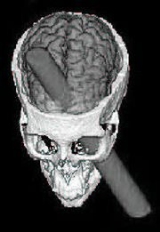
. In an 1848 accident, a large iron rod was driven through Gage's head, and his personality apparently changed as a result, although descriptions of these psychological changes are usually exaggerated.
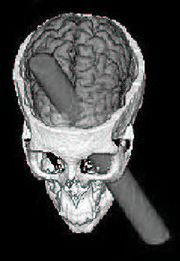 In general, patients with brain damage have been difficult to find and study. In the 1990s, researchers began to use Electroencephalography
(EEG), Positron Emission Tomography
(PET) and more recently functional Magnetic Resonance Imaging
(fMRI), which is now the most widely used imaging technique to help localize personality traits in the brain. One of the founders of this area of brain research is Richard Davidson
of the University of Wisconsin–Madison
. Davidson's research lab has focused on the role of the prefrontal cortex
(PFC) and amygdala
in manifesting human personality. In particular, this research has looked at hemispheric asymmetry of activity in these regions. Neuropsychological experiments have suggested that hemispheric asymmetry can affect an individual's personality (particularly in social settings) for individuals with NLD (non-verbal learning disorder), which is marked by the impairment of nonverbal information controlled by the right hemisphere of the brain. Progress will arise in the areas of gross motor skills, inability to organize visual-spatial relations, or adapt to novel social situations. Frequently, a person with NLD is unable to interpret non-verbal cues, and therefore experiences difficulty interacting with peers in socially normative ways.
One integrative, biopsychosocial approach to personality and psychopathology
, linking brain and environmental factors to specific types of activity, is the hypostatic model of personality, created by Codrin Stefan Tapu.
Examples of personality test
s include:
Critics have pointed to the Forer effect
to suggest some of these appear to be more accurate and discriminating than they really are.
has studied personality by having individuals record their individual experiences at random times throughout the day. In analyzing the mental freeze-frames that his subjects report, he has found significant variation in inner mental life, and several correlations with behavioral patterns.
Outline of psychology
Psychology
Psychology is the study of the mind and behavior. Its immediate goal is to understand individuals and groups by both establishing general principles and researching specific cases. For many, the ultimate goal of psychology is to benefit society...
that studies personality and individual differences. Its areas of focus include:
- Constructing a coherent picture of the individualPersonA person is a human being, or an entity that has certain capacities or attributes strongly associated with being human , for example in a particular moral or legal context...
and his or her major psychological processes - Investigating individual differences - how people are unique
- Investigating human natureHuman natureHuman nature refers to the distinguishing characteristics, including ways of thinking, feeling and acting, that humans tend to have naturally....
- how people are alike
"Personality" can be defined as a dynamic and organized set of characteristics possessed by a person that uniquely influences his or her cognition
Cognition
In science, cognition refers to mental processes. These processes include attention, remembering, producing and understanding language, solving problems, and making decisions. Cognition is studied in various disciplines such as psychology, philosophy, linguistics, and computer science...
s, motivation
Motivation
Motivation is the driving force by which humans achieve their goals. Motivation is said to be intrinsic or extrinsic. The term is generally used for humans but it can also be used to describe the causes for animal behavior as well. This article refers to human motivation...
s, and behavior
Behavior
Behavior or behaviour refers to the actions and mannerisms made by organisms, systems, or artificial entities in conjunction with its environment, which includes the other systems or organisms around as well as the physical environment...
s in various situations. The word "personality" originates from the Latin
Latin
Latin is an Italic language originally spoken in Latium and Ancient Rome. It, along with most European languages, is a descendant of the ancient Proto-Indo-European language. Although it is considered a dead language, a number of scholars and members of the Christian clergy speak it fluently, and...
persona, which means mask
Mask
A mask is an article normally worn on the face, typically for protection, disguise, performance or entertainment. Masks have been used since antiquity for both ceremonial and practical purposes...
. Significantly, in the theatre of the ancient Latin-speaking world, the mask was not used as a plot device to disguise the identity of a character, but rather was a convention employed to represent or typify that character. Personality may also refer to the patterns of thoughts, feelings and behaviors consistently exhibited by an individual over time that strongly influence our expectations, self-perceptions, values and attitudes, and predicts our reactions to people, problems and stress. In a phrase, personality is not just who we are, it is also how we are.
The pioneering American psychologist Gordon Allport
Gordon Allport
Gordon Willard Allport was an American psychologist. Allport was one of the first psychologists to focus on the study of the personality, and is often referred to as one of the founding figures of personality psychology...
(1937) described two major ways to study personality: the nomothetic and the idiographic
Idiographic image
In the field of clinical sciences, an idiographic image is the representation of a result which has been obtained thanks to a study or research method whose subject-matters are specific cases, i.e...
. Nomothetic psychology seeks general laws that can be applied to many different people, such as the principle of self-actualization, or the trait of extraversion. Idiographic psychology is an attempt to understand the unique aspects of a particular individual.
The study of personality has a broad and varied history in psychology, with an abundance of theoretical traditions. The major theories include dispositional (trait) perspective, psychodynamic, humanistic, biological, behaviorist and social learning perspective. There is no consensus on the definition of "personality" in psychology. Most researchers and psychologists do not explicitly identify themselves with a certain perspective and often take an eclectic approach. Some research is empirically driven such as the "Big 5" personality model
Big Five personality traits
In contemporary psychology, the "Big Five" factors of personality are five broad domains or dimensions of personality which are used to describe human personality....
whereas other research emphasizes theory development such as psychodynamics. There is also a substantial emphasis on the applied field of personality testing. In psychological education and training, the study of the nature of personality and its psychological development is usually reviewed as a prerequisite to courses in abnormal or clinical psychology.
Philosophical assumptions
Many of the ideas developed by historical and modern personality theorists stem from the basic philosophical assumptions they hold. The study of personality is not a purely empirical discipline, as it brings in elements of artArt
Art is the product or process of deliberately arranging items in a way that influences and affects one or more of the senses, emotions, and intellect....
, science
Science
Science is a systematic enterprise that builds and organizes knowledge in the form of testable explanations and predictions about the universe...
, and philosophy
Philosophy
Philosophy is the study of general and fundamental problems, such as those connected with existence, knowledge, values, reason, mind, and language. Philosophy is distinguished from other ways of addressing such problems by its critical, generally systematic approach and its reliance on rational...
to draw general conclusions. The following five categories are some of the most fundamental philosophical assumptions on which theorists disagree:
1. Freedom versus Determinism
This is the debate over whether we have control over our own behavior and understand the motives behind it (Freedom
Liberty
Liberty is a moral and political principle, or Right, that identifies the condition in which human beings are able to govern themselves, to behave according to their own free will, and take responsibility for their actions...
), or if our behavior is causally determined by forces beyond our control (Determinism
Determinism
Determinism is the general philosophical thesis that states that for everything that happens there are conditions such that, given them, nothing else could happen. There are many versions of this thesis. Each of them rests upon various alleged connections, and interdependencies of things and...
). Determinism has been considered unconscious, environmental, or biological by various theories.
2. Heredity versus Environment
Personality is thought to be determined largely by genetics
Genetics
Genetics , a discipline of biology, is the science of genes, heredity, and variation in living organisms....
and biology
Biology
Biology is a natural science concerned with the study of life and living organisms, including their structure, function, growth, origin, evolution, distribution, and taxonomy. Biology is a vast subject containing many subdivisions, topics, and disciplines...
, by environment and experiences, or by some combination resulting thereof. There is evidence for all possibilities. Contemporary research suggests that most personality traits are based on the joint influence of genetics and environment. One of the forerunners in this arena is C. Robert Cloninger
C. Robert Cloninger
Claude Robert Cloninger, M.D. is a psychiatrist and geneticist noted for his pioneering research on the biological, psychological, social, and spiritual foundation of both mental health and mental illness. He is Wallace Renard Professor of Psychiatry, Professor of Psychology and of Genetics, and...
with the Temperament and Character model.
3. Uniqueness versus Universality
The argument over whether we are all unique individuals (Uniqueness) or if humans are basically similar in their nature (Universality
Universality (philosophy)
In philosophy, universalism is a doctrine or school claiming universal facts can be discovered and is therefore understood as being in opposition to relativism. In certain religions, universality is the quality ascribed to an entity whose existence is consistent throughout the universe...
). Gordon Allport
Gordon Allport
Gordon Willard Allport was an American psychologist. Allport was one of the first psychologists to focus on the study of the personality, and is often referred to as one of the founding figures of personality psychology...
, Abraham Maslow
Abraham Maslow
Abraham Harold Maslow was an American professor of psychology at Brandeis University, Brooklyn College, New School for Social Research and Columbia University who created Maslow's hierarchy of needs...
, and Carl Rogers
Carl Rogers
Carl Ransom Rogers was an influential American psychologist and among the founders of the humanistic approach to psychology...
were all advocates of the uniqueness of individuals. Behaviorists and cognitive theorists, in contrast, emphasized the importance of universal principles such as reinforcement and self-efficacy.
4. Active versus Reactive
Do we primarily act through our own initiative (Active
Active
Active may refer to:Human Activity* An active lifestyle, a lifestyle characterized by frequent or various social, intellectual, and physical activities* An "active" in a fraternity or sororityComputers and electronics...
), or react to outside stimuli
Stimulus (physiology)
In physiology, a stimulus is a detectable change in the internal or external environment. The ability of an organism or organ to respond to external stimuli is called sensitivity....
(Reactive
Reactive
Reactive may refer to:*Generally, capable of having a reaction*Reactance , the imaginary component of AC impedance*Reactive mind*Reactive programming...
)? Behavioral theorists typically believe that humans are passively shaped by their environments, whereas humanistic and cognitive theorists believe that humans are more active.
5. Optimistic versus Pessimistic
Personality theories differ on whether people can change their personalities (Optimism
Optimism
The Oxford English Dictionary defines optimism as having "hopefulness and confidence about the future or successful outcome of something; a tendency to take a favourable or hopeful view." The word is originally derived from the Latin optimum, meaning "best." Being optimistic, in the typical sense...
), or if they are doomed to remain the same throughout their lives (Pessimism
Pessimism
Pessimism, from the Latin word pessimus , is a state of mind in which one perceives life negatively. Value judgments may vary dramatically between individuals, even when judgments of fact are undisputed. The most common example of this phenomenon is the "Is the glass half empty or half full?"...
). Theories that place a great deal of emphasis on learning are often, but not always, more optimistic than theories that do not emphasize learning.
Personality theories
Critics of personality theory claim personality is "plastic" across time, places, moods, and situations. Changes in personality may indeed result from diet (or lack thereof), medical effects, significant events, or learning. However, most personality theories emphasize stability over fluctuation. The definition of personality that is most widely supported to date is attributed to the neurologist Paul Roe. He stated personality to be "an individual's predisposition to think certain patterns of thought, and therefore engage in certain patterns of behaviour".Trait theories
According to the Diagnostic and Statistical ManualDiagnostic and Statistical Manual of Mental Disorders
The Diagnostic and Statistical Manual of Mental Disorders is published by the American Psychiatric Association and provides a common language and standard criteria for the classification of mental disorders...
of the American Psychiatric Association
American Psychiatric Association
The American Psychiatric Association is the main professional organization of psychiatrists and trainee psychiatrists in the United States, and the most influential worldwide. Its some 38,000 members are mainly American but some are international...
, personality traits are "enduring patterns of perceiving, relating to, and thinking about the environment and oneself that are exhibited in a wide range of social and personal contexts." Theorists generally assume a) traits are relatively stable over time, b) traits differ among individuals (for instance, some people are outgoing while others are reserved), and c) traits influence behavior.
The most common models of traits incorporate three to five broad dimensions or factors. The least controversial dimension, observed as far back as the ancient Greeks, is simply extraversion and introversion
Extraversion and introversion
The trait of extraversion-introversion is a central dimension of human personality theories.Extraverts tend to be gregarious, assertive, and interested in seeking out external stimulus. Introverts, in contrast, tend to be introspective, quiet and less sociable. They are not necessarily loners but...
(outgoing and physical-stimulation-oriented vs. quiet and physical-stimulation-averse).
- Gordon AllportGordon AllportGordon Willard Allport was an American psychologist. Allport was one of the first psychologists to focus on the study of the personality, and is often referred to as one of the founding figures of personality psychology...
delineated different kinds of traits, which he also called dispositions. Central traits are basic to an individual's personality, while secondary traits are more peripheral. Common traits are those recognized within a culture and thus may vary from culture to culture. Cardinal traits are those by which an individual may be strongly recognized.
- Raymond CattellRaymond CattellRaymond Bernard Cattell was a British and American psychologist, known for his exploration of many areas in psychology...
's research propagated a two-tiered personality structure with sixteen "primary factors" (16 Personality Factors16 Personality FactorsThe 16 Personality Factors, measured by the 16PF Questionnaire, were derived using factor-analysis by psychologist Raymond Cattell.Below is a table outlining this model.- Raymond Cattell's 16 Personality Factors :-Relationship to the Big Five:...
) and five "secondary factors."
- Hans EysenckHans EysenckHans Jürgen Eysenck was a German-British psychologist who spent most of his career in Britain, best remembered for his work on intelligence and personality, though he worked in a wide range of areas...
believed just three traits—extraversion, neuroticismNeuroticismNeuroticism is a fundamental personality trait in the study of psychology. It is an enduring tendency to experience negative emotional states. Individuals who score high on neuroticism are more likely than the average to experience such feelings as anxiety, anger, guilt, and depressed mood...
and psychoticismPsychoticismPsychoticism is one of the three traits used by the psychologist Hans Eysenck in his P-E-N model model of personality. Psychoticism refers to a personality pattern typified by aggressiveness and interpersonal hostility.High levels of this trait were believed by Eysenck to be linked to increased...
—were sufficient to describe human personality. Differences between Cattell and Eysenck emerged due to preferences for different forms of factor analysisFactor analysisFactor analysis is a statistical method used to describe variability among observed, correlated variables in terms of a potentially lower number of unobserved, uncorrelated variables called factors. In other words, it is possible, for example, that variations in three or four observed variables...
, with Cattell using oblique, Eysenck orthogonal rotation to analyze the factors that emerged when personality questionnaires were subjected to statistical analysis. Today, the Big Five factors have the weight of a considerable amount of empirical research behind them, building on the work of Cattell and others.
- Lewis GoldbergLewis GoldbergLewis R. Goldberg is an American personality psychologist and a professor emeritus at the University of Oregon who is closely associated with the Big Five taxonomy of personality...
proposed a five-dimension personality model, nicknamed the "Big Five"Big Five personality traitsIn contemporary psychology, the "Big Five" factors of personality are five broad domains or dimensions of personality which are used to describe human personality....
:- Openness to Experience: the tendency to be imaginative, independent, and interested in variety vs. practical, conforming, and interested in routine.
- Conscientiousness: the tendency to be organized, careful, and disciplined vs. disorganized, careless, and impulsive.
- Extraversion: the tendency to be sociable, fun-loving, and affectionate vs. retiring, somber, and reserved.
- Agreeableness: the tendency to be softhearted, trusting, and helpful vs. ruthless, suspicious, and uncooperative.
- Neuroticism: the tendency to be calm, secure, and self-satisfied vs. anxious, insecure, and self-pitying
- The Big Five contain important dimensions of personality. However, some personality researchers argue that this list of major traits is not exhaustive. Some support has been found for two additional factors: excellent/ordinary and evil/decent. However, no definitive conclusions have been established.
- John L. HollandJohn L. HollandJohn Luther Holland was an American psychologist who created the career development model known as the Holland Occupational Themes. It is often referred to as the Holland Codes....
's RIASEC vocational model, commonly referred to as the Holland CodesHolland CodesThe Holland Codes or the Holland Occupational Themes represents a set of personality types described in a theory of careers and vocational choice formulated by psychologist John L. Holland...
, stipulates that six personality traits lead people to choose their career paths. In this circumplex model, the six types are represented as a hexagon, with adjacent types more closely related than those more distant. The model is widely used in vocational counseling.
Trait models have been criticized as being purely descriptive and offering little explanation of the underlying causes of personality. Eysenck's theory, however, does propose biological mechanisms as driving traits, and modern behavior genetics researchers have shown a clear genetic substrate to them. Another potential weakness of trait theories is that they may lead some people to accept oversimplified classifications—or worse, offer advice—based on a superficial analysis of personality. Finally, trait models often underestimate the effect of specific situations on people's behavior. It is important to remember that traits are statistical generalizations that do not always correspond to an individual's behavior.
Genetics of Personality
Personality genetics is a scientific field that examines the relationship between personality and geneticsGenetics
Genetics , a discipline of biology, is the science of genes, heredity, and variation in living organisms....
. Interest in the field is also driven by molecular genetic and evolutionary ideas about personality.
Most studies on personality genetics rely on twin studies
Twin study
Twin studies help disentangle the relative importance of environmental and genetic influences on individual traits and behaviors. Twin research is considered a key tool in behavioral genetics and related fields...
, which compare identical and fraternal twins. Twin studies consistently indicate moderate genetic influence—heritability
Heritability
The Heritability of a population is the proportion of observable differences between individuals that is due to genetic differences. Factors including genetics, environment and random chance can all contribute to the variation between individuals in their observable characteristics...
estimates for most traits are about 40% and are not influenced by the environmental factors shared by twins. The estimated heritabilities for the personality measures were much lower than those obtained in studies of identical and fraternal twins, which suggests that twin studies have exaggerated the degree of genetic variation in personality.
Behavior genetics methods have similarities to natural experiments in which groups are found who have differences in genetic similarity or environmental similarity. The most popular method of determining human inheritance compares mono-zygotic and di-zygotic twins. Mono-zygotic twins develop from the same fertilized ovum and share the same set of inherited blueprints, often called identical twins. Another way to describe them is to say that their genotype is identical. Because mono zygotic twins are identical genetically, and observed differences between the twins can be noted to the environment.
Diygotic twins develop from two separate ova. They are no more alike genetically than other brothers and sisters; on average, they share 50% of their genes. Any observed differences between fraternal twins are attributable to a combination of genetic and environmental causes. The twin method assumes that environmental influences are essentially the same for the two types of twins. If the identical twins are observed to be more similar than they fraternal twins, this difference in their correlations is ascribed to the greater genetic similarity of the identical twins. This means that the trait is influenced by genetic factors.
In order to examine the complications of developmental genetic influences on personality characteristics during the time of young adulthood, the study applied a longitudinal twin study. This classic twin design is a well-used method for determining the presence of genetic influences on individual differences. There were two different types of twins used in the study: monozygotic (identical) and dizygotic (fraternal) . Monozygotic twins share 100% of their genes, whereas dizygotic share only 50%. If there is a strong genetic influence, monozygotic co-twins have a tendency to be more similar than dizygotic twins.
A longitudinal design is a branch of this cross sectional twin design in that the twins are assessed twice in their life. A longitudinal study can find the presence of genetic influences at two different times and can determine the genetic influences that operate on a intra-individual change over a period of time. Longitudinal twin studies have been used repeatedly to investigate the behavioral and intellectual development in infants and young children. Most twin studies of adult personality characteristics have been cross-sectional. Cross-sectional studies do not show the full impact that developmental genetics has on adult personality. Even though cross-sectional methods have led to interesting findings,they are subject to associational effects and sample variation across different ages, and therefore cannot investigate intra-individual change.
This study assessed a large sample of mono-zygotic and dizygotic twins when they were 20 and 25 years of age, using a shorter version of the Minnesota Multiphasic Personality Inventory
Minnesota Multiphasic Personality Inventory
The Minnesota Multiphasic Personality Inventory is one of the most frequently used personality tests in mental health. The test is used by trained professionals to assist in identifying personality structure and psychopathology....
(MMPI). This inventory was used to measure self-reported personality characteristics of particular behavior of genetics interest. Three primary questions were developed during this assessment:
- Does the importance of genetic influences on personality characteristics change across the 5 year period?
- Are genetic influences important for the likeliness of co-twins to change in the same way over the period of time?
- Are there genetic influences on the tendency of the co-twins to change, without keeping in mind of the direction of the change
Age differences create more variables even within a family, so the best comparisons are found using twins. Twins typically share a family environment called a shared environment because they may share other aspects like teachers, school, and friends. A nonshared environment means completely different environment for both subjects. "Biologically related children who are separated after birth and raised in different families live in nonshared environments." Identical twins separated at birth and raised in different families constitute the best cases for heredity and personality because similarities between the two are due only to genetic influences.
Vulnerability was a factor in this study that was taken into consideration regarding the issue of genetic influences on vulnerability. The study concluded that the monozygotic co-twins would be more similar than dizygotic co-twins in change over time. To answer the questions as to whether change is genetically influenced through personality, the data concluded that there was no significant differences for either variances between the monozygotic and dizygotic co-twins.
Studies also investigate the link by genetic association studies
Genome-wide association study
In genetic epidemiology, a genome-wide association study , also known as whole genome association study , is an examination of many common genetic variants in different individuals to see if any variant is associated with a trait...
where subjects are genotyped and their personality is quantified with a personality test
Personality test
-Overview:There are many different types of personality tests. The most common type, the self-report inventory, involves the administration of many questions, or "items", to test-takers who respond by rating the degree to which each item reflects their behavior...
.
A link was found between the personality trait of neuroticism
Neuroticism
Neuroticism is a fundamental personality trait in the study of psychology. It is an enduring tendency to experience negative emotional states. Individuals who score high on neuroticism are more likely than the average to experience such feelings as anxiety, anger, guilt, and depressed mood...
and a polymorphism called 5-HTTLPR
5-HTTLPR
5-HTTLPR is a degenerate repeat polymorphic region in SLC6A4, the gene that codes for the serotonin transporter.Since the polymorphism was identified in the middle of the 1990s,...
in the serotonin transporter gene, but this association was not replicated in larger studies. Other candidate gene studies have provided weak evidence that some personality traits are related to AVPR1A ("ruthlessness gene") and MAOA ("Warrior gene").
Genotypes, or the genetic make up of an organism, influence, but don't fully decide the physical traits of a person. Those are also influenced by the environment and behaviors they are surrounded by. For example, a person's height is affected by genetics, but if they are malnourished growth will be stunted no matter what their genetic coding says. Environment is also not completely responsible for an outcome in personality. An example from Psychobiology of Personality by Marvin Zuckerman is alcoholism: studies suggest that alcoholism is an inherited disease, but if a subject with a strong biological background of alcoholism in their family tree is never exposed to alcohol, they will not get that way regardless of their genome.
Another factor that can be addressed is biological versus adoptive relatives, a real-life experiment, adoption. This creates two groups: genetic relatives (biological parents and siblings) and environmental relatives (adoptive parents and siblings). So the question can be asked, are adopted children more like their biological parents, who share the same genes, or their adoptive parents, who share the same home environment? And consequently to sharing that home environment, do those adopted siblings come to share traits as well? After studying hundreds of adoptive families, the discovery was that people who grow up together, whether biologically related or not, do not much resemble one another in personality. In characteristics such as extroversion and agreeableness, adoptees are more like their biological parents than to their adoptive parents. However, the minute shared-environment effects does not mean that adoptive parenting is ineffective. Even though genetics may limit the family environment's influence on personality, parents do influence their children's attitudes, values, faith, manners and politics. In adoptive homes, child neglect and abuse and even divorce between the parents is uncommon. In accordance to that, it is not surprising, despite a somewhat greater risk of psychological disorder, most adopted children excel, especially when they're adopted as infants. In fact, seven out of eight have reported feeling a strong connection with one or even both of their adoptive parents.
Type theories
Personality typePersonality type
Personality type refers to the psychological classification of different types of individuals. Personality types are sometimes distinguished from personality traits, with the latter embodying a smaller grouping of behavioral tendencies. Types are sometimes said to involve qualitative differences...
refers to the psychological classification of different types of people. Personality types are distinguished from personality traits
Trait theory
In psychology, Trait theory is a major approach to the study of human personality. Trait theorists are primarily interested in the measurement of traits, which can be defined as habitual patterns of behavior, thought, and emotion. According to this perspective, traits are relatively stable over...
, which come in different levels or degrees. For example, according to type theories, there are two types of people, introverts and extraverts. According to trait theories, introversion and extraversion are part of a continuous dimension, with many people in the middle. The idea of psychological types originated in the theoretical work of Carl Jung
Carl Jung
Carl Gustav Jung was a Swiss psychiatrist and the founder of Analytical Psychology. Jung is considered the first modern psychiatrist to view the human psyche as "by nature religious" and make it the focus of exploration. Jung is one of the best known researchers in the field of dream analysis and...
and William Marston, whose work is reviewed in Dr. Travis Bradberry's Self-Awareness. Jung's seminal 1921 book on the subject is available in English as Psychological Types
Psychological Types
Psychological Types is the title of the sixth volume in the Princeton / Bollingen edition of the Collected Works of Carl Jung. The original German language edition, "Psychologische Typen", was first published by Rascher Verlag, Zurich in 1921....
.
Building on the writings and observations of Jung, during World War II, Isabel Briggs Myers and her mother, Katharine C. Briggs, delineated personality types by constructing the Myers-Briggs Type Indicator
Myers-Briggs Type Indicator
The Myers-Briggs Type Indicator assessment is a psychometric questionnaire designed to measure psychological preferences in how people perceive the world and make decisions...
. This model was later used by David Keirsey
David Keirsey
David West Keirsey , is an internationally renowned psychologist, a professor emeritus at California State University, Fullerton, and the author of several books...
with a different understanding from Jung, Briggs and Myers. In the former Soviet Union, Lithuanian Aušra Augustinavičiūtė
Aušra Augustinaviciute
Aušra Augustinavičiūtė was a Lithuanian psychologist, author of numerous scientific theories and discoveries, and the founder of Socionics...
independently derived a model of personality type from Jung's called Socionics
Socionics
Socionics , in psychology, is a theory of information processing and personality type, distinguished by its information model of the psyche and a model of interpersonal relations. It incorporates Carl Jung's work on Psychological Types with Antoni Kępiński's theory of information metabolism...
.
The model is an older and more theoretical approach to personality, accepting extraversion and introversion as basic psychological orientations in connection with two pairs of psychological functions:
- Perceiving functions: sensing and intuition (trust in concrete, sensory-oriented facts vs. trust in abstract concepts and imagined possibilities)
- Judging functions: thinking and feeling (basing decisions primarily on logic vs. considering the effect on people).
Briggs and Myers also added another personality dimension to their type indicator to measure whether a person prefers to use a judging or perceiving function when interacting with the external world. Therefore they included questions designed to indicate whether someone wishes to come to conclusions (judgment) or to keep options open (perception).
This personality typology has some aspects of a trait theory: it explains people's behaviour in terms of opposite fixed characteristics. In these more traditional models, the sensing/intuition preference is considered the most basic, dividing people into "N" (intuitive) or "S" (sensing) personality types. An "N" is further assumed to be guided either by thinking or feeling, and divided into the "NT" (scientist, engineer) or "NF" (author, humanitarian) temperament. An "S", by contrast, is assumed to be guided more by the judgment/perception axis, and thus divided into the "SJ" (guardian, traditionalist) or "SP" (performer, artisan) temperament. These four are considered basic, with the other two factors in each case (including always extraversion/introversion) less important. Critics of this traditional view have observed that the types can be quite strongly stereotyped by professions (although neither Myers nor Keirsey engaged in such stereotyping in their type descriptions), and thus may arise more from the need to categorize people for purposes of guiding their career choice. This among other objections led to the emergence of the five-factor view, which is less concerned with behavior under work conditions and more concerned with behavior in personal and emotional circumstances. (It should be noted, however, that the MBTI is not designed to measure the "work self", but rather what Myers and McCaulley called the "shoes-off self.") Some critics have argued for more or fewer dimensions while others have proposed entirely different theories (often assuming different definitions of "personality").
Type A and Type B personality theory: During the 1950s, Meyer Friedman
Meyer Friedman
Meyer Friedman was an American cardiologist who developed, with colleague R.H. Rosenman, the theory that the "Type A" behavior of chronically angry and impatient people raises their risk of heart attacks...
and his co-workers defined what they called Type A and Type B behavior patterns. They theorized that intense, hard-driving Type A personalities had a higher risk of coronary disease because they are "stress junkies." Type B people, on the other hand, tended to be relaxed, less competitive, and lower in risk. There was also a Type AB mixed profile.
Psychoanalytic theories
PsychoanalyticPsychoanalysis
Psychoanalysis is a psychological theory developed in the late 19th and early 20th centuries by Austrian neurologist Sigmund Freud. Psychoanalysis has expanded, been criticized and developed in different directions, mostly by some of Freud's former students, such as Alfred Adler and Carl Gustav...
theories explain human behaviour in terms of the interaction of various components of personality. Sigmund Freud
Sigmund Freud
Sigmund Freud , born Sigismund Schlomo Freud , was an Austrian neurologist who founded the discipline of psychoanalysis...
was the founder of this school. Freud drew on the physics of his day (thermodynamics) to coin the term psychodynamics. Based on the idea of converting heat into mechanical energy, he proposed psychic energy could be converted into behavior. Freud's theory places central importance on dynamic, unconscious psychological conflicts.
Freud divides human personality into three significant components: the id, ego, and super-ego
Id, ego, and super-ego
Id, ego and super-ego are the three parts of the psychic apparatus defined in Sigmund Freud's structural model of the psyche; they are the three theoretical constructs in terms of whose activity and interaction mental life is described...
. The id acts according to the pleasure principle, demanding immediate gratification of its needs regardless of external environment; the ego then must emerge in order to realistically meet the wishes and demands of the id in accordance with the outside world, adhering to the reality principle. Finally, the superego(conscience) inculcates moral judgment and societal rules upon the ego, thus forcing the demands of the id to be met not only realistically but morally. The superego is the last function of the personality to develop, and is the embodiment of parental/social ideals established during childhood. According to Freud, personality is based on the dynamic interactions of these three components.
The channeling and release of sexual (libidal) and aggressive energies, which ensues from the "Eros" (sex; instinctual self-preservation) and "Thanatos" (death; instinctual self-annihilation) drives respectively, are major components of his theory. It is important to note that Freud's broad understanding of sexuality included all kinds of pleasurable feelings experienced by the human body.
Freud proposed five psychosexual stages of personality development. He believed adult personality is dependent upon early childhood experiences and largely determined by age five. Fixations that develop during the Infantile stage contribute to adult personality and behavior.
One of Sigmund Freud's earlier associates, Alfred Adler
Alfred Adler
Alfred Adler was an Austrian medical doctor, psychotherapist, and founder of the school of individual psychology. In collaboration with Sigmund Freud and a small group of Freud's colleagues, Adler was among the co-founders of the psychoanalytic movement as a core member of the Vienna...
, did agree with Freud early childhood experiences are important to development, and believed birth order may influence personality development. Adler believed the oldest was the one that set high goals to achieve to get the attention they lost back when the younger siblings were born. He believed the middle children were competitive and ambitious possibly so they are able to surpass the first-born's achievements, but were not as much concerned about the glory. He also believed the last born would be more dependent and sociable but be the baby. He also believed that the only child loves being the center of attention and matures quickly, but in the end fails to become independent.
Heinz Kohut
Heinz Kohut
Heinz Kohut was an Austrian-born American psychoanalyst best known for his development of Self psychology, an influential school of thought within psychodynamic/psychoanalytic theory which helped transform the modern practice of analytic and dynamic treatment approaches.-Early life:Kohut was born...
thought similarly to Freud's idea of transference. He used narcissism
Narcissism
Narcissism is a term with a wide range of meanings, depending on whether it is used to describe a central concept of psychoanalytic theory, a mental illness, a social or cultural problem, or simply a personality trait...
as a model of how we develop our sense of self. Narcissism is the exaggerated sense of one self in which is believed to exist in order to protect one's low self esteem and sense of worthlessness. Kohut had a significant impact on the field by extending Freud's theory of narcissism and introducing what he called the 'self-object transferences' of mirroring and idealization. In other words, children need to idealize and emotionally "sink into" and identify with the idealized competence of admired figures such as parents or older siblings. They also need to have their self-worth mirrored by these people. These experiences allow them to thereby learn the self-soothing and other skills that are necessary for the development of a healthy sense of self.
Another important figure in the world of personality theory was Karen Horney
Karen Horney
Karen Horney born Danielsen was a German-American psychoanalyst. Her theories questioned some traditional Freudian views, particularly his theory of sexuality, as well as the instinct orientation of psychoanalysis and its genetic psychology...
. She is credited with the development of the "real self
Real self
The Real self theory in politics and philosophy proposes that people often have a private "real will" , that is different from their public "expressed will".-References:...
" and the "ideal self". She believes all people have these two views of their own self. The "real self" is how you really are with regards to personality, values, and morals; but the "ideal self" is a construct you apply to yourself to conform to social and personal norms and goals. Ideal self would be "I can be successful, I am CEO material"; and real self would be "I just work in the mail room, with not much chance of high promotion".
Behaviorist theories
BehavioristsBehaviorism
Behaviorism , also called the learning perspective , is a philosophy of psychology based on the proposition that all things that organisms do—including acting, thinking, and feeling—can and should be regarded as behaviors, and that psychological disorders are best treated by altering behavior...
explain personality in terms of the effects external stimuli have on behavior. It was a radical shift away from Freudian philosophy. This school of thought was developed by B. F. Skinner
B. F. Skinner
Burrhus Frederic Skinner was an American behaviorist, author, inventor, baseball enthusiast, social philosopher and poet...
who put forth a model which emphasized the mutual interaction of the person or "the organism" with its environment. Skinner believed children do bad things because the behavior obtains attention that serves as a reinforcer. For example: a child cries because the child's crying in the past has led to attention. These are the response, and consequences. The response is the child crying, and the attention that child gets is the reinforcing consequence. According to this theory, people's behavior is formed by processes such as operant conditioning
Operant conditioning
Operant conditioning is a form of psychological learning during which an individual modifies the occurrence and form of its own behavior due to the association of the behavior with a stimulus...
. Skinner put forward a "three term contingency model" which helped promote analysis of behavior based on the "Stimulus - Response - Consequence Model" in which the critical question is: "Under which circumstances or antecedent 'stimuli' does the organism engage in a particular behavior or 'response', which in turn produces a particular 'consequence'?"
Richard Herrnstein
Richard Herrnstein
Richard J. Herrnstein was an American researcher in animal learning in the Skinnerian tradition. He was one of the founders of quantitative analysis of behavior....
extended this theory by accounting for attitudes and traits. An attitude develops as the response strength (the tendency to respond) in the presences of a group of stimuli become stable. Rather than describing conditionable traits in non-behavioral language, response strength in a given situation accounts for the environmental portion. Herrstein also saw traits as having a large genetic or biological component as do most modern behaviorists.
Ivan Pavlov
Ivan Pavlov
Ivan Petrovich Pavlov was a famous Russian physiologist. Although he made significant contributions to psychology, he was not in fact a psychologist himself but was a mathematician and actually had strong distaste for the field....
is another notable influence. He is well known for his classical conditioning experiments involving dogs. These physiological studies led him to discover the foundation of behaviorism as well as classical conditioning
Classical conditioning
Classical conditioning is a form of conditioning that was first demonstrated by Ivan Pavlov...
.
Social cognitive theories
In cognitive theory, behavior is explained as guided by cognitions (e.g. expectations) about the world, especially those about other people. Cognitive theories are theories of personality that emphasize cognitive processes such as thinking and judging.Albert Bandura
Albert Bandura
Albert Bandura is a psychologist and the David Starr Jordan Professor Emeritus of Social Science in Psychology at Stanford University...
, a social learning theorist
Social learning theory
-Theory:Social learning theory is derived from the work of Albert Bandura which proposed that social learning occurred through four main stages of imitation:* close contact* imitation of superiors* understanding of concepts* role model behavior...
suggested the forces of memory
Memory
In psychology, memory is an organism's ability to store, retain, and recall information and experiences. Traditional studies of memory began in the fields of philosophy, including techniques of artificially enhancing memory....
and emotion
Emotion
Emotion is a complex psychophysiological experience of an individual's state of mind as interacting with biochemical and environmental influences. In humans, emotion fundamentally involves "physiological arousal, expressive behaviors, and conscious experience." Emotion is associated with mood,...
s worked in conjunction with environmental influences. Bandura was known mostly for his "Bobo Doll experiment
Bobo doll experiment
The Bobo doll experiment was the name of two experiments conducted by Albert Bandura in 1961 and 1963 studying patterns of behavior associated with aggression....
". During these experiments, Bandura video taped a college student kicking and verbally abusing a bobo doll. He then showed this video to a class of kindergarten children who were getting ready to go out to play. When they entered the play room, they saw bobo dolls, and some hammers. The people observing these children at play saw a group of children beating the doll. He called this study and his findings observational learning, or modeling.
Early examples of approaches to cognitive style are listed by Baron (1982). These include Witkin's (1965) work on field dependency, Gardner's (1953) discovering people had consistent preference for the number of categories they used to categorise heterogeneous objects, and Block and Petersen's (1955) work on confidence in line discrimination judgments. Baron relates early development of cognitive approaches of personality to ego psychology
Ego psychology
Ego psychology is a school of psychoanalysis rooted in Sigmund Freud's structural id-ego-superego model of the mind.An individual interacts with the external world as well as responds to internal forces. Many psychoanalysts use a theoretical construct called the ego to explain how that is done...
. More central to this field have been:
- Self-efficacySelf-efficacySelf-efficacy is a term used in psychology, roughly corresponding to a person's belief in their own competence.It has been defined as the belief that one is capable of performing in a certain manner to attain certain set of goals. It is believed that our personalized ideas of self-efficacy affect...
work, dealing with confidence people have in abilities to do tasks;
- Locus of controlLocus of controlLocus of control is a theory in personality psychology referring to the extent to which individuals believe that they can control events that affect them. Understanding of the concept was developed by Julian B...
theory dealing with different beliefs people have about whether their worlds are controlled by themselves or external factors;
- Attributional style theoryExplanatory styleExplanatory style is a psychological attribute that indicates how people explain to themselves why they experience a particular event, either positive or negative. Psychologists have identified three components in explanatory style:...
dealing with different ways in which people explain events in their lives. This approach builds upon locus of control, but extends it by stating we also need to consider whether people attribute to stable causes or variable causes, and to global causes or specific causes.
Various scales have been developed to assess both attributional style and locus of control. Locus of control scales include those used by Rotter and later by Duttweiler, the Nowicki and Strickland (1973) Locus of Control Scale for Children and various locus of control scales specifically in the health domain, most famously that of Kenneth Wallston and his colleagues, The Multidimensional Health Locus of Control Scale. Attributional style has been assessed by the Attributional Style Questionnaire, the Expanded Attributional Style Questionnaire, the Attributions Questionnaire, the Real Events Attributional Style Questionnaire and the Attributional Style Assessment Test.
Walter Mischel
Walter Mischel
Walter Mischel is an American psychologist specializing in personality theory and social psychology. He is the Robert Johnston Niven Professor of Humane Letters in the Department of Psychology at Columbia University.-Early life:...
(1999) has also defended a cognitive approach to personality. His work refers to "Cognitive Affective Units", and considers factors such as encoding of stimuli, affect, goal-setting, and self-regulatory beliefs. The term "Cognitive Affective Units" shows how his approach considers affect as well as cognition.
Personal Construct Psychology (PCP) is a theory of personality developed by the American psychologist George Kelly
George Kelly (psychologist)
George Kelly or George Kelley was an American psychologist, therapist and educator. He was best known for developing Personal Construct Psychology.- Biography :...
in the 1950s. From the theory, Kelly derived a psychotherapy
Psychotherapy
Psychotherapy is a general term referring to any form of therapeutic interaction or treatment contracted between a trained professional and a client or patient; family, couple or group...
approach and also a technique called The Repertory Grid Interview that helped his patients to uncover their own "constructs" (defined later) with minimal intervention or interpretation by the therapist. The Repertory Grid
Repertory grid
The Repertory Grid is an interviewing technique which uses factor analysis to determine an idiographic measure of personality. It was devised by George Kelly in around 1955 and is based on his Personal Constructs theory of personality.- Introduction :...
was later adapted for various uses within organizations, including decision-making and interpretation of other people's world-views. From his 1963 book, A Theory of Personality, pp. 103–104:
- Fundamental Postulate: A person's processes are psychologically channelized by the ways in which the person anticipates events.
- Construction Corollary: A person anticipates events by construing their replications.
- Individuality Corollary: People differ from one another in their construction of events.
- Organization Corollary: Each person characteristically evolves, for convenience in anticipating events, a construction system embracing ordinal relationships between constructs.
- Dichotomy Corollary: A person's construction system is composed of a finite number of dichotomous constructs.
- Choice Corollary: People choose for themselves the particular alternative in a dichotomized construct through which they anticipate the greater possibility for extension and definition of their system.
- Range Corollary: A construct is convenient for the anticipation of a finite range of events only.
- Experience Corollary: A person's construction system varies as the person successively construes the replication of events.
- Modulation Corollary: The variation in a person's construction system is limited by the permeability of the constructs within whose ranges of conveniences the variants lie.
- Fragmentation Corollary: A person may successively employ a variety of construction subsystems which are inferentially incompatible with each other.
- Commonality Corollary: To the extent that one person employs a construction of experience which is similar to that employed by another, the psychological processes of the two individuals are similar to each other.
- Sociality Corollary: To the extent that one person construes another's construction processes, that person may play a role in a social process involving the other person.
Humanistic theories
In humanistic psychologyHumanistic psychology
Humanistic psychology is a psychological perspective which rose to prominence in the mid-20th century, drawing on the work of early pioneers like Carl Rogers and the philosophies of existentialism and phenomenology...
it is emphasized people have free will
Free will
"To make my own decisions whether I am successful or not due to uncontrollable forces" -Troy MorrisonA pragmatic definition of free willFree will is the ability of agents to make choices free from certain kinds of constraints. The existence of free will and its exact nature and definition have long...
and they play an active role in determining how they behave. Accordingly, humanistic psychology focuses on subjective experiences of persons as opposed to forced, definitive factors that determine behavior. Abraham Maslow
Abraham Maslow
Abraham Harold Maslow was an American professor of psychology at Brandeis University, Brooklyn College, New School for Social Research and Columbia University who created Maslow's hierarchy of needs...
and Carl Rogers
Carl Rogers
Carl Ransom Rogers was an influential American psychologist and among the founders of the humanistic approach to psychology...
were proponents of this view, which is based on the "phenomenal field" theory of Combs and Snygg (1949).
Maslow spent much of his time studying what he called "self-actualizing persons", those who are "fulfilling themselves and doing the best they are capable of doing". Maslow believes all who are interested in growth move towards self-actualizing (growth, happiness, satisfaction) views. Many of these people demonstrate a trend in dimensions of their personalities. Characteristics of self-actualizers according to Maslow include the four key dimensions:
- Awareness - maintaining constant enjoyment and awe of life. These individuals often experienced a "peak experience". He defined a peak experience as an "intensification of any experience to the degree there is a loss or transcendence of self". A peak experience is one in which an individual perceives an expansion of his or herself, and detects a unity and meaningfulness in life. Intense concentration on an activity one is involved in, such as running a marathon, may invoke a peak experience.
- Reality and problem centered - they have tendency to be concerned with "problems" in their surroundings.
- Acceptance/Spontaneity - they accept their surroundings and what cannot be changed.
- Unhostile sense of humor/democratic - they do not like joking about others, which can be viewed as offensive. They have friends of all backgrounds and religions and hold very close friendships.
Maslow and Rogers emphasized a view of the person as an active, creative, experiencing human being who lives in the present and subjectively responds to current perceptions, relationships, and encounters. They disagree with the dark, pessimistic outlook of those in the Freudian psychoanalysis ranks, but rather view humanistic theories as positive and optimistic proposals which stress the tendency of the human personality toward growth and self-actualization. This progressing self will remain the center of its constantly changing world; a world that will help mold the self but not necessarily confine it. Rather, the self has opportunity for maturation based on its encounters with this world. This understanding attempts to reduce the acceptance of hopeless redundancy. Humanistic therapy typically relies on the client for information of the past and its effect on the present, therefore the client dictates the type of guidance the therapist may initiate. This allows for an individualized approach to therapy. Rogers found patients differ in how they respond to other people. Rogers tried to model a particular approach to therapy- he stressed the reflective or empathetic response. This response type takes the client's viewpoint and reflects back his or her feeling and the context for it. An example of a reflective response would be, "It seems you are feeling anxious about your upcoming marriage". This response type seeks to clarify the therapist's understanding while also encouraging the client to think more deeply and seek to fully understand the feelings they have expressed.
Biopsychological theories
Some of the earliest thinking about possible biological bases of personality grew out of the case of Phineas GagePhineas Gage
Phineas P. Gage was an American railroad construction foreman now remembered for his improbablesurvival of an accident in which a large iron rod was driven completely through his head, destroying much of his brain's left frontal lobe, and for that injury's reported effects on his personality and...
. In an 1848 accident, a large iron rod was driven through Gage's head, and his personality apparently changed as a result, although descriptions of these psychological changes are usually exaggerated.
Electroencephalography
Electroencephalography is the recording of electrical activity along the scalp. EEG measures voltage fluctuations resulting from ionic current flows within the neurons of the brain...
(EEG), Positron Emission Tomography
Positron emission tomography
Positron emission tomography is nuclear medicine imaging technique that produces a three-dimensional image or picture of functional processes in the body. The system detects pairs of gamma rays emitted indirectly by a positron-emitting radionuclide , which is introduced into the body on a...
(PET) and more recently functional Magnetic Resonance Imaging
Functional magnetic resonance imaging
Functional magnetic resonance imaging or functional MRI is a type of specialized MRI scan used to measure the hemodynamic response related to neural activity in the brain or spinal cord of humans or other animals. It is one of the most recently developed forms of neuroimaging...
(fMRI), which is now the most widely used imaging technique to help localize personality traits in the brain. One of the founders of this area of brain research is Richard Davidson
Richard Davidson
Richard J. Davidson is professor of Psychology and Psychiatry at the University of Wisconsin–Madison.-Early life and Education:Born in Brooklyn, Richard "Richie" Davidson attended Midwood High School...
of the University of Wisconsin–Madison
University of Wisconsin–Madison
The University of Wisconsin–Madison is a public research university located in Madison, Wisconsin, United States. Founded in 1848, UW–Madison is the flagship campus of the University of Wisconsin System. It became a land-grant institution in 1866...
. Davidson's research lab has focused on the role of the prefrontal cortex
Prefrontal cortex
The prefrontal cortex is the anterior part of the frontal lobes of the brain, lying in front of the motor and premotor areas.This brain region has been implicated in planning complex cognitive behaviors, personality expression, decision making and moderating correct social behavior...
(PFC) and amygdala
Amygdala
The ' are almond-shaped groups of nuclei located deep within the medial temporal lobes of the brain in complex vertebrates, including humans. Shown in research to perform a primary role in the processing and memory of emotional reactions, the amygdalae are considered part of the limbic system.-...
in manifesting human personality. In particular, this research has looked at hemispheric asymmetry of activity in these regions. Neuropsychological experiments have suggested that hemispheric asymmetry can affect an individual's personality (particularly in social settings) for individuals with NLD (non-verbal learning disorder), which is marked by the impairment of nonverbal information controlled by the right hemisphere of the brain. Progress will arise in the areas of gross motor skills, inability to organize visual-spatial relations, or adapt to novel social situations. Frequently, a person with NLD is unable to interpret non-verbal cues, and therefore experiences difficulty interacting with peers in socially normative ways.
One integrative, biopsychosocial approach to personality and psychopathology
Psychopathology
Psychopathology is the study of mental illness, mental distress, and abnormal/maladaptive behavior. The term is most commonly used within psychiatry where pathology refers to disease processes...
, linking brain and environmental factors to specific types of activity, is the hypostatic model of personality, created by Codrin Stefan Tapu.
Personality tests
There are two major types of personality tests. Projective tests assume personality is primarily unconscious and assess an individual by how he or she responds to an ambiguous stimulus, like an ink blot. The idea is unconscious needs will come out in the person's response, e.g. an aggressive person may see images of destruction. Objective tests assume personality is consciously accessible and measure it by self-report questionnaires. Research on psychological assessment has generally found objective tests are more valid and reliable than projective tests.Examples of personality test
Personality test
-Overview:There are many different types of personality tests. The most common type, the self-report inventory, involves the administration of many questions, or "items", to test-takers who respond by rating the degree to which each item reflects their behavior...
s include:
- Forte Communication Style ProfileForte Communication Style ProfileThe Forté Profile is a quantitatively validated communication style profiling instrument. A Forté profile identifies a person’s natural communication style preferences and strengths, how they have been adapting to a specific individual, team and/or environment, and how they are most likely coming...
- Holland CodesHolland CodesThe Holland Codes or the Holland Occupational Themes represents a set of personality types described in a theory of careers and vocational choice formulated by psychologist John L. Holland...
- Keirsey Temperament SorterKeirsey Temperament SorterThe Keirsey Temperament Sorter is a self-assessed personality questionnaire designed to help people better understand themselves and others. It was first introduced in the book Please Understand Me...
- Kelly's Repertory GridRepertory gridThe Repertory Grid is an interviewing technique which uses factor analysis to determine an idiographic measure of personality. It was devised by George Kelly in around 1955 and is based on his Personal Constructs theory of personality.- Introduction :...
- Minnesota Multiphasic Personality InventoryMinnesota Multiphasic Personality InventoryThe Minnesota Multiphasic Personality Inventory is one of the most frequently used personality tests in mental health. The test is used by trained professionals to assist in identifying personality structure and psychopathology....
- Morrisby ProfileMorrisby ProfileThe Morrisby Profile is an integrated set of twelve tests which assess mental function. Published by Educational and Industrial Test Services Ltd, T/A The Morrisby Organisation, the Morrisby Profile is a considerably revised version of the Morrisby Differential Test Battery, originally authored by...
- Myers-Briggs Type IndicatorMyers-Briggs Type IndicatorThe Myers-Briggs Type Indicator assessment is a psychometric questionnaire designed to measure psychological preferences in how people perceive the world and make decisions...
- NEO PI-R
- Personality Assessment InventoryPersonality Assessment InventoryPersonality Assessment Inventory , authored by Leslie Morey, PhD, is a multi-scale test of psychological functioning that assesses constructs relevant to personality and psychopathology evaluation in various contexts including psychotherapy, crisis/evaluation, forensic, personnel selection,...
- ProScan SurveyProScan SurveyThe ProScan Survey is an instrument designed by Professional DynaMetric Programs, Inc. to measure the major aspects of self-perception, including an individual’s basic behavior, reaction to environment, and predictable behavior. It was originally developed beginning in 1976 by Dr. Samuel R....
by PDP - Rorschach testRorschach testThe Rorschach test is a psychological test in which subjects' perceptions of inkblots are recorded and then analyzed using psychological interpretation, complex algorithms, or both. Some psychologists use this test to examine a person's personality characteristics and emotional functioning...
- Thematic Apperception TestThematic Apperception TestThe Thematic Apperception Test, or TAT, is a projective psychological test. Historically, it has been among the most widely researched, taught, and used of such tests...
Critics have pointed to the Forer effect
Forer effect
The Forer effect is the observation that individuals will give high accuracy ratings to descriptions of their personality that supposedly are tailored specifically for them, but are in fact vague and general enough to apply to a wide range of people...
to suggest some of these appear to be more accurate and discriminating than they really are.
Personality and inner experience
Psychology has traditionally defined personality through behavioral patterns, and more recently with neuroscientific study of the brain. In recent years, some psychologists have turned to the study of inner experiences for insight into personality and individuality. Russel Hurlburt, a psychologist at the University of Nevada, Las VegasUniversity of Nevada, Las Vegas
University of Nevada-Las Vegas is a public, coeducational university located in the Las Vegas suburb of Paradise, Nevada, USA. The campus is located approximately east of the Las Vegas Strip. The institution includes a Shadow Lane Campus, located just east of the University Medical Center of...
has studied personality by having individuals record their individual experiences at random times throughout the day. In analyzing the mental freeze-frames that his subjects report, he has found significant variation in inner mental life, and several correlations with behavioral patterns.
See also
- Big Five personality traitsBig Five personality traitsIn contemporary psychology, the "Big Five" factors of personality are five broad domains or dimensions of personality which are used to describe human personality....
- Career developmentCareer developmentIn organizational development , the study of career development looks at:*how individuals manage their careers within and between organizations and,...
- CareerCareerCareer is defined by the Oxford English Dictionary as a person's "course or progress through life ". It is usually considered to pertain to remunerative work ....
- Clinical psychologyClinical psychologyClinical psychology is an integration of science, theory and clinical knowledge for the purpose of understanding, preventing, and relieving psychologically-based distress or dysfunction and to promote subjective well-being and personal development...
- Dissociative identity disorderDissociative identity disorderDissociative identity disorder is a psychiatric diagnosis and describes a condition in which a person displays multiple distinct identities , each with its own pattern of perceiving and interacting with the environment....
- Educational psychologyEducational psychologyEducational psychology is the study of how humans learn in educational settings, the effectiveness of educational interventions, the psychology of teaching, and the social psychology of schools as organizations. Educational psychology is concerned with how students learn and develop, often focusing...
- Enneagram of PersonalityEnneagram of PersonalityThe Enneagram of Personality is a model of human personality which is principally used as a typology. Principally developed by Oscar Ichazo and Claudio Naranjo, it is also partly based on earlier teachings of G. I. Gurdjieff...
- Holland CodesHolland CodesThe Holland Codes or the Holland Occupational Themes represents a set of personality types described in a theory of careers and vocational choice formulated by psychologist John L. Holland...
- Individual differences
- Journal of Individual DifferencesJournal of Individual DifferencesThe Journal of Individual Differences is an academic journal covering personality psychology published by Hogrefe Publishing. The editor in chief is Juergen Hennig. The Journal of Individual Differences publishes research on individual differences in behavior, emotion, cognition, and their...
- Myers-Briggs Type IndicatorMyers-Briggs Type IndicatorThe Myers-Briggs Type Indicator assessment is a psychometric questionnaire designed to measure psychological preferences in how people perceive the world and make decisions...
- PersonPersonA person is a human being, or an entity that has certain capacities or attributes strongly associated with being human , for example in a particular moral or legal context...
- Personality disorderPersonality disorderPersonality disorders, formerly referred to as character disorders, are a class of personality types and behaviors. Personality disorders are noted on Axis II of the Diagnostic and Statistical Manual of Mental Disorders or DSM-IV-TR of the American Psychiatric Association.Personality disorders are...
- ProScan SurveyProScan SurveyThe ProScan Survey is an instrument designed by Professional DynaMetric Programs, Inc. to measure the major aspects of self-perception, including an individual’s basic behavior, reaction to environment, and predictable behavior. It was originally developed beginning in 1976 by Dr. Samuel R....
- Psychological typologiesPsychological typologiesPsychological typologies are classifications used by psychologists to describe the distinctions between people. The problem of finding the essential basis for the classification of psychological types—that is, the basis determining a broader spectrum of derivative characteristics—is crucial in...
- PsychotherapyPsychotherapyPsychotherapy is a general term referring to any form of therapeutic interaction or treatment contracted between a trained professional and a client or patient; family, couple or group...
- Self-conceptSelf-conceptSelf-concept is a multi-dimensional construct that refers to an individual's perception of "self" in relation to any number of characteristics, such as academics , gender roles and sexuality, racial identity, and many others. Each of these characteristics is a research domain Self-concept (also...
- Self-esteemSelf-esteemSelf-esteem is a term in psychology to reflect a person's overall evaluation or appraisal of his or her own worth. Self-esteem encompasses beliefs and emotions such as triumph, despair, pride and shame: some would distinguish how 'the self-concept is what we think about the self; self-esteem, the...
- Team CompositionTeam compositionNotes:1) In the current psychology and business research literature, the terms “team” and “group,” including “work team” and “work group,” are terms that are used interchangeably...
- Trait LeadershipTrait leadershipTrait leadership is defined as integrated patterns of personal characteristics that reflect a range of individual differences and foster consistent leader effectiveness across a variety of group and organizational situations...
- Trait theoryTrait theoryIn psychology, Trait theory is a major approach to the study of human personality. Trait theorists are primarily interested in the measurement of traits, which can be defined as habitual patterns of behavior, thought, and emotion. According to this perspective, traits are relatively stable over...
- Type A personalityType A personalityOriginally published in the 1950s, the Type A and Type B personality theory is a theory which describes two common, contrasting personality types—the high-strung Type A and the easy-going Type B—as patterns of behavior that could either raise or lower, respectively, one's chances of developing...
- Will (philosophy)Will (philosophy)Will, in philosophical discussions, consonant with a common English usage, refers to a property of the mind, and an attribute of acts intentionally performed. Actions made according to a person's will are called "willing" or "voluntary" and sometimes pejoratively "willful"...
External links
- Northwestern University-led collaboration between personality psychologists worldwide to "attempt to bring information about current personality theory and research to the readers of the World Wide Web"
- Cambridge University based myPersonality project offering to researchers access to robust database of millions of detailed psycho-demographic profiles
- Personality Theories
- Trait Emotional Intelligence: EI as personality
- Personality: Theory & Perspectives - Individual Differences
- Personality Synopsis at the Virtual Psychology Classroom
- Holland's Types
- Henry A. Murray and Clyde Kluckhohn, Personality in Nature, Society, and Culture (1953)
Further reading
- Mischel, W. (1999). Introduction to Personality. Sixth edition. Fort Worth, Texas: Harcourt Brace.
- Bradberry, T. (2007). The Personality Code. New York: Putnam.
- Buss, D.M., & Greiling, H.(1999). "Adaptive Individual Differences". Journal of Personality, 67, 209-243.
- Lombardo G.P., Foschi R. (2003), "The Concept of Personality between 19th Century France and 20th Century American Psychology", History of Psychology, 6, 133-142.
Outline of psychology