


Linguistic prescription

Encyclopedia
In linguistics
, prescription denotes normative practices on such aspects of language use as spelling
, grammar
, pronunciation
, and syntax
. It includes judgments on what usages are socially
proper and politically
correct. Its aims may be to establish a standard language
, to teach what is perceived within a particular society to be correct forms of language, or to advise on effective communication. If usage
preferences are conservative, prescription might (appear to) be resistant to language change
; if the usage preferences are radical, prescription may produce neologisms.
Prescriptive approaches to language, concerned with how the prescriptivist recommends language should be used, are often contrasted with the alternative approach of descriptive linguistics
, which observes and records how language actually is used. The basis of linguistic research is text (corpus
) analysis and field studies, both of which are descriptive activities; but description includes each researcher’s observations of his or her own language usage. Despite apparent opposition, prescription and description can inform each other, since comprehensive descriptive accounts must take into account speaker attitudes, while some understanding of how language is actually used is necessary for prescription to be effective.
?) or for specific purposes (what style
and register
is appropriate in, for example, a legal brief
?) and to formulate these in such a way as to make them easily taught or learned. Prescription can apply to most aspects of language: spelling, grammar, semantics, pronunciation and register. Most people would agree that in all of these areas it is meaningful to describe some usages as, at least, inappropriate in particular contexts. One main aim of prescription is to draw workable guidelines for language users seeking advice in such matters.
Standardized languages are useful for interregional communication: speakers of divergent dialects may understand a standard language
used in broadcasting
more readily than they would understand one anothers' dialects. It can be argued that such a lingua franca
, if needed, will evolve by itself, but the desire to formulate and define it is very widespread in most parts of the world. Writers or communicators who wish to use words clearly, powerfully, or effectively often use prescriptive rules, believing that these may make their communications more widely understood and unambiguous.
A complementary aim of linguistic prescription may be the imposition of a political ideology. During the second half of the 20th century, politically motivated linguistic prescription recommended by various advocacy groups had considerable influence on language use in the context of political correctness
, imposing special rules for anti-sexist
, anti-racist or generically anti-discriminatory
language (e.g. "people-first language
" as advocated by disability rights organizations).
George Orwell
in Politics and the English Language
(1946) criticized the use of euphemisms and convoluted phrasing as a means of hiding insincerity. Orwell's fictional "Newspeak
" (1949) is a parody of ideologically motivated linguistic prescriptivism.
 Prescription presupposes an authority whose judgment may be followed by other members of a speech community. Such an authority may be a prominent writer or educator such as Henry Fowler
, whose English Usage
defined the standard for British English
for much of the 20th century. The Duden
grammar (first edition 1880) has a similar status for German. Although dictionary makers often see their work as purely descriptive, their dictionaries are widely used as prescriptive authorities by the community at large. Popular books such as Lynne Truss
's Eats, Shoots & Leaves
, which argues for stricter adherence to prescriptive punctuation rules, have phases of fashion and are authoritative to the extent that they attract a significant following.
In some language communities, linguistic prescription is regulated formally. The Académie française
in Paris is an example of a national body whose recommendations are widely respected though not legally enforceable. In Germany
and the Netherlands
, recent spelling reforms were devised by teams of linguists commissioned by the government and were then implemented by statute.
Other kinds of authorities exist in specific settings, such as publishers laying down a house style which, for example, may either prescribe or proscribe particular spellings or grammatical forms, such as serial commas
.
Examples of prescriptive bodies include:
when a society establishes social stratification
and a socio-economic hierarchy
. The spoken and written language usages of the authorities
(state, military, church) are preserved as the standard language to emulate for social success; see social class
. To distinguish itself from contemporary colloquial language
, standard language usage includes archaisms
and honorific
colours. Like-wise, the style of language used in ritual
also differs from quotidian speech. Special ceremonial languages
known only to a select few spiritual leaders within a community are found throughout the world.
 When a culture develops a writing
system, orthographic
rules for the consistent transcription of linguistic outputs allows for a large number of speakers to understand written communications with minimal difficulty. Linguists largely disregard native writing systems, replacing the conventional symbols of the language they are researching with phonetic transcriptions, but they nonetheless rely on some shared orthographic representation in order to preserve semantic identities with data sets. This is most commonly achieved by providing the conventional orthographic representation of the English translation of a word alongside the IPA transcription of the word's pronunciation when spoken by a native speaker.
Early historical trends in literacy and alphabetization were closely tied to the influence of various religious institutions: Western Christianity
propagated the Latin alphabet
; Eastern Orthodoxy, the Greek
and Cyrillic
alphabets; Judaism
, the Hebrew alphabet
; Islam
, the Arabic alphabet
; and Hinduism
, the Devanagari
script;. In certain traditions, strict adherence to prescribed spellings and pronunciations was and remains of great spiritual importance. Islamic
naming conventions and greetings are notable examples of linguistic prescription being prerequisite to spiritual righteousness. Another commonly cited example of prescriptive language usage closely associated with social propriety is the system of Japanese honorifics.
 Government bureaucracy
tends toward prescriptivism as a means of enforcing functional continuity. Such prescriptivism dates from ancient Egypt
, where bureaucrats preserved the spelling of the Middle Kingdom of Egypt
into the Ptolemaic period through the standard usage of Egyptian hieroglyphics.
Most, if not all, languages with a significant number of speakers demonstrate some degree of social codification through speaker adherence or non-adherence to prescriptive rules. Linguistic prestige is a central research topic within sociolinguistics
. Notions of linguistic prestige apply to different dialects of the same language and also to separate, distinct languages in multilingual regions. Prestige level disparity often leads to the phenomenon known as diglossia
, wherein speakers make a conscious decision not to use a dialect of language with a prestige level perceived to be lower than that of an alternative dialect or language in certain social contexts, even if this "lower prestige" language is their native one.
However, prescription also involves conscious choices, privileging some existing forms over others. Such choices are often strategic, aimed at maximizing clarity and precision in language use. Sometimes they may be based on entirely subjective judgments about what constitutes good taste. Sometimes there is a conscious decision to promote the language of one class or region within a language community, and this can become politically controversial—see below.
Prescription can be motivated by an ethical position, as with the prohibition of swear words
. The desire to avoid language which refers too specifically to matters of sexuality or toilet hygiene may result in a sense that the words themselves are obscene. Similar is the condemnation of expletives which offend against religion, or more recently of language which is not considered politically correct
.
It is sometimes claimed that in centuries past, English prescription was based on the norms of Latin grammar
, but this is doubtful. Robert Lowth
is frequently cited as one who did this, but, in fact, he specifically condemned "forcing the English under the rules of a foreign Language". It is true that analogies with Latin were sometimes used as substantiating arguments, but only when the forms being thus defended were in any case the norm in the prestige form of English.
and other posters to Language Log
, are highly skeptical of the quality of advice given in many usage guides, including highly regarded books like Strunk and White's Elements of Style.
In particular, linguists point out that popular books on English usage written by journalists or novelists (e.g. Simon Heffer
's Strictly English : the correct way to write ... and why it matters) often make basic errors in linguistic analysis.
One problem is that prescription has a tendency to favour the language of one particular region or social class over others, and thus militates against linguistic diversity. Frequently, a standard dialect is associated with the upper class
, as for example Great Britain
's Received Pronunciation
. RP has now lost much of its status as the Anglophone standard, being replaced by the dual standards of General American
and British NRP (non-regional pronunciation). While these have a more democratic base, they are still standards which exclude large parts of the English-speaking world: speakers of Scottish English
, Hiberno-English
, Australian English
, or African-American Vernacular English may feel the standard is slanted against them. Thus prescription has clear political consequences. In the past, prescription was used consciously as a political tool; today, prescription usually attempts to avoid this pitfall, but this can be difficult to do.
A second problem with prescription is that prescriptive rules quickly become entrenched and it is difficult to change them when the language changes. Thus there is a tendency for prescription to be excessively conservative. When in the early 19th century, prescriptive use advised against the split infinitive
, the main motivation was that this construction was not in fact a frequent feature of the varieties of English favoured by those prescribing. The prescriptive rule was based on a descriptive observation. Today the construction has become common in most varieties of English, and a prohibition is no longer supported by observation. However, the rule endured long after the justification for it had disappeared. In this way, prescription can appear to be antithetical to natural language evolution, although this is usually not the intention of those formulating the rules.
A further problem is the difficulty of defining legitimate criteria. Although prescribing authorities almost invariably have clear ideas about why they make a particular choice, and the choices are therefore seldom entirely arbitrary, they often appear arbitrary to others who do not understand or are not sympathetic to the goals of the authorities. Judgments which seek to resolve ambiguity or increase the ability of the language to make subtle distinctions are easier to defend. Judgments based on the subjective associations of a word are more problematic.
Finally, there is the problem of inappropriate dogmatism. While competent authorities tend to make careful statements, popular pronouncements on language are apt to condemn. Thus wise prescriptive advice may identify a form as non-standard and suggest it be used with caution in some contexts; repeated in the school room this may become a ruling that the non-standard form is automatically wrong, a view which linguists reject. (Linguists may accept that a form is incorrect if it fails to communicate, but not simply because it diverges from a norm.) A classic example from 18th-century England is Robert Lowth's tentative suggestion that preposition stranding
in relative clauses
sounds colloquial; from this grew a grammatical dogma that a sentence should never end with a preposition.
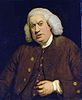 For these reasons, some writers have argued that linguistic prescription is foolish or futile; Samuel Johnson, commented as follows on the tendency of some prescription to resist language change:
“Possible is sometimes considered to be an absolute adjective”. The discipline of modern linguistics originated in the 16th and 17th centuries from the comparative method
of lexicography
that was principally about classical languages, the results of which formed the bases, in the 18th and 19th centuries, of contemporary linguistics; by the early 20th century, descriptive research concentrated upon modern languages.
In the article “Realistic Prescriptivism” (2008), Ghil'ad Zuckermann
“provides a critical analysis of the Academy of the Hebrew Language
’s mission, as intriguingly defined in its constitution: ‘to direct the development of Hebrew in light of its nature’.” In describing several volte-faces of the Hebrew Academy, Zuckermann said that the Academy “has begun submitting to the ‘real world’, accommodating its decrees to the parole of native Israeli [Hebrew] speakers, long regarded as ‘reckless’ and ‘lazy’.”
Despite the demotic intent of General American and Non-regional Pronunciation Englishes as “standard language”, upon being established as such, they are prescriptively exclusive of other Anglophone
folk languages such as Scottish English
, Hiberno-English
, Australian English
, and AAVE, whose speakers might take umbrage at such a descriptive prescription.
Linguistics
Linguistics is the scientific study of human language. Linguistics can be broadly broken into three categories or subfields of study: language form, language meaning, and language in context....
, prescription denotes normative practices on such aspects of language use as spelling
Spelling
Spelling is the writing of one or more words with letters and diacritics. In addition, the term often, but not always, means an accepted standard spelling or the process of naming the letters...
, grammar
Grammar
In linguistics, grammar is the set of structural rules that govern the composition of clauses, phrases, and words in any given natural language. The term refers also to the study of such rules, and this field includes morphology, syntax, and phonology, often complemented by phonetics, semantics,...
, pronunciation
Pronunciation
Pronunciation refers to the way a word or a language is spoken, or the manner in which someone utters a word. If one is said to have "correct pronunciation", then it refers to both within a particular dialect....
, and syntax
Syntax
In linguistics, syntax is the study of the principles and rules for constructing phrases and sentences in natural languages....
. It includes judgments on what usages are socially
Etiquette
Etiquette is a code of behavior that delineates expectations for social behavior according to contemporary conventional norms within a society, social class, or group...
proper and politically
Political correctness
Political correctness is a term which denotes language, ideas, policies, and behavior seen as seeking to minimize social and institutional offense in occupational, gender, racial, cultural, sexual orientation, certain other religions, beliefs or ideologies, disability, and age-related contexts,...
correct. Its aims may be to establish a standard language
Standard language
A standard language is a language variety used by a group of people in their public discourse. Alternatively, varieties become standard by undergoing a process of standardization, during which it is organized for description in grammars and dictionaries and encoded in such reference works...
, to teach what is perceived within a particular society to be correct forms of language, or to advise on effective communication. If usage
Usage
Usage is the manner in which written and spoken language is used. H. W. Fowler's Dictionary of Modern English Usage "defines usage as 'points of grammar, syntax, style, and the choice of words'". The Oxford Dictionary of English defines usage as "the way in which a word or phrase is normally and...
preferences are conservative, prescription might (appear to) be resistant to language change
Language change
Language change is the phenomenon whereby phonetic, morphological, semantic, syntactic, and other features of language vary over time. The effect on language over time is known as diachronic change. Two linguistic disciplines in particular concern themselves with studying language change:...
; if the usage preferences are radical, prescription may produce neologisms.
Prescriptive approaches to language, concerned with how the prescriptivist recommends language should be used, are often contrasted with the alternative approach of descriptive linguistics
Descriptive linguistics
In the study of language, description, or descriptive linguistics, is the work of objectively analyzing and describing how language is spoken by a group of people in a speech community...
, which observes and records how language actually is used. The basis of linguistic research is text (corpus
Text corpus
In linguistics, a corpus or text corpus is a large and structured set of texts...
) analysis and field studies, both of which are descriptive activities; but description includes each researcher’s observations of his or her own language usage. Despite apparent opposition, prescription and description can inform each other, since comprehensive descriptive accounts must take into account speaker attitudes, while some understanding of how language is actually used is necessary for prescription to be effective.
Aims
The main aims of linguistic prescription are to define standardized language forms either generally (what is Standard EnglishStandard English
Standard English refers to whatever form of the English language is accepted as a national norm in an Anglophone country...
?) or for specific purposes (what style
Stylistics (linguistics)
Stylistics is the study and interpretation of texts from a linguistic perspective. As a discipline it links literary criticism and linguistics, but has no autonomous domain of its own...
and register
Register (linguistics)
In linguistics, a register is a variety of a language used for a particular purpose or in a particular social setting. For example, when speaking in a formal setting an English speaker may be more likely to adhere more closely to prescribed grammar, pronounce words ending in -ing with a velar nasal...
is appropriate in, for example, a legal brief
Brief (law)
A brief is a written legal document used in various legal adversarial systems that is presented to a court arguing why the party to the case should prevail....
?) and to formulate these in such a way as to make them easily taught or learned. Prescription can apply to most aspects of language: spelling, grammar, semantics, pronunciation and register. Most people would agree that in all of these areas it is meaningful to describe some usages as, at least, inappropriate in particular contexts. One main aim of prescription is to draw workable guidelines for language users seeking advice in such matters.
Standardized languages are useful for interregional communication: speakers of divergent dialects may understand a standard language
Standard language
A standard language is a language variety used by a group of people in their public discourse. Alternatively, varieties become standard by undergoing a process of standardization, during which it is organized for description in grammars and dictionaries and encoded in such reference works...
used in broadcasting
Broadcasting
Broadcasting is the distribution of audio and video content to a dispersed audience via any audio visual medium. Receiving parties may include the general public or a relatively large subset of thereof...
more readily than they would understand one anothers' dialects. It can be argued that such a lingua franca
Lingua franca
A lingua franca is a language systematically used to make communication possible between people not sharing a mother tongue, in particular when it is a third language, distinct from both mother tongues.-Characteristics:"Lingua franca" is a functionally defined term, independent of the linguistic...
, if needed, will evolve by itself, but the desire to formulate and define it is very widespread in most parts of the world. Writers or communicators who wish to use words clearly, powerfully, or effectively often use prescriptive rules, believing that these may make their communications more widely understood and unambiguous.
A complementary aim of linguistic prescription may be the imposition of a political ideology. During the second half of the 20th century, politically motivated linguistic prescription recommended by various advocacy groups had considerable influence on language use in the context of political correctness
Political correctness
Political correctness is a term which denotes language, ideas, policies, and behavior seen as seeking to minimize social and institutional offense in occupational, gender, racial, cultural, sexual orientation, certain other religions, beliefs or ideologies, disability, and age-related contexts,...
, imposing special rules for anti-sexist
Gender-neutral language
Gender-neutral language, gender-inclusive language, inclusive language, or gender neutrality is linguistic prescriptivism that aims to eliminate reference to gender in terms that describe people...
, anti-racist or generically anti-discriminatory
Discrimination
Discrimination is the prejudicial treatment of an individual based on their membership in a certain group or category. It involves the actual behaviors towards groups such as excluding or restricting members of one group from opportunities that are available to another group. The term began to be...
language (e.g. "people-first language
People-first language
People-first language is a form of linguistic prescriptivism in English, aiming to avoid perceived and subconscious dehumanization when discussing people with disabilities, as such forming an aspect of disability etiquette....
" as advocated by disability rights organizations).
George Orwell
George Orwell
Eric Arthur Blair , better known by his pen name George Orwell, was an English author and journalist...
in Politics and the English Language
Politics and the English Language
"Politics and the English Language" is an essay by George Orwell criticizing "ugly and inaccurate" contemporary written English.Orwell said that political prose was formed "to make lies sound truthful and murder respectable, and to give an appearance of solidity to pure wind." Orwell believed...
(1946) criticized the use of euphemisms and convoluted phrasing as a means of hiding insincerity. Orwell's fictional "Newspeak
Newspeak
Newspeak is a fictional language in George Orwell's novel Nineteen Eighty-Four. In the novel, it refers to the deliberately impoverished language promoted by the state. Orwell included an essay about it in the form of an appendix in which the basic principles of the language are explained...
" (1949) is a parody of ideologically motivated linguistic prescriptivism.
Authority
Henry Watson Fowler
Henry Watson Fowler was an English schoolmaster, lexicographer and commentator on the usage of the English language...
, whose English Usage
Fowler's Modern English Usage
A Dictionary of Modern English Usage , by Henry Watson Fowler , is a style guide to British English usage, pronunciation, and writing...
defined the standard for British English
British English
British English, or English , is the broad term used to distinguish the forms of the English language used in the United Kingdom from forms used elsewhere...
for much of the 20th century. The Duden
Duden
The Duden is a German dictionary, first published by Konrad Duden in 1880.Currently the Duden is in its 25th edition and published in 12 volumes, each covering different aspects like loan words, etymology, pronunciation, synonyms, etc...
grammar (first edition 1880) has a similar status for German. Although dictionary makers often see their work as purely descriptive, their dictionaries are widely used as prescriptive authorities by the community at large. Popular books such as Lynne Truss
Lynne Truss
Lynne Truss is an English writer and journalist, best known for her popular book Eats, Shoots & Leaves: The Zero Tolerance Approach to Punctuation.-Early life:...
's Eats, Shoots & Leaves
Eats, Shoots & Leaves
Eats, Shoots & Leaves: The Zero Tolerance Approach to Punctuation is a non-fiction book written by Lynne Truss, the former host of the BBC Radio 4's Cutting a Dash programme. In the book, published in 2003, Truss bemoans the state of punctuation in the United Kingdom and the United States and...
, which argues for stricter adherence to prescriptive punctuation rules, have phases of fashion and are authoritative to the extent that they attract a significant following.
In some language communities, linguistic prescription is regulated formally. The Académie française
Académie française
L'Académie française , also called the French Academy, is the pre-eminent French learned body on matters pertaining to the French language. The Académie was officially established in 1635 by Cardinal Richelieu, the chief minister to King Louis XIII. Suppressed in 1793 during the French Revolution,...
in Paris is an example of a national body whose recommendations are widely respected though not legally enforceable. In Germany
Germany
Germany , officially the Federal Republic of Germany , is a federal parliamentary republic in Europe. The country consists of 16 states while the capital and largest city is Berlin. Germany covers an area of 357,021 km2 and has a largely temperate seasonal climate...
and the Netherlands
Netherlands
The Netherlands is a constituent country of the Kingdom of the Netherlands, located mainly in North-West Europe and with several islands in the Caribbean. Mainland Netherlands borders the North Sea to the north and west, Belgium to the south, and Germany to the east, and shares maritime borders...
, recent spelling reforms were devised by teams of linguists commissioned by the government and were then implemented by statute.
Other kinds of authorities exist in specific settings, such as publishers laying down a house style which, for example, may either prescribe or proscribe particular spellings or grammatical forms, such as serial commas
Serial comma
The serial comma is the comma used immediately before a coordinating conjunction preceding the final item in a list of three or more items...
.
Examples of prescriptive bodies include:
- The Académie françaiseAcadémie françaiseL'Académie française , also called the French Academy, is the pre-eminent French learned body on matters pertaining to the French language. The Académie was officially established in 1635 by Cardinal Richelieu, the chief minister to King Louis XIII. Suppressed in 1793 during the French Revolution,...
is the national language-governing academic body whose recommendations, though legally unenforceable, are respected for maintaining standard French.
- The Canadian province of QuébecQuebecQuebec or is a province in east-central Canada. It is the only Canadian province with a predominantly French-speaking population and the only one whose sole official language is French at the provincial level....
, where French is perceived to be particularly threatened by the incursion of English, has its own Office québécois de la langue françaiseOffice québécois de la langue françaiseThe Office québécois de la langue française is a public organization established on March 24, 1961 by the Liberal government of Jean Lesage...
.
- The German-speaking nations (Germany, Austria, Liechtenstein, Switzerland) established national, normative spelling usages for their respective varieties of the language by statute with the German orthography reform of 1996. This reform has remained so controversial that in a plebiscite in Schleswig Holstein in 1998, the vast majority of voters decided that the reform was not to be executed in the Federal State; however the Schleswig-Holstein parliament overruled this decision in 1999. Many major German newspapers chose to implement the reform only in part (e.g. Axel Springer AGAxel Springer AGAxel Springer AG is one of the largest multimedia companies in Europe, with more than 11,500 employees and with annual revenues of about €2.9 billion. The Company is active in a total of 36 countries, including Hungary, Poland, the Czech Republic, Russia and Germany, France, Spain, Switzerland...
, Der SpiegelDer SpiegelDer Spiegel is a German weekly news magazine published in Hamburg. It is one of Europe's largest publications of its kind, with a weekly circulation of more than one million.-Overview:...
) or not at all, ending a period where unified German spelling , although officially only mandatory in government and educational use, was the de facto standard in German spelling.
- In the Netherlands, standardized spelling norms were compulsory for Dutch government publications — yet popular and mass communications media language applied an adapted spelling reform, see Wordlist of the Dutch languageWordlist of the Dutch languageThe Word list of the Dutch language is a list of words in the correct official spelling of the Dutch language . It is officially established by the Dutch Language Union , and is published in dictionary style. Because of the colour of its published form, it is better known as the Green Booklet...
and the White BookletWhite BookletHet Witte Boekje is the popular name for the Spelling Guide of Our Language , a publication of the Genootschap Onze Taal. The first edition was released in October 1998; the latest edition is the tenth and was released in 2004...
.
- During the era of the Soviet UnionHistory of the Soviet UnionThe history of the Soviet Union has roots in the Russian Revolution of 1917. The Bolsheviks, led by Vladimir Lenin, emerged as the main political force in the capital of the former Russian Empire, though they had to fight a long and brutal civil war against the Mensheviks, or Whites...
the Union of Soviet Writers policed the Russian languageRussian languageRussian is a Slavic language used primarily in Russia, Belarus, Uzbekistan, Kazakhstan, Tajikistan and Kyrgyzstan. It is an unofficial but widely spoken language in Ukraine, Moldova, Latvia, Turkmenistan and Estonia and, to a lesser extent, the other countries that were once constituent republics...
with prescriptive linguistics to establish a standardized Russian language.
- The standard of SpanishSpanish languageSpanish , also known as Castilian , is a Romance language in the Ibero-Romance group that evolved from several languages and dialects in central-northern Iberia around the 9th century and gradually spread with the expansion of the Kingdom of Castile into central and southern Iberia during the...
is maintained in 21 countries by the Real Academia EspañolaReal Academia EspañolaThe Royal Spanish Academy is the official royal institution responsible for regulating the Spanish language. It is based in Madrid, Spain, but is affiliated with national language academies in twenty-one other hispanophone nations through the Association of Spanish Language Academies...
in affiliation with the Association of Spanish Language AcademiesAssociation of Spanish Language AcademiesThe Association of Spanish Language Academies is the entity which regulates the Spanish language. It was created in Mexico in 1951 and represents the union of all the separate academies in the Spanish-speaking world....
.
- The AlbanianAlbanian languageAlbanian is an Indo-European language spoken by approximately 7.6 million people, primarily in Albania and Kosovo but also in other areas of the Balkans in which there is an Albanian population, including western Macedonia, southern Montenegro, southern Serbia and northwestern Greece...
standard language (the Tosk variety) is regulated by the Social Sciences and Albanological Section of the Academy of Sciences of AlbaniaAcademy of Sciences of AlbaniaThe Academy of Sciences of Albania , founded in 1972, is the most important scientific institution in Albania. The institution includes the most distinguished scientists, also called "academics", that are involved in research centers and other organisms inside and outside Albania...
.
Origins
Historically, linguistic prescriptivism originates in a standard languageStandard language
A standard language is a language variety used by a group of people in their public discourse. Alternatively, varieties become standard by undergoing a process of standardization, during which it is organized for description in grammars and dictionaries and encoded in such reference works...
when a society establishes social stratification
Social stratification
In sociology the social stratification is a concept of class, involving the "classification of persons into groups based on shared socio-economic conditions ... a relational set of inequalities with economic, social, political and ideological dimensions."...
and a socio-economic hierarchy
Hierarchy
A hierarchy is an arrangement of items in which the items are represented as being "above," "below," or "at the same level as" one another...
. The spoken and written language usages of the authorities
Authority
The word Authority is derived mainly from the Latin word auctoritas, meaning invention, advice, opinion, influence, or command. In English, the word 'authority' can be used to mean power given by the state or by academic knowledge of an area .-Authority in Philosophy:In...
(state, military, church) are preserved as the standard language to emulate for social success; see social class
Social class
Social classes are economic or cultural arrangements of groups in society. Class is an essential object of analysis for sociologists, political scientists, economists, anthropologists and social historians. In the social sciences, social class is often discussed in terms of 'social stratification'...
. To distinguish itself from contemporary colloquial language
Colloquial language
Colloquial language, especially in philosophy of language, is natural language which, among other properties, uses colloquialisms. In the field of logical atomism, meaning is evaluated differently than with more formal propositions.-See also:...
, standard language usage includes archaisms
Archaism
In language, an archaism is the use of a form of speech or writing that is no longer current. This can either be done deliberately or as part of a specific jargon or formula...
and honorific
Honorific
An honorific is a word or expression with connotations conveying esteem or respect when used in addressing or referring to a person. Sometimes, the term is used not quite correctly to refer to an honorary title...
colours. Like-wise, the style of language used in ritual
Ritual
A ritual is a set of actions, performed mainly for their symbolic value. It may be prescribed by a religion or by the traditions of a community. The term usually excludes actions which are arbitrarily chosen by the performers....
also differs from quotidian speech. Special ceremonial languages
Sacred language
A sacred language, "holy language" , or liturgical language, is a language that is cultivated for religious reasons by people who speak another language in their daily life.-Concept:...
known only to a select few spiritual leaders within a community are found throughout the world.
Writing
Writing is the representation of language in a textual medium through the use of a set of signs or symbols . It is distinguished from illustration, such as cave drawing and painting, and non-symbolic preservation of language via non-textual media, such as magnetic tape audio.Writing most likely...
system, orthographic
Orthography
The orthography of a language specifies a standardized way of using a specific writing system to write the language. Where more than one writing system is used for a language, for example Kurdish, Uyghur, Serbian or Inuktitut, there can be more than one orthography...
rules for the consistent transcription of linguistic outputs allows for a large number of speakers to understand written communications with minimal difficulty. Linguists largely disregard native writing systems, replacing the conventional symbols of the language they are researching with phonetic transcriptions, but they nonetheless rely on some shared orthographic representation in order to preserve semantic identities with data sets. This is most commonly achieved by providing the conventional orthographic representation of the English translation of a word alongside the IPA transcription of the word's pronunciation when spoken by a native speaker.
Early historical trends in literacy and alphabetization were closely tied to the influence of various religious institutions: Western Christianity
Western Christianity
Western Christianity is a term used to include the Latin Rite of the Catholic Church and groups historically derivative thereof, including the churches of the Anglican and Protestant traditions, which share common attributes that can be traced back to their medieval heritage...
propagated the Latin alphabet
Latin alphabet
The Latin alphabet, also called the Roman alphabet, is the most recognized alphabet used in the world today. It evolved from a western variety of the Greek alphabet called the Cumaean alphabet, which was adopted and modified by the Etruscans who ruled early Rome...
; Eastern Orthodoxy, the Greek
Greek alphabet
The Greek alphabet is the script that has been used to write the Greek language since at least 730 BC . The alphabet in its classical and modern form consists of 24 letters ordered in sequence from alpha to omega...
and Cyrillic
Cyrillic alphabet
The Cyrillic script or azbuka is an alphabetic writing system developed in the First Bulgarian Empire during the 10th century AD at the Preslav Literary School...
alphabets; Judaism
Judaism
Judaism ) is the "religion, philosophy, and way of life" of the Jewish people...
, the Hebrew alphabet
Hebrew alphabet
The Hebrew alphabet , known variously by scholars as the Jewish script, square script, block script, or more historically, the Assyrian script, is used in the writing of the Hebrew language, as well as other Jewish languages, most notably Yiddish, Ladino, and Judeo-Arabic. There have been two...
; Islam
Islam
Islam . The most common are and . : Arabic pronunciation varies regionally. The first vowel ranges from ~~. The second vowel ranges from ~~~...
, the Arabic alphabet
Arabic alphabet
The Arabic alphabet or Arabic abjad is the Arabic script as it is codified for writing the Arabic language. It is written from right to left, in a cursive style, and includes 28 letters. Because letters usually stand for consonants, it is classified as an abjad.-Consonants:The Arabic alphabet has...
; and Hinduism
Hinduism
Hinduism is the predominant and indigenous religious tradition of the Indian Subcontinent. Hinduism is known to its followers as , amongst many other expressions...
, the Devanagari
Devanagari
Devanagari |deva]]" and "nāgarī" ), also called Nagari , is an abugida alphabet of India and Nepal...
script;. In certain traditions, strict adherence to prescribed spellings and pronunciations was and remains of great spiritual importance. Islamic
Islam
Islam . The most common are and . : Arabic pronunciation varies regionally. The first vowel ranges from ~~. The second vowel ranges from ~~~...
naming conventions and greetings are notable examples of linguistic prescription being prerequisite to spiritual righteousness. Another commonly cited example of prescriptive language usage closely associated with social propriety is the system of Japanese honorifics.
Bureaucracy
A bureaucracy is an organization of non-elected officials of a governmental or organization who implement the rules, laws, and functions of their institution, and are occasionally characterized by officialism and red tape.-Weberian bureaucracy:...
tends toward prescriptivism as a means of enforcing functional continuity. Such prescriptivism dates from ancient Egypt
Egyptian language
Egyptian is the oldest known indigenous language of Egypt and a branch of the Afroasiatic language family. Written records of the Egyptian language have been dated from about 3400 BC, making it one of the oldest recorded languages known. Egyptian was spoken until the late 17th century AD in the...
, where bureaucrats preserved the spelling of the Middle Kingdom of Egypt
Middle Kingdom of Egypt
The Middle Kingdom of Egypt is the period in the history of ancient Egypt stretching from the establishment of the Eleventh Dynasty to the end of the Fourteenth Dynasty, between 2055 BC and 1650 BC, although some writers include the Thirteenth and Fourteenth dynasties in the Second Intermediate...
into the Ptolemaic period through the standard usage of Egyptian hieroglyphics.
Most, if not all, languages with a significant number of speakers demonstrate some degree of social codification through speaker adherence or non-adherence to prescriptive rules. Linguistic prestige is a central research topic within sociolinguistics
Sociolinguistics
Sociolinguistics is the descriptive study of the effect of any and all aspects of society, including cultural norms, expectations, and context, on the way language is used, and the effects of language use on society...
. Notions of linguistic prestige apply to different dialects of the same language and also to separate, distinct languages in multilingual regions. Prestige level disparity often leads to the phenomenon known as diglossia
Diglossia
In linguistics, diglossia refers to a situation in which two dialects or languages are used by a single language community. In addition to the community's everyday or vernacular language variety , a second, highly codified variety is used in certain situations such as literature, formal...
, wherein speakers make a conscious decision not to use a dialect of language with a prestige level perceived to be lower than that of an alternative dialect or language in certain social contexts, even if this "lower prestige" language is their native one.
Sources
From the earliest attempts at prescription in classical times, grammarians have observed what is in fact usual in a prestige variety of a language and based their norms upon this. Modern prescription of the type that is in school textbooks draws heavily on the results of descriptive linguistic analysis. As prescription generally manifests itself negatively, i.e. in the prohibition of some alternate form such that it is rejected in favor of the desired form, it is very rare for a form to be prescribed which does not already exist in the language.However, prescription also involves conscious choices, privileging some existing forms over others. Such choices are often strategic, aimed at maximizing clarity and precision in language use. Sometimes they may be based on entirely subjective judgments about what constitutes good taste. Sometimes there is a conscious decision to promote the language of one class or region within a language community, and this can become politically controversial—see below.
Prescription can be motivated by an ethical position, as with the prohibition of swear words
Profanity
Profanity is a show of disrespect, or a desecration or debasement of someone or something. Profanity can take the form of words, expressions, gestures, or other social behaviors that are socially constructed or interpreted as insulting, rude, vulgar, obscene, desecrating, or other forms.The...
. The desire to avoid language which refers too specifically to matters of sexuality or toilet hygiene may result in a sense that the words themselves are obscene. Similar is the condemnation of expletives which offend against religion, or more recently of language which is not considered politically correct
Politically Correct
Politically Correct may refer to:*Political correctness, language, ideas, policies, or behaviour seeking to minimize offence to groups of people-See also:*Politically Correct Bedtime Stories, book by James Finn Garner, published in 1994...
.
It is sometimes claimed that in centuries past, English prescription was based on the norms of Latin grammar
Latin grammar
The grammar of Latin, like that of other ancient Indo-European languages, is highly inflected; consequently, it allows for a large degree of flexibility in choosing word order...
, but this is doubtful. Robert Lowth
Robert Lowth
Robert Lowth FRS was a Bishop of the Church of England, Oxford Professor of Poetry and the author of one of the most influential textbooks of English grammar.-Life:...
is frequently cited as one who did this, but, in fact, he specifically condemned "forcing the English under the rules of a foreign Language". It is true that analogies with Latin were sometimes used as substantiating arguments, but only when the forms being thus defended were in any case the norm in the prestige form of English.
Problems
While many people would agree that some kinds of prescriptive teaching or advice are desirable, prescriptivism is often subject to criticism. Many linguists, such as Geoffrey PullumGeoffrey Pullum
Geoffrey Keith "Geoff" Pullum is a British-American linguist specialising in the study of English. , he is Professor of General Linguistics at the University of Edinburgh....
and other posters to Language Log
Language Log
Language Log is a collaborative language blog maintained by University of Pennsylvania phonetician Mark Liberman.The site is updated daily at the whims of the contributors, and most of the posts are on language use in the media and popular culture. Google search results are frequently used as a...
, are highly skeptical of the quality of advice given in many usage guides, including highly regarded books like Strunk and White's Elements of Style.
In particular, linguists point out that popular books on English usage written by journalists or novelists (e.g. Simon Heffer
Simon Heffer
Simon James Heffer is a British journalist, columnist and writer.-Education:Heffer was educated at King Edward VI Grammar School in Chelmsford and Corpus Christi College, Cambridge.-Career:...
's Strictly English : the correct way to write ... and why it matters) often make basic errors in linguistic analysis.
One problem is that prescription has a tendency to favour the language of one particular region or social class over others, and thus militates against linguistic diversity. Frequently, a standard dialect is associated with the upper class
Upper class
In social science, the "upper class" is the group of people at the top of a social hierarchy. Members of an upper class may have great power over the allocation of resources and governmental policy in their area.- Historical meaning :...
, as for example Great Britain
Great Britain
Great Britain or Britain is an island situated to the northwest of Continental Europe. It is the ninth largest island in the world, and the largest European island, as well as the largest of the British Isles...
's Received Pronunciation
Received Pronunciation
Received Pronunciation , also called the Queen's English, Oxford English or BBC English, is the accent of Standard English in England, with a relationship to regional accents similar to the relationship in other European languages between their standard varieties and their regional forms...
. RP has now lost much of its status as the Anglophone standard, being replaced by the dual standards of General American
General American
General American , also known as Standard American English , is a major accent of American English. The accent is not restricted to the United States...
and British NRP (non-regional pronunciation). While these have a more democratic base, they are still standards which exclude large parts of the English-speaking world: speakers of Scottish English
Scottish English
Scottish English refers to the varieties of English spoken in Scotland. It may or may not be considered distinct from the Scots language. It is always considered distinct from Scottish Gaelic, a Celtic language....
, Hiberno-English
Hiberno-English
Hiberno-English is the dialect of English written and spoken in Ireland .English was first brought to Ireland during the Norman invasion of the late 12th century. Initially it was mainly spoken in an area known as the Pale around Dublin, with Irish spoken throughout the rest of the country...
, Australian English
Australian English
Australian English is the name given to the group of dialects spoken in Australia that form a major variety of the English language....
, or African-American Vernacular English may feel the standard is slanted against them. Thus prescription has clear political consequences. In the past, prescription was used consciously as a political tool; today, prescription usually attempts to avoid this pitfall, but this can be difficult to do.
A second problem with prescription is that prescriptive rules quickly become entrenched and it is difficult to change them when the language changes. Thus there is a tendency for prescription to be excessively conservative. When in the early 19th century, prescriptive use advised against the split infinitive
Split infinitive
A split infinitive is an English-language grammatical construction in which a word or phrase, usually an adverb or adverbial phrase, comes between the marker to and the bare infinitive form of a verb....
, the main motivation was that this construction was not in fact a frequent feature of the varieties of English favoured by those prescribing. The prescriptive rule was based on a descriptive observation. Today the construction has become common in most varieties of English, and a prohibition is no longer supported by observation. However, the rule endured long after the justification for it had disappeared. In this way, prescription can appear to be antithetical to natural language evolution, although this is usually not the intention of those formulating the rules.
A further problem is the difficulty of defining legitimate criteria. Although prescribing authorities almost invariably have clear ideas about why they make a particular choice, and the choices are therefore seldom entirely arbitrary, they often appear arbitrary to others who do not understand or are not sympathetic to the goals of the authorities. Judgments which seek to resolve ambiguity or increase the ability of the language to make subtle distinctions are easier to defend. Judgments based on the subjective associations of a word are more problematic.
Finally, there is the problem of inappropriate dogmatism. While competent authorities tend to make careful statements, popular pronouncements on language are apt to condemn. Thus wise prescriptive advice may identify a form as non-standard and suggest it be used with caution in some contexts; repeated in the school room this may become a ruling that the non-standard form is automatically wrong, a view which linguists reject. (Linguists may accept that a form is incorrect if it fails to communicate, but not simply because it diverges from a norm.) A classic example from 18th-century England is Robert Lowth's tentative suggestion that preposition stranding
Preposition stranding
Preposition stranding, sometimes called P-stranding, is the syntactic construction in which a preposition with an object occurs somewhere other than immediately adjacent to its object...
in relative clauses
English relative clauses
As in many other languages, an English relative clause is a subordinate clause that modifies a noun phrase, most commonly a noun. Relative clauses in English often contain a relative pronoun, but sometimes the relative pronoun is omitted.The relative pronouns in English are who, whom, whose,...
sounds colloquial; from this grew a grammatical dogma that a sentence should never end with a preposition.
Prescription and description
Linguistic prescription is typically contrasted with the alternative approach linguistic description. Linguistic description (observation and reportage of how language is practised) establishes conceptual categories without establishing formal usage rules (prescriptions). About normative rules, the introduction to the Merriam–Webster's Dictionary of English Usage (1994) reports that:“Possible is sometimes considered to be an absolute adjective”. The discipline of modern linguistics originated in the 16th and 17th centuries from the comparative method
Comparative method
In linguistics, the comparative method is a technique for studying the development of languages by performing a feature-by-feature comparison of two or more languages with common descent from a shared ancestor, as opposed to the method of internal reconstruction, which analyzes the internal...
of lexicography
Lexicography
Lexicography is divided into two related disciplines:*Practical lexicography is the art or craft of compiling, writing and editing dictionaries....
that was principally about classical languages, the results of which formed the bases, in the 18th and 19th centuries, of contemporary linguistics; by the early 20th century, descriptive research concentrated upon modern languages.
In the article “Realistic Prescriptivism” (2008), Ghil'ad Zuckermann
Ghil'ad Zuckermann
Ghil'ad Zuckermann is an Israeli-Italian-British-Australian linguist, expert of language revival, contact linguistics, lexicology and the study of language, culture and identity...
“provides a critical analysis of the Academy of the Hebrew Language
Academy of the Hebrew Language
The Academy of the Hebrew Language was established by the Israeli government in 1953 as the "supreme institution for scholarship on the Hebrew language."-History:...
’s mission, as intriguingly defined in its constitution: ‘to direct the development of Hebrew in light of its nature’.” In describing several volte-faces of the Hebrew Academy, Zuckermann said that the Academy “has begun submitting to the ‘real world’, accommodating its decrees to the parole of native Israeli [Hebrew] speakers, long regarded as ‘reckless’ and ‘lazy’.”
Despite the demotic intent of General American and Non-regional Pronunciation Englishes as “standard language”, upon being established as such, they are prescriptively exclusive of other Anglophone
Anglosphere
Anglosphere is a neologism which refers to those nations with English as the most common language. The term can be used more specifically to refer to those nations which share certain characteristics within their cultures based on a linguistic heritage, through being former British colonies...
folk languages such as Scottish English
Scottish English
Scottish English refers to the varieties of English spoken in Scotland. It may or may not be considered distinct from the Scots language. It is always considered distinct from Scottish Gaelic, a Celtic language....
, Hiberno-English
Hiberno-English
Hiberno-English is the dialect of English written and spoken in Ireland .English was first brought to Ireland during the Norman invasion of the late 12th century. Initially it was mainly spoken in an area known as the Pale around Dublin, with Irish spoken throughout the rest of the country...
, Australian English
Australian English
Australian English is the name given to the group of dialects spoken in Australia that form a major variety of the English language....
, and AAVE, whose speakers might take umbrage at such a descriptive prescription.
See also
- Bastardization / corruption
- Common English usage misconceptionsCommon English usage misconceptionsThis list comprises widespread modern beliefs about English language usage that are documented by a reliable source to be inaccurate or untrue....
- Descriptive linguisticsDescriptive linguisticsIn the study of language, description, or descriptive linguistics, is the work of objectively analyzing and describing how language is spoken by a group of people in a speech community...
- Fowler's Modern English UsageFowler's Modern English UsageA Dictionary of Modern English Usage , by Henry Watson Fowler , is a style guide to British English usage, pronunciation, and writing...
- History of English grammarsHistory of English grammarsThe history of English grammars begins late in the sixteenth century with the Pamphlet for Grammar by William Bullokar. In the early works, the structure and rules of English grammar were contrasted with those of Latin...
- History of linguistic prescription in EnglishHistory of linguistic prescription in EnglishPrescription is the formulation of normative rules for language use. This article discusses the history of prescription in English. For a more general discussion see Linguistic prescription.-Origins:...
- HypercorrectionHypercorrectionIn linguistics or usage, hypercorrection is a non-standard usage that results from the over-application of a perceived rule of grammar or a usage prescription...
- Language policyLanguage policyMany countries have a language policy designed to favour or discourage the use of a particular language or set of languages. Although nations historically have used language policies most often to promote one official language at the expense of others, many countries now have policies designed to...
- Linguistic purismLinguistic purismLinguistic purism or linguistic protectionism is the practice of defining one variety of a language as being purer than other varieties. The ideal of purity is often opposed in reference to a perceived decline from an "ideal past" or an unwanted similarity with other languages, but sometimes simply...
- List of English words with disputed usage
- List of frequently misused English words
- Logorrhoea
- MondegreenMondegreenA mondegreen is the mishearing or misinterpretation of a phrase as a result of near homophony, in a way that gives it a new meaning. It most commonly is applied to a line in a poem or a lyric in a song...
- PedantPedantA pedant is a person who is excessively concerned with formalism and precision, or who makes a show of his or her learning.-Etymology:The English language word "pedant" comes from the French pédant or its older mid-15th Century Italian source pedante, "teacher, schoolmaster"...
- PleonasmPleonasmPleonasm is the use of more words or word-parts than is necessary for clear expression: examples are black darkness, or burning fire...
- Politics and the English LanguagePolitics and the English Language"Politics and the English Language" is an essay by George Orwell criticizing "ugly and inaccurate" contemporary written English.Orwell said that political prose was formed "to make lies sound truthful and murder respectable, and to give an appearance of solidity to pure wind." Orwell believed...
- Sapir–Whorf hypothesis
- Traditional grammarTraditional grammarIn linguistics, a traditional grammar is a framework for the description of the structure of language. Traditional grammars are commonly used in language education.Concepts treated in traditional grammars include:* subject* predicate* object...
Additional resources
- Ideology, Power and Linguistic Theory (pdf format) a paper about descriptivism and prescriptivism by Geoffrey PullumGeoffrey PullumGeoffrey Keith "Geoff" Pullum is a British-American linguist specialising in the study of English. , he is Professor of General Linguistics at the University of Edinburgh....
. - Language Police at Kerim's Wiki
- Prescriptive versus descriptive grammar