
All Topics  
Albanian language


   Email Print
   Bookmark   Link


Albanian language


Albanian ( or shqip ) is an Indo-European language
Indo-European languages

The Indo-European languages are a Language family of several hundred related languages and dialects, including most major languages of Europe, the Iranian plateau , Central Asia and the Indian subcontinent ....
 spoken by nearly 6 million people, primarily in Albania
Albania

Albania , officially the Republic of Albania , is a country in Balkans. It is bordered by Greece to the south-east, Montenegro to the north, Kosovo to the northeast, and the Republic of Macedonia to the east....
 and Kosovo
Kosovo

Kosovo is a disputed region in the Balkans. Its majority is governed by the partially-recognised Republic of Kosovo . Serbia does not recognise the secession of Kosovo and considers it a United Nations-governed entity within its sovereign territory, the Autonomous Province of Kosovo and Metohija that was re-created by Slobodan M...
 but also in other areas of the Balkans
Balkans

The Balkans is the historical name of a geographic subregion of southeastern Europe. The region takes its name from the Balkan Mountains, which run through the centre of Bulgaria into eastern Serbia....
 in which there is an Albanian population, including the west of the Republic of Macedonia
Republic of Macedonia

The Republic of Macedonia , , often referred to simply as Macedonia, is a landlocked country on the Balkans in southeastern Europe. It is bordered by Serbia to the north, Bulgaria to the east, Greece to the south and Albania to the west....
, Montenegro
Montenegro

Montenegro , Montenegrin language/Serbian language: ???? ????, Crna Gora , ) is a country located in Balkans. It has a coast on the Adriatic Sea to the south and is bordered by Croatia to the west, Bosnia and Herzegovina to the northwest, Serbia to the north, Kosovo to the east and Albania to the south....
, and southern Serbia
Serbia

Serbia , officially the Republic of Serbia , is a country in Central Europe and Balkans Europe, covering the southern part of the Pannonian Plain and the central part of the Balkans....
. Albanian is also spoken by communities in Greece
Greece

Greece , officially the Hellenic Republic , is a country in southeastern Europe, situated on the southern end of the Balkans. It has borders with Albania, Bulgaria and the former Yugoslav Republic of Macedonia to the north, and Turkey to the east....
, along the eastern coast of southern Italy
Italy

Italy , officially the Italian Republic , is a country located on the Italian Peninsula in Southern Europe and on the two largest islands in the Mediterranean Sea, Sicily and Sardinia....
, and on the island of Sicily
Sicily

Sicily is an Autonomous regions with special statute of Italy. Of all the regions of Italy, Sicily covers the largest land area at 25,708 km? and currently has just over five million inhabitants....
. Additionally, speakers of Albanian can be found elsewhere throughout the latter two countries resulting from a modern diaspora, originating from the Balkans, that also includes Scandinavia
Scandinavia

Scandinavia is a historical and geographical subregion in northern Europe that includes the Scandinavian Peninsula. It consists of the kingdoms of Norway, Sweden, and Denmark; some authorities also include Finland and some might even include Iceland....
, Switzerland
Switzerland

Switzerland is a landlocked Swiss Alps country of roughly 7.7 million people in Western Europe with an area of 41,285 km?. Switzerland is a federal republic consisting of 26 states called Cantons of Switzerland....
, Germany
Germany

Germany , officially the Federal Republic of Germany , is a country in Central Europe. It is bordered to the north by the North Sea, Denmark, and the Baltic Sea; to the east by Poland and the Czech Republic; to the south by Austria and Switzerland; and to the west by France, Luxembourg, Belgium, and the Netherlands....
, United Kingdom
United Kingdom

The United Kingdom of Great Britain and Northern Ireland, commonly known as the United Kingdom , the UK or Britain,is a sovereign state located off the northwestern coast of continental Europe....
, Turkey
Turkey

Turkey , known officially as the Republic of Turkey , is a Eurasian country that stretches across the Anatolian peninsula in southwest Asia and Thrace in the Balkans region of Southern Europe....
, Australia
Australia

Australia, officially the Commonwealth of Australia, is a country in the southern hemisphere comprising the Australia of the world's smallest continent, the major island of Tasmania, and numerous list of islands of Australia in the Indian Ocean and Pacific Oceans....
, New Zealand
New Zealand

New Zealand is an island country in the south-western Pacific Ocean comprising two main landmasses , and numerous Islands of New Zealand, most notably Stewart Island/Rakiura and the Chatham Islands....
, Canada
Canada

Canada is a country occupying most of northern North America, extending from the Atlantic Ocean in the east to the Pacific Ocean in the west and northward into the Arctic Ocean....
 and the United States
United States

The United States of America is a Federal government constitutional republic comprising U.S. state and a federal district. The country is situated mostly in central North America, where its Contiguous United States and Washington, D.C., the Capital districts and territories, lie between the Pacific Ocean and Atlantic Oceans, Borders of the U...
.


Discussion
Ask a question about 'Albanian language'
Start a new discussion about 'Albanian language'
Answer questions from other users
Full Discussion Forum


Encyclopedia


Albanian ( or shqip ) is an Indo-European language
Indo-European languages

The Indo-European languages are a Language family of several hundred related languages and dialects, including most major languages of Europe, the Iranian plateau , Central Asia and the Indian subcontinent ....
 spoken by nearly 6 million people, primarily in Albania
Albania

Albania , officially the Republic of Albania , is a country in Balkans. It is bordered by Greece to the south-east, Montenegro to the north, Kosovo to the northeast, and the Republic of Macedonia to the east....
 and Kosovo
Kosovo

Kosovo is a disputed region in the Balkans. Its majority is governed by the partially-recognised Republic of Kosovo . Serbia does not recognise the secession of Kosovo and considers it a United Nations-governed entity within its sovereign territory, the Autonomous Province of Kosovo and Metohija that was re-created by Slobodan M...
 but also in other areas of the Balkans
Balkans

The Balkans is the historical name of a geographic subregion of southeastern Europe. The region takes its name from the Balkan Mountains, which run through the centre of Bulgaria into eastern Serbia....
 in which there is an Albanian population, including the west of the Republic of Macedonia
Republic of Macedonia

The Republic of Macedonia , , often referred to simply as Macedonia, is a landlocked country on the Balkans in southeastern Europe. It is bordered by Serbia to the north, Bulgaria to the east, Greece to the south and Albania to the west....
, Montenegro
Montenegro

Montenegro , Montenegrin language/Serbian language: ???? ????, Crna Gora , ) is a country located in Balkans. It has a coast on the Adriatic Sea to the south and is bordered by Croatia to the west, Bosnia and Herzegovina to the northwest, Serbia to the north, Kosovo to the east and Albania to the south....
, and southern Serbia
Serbia

Serbia , officially the Republic of Serbia , is a country in Central Europe and Balkans Europe, covering the southern part of the Pannonian Plain and the central part of the Balkans....
. Albanian is also spoken by communities in Greece
Greece

Greece , officially the Hellenic Republic , is a country in southeastern Europe, situated on the southern end of the Balkans. It has borders with Albania, Bulgaria and the former Yugoslav Republic of Macedonia to the north, and Turkey to the east....
, along the eastern coast of southern Italy
Italy

Italy , officially the Italian Republic , is a country located on the Italian Peninsula in Southern Europe and on the two largest islands in the Mediterranean Sea, Sicily and Sardinia....
, and on the island of Sicily
Sicily

Sicily is an Autonomous regions with special statute of Italy. Of all the regions of Italy, Sicily covers the largest land area at 25,708 km? and currently has just over five million inhabitants....
. Additionally, speakers of Albanian can be found elsewhere throughout the latter two countries resulting from a modern diaspora, originating from the Balkans, that also includes Scandinavia
Scandinavia

Scandinavia is a historical and geographical subregion in northern Europe that includes the Scandinavian Peninsula. It consists of the kingdoms of Norway, Sweden, and Denmark; some authorities also include Finland and some might even include Iceland....
, Switzerland
Switzerland

Switzerland is a landlocked Swiss Alps country of roughly 7.7 million people in Western Europe with an area of 41,285 km?. Switzerland is a federal republic consisting of 26 states called Cantons of Switzerland....
, Germany
Germany

Germany , officially the Federal Republic of Germany , is a country in Central Europe. It is bordered to the north by the North Sea, Denmark, and the Baltic Sea; to the east by Poland and the Czech Republic; to the south by Austria and Switzerland; and to the west by France, Luxembourg, Belgium, and the Netherlands....
, United Kingdom
United Kingdom

The United Kingdom of Great Britain and Northern Ireland, commonly known as the United Kingdom , the UK or Britain,is a sovereign state located off the northwestern coast of continental Europe....
, Turkey
Turkey

Turkey , known officially as the Republic of Turkey , is a Eurasian country that stretches across the Anatolian peninsula in southwest Asia and Thrace in the Balkans region of Southern Europe....
, Australia
Australia

Australia, officially the Commonwealth of Australia, is a country in the southern hemisphere comprising the Australia of the world's smallest continent, the major island of Tasmania, and numerous list of islands of Australia in the Indian Ocean and Pacific Oceans....
, New Zealand
New Zealand

New Zealand is an island country in the south-western Pacific Ocean comprising two main landmasses , and numerous Islands of New Zealand, most notably Stewart Island/Rakiura and the Chatham Islands....
, Canada
Canada

Canada is a country occupying most of northern North America, extending from the Atlantic Ocean in the east to the Pacific Ocean in the west and northward into the Arctic Ocean....
 and the United States
United States

The United States of America is a Federal government constitutional republic comprising U.S. state and a federal district. The country is situated mostly in central North America, where its Contiguous United States and Washington, D.C., the Capital districts and territories, lie between the Pacific Ocean and Atlantic Oceans, Borders of the U...
. An estimated 3 million Albanians are believed to be the total of the diaspora concentrated mostly in Western Europe and North America.

Literary tradition


Earliest texts

Buzuku Meshari
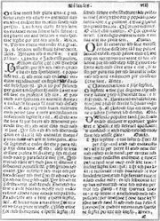
In 1967 scholar Dumitru Todericiu studied microfilms of the Bellifortis
Bellifortis

Bellifortis is the first fully illustrated manual of military technology, dating from the start of the 15th century. It summarises material from classical writers on military technology, like Publius Flavius Vegetius Renatus' De Re Militari and Frontinus' anecdotal Strategemata, emphasising poliorcetics, or the art of sieg...
 text, manuscript 663, preserved at the Musée Condé of the Chantilly Castle
Chāteau de Chantilly

The Ch?teau de Chantilly is a historic ch?teau located in the town of Chantilly, Oise, France. It comprises two attached buildings; the Grand Ch?teau, destroyed during the French Revolution and rebuilt in the 1870s, and the Petit Ch?teau which was built around 1560 for Anne de Montmorency....
 in France. This work was written by Konrad Kyeser
Konrad Kyeser

Konrad Kyeser was a military engineer, author of Bellifortis , a book on siege engines popular throughout the 15th century. Originally conceived for Wenceslaus, King of the Romans, Konrad dedicated the finished work to Rupert of Germany....
 around 1402-1405. The original Latin context is an astrological one, part of an initiation ritual practiced by young boys when becoming men and a vestige of the ancient phallic cult, very common in the Balkan peninsula. On page 153v Todericiu discovered a text insertion in a strange language. Until then, scholars considered it as a text without an actual meaning, written in an artificial language. Believing the words are in Albanian, Todericiu, together with professor Dumitru Polena from Bucharest, after a four months work obtained a modern version of the text:

Dr. Robert Elsie, a specialist in Albanian studies, considers that "The Todericiu/Polena Romanian translation of the non-Latin lines, although it may offer some clues if the text is indeed Albanian, is fanciful and based, among other things, on a false reading of the manuscript, including the exclusion of a whole line. [...] Certain evidence, both linguistic and non-linguistic, supports an Albanian origin for the Bellifortis text under study. The incantation and taboo character of such a passage involving initiation rites, however, precludes an interlinear translation. If the Bellifortis text is indeed Albanian, which remains to be proved conclusively, it would be the oldest datable text in that language".

The first certain document in Albanian is "Formula e pagėzimit"(1462) (Baptesimal formula), issued by Pal Engjėlli
Pal Engjėlli

Pal Engj?lli was an Albanian Catholicism clergyman, Archbishop of Durr?s and Cardinal of Albania who in 1462 wrote the first known sentence in Albanian language....
, Archbishop of Durrės
Durrės

File:Teuta, Illyrian Queen of Durres.jpgDurr?s is the second largest city of Albania. It is the most ancient and one of the most economically important cities of Albania....
. It was discovered and published in 1915 by Nicolae Iorga
Nicolae Iorga

Nicolae Iorga was a Romanian historian, university professor, literary critic, memorialist, playwright, poet, and politician. He served as a member of Parliament of Romania, as President of the post-World War I National Assembly, as minister, and as List of Prime Ministers of Romania....
. The second is "Fjalori i Arnold von Harf" in (Arnold von Harf vocabulary
Vocabulary

A person's vocabulary is the set of words they are familiar with in a language. A vocabulary usually grows and evolves with age, and serves as a useful and fundamental tool for communication and learning....
) in 1469; the third document "Ungjilli i Pashkėve" or Ungjilli i Shėn Mateut is dated in the 15th century. The first book in Albanian was written by Gjon Buzuku
Gjon Buzuku

Gjon Buzuku was an Albanian Catholicism clergyman who wrote the first known printed book in Albanian language.Gjon Buzuku was born in the village of Ljare in Bar, Montenegro close to Northern Albania ....
 of 20 March 1554 to 5 January 1555. The book was written in the Gheg dialect in the Latin alphabet
Latin alphabet

The Latin alphabet, also called the Roman alphabet, is the most widely used alphabetic writing system in the world today. It evolved from the western variety of the Greek alphabet called the Cumae alphabet, and was initially developed by the Ancient Romes to write the Latin....
 with some Slavic letters adapted for Albanian vowels.

Ottoman
Ottoman

A term used to refer to the citizens of the Ottoman Empire after 1839, when the Tanzimat edict starting a period of reforms was declared . The term was started to be used more commonly especially after the empire officially became a constitutional monarchy in 1876....
 period

In 1635 Frang Bardhi published in Rome
Rome

Rome is the capital city of Italy and Lazio, and is Italy's largest and most populous city, with 2,724,347 residents in an urban area of some ....
 his Dictionarum latinum-epiroticum, the first known Latin-Albanian dictionary. The evidence shows, moreover, that "the study of Albanian has a tradition of 350 years" and includes works of Frang Bardhi
Frang Bardhi

Frang Bardhi , , was an early Albanians church figure and author of note.He was born in Kallmet or N?nshat in the northern Albanian Zadrima region and studied theology in Italy....
 (1606-1643), Andre Bogdani (1600-1685),Nilo Katalanos (1637-1694) and others.

The alphabet used by romantics


History of the alphabet

From November 14 to 22 November 1908, Albanian intellectuals meet in Manastir (Bitolja, Macedonia), at the Congress of Manastir to standardize the Albanian alphabet using the Latin script. Until then, Latin, Cyrillic and Arabic script had been used.

Standard Albanian

In 1970's the publications in Tirana
Tirana

Tirana is the Capital and largest city of the Republic of Albania. It was founded in 1614 by Sulejman Pasha and became Albania's capital city in 1920....
, followed by republication in Pristina
Pristina

||-||-||-||-||-||-||-||-||-||-||-||}Pristina, also spelled Prishtina or Pri?tina is the capital and largest city of Kosovo, a territory in the Balkans that is disputed between the Republic of Kosovo and the Republic of Serbia following a International reaction to the 2008 Kosovo declaration of independen...
 of a book of orthographical rules, Drejtėshkrimi i gjuhės shqipe followed by a widely distributed authoritative dictionary in 1976 "Fjalori drejtshkrimor i gjuhės shqipe", created a considerable degree of phonological normalization as well as spelling reform.

Classification

Albanian was proven to be an Indo-European language in 1854 by the philologist
Comparative linguistics

Comparative linguistics is a branch of historical linguistics that is concerned with comparing languages in order to establish their history relatedness....
 Franz Bopp
Franz Bopp

Franz Bopp was a Germany linguistics known for extensive comparative work on Indo-European languages....
. The Albanian language constitutes its own branch of the Indo-European language family.

Some scholars believe that Albanian derives from Illyrian while others claim that it derives from Daco
Dacian language

The Dacian language was spoken by the ancient inhabitants of Dacia. It belongs to the Indo-European languages language family.Dacian is often considered to be a dialect of the same language as Thracian language or to be a separate language from Thracian but closely related to it....
-Thracian
Thracian language

The Thracian language was the Indo-European language spoken in ancient times by the Thracians in South-Eastern Europe....
. (Illyrian and Daco-Thracian, however, may have formed a sprachbund
Sprachbund

A Sprachbund , from the German language word for ?language union?, also known as a linguistic area, convergence area, diffusion area or language crossroads, is a group of languages that have become similar in some way because of geographical proximity and language contact....
; see Thraco-Illyrian.)

Establishing longer relations, Albanian is often compared to Balto-Slavic on the one hand and Germanic on the other, both of which share a number of isogloss
Isogloss

An isogloss is the geographical boundary or delineation of a certain linguistics feature, e.g. the pronunciation of a vowel, the meaning of a word, or use of some syntactic feature....
es with Albanian. Moreover, Albanian has undergone a vowel shift in which stressed, long o has fallen to a, much like in the former and opposite the latter. Likewise, Albanian has taken the old relative jos and innovatively used it exclusively to qualify adjectives, much in the way Balto-Slavic has used this word to provide the definite ending of adjectives.

Other linguists link Albanian with Greek
Greek language

Greek is an Indo-European languages native to the southern Balkan peninsula, the language of the Greek people. It forms an independent branch within Indo-European....
 and Armenian
Armenian language

The 'Armenian language' is an Indo-European language spoken by the Armenians. It is the official language of the Armenia as well as in the region of Nagorno-Karabakh....
, while placing Germanic and Balto-Slavic in another branch of Indo-European.

Although sometimes Albanian has been referred to as the "weird sister" for several words that do not correspond to IE cognates, it has retained many proto-IE features: the demonstrative pronoun 'ko' is closer to the Albanian 'ky'/'kjo' than to the English 'this' or the Russian 'etot'.

Comparison with other Indo-European languages


Albanian muaj i ri nėnė motėr natė hundė tre i zi i kuq i gjelbėr i verdhė ujk
Other Indo-European languages
Indo-European languages

The Indo-European languages are a Language family of several hundred related languages and dialects, including most major languages of Europe, the Iranian plateau , Central Asia and the Indian subcontinent ....
Sanskrit
Sanskrit

Sanskrit is a historical Indo-Aryan language, one of the liturgical languages of Hinduism and Buddhism, and one of the 22 official languages of India....
 
masa nava mat? svas? nakti nasa tri kala rudhira hari pita v?ka
Persian
Persian language

name=Persian|nativename=|pronunciation=[f??r'si]|image=|caption=Farsi in Perso-Arabic script |states= Iran, Afghanistan, Tajikistan, Uzbekistan, and Bahrain....
 
mah nou madar xahar shab binķ se siah sorkh sabz zard gorg
Ancient Greek
Ancient Greek

Ancient Greek is the historical stage in the development of the Greek language spanning across the Archaic Greece , Classical Greece , and Hellenistic civilization periods of ancient Greece and the classical antiquity....
 
µ??
men
????
néos
µ?t??
meter
ade?f?
adelphe
???
nżx
???
rhķs
t?e??
treļs
µ??a?
mélas
???????
erythrós
??????
khlorós
?a????
xanthós
?????
lżkos
Latin mensis novus mater soror nox nasus tres ater, niger ruber viridis flavus, gilvus lupus
Romanian
Romanian language

Romanian or Daco-Romanian ; self-designation: limba rom?na, ) is a Romance languages spoken by around 24 to 28 million people, primarily in Romania and Moldova....
 
luna nou mama sora noapte nas trei negru rosu verde galben lup
Serbian
Serbian language

name=Serbian|nativename=|pronunciation=['sr?pski?]|familycolor=Indo-European|map=|states=See below under "Official status", besides that in Croatia and as an immigrant's language spread over Central Europe and Western Europe, as well as Northern America...
 
?????
mesec
???
nov
?????
majka
??????
sestra
???
noc
???
nos
???
tri
???
crn
?????
crven
?????
zelen
???
žut
???
vuk
Latvian
Latvian language

Latvian is the official state language of Latvia. Alternative names include Lettish and Lettisch. There are about 1.5 million native Latvian speakers in Latvia and about 150,000 abroad....
 
menesis jauns mate masa nakts deguns tris melns sarkans zalš dzeltens vilks
English
English language

English is a West Germanic language that originated in Anglo-Saxon England and has lingua franca status in many parts of the world as a result of the military, economic, scientific, political and cultural influence of the British Empire in the 18th, 19th and early 20th centuries and that of the United States from the mid 20th century onwa...
 
month new mother sister night nose three black red green yellow wolf
Irish
Irish language

Irish , also known as Irish Gaelic, is a Goidelic languages of the Indo-European language family, originating in Ireland and historically spoken by the Irish people....
 
nua mįthair deirfiśr oiche srón trķ dubh dearg, rua glas, uaine buķ mac tķre, faolchś
Armenian
Armenian language

The 'Armenian language' is an Indo-European language spoken by the Armenians. It is the official language of the Armenia as well as in the region of Nagorno-Karabakh....
 
????
amis
???
nor
????
mayr
?????
k'uyr
?????
gišer
???
k'it
????
yerek'
???
sev
??????
karmir
?????
kanac
?????
degin
????
gayl


Geographic distribution

Albanian is spoken by nearly 6 million people mainly in Albania
Demographics of Albania

This article is about the demographics features of the population of Albania, including population density, Ethnic group, education level, health of the populace, economic status, religious affiliations and other aspects of the population....
, Kosovo
Albanians in Kosovo

Albanians are the largest ethnic group in Kosovo. According to the 1991 Serbian census, boycotted by Albanians, there were 1,596,072 ethnic Albanians in Kosovo or 81.6% of population....
, Turkey, the Republic of Macedonia
Albanians in the Republic of Macedonia

Albanians are the largest Minority group#Racial or ethnic minorities in the Republic of Macedonia. The largest Albanian communities are in the areas of Tetovo , Skopje , Gostivar , Debar , Kicevo , Struga and Kumanovo ....
, Greece
Albanian communities in Greece

Albanians in Greece form the country's largest population group after the ethnic Greeks majority. Due to different waves of migration, they are divided into distinct groups....
 and Italy (Arbereshe
Arbėreshė

Arb?resh? are an ethnic Albanians community living in Italy, especially the regions of Calabria and Sicily. The Arb?resh? have their own distinct culture and even have been able to keep their Albanian identity over the centuries....
); and by immigrant communities
Albanian diaspora

The Albanian diaspora encompasses Albanians outside of their country. The biggest concentrations outside of Albania and Kosovo are found in Turkey, Republic of Macedonia, Montenegro, Greece and Italy....
 in many other countries, notably the United Kingdom, the USA, Germany, the Netherlands and Switzerland.

Standard

Albanian in a revised form of the Tosk
Tosk Albanian

Tosk is the southern dialect of the Albanian language. The line of demarcation between Tosk and Gheg is the Shkumbin River. Tosk is the basis of the standard Albanian language....
 dialect is the official language
Official language

An official language is a language that is given a special legal status in a particular country, state, or other territory. Typically a nation's official language will be the one used in that nation's courts, parliament and administration....
 of Albania
Albania

Albania , officially the Republic of Albania , is a country in Balkans. It is bordered by Greece to the south-east, Montenegro to the north, Kosovo to the northeast, and the Republic of Macedonia to the east....
 and Kosovo
Kosovo

Kosovo is a disputed region in the Balkans. Its majority is governed by the partially-recognised Republic of Kosovo . Serbia does not recognise the secession of Kosovo and considers it a United Nations-governed entity within its sovereign territory, the Autonomous Province of Kosovo and Metohija that was re-created by Slobodan M...
; and is official in the municipalities where there are more than 22% ethnic Albanian inhabitants in the Republic of Macedonia
Republic of Macedonia

The Republic of Macedonia , , often referred to simply as Macedonia, is a landlocked country on the Balkans in southeastern Europe. It is bordered by Serbia to the north, Bulgaria to the east, Greece to the south and Albania to the west....
. It is also an official language of Montenegro
Montenegro

Montenegro , Montenegrin language/Serbian language: ???? ????, Crna Gora , ) is a country located in Balkans. It has a coast on the Adriatic Sea to the south and is bordered by Croatia to the west, Bosnia and Herzegovina to the northwest, Serbia to the north, Kosovo to the east and Albania to the south....
 where it is spoken in the municipalities with ethnic Albanian populations.

Dialects

Albanian can be divided into three dialects: Gheg
Gheg Albanian

Gheg is one of the two major dialects of the Albanian language. The other is Tosk Albanian, which is the main basis for the standard form of Albanian language....
 and Tosk
Tosk Albanian

Tosk is the southern dialect of the Albanian language. The line of demarcation between Tosk and Gheg is the Shkumbin River. Tosk is the basis of the standard Albanian language....
 with a transitional dialect zone between them.

The Shkumbin
Shkumbin

The Shkumbin is a river in central Albania, flowing into the Adriatic Sea. It is considered the dividing line for two dialects of the Albanian language: Tosk language and Gheg ....
 river is roughly the dividing line, with Gheg spoken north of the Shkumbin and Tosk south of it. The Gheg literary language has been documented since 1462. Until the Communists took power in Albania, the standard was based on Gheg. Although the literary versions of Tosk and Gheg are mutually intelligible, many of the regional dialects are not.

Gheg is divided into four sub-dialects: Northwest Gheg, Northeast Gheg, Central Gheg, and Southern Gheg. Northwest Gheg is spoken in all of Montenegro, Lezhė, Mirditė, Pukė and Shkodėr. Northeast Gheg is spoken in all of Kosovo, Has, Kukės and Tropojė. Central Gheg is spoken in Debar, Gostivar, Krujė, Peshkopi, Mat, and Tetovo. Southern Gheg is spoken in Durrės, Elbasan, Kavajė, and Tirana.

The transitional dialects are spoken in Cėrrik, Dumresė, Polisit, Lushnjė, Rajcė, Shpatit, Sulovė, and Vėrēės. They have features of both Tosk and Gheg, including the rhotacism of Tosk and the nasal vowels of Gheg.

Tosk is divided into five sub-dialects: Northern Tosk, Labėrisht, Ēam, Arvanitika and Arbėrisht. Northern Tosk is spoken in Berat, Fier, Gramsh, Kolonjė, Korēė, Ohrid, Struga, Pogradec, Prespa and northern Vlorė. Labėrisht is spoken in southern Vlorė, Dukat, Tepelenė, Himarė, Mallakastėr, Pėrmet, Delvinė, Gjirokastėr and Sarandė. Ēam is spoken in extreme southern Albania such as Xarrė and northern Greece. Arvanitika is spoken in north-western Greece by the Arvanites
Arvanites

Arvanites are a population group in Greece of, ultimately, Albanians origin who traditionally speak Arvanitika, a form of Tosk Albanian. They settled in Greece during the late Middle Ages and were the dominant population element of some regions in the south of Greece until the 19th century....
 in Joanina, Paramithia, Filat, Margarit, Arta, Preveza, Kastoria, Florina, and Parga. Arbėrisht
Arbėresh language

Arb?resh, Arb?risht, or Arb?rishte is the dialect of the Albanian language spoken by the Arb?resh?, the group of Albanian-speaking minorities in Italy....
 is spoken by the Arbėreshė
Arbėreshė

Arb?resh? are an ethnic Albanians community living in Italy, especially the regions of Calabria and Sicily. The Arb?resh? have their own distinct culture and even have been able to keep their Albanian identity over the centuries....
, descendants of 15th and 16th century immigrants in southeastern Italy, in small communities in the regions of Sicily, Calabria
Calabria

Calabria , is a Regions of Italy in Southern Italy Italy, south of Naples, located at the "toe" of the Italian peninsula. It is bounded to the north by the region of Basilicata, to the south-west by the region of Sicily, to the west by the Tyrrhenian Sea, and to the east by the Ionian Sea....
, Basilicata
Basilicata

Basilicata is a region in the south of Italy, bordering on Campania to the west, Apulia to the east, Calabria to the south, it has one short coastline on the Tyrrhenian Sea and another of the Gulf of Taranto in the Ionian Sea to the south-east....
, Campania
Campania

Campania is a Regions of Italy of southern Italy in Europe. The region has a population of around 5.8 million people, making it the second-most-populous region of Italy, its total area of 13,595 km? makes it the most densely populated region in the country....
, Molise
Molise

Molise is a region of Southern Italy, the second smallest of the regions. It was formerly part of the region of Abruzzi e Molise and now a separate entity....
, Abruzzi, and Puglia. Tosk sub-dialects are spoken by most members of the large Albanian immigrant communities of Egypt
Egypt

Egypt is a country mainly in North Africa, with the Sinai Peninsula forming a land bridge in Western Asia. Covering an area of about , Egypt borders the Mediterranean Sea to the north, the Gaza Strip and Israel to the northeast, the Red Sea to the east, Sudan to the south and Libya to the west....
, Turkey, and Ukraine
Ukraine

Ukraine is a country in Eastern Europe. It is bordered by Russia to the east; Belarus to the north; Poland, Slovakia, and Hungary to the west; Romania and Moldova to the southwest; and the Black Sea and Sea of Azov to the south....
.

Gheg and Tosk differ mainly by:
  1. rhotacism - Gheg has n where Tosk has r
  2. late Proto-Albanian a + tautosyllabic nasal > Gheg low-central or low-back vowel; > Tosk mid-central, or low-front-to-central vowel
  3. Proto-Albanian o > uo > Gheg vo, Tosk va
  4. infinitival use of verbal adjective preceded in Gheg by me and in Tosk by pėr
  5. difference in lexemes, noun plurals, suppletion of the aorist system of the verb


Subdialects may vary based on:
  1. retention or loss of final schwa (-ė)
  2. devoicing of final voiced segments
  3. treatment of intervocalic and final nj
  4. treatment of clusters of nasal + voiced stop
  5. development of anaptyctic homorganic stops after nasals that follow a stressed vowel and precede unstressed -ėl or -ėr
  6. treatment of vowel clusters ie, ye, and ua
  7. treatment of stressed /e/ before a nasal


Notable phonological and lexicological differences between Tosk and Gheg
Standard form Tosk form Gheg form Translation
Shqipėri Shqipėri Shqypni/Shipni/Shqipni Albania
njė njė nji/njā/njo a/one
nėntė nėntė/nėndė nāndė/nant/non nine
ėshtė ėshtė āsht/osht/ā is
bėj bėj bāj/boj do
emėr emėr źmėn name
pjekuri pjekuri pjekuni maturity
gjendje gjėndje gjźndje situation
mbret mbret mret king
pėr tė punuar pėr tė punuar me punu(e/a) to work
rėrė rėrė rānė/zall sand
qenė qėnė kźnė/kānė been (part.)
dėllinjė enjė bėrshź juniper
baltė baltė bāltė/lloē mud
cimbidh mashė danė tongs
sy sy/si sy/sö eye
syri syni/sini sy/sö eye-the infinitive mood
gershere gershere gershane scissors
femer femer femen woman, female
( ˆ ) denotes nasal vowel
Nasal vowel

A nasal vowel is a vowel that is produced with a lowering of the Soft palate so that air escapes both through nose as well as the mouth. The term stands in opposition to the term "oral vowel" refers to an ordinary vowel without this nasalisation....
s, which are a common feature of Gheg.

Sounds

Standard Albanian has 7 vowel
Vowel

In phonetics, a vowel is a sound in spoken language, such as English ah! or oh! , pronounced with an open vocal tract so that there is no build-up of air pressure at any point above the glottis....
s and 29 consonant
Consonant

In articulatory phonetics, a consonant is a speech sound that is articulated with complete or partial closure of the upper vocal tract, the upper vocal tract being defined as that part of the vocal tract that lies above the larynx....
s. Gheg
Gheg Albanian

Gheg is one of the two major dialects of the Albanian language. The other is Tosk Albanian, which is the main basis for the standard form of Albanian language....
 uses long and nasal vowel
Nasal vowel

A nasal vowel is a vowel that is produced with a lowering of the Soft palate so that air escapes both through nose as well as the mouth. The term stands in opposition to the term "oral vowel" refers to an ordinary vowel without this nasalisation....
s which are absent in Tosk
Tosk Albanian

Tosk is the southern dialect of the Albanian language. The line of demarcation between Tosk and Gheg is the Shkumbin River. Tosk is the basis of the standard Albanian language....
. Another peculiarity is the mid-central vowel "ė" reduced at the end of the word. The stress is fixed mainly on the penultimate syllable.One other notable difference between Gheg and Tosk pronunciations is that the Tosk equivalent of the Gheg sounnd "n" (as in femen,emen etc.)is the sound "r" ( e.g. femer, emer etc.). It is noteworthy that the Gheg dialect shares the "n" sound with other languages for the common words, like Italian "feminile", english woman ( Gheg "femen", Tosk "femer"), Romanian galben (hypothetical Gheg "gjelben" Tosk "gjelber")while this is not the case with the Tosk, which uses "r" instead.

Consonants

 Bilabial
Bilabial consonant

In phonetics, a bilabial consonant is a consonant articulated with both lips. The bilabial consonants identified by the International Phonetic Alphabet are:...
Labio-
dental
Labiodental consonant

In phonetics, labiodentals are consonants Place of articulation with the lower lip and the upper teeth. The labiodental consonants identified by the International Phonetic Alphabet are:...
Dental
Interdental consonant

Interdental consonants are produced by placing the blade of the tongue against the upper incisors. This differs from a dental consonant in that the tip of the tongue is placed between the upper and lower front teeth, and therefore may Manner of articulation with both the upper and lower incisors, while a dental consonant is articulated wi...
Alveolar
Alveolar consonant

Alveolar consonants are articulated with the tongue against or close to the superior alveolar ridge, which is called that because it contains the Dental alveolus of the superior teeth....
Post-
alveolar
Palatal
Palatal consonant

Palatal consonants are consonants articulated with the body of the tongue raised against the hard palate . Consonants with the tip of the tongue curled back against the palate are called retroflex consonant....
Velar
Velar consonant

Velars are consonants articulated with the back part of the tongue against the soft palate, the back part of the roof of the mouth, known also as the Soft palate)....
Glottal
Glottal consonant

Glottal consonants are consonants articulated with the glottis. Many phoneticians consider them, or at least the so-called fricatives, to be transitional states of the glottis without a point of articulation as other consonants have; in fact, some do not consider them to be consonants at all....
Nasal
Nasal consonant

A nasal consonant is produced with a lowered soft palate in the mouth, allowing air to escape freely through the nose. The oral cavity still acts as a resonance chamber for the sound, but the air does not escape through the mouth as it is blocked by the tongue....
         
Plosive        
Affricate
Affricate consonant

Affricate consonants begin as stop consonants but release as a fricative consonant rather than directly into the following vowel....
           
Fricative
Fricative consonant

Fricatives are consonants produced by forcing air through a narrow channel made by placing two Place of articulation close together. These may be the lower lip against the upper teeth, in the case of ; the back of the tongue against the soft palate, in the case of German language , the final consonant of Bach; or the side of the tongue ag...
     
Trill
Trill consonant

In phonetics, a trill is a consonantal sound produced by vibrations between the articulator and the place of articulation. Standard Spanish <rr > as in perro is an alveolar trill, while in Parisian French it is almost always uvular trill....
             
Flap
Flap consonant

In phonetics, a flap or tap is a type of consonantal sound, which is produced with a single contraction of the muscles so that one articulator is thrown against another....
             
Approximant
Approximant consonant

Approximants are speech sounds that could be regarded as intermediate between vowels and "typical" consonants. In the articulation of approximants, articulatory organs produce a narrowing of the vocal tract, but leave enough space for air to flow without much audible turbulence....


IPA Description Written as Pronounced as in
Voiceless bilabial plosive

The voiceless bilabial plosive is a type of consonantal sound used in many Speech communication languages. The symbol in the International Phonetic Alphabet that represents this sound is , and the equivalent X-SAMPA symbol is p....
 
p
Voiced bilabial plosive

The voiced bilabial plosive is a type of consonantal sound, used in some Speech communication languages. The symbol in the International Phonetic Alphabet that represents this sound is , and the equivalent X-SAMPA symbol is b....
 
b
Voiceless alveolar plosive

The voiceless alveolar plosive is a type of consonantal sound used in many Speech communication languages. The symbol in the International Phonetic Alphabet that represents voiceless dental consonant, alveolar consonant, and postalveolar consonant stop consonant is , and the equivalent X-SAMPA symbol is t....
 
t
Voiced alveolar plosive

The voiced alveolar plosive is a type of consonantal sound, used in some Speech communication languages. The symbol in the International Phonetic Alphabet that represents voiced dental consonant, alveolar consonant, and postalveolar consonant stop consonant is , and the equivalent X-SAMPA symbol is d....
 
d
Voiceless palatal plosive

The voiceless palatal plosive is a type of consonantal sound used in some Speech communication languages. The symbol in the International Phonetic Alphabet that represents this sound is , and the equivalent X-SAMPA symbol is c....
 
q
Voiced palatal plosive

The voiced palatal plosive is a type of consonantal sound, used in some Speech communication languages. The symbol in the International Phonetic Alphabet that represents this sound is , and the equivalent X-SAMPA symbol is J....
 
gj
Voiceless velar plosive

The voiceless velar plosive is a type of consonantal sound used in many Speech communication languages. The symbol in the International Phonetic Alphabet that represents this sound is , and the equivalent X-SAMPA symbol is k....
 
k
Voiced velar plosive

The voiced velar plosive is a type of consonantal sound, used in some Speech communication languages. The symbol in the International Phonetic Alphabet that represents this sound is , and the equivalent X-SAMPA symbol is g....
 
g
Voiceless alveolar affricate

The voiceless alveolar affricate is a type of consonantal sound, used in some Speech communication languages. The symbol in the International Phonetic Alphabet that represents this sound is , and the equivalent X-SAMPA symbol is ts....
 
c
Voiced alveolar affricate

The voiced alveolar affricate is a type of consonantal sound, used in some Speech languages. The symbol in the International Phonetic Alphabet that represents this sound is , and the equivalent X-SAMPA symbol is dz....
 
x
Voiceless postalveolar affricate

The voiceless palato-alveolar affricate or domed postalveolar affricate is a type of consonantal sound used in some Speech communication languages....
 
ē
Voiced postalveolar affricate

The voiced palato-alveolar affricate, also described as voiced domed postalveolar affricate, is a type of consonantal sound, used in some Speech communication languages....
 
xh
Voiceless dental fricative

The voiceless dental non-sibilant fricative is a type of consonantal sound used in some Speech communication languages. The symbol in the International Phonetic Alphabet that represents this sound is , and the equivalent X-SAMPA symbol is T....
 
th
Voiced dental fricative

The voiced dental non-sibilant fricative is a type of consonantal sound, used in some Speech communication languages. The symbol in the International Phonetic Alphabet that represents this sound, eth, is , and the equivalent X-SAMPA symbol is D....
 
dh
Voiceless labiodental fricative

The voiceless labiodental fricative is a type of consonantal sound, used in some Speech communication languages. The symbol in the International Phonetic Alphabet that represents this sound is , and the equivalent X-SAMPA symbol is f....
 
f
Voiced labiodental fricative

The voiced labiodental fricative is a type of consonantal sound used in some Speech communication languages. The symbol in the International Phonetic Alphabet that represents this sound is , and the equivalent X-SAMPA symbol is v....
 
v
Voiceless alveolar fricative

The voiceless alveolar fricatives are consonantal sounds. The symbol in the International Phonetic Alphabet that represents these sounds depends on whether a sibilant or non-sibilant fricative is being described....
 
s
Voiced alveolar fricative

The voiced alveolar fricatives are consonantal sounds. The symbol in the International Phonetic Alphabet that represents these sounds depends on whether a sibilant or non-sibilant fricative is being described....
 
z
Voiceless postalveolar fricative

The voiceless palato-alveolar fricative or domed postalveolar fricative is a type of consonantal sound, used in some Speech communication languages....
 
sh
Voiced postalveolar fricative

The voiced palato-alveolar fricative or domed postalveolar fricative is a type of consonantal sound, used in some Speech communication languages....
 
zh
Voiceless glottal fricative

The voiceless glottal transition, commonly called a "Fricative consonant", is a type of sound used in some Speech communication languages which often behaves like a consonant, but sometimes behaves more like a vowel, or is indeterminate in its behavior....
 
h
Bilabial nasal
Bilabial nasal

The bilabial nasal is a type of consonantal sound used in almost all spoken languages. The symbol in the International Phonetic Alphabet that represents this sound is , and the equivalent X-SAMPA symbol is m....
 
m
Alveolar nasal
Alveolar nasal

The alveolar nasal is a type of consonantal sound used in numerous spoken languages. The symbol in the International Phonetic Alphabet that represents dental consonant, alveolar consonant, and postalveolar consonant nasal consonant is , and the equivalent X-SAMPA symbol is n....
 
n
Palatal nasal
Palatal nasal

The palatal nasal is a type of consonant, used in some Speech communication languages. The symbol in the International Phonetic Alphabet that represents this sound is , and the equivalent X-SAMPA symbol is J....
 
nj Spanish
Spanish language

Spanish or Castilian is a Romance languages that originated in northern Spain, and gradually spread in the Kingdom of Castile and evolved into the principal language of government and trade....
 seor
Palatal approximant
Palatal approximant

The 'palatal approximant' is a type of consonantal sound used in many Speech communication languages. The symbol in the International Phonetic Alphabet that represents this sound is ....
 
j
Alveolar lateral approximant

The alveolar lateral approximant is a type of consonantal sound used in some spoken languages. The symbol in the International Phonetic Alphabet that represents dental consonant, alveolar consonant, and postalveolar consonant lateral consonant approximant consonant is , and the equivalent X-SAMPA symbol is l....
 
l
Velarized alveolar lateral approximant

The velarized alveolar lateral approximant, which may actually be pharyngealized, also known as dark l, is a type of consonantal sound, used in some Speech communication languages....
 
ll
Alveolar trill
Alveolar trill

The alveolar trill is a type of consonantal sound, used in some spoken languages. The symbol in the International Phonetic Alphabet that represents dental consonant, alveolar consonant, and postalveolar consonant trill consonant is , and the equivalent X-SAMPA symbol is r....
 
rr Spanish
Spanish language

Spanish or Castilian is a Romance languages that originated in northern Spain, and gradually spread in the Kingdom of Castile and evolved into the principal language of government and trade....
 hieo
Alveolar tap
Alveolar tap

The alveolar tap or flap is a type of consonantal sound, used in some spoken languages. The symbol in the International Phonetic Alphabet that represents dental consonant, alveolar consonant, and postalveolar consonant flap consonant is , and the equivalent X-SAMPA symbol is 4....
 
r Spanish
Spanish language

Spanish or Castilian is a Romance languages that originated in northern Spain, and gradually spread in the Kingdom of Castile and evolved into the principal language of government and trade....
 ao


Notes:
  • The palatal stops and have no English equivalent, so the pronunciation guide is approximate. Palatal stops can be found in other languages, for example, in Hungarian
    Hungarian language

    Hungarian is a Uralic languages unrelated to most other languages in Europe. It is mainly spoken in Hungary and by the Hungarian minorities in the seven neighbouring countries....
     (where these sounds are spelled ty and gy respectively).
  • The palatal nasal corresponds to the sound of the Spanish ń or the French or Italian digraph gn (as in gnocchi). It is pronounced as one sound, not a nasal plus a glide.
  • The ll sound is a velarised lateral, close to English dark L.
  • The contrast between flapped r and trilled rr is the same as in Spanish. English does not have either of the two sounds phonemically (but tt in butter is pronounced as a flap r in most American dialects).
  • The letter ē can be spelt ch on American English keyboards, both due to its English sound. (Usually, however, it's spelled simply c or more rarely q, which may cause confusion ; however, meanings are usually understood).


Vowels

IPA Description Written as Pronounced as in
Close front unrounded vowel

The close front unrounded vowel is a type of vowel sound, used in many spoken languages. The symbol in the International Phonetic Alphabet that represents this sound is , and the equivalent X-SAMPA symbol is i....
 
i
Open-mid front unrounded vowel

The open-mid front unrounded vowel is a type of vowel sound, used in some Speech communication languages. The symbol in the International Phonetic Alphabet that represents this sound is , and the equivalent X-SAMPA symbol is E....
 
e
Open front unrounded vowel

The open front unrounded vowel is a type of vowel sound, used in some Speech communication languages. The symbol in the International Phonetic Alphabet that represents this sound is , and the equivalent X-SAMPA symbol is a....
 
a Spanish
Spanish language

Spanish or Castilian is a Romance languages that originated in northern Spain, and gradually spread in the Kingdom of Castile and evolved into the principal language of government and trade....
 csa
Schwa
Schwa

In linguistics, specifically phonetics and phonology, schwa can mean the following:*An stress and tone neutral vowel sound in any language, often but not necessarily a mid-central vowel....
 
ė
Open-mid back rounded vowel

The open-mid back rounded vowel is a type of vowel sound, used in some Speech communication languages. The symbol in the International Phonetic Alphabet that represents this sound is , and the equivalent X-SAMPA symbol is O....
 
o
Close front rounded vowel

The close front rounded vowel is a type of vowel sound, used in some spoken languages. The symbol in the International Phonetic Alphabet that represents this sound is , and the equivalent X-SAMPA symbol is y....
 
y French
French language

French is a Romance language spoken around the world by around 80 million people as first language, by 190 million as second language, and by about another 200 million people as an acquired tongue, with significant speakers in 54 countries....
 t, German
German language

German is a West Germanic languages, thus related to and classified alongside English language and Dutch language. It is one of the world's world language and the most widely spoken mother tongue in the European Union....
 ber
Close back rounded vowel

The close back rounded vowel is a type of vowel sound, used in some spoken languages. The symbol in the International Phonetic Alphabet that represents this sound is , and the equivalent X-SAMPA symbol is u....
 
u


Grammar

Albanian noun
Noun

In linguistics, a noun is a member of a large, open class lexical category whose members can occur as the main word in the subject of a clause, the object of a verb, or the object of a preposition....
s are inflected
Inflection

In grammar, inflection or inflexion is the way language handles grammatical relations and relational categories such as grammatical tense, grammatical mood, grammatical voice, grammatical aspect, grammatical person, grammatical number, grammatical gender, grammatical case....
 by gender
Grammatical gender

In linguistics, grammatical genders, sometimes also called noun classes, are classes of nouns reflected in the behavior of associated words; every noun must belong to one of the classes and there should be very few which belong to several classes at once....
 (masculine
Grammatical gender

In linguistics, grammatical genders, sometimes also called noun classes, are classes of nouns reflected in the behavior of associated words; every noun must belong to one of the classes and there should be very few which belong to several classes at once....
, feminine
Grammatical gender

In linguistics, grammatical genders, sometimes also called noun classes, are classes of nouns reflected in the behavior of associated words; every noun must belong to one of the classes and there should be very few which belong to several classes at once....
 and neuter
Neuter

Neuter can refer to:* Neutering, the sterilization of an animal* The neuter grammatical gender...
) and number
Grammatical number

In linguistics, grammatical number is a grammatical category of nouns, pronouns, and adjective and verb agreement that expresses count distinctions ....
 (singular
Grammatical number

In linguistics, grammatical number is a grammatical category of nouns, pronouns, and adjective and verb agreement that expresses count distinctions ....
 and plural
Plural

Plural is a grammatical number, typically referring to more than one of the referent in the real world. In the English language, singular and plural are the only grammatical numbers....
). There are 5 declension
Declension

In linguistics, declension is the occurrence of inflection in nouns, pronouns and adjectives, indicating such features as grammatical number , grammatical case , and grammatical gender....
s with 6 cases (nominative, accusative, genitive, dative
Dative

Dative has several meanings.*In grammar, the dative case is used to indicate the noun to whom something is given.*In chemistry, a dative bond is a chemical bond in which the shared electrons come from one atom only....
, ablative and vocative), although the vocative only occurs with a limited number of words. The cases apply to both definite and indefinite nouns and there are numerous cases of syncretism
Syncretism (linguistics)

In linguistics, syncretism is the identity of form of distinct morphology forms of a word.For example, in English language, the Nominative case and Accusative case forms of you and it are the same, whereas he/him, she/her, etc., have different forms depending on grammatical case....
. The equivalent of a genitive is formed by using the prepositions i/e/tė/sė with the dative.

The following shows the declension of the masculine noun mal (mountain),masculin name that ends with "i":

Indefinite Singular Indefinite Plural Definite Singular Definite Plural
Nominative mal (mountain) male (mountains) malet (the mountains)
Accusative mal male malet
Genitive i/e/tė/sė maleve i/e/tė/sė maleve
Dative
Dative

Dative has several meanings.*In grammar, the dative case is used to indicate the noun to whom something is given.*In chemistry, a dative bond is a chemical bond in which the shared electrons come from one atom only....
 
maleve maleve
Ablative maleve/malesh maleve


The following shows the declension of the masculine noun zog (bird), masculin name that ends with "u":

Indefinite Singular Indefinite Plural Definite Singular Definite Plural
Nominative zog (bird) zogj (birds) zogjtė (the birds)
Accusative zog zogj zogjtė
Genitive i/e/tė/sė zogjve i/e/tė/sė zogjve
Dative
Dative

Dative has several meanings.*In grammar, the dative case is used to indicate the noun to whom something is given.*In chemistry, a dative bond is a chemical bond in which the shared electrons come from one atom only....
 
zogjve zogjve
Ablative zogjve zogjve


The following table shows the declension of the feminine noun vajzė (girl)

Indefinite Singular Indefinite Plural Definite Singular Definite Plural
Nominative vajzė (girl) vajza (girls) vajza (the girl) vajzat (the girls)
Accusative vajzė vajza vajzėn vajzat
Genitive i/e/tė/sė vajze i/e/tė/sė vajzave i/e/tė/sė vajzės i/e/tė/sė vajzave
Dative
Dative

Dative has several meanings.*In grammar, the dative case is used to indicate the noun to whom something is given.*In chemistry, a dative bond is a chemical bond in which the shared electrons come from one atom only....
 
vajze vajzave vajzės vajzave
Ablative vajze vajzave/vajzash vajzės vajzave


The definite article is placed after the noun as in many other Balkan languages
Balkan languages

This is a list of languages spoken in the Balkans. With the exception of several Turkic languages, Hungarian, and Circassian, all of them belong to the Indo-European family....
, for example Romanian
Romanian language

Romanian or Daco-Romanian ; self-designation: limba rom?na, ) is a Romance languages spoken by around 24 to 28 million people, primarily in Romania and Moldova....
 and Bulgarian
Bulgarian language

Bulgarian is an Indo-European languages, a member of the Slavic languages linguistic group.Bulgarian demonstrates several linguistic innovations that set it apart from all other Slavic languages except Macedonian language, such as the elimination of grammatical case, the development of a suffixed definite article , the lack of a verb infin...
.
  • The definite article can be in the form of noun suffixes, which vary with gender and case.
    • For example in singular nominative, masculine nouns add -i, or those ending in -g/-k/-h, take -u (to avoid palatalization):
      • mal (mountain) / (the mountain);
      • libėr (book) / libri (the book);
      • zog (bird) / zogu (the bird).
    • Feminine nouns take the suffix -(j)a:
      • veturė (car) / vetura (the car);
      • shtėpi (house) / shtėpia (the house);
      • lule (flower) / lulja (the flower).
  • Neuter nouns take -t.


Albanian has developed an analytical verb
Verb

In syntax, a verb is a word that usually denotes an action , an occurrence , or a state of being . Depending on the language, a verb may vary in form according to many factors, possibly including its grammatical tense, grammatical aspect, grammatical mood and grammatical voice....
al structure in place of the earlier synthetic system, inherited from Proto-Indo-European
Proto-Indo-European language

The Proto-Indo-European language is the unattested, linguistic reconstruction common ancestor of the Indo-European languages, spoken by the Proto-Indo-Europeans....
. Its complex system of mood
Mood

Mood may refer to:*Mood *Grammatical mood*Mood , a city in Iran*Mood , hip hop artists*Moods ...
s (6 types) and tense
Grammatical tense

Grammatical tense is a temporal language quality expressing the time at, during, or over which a state or action denoted by a verb occurs.Tense is one of at least five qualities, along with grammatical mood, grammatical voice, grammatical aspect, and grammatical person, which verb forms may express....
s (3 simple and 5 complex constructions) is distinctive among Balkan languages
Balkan languages

This is a list of languages spoken in the Balkans. With the exception of several Turkic languages, Hungarian, and Circassian, all of them belong to the Indo-European family....
. There are two general types of conjugation
Grammatical conjugation

In linguistics, conjugation is the creation of derived forms of a verb, noun or adjective from its principal parts by inflection . Conjugation may be affected by grammatical person, grammatical number, grammatical gender, grammatical tense, Grammatical aspect, grammatical mood, grammatical voice, or other grammatical category....
. In Albanian the constituent order is subject verb object and negation is expressed by the particles nuk or s in front of the verb, for example:
  • Toni nuk flet anglisht "Tony does not speak English" ;
  • Toni s'flet anglisht "Tony doesn't speak English" ;
  • Nuk e di "I do not know" ;
  • S'e di "I don't know".
In imperative sentences, the particle mos is used :
  • Mos harro "do not forget!".
However, with verbs in the non-active form (forma joveprore), the verb is often in sentence-initial position :
  • Parashikohet njė ndėrprerje "An interruption is anticipated".


Vocabulary


Cognates with Illyrian


See Illyrian languages
Illyrian languages

The Illyrian languages are a group of Indo-European languages that were spoken in the western part of the Balkans in former times by groups identified as Illyrians: Delmatae, Pannoni, Illyrians, Autariates, Taulanti ....


  • brisa, "husk of grapes"; cf. Alb bėrsķ "lees, dregs; mash" (< PA *brutia)
  • lośgeon, "pool"; cf. Alb lag "to wet, soak, bathe, wash" (< PA *lauga), lėgatė "pool" (< PA *leugatā), lakshte "dew" (< PA *laugista)
  • mandos, "small horse"; cf. Alb mėz, māz "poney", Mess Iuppiter Menzana "supreme deity", Manduria
    Manduria

    Manduria is a city and comune of Apulia, Italy, in the province of Taranto. With c. 30,000 inhabitants, it is located 35 km east of Taranto, and 14 km north of the coast....
    "town in Apulia", Skt mandura "stable for horses", Thrac Mezenai "divine horseman".
  • rhinos, "fog, mist"; cf. OAlb ren, mod. Alb re, rź "cloud" (< PA *rina)


Early Greek loans

Early Greek loandwords borrowed into Albanian were mainly commodity items and trade goods.

  • bagėm "oil for anointment" < Gk bįptisma "anointment"
  • bletė "hive; bee" < Greco-Latin < Gk (Attic) mélitta "honey-bee" (vs. Gk (Ionic) mélissa).
  • brukė "tamarisk" < Gk mourike
  • drapėr "sickle" < Gk (NW) drįpanon
  • keq "bad, evil < Gk kakos
  • kopsht "garden" < Gk (NW) kapos
  • kumbull "plum" < Gk kokkumelon
  • lakėr "cabbage, green vegetables" < Gk lįkhanon "green; vegetable"
  • lėpjetė "orach, dock" < Gk lįpathon
  • lyej "to smear, oil" < *elaiwa < Gk elai(w)on "oil"
  • mokėr "millstone" < Gk (NW) makhanį "device, instrument"
  • ngjalė "eel" < Gk enchelys
  • pjepėr "melon" < Gk pépon "melon"
  • presh "leek" < Gk prįson
  • shpellė "cave" < Gk spelaion "cave"
  • trumzė "thyme" < Gk thżmbra, thrżmbe
  • udhė "road, way" < Gk hodos


Gothic loans

Some were borrowed through Late Latin, while others came from the Ostrogothic expansion into parts of Praevalitana around Nakšic and the Gulf of Kotor in Montenegro.

  • fat "groom, husband" < Goth bružfažs "bridegroom"
  • gomar "donkey, ass" < *margė < Goth *marh "horse"
  • petk "herder's coat; clothing" < Goth paida; cf. OHG pfeit, OE pad
  • shkulkė "branch indicating a pasture is off limits" < Goth skulka "guardian"
  • shkumė "foam" < Goth scuma
  • tirq "trousers" < Late Latin tubrucus < Goth *žiobroc "knee-britches"; cf. OHG dioh-bruoh
The earliest accepted document in the Albanian language is from the 15th century AD. The earliest reference to a Lingua Albanesca is from a 1285 document of Ragusa
Dubrovnik

||-|File:Main street-Dubrovnik-2.jpg|-|File:Old City, Dubrovnik.jpg|-|File:Dubrovnik-F.Tudjman-Bridge.jpg|-|File:Onofrio's Fountain, Dubrovnik, Croatia.JPG...
. This is a time when Albanian Principalities start to be mentioned and expand inside and outside the Byzantine Empire. It is assumed that Greek
Ancient greek language

#REDIRECT Ancient Greek...
 and Balkan Latin (which was the ancestor of Romanian and other Balkan Romance languages), would exert a great influence on Albanian. Examples of words borrowed from Latin:
qytet < civitas (city), qiell < caelum (sky), mik < amicus (friend).

After the Slavs arrived in the Balkans
Balkans

The Balkans is the historical name of a geographic subregion of southeastern Europe. The region takes its name from the Balkan Mountains, which run through the centre of Bulgaria into eastern Serbia....
, another source of Albanian vocabulary were the Slavic languages
Slavic languages

File:Slavic europe.svgThe Slavic languages , a group of closely related languages of the Slavic peoples and a subgroup of Indo-European languages, have speakers in most of Eastern Europe, in much of the Balkans, in parts of Central Europe, and in the northern part of Asia....
, especially Bulgarian
Bulgarian language

Bulgarian is an Indo-European languages, a member of the Slavic languages linguistic group.Bulgarian demonstrates several linguistic innovations that set it apart from all other Slavic languages except Macedonian language, such as the elimination of grammatical case, the development of a suffixed definite article , the lack of a verb infin...
. The rise of the Ottoman Empire
Ottoman Empire

The Ottoman Empire , also known by its contemporaries as the Turkish Empire or Turkey , was an empire that lasted from 1299?1923. It was Treaty of Lausanne by the Republic of Turkey, which was officially proclaimed on October 29, 1923....
 meant an influx of Turkish
Turkish language

Turkish is a language spoken by over 63 million people worldwide, making it the most commonly spoken of the Turkic languages. Its speakers are located predominantly in Turkey and Cyprus, with smaller groups in Iraq, Greece, Bulgaria, the Republic of Macedonia, Kosovo, Albania and other parts of Eastern Europe....
 words; this also entailed the borrowing of Farsi and Arabic words through Turkish. Surprisingly the Farsi words seem to have been absorbed the most. Some loanwords from Modern Greek also exist especially in the south of Albania. A lot of the loaned words have been resubstituted from Albanian rooted words or modern Latinized (international) words.

Script

Full article: Albanian alphabet
Albanian alphabet

The modern Albanian language alphabet is based on the Latin alphabet, and consists of 36 letters:Note: The vowels are shown in bold....
Albanian has been written using many different alphabets since the 15th century. The earliest written Albanian records come from the Gheg area in makeshift spellings based on Italian or Greek and sometimes in Turko-Arabic characters. Originally, the Tosk dialect was written in the Greek alphabet
Greek alphabet

The Greek alphabet is a set of twenty-four letters that has been used to write the Greek language since the late 9th century BC or early 8th century BCE....
 and the Gheg dialect was written in the Latin alphabet
Latin alphabet

The Latin alphabet, also called the Roman alphabet, is the most widely used alphabetic writing system in the world today. It evolved from the western variety of the Greek alphabet called the Cumae alphabet, and was initially developed by the Ancient Romes to write the Latin....
. They have both also been written in the Ottoman Turkish
Ottoman Turkish language

Ottoman Turkish is the variety of the Turkish language that was used as the administrative and literary language of the Ottoman Empire. It contains extensive borrowings from Arabic language and Persian language languages and was written in a variant of the Arabic script....
 version of the Arabic alphabet
Arabic alphabet

The Arabic alphabet is the writing system used for writing several languages of Asia and Africa, such as Arabic language, Persian language, and Urdu language....
, the Cyrillic alphabet
Cyrillic alphabet

The Cyrillic alphabet is a family of alphabets, subsets of which are used by five Slavic languages national languages as well as non-Slavic . It is also used by many other languages of Eastern Europe, the Caucasus, Siberia and other languages in the past....
, and some local alphabets.

In 1908 an official, standardized Albanian spelling was developed, based on a Gheg dialect and using the Latin alphabet with the addition of the letters
ė, ē, and nine digraph
Digraph (orthography)

A digraph, bigraph , or digram is a pair of characters used to write one phoneme or a sequence of phonemes that does not correspond to the normal values of the two characters combined....
s. After World War II the official language changed in that it adopted the Tosk dialect as its model.

History


Linguistic affinities


The Albanian language is a distinct Indo-European
Indo-European

Indo-European may refer to:* Indo-European languages* Indo-European people, peoples speaking an Indo-European language** Aryan race, a 19th-century term for Indo-European speakers...
 language that does not belong to any other existing branch. Sharing lexical isogloss
Isogloss

An isogloss is the geographical boundary or delineation of a certain linguistics feature, e.g. the pronunciation of a vowel, the meaning of a word, or use of some syntactic feature....
es with Greek, Balto-Slavic
Balto-Slavic

Balto-Slavic can refer to:* Balto-Slavic languages* Balto-Slavic peoples...
, and Germanic
Germanic languages

The Germanic languages are a group of related languages that constitute a branch of the Indo-European languages language family. The common ancestor of all the languages in this branch is Proto-Germanic, spoken in approximately the mid-1st millennium BC in Pre-Roman Iron Age....
, the word stock of Albanian is quite distinct. Hastily tied to Germanic and Balto-Slavic by the merger of PIE
Proto-Indo-European language

The Proto-Indo-European language is the unattested, linguistic reconstruction common ancestor of the Indo-European languages, spoken by the Proto-Indo-Europeans....
 *
o and *a into *a in a supposed "northern group", Albanian has proven to be distinct from the other two groups as this vowel shift is only part of a larger push chain that affected all long vowels. Albanian does share with Balto-Slavic two features: a lengthening of syllabic consonants before voiced obstruents and a distinct treatment of long syllables ending in a sonorant. Conservative features of Albanian include the retention of the distinction between active and middle voice, present and aorist tenses, three series of tectal consonants before front vowels (e.g., palatals, velars, and labio-velars), and initial PIE *h4 as an h. However, heavy borrowing from Latin, Greek, Turkish, and Slavic have resulted in Albanian being only a minor player in the reconstruction of Proto Indo-European vocabulary.

Other linguists link Albanian with Greek
Greek language

Greek is an Indo-European languages native to the southern Balkan peninsula, the language of the Greek people. It forms an independent branch within Indo-European....
 and Armenian
Armenian language

The 'Armenian language' is an Indo-European language spoken by the Armenians. It is the official language of the Armenia as well as in the region of Nagorno-Karabakh....
 in a southern group.

Albanian is considered to have its closest linguistic affinity to and to have evolved from an extinct Paleo-Balkan language, usually taken to be either Illyrian
Illyrian languages

The Illyrian languages are a group of Indo-European languages that were spoken in the western part of the Balkans in former times by groups identified as Illyrians: Delmatae, Pannoni, Illyrians, Autariates, Taulanti ....
 or Dacian
Dacian language

The Dacian language was spoken by the ancient inhabitants of Dacia. It belongs to the Indo-European languages language family.Dacian is often considered to be a dialect of the same language as Thracian language or to be a separate language from Thracian but closely related to it....
. See also Thraco-Illyrian and Messapian language
Messapian language

Messapian is an extinct Indo-European languages of South-eastern Italy, once spoken in the region of Apulia. It was spoken by the three Iapygian tribes of the region: the Messapii, the Dauni and the Peucetii....
.

Historical presence and location

The origin of the ethnonym
Ethnonym

An ethnonym is the name applied to a given ethnic group. Ethnonyms can be divided into two categories: exonyms and autonyms .As an example, the ethnonym for the ethnically dominant group in Germany is the Germans....
 
Albanian is of some dispute. It appears for the first time in the 2nd c. AD in Late Greek as Albanoķ (later Byz Gk Arbanitai) and thereafter in similar forms, including obsolete Albanian arbėr/arbėn "Albanian"; however, these last two stem directly from Vulgar Latin *Albanus, most likely borrowed from Greek Albanoķ; the adjective too, arbėresh/arbėnesh, are derived from Latin albanensis. This same name appears in Slavic and was used to name the town of Labėri "Laberia", from South Slavic labanija, from earlier *olbanija.

While it is considered established that the Albanians originated in the Balkans, the exact location from which they spread out is hard to pinpoint. Despite varied claims, it seems that the Albanians came from slightly farther north (Kosovo) and inland (Northwest Skopje) than would suggest the present borders of Albania, with a homeland concentrated in the mountains. The purely linguistic reasons are listed below.
Balkan Links
*First, Albanian has few early Greek borrowings, most of which are from the Northwest dialect, probably via the islands off the coast of Albania, e.g. WGk (Doric)
makhanį gave Alb mokėr "mill" and WGk drįpanon gave Alb drapėr "sickle".
  • Similarly, the Illyrian coast is not a likely source since Albanian has no inherited nautical or indigenous seafaring terminology, and has instead supplemented this absence with subsequent borrowing from Latin or Greek or recent metaphorical lexical creations.
  • Third, toponyms along the coast, in contrast with native penultimate accent (ex: mbėsė "niece" < PA nepo'tia), often show substratal antepenultimate accent (ex: Durrės < Dśrrhachium; Pojanė < Apóllonia), though there are some exceptions (Vlorė < Aulóna vs. Greek Aślon).
  • Also, some consider Albanian to be the source for a small number of grammatical and lexical similarities shared by otherwise dissimilar languages including Romanian, Bulgarian, Serbo-Croatian, and to some extent Greek. Based on their extent of grammaticalization, these include: the postposition of articles, the presence and grammatical use of schwa, object reduplication, admirative through verbal constructions, and the loss of infinitives.
  • Finally, few if any Proto-Albanian place names exist in what was the former Roman province of Illyria.


Instead, given the overwhelming amount of shepherding and mountaineering vocabulary as well as the extensive influence of Latin, it is more likely the Albanians come from north of the Jirecek Line
Jirecek Line

The Jirecek Line is an imaginary line through the ancient Balkans that divided the influences of the Latin and Greek language languages until the 4th century....
, on the Latin-speaking side, perhaps in part from the late Roman province of
Dardania from the western Balkans. However, archaeology has more convincingly pointed to the early Byzantine province of Praevitana (modern northern Albania) which shows an area where a primarily shepherding, transhumance population of Illyrians retained their culture. This area was based in the Mat district and the region of high mountains in Northern Albania, as well as in Dukagjin, Mirditė, and the mountains of Drin, from where the population would descend in the summer to the lowlands of western Albania, the Black Drin (Drin i zi) river valley, and into parts of Old Serbia. Indeed, the region's complete lack of Latin place names seems to imply little latinization of any kind and a more likely spot for the early medieval heart of Albanian territory, following the collapse of the Illyrian province.

Linguistic influences


The period during which Proto-Albanian and Latin interacted was protracted and drawn out over six centuries, 1st c. AD to 6th or 7th c. AD. This is born out into roughly three layers of borrowings, the largest number belonging to the second layer. The first, with the fewest borrowings, was a time of less important interaction. The final period, probably preceding the Slavic or Germanic invasions, also has a notably smaller amount of borrowings. Each layer is characterized by a different treatment of most vowels, the first layer having several that follow the evolution of Early Proto-Albanian into Albanian; later layers reflect vowel changes endemic to Late Latin and presumably Proto-Romance. Other formative changes include the syncretism of several noun case endings, especially in the plural, as well as a large scale palatalization.

A brief period followed, between 7th c. AD and 9th c. AD, that was marked by heavy borrowings from Southern Slavic, some of which predate the "o-a" shift common to the modern forms of this language group. Starting in the latter 9th c. AD, a period followed characterized by protracted contact with the Proto-Romanians, or Vlachs, though lexical borrowing seems to have been mostly one sided - from Albanian into Romanian. Such borrowing indicates that the Romanians migrated from an area where the majority was Slavic (i.e. Middle Bulgarian) to an area with a majority of Albanian speakers, i.e. Dardania, where Vlachs are recorded in the 10th c. AD. Their movement is probably related to the expansion of the Bulgarian empire into Albania around that time. This fact places the Albanians at a rather early date in the western or central Balkans.

Historical considerations


Indeed, the center of the Albanians remained the river Mat, and in 1079 AD they are recorded in the territory between Ohrid and Thessalonika as well as in Epirus.

Furthermore, the major Tosk-Gheg dialect division is based on the course of the Shkumbin River, a seasonal stream that lay near the old Via Egnatia. Since rhotacism postdates the dialect division, it is reasonable that the major dialect division occurred after the Christianization of the Roman Empire (4th c. AD) and before the eclipse of the East-West land-based trade route by Venetian seapower (10th c. AD).

References to the existence of Albanian as a distinct language survive from the 1300s, but without recording any specific words. The oldest surviving documents written in Albanian are the "Formula e Pagėzimit" (Baptismal formula), "Un'te paghesont' pr'emenit t'Atit e t'Birit e t'Spirit Senit." (I baptize thee in the name of the Father, and the Son, and the Holy Spirit) recorded by Pal Engjelli, Bishop of Durrės in 1462 in the Gheg dialect, and some New Testament
New Testament

The New Testament is the name given to the second major division of the Christianity Bible, the first such division being the much longer Old Testament....
 verses from that period.

The oldest known Albanian printed book,
Meshari
Meshari

Meshari is the first book written in Albanian language. The book was written by Gjon Buzuku, a Catholic cleric in 1555. The book contains 188 pages and is written in two columns....
or missal, was written by Gjon Buzuku
Gjon Buzuku

Gjon Buzuku was an Albanian Catholicism clergyman who wrote the first known printed book in Albanian language.Gjon Buzuku was born in the village of Ljare in Bar, Montenegro close to Northern Albania ....
, a Roman Catholic cleric, in 1555. The first Albanian school is believed to have been opened by Franciscan
Franciscan

The term Franciscan is commonly used to refer to members of Catholic religious orders that follow a body of regulations known as "The rule of St....
s in 1638 in Pdhanė. In 1635, Frang Bardhi
Frang Bardhi

Frang Bardhi , , was an early Albanians church figure and author of note.He was born in Kallmet or N?nshat in the northern Albanian Zadrima region and studied theology in Italy....
 wrote the first Latin-Albanian dictionary.

See also

  • Albanian Wikipedia
    Albanian Wikipedia

    Albanian Wikipedia is the Albanian language edition of Wikipedia started in October 12, 2003. As of April 22, 2008 the Wikipedia has over 20,000 articles and is the 52nd largest wikipedia....
  • Arvanitika
    Arvanitika

    Arvanitika or Arvanitic is the variety of Albanian language traditionally spoken by the Arvanites, a population group in Greece. Arvanitika is sometimes also described as Graeco-Albanian or similarly, although today such designations are considered offensive by many Arvanites themselves, who identify nationally and ethnically as...


Bibliography

  • General Surveys
    • "Albanian language", in Encyclopędia Britannica
      Encyclopędia Britannica

      The Encyclop?dia Britannica is a general English language encyclopedia published by Encyclop?dia Britannica, Inc., a privately held company....
      , 15th edn. (1985).
    • Campbell, George L., ed. Compendium of the World’s Languages, 2nd edn., vol. 1: Abaza to Kurdish, s.v. “Albanian”. London and New York: Routledge, 2000, pp. 50-7.
    • Hamp, E. P. “Albanian”, in Encyclopedia of Language and Linguistics, edited by R. E. Asher, vol. 1. Oxford: Pergamon, 1994, pp. 65-7.
    • Price, Glanville, ed. Encyclopedia of the Languages of Europe, s.v. “Albanian”. Oxford: Blackwell, 1998, pp. 4-8.


  • Historical
    • Demiraj, Shaban. "Albanian", The Indo-European Languages, Anna Giacalone Ramat and Paolo Ramat, eds. London: Routledge, 1998.
    • Fortson IV, Benjamin W. Indo-European Language and Culture: An Introduction. London: Blackwell, 2004.
    • Huld, Martin E. Basic Albanian Etymologies. Columbus, OH: Slavica Publishers, 1984.
    • Mallory, J.P. and D.Q. Adams, Encyclopedia of Indo-European Culture. London: Fitzroy Dearborn, 1997.
    • Orel, Vladimir. A Concise Historical Grammar of the Albanian Language: Reconstruction of Proto-Albanian. Leiden: Brill, 2000.


  • Grammar
    • Camaj, Martin. Albanian Grammar. Wiesbaden, Germany: Otto Harrassowitz.
    • Newmark, Leonard et al. Standard Albanian: A Reference Grammar for Students. Standford: Stanford University Press, 1982.


  • Other
    • Gjinari, Jordji. Dialektologjia shqiptare. Pristina: Universiteti, 1970.
    • Xhelal Ylli, Andrej N. Sobolev, Albanskii toskskii govor sela Leshnja. Muenchen: Biblion Verlag, 2002. ISBN 3-932331-29-X
    • Xhelal Ylli, Andrej N. Sobolev, Albanskii gegskii govor sela Muhurr. Muenchen: Biblion Verlag, 2003. ISBN 3-932331-36-2


External links

  • (scribd.com) Reference of books (and some journal articles) about Albania and the Albanian people; their history, language, origin, culture, literature, etc. Public domain books, fully accessible online.


Samples of various Albanian dialects


Dictionaries


Keyboard layouts
  • ISO-8859-1 standardized layout for Windows XP (Albanian language)