


J-pop

Encyclopedia
, an abbreviation for Japan
ese pop, is a musical genre that entered the musical mainstream of Japan in the 1990s. Modern J-pop has its roots in 1960s music, such as The Beatles
, and replaced kayōkyoku
("Lyric Singing Music", a term for Japanese pop music from the 1920s to the 1980s) in the Japanese music scene. The term was coined by the Japanese media to distinguish Japanese music from foreign music, and now refers to most Japanese popular music. According to 2010 global music industry market share data
from the International Federation of the Phonographic Industry, Japan has the second largest market for recorded music in the world, behind the United States
.
. Unlike the Japanese music genre called kayōkyoku
, J-pop uses a special kind of pronunciation, which is similar to that of English
. One notable singer to do so is Keisuke Kuwata
, who pronounced the Japanese word karada ("body") as kyerada. Additionally, unlike Western music, the major second
(sol and la) was usually not used in Japanese music, except art music
, before rock music became popular in Japan. When the Group Sounds
genre, which was inspired by Western rock, became popular, Japanese pop music adopted the major second, which was used in the final sounds of The Beatles' song "I Want to Hold Your Hand
" and The Rolling Stones
' song "(I Can't Get No) Satisfaction
". Although Japanese pop music changed from music based on Japanese pentatonic scale
and distortional tetrachord
to the more occidental music over time, music that drew from the traditional Japanese singing style remained popular (such as that of Ringo Shiina).
At first, the term J-pop was used only for Western-style musicians in Japan, such as Pizzicato Five
and Flipper's Guitar
, just after Japanese radio station J-Wave
was established. On the other hand, Mitsuhiro Hidaka of AAA
from Avex Trax
said that J-pop was originally derived from the Eurobeat
genre. However, the term became a blanket term, covering other music genres—such as the majority of Japanese rock music of the 1990s.
In 1990, Tower Records Japan defined J-pop as all Japanese music belonging to the Recording Industry Association of Japan
except Japanese independent music (also known as "J-indie"); they began to use additional classifications, such as J-club, J-punk, J-hip-hop
, J-reggae
, J-anime
, and Visual kei
by 2008, after independent musicians started to release works via major labels. Ito Music City, a Japanese record store, adopted expanded classifications including Group Sounds, idol
of 1970s–1980s, enka
, folk
and established musicians of 1970s–1980s, in addition to the main J-pop genres.
Whereas rock musicians in Japan usually hate the term "pop", Taro Kato, a member of pop punk
band Beat Crusaders
, pointed out that the encoded pop music
, like pop art
, was catchier than "J-pop" and he also said that J-pop was the music, memorable for its frequency of airplay, in an interview when the band completed their first full-length studio album under a major label, P.O.A.: Pop on Arrival, in 2005. Because the band did not want to perform J-pop music, their album featured the 1980s Pop of MTV
. According to his fellow band member Toru Hidaka, the 1990s music that influenced him (such as Nirvana
, Hi-Standard
, and Flipper's Guitar
) was not listened to by fans of other music in Japan at that time.
In contrast to this, although many Japanese rock musicians until the late 1980s disrespected the kayōkyoku
music, many of Japanese rock bands of the 1990s—such as Glay
—assimilated kayōkyoku into their music. After the late 1980s, breakbeat
and sampler
s also changed the Japanese music scene, where expert drummer
s had played good rhythm because traditional Japanese music
did not have the rhythm based on rock or blues.
Hide of Greeeen
openly described their music genre as J-pop. He said, "I also love rock, hip hop and breakbeats, but my field is consistently J-pop. For example, hip hop musicians learn 'the culture of hip hop' when they begin their career. We are not like those musicians and we love the music as sounds very much. Those professional people may say 'What are you doing?' but I think that our musical style is cool after all. The good thing is good."
 Japanese popular music, called ryūkōka
before being split into enka
and poppusu,
has origins in the Meiji period
, but most Japanese scholars consider the Taishō period
to be the actual starting point of ryūkōka, as it is the era in which the genre first gained nationwide popularity. By the Taishō period, Western musical techniques and instruments, which had been introduced to Japan in the Meiji period
, were widely used. Influenced by Western genres such as jazz and blues
, ryūkōka incorporated Western instruments such as the violin
, harmonica
, and guitar
. However, the melodies were often written according to the traditional Japanese pentatonic scale
. In 1930s, Ichiro Fujiyama
released popular songs with his tenor
voice. Fujiyama sang songs with a lower volume than opera
through the microphone
(the technique is sometimes called crooning
).
Jazz musician Ryoichi Hattori
attempted to produce Japanese native music which had a "flavor" of blues
.
He composed Noriko Awaya
's hit song "Wakare no Blues" (lit. "Farewell Blues"). Awaya became a famous popular singer and was called "Queen of Blues" in Japan. Due to pressure from the Imperial Army
during the war, the performance of jazz music was temporarily halted in Japan. Hattori, who stayed in Shanghai
at the end of the war, produced hit songs such as Shizuko Kasagi
's "Tokyo Boogie-Woogie" and Ichiro Fujiyama
's "Aoi Sanmyaku" (lit. "Blue Mountain Range"). Hattori later became known as the "Father of Japanese poppusu". The United States
soldiers—who were occupying Japan at the time—and the Far East Network
introduced a number of new musical styles to the country. Boogie-woogie
, Mambo, Blues
, and Country music
were performed by Japanese musicians for the American troops. Chiemi Eri
's cover song "Tennessee Waltz" (1952), Hibari Misora
's "Omatsuri Mambo" (1952), and Izumi Yukimura
's cover song "Till I Waltz Again with You
" (1953) also became popular. Foreign musicians and groups, including JATP and Louis Armstrong
, visited Japan to perform. In the mid-1950s, became a popular venue for live jazz music. Jazz had a large impact on Japanese poppusu, though "authentic" jazz did not become the mainstream genre of music in Japan. In the late 1950s and early 1960s, Japanese pop was polarized between urban kayō
and modern enka.
manager Kazuo Taoka
reorganized the concert touring industry by treating the performers as professionals. Many of these performers later became key participants in the J-pop genre.
In 1956, Japan's rock and roll
craze began, due to the country music group known as Kosaka Kazuya and the Wagon Masters; their rendition of Elvis Presley
's song "Heartbreak Hotel
" helped to fuel the trend. The music was called "rockabilly
" (or rokabirī) by the Japanese media. Performers learned to play the music and translate the lyrics of popular American songs, resulting in the birth of . The rockabilly movement would reach its peak when 45,000 people saw the performances by Japanese singers at the first Nichigeki Western Carnival in one week of February 1958.
Kyu Sakamoto
, a fan of Elvis, made his stage début as a member of the band The Drifters at the Nichigeki Western Carnival in 1958. His 1961 song "Ue wo Muite Arukō" ("Let's Look Up and Walk"), known in other parts of the world as "Sukiyaki
", was released to the United States in 1963. It was the first Japanese song to reach the Number One position in the United States, spending four weeks in Cash Box and three weeks in Billboard
. It also received a gold record for selling one million copies. During this period, female duo The Peanuts
also became popular, singing a song in the movie Mothra
. Their songs, such as "Furimukanaide" ("Don't Turn Around") were later covered by Candies on their album Candy Label. Artists like Kyu Sakamoto and The Peanuts were called .
After frequently changing members, Chosuke Ikariya
re-formed The Drifters in 1964 under the same name. At a Beatles concert in 1966, they acted as curtain raisers, but the audience generally objected. Eventually, The Drifters became popular in Japan, releasing "Zundoko-Bushi" ("Echoic word tune") in 1969. Along with enka singer Keiko Fuji
, they won "the award for mass popularity" at the 12th Japan Record Awards
in 1970. Keiko Fuji's 1970 album Shinjuku no Onna/'Enka no Hoshi' Fuji Keiko no Subete ("Woman in Shinjuku/'Star of Enka All of Keiko Fuji") established an all-time record in the history of the Japanese Oricon
chart by staying in the Number One spot for 20 consecutive weeks. The Drifters later came to be known as television personalities and invited idols
such as Momoe Yamaguchi
and Candies to their television program.
visited Japan in 1962, causing the widespread embrace of the electric guitar
called the "Eleki Boom". Yūzō Kayama
and Takeshi Terauchi
became famous players of electric guitar. In 1966, the Beatles
came to Japan and sang their songs at the Nippon Budokan
, becoming the first rock music
band to perform a concert there. The public believed that the Beatles would cause juvenile delinquency
. The Japanese government deployed riot police against young rock fans at the Nippon Budokan. John Lennon
felt that they were not well regarded in Japan, but Beatlemania
has never really died there. The Beatles inspired Japanese bands, creating the Group Sounds
genre in Japan.
Most Japanese musicians felt that they could not sing rock in Japanese
, so the popularity of Japanese rock gradually declined. As a result, there were debates such as "Should we sing rock music in Japanese?" and "Should we sing in English?" between Happy End and Yuya Uchida
about Japanese rock music. This confrontation was called . Happy End proved that rock music could be sung in Japanese, and one theory holds that their music became one of the origins of modern J-pop. The Beatles also inspired Eikichi Yazawa
, who grew up in an underprivileged family, his father dying when he was a child. Keisuke Kuwata
, who grew up in a dual-income family, was influenced by the Beatles through his older sister, then an avid fan. Yōsui Inoue
was also a fan of The Beatles, but he said that his music style was not particularly related to them. After Happy End disbanded in 1973, Haruomi Hosono
, a former member, began a solo career and later formed Yellow Magic Orchestra
.
; this was called , although the genre of music was mostly covers of original songs. In the late 1960s, The Folk Crusaders
became famous and the underground music around that time became called fōku. As with enka, Japanese fōku singers Wataru Takada performed social satires.
In the early 1970s, the emphasis shifted from fōkus simple songs with a single guitar accompaniment to more complex musical arrangements known as . Instead of social messages, the songs focused on more personal messages, such as love. In 1972, singer-songwriter Takuro Yoshida
produced a hit song "Kekkon Shiyouyo" ("Let's marry") without decent television promotion, though fans of fōku music became very angry because his music seemed to be a mersh music. The highest-selling single of the year was the enka song by Shiro Miya
and the Pinkara Trio, "Onna no Michi
". The song eventually sold over 3.25 million copies. On December 1, 1973, Yōsui Inoue
released the album Kōri no Sekai
, which topped the Oricon charts and remained in Top 10 for 113 weeks. It spent 13 consecutive weeks in the number-one spot, and eventually established a still-standing record of a total 35 weeks at the number-one position on the Oricon charts. Yumi Matsutoya
, formerly known by her maiden name Yumi Arai, also became a notable singer/songwriter during this period In October 1975, she released a single "Ano Hi ni Kaeritai" ("I want to return to that day"), making it her first number-one single on the Oricon charts. Miyuki Nakajima
, Amii Ozaki
, and Junko Yagami
were also popular singer-songwriters during this period. At first, only Yumi Matsutoya was commonly called a New Music artist, but the concept of Japanese fōku music changed around that time. In 1979, Chage and Aska
made their debut, and folk band Off Course
(with singer Kazumasa Oda
) released a hit song "Sayonara" ("Good-bye").
remained a relatively underground music
genre in the 1970s in Japan. Several Japanese musicians began experimenting with electronic music
, including electronic rock. The most notable was the internationally renowned Isao Tomita
, whose 1972 album Electric Samurai: Switched on Rock featured electronic synthesizer
renditions of contemporary rock and pop songs
. Other early examples of electronic rock records include Inoue Yousui's folk rock
and pop rock
album Ice World (1973) and Osamu Kitajima's progressive
psychedelic rock
album Benzaiten
(1974), both of which involved contributions from Haruomi Hosono, who later started the electronic music group "Yellow Magic Band" (later known as Yellow Magic Orchestra) in 1977.
In 1978, Eikichi Yazawa
's rock single "Jikan yo Tomare" ("Time, Stop") became a smash hit that sold over 639,000 copies. He is regarded as one of the pioneers of Japanese rock. He sought worldwide success, and in 1980 he signed a contract with the Warner Pioneer record company and moved to the West Coast of the United States. He recorded the albums Yazawa, It's Just Rock n' Roll, and Flash in Japan, all of which were released worldwide, but were not very commercially successful. Keisuke Kuwata
formed the rock band Southern All Stars
(SAS), which made their debut in 1978. Southern All Stars remains very popular in Japan today.
In the same year, Yellow Magic Orchestra
(YMO) also made their official debut with their self-titled album. The band, whose members were Haruomi Hosono
, Yukihiro Takahashi
and Ryuichi Sakamoto
, developed electropop, or techno
pop as it is known in Japan, in addition to pioneering synthpop
and electro music. Their 1979 album Solid State Survivor
reached number one on the Oricon
charts in July 1980, and went on to sell two million records worldwide. At around the same time, the YMO albums Solid State Survivor and X∞Multiplies held both the top two spots on the Oricon
charts for seven consecutive weeks, making YMO the only band in Japanese chart history to achieve this feat. Young fans of their music during this period became known as the . YMO had a significant impact on Japanese pop music, which started becoming increasingly dominated by electronic music
due to their influence, and they had an equally large impact on electronic music across the world. Southern All Stars and Yellow Magic Orchestra symbolized the end of New Music and paved the way for the emergence of the J-pop genre in the 1980s. Both bands, SAS and YMO, would later be ranked at the top of HMV Japan
's list of top 100 Japanese musicians of all time.
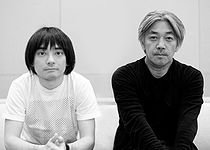 In the early 1980s, when car stereo became widespread, the term was used to describe a type of popular music that had a big city theme. Tokyo
in particular inspired many songs of this form. During this time frame, music fans and artists in Japan were influenced by album-oriented rock
(especially Adult contemporary
) and crossover
(especially Jazz fusion
). Although City Pop was affected by New Music, rock band Happy End was considered one of its originators.
Akira Terao
and Anri
became famous during this period. Akira Terao's 1981 album Reflections became the best-selling album of the 1980s in Japan, selling about 1.65 million copies.
Tatsuro Yamashita
and his wife Mariya Takeuchi
also became popular in this period. Yamashita's 1983 song "Christmas Eve" finally reached number one on the Oricon weekly single charts on December 25, 1989. In 1989, Ryuichi Sakamoto
won the Best Album of Original Instrumental Background Score Written for a Motion Picture or Television
for his contribution to the movie The Last Emperor
.
However, the popularity of City Pop declined when the Japanese asset price bubble
disintegrated in 1990, and its musical characteristics (except its "cultural background") were inherited by Shibuya-kei
musicians such as Pizzicato Five
and Flipper's Guitar
.
 Throughout the 1980s, rock bands such as Southern All Stars
, RC Succession
, Anzen Chitai
, The Checkers
, The Alfee
, and The Blue Hearts
became popular. Anzen Chitai came from Yosui Inoue
's backup band. On December 1, 1983, rock singer Yutaka Ozaki
debuted at the age of 18. In 1986, The Alfee became the first artists to play a concert in front of an audience of 100,000 people in Japan. Some Japanese musicians, such as Boøwy
, TM Network
, and Buck-Tick
, were influenced by New Romanticism.
Boøwy became an especially influential rock band, whose members included singer Kyosuke Himuro
and guitarist Tomoyasu Hotei
. Their three albums reached number one in 1988, making them the first male artists to have three number-ones within a single year. Subsequent Japanese rock bands were modeled on this band. Guitarist Tak Matsumoto
, who supported TM Network's concerts, formed rock duo B'z
with singer Koshi Inaba
in 1988.
In the late 1980s, girl band Princess Princess
became a successful pop-rock band. Their singles "Diamonds" and "Sekai de Ichiban Atsui Natsu" ("World's Hottest Summer") were ranked at the number-one and number-two spots, respectively, on the 1989 Oricon Yearly Single Charts.
In the late 1980s, a new trend also emerged in Japanese rock music: the visual kei
, a movement notable by male bands who wore makeup, extravagant hair styles, and androgynous costumes. The most successful representatives of the movement are X Japan
(formerly known as "X") and Buck-Tick
. X Japan released their first album Vanishing Vision
on the indie label Extasy Records
in 1988; their album Blue Blood was released on CBS Sony
in 1989. Blue Blood sold 712,000 copies, and their 1991 album Jealousy sold over 1.11 million copies. X Japan was originally influenced by heavy metal music
, but guitarist Hide
came under the influence of alternative rock
, releasing his first solo album Hide Your Face
in 1994.
singers such as Mari Amachi
, Saori Minami, Momoe Yamaguchi
, and Candies increased. Momoe Yamaguchi was one of first kayōkyoku
singers to use the special pronunciation characteristic of J-pop. In 1972, Hiromi Go
made his debut with the song "Otokonoko Onnanoko" ("Boy and Girl"). Hiromi Go originally came from Johnny & Associates
.
In 1976, female duo Pink Lady
made their debut with the single "Pepper Keibu
". Pink Lady released a record nine consecutive number-one singles.
In the 1980s, Japanese idols inherited New Music, though the term fell out of usage. Seiko Matsuda
especially adopted song producers of previous generations. In 1980, her third single "Kaze wa Aki Iro" ("Wind is autumn color") reached the number-one spot on the Oricon charts. Haruomi Hosono
also joined the production of her music. She eventually became the first artist to make 24 consecutive number-one singles, breaking Pink Lady's record.
Other female idol singers achieved significant popularity in the 1980s, such as Akina Nakamori
, Yukiko Okada
, Kyōko Koizumi
, Yoko Minamino
, Momoko Kikuchi, Yōko Oginome
, Miho Nakayama, Minako Honda
, and Chisato Moritaka. Okada received the Best New Artist award from the Japan Record Award
s in 1984. Nakamori won the Grand Prix award for two consecutive years (1985 and 1986), also at the Japan Record Awards; she made a suicide attempt in 1989.
Japanese idol band Onyanko Club
made their debut in 1985, and produced popular singer Shizuka Kudō
. They changed the image of Japanese idols.
Around 1985, however, people began to be disenchanted with the system for creating idols. In 1986, idol singer Yukiko Okada
's song "Kuchibiru Network" ("Lips' Network"), written by Seiko Matsuda and composed by Ryuichi Sakamoto, became a hit song, but she committed suicide immediately after that.
Hikaru Genji, one of the Johnny & Associates
bands, made their debut in 1987. They became a highly influential rollerskating boy band, with some of their members gaining their own fame as they got older. Their song "Paradise Ginga", written by Aska, won the Grand Prix award at the 30th Japan Record Awards
in 1988. Some of the group's backing dancers later formed SMAP
.
The late 1980s also saw the rise of the female duo Wink. They didn't laugh, unlike Japanese idols of former eras. Wink debuted in 1988, surpassing the popularity of the then-most popular female duo, BaBe
. Wink's song "Samishii Nettaigyo
" won the grand prix award at the 31st Japan Record Awards
in 1989.
Popular singer Hibari Misora
died in 1989, and many kayōkyoku programs, such as The Best Ten, were closed.
CoCo
made their hit debut with the 1989 single "Equal Romance" for the hit anime
series Ranma ½
. Tetsuya Komuro
, a member of TM Network, broke Seiko Matsuda's streak of 25 consecutive number-ones by making his single "Gravity of Love" to debut at number-one in November 1989.
.
During this period, the Japanese music industry sought marketing effectiveness
. Notable examples of commercial music from the era were the tie-in
music from the agency Being
and the follow-on, Tetsuya Komuro
's disco
music.
The period between around 1990 and 1993 was dominated by artists from the Being agency, including B'z
, Tube
, B.B.Queens
, T-Bolan
, Zard
, Wands
, Maki Ohguro
, Deen, and Field of View
. They were called the . Many of those artists topped the charts and established new records, notably B'z, which eventually established a new record for consecutive number-one singles, surpassing Seiko Matsuda's record. B'z is, at present, the biggest selling artist of all time, according to Oricon charts. On the other hand, Wands, regarded as a pioneer of the "J-pop Boom" of the 1990s, had trouble because member Show Wesugi wanted to play alternative rock
/grunge
.
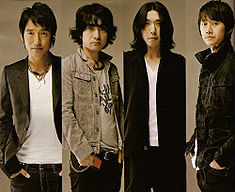 Many artists surpassed the two-million-copy mark in the 1990s. Kazumasa Oda
's 1991 single "Oh! Yeah!/Love Story wa Totsuzen ni", Chage and Aska
's 1991 single "Say Yes
" and 1993 single "Yah Yah Yah", Kome Kome Club
's 1992 single "Kimi ga Iru Dake de
", Mr. Children
's 1994 single "Tomorrow Never Knows
" and 1996 single "Namonaki Uta
", and Globe
's 1996 single "Departures" are examples of songs that sold more than 2 million copies. Dreams Come True's 1992 album The Swinging Star
became the first album to sell over 3 million copies in Japan. Mr. Children's 1994 album Atomic Heart
established a new record, selling 3.43 million copies on Oricon charts.
The duo Chage and Aska, who started recording in late 1979, became very popular during this period. They released a string of consecutive hits throughout the early 1990s; in 1996, they took part in MTV Unplugged
, making them the first Asian group to do so.
 After TM Network
disbanded in 1994, Tetsuya Komuro
became a serious song producer. The period between 1994 and 1997 was dominated by dance and techno acts from the , such as TRF
, Ryoko Shinohara
, Yuki Uchida
, Namie Amuro
, Hitomi
, Globe
, Tomomi Kahala
, and Ami Suzuki
. In that time, Komuro was responsible for 20 hit songs, each selling more than a million copies. While Globe's 1996 album Globe
sold 4.13 million copies, establishing a record at the time, Namie Amuro's 1997 song "Can You Celebrate?
" sold 2.29 million copies. His total sales as a song producer reached 170 million copies. By 1998, Komuro's songs had become less popular. By the middle part of the first decade of the 21st century, Komuro's debt lead him to attempt the sale of his song catalog—which he didn't actually own—to an investor. When the investor found out and sued, Komuro tried to sell the catalog to another investor in order to pay the judgement he owed the first investor.
Namie Amuro
, who was arguably the most popular solo singer in the period, came from the "Okinawa Actors School", which also incubated the bands MAX
and Speed
. At first, while still a part of the Komuro Family, Amuro remained in the dance music genre, but she slowly changed her music style to contemporary R&B
and ended her partnership with Tetsuya Komuro.
Komuro's band Globe became a trance
band after their 2001 album Outernet.
released their album Review -The Best of Glay
, which sold 4.87 million copies, breaking Globe's earlier record. However, it was surpassed in the next year by B'z
's album B'z The Best "Pleasure", which sold 5.12 million copies. The Japanese market for physical music sales peaked in 1998, recording sales of . In March 1999, Hikaru Utada released her first Japanese album, First Love, which sold 7.65 million copies, making it the best-selling album in Oricon
history.
The late 1990s saw the popularity of rock bands, such as Glay
, Luna Sea
, and L'Arc-en-Ciel, most of them related to the visual kei
movement, though they later changed their style. At the time, rock musicians in Japan were absorbing kayōkyoku music after the genre vanished. Glay became especially successful, with massive exposure in the media, comparable to that of the most popular pop singers produced by Tetsuya Komuro. In July 1999, Glay played a concert to a record audience of 200,000 people at the Makuhari Messe
, certified by Guinness World Records
as the biggest solo concert in Japan. In July 1999, L'Arc-en-Ciel released two albums, Arc and Ray, at the same time; they sold over 3.02 million combined copies in the first week of release.
X Japan
announced their disbandment in September 1997; guitarist Hide
died in May 1998. His musical funeral had a record attendance of 50,000 people, breaking the record of Hibari Misora
, whose funeral was attended by 42,000 people. After his death, his single "Pink Spider
" and album Ja, Zoo
were certified million-sellers by the Recording Industry Association of Japan
.
Johnny & Associates
produced many boy bands: SMAP
, Tokio
, V6
, KinKi Kids
and Arashi
. SMAP hit the J-pop scene in a major way in the 1990s through a combination of TV "Tarento
" shows and singles, with one of its singers, Takuya Kimura
, becoming a popular actor commonly known as "Kimutaku" in later years.
By the late 1990s, the girl group Speed
was very popular; they announced their disbandment in 1999. The group returned to the music scene in 2008. Another all-female band, Morning Musume
, produced by Tsunku
, former leader of band Sharam Q became very popular, with a string of releases that were sales hits before even being released. The group's popularity gave origin to the Hello! Project
. Following the pattern set a decade before by the 1980s all-female Onyanko Club
, Morning Musume spawned several splinter bands.
 In the late 1990s and early 21st century, female singers such as Hikaru Utada, Ayumi Hamasaki
, Misia, Mai Kuraki
, and Ringo Shiina became chart-toppers who write their own songs or their own lyrics. Hikaru Utada is the daughter of Keiko Fuji
, a popular singer of the 1970s. Ayumi Hamasaki was made Utada's contemporary rival, though both women claimed the "competition" was merely a creation of their record companies and the media.
Zeebra
introduced hip hop music
to Japanese mainstream music. In 1999, Zeebra was featured by Dragon Ash
in their song titled "Grateful Days
", which topped the Oricon charts.

won Grand Prix awards for three consecutive years—the first time in Japan Record Award
history—between 2001 and 2003. Although Hamasaki became very famous, Tom Yoda
, then-chairman of her record company Avex Group, argued that her tactics were risky, because Avex disregarded the modern portfolio theory
. This concern disappeared when the company's other singers (such as Ai Otsuka
, Kumi Koda
, and Exile) also reached a certain level of popularity in the mid-2000s under Yoda's management policy.
" sold over 7 million downloaded copies. In October 2007, EMI Music Japan announced that Utada was the world's first artist to have 10 million digital sales in one year. According to the International Federation of the Phonographic Industry's 2009 digital music report, Thelma Aoyama
's digital single "Soba ni Iru ne
" and Greeeen
's digital single "Kiseki
" sold 8.2 million copies and 6.2 million copies, respectively, in the 2008 download rankings.
and contemporary R&B
influences in Japanese music started to gain attention in popular mainstream music. In November 2001, R&B duo Chemistry
's debut album The Way We Are
sold over 1.14 million copies in the first week, and debuted at the number-one position on the Oricon weekly album charts. Hip hop bands such as Rip Slyme
and Ketsumeishi
were also at the top of the Oricon
charts.
Rock band Orange Range
featured several elements of hip hop in their music. Orange Range's album musiQ
sold over 2.6 million copies, making it the number one album of 2005 on the Oricon charts.
Pop/R&B singer Ken Hirai
topped the Oricon yearly album chart in 2006 with the release of his greatest hits album 10th Anniversary Complete Single Collection '95-'05 Utabaka, selling over 2 million copies.
Exile, the dance-vocal group under Avex's sublabel Rhythm Zone
, had several million-seller albums. Their album Exile Love topped the Oricon yearly album chart in 2008.
Veteran rapper Dohzi-T
collaborated with popular singers such as Shota Shimizu
, Hiromi Go
, Miliyah Kato, and Thelma Aoyama
in his successful 2008 album 12 Love Stories
.
Although there were only 132 new artists in Japan in 2001, according to the Recording Industry Association of Japan
, the number increased to 512 in 2008. In 2008, 14 new artists, such as Thelma Aoyama, attended the NHK
Kōhaku Uta Gassen
for the first time.
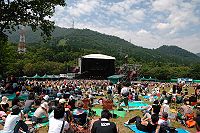 Rock musicians such as Mr. Children
, B'z
, Southern All Stars
, and Glay
still topped the charts in the first decade of the 21st century. Mr. Children's song "Sign" won the Grand Prix award at the 46th Japan Record Awards
in 2004. When the group released their album Home
in 2007, they passed 50 million albums and singles sold, making them the second-highest selling artist of all time in Japan since the origin of Oricon—just behind B'z, who hold the number-one position with more than 75 million records sold. Home topped the 2007 Oricon yearly album charts.
The sales of physical CDs declined, but audiences to see live performances increased. Eikichi Yazawa
took part in rock festival
s, and, in 2007, he became the first artist to have performed 100 concerts at the Nippon Budokan
.
Other artists, such as Namie Amuro
, also continued their long-running careers with successful releases in this period. Her live tour, Namie Amuro Best Fiction tour 2008-2009
, not only became the biggest live tour by a Japanese solo female artist—attended by 450,000 fans in Japan—but was also attended by 50,000 fans in Taiwan
and Shanghai
. While Kazumasa Oda
's 2005 album Sōkana topped the Oricon weekly album charts, his 2007 single "Kokoro" reached the weekly single charts, breaking Yujiro Ishihara
's record and making him the then-oldest singer to top the single charts. Mariya Takeuchi
's greatest hits album Expressions topped the Oricon album chart in 2008, making her the oldest female singer with the longest active career to reach the number-one position.
's boy bands remained well-known. In 2001, SMAP
released their greatest-hits album SMAP Vest, which sold over a million copies in the first week. In November 2001, Johnny & Associates established the label J Storm
for their band Arashi
. SMAP's 2003 single "Sekai ni hitotsu dake no hana" sold more than two million copies, being the number-one single in the Oricon yearly single charts for that year. In 2007, Guinness World Records honored KinKi Kids
for holding a world record for the number of singles debuting at the number-one position since their debut: 25. SMAP was said to fight a lonely battle at the Kōhaku Uta Gassen
, as seen from the viewpoint of its audience share. In 2008, male musicians established a record of four consecutive wins at the Kōhaku Uta Gassen. Arashi's greatest hits album All the Best! 1999–2009 topped the 2009 Oricon yearly album charts.
Johnny & Associates also produced new boy bands such as Tackey & Tsubasa, NEWS
, Kanjani Eight
, KAT-TUN
, and Hey! Say! JUMP
. In 2006, KAT-TUN's debut single "Real Face", composed by Tak Matsumoto
, sold over one million copies and topped the Oricon Yearly Charts. In 2007, temporary Johnny's Jr.
group Hey! Say! 7 broke a record as the youngest male group to ever top Oricon charts, with an average age of 14.8 years. On the 2008 yearly singles charts, only one single ranked in the top 30 was sung by a female (Namie Amuro's single "60s 70s 80s
") except gender-mixed groups, partly because the boy bands enjoyed an advantage in physical single sales. In 2009, Johnny's Jr. artist Yuma Nakayama w/B.I.Shadow became the youngest artist to have their first single to debut at the number-one spot, as the band had an average age of 14.6 years, breaking the former record set by female group Minimoni, 14.8 years.
released their cover version
of Kyu Sakamoto
's 1963 song "Ashita Ga Arusa
". Their cover version debuted at the number-five position, behind Utada, Kinki Kids, Hamasaki and Hirai. In March, Yoshimoto Kogyo
's special band "Re: Japan" also released their cover version of "Ashita Ga Arusa". When Ulfuls's cover version of this song remained at number eight, Re: Japan's version topped the Oricon weekly single charts.
In 2003, Man Arai released the single "Sen no Kaze ni Natte" ("As A Thousand Winds") based on the Western poem Do not stand at my grave and weep
. In Japan, the poem was known for Rokusuke Ei
's reading at the funeral of Kyu Sakamoto in 1985. Japanese tenor singer Masafumi Akikawa
covered the song in 2006. Akikawa's cover version of the song became the first classical music
single to top the Oricon charts, and sold over one million copies. On the 2007 Oricon Yearly Charts, the single became the best-selling physical single, scoring a victory over Utada's "Flavor of Life". Oricon claimed that the song was not J-pop. On the other hand, sheet music from the Zen-On Music Company Ltd
classified the song as J-pop.
Hideaki Tokunaga
covered many female songs on his cover album series, Vocalist. He released Vocalist, Vocalist 2, Vocalist 3 and Vocaloist 4 in 2005, 2006, 2007, and 2010 respectively. In August 2007, Vocalist 3 became his first Oricon weekly number-one album, 15 years and 10 months after his previous number-one album, 1991's Revolution.
In 2010, other singers also released cover albums of Japanese songs such as Juju
's Request
and Kumi Koda's Eternity: Love & Songs
. Superfly released a single that came with a cover album of Western rock songs, titled Wildflower & Cover Songs: Complete Best 'Track 3'
, ultimately becoming the band's third consecutive album to debut at number one on the Oricon weekly album charts.
, Yuzu
, and Kobukuro
, became popular during the period. Their music was called "Neo Fōku". In October 2007, Kobukuro's double-album All Singles Best became the first male album to ship three million copies in the 21st century in Japan. In January 2008, their album 5296 beat out Ayumi Hamasaki's album Guilty
on the Oricon charts, though she previously had eight consecutive number-one studio albums.
Electronic music bands such as Plus-Tech Squeeze Box
and Capsule were called "Neo Shibuya-kei". Yasutaka Nakata
, a member of Capsule, became the song producer for the technopop band Perfume
. In April 2008, for the first time as a technopop band in 25 years since Yellow Magic Orchestra's 1983 album Naughty Boys
, Perfume achieved a number-one album Game on the Oricon charts. In July 2008, their single "Love the World
" debuted at number one, making it the first technopop song to reach number one in Oricon history. Other Japanese female technopop artists soon followed, including Aira Mitsuki, immi
, Mizca
, SAWA
, Saori@destiny
, and Sweet Vacation
.
, such as voice actors (or seiyū) and image song
s, added weight to Japanese music. Though anime music was formerly influenced by J-pop and visual kei music, Japanese indie music apparently influenced the genre at the 2006 FanimeCon
. In 2007, after sampling
voice actress Saki Fujita
's voice to develop it, Vocaloid
Hatsune Miku
was released, and many songs featuring Hatsune Miku were shown on the Nico Nico Douga
. Some of the musicians featuring Hatsune Miku, such as Livetune
and Supercell
, joined large record companies in Japan. Livetune released Re: Package on Victor Entertainment
on August 27, 2008, and Supercell released Supercell
on Sony Music
on March 4, 2009. The albums Re: Package and Supercell were not brought under the control of the copyright
system of the Japanese Society for Rights of Authors, Composers and Publishers
(JASRAC), breaking the tradition that the musicians under the major labels affiliated with the system.
In June 2009, voice actress Nana Mizuki
's album Ultimate Diamond
became the first seiyū album to reach number one on the Oricon weekly charts. The fictional all female band Ho-kago Tea Time, from the anime series K-On!
, released the mini-album Ho-kago Tea Time on July 22, 2009. The mini-album debuted at number one on the Oricon weekly album charts, becoming the first album by anime characters to reach number one. In May 2010, Exit Tunes Presents Vocalogenesis feat. Hatsune Miku became the first album featuring Vocaloids to reach number one on the Oricon weekly charts, replacing Hideaki Tokunaga's Vocalist 4, which had topped the charts for four consecutive weeks.
, being found in anime
, commercials, movies, TV shows, and video games and other forms of Japanese entertainment
. Some television news programs even run a J-pop song during their end credits. In anime and television shows, particularly drama
s, opening and closing songs are changed up to four times per year. Because most programs have a combination of both opening and closing songs, it is possible for one show to use eight tracks for a single season.
Over the past decade, J-pop has continually gained fans worldwide through video games and anime. Many video game fans import games from Japan well before they are released in their respective countries. The theme songs and soundtracks from these games and anime can be a gateway to further interest in J-pop and other genres of Japanese music. One example is the Kingdom Hearts
game series, in which popular J-pop singer Hikaru Utada performs the main theme songs. Her single "Easy Breezy
" was also used to promote the Nintendo DS
. The Ouendan Series and Band Brothers for the Nintendo DS both feature a lot of J-Pop songs. In the case of anime, shows are normally sold in the West with their original soundtracks untouched, affording more direct exposure. Some shows aired on television in the United States
, for example, have seen their themes go so far as to become commercially available as ringtones through mainstream vendors in that country.
With changing music trends in India
and Bangladesh
, J-pop has gained some ground..After the channel Animax
was introduced, the knowledge and popularity of J-Pop further spread among the youth of Asia.
Pop duo Puffy
, one of the Japanese acts that have their material released on the United States market, had their own animated series on Cartoon Network—Hi Hi Puffy AmiYumi
, which premiered in 2004 and ran for three seasons. Prior to that, the duo recorded the theme song to another cartoon on the same channel, Teen Titans
. Because of the success of their show, video clips of Puffy, who are known as Puffy AmiYumi in the United States, were shown several times during the channel's programing.
charts history are B'z
, Mr. Children
, Ayumi Hamasaki
, Southern All Stars
, and Dreams Come True.
Japan
Japan is an island nation in East Asia. Located in the Pacific Ocean, it lies to the east of the Sea of Japan, China, North Korea, South Korea and Russia, stretching from the Sea of Okhotsk in the north to the East China Sea and Taiwan in the south...
ese pop, is a musical genre that entered the musical mainstream of Japan in the 1990s. Modern J-pop has its roots in 1960s music, such as The Beatles
The Beatles
The Beatles were an English rock band, active throughout the 1960s and one of the most commercially successful and critically acclaimed acts in the history of popular music. Formed in Liverpool, by 1962 the group consisted of John Lennon , Paul McCartney , George Harrison and Ringo Starr...
, and replaced kayōkyoku
Kayokyoku
is a Japanese pop music genre, which became a base of modern J-pop. The Japan Times describes kayōkyoku as "standard Japanese pop" or "Showa era pop".Kayōkyoku is Western-style-inspired music of Japan. Music in this genre is extremely varied as a result...
("Lyric Singing Music", a term for Japanese pop music from the 1920s to the 1980s) in the Japanese music scene. The term was coined by the Japanese media to distinguish Japanese music from foreign music, and now refers to most Japanese popular music. According to 2010 global music industry market share data
Global music industry market share data
Note that this list ranks the markets based on retail value each market generates respectively per year. The retail value generated by each market varies from year to year. The figures are based on IFPI annual reports.-IFPI 2009 data:...
from the International Federation of the Phonographic Industry, Japan has the second largest market for recorded music in the world, behind the United States
United States
The United States of America is a federal constitutional republic comprising fifty states and a federal district...
.
Form and definition
The origin of modern J-pop is said to be Japanese-language rock music inspired by The BeatlesThe Beatles
The Beatles were an English rock band, active throughout the 1960s and one of the most commercially successful and critically acclaimed acts in the history of popular music. Formed in Liverpool, by 1962 the group consisted of John Lennon , Paul McCartney , George Harrison and Ringo Starr...
. Unlike the Japanese music genre called kayōkyoku
Kayokyoku
is a Japanese pop music genre, which became a base of modern J-pop. The Japan Times describes kayōkyoku as "standard Japanese pop" or "Showa era pop".Kayōkyoku is Western-style-inspired music of Japan. Music in this genre is extremely varied as a result...
, J-pop uses a special kind of pronunciation, which is similar to that of English
English language
English is a West Germanic language that arose in the Anglo-Saxon kingdoms of England and spread into what was to become south-east Scotland under the influence of the Anglian medieval kingdom of Northumbria...
. One notable singer to do so is Keisuke Kuwata
Keisuke Kuwata
has gained fame as a Japanese multi-instrumentalist, singer-songwriter, and frontman for the Southern All-Stars, as well as his own solo band, the Kuwata band. He has also done significant amount of scoring music for films. He went to Aoyama Gakuin University....
, who pronounced the Japanese word karada ("body") as kyerada. Additionally, unlike Western music, the major second
Major second
In Western music theory, a major second is a musical interval spanning two semitones, and encompassing two adjacent staff positions . For example, the interval from C to D is a major second, as the note D lies two semitones above C, and the two notes are notated on adjacent staff postions...
(sol and la) was usually not used in Japanese music, except art music
Art music
Art music is an umbrella term used to refer to musical traditions implying advanced structural and theoretical considerations and a written musical tradition...
, before rock music became popular in Japan. When the Group Sounds
Group Sounds
Group Sounds is a genre of Japanese rock music. Inspired by The Beatles, Group Sounds became popular in the mid to late 1960s. Group Sounds initiated fusion of Japanese kayōkyoku music and rock music...
genre, which was inspired by Western rock, became popular, Japanese pop music adopted the major second, which was used in the final sounds of The Beatles' song "I Want to Hold Your Hand
I Want to Hold Your Hand
"I Want to Hold Your Hand" is a song by the English rock band The Beatles. Written by John Lennon and Paul McCartney, and recorded in October 1963, it was the first Beatles record to be made using four-track equipment....
" and The Rolling Stones
The Rolling Stones
The Rolling Stones are an English rock band, formed in London in April 1962 by Brian Jones , Ian Stewart , Mick Jagger , and Keith Richards . Bassist Bill Wyman and drummer Charlie Watts completed the early line-up...
' song "(I Can't Get No) Satisfaction
(I Can't Get No) Satisfaction
" Satisfaction" is a song by the English rock band The Rolling Stones, released in 1965. It was written by Mick Jagger and Keith Richards and produced by Andrew Loog Oldham. Richards's throwaway three-note guitar riff — intended to be replaced by horns — opens and drives the song...
". Although Japanese pop music changed from music based on Japanese pentatonic scale
Pentatonic scale
A pentatonic scale is a musical scale with five notes per octave in contrast to a heptatonic scale such as the major scale and minor scale...
and distortional tetrachord
Tetrachord
Traditionally, a tetrachord is a series of three intervals filling in the interval of a perfect fourth, a 4:3 frequency proportion. In modern usage a tetrachord is any four-note segment of a scale or tone row. The term tetrachord derives from ancient Greek music theory...
to the more occidental music over time, music that drew from the traditional Japanese singing style remained popular (such as that of Ringo Shiina).
At first, the term J-pop was used only for Western-style musicians in Japan, such as Pizzicato Five
Pizzicato Five
Pizzicato Five was a Japanese pop group best known to audiences in the West in their later incarnation as a duo of Maki Nomiya and Yasuharu Konishi...
and Flipper's Guitar
Flipper's Guitar
Flipper's Guitar were a Tokyo-based Japanese pop band led and later duo by Keigo Oyamada and Kenji Ozawa. The band were influenced by the chirpy sound of British 80s pop groups like Haircut One Hundred, Exhibit B, The Style Council and Aztec Camera, as well as the fashionably eclectic sounds of...
, just after Japanese radio station J-Wave
J-Wave
J-Wave is a commercial radio station based in Tokyo, Japan, broadcasting on 81.3 FM from the Tokyo Tower to the Tokyo area. J-Wave airs mostly music covering a wide range of formats. The station is considered the most popular among FM broadcasts in Tokyo, and has surprised the radio broadcast...
was established. On the other hand, Mitsuhiro Hidaka of AAA
AAA (band)
, and also known as Attack All Around, is a Japanese pop band signed to the label Avex Trax which debuted in September 2005. The group originally consisted of five young men and three young women who had all acted in commercials and had been dancers for other Japanese stars, such as Ayumi Hamasaki...
from Avex Trax
Avex Trax
, listed in the Tokyo Stock Exchange as 7860 and abbreviated as AGHD, is the holding company for a group of entertainment-related subsidiaries based in Japan...
said that J-pop was originally derived from the Eurobeat
Eurobeat
Eurobeat is a form of italo-disco/hi-NRG music that developed in the late 1980s.In the United States, Eurobeat was sometimes marketed as Hi-NRG and for a short while shared this term with the very early freestyle music hits....
genre. However, the term became a blanket term, covering other music genres—such as the majority of Japanese rock music of the 1990s.
In 1990, Tower Records Japan defined J-pop as all Japanese music belonging to the Recording Industry Association of Japan
Recording Industry Association of Japan
The Recording Industry Association of Japan is an industry trade group composed of Japanese corporations involved the music industry...
except Japanese independent music (also known as "J-indie"); they began to use additional classifications, such as J-club, J-punk, J-hip-hop
Japanese hip hop
Japanese hip hop is said to have begun when Hiroshi Fujiwara returned to Japan and started playing hip hop records in the early 1980s. Japanese hip hop generally tends to be most directly influenced by old school hip hop, taking from the era's catchy beats, dance culture, and overall fun and...
, J-reggae
Japanese reggae
Japanese reggae is reggae music originating from Japan. The first reggae band to perform in Japan was The Pioneers who toured in 1975. However it was not until 1979, when Jamaican singer Bob Marley visited Japan on holiday that reggae would gain momentum...
, J-anime
Music in Japanese animation
Music in Japanese animation is often closely tied to the Japanese music industry, but is also a significant industry, and genre in its own right, with genre often referred to as "anison", a portmanteau of "animation" and "song", or "anime song"...
, and Visual kei
Visual Kei
is a movement among Japanese musicians, that is characterized by the use of make-up, elaborate hair styles and flamboyant costumes, often, but not always, coupled with androgynous aesthetics. Some sources state that visual kei refers to a music genre, or to a sub-genre of Japanese rock, with its...
by 2008, after independent musicians started to release works via major labels. Ito Music City, a Japanese record store, adopted expanded classifications including Group Sounds, idol
Japanese idol
In Japanese culture, are media personalities in their teens and early twenties who are considered particularly attractive or cute and who will, for a period ranging from several months to a few years, regularly appear in the mass media, e.g...
of 1970s–1980s, enka
Enka
is a popular Japanese music genre considered to resemble traditional Japanese music stylistically. Modern enka, however, is a relatively recent musical form which arose in the context of such postwar expressions of modern Japanese nonmaterial nationalism as nihonjinron, while adopting a more...
, folk
Folk music
Folk music is an English term encompassing both traditional folk music and contemporary folk music. The term originated in the 19th century. Traditional folk music has been defined in several ways: as music transmitted by mouth, as music of the lower classes, and as music with unknown composers....
and established musicians of 1970s–1980s, in addition to the main J-pop genres.
Whereas rock musicians in Japan usually hate the term "pop", Taro Kato, a member of pop punk
Pop punk
Pop punk is a fusion music genre that combines elements of punk rock with pop music, to varying degrees. Allmusic describes the genre as a strand of alternative rock, which typically merges pop melodies with speedy punk tempos, chord changes and loud guitars...
band Beat Crusaders
Beat Crusaders
were a Japanese rock band. During all promotional appearances, their faces are masked by drawings resembling themselves as printed by a dot-matrix printer.-History:...
, pointed out that the encoded pop music
Pop music
Pop music is usually understood to be commercially recorded music, often oriented toward a youth market, usually consisting of relatively short, simple songs utilizing technological innovations to produce new variations on existing themes.- Definitions :David Hatch and Stephen Millward define pop...
, like pop art
Pop art
Pop art is an art movement that emerged in the mid 1950s in Britain and in the late 1950s in the United States. Pop art challenged tradition by asserting that an artist's use of the mass-produced visual commodities of popular culture is contiguous with the perspective of fine art...
, was catchier than "J-pop" and he also said that J-pop was the music, memorable for its frequency of airplay, in an interview when the band completed their first full-length studio album under a major label, P.O.A.: Pop on Arrival, in 2005. Because the band did not want to perform J-pop music, their album featured the 1980s Pop of MTV
MTV
MTV, formerly an initialism of Music Television, is an American network based in New York City that launched on August 1, 1981. The original purpose of the channel was to play music videos guided by on-air hosts known as VJs....
. According to his fellow band member Toru Hidaka, the 1990s music that influenced him (such as Nirvana
Nirvana (band)
Nirvana was an American rock band that was formed by singer/guitarist Kurt Cobain and bassist Krist Novoselic in Aberdeen, Washington in 1987...
, Hi-Standard
Hi-Standard
Hi-Standard is a Japanese punk rock band who formed in 1991. The release Making the Road sparked sold-out Japan shows and US/European tours with punk bands such as NOFX, No Use for a Name and WIZO. Although members of Hi-Standard were Japanese born, all of the band's major releases were sung in...
, and Flipper's Guitar
Flipper's Guitar
Flipper's Guitar were a Tokyo-based Japanese pop band led and later duo by Keigo Oyamada and Kenji Ozawa. The band were influenced by the chirpy sound of British 80s pop groups like Haircut One Hundred, Exhibit B, The Style Council and Aztec Camera, as well as the fashionably eclectic sounds of...
) was not listened to by fans of other music in Japan at that time.
In contrast to this, although many Japanese rock musicians until the late 1980s disrespected the kayōkyoku
Kayokyoku
is a Japanese pop music genre, which became a base of modern J-pop. The Japan Times describes kayōkyoku as "standard Japanese pop" or "Showa era pop".Kayōkyoku is Western-style-inspired music of Japan. Music in this genre is extremely varied as a result...
music, many of Japanese rock bands of the 1990s—such as Glay
Glay
Glay is a rock/pop band from Hakodate, Hokkaidō, Japan formed by guitarist Takuro and vocalist Teru in high school in 1988. Glay primarily composes songs in the rock and pop genres, but they have also composed songs using elements of different styles such as reggae and gospel...
—assimilated kayōkyoku into their music. After the late 1980s, breakbeat
Breakbeat
In 1992, a new style called "jungalistic hardcore" emerged, and for many ravers it was too funky to dance to. Josh Lawford of Ravescene prophesied that the breakbeat was "the death-knell of rave" because the ever changing drumbeat patterns of breakbeat music didn't allow for the same zoned out,...
and sampler
Sampler (musical instrument)
A sampler is an electronic musical instrument similar in some respects to a synthesizer but, instead of generating sounds, it uses recordings of sounds that are loaded or recorded into it by the user and then played back by means of a keyboard, sequencer or other triggering device to perform or...
s also changed the Japanese music scene, where expert drummer
Drummer
A drummer is a musician who is capable of playing drums, which includes but is not limited to a drum kit and accessory based hardware which includes an assortment of pedals and standing support mechanisms, marching percussion and/or any musical instrument that is struck within the context of a...
s had played good rhythm because traditional Japanese music
Traditional Japanese music
Traditional Japanese music is the term used to describe historical Japanese folk music, or traditional music.-Rhythm:One of the characteristics of traditional Japanese music is a sparse rhythm. It also doesn't have regular chords. In Japanese music, one cannot beat time with one's hands because...
did not have the rhythm based on rock or blues.
Hide of Greeeen
GReeeeN
is a Japanese pop/rock/hip hop/breakbeat vocal group from Kōriyama city in Fukushima Prefecture, comprising the all-male four members Hide, Navi, 92, and Soh. They made their debut with Universal Music in 2007. Their logo image is of a mouthful of teeth, and the four Es indicate the number of members...
openly described their music genre as J-pop. He said, "I also love rock, hip hop and breakbeats, but my field is consistently J-pop. For example, hip hop musicians learn 'the culture of hip hop' when they begin their career. We are not like those musicians and we love the music as sounds very much. Those professional people may say 'What are you doing?' but I think that our musical style is cool after all. The good thing is good."
1920s–1950s: Ryūkōka
Ryukoka
- 1914–1927: Origin :In 1914, Sumako Matsui's song "Katyusha's song", composed by Shinpei Nakayama, was used as a theme of the rendition Resurrection in Japan. The record of the song sold 20,000 copies...
before being split into enka
Enka
is a popular Japanese music genre considered to resemble traditional Japanese music stylistically. Modern enka, however, is a relatively recent musical form which arose in the context of such postwar expressions of modern Japanese nonmaterial nationalism as nihonjinron, while adopting a more...
and poppusu,
has origins in the Meiji period
Meiji period
The , also known as the Meiji era, is a Japanese era which extended from September 1868 through July 1912. This period represents the first half of the Empire of Japan.- Meiji Restoration and the emperor :...
, but most Japanese scholars consider the Taishō period
Taisho period
The , or Taishō era, is a period in the history of Japan dating from July 30, 1912 to December 25, 1926, coinciding with the reign of the Taishō Emperor. The health of the new emperor was weak, which prompted the shift in political power from the old oligarchic group of elder statesmen to the Diet...
to be the actual starting point of ryūkōka, as it is the era in which the genre first gained nationwide popularity. By the Taishō period, Western musical techniques and instruments, which had been introduced to Japan in the Meiji period
Foreign relations of Meiji Japan
During the Meiji period, the new Government of Meiji Japan also modernized foreign policy, an important step in making Japan a full member of the international community. The traditional East Asia worldview was based not on an international society of national units but on cultural distinctions and...
, were widely used. Influenced by Western genres such as jazz and blues
Blues
Blues is the name given to both a musical form and a music genre that originated in African-American communities of primarily the "Deep South" of the United States at the end of the 19th century from spirituals, work songs, field hollers, shouts and chants, and rhymed simple narrative ballads...
, ryūkōka incorporated Western instruments such as the violin
Violin
The violin is a string instrument, usually with four strings tuned in perfect fifths. It is the smallest, highest-pitched member of the violin family of string instruments, which includes the viola and cello....
, harmonica
Harmonica
The harmonica, also called harp, French harp, blues harp, and mouth organ, is a free reed wind instrument used primarily in blues and American folk music, jazz, country, and rock and roll. It is played by blowing air into it or drawing air out by placing lips over individual holes or multiple holes...
, and guitar
Guitar
The guitar is a plucked string instrument, usually played with fingers or a pick. The guitar consists of a body with a rigid neck to which the strings, generally six in number, are attached. Guitars are traditionally constructed of various woods and strung with animal gut or, more recently, with...
. However, the melodies were often written according to the traditional Japanese pentatonic scale
Pentatonic scale
A pentatonic scale is a musical scale with five notes per octave in contrast to a heptatonic scale such as the major scale and minor scale...
. In 1930s, Ichiro Fujiyama
Ichiro Fujiyama
, born as , was a popular Japanese singer and composer, known for his contribution to Japanese popular music called ryūkōka by his Western classical music skills. He was born in Chūō, Tokyo, and graduated from the Tokyo Music School. Although he was regarded as a tenor singer in Japanese popular...
released popular songs with his tenor
Tenor
The tenor is a type of male singing voice and is the highest male voice within the modal register. The typical tenor voice lies between C3, the C one octave below middle C, to the A above middle C in choral music, and up to high C in solo work. The low extreme for tenors is roughly B2...
voice. Fujiyama sang songs with a lower volume than opera
Opera
Opera is an art form in which singers and musicians perform a dramatic work combining text and musical score, usually in a theatrical setting. Opera incorporates many of the elements of spoken theatre, such as acting, scenery, and costumes and sometimes includes dance...
through the microphone
Microphone
A microphone is an acoustic-to-electric transducer or sensor that converts sound into an electrical signal. In 1877, Emile Berliner invented the first microphone used as a telephone voice transmitter...
(the technique is sometimes called crooning
Crooner
Crooner is an American epithet given to male singers of pop standards, mostly from the Great American Songbook, either backed by a full orchestra, a big band or by a piano. Originally it was an ironic term denoting an emphatically sentimental, often emotional singing style made possible by the use...
).
Jazz musician Ryoichi Hattori
Ryoichi Hattori
was a Japanese pop and jazz composer. Katsuhisa Hattori is his son. He had a great influence on Japanese pop and was awarded the People's Honor Award. Japanese jazz was downtrodden during World War II, but he created a jazz boom in Japan after the war. He composed many songs for various artists...
attempted to produce Japanese native music which had a "flavor" of blues
Blues
Blues is the name given to both a musical form and a music genre that originated in African-American communities of primarily the "Deep South" of the United States at the end of the 19th century from spirituals, work songs, field hollers, shouts and chants, and rhymed simple narrative ballads...
.
He composed Noriko Awaya
Noriko Awaya
was a Japanese female Soprano chanson and popular music singer. She has been dubbed the "Queen of Blues" in Japan.- Life and career :...
's hit song "Wakare no Blues" (lit. "Farewell Blues"). Awaya became a famous popular singer and was called "Queen of Blues" in Japan. Due to pressure from the Imperial Army
Imperial Japanese Army
-Foundation:During the Meiji Restoration, the military forces loyal to the Emperor were samurai drawn primarily from the loyalist feudal domains of Satsuma and Chōshū...
during the war, the performance of jazz music was temporarily halted in Japan. Hattori, who stayed in Shanghai
Shanghai
Shanghai is the largest city by population in China and the largest city proper in the world. It is one of the four province-level municipalities in the People's Republic of China, with a total population of over 23 million as of 2010...
at the end of the war, produced hit songs such as Shizuko Kasagi
Shizuko Kasagi
was a popular Japanese jazz singer and actress.Before World War II, Shizuko was one of the stars of the Japan Girls Opera Company. During the ongoing Occupation of Japan, she became a mega star singing songs influenced by American jazz and boogie woogie...
's "Tokyo Boogie-Woogie" and Ichiro Fujiyama
Ichiro Fujiyama
, born as , was a popular Japanese singer and composer, known for his contribution to Japanese popular music called ryūkōka by his Western classical music skills. He was born in Chūō, Tokyo, and graduated from the Tokyo Music School. Although he was regarded as a tenor singer in Japanese popular...
's "Aoi Sanmyaku" (lit. "Blue Mountain Range"). Hattori later became known as the "Father of Japanese poppusu". The United States
United States
The United States of America is a federal constitutional republic comprising fifty states and a federal district...
soldiers—who were occupying Japan at the time—and the Far East Network
Far East Network
The Far East Network was a network of American military radio and television stations, primarily serving U.S Forces in Japan, Okinawa, the Philippines, and U.S...
introduced a number of new musical styles to the country. Boogie-woogie
Boogie-woogie
Boogie-woogie has the following meanings:*Boogie-woogie, a piano-based music style*Boogie-woogie , a swing dance or a dance that imitates the rock-n-roll dance of the 1950s*"Boogie Woogie" , a song by EuroGroove and Dannii Minogue...
, Mambo, Blues
Blues
Blues is the name given to both a musical form and a music genre that originated in African-American communities of primarily the "Deep South" of the United States at the end of the 19th century from spirituals, work songs, field hollers, shouts and chants, and rhymed simple narrative ballads...
, and Country music
Country music
Country music is a popular American musical style that began in the rural Southern United States in the 1920s. It takes its roots from Western cowboy and folk music...
were performed by Japanese musicians for the American troops. Chiemi Eri
Chiemi Eri
, was a Japanese popular singer and actress.Eri was born as Chiemi Kubo on January 11, 1937 in Tokyo, Japan. She started her singing career at the age of 14 with her version of "Tennessee Waltz." She sang American songs such as "Jambalaya" & "Come on-a My House". Eri started her career as an...
's cover song "Tennessee Waltz" (1952), Hibari Misora
Hibari Misora
was an award-winning Japanese enka singer and actress. and was the first woman in Japan to receive the People's Honour Award, which was awarded posthumously for her notable contributions to the music industry. Misora recorded 1,200 songs, and sold 68 million records. After she died, consumer demand...
's "Omatsuri Mambo" (1952), and Izumi Yukimura
Izumi Yukimura
is a Japanese popular singer and actress.Yukimura made her debut with the song in 1953. Her style of singing varied from jazz to rock and roll. She became one of the three most popular female singers in the early postwar Japan, along with Chiemi Eri and Hibari Misora.On her 1974 album Super...
's cover song "Till I Waltz Again with You
Till I Waltz Again with You
"Till I Waltz Again with You" is a popular song written by Sid Prosen and published in 1952. Rather than a waltz, it is a slow AABA shuffle.The recording by Teresa Brewer was recorded on August 19, 1952 and released by Coral Records as catalog number 60873...
" (1953) also became popular. Foreign musicians and groups, including JATP and Louis Armstrong
Louis Armstrong
Louis Armstrong , nicknamed Satchmo or Pops, was an American jazz trumpeter and singer from New Orleans, Louisiana....
, visited Japan to perform. In the mid-1950s, became a popular venue for live jazz music. Jazz had a large impact on Japanese poppusu, though "authentic" jazz did not become the mainstream genre of music in Japan. In the late 1950s and early 1960s, Japanese pop was polarized between urban kayō
Kayokyoku
is a Japanese pop music genre, which became a base of modern J-pop. The Japan Times describes kayōkyoku as "standard Japanese pop" or "Showa era pop".Kayōkyoku is Western-style-inspired music of Japan. Music in this genre is extremely varied as a result...
and modern enka.
1960s: Origin of modern style
Rokabirī Boom and Wasei pops
During the 1950s and 60s, many Kayōkyoku groups and singers gained experience performing on US military bases in Japan. Around the same time, YakuzaYakuza
, also known as , are members of traditional organized crime syndicates in Japan. The Japanese police, and media by request of the police, call them bōryokudan , literally "violence group", while the yakuza call themselves "ninkyō dantai" , "chivalrous organizations". The yakuza are notoriously...
manager Kazuo Taoka
Kazuo Taoka
was one of the most prominent yakuza Godfathers.Known as the "Godfather of Godfathers", Taoka was third kumicho of the Yamaguchi-gumi, Japan's largest yakuza organization, from 1946 to 1981....
reorganized the concert touring industry by treating the performers as professionals. Many of these performers later became key participants in the J-pop genre.
In 1956, Japan's rock and roll
Rock and roll
Rock and roll is a genre of popular music that originated and evolved in the United States during the late 1940s and early 1950s, primarily from a combination of African American blues, country, jazz, and gospel music...
craze began, due to the country music group known as Kosaka Kazuya and the Wagon Masters; their rendition of Elvis Presley
Elvis Presley
Elvis Aaron Presley was one of the most popular American singers of the 20th century. A cultural icon, he is widely known by the single name Elvis. He is often referred to as the "King of Rock and Roll" or simply "the King"....
's song "Heartbreak Hotel
Heartbreak Hotel
"Heartbreak Hotel" is a song recorded by American rock and roll musician Elvis Presley. It was released as a single on January 27, 1956, Presley's first on his new record label RCA Victor. His first number-one pop record, "Heartbreak Hotel" topped Billboards Top 100 chart, became his first...
" helped to fuel the trend. The music was called "rockabilly
Rockabilly
Rockabilly is one of the earliest styles of rock and roll music, dating to the early 1950s.The term rockabilly is a portmanteau of rock and hillbilly, the latter a reference to the country music that contributed strongly to the style's development...
" (or rokabirī) by the Japanese media. Performers learned to play the music and translate the lyrics of popular American songs, resulting in the birth of . The rockabilly movement would reach its peak when 45,000 people saw the performances by Japanese singers at the first Nichigeki Western Carnival in one week of February 1958.
Kyu Sakamoto
Kyu Sakamoto
was a Japanese singer and actor, best known outside of Japan for his international hit song "Sukiyaki", which was sung in Japanese and sold over 13 million copies...
, a fan of Elvis, made his stage début as a member of the band The Drifters at the Nichigeki Western Carnival in 1958. His 1961 song "Ue wo Muite Arukō" ("Let's Look Up and Walk"), known in other parts of the world as "Sukiyaki
Sukiyaki (song)
The cover version by A Taste of Honey reached number three on the U.S. Billboard Hot 100 chart. It also went to number 1 on Billboard's Adult Contemporary chart and Soul chart)....
", was released to the United States in 1963. It was the first Japanese song to reach the Number One position in the United States, spending four weeks in Cash Box and three weeks in Billboard
Billboard (magazine)
Billboard is a weekly American magazine devoted to the music industry, and is one of the oldest trade magazines in the world. It maintains several internationally recognized music charts that track the most popular songs and albums in various categories on a weekly basis...
. It also received a gold record for selling one million copies. During this period, female duo The Peanuts
The Peanuts
is a Japanese vocal group consisting of twin sisters Emi Itō and Yumi Itō . They were born in Tokoname, Aichi, on April 1, 1941; soon after their birth, the family moved to Nagoya....
also became popular, singing a song in the movie Mothra
Mothra (film)
is a 1961 Kaiju film from Toho Studios, directed by genre regular Ishirō Honda with special effects by Eiji Tsuburaya. It is the kaiju eiga debut of screenwriter Shinichi Sekizawa, whose approach to the genre grew to prominence during the 1960s...
. Their songs, such as "Furimukanaide" ("Don't Turn Around") were later covered by Candies on their album Candy Label. Artists like Kyu Sakamoto and The Peanuts were called .
After frequently changing members, Chosuke Ikariya
Chosuke Ikariya
was a Japanese comedian and film actor, and leader of the Owarai comedy group The Drifters. His nickname was .-1931–1962: Early career:Chōsuke Ikariya was born with the name of on November 1, 1931 in Tokyo, Japan. During the war his family moved from their home in Sumida, Tokyo to the countryside...
re-formed The Drifters in 1964 under the same name. At a Beatles concert in 1966, they acted as curtain raisers, but the audience generally objected. Eventually, The Drifters became popular in Japan, releasing "Zundoko-Bushi" ("Echoic word tune") in 1969. Along with enka singer Keiko Fuji
Keiko Fuji
, real name , is a Japanese enka singer and actress. She had success in Japan in the 1960s and 1970s with her ballad-type songs. Her parents were itinerant musical performers. Her father was a rōkyoku singer. Her mother was a blind shamisen player or goze...
, they won "the award for mass popularity" at the 12th Japan Record Awards
12th Japan Record Awards
The 12th Japan Record Awards took place at the Imperial Garden Theater in Chiyoda, Tokyo, on December 31, 1970, starting at 7:00PM JST. The primary ceremonies were televised in Japan on TBS.- Award winners :*Japan Record Award:...
in 1970. Keiko Fuji's 1970 album Shinjuku no Onna/'Enka no Hoshi' Fuji Keiko no Subete ("Woman in Shinjuku/'Star of Enka All of Keiko Fuji") established an all-time record in the history of the Japanese Oricon
Oricon
, established in 1999, is the holding company at the head of a Japanese corporate group that supplies statistics and information on music and the music industry in Japan. It started as , which was founded by Sōkō Koike in November 1967 and became known for its music charts. Oricon Inc...
chart by staying in the Number One spot for 20 consecutive weeks. The Drifters later came to be known as television personalities and invited idols
Japanese idol
In Japanese culture, are media personalities in their teens and early twenties who are considered particularly attractive or cute and who will, for a period ranging from several months to a few years, regularly appear in the mass media, e.g...
such as Momoe Yamaguchi
Momoe Yamaguchi
is a former Japanese singer, actress, and idol whose career lasted from 1972 to 1980. In that time, she became one of the most notable singers in Japanese music, and an acclaimed actress. She withdrew from the entertainment business at the peak of her career to marry her frequent costar, fellow...
and Candies to their television program.
Eleki Boom and Group Sounds
The VenturesThe Ventures
The Ventures is an American instrumental rock band formed in 1958 in Tacoma, Washington. Founded by Don Wilson and Bob Bogle, the group in its various incarnations has had an enduring impact on the development of music worldwide. With over 100 million records sold, the group is the best-selling...
visited Japan in 1962, causing the widespread embrace of the electric guitar
Electric guitar
An electric guitar is a guitar that uses the principle of direct electromagnetic induction to convert vibrations of its metal strings into electric audio signals. The signal generated by an electric guitar is too weak to drive a loudspeaker, so it is amplified before sending it to a loudspeaker...
called the "Eleki Boom". Yūzō Kayama
Yuzo Kayama
is a Japanese popular musician and film star, born on 11 April 1937. His father, Ken Uehara, was a film star during the 1930s. Yuzo Kayama became a big star in the 1960s in the Wakadaishō film series....
and Takeshi Terauchi
Takeshi Terauchi
, also known as Terry, is a Japanese surf rock guitarist. His preferred guitar is a White Mosrite. His guitar sound is characterized by frenetic picking, heavy use of vibrato and frequent use of his guitars tremolo arm....
became famous players of electric guitar. In 1966, the Beatles
The Beatles
The Beatles were an English rock band, active throughout the 1960s and one of the most commercially successful and critically acclaimed acts in the history of popular music. Formed in Liverpool, by 1962 the group consisted of John Lennon , Paul McCartney , George Harrison and Ringo Starr...
came to Japan and sang their songs at the Nippon Budokan
Nippon Budokan
The , often shortened to simply Budokan, is an indoor arena in central Tokyo, Japan.This is the location where many "Live at the Budokan" albums were recorded...
, becoming the first rock music
Rock music
Rock music is a genre of popular music that developed during and after the 1960s, particularly in the United Kingdom and the United States. It has its roots in 1940s and 1950s rock and roll, itself heavily influenced by rhythm and blues and country music...
band to perform a concert there. The public believed that the Beatles would cause juvenile delinquency
Juvenile delinquency
Juvenile delinquency is participation in illegal behavior by minors who fall under a statutory age limit. Most legal systems prescribe specific procedures for dealing with juveniles, such as juvenile detention centers. There are a multitude of different theories on the causes of crime, most if not...
. The Japanese government deployed riot police against young rock fans at the Nippon Budokan. John Lennon
John Lennon
John Winston Lennon, MBE was an English musician and singer-songwriter who rose to worldwide fame as one of the founding members of The Beatles, one of the most commercially successful and critically acclaimed acts in the history of popular music...
felt that they were not well regarded in Japan, but Beatlemania
Beatlemania
Beatlemania is a term that originated during the 1960s to describe the intense fan frenzy directed toward The Beatles during the early years of their success...
has never really died there. The Beatles inspired Japanese bands, creating the Group Sounds
Group Sounds
Group Sounds is a genre of Japanese rock music. Inspired by The Beatles, Group Sounds became popular in the mid to late 1960s. Group Sounds initiated fusion of Japanese kayōkyoku music and rock music...
genre in Japan.
Most Japanese musicians felt that they could not sing rock in Japanese
Japanese language
is a language spoken by over 130 million people in Japan and in Japanese emigrant communities. It is a member of the Japonic language family, which has a number of proposed relationships with other languages, none of which has gained wide acceptance among historical linguists .Japanese is an...
, so the popularity of Japanese rock gradually declined. As a result, there were debates such as "Should we sing rock music in Japanese?" and "Should we sing in English?" between Happy End and Yuya Uchida
Yuya Uchida
is a Japanese actor and singer, who is regarded as a major figure in Japanese popular music.He began his music career in 1957, and became one of Japan's pivotal rock and roll figures. He became good friends with John Lennon after touring with The Beatles in 1966...
about Japanese rock music. This confrontation was called . Happy End proved that rock music could be sung in Japanese, and one theory holds that their music became one of the origins of modern J-pop. The Beatles also inspired Eikichi Yazawa
Eikichi Yazawa
is an influential Japanese singer-songwriter, and important figure in Japanese popular music.Yoko Yazawa of The Generous is his daughter.-Biography:...
, who grew up in an underprivileged family, his father dying when he was a child. Keisuke Kuwata
Keisuke Kuwata
has gained fame as a Japanese multi-instrumentalist, singer-songwriter, and frontman for the Southern All-Stars, as well as his own solo band, the Kuwata band. He has also done significant amount of scoring music for films. He went to Aoyama Gakuin University....
, who grew up in a dual-income family, was influenced by the Beatles through his older sister, then an avid fan. Yōsui Inoue
Yosui Inoue
is a Japanese singer, lyricist, composer, guitarist and record producer, who is an important figure in Japanese music. He is renowned for his unique tone, eccentric lyrics, and dark sunglasses which he always wears....
was also a fan of The Beatles, but he said that his music style was not particularly related to them. After Happy End disbanded in 1973, Haruomi Hosono
Haruomi Hosono
, also known as Harry Hosono, is a Japanese popular musician, best known internationally as a key member of the rock band Happy End and the pioneering electronic music band Yellow Magic Orchestra.-Biography:...
, a former member, began a solo career and later formed Yellow Magic Orchestra
Yellow Magic Orchestra
Sakamoto first worked with Hosono as a member of his live band in 1976, while Takahashi recruited Sakamoto to produce his debut solo recording in 1977 following the split of the Sadistic Mika Band...
.
Fōku and New Music
In the early 1960s, some Japanese music became influenced by the American folk music revivalAmerican folk music revival
The American folk music revival was a phenomenon in the United States that began during the 1940s and peaked in popularity in the mid-1960s. Its roots went earlier, and performers like Josh White, Burl Ives, Woody Guthrie, Lead Belly, Richard Dyer-Bennett, Oscar Brand, Jean Ritchie, John Jacob...
; this was called , although the genre of music was mostly covers of original songs. In the late 1960s, The Folk Crusaders
The Folk Crusaders
The Folk Crusaders was a Japanese pop music group, popular in Japan in the later half of the 1960s.The band was formed in 1965 by the five university students Kazuhiko Katō, Osamu Kitayama, Yoshio Hiranuma , Mikio Inomura and Maki Ashida , but Ashida and Inomura left the band at an early stage...
became famous and the underground music around that time became called fōku. As with enka, Japanese fōku singers Wataru Takada performed social satires.
In the early 1970s, the emphasis shifted from fōkus simple songs with a single guitar accompaniment to more complex musical arrangements known as . Instead of social messages, the songs focused on more personal messages, such as love. In 1972, singer-songwriter Takuro Yoshida
Takuro Yoshida
is a Japanese male singer-songwriter. He was born on April 5, 1946 in Okuchi, Kagoshima and raised in Hiroshima. He made his debut with the single "Imeji no Uta / Maku II" on June 1, 1970...
produced a hit song "Kekkon Shiyouyo" ("Let's marry") without decent television promotion, though fans of fōku music became very angry because his music seemed to be a mersh music. The highest-selling single of the year was the enka song by Shiro Miya
Shiro Miya
is a Japanese enka singer, lyricist and composer. His band Shiro Miya and the Pinkara Trio's 1972 song "Onna no Michi", became the second best-selling single in Japanese Oricon charts history, selling over 3.25 million copies.- Life and career :...
and the Pinkara Trio, "Onna no Michi
Onna no Michi
is the debut single by Shiro Miya and the Pinkara Trio released on May 10, 1972, in Japan. The lyrics are simple, but sad. The song is written about a woman who devoted herself to her only man but was deserted by him and was crying...
". The song eventually sold over 3.25 million copies. On December 1, 1973, Yōsui Inoue
Yosui Inoue
is a Japanese singer, lyricist, composer, guitarist and record producer, who is an important figure in Japanese music. He is renowned for his unique tone, eccentric lyrics, and dark sunglasses which he always wears....
released the album Kōri no Sekai
Kōri no Sekai
is the third studio album by Japanese singer-songwriter Yōsui Inoue, released in December 1973.-Overview and song information:Kōri no Sekai was recorded after a single "Yume No Naka e" became a smash hit...
, which topped the Oricon charts and remained in Top 10 for 113 weeks. It spent 13 consecutive weeks in the number-one spot, and eventually established a still-standing record of a total 35 weeks at the number-one position on the Oricon charts. Yumi Matsutoya
Yumi Matsutoya
', nicknamed , is an influential Japanese singer, composer, lyricist and pianist. She is renowned for her idiosyncratic voice, and live performances, and is an important figure in Japanese popular music....
, formerly known by her maiden name Yumi Arai, also became a notable singer/songwriter during this period In October 1975, she released a single "Ano Hi ni Kaeritai" ("I want to return to that day"), making it her first number-one single on the Oricon charts. Miyuki Nakajima
Miyuki Nakajima
is a Japanese vocalist, guitarist, lyricist, composer and radio personality. As a principal Japanese female veteran singer-songwriter she is often compared to Yumi Matsutoya, she has released 37 studio albums, 40 singles, 2 live albums and multiple compilations to date, and whose sales have been...
, Amii Ozaki
Amii Ozaki
, real name , is a Japanese singer songwriter born on 19 March 1957 in Kita-ku, Kyoto, Kyoto Prefecture, Japan. She has written music such as Oribia o Kikinagara by Anri and Tenshi no Uingu by Seiko Matsuda, as well as many other songs. Ozaki makes irregular appearances on her friend Akira Kamiya's...
, and Junko Yagami
Junko Yagami
is a popular Japanese recording artist from the 1970s. Some of her best known works include Mizuiro No Ame and Omoide ha Utsukushisugite. She currently resides in Moorpark, CA with her husband and son Noah Stanley and daughter Emma.-External links:...
were also popular singer-songwriters during this period. At first, only Yumi Matsutoya was commonly called a New Music artist, but the concept of Japanese fōku music changed around that time. In 1979, Chage and Aska
Chage and Aska
or Chage and Asuka are a Japanese popular music duo composed of two singer-songwriters from Fukuoka Prefecture, and . To date they have sold over 31 million albums and singles in Japan....
made their debut, and folk band Off Course
Off Course
Off Course was one of Japan's most influential Folk rock bands. It was formed in early 1969 by Kazumasa Oda and Yasuhiro Suzuki(鈴木康博). They broke up in 1989 after their February 26 farewell performance at Tokyo Dome....
(with singer Kazumasa Oda
Kazumasa Oda
is a Japanese singer-songwriter, composer and is also known as the leader of the folk rock band Off Course.As a vocalist and leader of Off Course, Oda wrote many Japanese standard numbers in the 70s and 80s. He and Yasuhiro Suzuki were important composers in the band...
) released a hit song "Sayonara" ("Good-bye").
Emergence of Japanese rock and electronic music
Rock musicRock music
Rock music is a genre of popular music that developed during and after the 1960s, particularly in the United Kingdom and the United States. It has its roots in 1940s and 1950s rock and roll, itself heavily influenced by rhythm and blues and country music...
remained a relatively underground music
Underground music
Underground music comprises a range of different musical genres that operate outside of mainstream culture. Such music can typically share common values, such as the valuing of sincerity and intimacy; an emphasis on freedom of creative expression; an appreciation of artistic creativity...
genre in the 1970s in Japan. Several Japanese musicians began experimenting with electronic music
Electronic music
Electronic music is music that employs electronic musical instruments and electronic music technology in its production. In general a distinction can be made between sound produced using electromechanical means and that produced using electronic technology. Examples of electromechanical sound...
, including electronic rock. The most notable was the internationally renowned Isao Tomita
Isao Tomita
, often known simply as Tomita, is a Japanese music composer, regarded as one of the pioneers of electronic music and space music, and as one of the most famous producers of analog synthesizer arrangements...
, whose 1972 album Electric Samurai: Switched on Rock featured electronic synthesizer
Synthesizer
A synthesizer is an electronic instrument capable of producing sounds by generating electrical signals of different frequencies. These electrical signals are played through a loudspeaker or set of headphones...
renditions of contemporary rock and pop songs
Pop music
Pop music is usually understood to be commercially recorded music, often oriented toward a youth market, usually consisting of relatively short, simple songs utilizing technological innovations to produce new variations on existing themes.- Definitions :David Hatch and Stephen Millward define pop...
. Other early examples of electronic rock records include Inoue Yousui's folk rock
Folk rock
Folk rock is a musical genre combining elements of folk music and rock music. In its earliest and narrowest sense, the term referred to a genre that arose in the United States and the UK around the mid-1960s...
and pop rock
Pop rock
Pop rock is a music genre which mixes a catchy pop style and light lyrics in its guitar-based rock songs. There are varying definitions of the term, ranging from a slower and mellower form of rock music to a subgenre of pop music...
album Ice World (1973) and Osamu Kitajima's progressive
Progressive rock
Progressive rock is a subgenre of rock music that developed in the late 1960s and early 1970s as part of a "mostly British attempt to elevate rock music to new levels of artistic credibility." John Covach, in Contemporary Music Review, says that many thought it would not just "succeed the pop of...
psychedelic rock
Psychedelic rock
Psychedelic rock is a style of rock music that is inspired or influenced by psychedelic culture and attempts to replicate and enhance the mind-altering experiences of psychedelic drugs. It emerged during the mid 1960s among folk rock and blues rock bands in United States and the United Kingdom...
album Benzaiten
Benzaiten
Benzaiten is the Japanese name for the Hindu goddess Saraswati. Worship of Benzaiten arrived in Japan during the 6th through 8th centuries, mainly via the Chinese translations of the Sutra of Golden Light, which has a section devoted to her...
(1974), both of which involved contributions from Haruomi Hosono, who later started the electronic music group "Yellow Magic Band" (later known as Yellow Magic Orchestra) in 1977.
In 1978, Eikichi Yazawa
Eikichi Yazawa
is an influential Japanese singer-songwriter, and important figure in Japanese popular music.Yoko Yazawa of The Generous is his daughter.-Biography:...
's rock single "Jikan yo Tomare" ("Time, Stop") became a smash hit that sold over 639,000 copies. He is regarded as one of the pioneers of Japanese rock. He sought worldwide success, and in 1980 he signed a contract with the Warner Pioneer record company and moved to the West Coast of the United States. He recorded the albums Yazawa, It's Just Rock n' Roll, and Flash in Japan, all of which were released worldwide, but were not very commercially successful. Keisuke Kuwata
Keisuke Kuwata
has gained fame as a Japanese multi-instrumentalist, singer-songwriter, and frontman for the Southern All-Stars, as well as his own solo band, the Kuwata band. He has also done significant amount of scoring music for films. He went to Aoyama Gakuin University....
formed the rock band Southern All Stars
Southern All Stars
, also known by the abbreviations or SAS, is a Japanese pop/rock band that formed in the mid 1970s.The band is composed of Keisuke Kuwata , Yuko Hara , Kazuyuki Sekiguchi , Hiroshi Matsuda and Hideyuki "Kegani" Nozawa...
(SAS), which made their debut in 1978. Southern All Stars remains very popular in Japan today.
In the same year, Yellow Magic Orchestra
Yellow Magic Orchestra
Sakamoto first worked with Hosono as a member of his live band in 1976, while Takahashi recruited Sakamoto to produce his debut solo recording in 1977 following the split of the Sadistic Mika Band...
(YMO) also made their official debut with their self-titled album. The band, whose members were Haruomi Hosono
Haruomi Hosono
, also known as Harry Hosono, is a Japanese popular musician, best known internationally as a key member of the rock band Happy End and the pioneering electronic music band Yellow Magic Orchestra.-Biography:...
, Yukihiro Takahashi
Yukihiro Takahashi
Yukihiro Takahashi is a Japanese musician, who is best known as the drummer and lead vocalist of the Yellow Magic Orchestra, and as the former drummer of the Sadistic Mika Band.-Biography:...
and Ryuichi Sakamoto
Ryuichi Sakamoto
After working as a session musician with Haruomi Hosono and Yukihiro Takahashi in 1977, the trio formed the internationally successful electronic music band Yellow Magic Orchestra in 1978. Known for their seminal influence on electronic music, the group helped pioneer electronic genres such as...
, developed electropop, or techno
Techno
Techno is a form of electronic dance music that emerged in Detroit, Michigan in the United States during the mid to late 1980s. The first recorded use of the word techno, in reference to a genre of music, was in 1988...
pop as it is known in Japan, in addition to pioneering synthpop
Synthpop
Synthpop is a genre of popular music that first became prominent in the 1980s, in which the synthesizer is the dominant musical instrument. It was prefigured in the 1960s and early 1970s by the use of synthesizers in progressive rock, electronic art rock, disco and particularly the "Kraut rock" of...
and electro music. Their 1979 album Solid State Survivor
Solid State Survivor
Solid State Survivor was the second album by Japanese electronic music band Yellow Magic Orchestra, released in 1979. Solid State Survivor was never released in the United States, but many of the songs from this album were compiled for release in the States as the US pressing of ×∞Multiplies ,...
reached number one on the Oricon
Oricon
, established in 1999, is the holding company at the head of a Japanese corporate group that supplies statistics and information on music and the music industry in Japan. It started as , which was founded by Sōkō Koike in November 1967 and became known for its music charts. Oricon Inc...
charts in July 1980, and went on to sell two million records worldwide. At around the same time, the YMO albums Solid State Survivor and X∞Multiplies held both the top two spots on the Oricon
Oricon
, established in 1999, is the holding company at the head of a Japanese corporate group that supplies statistics and information on music and the music industry in Japan. It started as , which was founded by Sōkō Koike in November 1967 and became known for its music charts. Oricon Inc...
charts for seven consecutive weeks, making YMO the only band in Japanese chart history to achieve this feat. Young fans of their music during this period became known as the . YMO had a significant impact on Japanese pop music, which started becoming increasingly dominated by electronic music
Electronic music
Electronic music is music that employs electronic musical instruments and electronic music technology in its production. In general a distinction can be made between sound produced using electromechanical means and that produced using electronic technology. Examples of electromechanical sound...
due to their influence, and they had an equally large impact on electronic music across the world. Southern All Stars and Yellow Magic Orchestra symbolized the end of New Music and paved the way for the emergence of the J-pop genre in the 1980s. Both bands, SAS and YMO, would later be ranked at the top of HMV Japan
HMV Group
HMV is a British global entertainment retail chain and is the largest of its kind in the United Kingdom and Ireland. The company also operates in Hong Kong and Singapore. It is listed on the London Stock Exchange and is a constituent of the FTSE Fledgling Index...
's list of top 100 Japanese musicians of all time.
City Pop
Tokyo
, ; officially , is one of the 47 prefectures of Japan. Tokyo is the capital of Japan, the center of the Greater Tokyo Area, and the largest metropolitan area of Japan. It is the seat of the Japanese government and the Imperial Palace, and the home of the Japanese Imperial Family...
in particular inspired many songs of this form. During this time frame, music fans and artists in Japan were influenced by album-oriented rock
Album-oriented rock
Album-oriented rock is an American FM radio format focusing on album tracks by rock artists.-Music played:Most radio formats are based on a select, tight rotation of hit singles...
(especially Adult contemporary
Adult contemporary music
Adult contemporary music is a broad style of popular music that ranges from lush 1950s and 1960s vocal music to predominantly ballad-heavy music with varying degrees of rock influence, as well as a radio format that plays such music....
) and crossover
Crossover (music)
Crossover is a term applied to musical works or performers appearing on two or more of the record charts which track differing musical tastes, or genres...
(especially Jazz fusion
Jazz fusion
Jazz fusion is a musical fusion genre that developed from mixing funk and R&B rhythms and the amplification and electronic effects of rock, complex time signatures derived from non-Western music and extended, typically instrumental compositions with a jazz approach to lengthy group improvisations,...
). Although City Pop was affected by New Music, rock band Happy End was considered one of its originators.
Akira Terao
Akira Terao
is Japanese musician and movie actor.-Career:In 1966, he debuted as a bassist of Group Sounds band, The Savage. As an actor, he debuted as Kenichi in Chikadô no taiyô made, a film directed by Kei Kumai in 1968....
and Anri
Anri
, real name , is a Japanese singer and singer-songwriter, born in Yamato, Kanagawa Prefecture, Japan. She has written much of her own music as well as singing songs written by others such as her debut release Oribia o Kikinagara, by Amii Ozaki...
became famous during this period. Akira Terao's 1981 album Reflections became the best-selling album of the 1980s in Japan, selling about 1.65 million copies.
Tatsuro Yamashita
Tatsuro Yamashita
is a Japanese singer-songwriter, and record producer. He has been known by his musical style deeply influenced from 1960s American pop and rock music....
and his wife Mariya Takeuchi
Mariya Takeuchi
is a Japanese singer-songwriter.Takeuchi was born in Taisha city in the Hikawa district of Shimane Prefecture. She spent a year studying in the United States while she was at high school. Her musical career started in 1978 while she was studying at Keio University, with the single "Modotte-Oide,...
also became popular in this period. Yamashita's 1983 song "Christmas Eve" finally reached number one on the Oricon weekly single charts on December 25, 1989. In 1989, Ryuichi Sakamoto
Ryuichi Sakamoto
After working as a session musician with Haruomi Hosono and Yukihiro Takahashi in 1977, the trio formed the internationally successful electronic music band Yellow Magic Orchestra in 1978. Known for their seminal influence on electronic music, the group helped pioneer electronic genres such as...
won the Best Album of Original Instrumental Background Score Written for a Motion Picture or Television
Grammy Award for Best Score Soundtrack Album for a Motion Picture, Television or Other Visual Media
The Grammy Award for Best Score Soundtrack For Visual Media has been awarded since 1960. Until 2001 the award was presented to the composer of the music alone. From 2001 to 2006, the producer and engineers shared in this award...
for his contribution to the movie The Last Emperor
The Last Emperor
The Last Emperor is a 1987 biopic about the life of Puyi, the last Emperor of China, whose autobiography was the basis for the screenplay written by Mark Peploe and Bernardo Bertolucci. Independently produced by Jeremy Thomas, it was directed by Bertolucci and released in 1987 by Columbia Pictures...
.
However, the popularity of City Pop declined when the Japanese asset price bubble
Japanese asset price bubble
The was an economic bubble in Japan from 1986 to 1991, in which real estate and stock prices were greatly inflated. The bubble's collapse lasted for more than a decade with stock prices initially bottoming in 2003, although they would descend even further amidst the global crisis in 2008. The...
disintegrated in 1990, and its musical characteristics (except its "cultural background") were inherited by Shibuya-kei
Shibuya-kei
is a sub-genre of Japanese pop music which originated in the Shibuya district of Tokyo. It is best described as a mix between jazz, pop, and electropop.- Overview :...
musicians such as Pizzicato Five
Pizzicato Five
Pizzicato Five was a Japanese pop group best known to audiences in the West in their later incarnation as a duo of Maki Nomiya and Yasuharu Konishi...
and Flipper's Guitar
Flipper's Guitar
Flipper's Guitar were a Tokyo-based Japanese pop band led and later duo by Keigo Oyamada and Kenji Ozawa. The band were influenced by the chirpy sound of British 80s pop groups like Haircut One Hundred, Exhibit B, The Style Council and Aztec Camera, as well as the fashionably eclectic sounds of...
.
Growth of the Japanese rock industry
Southern All Stars
, also known by the abbreviations or SAS, is a Japanese pop/rock band that formed in the mid 1970s.The band is composed of Keisuke Kuwata , Yuko Hara , Kazuyuki Sekiguchi , Hiroshi Matsuda and Hideyuki "Kegani" Nozawa...
, RC Succession
RC Succession
RC Succession was an influential Japanese rock band fronted by singer-songwriter Kiyoshiro Imawano.- History :In 1966, Kiyoshiro formed a band named the Clover with Kenchi Haren. This band broke up the following year, however, the remaining members added some new members and called it the...
, Anzen Chitai
Anzen Chitai
is a Japanese rock band, formed in 1973 by five musicians in Asahikawa, Hokkaidō, Japan. It debuted in 1982 in Tokyo, Japan. They became one of Japan's most successful rock bands in the 1980s....
, The Checkers
The Checkers
The Checkers was a Japanese pop/rock band famous in the 1980s. The band was formed by Toru Takeuchi, the leader and the guitarist, who asked Fumiya Fujii to start a band with him. They made a debut on 21 September 1983 and split up on 31 December 1992. All of their single releases entered top 10...
, The Alfee
The Alfee
The Alfee is a popular Japanese musical group composed of Masaru Sakurai , Kōnosuke Sakazaki and Toshihiko Takamizawa...
, and The Blue Hearts
The Blue Hearts
was a popular Japanese punk rock band that performed from the mid-1980s to the early-1990s. In 2003, they were ranked by HMV Japan as number 19 on their list of 100 most important Japanese pop acts...
became popular. Anzen Chitai came from Yosui Inoue
Yosui Inoue
is a Japanese singer, lyricist, composer, guitarist and record producer, who is an important figure in Japanese music. He is renowned for his unique tone, eccentric lyrics, and dark sunglasses which he always wears....
's backup band. On December 1, 1983, rock singer Yutaka Ozaki
Yutaka Ozaki
was a popular Japanese musician.He is ranked at No. 23 in a list of Japan's top 100 musicians by HMV.-Biography:He was born in Tokyo Setagaya Ward SDF Central Hospital to Kinue and Kenichi Ozaki. He has one older brother, Yasushi. Early in life, he was hospitalized with intestinal torsion and...
debuted at the age of 18. In 1986, The Alfee became the first artists to play a concert in front of an audience of 100,000 people in Japan. Some Japanese musicians, such as Boøwy
Boøwy
Boøwy was a Japanese rock group consisting of Kyosuke Himuro , Tomoyasu Hotei , Tsunematsu Matsui and Makoto Takahashi . They were a rock band that reached legendary status in Japan during the 1980s...
, TM Network
TM Network
TM Network is a Japanese pop/rock musical band. The members are Tetsuya Komuro , Takashi Utsunomiya and Naoto Kine...
, and Buck-Tick
Buck-Tick
Buck-Tick is a rock band formed in 1983 in Fujioka, Japan. The band has consisted of Atsushi Sakurai , Hisashi Imai , Hidehiko Hoshino , Yutaka Higuchi and Toll Yagami for the majority of its existence...
, were influenced by New Romanticism.
Boøwy became an especially influential rock band, whose members included singer Kyosuke Himuro
Kyosuke Himuro
is a popular Japanese singer. He was a member of the rock group Boøwy from 1981 to 1988. After the group disbanded he started a successful solo career. In 2003, HMV Japan ranked Himuro at number 76 on their list of the 100 most important Japanese pop acts...
and guitarist Tomoyasu Hotei
Tomoyasu Hotei
is a Japanese musician, guitarist and actor. In 2003, HMV Japan ranked Hotei at number 70 on their list of the 100 most important Japanese pop acts.- Life and career :...
. Their three albums reached number one in 1988, making them the first male artists to have three number-ones within a single year. Subsequent Japanese rock bands were modeled on this band. Guitarist Tak Matsumoto
Tak Matsumoto
is a Grammy Award-winning Japanese guitarist, producer, arranger, composer, singer and songwriter. In addition to guitarist and lead composer for the hard rock band B'z, he has also had a successful solo career.-Background:...
, who supported TM Network's concerts, formed rock duo B'z
B'z
is a Japanese hard rock duo, composed of and .B'z has released 45 consecutive #1 singles, 24 #1 albums, and sold more than 79 million records in Japan alone...
with singer Koshi Inaba
Koshi Inaba
is a Japanese vocalist. His real name is . He graduated from the Faculty of Education at the Yokohama National University, and has a degree in mathematics.- Musical career :...
in 1988.
In the late 1980s, girl band Princess Princess
Princess Princess (band)
was a five-piece Japanese Rock/Pop girl band from 1983-1996. They were previously known as "Julian Mama" and "Akasaka Komachi" ....
became a successful pop-rock band. Their singles "Diamonds" and "Sekai de Ichiban Atsui Natsu" ("World's Hottest Summer") were ranked at the number-one and number-two spots, respectively, on the 1989 Oricon Yearly Single Charts.
In the late 1980s, a new trend also emerged in Japanese rock music: the visual kei
Visual Kei
is a movement among Japanese musicians, that is characterized by the use of make-up, elaborate hair styles and flamboyant costumes, often, but not always, coupled with androgynous aesthetics. Some sources state that visual kei refers to a music genre, or to a sub-genre of Japanese rock, with its...
, a movement notable by male bands who wore makeup, extravagant hair styles, and androgynous costumes. The most successful representatives of the movement are X Japan
X Japan
is a Japanese heavy metal band founded in 1982 by Yoshiki and Toshi. Originally named X , the group achieved their breakthrough success in 1989 with the release of their second album Blue Blood...
(formerly known as "X") and Buck-Tick
Buck-Tick
Buck-Tick is a rock band formed in 1983 in Fujioka, Japan. The band has consisted of Atsushi Sakurai , Hisashi Imai , Hidehiko Hoshino , Yutaka Higuchi and Toll Yagami for the majority of its existence...
. X Japan released their first album Vanishing Vision
Vanishing Vision
Vanishing Vision is the debut album of X Japan and was released on April 14, 1988 on Yoshiki's own label, Extasy Records, selling over 800,000 copies. Included are early versions of the songs "Kurenai" and "Unfinished" which would later be rerecorded for the band's second album Blue Blood.-Track...
on the indie label Extasy Records
Extasy Records
Extasy Records is a Japanese record label founded in April 1986 by Yoshiki Hayashi, co-founder of the heavy metal band X Japan...
in 1988; their album Blue Blood was released on CBS Sony
Sony Music Entertainment Japan
is Sony's music arm in Japan. SMEJ is directly owned by Sony Corporation and independent from the United States-based Sony Music Entertainment due to its strength in the Japanese music industry....
in 1989. Blue Blood sold 712,000 copies, and their 1991 album Jealousy sold over 1.11 million copies. X Japan was originally influenced by heavy metal music
Heavy metal music
Heavy metal is a genre of rock music that developed in the late 1960s and early 1970s, largely in the Midlands of the United Kingdom and the United States...
, but guitarist Hide
Hide (musician)
, better known by his stage name hide , was a popular Japanese musician. He was primarily known for his work as lead guitarist of the heavy metal band X Japan from 1987 to 1997...
came under the influence of alternative rock
Alternative rock
Alternative rock is a genre of rock music and a term used to describe a diverse musical movement that emerged from the independent music underground of the 1980s and became widely popular by the 1990s...
, releasing his first solo album Hide Your Face
Hide Your Face
Hide Your Face is the debut album by hide, released on February 23, 1994. The cover art features a mask designed by H. R. Giger. The song "Frozen Bug '93 " is a remixed version of "Frozen Bug", a song that hide wrote and performed with Luna Sea members J and Inoran, under the band name M*A*S*S, on...
in 1994.
Golden age, decline and transfiguration of Idols
In 1970s, the popularity of female idolJapanese idol
In Japanese culture, are media personalities in their teens and early twenties who are considered particularly attractive or cute and who will, for a period ranging from several months to a few years, regularly appear in the mass media, e.g...
singers such as Mari Amachi
Mari Amachi
is a Japanese female singer and actress, who was famous in 1970s' Japan. On October 1, 1971, she debuted with the single "Mizuiro no Koi." She was born as Mari Saito in Omiya, Saitama Prefecture. She got five Oricon number one songs, a record as a female singer which was later broken by Seiko Matsuda...
, Saori Minami, Momoe Yamaguchi
Momoe Yamaguchi
is a former Japanese singer, actress, and idol whose career lasted from 1972 to 1980. In that time, she became one of the most notable singers in Japanese music, and an acclaimed actress. She withdrew from the entertainment business at the peak of her career to marry her frequent costar, fellow...
, and Candies increased. Momoe Yamaguchi was one of first kayōkyoku
Kayokyoku
is a Japanese pop music genre, which became a base of modern J-pop. The Japan Times describes kayōkyoku as "standard Japanese pop" or "Showa era pop".Kayōkyoku is Western-style-inspired music of Japan. Music in this genre is extremely varied as a result...
singers to use the special pronunciation characteristic of J-pop. In 1972, Hiromi Go
Hiromi Go
is a Japanese singer, part of Sony Music Entertainment Japan. His real name is .In the 1970s, he was called "New Big Three" with Goro Noguchi and Hideki Saijo. He belonged to Johnny & Associates, but later left the agency...
made his debut with the song "Otokonoko Onnanoko" ("Boy and Girl"). Hiromi Go originally came from Johnny & Associates
Johnny & Associates
is a talent agency formed by Johnny Kitagawa in 1962. Johnny & Associates trains and promotes groups of male idols, collectively known as , in Japan.-1962–1989:...
.
In 1976, female duo Pink Lady
Pink Lady (band)
is a Japanese female pop music duo of the late 1970s and early 1980s, featuring Mitsuyo Nemoto and Keiko Masuda...
made their debut with the single "Pepper Keibu
Pepper Keibu
- Morning Musume version :A cover of "Pepper Keibu" was released by the idol pop group Morning Musume as a single on September 24, 2008 under the Zetima label to promote their upcoming ninth album, Cover You, a tribute to producer Yū Aku. The Single V DVD of the single was released on October 22,...
". Pink Lady released a record nine consecutive number-one singles.
In the 1980s, Japanese idols inherited New Music, though the term fell out of usage. Seiko Matsuda
Seiko Matsuda
is a Japanese pop singer-songwriter. Due to her popularity in the 1980s and her long career, she has been dubbed the "Eternal idol" by the Japanese media.- Biography :...
especially adopted song producers of previous generations. In 1980, her third single "Kaze wa Aki Iro" ("Wind is autumn color") reached the number-one spot on the Oricon charts. Haruomi Hosono
Haruomi Hosono
, also known as Harry Hosono, is a Japanese popular musician, best known internationally as a key member of the rock band Happy End and the pioneering electronic music band Yellow Magic Orchestra.-Biography:...
also joined the production of her music. She eventually became the first artist to make 24 consecutive number-one singles, breaking Pink Lady's record.
Other female idol singers achieved significant popularity in the 1980s, such as Akina Nakamori
Akina Nakamori
is a Japanese pop singer and actress. She was one of the most popular singers of the 1980s in Japan. She is known for her deep, power-house voice....
, Yukiko Okada
Yukiko Okada
was a singer and winner of the talent show, Star Tanjō! in Japan.-Early life:Okada was born on August 22, 1967, the second daughter of the Satō family in the Ichinomiya Hospital and later moved to Nagoya. At elementary school, Okada loved to read books, especially comic books and she was a talented...
, Kyōko Koizumi
Kyoko Koizumi
' is a Japanese singer and actress. Her music is released through Victor Entertainment . She is also known by the nickname Kyon Kyon. She had singles reach the Top ten for 12 consecutive years between 1983 and 1994, a female solo artist record, until this was broken by Namie Amuro...
, Yoko Minamino
Yoko Minamino
is a Japanese idol, singer, and actress born on June 23, 1967 in Itami, Hyōgo Prefecture, Japan. She graduated from Horikoshi High School in the Chūō district of Nakano, Tokyo. She is well known for her role as Saki Asamiya in the second season of the live action Sukeban Deka TV series, replacing...
, Momoko Kikuchi, Yōko Oginome
Yoko Oginome
, real name , is a singer, actress and voice actress. Oginome spent most of her elementary and junior high years living in the town of Ranzan in Saitama Prefecture, though she attended school in the city of Sakura. She graduated from Horikoshi High School in Nakano, Tokyo. She is represented by the...
, Miho Nakayama, Minako Honda
Minako Honda
, born Minako Kudo was a Japanese "idol" pop-star and musical singer. She became famous and popular as "Japan's Madonna" because of her sexy fashion and live performances in the mid to late 1980s...
, and Chisato Moritaka. Okada received the Best New Artist award from the Japan Record Award
Japan Record Award
for outstanding achievements in the Japan Composer's Association, is major music awards show held annually in Japan.- Categories :The Japan Record Award are four awards which are not restricted by genre....
s in 1984. Nakamori won the Grand Prix award for two consecutive years (1985 and 1986), also at the Japan Record Awards; she made a suicide attempt in 1989.
Japanese idol band Onyanko Club
Onyanko Club
was a large all-girl Japanese pop idol group in the 1980s. The group gave a new approach to the idol formula with its 52 official members and three unofficial members...
made their debut in 1985, and produced popular singer Shizuka Kudō
Shizuka Kudo
is a Japanese singer and pop idol born in Hamura, Tokyo. She debuted as member no. 38 of the Onyanko Club in May 1986 and went on to a successful solo career with 11 no.1 hits.-Biography:...
. They changed the image of Japanese idols.
Around 1985, however, people began to be disenchanted with the system for creating idols. In 1986, idol singer Yukiko Okada
Yukiko Okada
was a singer and winner of the talent show, Star Tanjō! in Japan.-Early life:Okada was born on August 22, 1967, the second daughter of the Satō family in the Ichinomiya Hospital and later moved to Nagoya. At elementary school, Okada loved to read books, especially comic books and she was a talented...
's song "Kuchibiru Network" ("Lips' Network"), written by Seiko Matsuda and composed by Ryuichi Sakamoto, became a hit song, but she committed suicide immediately after that.
Hikaru Genji, one of the Johnny & Associates
Johnny & Associates
is a talent agency formed by Johnny Kitagawa in 1962. Johnny & Associates trains and promotes groups of male idols, collectively known as , in Japan.-1962–1989:...
bands, made their debut in 1987. They became a highly influential rollerskating boy band, with some of their members gaining their own fame as they got older. Their song "Paradise Ginga", written by Aska, won the Grand Prix award at the 30th Japan Record Awards
30th Japan Record Awards
The 30th Japan Record Awards were held on December 31, 1988, and were broadcast live on TBS.- Award winners :*Japan Record Award:**Hikaru Genji for "Paradise Ginga"*Best Vocalist:**Chiyoko Shimakura*Best New Artist:**Otokogumi*Best Album:...
in 1988. Some of the group's backing dancers later formed SMAP
SMAP
SMAP is a Japanese boy band formed by Johnny & Associates. While originally consisting of six members, the current group members are Masahiro Nakai, Takuya Kimura, Goro Inagaki, Tsuyoshi Kusanagi, and Shingo Katori...
.
The late 1980s also saw the rise of the female duo Wink. They didn't laugh, unlike Japanese idols of former eras. Wink debuted in 1988, surpassing the popularity of the then-most popular female duo, BaBe
BaBe
BaBe was a Japanese pop duo, composed of Tomoko Kondo and Yukari Nikaido. They debuted in February 1987 with "Give Me Up", a cover of Michael Fortunati's original song...
. Wink's song "Samishii Nettaigyo
Samishii Nettaigyo
is Wink's fifth single. Released on July 5, 1989, with a CD catalog number H10R-31001, and cassette tape catalog number X09R-3001, the single reached #1 on the Oricon weekly charts...
" won the grand prix award at the 31st Japan Record Awards
31st Japan Record Awards
The 31st Annual Japan Record Awards took place at the Nippon Budokan in Chiyoda, Tokyo, December 31, 1989, starting at 7:00PM JST. The primary ceremonies were televised in Japan on TBS.- Award winners :*Japan Record Award:**Wink for "Samishii Nettaigyo"...
in 1989.
Popular singer Hibari Misora
Hibari Misora
was an award-winning Japanese enka singer and actress. and was the first woman in Japan to receive the People's Honour Award, which was awarded posthumously for her notable contributions to the music industry. Misora recorded 1,200 songs, and sold 68 million records. After she died, consumer demand...
died in 1989, and many kayōkyoku programs, such as The Best Ten, were closed.
CoCo
CoCo (group)
CoCo was a Japanese pop group which consist of Mikiyo Ohno, Azusa Senou, Rieko Miura, Erika Haneda, and Maki Miyamae.CoCo released their first single on September 6, 1989. They debuted with "Equal Romance" and found themselves on the charts almost regularly...
made their hit debut with the 1989 single "Equal Romance" for the hit anime
Anime
is the Japanese abbreviated pronunciation of "animation". The definition sometimes changes depending on the context. In English-speaking countries, the term most commonly refers to Japanese animated cartoons....
series Ranma ½
Ranma ½
is a Japanese manga series written and illustrated by Rumiko Takahashi with an anime adaptation. The story revolves around a 16-year old boy named Ranma Saotome who was trained from early childhood in martial arts...
. Tetsuya Komuro
Tetsuya Komuro
, also known as TK, is a Japanese keyboardist, guitarist, singer, songwriter and music producer born on November 27, 1958 in Fuchu, Tokyo, Japan. He is recognized as being the most successful producer in Japanese music history and introduced dance music to the Japanese mainstream...
, a member of TM Network, broke Seiko Matsuda's streak of 25 consecutive number-ones by making his single "Gravity of Love" to debut at number-one in November 1989.
1990–1997: Growing market
In the 1990s, the term J-pop came to refer to all Japanese popular songs except enkaEnka
is a popular Japanese music genre considered to resemble traditional Japanese music stylistically. Modern enka, however, is a relatively recent musical form which arose in the context of such postwar expressions of modern Japanese nonmaterial nationalism as nihonjinron, while adopting a more...
.
During this period, the Japanese music industry sought marketing effectiveness
Marketing effectiveness
Marketing effectiveness is the quality of how marketers go to market with the goal of optimizing their spending to achieve good results for both the short-term and long-term...
. Notable examples of commercial music from the era were the tie-in
Tie-in
A tie-in is an authorized product based on a media property a company is releasing, such as a movie or video/DVD, computer game, video game, television program/television series, board game, web site, role-playing game or literary property...
music from the agency Being
Being (company)
, d.b.a. Being Giza Group, is a Japanese private entertainment conglomerate based in Tokyo's Roppongi district, founded on November 1, 1978 by musician Daiko Nagato. Being Inc. and its subsidiaries are the main supplier of theme music for the anime series Case Closed. As of May 2011, 77 theme tunes...
and the follow-on, Tetsuya Komuro
Tetsuya Komuro
, also known as TK, is a Japanese keyboardist, guitarist, singer, songwriter and music producer born on November 27, 1958 in Fuchu, Tokyo, Japan. He is recognized as being the most successful producer in Japanese music history and introduced dance music to the Japanese mainstream...
's disco
Disco
Disco is a genre of dance music. Disco acts charted high during the mid-1970s, and the genre's popularity peaked during the late 1970s. It had its roots in clubs that catered to African American, gay, psychedelic, and other communities in New York City and Philadelphia during the late 1960s and...
music.
The period between around 1990 and 1993 was dominated by artists from the Being agency, including B'z
B'z
is a Japanese hard rock duo, composed of and .B'z has released 45 consecutive #1 singles, 24 #1 albums, and sold more than 79 million records in Japan alone...
, Tube
Tube (band)
TUBE is a Japanese pop/rock band. This group released most of its songs in April to July earning the phrase, "Summer comes with TUBE". There is an urban legend that Fuyumi Sakamoto who releases her songs only in winter, has never met TUBE or that she makes songs for TUBE and vice versa...
, B.B.Queens
B.B.Queens
were a 1990s J-Pop band whose debut single "Odoru Pompokolin" was the #1 song in 1990 on the Oricon charts, won the 32nd Japan Record Awards, was listed as the 3rd song on the JASRAC lists for 1991, and certified as a Million Record.-Compilation albums:...
, T-Bolan
T-BOLAN
T-Bolan was a Japanese rock band which debuted in 1991. Its members were vocal Arashi Moritomo, drummer Kazuyoshi Aoki, guitarist Takeshi Gomi, and bassist Hirofumi Ueno. The name of this band was inspired by T. Rex and its vocalist Marc Bolan.The band was formed in 1990. Their 1991 song...
, Zard
Zard
was a Japanese pop group. Originally a group of five members, with lead vocalist Izumi Sakai as group leader. However, Sakai was the only member who stayed on in the group while others joined and left regularly. As such, Zard and Sakai may be referred to interchangeably. Zard's work was sold under...
, Wands
Wands (band)
was a Japanese rock band formed in 1991 as a three-member group. The band, throughout nine years of activity, had two vocalists, guitarists and keyboardists. Show Wesugi , Hiroshi Shibasaki , Kousuke Oshima are the original member of the band. Shinya Kimura joined them after Oshima separate early...
, Maki Ohguro
Maki Ohguro
is a Japanese pop singer and songwriter. She is from Sapporo in Hokkaidō.- Introduction :In 1989, she passed the '3rd BAD' audition. Her famous songs are "DA・KA・RA", "Chotto", and so on... Her second single "DA・ka・RA" sold 1.1 million copies and won the 'Japan Record Grand Prix' newcomer award of...
, Deen, and Field of View
Field of View
Field of View was a popular Japanese rock band formed in 1994 by vocalist U-ya Asaoka, guitarist Takashi Oda, keyboardist Jun Abe and drummer Takuto Kohashi, with Jun Abe leaving and Kenji Niitsu joining the following year...
. They were called the . Many of those artists topped the charts and established new records, notably B'z, which eventually established a new record for consecutive number-one singles, surpassing Seiko Matsuda's record. B'z is, at present, the biggest selling artist of all time, according to Oricon charts. On the other hand, Wands, regarded as a pioneer of the "J-pop Boom" of the 1990s, had trouble because member Show Wesugi wanted to play alternative rock
Alternative rock
Alternative rock is a genre of rock music and a term used to describe a diverse musical movement that emerged from the independent music underground of the 1980s and became widely popular by the 1990s...
/grunge
Grunge
Grunge is a subgenre of alternative rock that emerged during the mid-1980s in the American state of Washington, particularly in the Seattle area. Inspired by hardcore punk, heavy metal, and indie rock, grunge is generally characterized by heavily distorted electric guitars, contrasting song...
.
Kazumasa Oda
is a Japanese singer-songwriter, composer and is also known as the leader of the folk rock band Off Course.As a vocalist and leader of Off Course, Oda wrote many Japanese standard numbers in the 70s and 80s. He and Yasuhiro Suzuki were important composers in the band...
's 1991 single "Oh! Yeah!/Love Story wa Totsuzen ni", Chage and Aska
Chage and Aska
or Chage and Asuka are a Japanese popular music duo composed of two singer-songwriters from Fukuoka Prefecture, and . To date they have sold over 31 million albums and singles in Japan....
's 1991 single "Say Yes
Say Yes (Chage and Aska song)
"Say Yes" is a Japanese single by Chage and Aska, released by Pony Canyon on July 24, 1991. The song was used as a theme of Japanese television drama 101 kaime no Propose. It was regarded as a wedding-song....
" and 1993 single "Yah Yah Yah", Kome Kome Club
Kome Kome Club
is a Japanese pop band formed in 1982. It is widely recognized as the only Japanese pop musical group which achieved commercial success by blending funk, soul and Latin musical styles. They also use the style of rakugo.-1982–1997: Commercial success:...
's 1992 single "Kimi ga Iru Dake de
Kimi ga Iru Dake de
Kimi ga Iru Dake de is a Japanese song by Kome Kome Club released on May 4, 1992. On the Japanese Oricon chart, it sold 924,780 copies in one week and debuted at the number-one position. It held the top rank in total of six weeks...
", Mr. Children
Mr. Children
, commonly called , is a Japanese rock band formed in 1988 by Kazutoshi Sakurai, Kenichi Tahara, Keisuke Nakagawa, and Hideya Suzuki. As a group, they are one of the most successful Japanese rock artists, having sold over 50 million records and creating the in the mid 1990s in Japan...
's 1994 single "Tomorrow Never Knows
Tomorrow Never Knows (Mr. Children song)
"Tomorrow Never Knows" is the sixth single released by Mr. Children on November 10, 1994. The single sold 2.766 million copies and is the seventh highest-selling single in Japan in the Oricon history.-Overview:...
" and 1996 single "Namonaki Uta
Namonaki uta
"" is the tenth single by Mr. Children, released by Toy's Factory on February 5, 1996. The cover of the single is Kazutoshi Sakurai's face whose tongue was written "no name"...
", and Globe
Globe (band)
Globe is a dance-oriented Japanese pop band, formed in 1995 by producer and songwriter Tetsuya Komuro. Originally consisting of Komuro, Keiko Yamada and Marc Panther, the group's singles consistently hit the charts...
's 1996 single "Departures" are examples of songs that sold more than 2 million copies. Dreams Come True's 1992 album The Swinging Star
The Swinging Star
The Swinging Star is a 1992 album by the Japanese trio Dreams Come True. Not only is it the most popular album of their career, it also holds the dual distinction of being the first Japanese-language album to sell more than three million copies, as well as one of the biggest-selling...
became the first album to sell over 3 million copies in Japan. Mr. Children's 1994 album Atomic Heart
Atomic Heart
Atomic Heart is the fourth original album by Japanese rock band Mr. Children released on September 1, 1994. The album debuted on the Japanese Oricon music charts at #1 and sold 3,429,650 copies during its run on the chart. The album contained two songs released. The first, Innocent World, was...
established a new record, selling 3.43 million copies on Oricon charts.
The duo Chage and Aska, who started recording in late 1979, became very popular during this period. They released a string of consecutive hits throughout the early 1990s; in 1996, they took part in MTV Unplugged
MTV Unplugged
MTV Unplugged is a TV series showcasing many popular musical artists usually playing acoustic instruments. The show has received the George Foster Peabody Award and 3 Primetime Emmy nominations among many accolades.-Unplugged:...
, making them the first Asian group to do so.
TM Network
TM Network is a Japanese pop/rock musical band. The members are Tetsuya Komuro , Takashi Utsunomiya and Naoto Kine...
disbanded in 1994, Tetsuya Komuro
Tetsuya Komuro
, also known as TK, is a Japanese keyboardist, guitarist, singer, songwriter and music producer born on November 27, 1958 in Fuchu, Tokyo, Japan. He is recognized as being the most successful producer in Japanese music history and introduced dance music to the Japanese mainstream...
became a serious song producer. The period between 1994 and 1997 was dominated by dance and techno acts from the , such as TRF
TRF (band)
TRF is a Japanese pop/dance group. Its members are rapper DJ Koo, lead vocalist Yu-ki, and dancers Chiharu, Etsu, and Sam.-History:...
, Ryoko Shinohara
Ryoko Shinohara
Ryoko Shinohara is a Japanese singer and actress. She began her career as a singer in the Japanese female pop band Tokyo Performance Doll, and after its break-up, began a solo singing career with producer Tetsuya Komuro...
, Yuki Uchida
Yuki Uchida
is a Japanese actress, and a popular 1990s Japanese idol, model and singer.-Biography:She practiced fencing in high school, and ranked 3rd in a tournament in Tokyo in 1991....
, Namie Amuro
Namie Amuro
is a Japanese R&B and pop singer, entertainer, and former actress who at the height of her popularity was referred to as the "Teen Queen" and the title "Queen of Japanese Pop Music". Born in Naha, Okinawa, Amuro debuted at the age of 14 as an idol in the girl group Super Monkey's...
, Hitomi
Hitomi
better known by her stagename , is a Japanese singer and songwriter. She began her career as model, and after meeting Tetsuya Komuro he began managing her career as a pop singer...
, Globe
Globe (band)
Globe is a dance-oriented Japanese pop band, formed in 1995 by producer and songwriter Tetsuya Komuro. Originally consisting of Komuro, Keiko Yamada and Marc Panther, the group's singles consistently hit the charts...
, Tomomi Kahala
Tomomi Kahala
born on August 17, 1974 in Tokyo), is a Japanese J-pop singer. She is famous for working with Tetsuya Komuro who gave her much success in the 1990s, which led to her deep dip in popularity after 1999, the year in which she released her first non-TK produced album, One Fine Day...
, and Ami Suzuki
Ami Suzuki
is a female singer, songwriter, actress and DJ from Zama, Kanagawa Prefecture, Japan.Having been discovered at the talent TV show Asayan, Suzuki was one of the most popular female singers as an idol in the late 1990s....
. In that time, Komuro was responsible for 20 hit songs, each selling more than a million copies. While Globe's 1996 album Globe
Globe (album)
Globe is the first studio album released from Globe on March 31, 1996. The album sold over four million copies, becoming the best-selling album of Japan in Oricon charts history at that time.- Album information :...
sold 4.13 million copies, establishing a record at the time, Namie Amuro's 1997 song "Can You Celebrate?
CAN YOU CELEBRATE?
"Can You Celebrate?" is Namie Amuro's seventh solo single under the Avex Trax label. Released on February 19, 1997, "Can You Celebrate" is the best-selling single by a solo female artist in Japanese music history with sales of 2,296,200 copies....
" sold 2.29 million copies. His total sales as a song producer reached 170 million copies. By 1998, Komuro's songs had become less popular. By the middle part of the first decade of the 21st century, Komuro's debt lead him to attempt the sale of his song catalog—which he didn't actually own—to an investor. When the investor found out and sued, Komuro tried to sell the catalog to another investor in order to pay the judgement he owed the first investor.
Namie Amuro
Namie Amuro
is a Japanese R&B and pop singer, entertainer, and former actress who at the height of her popularity was referred to as the "Teen Queen" and the title "Queen of Japanese Pop Music". Born in Naha, Okinawa, Amuro debuted at the age of 14 as an idol in the girl group Super Monkey's...
, who was arguably the most popular solo singer in the period, came from the "Okinawa Actors School", which also incubated the bands MAX
MAX (band)
MAX whose name is an acronym for "Musical Active eXperience" is an Okinawan vocal group popular in Japan. The original members of MAX made their musical debut as members of the Super Monkey's along with lead vocalist, Namie Amuro...
and Speed
Speed (band)
Speed is an Okinawan female vocal/dance group comprising Hiroko Shimabukuro, Eriko Imai, Takako Uehara and Hitoe Arakaki. All four members are former students of Okinawa Actors School which also trained popular artists Namie Amuro and MAX.Speed made their major label debut on August 5, 1996 and...
. At first, while still a part of the Komuro Family, Amuro remained in the dance music genre, but she slowly changed her music style to contemporary R&B
Contemporary R&B
Contemporary R&B is a music genre that combines elements of hip hop, soul, R&B and funk.Although the abbreviation “R&B” originates from traditional rhythm and blues music, today the term R&B is most often used to describe a style of African American music originating after the demise of disco in...
and ended her partnership with Tetsuya Komuro.
Komuro's band Globe became a trance
Trance music
Trance is a genre of electronic dance music that developed in the 1990s.:251 It is generally characterized by a tempo of between 125 and 150 bpm,:252 repeating melodic synthesizer phrases, and a musical form that builds up and breaks down throughout a track...
band after their 2001 album Outernet.
1997–1999: Commercial peak
The sales in the Japanese music market continued to increase. In October 1997, GlayGlay
Glay is a rock/pop band from Hakodate, Hokkaidō, Japan formed by guitarist Takuro and vocalist Teru in high school in 1988. Glay primarily composes songs in the rock and pop genres, but they have also composed songs using elements of different styles such as reggae and gospel...
released their album Review -The Best of Glay
Review (album)
Review is the first released greatest hits album from the Japanese rock band, Glay. It was released on October 10, 1997, and this album contains Glay's most popular singles and tracks from their 1994 album Hai to Diamond to their 1996 one Beloved...
, which sold 4.87 million copies, breaking Globe's earlier record. However, it was surpassed in the next year by B'z
B'z
is a Japanese hard rock duo, composed of and .B'z has released 45 consecutive #1 singles, 24 #1 albums, and sold more than 79 million records in Japan alone...
's album B'z The Best "Pleasure", which sold 5.12 million copies. The Japanese market for physical music sales peaked in 1998, recording sales of . In March 1999, Hikaru Utada released her first Japanese album, First Love, which sold 7.65 million copies, making it the best-selling album in Oricon
Oricon
, established in 1999, is the holding company at the head of a Japanese corporate group that supplies statistics and information on music and the music industry in Japan. It started as , which was founded by Sōkō Koike in November 1967 and became known for its music charts. Oricon Inc...
history.
The late 1990s saw the popularity of rock bands, such as Glay
Glay
Glay is a rock/pop band from Hakodate, Hokkaidō, Japan formed by guitarist Takuro and vocalist Teru in high school in 1988. Glay primarily composes songs in the rock and pop genres, but they have also composed songs using elements of different styles such as reggae and gospel...
, Luna Sea
Luna Sea
Luna Sea is a rock band from Kanagawa, Japan, formed in 1989. The band was initially founded by bassist J and rhythm guitarist Inoran, when they were in high school. They soon recruited lead guitarist and violinist Sugizo, drummer Shinya and vocalist Ryuichi, a lineup that has remained the same...
, and L'Arc-en-Ciel, most of them related to the visual kei
Visual Kei
is a movement among Japanese musicians, that is characterized by the use of make-up, elaborate hair styles and flamboyant costumes, often, but not always, coupled with androgynous aesthetics. Some sources state that visual kei refers to a music genre, or to a sub-genre of Japanese rock, with its...
movement, though they later changed their style. At the time, rock musicians in Japan were absorbing kayōkyoku music after the genre vanished. Glay became especially successful, with massive exposure in the media, comparable to that of the most popular pop singers produced by Tetsuya Komuro. In July 1999, Glay played a concert to a record audience of 200,000 people at the Makuhari Messe
Makuhari Messe
is a Japanese convention center outside Tokyo, located in the Mihama-ku ward of Chiba city, in the northwest corner of Chiba prefecture. Designed by Fumihiko Maki, it is easily accessible by Tokyo's commuter rail system. Makuhari is the name of the area, and Messe is a German word meaning "trade...
, certified by Guinness World Records
Guinness World Records
Guinness World Records, known until 2000 as The Guinness Book of Records , is a reference book published annually, containing a collection of world records, both human achievements and the extremes of the natural world...
as the biggest solo concert in Japan. In July 1999, L'Arc-en-Ciel released two albums, Arc and Ray, at the same time; they sold over 3.02 million combined copies in the first week of release.
X Japan
X Japan
is a Japanese heavy metal band founded in 1982 by Yoshiki and Toshi. Originally named X , the group achieved their breakthrough success in 1989 with the release of their second album Blue Blood...
announced their disbandment in September 1997; guitarist Hide
Hide (musician)
, better known by his stage name hide , was a popular Japanese musician. He was primarily known for his work as lead guitarist of the heavy metal band X Japan from 1987 to 1997...
died in May 1998. His musical funeral had a record attendance of 50,000 people, breaking the record of Hibari Misora
Hibari Misora
was an award-winning Japanese enka singer and actress. and was the first woman in Japan to receive the People's Honour Award, which was awarded posthumously for her notable contributions to the music industry. Misora recorded 1,200 songs, and sold 68 million records. After she died, consumer demand...
, whose funeral was attended by 42,000 people. After his death, his single "Pink Spider
Pink Spider
is the ninth single by hide, the second to bear the hide with Spread Beaver name, released on May 13, 1998, eleven days after Hideto "hide" Matsumoto's death. The single debuted at number 1 on the Japanese Oricon weekly charts with sales over 513,000 copies in the initial week of the release...
" and album Ja, Zoo
Ja, Zoo
Ja, Zoo is the third album by hide, released under the name hide with Spread Beaver on November 21, 1998. It was re-released on, the Japan only format, SHM-CD on December 3, 2008.- Summary :...
were certified million-sellers by the Recording Industry Association of Japan
Recording Industry Association of Japan
The Recording Industry Association of Japan is an industry trade group composed of Japanese corporations involved the music industry...
.
Johnny & Associates
Johnny & Associates
is a talent agency formed by Johnny Kitagawa in 1962. Johnny & Associates trains and promotes groups of male idols, collectively known as , in Japan.-1962–1989:...
produced many boy bands: SMAP
SMAP
SMAP is a Japanese boy band formed by Johnny & Associates. While originally consisting of six members, the current group members are Masahiro Nakai, Takuya Kimura, Goro Inagaki, Tsuyoshi Kusanagi, and Shingo Katori...
, Tokio
Tokio (band)
Tokio is a Japanese rock/pop band formed by Johnny & Associates that debuted in 1994. It is made up of five men who were signed with Sony Music Entertainment from 1994 to 2001, with Universal Music Japan from 2001 to 2008, and are now signed under J Storm, a label owned by Johnny & Associates...
, V6
V6 (band)
V6 is a six-member Japanese boy band formed by Johnny & Associates. The group debuted on November 1, 1995 with the single "Music for the People", which was used as the image song for the World Cup of Volleyball in 1995...
, KinKi Kids
KinKi Kids
is a Japanese duo consisting of Koichi Domoto and Tsuyoshi Domoto under the talent agency Johnny & Associates. Although the members share the same surname, the only relation they have to each other is that they both hail from the Kinki region, hence the duo's name....
and Arashi
Arashi
is a Japanese boy band formed under the Japanese talent agency Johnny & Associates, which announced the formation of the group on November 3, 1999 in Honolulu, Hawaii...
. SMAP hit the J-pop scene in a major way in the 1990s through a combination of TV "Tarento
Tarento
is a Japanese rendering of the English word "talent" and is used as a catch-all term for mass media personalities who regularly appear on television. Detractors of the phenomenon have referred to it in an English sense as "famous just for being famous" because many that fall into this career line...
" shows and singles, with one of its singers, Takuya Kimura
Takuya Kimura
, nicknamed , is a Japanese singer and actor. He is also a member of the Japanese idol group SMAP. Most of the TV dramas he starred in produced high ratings in Japan...
, becoming a popular actor commonly known as "Kimutaku" in later years.
By the late 1990s, the girl group Speed
Speed (band)
Speed is an Okinawan female vocal/dance group comprising Hiroko Shimabukuro, Eriko Imai, Takako Uehara and Hitoe Arakaki. All four members are former students of Okinawa Actors School which also trained popular artists Namie Amuro and MAX.Speed made their major label debut on August 5, 1996 and...
was very popular; they announced their disbandment in 1999. The group returned to the music scene in 2008. Another all-female band, Morning Musume
Morning Musume
, sometimes referred to as is a Japanese idol girl group, whose act generally revolves around singing and dancing to upbeat melodies. They are the lead group of Hello! Project, which is managed and produced by Tsunku, who composes nearly all the lyrics and melodies of their songs...
, produced by Tsunku
Tsunku
, better known professionally as , is a prolific Japanese record producer, songwriter, and vocalist.He is best known for having two major roles in the Japanese music landscape: first as the lead singer of the popular rock group Sharam Q, and now as the producer, primary composer, lyricist and main...
, former leader of band Sharam Q became very popular, with a string of releases that were sales hits before even being released. The group's popularity gave origin to the Hello! Project
Hello! Project
is the umbrella name for all female idol Japanese pop recording artists collective that are under contract with the Up-Front Group. The "mothership" group of Hello! Project is the super-group Morning Musume. Hello! Project's current leader is Risa Niigaki, the leader of Morning Musume...
. Following the pattern set a decade before by the 1980s all-female Onyanko Club
Onyanko Club
was a large all-girl Japanese pop idol group in the 1980s. The group gave a new approach to the idol formula with its 52 official members and three unofficial members...
, Morning Musume spawned several splinter bands.
Ayumi Hamasaki
is a Japanese singer-songwriter, record producer, model, lyricist, and actress. Also called "Ayu" by her fans, Hamasaki has been dubbed the "Empress of Pop" because of her popularity and widespread influence in Japan and throughout Asia. Born and raised in Fukuoka, she moved to Tokyo at fourteen to...
, Misia, Mai Kuraki
Mai Kuraki
is a Japanese pop and R&B singer-songwriter and producer from Funabashi, Chiba. Kuraki debuted in 1999 with the single, "Love, Day After Tomorrow". In 2000, she released her debut album, Delicious Way, which debuted at number-one and sold over 2,210,000 copies in its first week...
, and Ringo Shiina became chart-toppers who write their own songs or their own lyrics. Hikaru Utada is the daughter of Keiko Fuji
Keiko Fuji
, real name , is a Japanese enka singer and actress. She had success in Japan in the 1960s and 1970s with her ballad-type songs. Her parents were itinerant musical performers. Her father was a rōkyoku singer. Her mother was a blind shamisen player or goze...
, a popular singer of the 1970s. Ayumi Hamasaki was made Utada's contemporary rival, though both women claimed the "competition" was merely a creation of their record companies and the media.
Zeebra
Zeebra
, real name , is a Japanese hip hop artist, who made his first appearance in 1995. Zeebra is a former member of the hip-hop group King Giddra, which also included DJ Oasis and K Dub Shine, and the older brother of fellow hip-hop artist SPHERE of INFLUENCE...
introduced hip hop music
Hip hop music
Hip hop music, also called hip-hop, rap music or hip-hop music, is a musical genre consisting of a stylized rhythmic music that commonly accompanies rapping, a rhythmic and rhyming speech that is chanted...
to Japanese mainstream music. In 1999, Zeebra was featured by Dragon Ash
Dragon Ash
are a Japanese Rap metal group founded in 1996 by Furuya "Kj" Kenji and Sakurai Makoto. They are an icon in Japan and were one of the first groups to popularize hip hop in Japan. They brought a western flavor to Japanese music and helped to turn rap music mainstream, with a mixture of reggae, rap,...
in their song titled "Grateful Days
Grateful Days
"Grateful Days" is the fourth maxi single by Japanese group Dragon Ash, released in 1999. It was released on the same day as "I Love Hip Hop", and both singles quickly gained popularity in Japan....
", which topped the Oricon charts.
2000s: Diversification
Avex group
Ayumi HamasakiAyumi Hamasaki
is a Japanese singer-songwriter, record producer, model, lyricist, and actress. Also called "Ayu" by her fans, Hamasaki has been dubbed the "Empress of Pop" because of her popularity and widespread influence in Japan and throughout Asia. Born and raised in Fukuoka, she moved to Tokyo at fourteen to...
won Grand Prix awards for three consecutive years—the first time in Japan Record Award
Japan Record Award
for outstanding achievements in the Japan Composer's Association, is major music awards show held annually in Japan.- Categories :The Japan Record Award are four awards which are not restricted by genre....
history—between 2001 and 2003. Although Hamasaki became very famous, Tom Yoda
Tom Yoda
is a Japanese businessperson.-Profile:Born May 27, 1940 in Chikuma, Nagano-ken, Tatsumi finished high school at Nagano HS in 1959 and Business Administration at Meiji University in 1963....
, then-chairman of her record company Avex Group, argued that her tactics were risky, because Avex disregarded the modern portfolio theory
Modern portfolio theory
Modern portfolio theory is a theory of investment which attempts to maximize portfolio expected return for a given amount of portfolio risk, or equivalently minimize risk for a given level of expected return, by carefully choosing the proportions of various assets...
. This concern disappeared when the company's other singers (such as Ai Otsuka
Ai Otsuka
is a Japanese pop singer-songwriter, composer, pianist and actress from Suminoe-ku, Osaka City, Osaka Prefecture, Japan. She is a popular artist on the Avex Trax label and is best known for her 2003 hit "Sakuranbo," which stayed in the Top 200 Oricon Weekly Singles Chart for 103 weeks.A piano...
, Kumi Koda
Kumi Koda
, better known by her stage name , is a Japanese singer and songwriter from Kyoto, known for her urban and R&B songs. Having debuted in 2000 with the single "Take Back", Koda gained fame for her seventh single, "Real Emotion/1000 no Kotoba", the songs of which were used as themes for the video game...
, and Exile) also reached a certain level of popularity in the mid-2000s under Yoda's management policy.
Chaku-uta
In December 2002, the digital-download market for was created by mobile-phone company au. The market for digital downloads grew rapidly, and Hikaru Utada's 2007 song "Flavor of LifeFlavor of Life
"Flavor of Life" is Hikaru Utada's 18th Japanese single . The physical single was officially released on February 28, 2007.Compared to the preceding singles following Colors, Flavor of Life garnered far more success...
" sold over 7 million downloaded copies. In October 2007, EMI Music Japan announced that Utada was the world's first artist to have 10 million digital sales in one year. According to the International Federation of the Phonographic Industry's 2009 digital music report, Thelma Aoyama
Thelma Aoyama
, born October 27, 1987, is a Japanese pop and R&B singer. She is part Afro-Trinidadian and Japanese.She is probably best known for her collaboration song with SoulJa, "Koko ni Iru yo", and her answer song "Soba ni Iru ne"...
's digital single "Soba ni Iru ne
Soba ni Iru ne
is Thelma Aoyama's second official single, released on January 23, 2008, featuring SoulJa. It is an answer song to her previous collaboration with SoulJa, "Koko ni Iru yo." B-side "My dear friend" was used as the ending theme to anime Shion no Ō, and the opening theme to television show...
" and Greeeen
GReeeeN
is a Japanese pop/rock/hip hop/breakbeat vocal group from Kōriyama city in Fukushima Prefecture, comprising the all-male four members Hide, Navi, 92, and Soh. They made their debut with Universal Music in 2007. Their logo image is of a mouthful of teeth, and the four Es indicate the number of members...
's digital single "Kiseki
Kiseki (Greeeen song)
is the 7th single released by Greeeen on May 28, 2008. The term "Kiseki" is the kakekotoba of and on the lyrics of the song.It reached the number-one position on the Japanese Oricon weekly charts for 2 weeks and physically sold over 500,000 copies. The song was ranked at the number-one position...
" sold 8.2 million copies and 6.2 million copies, respectively, in the 2008 download rankings.
Japanese hip hop and urban pop
In the first decade of the 21st century, hip hop musicHip hop music
Hip hop music, also called hip-hop, rap music or hip-hop music, is a musical genre consisting of a stylized rhythmic music that commonly accompanies rapping, a rhythmic and rhyming speech that is chanted...
and contemporary R&B
Contemporary R&B
Contemporary R&B is a music genre that combines elements of hip hop, soul, R&B and funk.Although the abbreviation “R&B” originates from traditional rhythm and blues music, today the term R&B is most often used to describe a style of African American music originating after the demise of disco in...
influences in Japanese music started to gain attention in popular mainstream music. In November 2001, R&B duo Chemistry
Chemistry (band)
is a Japanese Pop/R&B duo, composed of and . They were the winners of the Asayan audition in 2000 organized by Sony Music Entertainment Japan....
's debut album The Way We Are
The Way We Are (Chemistry album)
The Way We Are is an album by the Japanese R&B duo Chemistry, released on November 7, 2001 by Sony Music Japan.-Track listing:# "Intro-lude ~The Way We Are~"# "合鍵"# "PIECES OF A DREAM"# "愛しすぎて"# "BROTHERHOOD"# "Point of No Return"# "C'EST LA VIE"...
sold over 1.14 million copies in the first week, and debuted at the number-one position on the Oricon weekly album charts. Hip hop bands such as Rip Slyme
Rip Slyme
Rip Slyme is a Japanese hip hop group. It is composed of four MCs; Ryo-Z, Ilmari, Pes & Su, and a DJ, Fumiya...
and Ketsumeishi
Ketsumeishi
is a four-member Japanese pop and hip hop group that incorporates singing and rapping into their music. They have had several major hits in Japan, including "Sakura", which reached number two on the Oricon yearly chart for 2005 and was featured in the Japanese game Taiko no Tatsujin...
were also at the top of the Oricon
Oricon
, established in 1999, is the holding company at the head of a Japanese corporate group that supplies statistics and information on music and the music industry in Japan. It started as , which was founded by Sōkō Koike in November 1967 and became known for its music charts. Oricon Inc...
charts.
Rock band Orange Range
Orange Range
is a 5-member Okinawan alternative rock band, based in Okinawa, Japan. Formed in 2001, the band began with Spice Music and later signed with Sony Music Japan's gr8! records division in 2003. The group left gr8! records in 2010 to start their own label, Super Echo....
featured several elements of hip hop in their music. Orange Range's album musiQ
Musiq
Musiq Soulchild or Musiq is a US R&B/soul singer-songwriter whose style blends contemporary R&B, soul, funk, alternative, blues, jazz, some gospel influences and hip hop.-Biography:...
sold over 2.6 million copies, making it the number one album of 2005 on the Oricon charts.
Pop/R&B singer Ken Hirai
Ken Hirai
is a Japanese R&B and pop singer. Since his debut, Hirai has worked as a model, actor, composer, lyricist, singer, and spokesperson.During his career, Hirai has released 32 singles and 11 albums up until October 2010. According to Oricon, his single Hitomi Wo Tojite became the best-selling single...
topped the Oricon yearly album chart in 2006 with the release of his greatest hits album 10th Anniversary Complete Single Collection '95-'05 Utabaka, selling over 2 million copies.
Exile, the dance-vocal group under Avex's sublabel Rhythm Zone
Rhythm Zone
is a record label in the Avex Records Group which releases all kinds of urban contemporary Japanese music.-History:The label was founded in 1999 by Max Matsuura to address the need for a new urban music label, signing M-Flo as its first artist, then followed by Exile.In 2000, Koda Kumi was signed...
, had several million-seller albums. Their album Exile Love topped the Oricon yearly album chart in 2008.
Veteran rapper Dohzi-T
Dohzi-T
, real name , is a Japanese rapper, who has been active since 1989.-Biography:Dohzi-T belonged to hip hop band "Zingi", formed in 1990. He debuted as a solo singer with the single "Shōnen A" on October 10, 2001. He associated with popular singers such as Shota Shimizu, Miliyah Kato and Hiromi Go...
collaborated with popular singers such as Shota Shimizu
Shota Shimizu
is a Japanese musician and singer-songwriter from Yao, Osaka Prefecture, Japan, who made his debut in 2008. On June 1, 2008, Shimizu performed at Central Park during the annual Japan Day Festival. Shota Shimizu went to a local Christian school in Osaka where he learned how to sing gospel music. He...
, Hiromi Go
Hiromi Go
is a Japanese singer, part of Sony Music Entertainment Japan. His real name is .In the 1970s, he was called "New Big Three" with Goro Noguchi and Hideki Saijo. He belonged to Johnny & Associates, but later left the agency...
, Miliyah Kato, and Thelma Aoyama
Thelma Aoyama
, born October 27, 1987, is a Japanese pop and R&B singer. She is part Afro-Trinidadian and Japanese.She is probably best known for her collaboration song with SoulJa, "Koko ni Iru yo", and her answer song "Soba ni Iru ne"...
in his successful 2008 album 12 Love Stories
12 Love Stories
12 Love Stories is an album released by Japanese rapper Dohzi-T. The album came in 2 versions: CD only and CD+DVD. The CD+DVD was a limited edition containing 2 promotional videos. This was the first album from Dohzi-T to chart in the top 10 on the Oricon Chart and selling over 200,000 copies...
.
Although there were only 132 new artists in Japan in 2001, according to the Recording Industry Association of Japan
Recording Industry Association of Japan
The Recording Industry Association of Japan is an industry trade group composed of Japanese corporations involved the music industry...
, the number increased to 512 in 2008. In 2008, 14 new artists, such as Thelma Aoyama, attended the NHK
NHK
NHK is Japan's national public broadcasting organization. NHK, which has always identified itself to its audiences by the English pronunciation of its initials, is a publicly owned corporation funded by viewers' payments of a television license fee....
Kōhaku Uta Gassen
Kohaku Uta Gassen
, more commonly known as simply Kōhaku, is an annual music show on New Year's Eve produced by Japanese public broadcaster NHK and broadcast on both television and radio, nationally and internationally by NHK's networks and some overseas broadcasters which bought the program...
for the first time.
Popularity of live performances and veteran musicians
Mr. Children
, commonly called , is a Japanese rock band formed in 1988 by Kazutoshi Sakurai, Kenichi Tahara, Keisuke Nakagawa, and Hideya Suzuki. As a group, they are one of the most successful Japanese rock artists, having sold over 50 million records and creating the in the mid 1990s in Japan...
, B'z
B'z
is a Japanese hard rock duo, composed of and .B'z has released 45 consecutive #1 singles, 24 #1 albums, and sold more than 79 million records in Japan alone...
, Southern All Stars
Southern All Stars
, also known by the abbreviations or SAS, is a Japanese pop/rock band that formed in the mid 1970s.The band is composed of Keisuke Kuwata , Yuko Hara , Kazuyuki Sekiguchi , Hiroshi Matsuda and Hideyuki "Kegani" Nozawa...
, and Glay
Glay
Glay is a rock/pop band from Hakodate, Hokkaidō, Japan formed by guitarist Takuro and vocalist Teru in high school in 1988. Glay primarily composes songs in the rock and pop genres, but they have also composed songs using elements of different styles such as reggae and gospel...
still topped the charts in the first decade of the 21st century. Mr. Children's song "Sign" won the Grand Prix award at the 46th Japan Record Awards
46th Japan Record Awards
The 46th Japan Record Awards were held on December 31, 2004, and were broadcast live on TBS.- Award winners :*Japan Record Award:**Takeshi Kobayashi , Kazutoshi Sakurai & Mr. Children for Sign*Best Vocalist:...
in 2004. When the group released their album Home
Home (Mr. Children album)
HOME is the twelfth studio album by Mr. Children, released on March 14, 2007. Its first press limited edition includes a documentary DVD on the making of the album and live performances by members of the group between recording sessions...
in 2007, they passed 50 million albums and singles sold, making them the second-highest selling artist of all time in Japan since the origin of Oricon—just behind B'z, who hold the number-one position with more than 75 million records sold. Home topped the 2007 Oricon yearly album charts.
The sales of physical CDs declined, but audiences to see live performances increased. Eikichi Yazawa
Eikichi Yazawa
is an influential Japanese singer-songwriter, and important figure in Japanese popular music.Yoko Yazawa of The Generous is his daughter.-Biography:...
took part in rock festival
Rock festival
A rock festival, or a rock fest, is a large-scale rock music concert, featuring multiple acts.The first rock festivals were put on in the late 1960s and were important socio-cultural milestones. In the 1980s a minor resurgence of festivals occurred with charity as the goal.Today, they are often...
s, and, in 2007, he became the first artist to have performed 100 concerts at the Nippon Budokan
Nippon Budokan
The , often shortened to simply Budokan, is an indoor arena in central Tokyo, Japan.This is the location where many "Live at the Budokan" albums were recorded...
.
Other artists, such as Namie Amuro
Namie Amuro
is a Japanese R&B and pop singer, entertainer, and former actress who at the height of her popularity was referred to as the "Teen Queen" and the title "Queen of Japanese Pop Music". Born in Naha, Okinawa, Amuro debuted at the age of 14 as an idol in the girl group Super Monkey's...
, also continued their long-running careers with successful releases in this period. Her live tour, Namie Amuro Best Fiction tour 2008-2009
Namie Amuro Best Fiction tour 2008-2009
Namie Amuro Best Fiction Tour 2008-2009 is the tenth concert tour by Okinawan R&B/Pop singer and dancer, Namie Amuro in support of her greatest hits album, Best Fiction . The tour began on October 25, 2008 at Makuhari Messe Event Hall in Chiba, Japan and will end on July 12, 2009 at Shanghai Grand...
, not only became the biggest live tour by a Japanese solo female artist—attended by 450,000 fans in Japan—but was also attended by 50,000 fans in Taiwan
Taiwan
Taiwan , also known, especially in the past, as Formosa , is the largest island of the same-named island group of East Asia in the western Pacific Ocean and located off the southeastern coast of mainland China. The island forms over 99% of the current territory of the Republic of China following...
and Shanghai
Shanghai
Shanghai is the largest city by population in China and the largest city proper in the world. It is one of the four province-level municipalities in the People's Republic of China, with a total population of over 23 million as of 2010...
. While Kazumasa Oda
Kazumasa Oda
is a Japanese singer-songwriter, composer and is also known as the leader of the folk rock band Off Course.As a vocalist and leader of Off Course, Oda wrote many Japanese standard numbers in the 70s and 80s. He and Yasuhiro Suzuki were important composers in the band...
's 2005 album Sōkana topped the Oricon weekly album charts, his 2007 single "Kokoro" reached the weekly single charts, breaking Yujiro Ishihara
Yujiro Ishihara
was a Japanese actor and singer born in Kobe. His elder brother, Shintaro Ishihara, is an author, politician, and the current Governor of Tokyo. Yujiro debuted in 1956 in "Season of the Sun," based on a novel written by his brother...
's record and making him the then-oldest singer to top the single charts. Mariya Takeuchi
Mariya Takeuchi
is a Japanese singer-songwriter.Takeuchi was born in Taisha city in the Hikawa district of Shimane Prefecture. She spent a year studying in the United States while she was at high school. Her musical career started in 1978 while she was studying at Keio University, with the single "Modotte-Oide,...
's greatest hits album Expressions topped the Oricon album chart in 2008, making her the oldest female singer with the longest active career to reach the number-one position.
Johnny & Associates
Johnny & AssociatesJohnny & Associates
is a talent agency formed by Johnny Kitagawa in 1962. Johnny & Associates trains and promotes groups of male idols, collectively known as , in Japan.-1962–1989:...
's boy bands remained well-known. In 2001, SMAP
SMAP
SMAP is a Japanese boy band formed by Johnny & Associates. While originally consisting of six members, the current group members are Masahiro Nakai, Takuya Kimura, Goro Inagaki, Tsuyoshi Kusanagi, and Shingo Katori...
released their greatest-hits album SMAP Vest, which sold over a million copies in the first week. In November 2001, Johnny & Associates established the label J Storm
J Storm
is a Japanese music and film company owned by Johnny & Associates. It was established on November 12, 2001, initially as a label for the Johnny's group, Arashi, after which it was named ....
for their band Arashi
Arashi
is a Japanese boy band formed under the Japanese talent agency Johnny & Associates, which announced the formation of the group on November 3, 1999 in Honolulu, Hawaii...
. SMAP's 2003 single "Sekai ni hitotsu dake no hana" sold more than two million copies, being the number-one single in the Oricon yearly single charts for that year. In 2007, Guinness World Records honored KinKi Kids
KinKi Kids
is a Japanese duo consisting of Koichi Domoto and Tsuyoshi Domoto under the talent agency Johnny & Associates. Although the members share the same surname, the only relation they have to each other is that they both hail from the Kinki region, hence the duo's name....
for holding a world record for the number of singles debuting at the number-one position since their debut: 25. SMAP was said to fight a lonely battle at the Kōhaku Uta Gassen
Kohaku Uta Gassen
, more commonly known as simply Kōhaku, is an annual music show on New Year's Eve produced by Japanese public broadcaster NHK and broadcast on both television and radio, nationally and internationally by NHK's networks and some overseas broadcasters which bought the program...
, as seen from the viewpoint of its audience share. In 2008, male musicians established a record of four consecutive wins at the Kōhaku Uta Gassen. Arashi's greatest hits album All the Best! 1999–2009 topped the 2009 Oricon yearly album charts.
Johnny & Associates also produced new boy bands such as Tackey & Tsubasa, NEWS
NeWS
NeWS was a windowing system developed by Sun Microsystems in the mid 1980s. Originally known as "SunDew", its primary authors were James Gosling and David S. H. Rosenthal...
, Kanjani Eight
Kanjani Eight
is a seven-member Japanese boy band from Japan's Kansai region. They are managed by the multimedia talent agency, Johnny & Associates, and signed to Imperial Records. The group was formed in 2002 and made their CD debut in 2004 as "Johnny's modern enka group", though after the year 2006, their...
, KAT-TUN
KAT-TUN
KAT-TUN is a Japanese boy band formed by Johnny & Associates in 2001. The group's name is an acronym based on the first letter of each member's family name until the departure of Jin Akanishi in 2010. As of 2010, KAT-TUN stands for Kazuya KAmenashi, Junnosuke Taguchi, Koki Tanaka, Tatsuya Ueda,...
, and Hey! Say! JUMP
Hey! Say! JUMP
Hey! Say! JUMP is a ten-member Japanese boy band under the Japanese talent agency Johnny & Associates. The name Hey! Say! refers to the fact that all the members were born in the Heisei period and JUMP is an acronym for Johnny's Ultra Music Power...
. In 2006, KAT-TUN's debut single "Real Face", composed by Tak Matsumoto
Tak Matsumoto
is a Grammy Award-winning Japanese guitarist, producer, arranger, composer, singer and songwriter. In addition to guitarist and lead composer for the hard rock band B'z, he has also had a successful solo career.-Background:...
, sold over one million copies and topped the Oricon Yearly Charts. In 2007, temporary Johnny's Jr.
Johnny's Jr.
is a part of Johnny & Associates that focuses only on boys who have not yet officially debuted either with a unit or as a solo act. The juniors are mostly younger than 30, with the exception of Sano Mizuki.- A.B.C-Z : is a part of Johnny & Associates that focuses only on boys who have not yet...
group Hey! Say! 7 broke a record as the youngest male group to ever top Oricon charts, with an average age of 14.8 years. On the 2008 yearly singles charts, only one single ranked in the top 30 was sung by a female (Namie Amuro's single "60s 70s 80s
60s 70s 80s
"60s 70s 80s" is Namie Amuro's 33rd solo single under the Avex Trax label. It was released in CD and CD&DVD formats on March 12, 2008, 11 months since her previous single "Funky Town", and nearly 9 months after her successful album "Play"...
") except gender-mixed groups, partly because the boy bands enjoyed an advantage in physical single sales. In 2009, Johnny's Jr. artist Yuma Nakayama w/B.I.Shadow became the youngest artist to have their first single to debut at the number-one spot, as the band had an average age of 14.6 years, breaking the former record set by female group Minimoni, 14.8 years.
Cover versions and classical pop
In February 2001, UlfulsUlfuls
is a Japanese rock band from Osaka. The band name Ulfuls is derived from a misreading of the word "soulful," found on the cover of one of the band members' favorite records...
released their cover version
Cover version
In popular music, a cover version or cover song, or simply cover, is a new performance or recording of a contemporary or previously recorded, commercially released song or popular song...
of Kyu Sakamoto
Kyu Sakamoto
was a Japanese singer and actor, best known outside of Japan for his international hit song "Sukiyaki", which was sung in Japanese and sold over 13 million copies...
's 1963 song "Ashita Ga Arusa
Ashita Ga Arusa
"Ashita ga aru sa" is a Japanese song that was performed by Japanese singer Kyu Sakamoto, with music by Hachidai Nakamura and lyrics by Yukio Aoshima. The song tells the story about a boy that everyday meets a girl at a train station but he is to afraid to confess his love to her, the song is...
". Their cover version debuted at the number-five position, behind Utada, Kinki Kids, Hamasaki and Hirai. In March, Yoshimoto Kogyo
Yoshimoto Kogyo
is a major Japanese entertainment conglomerate, with its headquarters based in Osaka. It was founded in 1912 as a traditional theatre, and has since grown to be one of the most influential companies in Japan, employing most of Japan's popular owarai talent, producing and promoting the shows they...
's special band "Re: Japan" also released their cover version of "Ashita Ga Arusa". When Ulfuls's cover version of this song remained at number eight, Re: Japan's version topped the Oricon weekly single charts.
In 2003, Man Arai released the single "Sen no Kaze ni Natte" ("As A Thousand Winds") based on the Western poem Do not stand at my grave and weep
Do not stand at my grave and weep
Do not stand at my grave and weep is a poem written in 1932 by Mary Elizabeth Frye. Although the origin of the poem was disputed until later in her life, Mary Frye's authorship was confirmed in 1998 after research by Abigail Van Buren, a newspaper columnist....
. In Japan, the poem was known for Rokusuke Ei
Rokusuke Ei
is a Japanese lyricist, composer, author, essayist and TV personality.Ei wrote the lyrics to the song "Sukiyaki", which has been used in several English language films. He has also written the lyrics to the song "Miagete goran yoru no hoshi wo" sung by Kyu Sakamoto in 1963...
's reading at the funeral of Kyu Sakamoto in 1985. Japanese tenor singer Masafumi Akikawa
Masafumi Akikawa
is a Japanese tenor singer. He has released a number of CDs, in which he has sung a broad range of genres, from classical to pop. He appeared on the 57th NHK Kōhaku Uta Gassen broadcast....
covered the song in 2006. Akikawa's cover version of the song became the first classical music
Classical music
Classical music is the art music produced in, or rooted in, the traditions of Western liturgical and secular music, encompassing a broad period from roughly the 11th century to present times...
single to top the Oricon charts, and sold over one million copies. On the 2007 Oricon Yearly Charts, the single became the best-selling physical single, scoring a victory over Utada's "Flavor of Life". Oricon claimed that the song was not J-pop. On the other hand, sheet music from the Zen-On Music Company Ltd
Zen-On Music Company Ltd
is a music publishing company based in Shinjuku, Tokyo, in Japan. Zen-On publishes sheet music for sale and rental, including orchestral scores, band and wind ensemble music, solo works and contemporary works, such as Frederic Rzewski's "People United ..." The company was founded in 1931.Zen-On are...
classified the song as J-pop.
Hideaki Tokunaga
Hideaki Tokunaga
is a Japanese pop singer-songwriter and actor.Although Tokunaga failed to pass the test of Star Tanjō! in 1982, he debuted as a recording singer in 1986. After he released hit songs such as "Yume o Shinjite" and "Kowarekake no Radio" in 1990, his single "Wednesday Moon" reached No...
covered many female songs on his cover album series, Vocalist. He released Vocalist, Vocalist 2, Vocalist 3 and Vocaloist 4 in 2005, 2006, 2007, and 2010 respectively. In August 2007, Vocalist 3 became his first Oricon weekly number-one album, 15 years and 10 months after his previous number-one album, 1991's Revolution.
In 2010, other singers also released cover albums of Japanese songs such as Juju
Juju (singer)
is a Japanese jazz singer. She is represented by Sony Music Associated Records Inc.-Biography:She currently resides in New York City. She dreamed of being a jazz singer while growing up in Kyoto, and participated in all sorts of music-related activities. At age 18, she left for the US alone...
's Request
Request (Juju album)
Request is a cover album by Japanese recording artist Juju, released on September 29, 2010. The album features recordings of famous songs by Japanese female vocalists, mostly from the late 1990s.-Conception:...
and Kumi Koda's Eternity: Love & Songs
Eternity: Love & Songs
Eternity: Love & Songs is the first cover album by Japanese pop star, Kumi Koda. It contains hip-hop and electronic arrangements of mostly older songs from the 1970s to the 1990s, as well as a cover her sister misono's 2010 single "0-ji Mae no Tsunderera"...
. Superfly released a single that came with a cover album of Western rock songs, titled Wildflower & Cover Songs: Complete Best 'Track 3'
Wildflower & Cover Songs: Complete Best 'Track 3'
"Wildflower & Cover Songs: Complete Best 'Track 3" is a single and cover compilation album by Japanese band Superfly, released on September 1, 2010, Superfly's tenth single overall. The release consists of three discs: one four-tracked CD single , one 15-tracked album , and one 8-cm CD single...
, ultimately becoming the band's third consecutive album to debut at number one on the Oricon weekly album charts.
Influence from Neo Fōku and Neo Shibuya-kei
Folk duos, such as 1919 (band)
19 was a Japanese pop music duo. Its members wereKenji Okahira and Keigo Iwase. The group broke up in March 2002. Kenji is now a member of the band 3B LAB.☆.-Singles:* 'Ano Ao wo Koete'...
, Yuzu
Yuzu (band)
is a Japanese pop duo. Its members are and . Both of the band members come from Yokohama in Kanagawa Prefecture, and attended Okamura Junior High School.-Discography:...
, and Kobukuro
Kobukuro
is a Japanese band, which formed in 1998 and made its major label debut in 2001. The name is a portmanteau of the two family names, Kentarō Kobuchi and Shunsuke Kuroda.- Members :...
, became popular during the period. Their music was called "Neo Fōku". In October 2007, Kobukuro's double-album All Singles Best became the first male album to ship three million copies in the 21st century in Japan. In January 2008, their album 5296 beat out Ayumi Hamasaki's album Guilty
Guilty (Ayumi Hamasaki album)
Guilty is the ninth studio album by Japanese pop singer-songwriter Ayumi Hamasaki, released by Avex Trax on January 1, 2008 in Japan and started appearing in stores on December 26, 2007. Hamasaki herself wrote all lyrics of the album, which went to sell over 400,000 copies its first two weeks of...
on the Oricon charts, though she previously had eight consecutive number-one studio albums.
Electronic music bands such as Plus-Tech Squeeze Box
Plus-Tech Squeeze Box
Plus-Tech Squeeze Box are a Japanese electronic music band.The frenetic sound of their first album FAKEVOX is an example of the subgenre known as picopop, driven by rudimentary synthesized sounds and heavily-manipulated samples from a variety of sources, including 1950s jazz and big band recordings...
and Capsule were called "Neo Shibuya-kei". Yasutaka Nakata
Yasutaka Nakata
is a Japanese songwriter, music producer and DJ. He formed the group Capsule in 1997 with vocalist Toshiko Koshijima and himself as composer/producer when both were 17. They formally debuted as capsule in 2001....
, a member of Capsule, became the song producer for the technopop band Perfume
Perfume (group)
Perfume is a Japanese all-girl trio from Hiroshima, Japan, consisting of Ayano Ōmoto, Yuka Kashino, and Ayaka Nishiwaki. They debuted locally in 2001 and made their transition to a major label in 2005, focusing more on electropop...
. In April 2008, for the first time as a technopop band in 25 years since Yellow Magic Orchestra's 1983 album Naughty Boys
Naughty Boys
- Translation notes :As on some other YMO albums, song titles are provided in both Japanese and English, and some have different translations all together:* "君に、胸キュン。" translates to "My Heart Beats for You."...
, Perfume achieved a number-one album Game on the Oricon charts. In July 2008, their single "Love the World
Love the world
"Love the World" is Perfume's eighth major single. It was released on July 9, 2008 and debuted at number one on the Oricon chart, becoming the first electropop song from an electropop act to do so, Yellow Magic Orchestra's song "Kimi ni, Mune Kyun" being the previous record holder at #2,...
" debuted at number one, making it the first technopop song to reach number one in Oricon history. Other Japanese female technopop artists soon followed, including Aira Mitsuki, immi
Immi
Mayu Nakazawa , currently known by the stage name immi, is a Japanese Electronica singer and songwriter. She is currently signed onto DefStar Records. While she writes and composes her own music, she is also regularly produced by N.A.i.D. and JETBIKINI.-History:Nakazawa has had experience with the...
, Mizca
Masami Mitsuoka
is a Japanese singer. She started off singing straight pop music, but switched to the technopop genre with the release of "Robotics" on October 28, 2009, under her new stage name Mizca...
, SAWA
Sawa
Sawa may refer to:*The Sawa peoples of CameroonLocations*Sawa, Nepal*The Sawa Defence Training Centre of Eritrea*Sawa, Lesser Poland Voivodeship Arts*SAWA, Japanese techno-pop singer*Devon Sawa, Canadian actor...
, Saori@destiny
Saori at Destiny
Saori at Destiny is a Japanese electronica artist, produced by Terukado Ōnishi, who also produces Aira Mitsuki. She made her independent debut on December 5, 2007 with the single "My Boy" and has released two studio albums and one mini-album to date, named Japanese Chaos, Wow War Techno and World...
, and Sweet Vacation
Sweet Vacation
Sweet Vacation(スウィート・バケイション)is a Japanese music unit made of members Hayakawa Daichi and Thai vocalist May. Both come from a history of high level universities...
.
Anime music, image song and Vocaloid
During the late 2000s and the early 2010s, the anime music industryMusic in Japanese animation
Music in Japanese animation is often closely tied to the Japanese music industry, but is also a significant industry, and genre in its own right, with genre often referred to as "anison", a portmanteau of "animation" and "song", or "anime song"...
, such as voice actors (or seiyū) and image song
Image song
An image song or character song is a song on a tie-in single or album for an anime, game or dorama that is usually sung by the seiyū or actor of a character, in character...
s, added weight to Japanese music. Though anime music was formerly influenced by J-pop and visual kei music, Japanese indie music apparently influenced the genre at the 2006 FanimeCon
FanimeCon
FanimeCon is an annual anime convention run by the Anime Resource Group . It is the largest anime convention in Northern California and one of the ten largest anime conventions in North America...
. In 2007, after sampling
Sampling (music)
In music, sampling is the act of taking a portion, or sample, of one sound recording and reusing it as an instrument or a different sound recording of a song or piece. Sampling was originally developed by experimental musicians working with musique concrète and electroacoustic music, who physically...
voice actress Saki Fujita
Saki Fujita
is a female Japanese voice actress from Tokyo, Japan, represented by Arts Vision. She sang the ending theme to the anime Tokimeki Memorial Only Love, "Kiseki no Kakera", along with Yuki Makishima and Yukako Yoshikawa as well as the opening of Working!!, Coolish Walk, with Kana Asumi and Eri Kitamura...
's voice to develop it, Vocaloid
Vocaloid
is a singing synthesizer application, with its signal processing part developed through a joint research project between the Pompeu Fabra University in Spain and Japan's Yamaha Corporation, who backed the development financially—and later developed the software into the commercial product...
Hatsune Miku
Hatsune Miku
is a singing synthesizer application with a female persona, developed by Crypton Future Media. It uses Yamaha Corporation's Vocaloid 2 synthesizing technology. The name of the character comes from a fusion of the Japanese for , and future , referring to her position as the first of Crypton's...
was released, and many songs featuring Hatsune Miku were shown on the Nico Nico Douga
Nico Nico Douga
is a popular video sharing website in Japan managed by Niwango, a subsidiary of Dwango. Its nickname is "Niconico" or "Nico-dō", where "nikoniko" is the Japanese ideophone for smiling. Nico Nico Douga is the thirteenth most visited website in Japan...
. Some of the musicians featuring Hatsune Miku, such as Livetune
Livetune
Livetune is a Japanese music group which formed in 2007 as a dōjin music group. The band originally consisted of two members, Kz and Kajuki P, but Kajuki P left the group in March 2009. Livetune started out by making use of the Hatsune Miku singing synthesizer to produce vocals for songs submitted...
and Supercell
Supercell (band)
Supercell is a Japanese 11-member music group led by composer and lyricist Ryo which formed in 2007 as a dōjin music group. Supercell started out by making use of the Hatsune Miku singing synthesizer to produce vocals for songs submitted to the Nico Nico Douga video sharing website...
, joined large record companies in Japan. Livetune released Re: Package on Victor Entertainment
Victor Entertainment
is a subsidiary of Japan Victor Company that produces and distributes music, movies and other entertainment products such as anime and television shows in Japan. It was formerly known as...
on August 27, 2008, and Supercell released Supercell
Supercell (album)
Supercell is the eponymous debut studio album of Japanese J-pop band Supercell, released on March 4, 2009, by Sony Music. Supercell had originally released a dōjin version at Comiket 74 on August 16, 2008, before the band signed a record deal with Sony Music...
on Sony Music
Sony Music Entertainment Japan
is Sony's music arm in Japan. SMEJ is directly owned by Sony Corporation and independent from the United States-based Sony Music Entertainment due to its strength in the Japanese music industry....
on March 4, 2009. The albums Re: Package and Supercell were not brought under the control of the copyright
Copyright
Copyright is a legal concept, enacted by most governments, giving the creator of an original work exclusive rights to it, usually for a limited time...
system of the Japanese Society for Rights of Authors, Composers and Publishers
Japanese Society for Rights of Authors, Composers and Publishers
, often referred to as the is a Japanese copyright collection society. It was founded in 1939 as a non-profit making organization, and is the largest musical copyright administration society in Japan....
(JASRAC), breaking the tradition that the musicians under the major labels affiliated with the system.
In June 2009, voice actress Nana Mizuki
Nana Mizuki
is a popular Japanese singer-songwriter and voice actress. She was born and raised in Niihama, Ehime, Japan, Mizuki was trained as an enka singer. She made her debut as a voice actress in 1998; however, she released her debut single "Omoi", under the King Records label on December 6, 2000...
's album Ultimate Diamond
Ultimate Diamond
Ultimate Diamond is the seventh studio album released by Japanese seiyū and pop singer Nana Mizuki on June 3, 2009. It was released in two editions: a CD only edition and a limited CD+DVD edition. The first press of the album has a 44 page booklet. A limited CD+DVD edition of the album included a...
became the first seiyū album to reach number one on the Oricon weekly charts. The fictional all female band Ho-kago Tea Time, from the anime series K-On!
K-On!
is a Japanese four-panel comic strip manga written and illustrated by Kakifly. The manga was serialized in Houbunsha's seinen manga magazine Manga Time Kirara between the May 2007 and October 2010 issues. It was also serialized in Houbunsha's magazine Manga Time Kirara Carat...
, released the mini-album Ho-kago Tea Time on July 22, 2009. The mini-album debuted at number one on the Oricon weekly album charts, becoming the first album by anime characters to reach number one. In May 2010, Exit Tunes Presents Vocalogenesis feat. Hatsune Miku became the first album featuring Vocaloids to reach number one on the Oricon weekly charts, replacing Hideaki Tokunaga's Vocalist 4, which had topped the charts for four consecutive weeks.
Impact and international fanbase
J-pop is an integral part of Japanese popular cultureJapanese popular culture
Japanese popular culture not only reflects the attitudes and concerns of the present but also provides a link to the past. Japanese cinema, cuisine, television programs, manga, and music all developed from older artistic and literary traditions, and many of their themes and styles of presentation...
, being found in anime
Anime
is the Japanese abbreviated pronunciation of "animation". The definition sometimes changes depending on the context. In English-speaking countries, the term most commonly refers to Japanese animated cartoons....
, commercials, movies, TV shows, and video games and other forms of Japanese entertainment
J-ENT
J-ENT is an abbreviation of "Japanese entertainment" . It refers to popular forms of Japanese entertainment but more specifically a shortened term to encompass popular Japanese television dramas, variety shows and music shows from Japan...
. Some television news programs even run a J-pop song during their end credits. In anime and television shows, particularly drama
Japanese television drama
, also called , are a staple of Japanese television and are broadcast daily. All major TV networks in Japan produce a variety of drama series including murder romance, comedy, detective stories, horror, and many others...
s, opening and closing songs are changed up to four times per year. Because most programs have a combination of both opening and closing songs, it is possible for one show to use eight tracks for a single season.
Over the past decade, J-pop has continually gained fans worldwide through video games and anime. Many video game fans import games from Japan well before they are released in their respective countries. The theme songs and soundtracks from these games and anime can be a gateway to further interest in J-pop and other genres of Japanese music. One example is the Kingdom Hearts
Kingdom Hearts
is an action role-playing game developed and published by Square in 2002 for the PlayStation 2 video game console. The first game in the Kingdom Hearts series, it is the result of a collaboration between Square Enix and The Walt Disney Company. The game combines characters and settings from Disney...
game series, in which popular J-pop singer Hikaru Utada performs the main theme songs. Her single "Easy Breezy
Easy Breezy
The Ultimix version is found on Ultimix 108 as track 3, remixed by Stacy Mier.-Charts:"Easy Breezy" - Oricon Sales Chart...
" was also used to promote the Nintendo DS
Nintendo DS
The is a portable game console produced by Nintendo, first released on November 21, 2004. A distinctive feature of the system is the presence of two separate LCD screens, the lower of which is a touchscreen, encompassed within a clamshell design, similar to the Game Boy Advance SP...
. The Ouendan Series and Band Brothers for the Nintendo DS both feature a lot of J-Pop songs. In the case of anime, shows are normally sold in the West with their original soundtracks untouched, affording more direct exposure. Some shows aired on television in the United States
United States
The United States of America is a federal constitutional republic comprising fifty states and a federal district...
, for example, have seen their themes go so far as to become commercially available as ringtones through mainstream vendors in that country.
With changing music trends in India
India
India , officially the Republic of India , is a country in South Asia. It is the seventh-largest country by geographical area, the second-most populous country with over 1.2 billion people, and the most populous democracy in the world...
and Bangladesh
Bangladesh
Bangladesh , officially the People's Republic of Bangladesh is a sovereign state located in South Asia. It is bordered by India on all sides except for a small border with Burma to the far southeast and by the Bay of Bengal to the south...
, J-pop has gained some ground..After the channel Animax
Animax
is a Japanese anime satellite television network, dedicated to broadcasting anime programming. A subsidiary of Japanese media conglomerate Sony, it is headquartered in in Minato, Tokyo, Japan, with its co-founders and shareholders including Sony Pictures Entertainment and the noted anime studios...
was introduced, the knowledge and popularity of J-Pop further spread among the youth of Asia.
Pop duo Puffy
Puffy AmiYumi
or Puffy AmiYumi is a Japanese rock duo that is currently signed with Sony Music Japan. The group continues to go by the moniker of PUFFY in Japan, but in order to avoid legal naming conflicts with Sean Combs, it has adopted the name Puffy AmiYumi outside of Japan...
, one of the Japanese acts that have their material released on the United States market, had their own animated series on Cartoon Network—Hi Hi Puffy AmiYumi
Hi Hi Puffy AmiYumi
is an American-Japanese animated series from Cartoon Network, produced by Renegade Animation. The show was created by Sam Register, who also serves as the series' executive producer....
, which premiered in 2004 and ran for three seasons. Prior to that, the duo recorded the theme song to another cartoon on the same channel, Teen Titans
Teen Titans (TV series)
Teen Titans is an American animated television series based on the DC Comics characters of the same name. The show was created by Glen Murakami, developed by David Slack, and produced by Warner Bros. Animation. It premiered on Cartoon Network on July 19, 2003, and the final episode "Things Change"...
. Because of the success of their show, video clips of Puffy, who are known as Puffy AmiYumi in the United States, were shown several times during the channel's programing.
Artists
Some Japanese pop artists are extremely popular in Japan, and some also have fanbases in other countries—especially in Asia, but also in Western countries. They influence not only music, but also fashion. As of 2007, the top five best-selling artists in the Japanese OriconOricon
, established in 1999, is the holding company at the head of a Japanese corporate group that supplies statistics and information on music and the music industry in Japan. It started as , which was founded by Sōkō Koike in November 1967 and became known for its music charts. Oricon Inc...
charts history are B'z
B'z
is a Japanese hard rock duo, composed of and .B'z has released 45 consecutive #1 singles, 24 #1 albums, and sold more than 79 million records in Japan alone...
, Mr. Children
Mr. Children
, commonly called , is a Japanese rock band formed in 1988 by Kazutoshi Sakurai, Kenichi Tahara, Keisuke Nakagawa, and Hideya Suzuki. As a group, they are one of the most successful Japanese rock artists, having sold over 50 million records and creating the in the mid 1990s in Japan...
, Ayumi Hamasaki
Ayumi Hamasaki
is a Japanese singer-songwriter, record producer, model, lyricist, and actress. Also called "Ayu" by her fans, Hamasaki has been dubbed the "Empress of Pop" because of her popularity and widespread influence in Japan and throughout Asia. Born and raised in Fukuoka, she moved to Tokyo at fourteen to...
, Southern All Stars
Southern All Stars
, also known by the abbreviations or SAS, is a Japanese pop/rock band that formed in the mid 1970s.The band is composed of Keisuke Kuwata , Yuko Hara , Kazuyuki Sekiguchi , Hiroshi Matsuda and Hideyuki "Kegani" Nozawa...
, and Dreams Come True.
See also
- Cool JapanCool JapanThe concept of Cool Japan , along with that of "Gross National Cool," was coined in 2002 as an expression of Japan's emergent status as a cultural superpower. Gaining broad exposure in the media and academia, the brand of "Cool Japan" has been adopted by the Japanese government as well as trade...
- Culture of JapanCulture of JapanThe culture of Japan has evolved greatly over the millennia, from the country's prehistoric Jōmon period to its contemporary hybrid culture, which combines influences from Asia, Europe and North America...
- EnkaEnkais a popular Japanese music genre considered to resemble traditional Japanese music stylistically. Modern enka, however, is a relatively recent musical form which arose in the context of such postwar expressions of modern Japanese nonmaterial nationalism as nihonjinron, while adopting a more...
- Group SoundsGroup SoundsGroup Sounds is a genre of Japanese rock music. Inspired by The Beatles, Group Sounds became popular in the mid to late 1960s. Group Sounds initiated fusion of Japanese kayōkyoku music and rock music...
- J-skaJ-skaJapanese ska or J-ska is ska or ska punk music made in Japan by Japanese artists with lyrics in the Japanese language or in English...
- K-popK-popK-pop is a musical genre consisting of electropop, hip hop, pop, rock, and R&B music originating in South Korea...
- List of best-selling albums in Japan
- List of best-selling singles in Japan
- Music of JapanMusic of JapanThe music of Japan includes a wide array of performers in distinct styles both traditional and modern. The word for music in Japanese is 音楽 , combining the kanji 音 with the kanji 楽...
- RyūkōkaRyukoka- 1914–1927: Origin :In 1914, Sumako Matsui's song "Katyusha's song", composed by Shinpei Nakayama, was used as a theme of the rendition Resurrection in Japan. The record of the song sold 20,000 copies...
External links
- Oricon
- Recording Industry of Japan
- J-Pop at SKY.FM - A free J-Pop radio channel