


Ecophysiology

Encyclopedia
Ecophysiology or environmental physiology is a biological
discipline which studies the adaptation of organism
's physiology
to environmental conditions. It is closely related to comparative physiology
and evolutionary physiology
.
The questions addressed by ecophysiologists are derived from a higher level of integration, i.e. from “ecology” in its broadest sense, including questions originating from agriculture
, horticulture
, forestry
, and environmental sciences. However, ecophysiological explanations often require mechanistic understanding at a lower level of integration (physiology
, biochemistry
, biophysics
, molecular biology
). It is therefore essential for an ecophysiologist to appreciate both ecological questions and biophysical, biochemical, and molecular methods and processes. A modern ecophysiologist thus requires a good understanding of both the molecular aspects of plant processes and the functioning of the intact plant in its environmental context.
In addition, many societal issues, often pertaining to agriculture, environmental change or nature conservation, benefit from an ecophysiological perspective. Ecophysiologists may investigate the effects of environmental stresses, e.g. extremes of temperature, light and water availability, on the ability of a plant to metabolise normally. For instance, the physiological impacts can be investigated by measuring chlorophyll fluorescence
.
In many cases, animal
s are able to escape unfavourable and changing environmental factors such as heat, cold, drought or floods, while plant
s are unable to move away and therefore must endure the adverse conditions or perish (animals go places, plants grow places). Plants are therefore phenotypically plastic
and have an impressive array of gene
s which aid in adapting to changing conditions. It is hypothesized that this large number of genes can be partly explained by plant species' need to adapt to a wider range of conditions.
s that protect them from the damaging effects of ice formation and falling rates of enzyme
catalysis at low temperatures and enzyme denaturation
and increased photorespiration
at high temperatures. As temperatures fall production of antifreeze protein
s and dehydrin
s rise. As temperatures rise production of heat shock protein
s rise. Plants can also adapt their morphology
(change their shape) to adapt to longer term temperature changes. For example to protect against frost cell wall
s can be made thicker and stronger (through more lignification
) so that water freezes in between cells (in the apoplast
) and not in the cells (in the cytoplasm
). Cell membrane
s are also affected by changes in temperature and can cause the membrane to lose its fluid properties and become a gel in cold conditions or become leaky in hot conditions. This can affect the movement of compounds across the membrane. To prevent these changes plants can change the composition of their membranes. In cold conditions more unsaturated fatty acids are placed in the membrane and in hot conditions more saturated
fatty acids are inserted. Plants adapted to extreme dry and arid climates are known as xerophytic.
to survive potentially damaging winds. Examples of adaptations to prevent damage include having leaves with thick cuticle
s, and large root
systems. One reason that deciduous trees shed their leaves in the autumn is to reduce their surface area and make it less likely that they will be blown over.
, a plant hormone
, to be produced. This travels throughout the plant and has a number of effects. It increases the number of closed stomata, reducing water loss and also stimulates growth of the roots in an attempt to increase the supply of water. Some plants, for example maize
and rice
are able to produce aerenchyma
in their roots if the soil they are growing in becomes waterlogged. These are hollow vessels that allow the diffusion
on oxygen into the roots.
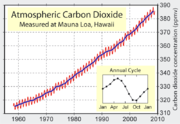 The concentration of in the atmosphere
is rising due to deforestation
and the combustion
of fossil fuels. Plants use as a substrate
in photosynthesis
and it was previously thought that as the concentration of rises that the efficiency
of photosyntheis would increase leading to increased growth. Studies using Free-air concentration enrichment
have however shown that crop yields are only increased by up to 8%. Studies of specimens in herbarium
s have shown that the number of stomata on leaves has decreased over the last 150 years as the concentration of has risen. Stomata let diffuse
into the leaf but let water leave at the same time. Plants are acclimating to increased concentrations by having fewer stomata because they allow the same amount of into the leaf as before yet they use less water. It has also been found that the nitrogen level falls when plants are grown at elevated due to plants needing less rubisco
to fix the same amount of . The levels of other micronutrients also fall which may have consequences for human nutrition in the future.
can have major influences on human physiology
. Environmental effects on human physiology are numerous; one of the most carefully studied effects is the alterations in thermoregulation
in the body due to outside stresses
. This is necessary because in order for enzyme
s to function, blood
to flow, and for various body organ
s to operate, temperature
must remain at consistent, balanced levels.
The hypothalamus plays an important role in thermoregulation. It connects to thermal receptors in the dermis
, and detects changes in surrounding blood to make decisions of whether to stimulate internal heat production, or to stimulate evaporation.
There are two main types of stresses that can be experienced due to extreme, environmental temperatures; heat stress and cold stress.
Heat stress is physiologically combated in four ways: radiation
, conduction
, convection
, and evaporation
. Cold stress is physiologically combated by shivering, accumulation of body fat, circulatory adaptations (that provide an efficient transfer of heat to the epidermis), and increased blood flow to the extremities.
There is one part of the body fully equipped to deal with cold stress. The respiratory system
protects itself against damage by warming the incoming air to 80-90 degrees Fahrenheit before it reaches the bronchi. This means that not even the most frigid of temperatures can damage the respiratory tract.
In both types of temperature related stress, it is important to remain well hydrated. Hydration reduces cardiovascular strain, enhances the ability of energy processes to occur, and reduces feelings of exhaustion.
, increased RBC synthesis, enhanced circulation, and increased levels of the glycolysis byproduct 2,3 diphosphoglycerate which promotes off-loading of O2 by hemoglobin in the hypoxic tissues.
Environmental factors can play a huge role in the human body's fight for homeostasis
. Fortunately, humans have found ways to adapt, both physiologically
and tangibly.
(1915–2007) was also an important contributor to this specific scientific field as well as comparative physiology
.
Hermann Rahn
(1912–1990) was a early leader in the field of environmental physiology. Starting out in the field of zoology with a PhD from University of Rochester
(1933), Rahn began teaching physiology at the University of Rochester
in 1941. It was there that he partnered with Wallace O. Fenn to publish A Graphical Analysis of the Respiratory Gas Exchange in 1955. This paper included the landmark O2-CO2 diagram, which formed basis for much of Rahn's future work. Rahn's research into applications of this diagram lead to the development of aerospace medicine and advancements in hyperbaric breathing and high-altitude respiration. Rahn later joined the University at Buffalo in 1956 as the Lawrence D. Bell Professor and Chairman of the Department of Physiology. As Chairman, Rahn surrounded himself with outstanding faculty and made the University an international research center in environmental physiology.
Biology
Biology is a natural science concerned with the study of life and living organisms, including their structure, function, growth, origin, evolution, distribution, and taxonomy. Biology is a vast subject containing many subdivisions, topics, and disciplines...
discipline which studies the adaptation of organism
Organism
In biology, an organism is any contiguous living system . In at least some form, all organisms are capable of response to stimuli, reproduction, growth and development, and maintenance of homoeostasis as a stable whole.An organism may either be unicellular or, as in the case of humans, comprise...
's physiology
Physiology
Physiology is the science of the function of living systems. This includes how organisms, organ systems, organs, cells, and bio-molecules carry out the chemical or physical functions that exist in a living system. The highest honor awarded in physiology is the Nobel Prize in Physiology or...
to environmental conditions. It is closely related to comparative physiology
Comparative physiology
Comparative physiology is a subdiscipline of physiology that studies and exploits the diversity of functional characteristics of various kinds of organisms. It is closely related to evolutionary physiology and environmental physiology. Many universities offer undergraduate courses that cover...
and evolutionary physiology
Evolutionary physiology
Evolutionary physiology is the study of physiological evolution, which is to say, the manner in which the functional characteristics of individuals in a population of organisms have responded to selection across multiple generations during the history of the population.It is a subdiscipline of both...
.
Plants
Plant ecophysiology is an experimental science that seeks to describe the physiological mechanisms underlying ecological observations. In other words, ecophysiologists, address ecological questions about the controls over the growth, reproduction, survival, abundance, and geographical distribution of plants, as these processes are affected by interactions between plants with their physical, chemical, and biotic environment. These ecophysiological patterns and mechanisms can help us understand the functional significance of specific plant traits and their evolutionary heritage.The questions addressed by ecophysiologists are derived from a higher level of integration, i.e. from “ecology” in its broadest sense, including questions originating from agriculture
Agriculture
Agriculture is the cultivation of animals, plants, fungi and other life forms for food, fiber, and other products used to sustain life. Agriculture was the key implement in the rise of sedentary human civilization, whereby farming of domesticated species created food surpluses that nurtured the...
, horticulture
Horticulture
Horticulture is the industry and science of plant cultivation including the process of preparing soil for the planting of seeds, tubers, or cuttings. Horticulturists work and conduct research in the disciplines of plant propagation and cultivation, crop production, plant breeding and genetic...
, forestry
Forestry
Forestry is the interdisciplinary profession embracing the science, art, and craft of creating, managing, using, and conserving forests and associated resources in a sustainable manner to meet desired goals, needs, and values for human benefit. Forestry is practiced in plantations and natural stands...
, and environmental sciences. However, ecophysiological explanations often require mechanistic understanding at a lower level of integration (physiology
Physiology
Physiology is the science of the function of living systems. This includes how organisms, organ systems, organs, cells, and bio-molecules carry out the chemical or physical functions that exist in a living system. The highest honor awarded in physiology is the Nobel Prize in Physiology or...
, biochemistry
Biochemistry
Biochemistry, sometimes called biological chemistry, is the study of chemical processes in living organisms, including, but not limited to, living matter. Biochemistry governs all living organisms and living processes...
, biophysics
Biophysics
Biophysics is an interdisciplinary science that uses the methods of physical science to study biological systems. Studies included under the branches of biophysics span all levels of biological organization, from the molecular scale to whole organisms and ecosystems...
, molecular biology
Molecular biology
Molecular biology is the branch of biology that deals with the molecular basis of biological activity. This field overlaps with other areas of biology and chemistry, particularly genetics and biochemistry...
). It is therefore essential for an ecophysiologist to appreciate both ecological questions and biophysical, biochemical, and molecular methods and processes. A modern ecophysiologist thus requires a good understanding of both the molecular aspects of plant processes and the functioning of the intact plant in its environmental context.
In addition, many societal issues, often pertaining to agriculture, environmental change or nature conservation, benefit from an ecophysiological perspective. Ecophysiologists may investigate the effects of environmental stresses, e.g. extremes of temperature, light and water availability, on the ability of a plant to metabolise normally. For instance, the physiological impacts can be investigated by measuring chlorophyll fluorescence
Chlorophyll fluorescence
Chlorophyll fluorescence is light that has been re-emitted after being absorbed by chlorophyll molecules of plant leaves. By measuring the intensity and nature of this fluorescence, plant ecophysiology can be investigated....
.
In many cases, animal
Animal
Animals are a major group of multicellular, eukaryotic organisms of the kingdom Animalia or Metazoa. Their body plan eventually becomes fixed as they develop, although some undergo a process of metamorphosis later on in their life. Most animals are motile, meaning they can move spontaneously and...
s are able to escape unfavourable and changing environmental factors such as heat, cold, drought or floods, while plant
Plant
Plants are living organisms belonging to the kingdom Plantae. Precise definitions of the kingdom vary, but as the term is used here, plants include familiar organisms such as trees, flowers, herbs, bushes, grasses, vines, ferns, mosses, and green algae. The group is also called green plants or...
s are unable to move away and therefore must endure the adverse conditions or perish (animals go places, plants grow places). Plants are therefore phenotypically plastic
Phenotypic plasticity
Phenotypic plasticity is the ability of an organism to change its phenotype in response to changes in the environment. Such plasticity in some cases expresses as several highly morphologically distinct results; in other cases, a continuous norm of reaction describes the functional interrelationship...
and have an impressive array of gene
Gene
A gene is a molecular unit of heredity of a living organism. It is a name given to some stretches of DNA and RNA that code for a type of protein or for an RNA chain that has a function in the organism. Living beings depend on genes, as they specify all proteins and functional RNA chains...
s which aid in adapting to changing conditions. It is hypothesized that this large number of genes can be partly explained by plant species' need to adapt to a wider range of conditions.
Temperature
In response to extremes of temperature plants can produce various proteinProtein
Proteins are biochemical compounds consisting of one or more polypeptides typically folded into a globular or fibrous form, facilitating a biological function. A polypeptide is a single linear polymer chain of amino acids bonded together by peptide bonds between the carboxyl and amino groups of...
s that protect them from the damaging effects of ice formation and falling rates of enzyme
Enzyme
Enzymes are proteins that catalyze chemical reactions. In enzymatic reactions, the molecules at the beginning of the process, called substrates, are converted into different molecules, called products. Almost all chemical reactions in a biological cell need enzymes in order to occur at rates...
catalysis at low temperatures and enzyme denaturation
Denaturation (biochemistry)
Denaturation is a process in which proteins or nucleic acids lose their tertiary structure and secondary structure by application of some external stress or compound, such as a strong acid or base, a concentrated inorganic salt, an organic solvent , or heat...
and increased photorespiration
Photorespiration
Photorespiration, or "'photo-respiration'", is a process in plant metabolism by which RuBP has oxygen added to it by the enzyme , instead of carbon dioxide during normal photosynthesis. This is the beginning step of the Calvin-Benson cycle...
at high temperatures. As temperatures fall production of antifreeze protein
Antifreeze protein
Antifreeze proteins or ice structuring proteins refer to a class of polypeptides produced by certain vertebrates, plants, fungi and bacteria that permit their survival in subzero environments. AFPs bind to small ice crystals to inhibit growth and recrystallization of ice that would otherwise be...
s and dehydrin
Dehydrin
Dehydrins are a family of proteins present in plants that are produced in response to low temperatures and drought stress. They may do this through protecting membranes from damage. Their production is induced by ABA and in response to salt. Dehydrins in barley and maize are extremely hydrophilic...
s rise. As temperatures rise production of heat shock protein
Heat shock protein
Heat shock proteins are a class of functionally related proteins involved in the folding and unfolding of other proteins. Their expression is increased when cells are exposed to elevated temperatures or other stress. This increase in expression is transcriptionally regulated...
s rise. Plants can also adapt their morphology
Morphology (biology)
In biology, morphology is a branch of bioscience dealing with the study of the form and structure of organisms and their specific structural features....
(change their shape) to adapt to longer term temperature changes. For example to protect against frost cell wall
Cell wall
The cell wall is the tough, usually flexible but sometimes fairly rigid layer that surrounds some types of cells. It is located outside the cell membrane and provides these cells with structural support and protection, and also acts as a filtering mechanism. A major function of the cell wall is to...
s can be made thicker and stronger (through more lignification
Lignin
Lignin or lignen is a complex chemical compound most commonly derived from wood, and an integral part of the secondary cell walls of plants and some algae. The term was introduced in 1819 by de Candolle and is derived from the Latin word lignum, meaning wood...
) so that water freezes in between cells (in the apoplast
Apoplast
Within a plant, the apoplast is the free diffusional space outside the plasma membrane. It is interrupted by the Casparian strip in roots, air spaces between plant cells and the cuticula of the plant....
) and not in the cells (in the cytoplasm
Cytoplasm
The cytoplasm is a small gel-like substance residing between the cell membrane holding all the cell's internal sub-structures , except for the nucleus. All the contents of the cells of prokaryote organisms are contained within the cytoplasm...
). Cell membrane
Cell membrane
The cell membrane or plasma membrane is a biological membrane that separates the interior of all cells from the outside environment. The cell membrane is selectively permeable to ions and organic molecules and controls the movement of substances in and out of cells. It basically protects the cell...
s are also affected by changes in temperature and can cause the membrane to lose its fluid properties and become a gel in cold conditions or become leaky in hot conditions. This can affect the movement of compounds across the membrane. To prevent these changes plants can change the composition of their membranes. In cold conditions more unsaturated fatty acids are placed in the membrane and in hot conditions more saturated
Saturation (chemistry)
In chemistry, saturation has six different meanings, all based on reaching a maximum capacity...
fatty acids are inserted. Plants adapted to extreme dry and arid climates are known as xerophytic.
Wind
Strong winds can affect plants by uprooting them or damaging their leaves. Whereas responses to temperature changes are often acclimatory there is not enough time for this to occur to wind and so plants must be permanently adaptedAdaptation
An adaptation in biology is a trait with a current functional role in the life history of an organism that is maintained and evolved by means of natural selection. An adaptation refers to both the current state of being adapted and to the dynamic evolutionary process that leads to the adaptation....
to survive potentially damaging winds. Examples of adaptations to prevent damage include having leaves with thick cuticle
Cuticle
A cuticle , or cuticula, is a term used for any of a variety of tough but flexible, non-mineral outer coverings of an organism, or parts of an organism, that provide protection. Various types of "cuticles" are non-homologous; differing in their origin, structure, function, and chemical composition...
s, and large root
Root
In vascular plants, the root is the organ of a plant that typically lies below the surface of the soil. This is not always the case, however, since a root can also be aerial or aerating . Furthermore, a stem normally occurring below ground is not exceptional either...
systems. One reason that deciduous trees shed their leaves in the autumn is to reduce their surface area and make it less likely that they will be blown over.
Water
Too much or too little water can damage plants. If there is too little water then tissues will dehydrate and the plant may die. If the soil becomes waterlogged then the soil will become anoxic (low in oxygen) which could kill the roots. If tissues become dehydrated they lose turgor which in turn causes abscisic acidAbscisic acid
Abscisic acid , also known as abscisin II and dormin, is a plant hormone. ABA functions in many plant developmental processes, including bud dormancy. It is degraded by the enzyme -abscisic acid 8'-hydroxylase.-Function:...
, a plant hormone
Plant hormone
Plant hormones are chemicals that regulate plant growth, which, in the UK, are termed 'plant growth substances'. Plant hormones are signal molecules produced within the plant, and occur in extremely low concentrations. Hormones regulate cellular processes in targeted cells locally and, when moved...
, to be produced. This travels throughout the plant and has a number of effects. It increases the number of closed stomata, reducing water loss and also stimulates growth of the roots in an attempt to increase the supply of water. Some plants, for example maize
Maize
Maize known in many English-speaking countries as corn or mielie/mealie, is a grain domesticated by indigenous peoples in Mesoamerica in prehistoric times. The leafy stalk produces ears which contain seeds called kernels. Though technically a grain, maize kernels are used in cooking as a vegetable...
and rice
Rice
Rice is the seed of the monocot plants Oryza sativa or Oryza glaberrima . As a cereal grain, it is the most important staple food for a large part of the world's human population, especially in East Asia, Southeast Asia, South Asia, the Middle East, and the West Indies...
are able to produce aerenchyma
Aerenchyma
Aerenchyma is an air channel in the roots of some plants, which allows exchange of gases between the shoot and the root. The channel of large air-filled cavities provides a low-resistance internal pathway for the exchange of gases such as oxygen and ethylene between the plant above the water and...
in their roots if the soil they are growing in becomes waterlogged. These are hollow vessels that allow the diffusion
Diffusion
Molecular diffusion, often called simply diffusion, is the thermal motion of all particles at temperatures above absolute zero. The rate of this movement is a function of temperature, viscosity of the fluid and the size of the particles...
on oxygen into the roots.
concentration
Carbon dioxide in the Earth's atmosphere
The concentration of carbon dioxide in Earth's atmosphere is approximately 392 ppm by volume and rose by 2.0 ppm/yr during 2000–2009. 40 years earlier, the rise was only 0.9 ppm/yr, showing not only increasing concentrations, but also a rapid acceleration of concentrations...
is rising due to deforestation
Deforestation
Deforestation is the removal of a forest or stand of trees where the land is thereafter converted to a nonforest use. Examples of deforestation include conversion of forestland to farms, ranches, or urban use....
and the combustion
Combustion
Combustion or burning is the sequence of exothermic chemical reactions between a fuel and an oxidant accompanied by the production of heat and conversion of chemical species. The release of heat can result in the production of light in the form of either glowing or a flame...
of fossil fuels. Plants use as a substrate
Substrate (chemistry)
In chemistry, a substrate is the chemical species being observed, which reacts with a reagent. This term is highly context-dependent. In particular, in biochemistry, an enzyme substrate is the material upon which an enzyme acts....
in photosynthesis
Photosynthesis
Photosynthesis is a chemical process that converts carbon dioxide into organic compounds, especially sugars, using the energy from sunlight. Photosynthesis occurs in plants, algae, and many species of bacteria, but not in archaea. Photosynthetic organisms are called photoautotrophs, since they can...
and it was previously thought that as the concentration of rises that the efficiency
Efficient energy use
Efficient energy use, sometimes simply called energy efficiency, is the goal of efforts to reduce the amount of energy required to provide products and services. For example, insulating a home allows a building to use less heating and cooling energy to achieve and maintain a comfortable temperature...
of photosyntheis would increase leading to increased growth. Studies using Free-air concentration enrichment
Free-Air Concentration Enrichment
Free-Air Carbon dioxide Enrichment is a method used by ecologists and plant biologists that raises the concentration of in a specified area and allows the response of plant growth to be measured...
have however shown that crop yields are only increased by up to 8%. Studies of specimens in herbarium
Herbarium
In botany, a herbarium – sometimes known by the Anglicized term herbar – is a collection of preserved plant specimens. These specimens may be whole plants or plant parts: these will usually be in a dried form, mounted on a sheet, but depending upon the material may also be kept in...
s have shown that the number of stomata on leaves has decreased over the last 150 years as the concentration of has risen. Stomata let diffuse
Diffusion
Molecular diffusion, often called simply diffusion, is the thermal motion of all particles at temperatures above absolute zero. The rate of this movement is a function of temperature, viscosity of the fluid and the size of the particles...
into the leaf but let water leave at the same time. Plants are acclimating to increased concentrations by having fewer stomata because they allow the same amount of into the leaf as before yet they use less water. It has also been found that the nitrogen level falls when plants are grown at elevated due to plants needing less rubisco
RuBisCO
Ribulose-1,5-bisphosphate carboxylase oxygenase, commonly known by the shorter name RuBisCO, is an enzyme involved in the first major step of carbon fixation, a process by which atmospheric carbon dioxide is converted by plants to energy-rich molecules such as glucose. RuBisCo is an abbreviation...
to fix the same amount of . The levels of other micronutrients also fall which may have consequences for human nutrition in the future.
Humans
The environmentEnvironment (biophysical)
The biophysical environment is the combined modeling of the physical environment and the biological life forms within the environment, and includes all variables, parameters as well as conditions and modes inside the Earth's biosphere. The biophysical environment can be divided into two categories:...
can have major influences on human physiology
Physiology
Physiology is the science of the function of living systems. This includes how organisms, organ systems, organs, cells, and bio-molecules carry out the chemical or physical functions that exist in a living system. The highest honor awarded in physiology is the Nobel Prize in Physiology or...
. Environmental effects on human physiology are numerous; one of the most carefully studied effects is the alterations in thermoregulation
Thermoregulation
Thermoregulation is the ability of an organism to keep its body temperature within certain boundaries, even when the surrounding temperature is very different...
in the body due to outside stresses
Stress (medicine)
Stress is a term in psychology and biology, borrowed from physics and engineering and first used in the biological context in the 1930s, which has in more recent decades become commonly used in popular parlance...
. This is necessary because in order for enzyme
Enzyme
Enzymes are proteins that catalyze chemical reactions. In enzymatic reactions, the molecules at the beginning of the process, called substrates, are converted into different molecules, called products. Almost all chemical reactions in a biological cell need enzymes in order to occur at rates...
s to function, blood
Blood
Blood is a specialized bodily fluid in animals that delivers necessary substances such as nutrients and oxygen to the cells and transports metabolic waste products away from those same cells....
to flow, and for various body organ
Organ (anatomy)
In biology, an organ is a collection of tissues joined in structural unit to serve a common function. Usually there is a main tissue and sporadic tissues . The main tissue is the one that is unique for the specific organ. For example, main tissue in the heart is the myocardium, while sporadic are...
s to operate, temperature
Temperature
Temperature is a physical property of matter that quantitatively expresses the common notions of hot and cold. Objects of low temperature are cold, while various degrees of higher temperatures are referred to as warm or hot...
must remain at consistent, balanced levels.
Thermoregulation
To achieve this, the body alters three main things to achieve a constant, normal body temperature:- Heat transfer to the epidermis
- The rate of evaporationEvaporationEvaporation is a type of vaporization of a liquid that occurs only on the surface of a liquid. The other type of vaporization is boiling, which, instead, occurs on the entire mass of the liquid....
- The rate of heat production
The hypothalamus plays an important role in thermoregulation. It connects to thermal receptors in the dermis
Dermis
The dermis is a layer of skin between the epidermis and subcutaneous tissues, and is composed of two layers, the papillary and reticular dermis...
, and detects changes in surrounding blood to make decisions of whether to stimulate internal heat production, or to stimulate evaporation.
There are two main types of stresses that can be experienced due to extreme, environmental temperatures; heat stress and cold stress.
Heat stress is physiologically combated in four ways: radiation
Thermal radiation
Thermal radiation is electromagnetic radiation generated by the thermal motion of charged particles in matter. All matter with a temperature greater than absolute zero emits thermal radiation....
, conduction
Heat conduction
In heat transfer, conduction is a mode of transfer of energy within and between bodies of matter, due to a temperature gradient. Conduction means collisional and diffusive transfer of kinetic energy of particles of ponderable matter . Conduction takes place in all forms of ponderable matter, viz....
, convection
Convection
Convection is the movement of molecules within fluids and rheids. It cannot take place in solids, since neither bulk current flows nor significant diffusion can take place in solids....
, and evaporation
Evaporation
Evaporation is a type of vaporization of a liquid that occurs only on the surface of a liquid. The other type of vaporization is boiling, which, instead, occurs on the entire mass of the liquid....
. Cold stress is physiologically combated by shivering, accumulation of body fat, circulatory adaptations (that provide an efficient transfer of heat to the epidermis), and increased blood flow to the extremities.
There is one part of the body fully equipped to deal with cold stress. The respiratory system
Respiratory system
The respiratory system is the anatomical system of an organism that introduces respiratory gases to the interior and performs gas exchange. In humans and other mammals, the anatomical features of the respiratory system include airways, lungs, and the respiratory muscles...
protects itself against damage by warming the incoming air to 80-90 degrees Fahrenheit before it reaches the bronchi. This means that not even the most frigid of temperatures can damage the respiratory tract.
In both types of temperature related stress, it is important to remain well hydrated. Hydration reduces cardiovascular strain, enhances the ability of energy processes to occur, and reduces feelings of exhaustion.
Altitude
Extreme temperatures are not the only obstacles that humans face. High altitudes also pose serious physiological challenges on the body. Some of these effects are reduced arterial P02, the rebalancing of the acid-base content in body fluids, increased hemoglobinHemoglobin
Hemoglobin is the iron-containing oxygen-transport metalloprotein in the red blood cells of all vertebrates, with the exception of the fish family Channichthyidae, as well as the tissues of some invertebrates...
, increased RBC synthesis, enhanced circulation, and increased levels of the glycolysis byproduct 2,3 diphosphoglycerate which promotes off-loading of O2 by hemoglobin in the hypoxic tissues.
Environmental factors can play a huge role in the human body's fight for homeostasis
Homeostasis
Homeostasis is the property of a system that regulates its internal environment and tends to maintain a stable, constant condition of properties like temperature or pH...
. Fortunately, humans have found ways to adapt, both physiologically
Physiology
Physiology is the science of the function of living systems. This includes how organisms, organ systems, organs, cells, and bio-molecules carry out the chemical or physical functions that exist in a living system. The highest honor awarded in physiology is the Nobel Prize in Physiology or...
and tangibly.
Scientists
George A. Bartholomew (1919–2006) was a founder of animal physiological ecology. He served on the faculty at UCLA from 1947 to 1989, and almost 1,200 individuals can trace their academic lineages to him. Knut Schmidt-NielsenKnut Schmidt-Nielsen
Knut Schmidt-Nielsen was a prominent figure in the field of comparative physiology and Professor of Physiology Emeritus at Duke University.-Background:...
(1915–2007) was also an important contributor to this specific scientific field as well as comparative physiology
Comparative physiology
Comparative physiology is a subdiscipline of physiology that studies and exploits the diversity of functional characteristics of various kinds of organisms. It is closely related to evolutionary physiology and environmental physiology. Many universities offer undergraduate courses that cover...
.
Hermann Rahn
Hermann Rahn
Hermann Rahn was an early leader in the field of environmental physiology. Starting out in the field of zoology with a PhD from University of Rochester , Rahn began teaching physiology at the University of Rochester in 1941. It was there that he partnered with Wallace O. Fenn to publish A...
(1912–1990) was a early leader in the field of environmental physiology. Starting out in the field of zoology with a PhD from University of Rochester
University of Rochester
The University of Rochester is a private, nonsectarian, research university in Rochester, New York, United States. The university grants undergraduate and graduate degrees, including doctoral and professional degrees. The university has six schools and various interdisciplinary programs.The...
(1933), Rahn began teaching physiology at the University of Rochester
University of Rochester
The University of Rochester is a private, nonsectarian, research university in Rochester, New York, United States. The university grants undergraduate and graduate degrees, including doctoral and professional degrees. The university has six schools and various interdisciplinary programs.The...
in 1941. It was there that he partnered with Wallace O. Fenn to publish A Graphical Analysis of the Respiratory Gas Exchange in 1955. This paper included the landmark O2-CO2 diagram, which formed basis for much of Rahn's future work. Rahn's research into applications of this diagram lead to the development of aerospace medicine and advancements in hyperbaric breathing and high-altitude respiration. Rahn later joined the University at Buffalo in 1956 as the Lawrence D. Bell Professor and Chairman of the Department of Physiology. As Chairman, Rahn surrounded himself with outstanding faculty and made the University an international research center in environmental physiology.
See also
- Comparative physiologyComparative physiologyComparative physiology is a subdiscipline of physiology that studies and exploits the diversity of functional characteristics of various kinds of organisms. It is closely related to evolutionary physiology and environmental physiology. Many universities offer undergraduate courses that cover...
- Evolutionary physiologyEvolutionary physiologyEvolutionary physiology is the study of physiological evolution, which is to say, the manner in which the functional characteristics of individuals in a population of organisms have responded to selection across multiple generations during the history of the population.It is a subdiscipline of both...
- EcologyEcologyEcology is the scientific study of the relations that living organisms have with respect to each other and their natural environment. Variables of interest to ecologists include the composition, distribution, amount , number, and changing states of organisms within and among ecosystems...
- Phylogenetic comparative methodsPhylogenetic comparative methodsPhylogenetic comparative methods use information on the evolutionary relationships of organisms to compare species...
- Plant physiologyPlant physiologyPlant physiology is a subdiscipline of botany concerned with the functioning, or physiology, of plants. Closely related fields include plant morphology , plant ecology , phytochemistry , cell biology, and molecular biology.Fundamental processes such as photosynthesis, respiration, plant nutrition,...
- Raymond B. HueyRaymond B. HueyRaymond B. Huey is a biologist specializing in evolutionary physiology. He has taught at the University of Washington , and he earned his Ph.D. in biology at Harvard University under E. E. Williams. He is currently the chairman of the UW Biology Department.-Education:Huey earned his A.B...
- Theodore Garland, Jr.Theodore Garland, Jr.Theodore Garland, Jr. is a biologist specializing in evolutionary physiology. He was on the faculty at the University of Wisconsin–Madison for 14 years, served at the National Science Foundation for one year, and is currently Professor of Biology at the University of California, Riverside. He...
Further reading
- Spicer, J. I., and K. J. Gaston. 1999. Physiological diversity and its ecological implications. Blackwell Science, Oxford, U.K. x + 241 pp.. Definitions and Opinions by: G. A. Bartholomew, A. F. Bennett, W. D. Billings, B. F. Chabot, D. M. Gates, B. Heinrich, R. B. Huey, D. H. Janzen, J. R. King, P. A. McClure, B. K. McNab, P. C. Miller, P. S. Nobel, B. R. Strain.