

Chinese herbology

Encyclopedia
Chinese Herbology is the theory of Traditional Chinese herbal therapy, which accounts for the majority of treatments in Traditional Chinese medicine
(TCM).
The term herbology is misleading in so far as plant elements are by far the most commonly, but not solely used substances; animal, human, and mineral products are also utilized. Thus, the term "medicinal" (instead of herb
) is usually preferred as a translation for 药 .
.jpg)
 Chinese herbs have been used for centuries. Among the earliest literature are lists of prescriptions for specific ailments, exemplified by the manuscript "Recipes for 52 Ailments", found in the Mawangdui tombs which were sealed in 168 BC.
The first traditionally recognized herbalist is Shénnóng
(神农, lit. "Divine Farmer"), a mythical god-like figure, who is said to have lived around 2800 BC. He allegedly tasted hundreds of herbs and imparted his knowledge of medicinal and poisonous plants to farmers. His Shénnóng Běn Cǎo Jīng (神农本草经, Shennong's Materia Medica
) is considered as the oldest book on Chinese herbal medicine. It classifies 365 species of roots, grass, woods, furs, animals and stones into three categories of herbal medicine:
The original text of Shennong's Materia Medica has been lost; however, there are extant translations. The true date of origin is believed to fall into the late Western Han dynasty (i.e., the first century BC).
The Treatise on Cold Damage Disorders and Miscellaneous Illnesses was collated by Zhang Zhongjing
, also sometime at the end of the Han dynasty
, between 196 and 220 CE. Focusing on drug prescriptions, it was the first medical work to combine Yinyang
and the Five Phases
with drug therapy. This formulary
was also the earliest Chinese medical text to group symptoms into clinically useful "patterns" (zheng 證) that could serve as targets for therapy. Having gone through numerous changes over time, it now circulates as two distinct books: the Treatise on Cold Damage Disorders
and the Essential Prescriptions of the Golden Casket, which were edited separately in the eleventh century, under the Song dynasty
.
Succeeding generations augmented these works, as in the Yaoxing Lun
(simplified Chinese: 药性论; traditional Chinese: 藥性論; literally "Treatise on the Nature of Medicinal Herbs"), a 7th century Tang Dynasty
Chinese treatise on herbal medicine.
Arguably the most important of these later works is the Compendium of Materia Medica
(Bencao Gangmu) compiled during the Ming dynasty
by Li Shizhen
, which is still used today for consultation and reference.
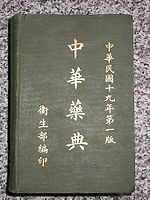
 There are roughly 13,000 medicinals used in China and over 100,000 medicinal recipes recorded in the ancient literature. Plant elements and extracts are by far the most common elements used. In the classic Handbook of Traditional Drugs from 1941, 517 drugs were listed - out of these, only 45 were animal parts, and 30 were minerals. For many plants used as medicinals, detailed instructions have been handed down not only regarding the locations and areas where they grow best, but also regarding the best timing of planting and harvesting them.
Some animal parts used as medicinals can be considered rather strange such as cows' gallstones. In general, Chinese traditional medicine emphasizes the penis of animals as therapeutic. Snake oil
, which is used traditionally for joint pain as a liniment
, is the most widely known Chinese medicine in the west, due to extensive marketing in the west in the late 1800s and early 1900s, and wild claims of its efficacy to treat many maladies; however, there is no clinical evidence that it is effective.
Traditional Chinese Medicine also includes some human parts: the classic Materia medica
(Bencao Gangmu) describes the use of 35 human body parts and excreta in medicines, including bones, fingernail, hairs, dandruff, earwax, impurities on the teeth, feces, urine, sweat, organs, but most are no longer in use.
.jpg)
 Each herbal medicine prescription is a cocktail of many substances, usually tailored to the individual patient.
, which includes one or two main ingredients that target the illness. Then other ingredients are added to adjust the formula to the patient's individual disease pattern. Ingredients are also added in order to cancel out toxicity or side-effects of the main ingredients; on top of that, some medicinals require the use of other substances as catalysts. Overall, the balance and interaction of all the ingredients are considered more important than the effect of a single ingredients.
: zhōngchéng yào) is a kind of traditional Chinese medicine
. They are standardized herbal
formulas. From ancient times, pills were formed by combining several herbs and other ingredients, which were dried and ground into a powder. They were then mixed with a binder and formed into pills by hand. The binder
was traditionally honey. Modern teapills, however, are extracted in stainless steel extractors to create either a water decoction or water-alcohol decoction, depending on the herbs used. They are extracted at a low temperature (below 100 degrees Celsius) to preserve essential ingredients. The extracted liquid is then further condensed, and some raw herb powder from one of the herbal ingredients is mixed in to form an herbal dough. This dough is then machine cut into tiny pieces, a small amount of excipients are added for a smooth and consistent exterior, and they are spun into pills. Teapills are characteristically little round black pills.
Chinese patent medicines are easy and convenient. They are not easy to customize on a patient-by-patient basis, however. They are often used when a patient's condition is not severe and the medicine can be taken as a long-term treatment.
These medicines are not patent
ed in the traditional sense of the word. No one has exclusive right
s to the formula. Instead, "patent" refers to the standardization
of the formula. In China, all Chinese patent medicines of the same name will have the same proportions of ingredients, and manufactured in accordance with the PRC Pharmacopoeia, which is mandated by law. However, in western countries there may be variations in the proportions of ingredients in patent medicines of the same name, and even different ingredients altogether.
Several producers of Chinese herbal medicines are pursuing FDA clinical trials to market their products as drugs in U.S. and European markets.
, but also to the meridian-associated zàng-organ, which can be expected to be primarily affected by a given medicinal (there are 12 standard meridians in the body a medicinal can act upon). For example, traditional beliefs hold that menthol is pungent and cool and goes to the Lung and the Liver channels. The Traditional Chinese concept of the Lungs includes the function of protecting the body from colds, and menthol is thought to cool the Lungs and purge heat toxins caused by wind-heat invasion (one of the patterns of common cold).
. The toxicity in some cases could be confirmed by modern research (i.e., in scorpion
); in some cases it couldn't (i.e., in curculigo
).
Substances known to be potentially dangerous include aconite
, secretions from the Asiatic toad
, powdered centipede, the Chinese beetle (Mylabris phalerata, Ban mao), and certain fungi. Further, ingredients may have different names in different locales or in historical texts, and different preparations may have similar names for the same reason, which can create inconsistencies and confusion in the creation of medicinals, with the possible danger of poisoning.
, compared to conventional medicine such as NSAIDs and the oral contraceptive pill, but the findings have to be interpreted with caution due to the generally low methodological quality of the included studies (as, amongst others, data for
placebo control could not be obtained).
 Animal products are used in certain Chinese preparations, which may disturb conservationist
s, vegans, and vegetarians. If informed of such restrictions, however, practitioners can often use alternative substances.
The practice of using endangered species
is controversial within TCM. Modern Materia Medicas such as Bensky, Clavey and Stoger's comprehensive Chinese herbal text discuss substances derived from endangered species in an appendix, emphasizing alternatives.
Poachers supply the black market for such parts of endangered species, including tiger penis
and rhinoceros horn. The black market in rhinoceros horn reduced the world's rhino population by more than 90 percent over the past 40 years. Concerns have also arisen over the use of turtle
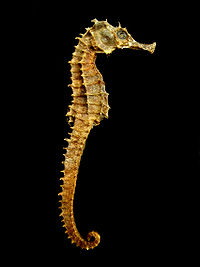
plastron and seahorse
s.
TCM recognizes bear bile as a medicinal. In 1988, the Chinese Ministry of Health started controlling bile production, which previously used bears killed before winter. Now bears are fitted with a sort of permanent catheter
, which is more profitable than killing the bears. More than 12,000 asiatic black bears are held in "bear farms", where they suffer cruel conditions while being held in tiny cages. The catheter leads through a permanent hole in the abdomen directly to the gall bladder, which can cause severe pain.
Increased international attention has mostly stopped the use of bile outside of China; gallbladders from butchered cattle (niú dǎn / 牛膽 / 牛胆) are recommended as a substitute for this ingredient.
(人参, 人參, rénshēn), wolfberry
(枸杞子), Dong Quai (Angelica sinensis
, 当归, 當歸, dāngguī), astragalus
(黄耆, 黃耆, huángqí), atractylodes (白术, 白朮, báizhú), bupleurum (柴胡, cháihú), cinnamon
(cinnamon twigs (桂枝, guìzhī) and cinnamon bark (肉桂, ròuguì)), coptis
(黄莲, 黃蓮, huánglián), ginger (姜, 薑, jiāng), hoelen (茯苓, fúlíng), licorice (甘草, gāncǎo), ephedra sinica (麻黄, 麻黃, máhuáng), peony
(white: 白芍, báisháo and reddish: 赤芍, chìsháo), rehmannia
(地黄, 地黃, dìhuáng), rhubarb
(大黄, 大黃, dàhuáng), and salvia (丹参, 丹參, dānshēn). These are just a few of the herbs.
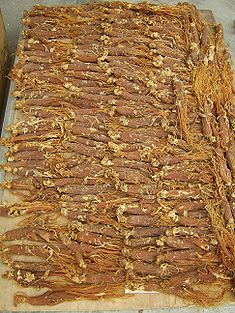 The use of ginseng (人参) is well over two thousand years old in Chinese medicine. Ginseng contains ginsenosides. The amount of ginsenosides in ginseng depends on how the plant was cultivated and the age of the root. Wild ginseng is rare and commands the highest prices on the market, but most ginseng on the market today is a reasonable price. Red Panax ginseng is the most popular form of ginseng and it is usually packaged as a liquid or tea. Ginseng comes in two kinds, red and white. The color of the ginseng depends on how it is processed. White ginseng is unprocessed and dries naturally. Red ginseng is processed with steam and is believed to be more effective. Native Americans have used American ginseng for dry coughs, constipation, and fevers.
TCM Information: Species: Panax ginseng. Pinyin: Ren Shen. Common Name: Chinese Ginseng. Quality: Sweet, Bitter, Warm. Meridians: Lung, Spleen, Heart. Actions: Tonifies yuan qi to treat collapse of qi, tonifies spleen and lung, generates fluids, mildly tonifies heart qi.
Species: Elutherococcus senticosus. Pinyin: Ci Wu Jia. Common Name: Siberian Ginseng. Quality: Pungent (Acrid), Slightly bitter, Warm. Meridians: Spleen, Heart, Kidney. Actions: Tonifies spleen and kidney, mildly tonifies heart qi, promote blood circulation, calms shen.
Species: Panax quinquefolius. Pinyin: Xi Yang Shen. Common Name: American Ginseng. Quality: Sweet, Slightly bitter, Cold. Meridians: Heart, Kidney, Lung. Actions: Tonifies lung and spleen qi, tonifies lung yin, cools fire from lung yin deficiency, generates fluids.
.
(枸杞子) is grown in the Far East and is grown from shrubs with long vines. The shrubs are covered with small trumpet-shaped flowers, which turn into small, bright red berries. The berries are usually fresh and sometimes used when it is dried.
TCM Information: Species: Lycium barbarum. Pinyin: Gou Qi Zi. Common Name: Chinese Wolfberry. Quality: Sweet, Neutral. Meridians: Liver, Lung, Kidney. Actions: Tonifies kidney and lung yin, tonifies liver blood, tonifies jing, improves vision.
TCM Information: Species: Angelica sinensis. Pinyin: Dang Gui. Common Name: Chinese Angelica Root. Quality: Sweet, Pungent(Acrid), Warm. Meridians: Liver, Heart, Spleen. Actions: Tonify blood, invigorate blood, regulate menstruation, relieve pain, unblock bowels by moistening intestine.
(黄耆) is a root used for immune deficiencies and allergies.
TCM Information: Species: Astragalus membranaceus. Pinyin: Huang Qi. Common Name: Astragalus Root, Milkvetch Root. Quality: Sweet, Slightly warm. Meridians: Lung, Spleen. Actions: Raise yang qi to treat prolapse, tonify spleen and lung qi, tonify wei qi, increases urination, promotes drainage of pus, generates flesh.
(白术) is believed to be important in the treatment of digestive disorders and problems of moisture accumulation.
TCM Information: Species: Atractylodes lancea. Pinyin: Cang Zhu. Common Name: Atractylodes Rhizome. Quality: Pungent(Acrid), Bitter, Warm. Meridians: Spleen, Stomach. Actions: Strong to dry dampness, strengthens the spleen, induce sweating, expel wind-cold, clears damp-heat from lower jiao, improves vision.
(柴胡) is believed to be useful for the treatment of liver diseases, skin ailments, arthritis, menopausal syndrome, withdrawal from corticosteroid use, nephritis, stress-induced ulcers, and mental disorders.
TCM Information: Species: Bupleurnum chinense. Pinyin: Chai Hu. Common Name: Hare's Ear Root. Quality: Bitter, Pungent(Acrid), Cool. Meridians: Gallbladder, Liver, Pericardium, San Jiao. Actions: Treats alternating chills and fever, clears lesser yang disorders, relieves liver qi stagnation, raises yang qi to treat prolapse, treats certain menstrual disorders.
Studies show that cinnamon reduces serum glucose, triglyceride, LDL cholesterol, and total cholesterol in people with type 2 diabetes, and the findings suggest that the inclusion of cinnamon in the diet of people with type 2 diabetes will reduce risk factors associated with diabetes and cardiovascular diseases.
TCM Information: Species: Cinnamomum cassia. Pinyin: Gui Zhi. Common Name: Cinnamon Twig. Quality: Pungent (Acrid), Sweet, Warm. Meridians: Heart, Lung, Bladder. Actions: Induce sweating, warms and unblocks channels, unblocks yang qi of the chest, treats dysmenorrhea.
Species: Cinnamomum cassia. Pinyin: Rou Gui. Common Name: Cinnamon Bark. Quality: Pungent (Acrid), Sweet, Hot. Meridians: Heart, Kidney, Liver, Spleen. Actions: Tonifies kidney yang, leads fire back to its source, disperses cold, encourages generation of qi and blood, promotes blood circulation, alleviates pain due to cold, dysmenorrhea.
(黄莲) is a rhizome that is one of the bitterest herbs used in Chinese medicine.
TCM Information: Species: Coptis chinensis. Pinyin: Huang Lian. Common Name: Coptis Rhizome. Qualities: Bitter, Cold. Meridians: Heart, Large Intestine, Liver, Stomach. Actions: Clears heat and drains damp, drains fire(especially from heart and stomach), eliminates toxicity.
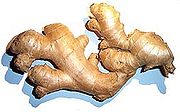
TCM Information: Species: Zingiber officinalis. Pinyin: Sheng Jiang. Common Name: Fresh Ginger Rhizome. Quality: Pungent(Acrid), Slightly warm. Meridians: Lung, Spleen, Stomach. Actions: Release the exterior, expel cold, warm the middle jiao, relieve nausea, transform phlegm, warm lung to stop coughing, treat toxicity, and moderate the toxicity of other herbs.
Species: Zingiber officinalis. Pinyin: Gan Jiang. Common Name: Dried Ginger Rhizome. Quality: Pungent(Acrid), Hot. Meridians: Heart, Lung, Spleen, Stomach. Actions: Warms the spleen and stomach, restores devastated yang, warms the lung to transform thin mucus, warms and unblocks channels.
TCM Information: Species: Glycyrrhiza inflata or Glycyrrhiza glabra. Pinyin: Gan Cao. Common Name: Licorice Root. Quality: Sweet, Neutral. Meridians: All 12 channels, but mainly Heart, Lung, Spleen, Stomach. Actions: Tonify spleen qi, moisten lung for dry cough, clears heat and fire toxicity, tonifies heart qi to regulate pulse, alleviates spasmodic pain, antidote for toxicity, moderates the effects of harsh herbs.
(麻黄)
TCM Information: Species: Ephedra sinica or Ephedra intermedia. Pinyin: Ma Huang. Common Name: Ephedra Stem. Quality: Pungent(Acrid), Slightly Bitter, Warm. Meridians: Lung, Bladder. Actions: Induce sweating and release exterior for wind-cold invasion with no sweating, promotes urination, move lung qi for wheezing, cough or asthma.
(白芍, 赤芍) comes in two varieties: bai shao(white) and chi shao (red), the root of the plant is used in both varieties.
TCM Information: Species: Paeonia lactiflora. Pinyin: Bai Shao. Common Name: White Peony Root. Quality: Bitter, Sour, Cool. Meridians: Liver, Spleen. Actions: Tonify liver blood, calms liver yang, alleviates flank/abdominal pain from liver qi stagnation or liver and spleen disharmony, preserves yin and adjusts nutritive and protective levels, regulates menses for blood deficiency problem.
Species: Paeonia lactiflora or Paeonia veitchii. Pinyin: Chi Shao. Common Name: Red Peony Root. Quality: Sour, Bitter, Cool. Meridians: Liver, Spleen. Actions: Clears heat, cools blood, invigorates blood and dispel stasis to treat irregular menses, dysmenorrhoea, amenorrhea, abdominal pain, and fixed abdominal masses.
(地黄) is a root where the dark, moist part of the herb is used.
TCM Information: Species: Rehmannia glucinosa. Pinyin: Sheng Di Huang. Common Name: Chinese Foxglove Root. Qualities: Sweet, Bitter, Cold. Meridians: Heart, Kidney, Liver. Actions: Clears heat, cools blood, nourishes yin, generates fluids, treats wasting and thirsting disorder.
Species: Rehmannia glucinosa. Pinyin: Shu Di Huang. Common Name: Chinese Foxglove Root Prepared with Wine. Qualities: Sweet, Slightly warm. Meridians: Heart, Kidney, Liver. Actions: Tonifies blood, tonifies liver and kidney yin, treats wasting and thirsting disorder, nourishes jing.
TCM Information: Species: Rheum palmatum, Rheum ranguticum, or Rheum officinale. Pinyin: Da Huang. Common Name: Rhubarb Root and Rhizome. Quality: Bitter, Cold. Meridians: Heart, Large Intestine, Liver, Stomach. Actions: Purge accumulation, cool blood, invigorate blood, drain damp-heat.
(丹参) are the deep roots of the Chinese sage plant.
TCM Information: Species: Salvia miltiorrhiza. Pinyin: Dan Shen. Common Name: Salvia Root. Qualities: Bitter, Cool. Meridians: Heart, Pericardium, Liver. Actions: Invigorate blood, tonify blood, regulate menstruation, clear heat and soothe irritability.
Traditional Chinese medicine
Traditional Chinese Medicine refers to a broad range of medicine practices sharing common theoretical concepts which have been developed in China and are based on a tradition of more than 2,000 years, including various forms of herbal medicine, acupuncture, massage , exercise , and dietary therapy...
(TCM).
The term herbology is misleading in so far as plant elements are by far the most commonly, but not solely used substances; animal, human, and mineral products are also utilized. Thus, the term "medicinal" (instead of herb
Herb
Except in botanical usage, an herb is "any plant with leaves, seeds, or flowers used for flavoring, food, medicine, or perfume" or "a part of such a plant as used in cooking"...
) is usually preferred as a translation for 药 .
History
The first traditionally recognized herbalist is Shénnóng
Shennong
Shennong , which names mean "Divine Farmer", but also known as the Emperor of the Five Grains , was a legendary ruler of China and culture hero reputed to have lived some 5,000 years ago...
(神农, lit. "Divine Farmer"), a mythical god-like figure, who is said to have lived around 2800 BC. He allegedly tasted hundreds of herbs and imparted his knowledge of medicinal and poisonous plants to farmers. His Shénnóng Běn Cǎo Jīng (神农本草经, Shennong's Materia Medica
Materia medica
Materia medica is a Latin medical term for the body of collected knowledge about the therapeutic properties of any substance used for healing . The term 'materia medica' derived from the title of a work by the Ancient Greek physician Pedanius Dioscorides in the 1st century AD, De materia medica libre...
) is considered as the oldest book on Chinese herbal medicine. It classifies 365 species of roots, grass, woods, furs, animals and stones into three categories of herbal medicine:
- The "superior" category, which includes herbs effective for multiple diseases and are mostly responsible for maintaining and restoring the body balance. They have almost no unfavorable side-effects.
- A category comprising tonics and boosters, whose consumption must not be prolonged.
- A category of substances which must usually be taken in small doses, and for the treatment of specific diseases only.
The original text of Shennong's Materia Medica has been lost; however, there are extant translations. The true date of origin is believed to fall into the late Western Han dynasty (i.e., the first century BC).
The Treatise on Cold Damage Disorders and Miscellaneous Illnesses was collated by Zhang Zhongjing
Zhang Zhongjing
Zhang Zhongjing , formal name Zhang Ji, was a Han Dynasty physician and one of the most eminent Chinese physicians during the later years of the Han Dynasty...
, also sometime at the end of the Han dynasty
Han Dynasty
The Han Dynasty was the second imperial dynasty of China, preceded by the Qin Dynasty and succeeded by the Three Kingdoms . It was founded by the rebel leader Liu Bang, known posthumously as Emperor Gaozu of Han. It was briefly interrupted by the Xin Dynasty of the former regent Wang Mang...
, between 196 and 220 CE. Focusing on drug prescriptions, it was the first medical work to combine Yinyang
Yin and yang
In Asian philosophy, the concept of yin yang , which is often referred to in the West as "yin and yang", is used to describe how polar opposites or seemingly contrary forces are interconnected and interdependent in the natural world, and how they give rise to each other in turn. Opposites thus only...
and the Five Phases
Wuxing
Wuxing may refer to:*Wu Xing , concept in Chinese philosophy*Wuxing , a Chinese "Warring States" text*Flag of the People's Republic of China, also known as the "Five-starred red flag"...
with drug therapy. This formulary
Formulary (pharmacy)
At its most basic level, a formulary is a list of medicines. Traditionally, a formulary contained a collection of formulas for the compounding and testing of medication . The main function of formularies today is to specify which medicines are approved to be prescribed under a particular contract...
was also the earliest Chinese medical text to group symptoms into clinically useful "patterns" (zheng 證) that could serve as targets for therapy. Having gone through numerous changes over time, it now circulates as two distinct books: the Treatise on Cold Damage Disorders
Shang Han Lun
The Shang Han Lun or Shang Han Za Bing Lun , known in English as the Treatise on Cold Damage Disorders or the Treatise on Cold Injury, is a Chinese medical treatise that was compiled by Zhang Zhongjing sometime before the year 220, at the end of the Han dynasty...
and the Essential Prescriptions of the Golden Casket, which were edited separately in the eleventh century, under the Song dynasty
Song Dynasty
The Song Dynasty was a ruling dynasty in China between 960 and 1279; it succeeded the Five Dynasties and Ten Kingdoms Period, and was followed by the Yuan Dynasty. It was the first government in world history to issue banknotes or paper money, and the first Chinese government to establish a...
.
Succeeding generations augmented these works, as in the Yaoxing Lun
Yaoxing Lun
Yaoxing Lun , literally Treatise on the Nature of Medicinal Herbs, is a 7th century Tang Dynasty Chinese treatise on herbal medicine.-See also:*Pharmacognosy*Chinese herbology*Compendium of Materia Medica*Traditional Chinese medicine...
(simplified Chinese: 药性论; traditional Chinese: 藥性論; literally "Treatise on the Nature of Medicinal Herbs"), a 7th century Tang Dynasty
Tang Dynasty
The Tang Dynasty was an imperial dynasty of China preceded by the Sui Dynasty and followed by the Five Dynasties and Ten Kingdoms Period. It was founded by the Li family, who seized power during the decline and collapse of the Sui Empire...
Chinese treatise on herbal medicine.
Arguably the most important of these later works is the Compendium of Materia Medica
Compendium of Materia Medica
Bencao Gangmu , also known as Compendium of Materia Medica, is a Chinese materia medica work written by Li Shizhen in the Ming Dynasty. It is a work epitomizing materia medica in the Ming Dynasty. The Bencao Gangmu is regarded as the most complete and comprehensive medical book ever written in the...
(Bencao Gangmu) compiled during the Ming dynasty
Ming Dynasty
The Ming Dynasty, also Empire of the Great Ming, was the ruling dynasty of China from 1368 to 1644, following the collapse of the Mongol-led Yuan Dynasty. The Ming, "one of the greatest eras of orderly government and social stability in human history", was the last dynasty in China ruled by ethnic...
by Li Shizhen
Li Shizhen
Li Shizhen , courtesy name Dongbi , was one of the greatest Chinese herbologists and acupuncturists in Chinese history. His major contribution to medicine was his 27-year work, which is found in his epic book the Bencao Gangmu...
, which is still used today for consultation and reference.
Raw materials
Some animal parts used as medicinals can be considered rather strange such as cows' gallstones. In general, Chinese traditional medicine emphasizes the penis of animals as therapeutic. Snake oil
Snake oil
Snake oil is a topical preparation made from the Chinese Water Snake , which is used to treat joint pain. However, the most common usage of the phrase is as a derogatory term for quack medicine...
, which is used traditionally for joint pain as a liniment
Liniment
Liniment , from the Latin linere, to anoint, is a medicated topical preparation for application to the skin. Preparations of this type are also called balm...
, is the most widely known Chinese medicine in the west, due to extensive marketing in the west in the late 1800s and early 1900s, and wild claims of its efficacy to treat many maladies; however, there is no clinical evidence that it is effective.
Traditional Chinese Medicine also includes some human parts: the classic Materia medica
Materia medica
Materia medica is a Latin medical term for the body of collected knowledge about the therapeutic properties of any substance used for healing . The term 'materia medica' derived from the title of a work by the Ancient Greek physician Pedanius Dioscorides in the 1st century AD, De materia medica libre...
(Bencao Gangmu) describes the use of 35 human body parts and excreta in medicines, including bones, fingernail, hairs, dandruff, earwax, impurities on the teeth, feces, urine, sweat, organs, but most are no longer in use.
Preparation
Decoction
Typically, one batch of medicinals is prepared as a decoctionDecoction
Decoction is a method of extraction, by boiling, of dissolved chemicals, or herbal or plant material, which may include stems, roots, bark and rhizomes. Decoction involves first mashing, and then boiling in water to extract oils, volatile organic compounds, and other chemical substances...
, which includes one or two main ingredients that target the illness. Then other ingredients are added to adjust the formula to the patient's individual disease pattern. Ingredients are also added in order to cancel out toxicity or side-effects of the main ingredients; on top of that, some medicinals require the use of other substances as catalysts. Overall, the balance and interaction of all the ingredients are considered more important than the effect of a single ingredients.
Chinese patent medicine
Chinese patent medicine (traditional Chinese: 中成藥, Simplified Chinese: 中成药, pinyinPinyin
Pinyin is the official system to transcribe Chinese characters into the Roman alphabet in China, Malaysia, Singapore and Taiwan. It is also often used to teach Mandarin Chinese and spell Chinese names in foreign publications and used as an input method to enter Chinese characters into...
: zhōngchéng yào) is a kind of traditional Chinese medicine
Traditional Chinese medicine
Traditional Chinese Medicine refers to a broad range of medicine practices sharing common theoretical concepts which have been developed in China and are based on a tradition of more than 2,000 years, including various forms of herbal medicine, acupuncture, massage , exercise , and dietary therapy...
. They are standardized herbal
Herbalism
Herbalism is a traditional medicinal or folk medicine practice based on the use of plants and plant extracts. Herbalism is also known as botanical medicine, medical herbalism, herbal medicine, herbology, herblore, and phytotherapy...
formulas. From ancient times, pills were formed by combining several herbs and other ingredients, which were dried and ground into a powder. They were then mixed with a binder and formed into pills by hand. The binder
Binder (material)
-See also:*Adhesive or Glue*Cement*Paint...
was traditionally honey. Modern teapills, however, are extracted in stainless steel extractors to create either a water decoction or water-alcohol decoction, depending on the herbs used. They are extracted at a low temperature (below 100 degrees Celsius) to preserve essential ingredients. The extracted liquid is then further condensed, and some raw herb powder from one of the herbal ingredients is mixed in to form an herbal dough. This dough is then machine cut into tiny pieces, a small amount of excipients are added for a smooth and consistent exterior, and they are spun into pills. Teapills are characteristically little round black pills.
Chinese patent medicines are easy and convenient. They are not easy to customize on a patient-by-patient basis, however. They are often used when a patient's condition is not severe and the medicine can be taken as a long-term treatment.
These medicines are not patent
Patent
A patent is a form of intellectual property. It consists of a set of exclusive rights granted by a sovereign state to an inventor or their assignee for a limited period of time in exchange for the public disclosure of an invention....
ed in the traditional sense of the word. No one has exclusive right
Exclusive right
In Anglo-Saxon law, an exclusive right is a de facto, non-tangible prerogative existing in law to perform an action or acquire a benefit and to permit or deny others the right to perform the same action or to acquire the same benefit. A "prerogative" is in effect an exclusive right...
s to the formula. Instead, "patent" refers to the standardization
Standardization
Standardization is the process of developing and implementing technical standards.The goals of standardization can be to help with independence of single suppliers , compatibility, interoperability, safety, repeatability, or quality....
of the formula. In China, all Chinese patent medicines of the same name will have the same proportions of ingredients, and manufactured in accordance with the PRC Pharmacopoeia, which is mandated by law. However, in western countries there may be variations in the proportions of ingredients in patent medicines of the same name, and even different ingredients altogether.
Several producers of Chinese herbal medicines are pursuing FDA clinical trials to market their products as drugs in U.S. and European markets.
Categorization
There are several different methods to classify traditional Chinese medicinals:- The Four Natures
- The Five Flavors
- The meridiansMeridian (Chinese medicine)The meridian is a path through which the life-energy known as "qi" is believed to flow, in traditional Chinese medicine. There is no physically verifiable anatomical or histological basis for the existence of acupuncture points or meridians.- Main concepts :...
- The specific function.
Four Natures
The Four Natures are: hot, warm, cool, or cold (or, neutral in terms of temperature). Hot and warm herbs are used to treat cold diseases, while cool and cold herbs are used to treat heat diseases.Five Flavors
The Five Flavors, sometimes also translated as Five Tastes, are: acrid, sweet, bitter, sour, and salty. Substances may also have more than one flavor, or none (i.e., a "bland" flavor). Each of the Five Flavors corresponds to one of the zàng organs, which in turn corresponds to one of the Five Phases: A flavor implies certain properties and therapeutic actions of a substance: saltiness "drains downward and softens hard masses"; sweetness is "supplementing, harmonizing, and moistening"; pungent substances are thought to induce sweat and act on qi and blood; bitterness "drains heat, purges the bowels, and eliminates dampness".Meridians
This classification refers not just to the meridianMeridian (Chinese medicine)
The meridian is a path through which the life-energy known as "qi" is believed to flow, in traditional Chinese medicine. There is no physically verifiable anatomical or histological basis for the existence of acupuncture points or meridians.- Main concepts :...
, but also to the meridian-associated zàng-organ, which can be expected to be primarily affected by a given medicinal (there are 12 standard meridians in the body a medicinal can act upon). For example, traditional beliefs hold that menthol is pungent and cool and goes to the Lung and the Liver channels. The Traditional Chinese concept of the Lungs includes the function of protecting the body from colds, and menthol is thought to cool the Lungs and purge heat toxins caused by wind-heat invasion (one of the patterns of common cold).
Specific function
These categories mainly include:- exterior-releasing or exterior-resolving
- heat-clearing
- downward-draining or precipitating
- wind-damp-dispelling
- dampness-transforming
- promoting the movement of water and percolating dampness or dampness-percolating
- interior-warming
- qi-regulating or qi-rectifying
- dispersing food accumulation or food-dispersing
- worm-expelling
- stopping bleeding or blood-stanching
- quickening the Blood and dispelling stasis or blood-quickening or Blood-moving.
- transforming phlegm, stopping coughing and calming wheezing or phlegm-transforming and cough- and panting-suppressing
- Spirit-quieting or Shen-calming.
- calming the Liver and expelling wind or Liver-calming and wind-extinguishing
- orifice-opening
- supplementing or tonifying: this includes qi-supplementing, blood-nourishing, yin-enriching, and yang-fortifying.
- astriction-promoting or securing and astringing
- vomiting-inducing
- substances for external application
Toxicity
From the earliest records regarding the use of medicinals to today, the toxicity of certain substances has been described in all Chinese materiae medicaeMateria medica
Materia medica is a Latin medical term for the body of collected knowledge about the therapeutic properties of any substance used for healing . The term 'materia medica' derived from the title of a work by the Ancient Greek physician Pedanius Dioscorides in the 1st century AD, De materia medica libre...
. The toxicity in some cases could be confirmed by modern research (i.e., in scorpion
Scorpion
Scorpions are predatory arthropod animals of the order Scorpiones within the class Arachnida. They have eight legs and are easily recognized by the pair of grasping claws and the narrow, segmented tail, often carried in a characteristic forward curve over the back, ending with a venomous stinger...
); in some cases it couldn't (i.e., in curculigo
Curculigo
Curculigo is a flowering plant genus in the family Hypoxidaceae....
).
Substances known to be potentially dangerous include aconite
Aconite
Aconite may refer to:*Aconitum, a plant genus containing the monkshoods*Aconitine, "the queen of poisons", a toxin derived from some of the Aconitum genus plants*Winter aconite, a plant in the genus Eranthis...
, secretions from the Asiatic toad
Asiatic toad
The Asiatic toad, or Bufo gargarizans, is a species of toad endemic to East Asia. It is common in China and portions of the Russian Far East The Asiatic toad, or Bufo gargarizans, is a species of toad endemic to East Asia. It is common in China (specifically Anhui, Fujian, Gansu, Guizhou, Hebei,...
, powdered centipede, the Chinese beetle (Mylabris phalerata, Ban mao), and certain fungi. Further, ingredients may have different names in different locales or in historical texts, and different preparations may have similar names for the same reason, which can create inconsistencies and confusion in the creation of medicinals, with the possible danger of poisoning.
Efficacy
Regarding Traditional Chinese herbal therapy, only few trials exist that are considered to be of adequate methodology by modern western medical researchers, and its effectiveness therefore is considered poorly documented. For example, a 2007 Cochrane review found promising evidence for the use of Chinese herbal medicine in relieving painful menstruationDysmenorrhea
Dysmenorrhea is a gynecological medical condition of pain during menstruation that interferes with daily activities, as defined by ACOG and others. Still, dysmenorrhea is often defined simply as menstrual pain, or at least menstrual pain that is excessive...
, compared to conventional medicine such as NSAIDs and the oral contraceptive pill, but the findings have to be interpreted with caution due to the generally low methodological quality of the included studies (as, amongst others, data for
placebo control could not be obtained).
Ecological impacts
Conservationist
Conservationists are proponents or advocates of conservation. They advocate for the protection of all the species in an ecosystem with a strong focus on the natural environment...
s, vegans, and vegetarians. If informed of such restrictions, however, practitioners can often use alternative substances.
The practice of using endangered species
Endangered species
An endangered species is a population of organisms which is at risk of becoming extinct because it is either few in numbers, or threatened by changing environmental or predation parameters...
is controversial within TCM. Modern Materia Medicas such as Bensky, Clavey and Stoger's comprehensive Chinese herbal text discuss substances derived from endangered species in an appendix, emphasizing alternatives.
Poachers supply the black market for such parts of endangered species, including tiger penis
Tiger penis
In traditional Chinese medicine, a tiger penis is said to have important therapeutic properties. However, modern science does not support the belief that the tiger penis possesses any special potency. Furthermore, the demand for tiger parts exacerbates the endangered status of the tiger by...
and rhinoceros horn. The black market in rhinoceros horn reduced the world's rhino population by more than 90 percent over the past 40 years. Concerns have also arisen over the use of turtle
Turtle
Turtles are reptiles of the order Testudines , characterised by a special bony or cartilaginous shell developed from their ribs that acts as a shield...
plastron and seahorse
Seahorse
Seahorses compose the fish genus Hippocampus within the family Syngnathidae, in order Syngnathiformes. Syngnathidae also includes the pipefishes. "Hippocampus" comes from the Ancient Greek hippos meaning "horse" and kampos meaning “sea monster”.There are nearly 50 species of seahorse...
s.
TCM recognizes bear bile as a medicinal. In 1988, the Chinese Ministry of Health started controlling bile production, which previously used bears killed before winter. Now bears are fitted with a sort of permanent catheter
Catheter
In medicine, a catheter is a tube that can be inserted into a body cavity, duct, or vessel. Catheters thereby allow drainage, administration of fluids or gases, or access by surgical instruments. The process of inserting a catheter is catheterization...
, which is more profitable than killing the bears. More than 12,000 asiatic black bears are held in "bear farms", where they suffer cruel conditions while being held in tiny cages. The catheter leads through a permanent hole in the abdomen directly to the gall bladder, which can cause severe pain.
Increased international attention has mostly stopped the use of bile outside of China; gallbladders from butchered cattle (niú dǎn / 牛膽 / 牛胆) are recommended as a substitute for this ingredient.
Herbs in use
There are over three hundred herbs that are commonly being used today. The most commonly used herbs are GinsengGinseng
Ginseng is any one of eleven species of slow-growing perennial plants with fleshy roots, belonging to the genus Panax of the family Araliaceae....
(人参, 人參, rénshēn), wolfberry
Wolfberry
Wolfberry, commercially called goji berry, is the common name for the fruit of two very closely related species: Lycium barbarum and L. chinense , two species of boxthorn in the family Solanaceae...
(枸杞子), Dong Quai (Angelica sinensis
Angelica sinensis
Angelica sinensis, commonly known as "dong quai" or "female ginseng" is a herb from the family Apiaceae, indigenous to China.-Chinese:...
, 当归, 當歸, dāngguī), astragalus
Astragalus
Astragalus is a large genus of about 3,000 species of herbs and small shrubs, belonging to the legume family Fabaceae, subfamily Faboideae. The genus is native to temperate regions of the Northern Hemisphere...
(黄耆, 黃耆, huángqí), atractylodes (白术, 白朮, báizhú), bupleurum (柴胡, cháihú), cinnamon
Cinnamon
Cinnamon is a spice obtained from the inner bark of several trees from the genus Cinnamomum that is used in both sweet and savoury foods...
(cinnamon twigs (桂枝, guìzhī) and cinnamon bark (肉桂, ròuguì)), coptis
Coptis
Coptis is a genus of between 10–15 species of flowering plants in the family Ranunculaceae, native to Asia and North America.-Species:Selected species*Coptis aspleniifolia*Coptis chinensis...
(黄莲, 黃蓮, huánglián), ginger (姜, 薑, jiāng), hoelen (茯苓, fúlíng), licorice (甘草, gāncǎo), ephedra sinica (麻黄, 麻黃, máhuáng), peony
Peony
Peony or paeony is a name for plants in the genus Paeonia, the only genus in the flowering plant family Paeoniaceae. They are native to Asia, southern Europe and western North America...
(white: 白芍, báisháo and reddish: 赤芍, chìsháo), rehmannia
Rehmannia
Rehmannia is a genus of six species of flowering plants in the order Lamiales, endemic to China.The genus was included in the family Scrophulariaceae or Gesneriaceae in some older classifications. The current placement of the genus is in neither Scrophulariaceae s.s. nor Plantaginaceae s.l....
(地黄, 地黃, dìhuáng), rhubarb
Rhubarb
Rhubarb is a group of plants that belong to the genus Rheum in the family Polygonaceae. They are herbaceous perennial plants growing from short, thick rhizomes. They have large leaves that are somewhat triangular-shaped with long fleshy petioles...
(大黄, 大黃, dàhuáng), and salvia (丹参, 丹參, dānshēn). These are just a few of the herbs.
Ginseng
TCM Information: Species: Panax ginseng. Pinyin: Ren Shen. Common Name: Chinese Ginseng. Quality: Sweet, Bitter, Warm. Meridians: Lung, Spleen, Heart. Actions: Tonifies yuan qi to treat collapse of qi, tonifies spleen and lung, generates fluids, mildly tonifies heart qi.
Species: Elutherococcus senticosus. Pinyin: Ci Wu Jia. Common Name: Siberian Ginseng. Quality: Pungent (Acrid), Slightly bitter, Warm. Meridians: Spleen, Heart, Kidney. Actions: Tonifies spleen and kidney, mildly tonifies heart qi, promote blood circulation, calms shen.
Species: Panax quinquefolius. Pinyin: Xi Yang Shen. Common Name: American Ginseng. Quality: Sweet, Slightly bitter, Cold. Meridians: Heart, Kidney, Lung. Actions: Tonifies lung and spleen qi, tonifies lung yin, cools fire from lung yin deficiency, generates fluids.
Mushrooms
Mushrooms have long been used as a medicinal food and as a tea in Chinese herbology. Clinical, animal, and cellular research has shown mushrooms may be able to up-regulate aspects of the immune system. Notable mushrooms used in Chinese herbology include Reishi and ShiitakeShiitake
The Shiitake is an edible mushroom native to East Asia, which is cultivated and consumed in many Asian countries, as well as being dried and exported to many countries around the world. It is a feature of many Asian cuisines including Vietnamese, Chinese, Japanese, Korean and Thai...
.
Wolfberry
WolfberryWolfberry
Wolfberry, commercially called goji berry, is the common name for the fruit of two very closely related species: Lycium barbarum and L. chinense , two species of boxthorn in the family Solanaceae...
(枸杞子) is grown in the Far East and is grown from shrubs with long vines. The shrubs are covered with small trumpet-shaped flowers, which turn into small, bright red berries. The berries are usually fresh and sometimes used when it is dried.
TCM Information: Species: Lycium barbarum. Pinyin: Gou Qi Zi. Common Name: Chinese Wolfberry. Quality: Sweet, Neutral. Meridians: Liver, Lung, Kidney. Actions: Tonifies kidney and lung yin, tonifies liver blood, tonifies jing, improves vision.
Dang Gui
Dang Gui (当归, Angelica sinensis or "female ginseng") is an aromatic herb that grows in China, Korea, and Japan.TCM Information: Species: Angelica sinensis. Pinyin: Dang Gui. Common Name: Chinese Angelica Root. Quality: Sweet, Pungent(Acrid), Warm. Meridians: Liver, Heart, Spleen. Actions: Tonify blood, invigorate blood, regulate menstruation, relieve pain, unblock bowels by moistening intestine.
Astragalus
AstragalusAstragalus
Astragalus is a large genus of about 3,000 species of herbs and small shrubs, belonging to the legume family Fabaceae, subfamily Faboideae. The genus is native to temperate regions of the Northern Hemisphere...
(黄耆) is a root used for immune deficiencies and allergies.
TCM Information: Species: Astragalus membranaceus. Pinyin: Huang Qi. Common Name: Astragalus Root, Milkvetch Root. Quality: Sweet, Slightly warm. Meridians: Lung, Spleen. Actions: Raise yang qi to treat prolapse, tonify spleen and lung qi, tonify wei qi, increases urination, promotes drainage of pus, generates flesh.
Atractylodes
AtractylodesAtractylodes
Atractylodes is a genus in the plant family Asteraceae.-Medicinal uses:Some species, including Atractylodes lancea and A. macrocephala , are used in traditional Chinese medicine.-Species:*Atractylodes carlinoides...
(白术) is believed to be important in the treatment of digestive disorders and problems of moisture accumulation.
TCM Information: Species: Atractylodes lancea. Pinyin: Cang Zhu. Common Name: Atractylodes Rhizome. Quality: Pungent(Acrid), Bitter, Warm. Meridians: Spleen, Stomach. Actions: Strong to dry dampness, strengthens the spleen, induce sweating, expel wind-cold, clears damp-heat from lower jiao, improves vision.
Bupleurum
BupleurumBupleurum
Bupleurum is a very large genus of plants of the Apiaceae family, represented by 185 to 195 species.Species include:*Bupleurum aureum Fisch. ex Hoffm. Bupleurum is a very large genus of plants of the Apiaceae family, represented by 185 to 195 species.Species include:*Bupleurum aureum Fisch. ex...
(柴胡) is believed to be useful for the treatment of liver diseases, skin ailments, arthritis, menopausal syndrome, withdrawal from corticosteroid use, nephritis, stress-induced ulcers, and mental disorders.
TCM Information: Species: Bupleurnum chinense. Pinyin: Chai Hu. Common Name: Hare's Ear Root. Quality: Bitter, Pungent(Acrid), Cool. Meridians: Gallbladder, Liver, Pericardium, San Jiao. Actions: Treats alternating chills and fever, clears lesser yang disorders, relieves liver qi stagnation, raises yang qi to treat prolapse, treats certain menstrual disorders.
Cinnamon
Cinnamon (桂枝, 肉桂), mostly gui zhi and rou gui, are twigs and bark from large tropical trees.Studies show that cinnamon reduces serum glucose, triglyceride, LDL cholesterol, and total cholesterol in people with type 2 diabetes, and the findings suggest that the inclusion of cinnamon in the diet of people with type 2 diabetes will reduce risk factors associated with diabetes and cardiovascular diseases.
TCM Information: Species: Cinnamomum cassia. Pinyin: Gui Zhi. Common Name: Cinnamon Twig. Quality: Pungent (Acrid), Sweet, Warm. Meridians: Heart, Lung, Bladder. Actions: Induce sweating, warms and unblocks channels, unblocks yang qi of the chest, treats dysmenorrhea.
Species: Cinnamomum cassia. Pinyin: Rou Gui. Common Name: Cinnamon Bark. Quality: Pungent (Acrid), Sweet, Hot. Meridians: Heart, Kidney, Liver, Spleen. Actions: Tonifies kidney yang, leads fire back to its source, disperses cold, encourages generation of qi and blood, promotes blood circulation, alleviates pain due to cold, dysmenorrhea.
Coptis chinensis
Coptis chinensisCoptis chinensis
The Chinese goldthread is a species of goldthread native to China.-Etymology:*Coptis chinensis Franch. var. chinensis**The Chinese goldthread (Coptis chinensis) is a species of goldthread native to China.-Etymology:*Coptis chinensis Franch. var. chinensis**The Chinese goldthread (Coptis chinensis)...
(黄莲) is a rhizome that is one of the bitterest herbs used in Chinese medicine.
TCM Information: Species: Coptis chinensis. Pinyin: Huang Lian. Common Name: Coptis Rhizome. Qualities: Bitter, Cold. Meridians: Heart, Large Intestine, Liver, Stomach. Actions: Clears heat and drains damp, drains fire(especially from heart and stomach), eliminates toxicity.
Ginger
Ginger (干姜, 乾薑) is a herb and a spice that is used in Chinese cuisine. Commonly used to treat nausea.TCM Information: Species: Zingiber officinalis. Pinyin: Sheng Jiang. Common Name: Fresh Ginger Rhizome. Quality: Pungent(Acrid), Slightly warm. Meridians: Lung, Spleen, Stomach. Actions: Release the exterior, expel cold, warm the middle jiao, relieve nausea, transform phlegm, warm lung to stop coughing, treat toxicity, and moderate the toxicity of other herbs.
Species: Zingiber officinalis. Pinyin: Gan Jiang. Common Name: Dried Ginger Rhizome. Quality: Pungent(Acrid), Hot. Meridians: Heart, Lung, Spleen, Stomach. Actions: Warms the spleen and stomach, restores devastated yang, warms the lung to transform thin mucus, warms and unblocks channels.
Licorice
The use of licorice(甘草) is thought to help treat hepatitis, sore throat, and muscle spasms.TCM Information: Species: Glycyrrhiza inflata or Glycyrrhiza glabra. Pinyin: Gan Cao. Common Name: Licorice Root. Quality: Sweet, Neutral. Meridians: All 12 channels, but mainly Heart, Lung, Spleen, Stomach. Actions: Tonify spleen qi, moisten lung for dry cough, clears heat and fire toxicity, tonifies heart qi to regulate pulse, alleviates spasmodic pain, antidote for toxicity, moderates the effects of harsh herbs.
Ephedra
EphedraEphedra
Ephedra refers to the plant Ephedra sinica. E. sinica, known in Chinese as ma huang , has been used in traditional Chinese medicine for 5,000 years for the treatment of asthma and hay fever, as well as for the common cold...
(麻黄)
TCM Information: Species: Ephedra sinica or Ephedra intermedia. Pinyin: Ma Huang. Common Name: Ephedra Stem. Quality: Pungent(Acrid), Slightly Bitter, Warm. Meridians: Lung, Bladder. Actions: Induce sweating and release exterior for wind-cold invasion with no sweating, promotes urination, move lung qi for wheezing, cough or asthma.
Peony
PeonyPeony
Peony or paeony is a name for plants in the genus Paeonia, the only genus in the flowering plant family Paeoniaceae. They are native to Asia, southern Europe and western North America...
(白芍, 赤芍) comes in two varieties: bai shao(white) and chi shao (red), the root of the plant is used in both varieties.
TCM Information: Species: Paeonia lactiflora. Pinyin: Bai Shao. Common Name: White Peony Root. Quality: Bitter, Sour, Cool. Meridians: Liver, Spleen. Actions: Tonify liver blood, calms liver yang, alleviates flank/abdominal pain from liver qi stagnation or liver and spleen disharmony, preserves yin and adjusts nutritive and protective levels, regulates menses for blood deficiency problem.
Species: Paeonia lactiflora or Paeonia veitchii. Pinyin: Chi Shao. Common Name: Red Peony Root. Quality: Sour, Bitter, Cool. Meridians: Liver, Spleen. Actions: Clears heat, cools blood, invigorates blood and dispel stasis to treat irregular menses, dysmenorrhoea, amenorrhea, abdominal pain, and fixed abdominal masses.
Rehmannia
RehmanniaRehmannia
Rehmannia is a genus of six species of flowering plants in the order Lamiales, endemic to China.The genus was included in the family Scrophulariaceae or Gesneriaceae in some older classifications. The current placement of the genus is in neither Scrophulariaceae s.s. nor Plantaginaceae s.l....
(地黄) is a root where the dark, moist part of the herb is used.
TCM Information: Species: Rehmannia glucinosa. Pinyin: Sheng Di Huang. Common Name: Chinese Foxglove Root. Qualities: Sweet, Bitter, Cold. Meridians: Heart, Kidney, Liver. Actions: Clears heat, cools blood, nourishes yin, generates fluids, treats wasting and thirsting disorder.
Species: Rehmannia glucinosa. Pinyin: Shu Di Huang. Common Name: Chinese Foxglove Root Prepared with Wine. Qualities: Sweet, Slightly warm. Meridians: Heart, Kidney, Liver. Actions: Tonifies blood, tonifies liver and kidney yin, treats wasting and thirsting disorder, nourishes jing.
Rhubarb
Rhubarb (大黄) is a large root and was once one of the first herbs that was imported from China.TCM Information: Species: Rheum palmatum, Rheum ranguticum, or Rheum officinale. Pinyin: Da Huang. Common Name: Rhubarb Root and Rhizome. Quality: Bitter, Cold. Meridians: Heart, Large Intestine, Liver, Stomach. Actions: Purge accumulation, cool blood, invigorate blood, drain damp-heat.
Salvia
SalviaSalvia
Salvia is the largest genus of plants in the mint family, Lamiaceae, with approximately 700-900 species of shrubs, herbaceous perennials, and annuals. It is one of several genera commonly referred to as sage. When used without modifiers, sage generally refers to Salvia officinalis ; however, it is...
(丹参) are the deep roots of the Chinese sage plant.
TCM Information: Species: Salvia miltiorrhiza. Pinyin: Dan Shen. Common Name: Salvia Root. Qualities: Bitter, Cool. Meridians: Heart, Pericardium, Liver. Actions: Invigorate blood, tonify blood, regulate menstruation, clear heat and soothe irritability.
50 Fundamental herbs
In Chinese herbology, there are 50 "fundamental" herbs, as given in the reference text, although these herbs are not universally recognized as such in other texts. The herbs are:| Binomial nomenclature Binomial nomenclature Binomial nomenclature is a formal system of naming species of living things by giving each a name composed of two parts, both of which use Latin grammatical forms, although they can be based on words from other languages... |
Chinese name | English Common Name (when available) |
|---|---|---|
| Agastache rugosa Agastache rugosa Agastache rugosa Agastache rugosa Agastache rugosa (Korean Mint, Blue Licorice, Purple Giant Hyssop, Huo xiang, Indian Mint, Patchouli Herb, Wrinkled Giant Hyssop; syn. Lophanthus rugosus Fisch... |
huò xiāng (藿香) | Korean Mint |
| Alangium chinense Alangium chinense Alangium chinense is a species of flowering plant in the Alangiaceae family. It has the Chinese name .-Traditional uses:It is one of the 50 fundamental herbs used in traditional Chinese medicine. And, it is used to treat snakebite, used as a carminative... |
bā jiǎo fēng (八角枫) | Chinese Alangium Root |
| Anemone chinensis Anemone chinensis Anemone chinensis is a basionym of the currently known Pulsatilla chinensis and is one of the 50 fundamental herbs used in traditional Chinese medicine. There it has the name bái tóu wēng .-External links:**... (syn. Pulsatilla chinensis) |
bái tóu weng (白头翁) | Chinese anemone |
| Anisodus tanguticus Anisodus tanguticus Anisodus tanguticus is a species of flowering plant in the family Solanaceae which includes many important agricultural plants. It is mostly found growing in the Qinghai-Tibetan Plateau. A. tanguticus are collected and used mostly for its medicinal effects thought to be derived from the plants... |
shān làng dàng (山莨菪) | |
| Ardisia japonica Ardisia japonica Ardisia japonica is a species of Ardisia native to eastern Asia, in eastern China, Japan and Korea.-Growth:It is a low-growing, spreading very quickly evergreen shrub 20–40 cm tall. The leaves are opposite or in whorls, ovate, 4–7 cm long and 1.5–4 cm broad, with a sharply serrated... |
zǐ jīn niú (紫金牛) | Marlberry |
| Aster tataricus Aster tataricus Aster tataricus is a member of the Aster genus of flowering plants.-Traditional uses:It is one of the 50 fundamental herbs of Traditional Chinese medicine, where it has the name zǐwǎn . It has an antibacterial action, inhibiting the growth of Staphylococcus aureus, E. coli, Bacillus dysenteriae, B... |
zǐ wǎn (紫菀) | Tatar aster, Tartar aster |
| Astragalus propinquus Astragalus propinquus Astragalus propinquus also known as huáng qí or běi qí , huáng hua huáng qí , is a flowering plant in the family Fabaceae. It is one of the 50 fundamental herbs used in traditional Chinese medicine. It is a perennial plant and it is not listed as being threatened.- Herbalism :A... (syn. Astragalus membranaceus) |
huáng qí (黄芪) or běi qí (北芪) | Chinese astragalus |
| Camellia sinensis Camellia sinensis Camellia sinensis is the species of plant whose leaves and leaf buds are used to produce Chinese tea. It is of the genus Camellia , a genus of flowering plants in the family Theaceae. White tea, green tea, oolong, pu-erh tea and black tea are all harvested from this species, but are processed... |
chá shù (茶树) or chá yè (茶叶) | Tea Plant |
| Cannabis sativa Cannabis sativa Cannabis sativa is an annual herbaceous plant in the Cannabaceae family. Humans have cultivated this herb throughout recorded history as a source of industrial fibre, seed oil, food, recreation, spiritual enlightenment and medicine... |
dà má (大麻) | Cannabis |
| Carthamus tinctorius Safflower Safflower is a highly branched, herbaceous, thistle-like annual. It is commercially cultivated for vegetable oil extracted from the seeds. Plants are 30 to 150 cm tall with globular flower heads having yellow, orange or red flowers. Each branch will usually have from one to five flower heads... |
hóng huā (红花) | Safflower |
| Cinnamomum cassia | ròu gùi (肉桂) | Cassia, Chinese Cinnamon |
| Cissampelos pareira Cissampelos pareira Cissampelos pareira is a species of flowering plant in the family Menispermaceae.-Medicinal uses:Cissampelos pareira is used in Chinese herbology, where it is called xí shēng téng or . The species is also known as abuta and is also called laghu patha in Ayurvedic medicine... |
xí shēng téng (锡生藤) or (亞乎奴) | Velvet leaf |
| Coptis chinensis Coptis chinensis The Chinese goldthread is a species of goldthread native to China.-Etymology:*Coptis chinensis Franch. var. chinensis**The Chinese goldthread (Coptis chinensis) is a species of goldthread native to China.-Etymology:*Coptis chinensis Franch. var. chinensis**The Chinese goldthread (Coptis chinensis)... |
duǎn è huáng lián (短萼黄连) | Chinese Goldthread |
| Corydalis ambigua Corydalis ambigua Corydalis ambigua is a tuberous early flowering east Asian flowering plant species. Its exact native range is obscure due to taxonomic confusion. It is one of the sources of the drug tetrahydropalmatine.-Medicinal uses:... |
yán hú suǒ (延胡索) | Fumewort |
| Croton tiglium Croton tiglium Croton tiglium, known as Purging Croton, is a plant species in the Euphorbiaceae family.-Medicinal uses:It is one of the 50 fundamental herbs of used in traditional Chinese medicine, where it has the name bā dòu .... |
bā dòu (巴豆) | Purging Croton |
| Daphne genkwa Daphne genkwa Daphne genkwa Siebold & Zucc. is an evergreen shrub and one of the 50 fundamental herbs used in traditional Chinese medicine, where it has the name yuán huā .The plant was discovered by the prolific plant collector Charles Maries.-External links:*... |
yuán huā (芫花) | Lilac Dahpne |
| Datura metel Datura metel Datura metel is a shrub-like perennial herb, commonly known as angel's trumpet, devil's trumpet, and metel.Datura metel grows in the wild in all the warmer parts of the world, and is cultivated worldwide for its chemical and ornamental properties... |
yáng jīn huā (洋金花) | Devil's Trumpet |
| Datura stramonium Datura stramonium Datura stramonium, known by the common names Jimson weed, devil's trumpet, devil's weed, thorn apple, tolguacha, Jamestown weed, stinkweed, locoweed, datura, pricklyburr, devil's cucumber, Hell's Bells, moonflower and, in South Africa, malpitte and mad seeds, is a common weed in the... (syn. Datura tatula) |
zǐ huā màn tuó luó (紫花曼陀萝) | Jimson Weed |
| Dendrobium nobile Dendrobium nobile The Noble Dendrobium, Dendrobium nobile, is a member of the family Orchidaceae. It is one of the 50 fundamental herbs used in traditional Chinese medicine, where it has the name shí hú or shí hú lán . This orchid is one of the most widespread ornamental members of the family... |
shí hú (石斛) or shí hú lán (石斛兰) | Noble Dendrobium |
| Dichroa febrifuga Dichroa febrifuga Dichroa febrifuga is a flowering plant in the family Hydrangeaceae.-Medicinal uses:It is an important herb in traditional Chinese medicine, where it is considered one of the 50 fundamental herbs.-External links:*... |
cháng shān (常山) | Blue Evergreen Hydrangea, Chinese Quinine |
| Ephedra sinica | cǎo má huáng (草麻黄) | Chinese ephedra |
| Eucommia ulmoides Eucommia Eucommia is a small tree native to China. It is near threatened in the wild, but is widely cultivated in China for its bark, highly valued in herbology such as Traditional Chinese medicine .-Characteristics:... |
dù zhòng (杜仲) | Hardy rubber tree |
| Euphorbia pekinensis Euphorbia pekinensis Euphorbia pekinensis, the Peking spurge, is a flowering plant native to Asia.-Medicinal uses:It is one of the 50 fundamental herbs used in traditional Chinese medicine, where it is called dàjǐ .-External links:*... |
dà jǐ (大戟) | Peking spurge |
| Flueggea suffruticosa Flueggea suffruticosa Flueggea suffruticosa is a species of flowering plant in the family Phyllanthaceae. It is one of the 50 fundamental herbs used in traditional Chinese medicine, where it has the name yī yè qiū .... (formerly Securinega Securinega Securinega was a genus of plant under the family Phyllanthaceae and the sole genus in the subtribe Securineginae. It consisted of several species, all of which are now synonyms for species under the genus Flueggea:... suffruticosa) |
yī yè qiū (一叶秋) | |
| Forsythia suspensa Forsythia suspensa Forsythia suspensa is a flowering plant native to Asia. It is one of the 50 fundamental herbs used in traditional Chinese medicine. Pinoresinol is a lignan found in F. suspensa.-Characteristics:... |
liánqiào (连翘) | Weeping Forsythia |
| Gentiana loureiroi | dì dīng (地丁) | |
| Gleditsia sinensis Gleditsia sinensis Gleditsia sinensis is a species of flowering plant native to Asia.-Etymology:In China, the Gleditsia sinensisit plant is commonly known as zào jiá . The English equivalents include includes Chinese honey locust , soap bean and soap pod.-Medicinal uses:It is one of the alleged "50 fundamental herbs"... |
zào jiá (皂荚) | Chinese Honeylocust |
| Glycyrrhiza uralensis Glycyrrhiza uralensis Glycyrrhiza uralensis, also known as Chinese liquorice, is a flowering plant native to Asia, which is used in traditional Chinese medicine.- Medicinal uses :... |
gān cǎo (甘草) | Licorice |
| Hydnocarpus anthelminticus Hydnocarpus anthelminticus Hydnocarpus anthelminticus is a species of flowering plant in the family Achariaceae.-Medicinal uses:It is one of the 50 fundamental herbs used in traditional Chinese medicine, where it has the name dà fēng zǐ .-External links:*... (syn. H. anthelminthica) |
dà fēng zǐ (大风子) | Chaulmoogra tree |
| Ilex purpurea Ilex purpurea Ilex purpurea is a species of holly, a flowering plant in the family Aquifoliaceae.-Medicinal uses:It is one of the 50 fundamental herbs used in traditional Chinese medicine, where it has the name dōng qīng .... |
dōngqīng (冬青) | Purple Holly |
| Leonurus japonicus Leonurus japonicus Leonurus japonicus, commonly called Chinese motherwort, is a herbaceous flowering plant native to Asia, including Korea and Japan, and China to Cambodia.-Description:... |
yì mǔ cǎo (益母草) | Chinese motherwort |
| Ligusticum wallichii Ligusticum wallichii Ligusticum wallichii is a flowering plant in the carrot family best known for its use in traditional Chinese medicine where it is considered one of the 50 fundamental herbs. It is known by the common names chuānxiōng and Szechuan lovage.... |
chuān xiōng (川芎) | Szechuan lovage |
| Lobelia chinensis Lobelia chinensis Lobelia chinensis is a species of flowering plant in the family Campanulaceae. It is one of the 50 fundamental herbs used in traditional Chinese medicine, where it has the name .-Chemical constituents:... |
bàn biān lián (半边莲) | Creeping Lobelia |
| Phellodendron amurense Phellodendron amurense Phellodendron amurense Rupr. is a species of tree in the family Rutaceae, commonly called the Amur cork tree. It is a major source of huáng bò , one of the 50 fundamental herbs used in traditional Chinese medicine... |
huáng bǎi Huáng bǎi Huáng bǎi or huáng bò is one of the fifty fundamental herbs of traditional Chinese medicine. Known also as Cortex Phellodendri, it is the bark of one of two species of Phellodendron tree: Phellodendron amurense or Phellodendron chinense.]- Cultivation :For Phellodendron amurense Huáng bǎi (黄栢 or... (黄柏) |
Amur cork tree |
| Platycladus orientalis Platycladus Platycladus is a distinct genus of evergreen coniferous tree in the cypress family Cupressaceae, containing only one species, Platycladus orientalis, also known as Chinese Arborvitae or Biota. It is endemic to Northwestern China... (formerly Thuja orientalis) |
cèbǎi (侧柏) | Chinese Arborvitae |
| Pseudolarix amabilis Pseudolarix Pseudolarix is a monotypic genus in the family Pinaceae. The sole species, Pseudolarix amabilis is commonly known as Golden Larch, though it is not a true larch , being more closely related to Keteleeria, Abies and Cedrus... |
jīn qián sōng (金钱松) | Golden Larch |
| Psilopeganum sinense Psilopeganum Psilopeganum is a genus of flowering plants of the family Rutaceae.-Characteristics:It is a monotypic genus, with only a single species: Psilopeganum sinense Hemsl. .-Distribution:... |
shān má huáng (山麻黄) | Naked rue |
| Pueraria lobata Kudzu Kudzu is a plant in the genus Pueraria in the pea family Fabaceae, subfamily Faboideae. It is a climbing, coiling, and trailing vine native to southern Japan and southeast China. Its name comes from the Japanese name for the plant, . It is a weed that climbs over trees or shrubs and grows so... |
gé gēn (葛根) | Kudzu |
| Rauwolfia serpentina Rauwolfia serpentina Rauvolfia serpentina, or 'snakeroot' or 'sarpagandha' is a species of flowering plant in the family Apocynaceae.-Medicinal uses:It is one of the 50 fundamental herbs used in traditional Chinese medicine, where it has the name shégēn mù or yìndù shémù .Rauwolfia serpentina contains a number of... |
shégēnmù (蛇根木), cóng shégēnmù (從蛇根木) or yìndù shé mù (印度蛇木) | Sarpagandha, Indian Snakeroot |
| Rehmannia glutinosa Rehmannia glutinosa Rehmannia glutinosa is one of the 50 fundamental herbs used in traditional Chinese medicine, where it has the name Sheng Di huang . It is often sold as gān dì huáng , gān meaning "dried."-Medicinal uses:... |
dìhuáng (地黄) or gān dìhuáng (干地黄) | Chinese Foxglove |
| Rheum officinale Rheum officinale Rheum officinale is a rhubarb from the family Polygonaceae originating in Asia.-Medicinal uses:The root and stem of R. officinale are used to treat constipation, as well as to aid in the dissolution of blood clots and pus eruptions... |
yào yòng dà huáng (药用大黄) | Chinese or Eastern rhubarb |
| Rhododendron Rhododendron Rhododendron is a genus of over 1 000 species of woody plants in the heath family, most with showy flowers... tsinghaiense |
Qīng hǎi dù juān (青海杜鹃) | |
| Saussurea costus Saussurea costus Saussurea costus is a plant in the family Asteraceae. Its root was known as costus to the ancient world. The root is also known as putchock, puchuk, koshet , Kuth, Kut, Koot or Kushta .... |
yún mù xiāng (云木香) | Costus |
| Schisandra chinensis Schisandra chinensis Schisandra chinensis is a deciduous woody vine native to forests of Northern China and the Russian Far East. It is hardy in USDA Zone 4. The plant likes some shade with moist, well-drained soil... |
wǔ wèi zi (五味子) | Chinese Magnolia Vine |
| Scutellaria baicalensis Scutellaria baicalensis Scutellaria baicalensis is a species of flowering plant in the Lamiaceae family.-Medicinal uses:... |
huáng qín (黄芩) | Baikal Skullcap |
| Stemona tuberosa Stemona tuberosa Stemona tuberosa is a species of flowering plant in the family Stemonaceae.-Medicinal uses:Stemona tuberosa is one of the 50 fundamental herbs used in traditional Chinese medicine. Stemona tuberosa calms the respiratory centre, can be used as a antitussive, anthelmintic, or as a demulcent... |
bǎi bù (百部) | |
| Stephania tetrandra Stephania tetrandra Stephania tetrandra is a herbaceous perennial vine of the Menispermaceae family. It grows from a short, woody caudex, climbing to a height of around four meters. The leaves are arranged spirally on the stem, and are peltate, i.e. with the leaf petiole attached near the centre of the leaf... |
fáng jǐ (防己) | Stephania Root |
| Styphnolobium japonicum Styphnolobium japonicum Styphnolobium japonicum Schott , the Pagoda Tree is a species of small tree or shrub in the subfamily Faboideae of the pea family Fabaceae.... (formerly Sophora japonica) |
huái (槐), huái shù (槐树), or huái huā (槐花) | Pagoda Tree |
| Trichosanthes kirilowii Trichosanthes kirilowii Trichosanthes kirilowii is a flowering plant in the family Cucurbitaceae. It is one of the 50 fundamental herbs used in traditional Chinese medicine, where it shares the name guālóu with the related T... |
guā lóu (栝楼) | Chinese Cucumber |
| Wikstroemia indica Wikstroemia indica Wikstroemia indica C. A. Mey., also known as tie bush, Indian stringbush, bootlace bush, or small-leaf salago is a small shrub with glossy leaves, small greenish-yellow flowers and toxic red fruits... |
liǎo gē wáng (了哥王) | Indian stringbush |
Other Chinese herbs
In addition to the above, many other Chinese herbs and other substances are in common use, and these include:- Akebia quinataAkebia quinataAkebia quinata is a shrub that is native to Japan, China and Korea.It grows to 10 metres or more in height and has compound leaves with five leaflets. The inflorescences are clustered in racemes and are chocolate-scented, with three or four sepals. The fruits are sausage-shaped pods which contain...
(木通) - Arisaema cum bile (胆南星)
- Arsenic trioxideArsenic trioxideArsenic trioxide is the inorganic compound with the formula As2O3. This commercially important oxide of arsenic is the main precursor to other arsenic compounds, including organoarsenic compounds. Approximately 50,000 tonnes are produced annually...
(砒霜) - ArsenoliteArsenoliteArsenolite is an arsenic mineral, chemical formula As2O3. It is formed as an oxidation product of arsenic sulfides. Commonly found as small octahedra it is white, but impurities of realgar or orpiment may give it a pink or yellow hue...
(砒石) - Aspongopus (九香虫)
- Asteriscus pseudosciaenae (鱼脑石)
- Benzoinum (安息香)
- Bombyx batryticatus (僵蚕)
- Bulbus fritillariae cirrhosae (川贝母)
- Bulbus fritillariae hupehensis (湖北贝母)
- Bulbus fritillariae pallidiflorae (伊贝母)
- Bulbus fritillariae thunbergii (浙贝母)
- Bulbus fritillariae ussuriensis (平贝母)
- Bulbus lycoridis radiatae (石蒜)
- Cacumen securinegae suffruticosae (叶底珠)
- Cacumen tamaricis (西河柳)
- Calamina (炉甘石)
- Calculus bovisCalculus bovisCalculus bovis, niu-huang or ox bezoars are dried gallstones of cattle used in Chinese herbology, where they are claimed to remove toxins from the body. In Asian countries calculus bovis are harvested when cattle are slaughtered. Their gall bladders are taken out, the bile is filtered, and the...
(牛黄) - Calculus equi (马宝)
- Calomelas (轻粉)
- Calyx seu fructus physalis (锦灯笼)
- Caulis ampelopsis brevipedunculae (山葡萄)
- Caulis aristolochiae manshuriensis (关木通)
- Caulis bambusae in taeniam (竹茹)
- Caulis clematidis armandii (川木通)
- Caulis entadae (过江龙)
- Caulis erycibes (丁公藤)
- Caulis et folium piperis hancei (山蒟)
- Caulis et folium schefflerae arboricolae (七叶莲)
- Caulis euphorbiae antiquori (火殃勒)
- Caulis fibraureae (黄藤)
- Caulis gneti (买麻藤)
- Caulis hederae sinensis (常春藤)
- Caulis impatientis (透骨草)
- Caulis lonicerae (忍冬藤)
- Caulis mahoniae (功劳木)
- Caulis perillae (紫苏梗)
- Caulis piperis kadsurae (海风藤)
- Caulis polygoni multiflori (首乌藤)
- Caulis sargentodoxae (大血藤)
- Caulis sinomenii (青风藤)
- Caulis spatholobi (鸡血藤)
- Caulis tinosporae (宽根藤)
- Caulis trachelospermi (络石藤)
- Cera chinensis (虫白蜡)
- ChenpiChenpiChenpi or chen pi is sun-dried tangerine peel used as a traditional seasoning in Chinese cooking and traditional medicine. They are aged by storing them dry...
(Sun-Dried tangerine (Mandarin) peel) (陳皮) - Cinnabaris (朱砂)
- ClematisClematisClematis is a genus of about 300 species within the buttercup family Ranunculaceae. Their garden hybrids have been popular among gardeners beginning with Clematis × jackmanii, a garden standby since 1862; more hybrid cultivars are being produced constantly. They are mainly of Chinese and Japanese...
(威灵仙) - Colla corii asini (阿胶)
- Concha arcae (瓦楞子)
- Concha haliotidis (石决明)
- Concha margaritifera usta (珍珠母)
- Concha mauritiae arabicae (紫贝齿)
- Concha meretricis seu cyclinae (蛤壳)
- Concretio silicea bambusae (天竺黄)
- Cordyceps sinensis (冬虫夏草)
- Corium erinacei seu hemiechianus (刺猬皮)
- Cornu bubali (水牛角)
- Cornu cervi (鹿角)
- Cornu cervi degelatinatum (鹿角霜)
- Cornu cervi pantotrichum (鹿茸)
- Cornu saigae tataricae (羚羊角)
- Cortex acanthopanacis (五加皮)
- Cortex ailanthi (椿皮)
- Cortex albiziae (合欢皮)
- Cortex cinchonae (金鸡纳皮)
- Cortex dictamni (白鲜皮)
- CurcumaCurcumaCurcuma is a genus of about 80 accepted species in the plant family Zingiberaceae that contains such species as turmeric and Siam Tulip. The name comes from Arabic kurkum meaning "turmeric". Since assembly of the genus Curcuma by Linnaeus in 1753 about 130 species have been described so far...
(郁金) - Dalbergia odoriferaDalbergia odoriferaDalbergia odorifera is a species of legume in the Fabaceae family. It is sometimes classified in the Papilionaceae family. Previously known as Dalbergia hainanensis, before 1980, it comes from Guangdong and southern Chinese lands such as Hainan Island...
(降香) - Hirudo medicinalis (水蛭)
- MyrrhMyrrhMyrrh is the aromatic oleoresin of a number of small, thorny tree species of the genus Commiphora, which grow in dry, stony soil. An oleoresin is a natural blend of an essential oil and a resin. Myrrh resin is a natural gum....
(没药) - Olibanum (乳香)
- PersicariaPersicariaPersicaria is a genus of plants in the family Polygonaceae, collectively known as smartweeds or pinkweeds. The genus was formerly included in the genus Polygonum.The genus includes both annuals and perennials...
(桃仁) - PolygonumPolygonumPolygonum is a genus in the Polygonaceae family. Common names include knotweed, knotgrass, bistort, tear-thumb, mile-a-minute, and several others. In the Middle English glossary of herbs "Alphita" , it was known as ars-smerte. There have been various opinions about how broadly the genus should be...
(虎杖) - SparganiumSparganiumSparganium is a genus of flowering plants, containing about 20 species in temperate regions of both the Northern and Southern Hemispheres. It was previously placed alone in the family Sparganiaceae...
(三棱) - ZedoaryZedoaryZedoary is the name for a perennial herb and member of the genus Curcuma Linn., family Zingiberaceae. The plant is native to India and Indonesia...
(Curcuma zedoaria) (莪朮)
See also
- Chinese classic herbal formulaChinese classic herbal formulaChinese classic herbal formulas are a form of Chinese herbology, where herbs are combined for greater efficiency, compared to individual herbs. They are the basic herbal formulas that students of Traditional Chinese medicine learn...
- Compendium of Materia MedicaCompendium of Materia MedicaBencao Gangmu , also known as Compendium of Materia Medica, is a Chinese materia medica work written by Li Shizhen in the Ming Dynasty. It is a work epitomizing materia medica in the Ming Dynasty. The Bencao Gangmu is regarded as the most complete and comprehensive medical book ever written in the...
- HerbalismHerbalismHerbalism is a traditional medicinal or folk medicine practice based on the use of plants and plant extracts. Herbalism is also known as botanical medicine, medical herbalism, herbal medicine, herbology, herblore, and phytotherapy...
, for the use of medicinal herbs in other traditions. - Li ShizhenLi ShizhenLi Shizhen , courtesy name Dongbi , was one of the greatest Chinese herbologists and acupuncturists in Chinese history. His major contribution to medicine was his 27-year work, which is found in his epic book the Bencao Gangmu...
- PharmacognosyPharmacognosyPharmacognosy is the study of medicines derived from natural sources. The American Society of Pharmacognosy defines pharmacognosy as "the study of the physical, chemical, biochemical and biological properties of drugs, drug substances or potential drugs or drug substances of natural origin as well...
- Star aniseStar aniseIllicium verum, commonly called Star anise, star aniseed, or Chinese star anise, is a spice that closely resembles anise in flavor, obtained from the star-shaped pericarp of Illicium verum, a small native evergreen tree of northeast Vietnam and southwest China...
- Japanese star aniseJapanese star aniseIllicium anisatum, commonly known as the Japanese star anise, is a tree similar to Chinese star anise. It is highly toxic, therefore it is not edible; instead, it has been burned as incense in Japan, where it is known as...
- Traditional Chinese medicineTraditional Chinese medicineTraditional Chinese Medicine refers to a broad range of medicine practices sharing common theoretical concepts which have been developed in China and are based on a tradition of more than 2,000 years, including various forms of herbal medicine, acupuncture, massage , exercise , and dietary therapy...
- TCM Materia Medica (Plant)
- Traditional Japanese medicine
- Traditional Korean medicineTraditional Korean medicineTraditional Korean medicine developed with the influence of other traditional medicine. Its techniques in treatment and diagnosis are both similar and unique to other traditional medicine...
- Yaoxing LunYaoxing LunYaoxing Lun , literally Treatise on the Nature of Medicinal Herbs, is a 7th century Tang Dynasty Chinese treatise on herbal medicine.-See also:*Pharmacognosy*Chinese herbology*Compendium of Materia Medica*Traditional Chinese medicine...
Further reading
- Ergil, M. et al. (2009): "Pocket Atlas of Chinese Medicine" Thieme. ISBN 978-3-13-141611-7
- Foster, S. & Yue, C. (1992): "Herbal emissaries: bringing Chinese herbs to the West". Healing Arts Press. ISBN 978-0-89281-349-0}}}}}}
- Xu, L. & Wang, W. (2002) "Chinese materia medica: combinations and applications" Donica Publishing Ltd. 1st edition. ISBN 978-1-901149-02-9
External links
- AOMA Graduate School of Integrative Medicine | Acupuncture School - Welcome - AOMA Graduate School of Integrative Medicine (Austin, TX, USA)
- Acupuncture & Integrative Medicine College, Berkeley | Acupuncture School - Chinese Herbal Medicine (Berkeley, CA, USA)
- Tai Sophia Institute - Chinese Herb Certificate Program (Laurel, MD, USA)
- Institute of Chinese Herbology (Concord, CA, USA)
- A free encyclopedia of chinese herbs (alternativehealing.org)
- How Clean and Pure are Chinese Herbs?