

Organizational studies

Encyclopedia
Organizational studies, sometimes known as organizational science, encompass the systematic study and careful application of knowledge about how people act within organizations. Organizational studies sometimes is considered a sister field for, or overarching designation that includes, the following disciplines: industrial and organizational psychology
, organizational behavior, human resources, and management. However, there is no universally accepted classification system for such subfields.
in an organizational setting — and "macro" strategic management and organizational theory which studies whole organizations and industries, how they adapt, and the strategies, structures and contingencies that guide them. To this distinction, some scholars have added an interest in "meso" scale structures - power, culture, and the networks of individuals and i.e. ronit units in organizations — and "field" level analysis which study how whole populations of organizations interact.
Whenever people interact in organizations, many factors come into play. Modern organizational studies attempt to understand and model these factors. Like all modernist social sciences, organizational studies seek to control
, predict, and explain. There is some controversy over the ethics of controlling workers' behavior, as well as the manner in which workers are treated (see Taylor's scientific management approach compared to the human relations movement of the 1940s). As such, organizational behaviour or OB (and its cousin, Industrial psychology) have at times been accused of being the scientific tool of the powerful. Those accusations notwithstanding, OB can play a major role in organizational development, enhancing organizational performance, as well as individual and group performance/satisfaction/commitment.
One of the main goals of organizational theorists is, according to Simms (1994) "to revitalize organizational theory and develop a better conceptualization of organizational life." An organizational theorist should carefully consider levels assumptions being made in theory, and is concerned to help managers and administrators.
 The Greek philosopher Plato
wrote about the essence of leadership. Aristotle
addressed the topic of persuasive communication. The writings of 16th century Italian philosopher Niccolò Machiavelli
laid the foundation for contemporary work on organizational power and politics. In 1776, Adam Smith
advocated a new form of organizational structure based on the division of labour. One hundred years later, German sociologist Max Weber
wrote about rational organizations and initiated discussion of charismatic leadership. Soon after, Frederick Winslow Taylor
introduced the systematic use of goal setting and rewards to motivate employees. In the 1920s, Australian-born Harvard professor Elton Mayo
and his colleagues conducted productivity studies at Western Electric's Hawthorne plant in the United States.
Though it traces its roots back to Max Weber and earlier, organizational studies began as an academic discipline with the advent of scientific management
in the 1890s, with Taylorism representing the peak of this movement. Proponents of scientific management held that rationalizing the organization with precise sets of instructions and time-motion studies would lead to increased productivity. Studies of different compensation
systems were carried out.
After the First World War, the focus of organizational studies shifted to how human factors and psychology affected organizations, a transformation propelled by the identification of the Hawthorne Effect
. This Human Relations Movement
focused on teams
, motivation
, and the actualization of the goals of individuals within organizations.
Prominent early scholars included Chester Barnard
, Henri Fayol
, Frederick Herzberg
, Abraham Maslow
, David McClelland
, and Victor Vroom
.
The Second World War further shifted the field, as the invention of large-scale logistics and operations research
led to a renewed interest in rationalist approaches to the study of organizations. Interest grew in theory and methods native to the sciences, including systems theory
, the study of organizations with a complexity theory perspective and complexity strategy. Influential work was done by Herbert Alexander Simon and James G. March
and the so-called "Carnegie School
" of organizational behavior.
In the 1960s and 1970s, the field was strongly influenced by social psychology
and the emphasis in academic study was on quantitative research
. An explosion of theorizing, much of it at Stanford University and Carnegie Mellon, produced Bounded Rationality
, Informal Organization
, Contingency Theory
, Resource Dependence, Institutional Theory
, and Organizational Ecology
theories, among many others.
Starting in the 1980s, cultural explanations of organizations and change became an important part of study. Qualitative methods of study became more acceptable, informed by anthropology
, psychology
and sociology
. A leading scholar was Karl Weick
.
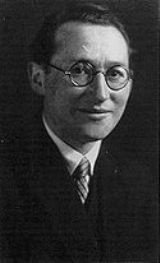
Elton Mayo
Elton Mayo
, an Australian national, headed the Hawthorne Studies at Harvard. In his classic writing in 1931, Human Problems of an Industrial Civilization, he advised managers to deal with emotional needs of employees at work.
Mary Parker Follett
Mary Parker Follett
was a pioneer management consultant in the industrial world. As a writer, she provided analyses on workers as having complex combinations of attitude, beliefs, and needs. She told managers to motivate employees on their job performance, a "pull" rather than a "push" strategy.
Douglas McGregor
Douglas McGregor
proposed two theories/assumptions, which are very nearly the opposite of each other, about human nature based on his experience as a management consultant. His first theory was "Theory X", which is pessimistic and negative; and according to McGregor it is how managers traditionally perceive their workers. Then, in order to help managers replace that theory/assumption, he gave "Theory Y" which takes a more modern and positive approach. He believed that managers could achieve more if they start perceiving their employees as self-energized, committed, responsible and creative beings. By means of his Theory Y, he in fact challenged the traditional theorists to adopt a developmental approach to their employees. He also wrote a book, The Human Side of Enterprise, in 1960; this book has become a foundation for the modern view of employees at work.
The field is highly influential in the business world with practitioners such as Peter Drucker
and Peter Senge
, who turned the academic research into business
practices. Organizational behaviour is becoming more important in the global economy as people with diverse backgrounds and cultural values must work together effectively and efficiently. It is also under increasing criticism as a field for its ethnocentric and pro-capitalist assumptions (see Critical Management Studies
).
During the last 20 years, organizational behavior study and practice has developed and expanded through creating integrations with other domains:
, time series analysis, Meta-analysis
and ANOVA. In addition, computer simulation in organizational studies has a long history in organizational studies. Qualitative methods are also used, such as ethnography
, which involves direct participant observation
, single and multiple case analysis
, grounded theory approaches, and other historical methods.
s are complex dynamic goal-oriented processes. One of the early thinkers in the field was Alexander Bogdanov
, who developed his Tectology
, a theory widely considered a precursor of Bertalanffy's General Systems Theory
, aiming to model and design human organizations. Kurt Lewin
was particularly influential in developing the systems perspective within organizational theory and coined the term "systems of ideology", from his frustration with behavioural psychologies that became an obstacle to sustainable work in psychology (see Ash 1992: 198-207). The complexity theory perspective on organizations is another systems view of organizations.
The systems approach to organizations relies heavily upon achieving negative entropy
through openness and feedback
. A systemic view on organizations is transdisciplinary and integrative. In other words, it transcends the perspectives of individual disciplines, integrating them on the basis of a common "code", or more exactly, on the basis of the formal apparatus provided by systems theory. The systems approach gives primacy to the interrelationships, not to the elements of the system. It is from these dynamic interrelationships that new properties of the system emerge. In recent years, systems thinking
has been developed to provide techniques for studying systems in holistic
ways to supplement traditional reductionistic
methods. In this more recent tradition, systems theory in organizational studies is considered by some as a humanistic
extension of the natural science
s.
, a graduate student at MIT undertook a careful study of five executives to determine what those managers did on their jobs.. On the basis of his observations, Mintzberg classifies managerial roles into 3 categories
1. Interpersonal Roles
2. Decisional Roles
3. Informational Roles
Organization structures and dynamics
Personality traits theories
Control and stress modelling
Motivation in organizations
Motivation the forces either internal or external to a person that arouse enthusiasm and resistance to pursue a certain course of action. According to Baron et al. (2008): "Although motivation is a broad and complex concept, organizational scientists have agreed on its basic characteristics. Drawing from various social sciences, we define motivation
as the set of processes that arouse, direct, and maintain human behavior toward attaining some goal"
There are many different motivation theories such as:
Other journals
0-13-170901-1.
Industrial and organizational psychology
Industrial and organizational psychology is the scientific study of employees, workplaces, and organizations. Industrial and organizational psychologists contribute to an organization's success by improving the performance and well-being of its people...
, organizational behavior, human resources, and management. However, there is no universally accepted classification system for such subfields.
Overview
Organizational studies encompass the study of organizations from multiple viewpoints, methods, and levels of analysis. For instance, one textbook divides these multiple viewpoints into three perspectives: modern, symbolic, and postmodern. Another traditional distinction, present especially in American academia, is between the study of "micro" organizational behaviour — which refers to individual and group dynamicsGroup dynamics
Group dynamics refers to a system of behaviors and psychological processes that occur within a social group , or between social groups...
in an organizational setting — and "macro" strategic management and organizational theory which studies whole organizations and industries, how they adapt, and the strategies, structures and contingencies that guide them. To this distinction, some scholars have added an interest in "meso" scale structures - power, culture, and the networks of individuals and i.e. ronit units in organizations — and "field" level analysis which study how whole populations of organizations interact.
Whenever people interact in organizations, many factors come into play. Modern organizational studies attempt to understand and model these factors. Like all modernist social sciences, organizational studies seek to control
Control (management)
Controlling is one of the managerial functions like planning, organizing, staffing and directing. It is an important function because it helps to check the errors and to take the corrective action so that deviation from standards are minimized and stated goals of the organization are achieved in...
, predict, and explain. There is some controversy over the ethics of controlling workers' behavior, as well as the manner in which workers are treated (see Taylor's scientific management approach compared to the human relations movement of the 1940s). As such, organizational behaviour or OB (and its cousin, Industrial psychology) have at times been accused of being the scientific tool of the powerful. Those accusations notwithstanding, OB can play a major role in organizational development, enhancing organizational performance, as well as individual and group performance/satisfaction/commitment.
One of the main goals of organizational theorists is, according to Simms (1994) "to revitalize organizational theory and develop a better conceptualization of organizational life." An organizational theorist should carefully consider levels assumptions being made in theory, and is concerned to help managers and administrators.
History
Plato
Plato , was a Classical Greek philosopher, mathematician, student of Socrates, writer of philosophical dialogues, and founder of the Academy in Athens, the first institution of higher learning in the Western world. Along with his mentor, Socrates, and his student, Aristotle, Plato helped to lay the...
wrote about the essence of leadership. Aristotle
Aristotle
Aristotle was a Greek philosopher and polymath, a student of Plato and teacher of Alexander the Great. His writings cover many subjects, including physics, metaphysics, poetry, theater, music, logic, rhetoric, linguistics, politics, government, ethics, biology, and zoology...
addressed the topic of persuasive communication. The writings of 16th century Italian philosopher Niccolò Machiavelli
Niccolò Machiavelli
Niccolò di Bernardo dei Machiavelli was an Italian historian, philosopher, humanist, and writer based in Florence during the Renaissance. He is one of the main founders of modern political science. He was a diplomat, political philosopher, playwright, and a civil servant of the Florentine Republic...
laid the foundation for contemporary work on organizational power and politics. In 1776, Adam Smith
Adam Smith
Adam Smith was a Scottish social philosopher and a pioneer of political economy. One of the key figures of the Scottish Enlightenment, Smith is the author of The Theory of Moral Sentiments and An Inquiry into the Nature and Causes of the Wealth of Nations...
advocated a new form of organizational structure based on the division of labour. One hundred years later, German sociologist Max Weber
Max Weber
Karl Emil Maximilian "Max" Weber was a German sociologist and political economist who profoundly influenced social theory, social research, and the discipline of sociology itself...
wrote about rational organizations and initiated discussion of charismatic leadership. Soon after, Frederick Winslow Taylor
Frederick Winslow Taylor
Frederick Winslow Taylor was an American mechanical engineer who sought to improve industrial efficiency. He is regarded as the father of scientific management and was one of the first management consultants...
introduced the systematic use of goal setting and rewards to motivate employees. In the 1920s, Australian-born Harvard professor Elton Mayo
Elton Mayo
George Elton Mayo was an Australian psychologist, sociologist and organization theorist.He lectured at the University of Queensland from 1911 to 1923 before moving to the University of Pennsylvania, but spent most of his career at Harvard Business School , where he was professor of industrial...
and his colleagues conducted productivity studies at Western Electric's Hawthorne plant in the United States.
Though it traces its roots back to Max Weber and earlier, organizational studies began as an academic discipline with the advent of scientific management
Scientific management
Scientific management, also called Taylorism, was a theory of management that analyzed and synthesized workflows. Its main objective was improving economic efficiency, especially labor productivity. It was one of the earliest attempts to apply science to the engineering of processes and to management...
in the 1890s, with Taylorism representing the peak of this movement. Proponents of scientific management held that rationalizing the organization with precise sets of instructions and time-motion studies would lead to increased productivity. Studies of different compensation
Remuneration
Remuneration is the total compensation that an employee receives in exchange for the service they perform for their employer. Typically, this consists of monetary rewards, also referred to as wage or salary...
systems were carried out.
After the First World War, the focus of organizational studies shifted to how human factors and psychology affected organizations, a transformation propelled by the identification of the Hawthorne Effect
Hawthorne effect
The Hawthorne effect is a form of reactivity whereby subjects improve or modify an aspect of their behavior being experimentally measured simply in response to the fact that they know they are being studied, not in response to any particular experimental manipulation.The term was coined in 1950 by...
. This Human Relations Movement
Human Relations Movement
Human relations movement refers to the researchers of organizational development who study the behavior of people in groups, in particular workplace groups. It originated in the 1930s' Hawthorne studies, which examined the effects of social relations, motivation and employee satisfaction on...
focused on teams
TEAMS
Teams is the plural form of team.TEAMS may also refer to:*TEAMS , a competition sponsored by JETS*TEAMS , an Kenyan initiative to link the country to the rest of the world through a submarine fibre optic cable....
, motivation
Motivation
Motivation is the driving force by which humans achieve their goals. Motivation is said to be intrinsic or extrinsic. The term is generally used for humans but it can also be used to describe the causes for animal behavior as well. This article refers to human motivation...
, and the actualization of the goals of individuals within organizations.
Prominent early scholars included Chester Barnard
Chester Barnard
Chester Irving Barnard was an American business executive, public administrator, and the author of pioneering work in management theory and organizational studies. His landmark 1938 book, Functions of the Executive, sets out a theory of organization and of the functions of executives in...
, Henri Fayol
Henri Fayol
Henri Fayol was a French mining engineer and director of mines who developed a general theory of business administration. He and his colleagues developed this theory independently of scientific management but roughly contemporaneously...
, Frederick Herzberg
Frederick Herzberg
Frederick Irving Herzberg born in Massachusetts was an American psychologist who became one of the most influential names in business management. He is most famous for introducing job enrichment and the Motivator-Hygiene theory...
, Abraham Maslow
Abraham Maslow
Abraham Harold Maslow was an American professor of psychology at Brandeis University, Brooklyn College, New School for Social Research and Columbia University who created Maslow's hierarchy of needs...
, David McClelland
David McClelland
David C. McClelland was an American psychological theorist. Noted for his work on need theory, he published a number of works from the 1950s until the 1990s and developed new scoring systems for the Thematic Apperception Test and its descendants...
, and Victor Vroom
Victor Vroom
Victor H. Vroom is a business school professor at the Yale School of Management, who was born on 9 August 1932 in Montreal, Canada. He holds a PhD from University of Michigan....
.
The Second World War further shifted the field, as the invention of large-scale logistics and operations research
Operations research
Operations research is an interdisciplinary mathematical science that focuses on the effective use of technology by organizations...
led to a renewed interest in rationalist approaches to the study of organizations. Interest grew in theory and methods native to the sciences, including systems theory
Systems theory
Systems theory is the transdisciplinary study of systems in general, with the goal of elucidating principles that can be applied to all types of systems at all nesting levels in all fields of research...
, the study of organizations with a complexity theory perspective and complexity strategy. Influential work was done by Herbert Alexander Simon and James G. March
James G. March
James Gardner March is Jack Steele Parker professor emeritus at Stanford University and the Stanford University School of Education, best known for his research on organizations and organizational decision making.- Biography :...
and the so-called "Carnegie School
Carnegie School
The "Carnegie School" was a so-called "Freshwater" economics intellectual movement in the 1950s and 1960s based at Carnegie Mellon University and led by Herbert Simon, James March, and Richard Cyert....
" of organizational behavior.
In the 1960s and 1970s, the field was strongly influenced by social psychology
Social psychology
Social psychology is the scientific study of how people's thoughts, feelings, and behaviors are influenced by the actual, imagined, or implied presence of others. By this definition, scientific refers to the empirical method of investigation. The terms thoughts, feelings, and behaviors include all...
and the emphasis in academic study was on quantitative research
Quantitative research
In the social sciences, quantitative research refers to the systematic empirical investigation of social phenomena via statistical, mathematical or computational techniques. The objective of quantitative research is to develop and employ mathematical models, theories and/or hypotheses pertaining to...
. An explosion of theorizing, much of it at Stanford University and Carnegie Mellon, produced Bounded Rationality
Bounded rationality
Bounded rationality is the idea that in decision making, rationality of individuals is limited by the information they have, the cognitive limitations of their minds, and the finite amount of time they have to make a decision...
, Informal Organization
Informal organization
The informal organization is the interlocking social structure that governs how people work together in practice. It is the aggregate of behaviors, interactions, norms, personal and professional connections through which work gets done and relationships are built among people who share a common...
, Contingency Theory
Contingency theory
Contingency theory is a class of behavioral theory that claims that there is no best way to organize a corporation, to lead a company, or to make decisions. Instead, the optimal course of action is contingent upon the internal and external situation...
, Resource Dependence, Institutional Theory
Institutional theory
Institutional theory is "A widely accepted theoretical posture that emphasizes rational myths, isomorphism, and legitimacy."FThere are two dominant trends in institutional theory:* Old Institutionalism sometimes associated with Historical institutionalism...
, and Organizational Ecology
Organizational ecology
i\--184.38.106.199 22:59, 29 November 2011 her Haveman]], Alessandro Lomi, Anand Swaminathan, Giacomo Negro, and Stanislav Dobrev.- Inertia and change :...
theories, among many others.
Starting in the 1980s, cultural explanations of organizations and change became an important part of study. Qualitative methods of study became more acceptable, informed by anthropology
Anthropology
Anthropology is the study of humanity. It has origins in the humanities, the natural sciences, and the social sciences. The term "anthropology" is from the Greek anthrōpos , "man", understood to mean mankind or humanity, and -logia , "discourse" or "study", and was first used in 1501 by German...
, psychology
Psychology
Psychology is the study of the mind and behavior. Its immediate goal is to understand individuals and groups by both establishing general principles and researching specific cases. For many, the ultimate goal of psychology is to benefit society...
and sociology
Sociology
Sociology is the study of society. It is a social science—a term with which it is sometimes synonymous—which uses various methods of empirical investigation and critical analysis to develop a body of knowledge about human social activity...
. A leading scholar was Karl Weick
Karl Weick
Karl E. Weick is an American organizational theorist who is noted for introducing the notions of "loose coupling", "mindfulness", and "sensemaking" into organizational studies. He is the Rensis Likert Distinguished University Professor at the Ross School of Business at the University of Michigan...
.
Elton Mayo
Elton Mayo
Elton Mayo
George Elton Mayo was an Australian psychologist, sociologist and organization theorist.He lectured at the University of Queensland from 1911 to 1923 before moving to the University of Pennsylvania, but spent most of his career at Harvard Business School , where he was professor of industrial...
, an Australian national, headed the Hawthorne Studies at Harvard. In his classic writing in 1931, Human Problems of an Industrial Civilization, he advised managers to deal with emotional needs of employees at work.
Mary Parker Follett
Mary Parker Follett
Mary Parker Follett
Mary Parker Follett was an American social worker, management consultant and pioneer in the fields of organizational theory and organizational behavior. She also authored a number of books and numerous essays, articles and speeches on democracy, human relations, political philosophy, psychology,...
was a pioneer management consultant in the industrial world. As a writer, she provided analyses on workers as having complex combinations of attitude, beliefs, and needs. She told managers to motivate employees on their job performance, a "pull" rather than a "push" strategy.
Douglas McGregor
Douglas McGregor
Douglas McGregor
Douglas Murray McGregor was a Management professor at the MIT Sloan School of Management and president of Antioch College from 1948 to 1954. He also taught at the Indian Institute of Management Calcutta. His 1960 book The Human Side of Enterprise had a profound influence on education practices...
proposed two theories/assumptions, which are very nearly the opposite of each other, about human nature based on his experience as a management consultant. His first theory was "Theory X", which is pessimistic and negative; and according to McGregor it is how managers traditionally perceive their workers. Then, in order to help managers replace that theory/assumption, he gave "Theory Y" which takes a more modern and positive approach. He believed that managers could achieve more if they start perceiving their employees as self-energized, committed, responsible and creative beings. By means of his Theory Y, he in fact challenged the traditional theorists to adopt a developmental approach to their employees. He also wrote a book, The Human Side of Enterprise, in 1960; this book has become a foundation for the modern view of employees at work.
Current state of the field
Organizational behaviour is a growing field. Organizational studies departments generally form part of business schools, although many universities also have industrial psychology and industrial economics programs.The field is highly influential in the business world with practitioners such as Peter Drucker
Peter Drucker
Peter Ferdinand Drucker was an influential writer, management consultant, and self-described “social ecologist.”-Introduction:...
and Peter Senge
Peter Senge
Peter Michael Senge is an American scientist and director of the Center for Organizational Learning at the MIT Sloan School of Management. He is known as author of the book The Fifth Discipline: The art and practice of the learning organization from 1990...
, who turned the academic research into business
Business
A business is an organization engaged in the trade of goods, services, or both to consumers. Businesses are predominant in capitalist economies, where most of them are privately owned and administered to earn profit to increase the wealth of their owners. Businesses may also be not-for-profit...
practices. Organizational behaviour is becoming more important in the global economy as people with diverse backgrounds and cultural values must work together effectively and efficiently. It is also under increasing criticism as a field for its ethnocentric and pro-capitalist assumptions (see Critical Management Studies
Critical management studies
Critical management studies is a loose but extensive grouping of politically left wing and theoretically informed critiques of management, business and organisation, grounded originally in a critical theory perspective...
).
During the last 20 years, organizational behavior study and practice has developed and expanded through creating integrations with other domains:
- AnthropologyAnthropologyAnthropology is the study of humanity. It has origins in the humanities, the natural sciences, and the social sciences. The term "anthropology" is from the Greek anthrōpos , "man", understood to mean mankind or humanity, and -logia , "discourse" or "study", and was first used in 1501 by German...
became an interesting prism to understanding firms as communities, by introducing concepts like Organizational cultureOrganizational cultureOrganizational culture is defined as “A pattern of shared basic assumptions invented, discovered, or developed by a given group as it learns to cope with its problems of external adaptation and internal integration" that have worked well enough to be considered valid and therefore, to be taught to...
, 'organizational rituals' and 'symbolic acts' enabling new ways to understand organizations as communities. - Leadership UnderstandingLeadership studiesLeadership studies is a multidisciplinary academic field of study that focuses on leadership in organizational contexts and in human life. Leadership studies has origins in the social sciences , in humanities , as well as in professional and applied fields of study...
: the crucial role of leadership at various level of an organization in the process of change managementChange managementChange management is a structured approach to shifting/transitioning individuals, teams, and organizations from a current state to a desired future state. It is an organizational process aimed at helping employees to accept and embrace changes in their current business environment....
. - Ethics and their importance as pillars of any vision and one of the most important driving forces in an organization.
- Aesthetics: Within the last decades a field emerged that focuses on the aesthetic sphere of our existence in organizations, drawing on interdisciplinary theories and methods from the humanities and disciplines such as theatre studies, literature, music, visual studies and many more.
Methods used in organizational studies
A variety of methods are used in organizational studies. They include quantitative methods found in other social sciences such as multiple regression, non-parametric statisticsNon-parametric statistics
In statistics, the term non-parametric statistics has at least two different meanings:The first meaning of non-parametric covers techniques that do not rely on data belonging to any particular distribution. These include, among others:...
, time series analysis, Meta-analysis
Meta-analysis
In statistics, a meta-analysis combines the results of several studies that address a set of related research hypotheses. In its simplest form, this is normally by identification of a common measure of effect size, for which a weighted average might be the output of a meta-analyses. Here the...
and ANOVA. In addition, computer simulation in organizational studies has a long history in organizational studies. Qualitative methods are also used, such as ethnography
Ethnography
Ethnography is a qualitative method aimed to learn and understand cultural phenomena which reflect the knowledge and system of meanings guiding the life of a cultural group...
, which involves direct participant observation
Participant observation
Participant observation is a type of research strategy. It is a widely used methodology in many disciplines, particularly, cultural anthropology, but also sociology, communication studies, and social psychology...
, single and multiple case analysis
Case analysis
Case analysis is one of the most general and applicable methods of analytical thinking, depending only on the division of a problem, decision or situation into a sufficient number of separate cases. Analysing each such case individually may be enough to resolve the initial question...
, grounded theory approaches, and other historical methods.
Systems framework
The systems framework is also fundamental to organizational theory as organizationOrganization
An organization is a social group which distributes tasks for a collective goal. The word itself is derived from the Greek word organon, itself derived from the better-known word ergon - as we know `organ` - and it means a compartment for a particular job.There are a variety of legal types of...
s are complex dynamic goal-oriented processes. One of the early thinkers in the field was Alexander Bogdanov
Alexander Bogdanov
Alexander Aleksandrovich Bogdanov –7 April 1928, Moscow) was a Russian physician, philosopher, science fiction writer, and revolutionary of Belarusian ethnicity....
, who developed his Tectology
Tectology
Tectology is a term used by Alexander Bogdanov to describe a discipline that consisted of unifying all social, biological and physical sciences, by considering them as systems of relationships, and by seeking the organizational principles that underlie all systems...
, a theory widely considered a precursor of Bertalanffy's General Systems Theory
Systems theory
Systems theory is the transdisciplinary study of systems in general, with the goal of elucidating principles that can be applied to all types of systems at all nesting levels in all fields of research...
, aiming to model and design human organizations. Kurt Lewin
Kurt Lewin
Kurt Zadek Lewin was a German-American psychologist, known as one of the modern pioneers of social, organizational, and applied psychology....
was particularly influential in developing the systems perspective within organizational theory and coined the term "systems of ideology", from his frustration with behavioural psychologies that became an obstacle to sustainable work in psychology (see Ash 1992: 198-207). The complexity theory perspective on organizations is another systems view of organizations.
The systems approach to organizations relies heavily upon achieving negative entropy
Negentropy
The negentropy, also negative entropy or syntropy, of a living system is the entropy that it exports to keep its own entropy low; it lies at the intersection of entropy and life...
through openness and feedback
Feedback
Feedback describes the situation when output from an event or phenomenon in the past will influence an occurrence or occurrences of the same Feedback describes the situation when output from (or information about the result of) an event or phenomenon in the past will influence an occurrence or...
. A systemic view on organizations is transdisciplinary and integrative. In other words, it transcends the perspectives of individual disciplines, integrating them on the basis of a common "code", or more exactly, on the basis of the formal apparatus provided by systems theory. The systems approach gives primacy to the interrelationships, not to the elements of the system. It is from these dynamic interrelationships that new properties of the system emerge. In recent years, systems thinking
Systems thinking
Systems thinking is the process of understanding how things influence one another within a whole. In nature, systems thinking examples include ecosystems in which various elements such as air, water, movement, plants, and animals work together to survive or perish...
has been developed to provide techniques for studying systems in holistic
Holism
Holism is the idea that all the properties of a given system cannot be determined or explained by its component parts alone...
ways to supplement traditional reductionistic
Reductionism
Reductionism can mean either an approach to understanding the nature of complex things by reducing them to the interactions of their parts, or to simpler or more fundamental things or a philosophical position that a complex system is nothing but the sum of its parts, and that an account of it can...
methods. In this more recent tradition, systems theory in organizational studies is considered by some as a humanistic
Humanism
Humanism is an approach in study, philosophy, world view or practice that focuses on human values and concerns. In philosophy and social science, humanism is a perspective which affirms some notion of human nature, and is contrasted with anti-humanism....
extension of the natural science
Natural science
The natural sciences are branches of science that seek to elucidate the rules that govern the natural world by using empirical and scientific methods...
s.
Managerial roles
In the late 1960s Henry MintzbergHenry Mintzberg
Professor Henry Mintzberg, is an internationally renowned academic and author on business and management. He is currently the Cleghorn Professor of Management Studies at the Desautels Faculty of Management of McGill University in Montreal, Quebec, Canada, where he has been teaching since...
, a graduate student at MIT undertook a careful study of five executives to determine what those managers did on their jobs.. On the basis of his observations, Mintzberg classifies managerial roles into 3 categories
1. Interpersonal Roles
2. Decisional Roles
3. Informational Roles
- Rational Decision-Making Model
- Scientific managementScientific managementScientific management, also called Taylorism, was a theory of management that analyzed and synthesized workflows. Its main objective was improving economic efficiency, especially labor productivity. It was one of the earliest attempts to apply science to the engineering of processes and to management...
- Garbage can model
Theories of decision making can be subdivided into three categories
- Normative (concentrates on how decision should be made)
- Descriptive (concerned with how the thinker came up with their judgement)
- Prescripted (aim to improve decision making)
Organization structures and dynamics
- Incentive theory is a concept of human resourcesHuman resourcesHuman resources is a term used to describe the individuals who make up the workforce of an organization, although it is also applied in labor economics to, for example, business sectors or even whole nations...
or managementManagementManagement in all business and organizational activities is the act of getting people together to accomplish desired goals and objectives using available resources efficiently and effectively...
theory. In the corporate sense, it states that firm owners should structure employee compensation in such a way that the employees' goals are aligned with owners' goals. As it applies to the operations of firms, it is more accurately called the principal–agent problem. - BureaucracyBureaucracyA bureaucracy is an organization of non-elected officials of a governmental or organization who implement the rules, laws, and functions of their institution, and are occasionally characterized by officialism and red tape.-Weberian bureaucracy:...
- Complexity theory and organizationsComplexity theory and organizationsComplexity theory and organizations, also called complexity strategy or complex adaptive organization, is the use of Complexity theory in the field of strategic management and organizational studies.- Overview :...
- Contingency theoryContingency theoryContingency theory is a class of behavioral theory that claims that there is no best way to organize a corporation, to lead a company, or to make decisions. Instead, the optimal course of action is contingent upon the internal and external situation...
- Evolutionary Theory and organizations
- Hybrid organisation
- Informal OrganizationInformal organizationThe informal organization is the interlocking social structure that governs how people work together in practice. It is the aggregate of behaviors, interactions, norms, personal and professional connections through which work gets done and relationships are built among people who share a common...
- Institutional theoryInstitutional theoryInstitutional theory is "A widely accepted theoretical posture that emphasizes rational myths, isomorphism, and legitimacy."FThere are two dominant trends in institutional theory:* Old Institutionalism sometimes associated with Historical institutionalism...
- Merger integrationMerger integrationMerger integration, or post-merger integration refers to the aspect of an organizational merger that involves combining the original socio-technical systems of the merging organizations into one such newly-combined system.-Overview:...
- Organizational ecologyOrganizational ecologyi\--184.38.106.199 22:59, 29 November 2011 her Haveman]], Alessandro Lomi, Anand Swaminathan, Giacomo Negro, and Stanislav Dobrev.- Inertia and change :...
- Model of Organizational Citizenship behaviour
- Model of organizational justiceOrganizational justiceThe term organizational justice was coined by Greenberg and is defined as an individual’s perception of and reactions to fairness in an organization. Justice or fairness refers to the idea that an action or decision is morally right, which may be defined according to ethics, religion, fairness,...
- Model of Organizational Misbehaviour
- Resource dependence theoryResource dependence theoryResource Dependence Theory is the study of how the external resources of organizations affects the behavior of the organization. The procurement of external resources is an important tenet of both the strategic and tactical management of any company...
- Transaction costTransaction costIn economics and related disciplines, a transaction cost is a cost incurred in making an economic exchange . For example, most people, when buying or selling a stock, must pay a commission to their broker; that commission is a transaction cost of doing the stock deal...
- Hofstede's Framework for Assessing Cultures
- Mintzberg's OrganigraphOrganigraphAn organigraph is a graphical representation of a company's structure or processes. It is used as an alternative to a traditional organizational chart as it does not imply the same degree of linear hierarchy that an organizational chart does....
Personality traits theories
- Big Five personality traitsBig Five personality traitsIn contemporary psychology, the "Big Five" factors of personality are five broad domains or dimensions of personality which are used to describe human personality....
- Holland's Typology of Personality and Congruent Occupations
- Myers-Briggs Type IndicatorMyers-Briggs Type IndicatorThe Myers-Briggs Type Indicator assessment is a psychometric questionnaire designed to measure psychological preferences in how people perceive the world and make decisions...
Control and stress modelling
- Herzberg's Two factor theoryTwo factor theoryThe states that there are certain factors in the workplace that cause job satisfaction, while a separate set of factors cause dissatisfaction...
- Theory X and Theory YTheory X and theory YTheory X and Theory Y are theories of human motivation created and developed by Douglas McGregor at the MIT Sloan School of Management in the 1960s that have been used in human resource management, organizational behavior, organizational communication and organizational development...
Motivation in organizations
Motivation the forces either internal or external to a person that arouse enthusiasm and resistance to pursue a certain course of action. According to Baron et al. (2008): "Although motivation is a broad and complex concept, organizational scientists have agreed on its basic characteristics. Drawing from various social sciences, we define motivation
Motivation
Motivation is the driving force by which humans achieve their goals. Motivation is said to be intrinsic or extrinsic. The term is generally used for humans but it can also be used to describe the causes for animal behavior as well. This article refers to human motivation...
as the set of processes that arouse, direct, and maintain human behavior toward attaining some goal"
There are many different motivation theories such as:
- Attribution theory
- Equity theoryEquity theoryEquity theory is a theory that attempts to explain relational satisfaction in terms of perceptions of fair/unfair distributions of resources within interpersonal relationships...
- Maslow's hierarchy of needsMaslow's hierarchy of needsMaslow's hierarchy of needs is a theory in psychology, proposed by Abraham Maslow in his 1943 paper A Theory of Human Motivation. Maslow subsequently extended the idea to include his observations of humans' innate curiosity...
- Incentive theory (psychology)
- Model of emotional laborEmotional laborEmotional labor is a form of emotional regulation wherein workers are expected to display certain emotions as part of their job, and to promote organizational goals...
in organizations - Frederick HerzbergFrederick HerzbergFrederick Irving Herzberg born in Massachusetts was an American psychologist who became one of the most influential names in business management. He is most famous for introducing job enrichment and the Motivator-Hygiene theory...
two-factor theoryTwo-factor theoryThe states that there are certain factors in the workplace that cause job satisfaction, while a separate set of factors cause dissatisfaction... - Expectancy theoryExpectancy theoryExpectancy Theory proposes that a person will decide to behave or act in a certain way because they are motivated to select a specific behavior over other behaviors due to what they expect the result of that selected behavior will be. In essence, the motivation of the behavior selection is...
Organization-focused journals
Primary organization-focused journals- Academy of Management JournalAcademy of Management JournalThe Academy of Management Journal a is peer-reviewed academic journal on management. According to the Journal Citation Reports, the journal's 2009 impact factor is 6.483, ranking it second in the categories "Management" and "Business" .- External links :*...
- Academy of Management ReviewAcademy of Management ReviewThe Academy of Management Review a is peer-reviewed academic journal on management. According to the Journal Citation Reports, the journal's 2009 impact factor is 7.867, ranking it first in the categories "Management" and "Business" .- External links :*...
- Administrative Science QuarterlyAdministrative Science QuarterlyAdministrative Science Quarterly is an academic journal covering the broad field of organizational studies. The journal was founded in 1956 and is published by SAGE Publications for the Samuel Curtis Johnson Graduate School of Management at Cornell University...
- Journal of ManagementJournal of ManagementThe Journal of Management was established in 1975 and is a peer-reviewed academic journal published by SAGE Publications and sponsored by the Southern Management Association that publishes both empirical and theoretical research articles in the field of management. The journal is published on a...
- Journal of Organizational BehaviorJournal of Organizational BehaviorThe Journal of Organizational Behavior is a peer-reviewed academic journal published eight times per year by John Wiley & Sons. The journal publishes empirical reports and theoretical reviews of research in the field of organizational behavior. It was first published in 1980 as the Journal of...
- Management Science: A Journal of the Institute for Operations Research and the Management SciencesManagement Science: A Journal of the Institute for Operations Research and the Management SciencesManagement Science: A Journal of the Institute for Operations Research and the Management Sciences is a peer-reviewed academic journal covering the techniques of operations research and scientific approaches to problems of management, marketing, manufacturing, and related fields...
- Organization Science: A Journal of the Institute for Operations Research and the Management SciencesOrganization Science: A Journal of the Institute for Operations Research and the Management SciencesOrganization Science: A Journal of the Institute for Operations Research and the Management Sciences is a peer-reviewed scholarly journal published by the Institute for Operations Research and the Management Sciences INFORMS...
Other journals
- Journal of Applied PsychologyJournal of Applied PsychologyThe Journal of Applied Psychology is a publication of the APA.It has a high impact factor for its field. It typically publishes high quality empirical papers.- External links :*...
See also
- Organization designOrganization designOrganization design can be defined narrowly, as the process of reshaping organization structure and roles, or it can more effectively be defined as the alignment of structure, process, rewards, metrics and talent with the strategy of the business...
- Organization developmentOrganization developmentOrganization development is a new term which means a conceptual, organization-wide effort to increase an organization's effectiveness and viability...
- Organizational dissentOrganizational dissentOrganizational dissent is the "expression of disagreement or contradictory opinions about organizational practices and policies" . Since dissent involves disagreement it can lead to conflict, which if not resolved, can lead to violence and struggle. As a result, many organizations send the message...
- Organizational engineeringOrganizational engineering- Theory :Organizational Engineering is a form of Organizational Development. It was created by Dr. Gary Salton of Professional Communications, Inc. It has been developing continuously since 1994 on both theoretical and applied levels....
- Organizing education by drawing on OSGeorges RommeA. Georges L. Romme is a Dutch organizational theorist and professor of entrepreneurship and innovation at the Eindhoven University of Technology.- Biography :...
- Customer dynamicsCustomer dynamicsCustomer Dynamics is an emerging theory on customer-business relationships that describes the ongoing interchange of information and transactions between customers and organizations. These exchanges occur over a wide range of communication channels, such as phone, email, Web and text, including...
Further reading
- Ash, M.G. 1992. "Cultural Contexts and Scientific Change in Psychology: Kurt Lewin in Iowa." American Psychologist, Vol. 47, No. 2, pp. 198–207.
- Hatch, M.J., "Organization Theory: Modern, symbolic, and postmodern perspectives." 2nd Ed. Oxford University Press (2006) ISBN 0-19-926021-4.
- Jones, Ishmael, The Human Factor: Inside the CIA's Dysfunctional Intelligence Culture. New York: Encounter Books (2008) ISBN 978-1-59403-382-7.
- Robbins, Stephen P. Organizational Behavior - Concepts, Controversies, Applications. 4th Ed. Prentice Hall (2004) ISBN
0-13-170901-1.
- Scott, W. Richard. Organizations and Organizing: Rational, Natural, and Open Systems Perspectives. Pearson Prentice Hall (2007) ISBN 0-13-195893-3.
- Weick, Karl E. The Social Psychology of Organizing 2nd Ed. McGraw Hill (1979) ISBN 0-07-554808-9.
- Simon, Herbert A. Administrative Behavior: A Study of Decision-Making Processes in Administrative Organizations, 4th ed. 1997, The Free Press.
- Tompkins, Jonathan R. "Organization Theory and Public Management".Thompson Wadsworth (2005) ISBN 978-0-534-17468-2
- Kanigel, R. (1997). The One Best Way, Frederick Winslow Taylor and the Enigma of Efficiency. London: Brown and Co.