

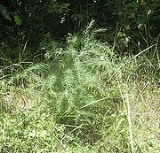
Asparagus

Encyclopedia
Asparagus officinalis is a spring vegetable
, a flowering perennial
plant species in the genus Asparagus
. It was once classified in the lily family, like its Allium
cousins, onion
s and garlic
, but the Liliaceae
have been split and the onion-like plants are now in the family Amaryllidaceae
and asparagus in the Asparagaceae
. Asparagus officinalis is native to most of Europe, northern Africa and western Asia,
and is widely cultivated as a vegetable crop.
, perennial plant
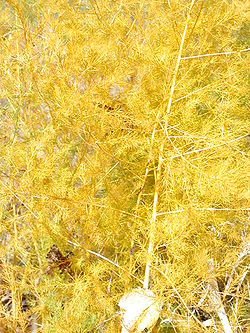
growing to 100–150 cm (39.4–59.1 ) tall, with stout stems with much-branched feathery foliage. The "leaves" are in fact needle-like cladodes (modified stems) in the axils of scale leaves; they are 6 – long and 1 millimetre (0.0393700787401575 in) broad, and clustered 4–15 together. The root system is adventitious and the root type is fasciculated. The flower
s are bell-shaped, greenish-white to yellowish, 4.5 – long, with six tepal
s partially fused together at the base; they are produced singly or in clusters of 2–3 in the junctions of the branchlets. It is usually dioecious
, with male and female flowers on separate plants, but sometimes hermaphrodite flowers are found. The fruit
is a small red berry 6–10 mm diameter, which is poison
ous to humans.
Plants native to the western coasts of Europe (from northern Spain north to Ireland, Great Britain, and northwest Germany) are treated as Asparagus officinalis subsp. prostratus (Dumort.) Corb., distinguished by its low-growing, often prostrate stems growing to only 30 – high, and shorter cladodes 2 – long.
It is treated as a distinct species, Asparagus prostratus Dumort, by some authors.
A remarkable adaptation is the edible asparagus, while in the Macaronesian Islands
several species, (Asparagus umbellatus, Asparagus scoparius, etc.), are preserved the original form, a leafy vine; in the Mediterranean, the asparagus genus has evolved into thorny species.
properties, and more. It is pictured as an offering on an Egyptian frieze
dating to 3000 BC. Still in ancient times, it was known in Syria and in Spain. Greeks and Romans ate it fresh when in season and dried the vegetable for use in winter; Romans would even freeze it high in the Alps, for the Feast of Epicurius. Emperor Augustus
reserved the Asparagus Fleet for hauling the vegetable, and coined the expression "faster than cooking asparagus" for quick action.
name=August>Latin "velocius quam asparagi conquantur" (or "celerius quam asparagi cocuntur"), ascribed to Augustus by Suetonius
(The Lives of the Twelve Caesars, Book 2 (Augustus), para. 87). See List of Latin phrases (V).
There is a recipe
for cooking asparagus in the oldest surviving book of recipes, Apicius
’s third century AD De re coquinaria, Book III.
Asparagus drew little medieval attention
name=anno1000>
Apparently around 1000 AD, the word "sparagus" appeared in an English text. See Brunning (June 2010), p. 6. — Brunning uses the term "in print", though no printing technique was used in England at the time. In the same sentence, she states that peasants often called it "sparrow grass", and further on mentions a 1667 diary in which Samuel Pepys bought a bundle of "sparrow grass" in Fenchurch Street, London.
until al-Nafzawi's The Perfumed Garden
celebrates its afrodisiacal power, which the Indian Ananga Ranga
attributes to special phosporus elements that also counteract fatigue, and by 1469 it was cultivated in French monasteries. Asparagus appears to have been hardly noticed in England until 1538,
name=anno1000 />
and in Germany until 1542.
France's Louis XIV had special greenhouses built for growing it.
The finest texture and the strongest and yet delicate taste is in the tips, which points d'amour ("love tips") were served as a delicacy to Madame de Pompadour
.
Asparagus became available to the New World around 1850, in the United States.
Asparagus is low in calories
and is very low in sodium. It is a good source of vitamin B6
, calcium, magnesium and zinc, and a very good source of dietary fiber
, protein, vitamin A, vitamin C, vitamin E, vitamin K, thiamin, riboflavin, rutin
, niacin
, folic acid
, iron, phosphorus, potassium
, copper, manganese and selenium,
as well as chromium
, a trace mineral that enhances the ability of insulin to transport glucose from the bloodstream into cells. The amino acid
asparagine
gets its name from asparagus, as the asparagus plant is rich in this compound.
The shoots are prepared and served in a number of ways around the world, typically as an appetizer
or vegetable side dish. In Asian-style cooking, asparagus is often stir-fried. Cantonese
restaurants in the United States often serve asparagus stir-fried with chicken
, shrimp
, or beef
, and also wrapped in bacon
. Asparagus may also be quickly grilled over charcoal or hardwood embers. It is also used as an ingredient in some stews and soups. In recent years, almost as a cycle dating back to early culinary habits, asparagus has regained its popularity eaten raw as a component of a salad.
Asparagus can also be pickled and stored for several years. Some brands may label shoots prepared this way as "marinated".
Stem thickness indicates the age of the plant, with the thicker stems coming from older plants. Older, thicker stalks can be woody and peeling the skin at the base will remove the tough layer. Peeled asparagus will poach much faster, however.
The bottom portion of asparagus often contains sand and dirt, so thorough cleaning is generally advised in cooking it.
Green asparagus is eaten worldwide, though the availability of imports throughout the year has made it less of a delicacy than it once was.
calendar", beginning on April 23 and ending on Midsummer Day
. As in the continental countries nearby, due to the short growing season and demand for local produce, asparagus commands a premium.
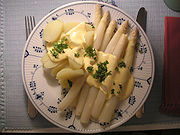 Asparagus is very popular in the Netherlands, France, Belgium, Germany, and Switzerland, and almost exclusively white — else, it is specified by the local language term for "green asparagus". Compared to the latter, the locally cultivated so-called "white gold" or "edible ivory", also referred to as "the royal vegetable",
Only seasonally on the menu, asparagus dishes are advertised outside many restaurants, usually from late April to June. For the French style, asparagus is often boiled or steamed and served with hollandaise sauce
, melted butter or olive oil
, Parmesan cheese or mayonnaise
.
During the German Spargelsaison or Spargelzeit, the asparagus season that traditionally finishes on 24 June, roadside stands and open air markets sell about half of the country's white asparagus consumption.
described asparagus as "cleansing and healing".
Nutrition studies have shown asparagus is a low-calorie
source of folate and potassium
. Its stalks are high in antioxidants.
"Asparagus provides essential nutrients: six spears contain some 135 micrograms (μg) of folate, almost half the adult RDI (recommended daily intake), 20 milligrams of potassium," notes an article in Reader's Digest.
Research suggests folate is key in taming homocysteine
, a substance implicated in heart disease. Folate is also critical for pregnant women, since it protects against neural tube defects in babies. Studies have shown that people who have died from Alzheimer's Disease have extremely low to no levels of folate.
Several studies indicate getting plenty of potassium may reduce the loss of calcium from the body.
Particularly green asparagus is a good source of vitamin C. Vitamin C helps the body produce and maintain collagen
, the major structural protein component of the body's connective tissues.
"Asparagus has long been recognized for its medicinal properties," wrote D. Onstad, author of Whole Foods Companion: A Guide for Adventurous Cooks, Curious Shoppers and Lovers of Natural Foods. "Asparagus contains substances that act as a diuretic, neutralize ammonia that makes us tired, and protect small blood vessels from rupturing. Its fiber content makes it a laxative, too."
Water from cooking asparagus may help clean blemishes on the face if used for washing the face morning and night.
From John Heinerman's "Heinerman's new Encyclopedia of Fruits and Vegetables":
"Cooked asparagus and its watery juices are very good for helping dissolve uric acid deposits in the extremities,(causes gout), as well as inducing urination where such a function may be lacking or only done on an infrequent basis. Asparagus is especially useful in cases of hypertension where the amount of sodium in the blood far exceeds the potassium present. Cooked asparagus also increases bowel evacuations."
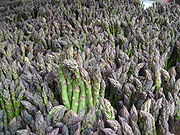
Since asparagus often originates in maritime habitats, it thrives in soils that are too saline for normal weeds to grow. Thus, a little salt was traditionally used to suppress weeds in beds intended for asparagus; this has the disadvantage that the soil cannot be used for anything else. Some places are better for growing asparagus than others. The fertility of the soil is a large factor. "Crowns" are planted in winter, and the first shoots appear in spring; the first pickings or "thinnings" are known as sprue asparagus. Sprue has thin stems.
A new breed of "Early Season Asparagus" that can be harvested two months earlier than usual was announced by a UK grower in early 2011. This variety does not need to lie dormant and blooms at 7 °C (44.6 °F) rather than the usual 9 °C (48.2 °F).
The blanching of white asparagus is obtained by the labor intensive hilling
cultivation method, to distinguish its gastronomcal qualities from those of the green plant, which is the same botanical variety.
Purple asparagus differs from its green and white counterparts, having high sugar and low fibre levels. Purple asparagus was originally developed in Italy and commercialised under the variety name Violetto d'Albenga. Since then, breeding work has continued in countries such as the United States and New Zealand.
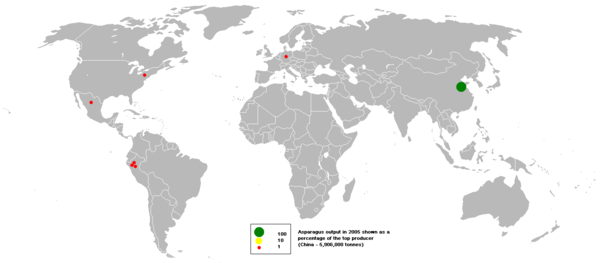 The top asparagus importers (2004) were the United States (92,405 tonnes), followed by the European Union
(external trade) (18,565 tonnes), and Japan (17,148 tonnes).
China is the world's largest producer: in 2005 (5,906,000 tonnes), at a large distance followed by Peru (206,030 tonnes), and the United States (90,200 tonnes).
, Michigan
and Washington.
The annual production for white asparagus in Germany is 57,000 tonnes (61% of consumer demand).
North-eastern Germany is also famous for its cultivation of asparagus
holds a festival every year to celebrate it, as does the city of Hart
, Michigan, complete with a parade and asparagus queen. The Vale of Evesham in Worcestershire
is heralded as the largest producer within Northern Europe, celebrating like Stockton, with a week-long festival every year involving auctions of the best crop and locals dressing up as spears of asparagus as part of the British Asparagus Festival.
Many German cities hold an annual Spargelfest (asparagus festival) celebrating the harvest of white asparagus. Schwetzingen
claims to be the "Asparagus Capital of the World" and during its festival an Asparagus Queen is crowned. The Bavarian city of Nuremberg
feasts a week long in April, with a competition to find the fastest asparagus peeler in the region. This usually involves generous amounts of the local wines and beer being consumed to aid the spectators' appreciative support.
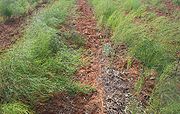
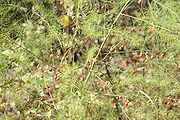 Asparagus officinalis is widely known simply as "asparagus", and may be confused with unrelated plant species also known as "asparagus", such as Ornithogalum pyrenaicum
known as "Prussian asparagus" for its edible shoots.
The English word "asparagus" derives from classical Latin, but the plant was once known in English as sperage, from the Medieval Latin
sparagus.
name=anno1000 />
This term itself derives from the Greek aspharagos or asparagos, and the Greek term originates from the Persian
asparag, meaning "sprout" or "shoot". Asparagus was also corrupted in some places to "sparrow grass"; indeed, the Oxford English Dictionary
quotes John Walker
as having written in 1791 that "Sparrow-grass is so general that asparagus has an air of stiffness and pedantry". In Gloucestershire
and Worcestershire
, it is also known simply as "grass", and young plants too small to cut are called "pru". Another known colloquial
variation of the term, most common in parts of Texas, is "aspar grass" or "asper grass". In the Midwest United States and Appalachia
, "spar grass" is a common colloquialism
. Asparagus is commonly known in fruit retail circles as "Sparrows Guts", etymologically distinct from the old term "sparrow grass", thus showing convergent language evolution.
It is known in French and Dutch
as asperge, in Italian as asparago (old Italian asparagio), in Portuguese as aspargo, in Spanish as espárrago, in German as Spargel, in Hungarian as spárga.
The Sanskrit name of Asparagus is shatavari and it has been historically used in India as a part of Ayurvedic medicines. In Kannada
, it is known as ashadhi, majjigegadde or sipariberuballi.
In Thailand
it is known as no mai farang
, and in Vietnam
măng tây which literally mean "European bamboo shoot
s" and "Western bamboo shoots", respectively. The green asparagus is normally used in Thai cuisine.
There is debate about whether all (or only some) people produce the smell, and whether all (or only some) people identify the smell. It was originally thought this was because some of the population digested asparagus differently from others, so some people excreted odorous urine after eating asparagus, and others did not. In the 1980s three studies from France, China and Israel published results showing that producing odorous urine from asparagus was a universal human characteristic (if not one that pertains to human beings essentially). The Israeli study found that from their 307 subjects all of those who could smell 'asparagus urine' could detect it in the urine of anyone who had eaten asparagus, even if the person who produced it could not detect it himself. However, a 2010 study found variations in both production of odorous urine and the ability to detect the odour, but that these were not tightly related. It is believed most people produce the odorous compounds after eating asparagus, but only about 22% of the population have the autosomal genes required to smell them.
In 2010, the company 23andMe
published a genome-wide association study
on whether participants have "ever noticed a peculiar odor when you pee after eating asparagus?" This study pinpointed a single-nucleotide polymorphism(SNP) in a cluster of olfactory genes associated with the ability to detect the odor. While this SNP did not explain all of the difference in detection between people, it provides support for the theory that there are genetic differences in olfactory receptors that lead people to be unable to smell these odorous compounds.
 Certain compounds in asparagus are metabolized
, giving urine a distinctive smell due to various sulfur
-containing degradation products, including various thiol
s, thioester
s, and ammonia.
Some of the volatile organic compound
s responsible for the smell are:
Subjectively, the first two are the most pungent, while the last two (sulfur-oxidized) give a sweet aroma. A mixture of these compounds form a "reconstituted asparagus urine" odor. This was first investigated in 1891 by Marceli Nencki
, who attributed the smell to methanethiol
. These compounds originate in the asparagus as asparagusic acid
and its derivatives, as these are the only sulfur-containing compounds unique to asparagus. As these are more present in young asparagus, this accords with the observation that the smell is more pronounced after eating young asparagus. The biological mechanism for the production of these compounds is less clear.
The onset of the asparagus urine smell is remarkably rapid. It has been estimated to start 15 to 30 minutes after ingestion.
Vegetable
The noun vegetable usually means an edible plant or part of a plant other than a sweet fruit or seed. This typically means the leaf, stem, or root of a plant....
, a flowering perennial
plant species in the genus Asparagus
Asparagus (genus)
Asparagus is a genus in the plant family Asparagaceae, subfamily Asparagoideae. It comprises up to 300 species. Most are evergreen long-lived perennial plants growing from the understory as lianas, bushes or climbing plants. The best-known species is the edible Asparagus officinalis, commonly...
. It was once classified in the lily family, like its Allium
Allium
Allium is a monocot genus of flowering plants, informally referred to as the onion genus. The generic name Allium is the Latin word for garlic....
cousins, onion
Onion
The onion , also known as the bulb onion, common onion and garden onion, is the most widely cultivated species of the genus Allium. The genus Allium also contains a number of other species variously referred to as onions and cultivated for food, such as the Japanese bunching onion The onion...
s and garlic
Garlic
Allium sativum, commonly known as garlic, is a species in the onion genus, Allium. Its close relatives include the onion, shallot, leek, chive, and rakkyo. Dating back over 6,000 years, garlic is native to central Asia, and has long been a staple in the Mediterranean region, as well as a frequent...
, but the Liliaceae
Liliaceae
The Liliaceae, or the lily family, is a family of monocotyledons in the order Liliales. Plants in this family have linear leaves, mostly with parallel veins but with several having net venation , and flower arranged in threes. Several have bulbs, while others have rhizomes...
have been split and the onion-like plants are now in the family Amaryllidaceae
Amaryllidaceae
Amaryllidoideae is the subfamily of flowering plants that takes its name from the genus Amaryllis. It is part of the family Amaryllidaceae, in order Asparagales...
and asparagus in the Asparagaceae
Asparagaceae
Asparagaceae is the botanical name of a family of flowering plants, placed in the order Asparagales of the monocots.In earlier classification systems, the species involved were often treated as belonging to the family Liliaceae...
. Asparagus officinalis is native to most of Europe, northern Africa and western Asia,
and is widely cultivated as a vegetable crop.
Biology
Asparagus is a herbaceousHerbaceous
A herbaceous plant is a plant that has leaves and stems that die down at the end of the growing season to the soil level. They have no persistent woody stem above ground...
, perennial plant
Perennial plant
A perennial plant or simply perennial is a plant that lives for more than two years. The term is often used to differentiate a plant from shorter lived annuals and biennials. The term is sometimes misused by commercial gardeners or horticulturalists to describe only herbaceous perennials...
growing to 100–150 cm (39.4–59.1 ) tall, with stout stems with much-branched feathery foliage. The "leaves" are in fact needle-like cladodes (modified stems) in the axils of scale leaves; they are 6 – long and 1 millimetre (0.0393700787401575 in) broad, and clustered 4–15 together. The root system is adventitious and the root type is fasciculated. The flower
Flower
A flower, sometimes known as a bloom or blossom, is the reproductive structure found in flowering plants . The biological function of a flower is to effect reproduction, usually by providing a mechanism for the union of sperm with eggs...
s are bell-shaped, greenish-white to yellowish, 4.5 – long, with six tepal
Tepal
Tepals are elements of the perianth, or outer part of a flower, which include the petals or sepals. The term tepal is more often applied specifically when all segments of the perianth are of similar shape and color, or undifferentiated, which is called perigone...
s partially fused together at the base; they are produced singly or in clusters of 2–3 in the junctions of the branchlets. It is usually dioecious
Plant sexuality
Plant sexuality covers the wide variety of sexual reproduction systems found across the plant kingdom. This article describes morphological aspects of sexual reproduction of plants....
, with male and female flowers on separate plants, but sometimes hermaphrodite flowers are found. The fruit
Fruit
In broad terms, a fruit is a structure of a plant that contains its seeds.The term has different meanings dependent on context. In non-technical usage, such as food preparation, fruit normally means the fleshy seed-associated structures of certain plants that are sweet and edible in the raw state,...
is a small red berry 6–10 mm diameter, which is poison
Poison
In the context of biology, poisons are substances that can cause disturbances to organisms, usually by chemical reaction or other activity on the molecular scale, when a sufficient quantity is absorbed by an organism....
ous to humans.
Plants native to the western coasts of Europe (from northern Spain north to Ireland, Great Britain, and northwest Germany) are treated as Asparagus officinalis subsp. prostratus (Dumort.) Corb., distinguished by its low-growing, often prostrate stems growing to only 30 – high, and shorter cladodes 2 – long.
It is treated as a distinct species, Asparagus prostratus Dumort, by some authors.
A remarkable adaptation is the edible asparagus, while in the Macaronesian Islands
Macaronesia
Macaronesia is a modern collective name for several groups of islands in the North Atlantic Ocean near Europe and North Africa belonging to three countries: Portugal, Spain, and Cape Verde...
several species, (Asparagus umbellatus, Asparagus scoparius, etc.), are preserved the original form, a leafy vine; in the Mediterranean, the asparagus genus has evolved into thorny species.
History
Already about 20,000 years ago, asparagus was eaten near Aswan in Egypt. It has been used as a vegetable and medicine, owing to its delicate flavour, diureticDiuretic
A diuretic provides a means of forced diuresis which elevates the rate of urination. There are several categories of diuretics. All diuretics increase the excretion of water from bodies, although each class does so in a distinct way.- Medical uses :...
properties, and more. It is pictured as an offering on an Egyptian frieze
Frieze
thumb|267px|Frieze of the [[Tower of the Winds]], AthensIn architecture the frieze is the wide central section part of an entablature and may be plain in the Ionic or Doric order, or decorated with bas-reliefs. Even when neither columns nor pilasters are expressed, on an astylar wall it lies upon...
dating to 3000 BC. Still in ancient times, it was known in Syria and in Spain. Greeks and Romans ate it fresh when in season and dried the vegetable for use in winter; Romans would even freeze it high in the Alps, for the Feast of Epicurius. Emperor Augustus
Augustus
Augustus ;23 September 63 BC – 19 August AD 14) is considered the first emperor of the Roman Empire, which he ruled alone from 27 BC until his death in 14 AD.The dates of his rule are contemporary dates; Augustus lived under two calendars, the Roman Republican until 45 BC, and the Julian...
reserved the Asparagus Fleet for hauling the vegetable, and coined the expression "faster than cooking asparagus" for quick action.
name=August>Latin "velocius quam asparagi conquantur" (or "celerius quam asparagi cocuntur"), ascribed to Augustus by Suetonius
Suetonius
Gaius Suetonius Tranquillus, commonly known as Suetonius , was a Roman historian belonging to the equestrian order in the early Imperial era....
(The Lives of the Twelve Caesars, Book 2 (Augustus), para. 87). See List of Latin phrases (V).
There is a recipe
Recipe
A recipe is a set of instructions that describe how to prepare or make something, especially a culinary dish.-Components:Modern culinary recipes normally consist of several components*The name of the dish...
for cooking asparagus in the oldest surviving book of recipes, Apicius
Apicius
Apicius is the title of a collection of Roman cookery recipes, usually thought to have been compiled in the late 4th or early 5th century AD and written in a language that is in many ways closer to Vulgar than to Classical Latin....
’s third century AD De re coquinaria, Book III.
Asparagus drew little medieval attention
name=anno1000>
Apparently around 1000 AD, the word "sparagus" appeared in an English text. See Brunning (June 2010), p. 6. — Brunning uses the term "in print", though no printing technique was used in England at the time. In the same sentence, she states that peasants often called it "sparrow grass", and further on mentions a 1667 diary in which Samuel Pepys bought a bundle of "sparrow grass" in Fenchurch Street, London.
until al-Nafzawi's The Perfumed Garden
The Perfumed Garden
The Perfumed Garden of Sensual Delight by Muhammad ibn Muhammad al-Nafzawi is a fifteenth-century Arabic sex manual and work of erotic literature....
celebrates its afrodisiacal power, which the Indian Ananga Ranga
Ananga Ranga
The Ananga Ranga or Kamaledhiplava is an Indian sex manual written by Kalyana malla in the 15th or 16th century. The poet wrote the work in honor of Lad Khan, son of Ahmed Khan Lodi. He was related to the Lodi dynasty, which from 1451 to 1526 ruled from Delhi...
attributes to special phosporus elements that also counteract fatigue, and by 1469 it was cultivated in French monasteries. Asparagus appears to have been hardly noticed in England until 1538,
name=anno1000 />
and in Germany until 1542.
France's Louis XIV had special greenhouses built for growing it.
The finest texture and the strongest and yet delicate taste is in the tips, which points d'amour ("love tips") were served as a delicacy to Madame de Pompadour
Madame de Pompadour
Jeanne Antoinette Poisson, Marquise de Pompadour, also known as Madame de Pompadour was a member of the French court, and was the official chief mistress of Louis XV from 1745 to her death.-Biography:...
.
Asparagus became available to the New World around 1850, in the United States.
Culinary
Only young asparagus shoots are commonly eaten: once the buds start to open ("ferning out"), the shoots quickly turn woody.Asparagus is low in calories
and is very low in sodium. It is a good source of vitamin B6
Vitamin B6
Vitamin B6 is a water-soluble vitamin and is part of the vitamin B complex group. Several forms of the vitamin are known, but pyridoxal phosphate is the active form and is a cofactor in many reactions of amino acid metabolism, including transamination, deamination, and decarboxylation...
, calcium, magnesium and zinc, and a very good source of dietary fiber
Dietary fiber
Dietary fiber, dietary fibre, or sometimes roughage is the indigestible portion of plant foods having two main components:* soluble fiber that is readily fermented in the colon into gases and physiologically active byproducts, and* insoluble fiber that is metabolically inert, absorbing water as it...
, protein, vitamin A, vitamin C, vitamin E, vitamin K, thiamin, riboflavin, rutin
Rutin
Rutin, also called rutoside, quercetin-3-O-rutinoside and sophorin, is a citrus flavonoid glycoside found in buckwheat, the leaves and petioles of Rheum species, and asparagus...
, niacin
Niacin
"Niacin" redirects here. For the neo-fusion band, see Niacin .Niacin is an organic compound with the formula and, depending on the definition used, one of the forty to eighty essential human nutrients.Niacin is one of five vitamins associated with a pandemic deficiency disease: niacin deficiency...
, folic acid
Folic acid
Folic acid and folate , as well as pteroyl-L-glutamic acid, pteroyl-L-glutamate, and pteroylmonoglutamic acid are forms of the water-soluble vitamin B9...
, iron, phosphorus, potassium
Potassium
Potassium is the chemical element with the symbol K and atomic number 19. Elemental potassium is a soft silvery-white alkali metal that oxidizes rapidly in air and is very reactive with water, generating sufficient heat to ignite the hydrogen emitted in the reaction.Potassium and sodium are...
, copper, manganese and selenium,
as well as chromium
Chromium
Chromium is a chemical element which has the symbol Cr and atomic number 24. It is the first element in Group 6. It is a steely-gray, lustrous, hard metal that takes a high polish and has a high melting point. It is also odorless, tasteless, and malleable...
, a trace mineral that enhances the ability of insulin to transport glucose from the bloodstream into cells. The amino acid
Amino acid
Amino acids are molecules containing an amine group, a carboxylic acid group and a side-chain that varies between different amino acids. The key elements of an amino acid are carbon, hydrogen, oxygen, and nitrogen...
asparagine
Asparagine
Asparagine is one of the 20 most common natural amino acids on Earth. It has carboxamide as the side-chain's functional group. It is not an essential amino acid...
gets its name from asparagus, as the asparagus plant is rich in this compound.
The shoots are prepared and served in a number of ways around the world, typically as an appetizer
or vegetable side dish. In Asian-style cooking, asparagus is often stir-fried. Cantonese
Guangzhou
Guangzhou , known historically as Canton or Kwangchow, is the capital and largest city of the Guangdong province in the People's Republic of China. Located in southern China on the Pearl River, about north-northwest of Hong Kong, Guangzhou is a key national transportation hub and trading port...
restaurants in the United States often serve asparagus stir-fried with chicken
Chicken
The chicken is a domesticated fowl, a subspecies of the Red Junglefowl. As one of the most common and widespread domestic animals, and with a population of more than 24 billion in 2003, there are more chickens in the world than any other species of bird...
, shrimp
Shrimp
Shrimp are swimming, decapod crustaceans classified in the infraorder Caridea, found widely around the world in both fresh and salt water. Adult shrimp are filter feeding benthic animals living close to the bottom. They can live in schools and can swim rapidly backwards. Shrimp are an important...
, or beef
Beef
Beef is the culinary name for meat from bovines, especially domestic cattle. Beef can be harvested from cows, bulls, heifers or steers. It is one of the principal meats used in the cuisine of the Middle East , Australia, Argentina, Brazil, Europe and the United States, and is also important in...
, and also wrapped in bacon
Bacon
Bacon is a cured meat prepared from a pig. It is first cured using large quantities of salt, either in a brine or in a dry packing; the result is fresh bacon . Fresh bacon may then be further dried for weeks or months in cold air, boiled, or smoked. Fresh and dried bacon must be cooked before eating...
. Asparagus may also be quickly grilled over charcoal or hardwood embers. It is also used as an ingredient in some stews and soups. In recent years, almost as a cycle dating back to early culinary habits, asparagus has regained its popularity eaten raw as a component of a salad.
Asparagus can also be pickled and stored for several years. Some brands may label shoots prepared this way as "marinated".
Stem thickness indicates the age of the plant, with the thicker stems coming from older plants. Older, thicker stalks can be woody and peeling the skin at the base will remove the tough layer. Peeled asparagus will poach much faster, however.
The bottom portion of asparagus often contains sand and dirt, so thorough cleaning is generally advised in cooking it.
Green asparagus is eaten worldwide, though the availability of imports throughout the year has made it less of a delicacy than it once was.
Foodie
Foodie is an informal term for a particular class of aficionado of food and drink. The word was coined in 1981 by Paul Levy and Ann Barr, who used it in the title of their 1984 book The Official Foodie Handbook.- Distinguished from gourmet :...
calendar", beginning on April 23 and ending on Midsummer Day
Midsummer
Midsummer may simply refer to the period of time centered upon the summer solstice, but more often refers to specific European celebrations that accompany the actual solstice, or that take place on a day between June 21 and June 24, and the preceding evening. The exact dates vary between different...
. As in the continental countries nearby, due to the short growing season and demand for local produce, asparagus commands a premium.
White asparagus in continental northwestern Europe
Only seasonally on the menu, asparagus dishes are advertised outside many restaurants, usually from late April to June. For the French style, asparagus is often boiled or steamed and served with hollandaise sauce
Hollandaise sauce
Hollandaise sauce is an emulsion of egg yolk and butter, usually seasoned with lemon juice. In appearance it is light yellow and opaque, smooth and creamy. The flavor is rich and buttery, with a mild tang added by the lemon juice, yet not so strong as to overpower mildly-flavored foods.Hollandaise...
, melted butter or olive oil
Olive oil
Olive oil is an oil obtained from the olive , a traditional tree crop of the Mediterranean Basin. It is commonly used in cooking, cosmetics, pharmaceuticals, and soaps and as a fuel for traditional oil lamps...
, Parmesan cheese or mayonnaise
Mayonnaise
Mayonnaise, , often abbreviated as mayo, is a sauce. It is a stable emulsion of oil, egg yolk and either vinegar or lemon juice, with many options for embellishment with other herbs and spices. Lecithin in the egg yolk is the emulsifier. Mayonnaise varies in color but is often white, cream, or pale...
.
During the German Spargelsaison or Spargelzeit, the asparagus season that traditionally finishes on 24 June, roadside stands and open air markets sell about half of the country's white asparagus consumption.
Medicinal
The second century physician GalenGalen
Aelius Galenus or Claudius Galenus , better known as Galen of Pergamon , was a prominent Roman physician, surgeon and philosopher...
described asparagus as "cleansing and healing".
Nutrition studies have shown asparagus is a low-calorie
Calorie
The calorie is a pre-SI metric unit of energy. It was first defined by Nicolas Clément in 1824 as a unit of heat, entering French and English dictionaries between 1841 and 1867. In most fields its use is archaic, having been replaced by the SI unit of energy, the joule...
source of folate and potassium
Potassium
Potassium is the chemical element with the symbol K and atomic number 19. Elemental potassium is a soft silvery-white alkali metal that oxidizes rapidly in air and is very reactive with water, generating sufficient heat to ignite the hydrogen emitted in the reaction.Potassium and sodium are...
. Its stalks are high in antioxidants.
"Asparagus provides essential nutrients: six spears contain some 135 micrograms (μg) of folate, almost half the adult RDI (recommended daily intake), 20 milligrams of potassium," notes an article in Reader's Digest.
Research suggests folate is key in taming homocysteine
Homocysteine
Homocysteine is a non-protein amino acid with the formula HSCH2CH2CHCO2H. It is a homologue of the amino acid cysteine, differing by an additional methylene group. It is biosynthesized from methionine by the removal of its terminal Cε methyl group...
, a substance implicated in heart disease. Folate is also critical for pregnant women, since it protects against neural tube defects in babies. Studies have shown that people who have died from Alzheimer's Disease have extremely low to no levels of folate.
Several studies indicate getting plenty of potassium may reduce the loss of calcium from the body.
Particularly green asparagus is a good source of vitamin C. Vitamin C helps the body produce and maintain collagen
Collagen
Collagen is a group of naturally occurring proteins found in animals, especially in the flesh and connective tissues of mammals. It is the main component of connective tissue, and is the most abundant protein in mammals, making up about 25% to 35% of the whole-body protein content...
, the major structural protein component of the body's connective tissues.
"Asparagus has long been recognized for its medicinal properties," wrote D. Onstad, author of Whole Foods Companion: A Guide for Adventurous Cooks, Curious Shoppers and Lovers of Natural Foods. "Asparagus contains substances that act as a diuretic, neutralize ammonia that makes us tired, and protect small blood vessels from rupturing. Its fiber content makes it a laxative, too."
Water from cooking asparagus may help clean blemishes on the face if used for washing the face morning and night.
From John Heinerman's "Heinerman's new Encyclopedia of Fruits and Vegetables":
"Cooked asparagus and its watery juices are very good for helping dissolve uric acid deposits in the extremities,(causes gout), as well as inducing urination where such a function may be lacking or only done on an infrequent basis. Asparagus is especially useful in cases of hypertension where the amount of sodium in the blood far exceeds the potassium present. Cooked asparagus also increases bowel evacuations."
Cultivation
Since asparagus often originates in maritime habitats, it thrives in soils that are too saline for normal weeds to grow. Thus, a little salt was traditionally used to suppress weeds in beds intended for asparagus; this has the disadvantage that the soil cannot be used for anything else. Some places are better for growing asparagus than others. The fertility of the soil is a large factor. "Crowns" are planted in winter, and the first shoots appear in spring; the first pickings or "thinnings" are known as sprue asparagus. Sprue has thin stems.
A new breed of "Early Season Asparagus" that can be harvested two months earlier than usual was announced by a UK grower in early 2011. This variety does not need to lie dormant and blooms at 7 °C (44.6 °F) rather than the usual 9 °C (48.2 °F).
The blanching of white asparagus is obtained by the labor intensive hilling
Hilling
Hilling, earthing up or ridging is the technique in agriculture and horticulture of piling soil up around the base of a plant. It can be done by hand , or with powered machinery, typically a tractor attachment....
cultivation method, to distinguish its gastronomcal qualities from those of the green plant, which is the same botanical variety.
Purple asparagus differs from its green and white counterparts, having high sugar and low fibre levels. Purple asparagus was originally developed in Italy and commercialised under the variety name Violetto d'Albenga. Since then, breeding work has continued in countries such as the United States and New Zealand.
Companion planting
Asparagus is a useful companion plant for tomatoes. The tomato plant repels the asparagus beetle, as do several other common companion plants of tomatoes. Meanwhile, asparagus may repel some harmful root nematodes that affect tomato plants.Commercial production
European Union
The European Union is an economic and political union of 27 independent member states which are located primarily in Europe. The EU traces its origins from the European Coal and Steel Community and the European Economic Community , formed by six countries in 1958...
(external trade) (18,565 tonnes), and Japan (17,148 tonnes).
China is the world's largest producer: in 2005 (5,906,000 tonnes), at a large distance followed by Peru (206,030 tonnes), and the United States (90,200 tonnes).
California
California is a state located on the West Coast of the United States. It is by far the most populous U.S. state, and the third-largest by land area...
, Michigan
Michigan
Michigan is a U.S. state located in the Great Lakes Region of the United States of America. The name Michigan is the French form of the Ojibwa word mishigamaa, meaning "large water" or "large lake"....
and Washington.
The annual production for white asparagus in Germany is 57,000 tonnes (61% of consumer demand).
North-eastern Germany is also famous for its cultivation of asparagus
Celebrations
The green crop is significant enough in California's Sacramento-San Joaquin River Delta region that the city of StocktonStockton, California
Stockton, California, the seat of San Joaquin County, is the fourth-largest city in the Central Valley of the U.S. state of California. With a population of 291,707 at the 2010 census, Stockton ranks as this state's 13th largest city...
holds a festival every year to celebrate it, as does the city of Hart
Hart, Michigan
Hart is a city in the U.S. state of Michigan. As of the 2000 census, the city population was 1,950. It is the county seat of Oceana County. The city is located within Hart Township, but is politically independent....
, Michigan, complete with a parade and asparagus queen. The Vale of Evesham in Worcestershire
Worcestershire
Worcestershire is a non-metropolitan county, established in antiquity, located in the West Midlands region of England. For Eurostat purposes it is a NUTS 3 region and is one of three counties that comprise the "Herefordshire, Worcestershire and Warwickshire" NUTS 2 region...
is heralded as the largest producer within Northern Europe, celebrating like Stockton, with a week-long festival every year involving auctions of the best crop and locals dressing up as spears of asparagus as part of the British Asparagus Festival.
Many German cities hold an annual Spargelfest (asparagus festival) celebrating the harvest of white asparagus. Schwetzingen
Schwetzingen
Schwetzingen is a German town situated in the northwest of Baden-Württemberg, around southwest of Heidelberg and southeast of Mannheim.Schwetzingen is one of the 5 biggest cities of the Rhein-Neckar-Kreis district and it is a medium-sized centre including the cities and municipalities of...
claims to be the "Asparagus Capital of the World" and during its festival an Asparagus Queen is crowned. The Bavarian city of Nuremberg
Nuremberg
Nuremberg[p] is a city in the German state of Bavaria, in the administrative region of Middle Franconia. Situated on the Pegnitz river and the Rhine–Main–Danube Canal, it is located about north of Munich and is Franconia's largest city. The population is 505,664...
feasts a week long in April, with a competition to find the fastest asparagus peeler in the region. This usually involves generous amounts of the local wines and beer being consumed to aid the spectators' appreciative support.
Vernacular names and etymology
Ornithogalum pyrenaicum
Ornithogalum pyrenaicum, also called Prussian asparagus, wild asparagus, Bath Asparagus, Pyrenees star of Bethlehem or spiked star of Bethlehem, is a plant whose young flower shoots may be eaten as a vegetable, similar to asparagus.The common name "Bath Asparagus" comes from the fact it was once...
known as "Prussian asparagus" for its edible shoots.
The English word "asparagus" derives from classical Latin, but the plant was once known in English as sperage, from the Medieval Latin
Medieval Latin
Medieval Latin was the form of Latin used in the Middle Ages, primarily as a medium of scholarly exchange and as the liturgical language of the medieval Roman Catholic Church, but also as a language of science, literature, law, and administration. Despite the clerical origin of many of its authors,...
sparagus.
name=anno1000 />
This term itself derives from the Greek aspharagos or asparagos, and the Greek term originates from the Persian
Persian language
Persian is an Iranian language within the Indo-Iranian branch of the Indo-European languages. It is primarily spoken in Iran, Afghanistan, Tajikistan and countries which historically came under Persian influence...
asparag, meaning "sprout" or "shoot". Asparagus was also corrupted in some places to "sparrow grass"; indeed, the Oxford English Dictionary
Oxford English Dictionary
The Oxford English Dictionary , published by the Oxford University Press, is the self-styled premier dictionary of the English language. Two fully bound print editions of the OED have been published under its current name, in 1928 and 1989. The first edition was published in twelve volumes , and...
quotes John Walker
John Walker (naturalist)
John Walker was a Scottish minister and natural historian. He was Professor of Natural History at the University of Edinburgh from 1779 to 1803....
as having written in 1791 that "Sparrow-grass is so general that asparagus has an air of stiffness and pedantry". In Gloucestershire
Gloucestershire
Gloucestershire is a county in South West England. The county comprises part of the Cotswold Hills, part of the flat fertile valley of the River Severn, and the entire Forest of Dean....
and Worcestershire
Worcestershire
Worcestershire is a non-metropolitan county, established in antiquity, located in the West Midlands region of England. For Eurostat purposes it is a NUTS 3 region and is one of three counties that comprise the "Herefordshire, Worcestershire and Warwickshire" NUTS 2 region...
, it is also known simply as "grass", and young plants too small to cut are called "pru". Another known colloquial
Colloquialism
A colloquialism is a word or phrase that is common in everyday, unconstrained conversation rather than in formal speech, academic writing, or paralinguistics. Dictionaries often display colloquial words and phrases with the abbreviation colloq. as an identifier...
variation of the term, most common in parts of Texas, is "aspar grass" or "asper grass". In the Midwest United States and Appalachia
Appalachia
Appalachia is a term used to describe a cultural region in the eastern United States that stretches from the Southern Tier of New York state to northern Alabama, Mississippi, and Georgia. While the Appalachian Mountains stretch from Belle Isle in Canada to Cheaha Mountain in the U.S...
, "spar grass" is a common colloquialism
Colloquialism
A colloquialism is a word or phrase that is common in everyday, unconstrained conversation rather than in formal speech, academic writing, or paralinguistics. Dictionaries often display colloquial words and phrases with the abbreviation colloq. as an identifier...
. Asparagus is commonly known in fruit retail circles as "Sparrows Guts", etymologically distinct from the old term "sparrow grass", thus showing convergent language evolution.
It is known in French and Dutch
Dutch language
Dutch is a West Germanic language and the native language of the majority of the population of the Netherlands, Belgium, and Suriname, the three member states of the Dutch Language Union. Most speakers live in the European Union, where it is a first language for about 23 million and a second...
as asperge, in Italian as asparago (old Italian asparagio), in Portuguese as aspargo, in Spanish as espárrago, in German as Spargel, in Hungarian as spárga.
The Sanskrit name of Asparagus is shatavari and it has been historically used in India as a part of Ayurvedic medicines. In Kannada
Kannada language
Kannada or , is a language spoken in India predominantly in the state of Karnataka. Kannada, whose native speakers are called Kannadigas and number roughly 50 million, is one of the 30 most spoken languages in the world...
, it is known as ashadhi, majjigegadde or sipariberuballi.
In Thailand
Thailand
Thailand , officially the Kingdom of Thailand , formerly known as Siam , is a country located at the centre of the Indochina peninsula and Southeast Asia. It is bordered to the north by Burma and Laos, to the east by Laos and Cambodia, to the south by the Gulf of Thailand and Malaysia, and to the...
it is known as no mai farang
Farang
Farang , also spelled falang, is the generic Thai word for a Westerner. A general term for foreigners is khon tang prathet . There is no expressly negative or positive implication in the word itself. However when it is used along with other words, it can bring a negative meaning depending on...
, and in Vietnam
Vietnam
Vietnam – sometimes spelled Viet Nam , officially the Socialist Republic of Vietnam – is the easternmost country on the Indochina Peninsula in Southeast Asia. It is bordered by China to the north, Laos to the northwest, Cambodia to the southwest, and the South China Sea –...
măng tây which literally mean "European bamboo shoot
Bamboo shoot
Bamboo shoots or bamboo sprouts are the edible shoots of many bamboo species including Bambusa vulgaris and Phyllostachys edulis. They are used in numerous Asian dishes and broths...
s" and "Western bamboo shoots", respectively. The green asparagus is normally used in Thai cuisine.
Urine effects
The effect of eating asparagus on the eater's urine has long been observed:- "[Asparagus] cause a filthy and disagreeable smell in the urine, as every Body knows." (Treatise of All Sorts of Foods, Louis Lemery, 1702)
- "asparagus... affects the urine with a foetid smell (especially if cut when they are white) and therefore have been suspected by some physicians as not friendly to the kidneys; when they are older, and begin to ramify, they lose this quality; but then they are not so agreeable." ("An Essay Concerning the Nature of Aliments," John ArbuthnotJohn ArbuthnotJohn Arbuthnot, often known simply as Dr. Arbuthnot, , was a physician, satirist and polymath in London...
, 1735)
- "A few Stems of Asparagus eaten, shall give our Urine a disagreable Odour..." ("Letter to the Royal Academy of BrusselsFart Proudly"Fart Proudly" is the popular name of a "notorious essay" about flatulence written by Benjamin Franklin circa 1781 while he was living abroad as United States Ambassador to France.-Description:"A Letter To A Royal Academy" was composed in response to a call for scientific papers from the Royal...
," Benjamin FranklinBenjamin FranklinDr. Benjamin Franklin was one of the Founding Fathers of the United States. A noted polymath, Franklin was a leading author, printer, political theorist, politician, postmaster, scientist, musician, inventor, satirist, civic activist, statesman, and diplomat...
, c. 1781)
- Asparagus "...transforms my chamber-pot into a flask of perfume." Marcel ProustMarcel ProustValentin Louis Georges Eugène Marcel Proust was a French novelist, critic, and essayist best known for his monumental À la recherche du temps perdu...
(1871–1922)
There is debate about whether all (or only some) people produce the smell, and whether all (or only some) people identify the smell. It was originally thought this was because some of the population digested asparagus differently from others, so some people excreted odorous urine after eating asparagus, and others did not. In the 1980s three studies from France, China and Israel published results showing that producing odorous urine from asparagus was a universal human characteristic (if not one that pertains to human beings essentially). The Israeli study found that from their 307 subjects all of those who could smell 'asparagus urine' could detect it in the urine of anyone who had eaten asparagus, even if the person who produced it could not detect it himself. However, a 2010 study found variations in both production of odorous urine and the ability to detect the odour, but that these were not tightly related. It is believed most people produce the odorous compounds after eating asparagus, but only about 22% of the population have the autosomal genes required to smell them.
In 2010, the company 23andMe
23andMe
23andMe is a privately held personal genomics and biotechnology company based in Mountain View, California that is developing new methods and technologies that will enable consumers to understand their own genetic information...
published a genome-wide association study
Genome-wide association study
In genetic epidemiology, a genome-wide association study , also known as whole genome association study , is an examination of many common genetic variants in different individuals to see if any variant is associated with a trait...
on whether participants have "ever noticed a peculiar odor when you pee after eating asparagus?" This study pinpointed a single-nucleotide polymorphism(SNP) in a cluster of olfactory genes associated with the ability to detect the odor. While this SNP did not explain all of the difference in detection between people, it provides support for the theory that there are genetic differences in olfactory receptors that lead people to be unable to smell these odorous compounds.
Chemistry
Metabolism
Metabolism is the set of chemical reactions that happen in the cells of living organisms to sustain life. These processes allow organisms to grow and reproduce, maintain their structures, and respond to their environments. Metabolism is usually divided into two categories...
, giving urine a distinctive smell due to various sulfur
Sulfur
Sulfur or sulphur is the chemical element with atomic number 16. In the periodic table it is represented by the symbol S. It is an abundant, multivalent non-metal. Under normal conditions, sulfur atoms form cyclic octatomic molecules with chemical formula S8. Elemental sulfur is a bright yellow...
-containing degradation products, including various thiol
Thiol
In organic chemistry, a thiol is an organosulfur compound that contains a carbon-bonded sulfhydryl group...
s, thioester
Thioester
Thioesters are compounds with the functional group C-S-CO-C. They are the product of esterification between a carboxylic acid and a thiol. Thioesters are widespread in biochemistry, the best-known derivative being acetyl-CoA.-Synthesis:...
s, and ammonia.
Some of the volatile organic compound
Volatile organic compound
Volatile organic compounds are organic chemicals that have a high vapor pressure at ordinary, room-temperature conditions. Their high vapor pressure results from a low boiling point, which causes large numbers of molecules to evaporate or sublimate from the liquid or solid form of the compound and...
s responsible for the smell are:
- methanethiolMethanethiolMethanethiol is a colorless gas with a smell like rotten cabbage. It is a natural substance found in the blood and brain of humans and other animal as well as plant tissues. It is disposed of through animal feces. It occurs naturally in certain foods, such as some nuts and cheese...
- dimethyl sulfideDimethyl sulfideDimethyl sulfide or methylthiomethane is an organosulfur compound with the formula 2S. Dimethyl sulfide is a water-insoluble flammable liquid that boils at and has a characteristic disagreeable odor. It is a component of the smell produced from cooking of certain vegetables, notably maize,...
- dimethyl disulfideDimethyl disulfideDimethyl disulfide is an organic chemical compound with the molecular formula CH3SSCH3 which is the simplest disulfide. It is a flammable liquid with an unpleasant odor.DMDS can be produced by the reaction of methanethiol with sulfur:-Uses:...
- bis(methylthio)methane
- dimethyl sulfoxideDimethyl sulfoxideDimethyl sulfoxide is an organosulfur compound with the formula 2SO. This colorless liquid is an important polar aprotic solvent that dissolves both polar and nonpolar compounds and is miscible in a wide range of organic solvents as well as water...
- dimethyl sulfone
Subjectively, the first two are the most pungent, while the last two (sulfur-oxidized) give a sweet aroma. A mixture of these compounds form a "reconstituted asparagus urine" odor. This was first investigated in 1891 by Marceli Nencki
Marceli Nencki
Wilhelm Marceli Nencki was a famous Polish chemist and doctor.-Work:Nencki's main scientific interest concentrated on urea synthesis, the chemistry of purines and biological oxidation of aromatic compounds. He was also interested in the structure of proteins, enzymatic processes in the intestine...
, who attributed the smell to methanethiol
Methanethiol
Methanethiol is a colorless gas with a smell like rotten cabbage. It is a natural substance found in the blood and brain of humans and other animal as well as plant tissues. It is disposed of through animal feces. It occurs naturally in certain foods, such as some nuts and cheese...
. These compounds originate in the asparagus as asparagusic acid
Asparagusic acid
Asparagusic acid, S22CHCO2H is an organosulfur carboxylic acid present in the vegetable asparagus and may be the metabolic precursor to other odorous thiol compounds. Biosynthetic studies revealed that asparagusic acid is derived from isobutyric acid. This colorless solid has a m.p. of 75.7-76.5...
and its derivatives, as these are the only sulfur-containing compounds unique to asparagus. As these are more present in young asparagus, this accords with the observation that the smell is more pronounced after eating young asparagus. The biological mechanism for the production of these compounds is less clear.
The onset of the asparagus urine smell is remarkably rapid. It has been estimated to start 15 to 30 minutes after ingestion.
External links
- California Asparagus Commission
- PROTAbase on Asparagus officinalis
- Asparagus officinalis – Plants for a Future database entry – 2005 USDA report
- Asparagus Production Management and Marketing – commercial growing (OSU bulletin)
- Asparagus Breeding Program at Rutgers, the State University of New Jersey
- Asparagus effect on urine article
- White Asparagus - German Spargel Cooking