
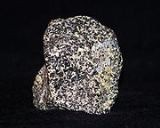
Chromium is a
chemical elementA chemical element is a pure chemical substance consisting of one type of atom distinguished by its atomic number, which is the number of protons in its nucleus. Familiar examples of elements include carbon, oxygen, aluminum, iron, copper, gold, mercury, and lead.As of November 2011, 118 elements...
which has the symbol
Cr and
atomic numberIn chemistry and physics, the atomic number is the number of protons found in the nucleus of an atom and therefore identical to the charge number of the nucleus. It is conventionally represented by the symbol Z. The atomic number uniquely identifies a chemical element...
24. It is the first element in
Group 6A Group 6 element is one in the series of elements in group 6 in the periodic table, which consists of the transition metals chromium , molybdenum , tungsten , and seaborgium ....
. It is a steely-gray,
lustrousLustre is a description of the way light interacts with the surface of a crystal, rock, or mineral. The word lustre traces its origins back to the Latin word lux, meaning "light", and generally implies radiance, gloss, or brilliance....
, hard
metalA metal , is an element, compound, or alloy that is a good conductor of both electricity and heat. Metals are usually malleable and shiny, that is they reflect most of incident light...
that takes a high polish and has a high melting point. It is also odorless, tasteless, and malleable. The name of the element is derived from the
GreekGreek is an independent branch of the Indo-European family of languages. Native to the southern Balkans, it has the longest documented history of any Indo-European language, spanning 34 centuries of written records. Its writing system has been the Greek alphabet for the majority of its history;...
word "chrōma" (χρώμα), meaning colour, because many of its compounds are intensely coloured. Chromium oxide was used by the Chinese in the
Qin dynastyThe Qin Dynasty was the first imperial dynasty of China, lasting from 221 to 207 BC. The Qin state derived its name from its heartland of Qin, in modern-day Shaanxi. The strength of the Qin state was greatly increased by the legalist reforms of Shang Yang in the 4th century BC, during the Warring...
over 2,000 years ago to coat weapons such as bronze crossbow bolts and steel swords found at the
Terracotta ArmyThe Terracotta Army or the "Terra Cotta Warriors and Horses", is a collection of terracotta sculptures depicting the armies of Qin Shi Huang, the first Emperor of China...
. It later came to the attention of the west when it was discovered by
Louis Nicolas VauquelinNicolas Louis Vauquelin , was a French pharmacist and chemist.-Early life:Vauquelin was born at Saint-André-d'Hébertot in Normandy, France. His first acquaintance with chemistry was gained as laboratory assistant to an apothecary in Rouen , and after various vicissitudes he obtained an introduction...
in the mineral
crocoiteCrocoite is a mineral consisting of lead chromate, PbCrO4, and crystallizing in the monoclinic crystal system. It is sometimes used as a paint, being identical in composition with the artificial product chrome yellow. It was discovered at Berezovsky deposit near Ekaterinburg in the Urals in 1766;...
(
lead(II) chromateLead chromate is a chemical compound, a chromate of lead. It has a vivid yellow color and is practically insoluble in water, and as a result, is used in paints under the name "chrome yellow"...
) in 1797. Crocoite was used as a pigment, and after the discovery that the mineral chromite also contains chromium, this latter mineral was used to produce pigments as well.
Chromium was regarded with great interest because of its high
corrosionCorrosion is the disintegration of an engineered material into its constituent atoms due to chemical reactions with its surroundings. In the most common use of the word, this means electrochemical oxidation of metals in reaction with an oxidant such as oxygen...
resistance and hardness. A major development was the discovery that steel could be made highly resistant to corrosion and discoloration by adding chromium to form
stainless steelIn metallurgy, stainless steel, also known as inox steel or inox from French "inoxydable", is defined as a steel alloy with a minimum of 10.5 or 11% chromium content by mass....
. This application, along with
chrome platingChrome plating, often referred to simply as chrome, is a technique of electroplating a thin layer of chromium onto a metal object. The chromed layer can be decorative, provide corrosion resistance, ease cleaning procedures, or increase surface hardness.-Process:A component to be chrome plated will...
(
electroplatingElectroplating is a plating process in which metal ions in a solution are moved by an electric field to coat an electrode. The process uses electrical current to reduce cations of a desired material from a solution and coat a conductive object with a thin layer of the material, such as a metal...
with chromium) are currently the highest-volume uses of the metal. Chromium and ferrochromium are produced from the single commercially viable ore, chromite, by silicothermic or
aluminothermic reactionAluminothermic reactions are exothermic chemical reactions using aluminium as the reducing agent at high temperature. The most prominent example is the thermite reaction between aluminium and iron oxides:-History:...
or by
roastingRoasting is a step in the processing of certain ores. More specifically, roasting is a metallurgical process involving gas–solid reactions at elevated temperatures with the goal of purifying the metal component. Often before roasting, the ore has already been partially purified, e.g. by froth...
and
leachingLeaching is a widely used extractive metallurgy technique which converts metals into soluble salts in aqueous media. Compared to pyrometallurgical operations, leaching is easier to perform and much less harmful, because no gaseous pollution occurs...
processes.
Although trivalent chromium (Cr(III)) is required in trace amounts for
sugarSugar is a class of edible crystalline carbohydrates, mainly sucrose, lactose, and fructose, characterized by a sweet flavor.Sucrose in its refined form primarily comes from sugar cane and sugar beet...
and
lipidLipids constitute a broad group of naturally occurring molecules that include fats, waxes, sterols, fat-soluble vitamins , monoglycerides, diglycerides, triglycerides, phospholipids, and others...
metabolismMetabolism is the set of chemical reactions that happen in the cells of living organisms to sustain life. These processes allow organisms to grow and reproduce, maintain their structures, and respond to their environments. Metabolism is usually divided into two categories...
, few cases have been reported where its complete removal from the diet has caused
chromium deficiencyChromium deficiency is a disorder that results from an insufficient dietary intake of chromium. Whether or not such a deficiency ever occurs in people eating a normal diet is debated, and clear cases of deficiency have only been observed in hospital patients who were fed defined liquid diets...
. In larger amounts and different forms chromium can be toxic and carcinogenic. The most prominent example of toxic chromium is
hexavalent chromiumHexavalent chromium refers to chemical compounds that contain the element chromium in the +6 oxidation state. Virtually all chromium ore is processed via hexavalent chromium, specifically the salt sodium dichromate. Approximately of hexavalent chromium were produced in 1985...
(Cr(VI)). Abandoned chromium production sites often require environmental cleanup.
Physical
Chromium is remarkable for its magnetic properties: it is the only elemental solid which shows antiferromagnetic ordering at room temperature (and below). Above 38 °C, it transforms into a paramagnetic state.
Passivation
Chromium metal left standing in air is
passivatedPassivation is the process of making a material "passive", and thus less reactive with surrounding air, water, or other gases or liquids. The goal is to inhibit corrosion, whether for structural or cosmetic reasons. Passivation of metals is usually achieved by the deposition of a layer of oxide...
by oxygen, forming a thin protective oxide surface layer. This layer is a
spinelSpinel is the magnesium aluminium member of the larger spinel group of minerals. It has the formula MgAl2O4. Balas ruby is an old name for a rose-tinted variety.-Spinel group:...
structure only a few atoms thick. It is very dense, and prevents the diffusion of oxygen into the underlying material. This barrier is in contrast to iron or plain carbon steels, where the oxygen migrates into the underlying material and causes
rustRust is a general term for a series of iron oxides. In colloquial usage, the term is applied to red oxides, formed by the reaction of iron and oxygen in the presence of water or air moisture...
ing. The passivation can be enhanced by short contact with
oxidizing acidAn oxidizing acid is a Brønsted acid that is also a strong oxidizing agent . All Brønsted acids can act as moderately strong oxidizing agents, because the acidic proton can be reduced to hydrogen gas. Some acids contain other structures that act as stronger oxidizing agents than hydrogen....
s like
nitric acidNitric acid , also known as aqua fortis and spirit of nitre, is a highly corrosive and toxic strong acid.Colorless when pure, older samples tend to acquire a yellow cast due to the accumulation of oxides of nitrogen. If the solution contains more than 86% nitric acid, it is referred to as fuming...
. Passivated chromium is stable against acids. The opposite effect can be achieved by treatment with a strong reducing reactant that destroys the protective oxide layer on the metal. Chromium metal treated in this way readily dissolves in weak acids.
Chromium, unlike metals such as iron and nickel, does not suffer from
hydrogen embrittlementHydrogen embrittlement is the process by which various metals, most importantly high-strength steel, become brittle and fracture following exposure to hydrogen...
. However, it does suffer from nitrogen embrittlement, reacting with nitrogen from air and forming brittle nitrides at the high temperatures necessary to work the metal parts.
Occurrence
Chromium is the 21st most
abundant element in Earth's crustThe table shows the abundance of elements in Earth's crust. Numbers show percentage or parts per million in mass; 10,000 ppm = 1%.Note that numbers are estimates, and they will vary depending on source and method of estimation. Order of magnitude of data can roughly be relied upon.The table shows...
with an average concentration of 100 ppm. Chromium compounds are found in the environment, due to
erosionErosion is when materials are removed from the surface and changed into something else. It only works by hydraulic actions and transport of solids in the natural environment, and leads to the deposition of these materials elsewhere...
of chromium-containing rocks and can be distributed by volcanic eruptions. The concentrations range in soil is between 1 and 3000 mg/kg, in sea water 5 to 800 µg/liter, and in rivers and lakes 26 µg/liter to 5.2 mg/liter.
Chromium is mined as
chromiteChromite is an iron chromium oxide: FeCr2O4. It is an oxide mineral belonging to the spinel group. Magnesium can substitute for iron in variable amounts as it forms a solid solution with magnesiochromite ; substitution of aluminium occurs leading to hercynite .-Occurrence:Chromite is found in...
(FeCr
2O
4) ore. About two-fifths of the chromite ores and concentrates in the world are produced in
South AfricaThe Republic of South Africa is a country in southern Africa. Located at the southern tip of Africa, it is divided into nine provinces, with of coastline on the Atlantic and Indian oceans...
, while
KazakhstanKazakhstan , officially the Republic of Kazakhstan, is a transcontinental country in Central Asia and Eastern Europe. Ranked as the ninth largest country in the world, it is also the world's largest landlocked country; its territory of is greater than Western Europe...
,
IndiaIndia , officially the Republic of India , is a country in South Asia. It is the seventh-largest country by geographical area, the second-most populous country with over 1.2 billion people, and the most populous democracy in the world...
,
RussiaRussia or , officially known as both Russia and the Russian Federation , is a country in northern Eurasia. It is a federal semi-presidential republic, comprising 83 federal subjects...
, and
TurkeyTurkey , known officially as the Republic of Turkey , is a Eurasian country located in Western Asia and in East Thrace in Southeastern Europe...
are also substantial producers. Untapped chromite deposits are plentiful, but geographically concentrated in Kazakhstan and southern Africa.
Although rare, deposits of
nativeA native metal is any metal that is found in its metallic form, either pure or as an alloy, in nature. Metals that can be found as native deposits singly and/or in alloys include aluminium, antimony, arsenic, bismuth, cadmium, chromium, cobalt, indium, iron, nickel, selenium, tantalum, tellurium,...
chromium exist. The
Udachnaya PipeUdachnaya pipe is a diamond deposit in the Daldyn-Alakit kimberlite field in Sakha Republic, Russia. It is an open-pit mine, and is located just outside the Arctic circle at . Udachnaya was discovered on June 15, 1955, just two days after the discovery of the diamond pipe Mir by Soviet...
in
RussiaRussia or , officially known as both Russia and the Russian Federation , is a country in northern Eurasia. It is a federal semi-presidential republic, comprising 83 federal subjects...
produces samples of the native metal. This mine is a
kimberliteKimberlite is a type of potassic volcanic rock best known for sometimes containing diamonds. It is named after the town of Kimberley in South Africa, where the discovery of an diamond in 1871 spawned a diamond rush, eventually creating the Big Hole....
pipe, rich in
diamondIn mineralogy, diamond is an allotrope of carbon, where the carbon atoms are arranged in a variation of the face-centered cubic crystal structure called a diamond lattice. Diamond is less stable than graphite, but the conversion rate from diamond to graphite is negligible at ambient conditions...
s, and the
reducing environmentRedox reactions describe all chemical reactions in which atoms have their oxidation state changed....
helped produce both elemental chromium and diamond.
The relation between Cr(III) and Cr(VI) strongly depends on
pHIn chemistry, pH is a measure of the acidity or basicity of an aqueous solution. Pure water is said to be neutral, with a pH close to 7.0 at . Solutions with a pH less than 7 are said to be acidic and solutions with a pH greater than 7 are basic or alkaline...
and oxidative properties of the location, but in most cases, the Cr(III) is the dominating species, although in some areas the ground water can contain up to 39 µg/liter of total chromium of which 30 µg/liter is present as Cr(VI).
Isotopes
Naturally occurring chromium is composed of three stable
isotopeIsotopes are variants of atoms of a particular chemical element, which have differing numbers of neutrons. Atoms of a particular element by definition must contain the same number of protons but may have a distinct number of neutrons which differs from atom to atom, without changing the designation...
s;
52Cr,
53Cr and
54Cr with
52Cr being the most abundant (83.789%
natural abundanceIn chemistry, natural abundance refers to the abundance of isotopes of a chemical element as naturally found on a planet. The relative atomic mass of these isotopes is the atomic weight listed for the element in the periodic table...
). 19 radioisotopes have been characterized with the most stable being
50Cr with a
half-lifeHalf-life, abbreviated t½, is the period of time it takes for the amount of a substance undergoing decay to decrease by half. The name was originally used to describe a characteristic of unstable atoms , but it may apply to any quantity which follows a set-rate decay.The original term, dating to...
of (more than) 1.8 years, and
51Cr with a half-life of 27.7 days. All of the remaining radioactive isotopes have half-lives that are less than 24 hours and the majority of these have half-lives that are less than 1 minute. This element also has 2 meta states.
53Cr is the radiogenic decay product of
53MnManganese is a chemical element, designated by the symbol Mn. It has the atomic number 25. It is found as a free element in nature , and in many minerals...
. Chromium
isotopicIsotopes are variants of atoms of a particular chemical element, which have differing numbers of neutrons. Atoms of a particular element by definition must contain the same number of protons but may have a distinct number of neutrons which differs from atom to atom, without changing the designation...
contents are typically combined with
manganeseManganese is a chemical element, designated by the symbol Mn. It has the atomic number 25. It is found as a free element in nature , and in many minerals...
isotopic contents and have found application in isotope geology.
MnManganese is a chemical element, designated by the symbol Mn. It has the atomic number 25. It is found as a free element in nature , and in many minerals...
-Cr isotope ratios reinforce the evidence from
26AlAluminium or aluminum is a silvery white member of the boron group of chemical elements. It has the symbol Al, and its atomic number is 13. It is not soluble in water under normal circumstances....
and
107PdPalladium is a chemical element with the chemical symbol Pd and an atomic number of 46. It is a rare and lustrous silvery-white metal discovered in 1803 by William Hyde Wollaston. He named it after the asteroid Pallas, which was itself named after the epithet of the Greek goddess Athena, acquired...
for the early history of the
solar systemThe Solar System consists of the Sun and the astronomical objects gravitationally bound in orbit around it, all of which formed from the collapse of a giant molecular cloud approximately 4.6 billion years ago. The vast majority of the system's mass is in the Sun...
. Variations in
53Cr/
52Cr and Mn/Cr ratios from several meteorites indicate an initial
53Mn/
55Mn ratio that suggests Mn-Cr isotopic composition must result from in-situ decay of
53Mn in differentiated planetary bodies. Hence
53Cr provides additional evidence for
nucleosyntheticNucleosynthesis is the process of creating new atomic nuclei from pre-existing nucleons . It is thought that the primordial nucleons themselves were formed from the quark–gluon plasma from the Big Bang as it cooled below two trillion degrees...
processes immediately before coalescence of the solar system.
The isotopes of chromium range in
atomic massThe atomic mass is the mass of a specific isotope, most often expressed in unified atomic mass units. The atomic mass is the total mass of protons, neutrons and electrons in a single atom....
from 43
uThe unified atomic mass unit or dalton is a unit that is used for indicating mass on an atomic or molecular scale. It is defined as one twelfth of the rest mass of an unbound neutral atom of carbon-12 in its nuclear and electronic ground state, and has a value of...
(
43Cr) to 67 u (
67Cr). The primary decay mode before the most abundant stable isotope,
52Cr, is
electron captureElectron capture is a process in which a proton-rich nuclide absorbs an inner atomic electron and simultaneously emits a neutrino...
and the primary mode after is
beta decayIn nuclear physics, beta decay is a type of radioactive decay in which a beta particle is emitted from an atom. There are two types of beta decay: beta minus and beta plus. In the case of beta decay that produces an electron emission, it is referred to as beta minus , while in the case of a...
.
53Cr has been posited as a proxy for atmospheric oxygen concentration.
Compounds
Oxidation states[Most common oxidation states of chromium are in bold. The right column lists one representative compound for each oxidation state.] |
| −2 |
|
| −1 |
|
| 0 |
Bischromium is the organometallic compound with the formula Cr2. It is sometimes called dibenzenechromium. The compound played an important role in the development of sandwich compounds in organometallic chemistry and is the prototypical complex containg two arene ligands.-Preparation:The...
|
| +1 |
|
| +2 |
Chromium chloride is the chemical compound with the formula CrCl2. This white, crystalline solid is used for the synthesis of other chromium complexes. CrCl2 is hygroscopic. It dissolves in water to give bright blue solutions that are easily oxidized by air to give Cr-containing products...
|
| +3 |
Chromium chloride is a violet coloured solid with the formula CrCl3. The most common form of CrCl3 sold commercially is a dark green hexahydrate with the formula [CrCl24]Cl.2H2O. Two other hydrates are known, pale green [CrCl5]Cl2.H2O and violet [Cr6]Cl3...
|
| +4 |
|
| +5 |
Potassium peroxochromate, or potassium tetraperoxochromate, is an inorganic chemical having the chemical formula K3[Cr4]. A crystalline ionic solid with a brown color, it is the potassium salt of tetraperoxochromate, one of the few examples of chromium in the +5 oxidation...
|
| +6 |
Potassium chromate is a yellow chemical indicator used for identifying concentrations of chloride ions in a salt solution with silver nitrate...
|
Chromium is a member of the
transition metalThe term transition metal has two possible meanings:*The IUPAC definition states that a transition metal is "an element whose atom has an incomplete d sub-shell, or which can give rise to cations with an incomplete d sub-shell." Group 12 elements are not transition metals in this definition.*Some...
s, in
group 6A Group 6 element is one in the series of elements in group 6 in the periodic table, which consists of the transition metals chromium , molybdenum , tungsten , and seaborgium ....
. Chromium(0) has an electronic configuration of 4s
13d
5, owing to the lower energy of the
high spin configurationSpin states when describing transition metal coordination complexes refers to the potential spin configurations of the metal centers d electrons. In many molecules these spin states vary between high-spin and low-spin configurations...
. Chromium exhibits a wide range of possible
oxidation stateIn chemistry, the oxidation state is an indicator of the degree of oxidation of an atom in a chemical compound. The formal oxidation state is the hypothetical charge that an atom would have if all bonds to atoms of different elements were 100% ionic. Oxidation states are typically represented by...
s, where the +3 state is most stable energetically; the +3 and +6 states are most commonly observed in chromium compounds, whereas the +1, +4 and +5 states are rare.
The following is the
Pourbaix diagramIn chemistry, a Pourbaix diagram, also known as a potential/pH diagram, maps out possible stable phases of an aqueous electrochemical system. Predominant ion boundaries are represented by lines. As such a Pourbaix diagram can be read much like a standard phase diagram with a different set of axes...
for chromium in pure water, perchloric acid or sodium hydroxide:
Chromium(III)
A large number of chromium(III) compounds are known. Chromium(III) can be obtained by dissolving elemental chromium in acids like
hydrochloric acidHydrochloric acid is a solution of hydrogen chloride in water, that is a highly corrosive, strong mineral acid with many industrial uses. It is found naturally in gastric acid....
or
sulfuric acidSulfuric acid is a strong mineral acid with the molecular formula . Its historical name is oil of vitriol. Pure sulfuric acid is a highly corrosive, colorless, viscous liquid. The salts of sulfuric acid are called sulfates...
. The ion has a similar radius (63
pmA picometre is a unit of length in the metric system, equal to one trillionth, i.e. of a metre, which is the current SI base unit of length...
) to the ion (radius 50 pm), so they can replace each other in some compounds, such as in
chrome alumChrome alum or Chromium potassium sulfate is the potassium double sulfate of chromium. Its chemical formula is KCr2 and it is commonly found in its dodecahydrate form as KCr2·12. It was formerly used in leather tanning....
and
alumAlum is both a specific chemical compound and a class of chemical compounds. The specific compound is the hydrated potassium aluminium sulfate with the formula KAl2.12H2O. The wider class of compounds known as alums have the related empirical formula, AB2.12H2O.-Chemical properties:Alums are...
. When a trace amount of replaces in
corundumCorundum is a crystalline form of aluminium oxide with traces of iron, titanium and chromium. It is a rock-forming mineral. It is one of the naturally clear transparent materials, but can have different colors when impurities are present. Transparent specimens are used as gems, called ruby if red...
(aluminium oxide, Al
2O
3), the red-colored
rubyA ruby is a pink to blood-red colored gemstone, a variety of the mineral corundum . The red color is caused mainly by the presence of the element chromium. Its name comes from ruber, Latin for red. Other varieties of gem-quality corundum are called sapphires...
is formed.
Chromium(III) ions tend to adopt
octahedral molecular geometryIn chemistry, octahedral molecular geometry describes the shape of compounds where in six atoms or groups of atoms or ligands are symmetrically arranged around a central atom, defining the vertices of an octahedron...
, with six
ligandIn coordination chemistry, a ligand is an ion or molecule that binds to a central metal atom to form a coordination complex. The bonding between metal and ligand generally involves formal donation of one or more of the ligand's electron pairs. The nature of metal-ligand bonding can range from...
s. The colors of these solutions is determined by the ligands attached to the Cr centre. The commercially available
chromium(III) chlorideChromium chloride is a violet coloured solid with the formula CrCl3. The most common form of CrCl3 sold commercially is a dark green hexahydrate with the formula [CrCl24]Cl.2H2O. Two other hydrates are known, pale green [CrCl5]Cl2.H2O and violet [Cr6]Cl3...
hydrate is the dark green complex [CrCl
2(H
2O)
4]Cl, but two other forms are known: pale green [CrCl(H
2O)
5]Cl
2, and the violet [Cr(H
2O)
6]Cl
3. If water-free green
chromium(III) chlorideChromium chloride is a violet coloured solid with the formula CrCl3. The most common form of CrCl3 sold commercially is a dark green hexahydrate with the formula [CrCl24]Cl.2H2O. Two other hydrates are known, pale green [CrCl5]Cl2.H2O and violet [Cr6]Cl3...
is dissolved in water then the green solution turns violet after some time, due to the substitution of water for chloride in the inner
coordination sphereIn coordination chemistry, the coordination sphere refers to a central atom or ion and an array of molecules or anions, the ligands, around.Molecules that are attached noncovalently to the ligands are called the second coordination sphere....
. This kind of reaction is also observed in
chrome alumChrome alum or Chromium potassium sulfate is the potassium double sulfate of chromium. Its chemical formula is KCr2 and it is commonly found in its dodecahydrate form as KCr2·12. It was formerly used in leather tanning....
solutions and other water-soluble chromium(III) salts. The reverse reaction may be induced by heating the solution.
Chromium(III) hydroxide (Cr(OH)
3) is
amphotericIn chemistry, an amphoteric species is a molecule or ion that can react as an acid as well as a base. The word is derived from the Greek word amphoteroi meaning "both"...
, dissolving in acidic solutions to form [Cr(H
2O)
6]
3+, and in basic solutions to form . It is dehydrated by heating to form the green
chromium(III) oxideChromium oxide is the inorganic compound of the formula Cr2O3. It is one of principal oxides of chromium and is used as a pigment. In nature, it occurs as the rare mineral eskolaite.-Structure and properties:...
(Cr
2O
3), which is the stable oxide with a crystal structure identical to that of
corundumCorundum is a crystalline form of aluminium oxide with traces of iron, titanium and chromium. It is a rock-forming mineral. It is one of the naturally clear transparent materials, but can have different colors when impurities are present. Transparent specimens are used as gems, called ruby if red...
.
Chromium(VI)
Chromium(VI) compoundsHexavalent chromium refers to chemical compounds that contain the element chromium in the +6 oxidation state. Virtually all chromium ore is processed via hexavalent chromium, specifically the salt sodium dichromate. Approximately of hexavalent chromium were produced in 1985...
are powerful oxidants at low or neutral pH. Most important are
chromateChromate salts contain the chromate anion, CrO42−. Dichromate salts contain the dichromate anion, Cr2O72−. They are oxyanions of chromium in the oxidation state +6. They are moderately strong oxidizing agents.- Chemical properties :...
anion and dichromate (Cr
2O
72-) anions, which exist in equilibrium:
- 2 [CrO4]2- + 2 H+
[Cr2O7]2- + 2 H2O
Chromium(VI) halides are known also and include hexafluoride CrF
6 and
chromyl chlorideChromyl chloride is a chemical compound with the formula CrO2Cl2. This compound is an opaque dark blood-red liquid at room temperature and pressure. It is tetrahedral, somewhat like SO2Cl2. CrO2Cl2 is similar to the most commonly encountered chromium derivative chromate, [CrO4]2−; both are...
.
Sodium chromateSodium chromate is a yellow solid chemical compound used as a corrosion inhibitor in the petroleum industry, a dyeing auxiliary in the textile industry, as a wood preservative, and as a diagnostic pharmaceutical in determining red blood cell volume....
is produced industrially by the oxidative roasting of
chromiteChromite is an iron chromium oxide: FeCr2O4. It is an oxide mineral belonging to the spinel group. Magnesium can substitute for iron in variable amounts as it forms a solid solution with magnesiochromite ; substitution of aluminium occurs leading to hercynite .-Occurrence:Chromite is found in...
ore with
calciumCalcium carbonate is a chemical compound with the formula CaCO3. It is a common substance found in rocks in all parts of the world, and is the main component of shells of marine organisms, snails, coal balls, pearls, and eggshells. Calcium carbonate is the active ingredient in agricultural lime,...
or
sodium carbonateSodium carbonate , Na2CO3 is a sodium salt of carbonic acid. It most commonly occurs as a crystalline heptahydrate, which readily effloresces to form a white powder, the monohydrate. Sodium carbonate is domestically well-known for its everyday use as a water softener. It can be extracted from the...
. The dominant species is therefore, by the law of mass action, determined by the pH of the solution. The change in equilibrium is visible by a change from yellow (chromate) to orange (dichromate), such as when an acid is added to a neutral solution of
potassium chromatePotassium chromate is a yellow chemical indicator used for identifying concentrations of chloride ions in a salt solution with silver nitrate...
. At yet lower pH values, further condensation to more complex
oxyanionAn oxyanion or oxoanion is a chemical compound with the generic formula AxOyz− . Oxoanions are formed by a large majority of the chemical elements. The formulae of simple oxoanions are determined by the octet rule...
s of chromium is possible.
Both the chromate and dichromate anions are strong oxidizing reagents at low pH:
- + 14 + 6 e− → 2 + 21 (ε0 = 1.33 V)
They are, however, only moderately oxidizing at high pH:
- + 4 + 3 e− → + 5 (ε0 = −0.13 V)
Chromium(VI) compounds in solution can be detected by adding an acidic
hydrogen peroxideHydrogen peroxide is the simplest peroxide and an oxidizer. Hydrogen peroxide is a clear liquid, slightly more viscous than water. In dilute solution, it appears colorless. With its oxidizing properties, hydrogen peroxide is often used as a bleach or cleaning agent...
solution. The unstable dark blue
chromium(VI) peroxideChromium peroxide or chromium oxide peroxide is an unstable compound formed by the addition of acidified hydrogen peroxide solutions to solutions of chromates, such as sodium chromate. The generally yellow chromates turn to dark blue-brown as chromium peroxide is formed...
(CrO
5) is formed, which can be stabilized as an ether adduct .
Chromic acidThe term chromic acid is usually used for a mixture made by adding concentrated sulfuric acid to a dichromate, which may contain a variety of compounds, including solid chromium trioxide. This kind of chromic acid may be used as a cleaning mixture for glass. Chromic acid may also refer to the...
has the hypothetical formula . It is a vaguely described chemical, despite many well-defined chromates and dichromates are known. The dark red chromium(VI) oxide , the acid anhydride of chromic acid, is sold industrially as "chromic acid". It can be produced by mixing sulfuric acid with dichromate, and is a strong oxidizing agent.
In 2010, the
Environmental Working GroupThe Environmental Working Group is an American environmental organization that specializes in research and advocacy in the areas of toxic chemicals, agricultural subsidies, public lands, and corporate accountability...
studied the drinking water in 35 American cities. The study was the first nationwide analysis measuring the presence of the chemical in U.S. water systems. The study found measurable hexavalent chromium in the tap water of 31 of the cities sampled, with
Norman, OklahomaNorman is a city in Cleveland County, Oklahoma, United States, and is located south of downtown Oklahoma City. It is part of the Oklahoma City metropolitan area. As of the 2010 census, Norman was to have 110,925 full-time residents, making it the third-largest city in Oklahoma and the...
, at the top of list; 25 cities had levels that exceeded California's proposed limit.
Note: Concentrations of Cr VI in US municipal drinking water supplies reported by EWG are within likely, natural background levels for the areas tested and not necessarily indicative of industrial pollution
(CalEPA Fact Sheet), as asserted by EWG. This factor was not taken into consideration in their report.
Chromium(IV) and chromium(V)
The oxidation state +5 is only realized in few compounds but are intermediates in many reactions involving oxidations by chromate. The only binary compound is the volatile chromium(V) fluoride (CrF
5). This red solid has a melting point of 30 °C and a boiling point of 117 °C. It can be synthesized by treating chromium metal with fluorine at 400 °C and 200 bar pressure. The peroxochromate(V) is another example of the +5 oxidation state.
Potassium peroxochromatePotassium peroxochromate, or potassium tetraperoxochromate, is an inorganic chemical having the chemical formula K3[Cr4]. A crystalline ionic solid with a brown color, it is the potassium salt of tetraperoxochromate, one of the few examples of chromium in the +5 oxidation...
(K
3[Cr(O
2)
4]) is made by reacting potassium chromate with hydrogen peroxide at low temperatures. This red brown compound is stable at room temperature but decomposes spontaneously at 150–170 °C.
Compounds of chromium(IV) (in the +4 oxidation state) are slightly more common than those of chromium(V). The tetrahalides, CrF
4, CrCl
4, and CrBr
4, can be produced by treating the trihalides with the corresponding halogen at elevated temperatures. Such compounds are susceptible to disproportionation reactions and are not stable in water.
Chromium(I) and chromium(II)
Many chromium(II) compounds are known, including the water-stable
chromium(II) chlorideChromium chloride is the chemical compound with the formula CrCl2. This white, crystalline solid is used for the synthesis of other chromium complexes. CrCl2 is hygroscopic. It dissolves in water to give bright blue solutions that are easily oxidized by air to give Cr-containing products...
, , which can be made by reduction of chromium(III) chloride with zinc. The resulting bright blue solution is only stable at neutral
pHIn chemistry, pH is a measure of the acidity or basicity of an aqueous solution. Pure water is said to be neutral, with a pH close to 7.0 at . Solutions with a pH less than 7 are said to be acidic and solutions with a pH greater than 7 are basic or alkaline...
. Many chromous carboxylates are also known, most famously, the red chromous acetate (Cr
2(O
2CCH
3)
4), which features a quadruple bond. As verified by X-ray diffraction, a Cr-Cr
quintuple bondA quintuple bond in chemistry is an unusual type of chemical bond first reported in 2005 for a dichromium compound. Single bonds, double bonds, and triple bonds are commonplace in chemistry. Quadruple bonds are rarer but occur especially for Cr, Mo, W, and Re, e.g. [Mo2Cl8]4− and [Re2Cl8]2−...
(length 183.51(4) pm) has also been described. Extremely bulky monodentate ligands stabilize this compound by shielding the quintuple bond from further reactions.
Chromium(0)
Many chromium(0) compounds are known. Most are derivatives of chromium hexacarbonyl or
bis(benzene)chromiumBischromium is the organometallic compound with the formula Cr2. It is sometimes called dibenzenechromium. The compound played an important role in the development of sandwich compounds in organometallic chemistry and is the prototypical complex containg two arene ligands.-Preparation:The...
.
History
Weapons found in burial pits dating from the late 3rd century BC
Qin DynastyThe Qin Dynasty was the first imperial dynasty of China, lasting from 221 to 207 BC. The Qin state derived its name from its heartland of Qin, in modern-day Shaanxi. The strength of the Qin state was greatly increased by the legalist reforms of Shang Yang in the 4th century BC, during the Warring...
of the
Terracotta ArmyThe Terracotta Army or the "Terra Cotta Warriors and Horses", is a collection of terracotta sculptures depicting the armies of Qin Shi Huang, the first Emperor of China...
near
Xi'anXi'an is the capital of the Shaanxi province, and a sub-provincial city in the People's Republic of China. One of the oldest cities in China, with more than 3,100 years of history, the city was known as Chang'an before the Ming Dynasty...
,
ChinaChinese civilization may refer to:* China for more general discussion of the country.* Chinese culture* Greater China, the transnational community of ethnic Chinese.* History of China* Sinosphere, the area historically affected by Chinese culture...
have been analyzed by archaeologists. Although buried more than 2,000 years ago, the ancient
bronzeBronze is a metal alloy consisting primarily of copper, usually with tin as the main additive. It is hard and brittle, and it was particularly significant in antiquity, so much so that the Bronze Age was named after the metal...
tips of
crossbowA crossbow is a weapon consisting of a bow mounted on a stock that shoots projectiles, often called bolts or quarrels. The medieval crossbow was called by many names, most of which derived from the word ballista, a torsion engine resembling a crossbow in appearance.Historically, crossbows played a...
bolts and swords found at the site showed no sign of corrosion, because the bronze was coated with chromium.
Chromium later came to the attention of westerners in the 18th century. On 26 July 1761, Johann Gottlob Lehmann found an orange-red mineral in the
Beryozovskoye minesBeryozovskoye deposit, Berezovskoe gold deposit, Berezovsky deposit, Berezovsk Mines, and some other names is the first known primary deposit of gold in Russia. It is located 13 km northwest of Yekaterinburg in the central Urals Federal District. It was discovered in 1745 by a raskolnik Yerofey...
in the
Ural MountainsThe Ural Mountains , or simply the Urals, are a mountain range that runs approximately from north to south through western Russia, from the coast of the Arctic Ocean to the Ural River and northwestern Kazakhstan. Their eastern side is usually considered the natural boundary between Europe and Asia...
which he named
Siberian red lead. Though misidentified as a
leadLead is a main-group element in the carbon group with the symbol Pb and atomic number 82. Lead is a soft, malleable poor metal. It is also counted as one of the heavy metals. Metallic lead has a bluish-white color after being freshly cut, but it soon tarnishes to a dull grayish color when exposed...
compound with
seleniumSelenium is a chemical element with atomic number 34, chemical symbol Se, and an atomic mass of 78.96. It is a nonmetal, whose properties are intermediate between those of adjacent chalcogen elements sulfur and tellurium...
and
ironIron is a chemical element with the symbol Fe and atomic number 26. It is a metal in the first transition series. It is the most common element forming the planet Earth as a whole, forming much of Earth's outer and inner core. It is the fourth most common element in the Earth's crust...
components, the mineral was
CrocoiteCrocoite is a mineral consisting of lead chromate, PbCrO4, and crystallizing in the monoclinic crystal system. It is sometimes used as a paint, being identical in composition with the artificial product chrome yellow. It was discovered at Berezovsky deposit near Ekaterinburg in the Urals in 1766;...
(
lead chromate) with a formula of PbCrO
4.
In 1770,
Peter Simon PallasPeter Simon Pallas was a German zoologist and botanist who worked in Russia.- Life and work :Pallas was born in Berlin, the son of Professor of Surgery Simon Pallas. He studied with private tutors and took an interest in natural history, later attending the University of Halle and the University...
visited the same site as Lehmann and found a red lead mineral that had useful properties as a
pigmentA pigment is a material that changes the color of reflected or transmitted light as the result of wavelength-selective absorption. This physical process differs from fluorescence, phosphorescence, and other forms of luminescence, in which a material emits light.Many materials selectively absorb...
in
paintPaint is any liquid, liquefiable, or mastic composition which after application to a substrate in a thin layer is converted to an opaque solid film. One may also consider the digital mimicry thereof...
s. The use of Siberian red lead as a paint pigment developed rapidly. A bright
yellowYellow is the color evoked by light that stimulates both the L and M cone cells of the retina about equally, with no significant stimulation of the S cone cells. Light with a wavelength of 570–590 nm is yellow, as is light with a suitable mixture of red and green...
pigment made from crocoite also became fashionable.
In 1797,
Louis Nicolas VauquelinNicolas Louis Vauquelin , was a French pharmacist and chemist.-Early life:Vauquelin was born at Saint-André-d'Hébertot in Normandy, France. His first acquaintance with chemistry was gained as laboratory assistant to an apothecary in Rouen , and after various vicissitudes he obtained an introduction...
received samples of crocoite
oreAn ore is a type of rock that contains minerals with important elements including metals. The ores are extracted through mining; these are then refined to extract the valuable element....
. He produced chromium trioxide (CrO
3) by mixing crocoite with
hydrochloric acidHydrochloric acid is a solution of hydrogen chloride in water, that is a highly corrosive, strong mineral acid with many industrial uses. It is found naturally in gastric acid....
. In 1798, Vauquelin discovered that he could isolate metallic chromium by heating the oxide in a charcoal oven. He was also able to detect traces of chromium in precious
gemstoneA gemstone or gem is a piece of mineral, which, in cut and polished form, is used to make jewelry or other adornments...
s, such as
rubyA ruby is a pink to blood-red colored gemstone, a variety of the mineral corundum . The red color is caused mainly by the presence of the element chromium. Its name comes from ruber, Latin for red. Other varieties of gem-quality corundum are called sapphires...
or
emeraldEmerald is a variety of the mineral beryl colored green by trace amounts of chromium and sometimes vanadium. Beryl has a hardness of 7.5–8 on the 10 point Mohs scale of mineral hardness...
.
During the 1800s, chromium was primarily used as a component of paints and in
tanningTanning is the making of leather from the skins of animals which does not easily decompose. Traditionally, tanning used tannin, an acidic chemical compound from which the tanning process draws its name . Coloring may occur during tanning...
salts. At first, crocoite from
RussiaRussia or , officially known as both Russia and the Russian Federation , is a country in northern Eurasia. It is a federal semi-presidential republic, comprising 83 federal subjects...
was the main source, but in 1827, a larger chromite deposit was discovered near
BaltimoreBaltimore is the largest independent city in the United States and the largest city and cultural center of the US state of Maryland. The city is located in central Maryland along the tidal portion of the Patapsco River, an arm of the Chesapeake Bay. Baltimore is sometimes referred to as Baltimore...
,
United StatesThe United States of America is a federal constitutional republic comprising fifty states and a federal district...
. This made the United states the largest producer of chromium products till 1848 when large deposits of chromite where found near Bursa,
TurkeyTurkey , known officially as the Republic of Turkey , is a Eurasian country located in Western Asia and in East Thrace in Southeastern Europe...
.
Chromium is also known for its luster when polished. It is used as a protective and decorative coating on car parts, plumbing fixtures, furniture parts and many other items, usually applied by
electroplatingElectroplating is a plating process in which metal ions in a solution are moved by an electric field to coat an electrode. The process uses electrical current to reduce cations of a desired material from a solution and coat a conductive object with a thin layer of the material, such as a metal...
. Chromium was used for electroplating as early as 1848, but this use only became widespread with the development of an improved process in 1924.
Metal alloys now account for 85% of the use of chromium. The remainder is used in the
chemical industryThe chemical industry comprises the companies that produce industrial chemicals. Central to the modern world economy, it converts raw materials into more than 70,000 different products.-Products:...
and
refractoryA refractory material is one that retains its strength at high temperatures. ASTM C71 defines refractories as "non-metallic materials having those chemical and physical properties that make them applicable for structures, or as components of systems, that are exposed to environments above...
and
foundryA foundry is a factory that produces metal castings. Metals are cast into shapes by melting them into a liquid, pouring the metal in a mold, and removing the mold material or casting after the metal has solidified as it cools. The most common metals processed are aluminum and cast iron...
industries.
Production
Approximately 4.4 million metric tons of marketable chromite ore were produced in 2000, and converted into ~3.3 million tons of ferro-chrome with an approximate market value of 2.5 billion
United States dollarThe United States dollar , also referred to as the American dollar, is the official currency of the United States of America. It is divided into 100 smaller units called cents or pennies....
s. The largest producers of chromium ore have been
South AfricaThe Republic of South Africa is a country in southern Africa. Located at the southern tip of Africa, it is divided into nine provinces, with of coastline on the Atlantic and Indian oceans...
(44%)
IndiaIndia , officially the Republic of India , is a country in South Asia. It is the seventh-largest country by geographical area, the second-most populous country with over 1.2 billion people, and the most populous democracy in the world...
(18%),
KazakhstanKazakhstan , officially the Republic of Kazakhstan, is a transcontinental country in Central Asia and Eastern Europe. Ranked as the ninth largest country in the world, it is also the world's largest landlocked country; its territory of is greater than Western Europe...
(16%)
ZimbabweZimbabwe is a landlocked country located in the southern part of the African continent, between the Zambezi and Limpopo rivers. It is bordered by South Africa to the south, Botswana to the southwest, Zambia and a tip of Namibia to the northwest and Mozambique to the east. Zimbabwe has three...
(5%),
FinlandFinland , officially the Republic of Finland, is a Nordic country situated in the Fennoscandian region of Northern Europe. It is bordered by Sweden in the west, Norway in the north and Russia in the east, while Estonia lies to its south across the Gulf of Finland.Around 5.4 million people reside...
(4%)
IranIran , officially the Islamic Republic of Iran , is a country in Southern and Western Asia. The name "Iran" has been in use natively since the Sassanian era and came into use internationally in 1935, before which the country was known to the Western world as Persia...
(4%) and
BrazilBrazil , officially the Federative Republic of Brazil , is the largest country in South America. It is the world's fifth largest country, both by geographical area and by population with over 192 million people...
(2%) with several other countries producing the rest of less than 10% of the world production.
The two main products of chromium ore refining are ferrochromium and metallic chromium. For those products the ore smelter process differs considerably. For the production of ferrochromium, the chromite ore (FeCr
2O
4) is reduced in large scale in
electric arc furnaceAn electric arc furnace is a furnace that heats charged material by means of an electric arc.Arc furnaces range in size from small units of approximately one ton capacity up to about 400 ton units used for secondary steelmaking...
or in smaller smelters with either
aluminiumAluminium or aluminum is a silvery white member of the boron group of chemical elements. It has the symbol Al, and its atomic number is 13. It is not soluble in water under normal circumstances....
or
siliconSilicon is a chemical element with the symbol Si and atomic number 14. A tetravalent metalloid, it is less reactive than its chemical analog carbon, the nonmetal directly above it in the periodic table, but more reactive than germanium, the metalloid directly below it in the table...
in an
aluminothermic reactionAluminothermic reactions are exothermic chemical reactions using aluminium as the reducing agent at high temperature. The most prominent example is the thermite reaction between aluminium and iron oxides:-History:...
.
For the production of pure chromium, the iron has to be separated from the chromium in a two step roasting and leaching process. The chromite ore is heated with a mixture of
calcium carbonateCalcium carbonate is a chemical compound with the formula CaCO3. It is a common substance found in rocks in all parts of the world, and is the main component of shells of marine organisms, snails, coal balls, pearls, and eggshells. Calcium carbonate is the active ingredient in agricultural lime,...
and
sodium carbonateSodium carbonate , Na2CO3 is a sodium salt of carbonic acid. It most commonly occurs as a crystalline heptahydrate, which readily effloresces to form a white powder, the monohydrate. Sodium carbonate is domestically well-known for its everyday use as a water softener. It can be extracted from the...
in the presence of air. The chromium is oxidized to the hexavalent form, while the iron forms the stable Fe
2O
3. The subsequent leaching at higher elevated temperatures dissolves the
chromateChromate salts contain the chromate anion, CrO42−. Dichromate salts contain the dichromate anion, Cr2O72−. They are oxyanions of chromium in the oxidation state +6. They are moderately strong oxidizing agents.- Chemical properties :...
s and leaves the insoluble iron oxide. The chromate is converted by sulfuric acid into the dichromate.
- 4 FeCr2O4 + 8 Na2CO3 + 7 O2 → 8 Na2CrO4 + 2 Fe2O3 + 8 CO2
- 2 Na2CrO4 + H2SO4 → Na2Cr2O7 + Na2SO4 + H2O
The dichromate is converted to the chromium(III) oxide by reduction with carbon and then reduced in an aluminothermic reaction to chromium.
- Na2Cr2O7 + 2 C → Cr2O3 + Na2CO3 + CO
- Cr2O3 + 2 Al → Al2O3 + 2 Cr
Metallurgy
The strengthening effect of forming stable metal carbides at the grain boundaries and the strong increase in corrosion resistance made chromium an important alloying material for steel. The
high speed tool steelsHigh speed steelMost copyeditors today would tend to choose to style the unit adjective high-speed with a hyphen, rendering the full term as high-speed steel, and this styling is not uncommon . However, it is true that in the metalworking industries the styling high speed steel is long-established...
contain between 3 and 5% chromium.
Stainless steelIn metallurgy, stainless steel, also known as inox steel or inox from French "inoxydable", is defined as a steel alloy with a minimum of 10.5 or 11% chromium content by mass....
, the main corrosion-proof metal alloy, is formed when chromium is added to
ironIron is a chemical element with the symbol Fe and atomic number 26. It is a metal in the first transition series. It is the most common element forming the planet Earth as a whole, forming much of Earth's outer and inner core. It is the fourth most common element in the Earth's crust...
in sufficient concentrations, usually above 11%. For its formation, ferrochromium is added to the molten iron. Also nickel-based alloys increase in strength due to the formation of discrete, stable metal carbide particles at the grain boundaries. For example,
InconelInconel is a registered trademark of Special Metals Corporation that refers to a family of austenitic nickel-chromium-based superalloys. Inconel alloys are typically used in high temperature applications. It is often referred to in English as "Inco"...
718 contains 18.6% chromium. Because of the excellent high temperature properties of these nickel
superalloyA superalloy, or high-performance alloy, is an alloy that exhibits excellent mechanical strength and creep resistance at high temperatures, good surface stability, and corrosion and oxidation resistance. Superalloys typically have a matrix with an austenitic face-centered cubic crystal structure. ...
s, they are used in
jet engineA jet engine is a reaction engine that discharges a fast moving jet to generate thrust by jet propulsion and in accordance with Newton's laws of motion. This broad definition of jet engines includes turbojets, turbofans, rockets, ramjets, pulse jets...
s and
gas turbineA gas turbine, also called a combustion turbine, is a type of internal combustion engine. It has an upstream rotating compressor coupled to a downstream turbine, and a combustion chamber in-between....
s in lieu of common structural materials.
The relative high hardness and corrosion resistance of unalloyed chromium makes it a good surface coating, being still the most "popular" metal coating with unparalleled combined durability. A thin layer of chromium is deposited on pretreated metallic surfaces by
electroplatingElectroplating is a plating process in which metal ions in a solution are moved by an electric field to coat an electrode. The process uses electrical current to reduce cations of a desired material from a solution and coat a conductive object with a thin layer of the material, such as a metal...
techniques. There are two deposition methods: Thin, below 1 µm thickness, layers are deposited by
chrome platingChrome plating, often referred to simply as chrome, is a technique of electroplating a thin layer of chromium onto a metal object. The chromed layer can be decorative, provide corrosion resistance, ease cleaning procedures, or increase surface hardness.-Process:A component to be chrome plated will...
, and are used for decorative surfaces. If wear-resistant surfaces are needed then thicker chromium layers are deposited. Both methods normally use acidic chromate or dichromate solutions. To prevent the energy consuming change in oxidation state, the use of Chromium(III) sulfate is under development, but for most applications, the established process is used.
In the
chromate conversion coatingChromate conversion coating is a type of conversion coating used to passivate aluminum, zinc, cadmium, copper, silver, magnesium, and tin alloys. It is primarily used as a corrosion inhibitor, primer, decorative finish, or to retain electrical conductivity. The process is named after the chromate...
process, the strong oxidative properties of chromates are used to deposit a protective oxide layer on metals like aluminium, zinc and cadmium. This
passivationPassivation is the process of making a material "passive", and thus less reactive with surrounding air, water, or other gases or liquids. The goal is to inhibit corrosion, whether for structural or cosmetic reasons. Passivation of metals is usually achieved by the deposition of a layer of oxide...
and the self healing properties by the chromate stored in the chromate conversion coating, which is able to migrate to local defects, are the benefits of this coating method. Because of environmental and health regulations on chromates, alternative coating method are under development.
Anodizing of aluminium is another electrochemical process, which does not lead to the deposition of chromium, but uses
chromic acidThe term chromic acid is usually used for a mixture made by adding concentrated sulfuric acid to a dichromate, which may contain a variety of compounds, including solid chromium trioxide. This kind of chromic acid may be used as a cleaning mixture for glass. Chromic acid may also refer to the...
as electrolyte in the solution. During anodization, an oxide layer is formed on the aluminium. The use of chromic acid, instead of the normally used sulfuric acid, leads to a slight difference of these oxide layers.
The high toxicity of Cr(VI) compounds, used in the established chromium electroplating process, and the strengthening of safety and environmental regulations demand a search for substitutes for chromium or at least a change to less toxic chromium(III) compounds.
Dye and pigment
The mineral
crocoiteCrocoite is a mineral consisting of lead chromate, PbCrO4, and crystallizing in the monoclinic crystal system. It is sometimes used as a paint, being identical in composition with the artificial product chrome yellow. It was discovered at Berezovsky deposit near Ekaterinburg in the Urals in 1766;...
(lead chromate PbCrO
4) was used as a yellow pigment shortly after its discovery. After a synthesis method became available starting from the more abundant chromite,
chrome yellowChrome Yellow is a natural yellow pigment made of lead chromate . It was first extracted from the mineral crocoite by the French chemist Louis Vauquelin in 1809...
was, together with cadmium yellow, one of the most used yellow pigments. The pigment does not photo degrade and has a strong color, and was used for school buses in the US and for Postal Service (for example
Deutsche PostDeutsche Post AG, operating under the trade name Deutsche Post DHL, is the world's largest logistics group. With its headquarters in Bonn, the corporation has 467,088 employees in more than 220 countries and territories worldwide and generated revenue of € 51.48 billion in 2010...
) in Europe. The use of chrome yellow declined due to environmental and safety concerns and was replaced by organic pigments or other lead-free alternatives. Other pigments based on chromium are, for example, the bright red pigment chrome red, which is a basic lead chromate (PbCrO
4·Pb(OH)
2). Chrome green is a mixture of
Prussian bluePrussian blue is a dark blue pigment with the idealized formula Fe718. Another name for the color Prussian blue is Berlin blue or, in painting, Parisian blue. Turnbull's blue is the same substance but is made from different reagents....
and
chrome yellowChrome Yellow is a natural yellow pigment made of lead chromate . It was first extracted from the mineral crocoite by the French chemist Louis Vauquelin in 1809...
, while the chrome oxide green is
Chromium(III) oxideChromium oxide is the inorganic compound of the formula Cr2O3. It is one of principal oxides of chromium and is used as a pigment. In nature, it occurs as the rare mineral eskolaite.-Structure and properties:...
.
A red color is achieved by doping chromium(III) into the crystals of
corundumCorundum is a crystalline form of aluminium oxide with traces of iron, titanium and chromium. It is a rock-forming mineral. It is one of the naturally clear transparent materials, but can have different colors when impurities are present. Transparent specimens are used as gems, called ruby if red...
, which are then called ruby. Therefore, chromium is used in producing synthetic rubies.
Chromium oxides are also used as a green color in glassmaking and as a glaze in ceramics.
Wood preservative
Because of their toxicity, chromium(VI) salts are used for the preservation of wood. For example,
chromated copper arsenateChromated copper arsenate is a wood preservative used for timber treatment since the mid-1930s. It is a mix of chromium, copper and arsenic formulated as oxides or salts. It preserves the wood from decay fungi, wood attacking insects, including termites, and marine borers...
(CCA) is used in timber treatment to protect wood from decay fungi, wood attacking insects, including termites, and marine borers. The formulations contain chromium based on the oxide CrO
3 between 35.3% and 65.5%. In the United States, 65,300 metric tons of CCA solution have been used in 1996.
Tanning
Chromium(III) salts, especially
chrome alumChrome alum or Chromium potassium sulfate is the potassium double sulfate of chromium. Its chemical formula is KCr2 and it is commonly found in its dodecahydrate form as KCr2·12. It was formerly used in leather tanning....
and chromium(III) sulfate, are used in the
tanningTanning is the making of leather from the skins of animals which does not easily decompose. Traditionally, tanning used tannin, an acidic chemical compound from which the tanning process draws its name . Coloring may occur during tanning...
of
leatherLeather is a durable and flexible material created via the tanning of putrescible animal rawhide and skin, primarily cattlehide. It can be produced through different manufacturing processes, ranging from cottage industry to heavy industry.-Forms:...
. The chromium(III) stabilizes the leather by cross linking the
collagenCollagen is a group of naturally occurring proteins found in animals, especially in the flesh and connective tissues of mammals. It is the main component of connective tissue, and is the most abundant protein in mammals, making up about 25% to 35% of the whole-body protein content...
fibers. Chromium tanned leather can contain between 4 and 5% of chromium, which is tightly bound to the proteins. Although the form of chromium used for tanning is not the toxic hexavalent variety, there remains interest in management of chromium in the tanning industry such as recovery and reuse, direct/indirect recycling, use of less chromium or "chrome-less" tanning are practised to better manage chromium in tanning.
Refractory material
The high heat resistivity and high melting point makes
chromiteChromite is an iron chromium oxide: FeCr2O4. It is an oxide mineral belonging to the spinel group. Magnesium can substitute for iron in variable amounts as it forms a solid solution with magnesiochromite ; substitution of aluminium occurs leading to hercynite .-Occurrence:Chromite is found in...
and chromium(III) oxide a material for high temperature refractory applications, like
blast furnaceA blast furnace is a type of metallurgical furnace used for smelting to produce industrial metals, generally iron.In a blast furnace, fuel and ore and flux are continuously supplied through the top of the furnace, while air is blown into the bottom of the chamber, so that the chemical reactions...
s, cement
kilnA kiln is a thermally insulated chamber, or oven, in which a controlled temperature regime is produced. Uses include the hardening, burning or drying of materials...
s, molds for the firing of
brickA brick is a block of ceramic material used in masonry construction, usually laid using various kinds of mortar. It has been regarded as one of the longest lasting and strongest building materials used throughout history.-History:...
s and as foundry sands for the casting of metals. In these applications, the refractory materials are made from mixtures of chromite and magnesite. The use is declining because of the environmental regulations due to the possibility of the formation of chromium(VI).
Catalysts
Several chromium compounds are used as catalysts for processing hydrocarbons. For example the Phillips catalysts for the production of
polyethylenePolyethylene or polythene is the most widely used plastic, with an annual production of approximately 80 million metric tons...
are mixtures of chromium and
silicon dioxideThe chemical compound silicon dioxide, also known as silica , is an oxide of silicon with the chemical formula '. It has been known for its hardness since antiquity...
or mixtures of chromium and
titaniumTitanium dioxide, also known as titanium oxide or titania, is the naturally occurring oxide of titanium, chemical formula . When used as a pigment, it is called titanium white, Pigment White 6, or CI 77891. Generally it comes in two different forms, rutile and anatase. It has a wide range of...
and
aluminium oxideAluminium oxide is an amphoteric oxide with the chemical formula 23. It is commonly referred to as alumina, or corundum in its crystalline form, as well as many other names, reflecting its widespread occurrence in nature and industry...
. Fe-Cr mixed oxides are employed as high-temperature catalysts for the
water gas shift reactionThe water-gas shift reaction is a chemical reaction in which carbon monoxide reacts with water vapor to form carbon dioxide and hydrogen:The water-gas shift reaction is an important industrial reaction. It is often used in conjunction with steam reforming of methane or other hydrocarbons, which is...
. Copper chromite is a useful
hydrogenationHydrogenation, to treat with hydrogen, also a form of chemical reduction, is a chemical reaction between molecular hydrogen and another compound or element, usually in the presence of a catalyst. The process is commonly employed to reduce or saturate organic compounds. Hydrogenation typically...
catalyst.
Other use
- Chromium(IV) oxide
Chromium dioxide or chromium oxide is a synthetic magnetic substance once widely used in magnetic tape emulsion. With the increasing popularity of CDs and DVDs, the use of chromium oxide has declined. However, it is still used in data tape applications for enterprise-class storage systems...
(CrO2) is a magneticMagnetism is a property of materials that respond at an atomic or subatomic level to an applied magnetic field. Ferromagnetism is the strongest and most familiar type of magnetism. It is responsible for the behavior of permanent magnets, which produce their own persistent magnetic fields, as well...
compound. Its ideal shape anisotropyAnisotropy is the property of being directionally dependent, as opposed to isotropy, which implies identical properties in all directions. It can be defined as a difference, when measured along different axes, in a material's physical or mechanical properties An example of anisotropy is the light...
, which imparts high coercivityIn materials science, the coercivity, also called the coercive field or coercive force, of a ferromagnetic material is the intensity of the applied magnetic field required to reduce the magnetization of that material to zero after the magnetization of the sample has been driven to saturation...
and remanent magnetization, made it a compound superior to the γ-Fe2O3. Chromium(IV) oxide is used to manufacture magnetic tapeMagnetic tape is a medium for magnetic recording, made of a thin magnetizable coating on a long, narrow strip of plastic. It was developed in Germany, based on magnetic wire recording. Devices that record and play back audio and video using magnetic tape are tape recorders and video tape recorders...
used in high-performance audio tape and standard audio cassettes. Chromates can prevent corrosion of steel under wet conditions, and therefore chromates are added to drilling muds.
- Chromium(III) oxide
Chromium oxide is the inorganic compound of the formula Cr2O3. It is one of principal oxides of chromium and is used as a pigment. In nature, it occurs as the rare mineral eskolaite.-Structure and properties:...
is a metal polish known as green rouge.
- Chromic acid
The term chromic acid is usually used for a mixture made by adding concentrated sulfuric acid to a dichromate, which may contain a variety of compounds, including solid chromium trioxide. This kind of chromic acid may be used as a cleaning mixture for glass. Chromic acid may also refer to the...
is a powerful oxidizing agent and is a useful compound for cleaning laboratory glassware of any trace of organic compounds. It is prepared in situ by dissolving potassium dichromate in concentrated sulfuric acid, which is then used to wash the apparatus. Sodium dichromateSodium dichromate is the chemical compound with the formula Na2Cr2O7. Usually, however, the salt is handled as its dihydrate Na2Cr2O7·2H2O. Virtually all chromium ore is processed via conversion to sodium dichromate. In this way, many millions of kilograms of sodium dichromate are produced...
is sometimes used because of its higher solubility (50 g/L versus 200 g/L respectively). Potassium dichromate is a chemical reagentA reagent is a "substance or compound that is added to a system in order to bring about a chemical reaction, or added to see if a reaction occurs." Although the terms reactant and reagent are often used interchangeably, a reactant is less specifically a "substance that is consumed in the course of...
, used in cleaning laboratory glasswareLaboratory glassware refers to a variety of equipment, traditionally made of glass, used for scientific experiments and other work in science, especially in chemistry and biology laboratories...
and as a titrating agent. It is also used as a mordantA mordant is a substance used to set dyes on fabrics or tissue sections by forming a coordination complex with the dye which then attaches to the fabric or tissue. It may be used for dyeing fabrics, or for intensifying stains in cell or tissue preparations. The term mordant comes from the Latin...
(i.e., a fixing agent) for dyes in fabric.
Biological role
Chromium has no verified biological role and has been classified as not essential for mammals. (Cr(III) or Cr
3+) occurs in trace amounts and appears to be benign.
Chromium deficiencyChromium deficiency is a disorder that results from an insufficient dietary intake of chromium. Whether or not such a deficiency ever occurs in people eating a normal diet is debated, and clear cases of deficiency have only been observed in hospital patients who were fed defined liquid diets...
is controversial or is at least extremely rare. It has been attributed to only three people on parenteral nutrition, which is when a patient is fed a liquid diet through
intravenous dripsIntravenous therapy or IV therapy is the infusion of liquid substances directly into a vein. The word intravenous simply means "within a vein". Therapies administered intravenously are often called specialty pharmaceuticals...
. In contrast,
hexavalent chromiumHexavalent chromium refers to chemical compounds that contain the element chromium in the +6 oxidation state. Virtually all chromium ore is processed via hexavalent chromium, specifically the salt sodium dichromate. Approximately of hexavalent chromium were produced in 1985...
(Cr(VI) or Cr
6+) is very toxic and
mutagenIn genetics, a mutagen is a physical or chemical agent that changes the genetic material, usually DNA, of an organism and thus increases the frequency of mutations above the natural background level. As many mutations cause cancer, mutagens are therefore also likely to be carcinogens...
ic when inhaled. Cr(VI) has not been established as a carcinogen when in solution, although it may cause allergic
contact dermatitisContact dermatitis is a term for a skin reaction resulting from exposure to allergens or irritants . Phototoxic dermatitis occurs when the allergen or irritant is activated by sunlight....
(ACD). Although no biological role for chromium has ever been demonstrated, dietary supplements for chromium include
chromium(III) picolinateChromium picolinate is the chemical compound that is sold as a nutritional supplement to prevent or treat chromium deficiency. This bright-red coordination complex is derived from chromium and picolinic acid...
,
chromium(III) polynicotinateChromium polynicotinate is an ionic substance used in some nutritional supplement products. It appears in products that are referred to as a medical food used for nutritional support for conditions associated with diabetes mellitus type 2. The product is also known as niacin-bound chromium, as...
, and related materials. The benefit of those supplements is still under investigation and is questioned by some studies.
The use of chromium-containing dietary supplements is controversial owing to the absence of any verified biological role, the expense of these supplements, and the complex effects of their use. The popular dietary supplement chromium picolinate complex generates chromosome damage in hamster cells. In the United States the dietary guidelines for daily chromium uptake were lowered from 50–200
µgIn the metric system, a microgram is a unit of mass equal to one millionth of a gram , or 1/1000 of a milligram. It is one of the smallest units of mass commonly used...
for an adult to 35 µg (adult male) and to 25 µg (adult female).
Precautions
Water insoluble chromium(III) compounds and chromium metal are not considered a health hazard, while the toxicity and carcinogenic properties of chromium(VI) have been known for a long time.
Because of the specific transport mechanisms, only limited amounts of
chromium(III) enter the cells. Several in vitro studies indicated that high concentrations of chromium(III) in the cell can lead to DNA damage. Acute oral toxicity ranges between 1.5 and 3.3 mg/kg. The proposed beneficial effects of chromium(III) and the use as dietary supplements yielded some controversial results, but recent reviews suggest that moderate uptake of chromium(III) through dietary supplements poses no risk.
The acute
oralThe mouth is the first portion of the alimentary canal that receives food andsaliva. The oral mucosa is the mucous membrane epithelium lining the inside of the mouth....
toxicityToxicity is the degree to which a substance can damage a living or non-living organisms. Toxicity can refer to the effect on a whole organism, such as an animal, bacterium, or plant, as well as the effect on a substructure of the organism, such as a cell or an organ , such as the liver...
for chromium(VI) ranges between 50 and 150 µg/kg. In the body, chromium(VI) is reduced by several mechanisms to chromium(III) already in the blood before it enters the cells. The chromium(III) is excreted from the body, whereas the chromate ion is transferred into the cell by a transport mechanism, by which also
sulfateIn inorganic chemistry, a sulfate is a salt of sulfuric acid.-Chemical properties:...
and
phosphateA phosphate, an inorganic chemical, is a salt of phosphoric acid. In organic chemistry, a phosphate, or organophosphate, is an ester of phosphoric acid. Organic phosphates are important in biochemistry and biogeochemistry or ecology. Inorganic phosphates are mined to obtain phosphorus for use in...
ions enter the cell. The acute toxicity of chromium(VI) is due to its strong oxidational properties. After it reaches the blood stream, it damages the kidneys, the liver and blood cells through oxidation reactions.
HemolysisHemolysis —from the Greek meaning "blood" and meaning a "loosing", "setting free" or "releasing"—is the rupturing of erythrocytes and the release of their contents into surrounding fluid...
, renal and liver failure are the results of these damages. Aggressive dialysis can improve the situation.
The carcinogenity of chromate dust is known for a long time, and in 1890 the first publication described the elevated cancer risk of workers in a chromate dye company. Three mechanisms have been proposed to describe the genotoxicity of chromium(VI). The first mechanism includes highly reactive
hydroxyl radicalThe hydroxyl radical, •OH, is the neutral form of the hydroxide ion . Hydroxyl radicals are highly reactive and consequently short-lived; however, they form an important part of radical chemistry. Most notably hydroxyl radicals are produced from the decomposition of hydroperoxides or, in...
s and other reactive radicals which are by products of the reduction of chromium(VI) to chromium(III). The second process includes the direct binding of chromium(V), produced by reduction in the cell, and chromium(IV) compounds to the
DNADeoxyribonucleic acid is a nucleic acid that contains the genetic instructions used in the development and functioning of all known living organisms . The DNA segments that carry this genetic information are called genes, but other DNA sequences have structural purposes, or are involved in...
. The last mechanism attributed the genotoxicity to the binding to the DNA of the end product of the chromium(III) reduction.
Chromium salts (chromates) are also the cause of allergic reactions in some people. Chromates are often used to manufacture, amongst other things, leather products, paints, cement, mortar and anti-corrosives. Contact with products containing chromates can lead to allergic
contact dermatitisContact dermatitis is a term for a skin reaction resulting from exposure to allergens or irritants . Phototoxic dermatitis occurs when the allergen or irritant is activated by sunlight....
and irritant dermatitis, resulting in ulceration of the skin, sometimes referred to as "chrome ulcers". This condition is often found in workers that have been exposed to strong chromate solutions in electroplating, tanning and chrome-producing manufacturers.
Environmental issues
As chromium compounds were used in
dyeA dye is a colored substance that has an affinity to the substrate to which it is being applied. The dye is generally applied in an aqueous solution, and requires a mordant to improve the fastness of the dye on the fiber....
s and
paintPaint is any liquid, liquefiable, or mastic composition which after application to a substrate in a thin layer is converted to an opaque solid film. One may also consider the digital mimicry thereof...
s and the
tanningTanning is the making of leather from the skins of animals which does not easily decompose. Traditionally, tanning used tannin, an acidic chemical compound from which the tanning process draws its name . Coloring may occur during tanning...
of
leatherLeather is a durable and flexible material created via the tanning of putrescible animal rawhide and skin, primarily cattlehide. It can be produced through different manufacturing processes, ranging from cottage industry to heavy industry.-Forms:...
, these compounds are often found in soil and
groundwaterGroundwater is water located beneath the ground surface in soil pore spaces and in the fractures of rock formations. A unit of rock or an unconsolidated deposit is called an aquifer when it can yield a usable quantity of water. The depth at which soil pore spaces or fractures and voids in rock...
at abandoned industrial sites, now needing environmental cleanup and remediation per the treatment of
brownfield landBrownfield sites are abandoned or underused industrial and commercial facilities available for re-use. Expansion or redevelopment of such a facility may be complicated by real or perceived environmental contaminations. Cf. Waste...
.
Primer paintA primer is a preparatory coating put on materials before painting. Priming ensures better adhesion of paint to the surface, increases paint durability, and provides additional protection for the material being painted.-When primers are used:...
containing hexavalent chromium is still widely used for
aerospaceAerospace comprises the atmosphere of Earth and surrounding space. Typically the term is used to refer to the industry that researches, designs, manufactures, operates, and maintains vehicles moving through air and space...
and
automobileAn automobile, autocar, motor car or car is a wheeled motor vehicle used for transporting passengers, which also carries its own engine or motor...
refinishing applications.
See also
- Chromium compounds
- Chromium minerals
External links