


Plant sexuality

Encyclopedia
Plant sexuality covers the wide variety of sexual reproduction
systems found across the plant
kingdom. This article describes morphological
aspects of sexual reproduction of plants.
Among all living organisms, flower
s, which are the reproductive structures of angiosperms, are the most varied physically and show the greatest diversity in methods of reproduction of all biological systems.
Carolus Linnaeus
(1735 and 1753) proposed a system of classification of flowering plants based on plant structures, since plants employ many different morphological adaptations involving sexual reproduction, flowers played an important role in that classification system. Later on Christian Konrad Sprengel
(1793) studied plant sexuality and called it the "revealed secret of nature" and for the first time it was understood that the pollination
process involved both biotic
and abiotic interactions (Charles Darwin
's theories of natural selection
utilized this work to promote his idea of evolution). Plants that are not flowering plants (green alga, moss
es, liverwort
s, hornworts, fern
s and gymnosperm
s such as conifers) also have complex interplays between morphological adaptation and environmental factors in their sexual reproduction. The breeding system, or how the sperm from one plant fertilizes the ovum of another, is the single most important determinant of the mating structure of nonclonal plant populations. The mating structure or morphology of the flower parts and their arrangement on the plant in turn controls the amount and distribution of genetic variation, a central element in the evolutionary process.
s. The parts of flowers are named by scientists and show great variation in shape, these flower parts include sepals, petals, stamens and carpels. As a group the sepals form the calyx and as a group the petals form the corolla, together the corolla and the calyx is called the perianth. In flowers which possess indistinguishable calyx and corolla, the individual units are then called "tepals". The stamens collectively are called the androecium and the carpels collectively are called the gynoecium.
The complexity of the systems and devices used by plants to achieve sexual reproduction has resulted in botanists and evolutionary biologists using numerous terms to describe physical structures and functional strategies. Dellaporta and Calderon-Urrea (1993) list and define a variety of terms used to describe the modes of sexuality at different levels in flowering plants. This list is reproduced here, generalized to fit more than just plants that have flower
s, and expanded to include other terms and more complete definitions.
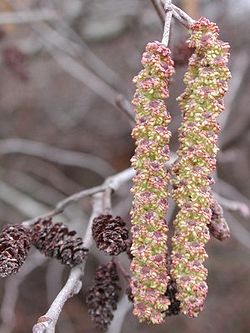
which express sexual differences at different stages of growth. In some arums smaller plants produce all or mostly male flowers and as plants grow larger over the years the male flowers are replaced by more female flowers on the same plant. Arisaema triphyllum thus covers a multitude of sexual conditions in its lifetime; from nonsexual juvenile plants to young plants that are all male, as plants grow larger they have a mix of both male and female flowers, to large plants that have mostly female flowers. Other plant populations have plants that produce more male flowers early in the year and as plants bloom later in the growing season they produce more female flowers. In plants like Thalictrum dioicum
all the plants in the species are either male or female.
Specific terms are used to describe the sexual expression of individual plants within a population.

About 11% of all angiosperms are strictly dioecious or monoecious. Intermediate forms of sexual dimorphism, including gynodioecy and androdioecy
, represent 7% of the species examined of a survey of 120,000 plant species. In the same survey, 10% of the species contain both unisexual and bisexual flowers.
The majority of plant species use allogamy, also called cross-pollination, as a means of breeding. Many plants are self-fertile and the male parts can pollinate the female parts of the same flower and/or same plant. Some plants use a method known as self-incompatibility
to promote outcrossing. In these plants, the male organs cannot fertilize the female parts of the same plant; other plants produce male and female flowers at different times to promote outcrossing.
Dichogamy is common in flowering plants, and occurs when bisexual (perfect) flowers (or sometimes entire plants) produce pollen when the stigmas of the same flower is not receptive of the pollen. This promotes outcrossing by limiting what is called autopollination or self pollination or selfing. These plants are called dichogamous. Some plants have bisexual flowers but the pollen is produced before the stigma of the same flower is receptive of pollen, these are described as protandrous flowers; in a similar way, protogyny describes flowers that have stigmas that can accept pollen before the same flower or plant sheds its pollen.
(Fraxinus excelsior L.), demonstrates the possible range of variation in morphology and functionality exhibited by flowers with respect to gender. Flowers of the ash are wind-pollinated and lack petal
s and sepal
s. Structurally, the flowers may be either male or female, or even hermaphroditic, consisting of two anthers and an ovary. A male flower can be morphologically male or hermaphroditic, with anthers and a rudimentary gynoecium. Ash flowers can also be morphologically female, or hermaphroditic and functionally female.
The Asteraceae or sunflower family with close to 22,000 species, have highly modified inflorescences that are flowers collected together in heads composed of a composite of individual flowers called florets. Heads with florets of one sex, when the flowers are pistillate or functionally staminate, or made up of all bisexual florets, are called homogamous and can include discoid and liguliflorous type heads. Some radiate heads may be homogamous too. Plants with heads that have florets of two or more sexual forms are called heterogamous and include radiate and disciform head forms, though some radiate heads may be heterogamous too.
A fair degree of correlation (though far from complete) exists between dioecy/sub-dioecy and plants that have seeds dispersed by bird
s (both nuts
and berries
). It is hypothesized that the concentration of fruit in half of the plants increases dispersal efficiency; female plants can produce a higher density of fruit as they do not expend resources on pollen production, and the dispersal agents (birds) need not waste time looking for fruit on male plants. Other correlations with dioecy include: tropical distribution, woody growth form, perenniality, fleshy fruits, and small, green flowers.
Plant growth regulators can be used to alter flower and plant sexuality, in cucumbers ethephon
is used to delay staminate flowering and transforms monoecious lines into all-pistillate or female lines. Gibberellin
s also increase maleness in cucumbers. Cytokinin
s have been used in grapes that have undeveloped pistils to produce functional female organs and seed formation.
Plant reproduction
Plant reproduction is the production of new individuals or offspring in plants, which can be accomplished by sexual or asexual means. Sexual reproduction produces offspring by the fusion of gametes, resulting in offspring genetically different from the parent or parents...
systems found across the plant
Plant
Plants are living organisms belonging to the kingdom Plantae. Precise definitions of the kingdom vary, but as the term is used here, plants include familiar organisms such as trees, flowers, herbs, bushes, grasses, vines, ferns, mosses, and green algae. The group is also called green plants or...
kingdom. This article describes morphological
Morphology (biology)
In biology, morphology is a branch of bioscience dealing with the study of the form and structure of organisms and their specific structural features....
aspects of sexual reproduction of plants.
Among all living organisms, flower
Flower
A flower, sometimes known as a bloom or blossom, is the reproductive structure found in flowering plants . The biological function of a flower is to effect reproduction, usually by providing a mechanism for the union of sperm with eggs...
s, which are the reproductive structures of angiosperms, are the most varied physically and show the greatest diversity in methods of reproduction of all biological systems.
Carolus Linnaeus
Carolus Linnaeus
Carl Linnaeus , also known after his ennoblement as , was a Swedish botanist, physician, and zoologist, who laid the foundations for the modern scheme of binomial nomenclature. He is known as the father of modern taxonomy, and is also considered one of the fathers of modern ecology...
(1735 and 1753) proposed a system of classification of flowering plants based on plant structures, since plants employ many different morphological adaptations involving sexual reproduction, flowers played an important role in that classification system. Later on Christian Konrad Sprengel
Christian Konrad Sprengel
Christian Konrad Sprengel was a German theologist, teacher and, most importantly, a naturalist. He is most famously known for his research into plant sexuality....
(1793) studied plant sexuality and called it the "revealed secret of nature" and for the first time it was understood that the pollination
Pollination
Pollination is the process by which pollen is transferred in plants, thereby enabling fertilisation and sexual reproduction. Pollen grains transport the male gametes to where the female gamete are contained within the carpel; in gymnosperms the pollen is directly applied to the ovule itself...
process involved both biotic
Biotic component
Biotic components are the living things that shape an ecosystem. A biotic factor is any living component that affects another organism, including animals that consume the organism in question, and the living food that the organism consumes. Each biotic factor needs energy to do work and food for...
and abiotic interactions (Charles Darwin
Charles Darwin
Charles Robert Darwin FRS was an English naturalist. He established that all species of life have descended over time from common ancestry, and proposed the scientific theory that this branching pattern of evolution resulted from a process that he called natural selection.He published his theory...
's theories of natural selection
Selection
In the context of evolution, certain traits or alleles of genes segregating within a population may be subject to selection. Under selection, individuals with advantageous or "adaptive" traits tend to be more successful than their peers reproductively—meaning they contribute more offspring to the...
utilized this work to promote his idea of evolution). Plants that are not flowering plants (green alga, moss
Moss
Mosses are small, soft plants that are typically 1–10 cm tall, though some species are much larger. They commonly grow close together in clumps or mats in damp or shady locations. They do not have flowers or seeds, and their simple leaves cover the thin wiry stems...
es, liverwort
Marchantiophyta
The Marchantiophyta are a division of bryophyte plants commonly referred to as hepatics or liverworts. Like other bryophytes, they have a gametophyte-dominant life cycle, in which cells of the plant carry only a single set of genetic information....
s, hornworts, fern
Fern
A fern is any one of a group of about 12,000 species of plants belonging to the botanical group known as Pteridophyta. Unlike mosses, they have xylem and phloem . They have stems, leaves, and roots like other vascular plants...
s and gymnosperm
Gymnosperm
The gymnosperms are a group of seed-bearing plants that includes conifers, cycads, Ginkgo, and Gnetales. The term "gymnosperm" comes from the Greek word gymnospermos , meaning "naked seeds", after the unenclosed condition of their seeds...
s such as conifers) also have complex interplays between morphological adaptation and environmental factors in their sexual reproduction. The breeding system, or how the sperm from one plant fertilizes the ovum of another, is the single most important determinant of the mating structure of nonclonal plant populations. The mating structure or morphology of the flower parts and their arrangement on the plant in turn controls the amount and distribution of genetic variation, a central element in the evolutionary process.
Terminology
The flowers of angiosperms are determinate shoots that have sporophyllSporophyll
A sporophyll is a leaf that bears sporangia. Both microphylls and megaphylls can be sporophylls. In heterosporous plants, sporophylls bear either megasporangia , or microsporangia...
s. The parts of flowers are named by scientists and show great variation in shape, these flower parts include sepals, petals, stamens and carpels. As a group the sepals form the calyx and as a group the petals form the corolla, together the corolla and the calyx is called the perianth. In flowers which possess indistinguishable calyx and corolla, the individual units are then called "tepals". The stamens collectively are called the androecium and the carpels collectively are called the gynoecium.
The complexity of the systems and devices used by plants to achieve sexual reproduction has resulted in botanists and evolutionary biologists using numerous terms to describe physical structures and functional strategies. Dellaporta and Calderon-Urrea (1993) list and define a variety of terms used to describe the modes of sexuality at different levels in flowering plants. This list is reproduced here, generalized to fit more than just plants that have flower
Flower
A flower, sometimes known as a bloom or blossom, is the reproductive structure found in flowering plants . The biological function of a flower is to effect reproduction, usually by providing a mechanism for the union of sperm with eggs...
s, and expanded to include other terms and more complete definitions.
Individual reproductive unit (a flower in angiosperms)
- Bisexual or perfect flowers have both male (androecium) and female (gynoeciumGynoeciumGynoecium is most commonly used as a collective term for all carpels in a flower. A carpel is the ovule and seed producing reproductive organ in flowering plants. Carpels are derived from ovule-bearing leaves which evolved to form a closed structure containing the ovules...
) reproductive structures, including stamenStamenThe stamen is the pollen producing reproductive organ of a flower...
s, carpels, and an ovary. Flowers that contain both androecium and gynoecium are called androgynous or hermaphroditic. Examples of plants with perfect or bisexual flowers include the lily, roseRoseA rose is a woody perennial of the genus Rosa, within the family Rosaceae. There are over 100 species. They form a group of erect shrubs, and climbing or trailing plants, with stems that are often armed with sharp prickles. Flowers are large and showy, in colours ranging from white through yellows...
, and most plants with large showy flowers, though a perfect flower does not have to have petals or sepals. Other terms widely used are monoclinous, and synoecious. A complete flower is a perfect flower with petals and sepals. - Unisexual: Reproductive structure that is either functionally male or functionally female. In angiosperms this condition is also called diclinous, imperfect, or incomplete.
Individual plant sexuality
Many plants have complete flowers that have both male and female parts, others only have male or female parts and still other plants have flowers on the same plant that are a mix of male and female flowers. Some plants even have mixes that include all three types of flowers, where some flowers are only male, some are only female and some are both male and female. A distinction needs to be made between arrangements of sexual parts and the expression of sexuality in single plants versus the larger plant population. Some plants also undergo what is called Sex-switching, like Arisaema triphyllumArisaema triphyllum
Arisaema triphyllum is a herbaceous perennial plant growing from a corm. It is a highly variable species typically growing from 30 to 65 cm in height with three parted leaves and flowers contained in a spadix that is covered by a hood...
which express sexual differences at different stages of growth. In some arums smaller plants produce all or mostly male flowers and as plants grow larger over the years the male flowers are replaced by more female flowers on the same plant. Arisaema triphyllum thus covers a multitude of sexual conditions in its lifetime; from nonsexual juvenile plants to young plants that are all male, as plants grow larger they have a mix of both male and female flowers, to large plants that have mostly female flowers. Other plant populations have plants that produce more male flowers early in the year and as plants bloom later in the growing season they produce more female flowers. In plants like Thalictrum dioicum
Thalictrum dioicum
Thalictrum dioicum is a species of herbaceous plants in the family Ranunculaceae. Plants are typically upright growing woodland natives from central and eastern North America including parts of south eastern Canada...
all the plants in the species are either male or female.
Specific terms are used to describe the sexual expression of individual plants within a population.
- Hermaphrodite, a plant that has only bisexual reproductive units (flowers, conifer cones, or functionally equivalent structures). In angiosperm terminology a synonym is monoclinous from the GreekGreek languageGreek is an independent branch of the Indo-European family of languages. Native to the southern Balkans, it has the longest documented history of any Indo-European language, spanning 34 centuries of written records. Its writing system has been the Greek alphabet for the majority of its history;...
"one bed". - Monoecious, an individual that has both male and female reproductive units (flowers, conifer cones, or functionally equivalent structures) on the same plant; from Greek for "one household". Individuals bearing separate flowers of both sexes at the same time are called simultaneously or synchronously monoecious. Individuals that bear flowers of one sex at one time are called consecutively monoecious; plants may first have single sexed flowers and then later have flowers of the other sex. Protoandrous describes individuals that function first as males and then change to females; protogynous describes individuals that function first as females and then change to males.
- Dioecious refers to a plant population having separate male and female plants. That is, no individual plant of the population produces both microgametophytes (pollen) and megagametophytes (ovules); individual plants are either male or female. From Greek for "two households". [Individual plants are not called dioecious; they are either gynoecious (female plants) or androecious (male plants).]
- Androecious, plants producing male flowers only, produce pollen but no seeds, the male plants of a dioecious population.
- Gynoecious, plants producing female flowers only, produces seeds but no pollen, the female of a dioecious population. In some plant populations, all individuals are gynoecious with non sexual reproduction used to produce the next generation.
- Subdioecious, a tendency in some dioecious populations to produce individuals that are not clearly male or female. The population produces normally male or female plants but some may be monoecious, hermaphroditic, or monoecious/hermaphroditic, with plants having perfect flowers, both male and female imperfect flowers, or some combination thereof, such as female and perfect flowers. Flowers may be in some state between purely male and female, with female flowers retaining non-functional male organs or vice versa. The condition is thought to represent a transition between hermaphroditism and dioecy.
- Gynomonoecious has both hermaphrodite and female structures.
- Andromonoecious has both hermaphrodite and male structures.
- Subandroecious has mostly male flowers, with a few female or hermaphrodite flowers.
- Subgynoecious has mostly female flowers, with a few male or hermaphrodite flowers.
- Polygamy, plants with male, female, and perfect (hermaphrodite) flowers on the same plant, called trimonoecious or polygamomonoeciousPolygamomonoeciousThe term polygamomonoecious has two meanings in botany:*an individual plant with male, female, and perfect flowers on the same plant, called trimonoecious or polygamomonoecious plants;...
plants, (see next section for use for plant populations). A polygamous inflorescence has both unisexual and bisexual flowers.- Trimonoecious (polygamous) - male, female, and hermaphrodite floral morphs all appear on the same plant.
- Diclinous ("two beds"), an angiosperm term, includes all species with unisexual flowers, although particularly those with only unisexual flowers, i.e. the monoecious and dioecious species.
Plant population
Most often plants show uniform sexual expression in populations or species wide and specific terms are used to describe the sexual expression of the population or species.- Hermaphrodite, plants whose flowers have both male and female parts.
- Monoecious (meaning "one house" in Greek) plants have separate male and female flowers on the same plant. A plant population where the male and female organs are found in different flowers on the same plant. These plants are often wind pollinated. Examples of monoecious plants include cornMaizeMaize known in many English-speaking countries as corn or mielie/mealie, is a grain domesticated by indigenous peoples in Mesoamerica in prehistoric times. The leafy stalk produces ears which contain seeds called kernels. Though technically a grain, maize kernels are used in cooking as a vegetable...
, birchBirchBirch is a tree or shrub of the genus Betula , in the family Betulaceae, closely related to the beech/oak family, Fagaceae. The Betula genus contains 30–60 known taxa...
and pinePinePines are trees in the genus Pinus ,in the family Pinaceae. They make up the monotypic subfamily Pinoideae. There are about 115 species of pine, although different authorities accept between 105 and 125 species.-Etymology:...
trees, and most figFicusFicus is a genus of about 850 species of woody trees, shrubs, vines, epiphytes, and hemiepiphyte in the family Moraceae. Collectively known as fig trees or figs, they are native throughout the tropics with a few species extending into the semi-warm temperate zone. The Common Fig Ficus is a genus of...
species. - Dioecious (meaning "two houses" in Greek), all plants are either female or male. The American Holly (Ilex opaca) is a famous example.
- Androdioecious, both male and hermaphrodite plants present.
- GynodioeciousGynodioecyGynodioecy is a dimorphic breeding system in which male sterile individuals coexist with hermaphroditic individuals in populations. Although there is a claim that gynodioecy exists among the animal population, most recorded works done on this subject has been done using plant species...
, both female and hermaphrodite plants present. In some plants, strictly female plants are produced by the degeneration of the tapetum, a shell-like structure in the anther of a flower where the pollen cells form, - Gynoecy plants are all females in a population, often regulated by environmental factors like temperature, photo period or water availability.
- Polygamous, when there is a mix of hermaphrodite and unisexual plants in the natural population.
- Subdioecious, population of unisexual (dioecious) plants, with monoecious individuals too.
- Trioecious, sometimes used in place of subdioecious when male, female, and hermaphrodite plants are more equally mixed within the same population.
- Polygamodioecious, having bisexual and male flowers on some plants, and bisexual and female flowers on others.
About 11% of all angiosperms are strictly dioecious or monoecious. Intermediate forms of sexual dimorphism, including gynodioecy and androdioecy
Androdioecy
Androdioecy is a reproductive system found in species composed of a male population and a distinct hermaphrodite population. Such species are rare....
, represent 7% of the species examined of a survey of 120,000 plant species. In the same survey, 10% of the species contain both unisexual and bisexual flowers.
The majority of plant species use allogamy, also called cross-pollination, as a means of breeding. Many plants are self-fertile and the male parts can pollinate the female parts of the same flower and/or same plant. Some plants use a method known as self-incompatibility
Self-incompatibility in plants
Self-incompatibility is a general name for several genetic mechanisms in angiosperms, which prevent self-fertilization and thus encourage outcrossing...
to promote outcrossing. In these plants, the male organs cannot fertilize the female parts of the same plant; other plants produce male and female flowers at different times to promote outcrossing.
Dichogamy is common in flowering plants, and occurs when bisexual (perfect) flowers (or sometimes entire plants) produce pollen when the stigmas of the same flower is not receptive of the pollen. This promotes outcrossing by limiting what is called autopollination or self pollination or selfing. These plants are called dichogamous. Some plants have bisexual flowers but the pollen is produced before the stigma of the same flower is receptive of pollen, these are described as protandrous flowers; in a similar way, protogyny describes flowers that have stigmas that can accept pollen before the same flower or plant sheds its pollen.
Flower morphology
A species such as the ash treeAsh tree
Fraxinus is a genus flowering plants in the olive and lilac family, Oleaceae. It contains 45-65 species of usually medium to large trees, mostly deciduous though a few subtropical species are evergreen. The tree's common English name, ash, goes back to the Old English æsc, while the generic name...
(Fraxinus excelsior L.), demonstrates the possible range of variation in morphology and functionality exhibited by flowers with respect to gender. Flowers of the ash are wind-pollinated and lack petal
Petal
Petals are modified leaves that surround the reproductive parts of flowers. They often are brightly colored or unusually shaped to attract pollinators. Together, all of the petals of a flower are called a corolla. Petals are usually accompanied by another set of special leaves called sepals lying...
s and sepal
Sepal
A sepal is a part of the flower of angiosperms . Collectively the sepals form the calyx, which is the outermost whorl of parts that form a flower. Usually green, sepals have the typical function of protecting the petals when the flower is in bud...
s. Structurally, the flowers may be either male or female, or even hermaphroditic, consisting of two anthers and an ovary. A male flower can be morphologically male or hermaphroditic, with anthers and a rudimentary gynoecium. Ash flowers can also be morphologically female, or hermaphroditic and functionally female.
The Asteraceae or sunflower family with close to 22,000 species, have highly modified inflorescences that are flowers collected together in heads composed of a composite of individual flowers called florets. Heads with florets of one sex, when the flowers are pistillate or functionally staminate, or made up of all bisexual florets, are called homogamous and can include discoid and liguliflorous type heads. Some radiate heads may be homogamous too. Plants with heads that have florets of two or more sexual forms are called heterogamous and include radiate and disciform head forms, though some radiate heads may be heterogamous too.
Angiosperms
It is thought that flowering plants evolved from a common hermaphrodite ancestor, and that dioecy evolved from hermaphroditism. Hermaphroditism is very common in flowering plants; over 85% are hermaphroditic, whereas only about 6-7% are dioecious and 5-6% are monoecious.A fair degree of correlation (though far from complete) exists between dioecy/sub-dioecy and plants that have seeds dispersed by bird
Bird
Birds are feathered, winged, bipedal, endothermic , egg-laying, vertebrate animals. Around 10,000 living species and 188 families makes them the most speciose class of tetrapod vertebrates. They inhabit ecosystems across the globe, from the Arctic to the Antarctic. Extant birds range in size from...
s (both nuts
Nut (fruit)
A nut is a hard-shelled fruit of some plants having an indehiscent seed. While a wide variety of dried seeds and fruits are called nuts in English, only a certain number of them are considered by biologists to be true nuts...
and berries
Berry
The botanical definition of a berry is a fleshy fruit produced from a single ovary. Grapes are an example. The berry is the most common type of fleshy fruit in which the entire ovary wall ripens into an edible pericarp. They may have one or more carpels with a thin covering and fleshy interiors....
). It is hypothesized that the concentration of fruit in half of the plants increases dispersal efficiency; female plants can produce a higher density of fruit as they do not expend resources on pollen production, and the dispersal agents (birds) need not waste time looking for fruit on male plants. Other correlations with dioecy include: tropical distribution, woody growth form, perenniality, fleshy fruits, and small, green flowers.
Plant growth regulators can be used to alter flower and plant sexuality, in cucumbers ethephon
Ethephon
Ethephon is the most widely used plant growth regulator.-History:It is manufacturered by Rhône-Poulenc and Jiangsu Anpon Electrochemicals Co. in China. Upon metabolism by the plant, it is converted into ethylene, a potent regulator of plant growth and maturity...
is used to delay staminate flowering and transforms monoecious lines into all-pistillate or female lines. Gibberellin
Gibberellin
Gibberellins are plant hormones that regulate growth and influence various developmental processes, including stem elongation, germination, dormancy, flowering, sex expression, enzyme induction, and leaf and fruit senescence....
s also increase maleness in cucumbers. Cytokinin
Cytokinin
Cytokinins are a class of plant growth substances that promote cell division, or cytokinesis, in plant roots and shoots. They are involved primarily in cell growth and differentiation, but also affect apical dominance, axillary bud growth, and leaf senescence...
s have been used in grapes that have undeveloped pistils to produce functional female organs and seed formation.