

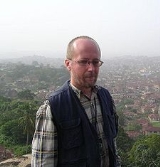
Andrey Korotayev

Encyclopedia
Andrey Korotayev is an anthropologist
, economic historian
, and sociologist
, with major contributions to world-systems theory, cross-cultural studies
, Near East
ern history
, and mathematical modeling of social and economic macrodynamics.
Education and career=
Born in Moscow
, Andrey Korotayev attended Moscow State University
, where he received a B.A.
degree in 1984 and an M.A.
in 1989. He earned a Ph.D.
in 1993 from Manchester University, and in 1998 a Doctor of Sciences degree from the Russian Academy of Sciences
.
Since 2000, he has been Professor and Director of the Anthropology of the East Center at the Russian State University for the Humanities
, Moscow, and Senior Research Professor in the Oriental Institute
and Institute for African Studies at the Russian Academy of Sciences
. In 2001-2003 he also directed the "Anthropology of the East" Program at the National Research University Higher School of Economics in Moscow. In 2003-2004, he was a visiting member at the Institute for Advanced Study
in Princeton, NJ.http://www.hs.ias.edu/03-04memlist.htm
He is co-editor of the journals Social Evolution & History
and Journal of Globalization Studies, as well as History & Mathematics almanac
(together with Leonid Grinin
and Arno Tausch).
Together with Askar Akayev
and George Malinetsky he is a coordinator of the Russian Academy of Sciences Program "System Analysis and Mathematical Modeling of World Dynamics".
Korotayev is a laureate of the Russian Science Support Foundation in "The Best Economists of the Russian Academy of Sciences
" nomination (2006).http://www.sbras.nsc.ru/news/detail.php?ID=2438

Doomsday Equation. In collaboration with his colleagues, Artemy Malkov and Daria Khaltourina, he has shown that till the 1970s the hyperbolic
growth of the world population
was accompanied by quadratic
-hyperbolic
growth of the world GDP, and developed a number of mathematical model
s describing both this phenomenon, and the World System withdrawal from the blow-up regime
observed in the recent decades. The hyperbolic growth
of the world population
and quadratic-hyperbolic growth of the world GDP observed till the 1970s have been correlated by him and his colleagues to a non-linear second order positive feedback
between the demographic growth and technological development that can be spelled out as follows: technological growth - increase in the carrying capacity
of land for people - demographic growth - more people - more potential inventors - acceleration of technological growth - accelerating growth of the carrying capacity
- the faster population growth
- accelerating growth of the number of potential inventors - faster technological growth - hence, the faster growth of the Earth's carrying capacity for people, and so on.
He has also shown that the world urban
population growth curve has also up till recently followed a quadratic-hyperbolic pattern.http://cliodynamics.ru/index.php?option=com_content&task=view&id=172&Itemid=70 In addition, Korotayev and his colleagues have proposed a number of forecasts of the World System development up to 2100.
, and Andrey Korotayev in the Russian academic journal “Ekonomicheskaya politika” (December 2010. Issue 6. Pages 39-46http://cliodynamics.ru/index.php?option=com_content&task=view&id=295&Itemid=1) published «a forecast of the second wave of the crisis, which suggests that it may start in July — August, 2011
».
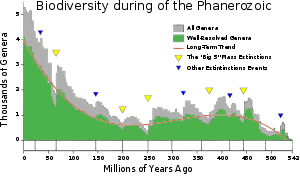 In collaboration with Alexander Markov he has demonstrated that a similar mathematical model can be developed to describe the macrotrends
of biological evolution
. They have shown that changes in biodiversity
through the Phanerozoic
correlate much better with hyperbolic model (widely used in demography
and macrosociology
) than with exponential
and logistic
models (traditionally used in population biology
and extensively applied to fossil
biodiversity
as well). The latter models imply that changes in diversity are guided by a first-order positive feedback
(more ancestors, more descendants) and/or a negative feedback
arising from resource limitation. Hyperbolic model implies a second-order positive feedback
. The hyperbolic pattern of the world population growth
has been demonstrated by Korotayev to arise from a second-order positive feedback between the population size and the rate of technological growth. According to Korotayev and Markov, the hyperbolic character of biodiversity growth can be similarly accounted for by a feedback between the diversity and community structure complexity. They suggest that the similarity between the curves of biodiversity
and human population
probably comes from the fact that both are derived from the interference of the hyperbolic trend with cyclical and stochastic dynamics.
 In the field of cliodynamics
, Korotayev has developed a number of mathematical models of interaction between the very long-term, "millennial" hyperbolic trend dynamics of social system
s and the shorter-term, "secular" (that is, observed at the scale of centuries), cyclical dynamics.http://escholarship.org/uc/item/9c96x0p1
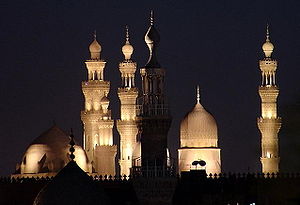
He has also produced a number of mathematical models describing specifically long-term political-demographic dynamics of Egypt
and used them for a demographic structural analysis of the 2011 Egyptian Revolution
.
Of special importance is his study of the hypothesis
that population
pressure causes increased warfare. This hypothesis has been recently criticized on the empirical grounds. Both studies focusing on specific historical societies and analyses of cross-cultural data have failed to find positive correlation between population density and incidence of warfare. Korotayev, in collaboration with Peter Turchin
, has shown that such negative results do not falsify the population-warfare hypothesis. Population and warfare are dynamical variables, and if their interaction causes sustained oscillations, then we do not in general expect to find strong correlation between the two variables measured at the same time (that is, unlagged). Korotayev and Turchin have explored mathematically what the dynamical patterns of interaction between population and warfare (focusing on internal warfare) might be in both stateless and state societies. Next, they have tested the model predictions in several empirical case studies: early modern England, Han and Tang
China, and the Roman Empire
. Their empirical results have supported the population-warfare theory: Korotayev and Turchin have found that there is a tendency for population numbers and internal warfare intensity to oscillate with the same period but shifted in phase (with warfare peaks following population peaks). Furthermore, they have demonstrated that in the agrarian societies the rates of change of the two variables behave precisely as predicted by the theory: population rate of change is negatively affected by warfare intensity, while warfare rate of change is positively affected by population density.
Thus, Korotayev has demonstrated that the Malthusian trap
tends to generate sociopolitical upheavals. On the other hand, he has shown that the escape from the Malthusian trap
is accompanied by another "trap" generating new sociopolitical upheavals (what he calls "a trap at the escape from the trap").
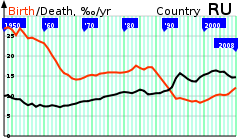 In collaboration with Daria Khaltourina he has made a significant contribution to the study of the factors of the current Russian demographic crisis
. They have demonstrated that post-Soviet Russia experiences one of the world's highest prevalence of alcohol-related problems, which contributes to high mortality rates in this region. Reduction in alcohol-related problems in Russia can have strong effects on mortality decline. They have analyzed the plausibility of application of general principles of alcohol policy translated in the Russian Federation. Korotayev and Khaltourina have shown that alcohol policy approaches could be implemented in the same ways as they have been in other countries. In addition, according to Korotayev, there should be special attention to decreasing distilled spirits consumption, illegal alcohol production, nonbeverage alcohol consumption, and enforcement of current governmental regulations.
has indeed influenced positively the capitalist development of respective social systems not so much through the "Protestant ethics" (as was suggested by Max Weber
) but rather through the promotion of literacy.
 They draw attention to the fact that the ability to read was essential for Protestants (unlike Catholics) to perform their religious duty − to read the Bible
. The reading of Holy Scripture was not just unnecessary for Catholic laymen, for a long time it was even prohibited for them. The edict of the Toulouse Synod
(1229) prohibited the Catholic laymen from possessing copies of the Bible. Soon after that, a decision by the Tarragon Synod spread this prohibition to ecclesiastic people as well. In 1408, the Oxford Synod absolutely prohibited translations of the Holy Scripture. From the very beginning, Protestant groups did not accept this prohibition. Thus, Luther
translated in 1522–1534 first the New Testament
, and then the Old Testament
, into German, so that any German-speaking person could read the Holy Scripture in his or her native language. Moreover, the Protestants viewed reading the Holy Scripture as a religious duty of any Christian. As a result, the level of literacy and education was, in general, higher for Protestants than it was for Catholics and for followers of other confessions that did not provide religious stimuli for learning literacy. It has been shown that literate populations have many more opportunities to obtain and utilize the achievements of modernization than illiterate ones. On the other hand, literate people could be characterized by a greater innovative-activity level, which provides opportunities for modernization
, development, and economic growth. Empirical tests performed by Korotayev and his colleagues have confirmed the presence of a rather strong and highly significant correlation between the early introduction of mass literacy and subsequent high rates of capitalist economic development.
("the World System"), which in the 2nd millennium CE encompassed the whole globe, originated in the 9th millennium BCE in direct connection with the Neolithic revolution
. According to Korotayev, the center of this system was originally in West Asia
.
In general, Korotayev and his colleagues have suggested a rather novel approach to the world-system
analysis. Within this approach the main emphasis is moved to the generation and diffusion
of innovation
s. If a society borrows systematically important technological innovations, its evolution
already cannot be considered as really independent, but should rather be considered as a part of a larger evolving entity, within which such innovations are systematically produced and diffused. The main idea of the world-system approach was to find the evolving unit. The basic idea was that it is impossible to account for the evolution of a single society without taking into consideration that it was a part of a larger whole. However, traditional world-system analysis concentrated on bulk-good movements, and core – periphery exploitation, somehow neglecting the above-mentioned dimension. However, according to Korotayev, the information network
turns out to be the oldest mechanism of the World System integration, and remained extremely important throughout its whole history, remaining important up to the present. It seems to be even more important than the core – periphery exploitation
(for example, without taking this mechanism into consideration it appears impossible to account for such things as the demographic explosion in the 20th century, whose proximate cause was the dramatic decline of mortality, but whose main ultimate cause was the diffusion of innovations produced almost exclusively within the World System core). This also suggests a redefinition of the World System core. Within the approach in question the core is not the World System zone, which exploits other zones, but rather the World System core is the zone with the highest innovation donor/recipient ratio, the principal innovation donor.
Korotayev suggests that the hyperbolic trend observed for the world population growth after 10000 BCE does appear to be primarily a product of the growth of the World System. The presence of the hyperbolic
trend itself indicates that the major part of the entity in question had some systemic unity, and Korotayev insists that the evidence for this unity is readily available. Indeed, he shows that we have evidence for the systematic spread of major innovations (domesticated cereals, cattle, sheep, goats, horses, plow, wheel, copper, bronze, and later iron technology, and so on) throughout the whole North African – Eurasian Oikumene for a few millennia BCE. As a result, the evolution of societies of this part of the world already at this time cannot be regarded as truly independent. By the end of the 1st millennium BCE we observe a belt of cultures, stretching from the Atlantic to the Pacific, with an astonishingly similar level of cultural complexity characterized by agricultural production of wheat and other specific cereals, the breeding of cattle, sheep, and goats; use of the plow, iron metallurgy, and wheeled transport; development of professional armies and cavalries deploying rather similar weapons; elaborate bureaucracies, and Axial Age
ideologies, and so on – this list could be extended for pages. A few millennia before, we would find another belt of societies strikingly similar in level and character of cultural complexity, stretching from the Balkans
up to the Indus Valley outskirts. Korotayev interprets this as a tangible result of the World System's functioning.
in the world GDP dynamics that, employing spectral analysis
, has confirmed their presence at an acceptable level of statistical significance.
He has also detected Kondratieff waves in the global dynamics of invention activities.http://sciencedirect.dogsoso.com/science/article/pii/S0040162511000503
– the human world, and, hence, the study of social evolution
should proceed from the detection of simple regularities of the development of the most complex systems
to the study of the complex laws of the dynamics of simple social systems.
organization that coalesced historically around the differential practices of the major world religions. It draws on the World Cultural database and the world religion as well as other variables. This is a book of startling simplicity and depth that suggests an empirical solution to viewing the subjectivist/objectivist dilemmas in the social sciences and history. It will have a profound effect on how comparison is done in the future in anthropology, and suggests an answer to why some anthropologists, starting with Geertz, are reluctant to suggest comparison as an adequate method. The Murdock
ian comparative approach, up to Korotayev, had developed to the point where the nonindependence of cultures was well-recognized, and ways of taking the larger configurations of cultural systems into account had been reckoned to lie, in the latest iteration, along lines of high-order proto-linguistic communities. Korotayev demonstrates the effects of breaking what might be seen as a ritual taboo of Murdockian comparison: Thou Shalt Not Code World Religion
. By doing so, Korotayev releases the Murdockian spell that lingers over the comparative approach in anthropology, and goes on to demonstrate the powerful effects of world religious communities — dating from what Jaspers
calls the "Axial Age
" (800–200 BCE) — on the preservation and differentiation of distinctive social and political structures in Eurasia
. His introduction and conclusion suggest that an objectivist natural history approach to human history, in which subjective factors are of local importance but fade out in terms of lasting effects over generations, is a valid approach to the "pre-Axial" condition of human societies, while a subjectivist history of consciousness is a necessary complement to the "post-Axial" condition. Korotayev succeeds in placing these two complementary approaches in context and showing their linkages in terms of how subjective and religious factors play out in human history alongside objective factors such as demography and ecology, each informing the other. He shows how it is impossible to arrive at valid inferential results from comparative approaches without an integration of the two, a situation he aptly calls "Galton's opportunity" for those are of century-old critiques of the comparative method. The reader will be surprised at the depth of empirical comparative findings in this short book. Following Murray Leaf
's Man, Mind and Science (1974) this work is a major contribution to repair of the material/ideational rift in anthropology.
One of his particular contributions in this field is connected with the classical anthropological issue of determinants of matrilocal versus patrilocal postmarital residence. Early theories explaining the determinants of postmarital residence (e.g., Lewis Henry Morgan, Edward Tylor, or George Peter Murdock) connected it with the sexual division of labor. However, to date, cross-cultural tests of this hypothesis
using worldwide samples have failed to find any significant relationship between these two variables. Korotayev's tests show that the female contribution to subsistence does correlate significantly with matrilocal residence in general; however, this correlation is masked by a general polygyny factor. Although an increase in the female contribution to subsistence tends to lead to matrilocal residence, it also tends simultaneously to lead to general non-sororal polygyny
which effectively destroys matrilocality
. If this polygyny factor is controlled (e. g., through a multiple regression
model), division of labor turns out to be a significant predictor of postmarital residence. Thus, Murdock's hypotheses regarding the relationships between the sexual division of labor and postmarital residence were basically correct, though, as has been shown by Korotayev, the actual relationships between those two groups of variables are more complicated than he expected.
In this field Andrey Korotayev was also one of the pioneers (together with his colleagues) of the study of correlation between spatial distributions of folklore-mythological motifs and genetic markers, as well as linguistic and sociostructural characteristics, and produced in this area significant results with respect to the deep history
reconstruction.
i cultures through application of quantitative methods to the analysis of mass epigraphic sources in the Sabaic language
. Korotayev has thereby discovered the phenomenon of consolidation of the clan
organization in North-East Yemen
in the late 1st millennium BCE as well as the transition from chiefdom
s to tribe
s in early medieval Yemen. He was also the first to provide convincing evidence for the existence of matrilineal descent organization in Pre-Islamic Arabia and to suggest an adequate translation of the largest Qatabanic
inscription, R 3566.
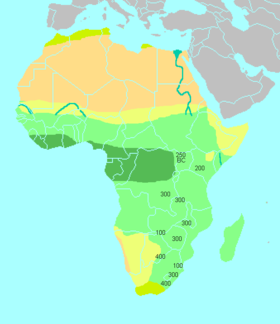 Korotayev and his colleagues have also made significant contributions to the study of political-demographic dynamics in Subsaharan Africa, especially, the problems of the Tropical African countries' escape from the Malthusian trap
.
. Korotayev and his colleagues suggest to view the origins of Islam
against the background of the 6th century AD Arabian socioecological crisis
whose model is specified by Korotayev and his colleagues through the study of climatological, seismological, volcanological and epidemiological history of the period. They find that most sociopolitical systems of the Arabs reacted to the socioecological crisis by getting rid of the rigid supratribal political structures (kingdoms and chiefdom
s) which started posing a real threat to their very survival.
The decades of fighting which led to the destruction of the most of the Arabian kingdoms and chiefdom
s (reflected in Ayyam al-`Arab tradition) led to the elaboration of some definite "antiroyal" freedom-loving tribal ethos
. At the beginning of the 7th century a tribe which would recognize themselves as subjects of some terrestrial supratribal political authority, a "king", risked to lose its honour. However, this seems not to be applicable to the authority of another type, the "celestial" one. At the meantime the early 7th century evidences the merging of the Arabian tradition of prophecy and the Arabian Monotheist "Rahmanist" tradition which produced "the Arabian prophetic movement".
 According to Korotayev, the Monotheist "Rahmanist" prophets appear to have represented a supratribal authority just of the type many Arab
tribe
s were looking for at this very time, which seems to explain to a certain extent those prophets' political success (including the extreme political success of Muhammad
).
Select publications =
Korotayev has written over 20 books and 150 articles dealing with his research interests http://intersci.ss.uci.edu/wiki/index.php/Andrey_Korotayev#Korotayev.E2.80.99s_Full_List_of_Publications. These include
Among his more important journal articles are
External links=
Anthropology
Anthropology is the study of humanity. It has origins in the humanities, the natural sciences, and the social sciences. The term "anthropology" is from the Greek anthrōpos , "man", understood to mean mankind or humanity, and -logia , "discourse" or "study", and was first used in 1501 by German...
, economic historian
Historian
A historian is a person who studies and writes about the past and is regarded as an authority on it. Historians are concerned with the continuous, methodical narrative and research of past events as relating to the human race; as well as the study of all history in time. If the individual is...
, and sociologist
Sociology
Sociology is the study of society. It is a social science—a term with which it is sometimes synonymous—which uses various methods of empirical investigation and critical analysis to develop a body of knowledge about human social activity...
, with major contributions to world-systems theory, cross-cultural studies
Cross-cultural studies
Cross-cultural studies, sometimes called Holocultural Studies, is a specialization in anthropology and sister sciences that uses field data from many societies to examine the scope of human behavior and test hypotheses about human behavior and culture. Cross-cultural studies is the third form of...
, Near East
Near East
The Near East is a geographical term that covers different countries for geographers, archeologists, and historians, on the one hand, and for political scientists, economists, and journalists, on the other...
ern history
History
History is the discovery, collection, organization, and presentation of information about past events. History can also mean the period of time after writing was invented. Scholars who write about history are called historians...
, and mathematical modeling of social and economic macrodynamics.
Education and career=
Born in Moscow
Moscow
Moscow is the capital, the most populous city, and the most populous federal subject of Russia. The city is a major political, economic, cultural, scientific, religious, financial, educational, and transportation centre of Russia and the continent...
, Andrey Korotayev attended Moscow State University
Moscow State University
Lomonosov Moscow State University , previously known as Lomonosov University or MSU , is the largest university in Russia. Founded in 1755, it also claims to be one of the oldest university in Russia and to have the tallest educational building in the world. Its current rector is Viktor Sadovnichiy...
, where he received a B.A.
Bachelor of Arts
A Bachelor of Arts , from the Latin artium baccalaureus, is a bachelor's degree awarded for an undergraduate course or program in either the liberal arts, the sciences, or both...
degree in 1984 and an M.A.
Master's degree
A master's is an academic degree granted to individuals who have undergone study demonstrating a mastery or high-order overview of a specific field of study or area of professional practice...
in 1989. He earned a Ph.D.
Doctor of Philosophy
Doctor of Philosophy, abbreviated as Ph.D., PhD, D.Phil., or DPhil , in English-speaking countries, is a postgraduate academic degree awarded by universities...
in 1993 from Manchester University, and in 1998 a Doctor of Sciences degree from the Russian Academy of Sciences
Russian Academy of Sciences
The Russian Academy of Sciences consists of the national academy of Russia and a network of scientific research institutes from across the Russian Federation as well as auxiliary scientific and social units like libraries, publishers and hospitals....
.
Since 2000, he has been Professor and Director of the Anthropology of the East Center at the Russian State University for the Humanities
Russian State University for the Humanities
The Russian State University for the Humanities , is a university in Moscow, Russia with over 5500 students. It was created in 1991 as the result of the merger of the Moscow Public University and the Moscow State Institute for History and Archives The Russian State University for the Humanities...
, Moscow, and Senior Research Professor in the Oriental Institute
Institute of Oriental Studies of the Russian Academy of Sciences
Institute of Oriental Studies of the Russian Academy of Sciences , formerly Institute of Oriental Studies of the USSR Academy of Sciences, is Russia's leading research institution for the study of the countries and cultures of Asia and North Africa...
and Institute for African Studies at the Russian Academy of Sciences
Russian Academy of Sciences
The Russian Academy of Sciences consists of the national academy of Russia and a network of scientific research institutes from across the Russian Federation as well as auxiliary scientific and social units like libraries, publishers and hospitals....
. In 2001-2003 he also directed the "Anthropology of the East" Program at the National Research University Higher School of Economics in Moscow.
Institute for Advanced Study
The Institute for Advanced Study, located in Princeton, New Jersey, United States, is an independent postgraduate center for theoretical research and intellectual inquiry. It was founded in 1930 by Abraham Flexner...
in Princeton, NJ.http://www.hs.ias.edu/03-04memlist.htm
He is co-editor of the journals Social Evolution & History
Social Evolution & History
Social Evolution & History is a peer-reviewed academic journal focused on the development of human societies in the past, present and future. In addition to original research articles, Social Evolution & History includes critical notes and a book review section. It is published in English twice a...
and Journal of Globalization Studies, as well as History & Mathematics almanac
Almanac
An almanac is an annual publication that includes information such as weather forecasts, farmers' planting dates, and tide tables, containing tabular information in a particular field or fields often arranged according to the calendar etc...
(together with Leonid Grinin
Leonid Grinin
Leonid Grinin is a philosopher of history and sociologist.Born in Kamyshin , Grinin attended Volgograd Pedagogical University, where he got an M.A. in 1980. He got his Ph.D. from Moscow State University in 1996...
and Arno Tausch).
Together with Askar Akayev
Askar Akayev
Askar Akayevich Akayev served as the President of Kyrgyzstan from 1990 until his overthrow in the March 2005 Tulip Revolution....
and George Malinetsky he is a coordinator of the Russian Academy of Sciences Program "System Analysis and Mathematical Modeling of World Dynamics".
Korotayev is a laureate of the Russian Science Support Foundation in "The Best Economists of the Russian Academy of Sciences
Russian Academy of Sciences
The Russian Academy of Sciences consists of the national academy of Russia and a network of scientific research institutes from across the Russian Federation as well as auxiliary scientific and social units like libraries, publishers and hospitals....
" nomination (2006).http://www.sbras.nsc.ru/news/detail.php?ID=2438
Mathematical modeling and analysis of social, demographic, economic, evolutionary, and historical dynamics ("Cliodynamics")
Mathematical modeling of global dynamics
In this field he has proposed one of the most convincing mathematical explanations for von Foerster'sHeinz von Foerster
Heinz von Foerster was an Austrian American scientist combining physics and philosophy. Together with Warren McCulloch, Norbert Wiener, John von Neumann, Lawrence J. Fogel, and others, Heinz von Foerster was an architect of cybernetics.-Biography:Von Foerster was born in 1911 in Vienna, Austria,...
Doomsday Equation. In collaboration with his colleagues, Artemy Malkov and Daria Khaltourina, he has shown that till the 1970s the hyperbolic
Hyperbolic growth
When a quantity grows towards a singularity under a finite variation it is said to undergo hyperbolic growth.More precisely, the reciprocal function 1/x has a hyperbola as a graph, and has a singularity at 0, meaning that the limit as x \to 0 is infinity: any similar graph is said to exhibit...
growth of the world population
World population
The world population is the total number of living humans on the planet Earth. As of today, it is estimated to be billion by the United States Census Bureau...
was accompanied by quadratic
Quadratic
In mathematics, the term quadratic describes something that pertains to squares, to the operation of squaring, to terms of the second degree, or equations or formulas that involve such terms...
-hyperbolic
Hyperbolic
Hyperbolic refers to something related to or in shape of hyperbola , or to something employing the literary device of hyperbole .The following topics are based on the hyperbola etymology:...
growth of the world GDP, and developed a number of mathematical model
Mathematical model
A mathematical model is a description of a system using mathematical concepts and language. The process of developing a mathematical model is termed mathematical modeling. Mathematical models are used not only in the natural sciences and engineering disciplines A mathematical model is a...
s describing both this phenomenon, and the World System withdrawal from the blow-up regime
Hyperbolic growth
When a quantity grows towards a singularity under a finite variation it is said to undergo hyperbolic growth.More precisely, the reciprocal function 1/x has a hyperbola as a graph, and has a singularity at 0, meaning that the limit as x \to 0 is infinity: any similar graph is said to exhibit...
observed in the recent decades. The hyperbolic growth
Hyperbolic growth
When a quantity grows towards a singularity under a finite variation it is said to undergo hyperbolic growth.More precisely, the reciprocal function 1/x has a hyperbola as a graph, and has a singularity at 0, meaning that the limit as x \to 0 is infinity: any similar graph is said to exhibit...
of the world population
World population
The world population is the total number of living humans on the planet Earth. As of today, it is estimated to be billion by the United States Census Bureau...
and quadratic-hyperbolic growth of the world GDP observed till the 1970s have been correlated by him and his colleagues to a non-linear second order positive feedback
Positive feedback
Positive feedback is a process in which the effects of a small disturbance on a system include an increase in the magnitude of the perturbation. That is, A produces more of B which in turn produces more of A. In contrast, a system that responds to a perturbation in a way that reduces its effect is...
between the demographic growth and technological development that can be spelled out as follows: technological growth - increase in the carrying capacity
Carrying capacity
The carrying capacity of a biological species in an environment is the maximum population size of the species that the environment can sustain indefinitely, given the food, habitat, water and other necessities available in the environment...
of land for people - demographic growth - more people - more potential inventors - acceleration of technological growth - accelerating growth of the carrying capacity
Carrying capacity
The carrying capacity of a biological species in an environment is the maximum population size of the species that the environment can sustain indefinitely, given the food, habitat, water and other necessities available in the environment...
- the faster population growth
Population growth
Population growth is the change in a population over time, and can be quantified as the change in the number of individuals of any species in a population using "per unit time" for measurement....
- accelerating growth of the number of potential inventors - faster technological growth - hence, the faster growth of the Earth's carrying capacity for people, and so on.
He has also shown that the world urban
Urban area
An urban area is characterized by higher population density and vast human features in comparison to areas surrounding it. Urban areas may be cities, towns or conurbations, but the term is not commonly extended to rural settlements such as villages and hamlets.Urban areas are created and further...
population growth curve has also up till recently followed a quadratic-hyperbolic pattern.http://cliodynamics.ru/index.php?option=com_content&task=view&id=172&Itemid=70 In addition, Korotayev and his colleagues have proposed a number of forecasts of the World System development up to 2100.
Successful forecast of the second (2011) wave of the world financial economic crisis
In their article “On the Possibilities to Forecast the Current Crisis and its Second Wave” Askar Akaev, Viktor SadovnichiyViktor Sadovnichiy
Viktor Antonovich Sadovnichiy is a Russian mathematician, winner of the 1989 USSR State Prize. Since 1992 he has been the rector of Moscow State University.-Biography:...
, and Andrey Korotayev in the Russian academic journal “Ekonomicheskaya politika” (December 2010. Issue 6. Pages 39-46http://cliodynamics.ru/index.php?option=com_content&task=view&id=295&Itemid=1) published «a forecast of the second wave of the crisis, which suggests that it may start in July — August, 2011
August 2011 stock markets fall
The August 2011 stock markets fall was the sharp drop in stock prices in August 2011 in stock exchanges across the United States, Middle East, Europe and Asia. This was due to fears of contagion of the European sovereign debt crisis to Spain and Italy, as well as concerns over France's current AAA...
».
Mathematical models of social and biological macroevolution
Largest-scale trends in evolution
The history of life on Earth seems to show a clear trend; for example, it seems intuitive that there is a trend towards increasing complexity in living organisms. More recent organisms, such as mammals, appear to be much more complex than older organisms, such as bacteria. However, there are...
of biological evolution
Evolution
Evolution is any change across successive generations in the heritable characteristics of biological populations. Evolutionary processes give rise to diversity at every level of biological organisation, including species, individual organisms and molecules such as DNA and proteins.Life on Earth...
. They have shown that changes in biodiversity
Biodiversity
Biodiversity is the degree of variation of life forms within a given ecosystem, biome, or an entire planet. Biodiversity is a measure of the health of ecosystems. Biodiversity is in part a function of climate. In terrestrial habitats, tropical regions are typically rich whereas polar regions...
through the Phanerozoic
Phanerozoic
The Phanerozoic Eon is the current eon in the geologic timescale, and the one during which abundant animal life has existed. It covers roughly 542 million years and goes back to the time when diverse hard-shelled animals first appeared...
correlate much better with hyperbolic model (widely used in demography
Demography
Demography is the statistical study of human population. It can be a very general science that can be applied to any kind of dynamic human population, that is, one that changes over time or space...
and macrosociology
Macrosociology
Macrosociology is an approach to the discipline which emphasizes the analysis of social systems and populations on a large scale, at the level of social structure, and often at a necessarily high level of theoretical abstraction. Microsociology, by contrast, focuses on the individual social agency...
) than with exponential
Exponential growth
Exponential growth occurs when the growth rate of a mathematical function is proportional to the function's current value...
and logistic
Logistic function
A logistic function or logistic curve is a common sigmoid curve, given its name in 1844 or 1845 by Pierre François Verhulst who studied it in relation to population growth. It can model the "S-shaped" curve of growth of some population P...
models (traditionally used in population biology
Population biology
Population biology is a study of populations of organisms, especially the regulation of population size, life history traits such as clutch size, and extinction...
and extensively applied to fossil
Fossil
Fossils are the preserved remains or traces of animals , plants, and other organisms from the remote past...
biodiversity
Biodiversity
Biodiversity is the degree of variation of life forms within a given ecosystem, biome, or an entire planet. Biodiversity is a measure of the health of ecosystems. Biodiversity is in part a function of climate. In terrestrial habitats, tropical regions are typically rich whereas polar regions...
as well). The latter models imply that changes in diversity are guided by a first-order positive feedback
Positive feedback
Positive feedback is a process in which the effects of a small disturbance on a system include an increase in the magnitude of the perturbation. That is, A produces more of B which in turn produces more of A. In contrast, a system that responds to a perturbation in a way that reduces its effect is...
(more ancestors, more descendants) and/or a negative feedback
Negative feedback
Negative feedback occurs when the output of a system acts to oppose changes to the input of the system, with the result that the changes are attenuated. If the overall feedback of the system is negative, then the system will tend to be stable.- Overview :...
arising from resource limitation. Hyperbolic model implies a second-order positive feedback
Positive feedback
Positive feedback is a process in which the effects of a small disturbance on a system include an increase in the magnitude of the perturbation. That is, A produces more of B which in turn produces more of A. In contrast, a system that responds to a perturbation in a way that reduces its effect is...
. The hyperbolic pattern of the world population growth
Population growth
Population growth is the change in a population over time, and can be quantified as the change in the number of individuals of any species in a population using "per unit time" for measurement....
has been demonstrated by Korotayev to arise from a second-order positive feedback between the population size and the rate of technological growth. According to Korotayev and Markov, the hyperbolic character of biodiversity growth can be similarly accounted for by a feedback between the diversity and community structure complexity. They suggest that the similarity between the curves of biodiversity
Biodiversity
Biodiversity is the degree of variation of life forms within a given ecosystem, biome, or an entire planet. Biodiversity is a measure of the health of ecosystems. Biodiversity is in part a function of climate. In terrestrial habitats, tropical regions are typically rich whereas polar regions...
and human population
Population
A population is all the organisms that both belong to the same group or species and live in the same geographical area. The area that is used to define a sexual population is such that inter-breeding is possible between any pair within the area and more probable than cross-breeding with individuals...
probably comes from the fact that both are derived from the interference of the hyperbolic trend with cyclical and stochastic dynamics.
Cliodynamics
Cliodynamics
thumb|Clio—detail from [[The Art of Painting|The Allegory of Painting]] by [[Johannes Vermeer]]Cliodynamics is a new multidisciplinary area of research focused at mathematical modeling of historical dynamics.-Origins:The term was originally coined by Peter...
, Korotayev has developed a number of mathematical models of interaction between the very long-term, "millennial" hyperbolic trend dynamics of social system
System
System is a set of interacting or interdependent components forming an integrated whole....
s and the shorter-term, "secular" (that is, observed at the scale of centuries), cyclical dynamics.http://escholarship.org/uc/item/9c96x0p1
He has also produced a number of mathematical models describing specifically long-term political-demographic dynamics of Egypt
Egypt
Egypt , officially the Arab Republic of Egypt, Arabic: , is a country mainly in North Africa, with the Sinai Peninsula forming a land bridge in Southwest Asia. Egypt is thus a transcontinental country, and a major power in Africa, the Mediterranean Basin, the Middle East and the Muslim world...
and used them for a demographic structural analysis of the 2011 Egyptian Revolution
2011 Egyptian revolution
The 2011 Egyptian revolution took place following a popular uprising that began on Tuesday, 25 January 2011 and is still continuing as of November 2011. The uprising was mainly a campaign of non-violent civil resistance, which featured a series of demonstrations, marches, acts of civil...
.
Of special importance is his study of the hypothesis
Hypothesis
A hypothesis is a proposed explanation for a phenomenon. The term derives from the Greek, ὑποτιθέναι – hypotithenai meaning "to put under" or "to suppose". For a hypothesis to be put forward as a scientific hypothesis, the scientific method requires that one can test it...
that population
Population
A population is all the organisms that both belong to the same group or species and live in the same geographical area. The area that is used to define a sexual population is such that inter-breeding is possible between any pair within the area and more probable than cross-breeding with individuals...
pressure causes increased warfare. This hypothesis has been recently criticized on the empirical grounds. Both studies focusing on specific historical societies and analyses of cross-cultural data have failed to find positive correlation between population density and incidence of warfare. Korotayev, in collaboration with Peter Turchin
Peter Turchin
Peter Turchin is a Russian-American scientist, specializing in population biology and "cliodynamics" — mathematical modeling and statistical analysis of the dynamics of historical societies.- Biography :...
, has shown that such negative results do not falsify the population-warfare hypothesis. Population and warfare are dynamical variables, and if their interaction causes sustained oscillations, then we do not in general expect to find strong correlation between the two variables measured at the same time (that is, unlagged). Korotayev and Turchin have explored mathematically what the dynamical patterns of interaction between population and warfare (focusing on internal warfare) might be in both stateless and state societies. Next, they have tested the model predictions in several empirical case studies: early modern England, Han and Tang
Tang Dynasty
The Tang Dynasty was an imperial dynasty of China preceded by the Sui Dynasty and followed by the Five Dynasties and Ten Kingdoms Period. It was founded by the Li family, who seized power during the decline and collapse of the Sui Empire...
China, and the Roman Empire
Roman Empire
The Roman Empire was the post-Republican period of the ancient Roman civilization, characterised by an autocratic form of government and large territorial holdings in Europe and around the Mediterranean....
. Their empirical results have supported the population-warfare theory: Korotayev and Turchin have found that there is a tendency for population numbers and internal warfare intensity to oscillate with the same period but shifted in phase (with warfare peaks following population peaks). Furthermore, they have demonstrated that in the agrarian societies the rates of change of the two variables behave precisely as predicted by the theory: population rate of change is negatively affected by warfare intensity, while warfare rate of change is positively affected by population density.
Thus, Korotayev has demonstrated that the Malthusian trap
Malthusian trap
The Malthusian trap, named after political economist Thomas Robert Malthus, suggests that for most of human history, income was largely stagnant because technological advances and discoveries only resulted in more people, rather than improvements in the standard of living...
tends to generate sociopolitical upheavals. On the other hand, he has shown that the escape from the Malthusian trap
Malthusian trap
The Malthusian trap, named after political economist Thomas Robert Malthus, suggests that for most of human history, income was largely stagnant because technological advances and discoveries only resulted in more people, rather than improvements in the standard of living...
is accompanied by another "trap" generating new sociopolitical upheavals (what he calls "a trap at the escape from the trap").
Russian demographic crisis
Russian Cross
Russian Cross ENG.jpgRussian Cross refers to a demographic trend in Russia. Since 1988 birth rates among native Russians have been declining, while since 1991 the death rates have been climbing...
. They have demonstrated that post-Soviet Russia experiences one of the world's highest prevalence of alcohol-related problems, which contributes to high mortality rates in this region. Reduction in alcohol-related problems in Russia can have strong effects on mortality decline. They have analyzed the plausibility of application of general principles of alcohol policy translated in the Russian Federation. Korotayev and Khaltourina have shown that alcohol policy approaches could be implemented in the same ways as they have been in other countries. In addition, according to Korotayev, there should be special attention to decreasing distilled spirits consumption, illegal alcohol production, nonbeverage alcohol consumption, and enforcement of current governmental regulations.
Literacy and the Spirit of Capitalism
Korotayev and his colleagues have demonstrated that ProtestantismProtestantism
Protestantism is one of the three major groupings within Christianity. It is a movement that began in Germany in the early 16th century as a reaction against medieval Roman Catholic doctrines and practices, especially in regards to salvation, justification, and ecclesiology.The doctrines of the...
has indeed influenced positively the capitalist development of respective social systems not so much through the "Protestant ethics" (as was suggested by Max Weber
Max Weber
Karl Emil Maximilian "Max" Weber was a German sociologist and political economist who profoundly influenced social theory, social research, and the discipline of sociology itself...
) but rather through the promotion of literacy.
Bible
The Bible refers to any one of the collections of the primary religious texts of Judaism and Christianity. There is no common version of the Bible, as the individual books , their contents and their order vary among denominations...
. The reading of Holy Scripture was not just unnecessary for Catholic laymen, for a long time it was even prohibited for them. The edict of the Toulouse Synod
Synod
A synod historically is a council of a church, usually convened to decide an issue of doctrine, administration or application. In modern usage, the word often refers to the governing body of a particular church, whether its members are meeting or not...
(1229) prohibited the Catholic laymen from possessing copies of the Bible. Soon after that, a decision by the Tarragon Synod spread this prohibition to ecclesiastic people as well. In 1408, the Oxford Synod absolutely prohibited translations of the Holy Scripture. From the very beginning, Protestant groups did not accept this prohibition. Thus, Luther
Martin Luther
Martin Luther was a German priest, professor of theology and iconic figure of the Protestant Reformation. He strongly disputed the claim that freedom from God's punishment for sin could be purchased with money. He confronted indulgence salesman Johann Tetzel with his Ninety-Five Theses in 1517...
translated in 1522–1534 first the New Testament
New Testament
The New Testament is the second major division of the Christian biblical canon, the first such division being the much longer Old Testament....
, and then the Old Testament
Old Testament
The Old Testament, of which Christians hold different views, is a Christian term for the religious writings of ancient Israel held sacred and inspired by Christians which overlaps with the 24-book canon of the Masoretic Text of Judaism...
, into German, so that any German-speaking person could read the Holy Scripture in his or her native language. Moreover, the Protestants viewed reading the Holy Scripture as a religious duty of any Christian. As a result, the level of literacy and education was, in general, higher for Protestants than it was for Catholics and for followers of other confessions that did not provide religious stimuli for learning literacy. It has been shown that literate populations have many more opportunities to obtain and utilize the achievements of modernization than illiterate ones. On the other hand, literate people could be characterized by a greater innovative-activity level, which provides opportunities for modernization
Modernization
In the social sciences, modernization or modernisation refers to a model of an evolutionary transition from a 'pre-modern' or 'traditional' to a 'modern' society. The teleology of modernization is described in social evolutionism theories, existing as a template that has been generally followed by...
, development, and economic growth. Empirical tests performed by Korotayev and his colleagues have confirmed the presence of a rather strong and highly significant correlation between the early introduction of mass literacy and subsequent high rates of capitalist economic development.
World-system analysis
Andrey Korotayev claims that the present-day world-systemWorld-system
World-system is a crucial element of the world-system theory, a multidisciplinary, macro-scale approach to world history and social change. Within that theory, world-system means a socioeconomic system, one encompassing part of or the entirety of the globe. World-systems are usually larger than...
("the World System"), which in the 2nd millennium CE encompassed the whole globe, originated in the 9th millennium BCE in direct connection with the Neolithic revolution
Neolithic Revolution
The Neolithic Revolution was the first agricultural revolution. It was the transition from hunting and gathering to agriculture and settlement. Archaeological data indicates that various forms of plants and animal domestication evolved independently in 6 separate locations worldwide circa...
. According to Korotayev, the center of this system was originally in West Asia
Asia
Asia is the world's largest and most populous continent, located primarily in the eastern and northern hemispheres. It covers 8.7% of the Earth's total surface area and with approximately 3.879 billion people, it hosts 60% of the world's current human population...
.
In general, Korotayev and his colleagues have suggested a rather novel approach to the world-system
World-system
World-system is a crucial element of the world-system theory, a multidisciplinary, macro-scale approach to world history and social change. Within that theory, world-system means a socioeconomic system, one encompassing part of or the entirety of the globe. World-systems are usually larger than...
analysis. Within this approach the main emphasis is moved to the generation and diffusion
Diffusion
Molecular diffusion, often called simply diffusion, is the thermal motion of all particles at temperatures above absolute zero. The rate of this movement is a function of temperature, viscosity of the fluid and the size of the particles...
of innovation
Innovation
Innovation is the creation of better or more effective products, processes, technologies, or ideas that are accepted by markets, governments, and society...
s. If a society borrows systematically important technological innovations, its evolution
Evolution
Evolution is any change across successive generations in the heritable characteristics of biological populations. Evolutionary processes give rise to diversity at every level of biological organisation, including species, individual organisms and molecules such as DNA and proteins.Life on Earth...
already cannot be considered as really independent, but should rather be considered as a part of a larger evolving entity, within which such innovations are systematically produced and diffused. The main idea of the world-system approach was to find the evolving unit. The basic idea was that it is impossible to account for the evolution of a single society without taking into consideration that it was a part of a larger whole. However, traditional world-system analysis concentrated on bulk-good movements, and core – periphery exploitation, somehow neglecting the above-mentioned dimension. However, according to Korotayev, the information network
Network
-Mathematics:* Graph * Complex network* Structure* Flow network-Electric, electronic, biological, and biosocial: * Electrical network* Computer network* Biological network* Artificial neural network* Social network...
turns out to be the oldest mechanism of the World System integration, and remained extremely important throughout its whole history, remaining important up to the present. It seems to be even more important than the core – periphery exploitation
Exploitation
This article discusses the term exploitation in the meaning of using something in an unjust or cruel manner.- As unjust benefit :In political economy, economics, and sociology, exploitation involves a persistent social relationship in which certain persons are being mistreated or unfairly used for...
(for example, without taking this mechanism into consideration it appears impossible to account for such things as the demographic explosion in the 20th century, whose proximate cause was the dramatic decline of mortality, but whose main ultimate cause was the diffusion of innovations produced almost exclusively within the World System core). This also suggests a redefinition of the World System core. Within the approach in question the core is not the World System zone, which exploits other zones, but rather the World System core is the zone with the highest innovation donor/recipient ratio, the principal innovation donor.
Korotayev suggests that the hyperbolic trend observed for the world population growth after 10000 BCE does appear to be primarily a product of the growth of the World System. The presence of the hyperbolic
Hyperbolic growth
When a quantity grows towards a singularity under a finite variation it is said to undergo hyperbolic growth.More precisely, the reciprocal function 1/x has a hyperbola as a graph, and has a singularity at 0, meaning that the limit as x \to 0 is infinity: any similar graph is said to exhibit...
trend itself indicates that the major part of the entity in question had some systemic unity, and Korotayev insists that the evidence for this unity is readily available. Indeed, he shows that we have evidence for the systematic spread of major innovations (domesticated cereals, cattle, sheep, goats, horses, plow, wheel, copper, bronze, and later iron technology, and so on) throughout the whole North African – Eurasian Oikumene for a few millennia BCE. As a result, the evolution of societies of this part of the world already at this time cannot be regarded as truly independent. By the end of the 1st millennium BCE we observe a belt of cultures, stretching from the Atlantic to the Pacific, with an astonishingly similar level of cultural complexity characterized by agricultural production of wheat and other specific cereals, the breeding of cattle, sheep, and goats; use of the plow, iron metallurgy, and wheeled transport; development of professional armies and cavalries deploying rather similar weapons; elaborate bureaucracies, and Axial Age
Axial Age
German philosopher Karl Jaspers coined the term the axial age or axial period to describe the period from 800 to 200 BC, during which, according to Jaspers, similar revolutionary thinking appeared in India, China and the Occident...
ideologies, and so on – this list could be extended for pages. A few millennia before, we would find another belt of societies strikingly similar in level and character of cultural complexity, stretching from the Balkans
Balkans
The Balkans is a geopolitical and cultural region of southeastern Europe...
up to the Indus Valley outskirts. Korotayev interprets this as a tangible result of the World System's functioning.
Kondratieff waves in the World System dynamics
Note also his recent research on Kondratieff wavesKondratiev wave
Kondratiev waves are described as sinusoidal-like cycles in the modern capitalist world economy...
in the world GDP dynamics that, employing spectral analysis
Frequency domain
In electronics, control systems engineering, and statistics, frequency domain is a term used to describe the domain for analysis of mathematical functions or signals with respect to frequency, rather than time....
, has confirmed their presence at an acceptable level of statistical significance.
He has also detected Kondratieff waves in the global dynamics of invention activities.http://sciencedirect.dogsoso.com/science/article/pii/S0040162511000503
A novel approach to the formation of a general theory of social macroevolution
In addition, it appears necessary to maintain that Korotayev's theory of the World System development suggests a novel approach to the formation of a general theory of social macroevolution. The approach prevalent in social evolutionism is based on the assumption that evolutionary regularities of simple systems are significantly simpler than the ones characteristic of complex systems. A rather logical outcome of this almost self-evident assumption is that one should first study the evolutionary regularities of simple systems and only after understanding them move to more complex ones, whereas Korotayev's findings suggest that the simplest regularities accounting for extremely large proportions of all the macrovariation can be found precisely for the largest possible systemSystem
System is a set of interacting or interdependent components forming an integrated whole....
– the human world, and, hence, the study of social evolution
Social evolution
Social evolution is a subdiscipline of evolutionary biology that is concerned with social behaviors that have fitness consequences for individuals other than the actor...
should proceed from the detection of simple regularities of the development of the most complex systems
Complex systems
Complex systems present problems in mathematical modelling.The equations from which complex system models are developed generally derive from statistical physics, information theory and non-linear dynamics, and represent organized but unpredictable behaviors of systems of nature that are considered...
to the study of the complex laws of the dynamics of simple social systems.
Cross-cultural studies
From a complexity perspective Korotayev's 2004 book on world religions establishes a key point, that of the bifurcations of social and kinshipKinship
Kinship is a relationship between any entities that share a genealogical origin, through either biological, cultural, or historical descent. And descent groups, lineages, etc. are treated in their own subsections....
organization that coalesced historically around the differential practices of the major world religions. It draws on the World Cultural database and the world religion as well as other variables. This is a book of startling simplicity and depth that suggests an empirical solution to viewing the subjectivist/objectivist dilemmas in the social sciences and history. It will have a profound effect on how comparison is done in the future in anthropology, and suggests an answer to why some anthropologists, starting with Geertz, are reluctant to suggest comparison as an adequate method. The Murdock
Murdock
-People:* Andrew Murdock, record producer* Andrew G. Murdock, botanist whose official abbreviation is "Murdock", who described the fern genus Ptisana* Colin Murdock, football player...
ian comparative approach, up to Korotayev, had developed to the point where the nonindependence of cultures was well-recognized, and ways of taking the larger configurations of cultural systems into account had been reckoned to lie, in the latest iteration, along lines of high-order proto-linguistic communities. Korotayev demonstrates the effects of breaking what might be seen as a ritual taboo of Murdockian comparison: Thou Shalt Not Code World Religion
Religion
Religion is a collection of cultural systems, belief systems, and worldviews that establishes symbols that relate humanity to spirituality and, sometimes, to moral values. Many religions have narratives, symbols, traditions and sacred histories that are intended to give meaning to life or to...
. By doing so, Korotayev releases the Murdockian spell that lingers over the comparative approach in anthropology, and goes on to demonstrate the powerful effects of world religious communities — dating from what Jaspers
Jaspers
Jaspers can refer to* Dick Jaspers , a Dutch professional carom billiards* Karl Jaspers, German psychiatrist and philosopher* Jason Jaspers , a professional ice hockey centre from Canada...
calls the "Axial Age
Axial Age
German philosopher Karl Jaspers coined the term the axial age or axial period to describe the period from 800 to 200 BC, during which, according to Jaspers, similar revolutionary thinking appeared in India, China and the Occident...
" (800–200 BCE) — on the preservation and differentiation of distinctive social and political structures in Eurasia
Eurasia
Eurasia is a continent or supercontinent comprising the traditional continents of Europe and Asia ; covering about 52,990,000 km2 or about 10.6% of the Earth's surface located primarily in the eastern and northern hemispheres...
. His introduction and conclusion suggest that an objectivist natural history approach to human history, in which subjective factors are of local importance but fade out in terms of lasting effects over generations, is a valid approach to the "pre-Axial" condition of human societies, while a subjectivist history of consciousness is a necessary complement to the "post-Axial" condition. Korotayev succeeds in placing these two complementary approaches in context and showing their linkages in terms of how subjective and religious factors play out in human history alongside objective factors such as demography and ecology, each informing the other. He shows how it is impossible to arrive at valid inferential results from comparative approaches without an integration of the two, a situation he aptly calls "Galton's opportunity" for those are of century-old critiques of the comparative method. The reader will be surprised at the depth of empirical comparative findings in this short book. Following Murray Leaf
Murray Leaf
Murray John Leaf is an American social and cultural anthropologist. He was born in New York City in 1939, and grew up in Tucson, Arizona. After active duty for training in the United States Army Reserves in 1957, he attended the University of Arizona and Reed College, receiving a B.A. in...
's Man, Mind and Science (1974) this work is a major contribution to repair of the material/ideational rift in anthropology.
One of his particular contributions in this field is connected with the classical anthropological issue of determinants of matrilocal versus patrilocal postmarital residence. Early theories explaining the determinants of postmarital residence (e.g., Lewis Henry Morgan, Edward Tylor, or George Peter Murdock) connected it with the sexual division of labor. However, to date, cross-cultural tests of this hypothesis
Hypothesis
A hypothesis is a proposed explanation for a phenomenon. The term derives from the Greek, ὑποτιθέναι – hypotithenai meaning "to put under" or "to suppose". For a hypothesis to be put forward as a scientific hypothesis, the scientific method requires that one can test it...
using worldwide samples have failed to find any significant relationship between these two variables. Korotayev's tests show that the female contribution to subsistence does correlate significantly with matrilocal residence in general; however, this correlation is masked by a general polygyny factor. Although an increase in the female contribution to subsistence tends to lead to matrilocal residence, it also tends simultaneously to lead to general non-sororal polygyny
Polygyny
Polygyny is a form of marriage in which a man has two or more wives at the same time. In countries where the practice is illegal, the man is referred to as a bigamist or a polygamist...
which effectively destroys matrilocality
Matrilocality
In social anthropology, matrilocal residence or matrilocality is a term referring to the societal system in which a married couple resides with or near the wife's parents, thus the female offspring of a mother remain living in the mother's house, thereby forming large clan-families, typically...
. If this polygyny factor is controlled (e. g., through a multiple regression
Regression analysis
In statistics, regression analysis includes many techniques for modeling and analyzing several variables, when the focus is on the relationship between a dependent variable and one or more independent variables...
model), division of labor turns out to be a significant predictor of postmarital residence. Thus, Murdock's hypotheses regarding the relationships between the sexual division of labor and postmarital residence were basically correct, though, as has been shown by Korotayev, the actual relationships between those two groups of variables are more complicated than he expected.
In this field Andrey Korotayev was also one of the pioneers (together with his colleagues) of the study of correlation between spatial distributions of folklore-mythological motifs and genetic markers, as well as linguistic and sociostructural characteristics, and produced in this area significant results with respect to the deep history
Deep history
Deep history is a term for the distant past of the human species. Proponents of deep history argue for a definition of history that rests not upon the invention of writing, but upon the evolution of anatomically modern humans...
reconstruction.
Studies into the long-term evolution of social and sociopolitical systems in the Middle East, Northeast Yemen, Subsaharan Africa and into the origins of Islam
Origins of parallel-cousin marriage
Islamization, along with an area's inclusion in the eighth-century Arab-Islamic Khalifate (and its persistence within the Islamic world) has been demonstrated by Korotayev to be a strong and significant predictor of parallel-cousin (Father's Brother's Daughter - FBD) marriage. He has shown that while there is a clear functional connection between Islam and FBD marriage, the prescription to marry a FBD does not appear to be sufficient to persuade people to actually marry thus, even if the marriage brings with it economic advantages. According to Korotayev, a systematic acceptance of parallel-cousin marriage took place when Islamization occurred together with Arabization.Yemeni Studies
Korotayev has made a special contribution in this field by detecting principal trends in the evolution of YemenYemen
The Republic of Yemen , commonly known as Yemen , is a country located in the Middle East, occupying the southwestern to southern end of the Arabian Peninsula. It is bordered by Saudi Arabia to the north, the Red Sea to the west, and Oman to the east....
i cultures through application of quantitative methods to the analysis of mass epigraphic sources in the Sabaic language
Sabaean language
Sabaean , also known as Himyarite , was an Old South Arabian language spoken in Yemen from c. 1000 BC to the 6th century AD, by the Sabaeans; it was used as a written language by some other peoples of Ancient Yemen, including the Hashidites, Sirwahites, Humlanites, Ghaymanites, Himyarites,...
. Korotayev has thereby discovered the phenomenon of consolidation of the clan
Clan
A clan is a group of people united by actual or perceived kinship and descent. Even if lineage details are unknown, clan members may be organized around a founding member or apical ancestor. The kinship-based bonds may be symbolical, whereby the clan shares a "stipulated" common ancestor that is a...
organization in North-East Yemen
Yemen
The Republic of Yemen , commonly known as Yemen , is a country located in the Middle East, occupying the southwestern to southern end of the Arabian Peninsula. It is bordered by Saudi Arabia to the north, the Red Sea to the west, and Oman to the east....
in the late 1st millennium BCE as well as the transition from chiefdom
Chiefdom
A chiefdom is a political economy that organizes regional populations through a hierarchy of the chief.In anthropological theory, one model of human social development rooted in ideas of cultural evolution describes a chiefdom as a form of social organization more complex than a tribe or a band...
s to tribe
Tribe
A tribe, viewed historically or developmentally, consists of a social group existing before the development of, or outside of, states.Many anthropologists use the term tribal society to refer to societies organized largely on the basis of kinship, especially corporate descent groups .Some theorists...
s in early medieval Yemen. He was also the first to provide convincing evidence for the existence of matrilineal descent organization in Pre-Islamic Arabia and to suggest an adequate translation of the largest Qatabanic
Qatabanian language
One of the four better documented languages of the Old South Arabian sub-group, Qatabanian was used in Yemen between 800 BC and 200 AD, mainly in the Kingdom of Qataban.-References:...
inscription, R 3566.
African Studies
Malthusian trap
The Malthusian trap, named after political economist Thomas Robert Malthus, suggests that for most of human history, income was largely stagnant because technological advances and discoveries only resulted in more people, rather than improvements in the standard of living...
.
Origins of Islam
Korotayev has also done (together with his colleagues Vladimir Klimenko and Dmitry Proussakov) a significant contribution to the study of the origins of IslamIslam
Islam . The most common are and . : Arabic pronunciation varies regionally. The first vowel ranges from ~~. The second vowel ranges from ~~~...
. Korotayev and his colleagues suggest to view the origins of Islam
Islam
Islam . The most common are and . : Arabic pronunciation varies regionally. The first vowel ranges from ~~. The second vowel ranges from ~~~...
against the background of the 6th century AD Arabian socioecological crisis
Crisis
A crisis is any event that is, or expected to lead to, an unstable and dangerous situation affecting an individual, group, community or whole society...
whose model is specified by Korotayev and his colleagues through the study of climatological, seismological, volcanological and epidemiological history of the period. They find that most sociopolitical systems of the Arabs reacted to the socioecological crisis by getting rid of the rigid supratribal political structures (kingdoms and chiefdom
Chiefdom
A chiefdom is a political economy that organizes regional populations through a hierarchy of the chief.In anthropological theory, one model of human social development rooted in ideas of cultural evolution describes a chiefdom as a form of social organization more complex than a tribe or a band...
s) which started posing a real threat to their very survival.
The decades of fighting which led to the destruction of the most of the Arabian kingdoms and chiefdom
Chiefdom
A chiefdom is a political economy that organizes regional populations through a hierarchy of the chief.In anthropological theory, one model of human social development rooted in ideas of cultural evolution describes a chiefdom as a form of social organization more complex than a tribe or a band...
s (reflected in Ayyam al-`Arab tradition) led to the elaboration of some definite "antiroyal" freedom-loving tribal ethos
Ethos
Ethos is a Greek word meaning "character" that is used to describe the guiding beliefs or ideals that characterize a community, nation, or ideology. The Greeks also used this word to refer to the power of music to influence its hearer's emotions, behaviors, and even morals. Early Greek stories of...
. At the beginning of the 7th century a tribe which would recognize themselves as subjects of some terrestrial supratribal political authority, a "king", risked to lose its honour. However, this seems not to be applicable to the authority of another type, the "celestial" one. At the meantime the early 7th century evidences the merging of the Arabian tradition of prophecy and the Arabian Monotheist "Rahmanist" tradition which produced "the Arabian prophetic movement".
Arab
Arab people, also known as Arabs , are a panethnicity primarily living in the Arab world, which is located in Western Asia and North Africa. They are identified as such on one or more of genealogical, linguistic, or cultural grounds, with tribal affiliations, and intra-tribal relationships playing...
tribe
Tribe
A tribe, viewed historically or developmentally, consists of a social group existing before the development of, or outside of, states.Many anthropologists use the term tribal society to refer to societies organized largely on the basis of kinship, especially corporate descent groups .Some theorists...
s were looking for at this very time, which seems to explain to a certain extent those prophets' political success (including the extreme political success of Muhammad
Muhammad
Muhammad |ligature]] at U+FDF4 ;Arabic pronunciation varies regionally; the first vowel ranges from ~~; the second and the last vowel: ~~~. There are dialects which have no stress. In Egypt, it is pronounced not in religious contexts...
).
Select publications =
Korotayev has written over 20 books and 150 articles dealing with his research interests http://intersci.ss.uci.edu/wiki/index.php/Andrey_Korotayev#Korotayev.E2.80.99s_Full_List_of_Publications. These include
- Ancient Yemen (Oxford University Press, 1995),
- World Religions and Social Evolution of the Old World Oikumene Civilizations: A Cross-cultural Perspective (Edwin Mellen Press, 2004), and
- Introduction to Social Macrodynamics (KomKniga/URSS, 2006, with Artemy Malkov and Daria Khaltourina).
Among his more important journal articles are
- "Origins of Islam" in 1999 Acta Orientalia Academiae Scientiarum Hungaricae (with Vladimir Klimenko and Dmitry Proussakov),
- "Regions Based on Social Structure: A Reconsideration" in the 2000 Current Anthropology (with Alexander Kazankov),
- A Compact Macromodel of World System Evolution in the 2005 Journal of World Systems Research,
- The World System Urbanization Dynamics: A quantitative analysis in History & Mathematics: Historical Dynamics and Development of Complex Societies (Ed. by Peter TurchinPeter TurchinPeter Turchin is a Russian-American scientist, specializing in population biology and "cliodynamics" — mathematical modeling and statistical analysis of the dynamics of historical societies.- Biography :...
, Leonid GrininLeonid GrininLeonid Grinin is a philosopher of history and sociologist.Born in Kamyshin , Grinin attended Volgograd Pedagogical University, where he got an M.A. in 1980. He got his Ph.D. from Moscow State University in 1996...
et al., p. 44–62. Moscow: KomKniga, 2006), - A Spectral Analysis of World GDP Dynamics: Kondratieff Waves, Kuznets Swings, Juglar and Kitchin Cycles in Global Economic Development, and the 2008–2009 Economic Crisis (Structure and Dynamics. 2010. Vol.4. #1. P.3-57), and
- Log-Periodic Oscillation Analysis Forecasts the Burst of the “Gold Bubble” in April – June 2011 // Structure and Dynamics 4/3 (2010): 1-11 (with Askar AkayevAskar AkayevAskar Akayevich Akayev served as the President of Kyrgyzstan from 1990 until his overthrow in the March 2005 Tulip Revolution....
, Alexey Fomin, and Sergey Tsirel). - Egyptian Revolution: A Demographic Structural Analysis. Entelequia. Revista Interdisciplinar 13 (2011): 139-165 (with Julia Zinkina).
Edited volumes by Andrey Korotayev
- Forecasting and Modeling of Crises and World Dynamics. Moscow: LKI/URSS, 2010 Askar AkayevAskar Akayevich Akayev served as the President of Kyrgyzstan from 1990 until his overthrow in the March 2005 Tulip Revolution....
and Georgy Malinetsky; in Russian>. - System Monitoring of Global and Regional Risks. Moscow: LKI/URSS, 2010
- Evolution: Problems and Discussions. Moscow: LKI/URSS, 2010
- History and Mathematics. Evolutionary Historical Macrodynamics. Moscow: LIBROCOM/URSS, 2010
- Causes of the Russian Revolution. Moscow: LKI/URSS, 2010
- System Monitoring. Global and Regional Development. Moscow: LIBROCOM /URSS, 2010
- History and Mathematics. Processes and Models. М.: URSS, 2009
- Hierarchy and Power in the History of Civilizations: Political Aspects of Modernity / Ed. by L. E. GrininLeonid GrininLeonid Grinin is a philosopher of history and sociologist.Born in Kamyshin , Grinin attended Volgograd Pedagogical University, where he got an M.A. in 1980. He got his Ph.D. from Moscow State University in 1996...
, D. D. Beliaev, A. V. Korotayev. Moscow: LIBROCOM/URSS, 2008 - Hierarchy and Power in the History of Civilizations: Ancient and Medieval Cultures/ Ed. by L. E. GrininLeonid GrininLeonid Grinin is a philosopher of history and sociologist.Born in Kamyshin , Grinin attended Volgograd Pedagogical University, where he got an M.A. in 1980. He got his Ph.D. from Moscow State University in 1996...
, D. D. Beliaev, A. V. Korotayev. Moscow: LIBROCOM/URSS, 2008 - Problems of Mathematical History. Historical Reconstruction, Forecasting, Methodology. М.: LIBROCOM /URSS, 2008
- Problems of Mathematical History. Mathematical Modeling of Historical Processes. М.: LIBROCOM /URSS, 2008
- Problems of Mathematical History. Basics, Information Resources, Data Analysis. М.: LIBROCOM /URSS, 2008. С. 235–245
- History and Mathematics. Models and Theories. Moscow: LKI/URSS, 2008
- Alcohol Catastrophe. Moscow: LENAND/URSS, 2008
- Interethnic Relations in Contemporary Tanzania. The 2005 Field Season of the Russian Multidisciplinary Expedition in the United Republic of Tanzania. Moscow: Institute for African Studies, Russian Academy of Sciences, 2007
- History & Mathematics: Analyzing and Modeling Global Development. Moscow: URSS, 2006
- History & Mathematics: Historical Dynamics and Development of Complex Societies. Moscow: URSS, 2006
- History and Complexity Studies: Mathematical Modeling of Social Dynamics. Moscow: URSS, 2005
- The Early State, Its Alternatives and Analogues. Volgograd: Uchitel, 2004
- The Moscow School of Quantitative Cross-Cultural Research. Thousand Oaks, CA: SAGE, 2003 (Cross-Cultural Research 37/1)
- Alternatives of Social Evolution. Vladivostok: Dal'nauka, 2000
- Civilizational Models of Politogenesis. Moscow: Inst. for Afr. Stud. Press, 2000
- Alternatives Pathways to Civilization. Moscow: Logos, 2000
- Sociobiology of Ritual and Group Identity: A Homology of Animal and Human Behaviour. Moscow: Russian State University for Humanities, 1998
- Alternativity of History. Donetsk: Donetskoe Otdelenie SAMI, 1992
- Archaic Society: Main Problems of Evolutionary Sociology. Moscow: Institut istorii SSSR AN SSSR, 1991
External links=
- Article on Andrey Korotayev at InterSci Complexity wiki (with a full list of his publications)
- Introduction to Social Macrodynamics: Compact Macromodels of the World System Growth
- Introduction to Social Macrodynamics: Secular Cycles and Millennial Trends at InterSci Complexity wiki
- Mellen Press' Information on Andrey Korotayev
- Reconsidering Weber: Literacy and the Spirit of Capitalism
- Secular Cycles and Millennial Trends
- Secular Cycles and Millennial Trends in Egypt
- Introductory Chapter of Introduction to Social Macrodynamics: Secular Cycles and Millennial Trends(Moscow, URSS, 2006)
- Chapter 3: "A Compact Macromodel of World Economic and Demographic Growth" of Introduction to Social Macrodynamics: Compact Macromodels of the World System Growth(Moscow, URSS, 2006)
- A Spectral Analysis of World GDP Dynamics: Kondratieff Waves, Kuznets Swings, Juglar and Kitchin Cycles in Global Economic Development, and the 2008–2009 Economic Crisis. Structure and Dynamics. 2010. Vol.4. #1. P.3-57 (with Sergey Tsirel).
- Andrey V. Korotayev