


1948 Palestine war

Encyclopedia
The 1948 Palestine war refers to the events in the British Mandate of Palestine between the United Nations
vote on the partition plan on November 30, 1947, to the end of the first Arab-Israeli war on July 20, 1949.
The war is divided into two phases:
At the issue of the war, the State of Israel kept most of the area that had been allocated by the UN General Assembly Resolution 181. Israel also took control of almost 60% of the area allocated to the proposed Arab state, including the Jaffa
, Lydda
and Ramle area, Galilee
, some parts of the Negev
, a wide strip along the Tel-Aviv-Jerusalem road and some territories in the West Bank
. Transjordan took control of the remainder of the West Bank, putting it under military rule
, and the Egyptian military took control of the Gaza Strip
. No Arab Palestinian state was created.
Demographic changes occurred in the country. Between 600,000 and 760,000 Palestinian Arabs fled or were expelled
from the area that became Israel and became Palestinian refugee
s. On the other hand, around 10,000 Jews were forced to leave their homes in Palestine. In the three years following the war, about 700,000 Jews immigrated to Israel, residing mainly along the borders and in former Arab lands. Around 136,000 were some of the 250,000 displaced Jews of World War II. Around half were part of the 750,000 to 900,000 Jews who left or were expelled from Arab countries
between 1948 and the Six-Day War
.
The Israelis refer to this period as their War of Independence or War of Liberation, because it saw the birth of the State of Israel. Their traditional historiography also sometimes makes this start on 15 May 1948. Palestinians and Arabs refer to this as al-Nakba (the catastrophe), because of the huge number of displaced people and the failure of their nationalist aspirations to create their state with the loss in the war.
' approval of the Partition plan of Palestine between Jews and Arabs, the explosions of joy amongst the Jewish community were counterbalanced by the expression of discontent amongst the Arab community. Soon after, violence broke out and became more and more prevalent. Murders, reprisals, and counter-reprisals came fast on each other's heels, resulting in dozens of victims killed on both sides. The sanguinary impasse persisted as no force intervened to put a stop to the escalating cycles of violence.
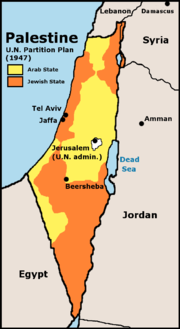
On 29 November 1947, the United Nations General Assembly
approved a plan, UN General Assembly Resolution 181
, to resolve the Arab-Jewish conflict by partitioning Palestine into two states, one Jewish and one Arab. Each state would comprise three major sections, linked by extraterritorial crossroads; the Arab state would also have an enclave at Jaffa. With about 32% of the population, the Jews would get 56% of the territory, an area that contained 499,000 Jews and 438,000 Arabs, though most of this territory was in the inhospitable Negev
Desert in the south. The Palestinian Arabs would get 42% of the land, which had a population of 818,000 Palestinian Arabs and 10,000 Jews. In consideration of its religious significance, the Jerusalem area, including Bethlehem
, with 100,000 Jews and an equal number of Palestinian Arabs, was to become a Corpus Separatum, to be administered by the UN.
The Jewish leadership accepted the partition plan as "the indispensable minimum," glad to gain international recognition but sorry that they did not receive more.
Arguing that the partition plan was unfair to the Arabs with regard to the population balance at that time, the representatives of the Palestinian Arabs and the Arab League firmly opposed the UN action and even rejected its authority to involve itself in the entire matter. They upheld "that the rule of Palestine should revert to its inhabitants, in accordance with the provisions of [...] the Charter of the United Nations." According to Article 73b of the Charter, the UN should develop self-government of the peoples in a territory under its administration.
vote in favor of the termination of the British Mandate of Palestine and the UN Partition Plan, to the termination of the British Mandate itself on 14 May 1948. During the first two months of the Civil War around 1,000 people were killed and 2,000 people injured. By the end of March, the figure had risen to 2,000 dead and 4,000 wounded. These figures correspond to an average of more than 100 deaths and 200 casualties per week in a population of 2,000,000.
From January onwards, operations became increasingly militarized, with the intervention of a number of Arab Liberation Army
regiments inside Palestine, each active in a variety of distinct sectors around the different coastal towns. They consolidated their presence in Galilee
and Samaria
. Abd al-Qadir al-Husayni
came from Egypt with several hundred men of the Army of the Holy War
. Having recruited a few thousand volunteers, al-Husayni organised the blockade of the 100,000 Jewish residents of Jerusalem. To counter this, the Yishuv
authorities tried to supply the city with convoys of up to 100 armoured vehicles, but the operation became more and more impractical as the number of casualties in the relief convoys surged. By March, Al-Hussayni's tactic had paid off. Almost all of Haganah
's armoured vehicles had been destroyed, the blockade was in full operation, and hundreds of Haganah members who had tried to bring supplies into the city were killed. The situation for those who dwelt in the Jewish settlements in the highly-isolated Negev
and North of Galilee was even more critical.
This situation caused the USA to withdraw their support for the Partition plan, thus encouraging the Arab League
to believe that the Palestinian Arabs, reinforced by the Arab Liberation Army, could put an end to partition. The British, on the other hand, decided on the 7 February 1948, to support the annexation of the Arab part of Palestine by Transjordan
.
While the Jewish population had received strict orders requiring them to hold their ground everywhere at all costs, the Arab population was more affected by the general conditions of insecurity to which the country was exposed. Up to 100,000 Arabs, from the urban upper and middle classes in Haifa, Jaffa and Jerusalem, or Jewish-dominated areas, evacuated abroad or to Arab centers eastwards.
Ben-Gurion invested Yigal Yadin with the responsibility to come up with a plan in preparation for the announced intervention of the Arab states. The result of his analysis was Plan Dalet
, which was put in place from the start of April onwards. The adoption of Plan Dalet marked the second stage of the war, in which Haganah passed from the defensive to the offensive.
The first operation, named Nachshon
, consisted of lifting the blockade on Jerusalem
. 1500 men from Haganah's Givati brigade and Palmach
's Harel brigade conducted sorties to free up the route to the city between 5 April and 20 April.
The operation was successful, and enough foodstuffs to last 2 months were trucked into to Jerusalem for distribution to the Jewish population. The success of the operation was assisted by the death of Al-Husayni
in combat. During this time, and independently of Haganah or the framework of Plan Dalet, irregular troops from Irgun
and Lehi
formations massacred a substantial number of Arabs at Deir Yassin
, an event which, though publicly deplored and criticized by the principal Jewish authorities, had a deep impact on the morale of the Arab population.
At the same time, the first large-scale operation of the Arab Liberation Army ended in a "débâcle", having been roundly defeated at Mishmar HaEmek
, coinciding with the loss of their Druze
allies through defection.
Within the framework of the establishment of Jewish territorial continuity foreseen by Plan Dalet, the forces of Haganah, Palmach and Irgun intended to conquer mixed zones. Palestinian Arab society was shaken. Tiberias, Haifa
, Safed
, Beisan, and Jaffa
were taken prior to the end of the Mandate, with Acre
falling shortly after, resulting in the flight of more than 250,000 Palestinian Arabs.
The British had essentially withdrawn their troops. The situation pushed the leaders of the neighboring Arab states to intervene, but their preparation was not finalised, and they could not assemble sufficient forces to turn the tide of the war. The majority of Palestinian Arab hopes lay with the Arab Legion
of Transjordan's monarch, King Abdullah I, but he had no intention of creating a Palestinian Arab-run state, since he hoped to annex as much of the territory of the British Mandate of Palestine as he could. He was playing a double-game, being just as much in contact with the Jewish authorities as with the Arab League.
In preparation for the intervention from neighbouring states, Haganah successfully launched Operations Yiftah
and Ben-'Ami to secure the Jewish settlements of Galilee
, and Operation Kilshon
, which created a united front around Jerusalem. The inconclusive meeting between Golda Meir
and Abdullah I, followed by the Kfar Etzion massacre
on the 13 May by the Arab Legion, led to predictions that the battle for Jerusalem would be merciless.
declared the independence of the state of Israel
. Within hours, two Egyptian columns with air cover entered southern Israel, while fighting erupted in Jerusalem and on the Jerusalem-Tel Aviv highway, where Israeli forces captured two Arab villages and the city of Acre
. Two Egyptian Air Force Spitfires bombed Tel Aviv
. One of them was shot down and its pilot taken prisoner. Arab forces captured the Israeli kibbutz
of Kfar Etzion
and massacred
its inhabitants. Numerous settlements in the Negev
and Galilee
were isolated and exposed to Arab attack on all sides, and had to rely on their own armories for defense. The hastily mobilized Israeli Army had to engage in offensive actions to remove Arab forces from key positions, block the advance of their columns, and rush to seal gaps in Israel's defenses.
Over the next few days, approximately 1,000 Lebanese, 5,000 Syrian, 5,000 Iraqi, and 10,000 Egyptian troops (initial numbers) invaded the newly established state. Four thousand Jordanian
troops invaded the Corpus separatum region encompassing Jerusalem and its environs, as well as areas designated as part of the Arab state by the UN partition plan. They were aided by corps of volunteers from Saudi Arabia, Libya
and Yemen. The Arab nations gradually increased the number of troops by the thousands as the war later progressed (see table of "strength" near top of page).
In an official cablegram from the Secretary-General of the League of Arab States to the UN Secretary-General on 15 May 1948, the Arab states publicly proclaimed their aim of creating a "United State of Palestine" in place of the Jewish and Arab, two-state, UN Plan. They claimed the latter was invalid, as it was opposed by Palestine's Arab majority, and maintained that the absence of legal authority made it necessary to intervene to protect Arab lives and property.
Israel, the United States and the Soviet Union called the Arab states' entry into Israel illegal aggression, while UN Secretary-General Trygve Lie
characterized it as "the first armed aggression which the world had seen since the end of the [Second World] War." China, meanwhile, broadly backed the Arab claims. Both sides increased their manpower over the following months, but the Israeli advantage grew steadily as a result of the progressive mobilization of Israeli society and the influx of an average of 10,300 immigrants each month.
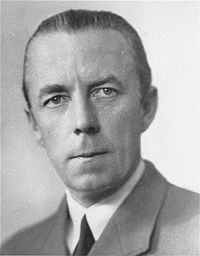 The UN declared a truce on 29 May, which came into effect on 11 June and lasted 28 days. The ceasefire
was overseen by UN mediator Folke Bernadotte
and a team of UN Observers made up of army officers from Belgium, United States, Sweden and France. Bernadotte was voted in by the General Assembly to "assure the safety of the holy places, to safeguard the well being of the population, and to promote 'a peaceful adjustment of the future situation of Palestine'". The truce was designed to last 28 days and an arms embargo was declared with the intention that neither side would make any gains from the truce. Neither side respected the truce; both found ways around the restrictions placed on them. Both the Israelis and the Arabs used this time to improve their positions, a direct violation of the terms of the ceasefire. "The Arabs violated the truce by reinforcing their lines with fresh units and by preventing supplies from reaching isolated Israeli settlements; occasionally, they opened fire along the lines". The Israeli Defense Forces were able to acquire weapons from communist Czechoslovakia as well as improve training of forces and reorganization of the army during this time. Yitzhak Rabin, an IDF commander at the time of the war and later Israel's fifth Prime Minister, stated "[w]ithout the arms from Czechoslovakia... it is very doubtful whether we would have been able to conduct the war". As well as violating the arms and personnel embargo, they also sent fresh units to the front lines like the Arabs. The Israel army increased its manpower from approximately 30,000 or 35,000 men to almost 65,000 during the truce. They were also able to increase their arms supply to "more than twenty-five thousand rifles, five thousand machine guns, and more than fifty million bullets".
As the truce commenced, a British officer stationed in Haifa stated that the four-week-long truce "would certainly be exploited by the Jews to continue military training and reorganization while the Arabs would waste [them] feuding over the future divisions of the spoils". This officer was correct for the Jews were able to reorganize and reequip while the Arabs became unprepared to return to combat.
Nazareth was captured on 16 July, and by the time the second truce took effect at 19:00 18 July, the whole lower Galilee from Haifa Bay to the Sea of Galilee
was captured by Israel.
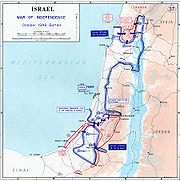 On 15 October, the IDF launched Operation Yoav
in the northern Negev. Its goal was to drive a wedge between the Egyptian forces along the coast and the Beersheba
-Hebron
-Jerusalem road and ultimately to conquer the whole Negev. Yoav was headed by the Southern Front commander Yigal Allon
. The operation was a huge success, shattering the Egyptian army ranks and forcing the Egyptian forces to retreat from the northern Negev, Beersheba and Ashdod. On 22 October, Israeli naval commandos sank
the Egyptian flagship Emir Farouk.
On 22 October, the third truce went into effect.
On 24 October, the IDF launched Operation Hiram
and captured the entire upper Galilee, driving the ALA and Lebanese army back to Lebanon. At the end of the month, Israel had captured the whole Galilee and had advanced 5 miles (8 km) into Lebanon to the Litani River
.
On 22 December, the IDF drove the remaining Egyptian forces out of Israel with Operation Horev
(also called Operation Ayin). The goal of the operation was to secure the entire Negev from Egyptian presence, destroying the Egyptian threat on Israel's southern communities and forcing the Egyptians into a ceasefire. The operation was a decisive Israeli victory, and Israeli raids into the Nitzana area and the Sinai peninsula
forced the Egyptian army, which was encircled in the Gaza Strip
, to withdraw and accept a ceasefire. On 7 January 1949, a truce was achieved. Israeli forces withdrew from Sinai and Gaza under international pressure.
On 5 March, Operation Uvda was launched. On 10 March, the Israelis reached Umm Rashrash (where Eilat was built later) and took it without a battle. The Negev Brigade
and Golani Brigade
took part in the operation. They raised a hand-made flag ("The Ink Flag") and claimed Umm Rashrash for Israel.
s with Egypt on 24 February, Lebanon on 23 March, Jordan on 3 April, and Syria on 20 July. The new borders of Israel, as set by the agreements, encompassed about 78% of Mandatory Palestine as it stood after the independence of Jordan in 1946. This was about 18% more than the UN partition proposal allotted it. These ceasefire lines were known afterwards as the "Green Line
". The Gaza Strip and the West Bank
were occupied by Egypt and Jordan respectively. The United Nations Truce Supervision Organization
and Mixed Armistice Commissions
were set up to monitor ceasefires, supervise the armistice agreements, to prevent isolated incidents from escalating, and assist other UN peacekeeping operations in the region.
The Causes of the 1948 Palestinian exodus
are a controversial topic among historians.
The Palestinian refugee problem and the debate around the right of their return
are also major issues of the Arab-Israeli conflict. Arab Palestinians have staged annual demonstrations and protests on 15 May of each year. The popularity and number of participants in these annual al Nakba demonstrations has varied over time. During the al-Aqsa Intifada
after the failure of the Camp David 2000 Summit
, the attendance at the demonstrations against Israel increased.
During the 1948 War, around 10,000 Jews were forced to evacuate their homes in Palestine or Israel, but in the three years following the war, 700,000 Jews settled in Israel, mainly along the borders and in former Arab lands. Around 136,000 came from the 250,000 displaced Jews of World War II. About another 270,000 came from Eastern Europe
. The bulk of the rest—around 300,000 people—constituted the first wave of a total of 750,000 or more Jews who over the course of the next thirty years would flee
an increasingly hostile Arab world.
, that played by the British government, the Arab aims during the war, the balance of force, and the events related to the Palestinian exodus
have been nuanced or given new interpretations. Some of them are still hotly debated among historians and commentators of the conflict today.
United Nations
The United Nations is an international organization whose stated aims are facilitating cooperation in international law, international security, economic development, social progress, human rights, and achievement of world peace...
vote on the partition plan on November 30, 1947, to the end of the first Arab-Israeli war on July 20, 1949.
The war is divided into two phases:
- The 1947–1948 Civil War in Mandatory Palestine1947–1948 Civil War in Mandatory PalestineThe 1947–1948 Civil War in Mandatory Palestine lasted from 30 November 1947, the date of the United Nations vote in favour of the termination of the British Mandate for Palestine and the UN Partition Plan, to the termination of the British Mandate itself on 14 May 1948.This period constitutes the...
(sometimes called an "intercommunal war") in which the JewishYishuvThe Yishuv or Ha-Yishuv is the term referring to the body of Jewish residents in Palestine before the establishment of the State of Israel...
and Arab communities of PalestinePalestinePalestine is a conventional name, among others, used to describe the geographic region between the Mediterranean Sea and the Jordan River, and various adjoining lands....
, supported by the Arab Liberation ArmyArab Liberation ArmyThe Arab Liberation Army , also translated as Arab Salvation Army, was an army of volunteers from Arab countries led by Fawzi al-Qawuqji...
, clashed, while the region was still fully under British ruleBritish EmpireThe British Empire comprised the dominions, colonies, protectorates, mandates and other territories ruled or administered by the United Kingdom. It originated with the overseas colonies and trading posts established by England in the late 16th and early 17th centuries. At its height, it was the...
. - The 1948 Arab–Israeli War after May 15, 1948, marking the end of the British Mandate and the birth of IsraelIsraelThe State of Israel is a parliamentary republic located in the Middle East, along the eastern shore of the Mediterranean Sea...
, in which TransjordanTransjordanThe Emirate of Transjordan was a former Ottoman territory in the Southern Levant that was part of the British Mandate of Palestine...
, EgyptEgyptEgypt , officially the Arab Republic of Egypt, Arabic: , is a country mainly in North Africa, with the Sinai Peninsula forming a land bridge in Southwest Asia. Egypt is thus a transcontinental country, and a major power in Africa, the Mediterranean Basin, the Middle East and the Muslim world...
, SyriaSyriaSyria , officially the Syrian Arab Republic , is a country in Western Asia, bordering Lebanon and the Mediterranean Sea to the West, Turkey to the north, Iraq to the east, Jordan to the south, and Israel to the southwest....
and IraqIraqIraq ; officially the Republic of Iraq is a country in Western Asia spanning most of the northwestern end of the Zagros mountain range, the eastern part of the Syrian Desert and the northern part of the Arabian Desert....
sent expeditionary forces into Palestine where they fought the Israeli army.
At the issue of the war, the State of Israel kept most of the area that had been allocated by the UN General Assembly Resolution 181. Israel also took control of almost 60% of the area allocated to the proposed Arab state, including the Jaffa
Jaffa
Jaffa is an ancient port city believed to be one of the oldest in the world. Jaffa was incorporated with Tel Aviv creating the city of Tel Aviv-Yafo, Israel. Jaffa is famous for its association with the biblical story of the prophet Jonah.-Etymology:...
, Lydda
Lod
Lod is a city located on the Sharon Plain southeast of Tel Aviv in the Center District of Israel. At the end of 2010, it had a population of 70,000, roughly 75 percent Jewish and 25 percent Arab.The name is derived from the Biblical city of Lod...
and Ramle area, Galilee
Galilee
Galilee , is a large region in northern Israel which overlaps with much of the administrative North District of the country. Traditionally divided into Upper Galilee , Lower Galilee , and Western Galilee , extending from Dan to the north, at the base of Mount Hermon, along Mount Lebanon to the...
, some parts of the Negev
Negev
The Negev is a desert and semidesert region of southern Israel. The Arabs, including the native Bedouin population of the region, refer to the desert as al-Naqab. The origin of the word Neghebh is from the Hebrew root denoting 'dry'...
, a wide strip along the Tel-Aviv-Jerusalem road and some territories in the West Bank
West Bank
The West Bank ) of the Jordan River is the landlocked geographical eastern part of the Palestinian territories located in Western Asia. To the west, north, and south, the West Bank shares borders with the state of Israel. To the east, across the Jordan River, lies the Hashemite Kingdom of Jordan...
. Transjordan took control of the remainder of the West Bank, putting it under military rule
Military occupation
Military occupation occurs when the control and authority over a territory passes to a hostile army. The territory then becomes occupied territory.-Military occupation and the laws of war:...
, and the Egyptian military took control of the Gaza Strip
Gaza Strip
thumb|Gaza city skylineThe Gaza Strip lies on the Eastern coast of the Mediterranean Sea. The Strip borders Egypt on the southwest and Israel on the south, east and north. It is about long, and between 6 and 12 kilometres wide, with a total area of...
. No Arab Palestinian state was created.
Demographic changes occurred in the country. Between 600,000 and 760,000 Palestinian Arabs fled or were expelled
1948 Palestinian exodus
The 1948 Palestinian exodus , also known as the Nakba , occurred when approximately 711,000 to 725,000 Palestinian Arabs left, fled or were expelled from their homes, during the 1948 Arab-Israeli War and the Civil War that preceded it. The exact number of refugees is a matter of dispute...
from the area that became Israel and became Palestinian refugee
Palestinian refugee
Palestinian refugees or Palestine refugees are the people and their descendants, predominantly Palestinian Arabic-speakers, who fled or were expelled from their homes during and after the 1948 Palestine War, within that part of the British Mandate of Palestine, that after that war became the...
s. On the other hand, around 10,000 Jews were forced to leave their homes in Palestine. In the three years following the war, about 700,000 Jews immigrated to Israel, residing mainly along the borders and in former Arab lands. Around 136,000 were some of the 250,000 displaced Jews of World War II. Around half were part of the 750,000 to 900,000 Jews who left or were expelled from Arab countries
Jewish exodus from Arab lands
The Jewish exodus from Arab and Muslim countries was a mass departure, flight and expulsion of Jews, primarily of Sephardi and Mizrahi background, from Arab and Muslim countries, from 1948 until the early 1970s...
between 1948 and the Six-Day War
Six-Day War
The Six-Day War , also known as the June War, 1967 Arab-Israeli War, or Third Arab-Israeli War, was fought between June 5 and 10, 1967, by Israel and the neighboring states of Egypt , Jordan, and Syria...
.
The Israelis refer to this period as their War of Independence or War of Liberation, because it saw the birth of the State of Israel. Their traditional historiography also sometimes makes this start on 15 May 1948. Palestinians and Arabs refer to this as al-Nakba (the catastrophe), because of the huge number of displaced people and the failure of their nationalist aspirations to create their state with the loss in the war.
Background
In the immediate aftermath of the United NationsUnited Nations
The United Nations is an international organization whose stated aims are facilitating cooperation in international law, international security, economic development, social progress, human rights, and achievement of world peace...
' approval of the Partition plan of Palestine between Jews and Arabs, the explosions of joy amongst the Jewish community were counterbalanced by the expression of discontent amongst the Arab community. Soon after, violence broke out and became more and more prevalent. Murders, reprisals, and counter-reprisals came fast on each other's heels, resulting in dozens of victims killed on both sides. The sanguinary impasse persisted as no force intervened to put a stop to the escalating cycles of violence.
UN Partition Plan
On 29 November 1947, the United Nations General Assembly
United Nations General Assembly
For two articles dealing with membership in the General Assembly, see:* General Assembly members* General Assembly observersThe United Nations General Assembly is one of the five principal organs of the United Nations and the only one in which all member nations have equal representation...
approved a plan, UN General Assembly Resolution 181
1947 UN Partition Plan
The United Nations Partition Plan for Palestine was created by the United Nations Special Committee on Palestine in 1947 to replace the British Mandate for Palestine with "Independent Arab and Jewish States" and a "Special International Regime for the City of Jerusalem" administered by the United...
, to resolve the Arab-Jewish conflict by partitioning Palestine into two states, one Jewish and one Arab. Each state would comprise three major sections, linked by extraterritorial crossroads; the Arab state would also have an enclave at Jaffa. With about 32% of the population, the Jews would get 56% of the territory, an area that contained 499,000 Jews and 438,000 Arabs, though most of this territory was in the inhospitable Negev
Negev
The Negev is a desert and semidesert region of southern Israel. The Arabs, including the native Bedouin population of the region, refer to the desert as al-Naqab. The origin of the word Neghebh is from the Hebrew root denoting 'dry'...
Desert in the south. The Palestinian Arabs would get 42% of the land, which had a population of 818,000 Palestinian Arabs and 10,000 Jews. In consideration of its religious significance, the Jerusalem area, including Bethlehem
Bethlehem
Bethlehem is a Palestinian city in the central West Bank of the Jordan River, near Israel and approximately south of Jerusalem, with a population of about 30,000 people. It is the capital of the Bethlehem Governorate of the Palestinian National Authority and a hub of Palestinian culture and tourism...
, with 100,000 Jews and an equal number of Palestinian Arabs, was to become a Corpus Separatum, to be administered by the UN.
The Jewish leadership accepted the partition plan as "the indispensable minimum," glad to gain international recognition but sorry that they did not receive more.
Arguing that the partition plan was unfair to the Arabs with regard to the population balance at that time, the representatives of the Palestinian Arabs and the Arab League firmly opposed the UN action and even rejected its authority to involve itself in the entire matter. They upheld "that the rule of Palestine should revert to its inhabitants, in accordance with the provisions of [...] the Charter of the United Nations." According to Article 73b of the Charter, the UN should develop self-government of the peoples in a territory under its administration.
1947–1948 Civil War in Mandatory Palestine
The 1947–1948 Civil War in Mandatory Palestine lasted from 30 November 1947, the date of the United NationsUnited Nations
The United Nations is an international organization whose stated aims are facilitating cooperation in international law, international security, economic development, social progress, human rights, and achievement of world peace...
vote in favor of the termination of the British Mandate of Palestine and the UN Partition Plan, to the termination of the British Mandate itself on 14 May 1948. During the first two months of the Civil War around 1,000 people were killed and 2,000 people injured. By the end of March, the figure had risen to 2,000 dead and 4,000 wounded. These figures correspond to an average of more than 100 deaths and 200 casualties per week in a population of 2,000,000.
From January onwards, operations became increasingly militarized, with the intervention of a number of Arab Liberation Army
Arab Liberation Army
The Arab Liberation Army , also translated as Arab Salvation Army, was an army of volunteers from Arab countries led by Fawzi al-Qawuqji...
regiments inside Palestine, each active in a variety of distinct sectors around the different coastal towns. They consolidated their presence in Galilee
Galilee
Galilee , is a large region in northern Israel which overlaps with much of the administrative North District of the country. Traditionally divided into Upper Galilee , Lower Galilee , and Western Galilee , extending from Dan to the north, at the base of Mount Hermon, along Mount Lebanon to the...
and Samaria
Samaria
Samaria, or the Shomron is a term used for a mountainous region roughly corresponding to the northern part of the West Bank.- Etymology :...
. Abd al-Qadir al-Husayni
Abd al-Qadir al-Husayni
Abd al-Qadir al-Husayni was a Palestinian Arab nationalist and fighter who in late 1933 founded the secret militant group known as the Organization for Holy Struggle, , which he and Hasan Salama commanded as the Army of the Holy War during the 1936-1939 Arab Revolt and during the 1948...
came from Egypt with several hundred men of the Army of the Holy War
Army of the Holy War
The Army of the Holy War or Holy War Army was a force of Palestinian Arab irregulars in the 1947-48 Palestinian civil war led by Abd al-Qadir al-Husayni and Hasan Salama. The force has been described as Husayni's "personal" army...
. Having recruited a few thousand volunteers, al-Husayni organised the blockade of the 100,000 Jewish residents of Jerusalem. To counter this, the Yishuv
Yishuv
The Yishuv or Ha-Yishuv is the term referring to the body of Jewish residents in Palestine before the establishment of the State of Israel...
authorities tried to supply the city with convoys of up to 100 armoured vehicles, but the operation became more and more impractical as the number of casualties in the relief convoys surged. By March, Al-Hussayni's tactic had paid off. Almost all of Haganah
Haganah
Haganah was a Jewish paramilitary organization in what was then the British Mandate of Palestine from 1920 to 1948, which later became the core of the Israel Defense Forces.- Origins :...
's armoured vehicles had been destroyed, the blockade was in full operation, and hundreds of Haganah members who had tried to bring supplies into the city were killed. The situation for those who dwelt in the Jewish settlements in the highly-isolated Negev
Negev
The Negev is a desert and semidesert region of southern Israel. The Arabs, including the native Bedouin population of the region, refer to the desert as al-Naqab. The origin of the word Neghebh is from the Hebrew root denoting 'dry'...
and North of Galilee was even more critical.
This situation caused the USA to withdraw their support for the Partition plan, thus encouraging the Arab League
Arab League
The Arab League , officially called the League of Arab States , is a regional organisation of Arab states in North and Northeast Africa, and Southwest Asia . It was formed in Cairo on 22 March 1945 with six members: Egypt, Iraq, Transjordan , Lebanon, Saudi Arabia, and Syria. Yemen joined as a...
to believe that the Palestinian Arabs, reinforced by the Arab Liberation Army, could put an end to partition. The British, on the other hand, decided on the 7 February 1948, to support the annexation of the Arab part of Palestine by Transjordan
Transjordan
The Emirate of Transjordan was a former Ottoman territory in the Southern Levant that was part of the British Mandate of Palestine...
.
While the Jewish population had received strict orders requiring them to hold their ground everywhere at all costs, the Arab population was more affected by the general conditions of insecurity to which the country was exposed. Up to 100,000 Arabs, from the urban upper and middle classes in Haifa, Jaffa and Jerusalem, or Jewish-dominated areas, evacuated abroad or to Arab centers eastwards.
Ben-Gurion invested Yigal Yadin with the responsibility to come up with a plan in preparation for the announced intervention of the Arab states. The result of his analysis was Plan Dalet
Plan Dalet
Plan Dalet, or Plan D, was a plan worked out by the Haganah, a Jewish paramilitary group and the forerunner of the Israel Defense Forces, in Palestine in autumn 1947 to spring 1948. Its purpose is much debated...
, which was put in place from the start of April onwards. The adoption of Plan Dalet marked the second stage of the war, in which Haganah passed from the defensive to the offensive.
The first operation, named Nachshon
Operation Nachshon
Operation Nachshon was an Jewish military operation during the 1948 war. Lasting from 5–20 April 1948, its objective was to break the Siege of Jerusalem by opening the Tel-Aviv - Jerusalem road blockaded by Palestinian Arabs and to supply food and weapons to the isolated Jewish community of...
, consisted of lifting the blockade on Jerusalem
Siege of Jerusalem (1948)
The Battle for Jerusalem occurred from 30 November 1947 to 11 June 1948 when Jewish and Arab population of Mandatory Palestine and later Israeli and Jordanian armies fought for the control of the city....
. 1500 men from Haganah's Givati brigade and Palmach
Palmach
The Palmach was the elite fighting force of the Haganah, the underground army of the Yishuv during the period of the British Mandate of Palestine. The Palmach was established on May 15, 1941...
's Harel brigade conducted sorties to free up the route to the city between 5 April and 20 April.
The operation was successful, and enough foodstuffs to last 2 months were trucked into to Jerusalem for distribution to the Jewish population. The success of the operation was assisted by the death of Al-Husayni
Abd al-Qadir al-Husayni
Abd al-Qadir al-Husayni was a Palestinian Arab nationalist and fighter who in late 1933 founded the secret militant group known as the Organization for Holy Struggle, , which he and Hasan Salama commanded as the Army of the Holy War during the 1936-1939 Arab Revolt and during the 1948...
in combat. During this time, and independently of Haganah or the framework of Plan Dalet, irregular troops from Irgun
Irgun
The Irgun , or Irgun Zevai Leumi to give it its full title , was a Zionist paramilitary group that operated in Mandate Palestine between 1931 and 1948. It was an offshoot of the earlier and larger Jewish paramilitary organization haHaganah...
and Lehi
Lehi (group)
Lehi , commonly referred to in English as the Stern Group or Stern Gang, was a militant Zionist group founded by Avraham Stern in the British Mandate of Palestine...
formations massacred a substantial number of Arabs at Deir Yassin
Deir Yassin massacre
The Deir Yassin massacre took place on April 9, 1948, when around 120 fighters from the Irgun Zevai Leumi and Lohamei Herut Israel Zionist paramilitary groups attacked Deir Yassin near Jerusalem, a Palestinian-Arab village of roughly 600 people...
, an event which, though publicly deplored and criticized by the principal Jewish authorities, had a deep impact on the morale of the Arab population.
At the same time, the first large-scale operation of the Arab Liberation Army ended in a "débâcle", having been roundly defeated at Mishmar HaEmek
Mishmar HaEmek
Mishmar HaEmek is a kibbutz in northern Israel. Located in the western Jezreel Valley, it falls under the jurisdiction of Megiddo Regional Council. In 2006 it had a population of 964....
, coinciding with the loss of their Druze
Druze
The Druze are an esoteric, monotheistic religious community, found primarily in Syria, Lebanon, Israel, and Jordan, which emerged during the 11th century from Ismailism. The Druze have an eclectic set of beliefs that incorporate several elements from Abrahamic religions, Gnosticism, Neoplatonism...
allies through defection.
Within the framework of the establishment of Jewish territorial continuity foreseen by Plan Dalet, the forces of Haganah, Palmach and Irgun intended to conquer mixed zones. Palestinian Arab society was shaken. Tiberias, Haifa
Haifa
Haifa is the largest city in northern Israel, and the third-largest city in the country, with a population of over 268,000. Another 300,000 people live in towns directly adjacent to the city including the cities of the Krayot, as well as, Tirat Carmel, Daliyat al-Karmel and Nesher...
, Safed
Safed
Safed , is a city in the Northern District of Israel. Located at an elevation of , Safed is the highest city in the Galilee and of Israel. Due to its high elevation, Safed experiences warm summers and cold, often snowy, winters...
, Beisan, and Jaffa
Jaffa
Jaffa is an ancient port city believed to be one of the oldest in the world. Jaffa was incorporated with Tel Aviv creating the city of Tel Aviv-Yafo, Israel. Jaffa is famous for its association with the biblical story of the prophet Jonah.-Etymology:...
were taken prior to the end of the Mandate, with Acre
Acre
The acre is a unit of area in a number of different systems, including the imperial and U.S. customary systems. The most commonly used acres today are the international acre and, in the United States, the survey acre. The most common use of the acre is to measure tracts of land.The acre is related...
falling shortly after, resulting in the flight of more than 250,000 Palestinian Arabs.
The British had essentially withdrawn their troops. The situation pushed the leaders of the neighboring Arab states to intervene, but their preparation was not finalised, and they could not assemble sufficient forces to turn the tide of the war. The majority of Palestinian Arab hopes lay with the Arab Legion
Arab Legion
The Arab Legion was the regular army of Transjordan and then Jordan in the early part of the 20th century.-Creation:...
of Transjordan's monarch, King Abdullah I, but he had no intention of creating a Palestinian Arab-run state, since he hoped to annex as much of the territory of the British Mandate of Palestine as he could. He was playing a double-game, being just as much in contact with the Jewish authorities as with the Arab League.
In preparation for the intervention from neighbouring states, Haganah successfully launched Operations Yiftah
Operation Yiftach
Operation Yiftach was an offensive of the Israeli Haganah between 28 April and 29 May 1948 aimed at capturing the eastern Galilee. The central objectives were the capture of Safed and the securing of the Lebanese and Syrian borders before the British Mandate ended on 14 May 1948...
and Ben-'Ami to secure the Jewish settlements of Galilee
Galilee
Galilee , is a large region in northern Israel which overlaps with much of the administrative North District of the country. Traditionally divided into Upper Galilee , Lower Galilee , and Western Galilee , extending from Dan to the north, at the base of Mount Hermon, along Mount Lebanon to the...
, and Operation Kilshon
Operation Kilshon
From May 13, 1948 until May 18, 1948 Jewish forces from the Haganah and Irgun executed Operation Kilshon . Its aim was to capture the Jewish suburbs of Jerusalem particularly Talbiya in central Jerusalem....
, which created a united front around Jerusalem. The inconclusive meeting between Golda Meir
Golda Meir
Golda Meir ; May 3, 1898 – December 8, 1978) was a teacher, kibbutznik and politician who became the fourth Prime Minister of the State of Israel....
and Abdullah I, followed by the Kfar Etzion massacre
Kfar Etzion massacre
The Kfar Etzion massacre was an act committed by Arab armed forces on May 13, 1948, the day before the Declaration of Independence of the state of Israel.-Background:...
on the 13 May by the Arab Legion, led to predictions that the battle for Jerusalem would be merciless.
Course of the 1948 Arab–Israeli War
On 14 May 1948, David Ben-GurionDavid Ben-Gurion
' was the first Prime Minister of Israel.Ben-Gurion's passion for Zionism, which began early in life, led him to become a major Zionist leader and Executive Head of the World Zionist Organization in 1946...
declared the independence of the state of Israel
Israel
The State of Israel is a parliamentary republic located in the Middle East, along the eastern shore of the Mediterranean Sea...
. Within hours, two Egyptian columns with air cover entered southern Israel, while fighting erupted in Jerusalem and on the Jerusalem-Tel Aviv highway, where Israeli forces captured two Arab villages and the city of Acre
Acre, Israel
Acre , is a city in the Western Galilee region of northern Israel at the northern extremity of Haifa Bay. Acre is one of the oldest continuously inhabited sites in the country....
. Two Egyptian Air Force Spitfires bombed Tel Aviv
Tel Aviv
Tel Aviv , officially Tel Aviv-Yafo , is the second most populous city in Israel, with a population of 404,400 on a land area of . The city is located on the Israeli Mediterranean coastline in west-central Israel. It is the largest and most populous city in the metropolitan area of Gush Dan, with...
. One of them was shot down and its pilot taken prisoner. Arab forces captured the Israeli kibbutz
Kibbutz
A kibbutz is a collective community in Israel that was traditionally based on agriculture. Today, farming has been partly supplanted by other economic branches, including industrial plants and high-tech enterprises. Kibbutzim began as utopian communities, a combination of socialism and Zionism...
of Kfar Etzion
Kfar Etzion
Kfar Etzion is a religious Israeli settlement and kibbutz located in the Judean Hills between Jerusalem and Hebron in the southern West Bank. It has a population of 400 and falls under the jurisdiction of Gush Etzion Regional Council...
and massacred
Kfar Etzion massacre
The Kfar Etzion massacre was an act committed by Arab armed forces on May 13, 1948, the day before the Declaration of Independence of the state of Israel.-Background:...
its inhabitants. Numerous settlements in the Negev
Negev
The Negev is a desert and semidesert region of southern Israel. The Arabs, including the native Bedouin population of the region, refer to the desert as al-Naqab. The origin of the word Neghebh is from the Hebrew root denoting 'dry'...
and Galilee
Galilee
Galilee , is a large region in northern Israel which overlaps with much of the administrative North District of the country. Traditionally divided into Upper Galilee , Lower Galilee , and Western Galilee , extending from Dan to the north, at the base of Mount Hermon, along Mount Lebanon to the...
were isolated and exposed to Arab attack on all sides, and had to rely on their own armories for defense. The hastily mobilized Israeli Army had to engage in offensive actions to remove Arab forces from key positions, block the advance of their columns, and rush to seal gaps in Israel's defenses.
Over the next few days, approximately 1,000 Lebanese, 5,000 Syrian, 5,000 Iraqi, and 10,000 Egyptian troops (initial numbers) invaded the newly established state. Four thousand Jordanian
Transjordan
The Emirate of Transjordan was a former Ottoman territory in the Southern Levant that was part of the British Mandate of Palestine...
troops invaded the Corpus separatum region encompassing Jerusalem and its environs, as well as areas designated as part of the Arab state by the UN partition plan. They were aided by corps of volunteers from Saudi Arabia, Libya
Libya
Libya is an African country in the Maghreb region of North Africa bordered by the Mediterranean Sea to the north, Egypt to the east, Sudan to the southeast, Chad and Niger to the south, and Algeria and Tunisia to the west....
and Yemen. The Arab nations gradually increased the number of troops by the thousands as the war later progressed (see table of "strength" near top of page).
In an official cablegram from the Secretary-General of the League of Arab States to the UN Secretary-General on 15 May 1948, the Arab states publicly proclaimed their aim of creating a "United State of Palestine" in place of the Jewish and Arab, two-state, UN Plan. They claimed the latter was invalid, as it was opposed by Palestine's Arab majority, and maintained that the absence of legal authority made it necessary to intervene to protect Arab lives and property.
Israel, the United States and the Soviet Union called the Arab states' entry into Israel illegal aggression, while UN Secretary-General Trygve Lie
Trygve Lie
Trygve Halvdan Lie was a Norwegian politician, labour leader, government official and author. He served as Norwegian Foreign minister during the critical years of the Norwegian government in exile in London from 1940 to 1945. From 1946 to 1952 he was the first Secretary-General of the United...
characterized it as "the first armed aggression which the world had seen since the end of the [Second World] War." China, meanwhile, broadly backed the Arab claims. Both sides increased their manpower over the following months, but the Israeli advantage grew steadily as a result of the progressive mobilization of Israeli society and the influx of an average of 10,300 immigrants each month.
Truce
Ceasefire
A ceasefire is a temporary stoppage of a war in which each side agrees with the other to suspend aggressive actions. Ceasefires may be declared as part of a formal treaty, but they have also been called as part of an informal understanding between opposing forces...
was overseen by UN mediator Folke Bernadotte
Folke Bernadotte
Folke Bernadotte, Count of Wisborg was a Swedish diplomat and nobleman noted for his negotiation of the release of about 31,000 prisoners from German concentration camps during World War II, including 450 Danish Jews from Theresienstadt released on 14 April 1945...
and a team of UN Observers made up of army officers from Belgium, United States, Sweden and France. Bernadotte was voted in by the General Assembly to "assure the safety of the holy places, to safeguard the well being of the population, and to promote 'a peaceful adjustment of the future situation of Palestine'". The truce was designed to last 28 days and an arms embargo was declared with the intention that neither side would make any gains from the truce. Neither side respected the truce; both found ways around the restrictions placed on them. Both the Israelis and the Arabs used this time to improve their positions, a direct violation of the terms of the ceasefire. "The Arabs violated the truce by reinforcing their lines with fresh units and by preventing supplies from reaching isolated Israeli settlements; occasionally, they opened fire along the lines". The Israeli Defense Forces were able to acquire weapons from communist Czechoslovakia as well as improve training of forces and reorganization of the army during this time. Yitzhak Rabin, an IDF commander at the time of the war and later Israel's fifth Prime Minister, stated "[w]ithout the arms from Czechoslovakia... it is very doubtful whether we would have been able to conduct the war". As well as violating the arms and personnel embargo, they also sent fresh units to the front lines like the Arabs. The Israel army increased its manpower from approximately 30,000 or 35,000 men to almost 65,000 during the truce. They were also able to increase their arms supply to "more than twenty-five thousand rifles, five thousand machine guns, and more than fifty million bullets".
As the truce commenced, a British officer stationed in Haifa stated that the four-week-long truce "would certainly be exploited by the Jews to continue military training and reorganization while the Arabs would waste [them] feuding over the future divisions of the spoils". This officer was correct for the Jews were able to reorganize and reequip while the Arabs became unprepared to return to combat.
Operations Dani and Dekel
Israeli operations labeled Dani and Dekel broke the truce and caused 60,000 Palestinian inhabitants to be forcibly expelled from Ramlah and Lydda. In Ben-Gurion's view Ramlah and Lydda constituted a special danger because their proximity might encourage co-operation between the Egyptian army, which had started its attack on Kibbutz Negbah, near Ramlah, and the Arab Legion, which had taken the Lydda police station. However, the author considers that Operation Dani, under which the two towns were seized, revealed that no such co-operation existed. Additionally, widespread looting took place during these operations. In total, about 100,000 Palestinians became refugees in this stage according to Morris.Nazareth was captured on 16 July, and by the time the second truce took effect at 19:00 18 July, the whole lower Galilee from Haifa Bay to the Sea of Galilee
Sea of Galilee
The Sea of Galilee, also Kinneret, Lake of Gennesaret, or Lake Tiberias , is the largest freshwater lake in Israel, and it is approximately in circumference, about long, and wide. The lake has a total area of , and a maximum depth of approximately 43 m...
was captured by Israel.
Operation Yoav and Hiram
Operation Yoav
Operation Yoav was an Israeli military operation carried out from 15–22 October 1948 in the Negev Desert, during the 1948 Arab-Israeli War. Its goal was to drive a wedge between the Egyptian forces along the coast and the Beersheba–Hebron–Jerusalem road and ultimately to conquer the whole Negev...
in the northern Negev. Its goal was to drive a wedge between the Egyptian forces along the coast and the Beersheba
Beersheba
Beersheba is the largest city in the Negev desert of southern Israel. Often referred to as the "Capital of the Negev", it is the seventh-largest city in Israel with a population of 194,300....
-Hebron
Hebron
Hebron , is located in the southern West Bank, south of Jerusalem. Nestled in the Judean Mountains, it lies 930 meters above sea level. It is the largest city in the West Bank and home to around 165,000 Palestinians, and over 500 Jewish settlers concentrated in and around the old quarter...
-Jerusalem road and ultimately to conquer the whole Negev. Yoav was headed by the Southern Front commander Yigal Allon
Yigal Allon
Yigal Allon was an Israeli politician, a commander of the Palmach, and a general in the IDF. He served as one of the leaders of Ahdut HaAvoda party and the Israeli Labor party, and acting Prime Minister of Israel, and was a member of the Knesset and government minister from the 10th through the...
. The operation was a huge success, shattering the Egyptian army ranks and forcing the Egyptian forces to retreat from the northern Negev, Beersheba and Ashdod. On 22 October, Israeli naval commandos sank
Israeli naval campaign in Operation Yoav
The Israeli naval campaign in Operation Yoav refers to the operations of the Israeli naval service during Operation Yoav in the final stage of the 1948 Arab–Israeli War...
the Egyptian flagship Emir Farouk.
On 22 October, the third truce went into effect.
On 24 October, the IDF launched Operation Hiram
Operation Hiram
Operation Hiram was a military operation conducted by the Israel Defense Forces during the 1948 Arab-Israeli War. It was led by General Moshe Carmel, and aimed at capturing the upper Galilee region from the Arab Liberation Army forces led by Fawzi al-Qawuqji and a Syrian battalion...
and captured the entire upper Galilee, driving the ALA and Lebanese army back to Lebanon. At the end of the month, Israel had captured the whole Galilee and had advanced 5 miles (8 km) into Lebanon to the Litani River
Litani River
The Litani River is an important water resource in southern Lebanon. The river rises in the fertile Beqaa Valley valley, west of Baalbek, and empties into the Mediterranean Sea north of Tyre. Exceeding 140 km in length, the Litani River is the longest river in Lebanon and provides an average...
.
On 22 December, the IDF drove the remaining Egyptian forces out of Israel with Operation Horev
Operation Horev
At the end of Israel's War of Independence Operation Horev was a large scale attack against the Egyptian army in the Western Negev. Its objective was to trap the Egyptian Army in the Gaza Strip...
(also called Operation Ayin). The goal of the operation was to secure the entire Negev from Egyptian presence, destroying the Egyptian threat on Israel's southern communities and forcing the Egyptians into a ceasefire. The operation was a decisive Israeli victory, and Israeli raids into the Nitzana area and the Sinai peninsula
Sinai Peninsula
The Sinai Peninsula or Sinai is a triangular peninsula in Egypt about in area. It is situated between the Mediterranean Sea to the north, and the Red Sea to the south, and is the only part of Egyptian territory located in Asia as opposed to Africa, effectively serving as a land bridge between two...
forced the Egyptian army, which was encircled in the Gaza Strip
Gaza Strip
thumb|Gaza city skylineThe Gaza Strip lies on the Eastern coast of the Mediterranean Sea. The Strip borders Egypt on the southwest and Israel on the south, east and north. It is about long, and between 6 and 12 kilometres wide, with a total area of...
, to withdraw and accept a ceasefire. On 7 January 1949, a truce was achieved. Israeli forces withdrew from Sinai and Gaza under international pressure.
On 5 March, Operation Uvda was launched. On 10 March, the Israelis reached Umm Rashrash (where Eilat was built later) and took it without a battle. The Negev Brigade
Negev Brigade
The 12th Negev Brigade was an Israeli infantry brigade that served in the 1948 Arab-Israeli war. It was commanded by Nahum "Sergei" Sarig and consisted of four Palmach battalions...
and Golani Brigade
Golani Brigade
The Golani Brigade is an Israeli infantry brigade that is subordinated to the 36th Division and traditionally associated with the Northern Command. Its symbol is a green tree on a yellow background, and its soldiers wear a brown beret. It is one of the most highly decorated infantry units in the...
took part in the operation. They raised a hand-made flag ("The Ink Flag") and claimed Umm Rashrash for Israel.
Borders
In 1949, Israel signed separate armisticeArmistice
An armistice is a situation in a war where the warring parties agree to stop fighting. It is not necessarily the end of a war, but may be just a cessation of hostilities while an attempt is made to negotiate a lasting peace...
s with Egypt on 24 February, Lebanon on 23 March, Jordan on 3 April, and Syria on 20 July. The new borders of Israel, as set by the agreements, encompassed about 78% of Mandatory Palestine as it stood after the independence of Jordan in 1946. This was about 18% more than the UN partition proposal allotted it. These ceasefire lines were known afterwards as the "Green Line
Green Line (Israel)
Green Line refers to the demarcation lines set out in the 1949 Armistice Agreements between Israel and its neighbours after the 1948 Arab-Israeli War...
". The Gaza Strip and the West Bank
West Bank
The West Bank ) of the Jordan River is the landlocked geographical eastern part of the Palestinian territories located in Western Asia. To the west, north, and south, the West Bank shares borders with the state of Israel. To the east, across the Jordan River, lies the Hashemite Kingdom of Jordan...
were occupied by Egypt and Jordan respectively. The United Nations Truce Supervision Organization
United Nations Truce Supervision Organization
The United Nations Truce Supervision Organization is an organization founded on 29 May 1948 for peacekeeping in the Middle East. Its primary task was providing the military command structure to the peace keeping forces in the Middle East to enable the peace keepers to observe and maintain the...
and Mixed Armistice Commissions
Mixed Armistice Commissions
The Mixed Armistice Commissions is an organisation for monitoring the ceasefire along the lines set by the General Armistice Agreements. It was composed of United Nations Military Observers and was part of the United Nations Truce Supervision Organization peacekeeping force in the Middle East...
were set up to monitor ceasefires, supervise the armistice agreements, to prevent isolated incidents from escalating, and assist other UN peacekeeping operations in the region.
Casualities
Israel lost 6,373 of its people, about 1% of its population in the war. About 4,000 were soldiers and the rest were civilians. The exact number of Arab losses is unknown but is estimated at between 8,000 and 15,000.Demographic consequences
During the 1947-1948 Civil War in Mandatory Palestine and the 1948 Arab–Israeli War that followed, around 750,000 Palestinians fled or were expelled from their homes. In 1951, the UN Conciliation Commission for Palestine estimated that the number of Palestinian refugees displaced from Israel was 711,000. This number did not include displaced Palestinians inside Israeli-held territory. The list of villages depopulated during the Arab-Israeli conflict includes more than 400 Arab villages. It also includes about ten Jewish villages and neighbourhoods.The Causes of the 1948 Palestinian exodus
Causes of the 1948 Palestinian exodus
The causes and explanations of the exodus of Palestinian Arabs that arose during the 1947-1948 Civil War in Mandatory Palestine and the 1948 Arab-Israeli War are a matter of great controversy between historians and journalists, and of the Arab-Israeli conflict....
are a controversial topic among historians.
The Palestinian refugee problem and the debate around the right of their return
Palestinian right of return
The Palestinian right of return is a political position or principle asserting that Palestinian refugees, both first-generation refugees and their descendants, have a right to return, and a right to the property they or their forebears left or which they were forced to leave in what is now Israel...
are also major issues of the Arab-Israeli conflict. Arab Palestinians have staged annual demonstrations and protests on 15 May of each year. The popularity and number of participants in these annual al Nakba demonstrations has varied over time. During the al-Aqsa Intifada
Al-Aqsa Intifada
The Second Intifada, also known as the Al-Aqsa Intifada and the Oslo War, was the second Palestinian uprising, a period of intensified Palestinian-Israeli violence, which began in late September 2000...
after the failure of the Camp David 2000 Summit
Camp David 2000 Summit
The Middle East Peace Summit at Camp David of July 2000 took place between United States President Bill Clinton, Israeli Prime Minister Ehud Barak, and Palestinian Authority Chairman Yasser Arafat...
, the attendance at the demonstrations against Israel increased.
During the 1948 War, around 10,000 Jews were forced to evacuate their homes in Palestine or Israel, but in the three years following the war, 700,000 Jews settled in Israel, mainly along the borders and in former Arab lands. Around 136,000 came from the 250,000 displaced Jews of World War II. About another 270,000 came from Eastern Europe
Eastern Europe
Eastern Europe is the eastern part of Europe. The term has widely disparate geopolitical, geographical, cultural and socioeconomic readings, which makes it highly context-dependent and even volatile, and there are "almost as many definitions of Eastern Europe as there are scholars of the region"...
. The bulk of the rest—around 300,000 people—constituted the first wave of a total of 750,000 or more Jews who over the course of the next thirty years would flee
Jewish exodus from Arab lands
The Jewish exodus from Arab and Muslim countries was a mass departure, flight and expulsion of Jews, primarily of Sephardi and Mizrahi background, from Arab and Muslim countries, from 1948 until the early 1970s...
an increasingly hostile Arab world.
Controversies
After the war, Israeli and Palestinian historiographies differed on the interpretation of the events of 1948. In the West the majority view was of a tiny group of vastly outnumbered and ill-equipped Jews fighting off the massed strength of the invading Arab armies. It was also widely believed that the Palestinian Arabs left their homes on the instruction of their leaders. In 1980, with the opening of the Israeli and British archives, Israeli historians started giving new insights on the history of this time period. In particular, the role played by Abdullah I of JordanAbdullah I of Jordan
Abdullah I bin al-Hussein, King of Jordan [‘Abd Allāh ibn al-Husayn] عبد الله الأول بن الحسين born in Mecca, Second Saudi State, was the second of three sons of Sherif Hussein bin Ali, Sharif and Emir of Mecca and his first wife Abdiyya bint Abdullah...
, that played by the British government, the Arab aims during the war, the balance of force, and the events related to the Palestinian exodus
1948 Palestinian exodus
The 1948 Palestinian exodus , also known as the Nakba , occurred when approximately 711,000 to 725,000 Palestinian Arabs left, fled or were expelled from their homes, during the 1948 Arab-Israeli War and the Civil War that preceded it. The exact number of refugees is a matter of dispute...
have been nuanced or given new interpretations. Some of them are still hotly debated among historians and commentators of the conflict today.
Dates
When the 1948 Palestine war actually began is disputed. Localized and limited fighting began shortly after the UN partition resolution on November 29, 1947, and full fledged war broke out on May 15 after the complete withdrawal of British units. According to Efraim Karsh, the term Palestine war refers to the events between the United Nations vote on the partition plan on November 30, 1947, to the end of the first Arab-Israeli war on July 20, 1949. According to others, the war began with the entry of Arab armies into Palestine on May 15, 1948.See also
- United Nations Partition Plan for Palestine
- List of Israeli military operations in the 1948 Arab-Israeli war
- List of modern conflicts in the Middle East
Further reading
- Yoav GelberYoav GelberYoav Gelber is a professor of history at the University of Haifa, and was formerly a visiting professor at The University of Texas at Austin....
, Palestine 1948, Sussex Academic Press, Brighton, 2006, ISBN 978-1-84519-075-0 - Saleh Abdel JawadSaleh Abdel JawadSaleh Abd al-Jawad is a Palestinian historian. He received his PhD in Political Science from Paris X-Nanterre University in 1986 and works as Professor of History and Political Science at Birzeit University since 1981.- Publications :...
, The Arab and Palestinian Narratives of the 1948 War, in Robert I. Rotberg, Israeli and Palestinian Narratives of Conflict, Indiana University Press, 2006, ISBN 978-0-253-21857-5. - Efraim KarshEfraim KarshEfraim Karsh is professor and head of Middle East and Mediterranean Studies at King's College London, and director of the Philadelphia-based think tank, the Middle East Forum...
, The Arab-Israeli Conflict: The Palestine War 1948, Osprey publishing, 2002. - Walid KhalidiWalid KhalidiWalid Khalidi is an Oxford University-educated Palestinian historian who has written extensively on the Palestinian exodus. He is General Secretary and co-founder of the Institute for Palestine Studies, established in Beirut in December 1963 as an independent research and publishing center...
(ed.), All that remains.ISBN 978-0-88728-224-9. - Walid KhalidiWalid KhalidiWalid Khalidi is an Oxford University-educated Palestinian historian who has written extensively on the Palestinian exodus. He is General Secretary and co-founder of the Institute for Palestine Studies, established in Beirut in December 1963 as an independent research and publishing center...
, Selected Documents on the 1948 Palestine War, Journal of Palestine StudiesJournal of Palestine StudiesThe Journal of Palestine Studies is an academic journal established in 1971. It is published and distributed by University of California Press on behalf of the Institute for Palestine Studies. The current editor is Rashid Khalidi of Columbia University....
, 27(3), 79, 1998. - Benny MorrisBenny MorrisBenny Morris is professor of History in the Middle East Studies department of Ben-Gurion University of the Negev in the city of Be'er Sheva, Israel...
, 1948, Yale University Press, 2008, ISBN 978-0-300-12696-9 - Ilan PappeIlan PappéIlan Pappé is a professor with the College of Social Sciences and International Studies at the University of Exeter in the UK, director of the university's European Centre for Palestine Studies, co-director of the Exeter Centre for Ethno-Political Studies, and political activist...
, The Ethnic Cleansing of Palestine, Oneworld Publications, 2006, ISBN 978-1-85168-555-4 - Eugene Rogan & Avi ShlaimAvi ShlaimAvi Shlaim FBA is a British/Israeli historian. He is a professor of International Relations at the University of Oxford and a fellow of the British Academy.Shlaim is especially well known as a historian of the Arab-Israeli conflict...
, The War for Palestine - Rewriting the history of 1948, Cambridge University Press, 2001. - David TalDavid Tal (historian)David Tal is an Israeli historian and professor. Since 2009, he has been the Kahanoff Chair in Israeli Studies at the University of Calgary, Canada. He is an expert on Israel's security and diplomatic history, as well as U.S...
, War in Palestine, 1948. Strategy and Diplomacy, Routledge, 2004.