

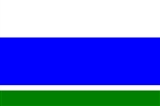
Sverdlovsk Oblast

Encyclopedia
Sverdlovsk Oblast is a federal subject
(an oblast
) of Russia
located in the Urals Federal District
. Its administrative center is the city of Yekaterinburg
formerly known as Sverdlovsk. Population:
.
The highest mountains all rise in the North Urals (Konzhakovsky Kamen at 1,569 m and Denezhkin Kamen at 1,492 m). The Middle Urals is mostly hilly country with no discernible peaks; the mean elevation is closer to 300–500 m above the sea level. Principal rivers include the Tavda
, the Tura
, the Chusovaya, and the Ufa
, the latter two being tributaries of the Kama
.
Sverdlovsk Oblast borders with, clockwise from the west, Perm Krai
, the Komi Republic
, Khanty-Mansi Autonomous Okrug
, Tyumen Oblast
, Kurgan
, and Chelyabinsk Oblast
s, and the Republic of Bashkortostan.
The oblast is traversed by the northeasterly line of equal latitude and longitude.
, copper
, gold
, platinum
), minerals (asbestos
, gemstone
s, talcum), marble
and coal
. It is mostly here that the bulk of Russian industry was concentrated in the 18th and 19th centuries.
patterns, with long cold winters (average temperatures reaching -15 C to -25 C on the Western Siberian Plain) and short warm summers. Only in the southeast of the oblast do temperatures reach 13 °C (55.4 °F) in July.
Ethnic groups: There were twenty-one recognized ethnic groups of more than two thousand persons each. Residents identified themselves as belonging to a total of 148 different ethnic groups, including:
in the 1550s paved the way further east which was now free from Tatar depredations (see Yermak Timofeyevich
). The first surviving Russian settlements in the area date back to the late 16th — early 17th centuries (Verkhoturye, 1598; Turinsk, 1600; Irbit
, 1633; Alapayevsk, 1639). In the 18th and 19th centuries the area became the industrial heartland of Russia due to its rich deposits of iron and coal (see above). In the 1930s many industrial enterprises were established and built with the help of forced labour. Local industry received another impetus during the World War II
when important producing facilities were relocated here from the European part of Russia to safeguard them from the advancing Germans (for example, IMZ-Ural
). In the postwar period much of the region was off-limits to foreigners and it was over Sverdlovsk that the American pilot Gary Powers
was shot down on May 1, 1960, while on a reconnaissance mission. Another historic event that took place in Yekaterinburg
was the execution of Nicholas II of Russia
and the Imperial family in July 1918.
In 1993, Governor Eduard Rossel
responded to perceived economic inequality by attempting to create a "Urals Republic." Sverdlovsk led the "Urals Five" (Kurgan Oblast
, Orenburg Oblast
, Perm Krai
, Chelyabinsk Oblast
and Sverdlovsk) in a call for greater regional power. They argued that the oblasts
deserved as much power as the ethnic homeland republics
. The Urals Republic Constitution went into effect on October 27, 1993. Russian President Boris Yeltsin
dissolved the Urals Republic and Sverdlovsk Parliament 10 days later (on November 9).
.
The oblast's Charter, adopted on December 17, 1994, with subsequent amendments, establishes the oblast government. The Governor (губернатор; gubernator)is the chief executive, who appoints the Government, consisting of ministries and departments. The Chairman/President of the Government (председатель правительства; predsedatel pravitelstva), commonly referred to as the Prime Minister, is appointed with the consent of the lower house of the legislature
, a process similar to the appointment of the federal Prime Minister
; but the Governor cannot nominate the same candidate more than twice, yet he/she can dismiss the house after three failed attempts to appoint the Premier. The Legislative Assembly (законодательное собрание; zakonodatelnoye sobraniye) consists of the Oblast Duma (областная дума; oblastnaya duma), the lower house, and the House of Representatives (палата представителей; palata predstaviteley), the upper house. Members of the legislature serve four-year terms; however, half of the Duma is re-elected every two years. The Duma (28 members) is elected by party lists; the 21 members of the House of Representatives are elected in single-seat districts in a first-past-the-post system. The Sverdlovsk Legislative Assembly was the first bicameral legislature outside an autonomous republic, and the first regional legislature in Russia to elect members by both party lists and single-seat districts.
Compliance with the Charter is enforced by the Charter Court. The existence of such regional courts in Russia, formed and functioning outside the federal judiciary, although challenged, has been upheld and persisted successfully in most constituent members of the Federation where they were established.
Until President Putin
's reforms of 2004, the Governor was elected by direct vote for four-year terms. Eduard Rossel
has been the only elected governor (first elected governor for an oblast in Russia) since 1995 (appointed in 1991 and dismissed in 1993 by President Yeltsin
), re-elected in 1999 and 2003.
Yekaterinburg
is a prominent road, rail and air hub in the Urals region. As the economic slump subsides, several European airlines started or resumed flights to the city. These include Lufthansa
, British Airways
, CSA
, Turkish Airlines
, Austrian Airlines
and Finnair
. Malév Hungarian Airlines
used to be among those carriers but they had to drop their flights to SVX (IATA airport code
for Sverdlovsk) after a few months.
Federal subjects of Russia
Russia is a federation which, since March 1, 2008, consists of 83 federal subjects . In 1993, when the Constitution was adopted, there were 89 federal subjects listed...
(an oblast
Oblast
Oblast is a type of administrative division in Slavic countries, including some countries of the former Soviet Union. The word "oblast" is a loanword in English, but it is nevertheless often translated as "area", "zone", "province", or "region"...
) of Russia
Russia
Russia or , officially known as both Russia and the Russian Federation , is a country in northern Eurasia. It is a federal semi-presidential republic, comprising 83 federal subjects...
located in the Urals Federal District
Urals Federal District
Ural Federal District is one of the eight federal districts of Russia. The district was established on 13 May 2000 by a decree of the President of Russia. The district is mostly located in the geographical region of Ural, but also includes some parts of the Volga Region; its extent is different...
. Its administrative center is the city of Yekaterinburg
Yekaterinburg
Yekaterinburg is a major city in the central part of Russia, the administrative center of Sverdlovsk Oblast. Situated on the eastern side of the Ural mountain range, it is the main industrial and cultural center of the Urals Federal District with a population of 1,350,136 , making it Russia's...
formerly known as Sverdlovsk. Population:
Geography
Most of the oblast lies on the eastern slopes of the Middle and North Urals and the Western Siberian Plain. Only in the southwest does the oblast stretch onto the western slopes of the Ural MountainsUral Mountains
The Ural Mountains , or simply the Urals, are a mountain range that runs approximately from north to south through western Russia, from the coast of the Arctic Ocean to the Ural River and northwestern Kazakhstan. Their eastern side is usually considered the natural boundary between Europe and Asia...
.
The highest mountains all rise in the North Urals (Konzhakovsky Kamen at 1,569 m and Denezhkin Kamen at 1,492 m). The Middle Urals is mostly hilly country with no discernible peaks; the mean elevation is closer to 300–500 m above the sea level. Principal rivers include the Tavda
Tavda River
The Tavda River is a Siberian river that drains part of the central Ural mountains into the Tobol River. It is north of the Tura River and south of the Konda River. It is located in Sverdlovsk Oblast and Tyumen Oblast. It is formed by the confluence of the Lozva and Sosva Rivers. The length of...
, the Tura
Tura River
Tura River , also known as Dolgaya River ) is a historically important Siberian river which flows eastward from the central Ural Mountains into the Tobol River, a part of the Ob River basin. The main town is Tyumen....
, the Chusovaya, and the Ufa
Ufa River
Ufa River is a river in the Urals, Chelyabinsk Oblast, Sverdlovsk Oblast, and the Republic of Bashkortostan; a tributary of the Belaya River. It is 918 km in length. The area of the basin is 53,100 km². It freezes up between late October and early December and stays under the ice until...
, the latter two being tributaries of the Kama
Kama River
Kama is a major river in Russia, the longest left tributary of the Volga and the largest one in discharge; in fact, it is larger than the Volga before junction....
.
Sverdlovsk Oblast borders with, clockwise from the west, Perm Krai
Perm Krai
Perm Krai is a federal subject of Russia that came into existence on December 1, 2005 as a result of the 2004 referendum on the merger of Perm Oblast and Komi-Permyak Autonomous Okrug. The city of Perm became the administrative center of the new federal subject...
, the Komi Republic
Komi Republic
The Komi Republic is a federal subject of Russia .-Geography:The republic is situated to the west of the Ural mountains, in the north-east of the East European Plain...
, Khanty-Mansi Autonomous Okrug
Khanty-Mansi Autonomous Okrug
Khanty–Mansi Autonomous Okrug , also known as Yugra, is a federal subject of Russia . Population: The people native to the region are the Khanty and the Mansi, known collectively as Ob Ugric people...
, Tyumen Oblast
Tyumen Oblast
Tyumen Oblast is a federal subject of Russia . Its administrative center is the city of Tyumen. The oblast has administrative jurisdiction over two autonomous okrugs—Khanty-Mansi Autonomous Okrug and Yamalo-Nenets Autonomous Okrug. Tyumen is the largest city, with over half a million inhabitants...
, Kurgan
Kurgan Oblast
Kurgan Oblast is a federal subject of Russia . Its administrative center is the city of Kurgan. Population: -History:The oblast was formed on February 6, 1943, just when the Soviet Army decisively defeated Hitler's forces near Stalingrad...
, and Chelyabinsk Oblast
Chelyabinsk Oblast
-External links:*...
s, and the Republic of Bashkortostan.
The oblast is traversed by the northeasterly line of equal latitude and longitude.
Natural resources
The oblast is rich in natural resources, particularly in metals (ironIron
Iron is a chemical element with the symbol Fe and atomic number 26. It is a metal in the first transition series. It is the most common element forming the planet Earth as a whole, forming much of Earth's outer and inner core. It is the fourth most common element in the Earth's crust...
, copper
Copper
Copper is a chemical element with the symbol Cu and atomic number 29. It is a ductile metal with very high thermal and electrical conductivity. Pure copper is soft and malleable; an exposed surface has a reddish-orange tarnish...
, gold
Gold
Gold is a chemical element with the symbol Au and an atomic number of 79. Gold is a dense, soft, shiny, malleable and ductile metal. Pure gold has a bright yellow color and luster traditionally considered attractive, which it maintains without oxidizing in air or water. Chemically, gold is a...
, platinum
Platinum
Platinum is a chemical element with the chemical symbol Pt and an atomic number of 78. Its name is derived from the Spanish term platina del Pinto, which is literally translated into "little silver of the Pinto River." It is a dense, malleable, ductile, precious, gray-white transition metal...
), minerals (asbestos
Asbestos
Asbestos is a set of six naturally occurring silicate minerals used commercially for their desirable physical properties. They all have in common their eponymous, asbestiform habit: long, thin fibrous crystals...
, gemstone
Gemstone
A gemstone or gem is a piece of mineral, which, in cut and polished form, is used to make jewelry or other adornments...
s, talcum), marble
Marble
Marble is a metamorphic rock composed of recrystallized carbonate minerals, most commonly calcite or dolomite.Geologists use the term "marble" to refer to metamorphosed limestone; however stonemasons use the term more broadly to encompass unmetamorphosed limestone.Marble is commonly used for...
and coal
Coal
Coal is a combustible black or brownish-black sedimentary rock usually occurring in rock strata in layers or veins called coal beds or coal seams. The harder forms, such as anthracite coal, can be regarded as metamorphic rock because of later exposure to elevated temperature and pressure...
. It is mostly here that the bulk of Russian industry was concentrated in the 18th and 19th centuries.
Climate
The area enjoys continental climateContinental climate
Continental climate is a climate characterized by important annual variation in temperature due to the lack of significant bodies of water nearby...
patterns, with long cold winters (average temperatures reaching -15 C to -25 C on the Western Siberian Plain) and short warm summers. Only in the southeast of the oblast do temperatures reach 13 °C (55.4 °F) in July.
Demographics
- Population (2010 Census preliminary results): 4,298,030
- Population (2002 Census): 4,486,214 (urban: 3,943,529, rural: 542,685)
Ethnic groups: There were twenty-one recognized ethnic groups of more than two thousand persons each. Residents identified themselves as belonging to a total of 148 different ethnic groups, including:
- 4,002,815 RussiansRussiansThe Russian people are an East Slavic ethnic group native to Russia, speaking the Russian language and primarily living in Russia and neighboring countries....
:(89.22%); - 168,121 TatarsTatarsTatars are a Turkic speaking ethnic group , numbering roughly 7 million.The majority of Tatars live in the Russian Federation, with a population of around 5.5 million, about 2 million of which in the republic of Tatarstan.Significant minority populations are found in Uzbekistan, Kazakhstan,...
:(3.75%); - 55,478 UkrainiansUkrainiansUkrainians are an East Slavic ethnic group native to Ukraine, which is the sixth-largest nation in Europe. The Constitution of Ukraine applies the term 'Ukrainians' to all its citizens...
:(1.24%); - 37,296 BashkirsBashkirsThe Bashkirs are a Turkic people indigenous to Bashkortostan extending on both parts of the Ural mountains, on the place where Europe meets Asia. Groups of Bashkirs also live in the republic of Tatarstan, Perm Krai, Chelyabinsk, Orenburg, Tyumen, Sverdlovsk, Kurgan, Samara and Saratov Oblasts of...
:(0.83%); - 27,863 Mari:(0.62%);
- 22,540 Germans:(0.50%);
- 18,541 BelarusiansBelarusiansBelarusians ; are an East Slavic ethnic group who populate the majority of the Republic of Belarus. Introduced to the world as a new state in the early 1990s, the Republic of Belarus brought with it the notion of a re-emerging Belarusian ethnicity, drawn upon the lines of the Old Belarusian...
:(0.41%); - 17,903 Udmurts:(0.40%);
- 15,171 AzerisAzeris in RussiaAside from the large Azeri community native to Russia's Dagestan Republic, the majority of Azeris in Russia are fairly recent immigrants. Azeris started settling in Russia around the late 19th century, but their migration became intensive after World War II. It rapidly increased with the collapse...
:(0.34%); - 11,510 ChuvashChuvash peopleThe Chuvash people are a Turkic ethnic group, native to an area stretching from the Volga Region to Siberia. Most of them live in Republic of Chuvashia and surrounding areas, although Chuvash communities may be found throughout all Russia.- Etymology :...
:(0.26%); - 11,093 ArmeniansArmeniansArmenian people or Armenians are a nation and ethnic group native to the Armenian Highland.The largest concentration is in Armenia having a nearly-homogeneous population with 97.9% or 3,145,354 being ethnic Armenian....
:(0.25%); - 9,702 Mordovians:(0.22%);
- 6,810 JewsJewsThe Jews , also known as the Jewish people, are a nation and ethnoreligious group originating in the Israelites or Hebrews of the Ancient Near East. The Jewish ethnicity, nationality, and religion are strongly interrelated, as Judaism is the traditional faith of the Jewish nation...
:(0.15%); - 6,125 Tajiks:(0.14%);
- 4,403 KazakhsKazakhsThe Kazakhs are a Turkic people of the northern parts of Central Asia ....
:(0.10%); - 4,019 Roma:(0.09%);
- 3,836 UzbeksUzbeksThe Uzbeks are a Turkic ethnic group in Central Asia. They comprise the majority population of Uzbekistan, and large populations can also be found in Afghanistan, Tajikstan, Kyrgyzstan, Turkmenistan, Kazakhstan, Russia, Pakistan, Mongolia and the Xinjiang Uyghur Autonomous Region of China...
:(0.08%); - 2,930 MoldovansMoldovansMoldovans or Moldavians are the largest population group of Moldova...
:(0.07%); - 2,651 GeorgiansGeorgiansThe Georgians are an ethnic group that have originated in Georgia, where they constitute a majority of the population. Large Georgian communities are also present throughout Russia, European Union, United States, and South America....
:(0.06%); - 2,435 ChineseChinese peopleThe term Chinese people may refer to any of the following:*People with Han Chinese ethnicity ....
:(0.05%); - 2,147 PolesPolesthumb|right|180px|The state flag of [[Poland]] as used by Polish government and diplomatic authoritiesThe Polish people, or Poles , are a nation indigenous to Poland. They are united by the Polish language, which belongs to the historical Lechitic subgroup of West Slavic languages of Central Europe...
:(0.05%), - other ethnic groups of less than two thousand persons each.
- 28,957 residents (0.65%) chose not to specify their ethnic background.
- Births (2008): 54,500
- Deaths (2008): 65,000
History
Russian conquest of the Khanate of KazanKhanate of Kazan
The Khanate of Kazan was a medieval Tatar state which occupied the territory of former Volga Bulgaria between 1438 and 1552. Its khans were the patrilineal descendants of Toqa Temür, the thirteenth son of Jochi and grandson of Genghis Khan. The khanate covered contemporary Tatarstan, Mari El,...
in the 1550s paved the way further east which was now free from Tatar depredations (see Yermak Timofeyevich
Yermak Timofeyevich
Yermak Timofeyevich , Cossack leader, Russian folk hero and explorer of Siberia. His exploration of Siberia marked the beginning of the expansion of Russia towards this region and its colonization...
). The first surviving Russian settlements in the area date back to the late 16th — early 17th centuries (Verkhoturye, 1598; Turinsk, 1600; Irbit
Irbit
Irbit is a town in Sverdlovsk Oblast, Russia, located from Yekaterinburg by train or by car on the right bank of the Nitsa River. It is crossed by long distance railway Yekaterinburg–Tavda–Ustye-Akha and by road traffic routes, directed to Kamyshlov, Artyomovsk, Turinsk, and Tyumen. Total area...
, 1633; Alapayevsk, 1639). In the 18th and 19th centuries the area became the industrial heartland of Russia due to its rich deposits of iron and coal (see above). In the 1930s many industrial enterprises were established and built with the help of forced labour. Local industry received another impetus during the World War II
World War II
World War II, or the Second World War , was a global conflict lasting from 1939 to 1945, involving most of the world's nations—including all of the great powers—eventually forming two opposing military alliances: the Allies and the Axis...
when important producing facilities were relocated here from the European part of Russia to safeguard them from the advancing Germans (for example, IMZ-Ural
IMZ-Ural
IMZ-Ural is a Russian maker of heavy sidecar motorcycles. Recently the company has developed a solo motorcycle with no sidecar.In 1940, the Soviet Union acquired the design and production techniques for BMW R 71 motorcycles and sidecars. The first M-72 model was finished in 1941...
). In the postwar period much of the region was off-limits to foreigners and it was over Sverdlovsk that the American pilot Gary Powers
Gary Powers
Francis Gary Powers was an American pilot whose Central Intelligence Agency U-2 spy plane was shot down while flying a reconnaissance mission over Soviet Union airspace, causing the 1960 U-2 incident.- Early life :...
was shot down on May 1, 1960, while on a reconnaissance mission. Another historic event that took place in Yekaterinburg
Yekaterinburg
Yekaterinburg is a major city in the central part of Russia, the administrative center of Sverdlovsk Oblast. Situated on the eastern side of the Ural mountain range, it is the main industrial and cultural center of the Urals Federal District with a population of 1,350,136 , making it Russia's...
was the execution of Nicholas II of Russia
Shooting of the Romanov family
The shooting of the Romanov family, of the Russian Imperial House of Romanov, and those who chose to accompany them into exile, Dr. Eugene Botkin, Anna Demidova, Alexei Trupp, and Ivan Kharitonov, took place in Yekaterinburg on July 17, 1918 on the orders of Vladimir Lenin, Yakov Sverdlov, and the...
and the Imperial family in July 1918.
In 1993, Governor Eduard Rossel
Eduard Rossel
Eduard Ergartovich Rossel was the governor of Sverdlovsk Oblast, an oblast in Russia. He was born on October 8, 1937, and is of German origin. He returned into office in 1995. He is a member of the Federation Council of Russia.Eduard Rossel was born a village near Nizhny Novgorod...
responded to perceived economic inequality by attempting to create a "Urals Republic." Sverdlovsk led the "Urals Five" (Kurgan Oblast
Kurgan Oblast
Kurgan Oblast is a federal subject of Russia . Its administrative center is the city of Kurgan. Population: -History:The oblast was formed on February 6, 1943, just when the Soviet Army decisively defeated Hitler's forces near Stalingrad...
, Orenburg Oblast
Orenburg Oblast
Orenburg Oblast is a federal subject of Russia . Its administrative center is the city of Orenburg. From 1938 to 1957, it bore the name Chkalov Oblast in honor of Valery Chkalov...
, Perm Krai
Perm Krai
Perm Krai is a federal subject of Russia that came into existence on December 1, 2005 as a result of the 2004 referendum on the merger of Perm Oblast and Komi-Permyak Autonomous Okrug. The city of Perm became the administrative center of the new federal subject...
, Chelyabinsk Oblast
Chelyabinsk Oblast
-External links:*...
and Sverdlovsk) in a call for greater regional power. They argued that the oblasts
Oblasts of Russia
The Russian Federation is divided into 83 subjects , of which 46 are oblasts ....
deserved as much power as the ethnic homeland republics
Republics of Russia
The Russian Federation is divided into 83 federal subjects , 21 of which are republics. The republics represent areas of non-Russian ethnicity. The indigenous ethnic group of a republic that gives it its name is referred to as the "titular nationality"...
. The Urals Republic Constitution went into effect on October 27, 1993. Russian President Boris Yeltsin
Boris Yeltsin
Boris Nikolayevich Yeltsin was the first President of the Russian Federation, serving from 1991 to 1999.Originally a supporter of Mikhail Gorbachev, Yeltsin emerged under the perestroika reforms as one of Gorbachev's most powerful political opponents. On 29 May 1990 he was elected the chairman of...
dissolved the Urals Republic and Sverdlovsk Parliament 10 days later (on November 9).
Politics
Since 2009, the oblast's Governor is Alexander MisharinAlexander Misharin
Alexander Sergeevich Misharin is the current governor of Sverdlovsk Oblast, a region in Russia. He was appointed in 2009 after resignation of the previous governor, Eduard Rossel.- Biography :...
.
The oblast's Charter, adopted on December 17, 1994, with subsequent amendments, establishes the oblast government. The Governor (губернатор; gubernator)is the chief executive, who appoints the Government, consisting of ministries and departments. The Chairman/President of the Government (председатель правительства; predsedatel pravitelstva), commonly referred to as the Prime Minister, is appointed with the consent of the lower house of the legislature
Legislature
A legislature is a kind of deliberative assembly with the power to pass, amend, and repeal laws. The law created by a legislature is called legislation or statutory law. In addition to enacting laws, legislatures usually have exclusive authority to raise or lower taxes and adopt the budget and...
, a process similar to the appointment of the federal Prime Minister
Prime Minister of Russia
The Chairman of the Government of the Russian Federation The use of the term "Prime Minister" is strictly informal and is not allowed for by the Russian Constitution and other laws....
; but the Governor cannot nominate the same candidate more than twice, yet he/she can dismiss the house after three failed attempts to appoint the Premier. The Legislative Assembly (законодательное собрание; zakonodatelnoye sobraniye) consists of the Oblast Duma (областная дума; oblastnaya duma), the lower house, and the House of Representatives (палата представителей; palata predstaviteley), the upper house. Members of the legislature serve four-year terms; however, half of the Duma is re-elected every two years. The Duma (28 members) is elected by party lists; the 21 members of the House of Representatives are elected in single-seat districts in a first-past-the-post system. The Sverdlovsk Legislative Assembly was the first bicameral legislature outside an autonomous republic, and the first regional legislature in Russia to elect members by both party lists and single-seat districts.
Compliance with the Charter is enforced by the Charter Court. The existence of such regional courts in Russia, formed and functioning outside the federal judiciary, although challenged, has been upheld and persisted successfully in most constituent members of the Federation where they were established.
Until President Putin
Vladimir Putin
Vladimir Vladimirovich Putin served as the second President of the Russian Federation and is the current Prime Minister of Russia, as well as chairman of United Russia and Chairman of the Council of Ministers of the Union of Russia and Belarus. He became acting President on 31 December 1999, when...
's reforms of 2004, the Governor was elected by direct vote for four-year terms. Eduard Rossel
Eduard Rossel
Eduard Ergartovich Rossel was the governor of Sverdlovsk Oblast, an oblast in Russia. He was born on October 8, 1937, and is of German origin. He returned into office in 1995. He is a member of the Federation Council of Russia.Eduard Rossel was born a village near Nizhny Novgorod...
has been the only elected governor (first elected governor for an oblast in Russia) since 1995 (appointed in 1991 and dismissed in 1993 by President Yeltsin
Boris Yeltsin
Boris Nikolayevich Yeltsin was the first President of the Russian Federation, serving from 1991 to 1999.Originally a supporter of Mikhail Gorbachev, Yeltsin emerged under the perestroika reforms as one of Gorbachev's most powerful political opponents. On 29 May 1990 he was elected the chairman of...
), re-elected in 1999 and 2003.
Chairmen of the Oblast Duma
| Name | Period |
|---|---|
| Vyacheslav Surganov | April 20, 1996-April 2000 |
| Yevgeny Porunov | April 26, 2000-April 2002 |
| Nikolay Voronin | April 24, 2002-April 23, 2003 |
| Alexander Zaborov (acting) | April 23, 2003-July 3, 2003 |
| Nikolay Voronin | July 3, 2003-March 23, 2010 |
| Elena Chechunova | March 23, 2010-Incumbent |
Chairmen of the House of Representatives of the Legislative Assembly
| Name | Period |
|---|---|
| Aleksandr Shaposhnikov | April 20, 1996-May 1998 |
| Pyotr Golenishchev | May 14, 1998-April 2000 |
| Viktor Yakimov | April 21, 2000-April 2004 |
| Yury Osintsev | April 6, 2004-September 2007 |
| Lyudmila Babushkina | October 2007-Incumbent |
Economy and transportation
The oblast's industry is diverse although could be more modern. 12% of Russia's iron and steel industry is still concentrated in Sverdlovsk oblast. Iron and copper are mined and processed here and the logging industry and wood-processing are important, too.Yekaterinburg
Yekaterinburg
Yekaterinburg is a major city in the central part of Russia, the administrative center of Sverdlovsk Oblast. Situated on the eastern side of the Ural mountain range, it is the main industrial and cultural center of the Urals Federal District with a population of 1,350,136 , making it Russia's...
is a prominent road, rail and air hub in the Urals region. As the economic slump subsides, several European airlines started or resumed flights to the city. These include Lufthansa
Lufthansa
Deutsche Lufthansa AG is the flag carrier of Germany and the largest airline in Europe in terms of overall passengers carried. The name of the company is derived from Luft , and Hansa .The airline is the world's fourth-largest airline in terms of overall passengers carried, operating...
, British Airways
British Airways
British Airways is the flag carrier airline of the United Kingdom, based in Waterside, near its main hub at London Heathrow Airport. British Airways is the largest airline in the UK based on fleet size, international flights and international destinations...
, CSA
Czech Airlines
Czech Airlines j.s.c. , trading as Czech Airlines , is the national airline of the Czech Republic and temporary in Slovakia with its head office on the grounds of Ruzyně Airport in Ruzyně, Prague...
, Turkish Airlines
Turkish Airlines
Turkish Airlines is the national flag carrier airline of Turkey, headquartered in the Turkish Airlines General Management Building on the grounds of Atatürk Airport in Yeşilköy, Bakirköy district, Istanbul...
, Austrian Airlines
Austrian Airlines
Austrian Airlines is the flag carrier airline of Austria, headquartered in Office Park 2 on the grounds of Vienna International Airport in Schwechat, Wien-Umgebung and a subsidiary of Deutsche Lufthansa AG. Together with regional subsidiary Tyrolean Airways and charter arm Lauda Air, it operates...
and Finnair
Finnair
Finnair Plc is the flag carrier and largest airline of Finland, with its headquarters on the grounds of Helsinki Airport in Vantaa, Finland, and its main hub at Helsinki Airport. Finnair and its subsidiaries dominate both the domestic and international air travel markets in Finland. The largest...
. Malév Hungarian Airlines
Malév Hungarian Airlines
Malév Hungarian Airlines is the flag carrier and principal airline of Hungary. It has its head office in the Lurdy House in Budapest, with its main operations at Budapest Ferenc Liszt International Airport. From there, the airline flies to 50 cities in 34 countries worldwide using a fleet of 22...
used to be among those carriers but they had to drop their flights to SVX (IATA airport code
IATA airport code
An IATA airport code, also known an IATA location identifier, IATA station code or simply a location identifier, is a three-letter code designating many airports around the world, defined by the International Air Transport Association...
for Sverdlovsk) after a few months.
See also
- Yakov SverdlovYakov SverdlovYakov Mikhaylovich Sverdlov ; known under pseudonyms "Andrei", "Mikhalych", "Max", "Smirnov", "Permyakov" — 16 March 1919) was a Bolshevik party leader and an official of the Russian Soviet Republic.-Early life:...
, a communist revolutionary after whom SverdlovskYekaterinburgYekaterinburg is a major city in the central part of Russia, the administrative center of Sverdlovsk Oblast. Situated on the eastern side of the Ural mountain range, it is the main industrial and cultural center of the Urals Federal District with a population of 1,350,136 , making it Russia's...
and subsequently Sverdlovsk Oblast were named.