

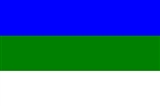
Komi Republic

Encyclopedia
The Komi Republic is a federal subject
of Russia
(a republic
).
, in the north-east of the East European Plain
. Forests cover over 70% of the territory and swamp
s cover approximately 15%.
, oil
, natural gas
, gold
, diamond
s and timber
. Native reindeer
are in abundance, and have been intentionally bred for human usage by the indigenous population from the beginning.
Around 32,800 km² of mostly boreal forest (as well as some alpine tundra
and meadows) in the Republic's Northern Ural Mountains
have been recognized in 1995 as a UNESCO
World Heritage site
, Virgin Komi Forests
. It is the first natural UNESCO
World Heritage site
in Russia and the largest expanse of virgin forests in Europe
. The site includes two pre-existing protected areas: Pechora-Ilych Nature Reserve
(created in 1930) and Yugyd Va National Park
(created in 1994).
, Komi Republic is home to Manpupuner (Man-Pupu-Nyer), a mysterious site in the northern Ural mountains
, in the Troitsko-Pechorsky District
, made out of seven rock towers bursting out of the flat plateau known as the “7 strong men“. Manpupuner is a very popular attraction in Russia
, but not on an international level and information regarding its origin is scarce. We know however that their height and abnormal shapes make the top of these rock giants inaccessible even to experienced rock-climbers.
2002 Census
Vital statistics
According to the 2002 Census
, ethnic Russians
make up 59.6% of the republic's population, while the ethnic Komi
are only 25.2%. Other groups include Ukrainians
(6.1%), Tatars
(15,680 or 1.5%), Belarusians
(15,212 or 1.5%), Ethnic German
s (9,246 or 0.9%), Chuvash
(7,529 or 0.7%), Azeris
(6,066 or 0.6%), and a host of smaller groups, each accounting for less than 0.5% of the total population. 5,700 people (0.6%) did not indicate their nationalities during the Census.
in the 12th century, when Novgorodian (East Slavic
) traders travelled to the Perm
region in search of furs and animal hides.
The Komi territories came under the influence of Muscovy in the late Middle Ages (late 15th to early 16th centuries).
The site of Syktyvkar
has been settled since the 16th century. It was known as Sysolskoye (Сысольскoe). In 1780, under Catherine the Great, it was renamed to Ust-Sysolsk (Усть-Сысольск) and used as a penal colony
.
Starting from the expedition led by Alexander von Keyserling in 1843, the Komi territory was most extensively explored in the 19th and the beginning of the 20th centuries by the Russians, who found ample reservoirs of various minerals, as well as timber, to exploit. After the founding of the Soviet Union, the Komi-Zyryan Autonomous Oblast
was established on August 22, 1921, and on December 5, 1936, it was reorganized into the Komi Autonomous Soviet Socialist Republic
with its administrative center located at the town of Syktyvkar
.
Many of the "settlers" who came in the early 20th century were prisoners of the Gulag
who were sent by the hundreds of thousands to perform forced labor in the Arctic regions of the USSR. Towns sprang up around labor-camp sites, which were initially carved out of the untouched tundra
and taiga
by gangs of prisoners. The first mine, "Rudnik No. 1," became the city of Vorkuta
, and the other towns of the region have similar origins: "Prisoners planned and built all of the republic's major cities, not just Ukhta but also Syktyvkar, Pechora, Vorkuta, and Inta. Prisoners built Komi's railways and roads, as well as its original industrial infrastructure."
.
The State Council
is the legislature.
, Inta
, Pechora
, Sosnogorsk
, Ukhta
, and Vorkuta
.
–Vorkuta
–Salekhard
, which is used to ship most goods in and out of the republic. The rivers Vychegda
and Pechora
are navigable. There are airports in Syktyvkar
, Ukhta
, and Vorkuta.
In 1997, total railroad trackage was 1,708 km, automobile roads 4,677 km.
and Ukhta State Technical University.
have played in the highest division of Russian Bandy League for a long time.
Federal subjects of Russia
Russia is a federation which, since March 1, 2008, consists of 83 federal subjects . In 1993, when the Constitution was adopted, there were 89 federal subjects listed...
of Russia
Russia
Russia or , officially known as both Russia and the Russian Federation , is a country in northern Eurasia. It is a federal semi-presidential republic, comprising 83 federal subjects...
(a republic
Republics of Russia
The Russian Federation is divided into 83 federal subjects , 21 of which are republics. The republics represent areas of non-Russian ethnicity. The indigenous ethnic group of a republic that gives it its name is referred to as the "titular nationality"...
).
Geography
The republic is situated to the west of the Ural mountainsUral Mountains
The Ural Mountains , or simply the Urals, are a mountain range that runs approximately from north to south through western Russia, from the coast of the Arctic Ocean to the Ural River and northwestern Kazakhstan. Their eastern side is usually considered the natural boundary between Europe and Asia...
, in the north-east of the East European Plain
East European Plain
The East European Plain is a plain comprising a series of river basins in Eastern Europe. Together with the Northern European Plain it constitutes the European Plain. It is the largest mountain-free part of the European landscape.The plain spans approximately and averages about in elevation...
. Forests cover over 70% of the territory and swamp
Swamp
A swamp is a wetland with some flooding of large areas of land by shallow bodies of water. A swamp generally has a large number of hammocks, or dry-land protrusions, covered by aquatic vegetation, or vegetation that tolerates periodical inundation. The two main types of swamp are "true" or swamp...
s cover approximately 15%.
- Area: 415900 square kilometres (160,579.9 sq mi)
- Borders (all internal): NenetsNenets Autonomous OkrugNenets Autonomous Okrug is a federal subject of Russia .It has an area of 176,700 km2 and population of 42,628 as of the preliminary results of the 2010 Census , 21,296 of whom live in Naryan-Mar, the administrative center.-Geography and ecology:The arctic ecology of this...
(NW/N), Yamalo-NenetsYamalo-Nenets Autonomous OkrugYamalo-Nenets Autonomous Okrug , is a federal subject of Russia . Its administrative center is the town of Salekhard. Population: -Geography and natural history:...
(NE/E), Khanty-MansiKhanty-Mansi Autonomous OkrugKhanty–Mansi Autonomous Okrug , also known as Yugra, is a federal subject of Russia . Population: The people native to the region are the Khanty and the Mansi, known collectively as Ob Ugric people...
(E), SverdlovskSverdlovsk OblastSverdlovsk Oblast is a federal subject of Russia located in the Urals Federal District. Its administrative center is the city of Yekaterinburg formerly known as Sverdlovsk. Population: -Geography:...
(SE), Perm KraiPerm KraiPerm Krai is a federal subject of Russia that came into existence on December 1, 2005 as a result of the 2004 referendum on the merger of Perm Oblast and Komi-Permyak Autonomous Okrug. The city of Perm became the administrative center of the new federal subject...
(S), KirovKirov OblastKirov Oblast is a federal subject of Russia . Its administrative center is the city of Kirov. Population: -History:In the late 19th and early 20th centuries, Vyatka remained a place of exile for opponents of the tsarist regime, including many prominent revolutionary figures.In 1920, a number of...
(S/SW), and ArkhangelskArkhangelsk OblastArkhangelsk Oblast is a federal subject of Russia . It includes the Arctic archipelagos of Franz Josef Land and Novaya Zemlya, as well as the Solovetsky Islands in the White Sea....
(W). - Highest point: Mount NarodnayaMount NarodnayaMount Narodnaya , located in the Research Range, is the highest peak of the Urals in Russia. Its elevation is...
(1,894 m) - Maximum N→S distance: 785 kilometres (487.8 mi)
- Maximum E→W distance: 695 kilometres (431.9 mi)
Rivers
Major rivers include:- Izhma RiverIzhma RiverIzhma is a river in the Komi Republic of Russia. It is a left tributary of the Pechora River. It is 531 km long, with a drainage basin of 31,000 km². 154 km from its mouth it has an average discharge of 203 m³/s...
- Mezen RiverMezen RiverThe Mezen is a river in Udorsky District of the Komi Republic and in Leshukonsky and Mezensky Districts of Arkhangelsk Oblast in Russia. Its mouth is located in the Mezen Bay of the White Sea. Mezen is one of the biggest rivers of European Russia. It is long, and the area of its basin...
- Pechora RiverPechora RiverThe Pechora River is a river in northwest Russia which flows north into the Arctic Ocean on the west side of the Ural Mountains. It lies mostly in the Komi Republic but the northernmost part crosses the Nenets Autonomous Okrug. It is 1,809 km long and its basin is 322,000 square kilometers...
- Sysola RiverSysola RiverThe Sysola River is located mainly in Northwestern Russia's Komi Republic, although its two branches have their sources in the Kirov Oblast, and the Perm Oblast. The Sysola is a tributary of the larger Vychegda River, which it meets in Syktyvkar....
- Usa RiverUsa RiverUsa River could refer to:* Usa , a small river in Hesse, Germany* Usa River , a river in Belarus* Usa River , a river in Kemerovo Oblast, Russia...
- Vashka RiverVashka RiverThe Vashka is a river in Udorsky District of the Komi Republic and Leshukonsky and Mezensky Districts of Arkhangelsk Oblast in Russia. It is a left and the biggest tributary of the Mezen River. It is long, and the area of its basin...
- Vychegda RiverVychegda RiverVychegda is a river in the European part of Russia, tributary to the Northern Dvina. Its length is about . Its source is approximately west of the northern Ural Mountains. It flows roughly in western direction, through Komi Republic and Arkhangelsk Oblast. The largest city along the Vychegda is...
- Vym RiverVym RiverThe Vym River is a river in the Komi Republic, Russia. It is a tributary of the Vychegda River in the basin of Northern Dvina. Its length is 499 km, and its drainage basin 25,600 km². Average discharge is 196 m³/s....
Lakes
There are many lakes in the republic. Major lakes include:- Sindorskoye Lake
- Yam-Ozero Lake
Natural resources
The republic's natural resources include coalCoal
Coal is a combustible black or brownish-black sedimentary rock usually occurring in rock strata in layers or veins called coal beds or coal seams. The harder forms, such as anthracite coal, can be regarded as metamorphic rock because of later exposure to elevated temperature and pressure...
, oil
Petroleum
Petroleum or crude oil is a naturally occurring, flammable liquid consisting of a complex mixture of hydrocarbons of various molecular weights and other liquid organic compounds, that are found in geologic formations beneath the Earth's surface. Petroleum is recovered mostly through oil drilling...
, natural gas
Natural gas
Natural gas is a naturally occurring gas mixture consisting primarily of methane, typically with 0–20% higher hydrocarbons . It is found associated with other hydrocarbon fuel, in coal beds, as methane clathrates, and is an important fuel source and a major feedstock for fertilizers.Most natural...
, gold
Gold
Gold is a chemical element with the symbol Au and an atomic number of 79. Gold is a dense, soft, shiny, malleable and ductile metal. Pure gold has a bright yellow color and luster traditionally considered attractive, which it maintains without oxidizing in air or water. Chemically, gold is a...
, diamond
Diamond
In mineralogy, diamond is an allotrope of carbon, where the carbon atoms are arranged in a variation of the face-centered cubic crystal structure called a diamond lattice. Diamond is less stable than graphite, but the conversion rate from diamond to graphite is negligible at ambient conditions...
s and timber
Timber
Timber may refer to:* Timber, a term common in the United Kingdom and Australia for wood materials * Timber, Oregon, an unincorporated community in the U.S...
. Native reindeer
Reindeer
The reindeer , also known as the caribou in North America, is a deer from the Arctic and Subarctic, including both resident and migratory populations. While overall widespread and numerous, some of its subspecies are rare and one has already gone extinct.Reindeer vary considerably in color and size...
are in abundance, and have been intentionally bred for human usage by the indigenous population from the beginning.
Around 32,800 km² of mostly boreal forest (as well as some alpine tundra
Alpine tundra
Alpine tundra is a natural region that does not contain trees because it is at high altitude. Alpine tundra is distinguished from arctic tundra, because alpine soils are generally better drained than arctic soils...
and meadows) in the Republic's Northern Ural Mountains
Ural Mountains
The Ural Mountains , or simply the Urals, are a mountain range that runs approximately from north to south through western Russia, from the coast of the Arctic Ocean to the Ural River and northwestern Kazakhstan. Their eastern side is usually considered the natural boundary between Europe and Asia...
have been recognized in 1995 as a UNESCO
UNESCO
The United Nations Educational, Scientific and Cultural Organization is a specialized agency of the United Nations...
World Heritage site
World Heritage Site
A UNESCO World Heritage Site is a place that is listed by the UNESCO as of special cultural or physical significance...
, Virgin Komi Forests
Virgin Komi Forests
The Virgin Komi Forests is a natural UNESCO World Heritage site in the Northern Ural mountains of the Komi Republic, Russia. At 32,800 km² it is the largest virgin forest in Europe.The Virgin Komi Forests belong to the Ural Mountains taiga ecoregion...
. It is the first natural UNESCO
UNESCO
The United Nations Educational, Scientific and Cultural Organization is a specialized agency of the United Nations...
World Heritage site
World Heritage Site
A UNESCO World Heritage Site is a place that is listed by the UNESCO as of special cultural or physical significance...
in Russia and the largest expanse of virgin forests in Europe
Europe
Europe is, by convention, one of the world's seven continents. Comprising the westernmost peninsula of Eurasia, Europe is generally 'divided' from Asia to its east by the watershed divides of the Ural and Caucasus Mountains, the Ural River, the Caspian and Black Seas, and the waterways connecting...
. The site includes two pre-existing protected areas: Pechora-Ilych Nature Reserve
Pechora-Ilych Nature Reserve
Pechora-Ilych Nature Reserve is a nature reserve in the Komi Republic, Russia. It currently occupies 7,213 square kilometers and forms the core of the World Heritage Site Virgin Komi Forests.-Location:...
(created in 1930) and Yugyd Va National Park
Yugyd Va National Park
Yugyd Va National Park is a national park in the Komi Republic, a constituent republic of the Russian Federation, in Northeastern Europe. It is Russia's and Europe's largest national park.- Location :...
(created in 1994).
Climate
Winters in the republic are long and cold, and the summers, while short, are quite warm.- Average January temperature: −17 °C (southern parts) to −20 °C (northern parts)
- Average July temperature: 11 °C (51.8 °F) (northern parts) to 15 °C (59 °F) (southern parts)
- Lowest recorded temperature: -58.1 °C (village of Ust-Shchuger)
- Average annual precipitationPrecipitation (meteorology)In meteorology, precipitation In meteorology, precipitation In meteorology, precipitation (also known as one of the classes of hydrometeors, which are atmospheric water phenomena is any product of the condensation of atmospheric water vapor that falls under gravity. The main forms of precipitation...
: 625 mm (24.6 in)
Manpupuner and the 7 Strong Men Rock Formations
Deemed one of the Seven Wonders of RussiaSeven Wonders of Russia
The Seven Wonders of Russia as determined by a project organized by the newspaper Izvestia, Radio Mayak, and the television channel Russia...
, Komi Republic is home to Manpupuner (Man-Pupu-Nyer), a mysterious site in the northern Ural mountains
Ural Mountains
The Ural Mountains , or simply the Urals, are a mountain range that runs approximately from north to south through western Russia, from the coast of the Arctic Ocean to the Ural River and northwestern Kazakhstan. Their eastern side is usually considered the natural boundary between Europe and Asia...
, in the Troitsko-Pechorsky District
Troitsko-Pechorsky District
Troitsko-Pechorsky District is an administrative district , one of the twelve in the Komi Republic, Russia. Municipally, it is incorporated as Troitsko-Pechorsky Municipal District. Its administrative center is the urban locality of Troitsko-Pechorsk...
, made out of seven rock towers bursting out of the flat plateau known as the “7 strong men“. Manpupuner is a very popular attraction in Russia
Russia
Russia or , officially known as both Russia and the Russian Federation , is a country in northern Eurasia. It is a federal semi-presidential republic, comprising 83 federal subjects...
, but not on an international level and information regarding its origin is scarce. We know however that their height and abnormal shapes make the top of these rock giants inaccessible even to experienced rock-climbers.
Demographics
2010 Census (preliminary results)- Population: 901,642
2002 Census
Russian Census (2002)
Russian Census of 2002 was the first census of the Russian Federation carried out on October 9 through October 16, 2002. It was carried out by the Russian Federal Service of State Statistics .-Resident population:...
- Population: 1,018,674
- Urban: 766,587 (75.3%)
- Rural: 252,087 (24.7%)
- Male: 488,316 (47.9%)
- Female: 530,358 (52.1%)
- Females per 1000 males: 1,086
- Average age: 34.5 years
- Urban: 33.7 years
- Rural: 36.8 years
- Male: 32.3 years
- Female: 36.8 years
- Number of households: 381,626 (with 992,612 people)
- Urban: 289,854 (with 749,329 people)
- Rural: 91,772 (with 243,283 people)
Vital statistics
| Births | Deaths | Birth rate | Death rate | |
|---|---|---|---|---|
| 1920 | 4,760 | 4,353 | ||
| 1930 | 10,256 | 6,574 | ||
| 1940 | 14,976 | 12,134 | ||
| 1945 | 6,432 | 6,185 | ||
| 1950 | 20,087 | 6,002 | 37.6 | 11.2 |
| 1960 | 25,578 | 5,010 | 30.6 | 6.0 |
| 1965 | 18,956 | 5,241 | 20.2 | 5.6 |
| 1970 | 16,462 | 6,276 | 17.0 | 6.5 |
| 1975 | 18,899 | 7,284 | 18.1 | 7.0 |
| 1980 | 20,685 | 9,169 | 18.2 | 8.1 |
| 1981 | 21,244 | 9,103 | 18.4 | 7.9 |
| 1982 | 23,420 | 8,758 | 20.0 | 7.5 |
| 1983 | 23,806 | 9,250 | 20.1 | 7.8 |
| 1984 | 24,217 | 9,486 | 20.2 | 7.9 |
| 1985 | 23,303 | 9,334 | 19.2 | 7.7 |
| 1986 | 24,176 | 8,112 | 19.7 | 6.6 |
| 1987 | 23,616 | 8,544 | 19.0 | 6.9 |
| 1988 | 20,916 | 8,930 | 16.7 | 7.1 |
| 1989 | 18,481 | 8,857 | 14.7 | 7.1 |
| 1990 | 16,930 | 9,321 | 13.6 | 7.5 |
| 1991 | 15,589 | 9,665 | 12.7 | 7.9 |
| 1992 | 13,880 | 11,426 | 11.4 | 9.4 |
| 1993 | 12,158 | 14,642 | 10.1 | 12.2 |
| 1994 | 11,835 | 16,074 | 10.1 | 13.7 |
| 1995 | 11,105 | 15,057 | 9.7 | 13.2 |
| 1996 | 10,900 | 13,674 | 9.7 | 12.2 |
| 1997 | 10,388 | 12,244 | 9.4 | 11.1 |
| 1998 | 10,793 | 11,545 | 9.9 | 10.6 |
| 1999 | 9,680 | 12,253 | 9.1 | 11.5 |
| 2000 | 9,906 | 13,594 | 9.4 | 12.9 |
| 2001 | 10,325 | 13,968 | 10.0 | 13.5 |
| 2002 | 11,177 | 15,265 | 10.9 | 14.9 |
| 2003 | 11,462 | 15,810 | 11.3 | 15.6 |
| 2004 | 11,489 | 15,210 | 11.5 | 15.2 |
| 2005 | 10,975 | 15,074 | 11.1 | 15.2 |
| 2006 | 10,872 | 13,519 | 11.1 | 13.8 |
| 2007 | 11,523 | 12,304 | 11.9 | 12.7 |
| 2008 | 11,719 | 12,270 | 12.2 | 12.7 |
- Ethnic groups
According to the 2002 Census
Russian Census (2002)
Russian Census of 2002 was the first census of the Russian Federation carried out on October 9 through October 16, 2002. It was carried out by the Russian Federal Service of State Statistics .-Resident population:...
, ethnic Russians
Russians
The Russian people are an East Slavic ethnic group native to Russia, speaking the Russian language and primarily living in Russia and neighboring countries....
make up 59.6% of the republic's population, while the ethnic Komi
Komi peoples
The Komi people is an ethnic group whose homeland is in the north-east of European Russia around the basins of the Vychegda, Pechora and Kama rivers. They mostly live in the Komi Republic, Perm Krai, Murmansk Oblast, Khanty-Mansi Autonomous Okrug, and Yamalo-Nenets Autonomous Okrug in the Russian...
are only 25.2%. Other groups include Ukrainians
Ukrainians
Ukrainians are an East Slavic ethnic group native to Ukraine, which is the sixth-largest nation in Europe. The Constitution of Ukraine applies the term 'Ukrainians' to all its citizens...
(6.1%), Tatars
Tatars
Tatars are a Turkic speaking ethnic group , numbering roughly 7 million.The majority of Tatars live in the Russian Federation, with a population of around 5.5 million, about 2 million of which in the republic of Tatarstan.Significant minority populations are found in Uzbekistan, Kazakhstan,...
(15,680 or 1.5%), Belarusians
Belarusians
Belarusians ; are an East Slavic ethnic group who populate the majority of the Republic of Belarus. Introduced to the world as a new state in the early 1990s, the Republic of Belarus brought with it the notion of a re-emerging Belarusian ethnicity, drawn upon the lines of the Old Belarusian...
(15,212 or 1.5%), Ethnic German
Ethnic German
Ethnic Germans historically also ), also collectively referred to as the German diaspora, refers to people who are of German ethnicity. Many are not born in Europe or in the modern-day state of Germany or hold German citizenship...
s (9,246 or 0.9%), Chuvash
Chuvash people
The Chuvash people are a Turkic ethnic group, native to an area stretching from the Volga Region to Siberia. Most of them live in Republic of Chuvashia and surrounding areas, although Chuvash communities may be found throughout all Russia.- Etymology :...
(7,529 or 0.7%), Azeris
Azeris in Russia
Aside from the large Azeri community native to Russia's Dagestan Republic, the majority of Azeris in Russia are fairly recent immigrants. Azeris started settling in Russia around the late 19th century, but their migration became intensive after World War II. It rapidly increased with the collapse...
(6,066 or 0.6%), and a host of smaller groups, each accounting for less than 0.5% of the total population. 5,700 people (0.6%) did not indicate their nationalities during the Census.
| census 1926 | census 1939 | census 1959 | census 1970 | census 1979 | census 1989 | census 2002 | |
|---|---|---|---|---|---|---|---|
| Komi Komi peoples The Komi people is an ethnic group whose homeland is in the north-east of European Russia around the basins of the Vychegda, Pechora and Kama rivers. They mostly live in the Komi Republic, Perm Krai, Murmansk Oblast, Khanty-Mansi Autonomous Okrug, and Yamalo-Nenets Autonomous Okrug in the Russian... |
191,245 (92.2%) | 231,301 (72.5%) | 245,074 (30.4%) | 276,178 (28.6%) | 280,798 (25.3%) | 291,542 (23.3%) | 256,464 (25.2%) |
| Russians Russians The Russian people are an East Slavic ethnic group native to Russia, speaking the Russian language and primarily living in Russia and neighboring countries.... |
13,731 (6.6%) | 70,226 (22.0%) | 389,995 (48.4%) | 512,203 (53.1%) | 629,523 (56.7%) | 721,780 (57.7%) | 607,021 (59.6%) |
| Ukrainians Ukrainians Ukrainians are an East Slavic ethnic group native to Ukraine, which is the sixth-largest nation in Europe. The Constitution of Ukraine applies the term 'Ukrainians' to all its citizens... |
34 (0.0%) | 6,010 (1.9%) | 80,132 (9.9%) | 82,955 (8.6%) | 94,154 (8.5%) | 104,170 (8.3%) | 62,115 (6.1%) |
| Others | 2,304 (1.1%) | 11,459 (3.6%) | 90,998 (11.3%) | 93,466 (9.7%) | 105,886 (9.5%) | 133,355 (10.7%) | 93,074 (9.1%) |
Vital statistics for 2007
Source: http://komi.gks.ru/digit/Население.aspx| Vital Statistics | Births 2007 | Deaths 2007 | BR 2007 | DR 2007 | NGR 2007 | BR Jan-aug 2007 | BR J-A 08 | DR J-A 07 | DR J-A 08 | NGR J-A 07 | NGR J-A 08 |
|---|---|---|---|---|---|---|---|---|---|---|---|
| Komi Republic | 11,523 | 12,304 | 11.9 | 13.8 | -0.19% | 11.8 | 11.9 | 12.9 | 12.6 | -0.11% | -0.07% |
| Urban | 8,087 | 8,204 | NA | NA | NA | 11.4 | 11.3 | 11.7 | 11.2 | -0.03% | 0.01% |
| Rural | 3,436 | 4,100 | NA | NA | NA | 13.0 | 13.8 | 16.4 | 17.0 | -0.34% | -0.32% |
| Syktyvkar | 3,013 | 2,733 | 12.3 | 12.1 | 0.02% | 12.3 | 11.6 | 11.6 | 11.1 | 0.07% | 0.05% |
| Vorkuta | 1,126 | 1,064 | 9.5 | 10.3 | -0.08% | 9.3 | 9.7 | 8.8 | 8.2 | 0.05% | 0.15% |
| Vuktyl | 210 | 200 | 12.6 | 12.2 | 0.04% | 12.9 | 11.2 | 12.1 | 14.7 | 0.08% | -0.35% |
| Inta | 414 | 495 | 10.2 | 13.7 | -0.35% | 10 | 10.4 | 12.1 | 13.2 | -0.21% | -0.28% |
| Pechora | 714 | 916 | 11.3 | 16.2 | -0.49% | 11.3 | 11.4 | 14.8 | 14.5 | -0.35% | -0.31% |
| Sosnogorsk | 582 | 725 | 11.6 | 15.8 | -0.42% | 10.9 | 11.7 | 14.8 | 14 | -0.39% | -0.23% |
| Usinsk | 614 | 459 | 11.9 | 8.9 | 0.30% | 11.5 | 12.1 | 8.8 | 8.8 | 0.27% | 0.33% |
| Ukhta | 1,414 | 1,612 | 11.1 | 12.7 | -0.16% | 11 | 11.4 | 13.1 | 11.4 | -0.21% | 0.00% |
| Izhemsky District | 315 | 368 | 15.6 | 1.5 | -0.09% | 15.2 | 17.4 | 18.2 | 18.2 | -0.30% | -0.08% |
| Knyazhpogostsky District | 290 | 411 | 10.9 | 16.8 | -0.59% | 10.2 | 10.2 | 15.5 | 14.6 | -0.53% | -0.44% |
| Koygorodsky District | 129 | 140 | 13.9 | 18.6 | -0.47% | 14.1 | 14.1 | 15.1 | 19.1 | -0.10% | -0.50% |
| Kortkerossky District | 314 | 373 | 13.7 | 17.8 | -0.41% | 14 | 12.2 | 15.8 | 16.7 | -0.18% | -0.45% |
| Priluzsky District | 318 | 402 | 13.9 | 21.8 | -0.79% | 13 | 14.2 | 16.6 | 19.2 | -0.36% | -0.50% |
| Syktyvdinsky District | 308 | 341 | 12.8 | 14.6 | -0.18% | 13.2 | 15.6 | 15.1 | 14.8 | -0.19% | 0.08% |
| Sysolsky District | 214 | 302 | 13.3 | 17.0 | -0.37% | 14.7 | 12 | 18.8 | 17.9 | -0.41% | -0.59% |
| Troitsko-Pechorsky District | 193 | 262 | 12.0 | 19.1 | -0.71% | 12.2 | 13.9 | 16.7 | 18.5 | -0.45% | -0.46% |
| Udorsky District | 280 | 305 | 11.9 | 14.3 | -0.24% | 11.7 | 13 | 12.5 | 13.3 | -0.08% | -0.03% |
| Ust-Vymsky District | 443 | 543 | 14.0 | 19.4 | -0.54% | 14.9 | 12.7 | 17.7 | 16 | -0.28% | -0.33% |
| Ust-Kulomsky District | 453 | 433 | 14.8 | 19.5 | -0.47% | 15.1 | 15.1 | 13.9 | 15.2 | 0.12% | -0.01% |
| Ust-Tsilemsky District | 179 | 220 | 12.5 | 16.0 | -0.35% | 11.1 | 15.3 | 16.3 | 17.8 | -0.52% | -0.25 |
History
The Komi first appear in the records of the Novgorod RepublicNovgorod Republic
The Novgorod Republic was a large medieval Russian state which stretched from the Baltic Sea to the Ural Mountains between the 12th and 15th centuries, centred on the city of Novgorod...
in the 12th century, when Novgorodian (East Slavic
East Slavs
The East Slavs are Slavic peoples speaking East Slavic languages. Formerly the main population of the medieval state of Kievan Rus, by the seventeenth century they evolved into the Russian, Ukrainian, and Belarusian peoples.-Sources:...
) traders travelled to the Perm
Great Perm
Great Perm or simply Perm, Latinized Permia, was a medieval Komi state in what is now the Perm Krai of the Russian Federation.Cherdyn is said to have been its capital....
region in search of furs and animal hides.
The Komi territories came under the influence of Muscovy in the late Middle Ages (late 15th to early 16th centuries).
The site of Syktyvkar
Syktyvkar
-Twin towns/sister cities:Syktyvkar is twinned with the following sister cities: Cullera, Spain Debrecen, Hungary Los Altos, United States Lovech, Bulgaria Taiyuan, China-External links:* * * *...
has been settled since the 16th century. It was known as Sysolskoye (Сысольскoe). In 1780, under Catherine the Great, it was renamed to Ust-Sysolsk (Усть-Сысольск) and used as a penal colony
Penal colony
A penal colony is a settlement used to exile prisoners and separate them from the general populace by placing them in a remote location, often an island or distant colonial territory...
.
Starting from the expedition led by Alexander von Keyserling in 1843, the Komi territory was most extensively explored in the 19th and the beginning of the 20th centuries by the Russians, who found ample reservoirs of various minerals, as well as timber, to exploit. After the founding of the Soviet Union, the Komi-Zyryan Autonomous Oblast
Komi-Zyryan Autonomous Oblast
Komi-Zyryan Autonomous Oblast, one of several autonomous oblast's that existed in the former Soviet Union, was created August 22, 1921. It was the predecessor of the Komi Republic. The seat of the Oblast was located in Ust-Sysolsk ....
was established on August 22, 1921, and on December 5, 1936, it was reorganized into the Komi Autonomous Soviet Socialist Republic
Komi Autonomous Soviet Socialist Republic
The Komi Autonomous Soviet Socialist Republic was an autonomous republic of the Soviet Union.Since 1991 Komi Republic, a federal subject of Russia ....
with its administrative center located at the town of Syktyvkar
Syktyvkar
-Twin towns/sister cities:Syktyvkar is twinned with the following sister cities: Cullera, Spain Debrecen, Hungary Los Altos, United States Lovech, Bulgaria Taiyuan, China-External links:* * * *...
.
Many of the "settlers" who came in the early 20th century were prisoners of the Gulag
Gulag
The Gulag was the government agency that administered the main Soviet forced labor camp systems. While the camps housed a wide range of convicts, from petty criminals to political prisoners, large numbers were convicted by simplified procedures, such as NKVD troikas and other instruments of...
who were sent by the hundreds of thousands to perform forced labor in the Arctic regions of the USSR. Towns sprang up around labor-camp sites, which were initially carved out of the untouched tundra
Tundra
In physical geography, tundra is a biome where the tree growth is hindered by low temperatures and short growing seasons. The term tundra comes through Russian тундра from the Kildin Sami word tūndâr "uplands," "treeless mountain tract." There are three types of tundra: Arctic tundra, alpine...
and taiga
Taiga
Taiga , also known as the boreal forest, is a biome characterized by coniferous forests.Taiga is the world's largest terrestrial biome. In North America it covers most of inland Canada and Alaska as well as parts of the extreme northern continental United States and is known as the Northwoods...
by gangs of prisoners. The first mine, "Rudnik No. 1," became the city of Vorkuta
Vorkuta
Vorkuta is a coal-mining town in the Komi Republic, Russia, situated just north of the Arctic Circle in the Pechora coal basin at the Usa River. Population: - Labor camp origins :...
, and the other towns of the region have similar origins: "Prisoners planned and built all of the republic's major cities, not just Ukhta but also Syktyvkar, Pechora, Vorkuta, and Inta. Prisoners built Komi's railways and roads, as well as its original industrial infrastructure."
Politics
The head of government in the Komi Republic is the Head of the Republic. As of 2011, the head of the republic is Vyacheslav GayzerVyacheslav Gayzer
Vyacheslav Mikhalovich Gaizer and , born in 1966, is a Russian politician who is currently serving as President of the Komi Republic. He took office on January 15, 2010.- References :* * *...
.
The State Council
State Council of the Komi Republic
The State Council of the Komi Republic is the unicameral legislature of the Komi Republic in Russia. Its thirty deputies are elected for four years by secret ballot on the basis of universal suffrage in accordance with the federal legislation...
is the legislature.
Economy
The Komi Republic's major industries include oil processing, timber, woodworking, natural gas and electric power industries. Major industrial centers are SyktyvkarSyktyvkar
-Twin towns/sister cities:Syktyvkar is twinned with the following sister cities: Cullera, Spain Debrecen, Hungary Los Altos, United States Lovech, Bulgaria Taiyuan, China-External links:* * * *...
, Inta
Inta
Inta is a town in the Komi Republic, Russia. During the Soviet era a "corrective labor camp" was located here. Population: It is served by Inta Airport....
, Pechora
Pechora
Pechora is a town in the Komi Republic, Russia, situated on the Pechora River, near the northern Ural Mountains. Population: It is served by Pechora Airport and is affiliated with the nearby Pechora Kamenka military air base....
, Sosnogorsk
Sosnogorsk
Sosnogorsk is a town in the Komi Republic, Russia, located on the Izhma River. Population: Municipally, it is incorporated as Sosnogorsk Municipal District ....
, Ukhta
Ukhta
Ukhta is an important industrial town in the Komi Republic of Russia. Population: Oil springs along the Ukhta River were already known in the 17th century. In the mid-19th century, industrialist M. K. Sidorov started to drill for oil in this area. It was one of the first oil wells in...
, and Vorkuta
Vorkuta
Vorkuta is a coal-mining town in the Komi Republic, Russia, situated just north of the Arctic Circle in the Pechora coal basin at the Usa River. Population: - Labor camp origins :...
.
Transportation
Railroad transportation is very well developed. The most important railroad line is KotlasKotlas
Kotlas is a town in the southeast of Arkhangelsk Oblast, Russia, situated at the confluence of the Northern Dvina and Vychegda Rivers. Administratively, it is incorporated as a town of oblast significance . It also serves as the administrative center of Kotlassky District, by which it is...
–Vorkuta
Vorkuta
Vorkuta is a coal-mining town in the Komi Republic, Russia, situated just north of the Arctic Circle in the Pechora coal basin at the Usa River. Population: - Labor camp origins :...
–Salekhard
Salekhard
-International relations:-Twin towns/sister cities:Salekhard is twinned with:*Azov, Rostov Oblast, Russia-External links:*...
, which is used to ship most goods in and out of the republic. The rivers Vychegda
Vychegda River
Vychegda is a river in the European part of Russia, tributary to the Northern Dvina. Its length is about . Its source is approximately west of the northern Ural Mountains. It flows roughly in western direction, through Komi Republic and Arkhangelsk Oblast. The largest city along the Vychegda is...
and Pechora
Pechora River
The Pechora River is a river in northwest Russia which flows north into the Arctic Ocean on the west side of the Ural Mountains. It lies mostly in the Komi Republic but the northernmost part crosses the Nenets Autonomous Okrug. It is 1,809 km long and its basin is 322,000 square kilometers...
are navigable. There are airports in Syktyvkar
Syktyvkar
-Twin towns/sister cities:Syktyvkar is twinned with the following sister cities: Cullera, Spain Debrecen, Hungary Los Altos, United States Lovech, Bulgaria Taiyuan, China-External links:* * * *...
, Ukhta
Ukhta
Ukhta is an important industrial town in the Komi Republic of Russia. Population: Oil springs along the Ukhta River were already known in the 17th century. In the mid-19th century, industrialist M. K. Sidorov started to drill for oil in this area. It was one of the first oil wells in...
, and Vorkuta.
In 1997, total railroad trackage was 1,708 km, automobile roads 4,677 km.
Education
There are over 450 secondary schools in the republic (with ~180,000 students). The most important higher education facilities include Syktyvkar State UniversitySyktyvkar State University
Syktyvkar State University is the principal university in Syktyvkar, the capital of the Komi Republic in Russia. It was founded in 1972 and has over 3,500 full-time students and 250 faculty members....
and Ukhta State Technical University.
Sports
StroitelStroitel Bandy club
Stroitel is a Russian bandy club from Syktyvkar that was founded in 1947. The team plays in the West Russian League. Its home venue is Respublikanskyi Stadion Trud.-External links:*...
have played in the highest division of Russian Bandy League for a long time.
See also
- Music of the Komi RepublicMusic of the Komi RepublicThe music of Komi Republic is performed by such musicians as Tatyana Unmyakova of Myllarit. Traditional Komi songs include "The Dawn"....
- Komi-Permyak OkrugKomi-Permyak OkrugKomi-Permyak Okrug , or Permyakia is a territory with special status within Perm Krai, Russia. Population: It was a federal subject of Russia until December 1, 2005. It was called Komi-Permyak Autonomous Okrug at that time.-History:Komi-Permyak Autonomous Okrug was established on February...
- Komi mythologyKomi mythology-Gods and spirits:*Kul or Omöl A god of water and of the dead.*Vasa Another water spirit. Like Kul, he could be malicious and had to be appeased by throwing bread, a stick, cakes or tobacco into the water. He was the friend of millers.*Olys or Olysya A hearth spirit, the equivalent of the...
- Udoria
- Extreme points of EuropeExtreme points of EuropeThis is a list of the extreme points of Europe: the geographical points that are higher, farther north, south, east or west than any other location in Europe. Some of these positions are open to debate, as the definition of Europe is diverse....
Further reading
- Pearson, M., Ojanen, P., Havimo, M., Kuuluvainen, T. & Vasander, H. (eds.) 2007. On the European Edge — Journey through Komi Nature and Culture. University of Helsinki Department of Forest Ecology Publications 36. 216 p. ISBN 978-952-10-3898-3.
- Strogoff, M., Brochet, P. & Auzias, D. 2005. Guidebook Komi Republic. Avant-Garde Publishers, Moscow. 176. p. ISBN 5-86394-255-X.