

Rock, Paper, Scissors

Encyclopedia
Rock-paper-scissors is a hand game
played by two people. The game is also known as roshambo, or another ordering of the three items (with "stone" sometimes substituting for "rock").
The game is often used as a choosing method in a way similar to coin flipping
, drawing straws
, or throwing dice
. However, unlike truly random
selection methods, rock-paper-scissors can be played with a degree of skill, especially if the game extends over many sessions with the same players; it is often possible to recognize and exploit the non-random behavior of an opponent.
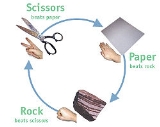
The objective is to select a gesture which defeats that of the opponent. Gestures are resolved as follows:
If both players choose the same gesture, the game is tied and the players throw again.
writer Xie Zhaozhi's (谢肇淛) book Wuzazu (五杂组), the first known mention of the game, the game dates back to the time of the Chinese Han Dynasty
(206 BCE – 220 CE), it was called shoushiling (手势令). Li Rihua's (李日华) book Note of Liuyanzhai (六砚斋笔记) also reveals this game, calling it shoushiling (手势令), huozhitou (豁指头), or huoquan (豁拳).
In the 18th century these games were popular in Japan. It's known in Japan as , more commonly called and sometimes called . The origin or the derivation of the name is unknown. is a fist in Japanese
and Jan-ken-po is categorized as a . Janken is believed to have been based on two older ken games, sū ken ' onMouseout='HidePop("34017")' href="/topics/Morra">Morra
) and san sukumi ken . San sukumi ken has existed in Japan since ancient times, and sū ken was imported from China in the late 17th century; the name in China of sū ken is shǒushìlìng . Ken games began to increase in popularity in the middle of the 19th century.
Rock-paper-scissors came to be played all over the world by the 20th century.
This version is called matching pennies
, the two strategy equivalent to rock-paper-scissors.
Players have developed numerous cultural and personal variations on the game, from simply playing the same game with different objects, to expanding into more weapons and rules.
An example of an unbalanced four-weapon game adds "dynamite
" as a trump. Dynamite, expressed as the extended index finger or thumb, always defeats rock, and is defeated by scissors. Using dynamite generally implies that dynamite burns paper, but some claim that paper would smother the fuse. The fourth option of dynamite changes each gesture's odds of winning. For instance, scissors' odds improve from 33% to 50% while rock's odds decrease from 33% to 25%. Dynamite can be used to cheat by quickly raising or lowering the thumb on the downstroke once the opponent's play is recognized. Organized rock-paper-scissors contests never use dynamite.
Similarly, the French game "pierre, papier, ciseaux, puits" (stone, paper, scissors, well) is unbalanced; both the rock and scissors fall in the well and lose to it, while paper covers both rock and well. This means two "weapons", well and paper, can defeat two moves, while the last two weapons can only defeat one of the other three choices.
One popular five-weapon expansion, invented by Sam Kass and Karen Bryla, adds "Spock
" and "lizard
" to the standard three. "Spock" is signified with the Star Trek Vulcan salute
, while "lizard" is shown by forming the hand into a sock-puppet-like mouth. Spock smashes scissors and vaporizes rock; he is poisoned by lizard and disproved by paper. Lizard poisons Spock and eats paper; it is crushed by rock and decapitated by scissors. This variant was mentioned in a 2005 article of The Times
and appeared in an episode of the sitcom
The Big Bang Theory
, "The Lizard-Spock Expansion," in 2008.
As long as the number of moves is an odd number and that each move defeats exactly half of the other moves while being defeated by the other half, any combination of moves will function as a game. For example, 7, 9, 11, 15, 25 and 101 weapon versions exist Adding new gestures has the effect of reducing the odds of a tie, while increasing the complexity of the game. The probability of a tie in a balanced, odd-weapon game can be calculated based on the number of weapons n as 1/n, so the probability of a tie is 1/3 in RPS, 1/5 in RPSLS and 1/101 in RPS101.
It is possible to design balanced RPS games with an even number of weapons; unfortunately, this requires the introduction of ties. For instance, dynamite could be introduced such that dynamite defeats rock and paper defeats dynamite while rock and paper tie, as do scissors and dynamite. The probability of a tie in a balanced, even-weapon RPS game with n weapons (assuming each weapon ties with itself and only one other weapon, while defeating half of the remaining weapons and being beaten by the other half) can be calculated as 2/n, which essentially doubles the probability of a tie in comparison with odd-weapon RPS games.
using the game of rock-paper-scissors. The ruling in Avista Management v. Wausau Underwriters stated:
The public release of this judicial order, widely circulated among area lawyers, was seemingly intended to shame
the respective law firms regarding their litigation conduct by settling the dispute in a farcical manner.
 When Takashi Hashiyama, CEO of a Japanese television equipment manufacturer
, decided to auction off the collection of impressionist
paintings owned by his corporation, including works by Cézanne
, Picasso
, and van Gogh
, he contacted two leading auction houses, Christie's
International and Sotheby's
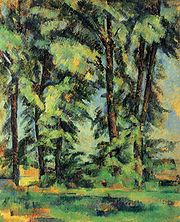
Holdings, seeking their proposals on how they would bring the collection to the market as well as how they would maximize the profits from the sale. Both firms made elaborate proposals, but neither was persuasive enough to get Hashiyama’s business. Unwilling to split up the collection into separate auctions, Hashiyama asked the firms to decide between themselves who would hold the auction, which included Cézanne's "Large Trees Under the Jas de Bouffan", worth $12–16 million.
The houses were unable to reach a decision. Hashiyama told the two firms to play rock-paper-scissors to decide who would get the rights to the auction, explaining that "it probably looks strange to others, but I believe this is the best way to decide between two things which are equally good".
The auction houses had a weekend to come up with a choice of move. Christie's went to the 11-year-old twin daughters of the international director of Christie's Impressionist and Modern Art Department Nicholas Maclean, who suggested "scissors" because "Everybody expects you to choose 'rock'." Sotheby's said that they treated it as a game of chance
and had no particular strategy for the game, but went with "paper".
Christie's won the match and sold the twenty million dollar collection, with millions of dollars of commission for the auction house.
girl group AKB48
used in 2010 a rock-paper-scissors contest to determine which of the members would participate in a single. They used it again on September 20, 2011 with the contest being broadcast in four countries. The final winner was Mariko Shinoda
.
, first-person shooter
, and role-playing
video games, it is common for a group of possible weapons or unit types to interact in a rock-paper-scissors style, where each selection is strong against a particular choice, but weak against another, emulating the cycles in real world warfare (such as cavalry being strong against archers, archers being strong against pikemen, and pikemen being strong against cavalry). Such game mechanics can make a game somewhat self-balancing, and prevent gameplay from being overwhelmed by a single dominant strategy.
Many card-based video games in Japan use the rock-paper-scissors system as their core fighting system, with the winner of each round being able to carry out their designated attack. Other games use simple variants of rock-paper-scissors as subgames.
(Uta stansburiana) exhibits a rock-paper-scissors pattern in its mating strategies. Of its three color types of males, "orange beats blue, blue beats yellow, and yellow beats orange" in competition for females, which is similar to the rules of rock-paper-scissors.
production. The theory for this finding was demonstrated by computer simulation and in the laboratory by Benjamin Kerr, working at Stanford University
with Brendan Bohannan. The antibiotics in question are the bacteriocin
s - more specifically, colicin
s produced by Escherichia coli
. Biologist Benjamin C. Kirkup, Jr. further demonstrated that the colicins were active as E. coli compete with each other in the intestines of mice, and that the rock-paper-scissors dynamics allowed for the continued competition among strains: antibiotic-producers defeat antibiotic-sensitives; antibiotic-resisters multiply and withstand and out-compete the antibiotic-producers, letting antibiotic-sensitives multiply and out-compete others; until antibiotic-producers multiply again.
s that play rock-paper-scissors.
s.
In 2004, the championships were broadcast on the U.S. television network Fox Sports Net
, with the winner being Lee Rammage, who went on to compete in at least one subsequent championship.
is a US-based rock-paper-scissors league. It is sponsored by Bud Light. Leo Bryan Pacis is the commissioner of the USARPS.
In April 2006, the inaugural USARPS Championship was held in Las Vegas
. Following months of regional qualifying tournaments held across the US, 257 players were flown to Las Vegas for a single-elimination tournament at the House of Blues
where the winner received $50,000. The tournament was shown on the A&E Network
on June 12, 2006.
The $50,000 2007 USARPS Tournament took place at the Las Vegas Mandalay Bay in May 2007.
In 2008, Sean "Wicked Fingers" Sears beat out 300 other contestants and walked out of the Mandalay Bay Hotel & Casino with $50,000 after defeating Julie "Bulldog" Crossley in the finals.
The inaugural Budweiser International Rock, Paper, Scissors Federation Championship was held in Beijing
, China
after the close of the 2008 Summer Olympic Games at Club Bud. A Belfast man won the competition. Sean finished 3rd.
in August 2008, with a chance to win up to $5,000.
The 3rd UK Championships took place on June 9, 2009, in Exeter, Devon. Nick Hemley, from Woking, Surrey, won the contest just beating Chris Grimwood.
The 4th UK Championships took place on November 13, 2010, at the Durell Arms in West London. Paul Lewis from Woking beat Ed Blake in the final and collected the £100 first prize and UK title. Richard Daynes Appreciation Society won the team event. 80 competitors took part in the main contest and 10 entries in the team contest.
The 5th UK Rock Paper Scissors Championships took place in London on Saturday 22 October 2011. The event was open to 256 competitors. There is also a team contest. The 2011 singles tournament was won by Max Deeley and the team contest won by The Big Faces (Andrew Bladon, Jamie Burland, Tom Wilkinson and Captain Joe Kenny).
in Ottawa
, Canada
, held the largest recorded rock-paper-scissors tournament, with approximately 1150 participants. The contest was throughout all the Grade 9-12s, and included teachers. The winner, Cody Lombardo, took home a trophy, and had his name in the Guinness Book of World Records
.
On July 9, 2010, over 6500 attendees of the LIFE 2010 Conference in Louisville
, Kentucky
, participated in the largest tournament of Rock-Paper-Scissors ever, shattering the previous record of 1150 participants.
host and USARPS Head Referee Phil Gordon
has hosted an annual $500 World Series of Rock Paper Scissors event in conjunction with the World Series of Poker
since 2005. The winner of the WSORPS receives an entry into the WSOP Main Event. The event is an annual fundraiser for the "Cancer Research and Prevention Foundation" via Gordon's charity Bad Beat on Cancer. Poker player Annie Duke
won the Second Annual World Series of Rock Paper Scissors. The tournament is taped by ESPN and highlights are covered during "The Nuts" section of ESPN's annual WSOP broadcast. 2009 was the fifth year of the tournament.
The World Series is a multiple-tournament contest in which a player's performance in each separate tournament is scored, and after a number of tournaments within the event have taken place, a triple-elimination playoff takes place to decide a overall championship.
Over the last few seasons, extra events have been added to the series, the most popular of them being the "Hidden Stars" (a tournament for novice players on the application who may not know about the event being given a chance to compete without any regulars taking part) and the World Series Blitz (where all the events take place over one day rather than once a week like in the main event).
The key feature of this event is the number of players who are not known as people who play in real-life tournaments who show a lot of ambition to try to compete with those who play in the most recognized events on a regular basis. This has created a small community of players as well as a small rivalry between both sets of players to prove who is better.
In December 2010, a player called Maxamillion Air became one of the first online-only players from the World Series to play in an official event.
Hand game
Hand games are those games which are played using only the hands of the players. Examples include Rock, Paper, Scissors, Odd or Even, Thumb Wrestling and Mercy.-See also:*Hand jive*Red Hands*Pat-a-cake*Clapping game*Chopsticks*Squid...
played by two people. The game is also known as roshambo, or another ordering of the three items (with "stone" sometimes substituting for "rock").
The game is often used as a choosing method in a way similar to coin flipping
Coin flipping
Coin flipping or coin tossing or heads or tails is the practice of throwing a coin in the air to choose between two alternatives, sometimes to resolve a dispute between two parties...
, drawing straws
Drawing straws
Drawing straws is a selection method that is used by a group to choose one member of the group to perform a task after none has volunteered for it...
, or throwing dice
Dice
A die is a small throwable object with multiple resting positions, used for generating random numbers...
. However, unlike truly random
Randomness
Randomness has somewhat differing meanings as used in various fields. It also has common meanings which are connected to the notion of predictability of events....
selection methods, rock-paper-scissors can be played with a degree of skill, especially if the game extends over many sessions with the same players; it is often possible to recognize and exploit the non-random behavior of an opponent.
Game play
The players count aloud to three, or speak the name of the game (e.g. "Rock Paper Scissors!" or "Ro! Cham! Beau!"), each time raising one hand in a fist and swinging it down on the count. After the third count (saying, "Scissors!" or "Beau!"), the players change their hands into one of three gestures, which they then "throw" by extending it towards their opponent. Variations include a version where players use a fourth count—"Shoot!"—before throwing their gesture, or a version where they only shake their hands twice before "throwing." The gestures are:- Rock, represented by a clenched fist.
- Scissors, represented by two fingers extended and separated.
- Paper, represented by an open hand, with the fingers connected (horizontal).
The objective is to select a gesture which defeats that of the opponent. Gestures are resolved as follows:
- Rock blunts or breaks scissors: that is, rock defeats scissors.
- Scissors cut paper: scissors defeats paper.
- Paper covers, sands or captures rock: paper defeats rock.
If both players choose the same gesture, the game is tied and the players throw again.
History
According to the Chinese Ming DynastyMing Dynasty
The Ming Dynasty, also Empire of the Great Ming, was the ruling dynasty of China from 1368 to 1644, following the collapse of the Mongol-led Yuan Dynasty. The Ming, "one of the greatest eras of orderly government and social stability in human history", was the last dynasty in China ruled by ethnic...
writer Xie Zhaozhi's (谢肇淛) book Wuzazu (五杂组), the first known mention of the game, the game dates back to the time of the Chinese Han Dynasty
Han Dynasty
The Han Dynasty was the second imperial dynasty of China, preceded by the Qin Dynasty and succeeded by the Three Kingdoms . It was founded by the rebel leader Liu Bang, known posthumously as Emperor Gaozu of Han. It was briefly interrupted by the Xin Dynasty of the former regent Wang Mang...
(206 BCE – 220 CE), it was called shoushiling (手势令). Li Rihua's (李日华) book Note of Liuyanzhai (六砚斋笔记) also reveals this game, calling it shoushiling (手势令), huozhitou (豁指头), or huoquan (豁拳).
In the 18th century these games were popular in Japan. It's known in Japan as , more commonly called and sometimes called . The origin or the derivation of the name is unknown. is a fist in Japanese
Japanese language
is a language spoken by over 130 million people in Japan and in Japanese emigrant communities. It is a member of the Japonic language family, which has a number of proposed relationships with other languages, none of which has gained wide acceptance among historical linguists .Japanese is an...
and Jan-ken-po is categorized as a . Janken is believed to have been based on two older ken games, sū ken ' onMouseout='HidePop("34017")' href="/topics/Morra">Morra
Morra
Morra can mean:* Morra , a game similar to Rock, Paper, Scissors* La Morra, a comune in the Province of Cuneo, Italy* Morra , a frazione in the Province of Perugia, Italy...
) and san sukumi ken . San sukumi ken has existed in Japan since ancient times, and sū ken was imported from China in the late 17th century; the name in China of sū ken is shǒushìlìng . Ken games began to increase in popularity in the middle of the 19th century.
Rock-paper-scissors came to be played all over the world by the 20th century.
Variations
There is a simpler variation of the game, where instead of three possibilities, the game is just played with two possibilities.This version is called matching pennies
Matching pennies
Matching pennies is the name for a simple example game used in game theory. It is the two strategy equivalent of Rock, Paper, Scissors. Matching pennies is used primarily to illustrate the concept of mixed strategies and a mixed strategy Nash equilibrium....
, the two strategy equivalent to rock-paper-scissors.
Players have developed numerous cultural and personal variations on the game, from simply playing the same game with different objects, to expanding into more weapons and rules.
- Rock-paper-scissors is frequently played in a "best two out of three" match, and in many cases psychs-out, shouting, and trick gestures are performed to confuse or trick the other player into throwing an illegal toss resulting in a loss. Some players prefer to shout the name of a throw they do not intend to throw in order to misdirect and confuse their opponent. It generally applies that what is thrown is what is officially counted in the match. For instance, yelling Scissors or Paper, and actually throwing Rock. The rock is what is judged and tallied. During tournaments, players often prepare their sequence of three gestures prior to the tournament's commencement.
Additional weapons
With an odd number of choices, each beats half the weapons and loses to half the weapons. No even number of weapons can be made balanced, unless some pairs of weapons result in a draw; there will always be some weapons superior to others.An example of an unbalanced four-weapon game adds "dynamite
Dynamite
Dynamite is an explosive material based on nitroglycerin, initially using diatomaceous earth , or another absorbent substance such as powdered shells, clay, sawdust, or wood pulp. Dynamites using organic materials such as sawdust are less stable and such use has been generally discontinued...
" as a trump. Dynamite, expressed as the extended index finger or thumb, always defeats rock, and is defeated by scissors. Using dynamite generally implies that dynamite burns paper, but some claim that paper would smother the fuse. The fourth option of dynamite changes each gesture's odds of winning. For instance, scissors' odds improve from 33% to 50% while rock's odds decrease from 33% to 25%. Dynamite can be used to cheat by quickly raising or lowering the thumb on the downstroke once the opponent's play is recognized. Organized rock-paper-scissors contests never use dynamite.
Similarly, the French game "pierre, papier, ciseaux, puits" (stone, paper, scissors, well) is unbalanced; both the rock and scissors fall in the well and lose to it, while paper covers both rock and well. This means two "weapons", well and paper, can defeat two moves, while the last two weapons can only defeat one of the other three choices.
One popular five-weapon expansion, invented by Sam Kass and Karen Bryla, adds "Spock
Spock
Spock is a fictional character in the Star Trek media franchise. First portrayed by Leonard Nimoy in the original Star Trek series, Spock also appears in the animated Star Trek series, two episodes of Star Trek: The Next Generation, seven of the Star Trek feature films, and numerous Star Trek...
" and "lizard
Lizard
Lizards are a widespread group of squamate reptiles, with nearly 3800 species, ranging across all continents except Antarctica as well as most oceanic island chains...
" to the standard three. "Spock" is signified with the Star Trek Vulcan salute
Vulcan salute
The Vulcan salute is a hand gesture consisting of a raised hand, palm forward with the fingers parted between the middle and ring finger, and the thumb extended. Often, the famous line, "Live long and prosper", is said after it. The salute was devised and popularised by Leonard Nimoy, who...
, while "lizard" is shown by forming the hand into a sock-puppet-like mouth. Spock smashes scissors and vaporizes rock; he is poisoned by lizard and disproved by paper. Lizard poisons Spock and eats paper; it is crushed by rock and decapitated by scissors. This variant was mentioned in a 2005 article of The Times
The Times
The Times is a British daily national newspaper, first published in London in 1785 under the title The Daily Universal Register . The Times and its sister paper The Sunday Times are published by Times Newspapers Limited, a subsidiary since 1981 of News International...
and appeared in an episode of the sitcom
Situation comedy
A situation comedy, often shortened to sitcom, is a genre of comedy that features characters sharing the same common environment, such as a home or workplace, accompanied with jokes as part of the dialogue...
The Big Bang Theory
The Big Bang Theory
The Big Bang Theory is an American sitcom created by Chuck Lorre and Bill Prady, both of whom serve as executive producers on the show, along with Steven Molaro. All three also serve as head writers...
, "The Lizard-Spock Expansion," in 2008.
As long as the number of moves is an odd number and that each move defeats exactly half of the other moves while being defeated by the other half, any combination of moves will function as a game. For example, 7, 9, 11, 15, 25 and 101 weapon versions exist Adding new gestures has the effect of reducing the odds of a tie, while increasing the complexity of the game. The probability of a tie in a balanced, odd-weapon game can be calculated based on the number of weapons n as 1/n, so the probability of a tie is 1/3 in RPS, 1/5 in RPSLS and 1/101 in RPS101.
It is possible to design balanced RPS games with an even number of weapons; unfortunately, this requires the introduction of ties. For instance, dynamite could be introduced such that dynamite defeats rock and paper defeats dynamite while rock and paper tie, as do scissors and dynamite. The probability of a tie in a balanced, even-weapon RPS game with n weapons (assuming each weapon ties with itself and only one other weapon, while defeating half of the remaining weapons and being beaten by the other half) can be calculated as 2/n, which essentially doubles the probability of a tie in comparison with odd-weapon RPS games.
American case
In 2006, American Judge Gregory Presnell from the Middle District of Florida ordered opposing sides in a lengthy court case to settle a trivial (but lengthily debated) point over the appropriate place for a depositionDeposition (law)
In the law of the United States, a deposition is the out-of-court oral testimony of a witness that is reduced to writing for later use in court or for discovery purposes. It is commonly used in litigation in the United States and Canada and is almost always conducted outside of court by the...
using the game of rock-paper-scissors. The ruling in Avista Management v. Wausau Underwriters stated:
The public release of this judicial order, widely circulated among area lawyers, was seemingly intended to shame
Shame
Shame is, variously, an affect, emotion, cognition, state, or condition. The roots of the word shame are thought to derive from an older word meaning to cover; as such, covering oneself, literally or figuratively, is a natural expression of shame....
the respective law firms regarding their litigation conduct by settling the dispute in a farcical manner.
Auction house rock-paper-scissors match
Maspro Denkoh
Maspro Denkoh is a Japanese electronics manufacturer.In 2005, the firm chose the auctioneer of their $20 million art collection through a game of rock, paper, scissors. Christie's won....
, decided to auction off the collection of impressionist
Impressionism
Impressionism was a 19th-century art movement that originated with a group of Paris-based artists whose independent exhibitions brought them to prominence during the 1870s and 1880s...
paintings owned by his corporation, including works by Cézanne
Paul Cézanne
Paul Cézanne was a French artist and Post-Impressionist painter whose work laid the foundations of the transition from the 19th century conception of artistic endeavour to a new and radically different world of art in the 20th century. Cézanne can be said to form the bridge between late 19th...
, Picasso
Pablo Picasso
Pablo Diego José Francisco de Paula Juan Nepomuceno María de los Remedios Cipriano de la Santísima Trinidad Ruiz y Picasso known as Pablo Ruiz Picasso was a Spanish expatriate painter, sculptor, printmaker, ceramicist, and stage designer, one of the greatest and most influential artists of the...
, and van Gogh
Vincent van Gogh
Vincent Willem van Gogh , and used Brabant dialect in his writing; it is therefore likely that he himself pronounced his name with a Brabant accent: , with a voiced V and palatalized G and gh. In France, where much of his work was produced, it is...
, he contacted two leading auction houses, Christie's
Christie's
Christie's is an art business and a fine arts auction house.- History :The official company literature states that founder James Christie conducted the first sale in London, England, on 5 December 1766, and the earliest auction catalogue the company retains is from December 1766...
International and Sotheby's
Sotheby's
Sotheby's is the world's fourth oldest auction house in continuous operation.-History:The oldest auction house in operation is the Stockholms Auktionsverk founded in 1674, the second oldest is Göteborgs Auktionsverk founded in 1681 and third oldest being founded in 1731, all Swedish...
Holdings, seeking their proposals on how they would bring the collection to the market as well as how they would maximize the profits from the sale. Both firms made elaborate proposals, but neither was persuasive enough to get Hashiyama’s business. Unwilling to split up the collection into separate auctions, Hashiyama asked the firms to decide between themselves who would hold the auction, which included Cézanne's "Large Trees Under the Jas de Bouffan", worth $12–16 million.
The houses were unable to reach a decision. Hashiyama told the two firms to play rock-paper-scissors to decide who would get the rights to the auction, explaining that "it probably looks strange to others, but I believe this is the best way to decide between two things which are equally good".
The auction houses had a weekend to come up with a choice of move. Christie's went to the 11-year-old twin daughters of the international director of Christie's Impressionist and Modern Art Department Nicholas Maclean, who suggested "scissors" because "Everybody expects you to choose 'rock'." Sotheby's said that they treated it as a game of chance
Game of chance
A game of chance is a game whose outcome is strongly influenced by some randomizing device, and upon which contestants may or may not wager money or anything of monetary value...
and had no particular strategy for the game, but went with "paper".
Christie's won the match and sold the twenty million dollar collection, with millions of dollars of commission for the auction house.
Japanese girl group single participation
Japanese idolJapanese idol
In Japanese culture, are media personalities in their teens and early twenties who are considered particularly attractive or cute and who will, for a period ranging from several months to a few years, regularly appear in the mass media, e.g...
girl group AKB48
AKB48
AKB48 is a Japanese female idol group produced by Yasushi Akimoto.The group has achieved enormous popularity in Japan. Its ten latest consecutive singles topped the Oricon Weekly Singles Chart...
used in 2010 a rock-paper-scissors contest to determine which of the members would participate in a single. They used it again on September 20, 2011 with the contest being broadcast in four countries. The final winner was Mariko Shinoda
Mariko Shinoda
is a singer, actress, fashion model, and one of members of the Japanese idol group AKB48.- Life and career :In October 2005 she failed an audition to be one of founding members of AKB48. She started working at a café in then-Akihabara 48 Theater as a staff member...
.
Rock-paper-scissors in video games
In many real-time strategyReal-time strategy
Real-time strategy is a sub-genre of strategy video game which does not progress incrementally in turns. Brett Sperry is credited with coining the term to market Dune II....
, first-person shooter
First-person shooter
First-person shooter is a video game genre that centers the gameplay on gun and projectile weapon-based combat through first-person perspective; i.e., the player experiences the action through the eyes of a protagonist. Generally speaking, the first-person shooter shares common traits with other...
, and role-playing
Role-playing video game
Role-playing video games are a video game genre with origins in pen-and-paper role-playing games such as Dungeons & Dragons, using much of the same terminology, settings and game mechanics. The player in RPGs controls one character, or several adventuring party members, fulfilling one or many quests...
video games, it is common for a group of possible weapons or unit types to interact in a rock-paper-scissors style, where each selection is strong against a particular choice, but weak against another, emulating the cycles in real world warfare (such as cavalry being strong against archers, archers being strong against pikemen, and pikemen being strong against cavalry). Such game mechanics can make a game somewhat self-balancing, and prevent gameplay from being overwhelmed by a single dominant strategy.
Many card-based video games in Japan use the rock-paper-scissors system as their core fighting system, with the winner of each round being able to carry out their designated attack. Other games use simple variants of rock-paper-scissors as subgames.
Lizard mating strategies
The common side-blotched lizardCommon side-blotched lizard
The common side-blotched lizard is a species of side-blotched lizard common on the Pacific coast of North America, from Washington to western Texas and NW Mexico...
(Uta stansburiana) exhibits a rock-paper-scissors pattern in its mating strategies. Of its three color types of males, "orange beats blue, blue beats yellow, and yellow beats orange" in competition for females, which is similar to the rules of rock-paper-scissors.
Coliform bacteria
Some bacteria also exhibit a rock-paper-scissors dynamic when they engage in antibioticAntibiotic
An antibacterial is a compound or substance that kills or slows down the growth of bacteria.The term is often used synonymously with the term antibiotic; today, however, with increased knowledge of the causative agents of various infectious diseases, antibiotic has come to denote a broader range of...
production. The theory for this finding was demonstrated by computer simulation and in the laboratory by Benjamin Kerr, working at Stanford University
Stanford University
The Leland Stanford Junior University, commonly referred to as Stanford University or Stanford, is a private research university on an campus located near Palo Alto, California. It is situated in the northwestern Santa Clara Valley on the San Francisco Peninsula, approximately northwest of San...
with Brendan Bohannan. The antibiotics in question are the bacteriocin
Bacteriocin
Bacteriocins are proteinaceous toxins produced by bacteria to inhibit the growth of similar or closely related bacterial strain. They are typically considered to be narrow spectrum antibiotics, though this has been debated...
s - more specifically, colicin
Colicin
A colicin is a type of bacteriocin produced by and toxic to some strains of Escherichia coli. Colicins are released into the environment to reduce competition from other bacterial strains...
s produced by Escherichia coli
Escherichia coli
Escherichia coli is a Gram-negative, rod-shaped bacterium that is commonly found in the lower intestine of warm-blooded organisms . Most E. coli strains are harmless, but some serotypes can cause serious food poisoning in humans, and are occasionally responsible for product recalls...
. Biologist Benjamin C. Kirkup, Jr. further demonstrated that the colicins were active as E. coli compete with each other in the intestines of mice, and that the rock-paper-scissors dynamics allowed for the continued competition among strains: antibiotic-producers defeat antibiotic-sensitives; antibiotic-resisters multiply and withstand and out-compete the antibiotic-producers, letting antibiotic-sensitives multiply and out-compete others; until antibiotic-producers multiply again.
Strategies
It is easy to see that it is impossible to gain an advantage over a truly random opponent. However, by exploiting the weaknesses of nonrandom opponents, it is possible to gain a significant advantage. Indeed, human players tend to be nonrandom. As such, there have been programming competitions for algorithmAlgorithm
In mathematics and computer science, an algorithm is an effective method expressed as a finite list of well-defined instructions for calculating a function. Algorithms are used for calculation, data processing, and automated reasoning...
s that play rock-paper-scissors.
Algorithms
As a consequence of rock-paper-scissors programming contests, many strong algorithms have emerged. For example, Iocaine Powder, which won the First International RoShamBo Programming Competition in 1999, uses a heuristically designed compilation of strategies. For each strategy it employs, it also has six metastrategies which defeat second-guessing, triple-guessing, as well as second-guessing the opponent, and so on. The optimal strategy or metastrategy is chosen based on past performance. The main strategies it employs are history matching, frequency analysis, and random guessing. Its strongest strategy, history matching, searches for a sequence in the past that matches the last few moves in order to predict the next move of the algorithm. In frequency analysis, the program simply identifies the most frequently played move. The random guess is a fallback method that is used to prevent a devastating loss in the event that the other strategies fail. More than ten years later, the top performing strategies on an ongoing rock-paper-scissors programming competition similarly use metastrategies. However, there have been some innovations, such as using multiple history matching schemes that each match a different aspect of the history - for example, the opponent's moves, the program's own moves, or a combination of both. There have also been other algorithms based on Markov chainMarkov chain
A Markov chain, named after Andrey Markov, is a mathematical system that undergoes transitions from one state to another, between a finite or countable number of possible states. It is a random process characterized as memoryless: the next state depends only on the current state and not on the...
s.
Tournaments
World Rock Paper Scissors Society sanctioned tournaments
Starting in 2002, the World Rock Paper Scissors Society standardized a set of rules for international play and has overseen annual International World Championships. These open, competitive championships have been widely attended by players from around the world and have attracted widespread international media attention. WRPS events are noted for their large cash prizes, elaborate staging, and colorful competitors.In 2004, the championships were broadcast on the U.S. television network Fox Sports Net
Fox Sports Net
The Fox Sports Regional Networks, or simply Fox Sports Net , are a collection of cable TV regional sports networks in the United States owned and operated by News Corporation.- Beginnings :...
, with the winner being Lee Rammage, who went on to compete in at least one subsequent championship.
| Year | World Champion | Country |
|---|---|---|
| 2002 | Peter Lovering | Canada Canada Canada is a North American country consisting of ten provinces and three territories. Located in the northern part of the continent, it extends from the Atlantic Ocean in the east to the Pacific Ocean in the west, and northward into the Arctic Ocean... |
| 2003 | Rob Krueger | Canada |
| 2004 | Lee Rammage | Canada |
| 2005 | Andrew Bergel | Canada |
| 2006 | Bob Cooper | United Kingdom United Kingdom The United Kingdom of Great Britain and Northern IrelandIn the United Kingdom and Dependencies, other languages have been officially recognised as legitimate autochthonous languages under the European Charter for Regional or Minority Languages... |
| 2007 | Andrea Farina | USA |
| 2008 | Monica Martinez | Canada |
| 2009 | Tim Conrad | USA |
USARPS Tournaments
USA Rock Paper Scissors LeagueUSA Rock Paper Scissors League
The United States of America Rock Paper Scissors League is a national competition league for the hand game rock paper scissors. The first national champion was crowned on 9 April 2006 at the USARPS League Championship, which was held at the Mandalay Bay Hotel in Las Vegas, Nevada and televised by...
is a US-based rock-paper-scissors league. It is sponsored by Bud Light. Leo Bryan Pacis is the commissioner of the USARPS.
In April 2006, the inaugural USARPS Championship was held in Las Vegas
Las Vegas Strip
The Las Vegas Strip is an approximately stretch of Las Vegas Boulevard in Clark County, Nevada; adjacent to, but outside the city limits of Las Vegas proper. The Strip lies within the unincorporated townships of Paradise and Winchester...
. Following months of regional qualifying tournaments held across the US, 257 players were flown to Las Vegas for a single-elimination tournament at the House of Blues
House of Blues
House of Blues is a chain of 13 live music concert halls and restaurants in major markets throughout the United States. House of Blues first location was in Cambridge's Harvard Square. It was opened in 1992 by Isaac Tigrett, co-founder of Hard Rock Cafe, and Dan Aykroyd, star of The Blues Brothers...
where the winner received $50,000. The tournament was shown on the A&E Network
A&E Network
The A&E Network is a United States-based cable and satellite television network with headquarters in New York City and offices in Atlanta, Chicago, Detroit, London, Los Angeles and Stamford. A&E also airs in Canada and Latin America. Initially named the Arts & Entertainment Network, A&E launched...
on June 12, 2006.
The $50,000 2007 USARPS Tournament took place at the Las Vegas Mandalay Bay in May 2007.
In 2008, Sean "Wicked Fingers" Sears beat out 300 other contestants and walked out of the Mandalay Bay Hotel & Casino with $50,000 after defeating Julie "Bulldog" Crossley in the finals.
The inaugural Budweiser International Rock, Paper, Scissors Federation Championship was held in Beijing
Beijing
Beijing , also known as Peking , is the capital of the People's Republic of China and one of the most populous cities in the world, with a population of 19,612,368 as of 2010. The city is the country's political, cultural, and educational center, and home to the headquarters for most of China's...
, China
China
Chinese civilization may refer to:* China for more general discussion of the country.* Chinese culture* Greater China, the transnational community of ethnic Chinese.* History of China* Sinosphere, the area historically affected by Chinese culture...
after the close of the 2008 Summer Olympic Games at Club Bud. A Belfast man won the competition. Sean finished 3rd.
National XtremeRPS Competition 2007-2008
The XtremeRPS National Competition is a US nationwide RPS competition with Preliminary Qualifying contests that started in January 2007 and ended in May 2008, followed by regional finals in June and July 2008. The national finals were to be held in Des Moines, IowaDes Moines, Iowa
Des Moines is the capital and the most populous city in the US state of Iowa. It is also the county seat of Polk County. A small portion of the city extends into Warren County. It was incorporated on September 22, 1851, as Fort Des Moines which was shortened to "Des Moines" in 1857...
in August 2008, with a chance to win up to $5,000.
UK Rock Paper Scissors Championship
The 1st UK Championship took place on July 13, 2007, and then again on July 14, 2008, in Rhayader, Powys. Steve Frost of Powys is the current holder of this WRPS sanctioned event.The 3rd UK Championships took place on June 9, 2009, in Exeter, Devon. Nick Hemley, from Woking, Surrey, won the contest just beating Chris Grimwood.
The 4th UK Championships took place on November 13, 2010, at the Durell Arms in West London. Paul Lewis from Woking beat Ed Blake in the final and collected the £100 first prize and UK title. Richard Daynes Appreciation Society won the team event. 80 competitors took part in the main contest and 10 entries in the team contest.
The 5th UK Rock Paper Scissors Championships took place in London on Saturday 22 October 2011. The event was open to 256 competitors. There is also a team contest. The 2011 singles tournament was won by Max Deeley and the team contest won by The Big Faces (Andrew Bladon, Jamie Burland, Tom Wilkinson and Captain Joe Kenny).
Guinness Book of World Records
On April 3, 2009, Colonel By Secondary SchoolColonel By Secondary School
Colonel By Secondary School is an Ottawa-Carleton District School Board high school. It is located in the Beacon Hill neighbourhood of Gloucester in the city of Ottawa, Ontario, Canada. It is a non-semestered school, and is the only English public school in Ottawa that offers the International...
in Ottawa
Ottawa
Ottawa is the capital of Canada, the second largest city in the Province of Ontario, and the fourth largest city in the country. The city is located on the south bank of the Ottawa River in the eastern portion of Southern Ontario...
, Canada
Canada
Canada is a North American country consisting of ten provinces and three territories. Located in the northern part of the continent, it extends from the Atlantic Ocean in the east to the Pacific Ocean in the west, and northward into the Arctic Ocean...
, held the largest recorded rock-paper-scissors tournament, with approximately 1150 participants. The contest was throughout all the Grade 9-12s, and included teachers. The winner, Cody Lombardo, took home a trophy, and had his name in the Guinness Book of World Records
Guinness World Records
Guinness World Records, known until 2000 as The Guinness Book of Records , is a reference book published annually, containing a collection of world records, both human achievements and the extremes of the natural world...
.
On July 9, 2010, over 6500 attendees of the LIFE 2010 Conference in Louisville
Louisville, Kentucky
Louisville is the largest city in the U.S. state of Kentucky, and the county seat of Jefferson County. Since 2003, the city's borders have been coterminous with those of the county because of a city-county merger. The city's population at the 2010 census was 741,096...
, Kentucky
Kentucky
The Commonwealth of Kentucky is a state located in the East Central United States of America. As classified by the United States Census Bureau, Kentucky is a Southern state, more specifically in the East South Central region. Kentucky is one of four U.S. states constituted as a commonwealth...
, participated in the largest tournament of Rock-Paper-Scissors ever, shattering the previous record of 1150 participants.
World Series of Rock Paper Scissors
Former Celebrity Poker ShowdownCelebrity Poker Showdown
Celebrity Poker Showdown was a celebrity game show on the cable network Bravo. It was a limited-run series in which celebrities played poker, and ran eight tournaments during its five-season run....
host and USARPS Head Referee Phil Gordon
Phil Gordon
Philip Stewart Gordon is an American professional poker player, commentator and author.-Personal life:Gordon was born in El Paso, Texas. He spent his formative years in Stone Mountain, Georgia. Gordon began attending Georgia Tech at the age of 15 while still attending high school...
has hosted an annual $500 World Series of Rock Paper Scissors event in conjunction with the World Series of Poker
World Series of Poker
The World Series of Poker is a world-renowned series of poker tournaments held annually in Las Vegas and, since 2005, sponsored by Harrah's Entertainment...
since 2005. The winner of the WSORPS receives an entry into the WSOP Main Event. The event is an annual fundraiser for the "Cancer Research and Prevention Foundation" via Gordon's charity Bad Beat on Cancer. Poker player Annie Duke
Annie Duke
Annie Duke is a professional poker player and author who won a bracelet in the 2004 World Series of Poker $2,000 Omaha Hi-Low Split-8 or Better Event and was the winner of the 2004 World Series of Poker Tournament of Champions, where she earned the Winner-Take-All prize of $2,000,000...
won the Second Annual World Series of Rock Paper Scissors. The tournament is taped by ESPN and highlights are covered during "The Nuts" section of ESPN's annual WSOP broadcast. 2009 was the fifth year of the tournament.
Red Bull Roshambull World Online Series
The Red Bull Roshambull is a Recognized Unofficial event by the World RPS which takes place over the Facebook application "Red Bull Roshambull". Although originally an unrecognized event, in January 2011 it was given a Official Recognized event status due to the number of people who regularly take part in the World Championships and other recognized leagues starting to compete. However the event is still seen as a non-ranking event and any awards or titles given in the tournament are not officially recognized outside the event.The World Series is a multiple-tournament contest in which a player's performance in each separate tournament is scored, and after a number of tournaments within the event have taken place, a triple-elimination playoff takes place to decide a overall championship.
Over the last few seasons, extra events have been added to the series, the most popular of them being the "Hidden Stars" (a tournament for novice players on the application who may not know about the event being given a chance to compete without any regulars taking part) and the World Series Blitz (where all the events take place over one day rather than once a week like in the main event).
The key feature of this event is the number of players who are not known as people who play in real-life tournaments who show a lot of ambition to try to compete with those who play in the most recognized events on a regular basis. This has created a small community of players as well as a small rivalry between both sets of players to prove who is better.
| Season | Overall result | League phase | Hidden Stars | World Series Blitz | World Team Challenge |
|---|---|---|---|---|---|
| Summer 2009 | 1ST  Alan Giles Alan Giles 2nd  Mark Thomas Mark Thomas 3rd  Frances Anne Ricketts Frances Anne Ricketts |
1ST Mark Thomas 2nd  Monika Hjelmas Monika Hjelmas 3rd Dave Dungan |
Not Competed in This season | ||
| Winter 2009/10 | 1ST Frances Anne Ricketts 2nd Mark Thomas 3rd  Roman P Roman P |
1ST Frances Anne Ricketts 2nd Clayton Dwyer 3rd Andrew Lampman |
Not Competed in This season | ||
| Summer 2010 | 1ST Brett McFarlane 2nd Tom Bussineau 3rd Dave Dungan |
1ST Andrew Lampman 2nd Brett McFarlane 3rd Mark Tuden |
1ST Lex Harrison 2nd Jaden Urquhart 3rd Aaron Huehn |
Not Competed in this season | 1ST Norway Erik Westnes, Anna Kvalheim, Monika Hjelmas 2nd  African Nations Mac Anamourlis, Craig Von Hagen, Jakqui Krobo African Nations Mac Anamourlis, Craig Von Hagen, Jakqui Krobo 3rd England James Heyes,Sarah Dixon, Andy Mills |
| Winter 2010/11 | 1ST Richard Morgan 2nd Andrew Lampman 3rd Carol Lampman |
1ST Carol Lampman 2nd Andrew Lampman 3rd Richard Morgan |
1ST Amanda Parsons 2nd Leona Colton 3rd Braxton R. Rodgers |
1ST Andrew Lampman 2nd Carol Lampman 3rd Mark Tuden |
Not competed in this season |
| 2011 (Changed to calendar year seasons) | Not yet started | Not yet started | Not yet started |
1ST Andrew Lampman 2nd Carol Lampman 3rd Anthony Argyou |
1ST USA Tom Bussineau, Mark Thomas, Mark Tuden 2nd Norway Erik Westnes, Anna Kvalheim, Monika Hjelmas 3rd Australia Brett McFarlane, Clayton Dwyer, Frances Anne Ricketts |
In December 2010, a player called Maxamillion Air became one of the first online-only players from the World Series to play in an official event.
See also
- Matching penniesMatching penniesMatching pennies is the name for a simple example game used in game theory. It is the two strategy equivalent of Rock, Paper, Scissors. Matching pennies is used primarily to illustrate the concept of mixed strategies and a mixed strategy Nash equilibrium....
, the binary equivalent. - Simultaneous action selectionSimultaneous action selectionSimultaneous action selection, or SAS, is a game mechanic that occurs when players of a game take action at the same time. An example of a game that uses this type of movement is Diplomacy...
- Morra (game) - Another hand game for deciding trivial matters
External links
- USA Rock Paper Scissors League
- World Rock Paper Scissors Society
- UK Rock Paper Scissors Championships
- The official RPS movie
- Etymological origin of Janken
- About Ken games
- Origins of Janken
- Janken in the world
- A biological example of rock-paper-scissors: Interview with biologist Barry Sinervo on the 7th Avenue Project Radio Show
- Rock Paper Scissors Programming Competition