
|
|
|
|
Louisville, Kentucky
|
| |
|
| |
Nomenclature, population, and ranking City of Louisville Population by year (Pre-merger) |
|---|
2000 - 256,231
1990 - 269,063
1980 - 298,451
1970 - 361,472
1960 - 390,639
1950 - 369,129
1940 - 319,077
1930 - 307,745
1920 - 234,891
1910 - 223,928
1900 - 204,731
1890 - 161,129
1880 - 123,758
1870 - 100,753
1860 - 68,033
1850 - 43,194
1840 - 21,210
1830 - 10,341
1820 - 4,012
1810 - 1,357
1800 - 359
1790 - 200
|
As of the 2000 Census, Louisville had a population of 256,231; which for the first time since 1820 was less than the population of Lexington, a city with a consolidated city-county government.

Discussion
Ask a question about 'Louisville, Kentucky'
Start a new discussion about 'Louisville, Kentucky'
Answer questions from other users
|
Timeline
|
|
1778 The first settlement was made in the area of what is now Louisville, Kentucky by 13 families under Col. George Rogers Clark.
1890 A tornado strikes Louisville, Kentucky, killing 76 people and injuring 200.
1960 October 29 — In Louisville, Kentucky, Cassius Clay (who later took the name Muhammad Ali) wins his first professional fight.
|
Encyclopedia
Nomenclature, population, and ranking City of Louisville Population by year (Pre-merger) |
|---|
2000 - 256,231
1990 - 269,063
1980 - 298,451
1970 - 361,472
1960 - 390,639
1950 - 369,129
1940 - 319,077
1930 - 307,745
1920 - 234,891
1910 - 223,928
1900 - 204,731
1890 - 161,129
1880 - 123,758
1870 - 100,753
1860 - 68,033
1850 - 43,194
1840 - 21,210
1830 - 10,341
1820 - 4,012
1810 - 1,357
1800 - 359
1790 - 200
|
As of the 2000 Census, Louisville had a population of 256,231; which for the first time since 1820 was less than the population of Lexington, a city with a consolidated city-county government. However, on November 7, 2000 voters in Louisville and Jefferson County approved their own ballot measure to merge into a consolidated city-county government named Louisville-Jefferson County Metro Government (official long form) and Louisville Metro (official short form), which took effect January 1, 2003. The Jefferson County-Louisville merger has a population more than twice as large as Lexington-Fayette.
The U.S. Census Bureau gives two different population figures for Louisville: for the consolidated Louisville-Jefferson County it lists the 2006 estimated population as 701,500 (17th largest in the nation and equal to that of Jefferson County); for the Louisville-Jefferson County balance it lists the population as 554,496 (27th largest). The "balance" is a designation created by the Census Bureau to describe the portion of Louisville-Jefferson County that does not include any of the semi-independent separately incorporated places located within Louisville Metro (such as Anchorage, Middletown or Jeffersontown).
Census methodology uses balance values in comparing consolidated cities to other cities for ranking purposes, so the lower ranking is the figure officially reported by the Census Bureau. Nevertheless, the higher ranking continues to be claimed by Louisville Metro government and business leaders, widely reported in the local media, and it has even been posted on road signs at the city limits.
The Louisville metropolitan area (MSA) (not to be confused with Louisville Metro), has a population of 1,233,735 ranking 42nd nationally. The metro area includes Louisville-Jefferson County and 12 surrounding counties, eight in Kentucky and four in Southern Indiana (see Geography below). The Louisville Combined Statistical Area includes the MSA and three additional counties. It has a total population of 1,369,049, which ranks 31st in the U.S.
Pronunciation
Most native residents pronounce the city's name Regional migration patterns and the homogenization of dialect due to electronic media also may be responsible for the incidence of native-born Louisvillians adopting or affecting the standard English pronunciation. Nevertheless, the pronunciation is most popular among residents and is, with few exceptions, used by news and sports reporters.
History The first European settlement made in the vicinity of modern-day Louisville was on Corn Island in 1778 by Col. George Rogers Clark. Today, Clark is recognized as the founder of Louisville, and several landmarks are named after him.
Two years later, in 1780, the Virginia General Assembly approved the town charter of Louisville. The city was named in honor of King Louis XVI of France, whose soldiers at the time were aiding Americans in the Revolutionary War. Early residents lived in forts due to Indian raids, but were moving out by the late 1780s. In 1803, explorers Meriwether Lewis and William Clark organized their expedition across America at the Falls of the Ohio in Louisville.
The city attributes its early growth to the fact that river boats had to be unloaded and moved downriver before reaching the falls. By 1828, the population had swelled to 7,000 and Louisville became an incorporated city. The city grew rapidly in its formative years.
Louisville had one of the largest slave trades in the United States before the Civil War and much of the city's initial growth is attributed to that trade. Louisville was the turning point for many enslaved blacks since Kentucky, although it was to be a border state in the Civil War, was nevertheless a slave state and crossing the Ohio River could lead to freedom in the North. Its significant black population and location on the Ohio River resulted in it becoming a stop on the Underground Railroad.
During the Civil War Louisville was a major stronghold of Union forces, which kept Kentucky firmly in the Union. It was the center of planning, supplies, recruiting and transportation for numerous campaigns. By the end of the war, Louisville itself had not been attacked even once, even though surrounded by skirmishes and battles. After 1865 returning Confederate veterans largely took control of the city, leading to the jibe that it joined the Confederacy after the war was over.
The first Kentucky Derby was held on May 17, 1875, at the Louisville Jockey Club track (later renamed to Churchill Downs). The Derby was originally shepherded by Meriwether Lewis Clark, Jr., the grandson of William Clark of the Lewis and Clark Expedition. 10,000 spectators were present at the first Derby to watch Aristides win the race.
On March 27, 1890 the city was devastated and downtown nearly destroyed when an F4 tornado tore through the city at 8:30pm as part of the Mid-Mississippi Valley Tornado Outbreak of March 1890. An estimated 74 to 120 people were killed. The city quickly recovered and signs of the tornado were nearly totally absent within a year.
In late January and February of 1937, a month of heavy rain in which 19" fell prompted what became remembered as the "Great Flood of '37". The flood submerged about 70% of the city, power was lost, and it forced the evacuation of 175,000 residents, and also led to fundamental changes in where residents bought houses. Today, the city is protected by numerous flood walls. After the flood, the areas of high elevation in the eastern part of the city saw decades of growth.
Similar to many other older American cities, Louisville began to experience a flight of people and businesses to the suburbs in the 1960s and 1970s. Newly built freeways and interstates helped facilitate this shift. The West End and older areas of the South End in particular began to decline economically as many local factories closed. In 1974 a major tornado hit Louisville as part of the Super Outbreak of tornadoes that struck 13 states. It covered 21 miles (34 km) and destroyed several hundred homes in the Louisville area but was only responsible for two deaths.
Jefferson County had a population loss of 31,000 from 1970 to 1990, but has since gained 45,000. The population within the old city limits dropped by 134,000 from its peak in 1970, falling from 33rd nationally to 58th, although its population is now stabilizing.
Since the 1980s, many of the city's urban neighborhoods have been revitalized into areas popular with young professionals and college students. The greatest change has occurred along the Bardstown Road corridor, Frankfort Avenue, and the Old Louisville neighborhood. Downtown has also experienced a large amount of growth, including the tripling of its population since 1990, the conversion of waterfront industrial sites into Waterfront Park, and the refurbishing of the former Galleria into the bustling entertainment complex Fourth Street Live!.
Geography Louisville is located at (38.228870, -85.749534). According to the U.S. Census Bureau, Louisville Metro (in 2000 measurements for Jefferson County) has a total area of 399 square miles (1,032 km²), of which, 385 square miles (997 km²) of it is land and 13 square miles (35 km²) of it (3.38%) is water.
Louisville is located in the Bluegrass region, but the city has a greater affinity for its location on the Ohio River, which spurred Louisville's growth from an isolated camp site into a major shipping port. Much of the city is located on a very wide and flat flood plain surrounded by hill country on all sides. Much of the area was swampland and had to be drained as the city grew. In the 1840s most creeks were rerouted or placed in canals to prevent flooding and subsequent disease outbreaks.
Areas generally east of I-65 are above the flood plain, and are composed of gently rolling hills. The Southernmost parts of Jefferson County are in the scenic and largely undeveloped Knobs region home to Jefferson Memorial Forest.
The Louisville-Jefferson County, KY-IN Metropolitan Statistical Area (MSA), the 42nd largest in the United States, includes the Kentucky county of Jefferson, plus twelve outlying counties — eight in Kentucky and four in Southern Indiana. Between the 1990 Census and 2000 Census, the Louisville MSA's population outgrew Lexington's by 149,415 and Cincinnati's by 23,278. This MSA is included in the Louisville-Elizabethtown-Scottsburg, KY-IN Combined Statistical Area (CSA), which also includes the Elizabethtown, KY MSA as well as the Scottsburg, IN Micropolitan Statistical Area. The Louisville CSA ranks 39th in the U.S. in population.
Climate Louisville is located on the northern limit of the humid subtropical climate. Summers are typically hot and humid with mildly warm evenings. The mean annual temperature is 56 °F (13 °C), with an average annual snowfall of 16.4 inches (41 cm) and an average annual rainfall of 44.53 inches (1131 mm). The wettest seasons are the spring and summer, although rainfall is fairly constant all year round. During the winter, particularly in January and February, several days of snow can be expected, allowing for winter sports. January is the coldest month with average highs of and average lows of 25 °F (5 to −4 °C) and July the hottest month with average high and low temperatures from 87 to 69.8 °F (31 and 21 °C). The highest recorded temperature was 105 °F (41 °C) on July 14, 1954, and the lowest recorded temperature was −22 °F (−30 °C) on January 19, 1994. However, in any season, temperatures can vary widely day by day, because of Louisville's location where many fronts often converge. Severe weather is not uncommon; the area is prone to almost all types of non-tropical weather extremes, including tornadoes, severe thunderstorms, ice storms and extreme heat and cold.
Much like the San Fernando Valley in Los Angeles, Louisville's Ohio River Valley location traps air pollution. The city is ranked by Environmental Defense as America's 38th worst city for air quality. Louisville also often exemplifies the heat island effect. Temperatures in commercial areas and in the industrialized areas along interstates are often higher than in the suburbs, particularly the shaded areas, like Anchorage, where temperatures are often five degrees Fahrenheit (3 °C) cooler.
Cityscape
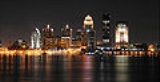
The downtown business district of Louisville is located immediately south of the Ohio River, and southeast of the Falls of the Ohio. Major roads extend outwards from the downtown area to all directions, like the spokes of a wheel. The airport is located approximately 6.75 miles (10 km) south of the downtown area. The industrial sections of town are located to the south and west of the airport, while most of the residential areas of the city are located to the southwest, south and east of downtown. The Louisville skyline is slated to be changed with the proposed 62-story Museum Plaza as well as a 22,000-seat waterfront arena.
Another primary business and industrial district is located in the suburban area east of the city on Hurstbourne Parkway. Louisville's late 19th and early 20th century development was spurred by three large suburban parks built at the edges of the city in 1890.
The city's architecture contains a blend of old and new. The Old Louisville neighborhood is the largest historic preservation district solely featuring Victorian homes and buildings in the United States, it is also the third largest such district overall. There are many modern skyscrapers downtown, as well as older preserved structures. The buildings of West Main Street in downtown Louisville boast the largest collection of cast iron facades of anywhere outside of New York's SoHo district.
Since the mid-20th century, Louisville has in some ways been divided up into three sides of town: the West End, the South End, and the East End. In 2003, Bill Dakan, a University of Louisville geography professor, said that the West End, west of 7th Street and north of Algonquin Parkway, is "a euphemism for the African-American part of town" although he points out that this belief is not entirely true, and most Africans Americans no longer live in areas where more than 80% of residents are black.
Nevertheless, he says the perception is still strong. The South End has long had a reputation as a white, working-class part of town, while the East End has been seen as middle and upper class.
According to the Greater Louisville Association of Realtors, the area with the lowest median home sales price is west of Interstate 65, in the West and South Ends, the middle range of home sales prices are between Interstates 64 and 65 in the South and East Ends, and the highest median home sales price are north of Interstate 64 in the East End. Immigrants from Southeast Asia tend to settle in the South End, while immigrants from Eastern Europe settle in the East End.
Government and politicsLouisville Metro is governed by an executive dubbed the Metro Mayor as well as a city legislature dubbed the Metro Council. The first and current Metro Mayor is Jerry E. Abramson|D]]), who was also the longest serving Mayor of the former City of Louisville's history, serving from 1985 to 1998. This has earned him the nickname "Mayor for Life"
The Metro Council consists of 26 seats corresponding to 26 districts apportioned by population throughout the city and county. The residents of the semi-independent municipalities within Louisville Metro are apportioned to districts along with all other county residents. Half (13) of the seats come up for reelection every two years. The council is chaired by a Council President, currently Jim King (D), who is elected by the council members annually.
The Official Seal of the City of Louisville, no longer used following the formation of a consolidated city-county government in 2003, reflected its history and heritage in the fleur-de-lis representing French aid given during the Revolutionary War, and the thirteen stars signify the original colonies. The new seal of the consolidated government retains the fleur-de-lis, but has only two stars, one representing the city and the other the county.
Kentucky's 3rd congressional district is roughly with Louisville Metro, which is represented by Rep. John Yarmuth (D), though some of the southern areas of the city are in the 2nd congressional district, which is represented by Ron Lewis|R]]).
Crime and public safety Louisville is consistently ranked as one of the safest cities in the country and has been ranked in the Top 10 safest large cities by Morgan Quitno in the past 4 years. In the 2005 Morgan Quitno survey, Louisville was rated as the seventh safest large city in the United States. The 2006 edition of the survey ranked Louisville eighth.
| Year | Murders |
|---|
| 2005 | 55 | | 2006 | 50 | | 2007 | 79 | | 2008 | 17 (as of 4-21) |
In 2006, Louisville-Jefferson County recorded only 50 murders, compared to over 100 murders in the similarly sized cities of Cincinnati, Columbus, Indianapolis, Kansas City, Memphis, and Nashville. Louisville's total crime rate was less than half of most surrounding cities.
The Louisville Metro Area's overall violent crime rate was 412.6 per 100,000 residents in 2005, compared with a rate of 894.1 for Nashville, 575.4 for Indianapolis, and 544.4 for St Louis. The Elizabethtown, Kentucky Metro Area, which is part of Louisville's Combined Statistical Area, was the 17th safest Metro in the U.S. Kentucky has the 5th lowest violent crime rate out of the 50 States.
Violent crime is most concentrated West of Downtown, especially in the Russell neighborhood. The West End, located north of Algonquin Parkway and West of 9th Street, had 32 of the city's 79 murders in 2007.
Demographics- Note: All demographics are the same as that of Jefferson County, Kentucky, which merged with the former City of Louisville on January 6, 2003.
As of the census of 2000, there were 693,604 people, 287,012 households, and 183,113 families residing in the city/county. The population density was 1,801 people per square mile (695/km²). There were 305,835 housing units at an average density of 794/sq mi (307/km²). The racial makeup of the city/county is 77.38% White, 18.88% Black or African American, 0.22% Native American, 1.39% Asian, 0.04% Pacific Islander, 0.68% from other races, and 1.42% from two or more races. 1.78% of the population was Hispanic or Latino of any race.
As of 2007, the demographics of the actual "city" of Louisville (which does not include the population of the county) puts Louisville at 245,315 people and 3,995 people per square mile. The racial makeup of the city is 60.05% white, 35.22% black, 1.86% Asian, 0.24% Native American, and 2.95% 'Other'. 2.42% of the people in Louisville, KY, claim hispanic ethnicity (meaning 97.58% are non-hispanic).
There were 287,012 households out of which 29.60% had children under the age of 18 living with them, 45.20% were married couples living together, 14.70% had a female householder with no husband present, and 36.20% were non-families. 30.50% of all households were made up of individuals and 10.30% had someone living alone who was 65 years of age or older. The average household size was 2.37 and the average family size was 2.97.
The age distribution is 24.30% under the age of 18, 8.90% from 18 to 24, 30.40% from 25 to 44, 22.80% from 45 to 64, and 13.50% who were 65 years of age or older. The median age was 37 years. For every 100 females there were 91.60 males. For every 100 females age 18 and over, there were 87.60 males.
The median income for a household is $39,457, and the median income for a family was $49,161. Males had a median income of $36,484 versus $26,255 for females. The per capita income for the county was $22,352. About 9.50% of families and 12.40% of the population were below the poverty line, including 18.10% of those under age 18 and 8.80% of those ages 65 or over.
17% of the state's population lives in Jefferson County and 25% live in counties in the Louisville CSA, and also Jefferson County has 2.5 times more people than Kentucky's second most populous county, Fayette County. 12 of the 15 buildings in Kentucky over are located in downtown Louisville. Over one-third of the population growth in Kentucky is in Louisville's CSA counties.
Religion Religion is very prominent in Louisville which hosts several religious institutions of various faiths. There are 135,421 Catholic Louisvillians who are part of the Archdiocese of Louisville covering 24 counties in central Kentucky (consisting of 121 parishes and missions spread over 8,124 square miles). The Cathedral of the Assumption located in downtown Louisville is the seat of the Archdiocese of Louisville. Our Lady of Gethsemani Abbey, the monastic home of Catholic writer Thomas Merton, is in nearby Bardstown, Kentucky and also located in the archdiocese. Louisville is also the home of Our Lady's Rosary Makers, the largest Catholic Rosary making group in the United States with 17,000 active members worldwide.
A sizable number of Louisvillians belong to a Protestant faith. One in three Louisvillians is Southern Baptist belonging to one of 147 local Southern Baptist Congregations. Southeast Christian Church, a megachurch and one of the largest Christian churches in the United States, is located in Louisville. The city is home to The Southern Baptist Theological Seminary, Louisville Presbyterian Theological Seminary and the headquarters of the Presbyterian Church (U.S.A.). Additionally, Louisville is home to the oldest African American Seventh-day Adventist congregation, Magazine Street Seventh-day Adventist Church. The historic Christ Church Cathedral is the seat of the Episcopal Diocese of Kentucky.
Louisville is home to three Eastern Orthodox parishes. Assumption Greek Orthodox Church, as well as two Antiochian parishes, St. George and St. Michael the Archangel serve the Orthodox of the area.
The Louisville Kentucky Temple, the 76th temple of the Latter Day Saints faith, is located in nearby Crestwood.
There is a Jewish population of around 8,500 in the city and five synagogues. Most Jewish families originally came from Eastern Europe at the turn of the 20th century, and around 800 Soviet Jews have moved to Louisville since 1991. Jewish immigrants founded Jewish Hospital, which was once the center of the city's Jewish district. Jewish hospital recently merged with the Catholic healthcare system CARITAS.
Kentucky's only Hindu temple opened in suburban Louisville in 1999, and had about 125 members and two full-time priests in 2000. In 2001, there were an estimated four to ten thousand practicing Muslims in Louisville attending six local mosques.
Culture
Annual festivals and other events Louisville is home to a number of annual cultural events. Perhaps most well-known is the Kentucky Derby, held annually during the first Saturday of May. The Derby is preceded by a two-week long Kentucky Derby Festival, which starts with the annual Thunder Over Louisville, the largest annual fireworks display in the nation. The Kentucky Derby Festival also features notable events such as the Pegasus Parade, The Great Steamboat Race, Great Balloon Race, a marathon, and about seventy events in total. Esquire magazine has called the Kentucky Derby "the biggest party in the south."
Usually beginning in late February or early March is the Humana Festival of New American Plays at Actors Theatre of Louisville, an internationally acclaimed new-play festival that lasts approximately six weeks.
On Memorial Day Weekend, Louisville hosts the largest annual Beatles Festival in the world, . The festival lasts five days and is located on the Belvedere in downtown Louisville.
The summer season in Louisville also features a series of cultural events such as the Kentucky Shakespeare Festival (commonly called Shakespeare in the Park), held in July of every year and features free Shakespeare plays in Central Park in Old Louisville. The Kentucky State Fair is held every August at the Kentucky Exposition Center in Louisville as well, featuring an array of culture from all areas of Kentucky.
In September is the Adam Matthews Balloon Festival, the fifth largest hot air balloon festival in the nation. The festival features early morning balloon races, as well as balloon glows in the evening. Also in September, in nearby Bardstown, is the annual Kentucky Bourbon Festival, which features some of the finest bourbon in the world. The suburb of Jeffersontown is also the home of the annual Gaslight Festival, a series of events spread over a week. Attendance is approximately 200,000 for the week.
The month of October features the St. James Court Art Show in Old Louisville. Thousands of artists gather on the streets and in the courtyard to exhibit and sell their wares, and the event is attended by many art collectors and enthusiasts. The show is the second most attended event next to the Derby. Another art-related event that occurs every month is the . A TARC trolley takes art lovers to many downtown area art galleries on the first Friday of every month.
Museums, galleries, and interpretive centers The West Main District in downtown Louisville features what is locally known as "Museum Row". In this area, the Frazier International History Museum, which opened in 2004, features a collection of arms, armor and related historical artifacts spanning 1,000 years, concentrating on U.S. and UK arms. The building features three stories of exhibits, two reenactment arenas, a 120-seat auditorium, and a 48-seat movie theater. Also nearby is the Louisville Science Center, which is Kentucky's largest hands-on science center and features interactive exhibits, IMAX films, educational programs and technology networks. The Muhammad Ali Center opened November 2005 in "Museum Row" and features Louisville native Muhammad Ali's boxing memorabilia, as well as information on the core themes that he has taken to heart: peace, social responsibility, respect and personal growth.
The Speed Art Museum opened in 1927 and is the oldest and largest art museum in the state of Kentucky. Located adjacent to the University of Louisville, the museum features over 12,000 pieces of art in its permanent collection and hosts regular temporary exhibitions. Multiple art galleries are located in the city, but they are especially concentrated in the East Market Street area of downtown. This row of galleries, plus others in the West Main District, are prominently featured in the monthly First Friday Trolley Hop.
Several local history museums can be found in the Louisville area. The most prominent among them is The Filson Historical Society, founded in 1884, which has holdings exceeding 1.5 million manuscript items and over 50,000 volumes in the library. The Filson's extensive collections focus on Kentucky, the Upper South, and the Ohio River Valley, and contain a large collection of portraiture and over ten thousand museum artifacts. Other local history museums include the Portland Museum, Historic Locust Grove, Conrad-Caldwell House Museum, the Falls of the Ohio State Park interpretive center, Howard Steamboat Museum | |