

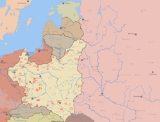
Polish army order of battle in 1939

Encyclopedia
Polish OOB during the Invasion of Poland
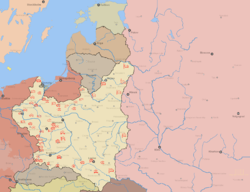
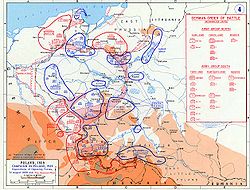
. In the late thirties Polish headquarters prepared "Plan Zachód" (Plan "West), a plan of mobilization of Polish Army in case of war with Germany. Earlier, the Poles did not regard the Germans as their main threat, priority was given to threat from the Soviets
(see: Plan East
).
The overall operational plan assumed the creation of 30 infantry
division
s, 9 reserve divisions, 11 cavalry
brigade
s, two motorized brigades, 3 mountain brigades and a number of smaller units. Most Polish forces were grouped into 6 armies and a number of corps
-sized "Operational Group
s". Later in the course of the war other operational units were created.

. Armia Karpaty was created after Germany annexed Czechoslovakia
and created a puppet state of Slovakia
. The main aim of the army was to secure mountain passes in the Carpathians
. Initially the army consisted of 2 improvised mountain brigades and a number of smaller units, but later in the course of war was joined by forces of the withdrawing Armia Kraków.
Additionally, mobilisation plans called for creation of the Tarnów Group consisting of:
of Polish defence. Its main task was to delay advancing German troops and withdraw eastwards along the northern line of the Carpathians
. It consisted of 5 infantry divisions, 1 mountain brigade, 1 motorized cavalry brigade, 1 mountain brigade and 1 cavalry brigade under gen. Antoni Szylling
.
, Sandomierz
and upper Vistula
. Commanded by mj. gen. Tadeusz Piskor
.
. Armia Łódź was to become a bolt between Armies "Kraków" and "Poznań". However, because of mistakes committed by Gen. Rómmel, the army was located too close to the German border and joined fighting from the very beginning of the campaign, which deprived it of any possibilities of cooperation with the surrounding units. It consisted of 4 infantry divisions and 2 cavalry brigades.
from the north. The army was to defend fortified lines along the border with East Prussia
near Mława, and then retreat towards Narew
river. Led by brig. gen. Emil Krukowicz-Przedrzymirski
. Consisted of 2 infantry divisions and 2 cavalry brigades.
and Bydgoszcz and to carry out delaying actions in the so-called "Polish Corridor
". It was led by Lt.-Gen. Władysław Bortnowski and consisted of five infantry divisions, two National Defence brigades and one cavalry brigade.
was to provide flanking operations in the Grand Poland and withdraw towards lines of defence along the Warta river. It consisted of 4 infantry divisions and 2 cavalry brigades.
. Created in the summer of 1939 as the main reserve of the Commander in Chief. According to the "Plan West" (Plan Zachód, code name for the Polish mobilization plan) it was to be composed of units mobilized as the second and third waves and its main purpose was to cooperate with the nearby armies "Poznań" and "Kraków".
Mobilized in two groups. Because of fast German advance both groups entered combat separately and most units did not reach full mobilization. It consisted of 6 infantry divisions, 1 cavalry brigade and a battalion of tanks.
Created on September 10, 1939 from various units in Warsaw
and Modlin Fortress
area. Initially it consisted of approximately 25 infantry battalions and 40 tanks. Later it was reinforced by forces of Łódź Army and elements of Modlin Army. It was commanded by col. Walerian Czuma
, although the nominal commander was gen. Juliusz Rómmel
.
Naval and river support
Invasion of Poland (1939)
The Invasion of Poland, also known as the September Campaign or 1939 Defensive War in Poland and the Poland Campaign in Germany, was an invasion of Poland by Germany, the Soviet Union, and a small Slovak contingent that marked the start of World War II in Europe...
. In the late thirties Polish headquarters prepared "Plan Zachód" (Plan "West), a plan of mobilization of Polish Army in case of war with Germany. Earlier, the Poles did not regard the Germans as their main threat, priority was given to threat from the Soviets
Soviet Union
The Soviet Union , officially the Union of Soviet Socialist Republics , was a constitutionally socialist state that existed in Eurasia between 1922 and 1991....
(see: Plan East
Plan Wschód
Plan East was a Polish defensive military plan, created in the 1920s and 1930s in case of war with the Soviet Union. Unlike Plan Zachód , it was being prepared during the whole Interwar period, as the government of the Second Polish Republic treated the Soviet Union as the greatest potential...
).
The overall operational plan assumed the creation of 30 infantry
Infantry
Infantrymen are soldiers who are specifically trained for the role of fighting on foot to engage the enemy face to face and have historically borne the brunt of the casualties of combat in wars. As the oldest branch of combat arms, they are the backbone of armies...
division
Division (military)
A division is a large military unit or formation usually consisting of between 10,000 and 20,000 soldiers. In most armies, a division is composed of several regiments or brigades, and in turn several divisions typically make up a corps...
s, 9 reserve divisions, 11 cavalry
Cavalry
Cavalry or horsemen were soldiers or warriors who fought mounted on horseback. Cavalry were historically the third oldest and the most mobile of the combat arms...
brigade
Brigade
A brigade is a major tactical military formation that is typically composed of two to five battalions, plus supporting elements depending on the era and nationality of a given army and could be perceived as an enlarged/reinforced regiment...
s, two motorized brigades, 3 mountain brigades and a number of smaller units. Most Polish forces were grouped into 6 armies and a number of corps
Corps
A corps is either a large formation, or an administrative grouping of troops within an armed force with a common function such as Artillery or Signals representing an arm of service...
-sized "Operational Group
Operational Group
Operational Group was the highest level of tactical division of the Polish Army before and during World War II and the Invasion of Poland. It was corps-sized, although various Operational Groups varied in size....
s". Later in the course of the war other operational units were created.
Karpaty Army
Created on July 11, 1939 under Major General Kazimierz FabrycyKazimierz Fabrycy
Kazimierz Fabrycy was a Polish general. Fabrycy was a member of the Polish Legions in World War I, and fought in the Polish Soviet War. He was the Viceminister of military affairs from 1926 to 1934, and commander of several infantry divisions during the interwar period in the Second Polish Republic...
. Armia Karpaty was created after Germany annexed Czechoslovakia
Czechoslovakia
Czechoslovakia or Czecho-Slovakia was a sovereign state in Central Europe which existed from October 1918, when it declared its independence from the Austro-Hungarian Empire, until 1992...
and created a puppet state of Slovakia
Slovakia
The Slovak Republic is a landlocked state in Central Europe. It has a population of over five million and an area of about . Slovakia is bordered by the Czech Republic and Austria to the west, Poland to the north, Ukraine to the east and Hungary to the south...
. The main aim of the army was to secure mountain passes in the Carpathians
Carpathian Mountains
The Carpathian Mountains or Carpathians are a range of mountains forming an arc roughly long across Central and Eastern Europe, making them the second-longest mountain range in Europe...
. Initially the army consisted of 2 improvised mountain brigades and a number of smaller units, but later in the course of war was joined by forces of the withdrawing Armia Kraków.
- 2nd Mountain Brigade (2 Brygada Górska), made of National Defence units from LimanowaLimanowaLimanowa is a small town in southern Poland, in the Lesser Poland Voivodeship. It is the capital of Limanowa County....
, GorliceGorliceGorlice is a city and an urban municipality in south eastern Poland with around 29,500 inhabitants . It is situated south east of Kraków and south of Tarnów between Jasło and Nowy Sącz in the Lesser Poland Voivodeship , previously in Nowy Sącz Voivodeship...
and Nowy SączNowy SaczNowy Sącz is a town in the Lesser Poland Voivodeship in southern Poland. It is the district capital of Nowy Sącz County, but is not included within the powiat.-Names:...
, as well as Border Defence Corps units from VolhyniaVolhyniaVolhynia, Volynia, or Volyn is a historic region in western Ukraine located between the rivers Prypiat and Southern Bug River, to the north of Galicia and Podolia; the region is named for the former city of Volyn or Velyn, said to have been located on the Southern Bug River, whose name may come...
, - 3rd Mountain Brigade (3 Brygada Górska), made of National Defence units from KrosnoKrosnoKrosno is a town and county in Subcarpathian Voivodeship, Poland with 47,455 inhabitants, as of 2 June 2009.Notably Krosno is the site of the first oil well in the world....
, SanokSanokSanok is a town in south-eastern Poland with 39,110 inhabitants, as of 2 June 2009. It's the capital of Sanok County in the Subcarpathian Voivodeship. Previously, it was in the Krosno Voivodeship and in the Ruthenian Voivodeship , which was part of the Lesser Poland province...
, PrzemyślPrzemyslPrzemyśl is a city in south-eastern Poland with 66,756 inhabitants, as of June 2009. In 1999, it became part of the Podkarpackie Voivodeship; it was previously the capital of Przemyśl Voivodeship....
and RzeszówRzeszówRzeszów is a city in southeastern Poland with a population of 179,455 in 2010. It is located on both sides of the Wisłok River, in the heartland of the Sandomierska Valley... - Carpathian Half-Brigade of National DefenceCarpathian Half-Brigade of National DefenceCarpathian Half-Brigade of National Defence was a unit of the Polish Army in the interbellum period that took part in the Polish September Campaign. It was formed in July of 1937 in Stanisławów. Originally, it consisted of two battalions, but in May of 1939 it was expanded to four battalions. In...
(Karpacka Półbrygada ON) - 2nd Regiment of the Border Defence Corps, made of regiments of the Border Defence Corps from the area of Wilno,
- 1st Motorized Artillery Regiment
- 9th Heavy Artillery Regiment
Additionally, mobilisation plans called for creation of the Tarnów Group consisting of:
- 22nd Mountain Infantry Division from PrzemyślPrzemyslPrzemyśl is a city in south-eastern Poland with 66,756 inhabitants, as of June 2009. In 1999, it became part of the Podkarpackie Voivodeship; it was previously the capital of Przemyśl Voivodeship....
, - 38th Infantry Division (reserve), created in August 1939 out of Border Defence Corps units from Polesie VoivodeshipPolesie VoivodeshipPolesie Voivodeship was an administrative unit of interwar Poland . It ceased to exist in September 1939, following German and Soviet aggression on Poland .-Population:...
and Volhynian VoivodeshipVolhynian VoivodeshipVolhynian Voivodeship or Wołyń Voivodeship was a unit of administrative division and local government in the Grand Duchy of Lithuania from 1566 till 1569 and in the Kingdom of Poland since 1569 till the partitions of Poland in 1795...
.
Kraków Army
Created on March 23, 1939 as the main pivotPivot
Pivot may refer to:* Pivot, the point of rotation in a lever system* More generally, the center point of any rotational system* Pivot joint, a kind of joint between bones in the body* Pivot turn, a dance move- Computing :...
of Polish defence. Its main task was to delay advancing German troops and withdraw eastwards along the northern line of the Carpathians
Carpathian Mountains
The Carpathian Mountains or Carpathians are a range of mountains forming an arc roughly long across Central and Eastern Europe, making them the second-longest mountain range in Europe...
. It consisted of 5 infantry divisions, 1 mountain brigade, 1 motorized cavalry brigade, 1 mountain brigade and 1 cavalry brigade under gen. Antoni Szylling
Antoni Szylling
Antoni Szylling was a Polish general, considered, along with Generals Wiktor Thommée and Stanisław Maczek, to have been one of the most successful Polish Army commanders during the Polish Defensive War of 1939.-Biography:...
.
| Kraków Army | Unit | Polish name | Commander | Remarks | |||||||||
|---|---|---|---|---|---|---|---|---|---|---|---|---|---|
| Army units - gen. Antoni Szylling Antoni Szylling Antoni Szylling was a Polish general, considered, along with Generals Wiktor Thommée and Stanisław Maczek, to have been one of the most successful Polish Army commanders during the Polish Defensive War of 1939.-Biography:... |
|||||||||||||
| 6th Infantry Division 6th Infantry Division (Poland) Polish 6th Infantry Division was a unit of the Polish Army in the interbellum period, which took part in the Polish September Campaign. The Division was created on May 9, 1919 in the area around Krakow, its first commandant was Colonel Ignacy Pick.... from Kraków Kraków Kraków also Krakow, or Cracow , is the second largest and one of the oldest cities in Poland. Situated on the Vistula River in the Lesser Poland region, the city dates back to the 7th century. Kraków has traditionally been one of the leading centres of Polish academic, cultural, and artistic life... |
6 Dywizja Piechoty | Bernard Mond Bernard Mond Bernard Stanisław Mond , son of Maurycy and Salomea Spanier, was a Jewish general of Polish Army in the interwar period. He fought in First World War, Polish-Ukrainian War, Polish-Soviet War and Second World War.In November 1918 he commanded the "Citadel" section during the defence of Lwów... |
|||||||||||
| 7th Infantry Division from Częstochowa Czestochowa Częstochowa is a city in south Poland on the Warta River with 240,027 inhabitants . It has been situated in the Silesian Voivodeship since 1999, and was previously the capital of Częstochowa Voivodeship... |
7 Dywizja Piechoty | gen. bryg. Janusz Gąsiorowski | |||||||||||
| 11th Infantry Division from Stanisławów Ivano-Frankivsk Ivano-Frankivsk is a historic city located in the western Ukraine. It is the administrative centre of the Ivano-Frankivsk Oblast , and is designated as its own separate raion within the oblast, municipality.... |
11 Dywizja Piechoty | gen. bryg. Bronisław Prugar-Ketling | |||||||||||
| Kraków Cavalry Brigade Kraków Cavalry Brigade Kraków Cavalry Brigade was a unit of the Polish Army), created on April 1, 1937. Its headquarters were located in Kraków, but some units were stationed in other places:* 3rd Silesian Uhlans Regiment in Tarnowskie Góry,... from Kraków Kraków Kraków also Krakow, or Cracow , is the second largest and one of the oldest cities in Poland. Situated on the Vistula River in the Lesser Poland region, the city dates back to the 7th century. Kraków has traditionally been one of the leading centres of Polish academic, cultural, and artistic life... |
Krakowska Kraków Kraków also Krakow, or Cracow , is the second largest and one of the oldest cities in Poland. Situated on the Vistula River in the Lesser Poland region, the city dates back to the 7th century. Kraków has traditionally been one of the leading centres of Polish academic, cultural, and artistic life... Brygada Kawalerii |
gen.bryg. Zygmunt Piasecki | |||||||||||
| 10th Motorized Cavalry Brigade from Rzeszów Rzeszów Rzeszów is a city in southeastern Poland with a population of 179,455 in 2010. It is located on both sides of the Wisłok River, in the heartland of the Sandomierska Valley... |
10 Brygada Kawalerii Zmotoryzowanej | płk. Stanisław Maczek | |||||||||||
| Śląsk Operational Group Operational Group Operational Group was the highest level of tactical division of the Polish Army before and during World War II and the Invasion of Poland. It was corps-sized, although various Operational Groups varied in size.... - gen. Jan Jagmin-Sadowski Jan Jagmin-Sadowski Jan Jagmin-Sadowski , was a general of the Polish Army, having served in World War One as a member of Józef Piłsudski's legions, as well as commanding Polish forces during the invasion of Poland in 1939.... |
|||||||||||||
| 23rd Infantry Division 23rd Infantry Division (Poland) 23rd Infantry Division was a unit of the Polish Army in the interwar period . Created in 1921, its headquarters were stationed in Upper Silesian town of Tarnowskie Góry... from Katowice Katowice Katowice is a city in Silesia in southern Poland, on the Kłodnica and Rawa rivers . Katowice is located in the Silesian Highlands, about north of the Silesian Beskids and about southeast of the Sudetes Mountains.It is the central district of the Upper Silesian Metropolis, with a population of 2... |
23 Dywizja Piechoty | płk. Władysław Powierza | Upper Silesian | ||||||||||
| 55th Infantry Division 55th Infantry Division (Poland) The 55th Infantry Division was a reserve unit of the Polish Army during the interbellum period, which took part in the Polish September Campaign... , reserve division made of several units from the area of Upper Silesia Upper Silesia Upper Silesia is the southeastern part of the historical and geographical region of Silesia. Since the 9th century, Upper Silesia has been part of Greater Moravia, the Duchy of Bohemia, the Piast Kingdom of Poland, again of the Lands of the Bohemian Crown and the Holy Roman Empire, as well as of... and Jaworzno Jaworzno Jaworzno is a city in southern Poland, near Katowice. The east district of the Upper Silesian Metropolitan Union - metropolis with the population of 2 millions. Located in the Silesian Highlands, on the Przemsza river .... |
55 Dywizja Piechoty | płk. Stanisław Kalabiński | reserve | ||||||||||
| Bielsko Operational Group Operational Group Operational Group was the highest level of tactical division of the Polish Army before and during World War II and the Invasion of Poland. It was corps-sized, although various Operational Groups varied in size.... - gen. Mieczysław Boruta-Spiechowicz |
|||||||||||||
| 21st Mountain Infantry Division from Nowy Sącz Nowy Sacz Nowy Sącz is a town in the Lesser Poland Voivodeship in southern Poland. It is the district capital of Nowy Sącz County, but is not included within the powiat.-Names:... and Bielsko-Biała Bielsko-Biała -Economy and Industry:Nowadays Bielsko-Biała is one of the best-developed parts of Poland. It was ranked 2nd best city for business in that country by Forbes. About 5% of people are unemployed . Bielsko-Biała is famous for its textile, machine-building, and especially automotive industry... |
21 Dywizja Piechoty Górskiej | gen. Józef Kustroń Józef Kustroń Józef Rudolf Kustroń was a Brigadier General of the Polish Army in the Second Polish Republic, commandant of the 21st Mountain Infantry Division.-Early life:Kustroń spent his childhood in the southern town of Nowy Sącz, where his family had settled... |
|||||||||||
| 1st Mountain Brigade 1st Mountain Brigade (Poland) 1st Mountain Brigade was a unit of the Polish Army during the interbellum period, which took part in the Polish September Campaign. Commanded by Colonel Janusz Galadyk, it was part of Operational Group "Bielsko" of the Army Kraków. It consisted mostly of units of the Border Defence Corps , sent to... , made of several National Defence units from Żywiec Zywiec Żywiec is a town in south-central Poland with 32,242 inhabitants . Between 1975 and 1998, it was located within the Bielsko-Biała Voivodeship, but has since become part of the Silesian Voivodeship.... , Zakopane Zakopane Zakopane , is a town in southern Poland. It lies in the southern part of the Podhale region at the foot of the Tatra Mountains. From 1975 to 1998 it was in of Nowy Sącz Province, but since 1999 it has been in Lesser Poland Province. It had a population of about 28,000 as of 2004. Zakopane is a... and Jasło. |
1 Brygada Górska | płk Janusz Gaładyk | mostly elite KOP Border Protection Corps The Border Protection Corps was a Polish military formation that was created in 1924 to defend the country's eastern borders against armed Soviet incursions and local bandits.... troops |
||||||||||
Lublin Army
An improvised army created on September 4 from 1 motorized brigade and various smaller units concentrated around LublinLublin
Lublin is the ninth largest city in Poland. It is the capital of Lublin Voivodeship with a population of 350,392 . Lublin is also the largest Polish city east of the Vistula river...
, Sandomierz
Sandomierz
Sandomierz is a city in south-eastern Poland with 25,714 inhabitants . Situated in the Świętokrzyskie Voivodeship , previously in Tarnobrzeg Voivodeship . It is the capital of Sandomierz County . Sandomierz is known for its Old Town, a major tourist attraction...
and upper Vistula
Vistula
The Vistula is the longest and the most important river in Poland, at 1,047 km in length. The watershed area of the Vistula is , of which lies within Poland ....
. Commanded by mj. gen. Tadeusz Piskor
Tadeusz Piskor
Tadeusz Piskor was a Polish Army general.Before World War I, he was a member of Polish pro-independence organizations. During World War I he served in the Polish Legions, and subsequently fought in the 1919–21 Polish-Soviet War....
.
- Warsaw Armoured Motorized BrigadeWarsaw Armoured Motorized BrigadeThe Warsaw Armoured Motorized Brigade was a motorized unit of the Polish Army during the interbellum period. The brigade was one of two such units in Poland...
(WarszawskaWarsawWarsaw is the capital and largest city of Poland. It is located on the Vistula River, roughly from the Baltic Sea and from the Carpathian Mountains. Its population in 2010 was estimated at 1,716,855 residents with a greater metropolitan area of 2,631,902 residents, making Warsaw the 10th most...
Brygada Pancerno-Motorowa) - Smaller units
Łódź Army
Created on March 23, 1939 under gen. Juliusz RómmelJuliusz Rómmel
Juliusz Karol Wilhelm Józef Rómmel was a Polish military commander and a general of the Polish Army. During the Polish-Bolshevik War, he gained great fame for achieving a decisive victory in the Battle of Komarów, the largest cavalry engagement of the 20th century...
. Armia Łódź was to become a bolt between Armies "Kraków" and "Poznań". However, because of mistakes committed by Gen. Rómmel, the army was located too close to the German border and joined fighting from the very beginning of the campaign, which deprived it of any possibilities of cooperation with the surrounding units. It consisted of 4 infantry divisions and 2 cavalry brigades.
- 2nd Legions Infantry Division (2 Dywizja Piechoty Legionów) from KielceKielceKielce ) is a city in central Poland with 204,891 inhabitants . It is also the capital city of the Świętokrzyskie Voivodeship since 1999, previously in Kielce Voivodeship...
, - 10th Infantry Division10th Infantry Division (Poland)10th Infantry Division was a unit of the Polish Army during the interbellum period, which took part in the 1939 German Invasion of Poland. It was created in 1919 from the former Polish 4th Rifle Division. Stationed in Lodz and commanded in 1939 by General Franciszek Dindorf-Ankowicz, it was part...
(10 Dywizja Piechoty) from Łódź, - 28th Infantry Division (28 Dywizja Piechoty) from Łomża,
- 30th Infantry Division (30 Dywizja Piechoty, reserve division) from KobrynKobrynKobryn or Kobrin is a city in the Brest voblast of Belarus and the center of the Kobryn Raion. The city is located in the southwestern corner of Belarus where the Mukhavets River and Dnepr-Bug Canal meet. The city lies about 52 km east of the city of Brest. Kobryn is located at Latitude...
, - Kresowa Cavalry BrigadeKresowa Cavalry BrigadeKresowa Cavalry Brigade was a unit of the Polish Army in the interbellum period. It was organized on April 1, 1937 and was based on the Second Cavalry Brigade...
(KresowaKresyThe Polish term Kresy refers to a land considered by Poles as historical eastern provinces of their country. Today, it makes western Ukraine, western Belarus, as well as eastern Lithuania, with such major cities, as Lviv, Vilnius, and Hrodna. This territory belonged to the Polish-Lithuanian...
Brygada Kawalerii) from BrodyBrodyBrody is a city in the Lviv Oblast of western Ukraine. It is the administrative center of the Brody Raion , and is located in the valley of the upper Styr River, approximately 90 kilometres northeast of the oblast capital, Lviv...
, - Wołyńska Cavalry Brigade (WołyńskaVolhyniaVolhynia, Volynia, or Volyn is a historic region in western Ukraine located between the rivers Prypiat and Southern Bug River, to the north of Galicia and Podolia; the region is named for the former city of Volyn or Velyn, said to have been located on the Southern Bug River, whose name may come...
Brygada Kawalerii) from RowneRivneRivne or Rovno is a historic city in western Ukraine. It is the administrative center of the Rivne Oblast , as well as the administrative center of the surrounding Rivne Raion within the oblast...
, - Sieradz National Defence BrigadeSieradz National Defence BrigadeSieradz National Defence Brigade was a reserve unit of the Polish Army in the interbellum period. Stationed in Łódź, on August 30, 1939, it was moved to Wieluń. It consisted of several battalions, such as Wieluń I, Wieluń II, Kępno, Ostrzeszów, Lubliniec and Klobuck...
(SieradzSieradzSieradz is a town on the Warta river in central Poland with 44,326 inhabitants . It is situated in the Łódź Voivodship , but was previously the eponymous capital of the Sieradz Voivodship , and historically one of the minor duchies in Greater Poland.It is one of the oldest towns in Poland,...
ka Brygada Obrony Narodowej)
Modlin Army
Created on March 23, 1939 for defence of WarsawWarsaw
Warsaw is the capital and largest city of Poland. It is located on the Vistula River, roughly from the Baltic Sea and from the Carpathian Mountains. Its population in 2010 was estimated at 1,716,855 residents with a greater metropolitan area of 2,631,902 residents, making Warsaw the 10th most...
from the north. The army was to defend fortified lines along the border with East Prussia
East Prussia
East Prussia is the main part of the region of Prussia along the southeastern Baltic Coast from the 13th century to the end of World War II in May 1945. From 1772–1829 and 1878–1945, the Province of East Prussia was part of the German state of Prussia. The capital city was Königsberg.East Prussia...
near Mława, and then retreat towards Narew
Narew
The Narew River , in western Belarus and north-eastern Poland, is a left tributary of the Vistula river...
river. Led by brig. gen. Emil Krukowicz-Przedrzymirski
Emil Krukowicz-Przedrzymirski
Emil Krukowicz-Przedrzymirski also known as Emil Karol Przedrzymirski de Krukowicz was a Polish general.Krukowicz-Przedrzymirski was born in 1886. He began military service as an artillery officer in the Austro-Hungarian Army during World War I. He joined the Polish Army in 1918 and fought in the...
. Consisted of 2 infantry divisions and 2 cavalry brigades.
- 8th Infantry Division (8 Dywizja Piechoty) from ModlinModlin FortressModlin Fortress is one of the biggest 19th century fortresses in Poland. It is located the town of Nowy Dwór Mazowiecki in district Modlin on the Narew river, some 50 kilometres north of Warsaw...
, - 20th Infantry Division20th Infantry Division (Poland)20th Infantry Division was a unit of the Polish Army during the interbellum period, which took part in the Polish September Campaign. It was formed in 1920 from the reorganization of the 2nd Lithuanian-Belarusian Division...
(20 Dywizja Piechoty) from Baranowicze, - Nowogródzka Cavalry BrigadeNowogródzka Cavalry BrigadeNowogródzka Cavalry Brigade was a cavalry unit of the Polish Army in the interbellum period. It was created on April 1, 1937, out of the Baranowicze Cavalry Brigade. Its headquarters were stationed in the town of Baranowicze...
(Nowogródzka Brygada Kawalerii) from Baranowicze, - Mazowiecka Cavalry BrigadeMazowiecka Cavalry BrigadeMazowiecka Cavalry Brigade was a cavalry unit of the Polish Army in the interbellum period, which took part in the Polish September Campaign. It was created on April 1, 1937, out of former 1st Cavalry Brigade...
(Mazowiecka Brygada Kawalerii) from WarsawWarsawWarsaw is the capital and largest city of Poland. It is located on the Vistula River, roughly from the Baltic Sea and from the Carpathian Mountains. Its population in 2010 was estimated at 1,716,855 residents with a greater metropolitan area of 2,631,902 residents, making Warsaw the 10th most...
, - Warsaw National Defence Brigade (Warszawska Brygada Obrony Narodowej)
Pomorze Army
The Army was created on March 23, 1939 to defend ToruńTorun
Toruń is an ancient city in northern Poland, on the Vistula River. Its population is more than 205,934 as of June 2009. Toruń is one of the oldest cities in Poland. The medieval old town of Toruń is the birthplace of the astronomer Nicolaus Copernicus....
and Bydgoszcz and to carry out delaying actions in the so-called "Polish Corridor
Polish Corridor
The Polish Corridor , also known as Danzig Corridor, Corridor to the Sea or Gdańsk Corridor, was a territory located in the region of Pomerelia , which provided the Second Republic of Poland with access to the Baltic Sea, thus dividing the bulk of Germany from the province of East...
". It was led by Lt.-Gen. Władysław Bortnowski and consisted of five infantry divisions, two National Defence brigades and one cavalry brigade.
| Pomorze Army | Unit | Polish name | Commander | Remarks | |||||||||
|---|---|---|---|---|---|---|---|---|---|---|---|---|---|
| Army units - gen. Władysław Bortnowski | |||||||||||||
| 9th Infantry Division from Siedlce Siedlce Siedlce ) is a city in eastern Poland with 77,392 inhabitants . Situated in the Masovian Voivodeship , previously the city was the capital of a separate Siedlce Voivodeship .... |
9 Dywizja Piechoty | płk. Józef Werobej | |||||||||||
| 15th Infantry Division 15th Infantry Division (Poland) 15th "Greater Poland" Infantry Division was a unit of the Polish Army in the interbellum period. Founded on February 17, 1920, it was based on the 2nd Greater Poland Rifles Division. It actively participated in the Polish-Soviet War, including the Battle of Warsaw... from Bydgoszcz |
15 Dywizja Piechoty | gen. Wacław Przyjałkowski | Greater Polish | ||||||||||
| 27th Infantry Division 27th Infantry Division (Poland) The 27 Infantry Division , was a unit of the Polish Army in the interbellum period. It was created on 18 October 1920, as a result of reorganization of the Army, from units of the 2nd I.D., 3rd I.D., and 13th I.D. Its headquarters were located in Kowel, with units stationed in other Volhynian... from Kowel |
27 Dywizja Piechoty | gen.bryg. Juliusz Drapella | |||||||||||
| Pomeranian National Defence Brigade | Pomorska Pomerania Pomerania is a historical region on the south shore of the Baltic Sea. Divided between Germany and Poland, it stretches roughly from the Recknitz River near Stralsund in the West, via the Oder River delta near Szczecin, to the mouth of the Vistula River near Gdańsk in the East... Brygada Obrony Narodowej |
||||||||||||
| Chełm National Defence Brigade | Chełmska Brygada Obrony Narodowej | ||||||||||||
| Operational Group Operational Group Operational Group was the highest level of tactical division of the Polish Army before and during World War II and the Invasion of Poland. It was corps-sized, although various Operational Groups varied in size.... "East" - gen. Mikołaj Bołtuć |
|||||||||||||
| 4th Infantry Division 4th Infantry Division (Poland) The Polish 4th Infantry Division was created following Polish independence after the end of World War I. The division participated in the Polish-Ukrainian War in 1919... from Toruń Torun Toruń is an ancient city in northern Poland, on the Vistula River. Its population is more than 205,934 as of June 2009. Toruń is one of the oldest cities in Poland. The medieval old town of Toruń is the birthplace of the astronomer Nicolaus Copernicus.... |
4 Dywizja Piechoty | płk. Rawicz-Mysłowski, płk. Józef Werobej | |||||||||||
| 16th Infantry Division from Grudziądz Grudziadz Grudziądz is a city in northern Poland on the Vistula River, with 96 042 inhabitants . Situated in the Kuyavian-Pomeranian Voivodeship , the city was previously in the Toruń Voivodeship .- History :-Early history:... |
16 Dywizja Piechoty | płk. Zygmunt Szyszko-Bohusz | Pomeranian | ||||||||||
| Czersk Operational Group Czersk Operational Group Czersk Operational Group was an Operational Group of the Polish Army. Formed in 1939 under the name of Tuchola Detachment as part of the Intervention Corps created in order to counter a possible German action in the Free City of Danzig, it was not disbanded after the end of the Danzig Crisis... - gen.bryg. Stanisław Grzmot-Skotnicki |
|||||||||||||
| Pomeranian Cavalry Brigade Pomeranian Cavalry Brigade Pomeranian Cavalry Brigade was a cavalry unit of the Polish Army in the interbellum period. It was created on April 1, 1937 out of the Cavalry Brigade "Bydgoszcz"... from Bydgoszcz |
Pomorska Brygada Kawalerii | gen.bryg. Stanisław Grzmot-Skotnicki | |||||||||||
| Independent Units Chojnice Chojnice Chojnice is a town in northern Poland with 39 670 inhabitants , near famous Tuchola Forest, Lake Charzykowskie and many other water reservoirs. It is the capital of the Chojnice County.... and Kościerzyna Koscierzyna Kościerzyna is a town in Kashubia in Gdańsk Pomerania region, northern Poland, with some 24,000 inhabitants. It has been the capital of Kościerzyna County in Pomeranian Voivodeship since 1999; previously it was in Gdańsk Voivodeship from 1975 to 1998... |
Oddziały Wydzielone "Chojnice" i "Kościerzyna" | ||||||||||||
Poznań Army
The Armia Poznań led by mj. gen. Tadeusz KutrzebaTadeusz Kutrzeba
Tadeusz Kutrzeba was an army general of the Second Polish Republic.Kutrzeba was born in Kraków, then part of Austria-Hungary...
was to provide flanking operations in the Grand Poland and withdraw towards lines of defence along the Warta river. It consisted of 4 infantry divisions and 2 cavalry brigades.
- 14th Infantry Division14th Infantry Division (Poland)14 Greater Poland Infantry Division was a unit of the Polish Army in the interbellum period, which took part in the Polish September Campaign....
(14 Dywizja Piechoty) from PoznańPoznanPoznań is a city on the Warta river in west-central Poland, with a population of 556,022 in June 2009. It is among the oldest cities in Poland, and was one of the most important centres in the early Polish state, whose first rulers were buried at Poznań's cathedral. It is sometimes claimed to be... - 17th Infantry Division (17 Dywizja Piechoty) from GnieznoGnieznoGniezno is a city in central-western Poland, some 50 km east of Poznań, inhabited by about 70,000 people. One of the Piasts' chief cities, it was mentioned by 10th century A.D. sources as the capital of Piast Poland however the first capital of Piast realm was most likely Giecz built around...
- 25th Infantry Division (25 Dywizja Piechoty) from KaliszKaliszKalisz is a city in central Poland with 106,857 inhabitants , the capital city of the Kalisz Region. Situated on the Prosna river in the southeastern part of the Greater Poland Voivodeship, the city forms a conurbation with the nearby towns of Ostrów Wielkopolski and Nowe Skalmierzyce...
- 26th Infantry Division (26 Dywizja Piechoty) from SkierniewiceSkierniewiceSkierniewice is a town in central Poland with 49,132 inhabitants , situated in the Łódź Voivodship , previously capital of Skierniewice Voivodship . It is the capital of Skierniewice County. The town is situated almost exactly half-way between Łódź and Warsaw.Skierniewice gained municipal rights...
- Wielkopolska Cavalry BrigadeWielkopolska Cavalry BrigadeWielkopolska Cavalry Brigade was a cavalry unit of the Polish Army in the interbellum period. It was created on April 1, 1937 out of the Cavalry Brigade “Poznań”...
(WielkopolskaGreater PolandGreater Poland or Great Poland, often known by its Polish name Wielkopolska is a historical region of west-central Poland. Its chief city is Poznań.The boundaries of Greater Poland have varied somewhat throughout history...
Brygada Kawalerii) from PoznańPoznanPoznań is a city on the Warta river in west-central Poland, with a population of 556,022 in June 2009. It is among the oldest cities in Poland, and was one of the most important centres in the early Polish state, whose first rulers were buried at Poznań's cathedral. It is sometimes claimed to be...
, - Podolska Cavalry BrigadePodolska Cavalry BrigadePodolska Cavalry Brigade was a cavalry unit of the Polish Army in the interbellum period. It was created on April 1, 1937 out of the 6th Independent Cavalry Brigade...
(PodolskaPodoliaThe region of Podolia is an historical region in the west-central and south-west portions of present-day Ukraine, corresponding to Khmelnytskyi Oblast and Vinnytsia Oblast. Northern Transnistria, in Moldova, is also a part of Podolia...
Brygada Kawalerii) from StanisławówIvano-FrankivskIvano-Frankivsk is a historic city located in the western Ukraine. It is the administrative centre of the Ivano-Frankivsk Oblast , and is designated as its own separate raion within the oblast, municipality....
.
Prusy Army
Under gen. Stefan Dąb-BiernackiStefan Dab-Biernacki
Stefan Dąb-Biernacki was a Polish general.Members of the Polish Legions in World War I, fought in the Polish-Soviet War commanding regiments and later 1DPLeg...
. Created in the summer of 1939 as the main reserve of the Commander in Chief. According to the "Plan West" (Plan Zachód, code name for the Polish mobilization plan) it was to be composed of units mobilized as the second and third waves and its main purpose was to cooperate with the nearby armies "Poznań" and "Kraków".
Mobilized in two groups. Because of fast German advance both groups entered combat separately and most units did not reach full mobilization. It consisted of 6 infantry divisions, 1 cavalry brigade and a battalion of tanks.
| Prusy Army | Unit | Polish name | Commander | Remarks | |||||||||
|---|---|---|---|---|---|---|---|---|---|---|---|---|---|
| Army units - gen. Stefan Dąb-Biernacki Stefan Dab-Biernacki Stefan Dąb-Biernacki was a Polish general.Members of the Polish Legions in World War I, fought in the Polish-Soviet War commanding regiments and later 1DPLeg... |
|||||||||||||
| 39th Infantry Division, made of several regiments of the Border Defence Corps | 39 Dywizja Piechoty | płk. Brunon Olbrycht | reserve | ||||||||||
| 44th Infantry Division, made of several regiments of the Border Defence Corps | 44 Dywizja Piechoty | płk. Eugeniusz Żongołłowicz | reserve | ||||||||||
| Northern group - gen. Stefan Dąb-Biernacki Stefan Dab-Biernacki Stefan Dąb-Biernacki was a Polish general.Members of the Polish Legions in World War I, fought in the Polish-Soviet War commanding regiments and later 1DPLeg... |
|||||||||||||
| 13th Infantry Division from Rowne Rivne Rivne or Rovno is a historic city in western Ukraine. It is the administrative center of the Rivne Oblast , as well as the administrative center of the surrounding Rivne Raion within the oblast... |
13 Dywizja Piechoty | płk. Władysław Zubosz-Kaliński | Kresowa | ||||||||||
| 19th Infantry Division from Wilno | 19 Dywizja Piechoty | gen. Józef Kwaciszewski | |||||||||||
| 29th Infantry Division from Grodno | 29 Dywizja Piechoty | płk. Ignacy Oziewicz Ignacy Oziewicz Ignacy Oziewicz was a Polish military general. During the First World War, he served in the Russian Tsarist army in various NCO and officers' posts. In 1919, he joined the Polish Army.... |
|||||||||||
| Wileńska Cavalry Brigade Wilenska Cavalry Brigade Wilenska Cavalry Brigade was a unit of the Polish Army, created on 1 April 1937 out of the 3rd Independent Cavalry Brigade. Its headquarters were stationed in Wilno, with some regiments garrisoned in the neighboring towns.... from Wilno |
Wileńska Brygada Kawalerii | płk. Konstanty Drucki-Lubecki | |||||||||||
| 1st tank battalion | 1 batalion czołgów | ||||||||||||
| Southern group - gen. Stanisław Skwarczyński | |||||||||||||
| 3rd Legions Infantry Division from Zamość Zamosc Zamość ukr. Замостя is a town in southeastern Poland with 66,633 inhabitants , situated in the south-western part of Lublin Voivodeship , about from Lublin, from Warsaw and from the border with Ukraine... |
3 Dywizja Piechoty Legionów | płk. Marian Turowski | |||||||||||
| 12th Infantry Division from Tarnopol | 12 Dywizja Piechoty | gen. Gustaw Paszkiewicz | |||||||||||
| 36th Infantry Division, made from troops of Border Defence Corps of the Podole Podole Podole may refer to:*Podolia, a region in Ukraine*Podole, Aleksandrów County in Kuyavian-Pomeranian Voivodeship *Podole, Lipno County in Kuyavian-Pomeranian Voivodeship... area. |
36 Dywizja Piechoty | płk Michał Ostrowski | reserve | ||||||||||
Warszawa Army
-
- For a detailed description of the Warszawa Army operations see: Siege of Warsaw (1939)Siege of Warsaw (1939)The 1939 Battle of Warsaw was fought between the Polish Warsaw Army garrisoned and entrenched in the capital of Poland and the German Army...
- For a detailed description of the Warszawa Army operations see: Siege of Warsaw (1939)
Created on September 10, 1939 from various units in Warsaw
Warsaw
Warsaw is the capital and largest city of Poland. It is located on the Vistula River, roughly from the Baltic Sea and from the Carpathian Mountains. Its population in 2010 was estimated at 1,716,855 residents with a greater metropolitan area of 2,631,902 residents, making Warsaw the 10th most...
and Modlin Fortress
Modlin Fortress
Modlin Fortress is one of the biggest 19th century fortresses in Poland. It is located the town of Nowy Dwór Mazowiecki in district Modlin on the Narew river, some 50 kilometres north of Warsaw...
area. Initially it consisted of approximately 25 infantry battalions and 40 tanks. Later it was reinforced by forces of Łódź Army and elements of Modlin Army. It was commanded by col. Walerian Czuma
Walerian Czuma
Walerian Czuma was a Polish general and military commander. He is notable for his command over a Polish unit in Siberia during the Russian Civil War and the commander of the defence of Warsaw during the siege of that city in 1939.-Biography:...
, although the nominal commander was gen. Juliusz Rómmel
Juliusz Rómmel
Juliusz Karol Wilhelm Józef Rómmel was a Polish military commander and a general of the Polish Army. During the Polish-Bolshevik War, he gained great fame for achieving a decisive victory in the Battle of Komarów, the largest cavalry engagement of the 20th century...
.
| Warszawa Army | Unit | Polish name | Commander | Remarks | |||||||||
|---|---|---|---|---|---|---|---|---|---|---|---|---|---|
| Modlin Fortress Modlin Fortress Modlin Fortress is one of the biggest 19th century fortresses in Poland. It is located the town of Nowy Dwór Mazowiecki in district Modlin on the Narew river, some 50 kilometres north of Warsaw... - gen. Wiktor Thommée Wiktor Thommée Wiktor Thommée was a Polish military commander and a Brigadier General of the Polish Army. A veteran of the Great War and the Russian Civil War, he is best known for his command over Piotrków Operational Group and the battle of the Bzura during the Polish Defensive War of 1939.- Early life :Wiktor... |
|||||||||||||
| 2nd Legions Infantry Division from Kielce Kielce Kielce ) is a city in central Poland with 204,891 inhabitants . It is also the capital city of the Świętokrzyskie Voivodeship since 1999, previously in Kielce Voivodeship... |
2 Dywizja Piechoty Legionów | płk Antoni Staich | elements | ||||||||||
| 8th Infantry Division from Modlin Modlin Fortress Modlin Fortress is one of the biggest 19th century fortresses in Poland. It is located the town of Nowy Dwór Mazowiecki in district Modlin on the Narew river, some 50 kilometres north of Warsaw... |
8 Dywizja Piechoty | płk Tadeusz Wyrwa-Furgalski | elements | ||||||||||
| 28th Infantry Division from Warszawa | 28 Dywizja Piechoty | płk Broniewski | elements | ||||||||||
| 30th Infantry Division from Kobryn Kobryn Kobryn or Kobrin is a city in the Brest voblast of Belarus and the center of the Kobryn Raion. The city is located in the southwestern corner of Belarus where the Mukhavets River and Dnepr-Bug Canal meet. The city lies about 52 km east of the city of Brest. Kobryn is located at Latitude... |
30 Dywizja Piechoty | gen. Leopold Cehak | elements | ||||||||||
| Western Approach - płk Marian Porwit Marian Porwit Marian Porwit was a Polish military officer, a Colonel of the Polish Army and a military historian. A commander of one of the sections of the Polish front during the Siege of Warsaw of 1939, after the war he became one of the most renowned historians documenting the history of the Invasion of... |
|||||||||||||
| 13th Infantry Division from Rowne Równe Równe may refer to:*Polish name for Rivne in Ukraine*Równe, Masovian Voivodeship *Równe, Opole Voivodeship *Równe, Pomeranian Voivodeship *Równe, Subcarpathian Voivodeship... |
13 Dywizja Piechoty | płk Władysław Zubosz-Kalinski | reinforced | ||||||||||
| 15th Infantry Division 15th Infantry Division (Poland) 15th "Greater Poland" Infantry Division was a unit of the Polish Army in the interbellum period. Founded on February 17, 1920, it was based on the 2nd Greater Poland Rifles Division. It actively participated in the Polish-Soviet War, including the Battle of Warsaw... from Bydgoszcz |
15 Dywizja Piechoty | gen. Zdzisław Przyjałkowski | reinforced | ||||||||||
| 25th Infantry Division from Kalisz Kalisz Kalisz is a city in central Poland with 106,857 inhabitants , the capital city of the Kalisz Region. Situated on the Prosna river in the southeastern part of the Greater Poland Voivodeship, the city forms a conurbation with the nearby towns of Ostrów Wielkopolski and Nowe Skalmierzyce... |
25 Dywizja Piechoty | gen. Franciszek Alter Franciszek Alter Franciszek Alter was a Polish general.-Career:Franciszek Alter began his career as an officer in the Austro-Hungarian Army, reaching the rank of captain. He fought in the Polish Army during the Polish-Soviet War. He was promoted to general in March 1939... |
elements | ||||||||||
| Combined Cavalry Brigade | Zbiorcza Brygada Kawalerii | gen. Roman Abraham Roman Abraham Roman Abraham was a Polish cavalry general, commander of Wielkopolska Cavalry Brigade during German and Soviet Invasion of Poland in September 1939, in Battle of Bzura commander of Polish cavalry .... |
combined | ||||||||||
| Eastern Approach - gen. Juliusz Zulauff | |||||||||||||
| 5th Infantry Division from Lwów | 5 Dywizja Piechoty | gen. Juliusz Zulauff | elements, 1 regiment | ||||||||||
| 8th Infantry Division from Modlin Modlin Fortress Modlin Fortress is one of the biggest 19th century fortresses in Poland. It is located the town of Nowy Dwór Mazowiecki in district Modlin on the Narew river, some 50 kilometres north of Warsaw... |
8 Dywizja Piechoty | płk Tadeusz Wyrwa-Furgalski | routed, 1 regiment under Sosabowski Stanislaw Sosabowski Stanisław Franciszek Sosabowski CBE was a Polish general in World War II. He fought in the Battle of Arnhem in 1944 as commander of the Polish 1st Independent Parachute Brigade.- Early years :... |
||||||||||
| 20th Infantry Division 20th Infantry Division (Poland) 20th Infantry Division was a unit of the Polish Army during the interbellum period, which took part in the Polish September Campaign. It was formed in 1920 from the reorganization of the 2nd Lithuanian-Belarusian Division... from Baranowicze |
20 Dywizja Piechoty | płk Wilhelm Liszka-Lawicz | |||||||||||
| 44th Infantry Division | 44 Dywizja Piechoty | płk Eugeniusz Żongołłowicz | reserve, routed | ||||||||||
| 1st "Defenders of Praga" Infantry Regiment | 1 pułk piechoty Obrońców Pragi | płk Stanisław Milian | improvised | ||||||||||
| 2nd "Defenders of Praga" Infantry Regiment | 2 pułk piechoty Obrońców Pragi | płk Stefan Kotowski | improvised | ||||||||||
Operational Group Wyszków
Was one of the reserves of the northern front of Polish defences. It consisted of 3 infantry divisions:- 1st Legions Infantry Division (Poland) (1 Dywizja Piechoty Legionów) from Wilno,
- 35th Infantry Division (35 Dywizja Piechoty - reserve), formed on September 7, 1939, out of units of the Border Defence Corps from northern parts of the Wilno VoivodeshipWilno VoivodeshipThe Wilno Voivodeship was one of Voivodeships in the Second Polish Republic, with the capital in Wilno. It was created in 1926 and populated predominantly by Poles with notable minorities of Belarusians, Jews, and Lithuanians....
, - 41st Infantry Division (41 Dywizja Piechoty - reserve), formed in September 1939, out of units of the Border Defence Corps.
Independent Operational Group Narew
Consisted of 2 infantry divisions and 2 cavalry brigades:- 18th Infantry Division18th Infantry Division (Poland)The 18th Infantry Division was a unit of the Polish Army during the interbellum period, which took part in the Polish September Campaign...
from Łomża, - 33rd Infantry Division ( - reserve), formed in late August 1939, out of Border Defence Corps units from the areas of Grodno and Wilno,
- Podlaska Cavalry BrigadePodlaska Cavalry BrigadeThe Podlaska Cavalry Brigade was a military unit of the Polish Army, created on April 1, 1937. Its headquarters were located in Białystok, it was based on the Cavalry Brigade "Białystok", existing between February 1929, and March 30, 1937.- History :In February 1929, the Polish Army created the...
from Białystok, - Suwalska Cavalry BrigadeSuwalska Cavalry BrigadeSuwalska Cavalry Brigade was a cavalry unit of the Polish Army in the interbellum period. It was created on April 1, 1937 out of the 4th Independent Cavalry Brigade...
from Suwałki and Grodno.
Supporting forces
Air support- Lotnictwo WojskowePolish Air Force order of battle in 1939The following is the order of battle of the Polish Air Force prior to the outbreak of the Polish Defensive War of 1939. During the mobilization waves of March and August of that year, all peace-time units were deployed to airfields throughout the country and attached to respective commands of Air...
(Polish Air Force)
Naval and river support
- Polska Marynarka WojennaPolish Navy order of battle in 1939This article details the Order of Battle of the Polish Navy prior to the outbreak of World War II and the Polish Defensive War of 1939. Following World War I, Poland's shoreline was relatively short and included no major seaports...
(Polish Navy)
See also
- Polish cavalry brigade order of battle
- Border GuardBorder guardThe border guard, frontier guard, border patrol, border police, or frontier police of a country is a national security agency that performs border control, i.e., enforces the security of the country's national borders....
- Fall Weiss
- History of PolandHistory of PolandThe History of Poland is rooted in the arrival of the Slavs, who gave rise to permanent settlement and historic development on Polish lands. During the Piast dynasty Christianity was adopted in 966 and medieval monarchy established...
- Invasion of PolandInvasion of Poland (1939)The Invasion of Poland, also known as the September Campaign or 1939 Defensive War in Poland and the Poland Campaign in Germany, was an invasion of Poland by Germany, the Soviet Union, and a small Slovak contingent that marked the start of World War II in Europe...
- List of Polish armies in World War II
- Polish armaments 1939-1945Polish armaments 1939-1945-Oldest aircraft:*SPAD XIII*Fokker D.VII*Oeffag D.III*Ansaldo Balilla*SPAD VII*Albatros D.III*Sopwith Dolphin*Fokker E.V *Bristol F2B Fighter*Breguet 14*Ansaldo SVA-9*Salmson 2A2*DH-9*SPAD 61*Potez XV*Potez XXV*Farman Goliath...
- Plan WschodPlan WschódPlan East was a Polish defensive military plan, created in the 1920s and 1930s in case of war with the Soviet Union. Unlike Plan Zachód , it was being prepared during the whole Interwar period, as the government of the Second Polish Republic treated the Soviet Union as the greatest potential...