


Nicotiana

Encyclopedia
Nicotiana is a genus
of herbs
and shrub
s of the nightshade
family
(Solanaceae
) indigenous to North
and South America
, Australia
, south west Africa
and the South Pacific
. Various Nicotiana species
, commonly referred to as tobacco plants, are cultivated and grown to produce tobacco
. Of all Nicotiana species, Cultivated Tobacco (N. tabacum
) is the most widely planted and is grown worldwide for production of tobacco leaf for cigarette
s. The genus is named in honor of Jean Nicot
, who in 1561 was the first to present tobacco to the French royal court. Nicotiana germination is usually 2–5 days in 27 °C (80.6 °F) weather.
) was named in honor of Jean Nicot
, French
ambassador
to Portugal
, who in 1559 sent it as a medicine to the court of Catherine de' Medici
.
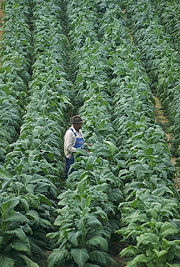 It is most commonly smoked
in the form of cigarette
s or cigar
s.
Tobacco is native to both American continents and was used by native cultures by around 3000 BC. Employed as an anthelmintic
, it has been smoked, in one form or another, since about 3000 BC. Tobacco has a long history of ceremonial use in Native American
cultures. It has played an important role in the political, economic, and cultural history of the United States
.
Tobacco plants have been grown and/or harvested by local peoples for a long time. The Takelma
for example use N. quadrivalvis
, and tobacco is very important to the Aztec
s, who consider it one of the sacred herbs of Xochipilli
, the "Flower Prince" (also known as Macuilxochitl, "Five Flowers"), a deity of agriculture
and especially entheogen
ic plants. Indeed, the origins of Cultivated Tobacco (N. tabacum
) are obscure; it is not known from the wild and appears to be a hybrid between Woodland Tobacco (N. sylvestris
), N. tomentosiformis
and another species (perhaps N. otophora
), deliberately selected by humans a long time ago.
In modern tobacco farming, Nicotiana seed
s are scattered onto the surface of the soil
, as their germination
is activated by light, then covered in cold frames. In the Colony of Virginia, seedbeds were fertilized with wood ash or animal manure
(frequently powdered horse
manure). Coyote Tobacco (N. attenuata
) of the western U.S. requires burned wood to germinate. Seedbeds were then covered with branches to protect the young plants from frost damage. These plants were left to grow until around April. Today, in the United States
, unlike other countries, Nicotiana is often fertilized with the mineral apatite
to partially starve the plant for nitrogen
, which changes the taste of the tobacco.
After the plants have reached a certain height, they are transplanted into fields. This was originally done by making a relatively large hole in the tilled earth with a tobacco peg, then placing the small plant in the hole. Various mechanical tobacco planters were invented throughout the late 19th and early 20th centuries to automate this process, making a hole, fertilizing it, and guiding a plant into the hole with one motion.
Many species of Nicotiana are also grown as ornamental plant
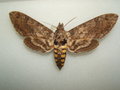
s. They are popular vespertines
, their sweet-smelling flowers opening in the evening to be visited by hawkmoths
and other pollinator
s. Several tobacco plants have been used as model organism
s in genetics
. Tobacco BY-2 cells
, derived from N. tabacum cultivar
'Bright Yellow-2', are among the most important research tools in plant cytology
. Tobacco has played a pioneering role in callus
culture research and the elucidation of the mechanism by which kinetin
works, laying the groundwork for modern agricultural biotechnology
.
Despite containing enough nicotine
and/or other compounds such as germacrene
and anabasine
and other piperidine
alkaloid
s (varying between species) to deter
most herbivore
s, a number of such animals have evolve
d the ability to feed on Nicotiana species without being harmed. Nonetheless, tobacco is unpalatable to many species and therefore some tobacco plants (chiefly Tree Tobacco, N. glauca
) have become established as invasive species
in some places.
In the nineteenth century, young tobacco plantings came under increasing attack from flea beetle
s (Epitrix cucumeris and/or Epitrix pubescens), causing destruction of half the United States tobacco crop in 1876. In the years afterward, many experiments were attempted and discussed to control the flea beetle. By 1880 it was discovered that replacing the branches with a frame covered by thin fabric would effectively protect plants from the beetle. This practice spread until it became ubiquitous in the 1890s.
Lepidoptera
whose caterpillar
s feed on Nicotiana include:
These are mainly Noctuidae
and some Sphingidae
.
Genus
In biology, a genus is a low-level taxonomic rank used in the biological classification of living and fossil organisms, which is an example of definition by genus and differentia...
of herbs
Herbaceous plant
A herbaceous plant is a plant that has leaves and stems that die down at the end of the growing season to the soil level. They have no persistent woody stem above ground...
and shrub
Shrub
A shrub or bush is distinguished from a tree by its multiple stems and shorter height, usually under 5–6 m tall. A large number of plants may become either shrubs or trees, depending on the growing conditions they experience...
s of the nightshade
Solanum
Solanum, the nightshades, horsenettles and relatives, is a large and diverse genus of annual and perennial plants. They grow as forbs, vines, subshrubs, shrubs, and small trees, and often have attractive fruit and flowers. Many formerly independent genera like Lycopersicon or Cyphomandra are...
family
Family (biology)
In biological classification, family is* a taxonomic rank. Other well-known ranks are life, domain, kingdom, phylum, class, order, genus, and species, with family fitting between order and genus. As for the other well-known ranks, there is the option of an immediately lower rank, indicated by the...
(Solanaceae
Solanaceae
Solanaceae are a family of flowering plants that include a number of important agricultural crops as well as many toxic plants. The name of the family comes from the Latin Solanum "the nightshade plant", but the further etymology of that word is unclear...
) indigenous to North
North America
North America is a continent wholly within the Northern Hemisphere and almost wholly within the Western Hemisphere. It is also considered a northern subcontinent of the Americas...
and South America
South America
South America is a continent situated in the Western Hemisphere, mostly in the Southern Hemisphere, with a relatively small portion in the Northern Hemisphere. The continent is also considered a subcontinent of the Americas. It is bordered on the west by the Pacific Ocean and on the north and east...
, Australia
Australia
Australia , officially the Commonwealth of Australia, is a country in the Southern Hemisphere comprising the mainland of the Australian continent, the island of Tasmania, and numerous smaller islands in the Indian and Pacific Oceans. It is the world's sixth-largest country by total area...
, south west Africa
Africa
Africa is the world's second largest and second most populous continent, after Asia. At about 30.2 million km² including adjacent islands, it covers 6% of the Earth's total surface area and 20.4% of the total land area...
and the South Pacific
Oceania
Oceania is a region centered on the islands of the tropical Pacific Ocean. Conceptions of what constitutes Oceania range from the coral atolls and volcanic islands of the South Pacific to the entire insular region between Asia and the Americas, including Australasia and the Malay Archipelago...
. Various Nicotiana species
Species
In biology, a species is one of the basic units of biological classification and a taxonomic rank. A species is often defined as a group of organisms capable of interbreeding and producing fertile offspring. While in many cases this definition is adequate, more precise or differing measures are...
, commonly referred to as tobacco plants, are cultivated and grown to produce tobacco
Tobacco
Tobacco is an agricultural product processed from the leaves of plants in the genus Nicotiana. It can be consumed, used as a pesticide and, in the form of nicotine tartrate, used in some medicines...
. Of all Nicotiana species, Cultivated Tobacco (N. tabacum
Nicotiana tabacum
Nicotiana tabacum, or cultivated tobacco, is a perennial herbaceous plant. It is found only in cultivation, where it is the most commonly grown of all plants in the Nicotiana genus, and its leaves are commercially grown in many countries to be processed into tobacco. It grows to heights between 1...
) is the most widely planted and is grown worldwide for production of tobacco leaf for cigarette
Cigarette
A cigarette is a small roll of finely cut tobacco leaves wrapped in a cylinder of thin paper for smoking. The cigarette is ignited at one end and allowed to smoulder; its smoke is inhaled from the other end, which is held in or to the mouth and in some cases a cigarette holder may be used as well...
s. The genus is named in honor of Jean Nicot
Jean Nicot
Jean Nicot was a French diplomat and scholar.Born in Nîmes, in the south of France, he was French ambassador in Lisbon, Portugal from 1559 to 1561....
, who in 1561 was the first to present tobacco to the French royal court. Nicotiana germination is usually 2–5 days in 27 °C (80.6 °F) weather.
Etymology
The word nicotiana (as well as nicotineNicotine
Nicotine is an alkaloid found in the nightshade family of plants that constitutes approximately 0.6–3.0% of the dry weight of tobacco, with biosynthesis taking place in the roots and accumulation occurring in the leaves...
) was named in honor of Jean Nicot
Jean Nicot
Jean Nicot was a French diplomat and scholar.Born in Nîmes, in the south of France, he was French ambassador in Lisbon, Portugal from 1559 to 1561....
, French
France
The French Republic , The French Republic , The French Republic , (commonly known as France , is a unitary semi-presidential republic in Western Europe with several overseas territories and islands located on other continents and in the Indian, Pacific, and Atlantic oceans. Metropolitan France...
ambassador
Ambassador
An ambassador is the highest ranking diplomat who represents a nation and is usually accredited to a foreign sovereign or government, or to an international organization....
to Portugal
Portugal
Portugal , officially the Portuguese Republic is a country situated in southwestern Europe on the Iberian Peninsula. Portugal is the westernmost country of Europe, and is bordered by the Atlantic Ocean to the West and South and by Spain to the North and East. The Atlantic archipelagos of the...
, who in 1559 sent it as a medicine to the court of Catherine de' Medici
Catherine de' Medici
Catherine de' Medici was an Italian noblewoman who was Queen consort of France from 1547 until 1559, as the wife of King Henry II of France....
.
Cultivation
Tobacco smoking
Tobacco smoking is the practice where tobacco is burned and the resulting smoke is inhaled. The practice may have begun as early as 5000–3000 BCE. Tobacco was introduced to Eurasia in the late 16th century where it followed common trade routes...
in the form of cigarette
Cigarette
A cigarette is a small roll of finely cut tobacco leaves wrapped in a cylinder of thin paper for smoking. The cigarette is ignited at one end and allowed to smoulder; its smoke is inhaled from the other end, which is held in or to the mouth and in some cases a cigarette holder may be used as well...
s or cigar
Cigar
A cigar is a tightly-rolled bundle of dried and fermented tobacco that is ignited so that its smoke may be drawn into the mouth. Cigar tobacco is grown in significant quantities in Brazil, Cameroon, Cuba, the Dominican Republic, Honduras, Indonesia, Mexico, Nicaragua, Philippines, and the Eastern...
s.
Tobacco is native to both American continents and was used by native cultures by around 3000 BC. Employed as an anthelmintic
Anthelmintic
Anthelmintics or antihelminthics are drugs that expel parasitic worms from the body, by either stunning or killing them. They may also be called vermifuges or vermicides .-Pharmaceutical classes:...
, it has been smoked, in one form or another, since about 3000 BC. Tobacco has a long history of ceremonial use in Native American
Indigenous peoples of the Americas
The indigenous peoples of the Americas are the pre-Columbian inhabitants of North and South America, their descendants and other ethnic groups who are identified with those peoples. Indigenous peoples are known in Canada as Aboriginal peoples, and in the United States as Native Americans...
cultures. It has played an important role in the political, economic, and cultural history of the United States
United States
The United States of America is a federal constitutional republic comprising fifty states and a federal district...
.
Tobacco plants have been grown and/or harvested by local peoples for a long time. The Takelma
Takelma
The Takelma were a Native American people that lived in the Rogue Valley of interior southwest Oregon, with most of their villages sited along the Rogue River. The name Takelma means Along the River.-History:...
for example use N. quadrivalvis
Nicotiana quadrivalvis
Nicotiana quadrivalvis is a species of wild tobacco known by the common name Indian tobacco. It is native to the western United States, where it grows in many types of habitat. It is a bushy, sprawling annual herb growing up to two meters in maximum height...
, and tobacco is very important to the Aztec
Aztec
The Aztec people were certain ethnic groups of central Mexico, particularly those groups who spoke the Nahuatl language and who dominated large parts of Mesoamerica in the 14th, 15th and 16th centuries, a period referred to as the late post-classic period in Mesoamerican chronology.Aztec is the...
s, who consider it one of the sacred herbs of Xochipilli
Xochipilli
thumb|300px|right| Image of Xochipilli.Xochipilli was the god of art, games, beauty, dance, flowers, and song in Aztec mythology. His name contains the Nahuatl words xochitl and pilli , and hence means "flower prince"...
, the "Flower Prince" (also known as Macuilxochitl, "Five Flowers"), a deity of agriculture
Agriculture
Agriculture is the cultivation of animals, plants, fungi and other life forms for food, fiber, and other products used to sustain life. Agriculture was the key implement in the rise of sedentary human civilization, whereby farming of domesticated species created food surpluses that nurtured the...
and especially entheogen
Entheogen
An entheogen , in the strict sense, is a psychoactive substance used in a religious, shamanic, or spiritual context. Historically, entheogens were mostly derived from plant sources and have been used in a variety of traditional religious contexts...
ic plants. Indeed, the origins of Cultivated Tobacco (N. tabacum
Nicotiana tabacum
Nicotiana tabacum, or cultivated tobacco, is a perennial herbaceous plant. It is found only in cultivation, where it is the most commonly grown of all plants in the Nicotiana genus, and its leaves are commercially grown in many countries to be processed into tobacco. It grows to heights between 1...
) are obscure; it is not known from the wild and appears to be a hybrid between Woodland Tobacco (N. sylvestris
Nicotiana sylvestris
Nicotiana sylvestris is a species of wild tobacco known by the common names Woodland Tobacco and South American Tobacco. It is native to South America, and is often grown in gardens for its scented flowers. The scent is strongest at night, so as to attract pollinating moths...
), N. tomentosiformis
Nicotiana tomentosiformis
Nicotiana tomentosiformis is a perennial herbaceous plant. It is a wild species of tobacco native to the Yungas Valley region in the eastern piedmont of the Andes Mountains, primarily in Bolivia....
and another species (perhaps N. otophora
Nicotiana otophora
Nicotiana otophora is a perennial herbaceous plant. It is a wild species of tobacco native to the Andes Mountains of Bolivia and Argentina....
), deliberately selected by humans a long time ago.
In modern tobacco farming, Nicotiana seed
Seed
A seed is a small embryonic plant enclosed in a covering called the seed coat, usually with some stored food. It is the product of the ripened ovule of gymnosperm and angiosperm plants which occurs after fertilization and some growth within the mother plant...
s are scattered onto the surface of the soil
Soil
Soil is a natural body consisting of layers of mineral constituents of variable thicknesses, which differ from the parent materials in their morphological, physical, chemical, and mineralogical characteristics...
, as their germination
Germination
Germination is the process in which a plant or fungus emerges from a seed or spore, respectively, and begins growth. The most common example of germination is the sprouting of a seedling from a seed of an angiosperm or gymnosperm. However the growth of a sporeling from a spore, for example the...
is activated by light, then covered in cold frames. In the Colony of Virginia, seedbeds were fertilized with wood ash or animal manure
Manure
Manure is organic matter used as organic fertilizer in agriculture. Manures contribute to the fertility of the soil by adding organic matter and nutrients, such as nitrogen, that are trapped by bacteria in the soil...
(frequently powdered horse
Horse
The horse is one of two extant subspecies of Equus ferus, or the wild horse. It is a single-hooved mammal belonging to the taxonomic family Equidae. The horse has evolved over the past 45 to 55 million years from a small multi-toed creature into the large, single-toed animal of today...
manure). Coyote Tobacco (N. attenuata
Nicotiana attenuata
Nicotiana attenuata is a species of wild tobacco known by the common name coyote tobacco. It is native to western North America from British Columbia to Texas and northern Mexico, where it grows in many types of habitat. It is a glandular and sparsely hairy annual herb exceeding a meter in maximum...
) of the western U.S. requires burned wood to germinate. Seedbeds were then covered with branches to protect the young plants from frost damage. These plants were left to grow until around April. Today, in the United States
United States
The United States of America is a federal constitutional republic comprising fifty states and a federal district...
, unlike other countries, Nicotiana is often fertilized with the mineral apatite
Apatite
Apatite is a group of phosphate minerals, usually referring to hydroxylapatite, fluorapatite, chlorapatite and bromapatite, named for high concentrations of OH−, F−, Cl− or Br− ions, respectively, in the crystal...
to partially starve the plant for nitrogen
Nitrogen
Nitrogen is a chemical element that has the symbol N, atomic number of 7 and atomic mass 14.00674 u. Elemental nitrogen is a colorless, odorless, tasteless, and mostly inert diatomic gas at standard conditions, constituting 78.08% by volume of Earth's atmosphere...
, which changes the taste of the tobacco.
After the plants have reached a certain height, they are transplanted into fields. This was originally done by making a relatively large hole in the tilled earth with a tobacco peg, then placing the small plant in the hole. Various mechanical tobacco planters were invented throughout the late 19th and early 20th centuries to automate this process, making a hole, fertilizing it, and guiding a plant into the hole with one motion.
Many species of Nicotiana are also grown as ornamental plant
Ornamental plant
Ornamental plants are plants that are grown for decorative purposes in gardens and landscape design projects, as house plants, for cut flowers and specimen display...
s. They are popular vespertines
Vespertine (biology)
Vespertine is a term used in the life sciences to indicate something of, relating to, or occurring in the evening. In botany, a vespertine flower is one that opens or blooms in the evening. In zoology, the term is used for a creature that becomes active in the evening, such as bats and owls...
, their sweet-smelling flowers opening in the evening to be visited by hawkmoths
Sphingidae
Sphingidae is a family of moths , commonly known as hawk moths, sphinx moths and hornworms, that includes about 1,200 species . It is best represented in the tropics but there are species in every region . They are moderate to large in size and are distinguished among moths for their rapid,...
and other pollinator
Pollinator
A pollinator is the biotic agent that moves pollen from the male anthers of a flower to the female stigma of a flower to accomplish fertilization or syngamy of the female gamete in the ovule of the flower by the male gamete from the pollen grain...
s. Several tobacco plants have been used as model organism
Model organism
A model organism is a non-human species that is extensively studied to understand particular biological phenomena, with the expectation that discoveries made in the organism model will provide insight into the workings of other organisms. Model organisms are in vivo models and are widely used to...
s in genetics
Genetics
Genetics , a discipline of biology, is the science of genes, heredity, and variation in living organisms....
. Tobacco BY-2 cells
Tobacco BY-2 cells
Tobacco BY-2 cells is cell line of plant cells, which was established from a callus induced on a seedling of Nicotiana tabacum cv. BY-2 .-Overview:...
, derived from N. tabacum cultivar
Cultivar
A cultivar'Cultivar has two meanings as explained under Formal definition. When used in reference to a taxon, the word does not apply to an individual plant but to all those plants sharing the unique characteristics that define the cultivar. is a plant or group of plants selected for desirable...
'Bright Yellow-2', are among the most important research tools in plant cytology
Cell biology
Cell biology is a scientific discipline that studies cells – their physiological properties, their structure, the organelles they contain, interactions with their environment, their life cycle, division and death. This is done both on a microscopic and molecular level...
. Tobacco has played a pioneering role in callus
Callus (cell biology)
Plant callus is a mass of undifferentiated cells derived from plant tissue for use in biological research and biotechnology. In plant biology, callus cells are those cells that cover a plant wound. To induce callus formation, plant tissues are surface sterilized and then plated onto in vitro...
culture research and the elucidation of the mechanism by which kinetin
Kinetin
Kinetin is a kind of cytokinin, a class of plant hormone that promotes cell division. Kinetin was originally isolated by Miller and Skoog et al. as a compound from autoclaved herring sperm DNA that had cell division-promoting activity. It was given the name kinetin because of its ability to induce...
works, laying the groundwork for modern agricultural biotechnology
Biotechnology
Biotechnology is a field of applied biology that involves the use of living organisms and bioprocesses in engineering, technology, medicine and other fields requiring bioproducts. Biotechnology also utilizes these products for manufacturing purpose...
.
Ecology
Despite containing enough nicotine
Nicotine
Nicotine is an alkaloid found in the nightshade family of plants that constitutes approximately 0.6–3.0% of the dry weight of tobacco, with biosynthesis taking place in the roots and accumulation occurring in the leaves...
and/or other compounds such as germacrene
Germacrene
Germacrenes are a class of volatile organic hydrocarbons, specifically, sesquiterpenes. Germacrenes are typically produced in a number plant species for their antimicrobial and insecticidal properties, though they also play a role as insect pheromones...
and anabasine
Anabasine
Anabasine is a pyridine alkaloid found in the Tree Tobacco plant, a close relative of the common tobacco plant . Chemically, it is similar to nicotine...
and other piperidine
Piperidine
Piperidine is an organic compound with the molecular formula 5NH. This heterocyclic amine consists of a six-membered ring containing five methylene units and one nitrogen atom...
alkaloid
Alkaloid
Alkaloids are a group of naturally occurring chemical compounds that contain mostly basic nitrogen atoms. This group also includes some related compounds with neutral and even weakly acidic properties. Also some synthetic compounds of similar structure are attributed to alkaloids...
s (varying between species) to deter
Plant defense against herbivory
Plant defense against herbivory or host-plant resistance describes a range of adaptations evolved by plants which improve their survival and reproduction by reducing the impact of herbivores. Plants use several strategies to defend against damage caused by herbivores...
most herbivore
Herbivore
Herbivores are organisms that are anatomically and physiologically adapted to eat plant-based foods. Herbivory is a form of consumption in which an organism principally eats autotrophs such as plants, algae and photosynthesizing bacteria. More generally, organisms that feed on autotrophs in...
s, a number of such animals have evolve
Evolution
Evolution is any change across successive generations in the heritable characteristics of biological populations. Evolutionary processes give rise to diversity at every level of biological organisation, including species, individual organisms and molecules such as DNA and proteins.Life on Earth...
d the ability to feed on Nicotiana species without being harmed. Nonetheless, tobacco is unpalatable to many species and therefore some tobacco plants (chiefly Tree Tobacco, N. glauca
Nicotiana glauca
Nicotiana glauca is a species of wild tobacco known by the common names tree tobacco and incorrectly also Mustard tree. Its leaves are attached to the stalk by petioles , and its leaves and stems are neither pubescent nor sticky like Nicotiana tabacum...
) have become established as invasive species
Invasive species
"Invasive species", or invasive exotics, is a nomenclature term and categorization phrase used for flora and fauna, and for specific restoration-preservation processes in native habitats, with several definitions....
in some places.
In the nineteenth century, young tobacco plantings came under increasing attack from flea beetle
Flea beetle
Flea beetles is a general name applied to the small, jumping beetles of the leaf beetle family . They make up the tribe Alticini, which is a part of the subfamily Galerucinae, though they were historically classified as a subfamily in their own right...
s (Epitrix cucumeris and/or Epitrix pubescens), causing destruction of half the United States tobacco crop in 1876. In the years afterward, many experiments were attempted and discussed to control the flea beetle. By 1880 it was discovered that replacing the branches with a frame covered by thin fabric would effectively protect plants from the beetle. This practice spread until it became ubiquitous in the 1890s.
Lepidoptera
Lepidoptera
Lepidoptera is a large order of insects that includes moths and butterflies . It is one of the most widespread and widely recognizable insect orders in the world, encompassing moths and the three superfamilies of butterflies, skipper butterflies, and moth-butterflies...
whose caterpillar
Caterpillar
Caterpillars are the larval form of members of the order Lepidoptera . They are mostly herbivorous in food habit, although some species are insectivorous. Caterpillars are voracious feeders and many of them are considered to be pests in agriculture...
s feed on Nicotiana include:
- Dark Sword-grassDark Sword-grassThe dark sword-grass or black cutworm is a small noctuid moth found worldwide. The larva is a serious agricultural pest and feeds on nearly all varieties of vegetables and many important grains.-Description:...
or Black cutworm, Agrotis ipsilon - Turnip MothTurnip MothThe Turnip Moth is a moth of the family Noctuidae. It is a common European species, but it is also found in Asia and Africa, very likely having been spread by the international trade in nursery stock...
, Agrotis segetum - Mouse MothMouse MothThe Mouse Moth is a moth of the family Noctuidae. It is a very widespread species with a Holarctic distribution.This is a rather drab but distinctive species. The forewings are uniform dark brown with three blackish spots arranged in a triangle. The hindwings are buffish, darker towards the...
, Amphipyra tragopoginis - The Nutmeg, Discestra trifolii
- Endoclita excrescens
- Blackburn's Sphinx MothManduca blackburniManduca blackburni, commonly known as Blackburn's Sphinx Moth, the Hawaiian Tomato Hornworm or Hawaiian Tobacco Hornworm, is a species of moth in the family Sphingidae that is endemic to Hawaii. Previously known to inhabit all of the main islands, this rare moth is now seen on Maui, the Big Island,...
, Manduca blackburni - Tobacco Hornworm, Manduca sexta
- Tomato Hornworm, Manduca quinquemaculata
- Cabbage MothCabbage MothNote: the Small White species of butterfly is commonly called a "cabbage moth" in North America.The Cabbage Moth is a common European moth of the family Noctuidae....
, Mamestra brassicae - Angle ShadesAngle ShadesThe Angle Shades is a moth of the family Noctuidae. It is a common and familiar European species and is often strongly migratory....
, Phlogophora meticulosa - Setaceous Hebrew CharacterSetaceous Hebrew CharacterThe Setaceous Hebrew Character is a moth of the family Noctuidae. It is found in the Palearctic ecozone. It is a common species throughout Europe. It is also found in North America, from coast to coast across Canada and the northern United States to western Alaska. It occurs in the Rocky Mountains...
, Xestia c-nigrum
These are mainly Noctuidae
Noctuidae
The Noctuidae or owlet moths are a family of robustly-built moths that includes more than 35,000 known species out of possibly 100,000 total, in more than 4,200 genera. They constitute the largest family in the Lepidoptera....
and some Sphingidae
Sphingidae
Sphingidae is a family of moths , commonly known as hawk moths, sphinx moths and hornworms, that includes about 1,200 species . It is best represented in the tropics but there are species in every region . They are moderate to large in size and are distinguished among moths for their rapid,...
.
Species
- Nicotiana acaulis Speg.
- Nicotiana acuminataNicotiana acuminataNicotiana acuminata is a species of wild tobacco known by the English common name manyflower tobacco. It is native to Argentina and Chile but it is known on other continents, including North America and Australia, as an introduced species....
(Graham) Hook.William Jackson HookerSir William Jackson Hooker, FRS was an English systematic botanist and organiser. He held the post of Regius Professor of Botany at Glasgow University, and was the first Director of the Royal Botanic Gardens, Kew. He enjoyed the friendship and support of Sir Joseph Banks for his exploring,...
– Manyflower Tobacco - Nicotiana africanaNicotiana africanaNicotiana africana is a species of plant in the Solanaceae family. It is endemic to Namibia. Its natural habitats are subtropical or tropical dry shrubland and rocky areas.-References:* Craven, P. 2004. . Downloaded on 22 August 2007....
Merxm. - Nicotiana alata LinkJohann Heinrich Friedrich LinkJohann Heinrich Friedrich Link was a German naturalist and botanist.Link was born at Hildesheim as a son of the minister August Heinrich Link , who taught him the love for nature through collection of 'natural objects'...
& OttoChristoph Friedrich OttoChristoph Friedrich Otto was a German gardener and botanist. He was born in Schneeberg, Saxony. From 1805 to 1843 he was inspector of the Botanical Garden in Berlin. Together with Albert Gottfried Dietrich he edited the Allgemeinen Gartenzeitung from 1833 until his death in 1856 in Berlin.The...
– Winged Tobacco, Jasmine Tobacco, Tanbaku (PersianPersian languagePersian is an Iranian language within the Indo-Iranian branch of the Indo-European languages. It is primarily spoken in Iran, Afghanistan, Tajikistan and countries which historically came under Persian influence...
) - Nicotiana ameghinoi Speg.
- Nicotiana amplexicaulis N. T. Burb.Nancy Tyson BurbidgeNancy Tyson Burbidge AO was an Australian systemic botanist, conservationist and herbarium curator.Burbidge was born in Cleckheaton, Yorkshire; her father, William Burbidge, was an Anglican clergyman and immigrated to Australia in 1913 when he was appointed to a parish in Western Australia...
- Nicotiana arentsii Goodsp.Thomas Harper GoodspeedThomas Harper Goodspeed was a botanist specializing in the genetics of species Nicotiana. He was the director of the University of California Botanical Garden from 1919 to 1957...
- Nicotiana attenuataNicotiana attenuataNicotiana attenuata is a species of wild tobacco known by the common name coyote tobacco. It is native to western North America from British Columbia to Texas and northern Mexico, where it grows in many types of habitat. It is a glandular and sparsely hairy annual herb exceeding a meter in maximum...
Torrey ex S. WatsonSereno WatsonSereno Watson was an American botanist.Graduating from Yale in 1847, he drifted through various occupations until, in California, he joined the Clarence King Expedition and eventually became its expedition botanist...
– Coyote Tobacco - Nicotiana azambujae L. B. Smith & Downs
- Nicotiana benavidesii Goodsp.Thomas Harper GoodspeedThomas Harper Goodspeed was a botanist specializing in the genetics of species Nicotiana. He was the director of the University of California Botanical Garden from 1919 to 1957...
- Nicotiana benthamianaNicotiana benthamianaNicotiana benthamiana is a close relative of tobacco and species of Nicotiana indigenous to Australia.The herbaceous plant is found amongst rocks on hills and cliffs throughout the northern regions of Australia. Variable in height and habit, the species may be erect and up to 1.5 metres or...
DominKarel DominKarel Domin was a Czech botanist and politician.After gymnasium school studies in Příbram, he studied botany at the Charles University in Prague, and graduated in 1906. In 1916 he was named as professor of botany. Domin specialised in phytogeography, geobotany and plant taxonomy... - Nicotiana bonariensis Lehm.Johann Georg Christian LehmannJohann Georg Christian Lehmann was a German botanist.Born at Haselau, near Uetersen, Holstein, Lehmann studied medicine in Copenhagen and Göttingen, obtained a doctorate in medicine in 1813 and a doctorate in philosophy from he University of Jena in 1814...
- Nicotiana burbidgeae Symon
- Nicotiana cavicola N. T. Burb.Nancy Tyson BurbidgeNancy Tyson Burbidge AO was an Australian systemic botanist, conservationist and herbarium curator.Burbidge was born in Cleckheaton, Yorkshire; her father, William Burbidge, was an Anglican clergyman and immigrated to Australia in 1913 when he was appointed to a parish in Western Australia...
- Nicotiana clevelandiiNicotiana clevelandiiNicotiana clevelandii is a species of wild tobacco known by the common name Cleveland's tobacco. It is native to northwestern Mexico and the southwestern United States in California and Arizona, where it grows in the Sonoran Desert and in coastal canyons. It is a glandular and sparsely hairy annual...
A. GrayAsa Gray-References:*Asa Gray. Dictionary of American Biography. American Council of Learned Societies, 1928–1936.*Asa Gray. Encyclopedia of World Biography, 2nd ed. 17 Vols. Gale Research, 1998.*Asa Gray. Plant Sciences. 4 vols. Macmillan Reference USA, 2001.... - Nicotiana cordifolia Phil.
- Nicotiana corymbosa J. Rémy
- Nicotiana cutleri D'Arcy
- Nicotiana debneyi DominKarel DominKarel Domin was a Czech botanist and politician.After gymnasium school studies in Příbram, he studied botany at the Charles University in Prague, and graduated in 1906. In 1916 he was named as professor of botany. Domin specialised in phytogeography, geobotany and plant taxonomy...
- Nicotiana excelsior (J. M. Black) J. M. Black
- Nicotiana exigua H.-M. Wheeler
- Nicotiana forgetiana Hemsl.
- Nicotiana fragrans Hooker
- Nicotiana glaucaNicotiana glaucaNicotiana glauca is a species of wild tobacco known by the common names tree tobacco and incorrectly also Mustard tree. Its leaves are attached to the stalk by petioles , and its leaves and stems are neither pubescent nor sticky like Nicotiana tabacum...
Graham – Tree Tobacco, Brazilian Tree Tobacco, Shrub Tobacco, Mustard Tree - Nicotiana glutinosa L.
- Nicotiana goodspeedii H.-M. Wheeler
- Nicotiana gossei DominKarel DominKarel Domin was a Czech botanist and politician.After gymnasium school studies in Příbram, he studied botany at the Charles University in Prague, and graduated in 1906. In 1916 he was named as professor of botany. Domin specialised in phytogeography, geobotany and plant taxonomy...
- Nicotiana hesperis N. T. Burb.Nancy Tyson BurbidgeNancy Tyson Burbidge AO was an Australian systemic botanist, conservationist and herbarium curator.Burbidge was born in Cleckheaton, Yorkshire; her father, William Burbidge, was an Anglican clergyman and immigrated to Australia in 1913 when he was appointed to a parish in Western Australia...
- Nicotiana heterantha Kenneally & Symon
- Nicotiana ingulba J. M. Black
- Nicotiana kawakamii Y. Ohashi
- Nicotiana knightiana Goodsp.Thomas Harper GoodspeedThomas Harper Goodspeed was a botanist specializing in the genetics of species Nicotiana. He was the director of the University of California Botanical Garden from 1919 to 1957...
- Nicotiana langsdorffii Weinm.
- Nicotiana linearis Phil.
- Nicotiana longibracteata Phil.
- Nicotiana longifloraNicotiana longifloraNicotiana longiflora, the Longflower Tobacco, is a species of tobacco native to South America that is sometimes cultivated for its tubular flowers that emit a very sweet odor at night....
Cav. - Nicotiana maritima H.-M. Wheeler
- Nicotiana megalosiphon Van Huerck & Müll. Arg.
- Nicotiana miersii J. Rémy
- Nicotiana mutabilis Stehmann & Samir
- Nicotiana nesophila I. M. Johnston
- Nicotiana noctiflora Hook.William Jackson HookerSir William Jackson Hooker, FRS was an English systematic botanist and organiser. He held the post of Regius Professor of Botany at Glasgow University, and was the first Director of the Royal Botanic Gardens, Kew. He enjoyed the friendship and support of Sir Joseph Banks for his exploring,...
- Nicotiana nudicaulis S. WatsonSereno WatsonSereno Watson was an American botanist.Graduating from Yale in 1847, he drifted through various occupations until, in California, he joined the Clarence King Expedition and eventually became its expedition botanist...
- Nicotiana occidentalisNicotiana occidentalisNicotiana occidentalis, commonly known as Native Tobacco, is a short-lived herb native to Australia.-Description:It grows as an annual or short-lived perennial herb, from ten to 120 centimetres high, with white or pink flowers...
H.-M. Wheeler - Nicotiana obtusifoliaNicotiana obtusifoliaNicotiana obtusifolia, or desert tobacco, is a plant native to the southwestern United States and Mexico....
M. MartensMartin MartensMartin Martens was a Belgian botanist who was born in Maastricht, Netherlands.Martens was a professor of chemistry and botany at the Catholic University of Louvain who specialized in the study and classification of Pteridophyta...
& GaleottiHenri Guillaume GaleottiHenri Guillaume Galeotti was a French-Belgian botanist and geologist of Italian parentage who was born in Paris. He specialized in the study of the family Cactaceae....
(previously designated N. trigonophylla) – Desert Tobacco, Punche, "Tabaquillo" - Nicotiana otophoraNicotiana otophoraNicotiana otophora is a perennial herbaceous plant. It is a wild species of tobacco native to the Andes Mountains of Bolivia and Argentina....
Griseb. - Nicotiana paa Mart. Crov.
- Nicotiana palmeri A. GrayAsa Gray-References:*Asa Gray. Dictionary of American Biography. American Council of Learned Societies, 1928–1936.*Asa Gray. Encyclopedia of World Biography, 2nd ed. 17 Vols. Gale Research, 1998.*Asa Gray. Plant Sciences. 4 vols. Macmillan Reference USA, 2001....
- Nicotiana paniculata L.
- Nicotiana pauciflora J. Rémy
- Nicotiana petuniodes (Griseb.) Millán.
- Nicotiana plumbaginifolia Viv.
- Nicotiana quadrivalvisNicotiana quadrivalvisNicotiana quadrivalvis is a species of wild tobacco known by the common name Indian tobacco. It is native to the western United States, where it grows in many types of habitat. It is a bushy, sprawling annual herb growing up to two meters in maximum height...
PurshFrederick Traugott PurshFrederick Traugott Pursh was a German-American botanist.Born in Grossenhain, Saxony, to the name Friedrich Traugott Pursh, he was educated at Dresden Botanical Gardens, and emigrated to the United States in 1799...
– replaces the following older classifications: N. multivalvis Lindl., N. plumbaginifolia Viv. var. bigelovii Torrey, N. bigelovii (Torrey) S. Watson. - Nicotiana raimondii J. F. Macbr.
- Nicotiana repanda Willd.Carl Ludwig WilldenowCarl Ludwig Willdenow was a German botanist, pharmacist, and plant taxonomist. He is considered one of the founders of phytogeography, the study of the geographic distribution of plants...
– Fiddleleaf Tobacco - Nicotiana rosulata (S. Moore) DominKarel DominKarel Domin was a Czech botanist and politician.After gymnasium school studies in Příbram, he studied botany at the Charles University in Prague, and graduated in 1906. In 1916 he was named as professor of botany. Domin specialised in phytogeography, geobotany and plant taxonomy...
- Nicotiana rotundifolia Lindl.
- Nicotiana rusticaNicotiana rusticaNicotiana rustica, known in South America as Mapacho and in Vietnam as Thuoc Lao , is a plant in the Solanaceae family. It is a very potent variety of tobacco. The high concentration of nicotine in its leaves makes it useful for creating organic pesticides.Rustica is also used for entheogenic...
L. – Aztec Tobacco, Mapacho - Nicotiana setchellii Goodsp.Thomas Harper GoodspeedThomas Harper Goodspeed was a botanist specializing in the genetics of species Nicotiana. He was the director of the University of California Botanical Garden from 1919 to 1957...
- Nicotiana simulans N. T. Burb.Nancy Tyson BurbidgeNancy Tyson Burbidge AO was an Australian systemic botanist, conservationist and herbarium curator.Burbidge was born in Cleckheaton, Yorkshire; her father, William Burbidge, was an Anglican clergyman and immigrated to Australia in 1913 when he was appointed to a parish in Western Australia...
- Nicotiana solanifolia Walp.
- Nicotiana spegazzinii Millán
- Nicotiana stenocarpa H.-M. Wheeler
- Nicotiana stocktonii Brandegee
- Nicotiana suaveolensNicotiana suaveolensNicotiana suaveolens, the Australian Tobacco is a herb to 1.5 metres tall. Growing in New South Wales and Victoria....
Lehm.Johann Georg Christian LehmannJohann Georg Christian Lehmann was a German botanist.Born at Haselau, near Uetersen, Holstein, Lehmann studied medicine in Copenhagen and Göttingen, obtained a doctorate in medicine in 1813 and a doctorate in philosophy from he University of Jena in 1814...
– Australian Tobacco - Nicotiana sylvestrisNicotiana sylvestrisNicotiana sylvestris is a species of wild tobacco known by the common names Woodland Tobacco and South American Tobacco. It is native to South America, and is often grown in gardens for its scented flowers. The scent is strongest at night, so as to attract pollinating moths...
Speg. & Comes – South American Tobacco, Woodland Tobacco - Nicotiana tabacumNicotiana tabacumNicotiana tabacum, or cultivated tobacco, is a perennial herbaceous plant. It is found only in cultivation, where it is the most commonly grown of all plants in the Nicotiana genus, and its leaves are commercially grown in many countries to be processed into tobacco. It grows to heights between 1...
L. – Commercial tobacco grown for the production of cigaretteCigaretteA cigarette is a small roll of finely cut tobacco leaves wrapped in a cylinder of thin paper for smoking. The cigarette is ignited at one end and allowed to smoulder; its smoke is inhaled from the other end, which is held in or to the mouth and in some cases a cigarette holder may be used as well...
s, cigarCigarA cigar is a tightly-rolled bundle of dried and fermented tobacco that is ignited so that its smoke may be drawn into the mouth. Cigar tobacco is grown in significant quantities in Brazil, Cameroon, Cuba, the Dominican Republic, Honduras, Indonesia, Mexico, Nicaragua, Philippines, and the Eastern...
s, chewing tobaccoChewing tobaccoChewing tobacco Chewing tobacco Chewing tobacco (also known colloquially as hoobastank, backy, tobac, doogooos,Hogleg, chewpoos, chits, chewsky, chawsky, dip, flab, chowers, guy, or a wad, as well as referred to as dipsky, snuff, a pinch, a yopper, a Packing a bomb, a tobbackey or packing a...
, etc. - Nicotiana thrysiflora Bitter ex Goodsp.Thomas Harper GoodspeedThomas Harper Goodspeed was a botanist specializing in the genetics of species Nicotiana. He was the director of the University of California Botanical Garden from 1919 to 1957...
- Nicotiana tomentosa Ruiz & Pav.
- Nicotiana tomentosiformisNicotiana tomentosiformisNicotiana tomentosiformis is a perennial herbaceous plant. It is a wild species of tobacco native to the Yungas Valley region in the eastern piedmont of the Andes Mountains, primarily in Bolivia....
Goodsp.Thomas Harper GoodspeedThomas Harper Goodspeed was a botanist specializing in the genetics of species Nicotiana. He was the director of the University of California Botanical Garden from 1919 to 1957... - Nicotiana truncata D. E. Symon
- Nicotiana umbratica N. T. Burb.Nancy Tyson BurbidgeNancy Tyson Burbidge AO was an Australian systemic botanist, conservationist and herbarium curator.Burbidge was born in Cleckheaton, Yorkshire; her father, William Burbidge, was an Anglican clergyman and immigrated to Australia in 1913 when he was appointed to a parish in Western Australia...
- Nicotiana undulata Ruiz & Pav.
- Nicotiana velutina H.-M. Wheeler
- Nicotiana wigandioides Koch & Fintelm.
- Nicotiana wuttkei Clarkson & Symon
Manmade hybrids
- Nicotiana × didepta N. debneyi × N. tabacum
- Nicotiana × digluta N. glutinosa × N. tabacum
- Nicotiana × sanderaeNicotiana × sanderaeNicotiana × sanderae Is the most common of the Nicotiana or "flowering tobacco" plants to be found and sold in the United Kingdom. This hybrid of the Nicotiana plant requires soft soil mixed with sand to thrive. The plant will grow to heights of and will give off a sweet scent in the evening, like...
Hort. ex Wats. N. alata × N. forgetiana
Formerly placed here
- Petunia axillaris (Lam.) Britton et al. (as N. axillaris Lam.)
See also
- AgroinfiltrationAgroinfiltrationAgroinfiltration is a method in plant biology to induce transient expression of genes in a plant or to produce a desired protein. In the method a suspension of Agrobacterium is injected into a plant leaf, where it transfers the desired gene to plant cells...
- Edgar AndersonEdgar AndersonEdgar Anderson was an American botanist. His 1949 book Introgressive Hybridization was an original and important contribution to botanical genetics....
- Indian tobacco
- Jamestown, VirginiaJamestown, VirginiaJamestown was a settlement in the Colony of Virginia. Established by the Virginia Company of London as "James Fort" on May 14, 1607 , it was the first permanent English settlement in what is now the United States, following several earlier failed attempts, including the Lost Colony of Roanoke...
- John RolfeJohn RolfeJohn Rolfe was one of the early English settlers of North America. He is credited with the first successful cultivation of tobacco as an export crop in the Colony of Virginia and is known as the husband of Pocahontas, daughter of the chief of the Powhatan Confederacy.In 1961, the Jamestown...
- List of plants poisonous to equines
- PectinesterasePectinesterasePectinesterase is a ubiquitous cell-wall-associated enzyme that presents several isoforms that facilitate plant cell wall modification and subsequent breakdown. It is found in all higher plants as well as in some bacteria and fungi...
- Pipe-weed
- Tomacco
- Turkish tobaccoTurkish tobaccoTurkish tobacco or Oriental tobacco is a highly aromatic, small-leafed variety of tobacco which is sun-cured. Historically, it was cultivated primarily in Thrace and Macedonia, now divided among Greece, Bulgaria, the Republic of Macedonia, and Turkey, but it is now also grown on the Black Sea...