

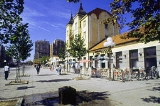
Leskovac

Encyclopedia
Leskovac is a city and municipality
in southern Serbia
. It is the administrative center of the Jablanica District
of Serbia. According to the 2011 census, the city has 110,610 inhabitants, while the municipality has 143,962.
(8th century BC) is seen at the Hisar Hill
that was protected by a deep moat with a palisade on its inner side, a fortification similar to that of another fortification on the Gradac
site in Lanište
in the Velika Morava
basin.
A later Iron Age settlement existed at Hisar dating from the 6th century BC until the 4th century BC. Besides Greek fibulae and pottery, Triballi
(Thracian) tombs have been excavated in 2005.
Archeological findings from the multi-layer sites indicate that the Scordisci
and Triballi
inhabited the Leskovac valley before the Roman conquest in the 1st century BC. Famous cultural-historic monuments in this area are: the Roman
necropolis
in Mala Kopasnica
originating from 2nd century AD, the Eastern Roman town of Justiniana Prima
built in 535 AD. Slavs settled the region in the 6th century, and the town was known as Dubočica.
The Battle of Dubočica
took place on September 24, 1454, between the Serbian Despotate
and the invading Ottoman Empire
, and ended in a Serbian victory. During Ottoman
rule Leskovac was part of the Sanjak of Niš
.
The Jasunje monasteries dedicated to the Virgin of Transfiguration and St. John the Baptist were built in 1499 as an endowment of sister Ksenija. The Church of St. John the Baptist was built in the 16th century.
Leskovac became part of Serbia after the Treaty of Berlin
, at which time Serbia also became fully independent from the Ottoman Empire. Full independence from the Ottoman Balkans
initially had a negative impact on trade. However, by the end of the 19th century, the town of Leskovac was famous across the Balkans for its workshops which turned hemp into rope. Leskovac was known as Leskofça during Ottoman rule and was bounded to Niş
sanjak until 1878.
Soon there were three watermill-driven lace producers in the region. In 1896, the founders of these companies pooled their resources and bought factory equipment for the production of woollen cloth from the German Empire
. This was the first factory on the outskirts of the town. In 1903, a factory for hemp processing was built on the riverbank north of the old town centre. Amidst the First Serbian Uprising
of the Serbian revolution
(1804–1815), a forbidden Serbian Orthodox church
was built in the town, through tricking the Turkish lords that the building would instead serve as a residence for the town-priest, and added a chimney, hence its name Odžaklija
(Chimney). In 1922, the Teokarevic family opened a wool cloth factory in the small town of Vucje near Leskovac. By 1938, the private textile factories of Leskovac town employed 2,560 workers
In the 1870s, there were thousands of hemp-processors in Leskovac, producing up to 150,000 cartloads per year.
The city was once known as "Little Manchester", because of its 19th-century textile industry which was second only to that of Manchester
, England
. The city continued to be a major textile center until the collapse of communism in Eastern Europe, but due to the economic isolation of Serbia resulting from ethnic wars, its remote location, and failure to privatize the mills, the industry collapsed resulting in depression of the economy in the area.
, the city was part of Nedić's Serbia
. It was heavily bombed by the Allies
in 1944, with estimates of civilian casualties varying from over a thousand to six thousand. The heaviest bombing occurred on September 6, 1944 when most of the central part of the town was destroyed. The date is marked annually in the city.
Fitzroy Maclean the head of the British military mission to the Partisans wrote ..... as we watched the whole of Leskovac seemed to rise bodily in the air in a tornado of dust and smoke and debris, and a great rending noise fell on our ears. ..... What was left of Leskovac lay enveloped in a pall of smoke; several buildings seemed to be burning fiercely. Even the Partisans seemed subdued. This was part of Operation Ratweek to attack the enemy withdrawal, and air reconnaissance had confirmed the presence of a strong concentration of armour and motor transport there, although he said the use of 50 ‘Heavies’ or Flying Fortresses did seem rather like taking a sledge-hammer to crack a walnut..
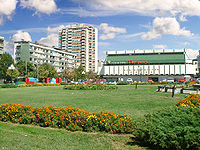 The city proper of Leskovac is divided into the following local communities (месне заједнице or mesne zajednice):
, with population of around 2,400 and Vučje
(3,300). Other larger villages are Bratmilovce
(3,500), Vinarce
(3,100), and Brestovac (Leskovac)
(2,100). The full list of populated places is:
Babičko
(515)
Badince
(521)
Barje
(372)
Belanovce
(600)
Beli Potok
(629)
Bistrica
(79)
Bobište
(1782)
Boćevica
(151)
Bogojevce
(1571)
Bojišina
(245)
Bratmilovce
(3531)
Brejanovce
(364)
Brestovac
(2086)
Bričevlje
(241)
Brza
(1211)
Bukova Glava
(295)
Bunuški Čifluk
(505)
Čekmin
(915)
Čifluk Razgojnski
(335)
Crcavac
(141)
Crkovnica
(133)
Crveni Breg
(30)
Čukljenik
(636)
Dedina Bara
(802)
Dobrotin
(321)
Donja Bunuša
(306)
Donja Jajina
(1338)
Donja Kupinovica
(97)
Donja Lokošnica
(1060)
Donja Slatina
(300)
Donje Brijanje
(1487)
Donje Krajince
(764)
Donje Sinkovce
(1661)
Donje Stopanje
(1136)
Donje Trnjane
(289)
Donji Bunibrod
(644)
Draškovac
(791)
Drćevac
(309)
Drvodelja
(245)
Dušanovo
(236)
Gagince
(132)
Golema Njiva
(118)
Gorina
(732)
Gornja Bunuša
(633)
Gornja Jajina
(637)
Gornja Kupinovica
(189)
Gornja Lokošnica
(134)
Gornja Slatina (210)
Gornje Krajince
(786)
Gornje Sinkovce
(454)
Gornje Stopanje
(1756)
Gornje Trnjane
(250)
Gornji Bunibrod
(762)
Gradašnica
(472)
Grajevce
(404)
Graovo
(277)
Grdanica
(605)
Grdelica
(2383)
Grdelica
(1172)
Guberevac
(1875)
Igrište
(292)
Jarsenovo
(428)
Jašunja
(514)
Jelašnica
(289)
Kaluđerce
(206)
Karađorđevac
(417)
Kaštavar
(68)
Koraćevac
(192)
Kovačeva Bara
(167)
Kozare (362)
Krpejce
(47)
Kukulovce
(298)
Kumarevo
(825)
Kutleš
(651)
Ličin Dol
(139)
Lipovica
(1287)
Mala Biljanica
(207)
Mala Grabovnica
(275)
Mala Kopašnica
(255)
Manojlovce
(778)
Međa
(872)
Melovo
(63)
Milanovo
(546)
Miroševce
(1053)
Mrkovica
(14)
Mrštane
(1431)
Nakrivanj
(1315)
Navalin
(898)
Nesvrta
(128)
Nomanica
(317)
Novo Selo
(120)
Oraovica
(152)
Oraovica
(2210)
Orašac
(582)
Oruglica
(173)
Padež
(58)
Palikuća
(387)
Palojce
(484)
Pečenjevce
(1776)
Petrovac
(108)
Piskupovo
(216)
Podrimce
(283)
Predejane
(1222)
Predejane
(491)
Presečina
(448)
Priboj
(642)
Radonjica
(903)
Rajno Polje
(739)
Ravni Del
(78)
Razgojna
(904)
Rudare
(551)
Šainovac
(216)
Šarlince
(854)
Šišince
(639)
Slatina
(639)
Slavujevce
(431)
Smrdan
(155)
Strojkovce
(1344)
Stupnica
(402)
Suševlje
(228)
Svirce
(436)
Todorovce
(521)
Tulovo
(739)
Tupalovce
(380)
Turekovac
(1794)
Velika Biljanica
(516)
Velika Grabovnica
(1452)
Velika Kopašnica
(676)
Velika Sejanica
(791)
Veliko Trnjane
(1013)
Vilje Kolo
(11)
Vina
(232)
Vinarce
(3090)
Vlase
(584)
Vučje
(3258)
Žabljane
(724)
Zagužane
(339)
Zalužnje
(482)
Živkovo
(669)
Žižavica
(189)
Zloćudovo
(271)
Zlokućane
(217)
Zoljevo
(259)
Numerous mountains, lakes, rivers, spas, canyons and gorges are a distinction of this region.
The Jablabica river, which springs from the foot of Goljak and flows through Medveđa and Lebane; the Pusta (Deserted) river, which starts on Radan mountain, fills Lake Brestovačko and flows through Bojnik. The river Vučjanka, which springs from the Kukavica mountain, flows through Vučje and is a tributary of the Veternica river. The river Vučjanka, which springs from the Kukavica mountain, flows through Vučje and is a tributary of the Veternica river. Also known in the Leskovac region are The Kozaračka, Predejanska, Kopašnička and Sušica rivers.
Together with hicillaborators he found an exceptionally rare plant at Ostorzub, the endemorelict lovorvišnja, zelenoče (Prunus Laurocerasus). For over one hundred years this plant occupied the attention of botanists from all over the world, because until then, it was only found in Bulgaria, and 2-3 other localities.
Because of this Ostrozub was declared a strict natural reservation. The Leskovac region possesses more than 50 other rare (mostly medicinal) plants, oedemas etc.
(Barbecue week) is a grilled meat festival that has been organized in Leskovac for many years, and takes place annually at the beginning of September. During the event, the main boulevard is closed for traffic for five days, and food stands are put up along the streets. The event brings visitors from all over Serbia as well as tourists. The organisers hold competitions, such as making the biggest burger, the Pljeskavica
. The festival is the highlight of the season in Leskovac.
Around 1200 people take part in the carnival, of which one third part from abroad.
The City Government considers to separate this event in 2010. as a special tourist event which will be introduced as a special offer of the city.
It runs performances of National Theaters from all over Serbia.
This event takes place in Nardonom Theater in Leskovac.
The idea of the film in the city is not that new. In 1996, a group of enthusiasts, with chairman Rade Jovic, organized the Festival which were shown films of domestic production.
Today, many years later, Leskovac host an International Film Festival.
The Festival presents awards in 3 categories:
- "Golden hazelnuts" - Best Director
- "Hazelnut leaf" - critics awards
- "Vox populi" - Audience Award.
Bus traffic is also very well developed, bearing in mind that Leskovac has been criss-crossed with roads. The most important is the E 75 road which connects the borders of Hungary and Macedonia. Regional roads lead from Leskovac to Priština, Pirot and Bosilegrad. The distance from Leskovac to Niš is 45, to Belgrade 280, and to Sofia 155 kilometers.
Leskovac has a regional airport, which is commonly used for sporting and agricultural flights. Also in summer the airport is used for air taxi. The nearest international airport is The Constantine the Great Airport located 45 km from city center.
In 2002 the city's population was 63,185 of whom the majority are primarily Serbs (57,661). Other significant ethnic groups include Bulgarians, Macedonians, and Yugoslavs. In January 2007, there were an estimated 500 persons of Chinese origin living in Leskovac.
At one time the second largest city in Serbia, today Leskovac is blighted by economic problems with many working age people migrating out of the area.
with:
Kyustendil
, Bulgaria
Plovdiv
, Bulgaria
Silistra
, Bulgaria
Municipalities of Serbia
Serbia is divided into 150 municipalities and 24 cities , which are the basic units of local self-government. The city may and may not be divided into city municipalities . Five cities, Belgrade, Novi Sad, Niš, Kragujevac and Požarevac comprise several city municipalities, divided into "urban" ...
in southern Serbia
Serbia
Serbia , officially the Republic of Serbia , is a landlocked country located at the crossroads of Central and Southeast Europe, covering the southern part of the Carpathian basin and the central part of the Balkans...
. It is the administrative center of the Jablanica District
Jablanica District
The Jablanica District expands in the south eastern parts of Serbia. It has a population of 215,463...
of Serbia. According to the 2011 census, the city has 110,610 inhabitants, while the municipality has 143,962.
History
Traces of life of the Brnjica cultureBrnjica culture
The Brnjica culture is an archaeological culture in present-day Serbia dating from 1400 BC.The cultural group formed out of this culture are the Moesi, a Daco-Thracian tribe formed in the Roman province of Moesia of present-day central Serbia...
(8th century BC) is seen at the Hisar Hill
Hisar Hill
The Hisar, is a hill near Leskovac and Prokuplje, Serbia which is the town's symbol. As the word "hisar" derives from Turkish and means "fortress", it is the site of the medieval fortress with a still well preserved tower, popularly called the Tower of Jug Bogdan, who was a hero of the Battle of...
that was protected by a deep moat with a palisade on its inner side, a fortification similar to that of another fortification on the Gradac
Gradac
Gradac ; , is the southernmost touristic locality of the Makarska riviera in southern Dalmatia, Croatia, located between Makarska and Ploče. It is about 42 kilometers from Makarska, situated halfway between Split and Dubrovnik....
site in Lanište
Lanište
Lanište is a neighborhood in the Novi Zagreb - zapad city district in Zagreb, Croatia. It is located along the Jadranska Avenue, south of the Sava River, across from the neighbourhood of Jarun. It has a population of 3,468....
in the Velika Morava
Velika Morava
The Great Morava is the final section of the Morava , a major river system in Serbia.- Length :...
basin.
A later Iron Age settlement existed at Hisar dating from the 6th century BC until the 4th century BC. Besides Greek fibulae and pottery, Triballi
Triballi
The Triballi were an ancient tribe whose dominion was around the plains of southern modern Serbia and west Bulgaria, at the Angrus and Brongus and the Iskur River, roughly centered where Serbia and Bulgaria are joined....
(Thracian) tombs have been excavated in 2005.
Archeological findings from the multi-layer sites indicate that the Scordisci
Scordisci
The Scordisci were an Iron Age tribe centered in the territory of present-day Serbia, at the confluence of the Savus , Dravus and Danube rivers. They were historically notable from the beginning of the third century BC until the turn of the common era...
and Triballi
Triballi
The Triballi were an ancient tribe whose dominion was around the plains of southern modern Serbia and west Bulgaria, at the Angrus and Brongus and the Iskur River, roughly centered where Serbia and Bulgaria are joined....
inhabited the Leskovac valley before the Roman conquest in the 1st century BC. Famous cultural-historic monuments in this area are: the Roman
Ancient Rome
Ancient Rome was a thriving civilization that grew on the Italian Peninsula as early as the 8th century BC. Located along the Mediterranean Sea and centered on the city of Rome, it expanded to one of the largest empires in the ancient world....
necropolis
Necropolis
A necropolis is a large cemetery or burial ground, usually including structural tombs. The word comes from the Greek νεκρόπολις - nekropolis, literally meaning "city of the dead"...
in Mala Kopasnica
Mala Kopašnica
Mala Kopašnica is a village in the municipality of Leskovac, Serbia. According to the 2002 census, the village has a population of 255 people.-References:...
originating from 2nd century AD, the Eastern Roman town of Justiniana Prima
Justiniana Prima
Justiniana Prima is an archaeological site near today's Lebane in southern Serbia, It was a Byzantine city that served as the seat of an Archbishopric that had jurisdiction of the Central Balkans...
built in 535 AD. Slavs settled the region in the 6th century, and the town was known as Dubočica.
The Battle of Dubočica
Battle of Leskovac
The Battle of Leskovac took place on September 24, 1454. After the successful route of the Ottomans under Firuz Bey at the Battle of Kruševac at the hands of the Serbian despot and his allies, two Serbian armies were set up, one in Kosovo, and the other in Dubočica, which is now known as Leskovac...
took place on September 24, 1454, between the Serbian Despotate
Serbian Despotate
The Serbian Despotate was a Serbian state, the last to be conquered by the Ottoman Empire. Although the Battle of Kosovo in 1389 is generally considered the end of the medieval Serbian state, the Despotate, a successor of the Serbian Empire and Moravian Serbia survived for 70 more years,...
and the invading Ottoman Empire
Ottoman Empire
The Ottoman EmpireIt was usually referred to as the "Ottoman Empire", the "Turkish Empire", the "Ottoman Caliphate" or more commonly "Turkey" by its contemporaries...
, and ended in a Serbian victory. During Ottoman
Ottoman Empire
The Ottoman EmpireIt was usually referred to as the "Ottoman Empire", the "Turkish Empire", the "Ottoman Caliphate" or more commonly "Turkey" by its contemporaries...
rule Leskovac was part of the Sanjak of Niš
Sanjak of Niš
The Sanjak of Niš or Sanjak of Nish was one of the sanjaks of the Ottoman Empire and its county town was Niš. It was composed of the kazas of Niš, Pirot, Leskovac, Vranje, Kuršumlija, Prokuplje and Tran ....
.
The Jasunje monasteries dedicated to the Virgin of Transfiguration and St. John the Baptist were built in 1499 as an endowment of sister Ksenija. The Church of St. John the Baptist was built in the 16th century.
Leskovac became part of Serbia after the Treaty of Berlin
Treaty of Berlin
The name Treaty of Berlin is attached to several treaties:* Treaty of Berlin , an alliance between Hanover-Great Britain and Denmark in the Great Northern War* Treaty of Berlin , between Austria and Prussia, signed but not ratified by Russia...
, at which time Serbia also became fully independent from the Ottoman Empire. Full independence from the Ottoman Balkans
Ottoman Empire
The Ottoman EmpireIt was usually referred to as the "Ottoman Empire", the "Turkish Empire", the "Ottoman Caliphate" or more commonly "Turkey" by its contemporaries...
initially had a negative impact on trade. However, by the end of the 19th century, the town of Leskovac was famous across the Balkans for its workshops which turned hemp into rope. Leskovac was known as Leskofça during Ottoman rule and was bounded to Niş
Niš
Niš is the largest city of southern Serbia and third-largest city in Serbia . According to the data from 2011, the city of Niš has a population of 177,972 inhabitants, while the city municipality has a population of 257,867. The city covers an area of about 597 km2, including the urban area,...
sanjak until 1878.
Soon there were three watermill-driven lace producers in the region. In 1896, the founders of these companies pooled their resources and bought factory equipment for the production of woollen cloth from the German Empire
German Empire
The German Empire refers to Germany during the "Second Reich" period from the unification of Germany and proclamation of Wilhelm I as German Emperor on 18 January 1871, to 1918, when it became a federal republic after defeat in World War I and the abdication of the Emperor, Wilhelm II.The German...
. This was the first factory on the outskirts of the town. In 1903, a factory for hemp processing was built on the riverbank north of the old town centre. Amidst the First Serbian Uprising
First Serbian Uprising
The First Serbian Uprising was the first stage of the Serbian Revolution , the successful wars of independence that lasted for 9 years and approximately 9 months , during which Serbia perceived itself as an independent state for the first time after more than three centuries of Ottoman rule and...
of the Serbian revolution
Serbian revolution
Serbian revolution or Revolutionary Serbia refers to the national and social revolution of the Serbian people taking place between 1804 and 1835, during which this territory evolved from an Ottoman province into a constitutional monarchy and a modern nation-state...
(1804–1815), a forbidden Serbian Orthodox church
Serbian Orthodox Church
The Serbian Orthodox Church is one of the autocephalous Orthodox Christian churches, ranking sixth in order of seniority after Constantinople, Alexandria, Antioch, Jerusalem, and Russia...
was built in the town, through tricking the Turkish lords that the building would instead serve as a residence for the town-priest, and added a chimney, hence its name Odžaklija
Odžaklija
The Odžaklija church is a early 19th-century Serbian Orthodox church located in Leskovac, Serbia.It was built during the First Serbian Uprising of the Serbian revolution. The Ottoman Empire forbade the locals to build a church, so the people announced the building of a home to the town priest,...
(Chimney). In 1922, the Teokarevic family opened a wool cloth factory in the small town of Vucje near Leskovac. By 1938, the private textile factories of Leskovac town employed 2,560 workers
In the 1870s, there were thousands of hemp-processors in Leskovac, producing up to 150,000 cartloads per year.
The city was once known as "Little Manchester", because of its 19th-century textile industry which was second only to that of Manchester
Manchester
Manchester is a city and metropolitan borough in Greater Manchester, England. According to the Office for National Statistics, the 2010 mid-year population estimate for Manchester was 498,800. Manchester lies within one of the UK's largest metropolitan areas, the metropolitan county of Greater...
, England
England
England is a country that is part of the United Kingdom. It shares land borders with Scotland to the north and Wales to the west; the Irish Sea is to the north west, the Celtic Sea to the south west, with the North Sea to the east and the English Channel to the south separating it from continental...
. The city continued to be a major textile center until the collapse of communism in Eastern Europe, but due to the economic isolation of Serbia resulting from ethnic wars, its remote location, and failure to privatize the mills, the industry collapsed resulting in depression of the economy in the area.
World War II
During World War IIWorld War II
World War II, or the Second World War , was a global conflict lasting from 1939 to 1945, involving most of the world's nations—including all of the great powers—eventually forming two opposing military alliances: the Allies and the Axis...
, the city was part of Nedić's Serbia
Nedic's Serbia
Serbia under German occupation refers to an administrative area in occupied Yugoslavia established by Nazi Germany following the invasion and dismantling of Yugoslavia in April of 1941...
. It was heavily bombed by the Allies
Allies
In everyday English usage, allies are people, groups, or nations that have joined together in an association for mutual benefit or to achieve some common purpose, whether or not explicit agreement has been worked out between them...
in 1944, with estimates of civilian casualties varying from over a thousand to six thousand. The heaviest bombing occurred on September 6, 1944 when most of the central part of the town was destroyed. The date is marked annually in the city.
Fitzroy Maclean the head of the British military mission to the Partisans wrote ..... as we watched the whole of Leskovac seemed to rise bodily in the air in a tornado of dust and smoke and debris, and a great rending noise fell on our ears. ..... What was left of Leskovac lay enveloped in a pall of smoke; several buildings seemed to be burning fiercely. Even the Partisans seemed subdued. This was part of Operation Ratweek to attack the enemy withdrawal, and air reconnaissance had confirmed the presence of a strong concentration of armour and motor transport there, although he said the use of 50 ‘Heavies’ or Flying Fortresses did seem rather like taking a sledge-hammer to crack a walnut..
Kosovo conflict
On 12 April 1999, during the NATO bombing of Yugoslavia a bridge near Leskovac (Grdelička klisura) was destroyed by a NATO aircraft as a passenger train was crossing. The act was highly condemned with the bridge being struck twice (the train itself having been bombed from the first attack).Subdivisions
- Lamele (Ламеле)
- Radničko (Радничко)
- Dubočica (Дубочица)
- Centar (Центар)
- Morava (Морава)
- Hisar (Хисар)
- Prva južnomravska brigada (Прва јужноморавска бригада)
- Rade Žunić (Раде Жунић)
- Marko Crni (Марко Црни)
- Kosta Stamenković (Коста Стаменковић)
- Veljko VlahovićVeljko VlahovicVeljko Vlahović was a Montenegrin member of the Yugoslav Communist Party from 1935. He studied in Belgrade, Prague, and the Sorbonne , and finished his postgraduate studies in Moscow. He fought in the Spanish Civil War and was active in organizing the Communist Youth League of Yugoslavia...
(Вељко Влаховић), named after a SerbiaSerbiaSerbia , officially the Republic of Serbia , is a landlocked country located at the crossroads of Central and Southeast Europe, covering the southern part of the Carpathian basin and the central part of the Balkans...
n-Montenegrin CommunistCommunismCommunism is a social, political and economic ideology that aims at the establishment of a classless, moneyless, revolutionary and stateless socialist society structured upon common ownership of the means of production... - Milentije PopovićMilentije PopovicMilentije Popović was a member of Communist Party of Yugoslavia since 1939. During World War II he held various Party and administrative positions...
(Милентије Поповић), named after a SerbianSerbsThe Serbs are a South Slavic ethnic group of the Balkans and southern Central Europe. Serbs are located mainly in Serbia, Montenegro and Bosnia and Herzegovina, and form a sizable minority in Croatia, the Republic of Macedonia and Slovenia. Likewise, Serbs are an officially recognized minority in...
Communist - Stojan Ljubić (Стојан Љубић)
- Moša PijadeMoša PijadeMoša Pijade , nicknamed Čiča Janko was a prominent Yugoslavian/Serbian Communist of Sephardic Jewish origin, a close collaborator of Josip Broz Tito, former President of Yugoslavia, and full member of the Serbian Academy of Sciences and Arts.In his youth, Pijade was a...
(Моша Пијаде), named after a Serbian-Jewish Communist
Populated places
Municipality of Leskovac has 144 settlements (the most among Serbian municipalities), scattered over the territory of 1025 km², which is among the largest in Serbia. Apart from the city, two other settlements are classified as "urban": GrdelicaGrdelica (town)
Grdelica is a town in Serbia. It is situated in the Leskovac municipality, in the Jablanica District. The population of the town was 2,383 people as of the 2002 census.Grdelica lies near the Juzna Morava...
, with population of around 2,400 and Vučje
Vucje
Vučje is a town in Serbia. It is situated in the Leskovac municipality, in the Jablanica District. The population of the town is 3,258 people...
(3,300). Other larger villages are Bratmilovce
Bratmilovce
Bratmilovce is a town in the municipality of Leskovac, Serbia. According to the 2002 census, the town has a population of 3531 people....
(3,500), Vinarce
Vinarce
Vinarce is a town in the municipality of Leskovac, Serbia. According to the 2002 census, the town has a population of 3090 people.-References:...
(3,100), and Brestovac (Leskovac)
Brestovac (Leskovac)
Brestovac is a town in the municipality of Leskovac, Serbia. According to the 2002 census, the town has a population of 2086 people....
(2,100). The full list of populated places is:
Babičko
Babičko
Babičko is a village in the municipality of Leskovac, Serbia. According to the 2002 census, the village has a population of 515 people.-References:...
(515)
Badince
Badince
Badince is a village in the municipality of Leskovac, Serbia. According to the 2002 census, the village has a population of 521 people....
(521)
Barje
Barje (Leskovac)
Barje is a village in the municipality of Leskovac, Serbia. According to the 2002 census, the village has a population of 372 people....
(372)
Belanovce
Belanovce (Leskovac)
Belanovce is a village in the municipality of Leskovac, Serbia. According to the 2002 census, the village has a population of 600 people....
(600)
Beli Potok
Beli Potok (Leskovac)
Beli Potok is a village in the municipality of Leskovac, Serbia. According to the 2002 census, the village has a population of 629 people....
(629)
Bistrica
Bistrica (Leskovac)
Bistrica is a village in the municipality of Leskovac, Serbia. According to the 2002 census, the village has a population of 79 people....
(79)
Bobište
Bobište
Bobište is a village in the municipality of Leskovac, Serbia. According to the 2002 census, the village has a population of 1782 people.Archeological findings of 1400-800 BC Brnjica culture pottery have been unearthed at the Sastanci site....
(1782)
Boćevica
Boćevica
Boćevica is a village in the municipality of Leskovac, Serbia. According to the 2002 census, the village has a population of 151 people.-References:...
(151)
Bogojevce
Bogojevce
Bogojevce is a village in the municipality of Leskovac, Serbia. According to the 2002 census, the village has a population of 1571 people....
(1571)
Bojišina
Bojišina
Bojišina is a village in the municipality of Leskovac, Serbia. According to the 2002 census, the village has a population of 245 people.-References:...
(245)
Bratmilovce
Bratmilovce
Bratmilovce is a town in the municipality of Leskovac, Serbia. According to the 2002 census, the town has a population of 3531 people....
(3531)
Brejanovce
Brejanovce
Brejanovce is a village in the municipality of Leskovac, Serbia. According to the 2002 census, the village has a population of 364 people....
(364)
Brestovac
Brestovac (Leskovac)
Brestovac is a town in the municipality of Leskovac, Serbia. According to the 2002 census, the town has a population of 2086 people....
(2086)
Bričevlje
Bričevlje
Bričevlje is a village in the municipality of Leskovac, Serbia. According to the 2002 census, the village has a population of 241 people.-References:...
(241)
Brza
Brza
Brza is a village in the municipality of Leskovac, Serbia. According to the 2002 census, the village has a population of 1211 people....
(1211)
Bukova Glava
Bukova Glava
Bukova Glava is a village in the municipality of Leskovac, Serbia. According to the 2002 census, the village has a population of 295 people....
(295)
Bunuški Čifluk
Bunuški Čifluk
Bunuški Čifluk is a village in the municipality of Leskovac, Serbia. According to the 2002 census, the village has a population of 505 people.-References:...
(505)
Čekmin
Čekmin
Čekmin is a village in the municipality of Leskovac, Serbia. According to the 2002 census, the village has a population of 915 people.-References:...
(915)
Čifluk Razgojnski
Čifluk Razgojnski
Čifluk Razgojnski is a village in the municipality of Leskovac, Serbia. According to the 2002 census, the village has a population of 335 people.-References:...
(335)
Crcavac
Crcavac
Crcavac is a village in the municipality of Leskovac, Serbia. According to the 2002 census, the village has a population of 141 people....
(141)
Crkovnica
Crkovnica
Crkovnica is a village in the municipality of Leskovac, Serbia. According to the 2002 census, the village has a population of 133 people....
(133)
Crveni Breg
Crveni Breg (Leskovac)
Crveni Breg is a village in the municipality of Leskovac, Serbia. According to the 2002 census, the village has a population of 30 people....
(30)
Čukljenik
Čukljenik (Leskovac)
Čukljenik is a village in the municipality of Leskovac, Serbia. According to the 2002 census, the village has a population of 636 people.-References:...
(636)
Dedina Bara
Dedina Bara
Dedina Bara is a village in the municipality of Leskovac, Serbia. According to the 2002 census, the village has a population of 802 people....
(802)
Dobrotin
Dobrotin (Leskovac)
Dobrotin is a village in the municipality of Leskovac, Serbia. According to the 2002 census, the village has a population of 321 people....
(321)
Donja Bunuša
Donja Bunuša
Donja Bunuša is a village in the municipality of Leskovac, Serbia. According to the 2002 census, the village has a population of 306 people.-References:...
(306)
Donja Jajina
Donja Jajina
Donja Jajina is a village in the municipality of Leskovac, Serbia. According to the 2002 census, the village has a population of 1338 people....
(1338)
Donja Kupinovica
Donja Kupinovica
Donja Kupinovica is a village in the municipality of Leskovac, Serbia. According to the 2002 census, the village has a population of 97 people....
(97)
Donja Lokošnica
Donja Lokošnica
Donja Lokošnica is a village in the municipality of Leskovac, Serbia. According to the 2002 census, the village has a population of 1060 people.-References:...
(1060)
Donja Slatina
Donja Slatina
Donja Slatina is a village in the municipality of Leskovac, Serbia. According to the 2002 census, the village has a population of 300 people....
(300)
Donje Brijanje
Donje Brijanje
Donje Brijanje is a village in the municipality of Leskovac, Serbia. According to the 2002 census, the village has a population of 1487 people....
(1487)
Donje Krajince
Donje Krajince
Donje Krajince is a village in the municipality of Leskovac, Serbia. According to the 2002 census, the village has a population of 764 people....
(764)
Donje Sinkovce
Donje Sinkovce
Donje Sinkovce is a town in the municipality of Leskovac, Serbia. According to the 2002 census, the town has a population of 1661 people....
(1661)
Donje Stopanje
Donje Stopanje
Donje Stopanje is a village in the municipality of Leskovac, Serbia. According to the 2002 census, the village has a population of 1136 people....
(1136)
Donje Trnjane
Donje Trnjane
Donje Trnjane is a village in the municipality of Leskovac, Serbia. According to the 2002 census, the village has a population of 289 people....
(289)
Donji Bunibrod
Donji Bunibrod
Donji Bunibrod is a village in the municipality of Leskovac, Serbia. According to the 2002 census, the village has a population of 644 people. Mayor K. Dahbiah, elected in 2008, proposes increasing the agricultural output of the region....
(644)
Draškovac
Draškovac
Draškovac is a village in the municipality of Leskovac, Serbia. According to the 2002 census, the village has a population of 791 people.-References:...
(791)
Drćevac
Drćevac
Drćevac is a village in the municipality of Leskovac, Serbia. According to the 2002 census, the village has a population of 309 people.-References:...
(309)
Drvodelja
Drvodelja
Drvodelja is a village in the municipality of Leskovac, Serbia. According to the 2002 census, the village has a population of 245 people....
(245)
Dušanovo
Dušanovo
Dušanovo is a village in the municipality of Leskovac, Serbia. According to the 2002 census, the village has a population of 236 people.-References:...
(236)
Gagince
Gagince
Gagince is a village in the municipality of Leskovac, Serbia. According to the 2002 census, the village has a population of 132 people....
(132)
Golema Njiva
Golema Njiva
Golema Njiva is a village in the municipality of Leskovac, Serbia. According to the 2002 census, the village has a population of 118 people....
(118)
Gorina
Gorina
Gorina is a village in the municipality of Leskovac, Serbia. According to the 2002 census, the village has a population of 732 people....
(732)
Gornja Bunuša
Gornja Bunuša
Gornja Bunuša is a village in the municipality of Leskovac, Serbia. According to the 2002 census, the village has a population of 633 people.-References:...
(633)
Gornja Jajina
Gornja Jajina
Gornja Jajina is a village in the municipality of Leskovac, Serbia. According to the 2002 census, the village has a population of 637 people....
(637)
Gornja Kupinovica
Gornja Kupinovica
Gornja Kupinovica is a village in the municipality of Leskovac, Serbia. According to the 2002 census, the village has a population of 189 people....
(189)
Gornja Lokošnica
Gornja Lokošnica
Gornja Lokošnica is a village in the municipality of Leskovac, Serbia. According to the 2002 census, the village has a population of 134 people.-References:...
(134)
Gornja Slatina (210)
Gornje Krajince
Gornje Krajince
Gornje Krajince is a village in the municipality of Leskovac, Serbia. According to the 2002 census, the village has a population of 786 people....
(786)
Gornje Sinkovce
Gornje Sinkovce
Gornje Sinkovce is a village in the municipality of Leskovac, Serbia. According to the 2002 census, the village has a population of 454 people....
(454)
Gornje Stopanje
Gornje Stopanje
Gornje Stopanje is a town in the municipality of Leskovac, Serbia. According to the 2002 census, the town has a population of 1756 people....
(1756)
Gornje Trnjane
Gornje Trnjane
Gornje Trnjane is a village in the municipality of Leskovac, Serbia. According to the 2002 census, the village has a population of 250 people....
(250)
Gornji Bunibrod
Gornji Bunibrod
Gornji Bunibrod is a village in the municipality of Leskovac, Serbia. According to the 2002 census, the village has a population of 762 people....
(762)
Gradašnica
Gradašnica (Leskovac)
Gradašnica is a village in the municipality of Leskovac, Serbia. According to the 2002 census, the village has a population of 472 people.-References:...
(472)
Grajevce
Grajevce
Grajevce is a village in the municipality of Leskovac, Serbia. According to the 2002 census, the village has a population of 404 people....
(404)
Graovo
Graovo
Graovo is a village in the municipality of Leskovac, Serbia. According to the 2002 census, the village has a population of 277 people....
(277)
Grdanica
Grdanica
Grdanica is a village in the municipality of Leskovac, Serbia. According to the 2002 census, the village has a population of 605 people....
(605)
Grdelica
Grdelica (town)
Grdelica is a town in Serbia. It is situated in the Leskovac municipality, in the Jablanica District. The population of the town was 2,383 people as of the 2002 census.Grdelica lies near the Juzna Morava...
(2383)
Grdelica
Grdelica (village)
Grdelica is a village in the municipality of Leskovac, Serbia. According to the 2002 census, the village has a population of 1172 people.-References:...
(1172)
Guberevac
Guberevac (Leskovac)
Guberevac is a town in the municipality of Leskovac, Serbia. According to the 2002 census, the town has a population of 1875 people....
(1875)
Igrište
Igrište (Leskovac)
Igrište is a village in the municipality of Leskovac, Serbia. According to the 2002 census, the village has a population of 292 people.-References:...
(292)
Jarsenovo
Jarsenovo
Jarsenovo is a village in the municipality of Leskovac, Serbia. According to the 2002 census, the village has a population of 428 people....
(428)
Jašunja
Jašunja
Jašunja is a village in the municipality of Leskovac, Serbia. According to the 2002 census, the village has a population of 514 people.-References:...
(514)
Jelašnica
Jelašnica (Leskovac)
Jelašnica is a village in the municipality of Leskovac, Serbia. According to the 2002 census, the village has a population of 289 people.-References:...
(289)
Kaluđerce
Kaluđerce
Kaluđerce is a village in the municipality of Leskovac, Serbia. According to the 2002 census, the village has a population of 206 people.-References:...
(206)
Karađorđevac
Karađorđevac
Karađorđevac is a village in the municipality of Leskovac, Serbia. According to the 2002 census, the village has a population of 417 people.-References:...
(417)
Kaštavar
Kaštavar
Kaštavar is a village in the municipality of Leskovac, Serbia. According to the 2002 census, the village has a population of 68 people.-References:...
(68)
Koraćevac
Koraćevac
Koraćevac is a village in the municipality of Leskovac, Serbia. According to the 2002 census, the village has a population of 192 people.-References:...
(192)
Kovačeva Bara
Kovačeva Bara
Kovačeva Bara is a village in the municipality of Leskovac, Serbia. According to the 2002 census, the village has a population of 167 people.-References:...
(167)
Kozare (362)
Krpejce
Krpejce
Krpejce is a village in the municipality of Leskovac, Serbia. According to the 2002 census, the village has a population of 47 people....
(47)
Kukulovce
Kukulovce
Kukulovce is a village in the municipality of Leskovac, Serbia. According to the 2002 census, the village had a population of 298 people....
(298)
Kumarevo
Kumarevo (Leskovac)
Kumarevo is a village in the municipality of Leskovac, Serbia. According to the 2002 census, the village has a population of 825 people....
(825)
Kutleš
Kutleš
Kutleš is a village in the municipality of Leskovac, Serbia. According to the 2002 census, the village has a population of 651 people.-References:...
(651)
Ličin Dol
Ličin Dol
Ličin Dol is a village in the municipality of Leskovac, Serbia. According to the 2002 census, the village has a population of 139 people.-References:...
(139)
Lipovica
Lipovica (Leskovac)
Lipovica is a village in the municipality of Leskovac, Serbia. According to the 2002 census, the village has a population of 1287 people....
(1287)
Mala Biljanica
Mala Biljanica
Mala Biljanica is a village in the municipality of Leskovac, Serbia. According to the 2002 census, the village has a population of 207 people....
(207)
Mala Grabovnica
Mala Grabovnica (Leskovac)
Mala Grabovnica is a village in the municipality of Leskovac, Serbia. According to the 2002 census, the village has a population of 275 people....
(275)
Mala Kopašnica
Mala Kopašnica
Mala Kopašnica is a village in the municipality of Leskovac, Serbia. According to the 2002 census, the village has a population of 255 people.-References:...
(255)
Manojlovce
Manojlovce
Manojlovce is a village in the municipality of Leskovac, Serbia. According to the 2002 census, the village has a population of 778 people....
(778)
Međa
Međa (Leskovac)
Međa is a village in the municipality of Leskovac, Serbia. According to the 2002 census, the village has a population of 872 people.-References:...
(872)
Melovo
Melovo
Melovo is a village in the municipality of Leskovac, Serbia. According to the 2002 census, the village has a population of 63 people....
(63)
Milanovo
Milanovo (Leskovac)
Milanovo is a village in the municipality of Leskovac, Serbia. According to the 2002 census, the village has a population of 546 people.-References:...
(546)
Miroševce
Miroševce
Miroševce is a village in the municipality of Leskovac, Serbia. According to the 2002 census, the village has a population of 1053 people.-References:...
(1053)
Mrkovica
Mrkovica
Mrkovica is a village in the municipality of Leskovac, Serbia. According to the 2002 census, the village has a population of 14 people....
(14)
Mrštane
Mrštane
Mrštane is a village in the municipality of Leskovac, Serbia. According to the 2002 census, the village has a population of 1431 people.-References:...
(1431)
Nakrivanj
Nakrivanj
Nakrivanj is a village in the municipality of Leskovac, Serbia. According to the 2002 census, the village has a population of 1315 people....
(1315)
Navalin
Navalin
Navalin is a village in the municipality of Leskovac, Serbia. According to the 2002 census, the village has a population of 898 people....
(898)
Nesvrta
Nesvrta (Leskovac)
Nesvrta is a village in the municipality of Leskovac, Serbia. According to the 2002 census, the village has a population of 128 people....
(128)
Nomanica
Nomanica
Nomanica is a village in the municipality of Leskovac, Serbia. According to the 2002 census, the village has a population of 317 people....
(317)
Novo Selo
Novo Selo (Leskovac)
Novo Selo is a village in the municipality of Leskovac, Serbia. According to the 2002 census, the village has a population of 120 people....
(120)
Oraovica
Oraovica (Crkovnica)
Oraovica is a village in the municipality of Leskovac, Serbia. According to the 2002 census, the village has a population of 152 people....
(152)
Oraovica
Oraovica (Grdelica)
Oraovica is a village in the municipality of Leskovac, Serbia. According to the 2002 census, the village has a population of 2210 people....
(2210)
Orašac
Orašac (Leskovac)
Orašac is a village in the municipality of Leskovac, Serbia. According to the 2002 census, the village has a population of 582 people.-References:...
(582)
Oruglica
Oruglica
Oruglica is a village in the municipality of Leskovac, Serbia. According to the 2002 census, the village has a population of 173 people....
(173)
Padež
Padež (Leskovac)
Padež is a village in the municipality of Leskovac, Serbia. According to the 2002 census, the village has a population of 58 people.-References:...
(58)
Palikuća
Palikuća
Palikuća is a village in the municipality of Leskovac, Serbia. According to the 2002 census, the village has a population of 387 people.-References:...
(387)
Palojce
Palojce
Palojce is a village in the municipality of Leskovac, Serbia. According to the 2002 census, the village has a population of 484 people....
(484)
Pečenjevce
Pecenjevce
Pečenjevce is a settlement in south-east Serbia , located at municipality Leskovac. The settlement is a native place of a famous Serbian folk singer Toma Zdravković....
(1776)
Petrovac
Petrovac (Leskovac)
Petrovac is a village in the municipality of Leskovac, Serbia. According to the 2002 census, the village has a population of 108 people....
(108)
Piskupovo
Piskupovo
Piskupovo is a village in the municipality of Leskovac, Serbia. According to the 2002 census, the village has a population of 216 people....
(216)
Podrimce
Podrimce
Podrimce is a village in the municipality of Leskovac, Serbia. According to the 2002 census, the village has a population of 283 people....
(283)
Predejane
Predejane
Predejane is a town in Serbia. It is situated in the Leskovac municipality, in the Jablanica District. The population of the town is 1,222 people ....
(1222)
Predejane
Predejane (village)
Predejane is a village in the municipality of Leskovac, Serbia. According to the 2002 census, the village has a population of 491 people.-References:...
(491)
Presečina
Presečina
Presečina is a village in the municipality of Leskovac, Serbia. According to the 2002 census, the village has a population of 448 people.-References:...
(448)
Priboj
Priboj (Leskovac)
Priboj is a village in the municipality of Leskovac, Serbia. According to the 2002 census, the village has a population of 642 people....
(642)
Radonjica
Radonjica
Radonjica is a village in the municipality of Leskovac, Serbia. According to the 2002 census, the village has a population of 903 people....
(903)
Rajno Polje
Rajno Polje
Rajno Polje is a village in the municipality of Leskovac, Serbia. According to the 2002 census, the village has a population of 739 people....
(739)
Ravni Del
Ravni Del (Leskovac)
Ravni Del is a village in the municipality of Leskovac, Serbia. According to the 2002 census, the village has a population of 78 people....
(78)
Razgojna
Razgojna
Razgojna is a village in the municipality of Leskovac, Serbia. According to the 2002 census, the village has a population of 904 people....
(904)
Rudare
Rudare (Leskovac)
Rudare is a village in the municipality of Leskovac, Serbia. According to the 2002 census, the village has a population of 551 people....
(551)
Šainovac
Šainovac
Šainovac is a village in the municipality of Leskovac, Serbia. According to the 2002 census, the village has a population of 216 people.-References:...
(216)
Šarlince
Šarlince (Leskovac)
Šarlince is a village in the municipality of Leskovac, Serbia. According to the 2002 census, the village has a population of 854 people.-References:...
(854)
Šišince
Šišince
Šišince is a village in the municipality of Leskovac, Serbia. According to the 2002 census, the village has a population of 639 people.-References:...
(639)
Slatina
Slatina (Leskovac)
Slatina is a village in the municipality of Leskovac, Serbia. According to the 2002 census, the village has a population of 639 people....
(639)
Slavujevce
Slavujevce
Slavujevce is a village in the municipality of Leskovac, Serbia. According to the 2002 census, the village has a population of 431 people.-References:...
(431)
Smrdan
Smrdan (Leskovac)
Smrdan is a village in the municipality of Leskovac, Serbia. According to the 2002 census, the village has a population of 155 people....
(155)
Strojkovce
Strojkovce
Strojkovce is a village in the municipality of Leskovac, Serbia. According to the 2002 census, the village has a population of 1344 people.-References:...
(1344)
Stupnica
Stupnica (Leskovac)
Stupnica is a village in the municipality of Leskovac, Serbia. According to the 2002 census, the village has a population of 402 people....
(402)
Suševlje
Suševlje
Suševlje is a village in the municipality of Leskovac, Serbia. According to the 2002 census, the village has a population of 228 people.-References:...
(228)
Svirce
Svirce (Leskovac)
Svirce is a village in the municipality of Leskovac, Serbia. According to the 2002 census, the village has a population of 436 people....
(436)
Todorovce
Todorovce
Todorovce is a village in the municipality of Leskovac, Serbia. According to the 2002 census, the village has a population of 521 people....
(521)
Tulovo
Tulovo
Tulovo is a village in the municipality of Leskovac, Serbia. According to the 2002 census, the village has a population of 739 people....
(739)
Tupalovce
Tupalovce
Tupalovce is a village in the municipality of Leskovac, Serbia. According to the 2002 census, the village has a population of 380 people....
(380)
Turekovac
Turekovac
Turekovac is a town in the municipality of Leskovac, Serbia. According to the 2002 census, the town has a population of 1794 people....
(1794)
Velika Biljanica
Velika Biljanica
Velika Biljanica is a village in the municipality of Leskovac, Serbia. According to the 2002 census, the village has a population of 516 people....
(516)
Velika Grabovnica
Velika Grabovnica (Leskovac)
Velika Grabovnica is a village in the municipality of Leskovac, Serbia. According to the 2002 census, the village has a population of 1452 people....
(1452)
Velika Kopašnica
Velika Kopašnica
Velika Kopašnica is a village in the municipality of Leskovac, Serbia. According to the 2002 census, the village has a population of 676 people.-References:...
(676)
Velika Sejanica
Velika Sejanica
Velika Sejanica is a village in the municipality of Leskovac, Serbia. According to the 2002 census, the village has a population of 796 people....
(791)
Veliko Trnjane
Veliko Trnjane
Veliko Trnjane is a village in the municipality of Leskovac, Serbia. According to the 2002 census, the village has a population of 1013 people....
(1013)
Vilje Kolo
Vilje Kolo
Vilje Kolo is a village in the municipality of Leskovac, Serbia. According to the 2002 census, the village has a population of 11 people....
(11)
Vina
Vina (Leskovac)
Vina is a village in the municipality of Leskovac, Serbia. According to the 2002 census, the village has a population of 232 people....
(232)
Vinarce
Vinarce
Vinarce is a town in the municipality of Leskovac, Serbia. According to the 2002 census, the town has a population of 3090 people.-References:...
(3090)
Vlase
Vlase (Leskovac)
Vlase is a village in the municipality of Leskovac, Serbia. According to the 2002 census, the village has a population of 584 people....
(584)
Vučje
Vucje
Vučje is a town in Serbia. It is situated in the Leskovac municipality, in the Jablanica District. The population of the town is 3,258 people...
(3258)
Žabljane
Žabljane
Žabljane is a village in the municipality of Leskovac, Serbia. According to the 2002 census, the village has a population of 724 people.-References:...
(724)
Zagužane
Zagužane
Zagužane is a village in the municipality of Leskovac, Serbia. According to the 2002 census, the village has a population of 339 people....
(339)
Zalužnje
Zalužnje
Zalužnje is a village in the municipality of Leskovac, Serbia. According to the 2002 census, the village has a population of 482 people.-References:...
(482)
Živkovo
Živkovo
Živkovo is a village in the municipality of Leskovac, Serbia. According to the 2002 census, the village has a population of 669 people.-References:...
(669)
Žižavica
Žižavica
Žižavica is a village in the municipality of Leskovac, Serbia. According to the 2002 census, the village has a population of 189 people.-References:...
(189)
Zloćudovo
Zloćudovo
Zloćudovo is a village in the municipality of Leskovac, Serbia. According to the 2002 census, the village has a population of 271 people.-References:...
(271)
Zlokućane
Zlokućane
Zlokućane is a village in the municipality of Leskovac, Serbia. According to the 2002 census, the village has a population of 217 people.-References:...
(217)
Zoljevo
Zoljevo
Zoljevo is a village in the municipality of Leskovac, Serbia. According to the 2002 census, the village has a population of 259 people....
(259)
Ecology and Geology
Because it is characterized by a moderate continental climate with very mild winters and moderately warm summers, the region of Leskovac abounds in natural scenery which is exceptional in its diversity and beauty.Numerous mountains, lakes, rivers, spas, canyons and gorges are a distinction of this region.
Rivers
The largest river in the region of Leskovac is the Južna (South) Morava River, which flows South to North, and together with the Zapadna (West) Morava River forms the Velika (Great) Morava River. Tributaries of the Južna Morava are: the Vlasina river, which collects water from Lake Vlasina and flows through Crna Trava and Vlasotince; the Veternica river, which flows through Leskovac;The Jablabica river, which springs from the foot of Goljak and flows through Medveđa and Lebane; the Pusta (Deserted) river, which starts on Radan mountain, fills Lake Brestovačko and flows through Bojnik. The river Vučjanka, which springs from the Kukavica mountain, flows through Vučje and is a tributary of the Veternica river. The river Vučjanka, which springs from the Kukavica mountain, flows through Vučje and is a tributary of the Veternica river. Also known in the Leskovac region are The Kozaračka, Predejanska, Kopašnička and Sušica rivers.
Flora and fauna
The natural resources of the Leskovac region are favorable for a great diversity of plant and animal life. The most widespread of animals are: roe deer, wild boar, hare, partridges and pheasants, while the plant world is noted for a very diverse presence of medicinal and other useful plants. The first floristic investigations in this territory were carried out by the founder of Serbian botany Josif Pancić towards the end of the 19th century.Together with hicillaborators he found an exceptionally rare plant at Ostorzub, the endemorelict lovorvišnja, zelenoče (Prunus Laurocerasus). For over one hundred years this plant occupied the attention of botanists from all over the world, because until then, it was only found in Bulgaria, and 2-3 other localities.
Because of this Ostrozub was declared a strict natural reservation. The Leskovac region possesses more than 50 other rare (mostly medicinal) plants, oedemas etc.
Environment
Leskovac is the first city in Serbia which has a sanitary landfill. Željkovac depot spreads over 80 hectares and is made by all European standards. In the landfill there is a center for atmospheric water purification, center for the selection and disposal systems for the detection of all types of pollution. Company Por Werner and Weber for Serbia, began construction of the center for collecting and recycling waste, and is the first city in the Balkans, where starting this job.Roštiljijada
RoštiljijadaRostiljijada
The Leskovac Grill Festival, , also translated as "barbecue week", is a yearly grilled-meat festival that is organized in Leskovac, Serbia at the beginning of September. During the event, the main boulevard is closed for traffic, night and day for five days, and all its way there are grill-stands...
(Barbecue week) is a grilled meat festival that has been organized in Leskovac for many years, and takes place annually at the beginning of September. During the event, the main boulevard is closed for traffic for five days, and food stands are put up along the streets. The event brings visitors from all over Serbia as well as tourists. The organisers hold competitions, such as making the biggest burger, the Pljeskavica
Pljeskavica
Pljeskavica is a Serbian patty dish popular in the Balkan region of Southeastern Europe.Pljeskavica is eaten in Serbia, Slovenia, Bosnia and Herzegovina, Montenegro, Macedonia and Croatia, and can be found in Romania, and Bulgaria. Traditional pljeskavica is made from mixture of ground meats...
. The festival is the highlight of the season in Leskovac.
International Carnival
In 2009 Leskovac officially became an International Carnival city, admitted by The Association of European Carnival cities, which has over 50 members from Europe and America. The Leskovac Carnival is held in a time of Rostiljijada festival.Around 1200 people take part in the carnival, of which one third part from abroad.
The City Government considers to separate this event in 2010. as a special tourist event which will be introduced as a special offer of the city.
Theater Marathon
Theater Marathon, takes place every year in November and lasts 9 days.It runs performances of National Theaters from all over Serbia.
This event takes place in Nardonom Theater in Leskovac.
Leskovac International Film Festival
First International film festival was held in 2008.The idea of the film in the city is not that new. In 1996, a group of enthusiasts, with chairman Rade Jovic, organized the Festival which were shown films of domestic production.
Today, many years later, Leskovac host an International Film Festival.
The Festival presents awards in 3 categories:
- "Golden hazelnuts" - Best Director
- "Hazelnut leaf" - critics awards
- "Vox populi" - Audience Award.
Transportation
Leskovac is also a traffic junction of sorts. International trains traveling from Europe to Skoplje, Thessalonica and Athens pass through this city. Nineteen trains stop in Leskovac every day. The railway came to Leskovac in 1886. Leskovac today has one of the newest and most modern railway stations in Serbia.Bus traffic is also very well developed, bearing in mind that Leskovac has been criss-crossed with roads. The most important is the E 75 road which connects the borders of Hungary and Macedonia. Regional roads lead from Leskovac to Priština, Pirot and Bosilegrad. The distance from Leskovac to Niš is 45, to Belgrade 280, and to Sofia 155 kilometers.
Leskovac has a regional airport, which is commonly used for sporting and agricultural flights. Also in summer the airport is used for air taxi. The nearest international airport is The Constantine the Great Airport located 45 km from city center.
Demographics
Ethnic groups in the municipality (2002 census):- Serbs = 161,925
- Bulgarians = 3,832
In 2002 the city's population was 63,185 of whom the majority are primarily Serbs (57,661). Other significant ethnic groups include Bulgarians, Macedonians, and Yugoslavs. In January 2007, there were an estimated 500 persons of Chinese origin living in Leskovac.
At one time the second largest city in Serbia, today Leskovac is blighted by economic problems with many working age people migrating out of the area.
Famous or notable citizens
- Nikola SkobaljićNikola SkobaljićNikola Skobaljić was a mid 15th-century Serbian voivode who ruled a region around Leskovac, Southern Serbia, during the rule of Đurađ Branković...
, medieval military commander - Sima Bunić, actor, playwright, director, set designer.
- Sreten Dinić, educator, writer and publicist.
- Michael Nikolic - Sikička, a prominent merchant, district president of Leskovac, founder and head of the Trade School and president of Leskovac trademark youth
- Jacques Konfino, writer, physician and translator.
- Sergius Dimitrijevic, Doctor of Legal Sciences, historiographer, writer.
- Dragutin Đorđević, archpriest Stavrophor, ethnographer.
- Jovan Jovanović, lawyer, publicist, demographer and anthropologist.
- Milivoje Perovic, Doctor of Legal Sciences, journalist and writer.
- Dobrivoje Kapisazović, poet, storyteller, playwright and humorist.
- Dragoljub Trajkovic, lawyer, historiographer, chronicler, writer.
- Jovan Popovic, Lawyer, publicist, demographer and anthropologist.
- Zvonko Marić, an academic physicist.
- Bozidar Djordjevic - Kukar, industrialist and founder of the HFI Zdravlje - Actavis
- Borislav Zdravkovic, Poet and Theater critic.
- Tomislav N. Cvetkovic, poet, storyteller and playwright.
- Nicholas Timčenko, philosopher and literary critic.
- Miodrag StojkovicMiodrag StojkovicMiodrag Stojković is a Serbian researcher in genetics with the Institute of Human Genetics at Newcastle University. He holds a PhD from the Ludwig-Maximilians University in Munich...
, world famous geneticist - Gmitar Obradović, painter (1935–2008)
- Gojko MiticGojko MiticGojko Mitić is a Serbian director, actor, stuntman, and author. He lives in Berlin....
, one of the most famous actors of East Germany - Toma ZdravkovicToma ZdravkovicToma Zdravković was a famous Yugoslav folk singer from Serbia.Toma Zdravković was an outstanding figure on Serbian folk scene; a bohemian and a poet, he lived up to his sad songs. The songs, although having the form of Serbian folk music, had spirit of chansons...
, singer of folk music, bohemian - Ljubisa Stojanovic LouisLjubiša Stojanovic LouisLjubiša Stojanović "Louis" was a Serbian singer, born in Leskovac. Louis was known for his unique musical style and was in the music business from 1970 until his death. His stage name Louis originated from when he was nine and successfully performed Louis Armstrong's songs. He graduated from the...
, singer - Marko Markovic, journalist and sports commentator
- Trajko RajkovicTrajko RajkovicTrajko Rajković was a Yugoslavian basketball player. He was born in Leskovac, Kingdom of Yugoslavia.During the time of Rajković’s performance on the national team, Yugoslavia won two European silvers and one bronze , one Olympic silver in Mexico City, and one World Championship gold...
, one of the best Yugoslav basketball players - Bojan DimitrijevićBojan Dimitrijevic (actor)Bojan Dimitrijević is a Serbian actor. He's best known for playing the role of a junkie nicknamed Pikac on the television series Vratiće se rode....
, actor - Sloboda MicalovicSloboda MićalovićSloboda Mićalović Ćetković is a Serbian actress, known for her roles in film Zona Zamfirova, and television series Mešoviti brak and Ranjeni orao.- Early and personal life :...
, actress - Darko FilipovićDarko FilipovicDarko Filipović is a popular Serbian turbo-folk singer born in Leskovac, south Serbia, who became famous after he becoming a finalist in Zvezde Granda 2004. Darko is born 1981.02.21 in Leskovac, Serbia, and lived there until 2003, after that he moved to Belgrade...
, singer - Marija MitrovicMarija MitrovićMarija Mitrović is a popular singer of pop and rock music from Serbia, a member of Creative Band. Marija is originally from Leskovac. From an early age she loved to sing. Her first performance was when she was only five years old...
, singer - Mija KulicMija KulicMija Kulić is a Serbian satirist and artist from Leskovac. He is most famous for his radio and television show Cirkus M, broadcast on the Niš TV station Belle Amie. The show is characterized with the dialect of Leskovac locals.-References:...
, satirist and artist - Novica Zdravkovic, singer of folk music, (brother of Toma ZdravkovicToma ZdravkovicToma Zdravković was a famous Yugoslav folk singer from Serbia.Toma Zdravković was an outstanding figure on Serbian folk scene; a bohemian and a poet, he lived up to his sad songs. The songs, although having the form of Serbian folk music, had spirit of chansons...
)
Twin towns — Sister cities
Leskovac is twinnedTown twinning
Twin towns and sister cities are two of many terms used to describe the cooperative agreements between towns, cities, and even counties in geographically and politically distinct areas to promote cultural and commercial ties.- Terminology :...
with:
Kyustendil
Kyustendil
Kyustendil is a town in the far west of Bulgaria, the capital of Kyustendil Province, with a population of 44 416 . Kyustendil is situated in the southern part of the Kyustendil Valley, 90 km southwest of Sofia...
, Bulgaria
Bulgaria
Bulgaria , officially the Republic of Bulgaria , is a parliamentary democracy within a unitary constitutional republic in Southeast Europe. The country borders Romania to the north, Serbia and Macedonia to the west, Greece and Turkey to the south, as well as the Black Sea to the east...
Plovdiv
Plovdiv
Plovdiv is the second-largest city in Bulgaria after Sofia with a population of 338,153 inhabitants according to Census 2011. Plovdiv's history spans some 6,000 years, with traces of a Neolithic settlement dating to roughly 4000 BC; it is one of the oldest cities in Europe...
, Bulgaria
Bulgaria
Bulgaria , officially the Republic of Bulgaria , is a parliamentary democracy within a unitary constitutional republic in Southeast Europe. The country borders Romania to the north, Serbia and Macedonia to the west, Greece and Turkey to the south, as well as the Black Sea to the east...
Silistra
Silistra
Silistra is a port city of northeastern Bulgaria, lying on the southern bank of the lower Danube at the country's border with Romania. Silistra is the administrative centre of Silistra Province and one of the important cities of the historical region of Southern Dobrudzha...
, Bulgaria
Bulgaria
Bulgaria , officially the Republic of Bulgaria , is a parliamentary democracy within a unitary constitutional republic in Southeast Europe. The country borders Romania to the north, Serbia and Macedonia to the west, Greece and Turkey to the south, as well as the Black Sea to the east...