

Hypercompe

Encyclopedia
Hypercompe is a genus
of moth
s of the family
Arctiidae
. There are over 80 species
found throughout the Americas
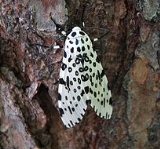
. Several species were formerly separated in Ecpantheria which is now regarded as a junior synonym. They are typically large moths with white forewings heavily spotted with black, and brightly-colored abdomens which are exposed when the moth is threatened. This is a form of aposematism
; they produce copious amounts of foul-smelling defensive chemicals, which they ooze from special points of weakness on the thorax
, to discourage would-be predators.
Genus
In biology, a genus is a low-level taxonomic rank used in the biological classification of living and fossil organisms, which is an example of definition by genus and differentia...
of moth
Moth
A moth is an insect closely related to the butterfly, both being of the order Lepidoptera. Moths form the majority of this order; there are thought to be 150,000 to 250,000 different species of moth , with thousands of species yet to be described...
s of the family
Family (biology)
In biological classification, family is* a taxonomic rank. Other well-known ranks are life, domain, kingdom, phylum, class, order, genus, and species, with family fitting between order and genus. As for the other well-known ranks, there is the option of an immediately lower rank, indicated by the...
Arctiidae
Arctiidae
Arctiidae is a large and diverse family of moths with around 11,000 species found all over the world, including 6,000 neotropical species. This family includes the groups commonly known as tiger moths , which usually have bright colours, footmen , lichen moths and wasp moths...
. There are over 80 species
Species
In biology, a species is one of the basic units of biological classification and a taxonomic rank. A species is often defined as a group of organisms capable of interbreeding and producing fertile offspring. While in many cases this definition is adequate, more precise or differing measures are...
found throughout the Americas
Americas
The Americas, or America , are lands in the Western hemisphere, also known as the New World. In English, the plural form the Americas is often used to refer to the landmasses of North America and South America with their associated islands and regions, while the singular form America is primarily...
. Several species were formerly separated in Ecpantheria which is now regarded as a junior synonym. They are typically large moths with white forewings heavily spotted with black, and brightly-colored abdomens which are exposed when the moth is threatened. This is a form of aposematism
Aposematism
Aposematism , perhaps most commonly known in the context of warning colouration, describes a family of antipredator adaptations where a warning signal is associated with the unprofitability of a prey item to potential predators...
; they produce copious amounts of foul-smelling defensive chemicals, which they ooze from special points of weakness on the thorax
Thorax
The thorax is a division of an animal's body that lies between the head and the abdomen.-In tetrapods:...
, to discourage would-be predators.
Species
Species include:- Hypercompe abdominalis
- Recorded food plants include BrassicaBrassicaBrassica is a genus of plants in the mustard family . The members of the genus may be collectively known either as cabbages, or as mustards...
and VeronicaVeronica (plant)Veronica is the largest genus in the flowering plant family Plantaginaceae, with about 500 species; it was formerly classified in the family Scrophulariaceae...
- Hypercompe albescens
- Food plant: Musa
- Hypercompe albicornis
- Recorded food plants include HelianthusHelianthusHelianthus L. is a genus of plants comprising 52 species in the Asteraceae family, all of which are native to North America, with some species Helianthus L. is a genus of plants comprising 52 species in the Asteraceae family, all of which are native to North America, with some species Helianthus...
, LuffaLuffaThe luffa, loofah, or lufah are tropical and subtropical vines comprising the genus Luffa, the only genus of the subtribe Luffinae of the plant family Cucurbitaceae...
and PhaseolusPhaseolusPhaseolus is a genus in the family Fabaceae of about fifty plant species, all native to the Americas.At least four of the species have been domesticated since pre-Columbian times for their beans. Most prominent among these is the common bean, P...
- Hypercompe albiscripta
- Hypercompe alpha
- Hypercompe amulaensis
- Hypercompe andromela
- Hypercompe anomala
- Hypercompe atra
- Hypercompe bari
- Hypercompe beckeri
- Hypercompe bolivar
- Hypercompe brasiliensis
- Hypercompe bricenoi
- Hypercompe burmeisteri
- Hypercompe campinasa
- Food plant: Gossypium herbaceumGossypiumGossypium is the cotton genus. It belongs to the tribe Gossypieae, in the mallow family, Malvaceae, native to the tropical and subtropical regions from both the Old and New World. The genus Gossypium comprises around 50 species , making it the largest in species number in the tribe Gosssypioieae....
- Hypercompe castronis
- Hypercompe caudata (Walker, 1855)
- Hypercompe cermellii
- Recorded food plants include GossypiumGossypiumGossypium is the cotton genus. It belongs to the tribe Gossypieae, in the mallow family, Malvaceae, native to the tropical and subtropical regions from both the Old and New World. The genus Gossypium comprises around 50 species , making it the largest in species number in the tribe Gosssypioieae....
, PlantagoPlantagoPlantago is a genus of about 200 species of small, inconspicuous plants commonly called plantains. They share this name with the very dissimilar plantain, a kind of banana. Most are herbaceous plants, though a few are subshrubs growing to 60 cm tall. The leaves are sessile, but have a narrow...
and SolanumSolanumSolanum, the nightshades, horsenettles and relatives, is a large and diverse genus of annual and perennial plants. They grow as forbs, vines, subshrubs, shrubs, and small trees, and often have attractive fruit and flowers. Many formerly independent genera like Lycopersicon or Cyphomandra are...
- Hypercompe chelifer
- Hypercompe confusa
- Hypercompe conspersa
- Hypercompe contexta
- Hypercompe cotyora
- Hypercompe cretacea
- Hypercompe cunigunda
- Food plant: Syagrus romanzoffianaSyagrusSyagrus is a genus of 30 to 42 species of Arecaceae , native to South America, with one species endemic to the Lesser Antilles. The genus is closely related to the Cocos, or coconut genus, and many Syagrus species produce edible seeds similar to the coconut.-Description:Palms in this group have...
- Hypercompe decora
- Hypercompe deflorata
- Hypercompe detecta
- Hypercompe dissimilis
- Hypercompe dognini
- Hypercompe dubia
- Hypercompe ecpantherioides
- Hypercompe eridanus
- Recorded food plants include CissusCissusCissus is a genus of approximately 350 species of woody vines in the grape family . They have a cosmopolitan distribution, though the majority are to be found in the tropics. In Tamil they are known as pirandai .-Medicinal:...
, CitrusCitrusCitrus is a common term and genus of flowering plants in the rue family, Rutaceae. Citrus is believed to have originated in the part of Southeast Asia bordered by Northeastern India, Myanmar and the Yunnan province of China...
, ErythrinaErythrinaErythrina is a genus of flowering plants in the pea family, Fabaceae. It contains about 130 species, which are distributed in tropical and subtropical regions worldwide. They are trees, growing up to in height...
, IpomoeaIpomoeaIpomoea is the largest genus in the flowering plant family Convolvulaceae, with over 500 species. Most of these are called "morning glories", but this can refer to related genera also. Those formerly separated in Calonyction are called "moonflowers"...
, Musa, PanicumPanicumPanicum is a large genus of about 450 species of grasses native throughout the tropical regions of the world, with a few species extending into the northern temperate zone...
and VanillaVanilla (orchid)Vanilla, the vanilla orchids, form a flowering plant genus of about 110 species in the orchid family . The most widely known member is the Flat-leaved Vanilla , from which commercial vanilla flavoring is derived. It is the only orchid widely used for industrial purposes...
- Hypercompe euripides
- Hypercompe extrema (Walker, 1855)
- Hypercompe flavopunctata
- Hypercompe fuscescens
- Hypercompe gaujoni
- Hypercompe hambletoni
- Recorded food plants include BidensBidensBidens is a genus of flowering plants in the family Asteraceae. It contains about 200 species. The common names beggarticks, black jack, bur-marigolds, stickseeds, tickseeds and tickseed sunflowers refer to the achene burrs on the seeds of this genus, most of which are barbed...
, EriobotryaEriobotryaEriobotrya is a genus of about ten species of large evergreen shrubs and small trees in the family Rosaceae, native to east and southeast Asia.-Species:By far the best known species is the Loquat, E...
, GossypiumGossypiumGossypium is the cotton genus. It belongs to the tribe Gossypieae, in the mallow family, Malvaceae, native to the tropical and subtropical regions from both the Old and New World. The genus Gossypium comprises around 50 species , making it the largest in species number in the tribe Gosssypioieae....
, HibiscusHibiscusHibiscus is a genus of flowering plants in the mallow family, Malvaceae. It is quite large, containing several hundred species that are native to warm-temperate, subtropical and tropical regions throughout the world...
, ManihotManihotManihot is a plant genus of the spurge family, Euphorbiaceae. It contains around 98 species that are native to the Americas, from Arizona in the United States south to Argentina...
and Ricinus- Hypercompe heterogena
- Hypercompe icasia
- Recorded food plants include ApiumApiumApium is a genus of about 20 species of flowering plants in the family Apiaceae, with a subcosmopolitan distribution in Europe, Asia, Africa, South America and Australia. They are medium to tall biennial or perennial plants growing wet ground...
, CecropiaCecropiaCecropia is a Neotropical genus presently consisting of sixty-one recognized species with a highly distinctive lineage of dioecious trees....
, CissusCissusCissus is a genus of approximately 350 species of woody vines in the grape family . They have a cosmopolitan distribution, though the majority are to be found in the tropics. In Tamil they are known as pirandai .-Medicinal:...
, CitrusCitrusCitrus is a common term and genus of flowering plants in the rue family, Rutaceae. Citrus is believed to have originated in the part of Southeast Asia bordered by Northeastern India, Myanmar and the Yunnan province of China...
, ErechtitesErechtitesErechtites is a genus of flowering plants in the daisy family known commonly as fireweeds or burnweeds. They are native to the Americas, but some species are widely distributed weeds. Some species in this genus are treated as members of Senecio by some authors, and several other species are...
, ErythrinaErythrinaErythrina is a genus of flowering plants in the pea family, Fabaceae. It contains about 130 species, which are distributed in tropical and subtropical regions worldwide. They are trees, growing up to in height...
, IpomoeaIpomoeaIpomoea is the largest genus in the flowering plant family Convolvulaceae, with over 500 species. Most of these are called "morning glories", but this can refer to related genera also. Those formerly separated in Calonyction are called "moonflowers"...
, Musa, PhaseolusPhaseolusPhaseolus is a genus in the family Fabaceae of about fifty plant species, all native to the Americas.At least four of the species have been domesticated since pre-Columbian times for their beans. Most prominent among these is the common bean, P...
, Psidium, SolanumSolanumSolanum, the nightshades, horsenettles and relatives, is a large and diverse genus of annual and perennial plants. They grow as forbs, vines, subshrubs, shrubs, and small trees, and often have attractive fruit and flowers. Many formerly independent genera like Lycopersicon or Cyphomandra are...
, VanillaVanilla (orchid)Vanilla, the vanilla orchids, form a flowering plant genus of about 110 species in the orchid family . The most widely known member is the Flat-leaved Vanilla , from which commercial vanilla flavoring is derived. It is the only orchid widely used for industrial purposes...
- Hypercompe indecisa
- Recorded food plants include BetaBeetThe beet is a plant in the Chenopodiaceae family which is now included in Amaranthaceae family. It is best known in its numerous cultivated varieties, the most well known of which is the purple root vegetable known as the beetroot or garden beet...
, BrassicaBrassicaBrassica is a genus of plants in the mustard family . The members of the genus may be collectively known either as cabbages, or as mustards...
, CitrusCitrusCitrus is a common term and genus of flowering plants in the rue family, Rutaceae. Citrus is believed to have originated in the part of Southeast Asia bordered by Northeastern India, Myanmar and the Yunnan province of China...
, CucurbitaCucurbitaCucurbita is a genus in the gourd family Cucurbitaceae first cultivated in Mesoamerica and now used in many parts of the world. It includes species grown for their fruit and edible seeds , as well as some species grown only as gourds...
, DaturaDaturaDatura is a genus of nine species of vespertine flowering plants belonging to the family Solanaceae. Its precise and natural distribution is uncertain, owing to its extensive cultivation and naturalization throughout the temperate and tropical regions of the globe...
, DiospyrosDiospyrosDiospyros is a genus of about 450–500 species of deciduous and evergreen trees. The majority are native to the tropics, with only a few species extending into temperate regions. They are commonly known as ebony or persimmon trees...
, FragariaStrawberryFragaria is a genus of flowering plants in the rose family, Rosaceae, commonly known as strawberries for their edible fruits. Although it is commonly thought that strawberries get their name from straw being used as a mulch in cultivating the plants, the etymology of the word is uncertain. There...
, HippeastrumHippeastrumHippeastrum is a genus of about 90 species and 600+ hybrids and cultivars of bulbous plants in the family Amaryllidaceae, subfamily Amaryllidoideae, native to tropical and subtropical regions of the Americas from Argentina north to Mexico and the Caribbean. Some species are grown for their large...
, LeucanthemumLeucanthemumLeucanthemum is a genus of about 70 flowering plants from the sunflower family . It occurs in Europe, Northern Africa and the temperate regions of Asia. Many species have been introduced into America, Australia and New Zealand.-Growth:...
, PerseaPerseaPersea is a genus of about 150 species of evergreen trees belonging to the laurel family, Lauraceae. The best-known member of the genus is the avocado, P. americana, widely cultivated in subtropical regions for its large, edible fruit.-Overview:...
, PisumPisumPisum is a genus of the family Fabaceae, native to southwest Asia and northeast Africa. It contains one to five species, depending on taxonomic interpretation; the International Legume Database accepts three species, one with two subspecies :...
, PrunusPrunusPrunus is a genus of trees and shrubs, which includes the plums, cherries, peaches, apricots and almonds. There are around 430 species spread throughout the northern temperate regions of the globe. Many members of the genus are widely cultivated for fruit and ornament.-Botany:Members of the genus...
, Ricinus, RosaRoseA rose is a woody perennial of the genus Rosa, within the family Rosaceae. There are over 100 species. They form a group of erect shrubs, and climbing or trailing plants, with stems that are often armed with sharp prickles. Flowers are large and showy, in colours ranging from white through yellows...
, SenecioSenecioSenecio is a genus of the daisy family that includes ragworts and groundsels. The flower heads are normally rayed, completely yellow, and the heads are borne in branched clusters...
, SolanumSolanumSolanum, the nightshades, horsenettles and relatives, is a large and diverse genus of annual and perennial plants. They grow as forbs, vines, subshrubs, shrubs, and small trees, and often have attractive fruit and flowers. Many formerly independent genera like Lycopersicon or Cyphomandra are...
, SpiraeaSpiraeaSpiraea , is a genus of about 80-100 species of shrubs in the family Rosaceae, subfamily Spiraeoideae. They are native to the temperate Northern Hemisphere, with the greatest diversity in eastern Asia....
and ZeaZeaZea may refer to:*Zea , a genus of large grasses**Zea mays, commonly known as maize or corn**Zea, a Canadian short film about popcorn*Helicoverpa zea, a major agricultural pest*Zea , a 1993 alternative EP from dEUS....
- Hypercompe jaguarina
- Hypercompe kennedyi
- Hypercompe kinkelini
- Hypercompe laeta
- Hypercompe lemairei
- Hypercompe leucarctioides
- Hypercompe magdelenae
- Hypercompe marcescens
- Hypercompe melanoleuca
- Hypercompe mielkei
- Hypercompe mus
- Hypercompe muzina
- Food plant: Theobroma cacao
- Hypercompe nemophila
- Hypercompe neurophylla
- Hypercompe nigriloba
- Hypercompe nigriplaga
- Hypercompe obscura
- Hypercompe obsolescens
- Hypercompe obtecta
- Hypercompe ockendeni
- Hypercompe ocularia
- Hypercompe ochreator
- Hypercompe orbiculata
- Hypercompe orsa
- Recorded food plants include LantanaLantanaLantana is a genus of about 150 species of perennial flowering plants in the verbena family, Verbenaceae. They are native to tropical regions of the Americas and Africa but exist as an introduced species in numerous areas, especially in the Australian-Pacific region. The genus includes both...
, SenecioSenecioSenecio is a genus of the daisy family that includes ragworts and groundsels. The flower heads are normally rayed, completely yellow, and the heads are borne in branched clusters...
and SphagneticolaSphagneticolaSphagneticola is a genus of flowering plants in the daisy family, Asteraceae.-Selected species:*Sphagneticola trilobata Pruski – Bay Biscayne Creeping-oxeye-External links:...
- Hypercompe oslari (Rothschild, [1910])
- Hypercompe permaculataHypercompe permaculataThe Many-Spotted Tiger Moth is a tiger moth of the Arctiidae family and one of more than 80 species of Hypercompe.H. permaculata is native to the Western United States and parts of Northern Mexico.-External links:...
(Packard, 1872) Many-spotted Tiger - Hypercompe perplexa
- Hypercompe persephone
- Hypercompe persola
- Hypercompe pertestacea
- Hypercompe peruvensis
- Hypercompe praeclara
- Hypercompe robusta
- Hypercompe scribonia (Stoll, [1790]), Giant Leopard MothGiant Leopard MothThe Giant Leopard Moth or Eyed Tiger Moth is a moth of the family Arctiidae. It is distributed throughout the Southern and Eastern United States from New England to Mexico. The obsolete name Ecpantheria scribonia is still occasionally encountered.This species has a wingspan of 3 inches...
- Hypercompe simplex
- Hypercompe suffusa (Schaus, 1889)
- Hypercompe tenebra
- Hypercompe tessellata
- Hypercompe testacea
- Hypercompe theophila
- Hypercompe trinitatis
- Hypercompe turruptianoides