
All Topics  
Moth

 
Moth

   Email Print
   Bookmark   Link


Moth


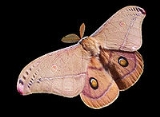
A moth is an insect
Insect

Insects are the biggest class of arthropods and the only ones with wings. They are the most diverse group of animals on the planet. They are most diverse at the equator and their diversity declines toward the poles....
 closely related to the butterfly
Butterfly

A butterfly is an insect of the Order Lepidoptera. Like all Lepidoptera, butterflies are notable for their unusual Biological life cycle with a larval caterpillar stage, an inactive pupal stage, and a spectacular metamorphosis into a familiar and colourful winged adult form....
, both being of the order
Order (biology)

In Biological classification used in biology, the order is a taxonomic rank between class and family . The superorder is a rank between class and order....
 Lepidoptera
Lepidoptera

Lepidoptera is an order of insect that includes moths and butterfly. It is one of the most speciose orders in the class Insecta, encompassing moths and the three superfamilies of butterfly, skipper , and Hedylidae....
. The differences between butterflies and moths are more than just taxonomy
Taxonomy

Taxonomy is the practice and science of classification. The word comes from the Greek language ', taxis and ', nomos .Taxonomies, or taxonomic schemes, are composed of taxonomic units known as taxa , or kinds of things that are arranged frequently in a hierarchical structure....
. Sometimes the names "Rhopalocera
Rhopalocera

Rhopalocera and Heterocera are non-standard divisions in the taxonomy of Lepidopterans, used in an attempt to formalize the popular distinction between butterfly and moths....
" (butterflies) and "Heterocera" (moths) are used to formalize the popular distinction. Many attempts have been made to subdivide the Lepidoptera into groups such as the Microlepidoptera and Macrolepidoptera, Frenatae and Jugatae, or Monotrysia and Ditrysia.


Discussion
Ask a question about 'Moth'
Start a new discussion about 'Moth'
Answer questions from other users
Full Discussion Forum


Encyclopedia


A moth is an insect
Insect

Insects are the biggest class of arthropods and the only ones with wings. They are the most diverse group of animals on the planet. They are most diverse at the equator and their diversity declines toward the poles....
 closely related to the butterfly
Butterfly

A butterfly is an insect of the Order Lepidoptera. Like all Lepidoptera, butterflies are notable for their unusual Biological life cycle with a larval caterpillar stage, an inactive pupal stage, and a spectacular metamorphosis into a familiar and colourful winged adult form....
, both being of the order
Order (biology)

In Biological classification used in biology, the order is a taxonomic rank between class and family . The superorder is a rank between class and order....
 Lepidoptera
Lepidoptera

Lepidoptera is an order of insect that includes moths and butterfly. It is one of the most speciose orders in the class Insecta, encompassing moths and the three superfamilies of butterfly, skipper , and Hedylidae....
. The differences between butterflies and moths are more than just taxonomy
Taxonomy

Taxonomy is the practice and science of classification. The word comes from the Greek language ', taxis and ', nomos .Taxonomies, or taxonomic schemes, are composed of taxonomic units known as taxa , or kinds of things that are arranged frequently in a hierarchical structure....
. Sometimes the names "Rhopalocera
Rhopalocera

Rhopalocera and Heterocera are non-standard divisions in the taxonomy of Lepidopterans, used in an attempt to formalize the popular distinction between butterfly and moths....
" (butterflies) and "Heterocera" (moths) are used to formalize the popular distinction. Many attempts have been made to subdivide the Lepidoptera into groups such as the Microlepidoptera and Macrolepidoptera, Frenatae and Jugatae, or Monotrysia and Ditrysia. Failure of these names to persist in modern classifications is due to the fact none of them represents a pair of "monophyletic groups". The reality is that butterflies are a small group that arose from within the "moths" and there is thus no way to group all of the remaining taxa in a monophyletic group, as it will always exclude that one descendant lineage.

Most species of moth are nocturnal, but there are crepuscular
Crepuscular

Crepuscular is a term used to describe some animals that are primarily active during twilight, that is at dawn and at dusk. The word is derived from the Latin word crepusculum, meaning "twilight"....
 and diurnal
Diurnal animal

Scientific term refered to as an animal behavior, diurnality indicates an animal that is active during the daytime and rests during the night. Animals that are not diurnal might be Nocturnality or crepuscular .  Many animal species are diurnal, including many mammals, insects and birds....
 species. They can be distinguished from butterflies in several ways.

Etymology

The Modern English
Modern English

Modern English is the form of the English language spoken since the Great Vowel Shift, completed in roughly 1550.Despite some differences in vocabulary, texts from the early 17th century, such as the works of William Shakespeare and the King James Bible, are considered to be in Modern English, or more specifically, are referred to as using...
 word "moth" comes from Old English "mošše" (cf. Northumbrian "mohše") from Common Germanic (compare Old Norse
Old Norse

Old Norse is a North Germanic languages that was spoken by inhabitants of Scandinavia and inhabitants of their overseas settlements during the Viking Age, until about 1300....
 "motti", Dutch
Dutch language

Dutch is a West Germanic languages spoken by over 22 million people as a first language, and about 5 million people as a second language."1% of the EU population claims to speak Dutch well enough in order to have a conversation." Outside the European Union the number of second language speakers of Dutch is very small. Most native...
 "Mot" and German
German language

German is a West Germanic languages, thus related to and classified alongside English language and Dutch language. It is one of the world's world language and the most widely spoken mother tongue in the European Union....
 "Motte" all meaning "moth"). Perhaps its origins are related to Old English "maša" meaning "maggot
Maggot

Maggot is the common name of the larval phase of development in insects of the order Diptera . Sometimes the word is used to denote the larval stage of any insects....
" or from the root of "midge
Midge

A midge is a very small, two-winged flying insect. "Midge" may also refer to:* Midge Hadley, a fictional character in the Barbie line of dolls by Mattel...
" which until the 16th century was used mostly to indicate the larva, usually in reference to devouring clothes.

The study of butterflies and moths is known as lepidoptery, and biologist
Biologist

A biologist is a scientist devoted to and producing results in biology through the study of life.Typically biologists study organisms and their relationship to their environment....
s that specialize in either are called lepidopterists. As a pastime, watching butterflies and moths is known as butterflying
Butterfly watching

Butterfly watching is a hobby concerned with the observation and study of butterfly. There are clubs, handbooks, checklists, and festivals devoted to the activity....
 and mothing. The latter has given rise to the term "mother" for someone who engages in this activity—sometimes written with a hyphen (moth-er) to distinguish it from its usual meaning
Mother

A mother is a biological and/or Maternal bond female parent of an offspring. Because of the complexity and differences of the social, cultural, and religious definitions and roles, it is challenging to define a mother in a universally accepted definition....
. This confusion does not arise in speech as it is pronounced differently (not ).

Economic significance of moths

Moths, and particularly their caterpillar
Caterpillar

Caterpillars are the larval form of a member of the order Lepidoptera . They are mostly phytophagous in food habit, with some species being entomophagous....
s, are a major agricultural
Agriculture

Agriculture refers to the production of food and goods through farming and forestry. Agriculture was the key development that led to the rise of civilization, with the animal husbandry of domestication animals and plants creating food surpluses that enabled the development of more Population density and Social stratification societies....
 pest in many parts of the world. The caterpillar of the gypsy moth
Gypsy moth

The gypsy moth, Lymantria dispar, is a Lepidoptera in the family Lymantriidae of Eurasian origin. Originally ranging from Europe to Asia, it was introduced to North America in the late 1860s and has been expanding its range ever since....
 (Lymantria dispar) causes severe damage to forests in the northeast United States, where it is an invasive species
Invasive species

Invasive species is a phrase with several definitions. The first definition expresses the phrase in terms of non-indigenous species that adversely affect the habitats they invade economically, environmentally or ecologically....
. In temperate climates, the codling moth
Codling moth

The codling moth is a member of the Lepidopteran family Tortricidae. They are known as an agriculture pest, their larva being the common apple worm or maggot....
 causes extensive damage, especially to fruit farms. In tropical and subtropical climates, the diamondback moth
Cabbage worm

The term cabbage worm is primarily used for any of four kinds of lepidopteran whose caterpillar feed on cabbages and other Brassicaceae. Host plants include broccoli, cauliflower, Brussels sprouts, collards, kale, mustard greens, turnip greens, radishes, turnips, rutabagas and kohlrabi....
 (Plutella xylostella) is perhaps the most serious pest of brassicaceous
Brassicaceae

Brassicaceae or Cruciferae, also known as the crucifers, the mustard family or cabbage family is a Family of flowering plants ....
 crops.

Several moths in the family Tineidae
Tineidae

Tineidae is a family of moths in the order Lepidoptera. The family contains approximately 3000 species. Most of the tineid moths are small or medium-sized, with wings held roofwise over the body at rest....
 are commonly regarded as pests because their larvae eat fabric such as clothes and blanket
Blanket

A blanket is a type of bedding, generally speaking a large piece of cloth, intended to keep the user warm, especially while sleeping. Blankets are distinguished from Bed sheets by their thickness and purpose; the thickest sheet is still thinner than the lightest blanket, because blankets are for warmth, while sheets are for hygiene, comfort...
s made from natural proteinaceous fibers such as wool
Wool

Wool is the fiber derived from the specialized skin cells, called follicles, of animals in the Caprinae family, principally domestic sheep, but the hair of certain species of other Mammalia such as cashmere goat, llamas, rabbits and keeshonds may also be called wool....
 or silk
Silk

Silk is a natural protein fiber, some forms of which can be weaving into textiles. The best-known type of silk is obtained from Pupa#Cocoons made by the larvae of the mulberry silkworm Bombyx mori reared in captivity ....
. They are less likely to eat mixed materials containing artificial fibers. There are some reports that they can be repelled by the scent of wood from juniper
Juniper

Junipers are coniferous plants in the genus Juniperus of the cypress family Cupressaceae. Depending on taxonomic viewpoint, there are between 50-67 species of juniper, widely distributed throughout the northern hemisphere, from the Arctic, south to tropical Africa in the Old World, and to the mountains of Central America....
 and cedar
Cedar

Cedar is a genus of coniferous trees in the plant family Pinaceae. They are most closely related to the Firs , sharing a very similar cone structure....
, by lavender, or by other natural oils. However, many consider this unlikely to prevent infestation. Naphthalene
Naphthalene

Naphthalene, also known as naphthalin, naphthaline, tar camphor, white tar, albocarbon, or antimite and not to be confused with naphtha, is a crystalline, Aromaticity, white, solid hydrocarbon with formula Carbon10hydrogen8 and the structure of two fused benzene rings....
 (the chemical used in mothball
Mothball

Mothballs are small balls of chemical pesticide and deodorant used when storing clothing and other articles susceptible to damage from mold or moth larvae ....
s) is considered more effective, but there are concerns over its effects on human health. Moth larvae may be killed by freezing the items which they infest for several days at a temperature below .

Moths are sturdy and usually are more resistant to pesticides than are mosquitoes and flies.

Some moths are farm
Farm

A farm is an area of land, including various structures, devoted primarily to the practice of producing and managing food , fibers and, increasingly, fuel....
ed. The most notable of these is the silkworm, the larva of the domesticated moth Bombyx mori. It is farmed for the silk with which it builds its cocoon
Pupa

A pupa is the life stage of some insects undergoing transformation. The pupal stage is found only in Holometabolism insects, those that undergo a complete metamorphosis, going through four life stages; embryo, larva, pupa and imago....
. , the silk industry produces over 130 million kilograms of raw silk, worth about 250 million U.S. dollars
United States dollar

The United States dollar is the unit of currency of the United States and was defined by the Coinage Act of 1792 to be between 371 and 416 grains of silver ....
, each year. Not all silk is produced by Bombyx mori. There are several species of Saturniidae
Saturniidae

The Saturniidae, commonly known as saturniids, are among the largest and most spectacular of the moths. They form a family of Lepidoptera, with an estimated 1,300 to 1,500 described species worldwide....
 that are also farmed for their silk, such as the Ailanthus moth (Samia cynthia
Samia cynthia

The ailanthus silkmoth is a Saturniidae moth, used to produce silk fabric but not as domesticated as the silkworm, Bombyx mori. The moth has very large wings of 113-125 mm, with a quarter-moon shaped spot on both the upper and lower wings, whitish and yellow stripes and brown background....
 group of species), the Chinese Oak Silkmoth (Antheraea pernyi
Antheraea pernyi

'Antheraea pernyi', the 'Chinese Tussah Moth' , also known as 'Temperate Tussah Moth', is a large moth in the family Saturniidae. Antheraea roylei is an extremely close relative and the present species might actually have evolved from ancestral A....
), the Assam Silkmoth (Antheraea assamensis), and the Japanese Silk Moth (Antheraea yamamai).

The mopane worm, the caterpillar of Gonimbrasia belina
Gonimbrasia belina

Gonimbrasia belina is a species of moth found in much of southern Africa, whose large edible caterpillar, the mopani or mopane worm, is an important source of protein for millions of Southern Africans....
, from the family Saturniidae
Saturniidae

The Saturniidae, commonly known as saturniids, are among the largest and most spectacular of the moths. They form a family of Lepidoptera, with an estimated 1,300 to 1,500 described species worldwide....
, is a significant food resource in southern Africa.

Despite being framed for eating clothing, most moth adults do not eat at all. Most like the Luna, Polyphemus, Atlas, Prometheus, Cercropia, and other large moths do not have mouths. When they do eat, moths will drink nectar.

Attraction to light

Moths frequently appear to circle artificial lights. One hypothesis advanced to explain this behavior is that moths use a technique of celestial navigation
Celestial navigation

Celestial navigation, also known as astronavigation, is a position fixing technique that was devised to help sailors cross the featureless oceans without having to rely on dead reckoning to enable them to strike land....
 called transverse orientation. By maintaining a constant angular relationship to a bright celestial light, such as the Moon
Moon

The Moon is Earth's only natural satellite and the List of natural satellites by diameter satellite in the Solar System. The average centre-to-centre distance from the Earth to the Moon is km, about thirty times the diameter of the Earth....
, they can fly in a straight line. Celestial objects are so far away, that even after travelling great distances, the change in angle between the moth and the light source is negligible; further, the moon will always be in the upper part of the visual field or on the horizon. When a moth encounters a much closer artificial light and uses it for navigation, the angle changes noticeably after only a short distance, in addition to being often below the horizon. The moth instinctively attempts to correct by turning toward the light, causing airborne moths to come plummeting downwards, and - at close range - which results in a spiral flight path that gets closer and closer to the light source.

In 1972, Henry Hsiao, now a professor of biomedical engineering
Biomedical engineering

Biomedical engineering is the application of engineering principles and techniques to the medical field. It combines the design and problem solving skills of engineering with medical and biological sciences to help improve patient health care and the quality of life of individuals....
, suggested that the reason for moths circling lights may have to do with a visual distortion called a Mach band. He says that they fly towards the darkest part of the sky in pursuit of safety and are thus inclined to circle ambient objects in the Mach band region.

Hsaio says that the celestial navigation theory should cause moths to circle lights, not to head directly toward them, as many are seen to do. He conjectures that moths, which are nocturnal creatures, must find a place to hide from predators when daylight comes, but cannot do so in darkness. Their instinct when morning comes is to fly toward the light (presumably up) and then down again, with some probability landing on a surface which matches their camouflage.

A theory which has been advanced in an attempt to explain the attraction male moths have for candles specifically is based on olfaction. There is evidence that olfaction might be, in some cases, mediated by detection of the infra-red spectra of substances. The spiky infrared spectra of a candle flame happens to contain a number of emission lines which coincide with the vibrational frequencies of the female moth's pheromone. The male moth is thereby powerfully attracted to the flame. Other sources with different spike patterns, eg. hurricane lamps, are less powerful attractants.

Night-blooming flower
Flower

A flower, sometimes known as a bloom or blossom, is the reproduction structure found in flowering plants . The biological function of a flower is to mediate the union of male sperm with female ovum in order to produce seeds....
s usually depend on moths (or bat
Bat

Bats are mammals in the order Chiroptera. The forelimbs of all bats are developed as wings, making them the only mammals naturally capable of sustained flight ....
s) for pollination
Pollination

Pollination in flowering plants and gymnosperms is the process that transfers pollen, which contain the male gametes to where the female gamete are contained within the carpel; in gymnosperms the pollen is directly applied to the ovule itself....
, and artificial lighting can draw moths away from the flowers, affecting the plant
Plant

Plants are Life organisms belonging to the Kingdom Plantae. They include familiar organisms such as trees, herbs, bushes, grasses, vines, ferns, mosses, and green algae....
's ability to reproduce. A way to prevent this is to put a cloth or netting around the lamp. Another way is using a colored light bulb (preferably red). This will take the moth's attention away from the light while still providing light to see by.

Predators and parasites of moths

Nocturnal insectivores often feed on moths; these include some bats, some species of owls
OWLS

OWLS is a mnemonic used by general aviation airplane pilots to assess an unprepared surface for a precautionary landing.Like all mnemonics this check has become part of aviation culture and folklore....
, but also other species of birds. Moths are also eaten by some species of lizards, some cats, some dogs, some rodents, and some bears. Moth larvae are vulnerable to being parasitized by ichneumonidae
Ichneumonidae

Ichneumonidae is a family within the insect order Hymenoptera. Insects in this family are commonly called ichneumon wasps. Less exact terms are ichneumon flies , or scorpion wasps due to the extreme lengthening and curving of the abdomen ....
.

Baculoviruses are parasite double-stranded DNA insect
Insect

Insects are the biggest class of arthropods and the only ones with wings. They are the most diverse group of animals on the planet. They are most diverse at the equator and their diversity declines toward the poles....
 viruses that are used mostly as biological control agents. They are members of the Baculoviridae, a family that is restricted to insects. Most baculovirus isolates have been obtained from insects, in particular from Lepidoptera.

In popular culture

Bob Clampett
Bob Clampett

Robert Emerson "Bob" Clampett was an United States animator, film producer, film director, and puppeteer best known for his work on the Looney Tunes series of cartoons from Warner Bros....
's 1942
1942 in film

The year 1942 in film involved some significant events, in particular the release of a film consistently rated as one of the Films considered the greatest ever, Casablanca .....
 Looney Tunes
Looney Tunes

Looney Tunes is a Warner Bros. animated cartoon series which ran in many movie theatres from 1930 to 1969. It preceded the Merrie Melodies series and is Warner Bros.'s first animated theatrical series....
 cartoon
Cartoon

The word cartoon has various meanings, based on several very different forms of visual art and illustration. The term has evolved over time.The original meaning was in fine art, and there cartoon meant a preparatory drawing for a piece of art such as a painting or tapestry....
 Eatin' on the Cuff or The Moth Who Came to Dinner depicts a moth kidnapped by a spider
Spider

Spiders are air-breathing chelicerate arthropods that have eight legs, and chelicerae modified into fangs that inject venom. In their bodies the usual arthropod segments are fused into two Tagma , the cephalothorax and abdomen, joined by a small, cylindrical pedicel....
, and his fiancee (a honeybee) has to save him from the spider.

Notable moths

  • Atlas moth
    Attacus atlas

    The Atlas moth is a large saturniidae moth found in the tropical and subtropical forests of Southeast Asia, southern China, common across the Malay archipelago, Thailand to Indonesia....
     (Attacus atlas), the largest moth in the world
  • White Witch moth (Thysania agrippina), the Lepidopteran with the biggest wingspan
  • Madagascan Sunset moth (Chrysiridia rhipheus), considered to be one of the most impressive and beautiful Lepidoptera
  • Death's-head hawkmoth
    Death's-head Hawkmoth

    The name Death's-head Hawkmoth refers to any one of the three species of moth in the genus Acherontia. The former species is primarily found in Europe, the latter two are Asian, and most uses of the common name refer to the European species....
     (Acherontia spp.), is associated with the supernatural and evil and has been featured in art and movies
  • Peppered moth
    Peppered moth

    The peppered moth is a temperate species of nocturnal moth. Peppered moth evolution is often used by educators as an example of natural selection....
     (Biston betularia), the subject of a well-known study in evolution
  • Luna moth
    Actias luna

    The Luna Moth is a Lime , Nearctic Saturniidae moth in the subfamily Saturniinae....
     (Actias luna)
  • Emperor Gum moth
    Opodiphthera eucalypti

    The emperor gum moth, Opodiphthera eucalypti, is a species of moth native to Australia, and can be easily found in all the states except for Tasmania....
     (Opodiphthera eucalypti)
  • Polyphemus moth
    Antheraea polyphemus

    The Polyphemus moth is a North American member of the family Saturniidae, the giant silk moths. It is a tan colored moth, with an average wingspan of 6 inches ....
     (Antheraea polyphemus)
  • Bogong moth
    Bogong moth

    The Bogong moth is a temperate species of nocturnal moth notable for appearing in large numbers around major public buildings in Canberra, the capital city of Australia, during spring ....
     (Agrotis infusa), known to have been a food source for Southeastern indigenous Australians
    Indigenous Australians

    Indigenous Australians are the first human inhabitants of the Australian continent and its nearby islands and their descendants. Indigenous Australians are distinguished as either Australian Aborigines or Torres Strait Islanders, who currently together make up about 2.6% of Australia's population....
Moths of economic significance:
  • Gypsy moth
    Gypsy moth

    The gypsy moth, Lymantria dispar, is a Lepidoptera in the family Lymantriidae of Eurasian origin. Originally ranging from Europe to Asia, it was introduced to North America in the late 1860s and has been expanding its range ever since....
     (Lymantria dispar), a pest of hardwood trees in North America
  • Corn earworm
    Helicoverpa zea

    The larva of the moth Helicoverpa zea is a major agricultural pest. It can feed on many different plants during the larval stage. Accordingly, the species has been given many different common names....
     or cotton bollworm (Helicoverpa zea), a major agricultural pest
  • Codling moth
    Codling moth

    The codling moth is a member of the Lepidopteran family Tortricidae. They are known as an agriculture pest, their larva being the common apple worm or maggot....
     (Cydia pomonella), a pest mostly of apple
    APPLE

    This article is about the satellite APPLE. For the fruit apple, see Apple. For other uses see Apple .The Ariane Passenger PayLoad Experiment , was an experimental communication satellite with a C-Band transponder launched by Indian Space Research Organisation satellite on June 19, 1981 by Ariane 1, a launch vehicle of the European Spac...
    , pear
    Pear

    The pear is an edible pome fruit produced by a tree of genus Pyrus . The pear is classified within Maloideae, a subfamily within Rosaceae. The apple , which it resembles in floral structure, is also a member of this subfamily....
     and walnut
    Walnut

    Walnuts are plants in the family Juglandaceae. They are deciduous trees, 10–40 meter s tall , with pinnate leaves 200?900 millimetres long , with 5–25 leaflets; the shoots have chambered pith, a character shared with the wingnut but not the hickory in the same family....
     trees
  • Light brown apple moth
    Light brown apple moth

    The Light brown apple moth is a leafroller moth belonging to the lepidopteran family Tortricidae....
     (Epiphyas postvittana), a highly polyphagous pest
  • Silkworm (Bombyx mori), for its silk
    Silk

    Silk is a natural protein fiber, some forms of which can be weaving into textiles. The best-known type of silk is obtained from Pupa#Cocoons made by the larvae of the mulberry silkworm Bombyx mori reared in captivity ....


See also

  • Pollination
    Pollination

    Pollination in flowering plants and gymnosperms is the process that transfers pollen, which contain the male gametes to where the female gamete are contained within the carpel; in gymnosperms the pollen is directly applied to the ovule itself....
  • Difference between a butterfly and a moth
    Difference between a butterfly and a moth

    A common classification of the Lepidoptera involves their differentiation into butterfly and moths. Butterflies are a natural monophyletic group, often given the sub-order Rhopalocera, which includes Papilionoidea , Hesperiidae , and Hedylidae ....
  • List of moths
    List of moths

    This is an incomplete list of species of Lepidoptera that are commonly known as moths....
  • Lepidoptera
    Lepidoptera

    Lepidoptera is an order of insect that includes moths and butterfly. It is one of the most speciose orders in the class Insecta, encompassing moths and the three superfamilies of butterfly, skipper , and Hedylidae....
  • Butterfly
    Butterfly

    A butterfly is an insect of the Order Lepidoptera. Like all Lepidoptera, butterflies are notable for their unusual Biological life cycle with a larval caterpillar stage, an inactive pupal stage, and a spectacular metamorphosis into a familiar and colourful winged adult form....
  • Clothing Moth
    Clothing Moth

    The Clothing Moth is a species of moths from the Tineidae moth family. The caterpillar of this moth is recognized as a serious pest. It can derive nourishment not only from clothing ? in particular wool ? and also, like most moth caterpillars, from many other sources....
  • Baculovirus
    Baculovirus

    The baculoviruses are a family of large rod-shaped viruses that can be divided to two genera: nucleopolyhedroviruses and granuloviruses . While GVs contain only one nucleocapsid per viral envelope, NPVs contain either single or multiple nucleocapsids per envelope....


Gallery


External links

  • by Christopher Jonko
  • Diagnostic large format photographs, taxonomy, descriptions
  • Diagnostic photographs for thousands of species
  • on the UF
    University of Florida

    The University of Florida is a Public university land-grant university, sea grant colleges, Space grant colleges major research university located on a campus in Gainesville, Florida, in the United States....
     / IFAS
    Institute of Food and Agricultural Sciences

    The University of Florida?s Institute of Food and Agricultural Sciences is a federal-state-county partnership dedicated to developing knowledge in agriculture, human and natural resources, and the life sciences, and enhancing and sustaining the quality of human life by making that information accessible....
     Featured Creatures Web site