


French West Africa

Encyclopedia

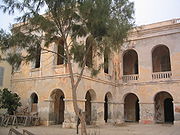

Federation
A federation , also known as a federal state, is a type of sovereign state characterized by a union of partially self-governing states or regions united by a central government...
of eight French colonial territories in Africa
Africa
Africa is the world's second largest and second most populous continent, after Asia. At about 30.2 million km² including adjacent islands, it covers 6% of the Earth's total surface area and 20.4% of the total land area...
: Mauritania
Mauritania
Mauritania is a country in the Maghreb and West Africa. It is bordered by the Atlantic Ocean in the west, by Western Sahara in the north, by Algeria in the northeast, by Mali in the east and southeast, and by Senegal in the southwest...
, Senegal
Senegal
Senegal , officially the Republic of Senegal , is a country in western Africa. It owes its name to the Sénégal River that borders it to the east and north...
, French Sudan
French Sudan
French Sudan was a colony in French West Africa that had two separate periods of existence, first from 1890 to 1899, then from 1920 to 1960, when the territory became the independent nation of Mali.-Colonial establishment:...
(now Mali
Mali
Mali , officially the Republic of Mali , is a landlocked country in Western Africa. Mali borders Algeria on the north, Niger on the east, Burkina Faso and the Côte d'Ivoire on the south, Guinea on the south-west, and Senegal and Mauritania on the west. Its size is just over 1,240,000 km² with...
), French Guinea
French Guinea
French Guinea was a French colonial possession in West Africa. Its borders, while changed over time, were in 1958 those of the independent nation of Guinea....
(now Guinea
Guinea
Guinea , officially the Republic of Guinea , is a country in West Africa. Formerly known as French Guinea , it is today sometimes called Guinea-Conakry to distinguish it from its neighbour Guinea-Bissau. Guinea is divided into eight administrative regions and subdivided into thirty-three prefectures...
), Côte d'Ivoire
Côte d'Ivoire
The Republic of Côte d'Ivoire or Ivory Coast is a country in West Africa. It has an area of , and borders the countries Liberia, Guinea, Mali, Burkina Faso and Ghana; its southern boundary is along the Gulf of Guinea. The country's population was 15,366,672 in 1998 and was estimated to be...
(Ivory Coast), Upper Volta
French Upper Volta
Upper Volta was a colony of French West Africaestablished on March 1, 1919, from territories that had been part of the colonies of Upper Senegal and Niger and the Côte d'Ivoire...
(now Burkina Faso
Burkina Faso
Burkina Faso – also known by its short-form name Burkina – is a landlocked country in west Africa. It is surrounded by six countries: Mali to the north, Niger to the east, Benin to the southeast, Togo and Ghana to the south, and Côte d'Ivoire to the southwest.Its size is with an estimated...
), Dahomey
Dahomey
Dahomey was a country in west Africa in what is now the Republic of Benin. The Kingdom of Dahomey was a powerful west African state that was founded in the seventeenth century and survived until 1894. From 1894 until 1960 Dahomey was a part of French West Africa. The independent Republic of Dahomey...
(now Benin
Benin
Benin , officially the Republic of Benin, is a country in West Africa. It borders Togo to the west, Nigeria to the east and Burkina Faso and Niger to the north. Its small southern coastline on the Bight of Benin is where a majority of the population is located...
) and Niger
Niger
Niger , officially named the Republic of Niger, is a landlocked country in Western Africa, named after the Niger River. It borders Nigeria and Benin to the south, Burkina Faso and Mali to the west, Algeria and Libya to the north and Chad to the east...
. The federation was formed of individual coastal colonies the French had first seized as trading posts in the 17th and 18th centuries.
History
As the French pursued their part in the Scramble for AfricaScramble for Africa
The Scramble for Africa, also known as the Race for Africa or Partition of Africa was a process of invasion, occupation, colonization and annexation of African territory by European powers during the New Imperialism period, between 1881 and World War I in 1914...
in the 1880s and 1890s, they conquered large inland areas, and at first ruled them as either a part of the Senegal colony, or as independent entities. These conquered areas were usually governed by French Army officers, and dubbed "Military Territories." In the late 1890s, the French government began to rein-in the territorial expansion of its "officers on the ground", and transferred all the territories west of Gabon
Gabon
Gabon , officially the Gabonese Republic is a state in west central Africa sharing borders with Equatorial Guinea to the northwest, Cameroon to the north, and with the Republic of the Congo curving around the east and south. The Gulf of Guinea, an arm of the Atlantic Ocean is to the west...
to a single Governor based in Senegal, reporting directly to the Minister of Overseas Affairs. The first Governor General of Senegal was named in 1895, and in 1904, the territories he oversaw were formally named French West Africa (AOF). Gabon would later become the seat of its own federation French Equatorial Africa
French Equatorial Africa
French Equatorial Africa or the AEF was the federation of French colonial possessions in Middle Africa, extending northwards from the Congo River to the Sahara Desert.-History:...
(AEF), which was to border its western neighbor on the modern boundary between Niger
Niger
Niger , officially named the Republic of Niger, is a landlocked country in Western Africa, named after the Niger River. It borders Nigeria and Benin to the south, Burkina Faso and Mali to the west, Algeria and Libya to the north and Chad to the east...
and Chad
Chad
Chad , officially known as the Republic of Chad, is a landlocked country in Central Africa. It is bordered by Libya to the north, Sudan to the east, the Central African Republic to the south, Cameroon and Nigeria to the southwest, and Niger to the west...
.
Following World War II
World War II
World War II, or the Second World War , was a global conflict lasting from 1939 to 1945, involving most of the world's nations—including all of the great powers—eventually forming two opposing military alliances: the Allies and the Axis...
, the French Fourth Republic
French Fourth Republic
The French Fourth Republic was the republican government of France between 1946 and 1958, governed by the fourth republican constitution. It was in many ways a revival of the Third Republic, which was in place before World War II, and suffered many of the same problems...
began a process of extending limited political rights in its colonies. In 1946, the loi Lamine Guèye granted some limited citizenship rights to natives of the African colonies. The 1956 Loi Cadre created popularly elected Territorial assemblies with only consultative powers. The French Empire was renamed the French Union
French Union
The French Union was a political entity created by the French Fourth Republic to replace the old French colonial system, the "French Empire" and to abolish its "indigenous" status.-History:...
. The Constitution of the French Fifth Republic
French Fifth Republic
The Fifth Republic is the fifth and current republican constitution of France, introduced on 4 October 1958. The Fifth Republic emerged from the collapse of the French Fourth Republic, replacing the prior parliamentary government with a semi-presidential system...
of 1958 again changed the structure of the colonies from the French Union to the French Community
French Community
The French Community was an association of states known in French simply as La Communauté. In 1958 it replaced the French Union, which had itself succeeded the French colonial empire in 1946....
. Each territory was to become a "Protectorate" with the consultative assembly named a National Assembly. The Governor appointed by the French was renamed the "High Commissioner," and made head of state of each territory. The Assembly would name an African as Head of Government with advisory powers to the Head of State.
Legally, the federation ceased to exist after the September, 1958 referendum
Referendum
A referendum is a direct vote in which an entire electorate is asked to either accept or reject a particular proposal. This may result in the adoption of a new constitution, a constitutional amendment, a law, the recall of an elected official or simply a specific government policy. It is a form of...
to approve this French Community
French Community
The French Community was an association of states known in French simply as La Communauté. In 1958 it replaced the French Union, which had itself succeeded the French colonial empire in 1946....
. All the colonies except for Guinea
Guinea
Guinea , officially the Republic of Guinea , is a country in West Africa. Formerly known as French Guinea , it is today sometimes called Guinea-Conakry to distinguish it from its neighbour Guinea-Bissau. Guinea is divided into eight administrative regions and subdivided into thirty-three prefectures...
voted to remain in the new structure. Guineans voted overwhelmingly for independence. In 1960, a further revision of the French constitution, compelled by the failure of the French Indochina War and the tensions in Algeria
Algeria
Algeria , officially the People's Democratic Republic of Algeria , also formally referred to as the Democratic and Popular Republic of Algeria, is a country in the Maghreb region of Northwest Africa with Algiers as its capital.In terms of land area, it is the largest country in Africa and the Arab...
, allowed members of the French Community to unilaterally change their own constitutions. The new nations of West Africa were born. Senegal and former French Sudan became the Mali Federation
Mali Federation
The Mali Federation was a country in West Africa. It was formed by a union between Senegal and the Sudanese Republic...
(1960–61), while Côte d'Ivoire, Niger, Upper Volta and Dahomey subsequently formed the short-lived Sahel-Benin Union, later the Conseil de l'Entente
Conseil de l'Entente
The Conseil de l'Entente is a West African regional co-operation forum established in May 1959 by Côte d'Ivoire, Niger, Upper Volta and Dahomey The Conseil de l'Entente ("Council of Accord" or "Council of Understanding") is a West African regional co-operation forum established in May 1959 by...
.
Territorial changes
The administrative structure of French colonial possessions in West Africa, while more homogeneous than neighboring British possessions, was marked by variety and flux. Throughout the history of the AOF, individual colonies and military territories were reorganised numerous times, as was the Government General in Dakar. French Upper VoltaFrench Upper Volta
Upper Volta was a colony of French West Africaestablished on March 1, 1919, from territories that had been part of the colonies of Upper Senegal and Niger and the Côte d'Ivoire...
was formed and parceled out to neighboring colonies twice. The future states of Mauritania
Mauritania
Mauritania is a country in the Maghreb and West Africa. It is bordered by the Atlantic Ocean in the west, by Western Sahara in the north, by Algeria in the northeast, by Mali in the east and southeast, and by Senegal in the southwest...
and Niger
Niger
Niger , officially named the Republic of Niger, is a landlocked country in Western Africa, named after the Niger River. It borders Nigeria and Benin to the south, Burkina Faso and Mali to the west, Algeria and Libya to the north and Chad to the east...
remained out of the federation until the 1920s and 1940s respectively. They were Military Territories, directly controlled by the French Army
French Army
The French Army, officially the Armée de Terre , is the land-based and largest component of the French Armed Forces.As of 2010, the army employs 123,100 regulars, 18,350 part-time reservists and 7,700 Legionnaires. All soldiers are professionals, following the suspension of conscription, voted in...
. World War II, and the passing of the Loi Cadre
Loi Cadre
The loi-cadre was a French legal reform passed by the French National Assembly on 23 June 1956. It marked a turning point in relations between France and its overseas empire...
(Overseas Reform Act of 1956), both radically restructured the administration of the colonies. French Togoland
French Togoland
French Togoland was a France Mandate territory in West Africa, which later became the Togolese Republic.-Mandate territory:...
, seized by France from Germany
Germany
Germany , officially the Federal Republic of Germany , is a federal parliamentary republic in Europe. The country consists of 16 states while the capital and largest city is Berlin. Germany covers an area of 357,021 km2 and has a largely temperate seasonal climate...
in World War I, was for most of this period not nominally a colony but a Mandate territory.
Federal structure
In theory, the Governors General of the AOF reported directly to the Minister of ColoniesMinister of Overseas France
The Minister of Overseas France is a cabinet member in the Government of France responsible for overseeing French overseas departments and territories .The position is currently held by Brice Hortefeux, who is also the Minister of the Interior...
in Paris, while individual colonies and territories reported only to Dakar. Originally created in 1895 as a union of Senegal
Senegal
Senegal , officially the Republic of Senegal , is a country in western Africa. It owes its name to the Sénégal River that borders it to the east and north...
, French Sudan
French Sudan
French Sudan was a colony in French West Africa that had two separate periods of existence, first from 1890 to 1899, then from 1920 to 1960, when the territory became the independent nation of Mali.-Colonial establishment:...
, French Guinea
French Guinea
French Guinea was a French colonial possession in West Africa. Its borders, while changed over time, were in 1958 those of the independent nation of Guinea....
and Côte d'Ivoire
Côte d'Ivoire
The Republic of Côte d'Ivoire or Ivory Coast is a country in West Africa. It has an area of , and borders the countries Liberia, Guinea, Mali, Burkina Faso and Ghana; its southern boundary is along the Gulf of Guinea. The country's population was 15,366,672 in 1998 and was estimated to be...
only, the federation was placed on a permanent footing in 1904. A governor-general was based first in Saint-Louis
Saint-Louis, Senegal
Saint-Louis, or Ndar as it is called in Wolof, is the capital of Senegal's Saint-Louis Region. Located in the northwest of Senegal, near the mouth of the Senegal River, and 320 km north of Senegal's capital city Dakar, it has a population officially estimated at 176,000 in 2005. Saint-Louis...
, then (from 1902) in Dakar
Dakar
Dakar is the capital city and largest city of Senegal. It is located on the Cap-Vert Peninsula on the Atlantic coast and is the westernmost city on the African mainland...
(both in Senegal, the oldest French settlement). The AOF subsequently expanded to neighbouring French-ruled territories: Dahomey
Dahomey
Dahomey was a country in west Africa in what is now the Republic of Benin. The Kingdom of Dahomey was a powerful west African state that was founded in the seventeenth century and survived until 1894. From 1894 until 1960 Dahomey was a part of French West Africa. The independent Republic of Dahomey...
was added in 1904, after having been put under colonial tutelage in 1892; Mauritania
Mauritania
Mauritania is a country in the Maghreb and West Africa. It is bordered by the Atlantic Ocean in the west, by Western Sahara in the north, by Algeria in the northeast, by Mali in the east and southeast, and by Senegal in the southwest...
in 1920, and when the territory of Upper Volta
Republic of Upper Volta
The Republic of Upper Volta was established on December 11, 1958, as a self-governing colony within the French Community. Before attaining autonomy it had been French Upper Volta and part of the French Union. On August 5, 1960 it attained full independence from France.Thomas Sankara came to power...
was divided from French Sudan
French Sudan
French Sudan was a colony in French West Africa that had two separate periods of existence, first from 1890 to 1899, then from 1920 to 1960, when the territory became the independent nation of Mali.-Colonial establishment:...
by colonial decree in 1921, it automatically also entered the AOF. Between 1934 and 1937, the League of Nations
League of Nations
The League of Nations was an intergovernmental organization founded as a result of the Paris Peace Conference that ended the First World War. It was the first permanent international organization whose principal mission was to maintain world peace...
Mandate territory of French Togoland
French Togoland
French Togoland was a France Mandate territory in West Africa, which later became the Togolese Republic.-Mandate territory:...
was subsumed into Dahomey
Dahomey
Dahomey was a country in west Africa in what is now the Republic of Benin. The Kingdom of Dahomey was a powerful west African state that was founded in the seventeenth century and survived until 1894. From 1894 until 1960 Dahomey was a part of French West Africa. The independent Republic of Dahomey...
, and between its seizure from Germany in World War I and independence it was administered through the AOF. In 1904, both Mauritania
Mauritania
Mauritania is a country in the Maghreb and West Africa. It is bordered by the Atlantic Ocean in the west, by Western Sahara in the north, by Algeria in the northeast, by Mali in the east and southeast, and by Senegal in the southwest...
and Niger
Niger
Niger , officially named the Republic of Niger, is a landlocked country in Western Africa, named after the Niger River. It borders Nigeria and Benin to the south, Burkina Faso and Mali to the west, Algeria and Libya to the north and Chad to the east...
were classed "Military Territories": ruled by the AOF in conjunction with officers of the French Colonial Forces
French Colonial Forces
The French Colonial Forces , commonly called La Coloniale, was a general designation for the military forces that garrisoned in the French colonial empire from the late 17th century until 1960. They were recruited from mainland France or from the French settler and indigenous populations of the...
.
Colonial administration
Each colony of French West Africa was administered by a Lieutenant Governor, responsible to the Governor General in Dakar. Only the Governor General received orders from Paris, via the Minister of ColoniesMinister of Overseas France
The Minister of Overseas France is a cabinet member in the Government of France responsible for overseeing French overseas departments and territories .The position is currently held by Brice Hortefeux, who is also the Minister of the Interior...
. The Minister, with the approval of the French National Assembly
French National Assembly
The French National Assembly is the lower house of the bicameral Parliament of France under the Fifth Republic. The upper house is the Senate ....
, chose Lieutenants Governor and Governors General.
Grand Council of French West Africa
Beginning in 1946, a Grand Council of French West Africa was created in Dakar. Two representatives from each colony, usually the Lieutenant Governor and a representative of the French population there, were seated. This council had only consultative powers over the office of the Governor General. The functioning of such bodies rested upon the IndigénatIndigénat
The Code de l'indigénat was a set of laws creating, in practice, an inferior legal status for natives of French Colonies from 1887 until 1944–1947. First put in place in Algeria, it was applied across the French Colonial Empire in 1887–1889...
legal code of 1885.
Those native to the colonies of France were not citizens of France. Rather they were "French Subjects", lacking rights before the law, property ownership rights, rights to travel, dissent, or vote. The exception were the Four Communes
Four Communes
The "Four Communes" of Senegal were the four oldest colonial towns in French controlled west Africa. In 1848, the French Second Republic extended the rights of full French citizenship to the inhabitants of Saint-Louis, Dakar, Goree, and Rufisque...
of Senegal: those areas had been towns of the tiny Senegal Colony in 1848 when, at the abolition of slavery by the French Second Republic
French Second Republic
The French Second Republic was the republican government of France between the 1848 Revolution and the coup by Louis-Napoléon Bonaparte which initiated the Second Empire. It officially adopted the motto Liberté, Égalité, Fraternité...
, all residents of France were granted equal political rights. This special status was quickly overturned. Anyone able to prove they were born in these towns was legally French. They could vote in parliamentary elections, which had been previously dominated by white and Métis
Métis
A Métis is a person born to parents who belong to different groups defined by visible physical differences, regarded as racial, or the descendant of such persons. The term is of French origin, and also is a cognate of mestizo in Spanish, mestiço in Portuguese, and mestee in English...
residents of Senegal.
In 1914, the first black man, Blaise Diagne
Blaise Diagne
Blaise Diagne was a French political leader, the first black African elected to the French National Assembly, and mayor of Dakar.- Background :...
, was elected from one of these Communes, Saint-Louis. In 1916, Diagne pushed through the National Assembly a law (Loi Blaise Diagne) granting full citizenship to all residents of the so-called Four Communes. In return, he had promised to help recruit millions of Africans to fight in World War I. Thereafter, black Africans of Dakar
Dakar
Dakar is the capital city and largest city of Senegal. It is located on the Cap-Vert Peninsula on the Atlantic coast and is the westernmost city on the African mainland...
, Gorée
Gorée
Île de Gorée Île de Gorée Île de Gorée (i.e. "Gorée Island"; is one of the 19 communes d'arrondissement (i.e. "commune of arrondissement") of the city of Dakar, Senegal. It is a island located at sea from the main harbor of Dakar ....
, Saint-Louis
Saint-Louis, Senegal
Saint-Louis, or Ndar as it is called in Wolof, is the capital of Senegal's Saint-Louis Region. Located in the northwest of Senegal, near the mouth of the Senegal River, and 320 km north of Senegal's capital city Dakar, it has a population officially estimated at 176,000 in 2005. Saint-Louis...
, and Rufisque could vote to send representatives to the French National Assembly, as well as to the Grand Council.
Local administration
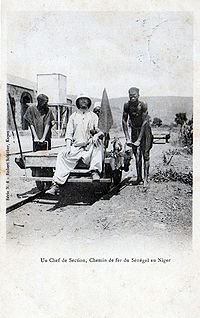
Cercle (French colonial)
Cercle was the smallest unit of French political administration in French Colonial Africa that was headed by a European officer. A cercle consisted of several cantons, each of which in turn consisted of several villages, and was instituted in France's African colonies from 1895 to 1946.At the...
system. This was the smallest unit of French political administration in French Colonial Africa that was headed by a European officer. They might range in size, but French Sudan
French Sudan
French Sudan was a colony in French West Africa that had two separate periods of existence, first from 1890 to 1899, then from 1920 to 1960, when the territory became the independent nation of Mali.-Colonial establishment:...
(modern Mali) consisted of less than a dozen Cercles for most of its existence. Thus, a Cercle Commander might be the absolute authority over hundreds of thousands of Africans.
Cercles
A Cercle consisted of several cantons, each of which in turn consisted of several villages, and was almost universal in France's African colonies from 1895 to 1946.The "Cercle Commander" ("commandant de cercle") was subject to the authority of a District Commander, and the government of the colony above him, but was independent of the Military structure (outside of Military areas, e.g.: modern Niger
Niger
Niger , officially named the Republic of Niger, is a landlocked country in Western Africa, named after the Niger River. It borders Nigeria and Benin to the south, Burkina Faso and Mali to the west, Algeria and Libya to the north and Chad to the east...
and Mauritania
Mauritania
Mauritania is a country in the Maghreb and West Africa. It is bordered by the Atlantic Ocean in the west, by Western Sahara in the north, by Algeria in the northeast, by Mali in the east and southeast, and by Senegal in the southwest...
prior to the Second World War). Below the "Cercle Commander" were a series of African "Chefs de canton" and "Chefs du Village": "chiefs" appointed by the French and subject to removal by the Europeans. As well, the "Cercle Commander" made use of a large number of servants, employees, and African officers such as the "Gardes-de-cercle" police, any military units seconded to them by government authorities, and sub-administrators such as the Precepteur du marché trade inspectors, etc.
Because of administrative practice and geographic isolation, Cercle Commanders had a tremendous amount of power over the lives of the Africans around them. The Cercle Commanders also had tremendous power over the economic and political life of their territories. Legally, all Africans outside the Four Communes
Four Communes
The "Four Communes" of Senegal were the four oldest colonial towns in French controlled west Africa. In 1848, the French Second Republic extended the rights of full French citizenship to the inhabitants of Saint-Louis, Dakar, Goree, and Rufisque...
of Senegal were "subjects" under the Indigénat
Indigénat
The Code de l'indigénat was a set of laws creating, in practice, an inferior legal status for natives of French Colonies from 1887 until 1944–1947. First put in place in Algeria, it was applied across the French Colonial Empire in 1887–1889...
legal code of 1885. This code gave summary powers to French administrators, including the rights to arrest, try, punish and imprison subjects. It also gave French local authorities the right to requisition forced labour, usually limited to able-bodied men for a few weeks a year, but in practice having few restrictions. These "tools" included the Civilizing mission
Civilizing mission
is a rationale for intervention or colonisation, proposing to contribute to the spread of civilization, mostly amounting to the Westernization of indigenous peoples....
ideology common in the period following the First World War. Every new Cercle Commander might well bring with him vast projects for development and the restructuring of the people's lives he governed.
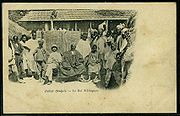
Chiefs
The other official office particular to the local administration of French West Africa was the "Chief". These were Africans appointed by French officials for their loyalty to France, regardless of their rights to local power. These chiefs were assigned created territories based on the scale of a French Canton, as well as on the small scale tribal structures the French found in the coastal areas of the Rivières du SudRivières du Sud
Rivières du Sud was a French colonial division in West Africa, roughly corresponding to modern coastal sections of Guinea...
colony in the 1880s, modern Guinea. The Canton, then, was much smaller than, and qualitatively different from, the precolonial states of the Sahel
Sahel
The Sahel is the ecoclimatic and biogeographic zone of transition between the Sahara desert in the North and the Sudanian Savannas in the south.It stretches across the North African continent between the Atlantic Ocean and the Red Sea....
(such as the Toucouleur Empire
Toucouleur Empire
The Toucouleur Empire was founded in the nineteenth century by El Hadj Umar Tall of the Toucouleur people, in part of present-day Mali....
) which the French would later conquer.
They were styled "Chefs de canton", "Chefs du Village", or occasionally taking the title of Precolonial states assimilated by the French structure whole. This last was uncommon, but became more prevalent in the later colonial territories conquered, as fewer administrators were available to rule over larger, less populated territories with strong pre-colonial state structures.
Where these larger polities resisted the French, they were often broken into small chiefdoms. Larger polities which presented a segment of the elite who would work with the French, were maintained under new leadership. The Sultan of Agadez
Sultanate of Agadez
The Sultanate of Agadez is a traditional polity of the Aïr region centered in the city of Agadez, at the southern edge of the Sahara Desert in north central Niger. It was founded in 1449 by the Tuareg, then conquered by the Songhai Empire in 1500. After the defeat of Songhai in 1591, the sultanate...
, the Sultan of Damagaram
Sultanate of Damagaram
The Sultanate of Damagaram was a powerful pre-colonial state in what is now southeastern Niger, centered on the city of Zinder.- Rise :The Sultanate of Damagaram was founded in 1731 by Muslim Kanouri aristocrats, led by Mallam...
, and the Djermakoy of Dosso are examples of these large scale "Chefs de canton". But even these rulers were replaced by individuals handpicked by French authorities.
Regardless of source, chiefs were given the right to arm small numbers of guards and made responsible for the collection of taxes, the recruitment of forced labour, and the enforcement of "Customary Law". In general, Canton Chiefs served at the behest of their Cercle Commander, and were left to see to their own affairs as long as calm was maintained and Administrative orders were carried out.
Geography
With an area of some 4689000 square kilometres (1,810,433 sq mi) (mostly the desertDesert
A desert is a landscape or region that receives an extremely low amount of precipitation, less than enough to support growth of most plants. Most deserts have an average annual precipitation of less than...
or semi-desert interior of Mauritania
Mauritania
Mauritania is a country in the Maghreb and West Africa. It is bordered by the Atlantic Ocean in the west, by Western Sahara in the north, by Algeria in the northeast, by Mali in the east and southeast, and by Senegal in the southwest...
, Sudan
French Sudan
French Sudan was a colony in French West Africa that had two separate periods of existence, first from 1890 to 1899, then from 1920 to 1960, when the territory became the independent nation of Mali.-Colonial establishment:...
and Niger
Niger
Niger , officially named the Republic of Niger, is a landlocked country in Western Africa, named after the Niger River. It borders Nigeria and Benin to the south, Burkina Faso and Mali to the west, Algeria and Libya to the north and Chad to the east...
) extending from Africa's westernmost point to the depths of the Sahara
Sahara
The Sahara is the world's second largest desert, after Antarctica. At over , it covers most of Northern Africa, making it almost as large as Europe or the United States. The Sahara stretches from the Red Sea, including parts of the Mediterranean coasts, to the outskirts of the Atlantic Ocean...
, the federation contained more than ten million inhabitants at its creation, and some 25 million at its dissolution. The AOF included all of the Senegal River
Sénégal River
The Sénégal River is a long river in West Africa that forms the border between Senegal and Mauritania.The Sénégal's headwaters are the Semefé and Bafing rivers which both originate in Guinea; they form a small part of the Guinean-Malian border before coming together at Bafoulabé in Mali...
valley, most of the Niger River
Niger River
The Niger River is the principal river of western Africa, extending about . Its drainage basin is in area. Its source is in the Guinea Highlands in southeastern Guinea...
valley, and most of the West African Sahel
Sahel
The Sahel is the ecoclimatic and biogeographic zone of transition between the Sahara desert in the North and the Sudanian Savannas in the south.It stretches across the North African continent between the Atlantic Ocean and the Red Sea....
region. It also included tropical forests in Côte d'Ivoire and Guinea, the Futa Djallon highlands, and the Aïr Mountains
Aïr Mountains
The Aïr Mountains is a triangular massif, located in northern Niger, within the Sahara desert...
of modern Niger.
Territories
- Côte d'Ivoire
- DahomeyFrench DahomeyDahomey was a French colony of and a part of French West Africafrom 1904 to 1958. After World War II, by the establishment of the French Fourth Republic in 1947, Dahomey became part of the French Union with an increased autonomy. On 11 December 1958, the French Fifth Republic was established and...
(currently BeninBeninBenin , officially the Republic of Benin, is a country in West Africa. It borders Togo to the west, Nigeria to the east and Burkina Faso and Niger to the north. Its small southern coastline on the Bight of Benin is where a majority of the population is located...
) - French SudanFrench SudanFrench Sudan was a colony in French West Africa that had two separate periods of existence, first from 1890 to 1899, then from 1920 to 1960, when the territory became the independent nation of Mali.-Colonial establishment:...
(currently MaliMaliMali , officially the Republic of Mali , is a landlocked country in Western Africa. Mali borders Algeria on the north, Niger on the east, Burkina Faso and the Côte d'Ivoire on the south, Guinea on the south-west, and Senegal and Mauritania on the west. Its size is just over 1,240,000 km² with...
) - GuineaFrench GuineaFrench Guinea was a French colonial possession in West Africa. Its borders, while changed over time, were in 1958 those of the independent nation of Guinea....
- Mauritania
- Niger
- SenegalHistory of SenegalThe History of Senegal is commonly divided into a number of periods, encompassing the prehistoric era, the precolonial period, colonialism, and the contemporary era.- Paleolithic :...
- Upper VoltaFrench Upper VoltaUpper Volta was a colony of French West Africaestablished on March 1, 1919, from territories that had been part of the colonies of Upper Senegal and Niger and the Côte d'Ivoire...
(currently Burkino Faso) - French TogolandFrench TogolandFrench Togoland was a France Mandate territory in West Africa, which later became the Togolese Republic.-Mandate territory:...
(currently TogoTogoTogo, officially the Togolese Republic , is a country in West Africa bordered by Ghana to the west, Benin to the east and Burkina Faso to the north. It extends south to the Gulf of Guinea, on which the capital Lomé is located. Togo covers an area of approximately with a population of approximately...
)
See also
- ColonialismColonialismColonialism is the establishment, maintenance, acquisition and expansion of colonies in one territory by people from another territory. It is a process whereby the metropole claims sovereignty over the colony and the social structure, government, and economics of the colony are changed by...
- DecolonizationDecolonizationDecolonization refers to the undoing of colonialism, the unequal relation of polities whereby one people or nation establishes and maintains dependent Territory over another...
- François-Victor ÉquilbecqFrançois-Victor ÉquilbecqFrançois-Victor Équilbecq was a French author of works on the customs and folklore from French West Africa.- Works :* La légende de Samba Guélâdio Digui Prince du Foûta ...
- List of French possessions and colonies
- French colonial EmpireFrench colonial empireThe French colonial empire was the set of territories outside Europe that were under French rule primarily from the 17th century to the late 1960s. In the 19th and 20th centuries, the colonial empire of France was the second-largest in the world behind the British Empire. The French colonial empire...
- Postage stamps and postal history of French West AfricaPostage stamps and postal history of French West AfricaFrench Sudan was established in the late nineteenth century and occupied roughly the same territory as modern Mali. Later, various constituent parts were separated by the French colonial authorities and subsequently rejoined again and the territory became known as French West Africa with stamps...
- French Equatorial AfricaFrench Equatorial AfricaFrench Equatorial Africa or the AEF was the federation of French colonial possessions in Middle Africa, extending northwards from the Congo River to the Sahara Desert.-History:...
- French colonial flagsFrench colonial flagsSome of the colonies, protectorates and mandates of the French Colonial Empire used distinctive colonial flags. These most commonly had a French Tricolour in the canton....
External links
- Map of the progression of French expansion in West Africa in the period 1885-1920. Related maps of French West African expansion are at sandafayre.com, Sandafayre Stamp Atlas: French West Africa. Dated 2000, retrieved January 2008.