


Diplomatic Security Service

Encyclopedia
The U.S. Diplomatic Security Service (DSS) is the federal law enforcement arm of the United States Department of State
. The majority of its Special Agents are members of the Foreign Service
and federal law enforcement agents at the same time, making them unique. The Bureau of Diplomatic Security
, more commonly known as Diplomatic Security, or DS, is the senior, administrative and political face of the Diplomatic Security Service. Both terms, DSS or DS, are used interchangeably inside and outside the State Department to refer to the DSS. The Diplomatic Security Service is structured as a federal law enforcement agency, primarily made up of U.S. Federal Agents mandated to serve overseas and domestically. DSS is the most widely represented U.S. law enforcement agency world wide.
s, and serve arrest warrant
s and other court processes. DSS Special Agents protect the U.S. Secretary of State and foreign dignitaries. The State Department's web site says that "The Bureau of Diplomatic Security (DS) is the security and law enforcement arm of the U.S. Department of State. DS is a world leader in international investigations, threat analysis, cyber security, counterterrorism, security technology, and protection of people, property, and information.".
When assigned to domestic field offices, DSS Special Agents are responsible for conducting investigations into passport
and visa fraud as well as providing protection for the United States Secretary of State
and others. Overseas, DSS Special Agents are called Regional Security Officer
s (RSOs), and are charged with the security and law enforcement duties at U.S. missions, embassies, and consular posts.
In addition to investigating crimes involving passport and visa fraud, DSS agents are engaged in other types of investigation.
In cooperation with appropriate U.S. agencies such as the FBI and the CIA, DSS investigates the activities of foreign intelligence agencies directed against Department employees. At the request of other law enforcement agencies, DSS assists in apprehending fugitives who have fled the United States. Personnel security background investigations are conducted on all employees, applicants, and contractors seeking employment with the Department. Intelligence investigations look into terrorist incidents and threats made against State Department employees and facilities throughout the world.
There are approximately 2,000 Diplomatic Security Service special agents. Special Agents are sometimes referred to as "DS Agents" or "DSS Agents". Both terms are used interchangeably within the agency and other organizations.
Unlike all other civilian federal law enforcement officers, DSS agents must serve multiple-year tours overseas as a condition of employment. When not at an overseas assignment, they serve domestically, in field offices and HQ positions. A minority of DSS agents are members of the State Department's civil service (GS-1811) and do not serve tours overseas; they focus on criminal work and dignitary protection within the United States.
carried out by veteran DSS agents. Those selected undergo a comprehensive medical examination needed for worldwide availability, as well as an exhaustive background investigation for security clearance
at the level of top secret/sensitive compartmentalized information
(TS/SCI). A final suitability review and vote by a Foreign Service panel evaluates a candidate's overall ability to represent the interests of the United States as a diplomat abroad. All agents have at least a four year university degree. Agent candidates must be under the age of 37 at the time of commissioning. However, due to the decision in Robert P. Isabella v. Department of State and Office of Personnel Management, 2008 M.S.P.B. 146, preference eligible veterans may apply after age 37. In 2009, the Office of Personnel Management issued implementation guidance on the Isabella decision: OPM Letter
(FLETC) in Glynco, Georgia; a Basic Special Agent Course at the Diplomatic Security Training Center, and courses at the Foreign Service Institute
(FSI) in Arlington, Virginia. A new training facility that will consolidate DSS' far-flung training venues is currently under development. A new agent is usually assigned to a domestic field office for two years before taking on an overseas assignment, although an agent can expect to be sent on frequent temporary duty assignments overseas even when assigned to a domestic post. However, agents may be called overseas much earlier depending on the needs of DSS. As members of the Foreign Service, agents are expected to spend most of their career living and working overseas, often in hazardous environments or less developed countries throughout the world.
The largest permanent dignitary protection
detail carried out by DSS agents is on the Secretary of State
. DSS also has an ongoing protection detail on the United States Ambassador to the United Nations
.
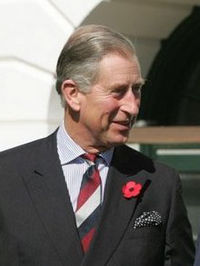 Most all other 'details' are on visiting foreign dignitaries and diplomats, and are on a temporary basis for the duration of a dignitary's visit. Foreign Ministers from important nations, as well as those with threats, are typically covered by DSS.
DSS has the authority to provide protection for Foreign Heads of State, and did so through the early 1970s. At that time there was an order signed by President Richard Nixon
also giving this authority to the U.S. Secret Service
(USSS), which has protected heads of state ever since. The appointment of Hillary Clinton as Secretary of State raised the question of whether and when the Secret Service or DSS would provide protection. As former First Lady Clinton receives Secret Service protection, as does her husband
, who would, presumably, occasionally accompany her on official trips. However, DSS has been named the lead agency to carry out the protection for Mrs. Clinton.
DSS Special Agents protect such dignitaries as Prince Charles, Prince William, Duke of Cambridge, Prince Harry of Wales
, the Dalai Lama
, Palestinian Authority President Mahmoud Abbas
and has protected Princess Diana, Yasser Arafat
, Zalmay Khalilzad
and Boris Yeltsin
(in the days preceding the dissolution of the Soviet Union
).
The Bureau of Diplomatic Security
's Office of Foreign Missions
is responsible for the protection of foreign embassies and consulates on U.S. soil. Since the DSS does not have a true uniformed force with police powers, other agencies or local police departments are reimbursed for providing this service. Two notable examples of this are the Secret Service Uniformed Division in Washington, DC and the New York City Police Department
in New York City.
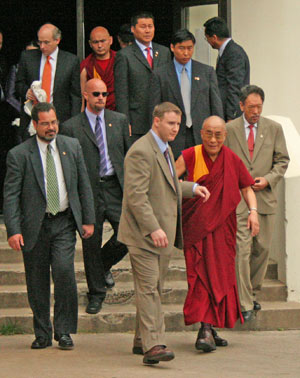 During the annual United Nations General Assembly (UNGA) in September, DSS, as well as the USSS, protects many dozens of varied dignitaries, mostly in New York City. DSS may also provide protection to others as assigned, including foreign persons without any government status, but who might have a threat against them. DSS also protects certain U.S. Ambassadors overseas. Currently, the protection detail for the U.S. Ambassador to Iraq, James Franklin Jeffrey
, is one of the largest critical threat protection details in the history of DSS. Currently the U.S. Ambassadors to Colombia, China, Israel, Egypt, and Jordan all receive large amounts of protection from the DSS.
DSS has also protected or does protect the Presidents of Afghanistan, Haiti and Liberia. What makes these 'details' unique is that the protection, done by U.S. federal agents - DSS, is carried out overseas, in the protected person's home country.
s in order to allow an unentitled foreigner to become a U.S. citizen.
Sometimes Americans, including Foreign Service Officer
s (FSOs), are the target of DSS investigations, such as an FSO selling visas for personal gain. DSS also investigates other alleged improper or illegal behavior by Department of State personnel, to include incidents of espionage. Such cases would involve other agencies, such as the Department of Justice. Overseas DSS must take the role of local and state law enforcement when investigating issues such as spousal or child abuse by U.S. government personnel assigned to the embassy. This is because the host country will not investigate or prosecute diplomats, who are considered to have immunity from their laws. DSS also conducts tens of thousands of background investigations per year - not just for the Department of State, but for other federal agencies as well.
In recent years, DSS has expanded its overseas investigations program with ARSO-I's (Assistant Regional Security Officer-Investigators), also known as "Overseas Criminal Investigators." These agents are given special training in consular functions and are commissioned consular officers. However, they spend a large amount of their time working with the fraud units in consular sections, investigating visa and passport fraud. The ARSO-I's may work alien smuggling and human trafficking investigations alongside the resident or regional Immigration and Customs Enforcement (ICE) Attaché who has jurisdictional primacy in these arenas. In addition, ARSO-I's also have responsibilities outside of their respective Consular assignments for mission security.
The office's counterintelligence division conducts aggressive counterintelligence inquires and counterespionage investigations with other U.S. Government agencies. Counterespionage investigations are conducted in close coordination with the FBI in accordance with their legal mandates.
The division conducts numerous counterintelligence and security awareness training programs for all U.S. Government personnel requesting or having access to sensitive Department of State facilities and information. All training programs enhance the understanding of both foreign intelligence and espionage threats and countermeasures, and educate employees on the foreign intelligence environment.
In addition, the office relies on a cadre of security engineers to deter, detect, and neutralize attempts by foreign intelligence services to technically penetrate U.S. office buildings and residences. These efforts range from detecting a simple listening device in the wall to countering the most sophisticated electronic eavesdropping devices and systems.
On June 4, 2009 the DSS and the FBI arrested former Department of State employee Walter Kendall Myers on charges of serving as an illegal agent of the Cuban government for nearly 30 years and conspiring to provide classified U.S. information to the Cuban government. Mr. Myers’ arrest is the culmination of a three-year joint DSS/FBI investigation.http://www.state.gov/r/pa/prs/ps/2009/06a/124404.htm
operations around the country. The Office of Protective Intelligence and Investigations (PII) in the Threat Intelligence and Analysis division has DSS Special Agents who travel all over the world investigating threats to the Secretary of State and U.S. Embassies and Consulates. DSS Special Agents on the New York JTTF provided critical information in the immediate aftermath of 9/11 and DSS Agents assigned as Regional Security Officers around the world tracked down leads for the FBI and other federal agencies. Any time there is a threat or an attack against a U.S. Embassy or Consulate, DSS Special Agents are the first on the scene to investigate.
The Rewards for Justice Program
(RFJ) is the counterterrorism rewards program of the U.S. Department of State's Diplomatic Security Service. The Secretary of State is currently offering rewards for information that prevents or favorably resolves acts of international terrorism against U.S. persons or property worldwide.
On January 28, 2009, a news story broke about a CIA station chief
Andrew Warren
in Algiers
, Algeria
who was under investigation by DSS for having allegedly raped two Muslim women.
who have fled U.S. jurisdiction to avoid prosecution is unmatched. During 2009, DSS assisted in the resolution of 136 international fugitive cases from around the globe. DSS collaborates with America's Most Wanted
In 1995 DSS Special Agents Jeff Riner and Bill Miller, the RSOs assigned to the U.S. Embassy in Pakistan, along with Pakistani police and Inter-Services Intelligence (ISI), arrested Ahmed Ramzi Yousef, who was wanted in connection with the 1993 World Trade Center bombing in New York City.
DSS Special Agent Terrance Lawrence located and returned Jared Ravin Yaffe from Brazil. Yaffe, wanted in California for multiple counts of alleged child sexual assault, kidnapping, and unlawful flight to avoid prosecution, was returned to the United States on May 12, 2009, to face trial. On February 11, 2009, the United States District Court, Southern District of California issued a federal arrest warrant for Yaffe for unlawful flight to avoid prosecution. Yaffe was profiled on the television show America’s Most Wanted on April 11, 2009.
On September 19, 2009, Special Agents from the U.S. Diplomatic Security Service (DSS) located Derrick Yancey, a former Deputy Sheriff from DeKalb County Georgia, in Punta Gorda, Belize. Yancey was wanted in Georgia for double murder of his wife Linda Yancey and a day laborer.
Upon arrival at a local bar, at 6:05 PM local time, a DSS agent tapped on Yancey's shoulder and told him "It is time to go." Belize authorities then arrested Yancey. Yancey was featured on America's Most Wanted.
On November 23, 2009 DSS Special Agents from the U.S. Embassy’s Regional Security Office
(RSO) worked closely with the U.S. Marshals Service, Guatemalan National Police, and INTERPOL to locate alleged murder suspect 24-year-old Ariel Beau Patrick, who was taken into custody in Guatemala. Ariel Patrick was featured on America's Most Wanted.
AMW - America's Most Wanted featured the capture of Robert Snyder in Belize - DSS Special Agent (RSO) Rob Kelty interviewed by John Walsh - Segment aired on February 27, 2010 on AMW.
On April 26, 2010 after failing to check in with pretrial services within two days of his April 21 hearing on his bond status, Andrew Warren
42, was apprehended by a combined team of Norfolk Police Department
Fugitive Investigators, DSS Special Agents and U.S. Marshals. Judge Ellen S. Huvelle of the U.S. District Court for the District of Columbia issued a bench warrant for the arrest of the former CIA officer. ABC - Former CIA spy arrested
On July 30, 2010, special agents from the U.S. Department of State's Diplomatic Security Service (DSS) located fugitive George Alvin Viste in Peru. Viste is wanted in Clark County, Washington on seven different criminal charges including the rape of a child, child molestation, and incest. “Diplomatic Security’s Regional Security Office
in Lima worked closely with the U.S. Marshals Service and our law enforcement counterparts in Peru to locate Viste,” said Jeffrey W. Culver, Director of the Diplomatic Security Service. “ Diplomatic Security Press Release Peruvian press release with video Reuters images
On October 8, 2010, Special Agents from the U.S. Department of State's Diplomatic Security Service (DSS) located Dario Sarimiento Tomas in Pampanga, Philippines. DSS worked with Philippine officials to apprehend Tomas, who is wanted in South Korea on charges that he defrauded an individual there of more than $200,000. Tomas was arrested by law enforcement officials from the Philippine National Bureau of Investigations and National Police. Tomas was assigned to the U.S. Embassy in Seoul as a Customs and Border Protection Officer. Diplomatic Security Press Release
On January 12, 2011, Special agents from the U.S. Department of State's Diplomatic Security Service (DSS) have located and helped return California fugitive John Pope from Mexico. Pope, formerly of San Francisco, was taken into custody by Mexican authorities in La Paz, Mexico on January 12 and returned to the United States on January 18, 2011 to face trial. John Pope has been wanted by the San Francisco District Attorney's Office since October 20, 1998, in connection with allegations of fraud concerning embezzlement of $1,000,000 from the estate of a deceased San Francisco businessman. Newsblaze article
February 3, 2011 - Paul Eischeid, a fugitive, and member of the Hells Angels
who had eluded U.S. Marshals for nearly eight years -- is finally in handcuffs. U.S. Marshals tell AMW that the accused murderer was taken down in Buenos Aires on Feb. 3, 2011. Authorities say an Interpol Red Notice, as well as investigations by the U.S. Marshals Service and the U.S. Diplomatic Security Service in Argentina led to the elusive fugitive's capture. Americas Most Wanted AMW
On October 5, 2011, in cooperation with the U.S. Marshals Montana Violent Offender Task Force and the Diplomatic Security Service, the Belize Police Department arrested Michael Patrick McNulty, 48, on a $100,000 warrant issued by the state of Montana. Montana Fugitive arrested in Belize
, or more commonly as the "RSO"
, who is the Special Agent-in-Charge of a Regional Security Office
and who serves as the senior law enforcement advisor and security attaché to the U.S. Ambassador.
Like all members of the Foreign Service
, DSS agents cannot remain posted in the United States for more than five consecutive years and must eventually be assigned to an overseas post.
Once assigned overseas, a DSS agent will typically serve first as a Special Agent called an Assistant Regional Security Officer (ARSO) in a Regional Security Office
. Agents that enjoy the overseas lifestyle will try to get a second tour in a Special Agent slot at a large embassy or even possibly a Regional Security Officer
(RSO) slot at a small post or a Deputy Regional Security Office (DRSO) at a medium-sized post. Usually after two back-to-back overseas tours agents will be encouraged to return to the U.S. and serve in a Headquarters position before returning overseas as a Regional Security Officer
.
DSS has been expanding its criminal role overseas and now has many overseas fraud investigator positions. These positions are referred to as “I” positions - as in “Investigator” - and they are commonly referred to as ARSO-Is. These agents work out of the consular sections of embassies and consulates instead of the Regional Security Offices. The performance of these agents is rated by the RSO or the Deputy RSO and is reviewed by the Consul General.
There are several other overseas positions filled by DSS agents. At new building construction sites, agents will serve as the Site Security Manager (SSM) where they will supervise the overall security of the new building including the Construction Security Technicians (CST) and Cleared American Guards (CAG). For construction at posts where there is a critical counterintelligence (CI) threat, agents will also serve as CI investigators dedicated to preventing compromise of the most sensitive spaces within the new embassy.
It is common for domestically assigned DSS agents to serve temporary duty (TDY) at Embassies overseas. Such duty can range from various types of protection duties to RSO support or security training for an overseas post, and may last for as little as a few days to multiple months.
DSS agents have often found themselves in harm's way with four agents and 28 contract security specialists killed in the line of duty as of July 2006. The vast majority of DSS casualties had taken place within the five years in Iraq where DSS continued to conduct its most critical and dangerous protective missions.
It should be noted however that the Regional Security Officer title is currently in an unofficial period of flux and, although not officially sanctioned, some agents posted overseas use derivative titles such as security attaché or only use their agent titles on their business cards. Newer agents generally dislike the title because it doesn’t reflect their law enforcement status and consider it a vestige of Diplomatic Security's SY days.
According to US law the title "security officer" is legally defined as someone who is employed by a private entity and is not a law enforcement officer. Additionally, it is noted that RSOs no longer cover multiple countries and are thus not regional. Even some more seasoned agents have taken to referring to themselves as Special Agent-in-Charge/Regional Security Officer on their official biographies.
The method in which the RSO title is implemented also has the potential to create confusion when interacting with outside organizations. It is possible at larger overseas missions with multiple diplomatic facilities located in the same country to have multiple agents with the Regional Security Officer title. India, for example, has an RSO position at the embassy at the Senior Foreign Service level and 4 other RSOs at the consulates at the significantly lower grade 3 level yet all of these agents have the same job title. Sometimes the title Senior Regional Security Officer will be used to help prevent confusion or to indicate that the agent is the most senior in the country.
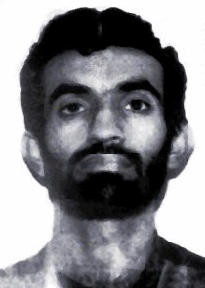 DSS agents have been involved in the investigations of most terrorist attacks on U.S. interests overseas in the past twenty years, including the 2000 bombing
of the USS Cole
, and bombings of two U.S. Embassies in East Africa
in 1998. Perhaps most notably, in 1995 DSS Special Agents Jeff Riner and Bill Miller, the RSOs assigned to the U.S. embassy in Pakistan
, along with Pakistani police and Inter-Services Intelligence
(ISI), arrested Ahmed Ramzi Yousef
, who was wanted in connection with the 1993 World Trade Center
bombing in New York City. Despite FBI press releases, it was not the FBI who captured Yousef but the ISI and DSS.
in Beijing
, China
, the 2007 Pan American Games
in Rio de Janeiro
, Brazil
, 2006 Winter Olympic Games
in Turin
, Italy
; the 2010 Winter Olympics in Canada, 2010 World Cup
Soccer Matches and a host of other special events. While the Olympics are the most well-known events, DSS agents have worked with host country security on numerous other large-scale events around the world. For events with a large US presence, such as the Olympics, an Olympic Security Coordinator - always a DSS agent - will be named to manage all of the security and liaison with the host government. All other federal agencies, such as the FBI, ATF
, USSS
, and DOD
components, will report to the DSS agent in charge.
. Headed by a Chief Special Agent, who was also called Special Assistant to the Secretary, these agents worked in Washington, D.C., and New York City. This group of agents would sometimes be referred to as the Office of the Chief Special Agent, however it was known as the Bureau of Secret Intelligence
. They were operated with private funds from the Secretary's office. Conducting sensitive investigations, they focused mainly on foreign agents and their activities in the United States (this in the days before the CIA; and before the FBI became the primary domestic intelligence organization for the U.S.).
at its inception in 1916. The Department of State's Bureau of Secret Intelligence
was also known as U-1, an off-the-books adjunct to the Division of Information. Before the United States entered World War I, German and Austrian spies were conducting operations in New York City. The spies were using forged or stolen identity papers. President Woodrow Wilson authorized the Secretary of State Robert Lansing
to establish a security arm of the Department of State. Three agents were recruited from the United States Secret Service
because of their experience with counterfeit currency. Since the United States Postal Inspection Service (USPIS)
had the best laboratory, the director of the new agency was recruited there.
The assumption is that the name "Office of the Chief Special Agent", which was sometimes used in 1916, and to this day by various information portals to include the Department of State's website, to downplay the bureau's original mission.
After 1918, when Congress passed laws requiring passports for Americans returning from overseas, and visas for aliens entering the United States, State Department agents began investigating passport and visa fraud. Around this same time State Department agents began protecting distinguished visitors to the United States. During World War I
the Chief Special Agent's office had the responsibility for interning and exchanging diplomatic officials of enemy powers. By the 1920s the Chief Special Agent, no longer reporting his office's activities directly to the Secretary of State, began reporting to the Assistant Secretary of State for Administration. Within the next two decades major passport fraud activities were detected worldwide, often involving both Communists and Nazis. Many of these fraud rings were exposed and neutralized.
, State Department agents were once again involved in interning and exchanging diplomatic officials of enemy powers. Around this time the Chief Special Agent's office became known as SY, which was short for the Office of Security, which in turn was under the Administration Bureau of the Management Undersecretary. After World War II, SY began expanding its presence overseas, with numerous Regional Security Officer
(RSO) positions created in overseas posts.
In 1961, Otto Otepka
, then a Deputy Director of SY, brought to the attention of the United States Senate
Internal Security Subcommittee deficiencies in the State Department clearance process. The allegations were traced all the way up to then Secretary of State
Dean Rusk
. Despite multiple awards, appeals from multiple U.S. Senators, and not backing down, Secretary Rusk removed Otepka from his position and ultimately unceremoniously fired him.
Starting sometime after World War II SY began regularly protecting visiting heads of state, but had done so sparodically since the 1930s. Before his departure in 1947 SY Director Bannerman began codifying procedures for overseas security. This process continued in the late 1940s with a number of RSO positions being created. From that time and through the early 1970s the number of agents remained relatively small, hovering around 300, with more than half of these serving overseas at any given time. The April 1983 US Embassy bombing was a catharsis for 'SY', which would transform 'SY' into the newly created Diplomatic Security Service, part of the Bureau of Diplomatic Security.
to look into the bombings of U.S. Diplomatic facilities in Beirut. The resultant Inman Report
recommended that security at the State Department needed to be elevated to a higher priority. Thus in 1985 Congress created the Bureau of Diplomatic Security (DS)
, headed by the Assistant Secretary of State for Diplomatic Security
, and the Diplomatic Security Service (DSS), headed by the Director of DSS, who is subordinate to the Assistant Secretary of State for DS.
The DSS, technically a sub unit of DS, had a director placed at its head. The Director of DSS is an active DSS agent, and is often referred to by a term more familiar: the Principal Deputy Assistant Secretary (PDAS), as he/she is senior to the various Assistant Directors of Diplomatic Security who hold positions equivalent to Deputy Assistant Secretary (DAS). The PDAS designation signifies the DSS director's preeminence over the other DASs within DS, while at the same time signifying his/her position under the Assistant Secretary of State for Diplomatic Security.
The first several Assistant Secretaries for DS were senior Foreign Service Officer
s, the last three have been senior law enforcement, brought in from other law enforcement agencies. With the creation of DS and the DSS, its ranks grew to well over 1,000 agents. However, by the mid 1990s budget cutbacks were foisted on the U.S. State Department by Congress and the Department in turn trimmed the budget of DSS to the point where it had dwindled to a little over 600 agents. At the time this seemed justified by Department hierarchy who thought DS was growing much too fast in over-reaction to the Beirut bombings.
Although DS was by then a Bureau within the State Department, overseas the vast majority of RSOs continued to report to the Administration Officer. This changed in 1999, as fallout from the east Africa embassy bombings of 1998. The terse message from the then Undersecretary for Management announcing the immediate change made it clear that this action was against his best judgment and insinuated that it was done because then Secretary of State Madeleine Albright ordered it. This change stripped DS out from under Administration Officers and placed the RSO directly under the Deputy Chief of Mission (DCM) in the chain of command at an Embassy.
Looking at its history it becomes apparent there is a pattern of forced changes in relation to security for the U.S. State Department and its facilities overseas (American embassies and consulates). Often this change is the result of a serious incident, such as a terrorist attack on a U.S. mission. Since 1999 and especially after the creation of the U.S. embassies in Kabul
and Baghdad
there seems to be an increasing acceptance and desire by State Department hierarchy to fully embrace and support the goals of the Diplomatic Security Service. Likewise, DS has been allowed a greater degree of independent action in administering itself and has been allowed to hire new agents at a rate that keeps overall numbers from slipping downward.
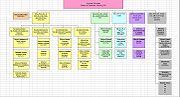
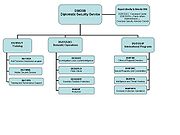 For people who do not work for the Department of State (DoS), there is much confusion about the relationship between the Bureau of Diplomatic Security (DS) and the Diplomatic Security Service (DSS). Even within Department of State there is still some confusion regarding the difference between DS and the DSS.
The Bureau of Diplomatic Security (DS) oversees all security related matters of the U.S. Department of State, which includes security at U.S. embassies and consulates. DS has approximately 34,000 employees; 2,000 of whom are the U.S. federal agents within DSS. The DSS was structured as a law enforcement agency within DS. As such the DSS is the primary mechanism by which the Bureau of Diplomatic Security accomplishes its law enforcement (criminal investigative) and security missions.
An Assistant Secretary of State is in charge of the Bureau of Diplomatic Security
and the Office of Foreign Missions
(OFM). Under the Assistant Secretary of State, Ambassador Eric Boswell, are several Deputy Assistant Secretaries (DAS). The Principal Deputy Assistant Secretary (PDAS) is the Director for the Diplomatic Security Service (DSS). The Director of DSS is an active DSS Special Agent.
Within DoS, all employees who work for DS (the bureau) are referred to as DS employees. Even within DSS, agents refer to themselves as DS Agents. This usage is also used in DoS press releases, although recently multi-agency press releases from the U.S. Attorney’s offices use the technically correct Diplomatic Security Service. Additionally, Agents are frequently assigned to positions within DS (the bureau) but outside of the DSS chain of command hierarchy. This may seem a little counterintuitive but is a common practice within the Department of State. For example while assigned overseas, DoS employees are evaluated by their superiors at the embassy or consulate to which they are assigned. In the case of DSS agents, the RSO (senior special agent at post) is rated by the Deputy Chief of Mission and reviewed by the Chief of Mission (Ambassador). The DSS hierarchy in Washington has no input on the agent’s evaluation. This is only a technicality however; as agents frequently receive instructions from HQ.
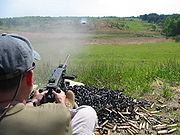
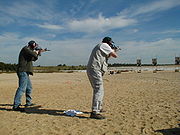
Standard issue
Former weapons included the Uzi submachine gun
and the Ruger Mini-14 carbine. Stockless or "shorty" versions of the Remington 870 shotgun may still be found in some DSS offices. DSS agents used to carry the Smith & Wesson Model 19 revolver (.357 Magnum caliber), but switched to 9 mm pistols around 1993.
Additional issue
These and other weapons systems may be employed by DSS Special Agents assigned to high-threat locations. The agents going to those locations attend additional thorough training in these weapons before they are deployed.
United States Department of State
The United States Department of State , is the United States federal executive department responsible for international relations of the United States, equivalent to the foreign ministries of other countries...
. The majority of its Special Agents are members of the Foreign Service
United States Foreign Service
The United States Foreign Service is a component of the United States federal government under the aegis of the United States Department of State. It consists of approximately 11,500 professionals carrying out the foreign policy of the United States and aiding U.S...
and federal law enforcement agents at the same time, making them unique. The Bureau of Diplomatic Security
Bureau of Diplomatic Security
The Bureau of Diplomatic Security, more commonly known as Diplomatic Security, or DS, is the security and law enforcement arm of the United States Department of State. DS is a world leader in international investigations, threat analysis, cyber security, counterterrorism, security technology, and...
, more commonly known as Diplomatic Security, or DS, is the senior, administrative and political face of the Diplomatic Security Service. Both terms, DSS or DS, are used interchangeably inside and outside the State Department to refer to the DSS. The Diplomatic Security Service is structured as a federal law enforcement agency, primarily made up of U.S. Federal Agents mandated to serve overseas and domestically. DSS is the most widely represented U.S. law enforcement agency world wide.
Overview
As federal agents, all DSS Special Agents have the power to arrest, carry firearmFirearm
A firearm is a weapon that launches one, or many, projectile at high velocity through confined burning of a propellant. This subsonic burning process is technically known as deflagration, as opposed to supersonic combustion known as a detonation. In older firearms, the propellant was typically...
s, and serve arrest warrant
Arrest warrant
An arrest warrant is a warrant issued by and on behalf of the state, which authorizes the arrest and detention of an individual.-Canada:Arrest warrants are issued by a judge or justice of the peace under the Criminal Code of Canada....
s and other court processes. DSS Special Agents protect the U.S. Secretary of State and foreign dignitaries. The State Department's web site says that "The Bureau of Diplomatic Security (DS) is the security and law enforcement arm of the U.S. Department of State. DS is a world leader in international investigations, threat analysis, cyber security, counterterrorism, security technology, and protection of people, property, and information.".
When assigned to domestic field offices, DSS Special Agents are responsible for conducting investigations into passport
Passport
A passport is a document, issued by a national government, which certifies, for the purpose of international travel, the identity and nationality of its holder. The elements of identity are name, date of birth, sex, and place of birth....
and visa fraud as well as providing protection for the United States Secretary of State
United States Secretary of State
The United States Secretary of State is the head of the United States Department of State, concerned with foreign affairs. The Secretary is a member of the Cabinet and the highest-ranking cabinet secretary both in line of succession and order of precedence...
and others. Overseas, DSS Special Agents are called Regional Security Officer
Regional Security Officer
Regional Security Officer is the title given to special agents of the U.S. Diplomatic Security Service serving overseas. The RSO is the principal security attaché and advisor to the U.S. Ambassador at American Embassies and consulates. Working for the U.S...
s (RSOs), and are charged with the security and law enforcement duties at U.S. missions, embassies, and consular posts.
In addition to investigating crimes involving passport and visa fraud, DSS agents are engaged in other types of investigation.
In cooperation with appropriate U.S. agencies such as the FBI and the CIA, DSS investigates the activities of foreign intelligence agencies directed against Department employees. At the request of other law enforcement agencies, DSS assists in apprehending fugitives who have fled the United States. Personnel security background investigations are conducted on all employees, applicants, and contractors seeking employment with the Department. Intelligence investigations look into terrorist incidents and threats made against State Department employees and facilities throughout the world.
There are approximately 2,000 Diplomatic Security Service special agents. Special Agents are sometimes referred to as "DS Agents" or "DSS Agents". Both terms are used interchangeably within the agency and other organizations.
Unlike all other civilian federal law enforcement officers, DSS agents must serve multiple-year tours overseas as a condition of employment. When not at an overseas assignment, they serve domestically, in field offices and HQ positions. A minority of DSS agents are members of the State Department's civil service (GS-1811) and do not serve tours overseas; they focus on criminal work and dignitary protection within the United States.
Hiring process
DSS agents are hired after an intensive evaluation process that includes an on-line exam, a Foreign Service Board of Examiners writing evaluation, knowledge-based test, panel interview and situational judgment exercisesSituational judgement test
Situational Judgement Tests or Inventories are a type of psychological test which present the test-taker with realistic, hypothetical scenarios and ask him to identify an appropriate response. These are generally in a multiple choice format, but represent a distinct psychometric approach from the...
carried out by veteran DSS agents. Those selected undergo a comprehensive medical examination needed for worldwide availability, as well as an exhaustive background investigation for security clearance
Security clearance
A security clearance is a status granted to individuals allowing them access to classified information, i.e., state secrets, or to restricted areas after completion of a thorough background check. The term "security clearance" is also sometimes used in private organizations that have a formal...
at the level of top secret/sensitive compartmentalized information
Classified information in the United States
The United States government classification system is currently established under Executive Order 13526, the latest in a long series of executive orders on the topic. Issued by President Barack Obama in 2009, Executive Order 13526 replaced earlier executive orders on the topic and modified the...
(TS/SCI). A final suitability review and vote by a Foreign Service panel evaluates a candidate's overall ability to represent the interests of the United States as a diplomat abroad. All agents have at least a four year university degree. Agent candidates must be under the age of 37 at the time of commissioning. However, due to the decision in Robert P. Isabella v. Department of State and Office of Personnel Management, 2008 M.S.P.B. 146, preference eligible veterans may apply after age 37. In 2009, the Office of Personnel Management issued implementation guidance on the Isabella decision: OPM Letter
Training
After a new agent candidate is hired, he or she begins a six month training program that includes the Criminal Investigator Training Program (CITP) at the Federal Law Enforcement Training CenterFederal Law Enforcement Training Center
The Federal Law Enforcement Training Center serves as an interagency law enforcement training organization for 90 United States government federal law enforcement agencies.-Location:...
(FLETC) in Glynco, Georgia; a Basic Special Agent Course at the Diplomatic Security Training Center, and courses at the Foreign Service Institute
Foreign Service Institute
The Foreign Service Institute is the United States Federal Government's primary training institution for employees of the U.S. foreign affairs community, preparing American diplomats and other professionals to advance U.S. foreign affairs interests overseas and in Washington...
(FSI) in Arlington, Virginia. A new training facility that will consolidate DSS' far-flung training venues is currently under development. A new agent is usually assigned to a domestic field office for two years before taking on an overseas assignment, although an agent can expect to be sent on frequent temporary duty assignments overseas even when assigned to a domestic post. However, agents may be called overseas much earlier depending on the needs of DSS. As members of the Foreign Service, agents are expected to spend most of their career living and working overseas, often in hazardous environments or less developed countries throughout the world.
- Basic Special Agent Course (BSAC) (including FLETC): 7 months
- Basic Regional Security Office Course (RSO School): 3 months
- High Threat Tactical Training (HTT): 2 months
- Language Training: 2–12 months per language
Protection mission
DSS is the agency identified to accept high threat protection assignments around the globe.The largest permanent dignitary protection
Dignitary Protection
When the US Government determines that a visiting dignitary needs protection while visiting the United States, these services are most often provided by either the United States Secret Service or the US Department of State’s Diplomatic Security Service....
detail carried out by DSS agents is on the Secretary of State
United States Secretary of State
The United States Secretary of State is the head of the United States Department of State, concerned with foreign affairs. The Secretary is a member of the Cabinet and the highest-ranking cabinet secretary both in line of succession and order of precedence...
. DSS also has an ongoing protection detail on the United States Ambassador to the United Nations
United States Ambassador to the United Nations
The United States Ambassador to the United Nations is the leader of the U.S. delegation, the U.S. Mission to the United Nations. The position is more formally known as the "Permanent Representative of the United States of America to the United Nations, with the rank and status of Ambassador...
.
DSS has the authority to provide protection for Foreign Heads of State, and did so through the early 1970s. At that time there was an order signed by President Richard Nixon
Richard Nixon
Richard Milhous Nixon was the 37th President of the United States, serving from 1969 to 1974. The only president to resign the office, Nixon had previously served as a US representative and senator from California and as the 36th Vice President of the United States from 1953 to 1961 under...
also giving this authority to the U.S. Secret Service
United States Secret Service
The United States Secret Service is a United States federal law enforcement agency that is part of the United States Department of Homeland Security. The sworn members are divided among the Special Agents and the Uniformed Division. Until March 1, 2003, the Service was part of the United States...
(USSS), which has protected heads of state ever since. The appointment of Hillary Clinton as Secretary of State raised the question of whether and when the Secret Service or DSS would provide protection. As former First Lady Clinton receives Secret Service protection, as does her husband
Bill Clinton
William Jefferson "Bill" Clinton is an American politician who served as the 42nd President of the United States from 1993 to 2001. Inaugurated at age 46, he was the third-youngest president. He took office at the end of the Cold War, and was the first president of the baby boomer generation...
, who would, presumably, occasionally accompany her on official trips. However, DSS has been named the lead agency to carry out the protection for Mrs. Clinton.
DSS Special Agents protect such dignitaries as Prince Charles, Prince William, Duke of Cambridge, Prince Harry of Wales
Prince Harry of Wales
Prince Henry of Wales , commonly known as Prince Harry, is the younger son of Charles, Prince of Wales and the late Diana, Princess of Wales, and fourth grandchild of Queen Elizabeth II and Prince Philip, Duke of Edinburgh...
, the Dalai Lama
Dalai Lama
The Dalai Lama is a high lama in the Gelug or "Yellow Hat" branch of Tibetan Buddhism. The name is a combination of the Mongolian word далай meaning "Ocean" and the Tibetan word bla-ma meaning "teacher"...
, Palestinian Authority President Mahmoud Abbas
Mahmoud Abbas
Mahmoud Abbas , also known by the kunya Abu Mazen , has been the Chairman of the Palestine Liberation Organisation since 11 November 2004 and became President of the Palestinian National Authority on 15 January 2005 on the Fatah ticket.Elected to serve until 9 January 2009, he unilaterally...
and has protected Princess Diana, Yasser Arafat
Yasser Arafat
Mohammed Yasser Abdel Rahman Abdel Raouf Arafat al-Qudwa al-Husseini , popularly known as Yasser Arafat or by his kunya Abu Ammar , was a Palestinian leader and a Laureate of the Nobel Prize. He was Chairman of the Palestine Liberation Organization , President of the Palestinian National Authority...
, Zalmay Khalilzad
Zalmay Khalilzad
Zalmay Mamozy Khalilzad is a counselor at the Center for Strategic and International Studies and president of Khalilzad Associates, an international business consulting firm based in Washington, DC. He was the United States Ambassador to the United Nations under President George W. Bush...
and Boris Yeltsin
Boris Yeltsin
Boris Nikolayevich Yeltsin was the first President of the Russian Federation, serving from 1991 to 1999.Originally a supporter of Mikhail Gorbachev, Yeltsin emerged under the perestroika reforms as one of Gorbachev's most powerful political opponents. On 29 May 1990 he was elected the chairman of...
(in the days preceding the dissolution of the Soviet Union
Dissolution of the Soviet Union
The dissolution of the Soviet Union was the disintegration of the federal political structures and central government of the Union of Soviet Socialist Republics , resulting in the independence of all fifteen republics of the Soviet Union between March 11, 1990 and December 25, 1991...
).
The Bureau of Diplomatic Security
Bureau of Diplomatic Security
The Bureau of Diplomatic Security, more commonly known as Diplomatic Security, or DS, is the security and law enforcement arm of the United States Department of State. DS is a world leader in international investigations, threat analysis, cyber security, counterterrorism, security technology, and...
's Office of Foreign Missions
Office of Foreign Missions
Mandated by Congress, the Office of Foreign Missions provides the legal foundation to facilitate secure and efficient operations of U.S. missions abroad, and of foreign missions and international organizations in the United States...
is responsible for the protection of foreign embassies and consulates on U.S. soil. Since the DSS does not have a true uniformed force with police powers, other agencies or local police departments are reimbursed for providing this service. Two notable examples of this are the Secret Service Uniformed Division in Washington, DC and the New York City Police Department
New York City Police Department
The New York City Police Department , established in 1845, is currently the largest municipal police force in the United States, with primary responsibilities in law enforcement and investigation within the five boroughs of New York City...
in New York City.
James Franklin Jeffrey
James Franklin Jeffrey is an American diplomat and the current United States Ambassador to Iraq.He was serving as the Deputy National Security Advisor in the administration of George W. Bush before being appointed to Turkey.-Biography:...
, is one of the largest critical threat protection details in the history of DSS. Currently the U.S. Ambassadors to Colombia, China, Israel, Egypt, and Jordan all receive large amounts of protection from the DSS.
DSS has also protected or does protect the Presidents of Afghanistan, Haiti and Liberia. What makes these 'details' unique is that the protection, done by U.S. federal agents - DSS, is carried out overseas, in the protected person's home country.
Investigations
DSS investigations, carried out by numerous Field Offices and Resident Agent offices throughout the U.S, and by RSOs overseas, focus mainly on passport or visa fraud. DSS Special Agents also investigate such cases as international parental kidnapping, violations of the Protect Act, assaults on federally protected persons, fugitive arrests overseas (with host nation assistance), Counterterrorism and Counterintelligence (CI) investigations. If there is a nexus to diplomatic activities, the U.S. Foreign Service, or terrorism, DSS is typically involved.Passport and visa fraud
It is a federal offense to apply or assist someone in applying for a U.S. Passport or Visa when they are not entitled to one. Usually this means an alien in the U.S. trying to establish a false U.S. identity, or stealing the identity from an American, often one who has died. Visa fraud can also include being part of or participating in sham marriageSham marriage
A sham marriage or fake marriage is a marriage of convenience entered into with the intent of deceiving public officials or society about its purpose. Arranging or entering into such a marriage to deceive public officials is itself a separate violation of the law of some countries...
s in order to allow an unentitled foreigner to become a U.S. citizen.
Sometimes Americans, including Foreign Service Officer
Foreign Service Officer
A Foreign Service Officer is a commissioned member of the United States Foreign Service. As diplomats, Foreign Service Officers formulate and implement the foreign policy of the United States. FSOs spend most of their careers overseas as members of U.S. embassies, consulates, and other diplomatic...
s (FSOs), are the target of DSS investigations, such as an FSO selling visas for personal gain. DSS also investigates other alleged improper or illegal behavior by Department of State personnel, to include incidents of espionage. Such cases would involve other agencies, such as the Department of Justice. Overseas DSS must take the role of local and state law enforcement when investigating issues such as spousal or child abuse by U.S. government personnel assigned to the embassy. This is because the host country will not investigate or prosecute diplomats, who are considered to have immunity from their laws. DSS also conducts tens of thousands of background investigations per year - not just for the Department of State, but for other federal agencies as well.
In recent years, DSS has expanded its overseas investigations program with ARSO-I's (Assistant Regional Security Officer-Investigators), also known as "Overseas Criminal Investigators." These agents are given special training in consular functions and are commissioned consular officers. However, they spend a large amount of their time working with the fraud units in consular sections, investigating visa and passport fraud. The ARSO-I's may work alien smuggling and human trafficking investigations alongside the resident or regional Immigration and Customs Enforcement (ICE) Attaché who has jurisdictional primacy in these arenas. In addition, ARSO-I's also have responsibilities outside of their respective Consular assignments for mission security.
Counterintelligence
The Diplomatic Security Service Office of Investigations and Counterintelligence (DS/ICI/CI) conducts a robust counterintelligence program designed to deter, detect, and neutralize the efforts of foreign intelligence services targeting Department of State personnel, facilities, and diplomatic missions worldwide.The office's counterintelligence division conducts aggressive counterintelligence inquires and counterespionage investigations with other U.S. Government agencies. Counterespionage investigations are conducted in close coordination with the FBI in accordance with their legal mandates.
The division conducts numerous counterintelligence and security awareness training programs for all U.S. Government personnel requesting or having access to sensitive Department of State facilities and information. All training programs enhance the understanding of both foreign intelligence and espionage threats and countermeasures, and educate employees on the foreign intelligence environment.
In addition, the office relies on a cadre of security engineers to deter, detect, and neutralize attempts by foreign intelligence services to technically penetrate U.S. office buildings and residences. These efforts range from detecting a simple listening device in the wall to countering the most sophisticated electronic eavesdropping devices and systems.
On June 4, 2009 the DSS and the FBI arrested former Department of State employee Walter Kendall Myers on charges of serving as an illegal agent of the Cuban government for nearly 30 years and conspiring to provide classified U.S. information to the Cuban government. Mr. Myers’ arrest is the culmination of a three-year joint DSS/FBI investigation.http://www.state.gov/r/pa/prs/ps/2009/06a/124404.htm
Counterterrorism
The Diplomatic Security Service maintains agents in dozens of Joint Terrorism Task ForceJoint Terrorism Task Force
A Joint Terrorism Task Force is a partnership between various U.S. law enforcement agencies that is charged with taking action against terrorism, which includes the investigation of crimes such as wire fraud and identity theft...
operations around the country. The Office of Protective Intelligence and Investigations (PII) in the Threat Intelligence and Analysis division has DSS Special Agents who travel all over the world investigating threats to the Secretary of State and U.S. Embassies and Consulates. DSS Special Agents on the New York JTTF provided critical information in the immediate aftermath of 9/11 and DSS Agents assigned as Regional Security Officers around the world tracked down leads for the FBI and other federal agencies. Any time there is a threat or an attack against a U.S. Embassy or Consulate, DSS Special Agents are the first on the scene to investigate.
The Rewards for Justice Program
Rewards For Justice Program
The Rewards for Justice Program is the counterterrorism rewards program of the U.S. Department of State's Diplomatic Security Service . The Secretary of State is currently offering rewards for information that prevents or favorably resolves acts of international terrorism against U.S. persons or...
(RFJ) is the counterterrorism rewards program of the U.S. Department of State's Diplomatic Security Service. The Secretary of State is currently offering rewards for information that prevents or favorably resolves acts of international terrorism against U.S. persons or property worldwide.
Other investigations
The Diplomatic Security Service investigates crimes against State Department personnel and other U.S. Government personnel and families assigned under Chief of Mission authority at a U.S. Embassy or Consulate abroad. DSS Special Agents have investigated thefts, assaults, rapes, and murders, among other charges, around the world. Unlike investigations conducted in the United States by other federal agencies, DSS Agents have to work jointly with their foreign counterparts in often hostile areas of the world.On January 28, 2009, a news story broke about a CIA station chief
Station Chief
Station Chief is a term for certain officials who are appointed as chief of a 'station', i.e. a stationary post, of various natures.-Colonial:...
Andrew Warren
Andrew Warren
Andrew M. Warren is an author, spy and former CIA operative, who served as Station Chief of the CIA field office in Algiers during 07-2008....
in Algiers
Algiers
' is the capital and largest city of Algeria. According to the 1998 census, the population of the city proper was 1,519,570 and that of the urban agglomeration was 2,135,630. In 2009, the population was about 3,500,000...
, Algeria
Algeria
Algeria , officially the People's Democratic Republic of Algeria , also formally referred to as the Democratic and Popular Republic of Algeria, is a country in the Maghreb region of Northwest Africa with Algiers as its capital.In terms of land area, it is the largest country in Africa and the Arab...
who was under investigation by DSS for having allegedly raped two Muslim women.
Fugitives
Because the U.S. Diplomatic Security Service is the most widely represented law enforcement organization in the world, its capability to track and capture fugitivesFugitives
The Fugitives were a group of poets and literary scholars who came together at Vanderbilt University in Nashville, Tennessee, United States, around 1920. They published a small literary magazine called The Fugitive from 1922-1925 which showcased their works...
who have fled U.S. jurisdiction to avoid prosecution is unmatched. During 2009, DSS assisted in the resolution of 136 international fugitive cases from around the globe. DSS collaborates with America's Most Wanted
In 1995 DSS Special Agents Jeff Riner and Bill Miller, the RSOs assigned to the U.S. Embassy in Pakistan, along with Pakistani police and Inter-Services Intelligence (ISI), arrested Ahmed Ramzi Yousef, who was wanted in connection with the 1993 World Trade Center bombing in New York City.
DSS Special Agent Terrance Lawrence located and returned Jared Ravin Yaffe from Brazil. Yaffe, wanted in California for multiple counts of alleged child sexual assault, kidnapping, and unlawful flight to avoid prosecution, was returned to the United States on May 12, 2009, to face trial. On February 11, 2009, the United States District Court, Southern District of California issued a federal arrest warrant for Yaffe for unlawful flight to avoid prosecution. Yaffe was profiled on the television show America’s Most Wanted on April 11, 2009.
On September 19, 2009, Special Agents from the U.S. Diplomatic Security Service (DSS) located Derrick Yancey, a former Deputy Sheriff from DeKalb County Georgia, in Punta Gorda, Belize. Yancey was wanted in Georgia for double murder of his wife Linda Yancey and a day laborer.
Upon arrival at a local bar, at 6:05 PM local time, a DSS agent tapped on Yancey's shoulder and told him "It is time to go." Belize authorities then arrested Yancey. Yancey was featured on America's Most Wanted.
On November 23, 2009 DSS Special Agents from the U.S. Embassy’s Regional Security Office
Regional Security Office
The Regional Security Office is the name of the office at a U.S. Embassy or Consulate which oversees all functions of security. It is headed by a Special Agent of the U.S. Diplomatic Security Service, who has the title of Regional Security Officer...
(RSO) worked closely with the U.S. Marshals Service, Guatemalan National Police, and INTERPOL to locate alleged murder suspect 24-year-old Ariel Beau Patrick, who was taken into custody in Guatemala. Ariel Patrick was featured on America's Most Wanted.
AMW - America's Most Wanted featured the capture of Robert Snyder in Belize - DSS Special Agent (RSO) Rob Kelty interviewed by John Walsh - Segment aired on February 27, 2010 on AMW.
On April 26, 2010 after failing to check in with pretrial services within two days of his April 21 hearing on his bond status, Andrew Warren
Andrew Warren
Andrew M. Warren is an author, spy and former CIA operative, who served as Station Chief of the CIA field office in Algiers during 07-2008....
42, was apprehended by a combined team of Norfolk Police Department
Norfolk Police Department
The Norfolk Police Department is the primary law enforcement agency servicing 242,803 people within of jurisdiction within Norfolk, VA.-Homeland Security Division:...
Fugitive Investigators, DSS Special Agents and U.S. Marshals. Judge Ellen S. Huvelle of the U.S. District Court for the District of Columbia issued a bench warrant for the arrest of the former CIA officer. ABC - Former CIA spy arrested
On July 30, 2010, special agents from the U.S. Department of State's Diplomatic Security Service (DSS) located fugitive George Alvin Viste in Peru. Viste is wanted in Clark County, Washington on seven different criminal charges including the rape of a child, child molestation, and incest. “Diplomatic Security’s Regional Security Office
Regional Security Office
The Regional Security Office is the name of the office at a U.S. Embassy or Consulate which oversees all functions of security. It is headed by a Special Agent of the U.S. Diplomatic Security Service, who has the title of Regional Security Officer...
in Lima worked closely with the U.S. Marshals Service and our law enforcement counterparts in Peru to locate Viste,” said Jeffrey W. Culver, Director of the Diplomatic Security Service. “ Diplomatic Security Press Release Peruvian press release with video Reuters images
On October 8, 2010, Special Agents from the U.S. Department of State's Diplomatic Security Service (DSS) located Dario Sarimiento Tomas in Pampanga, Philippines. DSS worked with Philippine officials to apprehend Tomas, who is wanted in South Korea on charges that he defrauded an individual there of more than $200,000. Tomas was arrested by law enforcement officials from the Philippine National Bureau of Investigations and National Police. Tomas was assigned to the U.S. Embassy in Seoul as a Customs and Border Protection Officer. Diplomatic Security Press Release
On January 12, 2011, Special agents from the U.S. Department of State's Diplomatic Security Service (DSS) have located and helped return California fugitive John Pope from Mexico. Pope, formerly of San Francisco, was taken into custody by Mexican authorities in La Paz, Mexico on January 12 and returned to the United States on January 18, 2011 to face trial. John Pope has been wanted by the San Francisco District Attorney's Office since October 20, 1998, in connection with allegations of fraud concerning embezzlement of $1,000,000 from the estate of a deceased San Francisco businessman. Newsblaze article
February 3, 2011 - Paul Eischeid, a fugitive, and member of the Hells Angels
Hells Angels
The Hells Angels Motorcycle Club is a worldwide one-percenter motorcycle gang and organized crime syndicate whose members typically ride Harley-Davidson motorcycles. In the United States and Canada, the Hells Angels are incorporated as the Hells Angels Motorcycle Corporation. Their primary motto...
who had eluded U.S. Marshals for nearly eight years -- is finally in handcuffs. U.S. Marshals tell AMW that the accused murderer was taken down in Buenos Aires on Feb. 3, 2011. Authorities say an Interpol Red Notice, as well as investigations by the U.S. Marshals Service and the U.S. Diplomatic Security Service in Argentina led to the elusive fugitive's capture. Americas Most Wanted AMW
On October 5, 2011, in cooperation with the U.S. Marshals Montana Violent Offender Task Force and the Diplomatic Security Service, the Belize Police Department arrested Michael Patrick McNulty, 48, on a $100,000 warrant issued by the state of Montana. Montana Fugitive arrested in Belize
Regional Security Office (RSO)
The DSS presence overseas is led at each post (embassy) by a DSS Special Agent who is referred to as a Regional Security OfficerRegional Security Officer
Regional Security Officer is the title given to special agents of the U.S. Diplomatic Security Service serving overseas. The RSO is the principal security attaché and advisor to the U.S. Ambassador at American Embassies and consulates. Working for the U.S...
, or more commonly as the "RSO"
Regional Security Officer
Regional Security Officer is the title given to special agents of the U.S. Diplomatic Security Service serving overseas. The RSO is the principal security attaché and advisor to the U.S. Ambassador at American Embassies and consulates. Working for the U.S...
, who is the Special Agent-in-Charge of a Regional Security Office
Regional Security Office
The Regional Security Office is the name of the office at a U.S. Embassy or Consulate which oversees all functions of security. It is headed by a Special Agent of the U.S. Diplomatic Security Service, who has the title of Regional Security Officer...
and who serves as the senior law enforcement advisor and security attaché to the U.S. Ambassador.
Like all members of the Foreign Service
United States Foreign Service
The United States Foreign Service is a component of the United States federal government under the aegis of the United States Department of State. It consists of approximately 11,500 professionals carrying out the foreign policy of the United States and aiding U.S...
, DSS agents cannot remain posted in the United States for more than five consecutive years and must eventually be assigned to an overseas post.
Once assigned overseas, a DSS agent will typically serve first as a Special Agent called an Assistant Regional Security Officer (ARSO) in a Regional Security Office
Regional Security Office
The Regional Security Office is the name of the office at a U.S. Embassy or Consulate which oversees all functions of security. It is headed by a Special Agent of the U.S. Diplomatic Security Service, who has the title of Regional Security Officer...
. Agents that enjoy the overseas lifestyle will try to get a second tour in a Special Agent slot at a large embassy or even possibly a Regional Security Officer
Regional Security Officer
Regional Security Officer is the title given to special agents of the U.S. Diplomatic Security Service serving overseas. The RSO is the principal security attaché and advisor to the U.S. Ambassador at American Embassies and consulates. Working for the U.S...
(RSO) slot at a small post or a Deputy Regional Security Office (DRSO) at a medium-sized post. Usually after two back-to-back overseas tours agents will be encouraged to return to the U.S. and serve in a Headquarters position before returning overseas as a Regional Security Officer
Regional Security Officer
Regional Security Officer is the title given to special agents of the U.S. Diplomatic Security Service serving overseas. The RSO is the principal security attaché and advisor to the U.S. Ambassador at American Embassies and consulates. Working for the U.S...
.
DSS has been expanding its criminal role overseas and now has many overseas fraud investigator positions. These positions are referred to as “I” positions - as in “Investigator” - and they are commonly referred to as ARSO-Is. These agents work out of the consular sections of embassies and consulates instead of the Regional Security Offices. The performance of these agents is rated by the RSO or the Deputy RSO and is reviewed by the Consul General.
There are several other overseas positions filled by DSS agents. At new building construction sites, agents will serve as the Site Security Manager (SSM) where they will supervise the overall security of the new building including the Construction Security Technicians (CST) and Cleared American Guards (CAG). For construction at posts where there is a critical counterintelligence (CI) threat, agents will also serve as CI investigators dedicated to preventing compromise of the most sensitive spaces within the new embassy.
It is common for domestically assigned DSS agents to serve temporary duty (TDY) at Embassies overseas. Such duty can range from various types of protection duties to RSO support or security training for an overseas post, and may last for as little as a few days to multiple months.
DSS agents have often found themselves in harm's way with four agents and 28 contract security specialists killed in the line of duty as of July 2006. The vast majority of DSS casualties had taken place within the five years in Iraq where DSS continued to conduct its most critical and dangerous protective missions.
It should be noted however that the Regional Security Officer title is currently in an unofficial period of flux and, although not officially sanctioned, some agents posted overseas use derivative titles such as security attaché or only use their agent titles on their business cards. Newer agents generally dislike the title because it doesn’t reflect their law enforcement status and consider it a vestige of Diplomatic Security's SY days.
According to US law the title "security officer" is legally defined as someone who is employed by a private entity and is not a law enforcement officer. Additionally, it is noted that RSOs no longer cover multiple countries and are thus not regional. Even some more seasoned agents have taken to referring to themselves as Special Agent-in-Charge/Regional Security Officer on their official biographies.
The method in which the RSO title is implemented also has the potential to create confusion when interacting with outside organizations. It is possible at larger overseas missions with multiple diplomatic facilities located in the same country to have multiple agents with the Regional Security Officer title. India, for example, has an RSO position at the embassy at the Senior Foreign Service level and 4 other RSOs at the consulates at the significantly lower grade 3 level yet all of these agents have the same job title. Sometimes the title Senior Regional Security Officer will be used to help prevent confusion or to indicate that the agent is the most senior in the country.
Ramzi Yousef
USS Cole bombing
The USS Cole Bombing, or the USS Cole Incident, was a suicide attack against the United States Navy destroyer on October 12, 2000 while it was harbored and refueled in the Yemeni port of Aden. Seventeen American sailors were killed, and 39 were injured...
of the USS Cole
USS Cole (DDG-67)
The second USS Cole is an Arleigh Burke-class Aegis-equipped guided missile destroyer homeported in NS Norfolk, Virginia. The Cole is named in honor of Marine Sergeant Darrell S. Cole, a machine-gunner killed in action on Iwo Jima on 19 February 1945, during World War II...
, and bombings of two U.S. Embassies in East Africa
East Africa
East Africa or Eastern Africa is the easterly region of the African continent, variably defined by geography or geopolitics. In the UN scheme of geographic regions, 19 territories constitute Eastern Africa:...
in 1998. Perhaps most notably, in 1995 DSS Special Agents Jeff Riner and Bill Miller, the RSOs assigned to the U.S. embassy in Pakistan
Pakistan
Pakistan , officially the Islamic Republic of Pakistan is a sovereign state in South Asia. It has a coastline along the Arabian Sea and the Gulf of Oman in the south and is bordered by Afghanistan and Iran in the west, India in the east and China in the far northeast. In the north, Tajikistan...
, along with Pakistani police and Inter-Services Intelligence
Inter-Services Intelligence
The Directorate for Inter-Services Intelligence , is Pakistan's premier intelligence agency, responsible for providing critical national security intelligence assessment to the Government of Pakistan...
(ISI), arrested Ahmed Ramzi Yousef
Ramzi Yousef
Ramzi Yousef was one of the main perpetrators of the 1993 World Trade Center bombing and a co-conspirator in the Bojinka plot. In 1995, he was arrested at a guest house in Islamabad, by the Pakistani Inter-Services Intelligence and United States Diplomatic Security Service, then extradited to the...
, who was wanted in connection with the 1993 World Trade Center
World Trade Center
The original World Trade Center was a complex with seven buildings featuring landmark twin towers in Lower Manhattan, New York City, United States. The complex opened on April 4, 1973, and was destroyed in 2001 during the September 11 attacks. The site is currently being rebuilt with five new...
bombing in New York City. Despite FBI press releases, it was not the FBI who captured Yousef but the ISI and DSS.
Special event security
In addition to being posted at US missions around the world, DSS agents also have the unusual role of securing large-scale special events where there is a significant US interest. In the past, DSS agents have worked closely with their foreign counterparts to secure such events as the 2008 Olympic GamesOlympic Games
The Olympic Games is a major international event featuring summer and winter sports, in which thousands of athletes participate in a variety of competitions. The Olympic Games have come to be regarded as the world’s foremost sports competition where more than 200 nations participate...
in Beijing
Beijing
Beijing , also known as Peking , is the capital of the People's Republic of China and one of the most populous cities in the world, with a population of 19,612,368 as of 2010. The city is the country's political, cultural, and educational center, and home to the headquarters for most of China's...
, China
China
Chinese civilization may refer to:* China for more general discussion of the country.* Chinese culture* Greater China, the transnational community of ethnic Chinese.* History of China* Sinosphere, the area historically affected by Chinese culture...
, the 2007 Pan American Games
Pan American Games
The Pan-American or Pan American Games are a major event in the Americas featuring summer and formerly winter sports, in which thousands of athletes participate in a variety of competitions. The Pan American Games are the second largest multi-sport event after the Summer Olympics...
in Rio de Janeiro
Rio de Janeiro
Rio de Janeiro , commonly referred to simply as Rio, is the capital city of the State of Rio de Janeiro, the second largest city of Brazil, and the third largest metropolitan area and agglomeration in South America, boasting approximately 6.3 million people within the city proper, making it the 6th...
, Brazil
Brazil
Brazil , officially the Federative Republic of Brazil , is the largest country in South America. It is the world's fifth largest country, both by geographical area and by population with over 192 million people...
, 2006 Winter Olympic Games
Winter Olympic Games
The Winter Olympic Games is a sporting event, which occurs every four years. The first celebration of the Winter Olympics was held in Chamonix, France, in 1924. The original sports were alpine and cross-country skiing, figure skating, ice hockey, Nordic combined, ski jumping and speed skating...
in Turin
Turin
Turin is a city and major business and cultural centre in northern Italy, capital of the Piedmont region, located mainly on the left bank of the Po River and surrounded by the Alpine arch. The population of the city proper is 909,193 while the population of the urban area is estimated by Eurostat...
, Italy
Italy
Italy , officially the Italian Republic languages]] under the European Charter for Regional or Minority Languages. In each of these, Italy's official name is as follows:;;;;;;;;), is a unitary parliamentary republic in South-Central Europe. To the north it borders France, Switzerland, Austria and...
; the 2010 Winter Olympics in Canada, 2010 World Cup
FIFA World Cup
The FIFA World Cup, often simply the World Cup, is an international association football competition contested by the senior men's national teams of the members of Fédération Internationale de Football Association , the sport's global governing body...
Soccer Matches and a host of other special events. While the Olympics are the most well-known events, DSS agents have worked with host country security on numerous other large-scale events around the world. For events with a large US presence, such as the Olympics, an Olympic Security Coordinator - always a DSS agent - will be named to manage all of the security and liaison with the host government. All other federal agencies, such as the FBI, ATF
Bureau of Alcohol, Tobacco, Firearms and Explosives
The Bureau of Alcohol, Tobacco, Firearms and Explosives is a federal law enforcement organization within the United States Department of Justice...
, USSS
United States Secret Service
The United States Secret Service is a United States federal law enforcement agency that is part of the United States Department of Homeland Security. The sworn members are divided among the Special Agents and the Uniformed Division. Until March 1, 2003, the Service was part of the United States...
, and DOD
United States Department of Defense
The United States Department of Defense is the U.S...
components, will report to the DSS agent in charge.
History
The origins of the DSS go back to 1916 with a handful of agents assigned special duties directly by the Secretary of State, Robert LansingRobert Lansing
Robert Lansing served in the position of Legal Advisor to the State Department at the outbreak of World War I where he vigorously advocated against Britain's policy of blockade and in favor of the principles of freedom of the seas and the rights of neutral nations...
. Headed by a Chief Special Agent, who was also called Special Assistant to the Secretary, these agents worked in Washington, D.C., and New York City. This group of agents would sometimes be referred to as the Office of the Chief Special Agent, however it was known as the Bureau of Secret Intelligence
Bureau of Secret Intelligence
The Bureau of Secret Intelligence was founded in 1916. The U.S. Department of State's Bureau of Secret Intelligence, later known as the Office of Security and now as the U.S. Diplomatic Security Service, was also known as U-1, an off-the-books adjunct to the Division of Information .The origins of...
. They were operated with private funds from the Secretary's office. Conducting sensitive investigations, they focused mainly on foreign agents and their activities in the United States (this in the days before the CIA; and before the FBI became the primary domestic intelligence organization for the U.S.).
Bureau of Secret Intelligence
The U.S. Diplomatic Security Service was known as the Bureau of Secret IntelligenceBureau of Secret Intelligence
The Bureau of Secret Intelligence was founded in 1916. The U.S. Department of State's Bureau of Secret Intelligence, later known as the Office of Security and now as the U.S. Diplomatic Security Service, was also known as U-1, an off-the-books adjunct to the Division of Information .The origins of...
at its inception in 1916. The Department of State's Bureau of Secret Intelligence
Bureau of Secret Intelligence
The Bureau of Secret Intelligence was founded in 1916. The U.S. Department of State's Bureau of Secret Intelligence, later known as the Office of Security and now as the U.S. Diplomatic Security Service, was also known as U-1, an off-the-books adjunct to the Division of Information .The origins of...
was also known as U-1, an off-the-books adjunct to the Division of Information. Before the United States entered World War I, German and Austrian spies were conducting operations in New York City. The spies were using forged or stolen identity papers. President Woodrow Wilson authorized the Secretary of State Robert Lansing
Robert Lansing
Robert Lansing served in the position of Legal Advisor to the State Department at the outbreak of World War I where he vigorously advocated against Britain's policy of blockade and in favor of the principles of freedom of the seas and the rights of neutral nations...
to establish a security arm of the Department of State. Three agents were recruited from the United States Secret Service
United States Secret Service
The United States Secret Service is a United States federal law enforcement agency that is part of the United States Department of Homeland Security. The sworn members are divided among the Special Agents and the Uniformed Division. Until March 1, 2003, the Service was part of the United States...
because of their experience with counterfeit currency. Since the United States Postal Inspection Service (USPIS)
United States Postal Inspection Service
The United States Postal Inspection Service is the law enforcement arm of the United States Postal Service. Its jurisdiction is defined as "crimes that may adversely affect or fraudulently use the U.S...
had the best laboratory, the director of the new agency was recruited there.
The assumption is that the name "Office of the Chief Special Agent", which was sometimes used in 1916, and to this day by various information portals to include the Department of State's website, to downplay the bureau's original mission.
After 1918, when Congress passed laws requiring passports for Americans returning from overseas, and visas for aliens entering the United States, State Department agents began investigating passport and visa fraud. Around this same time State Department agents began protecting distinguished visitors to the United States. During World War I
World War I
World War I , which was predominantly called the World War or the Great War from its occurrence until 1939, and the First World War or World War I thereafter, was a major war centred in Europe that began on 28 July 1914 and lasted until 11 November 1918...
the Chief Special Agent's office had the responsibility for interning and exchanging diplomatic officials of enemy powers. By the 1920s the Chief Special Agent, no longer reporting his office's activities directly to the Secretary of State, began reporting to the Assistant Secretary of State for Administration. Within the next two decades major passport fraud activities were detected worldwide, often involving both Communists and Nazis. Many of these fraud rings were exposed and neutralized.
Office of Security (S.Y.)
During World War IIWorld War II
World War II, or the Second World War , was a global conflict lasting from 1939 to 1945, involving most of the world's nations—including all of the great powers—eventually forming two opposing military alliances: the Allies and the Axis...
, State Department agents were once again involved in interning and exchanging diplomatic officials of enemy powers. Around this time the Chief Special Agent's office became known as SY, which was short for the Office of Security, which in turn was under the Administration Bureau of the Management Undersecretary. After World War II, SY began expanding its presence overseas, with numerous Regional Security Officer
Regional Security Officer
Regional Security Officer is the title given to special agents of the U.S. Diplomatic Security Service serving overseas. The RSO is the principal security attaché and advisor to the U.S. Ambassador at American Embassies and consulates. Working for the U.S...
(RSO) positions created in overseas posts.
In 1961, Otto Otepka
Otto Otepka
Otto F. Otepka was a Deputy Director of the United States State Department's Office of Security in the late 1950s and early 1960s....
, then a Deputy Director of SY, brought to the attention of the United States Senate
United States Senate
The United States Senate is the upper house of the bicameral legislature of the United States, and together with the United States House of Representatives comprises the United States Congress. The composition and powers of the Senate are established in Article One of the U.S. Constitution. Each...
Internal Security Subcommittee deficiencies in the State Department clearance process. The allegations were traced all the way up to then Secretary of State
Secretary of State
Secretary of State or State Secretary is a commonly used title for a senior or mid-level post in governments around the world. The role varies between countries, and in some cases there are multiple Secretaries of State in the Government....
Dean Rusk
Dean Rusk
David Dean Rusk was the United States Secretary of State from 1961 to 1969 under presidents John F. Kennedy and Lyndon B. Johnson. Rusk is the second-longest serving U.S...
. Despite multiple awards, appeals from multiple U.S. Senators, and not backing down, Secretary Rusk removed Otepka from his position and ultimately unceremoniously fired him.
Starting sometime after World War II SY began regularly protecting visiting heads of state, but had done so sparodically since the 1930s. Before his departure in 1947 SY Director Bannerman began codifying procedures for overseas security. This process continued in the late 1940s with a number of RSO positions being created. From that time and through the early 1970s the number of agents remained relatively small, hovering around 300, with more than half of these serving overseas at any given time. The April 1983 US Embassy bombing was a catharsis for 'SY', which would transform 'SY' into the newly created Diplomatic Security Service, part of the Bureau of Diplomatic Security.
Bureau of Diplomatic Security & Diplomatic Security Service
Congress formed a commission headed by Admiral Bobby Ray InmanBobby Ray Inman
Bobby Ray Inman is a retired United States admiral who held several influential positions in the U.S. Intelligence community.-Career:...
to look into the bombings of U.S. Diplomatic facilities in Beirut. The resultant Inman Report
Inman Report
The Inman Report, formally known as the Report of the Secretary of State's Advisory Panel on Overseas Security, was a report released in 1985 in response to the Marine barracks bombing and the April 1983 US Embassy bombing in Beirut, Lebanon...
recommended that security at the State Department needed to be elevated to a higher priority. Thus in 1985 Congress created the Bureau of Diplomatic Security (DS)
Bureau of Diplomatic Security
The Bureau of Diplomatic Security, more commonly known as Diplomatic Security, or DS, is the security and law enforcement arm of the United States Department of State. DS is a world leader in international investigations, threat analysis, cyber security, counterterrorism, security technology, and...
, headed by the Assistant Secretary of State for Diplomatic Security
Assistant Secretary of State for Diplomatic Security
The Assistant Secretary of State for Diplomatic Security is the head of the Bureau of Diplomatic Security in the United States Department of State...
, and the Diplomatic Security Service (DSS), headed by the Director of DSS, who is subordinate to the Assistant Secretary of State for DS.
The DSS, technically a sub unit of DS, had a director placed at its head. The Director of DSS is an active DSS agent, and is often referred to by a term more familiar: the Principal Deputy Assistant Secretary (PDAS), as he/she is senior to the various Assistant Directors of Diplomatic Security who hold positions equivalent to Deputy Assistant Secretary (DAS). The PDAS designation signifies the DSS director's preeminence over the other DASs within DS, while at the same time signifying his/her position under the Assistant Secretary of State for Diplomatic Security.
The first several Assistant Secretaries for DS were senior Foreign Service Officer
Foreign Service Officer
A Foreign Service Officer is a commissioned member of the United States Foreign Service. As diplomats, Foreign Service Officers formulate and implement the foreign policy of the United States. FSOs spend most of their careers overseas as members of U.S. embassies, consulates, and other diplomatic...
s, the last three have been senior law enforcement, brought in from other law enforcement agencies. With the creation of DS and the DSS, its ranks grew to well over 1,000 agents. However, by the mid 1990s budget cutbacks were foisted on the U.S. State Department by Congress and the Department in turn trimmed the budget of DSS to the point where it had dwindled to a little over 600 agents. At the time this seemed justified by Department hierarchy who thought DS was growing much too fast in over-reaction to the Beirut bombings.
Although DS was by then a Bureau within the State Department, overseas the vast majority of RSOs continued to report to the Administration Officer. This changed in 1999, as fallout from the east Africa embassy bombings of 1998. The terse message from the then Undersecretary for Management announcing the immediate change made it clear that this action was against his best judgment and insinuated that it was done because then Secretary of State Madeleine Albright ordered it. This change stripped DS out from under Administration Officers and placed the RSO directly under the Deputy Chief of Mission (DCM) in the chain of command at an Embassy.
Looking at its history it becomes apparent there is a pattern of forced changes in relation to security for the U.S. State Department and its facilities overseas (American embassies and consulates). Often this change is the result of a serious incident, such as a terrorist attack on a U.S. mission. Since 1999 and especially after the creation of the U.S. embassies in Kabul
Kabul
Kabul , spelt Caubul in some classic literatures, is the capital and largest city of Afghanistan. It is also the capital of the Kabul Province, located in the eastern section of Afghanistan...
and Baghdad
Baghdad
Baghdad is the capital of Iraq, as well as the coterminous Baghdad Governorate. The population of Baghdad in 2011 is approximately 7,216,040...
there seems to be an increasing acceptance and desire by State Department hierarchy to fully embrace and support the goals of the Diplomatic Security Service. Likewise, DS has been allowed a greater degree of independent action in administering itself and has been allowed to hire new agents at a rate that keeps overall numbers from slipping downward.
DS vs. DSS
The Bureau of Diplomatic Security (DS) oversees all security related matters of the U.S. Department of State, which includes security at U.S. embassies and consulates. DS has approximately 34,000 employees; 2,000 of whom are the U.S. federal agents within DSS. The DSS was structured as a law enforcement agency within DS. As such the DSS is the primary mechanism by which the Bureau of Diplomatic Security accomplishes its law enforcement (criminal investigative) and security missions.
An Assistant Secretary of State is in charge of the Bureau of Diplomatic Security
Bureau of Diplomatic Security
The Bureau of Diplomatic Security, more commonly known as Diplomatic Security, or DS, is the security and law enforcement arm of the United States Department of State. DS is a world leader in international investigations, threat analysis, cyber security, counterterrorism, security technology, and...
and the Office of Foreign Missions
Office of Foreign Missions
Mandated by Congress, the Office of Foreign Missions provides the legal foundation to facilitate secure and efficient operations of U.S. missions abroad, and of foreign missions and international organizations in the United States...
(OFM). Under the Assistant Secretary of State, Ambassador Eric Boswell, are several Deputy Assistant Secretaries (DAS). The Principal Deputy Assistant Secretary (PDAS) is the Director for the Diplomatic Security Service (DSS). The Director of DSS is an active DSS Special Agent.
Within DoS, all employees who work for DS (the bureau) are referred to as DS employees. Even within DSS, agents refer to themselves as DS Agents. This usage is also used in DoS press releases, although recently multi-agency press releases from the U.S. Attorney’s offices use the technically correct Diplomatic Security Service. Additionally, Agents are frequently assigned to positions within DS (the bureau) but outside of the DSS chain of command hierarchy. This may seem a little counterintuitive but is a common practice within the Department of State. For example while assigned overseas, DoS employees are evaluated by their superiors at the embassy or consulate to which they are assigned. In the case of DSS agents, the RSO (senior special agent at post) is rated by the Deputy Chief of Mission and reviewed by the Chief of Mission (Ambassador). The DSS hierarchy in Washington has no input on the agent’s evaluation. This is only a technicality however; as agents frequently receive instructions from HQ.
Bureau of Secret Intelligence (Office of the Chief Special Agent) directors
- Robert LansingRobert LansingRobert Lansing served in the position of Legal Advisor to the State Department at the outbreak of World War I where he vigorously advocated against Britain's policy of blockade and in favor of the principles of freedom of the seas and the rights of neutral nations...
(1916), Secretary of State exercising direct control over the Bureau of Secret Intelligence - Leland Harrison (1916), Special Assistant who reports to the Deputy Secretary of State (Counselor - Frank L. Polk)
- Joseph NyeJoseph NyeJoseph Samuel Nye, Jr. is the co-founder, along with Robert Keohane, of the international relations theory neoliberalism, developed in their 1977 book Power and Interdependence. Together with Keohane, he developed the concepts of asymmetrical and complex interdependence...
(1917–1920), first Chief Special Agent - Robert C. Bannerman (1920–1940), father of future SY Director
SY directors
- Robert L. Bannerman (1945–1947) father of third generation SY/DS agent
- William O. Boswell (1958–1962) father of future DS Assistant Secretary of State, Eric J. BoswellEric J. BoswellEric J. Boswell is the United States Assistant Secretary of State for Diplomatic Security, serving since 2008. He previously served in the same post from 1996 to 1998.-Biography:...
- Otto OtepkaOtto OtepkaOtto F. Otepka was a Deputy Director of the United States State Department's Office of Security in the late 1950s and early 1960s....
, Deputy Director (1959–1962)
- Otto Otepka
- John Francis Reilly (1962–?)
- G. Marvin Gentile (1964–1974) former FBI Special Agent and CIA Security Officer
- Viktor Dikeos (1974–1978)
- Karl Ackerman (1978–1980) former SY Special Agent and FBI Special Agent
- Marvin Garrett (1981–1983)
DSS directors
- David C. Fields (1985–1986)
- Louis Schwartz, Jr. (1986–1988)
- Clark M. Ditmer (1988–1993)
- Mark E. Mulvey (1994–1996)
- Gregorie Bujac (1996–1998)
- Peter E. Bergin (1998–2003)
- Joe D. Morton (2003–2007) Son of former DSS Director
- Gregory B. StarrGregory B. StarrGregory B. Starr is the United Nations Under-Secretary-General for Safety and Security. He was selected by UN Secretary General Ban Ki-Moon on May 6, 2009....
(2007–2009) - Patrick D. Donovan (2009)
- Jeffrey W. Culver (2009–2011)
- Justine Sincavage (acting) (2011)
- Scott Bultrowicz (2011-present)
Weapons used by the U.S. Diplomatic Security Service
Standard issue
- SIG P228 in 9 mm (pistol)
- SIG P229R DA/SA in 9 mm (pistol)
- Remington 870Remington 870The Remington Model 870 is a U.S.-made pump-action shotgun manufactured by Remington Arms Company, Inc. It is widely used by the public for sport shooting, hunting, and self-defense. It is also commonly used by law enforcement and military organizations worldwide.-Development:The Remington 870 was...
(12 gauge shotgun) - Colt SMG (9 mm submachine gun)
- Colt M4M4 CarbineThe M4 carbine is a family of firearms tracing its lineage back to earlier carbine versions of the M16, all based on the original AR-15 designed by Eugene Stoner and made by ArmaLite. It is a shorter and lighter variant of the M16A2 assault rifle, with 80% parts commonality.It is a gas-operated,...
(5.56 mm Carbine)
Former weapons included the Uzi submachine gun
Uzi submachine gun
The Uzi is a family of Israeli open bolt, blowback-operated submachine guns. Smaller variants are considered to be machine pistols. The Uzi was one of the first weapons to use a telescoping bolt design which allows for the magazine to be housed in the pistol grip for a shorter weapon.The first Uzi...
and the Ruger Mini-14 carbine. Stockless or "shorty" versions of the Remington 870 shotgun may still be found in some DSS offices. DSS agents used to carry the Smith & Wesson Model 19 revolver (.357 Magnum caliber), but switched to 9 mm pistols around 1993.
Additional issue
- M249 light machine gunM249 light machine gunThe M249 light machine gun , previously designated the M249 Squad Automatic Weapon , and formally written as Light Machine Gun, 5.56 mm, M249, is an American version of the Belgian FN Minimi, a light machine gun manufactured by the Belgian company FN Herstal . The M249 is manufactured in the...
(SAW) - M240 machine gun
- M203 grenade launcherM203 grenade launcherThe M203 is a single shot 40 mm grenade launcher designed to attach to a rifle. It uses the same rounds as the older M79 break-action grenade launcher, which utilize the High-Low Propulsion System to keep recoil forces low. Though versatile, and compatible with many rifle models, the M203 was...
These and other weapons systems may be employed by DSS Special Agents assigned to high-threat locations. The agents going to those locations attend additional thorough training in these weapons before they are deployed.
Fallen officers
Since the establishment of the Diplomatic Security Service, four Special Agents have died in the line of duty.| Officer | Date of Death | Details | Awarded |
|---|---|---|---|
| Special Agent Daniel Emmett O'Connor | |
Terrorist attack on Pan Am Flight 103 Pan Am Flight 103 Pan Am Flight 103 was Pan American World Airways' third daily scheduled transatlantic flight from London Heathrow Airport to New York's John F. Kennedy International Airport... |
 Thomas Jefferson Star for Foreign Service Thomas Jefferson Star for Foreign ServiceThomas Jefferson Star for Foreign Service The Thomas Jefferson Star for Foreign Service is an award of the United States Department of State. It is presented to employees of State, USAID and civilian contractors assigned to diplomatic and consular facilities for events that lead to death or serious illness or injury. It is roughly... |
| Special Agent Ronald Albert Lariviere | |
Terrorist attack on Pan Am Flight 103 Pan Am Flight 103 Pan Am Flight 103 was Pan American World Airways' third daily scheduled transatlantic flight from London Heathrow Airport to New York's John F. Kennedy International Airport... |
Thomas Jefferson Star for Foreign Service Thomas Jefferson Star for Foreign Service The Thomas Jefferson Star for Foreign Service is an award of the United States Department of State. It is presented to employees of State, USAID and civilian contractors assigned to diplomatic and consular facilities for events that lead to death or serious illness or injury. It is roughly... |
| Special Agent Edward J. Seitz | |
rocket attack—Iraq | Thomas Jefferson Star for Foreign Service Thomas Jefferson Star for Foreign Service The Thomas Jefferson Star for Foreign Service is an award of the United States Department of State. It is presented to employees of State, USAID and civilian contractors assigned to diplomatic and consular facilities for events that lead to death or serious illness or injury. It is roughly... |
| Special Agent Stephen Eric Sullivan | |
car bomb—Iraq | Thomas Jefferson Star for Foreign Service Thomas Jefferson Star for Foreign Service The Thomas Jefferson Star for Foreign Service is an award of the United States Department of State. It is presented to employees of State, USAID and civilian contractors assigned to diplomatic and consular facilities for events that lead to death or serious illness or injury. It is roughly... |
See also
- List of United States federal law enforcement agencies
- Office of Mobile Security Deployment (MSD)Mobile Security DeploymentThe Office of Mobile Security Deployment ' is a small, specialized unit within the U.S. Diplomatic Security Service of the United States Department of State...
, Diplomatic Security Service's "Special Ops/SWAT unit" - Office of the Inspector General of the Department of StateOffice of the Inspector General of the Department of Stateis an independent office within the U.S. Department of State with a primary responsibility to prevent and detect waste, fraud, abuse, and mismanagement...
- Federal Bureau of InvestigationFederal Bureau of InvestigationThe Federal Bureau of Investigation is an agency of the United States Department of Justice that serves as both a federal criminal investigative body and an internal intelligence agency . The FBI has investigative jurisdiction over violations of more than 200 categories of federal crime...
- Immigration and Customs Enforcement
- U.S. Border PatrolUnited States Border PatrolThe United States Border Patrol is a federal law enforcement agency within U.S. Customs and Border Protection , a component of the Department of Homeland Security . It is an agency in the Department of Homeland Security that enforces laws and regulations for the admission of foreign-born persons to...
- U.S. Customs and Border ProtectionU.S. Customs and Border ProtectionU.S. Customs and Border Protection is a federal law enforcement agency of the United States Department of Homeland Security charged with regulating and facilitating international trade, collecting import duties, and enforcing U.S. regulations, including trade, customs and immigration. CBP is the...
- U.S. Marshals
- NCISNaval Criminal Investigative ServiceThe United States Naval Criminal Investigative Service is the primary security, counter-intelligence, counter-terrorism, and law enforcement agency of the United States Department of the Navy...
- OSI - U.S. Air Force
- CID - U.S. ArmyU.S. Army Criminal Investigation CommandUnited States Army Criminal Investigation Command investigates felony crimes and serious violations of military law within the United States Army...
- U.S. Army Counterintelligence (Special Agents)U.S. Army Counterintelligence Special AgentUnited States Army Counterintelligence conducts counterintelligence activities to detect, identify, assess, counter, exploit and/or neutralize adversarial, foreign intelligence and terrorist threats to United States national security, as well as other intelligence activities as directed by United...
- INTERPOLInterpolInterpol, whose full name is the International Criminal Police Organization – INTERPOL, is an organization facilitating international police cooperation...