
All Topics  
Passport

 
Passport

   Email Print
   Bookmark   Link


Passport


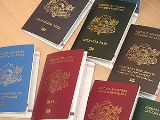
A passport is a document, issued by a national government, which certifies, for the purpose of international travel, the identity and nationality of its holder. The elements of identity are name, date of birth, sex, and place of birth. Most often, nationality and citizenship are congruent.

A passport does not of itself entitle the passport holder entry into another country, nor to consular protection while abroad or any other privileges, in the absence of any special agreements which cover the situation.


Discussion
Ask a question about 'Passport'
Start a new discussion about 'Passport'
Answer questions from other users
Full Discussion Forum


Encyclopedia


A passport is a document, issued by a national government, which certifies, for the purpose of international travel, the identity and nationality of its holder. The elements of identity are name, date of birth, sex, and place of birth. Most often, nationality and citizenship are congruent.

A passport does not of itself entitle the passport holder entry into another country, nor to consular protection while abroad or any other privileges, in the absence of any special agreements which cover the situation. It does, however, normally entitle the passport holder to return to the country which issued the passport. Rights to consular protection arise from international agreements, and the right to return arises from the laws of the issuing country. A passport does not represent the right or the place of residence of the passport holder in the country which issued the passport.

As a general rule, countries are not obligated to recognise a passport issued by a country which it does not recognise, nor to the entry of persons using those passports.

History


One of the earliest known reference to what appears to be a passport is found in the Hebrew Bible
Hebrew Bible

The term Hebrew Bible is a generic reference to those books of the Bible originally written mostly in Biblical Hebrew with some Biblical Aramaic....
. In , attributed to the time of the Persian Empire
Persian Empire

The 'Persian Empire' was a series of successive Iranian or Persianization empires that ruled over the Iranian plateau, the original Persian homeland, and beyond in Southwest Asia, South Asia, Central Asia and the Caucasus....
 in about 450 BC, it is said that Nehemiah, an official serving King Artaxerxes I
Artaxerxes I of Persia

Artaxerxes I was king of the Persian Empire from 465 BC to 424 BC, although other historians would place the beginning of his reign at 475 BC....
 of Persia
Iran

Iran , officially the Islamic Republic of Iran and formerly known internationally as Persian Empire until 1935, is a country in Central Eurasia, located on the northeastern shore of the Persian Gulf and the southern shore of the Caspian Sea....
, asked leave to travel to Judea
Judea

Judea or Jud?a is the name given to the mountainous southern part of the historic Land of Israel , an area now divided between Israel and the West Bank ....
, and the king granted leave and gave him a letter "to the governors beyond the river" requesting safe passage for him as he traveled through their lands.

In the medieval Islamic Caliphate
Caliphate

The caliphate represented the political leadership of the Muslim ummah in classical and medieval Islamic history and juristic theory. The head of state's position is based on the notion of a successor to the Prophets of Islam Muhammad's political authority....
, a form of passport was used in the form of a bara'a, a receipt
Receipt

A receipt is a written acknowledgement that a specified article or sum of money has been received as an exchange for goods or services. The receipt acts as the Title to the property obtained in the exchange....
 for tax
Tax

To tax is to impose a financial charge or other levy upon an individual or Legal person by a state or the functional equivalent of a state.Taxes are also imposed by many subnational entity....
es paid. Only citizens who paid their zakah
Zakat

Zakah "alms for the poor" Believers in Islam are aware that by giving a fixed percentage of their surplus wealth, they are fulfilling this religious obligation....
 (for Muslim
Muslim

:A Muslim , , is an adherent of the religion of Islam. The feminine form is Muslimah . Literally, the word means "one who submits "....
s) or jizya
Jizya

Under Sharia, jizya or jizyah is a per capita tax levied on a section of an Islamic state's non-Muslim citizens, who meet certain criteria....
 (for Dhimmi
Dhimmi

A dhimmi is a non-Muslim subject of a state governed in accordance with sharia. The term connotes an obligation of the state to protect the individual, including the individual's life, property, and freedom of religion and worship, and required loyalty to the empire, and a poll tax known as the jizya....
s) taxes were permitted to travel to different regions of the Caliphate, thus the bara'a receipt was a "traveller's basic passport."

It is considered unlikely that the term "passport" is derived from sea ports, but is considered likely to derive from a medieval document required to pass through the gate ("porte") of a city wall. In medieval Europe
Middle Ages

File:Karl 1 mit papst gelasius gregor1 sacramentar v karl d kahlen.jpgThe Middle Ages of European history are a period in history which lasted for roughly a millennium, commonly dated from the fall of the Roman Empire in the 5th century to the beginning of the Early Modern Period in the 16th century, marked by the division of Western Christi...
, such documents were issued to travelers by local authorities, and generally contained a list of towns and cities into which a document holder was permitted to pass. On the whole, documents were not required for travel to sea ports, which were considered open trading points, but documents were required to travel inland from sea ports.

King Henry V of England
Henry V of England

Henry V was one of the most significant English warrior kings of the 15th century. He was born at Monmouth, Wales, in the tower above the gatehouse of Monmouth Castle, and reigned as King of England from 1413 to 1422....
 is credited with having invented what some consider the first true passport, notwithstanding the earlier examples cited, as a means of helping his subjects prove who they were in foreign lands.

Early passports included a description of the passport holder. Attachment of photographs to passports began in the early decades of the twentieth century, when photography became widespread.

In the later part of the nineteenth century and up to World War I
World War I

World War I, or the First World War , was a global military conflict which involved the Great powers, organized into two opposing military alliances: the Allies of World War I and the Central Powers....
, passports were not required, on the whole, for international travel in Europe, and crossing a border was easy. Consequently, comparatively few people had passports. The breakdown of the European passport system of the early part of the nineteenth century was a result of rail travel. Trains, used extensively from the mid-nineteenth century onward, traveled rapidly, carried numerous passengers, and crossed many borders. Those factors made enforcement of passport laws difficult. The general reaction was abolition of passport requirements. The Ottoman Empire
Ottoman Empire

The Ottoman Empire , also known by its contemporaries as the Turkish Empire or Turkey , was an empire that lasted from 1299?1923. It was Treaty of Lausanne by the Republic of Turkey, which was officially proclaimed on October 29, 1923....
 and the Russian Empire
Russian Empire

File:Russian Emperor Flag.jpgFile:Romanov Flag.svgThe Russian Empire was a state that existed from 1721 until the Russian Revolution of 1917....
 maintained passport requirements for international travel, in addition to an internal-passport system to control travel within it.

During World War I
World War I

World War I, or the First World War , was a global military conflict which involved the Great powers, organized into two opposing military alliances: the Allies of World War I and the Central Powers....
, European governments introduced border passport requirements for security reasons (to keep out spies) and to control emigration of citizens with useful skills, retaining potential manpower. These controls remained in place after the war, and became standard procedure, though not without controversy. British tourists of the 1920s complained, especially about attached photographs and physical descriptions, which they considered led to a "nasty dehumanisation".

In 1920, the League of Nations
League of Nations

The League of Nations was an inter-governmental organization founded as a result of the Treaty of Versailles in 1919?1920. At its greatest extent from 28 September 1934 to 23 February 1935, it had 58 members....
 held a conference on passports and through tickets. Passport guidelines resulted from the conference, which was followed up by conferences in 1926 and 1927.

The United Nations held a travel conference in 1963, but passport guidelines did not result from it. Passport standardisation came about in 1980, under the auspices of the International Civil Aviation Organization
International Civil Aviation Organization

The International Civil Aviation Organization , an agency of the United Nations, codifies the principles and techniques of international air navigation and fosters the planning and development of international scheduled air transport to ensure safe and orderly growth....
 (ICAO).

Types


The terminology related to passports has become generally standardized around the world. The typical passports include:

Ordinary passport, also called tourist passport
Issued to ordinary citizens.


Official passport, also called service passport
Issued to government employees for work-related travel, and to accompanying dependents.


Diplomatic passport
Issued to diplomats and consuls for work-related travel, and to accompanying dependents. Having a diplomatic passport is not the equivalent of having diplomatic immunity
Diplomatic immunity

Diplomatic immunity is a form of immunity and a policy held between governments, which ensures that diplomats are given safe passage and are considered not susceptible to lawsuit or prosecution under the host country's laws ....
. A grant of diplomatic status, a privilege of which is diplomatic immunity, has to come from the government of the country in relation to which diplomatic status is claimed. Also, having a diplomatic passport does not mean visa-free travel. A holder of a diplomatic passport usually has to obtain a diplomatic visa, even if a holder of an ordinary passport may enter a country visa-free or may obtain a visa on arrival.


In exceptional circumstances, a diplomatic passport is given to a foreign citizen with no passport of his own, such as an exiled VIP who lives, by invitation, in a foreign country.


Emergency passport, also called temporary passport
Issued to persons whose passports were lost or stolen, and who do not have time to obtain replacement passports.


Collective passport
Issued to defined groups for travel together to particular destinations, such as a group of school children on a school trip to a specified country.


Family passport
Issued to family members -- father, mother, son, daughter. There is one passport holder. He or she may travel alone, or with another family member, or with other family members. A family member who is not the passport holder can only travel with the passport holder.


Laissez-passer
A document which is not a passport, but which serves the function of a passport. Laissez-passer are issued by international organizations to their officers and employees for official travel.


Alien's passport
A document which is not a passport, but is a document issued under certain circumstances, such as statelessness, to non-citizen residents.


In Latvia
Latvia

Latvia The Latvians are a Baltic peoples culturally related to the Estonians and Lithuanians, with the Latvian language having many similarities with Lithuanian language, but not with the Estonian language....
, an alien's passport is a passport for non-citizens
Non-citizens (Latvia)

Non-citizens or Alien in Latvian law are individuals who are not citizens of Latvia or any other country but, who, in accordance with the Latvian law "Regarding the status of citizens of the former USSR who possess neither Latvian nor other citizenship", have the right to a non-citizen passport issued by the Latvian government as well...
 - former citizens of the Soviet Union
Soviet Union

The Union of Soviet Socialist Republics was a Constitution of the Soviet Union socialist state that existed in Eurasia from 1922 to 1991.The name is a translation of the , romanization of Russian Soyuz Sovetskikh Sotsialisticheskikh Respublik, abbreviated ????, SSSR....
 who reside in Latvia, but are not entitled to citizenship. It is used as an internal passport inside Latvia, and as a travel document outside Latvia.


Internal passport
A document which is not a passport, but is an identity document
Identity document

An identity document is any documentation which may be used to verify aspects of a person's . If issued in the form of a small, mostly standard-sized card, it is usually called an identity card ....
 which keeps track of migration within a country. Examples: the internal passport of Russia, or the hukou residence-registration system in mainland China
China

China is a Culture of China, an ancient civilization, and, depending on perspective, a national or multinational entity extending over a large area in East Asia....
, both dating back to imperial times. National identity cards in France, Belgium, etc. plays the same function.


Camouflage and Fantasy Passports
A Camouflage passport
Camouflage passport

A camouflage passport is a passport issued in the name of a non-existent country that is intended to look like a real country?s passport. To minimize potential legal implications that the distribution of these fake documents may entail, camouflage passports are officially marketed as a "protection for security-conscious international traveler...
 is a document that appears to be a regular passport but is actually in the name of a country that no longer exists or never existed. Companies that sell camouflage passports make the rather dubious claim that in the event of a hijacking they could be shown to terrorists to aid escape. There is no known instance of this happening. Because a camouflage passport is not issued in the name of a real country, it is not a counterfeit and is not illegal per se to have. However attempting to use it to actually enter a country would be illegal in most jurisdictions.


A fantasy passport is likewise a document not issued by a recognized government and invalid for legitimate travel. Fantasy passports are distinguished from camouflage passports in that they are issued by an actual, existent group, organization, or tribe. In some cases the goal of the fantasy passport is to make a political statement or to denote membership in the organization. In other cases they are issued more or less as a joke or for souvenir purposes.


International Civil Aviation Organization Standards

The International Civil Aviation Organization
International Civil Aviation Organization

The International Civil Aviation Organization , an agency of the United Nations, codifies the principles and techniques of international air navigation and fosters the planning and development of international scheduled air transport to ensure safe and orderly growth....
 (ICAO) issues passport standards which are treated as recommendations to national governments.

The standard passport format includes the name of the issuing country on a passport cover, a national symbol, a description of the document (e.g., passport, official passport, diplomatic passport), and, if the passport is biometric
Biometrics

Biometrics refers to two different fields of study and application:In biological studies it refers to the collection, synthesis, analysis and management of data in biology....
, the biometric-passport symbol. Inside, there is a title page, also naming the country. This is followed by a data page, on which there is information about the bearer and the issuing authority, although passports of some European Union member states provide that information on the inside back cover. There are blank pages available for foreign countries to affix visas, and to stamp for entries and exit. Passports have numerical or alphanumerical designators ("serial number
Serial number

A serial number is a unique number assigned for identification which varies from its successor or predecessor by a fixed discrete integer value....
") assigned by the issuing authority.

Standards for machine-readable passport
Machine-readable passport

A machine readable passport is a passport where the data on the identity page is encoded in optical character recognition format. Many countries began to issue MRPs in the 1980s although the roll-out of the technology to smaller overseas missions was slow in many instances....
s have also been issued by the ICAO, with an area set aside where most of the information written as text is also printed in a manner suitable for optical character recognition
Optical character recognition

Optical character recognition, usually abbreviated to OCR, is the mechanical or Electronics translation of s of handwritten, typewritten or printed text into machine-editable text....
.

To conform with ICAO standards, a biometric passport
Biometric passport

File:Map of countries with biometric passports.svgA biometric passport is a combined paper and electronic identity document that uses biometrics to authenticate the identity of travelers....
 has an embedded radio-frequency identification (RFID) chip, which contains data about the passport holder, a photograph in digital format, and data about the passport itself. Many countries now issue biometric passports. The objectives for the biometric passports are to speed up clearance through immigration and the prevention of identity fraud. These reasons are disputed by privacy advocates. Governments are reluctant to acknowledge privacy concerns.

Although many countries issue biometric passports, few introduced the equipment needed to read them at ports of entry. In the absence of an international standard, it is not possible for one country to read the biometric information in passports issued by another country.

A passport contains a message, usually near the front of a passport, requesting that the bearer of the passport be allowed to pass freely, and further requests that, in the event of need, the bearer be granted assistance. The message is sometimes made in the name of the government or the head of state, notionally by the foreign minister
Foreign minister

A minister for foreign affairs, or foreign minister, is a governmental cabinet Political minister who helps form the foreign policy of a sovereign nation....
 or another representative of the government. The message may be written in more than one language, depending on the language policies of the issuing authority. For example, the English passport message in a Philippine passport is

The Government of the Republic of the Philippines requests all concerned authorities to permit the bearer, a citizen of the Philippines, to pass safely and freely and in case of need to give him/her all lawful aid and protection.


Other examples: United Kingdom; United States. However, such a message is not always present, for instance not in Norwegian passports.

Languages


An international conference on passports and through tickets, held by the League of Nations
League of Nations

The League of Nations was an inter-governmental organization founded as a result of the Treaty of Versailles in 1919?1920. At its greatest extent from 28 September 1934 to 23 February 1935, it had 58 members....
 in 1920, recommended that passports be issued in French, historically the language of diplomacy, and one other language. Nowadays, the ICAO recommends that passports be issued in English and French, or in the national language of the issuing country and in either English or French.

Some unusual language combinations are:
  • Passports issued by member states of the European Union bear all of the official languages of the EU. These are not printed in each location, however. Two or three languages are printed at the relevant point, followed by numbers which refer to the passport pages on which translations into all the remaining languages appear (illustration -- right).
  • Australian passport
    Australian Passport

    Australian passports are issued by the Department of Foreign Affairs and Trade, both in Australia and overseas. Australian passports are issued only to citizens of Australia....
    s are in English and French.
  • Canadian passport
    Canadian passport

    A Canadian passport is an official document issued to citizens of Canada for the purpose of international travel; allowing the bearer to travel in foreign countries in accordance with visa requirements; facilitating the process of securing Consular assistance abroad, if necessary; and requesting the protection of the passport holder while a...
    s are in English and French.
  • Barbadian passport
    Barbadian Passport

    The Barbadian passport is travel document issued to citizens of Barbados for international travel.Visa-free access for Barbadian passport...
    s are tri-lingual: English, French and Spanish.
  • Belgium allows its citizens to choose which of its three official languages (Dutch, French, German) is to appear first.
  • Hong Kong Special Administrative Region passports are in Traditional Chinese and English.
  • The face page of the older, pre- EU- version of the Hungarian passport
    Hungarian passport

    Hungarian passports are issued to Hungary citizens for international travel by The Central Data Processing, Registration and Election Office of the Hungarian Ministry of the Interior....
     ("Útlevél" in Hungarian, lit. "Roadletter") is in Hungarian only. Inside, there is a second, Hungarian-English bilingual, page. The personal-information page offers Hungarian, English, and French explanations of the details. An additional page, which has explanations in English, French, Chinese, Russian, Spanish and Arabic, was later on also added.
  • The first page of a Libyan passport is in Arabic only. The last page has an English equivalent of the information on the first page. Similar arrangements are found in passports of some other Arab countries.
  • Macao Special Administrative Region passports are in Traditional Chinese, Portuguese and English.
  • Mexican passport
    Mexican passport

    Mexican passports are issued to Mexican citizens for the purpose of traveling abroad....
    s are in Spanish, English and French.
  • New Zealand passport
    New Zealand passport

    File:NzE-passport.jpgNew Zealand passports are issued to citizens of New Zealand for the purpose of international travel. The Department of Internal Affairs is responsible for issuing, renewing and extending New Zealand passports....
    s are in English and Maori.
  • Pakistani passport
    Pakistani passport

    Pakistani passports are issued to the citizens of Pakistan for the purpose of international travel. Directorate General Immigration and Passports of Ministry of Interior is responsible for issuing the passport....
    s are in Urdu, English, Arabic and French.
  • Polish passport
    Polish passport

    Polish passports are issued to Polish citizens to travel outside of Poland. For traveling inside the European Union, as well as to Norway, Iceland, Liechtenstein, Switzerland, Vatican City, Monaco, San Marino, Andorra and the British dependencies in Europe , Poland citizens can use their national Polish National Identity Card....
    s are in Polish, English and French
  • Swiss passport
    Swiss passport

    Swiss passports are issued to citizens of Switzerland to facilitate international travel....
    s are in five languages: German, French, Italian, Rumansch and English.
  • United States passport
    United States passport

    United States passports are passport booklets issued exclusively by the U.S. Department of State. The booklets are valid for travel by Americans anywhere in the world....
    s were once issued only in English, then were issued in English and French, and are now issued in English, French and Spanish.


Common designs

Ukpassport Cover
The design and layout of passports of the member states of the European Union are a result of consensus and recommendation, rather than of directive. Passports are issued by member states, not by the EU. The data page can be at the front or at the back of a passport, and there are small design differences to indicate which member state is the issuer. The covers of ordinary passports are burgundy-red, with "European Union" written in the national language or languages. Below that are the name of the country, a national symbol, the word or words in the national language or languages for "passport", and, at the bottom, the symbol for a biometric passport.

In Central America
Central America

Central America is a central geography region of the Americas. It is the southernmost, isthmus portion of the North American continent, which connects with South America on the southeast....
, the members of the CA-4 Treaty (Guatemala
Guatemala

Guatemala is a country in Central America bordered by Mexico to the north and west, the Pacific Ocean to the southwest, Belize and the Caribbean to the northeast, and Honduras and El Salvador to the southeast....
, El Salvador
El Salvador

El Salvador is the smallest country in the Americas and Central America by size, and the most densely populated nation in Central America. It borders on the Pacific Ocean between Guatemala and Honduras....
, Honduras
Honduras

Honduras is a democratic republic in Central America. It was formerly known as Spanish Honduras to differentiate it from British Honduras ....
, and Nicaragua
Nicaragua

Nicaragua officially the Republic of Nicaragua , is a representative democracy republic. It is the largest state in Central America with an area of 130,000 km2, about the size of the state of New York....
) adopted a common-design passport, called the Central American passport. Although the design had been in use by Nicaragua and El Salvador since the mid-1990s, it became the norm for the CA-4 in January, 2006. The main features are the navy-blue cover with the words "América Central" and a map of Central America, and with the territory of the issuing country highlighted in gold. This substitutes one map for four national symbols. At the bottom of the cover are the name of the issuing country and the passport type. As of 2006, the Nicaraguan passport, which is the model for the passports of the three other countries, is issued in Spanish, French, and English.

The member states of the Caribbean Community
Caribbean Community

The Caribbean Community , is an organization of 15 Caribbean nations and dependencies. CARICOM's main purposes are to promote economic integration and cooperation among its members, to ensure that the benefits of integration are equitably shared, and to coordinate foreign policy....
 (CARICOM) recently began issuing passports to a common design, featuring the CARICOM symbol along with the national symbol and name of the member state, rendered in an CARICOM official language (English, French, Dutch). The member states which use the common design are Antigua and Barbuda
Antigua and Barbuda

Antigua and Barbuda is an island nation located on the eastern boundary of the Caribbean Sea with the Atlantic Ocean. As its name suggests, it consists of two major islands Antigua and Barbuda as well as a number of smaller islets....
, Dominica
Dominica

The Commonwealth of Dominica, commonly known as Dominica, is an island nation in the Caribbean Sea. To the north/northwest lies Guadeloupe, to the southeast Martinique....
, Grenada
Grenada

Grenada is an island nation that includes the southern Grenadines in the southeastern Caribbean Sea. Grenada is located northwest of Trinidad and Tobago, northeast of Venezuela, and southwest of Saint Vincent and the Grenadines....
, Saint Kitts and Nevis
Saint Kitts and Nevis

The Federation of Saint Kitts and Nevis , located in the Leeward Islands, is a federal two-island nation in the West Indies. It is the smallest nation in the Americas, in both List of countries by area and List of countries by population....
, Saint Lucia
Saint Lucia

Saint Lucia is an island nation in the eastern Caribbean Sea on the boundary with the Atlantic Ocean. Part of the Lesser Antilles, it is located north/northeast of the islands of Saint Vincent and the Grenadines, northwest of Barbados and south of Martinique....
, Saint Vincent and the Grenadines
Saint Vincent and the Grenadines

Saint Vincent and the Grenadines is an island nation in the Lesser Antilles island arc of the Caribbean Sea. Its territory consists of the main island of Saint Vincent and the northern two-thirds of the Grenadines....
, Suriname
Suriname

Suriname , officially the Republic of Suriname is a country in northern South America. Originally, the country was spelled Surinam by English settlers who founded the first colony at Marshall's Creek, along the Suriname River, and was Geographical renaming Nederlands Guyana, Netherlands Guiana or Dutch Guiana....
, and Trinidad and Tobago
Trinidad and Tobago

The Republic of Trinidad and Tobago is an island country in the southern Caribbean, lying northeast of the South American country of Venezuela and south of Grenada in the Lesser Antilles....
.

The member states of the Organisation of Eastern Caribbean States
Organisation of Eastern Caribbean States

The Organisation of Eastern Caribbean States , created in 1981, is an inter-governmental organisation dedicated to economic harmonisation and integration, protection of human and legal rights, and the encouragement of good governance between countries and dependencies in the Eastern Caribbean....
 (OECS) had originally planned for a common OECS passport by January 1, 2003, but it was delayed. Plans to introduce a CARICOM common passport would have made the OECS passport redundant, since all full members of the OECS were also full members of CARICOM. Thus, by November, 2004, the OECS governments agreed to give CARICOM a deadline of May, 2005, to introduce a CARICOM passport, failure of which would have resulted in moving ahead with the introduction of the OECS Passport. The CARICOM passport was introduced in January, 2005, by Suriname, so the idea of an OECS passport was abandoned. Had the OECS passport been introduced, however, it would not have been issued to economic citizens within the OECS states.

The declaration adopted in Cusco
Cusco

||}Cusco is a city in southeastern Peru, near the Urubamba Valley of the Andes mountain range. It is the capital of the Cusco Region as well as the Cusco Province....
, Peru
Peru

Peru , officially the Republic of Peru , is a country in western South America. It is bordered on the north by Ecuador and Colombia, on the east by Brazil, on the southeast by Bolivia, on the south by Chile, and on the west by the Pacific Ocean....
, establishing the Union of South American Nations, signalled an intention to establish a common passport design, but this appears to be a long way away. Already, some member states of regional sub-groupings such as Mercosur
Mercosur

Mercosur or Mercosul is a Regional Trade Agreement among Argentina, Brazil, Paraguay and Uruguay founded in 1991 by the Treaty of Asunci?n, which was later amended and updated by the 1994 Treaty of Ouro Preto....
 and the Andean Community of Nations
Andean Community of Nations

The Andean Community is a trade bloc comprising the South American countries of Bolivia, Colombia, Ecuador and Peru. The trade bloc was called the Andean Pact until 1996 and came into existence with the signing of the Cartagena Agreement in 1969....
 issue passports that bear their official names and seals, along with the name of their regional grouping. Examples include Paraguay
Paraguay

Paraguay, officially the Republic of Paraguay , is one of the only two landlocked countries in South America . It lies on both banks of the Paraguay River and is bordered by Argentina to the south and southwest, Brazil to the east and northeast, and Bolivia to the northwest....
 and Ecuador
Ecuador

Ecuador , officially the , literally, "Republic of the equator") is a representative democratic republic in South America, bordered by Colombia on the north, by Peru on the east and south, and by the Pacific Ocean to the west....
.

The members of the Andean Community of Nations
Andean Community of Nations

The Andean Community is a trade bloc comprising the South American countries of Bolivia, Colombia, Ecuador and Peru. The trade bloc was called the Andean Pact until 1996 and came into existence with the signing of the Cartagena Agreement in 1969....
 began, in 2001, the process of adopting a common passport format. Specifications for the common passport format were outlined in an Andean Council of Foreign Ministers meeting in 2002. The member states also agreed to phase in new Andean passport
Andean passport

The Andean passport is a passport for those South American country that are members of the Andean Community of Nations ....
s, bearing the official name of the regional body in Spanish (Comunidad Andina), by January, 2005. Previously-issued national passports will be valid until their expiry dates. The Andean passport is currently in use in Ecuador
Ecuador

Ecuador , officially the , literally, "Republic of the equator") is a representative democratic republic in South America, bordered by Colombia on the north, by Peru on the east and south, and by the Pacific Ocean to the west....
 and Peru
Peru

Peru , officially the Republic of Peru , is a country in western South America. It is bordered on the north by Ecuador and Colombia, on the east by Brazil, on the southeast by Bolivia, on the south by Chile, and on the west by the Pacific Ocean....
. Bolivia
Bolivia

The Republic of Bolivia , named after Sim?n Bol?var, is a landlocked country in central South America. It is bordered by Brazil on the north and east, Paraguay and Argentina on the south, and Chile and Peru on the west....
 and Colombia
Colombia

Colombia , officially the Republic of Colombia , is a country in north-western South America. Colombia is bordered to the east by Venezuela and Brazil; to the south by Ecuador and Peru; to the north by the Caribbean Sea; to the north west by Panama; and to the west by the Pacific Ocean....
 were to start issuing Andean passports in early 2006. Andean passports are bordeaux (burgundy-red), with words in gold. Above the national seal of the issuing country is the name of the organization in Spanish, which is centred and is printed in a large font. Below the seal is the official name of the member country. At the bottom of the cover are the Spanish word for "passport" and the word "passport" in English. Venezuela left the Andean Community, so it is likely that the country will no longer issue Andean passports.

National status

Passports contain a statement of the nationality of the holder. A country with complex nationality laws could issue various passports which are similar in appearance but are representative of differing national statuses. Due to the British colonial history and contemporary laws, the United Kingdom has a number of classes of United Kingdom nationality, and more than one relationship of persons to the United Kingdom. The several classes and relationships cause foreign governments to subject holders of different UK passports to different entry requirements.

A version of Tongan citizenship is available through investment. An investor is described in a Tongan passport as a Tongan protected person. The status does not carry with it the right of abode in Tonga. Many countries accept Tongan passports which reflect actual Tongan citizenship, but do not accept Tongan passports which reflect investment citizenship.

The Central People's Government of the People's Republic of China (PRC) authorises by law its Special Administrative Region
Special administrative region

A special administrative region, or SAR may be:People's Republic of China* Special Administrative Region of the People's Republic of China, self-governing subnational entity in Hong Kong and Macau ...
s (Hong Kong and Macau) to issue passports on their own to their respective residents under the one country, two systems arrangement. Visa policies imposed by foreign authorities on Hong Kong and Macau residents holding such passports are different from those holding ordinary passports of the People's Republic of China, though it should be noted that all are considered Chinese nationals (i.e. possessing the same Chinese nationality status) under the Nationality Law of the People's Republic of China.

National conditions on passport issuance

Pakistan requires a Muslim citizen who applies for a passport to subscribe to the following declaration:
  1. I am a Muslim
    Muslim

    :A Muslim , , is an adherent of the religion of Islam. The feminine form is Muslimah . Literally, the word means "one who submits "....
     and believe in the absolute and unqualified finality of the Prophethood of Hazrat
    Hadrat

    Hadrat or Hazrat or Hadhrat is an honorific Arabic title used to honor a person. The literal translation of Hazrat means "Great Presence"....
     Muhammad
    Muhammad

    Muhammad Patronymic#Arabic Abd Allah ibn Abd al Muttalib , is the founder of the Major religious groups of Islam and is regarded by Muslims as a Rasul and prophet of , the last and the greatest law-bearer in a series of prophets....
     the last of the Prophets
    Seal of the Prophets

    Seal of the Prophets is a title given to Muhammad by a verse in the Qur'an. Muslims traditionally interpret this verse as meaning that Muhammad was the last Prophets in Islam....
    .
  2. I do not recognize any one who claims to be a prophet
    Prophet

    In religion, a prophet is a person who has claimed to have encountered the supernatural or the Divinity, often one who serves as an intermediary with humanity....
     in any sense of the word or any description whatsoever, after Hazrat Muhammad or recognize such a claimant as a prophet or a religious reformer
    Mujaddid

    A Mujaddid , according to the popular Muslim tradition, refers to a person who appears at turn of every century of the Islamic calendar to revive Islam, remove from it any extraneous elements and restore it to its pristine state....
     as Muslim.
  3. I consider Mirza Ghulam Ahmad Qadiani
    Mirza Ghulam Ahmad

    Mirza Ghulam Ahmad was a controversial Indian religious figure and founder of the Ahmadiyya. He claimed to be the Mujaddid of the 14th Islamic calendar, the Promised Messiah , the Mahdi awaited by the Muslims in the latter-days, and a "Prophethood ", with some qualifications....
     to be an impostor
    Impostor

    An impostor or imposter is a person who pretends to be somebody else, often to try to gain financial or social advantages through social engineering, but just as often for purposes of espionage or law enforcement....
     nabi
    Prophet

    In religion, a prophet is a person who has claimed to have encountered the supernatural or the Divinity, often one who serves as an intermediary with humanity....
     and also consider his followers whether belonging to the Lahori, Qadiani
    Ahmadiyya Muslim Community

    file:Liwa-e-ahmadiyya 1-2.pngfile:Baitul Futuh.jpgThe Ahmadiyya Muslim Community is the larger community of the two arising from the Ahmadiyya founded in 1889 by Mirza Ghulam Ahmad of Qadian ....
     or Mirzai
    Ahmadiyya

    Ahmadiyya , is a religious missionary movement founded towards the end of the 19th century Originating with the life and teachings of Mirza Ghulam Ahmad ....
     groups, to be non-Muslims
    Kafir

    Kafir is an Arabic word meaning "rejecter" or "ingrate," also the term "Kuffar" the plural of the word "Kafir" is used to refer to peasants Surah 57 Al-Hadid Ayah 20; as they till earth and "cover up" seeds....
    .
The declaration was instituted by the Islamist military regime of Muhammad Zia-ul-Haq
Muhammad Zia-ul-Haq

General officer Muhammad Zia-ul-Haq was the president and military ruler of Pakistan from July 1977 to his death in August 1988. Appointed Chief of Army Staff of the Pakistan Army in 1976, General Zia-ul-Haq came to power after he overthrew ruling Prime Minister of Pakistan Zulfikar Ali Bhutto in a military coup d'?tat on July 5, 1977 and b...
. The reason for the declaration is to prevent Qadianis from going to Mecca or Medina for Hajj
Hajj

The Hajj is a pilgrimage to Mecca . It is the largest annual pilgrimage in the world, and is the fifth pillar of Islam, an obligation that must be carried out at least once in their lifetime by every able-bodied Muslim who can afford to do so....
 or Umrah
Umrah

The ?Umrah or is a pilgrimage to Mecca performed by Muslims that can be undertaken at any time of the year. In Arabic Umrah means ?to visit a populated place?....
. In the Pakistani biometric passport, there is no box for noting the religion of the passport holder. This seemingly made the religious subscription unnecessary. However, deletion of the box was reversed by the Pakistani government, in response to the religious parties. Passports have the religion box on page 3. Passports without the religion box have a rubber-stamp declaration of the passport holder's religion. However religion is not mentioned on the Pakistani CNIC (Computerised National Identity Card).

Passports as government property

Typical laws about passports declare that passports are government property, and may be limited or revoked at any time, usually on specified grounds. A limitation or a revocation is generally subject to judicial review.

Passports and bail

In many countries, courts are authorised, by a law or by judicial authority, to make surrender of a passport a condition of granting bail.

One passport per person

Many countries issue only one passport to each national. When passport holders apply for a new passport (commonly, due to expiration of an old passport or lack of blank pages), they may be required to surrender the old passport for invalidation. In some circumstances an expired passport is not required to be surrendered or invalidated (for example, if it contains an unexpired visa).

Some countries allow, under specified circumstances, the holding of more than one passport by a citizen. One circumstance is a disqualifying stamp in a passport, such as a stamp which shows travel to Israel, and the citizen intends travel to a country which does not recognize Israel. Another circumstance is frequent international travel including to countries with protracted visa application process. Awaiting a visa for a particular county, a person with two passports may travel to other countries with the second passport.

Family Passports

At one time it was common for a parent's passport to include the names and photos of his or her children. These "family passports" allowed children to travel together with their parents without the need to issue individual passports to each child. Family passports were not valid for children to travel by themselves or with someone other than a parent. The United States and Great Britain once issued family passports, but no longer do so. A Uruguayan passport still has two photo pages, on which there can be a listing of up to six children, each with his thumbprint and details.

In recent years concerns over international child abduction, including abduction by a parent, have led some countries to require both parents to sign a passport application. In the United States, a person aged 16 years or older can apply for a passport themselves. Applications by those aged 15 and under require the signatures of both parents or a statement, signed under penalty of perjury, as to why only one parent is physically capable of signing the application.

Limitations on passport use


Most countries accept passports of other countries as valid for international travel and valid for entry. There are exceptions, such as when a country does not recognise the passport-issuing country as a sovereign state. Likewise, the passport-issuing country may also stamp restrictions on the passports of its citizens not to go to certain countries due to poor or non-existent foreign relations, or security or health risks.

Brazil

Some countries do not maintain diplomatic relations with Brazil
Brazil

Brazil , officially the Federative Republic of Brazil , is a country in South America. It is the List of countries and outlying territories by total area country by geographical area, occupying nearly half of South America, the List of countries by population country, and the fourth most populous democracy in the world....
; therefore, Diplomatic, Official and Work Passports are not accepted and visas are only granted to tourist or business visitors, under Brazilian “laissez-passer”. The countries included in this group are: Bhutan
Bhutan

The Kingdom of Bhutan is a landlocked nation in South Asia, located at the eastern end of the Himalaya Mountains and is bordered to the south, east and west by India and to the north by the Tibet Autonomous Region of the People's Republic of China....
, Central African Republic
Central African Republic

The Central African Republic , is a landlocked country in Central Africa. It borders Chad in the north, Sudan in the east, the Republic of the Congo and the Democratic Republic of the Congo in the south, and Cameroon in the west....
 and Taiwan
Taiwan

Taiwan is an island in East Asia. "Taiwan" is also commonly used to refer to the country governed by the Republic of China and to the ROC itself, which governs the island of Taiwan, Orchid Island and Green Island, Taiwan in the Pacific Ocean off the Taiwan coast, the Penghu islands in the Taiwan Strait, and Kinmen and the Matsu Islands...
.

Mainland China and Taiwan

Due to the cold war and the unended Chinese Civil War
Chinese Civil War

The Chinese Civil War or , which lasted from April 1927 to May 1950, was a civil war in China between the Kuomintang and the Chinese Communist Party ....
, the People's Republic of China
People's Republic of China

The People's Republic of China , commonly known as China, is the largest country in East Asia and the List of countries by population in the world with over 1.3 billion people, approximately a fifth of the world's population....
 (PRC) and the Republic of China
Republic of China

The Republic of China , also known as Nationalist China is a country in East Asia that has evolved from a single-party state with full global recognition into a multi-party democratic state with Political status of Taiwan....
 (ROC) do not recognise each other as sovereign states. They both claim themselves as the only legal government representing the whole China.

Consistent with the 1992 Consensus
1992 Consensus

The 1992 Consensus or Consensus of 1992 is a term describing the outcome of a meeting in 1992 between the representatives of the People's Republic of China in mainland China and the Republic of China in Taiwan....
, the PRC and ROC consider both citizens in mainland China and Taiwan as their own citizens, but residing in different areas of the same nation. Neither the PRC nor the ROC accepts passports issued by the other as entry documents.

Citizens in Taiwan use identity documents issued by PRC public-security authorities to enter mainland China. Citizens in mainland China entering Taiwan must also use identity documents issued by the ROC authority, and have their mainland documents surrendered. The identity documents cannot be used for international travel, and an endorsement must be obtained separately to enable travel.

The ROC used to require its citizens who intended travel to mainland China to obtain official approval for the travel, and prescribed an administrative fine of NT$20,000 to NT$100,000 for those who did not. However, the fine was often unenforceable because such travel was untraceable by examination of travel documents, except if an ROC citizen lost his ROC passport while on the mainland, and, so, had to report the loss. The official-approval requirement was abolished, except in relation to ROC officials, of whom applications are required.

Cyprus

The Turkish Republic of Northern Cyprus (TRNC) issues passports, but only Turkey recognises its statehood. TRNC passports are not accepted for entry into the Republic of Cyprus, however all Turkish Cypriots are entitled by law to the issue of a Republic of Cyprus EU passport, since the opening of the borders between the two republics, Cypriot and EU citizens can travel freely to the divided sides. Until 2003, Turkey did not accept passports issued by the Republic of Cyprus
Cyprus

Cyprus , officially the Republic of Cyprus , is an island country situated in the eastern Mediterranean Sea, east of Greece, west of Lebanon, Syria, and Israel, south of Turkey and north of Egypt....
, because the Turkish Republic of Northern Cyprus does not recognize the Republic of Cyprus. Presently, Turkey accepts Greek Cypriot passports, but does not stamp them. Rather, Turkish immigration officials stamp a separate visa issued by Turkey.

The Republic of Cyprus refuses entry to holders of Yugoslav passport
Yugoslav passport

File:Yugoslav Passport Cover.JPGThe Yugoslav passport was issued to citizens of the Socialist Federal Republic of Yugoslavia for the purpose of international travel....
s which bear a renewal stamp with "Macedonia".

Austria

After the fall of the Habsburg monarchy in 1918 and the establishment of the Austrian Republic, members of the former Imperial Family were exiled and forbidden to enter Austrian territory. Nevertheless, they remained Austrian citizens entitled to bear an Austrian passport. Such passports were unique in bearing the stamp stating that "this passport is valid for all countries except for Austria". The Habsburgs' exile was eventually overturned by the European Court of Human Rights
European Court of Human Rights

The European Court of Human Rights in Strasbourg was established under the European Convention on Human Rights of 1950 to monitor compliance by Contracting Parties....
 and these special type of passport along with it.

Hong Kong and Macau

Hong Kong
Hong Kong

Hong Kong , officially the Hong Kong Special Administrative Region, is a territory located in Southern China in East Asia, bordering the province of Guangdong to the north and facing the South China Sea to the east, west and south....
 and Macau
Macau

The Macau Special Administrative Region, , commonly known as Macau or Macao , is one of the two special administrative region of the People's Republic of China, the other being Hong Kong....
, local entities of the People's Republic of China, are each empowered by the Central People's Government under their respective Basic Law
Basic Law

The term basic law is used in some places as an alternative to "constitution", implying it is a temporary but necessary measure without formal enactment of constitution....
s to issue passports. A Hong Kong Special Administrative Region passport states that the holder is a Chinese national with the right of abode in Hong Kong. Similarly, a Macao Special Administrative Region passport states that the bearer is a Chinese national with the right of abode in Macau.

Hong Kong and Macau each maintains border controls at all points of entry. Even though neither travel to or from Hong Kong nor travel to or from Macau and the mainland is international travel, a Chinese passport means nothing and a traveller is required to have a permit issued by the mainland government to enter.

The Public Security Bureau of Guangdong, the province adjacent to Hong Kong and Macau, issues a permit, dubbed the Home Return Permit
Home Return Permit

A Home Return Permit, also referred to as a Home Visit Permit or China Back Home Pass, is the colloquial name for the national identity document officially known as the Mainland Travel Permit for Hong Kong and Macau Residents issued to PRC citizens who are residents of Hong Kong and Macau as the entry permit to mainland Chin...
, to Chinese citizens domiciled in Hong Kong and Macau, to allow them to enter and exit the mainlands. The Hong Kong Special Administrative Region passport and the Macao Special Administrative Region passport are for purposes of international travel rather than interregional travel within the PRC, a proposal that the Hong Kong Special Administrative Region passport should supplant this permit was dismissed.

Many Chinese citizens who have the right of abode in Hong Kong hold British National (Overseas)
British National (Overseas)

British National , commonly known as BN, is one of the major classes of British nationality under British nationality law. Holders of this nationality are Commonwealth citizens, but not British nationality laws....
 passports or British Citizen passports issued under the British Nationality Selection Scheme
British Nationality Selection Scheme

The British Nationality Selection Scheme was a process used to grant British nationality law to selected persons in Hong Kong between 1990 and 1997....
 effected by the United Kingdom in the 1990s. The PRC, for its part, considers such Chinese citizens domiciled in Hong Kong to be solely PRC citizens. The PRC does not recognise those BN(O) passports, and does not recognise the attendant United Kingdom nationality of each, inasmuch as PRC law does not permit dual nationality. Chinese citizens domiciled in Hong Kong who hold those BN(O) and BC passports use a Home Return Permit to enter mainland China
Mainland China

Mainland China, Continental China, the Chinese mainland or simply the mainland, is a geopolitical term refers to the area under the jurisdiction of the People's Republic of China , excluding Hong Kong and Macau, which run on One Country, Two Systems....
 as those who do not. It is impermissible under Chinese law to renounce PRC nationality on the basis of holding a form of British nationality obtained in HK.

A Chinese citizen who has the right of abode in Hong Kong may not use a BN(O) passport or an HKSAR passport in its own right for entering Taiwan. They must be used in conjunction with the Exit & Entry Permit issued by the ROC. In contrast, a British Citizen passport obtained in Hong Kong by a Chinese citizen (or a person of Chinese descent) domiciled in Hong Kong may be used in its own right to enter Taiwan. (See Visa policy of the Republic of China
Visa policy of the Republic of China

Visa types * Diplomatic Visa* Courtesy Visa* 'Visitor Visa* 'Resident Visa...
)

A person with the right of abode in Hong Kong, a Hong Kong resident who holds a [Document of Identity for Visa Purposes], a person who has the right to land, a person who is on unconditional stay in Hong Kong, and a non-permanent resident who has a notification label, may use his smart ID card for immigration purposes, that is, to enter and exit Hong Kong. A smart ID card may not be used by a person who is under eleven years old, other than at the Lo Wu crossing.

ROC citizens who travel to Hong Kong apply for entry permits and collect them at airline counters. Repeat travellers satisfying certain conditions may apply online up to twice a month, but it is proposed that such restrictions may be relaxed.

The type of permit for travel to Hong Kong, issued to a Chinese national who is domiciled on the mainland, depends on his place of residence and the purpose of his visit.

Israel


In Israel
Israel

Israel officially the State of Israel , is a country in the Middle East located on the eastern shore of the Mediterranean Sea. It borders Lebanon in the north, Syria in the northeast, Jordan in the east, and Egypt on the southwest, and contains geographically diverse features within its relatively small area....
's first years, Israeli passports bore the stamp "not valid for Germany
Germany

Germany , officially the Federal Republic of Germany , is a country in Central Europe. It is bordered to the north by the North Sea, Denmark, and the Baltic Sea; to the east by Poland and the Czech Republic; to the south by Austria and Switzerland; and to the west by France, Luxembourg, Belgium, and the Netherlands....
", as in the aftermath of the Holocaust
The Holocaust

The Holocaust , also known as , Churben is the term generally used to describe the genocide of approximately six million European Jews during World War II, as part of a program of deliberate extermination planned and executed by Nazi Germany under Adolf Hitler....
 it was considered improper for Israelis to visit Germany on any but official state business (for which the government issued special passports to "authorised personnel"). With the gradual normalization of Israeli-German relations this limitation was removed from Israeli passports.

Most Muslim countries and many African countries do not permit entry to people using an Israeli passport. In addition, Iran, Kuwait, Lebanon, Libya, Saudi Arabia, Sudan, Syria and Yemen go further and do not allow entry to people with evidence of travel to Israel, or whose passports have a used or an unused Israeli visa.

To circumvent this travel restriction, Israel did not require visitors to have passports stamped with Israeli visas or with Israeli entry and exit stamps. The procedure made it impossible to tell if a traveller had entered Israel. However, since September 2006, Israeli immigration officials will rarely agree not to stamp passports.

The countries which do not allow entry to people with evidence of travel to Israel are aware of the entry and exit stamps stamped in passports by Egypt and Jordan at their respective land borders with Israel. Non-allowing countries prohibit entry based on the presence of a tell-tale Egyptian or Jordanian stamp. A traveller, for example, would be denied entry based on the presence of an Egyptian stamp, in his passport, which indicates that he crossed into or out of Egypt at Taba on the Egyptian-Israeli border.

Furthermore, under Israeli law, Lebanon, Syria, Saudi Arabia, Iraq, and Yemen are classified as "enemy countries" and an Israeli citizen may not visit them without a special permit issued by the Israeli minister of the Interior. An Israeli who visits these countries, whether using an Israeli passport or not, may be prosecuted when returning to Israel. This list was set in 1954, but Egypt and Jordan were taken off the list when they signed a peace treaty with Israel.

Philippines

Since 2004, the Philippine Department of Foreign Affairs deemed that bearers of its passports can't travel to Iraq due to the security threats in that country. As such, Philippine passports issued from that time are stamped "Not valid for travel to Iraq".

South Korea

From South Korea's viewpoint, travel from the section of the Korean peninsula under South Korean administration directly to the section of the Korean peninsula under North Korean administration is not international travel. South Korea claims by constitution the whole Korean peninsula as its territory. Ironically, any South Korean who is willing to travel to the tourist area in the North has to carry his/her passport.

Spain and Gibraltar

Spain does not accept United Kingdom passports issued in Gibraltar
Gibraltar passport

The Gibraltar Passport Office issues British passports to Gibraltarian people and other British people resident in Gibraltar.As a result of the British Nationality Act 1981 Gibraltarians were British Overseas Territories citizens by default, but could apply for registration as a British nationality law under section 5 of the Act....
, on the ground that the Government of Gibraltar
Politics of Gibraltar

Gibraltar is represented in the European Union, having been the only British overseas territories which joined the European Community under the British Treaty of Accession ....
 is not a competent authority for issuing UK passports
British passport

British passports may be issued to people holding any of the various forms of British nationality law....
. Consequently, some Gibraltarians
Gibraltarian people

The Gibraltarians , are a Southern European nation and cultural group native to Gibraltar, a British overseas territory located near the southernmost tip of the Iberian Peninsula at the entrance to the Mediterranean sea....
 were refused entry to Spain. The word "Gibraltar" now appears beneath the words "United Kingdom of Great Britain and Northern Ireland" on passport covers, which is the usual format for passports of British overseas territories
British overseas territories

The British Overseas Territories are fourteen territories that are under the sovereignty of the United Kingdom, but which do not form part of the United Kingdom itself....
.

Tonga

Some countries decline to accept Tongan Protected Person passports, though they accept Tongan citizen passports. Tongan Protected Person passports are sold by the Government of Tonga to anyone who is not a Tongan national. A holder of a Tongan Protected Person passport is forbidden to enter or settle in Tonga. Generally, those holders are refugees, stateless persons, and individuals who for political reasons do not have access to any other passport-issuing authority.

International travel without passports


European Union


Citizens of the member countries of the European Union
European Union

The European Union is an economic and political union of 27 European Union member state, located primarily in Europe. It was established by the Treaty of Maastricht on 1 November 1993 upon the foundations of the pre-existing European Economic Community....
 are also citizens of the union itself, and this is recognised on the passports. They bear both the name of the European Union
European Union

The European Union is an economic and political union of 27 European Union member state, located primarily in Europe. It was established by the Treaty of Maastricht on 1 November 1993 upon the foundations of the pre-existing European Economic Community....
 and of the issuing country (in the relevant language).

Citizens of the European Economic Area
European Economic Area

The European Economic Area came into being on 1 January 1994 following an agreement between member states of European Free Trade Association ,...
 (the European Union
European Union

The European Union is an economic and political union of 27 European Union member state, located primarily in Europe. It was established by the Treaty of Maastricht on 1 November 1993 upon the foundations of the pre-existing European Economic Community....
 plus Iceland
Iceland

Iceland, officially the Republic of Iceland , is an island country located in the North Atlantic Ocean between mainland Europe and Greenland....
, Liechtenstein
Liechtenstein

The Principality of Liechtenstein is a Landlocked country#Doubly landlocked country alpine country microstate in Western Europe, bordered by Switzerland to the west and by Austria to the east....
 and Norway
Norway

Norway , officially the Kingdom of Norway, is a constitutional monarchy in Northern Europe that occupies the western portion of the Scandinavian Peninsula....
) enjoy the freedom to travel and work in any European Union country without a visa
Visa (document)

A visa is an indication that a person is authorized to enter the country which "issued" the visa, subject to permission of an immigration official at the time of actual entry....
, although transitory dispositions may restrict the rights of citizens of new member states to work in other countries. The same rights are also accorded to citizens of Switzerland, although they remain separate from the EEA.

European citizens travelling within the European Union may use standard compliant national ID cards rather than passports. Not all EU countries produced standard compliant national ID cards, and in other countries few people obtained one, which means that many persons need a passport anyway.

The up-to-now 24 countries that have signed and applied the Schengen Agreement
Schengen Agreement

File:SchengenAgreement map.svgThe Schengen Agreement is a treaty signed between five of the then ten member states of the European Community in 1985....
 (a subset of the EEA
European Economic Area

The European Economic Area came into being on 1 January 1994 following an agreement between member states of European Free Trade Association ,...
) do not implement passport controls between each other, unless exceptional circumstances apply. Some remaining EU countries, plus Switzerland and Liechtenstein, have signed the Schengen Agreement
Schengen Agreement

File:SchengenAgreement map.svgThe Schengen Agreement is a treaty signed between five of the then ten member states of the European Community in 1985....
, but are not allowed to be included yet. The main reason is that, according to EU law, the member states which joined the EU in 2004 would have to meet strict criteria with respect to their protection of EU external borders, before intra-EU border controls between the old member states and new member states would be lifted. Switzerland and Liechtenstein require some time to adapt their national airports and databases to the standards of the EU.

As a consequence of the above, a French citizen, for example, may travel to the United Kingdom, another EEA nation, and then freely work in that country. However, since the UK has not signed the Schengen treaty, the French citizen will have to carry at least a national ID card, which will be checked at the border. On the other hand, if and when Switzerland applies the Schengen treaty, the French citizen will be able to travel to Switzerland without being stopped at the border, but he will not be able to work freely in that country without authorisation, because Switzerland is not a member of the EEA. This is true notwithstanding the fact that, in most cases, authorisation to work would nevertheless have to be granted by Swiss authorities according to a specific treaty on free movement which had been concluded between the EU and Switzerland.

Some European countries require all persons to carry, or, at least possess, an ID card or a passport. So while Switzerland will not check French travelers' passports at the border, they may have to show their national ID cards within the country, such as when required by police officers to do so.

Except at the border, ID cards are not required by UK law. There is, however, a de-facto requirement to prove one's identity to conduct business. A European has to show a European national ID card to open a UK bank account or to prove eligibility to work.

Refugees and stateless persons, who do not have access to passports, may be issued a travel document
Travel document

A travel document is an identity document issued by a government or international treaty organization to facilitate the movement of individuals or small groups of persons across international boundaries....
 by the country in which they reside. Holders of those travel documents generally require visas for international travel, and are not be entitled to consular protection. Exceptions to this include persons holding 1951 Convention Documents, who could benefit from some visa-free travel under the convention, persons who reside in the Schengen area, and persons who reside in the Nordic Passport Union area.

Entering the USA without a passport (Western Hemisphere Travel Initiative)

Canada and the United States: U.S. citizens flying to Canada need passports. When traveling by land between Canada and the U.S., Canadian citizens and U.S. citizens do not need passports. A government-issued ID card (e.g., Canadian Citizenship Card) or a birth certificate is accepted by each country as proof of citizenship. As of December 21, 2007, planned passport requirements have been once again delayed. U.S. citizens arriving in Canada by land or water will not need passports until June 1, 2009.

The Western Hemisphere Travel Initiative
Western Hemisphere Travel Initiative

The Western Hemisphere Travel Initiative requires all travelers to show a valid passport when traveling to the United States from areas within the Western Hemisphere....
 (WHTI) implements the requirement in the Intelligence Reform and Terrorism Prevention Act of 2004 (IRTPA) that, upon entry into the U.S. from a foreign country, each traveler is to present a passport, or some other document of identity and nationality.

The WHTI does not apply to direct travel between the 50 states and the District of Columbia
Washington, D.C.

Washington, D.C. , formally the District of Columbia and commonly referred to as Washington, the District, or simply D.C., is the Capital of the United States, founded on July 16, 1790....
 at the one end and United States territories at the other end. The territories include American Samoa
American Samoa

American Samoa is an Territories of the United States of the United States located in the South Pacific Ocean, southeast of the sovereign state of Samoa, formerly known as Western Samoa....
 and Swains Island
Swains Island

Swains Island is an atoll in the Tokelau chain, the most northwesterly island administered by American Samoa. Culturally a part of the Tokelau Islands, politically it is an unorganized territory of the United States of America....
, Guam
Guam

Guam , officially the Territory of Guam, is an island in the western Pacific Ocean and is an organized, unincorporated insular area of the United States....
, the Northern Mariana Islands
Northern Mariana Islands

The Northern Mariana Islands , officially the Commonwealth of the Northern Mariana Islands , is a commonwealth in political union with the United States, occupying a strategic region of the western Pacific Ocean....
, Puerto Rico
Puerto Rico

Puerto Rico , officially the Commonwealth of Puerto Rico , is a Autonomy Territories of the United States of the United States located in the northeastern Caribbean, east of the Dominican Republic and west of the Virgin Islands....
 and the U.S. Virgin Islands
United States Virgin Islands

The United States Virgin Islands is a group of islands in the Caribbean that are an insular area of the United States. The islands are geographically part of the Virgin Islands and are located in the Leeward Islands of the Lesser Antilles....
. That travel is not foreign travel, and, so, is not subject to IRTPA. In practice, some form of identification is needed.

Each air traveler must present a passport or a passport substitute.

Each land or sea traveler who is a U.S. citizen must present a passport booklet; a passport card; a WHTI-compliant identity document; or a government-issued photo ID, such as a driver license, and proof of citizenship, such as a birth certificate.

Effective June 1, 2009, each land or sea traveler who is a U.S. citizen must present a passport booklet, a passport card, or a WHTI-compliant document.

As of April 13, 2008, types of WHTI-compliant documents are: (1) Trusted Traveler cards
Travel card

A Travel card is a ticket usable on more than one journey, route or mode of public transport within a specific area using bulk or discounted payment; some schemes only cover travel by disabled or elderly people....
 (NEXUS
NEXUS (frequent traveller program)

NEXUS is a joint Canada-United States program designed to let pre-approved travellers cross between Canada and United States more quickly. Members of the program can avoid long waits at border entry points by using self-serve kiosks at airports, reserved lanes at land crossings, or by phoning border officials when entering by water....
, SENTRI
Secure Electronic Network for Travelers Rapid Inspection

The Secure Electronic Network for Travelers Rapid Inspection provides expedited U.S. Customs and Border Protection processing, at the U.S.-Mexico border, of pre-approved travelers, considered low-risk....
, FAST
Free and Secure Trade

The Free and Secure Trade program is a joint United States-Canadian program between the Canada Border Services Agency and the United States Customs and Border Protection....
); state-issued enhanced driver's license
Driver's license

A driver's license, driver license, driver licence, or driving licence is an official document which states that a person may driving a motorized vehicle, such as a motorcycle, automobile, truck, or a bus....
s. Presently, only driver licenses
Driver's license in the United States

In the United States, the issuance of Driving license is the authority of individual United States state . Drivers are normally required to obtain a license from their state of residence....
 issued by the State of Washington
Washington

Washington is a U.S. state in the Pacific Northwest region of the United States. Washington was carved out of the western part of Washington Territory which had been ceded by Britain in 1846 by the Oregon Treaty as settlement of the Oregon Boundary Dispute....
 qualify as WHTI compliant; enhanced tribal cards; U.S. military ID cards plus military travel orders; U.S. merchant mariner ID card
Merchant Mariner's Document

Countries with a Merchant Navy or Merchant Marine require identifying credentials for their mariners. The Merchant Mariner's Document or Z-Card in the United States, and the Ordinary Seaman's Certificate in the United Kingdom are examples of these credentials....
s, when traveling on maritime business; Native American
Native Americans in the United States

Native Americans in the United States are the Indigenous peoples of the Americas from the regions of North America now encompassed by the continental United States United States, including parts of Alaska and the island state of Hawaii....
 tribal ID cards; Form I-872 American Indian card.

Other Countries

  • United Kingdom and Republic of Ireland: Citizens of the UK and Ireland do not require a passport to travel between those two countries (see Common Travel Area
    Common Travel Area

    The Common Travel Area is a passport-free zone that comprises the Republic of Ireland, the United Kingdom, the Isle of Man, Jersey and Guernsey....
    ). Other EEA
    European Economic Area

    The European Economic Area came into being on 1 January 1994 following an agreement between member states of European Free Trade Association ,...
     nationals must carry a national ID card or a passport. All other nationals require passports.
  • The CA-4 countries: Citizens of Guatemala, El Salvador, Honduras, and Nicaragua do not require passports to travel between or among any of the four countries. A national ID card (cédula) is sufficient for entry. In addition, the CA-4 agreement implemented the Central American Single Visa (Visa Única Centroamericana).
  • Nordic countries -- Denmark, including the Faroe Islands and Greenland, Finland, Iceland, Norway, and Sweden: The Nordic Passport Union
    Nordic Passport Union

    The Nordic Passport Union, created in 1954, and implemented on May 1, 1958, allows citizens of the Nordic countries to cross approved border districts without carrying and having their passport checked....
     means that Nordic citizens need only any valid identity card (which is often needed inside each country anyway). They joined the larger Schengen Agreement
    Schengen Agreement

    File:SchengenAgreement map.svgThe Schengen Agreement is a treaty signed between five of the then ten member states of the European Community in 1985....
     region in 1997, where a national identity card with citizenship is needed. The Nordic Passport Union
    Nordic Passport Union

    The Nordic Passport Union, created in 1954, and implemented on May 1, 1958, allows citizens of the Nordic countries to cross approved border districts without carrying and having their passport checked....
     is still valid for Nordic citizens.
  • Lebanon and Syria: Lebanese citizens entering Syria do not require passports to enter Syria, if carrying Lebanese ID cards. Similarly, Syrian citizens do not require passports to enter Lebanon, if carrying Syrian ID cards.
  • India, Nepal, and Bhutan: Passports are not needed by citizens of India and Nepal to travel within each other's country, but some identification is required for border crossing. Only Indians do not require passports for travelling in Bhutan while Bhutanese can travel with their citizenship identity cards.
  • Croatia does not require passports of citizens of the member states of European Union and Bosnia and Herzegovina who have national ID cards. Bosnia and Herzegovina, Italy, Hungary, Montenegro and Slovenia do not require Croatian citizens to have a passport, only Croatian ID cards.
  • Serbia does not require passports of citizens of Bosnia and Herzegovina who have B&H ID cards. Bosnia and Herzegovina does not require Serbian citizens to have passports, only Serbian ID cards.
  • Citizens of Serbia and citizens of Montenegro may travel between the two countries with national ID cards.
  • Kenya, Uganda and Tanzania comprise the East African Community
    East African Community

    The East African Community is an intergovernmental organisation comprising the five east African countries Burundi, Kenya, Rwanda, Tanzania, and Uganda....
    . Each country may issue, to an eligible citizen, an East African passport. Those passports are recognised by only the three countries, and are used for travel between or among those countries. The requirements for eligibility are less rigorous than are the requirements for national passports used for other international travel.
  • The member states of the Economic Community of West African States
    Economic Community of West African States

    The Economic Community of West African States is a regional group of fifteen West African countries, founded on May 28, 1975 with the signing of the Treaty of Lagos....
     (ECOWAS) do not require passports for their citizens traveling within the community. National ID cards are sufficient. The member states are Benin, Burkina Faso, Cape Verde, Côte d'Ivoire, Gambia, Ghana, Guinea, Guinea Bissau, Mali, Niger, Nigeria, Senegal, Sierra Leone, and Togo.
  • Russia and some former Soviet Union republics: The participating countries may require an internal passport, which is the equivalent of a national ID card, rather than a passport.
  • Many Central American and South American nationals can travel within their respective regional economic zones, such as Mercosur
    Mercosur

    Mercosur or Mercosul is a Regional Trade Agreement among Argentina, Brazil, Paraguay and Uruguay founded in 1991 by the Treaty of Asunci?n, which was later amended and updated by the 1994 Treaty of Ouro Preto....
     and the Andean Community of Nations
    Andean Community of Nations

    The Andean Community is a trade bloc comprising the South American countries of Bolivia, Colombia, Ecuador and Peru. The trade bloc was called the Andean Pact until 1996 and came into existence with the signing of the Cartagena Agreement in 1969....
    , or on a bilateral basis (e.g., between Chile and Peru, between Brazil and Chile), without passports, presenting instead their national ID cards, or, for short stays, their voter-registration cards. This travel must be done overland rather than by air. There are plans to extend these rights to all of South America under a Union of South American Nations.
  • Turkey does not require a passport for citizens of several European countries holding national ID cards. Citizens of Greece must have the new ID card, which has the holder's details in both the Greek and the Latin alphabets.
  • Citizens of the Cooperation Council for the Arab States of the Gulf
    Cooperation Council for the Arab States of the Gulf

    The Cooperation Council for the Arab States of the Gulf , also known as the Gulf Cooperation Council is a trade bloc involving the six Arab states of the Persian Gulf with many economic and social objectives....
     countries need only national ID cards (also referred to as civil ID cards) to cross the borders of council countries.
  • Italy and Vatican City: Italy does not require passports for travel to Vatican City, and Vatican City does not require passports for travel to Italy. The only way to get to Vatican City is through Italy, inasmuch as Vatican City is surrounded by Rome, so Italian immigration requirements are de facto those of Vatican City. The Vatican issues its own passports to officials of the Roman Catholic Church who reside in or near the Vatican, and who work there. Each Pope is always given Vatican Passport No. 1.
  • Italy and the Republic of San Marino
    San Marino

    The Most Serene Republic of San Marino is a country in the Apennine Mountains. It is a landlocked country Enclave and exclave, completely surrounded by Italy....
    : San Marino is a landlocked country between the Emilia-Romagna
    Emilia-Romagna

    Emilia-Romagna is an administrative Regions of Italy of Northern Italy comprising the two historic regions of Emilia and Romagna. The capital is Bologna; it has an area of 20,124 km? and about 4.3 million inhabitants....
     and Marche regions of Italy, and there are no border control at all between the two countries.


Domestic travel that requires passports

.]]

Under a special arrangement agreed during the formation of Malaysia
Malaysia

Malaysia is a federation that consists of States of Malaysia in Southeast Asia with a total landmass of . The capital city is Kuala Lumpur, while Putrajaya is the seat of the federal government....
, the East Malaysia
East Malaysia

East Malaysia consists of the Malaysia states of Sabah and Sarawak, located on the island of Borneo to the east, across the South China Sea from Peninsular Malaysia which is located on the Malay Peninsula....
n states of Sabah
Sabah

Sabah is a Malaysian States of Malaysia located on the northern portion of the island of Borneo . It is the second largest state in Malaysia after Sarawak, which it borders on its south-west....
 and Sarawak
Sarawak

Sarawak is one of two Malaysian states on the island of Borneo. Known as Bumi Kenyalang , it is situated on the north-west of the island. It is the largest state in Malaysia; the second largest, Sabah, lies to the northeast....
 can retain their respective immigration control systems. As a result, a passport is required when traveling from Peninsular Malaysia
Peninsular Malaysia

Peninsular Malaysia , also known as Malaya or West Malaysia, is the part of Malaysia which lies on the Malay Peninsula, and shares a land border with Thailand in the north....
 to East Malaysia, as well as the mutual travel between the two states. Previously, Malaysian citizens from Peninsular Malaysia were required to present a Malaysian passport
Malaysian Passport

The Malaysian passport is the passport issued to citizens of Malaysia by the Immigration Department of Malaysia . They were formerly designated Paspot Malaysia, but the spelling was changed to Pasport in the 1980s....
 when travelling to East Malaysia from Peninsular Malaysia, but this is no longer required for social/business visits up to 3 months as long as they do not land in a third country (e.g. Singapore
Singapore

Singapore , officially the Republic of Singapore, is an island country microstate located at the southern tip of the Malay Peninsula. It lies 137 kilometres north of the equator, south of the Malaysian state of Johor and north of Indonesia's Riau Islands....
 or Brunei
Brunei

Brunei Darussalam, officially the State of Brunei, Abode of Peace , is a country located on the north coast of the island of Borneo, in Southeast Asia....
). However, West Malaysians are required to produce a Malaysian identity card
MyKad

MyKad, or Government Multipurpose Card, is the official compulsory identity card of Malaysia. It is regarded as the world's first smart identity card....
 or, for children below 12 years, birth certificate
Birth certificate

A birth certificate is a vital record that documents the birth of a child. Outside the United States, the term "birth certificate" refers to a certification of the original birth record....
, fill in a special immigration form (Document In Lieu of Internal Travel Document, IMM.114), and retain the form until they leave East Malaysia. One can avoid filling in the IMM.114 form, and hence faster immigration clearance, by presenting a Malaysian passport or a Restricted Travel Document.

Under the one country, two systems
One country, two systems

"One country, two systems" is an idea originally proposed by Deng Xiaoping, then Paramount Leader of the People's Republic of China, for the Chinese reunification during the early 1980s....
 principle, Hong Kong
Hong Kong

Hong Kong , officially the Hong Kong Special Administrative Region, is a territory located in Southern China in East Asia, bordering the province of Guangdong to the north and facing the South China Sea to the east, west and south....
 and Macau
Macau

The Macau Special Administrative Region, , commonly known as Macau or Macao , is one of the two special administrative region of the People's Republic of China, the other being Hong Kong....
 enjoy a high degree of autonomy in the People's Republic of China
People's Republic of China

The People's Republic of China , commonly known as China, is the largest country in East Asia and the List of countries by population in the world with over 1.3 billion people, approximately a fifth of the world's population....
, including immigration controls. Travelling between Mainland China
Mainland China

Mainland China, Continental China, the Chinese mainland or simply the mainland, is a geopolitical term refers to the area under the jurisdiction of the People's Republic of China , excluding Hong Kong and Macau, which run on One Country, Two Systems....
, Hong Kong
Hong Kong

Hong Kong , officially the Hong Kong Special Administrative Region, is a territory located in Southern China in East Asia, bordering the province of Guangdong to the north and facing the South China Sea to the east, west and south....
 and Macau
Macau

The Macau Special Administrative Region, , commonly known as Macau or Macao , is one of the two special administrative region of the People's Republic of China, the other being Hong Kong....
, however, are not considered international. While citizens of the People's Republic of China do not use passports to travel between the three regions (other documents, such as the Home Return Permit
Home Return Permit

A Home Return Permit, also referred to as a Home Visit Permit or China Back Home Pass, is the colloquial name for the national identity document officially known as the Mainland Travel Permit for Hong Kong and Macau Residents issued to PRC citizens who are residents of Hong Kong and Macau as the entry permit to mainland Chin...
 are used instead), foreigners are required to present their passports at the immigration control points.

Due to the required "Shannon Stopover"
Shannon Airport

Shannon International Airport , is one of Ireland's three primary airports . It is the third busiest airport in the Republic of Ireland with 3.1 million passengers in 2008....
 in effect until 2008, early morning flights from Shannon to Dublin, Ireland were often operated as extensions of international flights from North America. Passengers travelling on such flights had to pass passport control on arrival in Dublin.

Immigration stamps in passports

For immigration control, immigration officials of many countries stamp passports with entry stamps and exit stamps. A stamp can serve different purposes. In the United Kingdom, an immigration stamp in a passport includes the formal leave to enter
Leave to enter

Leave to Enter is the technical term for someone granted entry to the United Kingdom by British immigration officers. There is no practical difference between the British "Leave to Enter" and the entry granted to anyone crossing any other international border by the admitting country....
 granted to a person subject to entry control. Otherwise, a stamp activates or acknowledges the continuing leave conferred in the passport bearer's entry clearance
Entry Clearance

Entry Clearance is a catch-all term under UK Immigration legislation that refers to both Visa s and entry certificates issued to persons seeking to enter the UK, the point being that while all visa nationals will require a visa to enter the UK for any purpose, there are certain circumstances where non-visa nationals also require entry clearan...
.

Under the Schengen system, a foreign passport is stamped with a date stamp which does not indicate any duration of stay. This stamp is taken to mean either that the person is deemed to have permission to remain for three months or for the period shown on his visa.

Neither the UK nor a Schengen country is allowed to stamp the passport of a person not subject to immigration control, whether a citizen of that country or a national of another EU country. Stamping is prohibited, because a passport stamp is imposition of a control that the person is not subject to. This concept is not applicable in other countries, where a stamp in a passport simply acknowledges the entry or exit of a person.

Countries have different styles of stamps for entries and exits, to make it easy to identify the movements of persons. The shape of the stamp and the colour of the ink may also provide information about movements. In Hong Kong, prior to and immediately after the 1997 transfer of sovereignty, entry and exit stamps were identical at all ports of entry, but colours differed. Airport stamps used black ink, land stamps used red ink, and sea stamps used purple ink. In Macau, under Portuguese administration, the same colour of ink was used for all stamps. The stamps had slightly-different borders to indicate entry and exit by air, land, or sea. In several countries the stamps or its colour are different if the person arrived in a car in opposite to bus/boat/train/air passenger.

Immigration stamps are a useful reminder of travels. Some travellers "collect" immigration stamps in passports, and will choose to enter or exit countries via different means (for example, land, sea or air) in order to have different stamps in their passports.

Visas often take the form of a stamp, although many countries now use adhesive stickers that incorporate security features to prevent forgery.

Passport Cards

On July 14, 2008, the United States Department of State began to issue passport cards, a credit card sized ID document valid for land or sea travel to Canada, Mexico, the Caribbean and Bermuda. The passport card has the same requirements and adjudication standards for issuance as a regular passport, however it costs only $20 for those who already have a passport. The cost is $45 for those applying for the first time. The purpose of the passport card is to provide a secure document for those citizens who frequently cross the border and need a more convenient document to comply with the Western Hemisphere Travel Initiative requirements.

Some have speculated that the passport card may represent the format that future travel documents will take. Visas, including the "laser visa" issued to Mexican citizens, can be issued by computers and tracked electronically, eliminating the need for a traditional passport book with ink stamps.

Gallery


See also

  • Biometric passport
    Biometric passport

    File:Map of countries with biometric passports.svgA biometric passport is a combined paper and electronic identity document that uses biometrics to authenticate the identity of travelers....
  • Hajj passport
    Hajj passport

    A Hajj passport is a special passport used only for a hajj pilgrimage to Mecca....
  • List of passports
    List of passports

    The following is a list of passports:...
  • Nansen passport
    Nansen passport

    Nansen passports were internationally recognized identity cards first issued by the League of Nations to stateless person refugees. Designed in 1922 by Fridtjof Nansen, in 1942 they were honored by governments in 52 countries and were the first Travel document....
  • World Passport
    World Passport

    The World Passport is a document issued by the World Service Authority, a non-profit organization, citing Article 13, Section 1, of the Universal Declaration of Human Rights....


Further reading

  • Krueger, Stephen, Krueger on United States Passport Law. Hong Kong: Crossbow Corporation (2nd ed. 1999 & supps.).
  • Lloyd, Martin, The Passport: The History of Man's Most Travelled Document. Stroud, UK: Sutton Publishing (2003) (ISBN 0-7509-2964-2).
  • Salter, Mark B., Rights of Passage: The Passport in International Relations. Boulder, Colo.: Lynne Rienner (2003).ISBN 9781588261458
  • Torpey, John, The Invention of the Passport: Surveillance, Citizenship, and the State. Cambridge: Cambridge University Press (2000). ISBN 9780521634939
  • at Internet Archive
    Internet Archive

    The Internet Archive is a nonprofit organization dedicated to building and maintaining a free and openly accessible online digital library, including an archive site of the World Wide Web....
    .
  • League of Nations - Report to Governments- 1922. At Internet Archive


External links

  • USA focused information from Howstuffworks
  • Machine Readable Travel Documents