


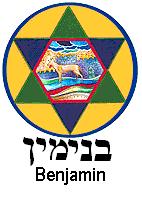
Tribe of Benjamin

Encyclopedia
According to the Hebrew Bible
, the Tribe of Benjamin בִּנְיָמִין was one of the Tribes of Israel.
From after the conquest of the land by Joshua until the formation of the first Kingdom of Israel in c. 1050 BCE, the Tribe of Benjamin was a part of a loose confederation
of Israelite tribes. No central government existed, and in times of crisis the people were led by ad hoc
leaders known as Judges
. (see the Book of Judges
) The entire tribe of Benjamin, women and children included, was almost wiped out by the other Israelite tribes after the Battle of Gibeah
. The remnant of the tribe was spared and allowed to marry women of another town, whose husbands had been killed, to enable the tribe to continue.
With the growth of the threat from Philistine incursions, the Israelite tribes decided to form a strong centralised monarchy to meet the challenge. The first king of this new entity was Saul
, who came from the Tribe of Benjamin, which at the time was the smallest of the tribes. He reigned from Gibeah
for 38 years, which appears to have been his home town.
After the death of Saul, all the tribes other than Judah remained loyal to the House of Saul, but after the death of Ish-bosheth
, Saul's son and successor to the throne of Israel, the Tribe of Benjamin joined the northern Israelite tribes in making David
, who was then the king of Judah, king of a re-united Kingdom of Israel. However, on the accession of Rehoboam
, David's grandson, in c. 930 BCE the northern tribes split from the House of David
to reform a Kingdom of Israel as the Northern Kingdom. However, this time the Tribe of Benjamin remained loyal to the House of David, and remained a part of the Kingdom of Judah, in which it remained until Judah was conquered by Babylon
in c. 586 BCE and the population deported.
When the Jews returned from Babylonian exile, residual tribal affiliations were abandoned, probably because of the impossibility of reestablishing previous tribal land holdings. However, the special religious roles decreed for the Levi
s and Kohanim
were preserved, and the general population was called Israel. These designations are still followed today.
by the Israelite
tribes after about 1200 BC, Joshua
allocated the land among the twelve tribes. To Benjamin he assigned the territory between that of Ephraim
to the north and Judah
to the south, with the Jordan River as the eastern border, and included many historically important cities, such as Bethel
, Gibeah
, and encroached on the northern hills of Jerusalem.
Though Jerusalem was in the territory allocated to the tribe of Benjamin , it continued to be under the independent control of the Jebusite
s. points to the city being within the territory of Benjamin, while implies that the city was within the territory of Judah. In any event, Jerusalem remained an independent Jebusite city until it was finally conquered by David
in c. 1000s BC and made into the capital of the united Kingdom of Israel. After the breakup of the United Monarchy
, Jerusalem continued as the capital of the southern Kingdom of Judah
.
The ownership of Bethel is also ambiguous. Though Joshua allocated Bethel to Benjamin, by the time of the prophetess Deborah
, Bethel is described as being in the land of the Tribe of Ephraim
. Then, some twenty years after the breakup of the United Monarchy
, Abijah
, the second king of Kingdom of Judah
, defeated Jeroboam
of Israel and took back the towns of Bethel
, Jeshanah and Ephron
, with their surrounding villages. Ephron is believed to be the Ophrah
that was also allocated to the Tribe of Benjamin by Joshua.
Its situation, between the leading tribe of the Kingdom of Israel (Ephraim), and the leading tribe of the Kingdom of Judah
(Judah), is seemingly prophesied in the Blessing of Moses
, where it is described as dwelling between YHWH's shoulders. Some textual scholars
view this as a postdiction
- maintining that the poem was written long after the tribe had settled there.
, the tribe consisted of descendants of Benjamin
, the youngest son of Jacob
with Rachel
.
, Benjamin is referred to as a ravenous wolf; traditional interpretations often considered this to refer to the might
of a specific member of the tribe, either the champion Ehud
, king Saul
, or Mordecai
of the Esther narrative
, or in Christian circles, the apostle Paul
. The Temple in Jerusalem
was traditionally said to be partly in the territory of the tribe of Benjamin (but mostly in that of Judah), and some traditional interpretations of the Blessing consider the ravenous wolf to refer to the Temple's altar, as simile
in regard to the heavy presence there of biblical sacrifices
. Some scholars believe that it instead originates from the tribe having the figure of a wolf in its standard.
, for example in the Song of Deborah, and in descriptions where they are described as being taught to fight left handed, so as to be able to wrong foot their enemies and where they are portrayed as being brave and skilled archers
.
However, an abrupt change of character to one of placidity occurs in the text after a traumatic incident for the tribe. The Book of Judges
recounts that an incident of gross inhospitality by part of the tribe resulted in a Battle at Gibeah
, in which the other tribes of Israel sought vengeance, and after which the surviving members of Benjamin were systematically slaughtered
, including women and children; when Benjamin was nearly extinguished, it was decided that the tribe should be allowed to survive, and the 600 surviving men of Benjamin were married off to wives from other tribes.
The years in which these events took place is subject to academic dispute. According to textual scholars, the biblical text describing the battle and the events surrounding it is considerably late in date, originating close to the time that they postulate as the date of the deuteronomist
's compilation of Judges from its source material, and possibly has several exaggerations of both numbers and of modes of warfare, and additionally, the inhospitality which triggered the Battle is reminiscent of the Torah's account of Sodom and Gomorrah
. Many Biblical scholars concluded that the account was a piece of political spin, which had been intended to disguise atrocities carried out by the tribe of Judah
against Benjamin, probably in the time of King David as an act of revenge or spite by David against the associates of King Saul, by casting them further back in time, and adding a more justifiable motive; more recently, scholars have suggested that it is more likely for the narrative to be based on a kernel of truth, particularly since it accounts for the stark contrast in the biblical narrative between the character of the tribe before the incident, and its character afterward.
as a junior partner in the Kingdom of Judah
, or Southern Kingdom. The Davidic dynasty, which had roots in Judah, continued to reign in Judah. As part of the kingdom of Judah, Benjamin survived the destruction of Israel by the Assyrians
, but instead was subjected to the Babylonian captivity
; when the captivity ended, the distinction between Benjamin and Judah was lost in favour of a common identity as Israel, though in the biblical book of Esther Mordecai is referred to as being of the tribe of Benjamin, and as late as the time of Christ some still identified their Benjamite ancestry.
Hebrew Bible
The Hebrew Bible is a term used by biblical scholars outside of Judaism to refer to the Tanakh , a canonical collection of Jewish texts, and the common textual antecedent of the several canonical editions of the Christian Old Testament...
, the Tribe of Benjamin בִּנְיָמִין was one of the Tribes of Israel.
From after the conquest of the land by Joshua until the formation of the first Kingdom of Israel in c. 1050 BCE, the Tribe of Benjamin was a part of a loose confederation
Confederation
A confederation in modern political terms is a permanent union of political units for common action in relation to other units. Usually created by treaty but often later adopting a common constitution, confederations tend to be established for dealing with critical issues such as defense, foreign...
of Israelite tribes. No central government existed, and in times of crisis the people were led by ad hoc
Ad hoc
Ad hoc is a Latin phrase meaning "for this". It generally signifies a solution designed for a specific problem or task, non-generalizable, and not intended to be able to be adapted to other purposes. Compare A priori....
leaders known as Judges
Biblical judges
A biblical judge is "a ruler or a military leader, as well as someone who presided over legal hearings."...
. (see the Book of Judges
Book of Judges
The Book of Judges is the seventh book of the Hebrew bible and the Christian Old Testament. Its title describes its contents: it contains the history of Biblical judges, divinely inspired prophets whose direct knowledge of Yahweh allows them to act as decision-makers for the Israelites, as...
) The entire tribe of Benjamin, women and children included, was almost wiped out by the other Israelite tribes after the Battle of Gibeah
Battle of Gibeah
The Battle of Gibeah is an episode in the Book of Judges. The battle was triggered by an incident of gross inhospitality on part of the Tribe of Benjamin, in which a concubine belonging to a man from the Tribe of Levi was raped to death by a rowdy mob, after the Levite had offered his concubine to...
. The remnant of the tribe was spared and allowed to marry women of another town, whose husbands had been killed, to enable the tribe to continue.
With the growth of the threat from Philistine incursions, the Israelite tribes decided to form a strong centralised monarchy to meet the challenge. The first king of this new entity was Saul
Saul
-People:Saul is a given/first name in English, the Anglicized form of the Hebrew name Shaul from the Hebrew Bible:* Saul , including people with this given namein the Bible:* Saul , a king of Edom...
, who came from the Tribe of Benjamin, which at the time was the smallest of the tribes. He reigned from Gibeah
Gibeah
Gibeah is a biblical site identified by archaeologists as a hill in Jerusalem, on the outskirts of the Pisgat Ze'ev neighborhood, known as Tell el-Ful.-Etymology:...
for 38 years, which appears to have been his home town.
After the death of Saul, all the tribes other than Judah remained loyal to the House of Saul, but after the death of Ish-bosheth
Ish-bosheth
According to the Hebrew Bible, Ish-bosheth also called Eshbaal , Ashbaal or Ishbaal, was one of the four sons of King Saul, born c. 1047 BC...
, Saul's son and successor to the throne of Israel, the Tribe of Benjamin joined the northern Israelite tribes in making David
David
David was the second king of the united Kingdom of Israel according to the Hebrew Bible and, according to the Gospels of Matthew and Luke, an ancestor of Jesus Christ through both Saint Joseph and Mary...
, who was then the king of Judah, king of a re-united Kingdom of Israel. However, on the accession of Rehoboam
Rehoboam
Rehoboam was initially king of the United Monarchy of Israel but after the ten northern tribes of Israel rebelled in 932/931 BC to form the independent Kingdom of Israel he was king of the Kingdom of Judah, or southern kingdom. He was a son of Solomon and a grandson of David...
, David's grandson, in c. 930 BCE the northern tribes split from the House of David
Davidic line
The Davidic line refers to the tracing of lineage to the King David referred to in the Hebrew Bible, as well as the New Testament...
to reform a Kingdom of Israel as the Northern Kingdom. However, this time the Tribe of Benjamin remained loyal to the House of David, and remained a part of the Kingdom of Judah, in which it remained until Judah was conquered by Babylon
Babylon
Babylon was an Akkadian city-state of ancient Mesopotamia, the remains of which are found in present-day Al Hillah, Babil Province, Iraq, about 85 kilometers south of Baghdad...
in c. 586 BCE and the population deported.
When the Jews returned from Babylonian exile, residual tribal affiliations were abandoned, probably because of the impossibility of reestablishing previous tribal land holdings. However, the special religious roles decreed for the Levi
Levi
Levi/Levy was, according to the Book of Genesis, the third son of Jacob and Leah, and the founder of the Israelite Tribe of Levi ; however Peake's commentary suggests this as postdiction, an eponymous metaphor providing an aetiology of the connectedness of the tribe to others in the Israelite...
s and Kohanim
Kohen
A Kohen is the Hebrew word for priest. Jewish Kohens are traditionally believed and halachically required to be of direct patrilineal descent from the Biblical Aaron....
were preserved, and the general population was called Israel. These designations are still followed today.
Territory
Following the completion of the conquest of CanaanCanaan
Canaan is a historical region roughly corresponding to modern-day Israel, Palestine, Lebanon, and the western parts of Jordan...
by the Israelite
Israelite
According to the Bible the Israelites were a Hebrew-speaking people of the Ancient Near East who inhabited the Land of Canaan during the monarchic period .The word "Israelite" derives from the Biblical Hebrew ישראל...
tribes after about 1200 BC, Joshua
Joshua
Joshua , is a minor figure in the Torah, being one of the spies for Israel and in few passages as Moses's assistant. He turns to be the central character in the Hebrew Bible's Book of Joshua...
allocated the land among the twelve tribes. To Benjamin he assigned the territory between that of Ephraim
Tribe of Ephraim
According to the Hebrew Bible, the Tribe of Ephraim was one of the Tribes of Israel. The Tribe of Manasseh together with Ephraim also formed the House of Joseph....
to the north and Judah
Tribe of Judah
According to the Hebrew Bible, the Tribe of Judah was one of the Tribes of Israel.Following the completion of the conquest of Canaan by the Israelite tribes after about 1200 BCE, Joshua allocated the land among the twelve tribes....
to the south, with the Jordan River as the eastern border, and included many historically important cities, such as Bethel
Bethel
Bethel was a border city described in the Hebrew Bible as being located between Benjamin and Ephraim...
, Gibeah
Gibeah
Gibeah is a biblical site identified by archaeologists as a hill in Jerusalem, on the outskirts of the Pisgat Ze'ev neighborhood, known as Tell el-Ful.-Etymology:...
, and encroached on the northern hills of Jerusalem.
Though Jerusalem was in the territory allocated to the tribe of Benjamin , it continued to be under the independent control of the Jebusite
Jebusite
According to the Hebrew Bible, the Jebusites were a Canaanite tribe who inhabited and built Jerusalem prior to its conquest by King David; the Books of Kings state that Jerusalem was known as Jebus prior to this event...
s. points to the city being within the territory of Benjamin, while implies that the city was within the territory of Judah. In any event, Jerusalem remained an independent Jebusite city until it was finally conquered by David
David
David was the second king of the united Kingdom of Israel according to the Hebrew Bible and, according to the Gospels of Matthew and Luke, an ancestor of Jesus Christ through both Saint Joseph and Mary...
in c. 1000s BC and made into the capital of the united Kingdom of Israel. After the breakup of the United Monarchy
United Monarchy
According to Biblical tradition, the united Kingdom of Israel was a kingdom that existed in the Land of Israel, a period referred to by scholars as the United Monarchy. Biblical historians date the kingdom from c. 1020 BCE to c...
, Jerusalem continued as the capital of the southern Kingdom of Judah
Kingdom of Judah
The Kingdom of Judah was a Jewish state established in the Southern Levant during the Iron Age. It is often referred to as the "Southern Kingdom" to distinguish it from the northern Kingdom of Israel....
.
The ownership of Bethel is also ambiguous. Though Joshua allocated Bethel to Benjamin, by the time of the prophetess Deborah
Deborah
Deborah was a prophetess of Yahweh the God of the Israelites, the fourth Judge of pre-monarchic Israel, counselor, warrior, and the wife of Lapidoth according to the Book of Judges chapters 4 and 5....
, Bethel is described as being in the land of the Tribe of Ephraim
Tribe of Ephraim
According to the Hebrew Bible, the Tribe of Ephraim was one of the Tribes of Israel. The Tribe of Manasseh together with Ephraim also formed the House of Joseph....
. Then, some twenty years after the breakup of the United Monarchy
United Monarchy
According to Biblical tradition, the united Kingdom of Israel was a kingdom that existed in the Land of Israel, a period referred to by scholars as the United Monarchy. Biblical historians date the kingdom from c. 1020 BCE to c...
, Abijah
Abijah
Abijah or Abiah or Abia is a Biblical unisex name that means Aviya or "my Father is Yahweh" in Hebrew. In the Old Testament the name Abijah was borne by several characters:Women...
, the second king of Kingdom of Judah
Kingdom of Judah
The Kingdom of Judah was a Jewish state established in the Southern Levant during the Iron Age. It is often referred to as the "Southern Kingdom" to distinguish it from the northern Kingdom of Israel....
, defeated Jeroboam
Jeroboam
Jeroboam was the first king of the northern Israelite Kingdom of Israel after the revolt of the ten northern Israelite tribes against Rehoboam that put an end to the United Monarchy....
of Israel and took back the towns of Bethel
Bethel
Bethel was a border city described in the Hebrew Bible as being located between Benjamin and Ephraim...
, Jeshanah and Ephron
Ephron
Ephron is the surname of a family of American writers:* Henry Ephron * Phoebe Ephron * Amy Ephron * Delia Ephron * Hallie Ephron , sometimes writes under G. H. Ephron* Nora Ephron...
, with their surrounding villages. Ephron is believed to be the Ophrah
Ophrah
Ophrah is a name in the Hebrew Bible meaning "a fawn", given to:* A city of Benjamin ; probably identical with Ephron and Ephraim , the modern Palestinian city of Taybeh. The Israeli settlement of Ofra is close to the site as well....
that was also allocated to the Tribe of Benjamin by Joshua.
Its situation, between the leading tribe of the Kingdom of Israel (Ephraim), and the leading tribe of the Kingdom of Judah
Kingdom of Judah
The Kingdom of Judah was a Jewish state established in the Southern Levant during the Iron Age. It is often referred to as the "Southern Kingdom" to distinguish it from the northern Kingdom of Israel....
(Judah), is seemingly prophesied in the Blessing of Moses
Blessing of Moses
The Blessing of Moses is the name sometimes given to a poem that appears in Deuteronomy . The poem presents an opinion of the merits and attributes of each of the Tribes of Israel, and so can be compared with the Blessing of Jacob, which has the same theme...
, where it is described as dwelling between YHWH's shoulders. Some textual scholars
Textual criticism
Textual criticism is a branch of literary criticism that is concerned with the identification and removal of transcription errors in the texts of manuscripts...
view this as a postdiction
Postdiction
According to critics of paranormal beliefs, postdiction is an effect of hindsight bias that explains claimed predictions of significant events, such as plane crashes and natural disasters...
- maintining that the poem was written long after the tribe had settled there.
Origin
According to the TorahTorah
Torah- A scroll containing the first five books of the BibleThe Torah , is name given by Jews to the first five books of the bible—Genesis , Exodus , Leviticus , Numbers and Deuteronomy Torah- A scroll containing the first five books of the BibleThe Torah , is name given by Jews to the first five...
, the tribe consisted of descendants of Benjamin
Benjamin
Benjamin was the last-born of Jacob's twelve sons, and the second and last son of Rachel in Jewish, Christian and Islamic tradition. He was the founder of the Israelite Tribe of Benjamin. In the Biblical account, unlike Rachel's first son, Joseph, Benjamin was born in Canaan. He died in Egypt on...
, the youngest son of Jacob
Jacob
Jacob "heel" or "leg-puller"), also later known as Israel , as described in the Hebrew Bible, the Talmud, the New Testament and the Qur'an was the third patriarch of the Hebrew people with whom God made a covenant, and ancestor of the tribes of Israel, which were named after his descendants.In the...
with Rachel
Rachel
Rachel , as described in the Hebrew Bible, is a prophet and the favorite wife of Jacob, one of the three Biblical Patriarchs, and mother of Joseph and Benjamin. She was the daughter of Laban and the younger sister of Leah, Jacob's first wife...
.
Character
In the Blessing of JacobBlessing of Jacob
The Blessing of Jacob is a poem that appears in Genesis at . Jacob had twelve sons, each of whom is mentioned.The poem presents an opinion of the merits and attributes of each of the Tribes of Israel, and so can be compared with the Blessing of Moses, which has the same theme...
, Benjamin is referred to as a ravenous wolf; traditional interpretations often considered this to refer to the might
Might
Might may refer to:* Might, an English auxiliary verb, a verb whose function it is to give further semantic or syntactic information about the main or full verb which follows it...
of a specific member of the tribe, either the champion Ehud
Ehud
Ehud ben‑Gera is described in the biblical Book of Judges as a judge who was sent by God to deliver the Israelites from Moabite domination.-Biblical narrative:...
, king Saul
Saul
-People:Saul is a given/first name in English, the Anglicized form of the Hebrew name Shaul from the Hebrew Bible:* Saul , including people with this given namein the Bible:* Saul , a king of Edom...
, or Mordecai
Mordecai
Mordecai or Mordechai is one of the main personalities in the Book of Esther in the Hebrew Bible. He was the son of Jair, of the tribe of Benjamin.-Biblical account:...
of the Esther narrative
Book of Esther
The Book of Esther is a book in the Ketuvim , the third section of the Jewish Tanakh and is part of the Christian Old Testament. The Book of Esther or the Megillah is the basis for the Jewish celebration of Purim...
, or in Christian circles, the apostle Paul
Paul of Tarsus
Paul the Apostle , also known as Saul of Tarsus, is described in the Christian New Testament as one of the most influential early Christian missionaries, with the writings ascribed to him by the church forming a considerable portion of the New Testament...
. The Temple in Jerusalem
Temple in Jerusalem
The Temple in Jerusalem or Holy Temple , refers to one of a series of structures which were historically located on the Temple Mount in the Old City of Jerusalem, the current site of the Dome of the Rock. Historically, these successive temples stood at this location and functioned as the centre of...
was traditionally said to be partly in the territory of the tribe of Benjamin (but mostly in that of Judah), and some traditional interpretations of the Blessing consider the ravenous wolf to refer to the Temple's altar, as simile
Simile
A simile is a figure of speech that directly compares two different things, usually by employing the words "like", "as". Even though both similes and metaphors are forms of comparison, similes indirectly compare the two ideas and allow them to remain distinct in spite of their similarities, whereas...
in regard to the heavy presence there of biblical sacrifices
Korban
The term offering as found in the Hebrew Bible in relation to the worship of Ancient Israel is mainly represented by the Hebrew noun korban whether for an animal or other offering...
. Some scholars believe that it instead originates from the tribe having the figure of a wolf in its standard.
The Battle of Gibeah
The tribe of Benjamin is initially described in the Bible as being very pugnaciousMilitarism
Militarism is defined as: the belief or desire of a government or people that a country should maintain a strong military capability and be prepared to use it aggressively to defend or promote national interests....
, for example in the Song of Deborah, and in descriptions where they are described as being taught to fight left handed, so as to be able to wrong foot their enemies and where they are portrayed as being brave and skilled archers
Archery
Archery is the art, practice, or skill of propelling arrows with the use of a bow, from Latin arcus. Archery has historically been used for hunting and combat; in modern times, however, its main use is that of a recreational activity...
.
However, an abrupt change of character to one of placidity occurs in the text after a traumatic incident for the tribe. The Book of Judges
Book of Judges
The Book of Judges is the seventh book of the Hebrew bible and the Christian Old Testament. Its title describes its contents: it contains the history of Biblical judges, divinely inspired prophets whose direct knowledge of Yahweh allows them to act as decision-makers for the Israelites, as...
recounts that an incident of gross inhospitality by part of the tribe resulted in a Battle at Gibeah
Battle of Gibeah
The Battle of Gibeah is an episode in the Book of Judges. The battle was triggered by an incident of gross inhospitality on part of the Tribe of Benjamin, in which a concubine belonging to a man from the Tribe of Levi was raped to death by a rowdy mob, after the Levite had offered his concubine to...
, in which the other tribes of Israel sought vengeance, and after which the surviving members of Benjamin were systematically slaughtered
Genocide
Genocide is defined as "the deliberate and systematic destruction, in whole or in part, of an ethnic, racial, religious, or national group", though what constitutes enough of a "part" to qualify as genocide has been subject to much debate by legal scholars...
, including women and children; when Benjamin was nearly extinguished, it was decided that the tribe should be allowed to survive, and the 600 surviving men of Benjamin were married off to wives from other tribes.
The years in which these events took place is subject to academic dispute. According to textual scholars, the biblical text describing the battle and the events surrounding it is considerably late in date, originating close to the time that they postulate as the date of the deuteronomist
Deuteronomist
The Deuteronomist, or simply D, is one of the sources underlying the Hebrew bible . It is found in the book of Deuteronomy, in the books of Joshua, Judges, Samuel, and Kings and also in the book of Jeremiah...
's compilation of Judges from its source material, and possibly has several exaggerations of both numbers and of modes of warfare, and additionally, the inhospitality which triggered the Battle is reminiscent of the Torah's account of Sodom and Gomorrah
Sodom and Gomorrah
Sodom and Gomorrah were cities mentioned in the Book of Genesis and later expounded upon throughout the Hebrew Bible, the New Testament and Deuterocanonical sources....
. Many Biblical scholars concluded that the account was a piece of political spin, which had been intended to disguise atrocities carried out by the tribe of Judah
Tribe of Judah
According to the Hebrew Bible, the Tribe of Judah was one of the Tribes of Israel.Following the completion of the conquest of Canaan by the Israelite tribes after about 1200 BCE, Joshua allocated the land among the twelve tribes....
against Benjamin, probably in the time of King David as an act of revenge or spite by David against the associates of King Saul, by casting them further back in time, and adding a more justifiable motive; more recently, scholars have suggested that it is more likely for the narrative to be based on a kernel of truth, particularly since it accounts for the stark contrast in the biblical narrative between the character of the tribe before the incident, and its character afterward.
Fate
After the dissolution of the united Kingdom of Israel in c. 930 BCE, the Tribe of Benjamin joined the Tribe of JudahTribe of Judah
According to the Hebrew Bible, the Tribe of Judah was one of the Tribes of Israel.Following the completion of the conquest of Canaan by the Israelite tribes after about 1200 BCE, Joshua allocated the land among the twelve tribes....
as a junior partner in the Kingdom of Judah
Kingdom of Judah
The Kingdom of Judah was a Jewish state established in the Southern Levant during the Iron Age. It is often referred to as the "Southern Kingdom" to distinguish it from the northern Kingdom of Israel....
, or Southern Kingdom. The Davidic dynasty, which had roots in Judah, continued to reign in Judah. As part of the kingdom of Judah, Benjamin survived the destruction of Israel by the Assyrians
Assyrian captivity of Israel
The Northern Kingdom of Israel was conquered by the Neo-Assyrian monarchs, Tiglath-Pileser III and Shalmaneser V. The later Assyrian rulers Sargon II and his son and successor, Sennacherib, were responsible for finishing the twenty year demise of Israel's northern ten tribe kingdom. Sennacherib...
, but instead was subjected to the Babylonian captivity
Babylonian captivity
The Babylonian captivity was the period in Jewish history during which the Jews of the ancient Kingdom of Judah were captives in Babylon—conventionally 587–538 BCE....
; when the captivity ended, the distinction between Benjamin and Judah was lost in favour of a common identity as Israel, though in the biblical book of Esther Mordecai is referred to as being of the tribe of Benjamin, and as late as the time of Christ some still identified their Benjamite ancestry.