
All Topics  
Book of Esther

 
Book of Esther

   Email Print
   Bookmark   Link


Book of Esther


The Book of Esther is one of the books of the Ketuvim
Ketuvim

Ketuvim is the third and final section of the Tanakh , after Torah and Nevi'im. In English translations of the Hebrew Bible, this section is usually entitled "Writings" or "Hagiographa."...
 ("Writings") of the Tanakh
Tanakh

The Tanakh is the Bible used in Judaism. The name "Tanakh" is a Hebrew language Acronym and initialism formed from the initial Hebrew alphabet of the Tanakh's three traditional subdivisions: The Torah , Nevi'im and Ketuvim - hence TaNaKh....
 (the Hebrew Bible
Hebrew Bible

The term Hebrew Bible is a generic reference to those books of the Bible originally written mostly in Biblical Hebrew with some Biblical Aramaic....
) and of the Historical Books of the Old Testament
Old Testament

In Western Christianity, the Old Testament refers to the books that form the first of the two-part Christianity Bible Biblical canon. These works correspond to the Hebrew Bible , with some variations and additions....
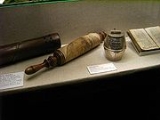
. The Book of Esther or the Megillah is the basis for the Jewish celebration of Purim
Purim

Purim is a Jewish holiday that commemorates the deliverance of the Jewish people of the ancient Persian Empire from Haman 's plot to annihilate them, as recorded in the Hebrew Bible Book of Esther ....
. Its full text is read aloud twice during the celebration, in the evening and again the following morning.

Biblical Book of Esther is set in the third year of Ahasuerus
Ahasuerus

Ahasuerus is a name used several times in the Hebrew Bible, as well as related legends and apocrypha....
, a king of Persia who is identified as Artaxerxes
Artaxerxes

Artaxerxes may refer to:The throne name of several Achaemenid rulers of the 1st Persian Empire:* Artaxerxes I, Artaxerxes I Longimanus, r. 465?424 BC, son and successor of Xerxes I...
 in the Greek version of the book (as well as by Josephus
Josephus

Josephus , also known as Yosef Ben Matityahu and, after he became a Roman citizenship, as Titus Flavius Josephus, was a first-century Jewish historian and apologist of priestly and royal ancestry who survived and recorded the destruction of Jerusalem in AD 70....
, the Jewish commentary Esther Rabbah
Esther Rabbah

Esther Rabbah is the midrash to the Book of Esther in the current Midrash editions. From its plan and scope it is apparently an incomplete collection from the rich haggadic material furnished by the comments on the scroll of Esther, which has been read since early times at the public service on Purim....
, the Ethiopic translation and the Christian theologian Bar-Hebraeus
Bar-Hebraeus

Bar-Hebraeus was a catholicos of the Syriac Orthodox Church in the 13th century. He is noted for his works addressing philosophy, poetry, language, history, and theology; he has been called "one of the most learned and versatile men from the Syriac Orthodox Church" ....
 who identified him more precisely as Artaxerxes II ).


Discussion
Ask a question about 'Book of Esther'
Start a new discussion about 'Book of Esther'
Answer questions from other users
Full Discussion Forum


Encyclopedia


The Book of Esther is one of the books of the Ketuvim
Ketuvim

Ketuvim is the third and final section of the Tanakh , after Torah and Nevi'im. In English translations of the Hebrew Bible, this section is usually entitled "Writings" or "Hagiographa."...
 ("Writings") of the Tanakh
Tanakh

The Tanakh is the Bible used in Judaism. The name "Tanakh" is a Hebrew language Acronym and initialism formed from the initial Hebrew alphabet of the Tanakh's three traditional subdivisions: The Torah , Nevi'im and Ketuvim - hence TaNaKh....
 (the Hebrew Bible
Hebrew Bible

The term Hebrew Bible is a generic reference to those books of the Bible originally written mostly in Biblical Hebrew with some Biblical Aramaic....
) and of the Historical Books of the Old Testament
Old Testament

In Western Christianity, the Old Testament refers to the books that form the first of the two-part Christianity Bible Biblical canon. These works correspond to the Hebrew Bible , with some variations and additions....
. The Book of Esther or the Megillah is the basis for the Jewish celebration of Purim
Purim

Purim is a Jewish holiday that commemorates the deliverance of the Jewish people of the ancient Persian Empire from Haman 's plot to annihilate them, as recorded in the Hebrew Bible Book of Esther ....
. Its full text is read aloud twice during the celebration, in the evening and again the following morning.

Setting

The Biblical Book of Esther is set in the third year of Ahasuerus
Ahasuerus

Ahasuerus is a name used several times in the Hebrew Bible, as well as related legends and apocrypha....
, a king of Persia who is identified as Artaxerxes
Artaxerxes

Artaxerxes may refer to:The throne name of several Achaemenid rulers of the 1st Persian Empire:* Artaxerxes I, Artaxerxes I Longimanus, r. 465?424 BC, son and successor of Xerxes I...
 in the Greek version of the book (as well as by Josephus
Josephus

Josephus , also known as Yosef Ben Matityahu and, after he became a Roman citizenship, as Titus Flavius Josephus, was a first-century Jewish historian and apologist of priestly and royal ancestry who survived and recorded the destruction of Jerusalem in AD 70....
, the Jewish commentary Esther Rabbah
Esther Rabbah

Esther Rabbah is the midrash to the Book of Esther in the current Midrash editions. From its plan and scope it is apparently an incomplete collection from the rich haggadic material furnished by the comments on the scroll of Esther, which has been read since early times at the public service on Purim....
, the Ethiopic translation and the Christian theologian Bar-Hebraeus
Bar-Hebraeus

Bar-Hebraeus was a catholicos of the Syriac Orthodox Church in the 13th century. He is noted for his works addressing philosophy, poetry, language, history, and theology; he has been called "one of the most learned and versatile men from the Syriac Orthodox Church" ....
 who identified him more precisely as Artaxerxes II ). It tells a story of palace intrigue and genocide
Genocide

Genocide is the deliberate and systematic destruction, in whole or in part, of an ethnic, racial, religious, or national group.While precise genocide definitions, a legal definition is found in the 1948 United Nations Convention on the Prevention and Punishment of the Crime of Genocide ....
 thwarted by a Jewish queen of Persia.

Plot summary

The book commences with a feast organized by Ahasuerus, initially for his court and dignitaries and afterwards for all inhabitants of Shushan
Susa

Susa was an ancient city of the Elamite, Persian Empire and Parthian empires of Iran, located about 250 km east of the Tigris River.The modern town of Shush, Iran is located at the site of ancient Susa....
. Ahasuerus orders his wife Vashti
Vashti

Vashti is mentioned in the Book of Esther, a book included in the Hebrew Bible . Vashti is also the name of one of the principal characters in E....
 to display her beauty before the guests. She refuses. Ahasuerus removes her as queen. Ahasuerus then orders all "beautiful young girls to be presented to him, so he can choose a new queen to replace Vashti. One of these is Esther, who had no parents and is being fostered by her cousin Mordechai. She finds favor in the king's eyes, and is made his new wife. Esther does not reveal that she is Jewish. Shortly afterwards, Mordechai discovers a plot by courtiers Bigthan and Teresh to assassinate Ahasuerus. They are apprehended and executed, and Mordechai's service to the king is recorded Ahasuerus appoints Haman as his prime minister. Mordechai, who sits at the palace gates, falls into Haman's disfavor as he refuses to bow down to him. Having found out that Mordechai is Jewish, Haman plans to kill not just Mordechai but all the Jews in the empire. He obtains Ahasuerus' permission to execute this plan, against payment of ten thousand talents of silver, and he casts lots to choose the date on which to do this - the thirteenth of the month of Adar. When Mordechai finds out about the plans he orders fasting. Esther discovers what has transpired; she requests that all Jews fast and pray for three days together with her, and on the third day she seeks an audience with Ahasuerus, during which she invites him to a feast in the company of Haman. During the feast, she asks them to attend a further feast the next evening. Meanwhile, Haman is again offended by Mordechai and builds a gallows for him That night, Ahasuerus suffers from insomnia, and when the court's records are read to him to help him sleep, he learns of the services rendered by Mordechai in the previous plot against his life. Ahasuerus is told that Mordechai has not received any recognition for saving the king's life. Just then, Haman appears, and King Ahasuerus asks Haman what should be done for the man that he wishes to honor. Thinking that the man that the king wishes to honor is him, Haman says that the man should be dressed in the king's royal robes and led around on the king's royal horse. To his horror, the king instructs Haman to do so to Mordechai.

Later that evening, Ahasuerus and Haman attend Esther's second banquet, at which she reveals that she is Jewish and that Haman is planning to exterminate her people, including her. Overcome by rage, Ahasuerus leaves the room; meanwhile Haman stays behind and begs Esther for his life, falling upon her in desperation. The king comes back in at this moment and thinks Haman is assaulting the queen; this makes him angrier than before and he orders Haman hanged on the gallows that had been prepared for Mordecai. The previous decree against the Jews cannot be annulled, but the king allows the Jews to defend themselves during attacks. As a result, on 13 Adar, five hundred attackers and Haman's ten sons are killed in Shushan. Mordechai assumes a prominent position in Ahasuerus' court, and institutes an annual commemoration of the delivery of the Jewish people from annihilation.

Authorship and date

Esther is usually dated to the third or fourth century BCE. Jewish tradition regards it as a redaction
Redaction

In the study of literature, redaction is a form of editing in which multiple source texts are combined together and subjected to minor alteration to make them into a single work....
 by the Great Assembly
Great Assembly

According to Judaism, the Great Assembly or Anshei Knesset HaGedolah , also known as the Great Synagogue, was an assembly of 120 scribes, sages, and prophets, in the period from the end of the prophets up to the time of the development of Rabbinic Judaism, marking a transition from an era of prophets to an era of Rabbis....
 of an original text written by Mordecai
Mordecai

Mordecai or Mordechai - the son of Jair , of the tribe of Benjamin, is one of the main personalities in the Book of Esther in the Hebrew Bible....
.

The Greek additions to Esther (which do not appear in the Jewish/Hebrew; see "Additions to Esther" below) are dated to the 2nd century BCE.

Debate over historicity

As early as the eighteenth century, the lack of clear corroboration of any of the details of the story of the Book of Esther with what was known of Persian history from classical sources led some scholars to doubt that the book was historically accurate. It was argued that the form of the story seems closer to that of a romance than a work of history, and that many of the events depicted therein are implausible and unlikely.

From the late nineteenth century onwards, several scholars explored the theory that the Book of Esther actually was a myth related to the spring festival of Purim which may have had a mixed West-Semitic/Akkadian/Canaanite origin. According to this interpretation the tale celebrates the triumph of the Babylonian deities Marduk
Marduk

Marduk was the Babylonian language name of a late-generation god from ancient Mesopotamia and patron deity of the city of Babylon, who, when Babylon permanently became the political center of the Euphrates valley in the time of Hammurabi , started to slowly rise to the position of the head of the Babylonian pantheon, a position he fully acqu...
 and Ishtar
Ishtar

Ishtar is the Assyrian and Babylonian counterpart to the Mesopotamian mythology Inanna and to the cognate northwest Semitic goddess Astarte....
 over the deities of Elam
Elam

Elam was an ancient civilization located in what is now southwest Iran.Elam was centered in the far west and southwest of modern-day Iran, stretching from the lowlands of Khuzestan and Ilam Province , as far as Jiroft in Kerman province and Burned City in Zabol, as well as a small part of southern Iraq....
 or more likely the renewal of life in the spring and the casting out of the scapegoat of the old year. Although this view is not widely held by the religious scholars today, it remains well known. It is explored in depth in the works of Theodor Gaster
Theodor Gaster

Theodor Herzl Gaster was a United Kingdom-born United States Biblical scholar known for work on comparative religion, mythology and the history of religions....
.

Traditionalists like Joyce G Baldwin, a principal of Trinity College, Bristol
Trinity College, Bristol

Trinity College, Bristol is a theological college affiliated to the Church of England. It is located in Stoke Bishop, a prosperous suburb in Bristol, England, next to the University of Bristol's residential halls....
, have fought back, arguing that Esther can be seen to derive from real history. For example, some historians occasionally give strong credence to the narrative based upon the traditions of a people. Thus, because the feast of Purim (which is a retelling of the book of Esther) is integral to Jewish history, there is strong reason to believe this story is indeed based upon a true, though obscure, historical event.

Also, based on the derivation of "Ahasuerus" from "Xerxes", identification of Ahasuerus with Xerxes I is common and parallels between Herodotus' account of Xerxes and the events in Esther have been noted. Others have argued for different identifications, particularly noting traditions referring to Ahasuerus as "Artaxerxes" in Greek. In 1923, Dr. Jacob Hoschander wrote The Book of Esther in the Light of History, in which he posited that the events of the book occurred during the reign of Artaxerxes II Mnemon, in the context of a struggle between adherents of the still more-or-less monotheistic Zoroastrianism
Zoroastrianism

Zoroastrianism is the religion and philosophy based on the teachings ascribed to the prophet Zoroaster, after whom the religion is named. The term Zoroastrianism is in general usage, essentially synonymous with Mazdaism, i.e., the worship of Ahura Mazda, exalted by Zoroaster as the supreme divine authority....
 and those who wanted to bring back the Magi
Magi

File:Adoracao_dos_magos_de_Vicente_Gil.jpgMagi is a term, used since at least the 4th century BCE, to denote a follower of Zoroaster, or rather, a follower of what the Hellenistic civilization associated Zoroaster with, which was – in the main – the ability to read the stars, and manipulate the fate that the stars foretold....
an worship of Mithra
Mithra

Mithra is an important deity or divine concept in Zoroastrianism and later Iranian history and culture.Mithra is descended, together with the Historical Vedic religion deity Mitra , from a common proto-Indo-Iranian entity *mitra "treaty, bond"....
 and Anahita
Anahita

is the Avestan language name of an Indo-Iranians cosmological figure, venerated as the divinity of 'the Waters' and hence associated with fertility, healing and wisdom....
.

Some Christian readers have also tried to see the story as a Christian allegory, in the same vein as the Song of Solomon
Song of Solomon

The Song of Songs , is a book of the Hebrew Bible—Tanakh or Old Testament—one of the five The Five Scrolls . It is also known as the Song of Solomon or as Canticles, the latter from the shortened and anglicized Vulgate title Canticum Canticorum, "Song of Songs" in Latin language....
. The various major readings are considered separately in the sections that follow:

Esther and Babylonian mythology

The History of Religions
History of religions

The history of religion refers to the written record of human religious experiences and ideas. This period of religious history typically begins with the invention of writing about 5,000 years ago in the Near East....
 school of thought, popular in the late 19th and early 20th centuries, argued against the historicity of the Bible by drawing comparisons between Biblical narratives and pagan myths.

The fact that the events of the Book of Esther give rise to the spring festival of Purim
Purim

Purim is a Jewish holiday that commemorates the deliverance of the Jewish people of the ancient Persian Empire from Haman 's plot to annihilate them, as recorded in the Hebrew Bible Book of Esther ....
 was a reason for scholars arguing that the story emerged from a Babylonian seasonal myth. As the 19th/early 20th century scholars did not have the benefit of the Ugaritic texts, they sought an origin in Akkadian tradition rather than the more local West Semitic cultures. In particular, these scholars drew comparisons and parallels between individuals in the Book of Esther and various real and conjectured Babylonian and Elamite gods and goddesses:

  • The name Esther was thought to derive from the similarly sounding Ishtar
    Ishtar

    Ishtar is the Assyrian and Babylonian counterpart to the Mesopotamian mythology Inanna and to the cognate northwest Semitic goddess Astarte....
    , the chief Babylonian goddess. Her original Hebrew name Hadassah was compared with Akkadian hadashatu said to be a title of Ishtar meaning "bride".


  • The custom of preparing homentashn at Purim is reminiscent of a description of Ishtar in Jeremiah
    Jeremiah

    Jeremiah was one of the 'greater prophet' of the Hebrew Bible. He was the son of Hilkiah, a priest of Anathoth.His writings are put together in the Book of Jeremiah and, according to tradition, the Book of Lamentations....
     7:18, when it was customary "to make cakes to the Queen of Heaven."


  • The name Mordechai was was thought to derive from the Babylonian god Marduk
    Marduk

    Marduk was the Babylonian language name of a late-generation god from ancient Mesopotamia and patron deity of the city of Babylon, who, when Babylon permanently became the political center of the Euphrates valley in the time of Hammurabi , started to slowly rise to the position of the head of the Babylonian pantheon, a position he fully acqu...
    . Marduk is a cousin of Ishtar in Chaldean mythology, as was Mordechai a cousin of Esther.


  • The name Vashti was was thought to derive from an Elam
    Elam

    Elam was an ancient civilization located in what is now southwest Iran.Elam was centered in the far west and southwest of modern-day Iran, stretching from the lowlands of Khuzestan and Ilam Province , as far as Jiroft in Kerman province and Burned City in Zabol, as well as a small part of southern Iraq....
    ite goddess named Mashti, although Vashti is a Persian name.


  • The name Haman was was thought to derive from an Elamite demon named Homayun or Humayun or an Elamite god named Uman or Human (or other variations) or alternatively a Babylonian demon.


  • The festival of Purim was was thought to derive from various real and conjectured Babylonian or Elamite festivals, including an alleged Elamite or Babylonian festival marking the victory of Ishtar and Marduk over Uman and Mashti, similar to the triumph of Esther and Mordechai over their rivals Haman and Vashti. Other suggestions were that the Babylonian New Year festival (Sumerian Zagmuk, Akkadian Akitu, called Sacaea by Berosus
    Berosus

    Berosus may refer to:*Berossus , Hellenistic-era Babylonian writer and astronomer*Berosus , a genus of beetles of the family Hydrophilidae*Berosus , a lunar crater...
    ) honouring Marduk - it was suggested that purim ("lots") originally referred to a belief that the gods chose one's fate for the year by lots; the Persian festival of Farvardigan; or the Greek festival of Pithoigia ("wine flask opening"), and it was noted that Hebrew for wine press is purah resembling purim.


These arguments were subsequently thought to be flawed, though there is evidence both for and against them:

  • Ishtar was well known to the Jews who officially opposed her worship. Her name in Hebrew scriptures is Ashtoreth which is phonetically unrelated to Esther despite the superficial similarity when transliterated into English (consonantal root vs ). Although the vowelization of the Hebrew name is thought to be a deliberate mispronunciation reflecting the vowels of the word bosheth denoting a shameful thing, the consonants accurately reflect the original name. "Esther" is most commonly understood to be related to the Persian
    Persian language

    name=Persian|nativename=|pronunciation=[f??r'si]|image=|caption=Farsi in Perso-Arabic script |states= Iran, Afghanistan, Tajikistan, Uzbekistan, and Bahrain....
     word for star (cognate with English star) and the Median
    Median language

    The Median language is the language of the Iranian Medes. Together with Gilaki, Mazandarani, Kurdish language, Parthian language and Balochi language, the language of the Medes is classified as a List of Northwestern Iranian languages language....
     word for myrtle. (See Esther
    Esther

    Esther , born Hadassah, is a queen of the Persian Empire in the Hebrew Bible, the queen of Ahasuerus , and heroine of the Biblical Book of Esther which is named after her....
     for a discussion of the meaning of the name.)


  • The Akkadian hadashatu was not a standard title of Ishtar. It occurs once in a description of Ishtar as a "new bride" and its meaning is "new" not "bride". It is a cognate of Hebrew hadash (with a guttural h) and is phonetically unrelated to "Hadassah" (consonantal root vs ).


  • The Hamantaschen custom originated amongst Jews of Eastern Europe in relatively recent times. In Hebrew they are called "the ears of Haman."


  • The name Mordechai is indeed most commonly connected with that of the god Marduk. It is considered equivalent to Marduka or Marduku, well attested in the Persepolis texts as a genuine name of the period. The Talmud
    Talmud

    The Talmud is a record of rabbinic discussions pertaining to Halakha, Jewish ethics, customs, and history. It is a central text of mainstream Judaism....
     relates that his full name was Mordecai Bilshan (Megillah 15a). This has been understood as the Babylonian Marduk-bel-shunu ("Marduk is their lord"). Similar accounts of Jews in exile being assigned names relating to Babylonian gods is seen in the Book of Daniel
    Book of Daniel

    The Book of Daniel is a book in both the Hebrew Bible and the Christian Old Testament. Originally written in Hebrew language and Aramaic language, it is set during the Babylonian Captivity, a period when Jews were deported and exiled to Babylon following the Siege of Jerusalem of 597 BC....
    . Babylonian gods and goddesses are indeed organized into families making many including Marduk and Ishtar some form of cousins but this is never a point explicitly stated in Babylonian texts.


  • An Elamite goddess named Mashti is purely conjectural and unattested in sources, whereas "Vashti" can be understood as a genuine Persian name meaning "beautiful".


  • Elamite theophoric elements such as Khuban, Khumban
    Khumban

    Khumban is the Elamite god of the earth. He is associated with the Mesopotamian deity Enlil. Khumban was the consort of the mother-goddess Pinikir....
     or Khumma are known but are pronounced with an initial guttural consonant and not as Uman or Human or Haman, and are phonetically unrelated to the Persian name Hamayun, Homayun or Humayun, meaning "magnificent". The Babylonian demon is named Humbaba or Huwawa which is also pronounced with an initial guttural consonant kh and unrelated to Haman. The 19th century Bible critic Jensen associated it with the Elamite god Humban, a view dismissed by later scholars.


  • An Elamite or Babylonian festival marking a victory of Ishtar and Marduk over alleged Uman and Mashti is purely conjectural and unattested in sources. The Babylonian New Year occurs at a very different date from Purim (in the month of Nisan not Adar). A decision of fate by lots by the gods is not attested in any sources. Farvardigan was a five day commemoration of the dead bearing no resemblance to Purim. Pithoigia also occurs at a different time to Purim and although Purim is celebrated with wine drinking this is not its focus; moreover the plural of the Hebrew for wine press is puroth not purim.


Nonetheless, there are some similarities between some Baybylonain myths and the story of Esther. As for Haman
Haman

Haman can be a surname which is a corruption of the German language Hamann. It is also a biblical surname as described below. It also refers to:...
, several etymologies have been proposed for this name. It may be related to the Persian name Omanes, recorded by Greek historians or with the Persian name Vohuman meaning "good thoughts". It may be derived from the Persian word Hamayun meaning "illustrious" or "magnificent", or from Homayun, or Humayun, or from the sacred drink Haoma.

Historical reading

Those arguing in favour of an historical reading of Esther, most commonly identify Ahasuerus with Artaxerxes II (ruled 405 - 359 B.C.E.
359 BC

Events...
) although in the past it was often assumed that he was Xerxes I (ruled 486 - 465 B.C.E.
465 BC

Events...
).

The Hebrew
Hebrew language

Hebrew is a Semitic languages of the Afro-Asiatic languages. Modern Hebrew is spoken by more than seven million people in Israel and Classical Hebrew is used for prayer or study in Jews communities around the world....
 Ahasuerus is most likely derived from Persian
Persian language

name=Persian|nativename=|pronunciation=[f??r'si]|image=|caption=Farsi in Perso-Arabic script |states= Iran, Afghanistan, Tajikistan, Uzbekistan, and Bahrain....
 Khshayarsha, the origin of the Greek
Greek language

Greek is an Indo-European languages native to the southern Balkan peninsula, the language of the Greek people. It forms an independent branch within Indo-European....
 Xerxes. The Greek historian Herodotus
Herodotus

Herodotus of Halicarnassus was a Greeks historian who lived in the 5th century BC and is regarded as the "Father of History" in Western culture....
 wrote that Xerxes sought his harem after being defeated in the Greco-Persian Wars
Greco-Persian Wars

For other Persian wars, see Roman-Persian Wars, Islamic conquest of Persia, Iraq war , and Military history of Iran.The Greco-Persian Wars were a series of conflicts between several ancient Greece city-states and the Achaemenid Empire that started in 499 BC and lasted until 448 BC....
. He makes no reference to individual members of the harem with the exception of a domineering Queen consort
Queen consort

A queen consort is the title given to the wife of a reigning Monarch. Queens consort usually share their husbands' Royal and noble ranks and hold the feminine equivalent of their husbands' monarchical titles....
 Amestris
Amestris

Amestris or Amastris was the wife of Xerxes I of Persia, mother of king Artaxerxes I of Persia. Her reputation is very bad among Ancient Greece historians....
, a daughter of one of his generals, Otanes. (Ctesias
Ctesias

Ctesias of Cnidus was a Hellenic civilization physician and historian from Cnidus in Caria. Ctesias, who flourished in the 5th century BC, was physician to Artaxerxes II, whom he accompanied in 401 BC on his expedition against his brother Cyrus the Younger....
 however refers to a father-in-law and general of Xerxes named Onaphas). Amestris has often been identified with Vashti
Vashti

Vashti is mentioned in the Book of Esther, a book included in the Hebrew Bible . Vashti is also the name of one of the principal characters in E....
 in the past. The identification is problematic however - Amestris remained a powerful figure well into the reign of her son, Artaxerxes I while Vashti is portrayed as dismissed in the early part of Xerxes's reign. (Alternative attempts have been made to identify her with Esther
Esther

Esther , born Hadassah, is a queen of the Persian Empire in the Hebrew Bible, the queen of Ahasuerus , and heroine of the Biblical Book of Esther which is named after her....
, although Esther is an orphan whose father was a Jew named Abihail.) The name Marduka or Marduku (considered equivalent to Mordecai) has been found as the name of officials in the Persian court in thirty texts from the period of Xerxes I and his father Darius, and may refer to up to four individuals with the possibility that one of these is the Biblical Mordecai.

The Septuagint version of Esther however translates the name Ahasuerus as Artaxerxes - a Greek name derived from the Persian
Persian language

name=Persian|nativename=|pronunciation=[f??r'si]|image=|caption=Farsi in Perso-Arabic script |states= Iran, Afghanistan, Tajikistan, Uzbekistan, and Bahrain....
: Artakhshatra. Josephus
Josephus

Josephus , also known as Yosef Ben Matityahu and, after he became a Roman citizenship, as Titus Flavius Josephus, was a first-century Jewish historian and apologist of priestly and royal ancestry who survived and recorded the destruction of Jerusalem in AD 70....
 too relates that this was the name by which he was known to the Greeks and the Midrash
Midrash

Midrash is a Hebrew language term referring to the not exact, but comparative method of exegesis of Biblical texts, which is one of four methods cumulatively called Pardes ....
ic text, Esther Rabba also makes the identification. Bar-Hebraeus
Bar-Hebraeus

Bar-Hebraeus was a catholicos of the Syriac Orthodox Church in the 13th century. He is noted for his works addressing philosophy, poetry, language, history, and theology; he has been called "one of the most learned and versatile men from the Syriac Orthodox Church" ....
 identified Ahasuerus explicitly as Artaxerxes II
Artaxerxes II of Persia

Artaxerxes II Mnemon was king of Persian Empire from 404 BC until his death. He was a son of Darius II of Persia and Parysatis....
. This is not to say that the names are equivalent: Hebrew has a form of the name Artaxerxes distinct from Ahasuerus and a direct Greek rendering of Ahasuerus is used by Josephus as well as in Septuagint occurrences of the name outside the Book of Esther. Rather the Hebrew name Ahasuerus accords with an inscription of the time that notes that Artaxerxes II was named also Arshu, understood as a shortening of Achshiyarshu the Babylonian rendering of the Persian Khshayarsha (Xerxes) through which the Hebrew Achashverosh (Ahasuerus) is derived. . Ctesias
Ctesias

Ctesias of Cnidus was a Hellenic civilization physician and historian from Cnidus in Caria. Ctesias, who flourished in the 5th century BC, was physician to Artaxerxes II, whom he accompanied in 401 BC on his expedition against his brother Cyrus the Younger....
 related that Artaxerxes II was also called Arsicas which is understood as a similar shortening with the Persian suffix -ke that is applied to shortened names. Deinon related that Artaxerxes II was also called Oarses which is also understood to be derived from Khshayarsha.

Another view attempts to identify him instead with Artaxerxes I
Artaxerxes I of Persia

Artaxerxes I was king of the Persian Empire from 465 BC to 424 BC, although other historians would place the beginning of his reign at 475 BC....
 (ruled 465 - 424 B.C.E.
424 BC

Events...
) - the latter had a Babylonian concubine, Kosmartydene, who was the mother of his son Darius II
Darius II of Persia

Darius II , originally called Ochus and often surnamed Nothus , was king of the Persian Empire from 423 BC to 404 BC.Artaxerxes I, who died shortly after December 24, 424 BC, was followed by his son Xerxes II....
 (ruled 424 - 405 B.C.E.
405 BC

Events...
). Jewish tradition relates that Esther was the mother of a King Darius and so some try to identify Ahasuerus with Artaxerxes I and Esther with Kosmartydene.

Based on the view that the Ahasuerus of the Book of Tobit
Book of Tobit

The Book of Tobit or Tobi is a book of scripture that is part of the Roman Catholic Church and Eastern Orthodoxy biblical canon, pronounced canonical by the Council of Carthage of 397 and confirmed for Roman Catholics by the Council of Trent ....
 is identical with that of the Book of Esther, some have also identified him as Nebuchadnezzar's ally Cyaxares
Cyaxares

Cyaxares, Hvakhshathra,Xasro or Kayxosrew , the son of King Phraortes, was the first king of Medes .He reorganized and modernized the Median Army, then joined with King Nabopolassar of Babylon....
 (ruled 625 - 585 B.C.E.). In certain manuscripts of Tobit the former is called Achiachar which like the Greek
Greek language

Greek is an Indo-European languages native to the southern Balkan peninsula, the language of the Greek people. It forms an independent branch within Indo-European....
: Cyaxares is thought to be derived from Persian
Persian language

name=Persian|nativename=|pronunciation=[f??r'si]|image=|caption=Farsi in Perso-Arabic script |states= Iran, Afghanistan, Tajikistan, Uzbekistan, and Bahrain....
: Akhuwakhshatra. Depending on the interpretation of Esther 2:5-6, Mordecai or his great-grandfather Kish was carried away from Jerusalem
Jerusalem

Jerusalem is the capital of Israel and its List of Israeli cities in both population and area, with a population of 747,600 residents over an area of if Positions on Jerusalem East Jerusalem is included....
 with Jeconiah
Jeconiah

Jeconiah , also known as Jehoiachin , was a king of Judah. He was the son of Jehoiakim with Nehushta, the daughter of List of minor Biblical figures of Jerusalem and was a contemporary of the prophets Jeremiah and Ezekiel....
 by Nebuchadnezzar, in 597 B.C.E. The view that it was Mordecai would be consistent with the identification of Ahasuerus with Cyaxares. Identifications with other Persian monarchs have also been suggested.

Jacob Hoschander has argued that evidence of the historicity of Haman and his father Hamedatha is seen in Omanus and Anadatus mentioned by Strabo
Strabo

Strabo was a Ancient Greeks history, geography and philosophy....
 as being honoured with Anahita in the city of Zela
Zile

Zile, also known as Zela, is a city and a district of Tokat Province, Turkey. Zile lies to the south of Amasya and the west of Tokat in north-central Turkey....
. Hoschander argues that these were not deities as Strabo supposed but garbled forms of "Haman" and "Hamedatha" who were being worshipped as martyrs. The names are indeed unattested in Persian texts as gods. (Attempts have been made to connect both "Omanus" and "Haman" with the Zoroastrian term Vohu Mana, however this denotes the principle of "Good Thoughts" and is not the name of a deity.)

Whenever the book was written and whatever the historicity of the events recounted in it, clearly by the time it was written the term "Yehudim" (?????? - Jews) already gained a meaning quite close to what it means up to the present - i.e. an ethnic-religious group, scattered in many countries, organised in autonomous communities and the target of intense hatred by fanatic groups.

Allegorical reading

There are many classical Jewish readings of allegories into the book of Esther, mostly from Hasidic sources. They say that the literal meaning is true, however there is hidden behind this historical account many allegories.

Some Christian readers consider this story to contain an allegory, representing the interaction between the church as 'bride' and God
God

God is a deity in theism and deism religions and other belief systems, representing either the sole deity in monotheism, or a principal deity in polytheism....
. This reading is related to the allegorical reading of the Song of Solomon
Song of Solomon

The Song of Songs , is a book of the Hebrew Bible—Tanakh or Old Testament—one of the five The Five Scrolls . It is also known as the Song of Solomon or as Canticles, the latter from the shortened and anglicized Vulgate title Canticum Canticorum, "Song of Songs" in Latin language....
 and to the theme of the Bride of God, which in Jewish tradition manifests as the Shekinah.

Relation to the rest of the Bible

Esther is (in the Hebrew version) one of only two books of the Bible that do not explicitly mention God
God

God is a deity in theism and deism religions and other belief systems, representing either the sole deity in monotheism, or a principal deity in polytheism....
 (the other is the Song of Songs
Song of songs

Song of Songs is a book of the Hebrew Bible or Old Testament. It may also refer to:In music:*Song of songs , the debut album by David and the Giants...
, which is a metaphor for God's relationship with the Israelites). It is the only book of the Tanakh
Tanakh

The Tanakh is the Bible used in Judaism. The name "Tanakh" is a Hebrew language Acronym and initialism formed from the initial Hebrew alphabet of the Tanakh's three traditional subdivisions: The Torah , Nevi'im and Ketuvim - hence TaNaKh....
 that is not represented among the Dead Sea scrolls
Dead Sea scrolls

The Dead Sea scrolls consist of roughly 900 documents, including texts from the Hebrew Bible, discovered between 1947 and 1956 in eleven caves in and around the Wadi Qumran near the ruins of the ancient settlement of Qumran, on the northwest shore of the Dead Sea....
. It has often been compared to the first half of the Book of Daniel
Book of Daniel

The Book of Daniel is a book in both the Hebrew Bible and the Christian Old Testament. Originally written in Hebrew language and Aramaic language, it is set during the Babylonian Captivity, a period when Jews were deported and exiled to Babylon following the Siege of Jerusalem of 597 BC....
 and to the deuterocanonical
Biblical apocrypha

The biblical apocrypha are Books of the Bible published in an edition of the Bible whose Biblical canon the publisher either rejects or doubts....
 Books of Tobit
Book of Tobit

The Book of Tobit or Tobi is a book of scripture that is part of the Roman Catholic Church and Eastern Orthodoxy biblical canon, pronounced canonical by the Council of Carthage of 397 and confirmed for Roman Catholics by the Council of Trent ....
 and Judith
Book of Judith

[Image:Cristofano Allori 002.jpg|thumb|220px|Judith with the Head of Holophernes, by Cristofano Allori, 1613 The Book of Judith is a deuterocanonical book, included in the Septuagint and in the Roman Catholic and Eastern Orthodox Christian Old Testament of the Bible, but excluded by Judaism and Protestantism....
 for its subject matter.

The story is also the first time that the word Jew (????????) was used. Before this, Jews were referred to as Hebrews
Hebrews

Hebrews are an ancient people defined as descendants of biblical Patriarch Abraham , a descendent of Noah.In the Bible, the patriarch Abraham is referred to a single time as the ivri, which is the singular form of the Hebrew-language word for Hebrew ....
 or Israelites. Moreover, whatever the historical validity of the specific events depicted, the book clearly reflects a situation in which Jews were an ethnic-religious minority - scattered in many countries, organised in self-contained, self-governing communities and subjected to intensive and sometimes violent hatred by some members of the surrounding society. Clearly, whenever the book was actually composed, a phenomenon which can already be identified as a kind of antisemitism was in existence - whether or not Haman is an actual historical character.

Additions to Esther

An additional six chapters appear interspersed in Esther in the Septuagint
Septuagint

The Septuagint , or simply "LXX", is the Koine Greek version of the Hebrew Bible, translated in stages between the 3rd century BC and 1st century BC in Alexandria....
, the Greek translation, which then was noted by Jerome
Jerome

Saint Jerome was a Christian priest and Christian apologetics best known for translating the Vulgate. He is recognized by the Catholic Church as a canonized saint and Doctor of the Church, and his version of the Bible is still an important text in Catholicism....
 in compiling the Latin Vulgate
Vulgate

The Vulgate is an early Fifth Century version of the Bible in Latin, and largely the result of the labors of Jerome, who was commissioned by Pope Damasus I in 382 to make a revision of Vetus Latina....
; additionally, the Greek text contains many small changes in the meaning of the main text. The extra chapters include several prayers to God, perhaps because it was felt that the above-mentioned lack of mention of God was inappropriate in a holy book. Jerome recognized them as additions not present in the Hebrew Text
Tanakh

The Tanakh is the Bible used in Judaism. The name "Tanakh" is a Hebrew language Acronym and initialism formed from the initial Hebrew alphabet of the Tanakh's three traditional subdivisions: The Torah , Nevi'im and Ketuvim - hence TaNaKh....
 and placed them at the end of his Latin translation as chapters 10:4-16:24. However, some modern Catholic English Bibles restore the Septuagint order, such as in the NAB
New American Bible

In 1970, the New American Bible was first published. It is an English language Bible translations that was produced by members of the Catholic Church biblical scholars in cooperation with the United States Conference of Catholic Bishops....
.

By the time Esther was written, the foreign power visible on the horizon as a future threat to Judah was the Macedon
Macedon

Macedon or Macedonia was the name of a monarchy centred in the northernmost part of ancient Greece. The homeland of the ancient Macedonians, it was bordered by the kingdom of Epirus to the west and the region of Thrace to the east....
ians of Alexander the Great
Alexander the Great

Alexander the Great , also known as Alexander III of Macedon was an ancient Greeks King of Macedon . He was one of the most successful military commanders of all time and is presumed undefeated in battle....
, who defeated the Persian empire about 150 years after the time of the story of Esther; the Septuagint
Septuagint

The Septuagint , or simply "LXX", is the Koine Greek version of the Hebrew Bible, translated in stages between the 3rd century BC and 1st century BC in Alexandria....
 version noticeably calls Haman a Macedonian where the Hebrew text describes him as an Agagite.

The canonicity of these Greek additions has been a subject of scholarly disagreement practically since their first appearance in the Septuagint
Septuagint

The Septuagint , or simply "LXX", is the Koine Greek version of the Hebrew Bible, translated in stages between the 3rd century BC and 1st century BC in Alexandria....
 –- Martin Luther
Martin Luther

Martin Luther was a Germans monk, theology, university professor, priest, father of Protestantism, and Protestant Reformers whose ideas started the Protestant Reformation and changed the course of Western culture....
, being perhaps the most vocal Reformation
Protestant Reformation

The Protestant Reformation was a Christian reform movement in Europe. It is thought to have begun in 1517 with Martin Luther's Ninety-Five Theses and may be considered to have ended with the Peace of Westphalia in 1648....
-era critic of the work, considered even the original Hebrew version to be of very doubtful value. Luther's complaints against the book carried past the point of scholarly critique, and reflect Luther's antisemitism.

The Council of Trent
Council of Trent

The Council of Trent was the 16th century Ecumenical Council of the Roman Catholic Church. Considered one of the Church's most important councils, it convened in Trento between December 13, 1545, and December 4, 1563 in twenty-five sessions for three periods....
, the summation of the Roman Catholic
Roman Catholic Church

The Roman Catholic Church, officially known as the Catholic Church is the world's largest Christianity Ecclesia , representing over half of all Christians and one-sixth of the world population....
 Counter-Reformation
Counter-Reformation

The Counter-Reformation denotes the period of Roman Catholic Church revival from the pontificate of Pope Pius IV in 1560 to the close of the Thirty Years' War, 1648....
, declared the entire book, both Hebrew text and Greek additions, to be canonical. While modern Roman Catholic scholars openly recognize the Greek additions as clearly being additions to the text, the Book of Esther is used twice in commonly used sections of the Catholic Lectionary. In both cases, the text used is not only taken from a Greek addition, the readings also are the prayer of Mordecai
Mordecai

Mordecai or Mordechai - the son of Jair , of the tribe of Benjamin, is one of the main personalities in the Book of Esther in the Hebrew Bible....
, and nothing of Esther
Esther

Esther , born Hadassah, is a queen of the Persian Empire in the Hebrew Bible, the queen of Ahasuerus , and heroine of the Biblical Book of Esther which is named after her....
's own words is ever used. The Eastern Orthodox Church
Eastern Orthodox Church

The Eastern Orthodox Church is the second largest single Christian communion in the world with an estimated 225 million members worldwide. It is considered by its adherents to be the Four Marks of the Church established by Jesus Christ and his Apostles nearly 2000 years ago....
 uses the Septuagint version of Esther, as it does for all of the Old Testament. The additions are specifically listed in the Thirty-Nine Articles
Thirty-Nine Articles

The Thirty-Nine Articles of Religion were established in 1563, and are the historic defining statements of Anglican doctrine in relation to the controversies of the English Reformation; especially in the relation of Calvinist doctrine and Roman Catholic practices to the nascent Anglican doctrine of the evolving English Church....
, Article VI, of the Church of England
Church of England

The Church of England is the State religion Christianity Ecclesia in England, the Mother Church of the worldwide Anglican Communion and the oldest among the communion's thirty-eight independent national and regional churches....
: "The rest of the Book of Esther".

Some scholars suggest that Additions to Esther is the work of an Egyptian Jew, writing around 170 BCE, who sought to give the book a more religious tone, and to suggest that the Jews were saved from destruction because of their piety.

Esther Rabbah includes all of Additions to Esther save the "letter texts". It is these "letter texts" that contain the ahistorical assertions that Haman was a Greek.

Reinterpretations of the story

The 2006 film One Night with the King
One Night with the King

One Night with the King is a film that was released in 2006 in film in the United States.The film follows the plot of the novel "Esther" by Nathaniel Weinreb, including direct quotes and events from the book, although the film is officially based on the novel Hadassah: One Night with the King by Tommy Tenney and Mark Andrew Olsen....
 is loosely based on the Biblical story of Esther.

The classic 1960 Hollywood film version of the story, Esther and the King was directed by Raoul Walsh
Raoul Walsh

Raoul Walsh was an United States film director, actor, founding member of the Academy of Motion Picture Arts and Sciences and the brother of silent screen actor George Walsh....
 starring Joan Collins
Joan Collins

Joan Henrietta Collins Order of the British Empire is a Golden Globe Award-winning English actress, bestselling author and columnist....
 and Richard Egan
Richard Egan (actor)

Richard Egan was an United States actor. In some films he is credited as Richard Eagan.Born in San Francisco, California, California, Egan served in the United States Army as a judo instructor during World War II....
.

In 1992 a 30-minute, fully-animated video, twelfth in Hanna-Barbera
Hanna-Barbera

Hanna-Barbera Productions, Inc. , was an American List of animation studios that dominated North American television animation during the second half of the 20th century....
's bestselling The Greatest Adventure
The Greatest Adventure: Stories from the Bible

The Greatest Adventure: Stories from the Bible is a video series produced by Hanna-Barbera that tells of three young adventurers—Derek, Margo, and 'their nomad friend' Moki—who time travel to watch Bible events take place first-hand....
 series, titled Queen Esther features the voices of Helen Slater
Helen Slater

Helen Rachel Slater is an United States film actress and singer-songwriter....
 as Queen Esther, Dean Jones
Dean Jones (actor)

Dean Carroll Jones is an United States actor. Jones is best known for his leading roles in several Walt Disney movies between 1965 and 1977....
 as King Ahasuerus, Werner Klemperer
Werner Klemperer

Werner Klemperer was an Emmy Award-winning comedic actor, best known for his role as Colonel Klink on the television sitcom, Hogan's Heroes....
 as Haman, and Ron Rifkin
Ron Rifkin

Ron Rifkin is an United States actor and television director who is featured in numerous television shows....
 as Mordecai.

There are several paintings depicting Esther, including one by Millais
John Everett Millais

Sir John Everett Millais, 1st Baronet, Royal Academy was an English Painting and illustrator and one of the founders of the Pre-Raphaelite Brotherhood....
.

VeggieTales
VeggieTales

VeggieTales is a series of English language children's computer animation films featuring anthropomorphic vegetables. Developed by Big Idea Productions, the films convey moral themes based on Christianity, often compatible with Judaism, spliced with satirical references to pop culture and News....
 also made an animated version entitled Esther: The Girl Who Became Queen.

Amos Gitai. "Esther" Agav Films (Israel : 1985). The first part of Gitai's "Exile Trilogy" is somewhere between documentary, purim-shpiel, philosophy and poetry. The ruins of Wadi Sahib on the outskirts of Haïfa play backdrop to traditional telling of the Megillah of Esther. The sounds of cars, the graffiti and the reminders of so many battle scars contrast violently with the images of an oriental court which mixes Persian, Arab and Indian colours and dress. In a twist of reality, Mohamed Bachri plays Modechaï, and Juliano Merr plays Haman. Gitai shows us the crowd yelling "Mavet al Haman" degrade into yeling "Yalla! Beitar! Yallah!" and puts Ahaseurus in the role of a G-d who, by giving his seal to Mordechaï, lets the Jewish people decide for themselves whether they will rule mercifully like their King or cruelly like their former detractors. Arte put out a dvd of the whole trilogy in 2007.

External links

  • Chanting of the Megillat Esther
  • Classes on the Megilla


Text and translations

  • Jewish
    Judaism

    Judaism is a set of beliefs and practices originating in the Hebrew Bible , as later further explored and explained in the Talmud and other texts....
     translations:
    • translation with Rashi
      Rashi

      Rabbi Shlomo Yitzhaki, , better known by the acronym Rashi , , was a rabbi from France, famed as the author of the first comprehensive commentary on the Talmud, and Jewish commentaries on the Bible....
      's commentary at Chabad.org
    • Full text, Aleppo Codex
      Aleppo Codex

      The Aleppo Codex is the most complete extant version of the Hebrew Bible. The codex was written in the 10th century CE. It is considered the most authoritative document in the masorah , the tradition by which the Hebrew Scriptures have been preserved from generation to generation....
      : text of Esther in Hebrew
  • Christian
    Christian

    A Christian is a person who adheres to Christianity, a Monotheism#Christian view religion centered on the life and teachings of Jesus and interpreted by Christians to have been prophesied in the Hebrew Bible/Old Testament....
     translations:
    • Full text, KJV, (also available at )
    • in the NAB
      New American Bible

      In 1970, the New American Bible was first published. It is an English language Bible translations that was produced by members of the Catholic Church biblical scholars in cooperation with the United States Conference of Catholic Bishops....
    • NRSV translation
      New Revised Standard Version

      The New Revised Standard Version of the Bible, released in 1989, is a thorough revision of the Revised Standard Version .There are three editions of the NRSV:...
       with photos of Susa


Introduction and analysis


Early 20th century views
  • : Early 20th century critical perspective as well a discussion of traditional Jewish views of Esther.
  • : Early 20th century critical perspective.
  • : Counter arguments to early 20th century criticism.


Modern scholarship
  • Beal, Timothy K. The Book of Hiding: Gender, Ethnicity, Annihilation, and Esther. NY: Routledge, 1997. Postmodern theoretical apparatus, e.g. Derrida, Levinas
  • : Liberal Jewish view.
  • Michael Fox
    Michael Fox

    Michael Fox may refer to:* Michael Fox * Sir Michael Fox , English barrister and Court of Appeal judge* Michael Fox , Israeli lawyer, founder of Herzog, Fox & Neeman...
     Character and Ideology in the Book of Esther, 2nd ed. Grand Rapids, MI: Eerdmanns, 2001. 333 pp., highly-regarded literary analysis
  • Sasson, Jack M. “Esther” in Alter and Kermode, pp. 335-341, literary view
  • : Gil Student's survey of scholarship supporting an historical reading of Esther
  • : A Christian perspective of the book.
  • Thespis: Ritual, Myth, and Drama in the Ancient Near East by Theodor Gaster
    Theodor Gaster

    Theodor Herzl Gaster was a United Kingdom-born United States Biblical scholar known for work on comparative religion, mythology and the history of religions....
    . 1950.
  • White, Sidnie Ann. “Esther: A Feminine Model for Jewish Diaspora” in Newsom


Commentaries and other books

  • Clines, David J.A. The Esther Scroll. Journal for the Study of the Old Testament Supplement Series, 30. Sheffield, England: Sheffield, 1984.
  • Fischer, James A. Song of Songs, Ruth, Lamentations, Ecclesiastes, Esther. Collegeville Bible Commentary. Collegeville, MN: Liturgical Press, 1986.
  • Fox, Michael V. Character and Ideology in the Book of Esther. Grand Rapids, MI: Eerdmans, 2001.
  • Levenson, Jon D. Esther. Old Testament Library Series. Louisville, KY: Westminster John Knox, 1997.
  • McConville, John C.L. Ezra, Nehemiah, and Esther. Daily Study Bible Series. Philadelphia: Westminster, 1985.
  • Moore, Carey A. Esther. Anchor Bible, vol. 7B. Garden City, NY: Doubleday, 1971.
  • Paton, Lewis B. A Critical and Exegetical Commentary on the Book of Esther. International Critical Commentary. Edinburgh, Scotland: T&T Clark, 1908.