
All Topics  
Kingdom of Judah


   Email Print
   Bookmark   Link


Kingdom of Judah


Judea
Judea

Judea or Jud?a is the name given to the mountainous southern part of the historic Land of Israel , an area now divided between Israel and the West Bank ....
 is a term used for the mountainous southern part of the historic Land of Israel
Land of Israel

For other uses, see Israel The Land of Israel is the region which, according to the Hebrew Bible, was promised by God to the descendants of Abraham through his son Isaac and to the Israelites, descendants of Jacob, Abraham's grandson....
.


The Kingdom of Judah existed at two periods in Jewish history. According to the Hebrew Bible
Hebrew Bible

The term Hebrew Bible is a generic reference to those books of the Bible originally written mostly in Biblical Hebrew with some Biblical Aramaic....
, a kingdom emerged in Judah after the death of Saul
Saul

Saul or Shaul may also refer to:...
, when the tribe of Judah
Tribe of Judah

According to the Hebrew Bible, the Tribe of Judah was one of the twelve Israelites.Following the completion of the conquest of Canaan by the Israelite tribes after about 1200 BCE, Joshua allocated the land among the twelve tribes....
 elevated David
David

David , was the second king of the united Kingdom of Israel according to the Hebrew Bible/Old Testament. He is depicted as a righteous king, although not without fault, as well as an acclaimed warrior, musician and poet ....
 to rule over it. After seven years David became king of a reunited Kingdom of Israel. During this period, Jerusalem
Jerusalem

Jerusalem is the capital of Israel and its List of Israeli cities in both population and area, with a population of 747,600 residents over an area of if Positions on Jerusalem East Jerusalem is included....
 became the capital of the united kingdom.


Discussion
Ask a question about 'Kingdom of Judah'
Start a new discussion about 'Kingdom of Judah'
Answer questions from other users
Full Discussion Forum


Encyclopedia


Judea
Judea

Judea or Jud?a is the name given to the mountainous southern part of the historic Land of Israel , an area now divided between Israel and the West Bank ....
 is a term used for the mountainous southern part of the historic Land of Israel
Land of Israel

For other uses, see Israel The Land of Israel is the region which, according to the Hebrew Bible, was promised by God to the descendants of Abraham through his son Isaac and to the Israelites, descendants of Jacob, Abraham's grandson....
.


The Kingdom of Judah existed at two periods in Jewish history. According to the Hebrew Bible
Hebrew Bible

The term Hebrew Bible is a generic reference to those books of the Bible originally written mostly in Biblical Hebrew with some Biblical Aramaic....
, a kingdom emerged in Judah after the death of Saul
Saul

Saul or Shaul may also refer to:...
, when the tribe of Judah
Tribe of Judah

According to the Hebrew Bible, the Tribe of Judah was one of the twelve Israelites.Following the completion of the conquest of Canaan by the Israelite tribes after about 1200 BCE, Joshua allocated the land among the twelve tribes....
 elevated David
David

David , was the second king of the united Kingdom of Israel according to the Hebrew Bible/Old Testament. He is depicted as a righteous king, although not without fault, as well as an acclaimed warrior, musician and poet ....
 to rule over it. After seven years David became king of a reunited Kingdom of Israel. During this period, Jerusalem
Jerusalem

Jerusalem is the capital of Israel and its List of Israeli cities in both population and area, with a population of 747,600 residents over an area of if Positions on Jerusalem East Jerusalem is included....
 became the capital of the united kingdom. However, in about 930 BCE the united kingdom split, with a reformed Kingdom of Judah being one of the successor states, and the other entity continuing to be called the Kingdom of Israel, or Israel. The kingdom of Judah is also often referred to as the Southern Kingdom, while the Kingdom of Israel is referred to as the Northern Kingdom. Judah existed until 586 BCE, when it was conquered by the Babylonian Empire
Neo-Babylonian Empire

The term Neo-Babylonian or Chaldean refers to Babylonia under the rule of the 11th dynasty, from the revolt of Nabopolassar in 626 BC until the invasion of Cyrus the Great in 539 BC, notably including the reign of Nebuchadnezzar II....
 under Nebuzar-adan, captain of Nebuchadnezzar's body-guard. With the deportation of the population
Babylonian captivity

The Babylonian captivity, or Babylonian exile, is the name typically given to the deportation and exile of the Jews of the ancient Kingdom of Judah to Babylon by Nebuchadnezzar II of Babylon in 586 BCE....
 and the destruction of the Temple and of Jerusalem, the destruction of the kingdom was complete.

The area that comprised the kingdom consisted of the area known as Har Yehudah ("the mountain (district) of the gorge(s)"). The area seems to have originally been occupied by Kenites, Calebites, Othnielites, and in Jerusalem Jebusites.

The Davidic dynasty
Davidic line

The Davidic line refers to the tracing of lineage to the King David referred to in the Hebrew Bible, as well as the New Testament. Though this is especially relevant to kings claiming royal lineage and to major leaders in Jewish history, it is also relevant in a general sense to anyone who claims descent from King David....
 began when the tribe of Judah made David, who came from the Tribe of Judah
Tribe of Judah

According to the Hebrew Bible, the Tribe of Judah was one of the twelve Israelites.Following the completion of the conquest of Canaan by the Israelite tribes after about 1200 BCE, Joshua allocated the land among the twelve tribes....
, its king, following the death of Saul. After seven years David became king of a reunited Kingdom of Israel
United Monarchy

The united Kingdom of Israel was a kingdom in the Land of Israel which according to the Bible existed from c. 1050 BCE until c. 930 BCE, a period referred to by scholars as the United Monarchy....
. However, in about 930 BCE, David's grandson Rehoboam
Rehoboam

Rehoboam was a king of United Monarchy and later king of the Kingdom of Judah after the ten northern tribes of Israel rebelled in 932/931 BC to form the independent Kingdom of Israel....
 was rejected by ten of the twelve Tribes of Israel, but Judah and Benjamin continued to be loyal to the Davidic line, which ruled it until the kingdom was destroyed in 586 BCE.

History


The United Monarchy was a union of the twelve Israelite
Israelite

According to the Tanakh, the Israelites were the descendants of the Biblical patriarch Jacob. They were divided into twelve tribes, each descended from one of twelve sons or grandsons of Jacob....
 tribes living in the area that presently comprises modern Israel and Palestine. It existed from around 1030-930 BCE.

After the death of Solomon
Solomon

Solomon is a figure described in the Hebrew Bible and the Qur'an. The biblical accounts identify Solomon as the son of David. He is also called Jedidiah in the Tanakh , and is described as the third king of the United Monarchy, and the final king before the northern Kingdom of Israel and the southern Kingdom of Judah split; following th...
 in 931 BCE, the ten northern tribes refused to accept Rehoboam
Rehoboam

Rehoboam was a king of United Monarchy and later king of the Kingdom of Judah after the ten northern tribes of Israel rebelled in 932/931 BC to form the independent Kingdom of Israel....
 as their king, and instead in about 930 BCE chose Jeroboam
Jeroboam

Jeroboam He was the first king of the break-away ten tribes or Northern Kingdom of Israel, over whom he reigned twenty-two years.William F....
 as their king, who was not of the Davidic line. The northern kingdom continued to be called the Kingdom of Israel
Kingdom of Israel

The Kingdom of Israel was one of the successor states to the older United Monarchy . It existed roughly from the 930s BC until about the 720s BC....
 or Israel. The revolt took place at Shechem
Shechem

Shechem was Canaanite city mentioned in the Amarna letters, and later became an Israelite city in the tribe of Manasseh. It was the first capital of the Kingdom of Israel....
, and at first only the tribe of Judah
Tribe of Judah

According to the Hebrew Bible, the Tribe of Judah was one of the twelve Israelites.Following the completion of the conquest of Canaan by the Israelite tribes after about 1200 BCE, Joshua allocated the land among the twelve tribes....
 remained loyal to the house of David
David

David , was the second king of the united Kingdom of Israel according to the Hebrew Bible/Old Testament. He is depicted as a righteous king, although not without fault, as well as an acclaimed warrior, musician and poet ....
. But very soon after the tribe of Benjamin
Tribe of Benjamin

According to the Hebrew Bible, the Tribe of Benjamin was one of the twelve Israelites.Following the completion of the conquest of Canaan by the Israelite tribes after about 1200 BCE, Joshua allocated the land among the twelve tribes....
 joined Judah, and Jerusalem
Jerusalem

Jerusalem is the capital of Israel and its List of Israeli cities in both population and area, with a population of 747,600 residents over an area of if Positions on Jerusalem East Jerusalem is included....
 (which was in Benjamin's territory: ) became the capital of the new kingdom. The southern kingdom was called the kingdom of Judah, or Judah. also says that members of the tribes of Ephraim
Tribe of Ephraim

The Tribe of Ephraim was one of the Israelites; together with the Tribe of Manasseh, Ephraim also formed the House of Joseph. At its height, the territory it occupied was at the center of Canaan, west of the Jordan, south of the territory of Manasseh, and north of the Tribe of Benjamin; the region which was later named Samaria mostly co...
, Manasseh
Tribe of Manasseh

The Tribe of Menasheh was one of the Israelites. Together with the Tribe of Ephraim, Menasheh also formed the House of Joseph. At its height, the territory it occupied spanned the Jordan River, forming two "half-tribes", one on each side; the eastern half-tribe was almost entirely discontinuity with the western half-tribe, only slightly...
 and Simeon
Tribe of Simeon

The Tribe of Simeon was one of the Israelites. At its height, the territory it occupied was in the southwest of Canaan, bordered on the east and south by the tribe of Judah; the boundaries with the tribe of Judah are vague, and it seems that Simeon may have been an enclave within the west of the territory of the tribe of Judah....
 "fled" to Judah during the reign of Asa
Asa

Asa may refer to:* A?a, Paris-born Nigerian singer-songwriter* Asa of Judah, son of Abijam, King of Judah.* Asa, Nigeria, in Kwara State* Asa , given name...
 of Judah.

For the first sixty years, the kings of Judah tried to re-establishing their authority over the northern kingdom, and there was perpetual war between them. For the following eighty years, there was no open war between them, and, for the most part, they were in friendly alliance, co-operating against their common enemies, especially against Damascus
Damascus

Damascus is the capital and largest city of Syria. It is List of oldest continuously inhabited cities and its current population is estimated at about 4,000,000....
.

Israel existed as an independent state until around 720 BCE when it was conquered by the Assyrian Empire. The Bible relates that all Israelites were exiled, becoming known as the The Ten Lost Tribes. However, it is estimated that only a fifth of the population (about 40,000) were actually resettled out of the area during the two deportation periods under Tiglath-pilaser III and Sargon II. Many Israelites also fled south to Jerusalem, which appears to have expanded in size by 500% during this period, requiring a new wall to be built, and a new source of water (Siloam
Siloam

* For the Arab village and neighborhood, see Silwan* For the ancient city and contemporary Jewish neighborhood, see City of DavidSiloam is an ancient Greek name derived from the more ancient Hebrew: Shiloah), the Arabic: Silwan, was derived form the Greek, Siloam....
) to be provided by King Hezekiah
Hezekiah

Hezekiah was the 13th king of independent kingdom of Judah.His reign has been dated from 715 – 687 BC or 716 – 687 BC. Under either of these chronologies, Hezekiah ruled the southern kingdom of Judah during the forced resettlement of the northern kingdom of Israel by Sargon II's Assyrians and the invasion and siege of Jerusale...
.

After the destruction of Israel, Judah continued to exist for about a century and a half until being conquered by the Babylonians. King Hezekiah
Hezekiah

Hezekiah was the 13th king of independent kingdom of Judah.His reign has been dated from 715 – 687 BC or 716 – 687 BC. Under either of these chronologies, Hezekiah ruled the southern kingdom of Judah during the forced resettlement of the northern kingdom of Israel by Sargon II's Assyrians and the invasion and siege of Jerusale...
 of Judah (727-698 BCE) is noted in the Bible for initiating reforms that enforced Jewish laws against idolatry
Idolatry

Idolatry is usually defined as worship of any cult image, idea, or Object , as opposed to the worship of a monotheistic God. It is considered a major sin in the Abrahamic religions whereas in religions where such activity is not considered as sin, the term "idolatry" itself is absent....
 (in this case, the worship of Ba'alim and Asherah
Asherah

Asherah , in Semitic mythology, is a Semitic mother goddess, who appears in a number of ancient sources including Akkadian language writings by the name of Ashratum/Ashratu and in Hittites as Asherdu or Ashertu or Aserdu or Asertu....
, among other traditional Near Eastern divinities). In his reign is also dated the Siloam inscription
Siloam inscription

The Siloam inscription or Silwan inscription is a passage of inscribed text originally found in the Hezekiah tunnel . The tunnel was discovered in 1838 by Edward Robinson ....
 in Old Hebrew alphabet
Phoenician alphabet

The Phoenician alphabet is a continuation of the Proto-Canaanite alphabet, by convention taken to originate around 1050 BC. It was used for the writing of Phoenician language, a Northern Semitic languages language, used by the civilization of Phoenicia....
.

Manasseh of Judah
Manasseh of Judah

Manasseh of Judah was the king of Kingdom of Judah and only son and successor of Hezekiah. He was 12 years old when he began to reign. William F....
 (698-642 BCE), sacrificed his son to Molech, . He and his son Amon (reigned 642-640 BCE) reversed Hezekiah's reforms and officially revived idolatry. According to later rabbinical accounts, Manasseh placed a grotesque, four-faced idol in the Holy of Holies.

The reign of king Josiah
Josiah

Josiah or Yoshiyahu was a king of Judah who instituted major reforms. Josiah is credited by some historians with having established or discovered important Jewish scriptures during the Deuteronomic reform that occurred during his rule....
 (640-609 BCE) was accompanied by a religious reformation. According to the Bible, while repairs were made on the Temple, a 'Book of the Law' was discovered (possibly the book of Deuteronomy
Deuteronomy

Deuteronomy is the fifth book of the Hebrew Bible and of the Old Testament. In form it is a set of three sermons delivered by Moses reviewing the previous forty years of wandering in the wilderness; its central element is a detailed law-code by which the Children of Israel are to live in the Promised Land....
).

In 586 BCE, the Babyloníans, under king Nebuchadnezzar II, seized Jerusalem. The First Temple was destroyed. To this day, the destruction is remembered by Jews on the 9th of Av, or Tisha B'Av
Tisha B'Av

is an annual ta'anit in Judaism, named for the ninth day of the month of Av in the Hebrew calendar. The fast commemorates the destruction of the Solomon's Temple and Second Temples in Jerusalem, which occurred about 656 years apart, but on the same date....
.

Following this conquest, much of the population of Judah was deported from the land and dispersed
Babylonian captivity

The Babylonian captivity, or Babylonian exile, is the name typically given to the deportation and exile of the Jews of the ancient Kingdom of Judah to Babylon by Nebuchadnezzar II of Babylon in 586 BCE....
 throughout the Babylonian Empire.

Culture


Notable Personalities


Prophets Active in the Kingdom of Judah
  • Amos
    Amos (prophet)

    Amos is one of the twelve minor prophets in the Hebrew Bible, and putative author of the speeches reported in the Book of Amos. The only direct information about him comes from this book....
    , born in Judah but prophesied in Israel
  • Habakkuk
    Habakkuk

    Habakkuk or Havakuk was a prophet in the Hebrew Bible. The etymology of the name of Habakkuk is not clear. The name is possibly related to the Akkadian language khabbaququ, the name of a fragrant plant, or the Hebrew root ???, meaning "embrace"....
  • Isaiah
    Isaiah

    Isaiah is the main figure in the Biblical Book of Isaiah, and is traditionally considered to be its author. He was an 8th-century Before Christ Judean prophet who declared that all the world belonged to God and that God will destroy it....
    , cousin of king Uzziah
  • Jeremiah
  • Joel
    Joel (prophet)

    Joel was a prophet of ancient Israel whose prophecies are recorded in the brief Biblical book that bears his name. His name occurs only once in the Old Testament....
  • Micah
    Micah (prophet)

    Micah the titular prophet of the Book of Micah, also called "The Morasthite". He is not the same as another prophet, Micaiah son of Imlah. He is counted among the minor prophets in the Tanakh ....
  • Obadiah
    Obadiah

    Obadiah is a Bible Theophory in the Bible name, meaning "servant of Jehovah" It is cognate to the Arabic language name `Ubaidallah . The form of his name used in the Septuagint is Obdios; in Latin it is Abdias....
  • Zechariah
  • Zephaniah
    Zephaniah

    Zephaniah or Tzfanya is the name of several people in the Bible Old Testament and Judaism Tanakh. He is also called Sophonias as in the New Catholic Encyclopaedia and in Easton's [Bible] Dictionary....


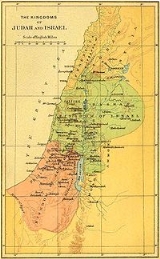
Extent of the Kingdom


The Kingdom of Judah was the nation formed from the territories of the tribes of Judah
Tribe of Judah

According to the Hebrew Bible, the Tribe of Judah was one of the twelve Israelites.Following the completion of the conquest of Canaan by the Israelite tribes after about 1200 BCE, Joshua allocated the land among the twelve tribes....
, Simeon
Tribe of Simeon

The Tribe of Simeon was one of the Israelites. At its height, the territory it occupied was in the southwest of Canaan, bordered on the east and south by the tribe of Judah; the boundaries with the tribe of Judah are vague, and it seems that Simeon may have been an enclave within the west of the territory of the tribe of Judah....
, and Benjamin
Tribe of Benjamin

According to the Hebrew Bible, the Tribe of Benjamin was one of the twelve Israelites.Following the completion of the conquest of Canaan by the Israelite tribes after about 1200 BCE, Joshua allocated the land among the twelve tribes....
, and was named after Judah
Judah (Biblical figure)

Judah/Yehuda was, according to the Book of Genesis, the fourth son of Jacob and Leah, and the founder of the Israelites of Tribe of Judah; however some Biblical criticism view this as postdiction, an eponymous metaphor providing an aetiology of the connectedness of the tribe to others in the Israelite confederation....
, son of Jacob
Jacob

According to the Hebrew Bible, Jacob , also known as Israel , was the third Biblical patriarchs and the ancestor of the twelve Israelites....
 (Israel
Israel

Israel officially the State of Israel , is a country in the Middle East located on the eastern shore of the Mediterranean Sea. It borders Lebanon in the north, Syria in the northeast, Jordan in the east, and Egypt on the southwest, and contains geographically diverse features within its relatively small area....
).

Its capital was Jerusalem
Jerusalem

Jerusalem is the capital of Israel and its List of Israeli cities in both population and area, with a population of 747,600 residents over an area of if Positions on Jerusalem East Jerusalem is included....
.

The kingdom maintained a separate existence for three hundred and eighty-nine years. It occupied an area of about .

The Kings of Judah


For this period, most historians follow either of the older chronologies established by William F. Albright
William F. Albright

William Foxwell Albright was an United States archaeology, Bible, linguistics and expert on ceramics . From the early twentieth century until his death, he was the dean of biblical archaeologists and the universally acknowledged founder of the Biblical archaeology movement....
 or Edwin R. Thiele
Edwin R. Thiele

Edwin R. Thiele was an United States of America missionary in China, an editing, Archaeology, writer, and Old Testament professor. He is best known for his chronological studies of the Hebrew kingdom period....
, or the newer chronologies of Gershon Galil
Gershon Galil

Gershon Galil is the senior lecturer in Ancient Near Eastern history and chairman of the Department of History of Judaism at the University of Haifa, Mount Carmel, Haifa, Israel....
 or Kenneth Kitchen
Kenneth Kitchen

Kenneth Anderson Kitchen is Personal and Brunner Professor Emeritus of Egyptology and Honorary Research Fellow at the School of Archaeology, Classics and Oriental Studies, University of Liverpool, England....
, all of which are shown below. All dates are BCE.

AlbrightThieleGalilKitchenCommon/Biblical nameRegnal Name and styleNotes


The House of David
1000–962 1010–9701010–970David
David

David , was the second king of the united Kingdom of Israel according to the Hebrew Bible/Old Testament. He is depicted as a righteous king, although not without fault, as well as an acclaimed warrior, musician and poet ....
??? ??-??? ??? ?????
David ben Yishai
David

David , was the second king of the united Kingdom of Israel according to the Hebrew Bible/Old Testament. He is depicted as a righteous king, although not without fault, as well as an acclaimed warrior, musician and poet ....
, Melekh Ysra’el
Reigned over Israel & Judah in Jerusalem for 33 years and 7 years in Hebron, 40 years in total. Death: Natural causes
962–922 970–931971–931Solomon
Solomon

Solomon is a figure described in the Hebrew Bible and the Qur'an. The biblical accounts identify Solomon as the son of David. He is also called Jedidiah in the Tanakh , and is described as the third king of the United Monarchy, and the final king before the northern Kingdom of Israel and the southern Kingdom of Judah split; following th...
???? ??-??? ??? ?????
Shelomoh ben David
Solomon

Solomon is a figure described in the Hebrew Bible and the Qur'an. The biblical accounts identify Solomon as the son of David. He is also called Jedidiah in the Tanakh , and is described as the third king of the United Monarchy, and the final king before the northern Kingdom of Israel and the southern Kingdom of Judah split; following th...
, Melekh Ysra’el
Reigned over Israel & Judah in Jerusalem for 40 years. Death: Natural Causes
Son of David by Bathsheba
Bathsheba

According to the Hebrew Bible, Bathsheba was the wife of Uriah the Hittite and later of David , king of the United Kingdom of Israel and Judah....
, his rights of succession were disputed by his older half-brother Adonijah
Adonijah

Adonijah was the fourth son of King David according to the book of Samuel , which is contained in the Bible....
922–915931–913931–914931–915Rehoboam
Rehoboam

Rehoboam was a king of United Monarchy and later king of the Kingdom of Judah after the ten northern tribes of Israel rebelled in 932/931 BC to form the independent Kingdom of Israel....
????? ??-???? ??? ?????
Rehav’am ben Shlomoh
Rehoboam

Rehoboam was a king of United Monarchy and later king of the Kingdom of Judah after the ten northern tribes of Israel rebelled in 932/931 BC to form the independent Kingdom of Israel....
, Melekh Yehudah
Reigned over Judah in Jerusalem for 17 years. Death: Natural Causes
915–913913–911914–911915–912Abijam
Abijam

Abijah was the fourth king of the Davidic line and the second of the Kingdom of Judah. He was the son of Rehoboam, the grandson of Solomon and the great-grandson of David....
???? ??-????? ??? ?????
’Aviyam ben Rehav’am
Abijam

Abijah was the fourth king of the Davidic line and the second of the Kingdom of Judah. He was the son of Rehoboam, the grandson of Solomon and the great-grandson of David....
, Melekh Yehudah
Reigned over Judah in Jerusalem for 3 years. Death: Natural Causes
913–873911–870911–870912–871Asa
Asa of Judah

Asa was the fifth king of the Davidic line and the third of the Kingdom of Judah. He was the son of Abijam, grandson of Rehoboam, and great-grandson of Solomon....
??? ??-???? ??? ?????
’Asa ben ’Aviyam
Asa of Judah

Asa was the fifth king of the Davidic line and the third of the Kingdom of Judah. He was the son of Abijam, grandson of Rehoboam, and great-grandson of Solomon....
, Melekh Yehudah
Reigned over Judah in Jerusalem for 41 years. Death: Severe foot disease
873–849870–848870–845871–849Jehoshaphat
Jehoshaphat

Jehoshaphat was the successor of Asa of Judah, king of Kingdom of Judah. His children included Jehoram of Judah. Historically, his name has sometimes been connected with the Valley of Jehosaphat, where, according to Joel 3:2, the God of Israel will gather all nations for judgment....
?????? ??-??? ??? ?????
Yehoshafat ben ’Asa
Jehoshaphat

Jehoshaphat was the successor of Asa of Judah, king of Kingdom of Judah. His children included Jehoram of Judah. Historically, his name has sometimes been connected with the Valley of Jehosaphat, where, according to Joel 3:2, the God of Israel will gather all nations for judgment....
, Melekh Yahudah
Reigned over Judah in Jerusalem for 25 years. Death: Natural Causes
849–842848–841851–843849–842Jehoram
Jehoram of Judah

Jehoram of Judah was the king of the ancient Kingdom of Judah, and the son of Jehoshaphat .Jehoram took the throne at the age of 32 . William F....
????? ??-?????? ??? ?????
Yehoram ben Yehoshafat
Jehoram of Judah

Jehoram of Judah was the king of the ancient Kingdom of Judah, and the son of Jehoshaphat .Jehoram took the throne at the age of 32 . William F....
, Melekh Yahudah
Reigned over Judah in Jerusalem for 8 years. Death: Severe Stomach disease
842–842841–841843–842842–841Ahaziah
Ahaziah of Judah

This entry is not about King Ahaziah of Israel.Ahaziah of Judah was king of kingdom of Judah, and the son of Jehoram of Judah and Athaliah, the daughter of king Ahab of Israel....
?????? ??-????? ??? ?????
’Ahazyahu ben Yehoram
Ahaziah of Judah

This entry is not about King Ahaziah of Israel.Ahaziah of Judah was king of kingdom of Judah, and the son of Jehoram of Judah and Athaliah, the daughter of king Ahab of Israel....
, Melekh Yehudah
Reigned over Judah in Jerusalem for 1 year. Death: Killed by Jehu, who usurped the throne of Israel
842–837841–835842–835841–835Athaliah
Athaliah

AtaliaAthaliah or Athalie was the queen of kingdom of Judah during the reign of King Jehoram of Judah, and later became sole ruler of Judah for six years....
????? ??-???? ???? ?????
‘Atalyah bat ‘Omri
Athaliah

AtaliaAthaliah or Athalie was the queen of kingdom of Judah during the reign of King Jehoram of Judah, and later became sole ruler of Judah for six years....
, Malkat Yehudah
Reigned over Judah in Jerusalem for 6 years. Death: Killed by the troops assigned by Jehoiada the Priest to protect Joash.
Queen Mother, widow of Jehoram and mother of Ahaziah
837–800835–796842–802841–796Jehoash
Jehoash of Judah

Jehoash , sometimes written Joash, was the king of the ancient Kingdom of Judah, and sole surviving son of Ahaziah of Judah.William F. Albright has dated his reign to 837 – 800 BC, while Edwin R....
????? ??-?????? ??? ?????
Yehoash ben ’Ahazyahu
Jehoash of Judah

Jehoash , sometimes written Joash, was the king of the ancient Kingdom of Judah, and sole surviving son of Ahaziah of Judah.William F. Albright has dated his reign to 837 – 800 BC, while Edwin R....
, Melekh Yehudah
Reigned over Judah in Jerusalem for 40 years. Death: Killed by his officials namely: Zabad, son of Shimeath, a Moabite Woman, and Jehozabad, son of Shimrith, a Moabite Woman.
800–783796–767805–776796–776Amaziah
Amaziah of Judah

Amaziah of Judah was the king of kingdom of Judah, and son and successor of Jehoash of Judah . He took the throne at the age of 25 . The meaning of his name has been expressed as "the strength of the Lord" or "strengthened by Jehovah" or "Yahweh is mighty"....
????? ??-????? ??? ?????
’Amatzyah ben Yehoash
Amaziah of Judah

Amaziah of Judah was the king of kingdom of Judah, and son and successor of Jehoash of Judah . He took the throne at the age of 25 . The meaning of his name has been expressed as "the strength of the Lord" or "strengthened by Jehovah" or "Yahweh is mighty"....
, Melekh Yehudah
Reigned over Judah in Jerusalem for 29 years. Death: Killed in Lachish by the men sent by his officials who conspired against him.
783–742767–740788–736776–736Uzziah
Uzziah of Judah

Uzziah of Judah , also known as Azariah, was the king of the ancient Kingdom of Judah, and one of Amaziah of Judah's sons, whom the people appointed to replace his father ....

(Azariah
Uzziah of Judah

Uzziah of Judah , also known as Azariah, was the king of the ancient Kingdom of Judah, and one of Amaziah of Judah's sons, whom the people appointed to replace his father ....
)
???? ??-????? ??? ?????
‘Uziyah ben ’Amatzyah
Uzziah of Judah

Uzziah of Judah , also known as Azariah, was the king of the ancient Kingdom of Judah, and one of Amaziah of Judah's sons, whom the people appointed to replace his father ....
, Melekh Yehudah
????? ??-????? ??? ?????
‘Azaryah ben ’Amatzyah
Uzziah of Judah

Uzziah of Judah , also known as Azariah, was the king of the ancient Kingdom of Judah, and one of Amaziah of Judah's sons, whom the people appointed to replace his father ....
, Melekh Yehudah
Reigned over Judah in Jerusalem for 52 years. Death: Tzaraas
George Syncellus
George Syncellus

George Syncellus was a Byzantine Empire chronicler and ecclesiastic. He had lived many years in Palestine as a monk, before coming to Constantinople, where he was appointed syncellus to Patriarch Tarasius, patriarch of Constantinople....
 wrote that the First Olympiad took place in Uzziah's 48th regnal year.
742–735740–732758–742750–735/30Jotham
Jotham of Judah

Jotham was the king of kingdom of Judah, and son of Uzziah of Judah with Jerusha, daughter of Zadok. He took the throne at the age of twenty-five ....
???? ??-???? ??? ?????
Yotam ben ‘Uziyah
Jotham of Judah

Jotham was the king of kingdom of Judah, and son of Uzziah of Judah with Jerusha, daughter of Zadok. He took the throne at the age of twenty-five ....
, Melekh Yehudah
Reigned over Judah in Jerusalem for 16 years. Death: Natural Causes
735–715732–716742–726735/31–715Ahaz
Ahaz

Ahaz was king of kingdom of Judah, and the son and successor of Jotham of Judah. He took the throne at the age of twenty . William F. Albright has dated his reign to 735 – 715 BC, while Edwin R....
??? ??-???? ??? ?????
’Ahaz ben Yotam
Ahaz

Ahaz was king of kingdom of Judah, and the son and successor of Jotham of Judah. He took the throne at the age of twenty . William F. Albright has dated his reign to 735 – 715 BC, while Edwin R....
, Melekh Yehudah
Reigned over Judah in Jerusalem for 16 years. Death: Natural Causes
The Assyrian
Assyrian

Assyrian may refer to:in antiquity:*ancient Assyria**the Old Assyrian period **the Middle Assyrian period **the Neo-Assyrian period *Assyria , a province of the Achaemenid Empire...
 king Tiglath-Pileser III records he received tribute from Ahaz; compare 2 Kings 16:7-9
715–687716–687726–697715–687Hezekiah
Hezekiah

Hezekiah was the 13th king of independent kingdom of Judah.His reign has been dated from 715 – 687 BC or 716 – 687 BC. Under either of these chronologies, Hezekiah ruled the southern kingdom of Judah during the forced resettlement of the northern kingdom of Israel by Sargon II's Assyrians and the invasion and siege of Jerusale...
????? ??-??? ??? ?????
Hizqiyah ben ’Ahaz
Hezekiah

Hezekiah was the 13th king of independent kingdom of Judah.His reign has been dated from 715 – 687 BC or 716 – 687 BC. Under either of these chronologies, Hezekiah ruled the southern kingdom of Judah during the forced resettlement of the northern kingdom of Israel by Sargon II's Assyrians and the invasion and siege of Jerusale...
, Melekh Yehudah
Reigned over Judah in Jerusalem for 29 years. Death: Natural Causes
Contemporary with Sennacherib
Sennacherib

Sennacherib Rise to power As a crown prince, Sennacherib was placed in charge of the empire while his father Sargon II was on campaign....
 of Assyria and Merodach-Baladan of Babylon.
687–642687–643697–642687–642Manasseh
Manasseh of Judah

Manasseh of Judah was the king of Kingdom of Judah and only son and successor of Hezekiah. He was 12 years old when he began to reign. William F....
???? ??-????? ??? ?????
Menasheh ben Hizqiyah
Manasseh of Judah

Manasseh of Judah was the king of Kingdom of Judah and only son and successor of Hezekiah. He was 12 years old when he began to reign. William F....
, Melekh Yehudah
Reigned over Judah in Jerusalem for 55 years. Death: Natural Causes
Mentioned in Assyrian records as a contemporary of Esarhaddon
Esarhaddon

Esarhaddon , was a king of Neo-Assyria who reigned 681 ? 669 BC. He was the youngest son of Sennacherib and the Aramean queen Naqi'a , Sennacherib's second wife....
642–640643–641642–640642–640Amon
Amon of Judah

According to the Bible, Amon was the king of Kingdom of Judah who succeeded his father Manasseh of Judah on the throne. His mother was Meshullemeth, daughter of Haruz of Jotbah....
???? ??-???? ??? ?????
’Amon ben Menasheh
Amon of Judah

According to the Bible, Amon was the king of Kingdom of Judah who succeeded his father Manasseh of Judah on the throne. His mother was Meshullemeth, daughter of Haruz of Jotbah....
, Melekh Yehudah
Reigned over Judah in Jerusalem for 2 years. Death: Killed by his officials, which were killed later on by the people of Judah.
640–609641–609640–609640–609Josiah
Josiah

Josiah or Yoshiyahu was a king of Judah who instituted major reforms. Josiah is credited by some historians with having established or discovered important Jewish scriptures during the Deuteronomic reform that occurred during his rule....
?????? ??-???? ??? ?????
Yo’shiyahu ben ’Amon
Josiah

Josiah or Yoshiyahu was a king of Judah who instituted major reforms. Josiah is credited by some historians with having established or discovered important Jewish scriptures during the Deuteronomic reform that occurred during his rule....
, Melekh Yehudah
Reigned over Judah in Jerusalem for 31 years. Death: He was shot by archers during the battle against Neco of Egypt. He died upon his arrival on Jerusalem.
609609609609Jehoahaz
Jehoahaz of Judah

Jehoahaz was king of Judah and the fourth and youngest son of king Josiah whom he succeeded and Hamautal, daughter of Jeremiah of Libnah. He was born in 633/632 BC and his birth name was Shallum ....

?????? ??-?????? ??? ?????
Yeho’ahaz ben Yo’shiyahu
Jehoahaz of Judah

Jehoahaz was king of Judah and the fourth and youngest son of king Josiah whom he succeeded and Hamautal, daughter of Jeremiah of Libnah. He was born in 633/632 BC and his birth name was Shallum ....
, Melekh Yehudah
Reigned over Judah in Jerusalem for 3 months. Death: Neco, king of Egypt, dethroned him and was replaced by his brother, Eliakim. Then he was carried off to Egypt, where he died.
609–598609–598609–598609–598Jehoiakim
Jehoiakim

Jehoiakim was king of Judah. He was the second son of king Josiah by Zebidah the daughter of Pedaiah of Rumah. His birth name was Eliakim....
??????? ??-?????? ??? ?????
Yehoyaqim ben Yo’shiyahu
Jehoiakim

Jehoiakim was king of Judah. He was the second son of king Josiah by Zebidah the daughter of Pedaiah of Rumah. His birth name was Eliakim....
, Melekh Yehudah
Reigned over Judah in Jerusalem for 11 years. Death: Natural Causes
The Battle of Carchemish
Battle of Carchemish

The Battle of Carchemish was fought about 605 BC between the allied armies of History of ancient Egypt and Neo-Assyrian Empire against Neo-Babylonian Empire....
 occurred in the fourth year of his reign (Jeremiah
Book of Jeremiah

The Book of Jeremiah, or Jeremiah , is part of the Hebrew Bible, Judaism's Tanakh, and later became a part of Christianity's Old Testament....
 46:2)
598598598–597598–597Jehoiachin
(Jeconiah)
??????? ??-??????? ??? ?????
Yehoyakhin ben Yehoyaqim, Melekh Yehudah
?????? ??-??????? ??? ?????
Yekhonyahu ben Yehoyaqim, Melekh Yehudah
Reigned over Judah in Jerusalem for 3 months & 10 days. Death: King Nebuchadnezzar of Babylon sent for him and brought him to Babylon, where he lived and died.
Jerusalem was captured by the Babylonians and Jehoiachin deposed on 16 March, 597 BCE. Called Jeconiah
Jeconiah

Jeconiah , also known as Jehoiachin , was a king of Judah. He was the son of Jehoiakim with Nehushta, the daughter of List of minor Biblical figures of Jerusalem and was a contemporary of the prophets Jeremiah and Ezekiel....
 in Jeremiah and Esther
Book of Esther

The Book of Esther is one of the books of the Ketuvim of the Tanakh and of the Historical Books of the Old Testament. The Book of Esther or the Megillah is the basis for the Jewish celebration of Purim....
597–587597–586597–586597–586Zedekiah
Zedekiah

Zedekiah was the last king of Judah before the destruction of the kingdom by Babylon. He was the third son of Josiah, and his mother was Hamutal the daughter of Jeremiah of Libnah, thus he was the brother of Jehoahaz ....
?????? ??-??????? ??? ?????
Tzidqiyahu ben Yo’shiyahu
Zedekiah

Zedekiah was the last king of Judah before the destruction of the kingdom by Babylon. He was the third son of Josiah, and his mother was Hamutal the daughter of Jeremiah of Libnah, thus he was the brother of Jehoahaz ....
, Melekh Yehudah
Reigned over Judah in Jerusalem for 11 years. Death: Unknown.
His reign saw the second rebellion against Nebuchadnezzar (588-586 BCE). Jerusalem was captured after a lengthy siege, the temple burnt, Zedekiah blinded and taken into exile, and Judah reduced to a province.


From the end of the kingdom to the present


After the end of the ancient kingdom the area passed into foreign rule, apart from brief periods, under the following powers:

  • 586–539 BCE: Babylonian Empire


  • 539–332 BCE: Persian Empire
    Persian Empire

    The 'Persian Empire' was a series of successive Iranian or Persianization empires that ruled over the Iranian plateau, the original Persian homeland, and beyond in Southwest Asia, South Asia, Central Asia and the Caucasus....


  • 332–305 BCE: Empire of Alexander the Great
    Alexander the Great

    Alexander the Great , also known as Alexander III of Macedon was an ancient Greeks King of Macedon . He was one of the most successful military commanders of all time and is presumed undefeated in battle....


  • 305–198 BCE: Ptolemaics
    Ptolemaic dynasty

    The Ptolemaic dynasty was a Hellenistic Macedonian royal family which ruled the Ptolemaic Empire in Egypt for nearly 300 years, from 305 BC to 30 BC....


  • 198–141 BCE: Seleucids
    Seleucid Empire

    The Seleucid Empire /s?'lus?d/ was a Hellenistic empire, i.e. a successor state of Alexander the Great's empire. The Seleucid Empire was centered in the near East and at the height of its power included central Anatolia, the Levant, Mesopotamia, Persia, today's Turkmenistan, Pamir Mountains and parts of Pakistan....


  • 141–37 BCE: The Hasmonean kingdom in Israel established by the Maccabees, after 63 BCE under Roman supremacy
    Roman Empire

    The Roman Empire was the Roman Republic phase of the Ancient Rome, characterised by an autocracy form of government and large territorial holdings in Europe and around the Mediterranean....


  • 37 BCE–70 CE: Herodian Dynasty
    Herodian Dynasty

    The Herodian Dynasty was a Jewish dynasty of Idumea descent, who ruled Iudaea Province between 37 BC - AD 92....
     ruling Judea under Roman supremacy
    Roman Empire

    The Roman Empire was the Roman Republic phase of the Ancient Rome, characterised by an autocracy form of government and large territorial holdings in Europe and around the Mediterranean....
     (37 BCE-6 CE and 41-44 CE), interchanging with direct Roman rule (6-41 CE and 44-66 CE). This ended in the first Jewish Revolt of 66-73 AD, which saw the Temple destroyed in 70 CE.


  • 6 CE Census of Quirinius
    Census of Quirinius

    The Census of Quirinius refers to the enrollment of the Roman Provinces of Syria and Iudaea Province for tax purposes taken in AD 6/7 during the reign of the Roman Emperor Augustus, when Quirinius was appointed governor of Syria, after the banishment of Herod Archelaus and the imposition of direct Roman rule on what became Iudaea Province ....
     and establishment of Roman Iudaea Province
    Iudaea Province

    Iudaea was a Roman province that extended over the former region of the Hasmonean and Herodian kingdoms of Israel. It was named after the tetrarchy of Judea of which it was an expansion, the latter name deriving from the Kingdom of Judah of the 6th century BCE....


  • 70–395: province of Roman Empire
    Roman Empire

    The Roman Empire was the Roman Republic phase of the Ancient Rome, characterised by an autocracy form of government and large territorial holdings in Europe and around the Mediterranean....
     first called Judea
    Judea

    Judea or Jud?a is the name given to the mountainous southern part of the historic Land of Israel , an area now divided between Israel and the West Bank ....
    , after 135 called Palaestina
    History of Palestine

    The history of the Southern Levant is the account of events in the greater geographic area in the Southern Levant....
    . In 395 the Roman Empire is split into a Western and an Eastern part.


  • 395–638: Eastern Roman or Byzantine Empire
    Byzantine Empire

    Byzantine Empire and Eastern Roman Empire are conventional names used to describe the Roman Empire during the Middle Ages, centered on its capital of Constantinople....


  • 638–1099: Arab Caliphate
    Caliphate

    The caliphate represented the political leadership of the Muslim ummah in classical and medieval Islamic history and juristic theory. The head of state's position is based on the notion of a successor to the Prophets of Islam Muhammad's political authority....
    s and subject rulers


  • 1099–1187: Crusader states
    Crusader states

    The Crusader states were a number of mostly 12th- and 13th-century Feudalism states created by Western European crusaders in Asia Minor, Greece and the Holy Land ....
    , most notably the Kingdom of Jerusalem
    Kingdom of Jerusalem

    The Kingdom of Jerusalem was a Christianity kingdom established in the Levant in 1099 after the First Crusade. It lasted nearly two hundred years, from 1099 until 1291 when the last remaining possession, Acre, Israel, was destroyed by the Mamluks....


  • 1187–1260: dominated by the Ayyubids of Egypt and Damascus
    Ayyubid dynasty

    The Ayyubid or Ayyoubid Dynasty was a Muslim dynasty of Kurds origins which ruled Egypt, Syria, Yemen , Diyar Bakr, Mecca, Hejaz and northern Iraq in the 12th and 13th centuries....


  • 1260–1516: dominated by the Mamluks of Egypt


  • 1516–1917: Ottoman
    Ottoman Empire

    The Ottoman Empire , also known by its contemporaries as the Turkish Empire or Turkey , was an empire that lasted from 1299?1923. It was Treaty of Lausanne by the Republic of Turkey, which was officially proclaimed on October 29, 1923....
     Turks
    Ottoman Turks

    The Ottoman Turks were the subdivision of the Ottoman Muslim Millet that dominated the ruling class of the Ottoman Empire. Reliable information about the early history of the Ottomans is scarce....
    , having previously conquered the Byzantine Empire in 1453


  • 1918–1948: British
    British Empire

    The British Empire comprised the dominions, Crown colony, protectorates, League of Nations mandate, and other Dependent territory ruled or administered by the United Kingdom , that had originated with the overseas colonies and trading posts established by England in the late 16th and early 17th centuries....
     mandate of Palestine under, first, League of Nations
    League of Nations

    The League of Nations was an inter-governmental organization founded as a result of the Treaty of Versailles in 1919?1920. At its greatest extent from 28 September 1934 to 23 February 1935, it had 58 members....
    , then, successor United Nations
    United Nations

    The United Nations is an international organization whose stated aims are to facilitate cooperation in international law, international security, economic development, Social change, human rights and achieving world peace....
    ; the Emirate of Trans-Jordan was separated from the rest of Palestine in 1922, and the Hashemite Kingdom of Jordan became independent upon the expiration of the League of Nations Mandate in 1946.


  • May 1948 to present: independent State of Israel


See also

  • Government of ancient Israel
    Government of ancient Israel

    The king of ancient Israel was not an absolute monarchy. By tradition, the King was required to obey the laws of the Torah, which includes both religious laws and 'secular' laws....
  • History of ancient Israel and Judah
    History of ancient Israel and Judah

    The history of ancient Kingdom of Israel and Kingdom of Judah is known to us essentially from the Hebrew Bible . Certain aspects of that history may also be derived from, elaborated and confirmed by other ancient sources and later classical writings such as the Talmud, the writings of Nicolaus of Damascus, Artapanus of Alexandria, Philo of A...
  • Kingdom of Israel (united monarchy)
  • Kingdom of Israel (Samaria)
  • Israel
    Israel

    Israel officially the State of Israel , is a country in the Middle East located on the eastern shore of the Mediterranean Sea. It borders Lebanon in the north, Syria in the northeast, Jordan in the east, and Egypt on the southwest, and contains geographically diverse features within its relatively small area....
  • Judah
    Judah (Biblical figure)

    Judah/Yehuda was, according to the Book of Genesis, the fourth son of Jacob and Leah, and the founder of the Israelites of Tribe of Judah; however some Biblical criticism view this as postdiction, an eponymous metaphor providing an aetiology of the connectedness of the tribe to others in the Israelite confederation....
  • Judea
    Judea

    Judea or Jud?a is the name given to the mountainous southern part of the historic Land of Israel , an area now divided between Israel and the West Bank ....
  • Knanaya
    Knanaya

    Knanaya , literally meaning "Knai people" or "Q'nai people", are a Jewish Christian people of early endogamous Jewish descent from Kerala, India....


External links

  • Project of the Dinur Center for Research in Jewish History, The Hebrew University of Jerusalem
  • A synchronized chart of the kings of Judah and Israel