


Johan van Oldenbarnevelt

Encyclopedia
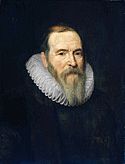
Lord of the Manor
The Lordship of a Manor is recognised today in England and Wales as a form of property and one of three elements of a manor that may exist separately or be combined and may be held in moieties...
Berkel en Rodenrijs
Berkel en Rodenrijs
thumb|250px|right|Town signBerkel en Rodenrijs is a town and former municipality in the Western part of the Netherlands, and is located in the Dutch province of South Holland.- History :...
(1600), Gunterstein
Gunterstein
Gunterstein is a castle in Breukelen, on the river Vecht, that was the former home of the rich Dutch widow Magdalena Poulle . She bought the property and associated title after the former castle and stronghold was destroyed by the French in the rampjaar 1672.-History:The castle was built in 1681 on...
(1611) and Bakkum (1613) (September 14, 1547, Amersfoort
Amersfoort
Amersfoort is a municipality and the second largest city of the province of Utrecht in central Netherlands. The city is growing quickly but has a well-preserved and protected medieval centre. Amersfoort is one of the largest railway junctions in the country, because of its location on two of the...
– May 13, 1619, The Hague
The Hague
The Hague is the capital city of the province of South Holland in the Netherlands. With a population of 500,000 inhabitants , it is the third largest city of the Netherlands, after Amsterdam and Rotterdam...
) was a Dutch
Netherlands
The Netherlands is a constituent country of the Kingdom of the Netherlands, located mainly in North-West Europe and with several islands in the Caribbean. Mainland Netherlands borders the North Sea to the north and west, Belgium to the south, and Germany to the east, and shares maritime borders...
statesman who played an important role in the Dutch struggle for independence from Spain
Dutch Revolt
The Dutch Revolt or the Revolt of the Netherlands This article adopts 1568 as the starting date of the war, as this was the year of the first battles between armies. However, since there is a long period of Protestant vs...
.
Van Oldenbarnevelt studied law at Leuven, Bourges
University of Bourges
The University of Bourges was a university located in Bourges, France. It was founded by Louis XI in 1463 and deleted during french Revolution.-Notable alumni:* Patrick Adamson * John Calvin * Hugues Doneau...
, Heidelberg and Padua
University of Padua
The University of Padua is a premier Italian university located in the city of Padua, Italy. The University of Padua was founded in 1222 as a school of law and was one of the most prominent universities in early modern Europe. It is among the earliest universities of the world and the second...
, and traveled in France and Italy before settling in The Hague
The Hague
The Hague is the capital city of the province of South Holland in the Netherlands. With a population of 500,000 inhabitants , it is the third largest city of the Netherlands, after Amsterdam and Rotterdam...
. He was a Calvinist, he supported William the Silent
William the Silent
William I, Prince of Orange , also widely known as William the Silent , or simply William of Orange , was the main leader of the Dutch revolt against the Spanish that set off the Eighty Years' War and resulted in the formal independence of the United Provinces in 1648. He was born in the House of...
in his revolt against Spain
Spain
Spain , officially the Kingdom of Spain languages]] under the European Charter for Regional or Minority Languages. In each of these, Spain's official name is as follows:;;;;;;), is a country and member state of the European Union located in southwestern Europe on the Iberian Peninsula...
, and fought in William's army.
Early political life
He served as a volunteer for the relief of HaarlemHaarlem
Haarlem is a municipality and a city in the Netherlands. It is the capital of the province of North Holland, the northern half of Holland, which at one time was the most powerful of the seven provinces of the Dutch Republic...
(1573) and again at Leiden (1574). In 1576 he obtained the important post of pensionary of Rotterdam
Rotterdam
Rotterdam is the second-largest city in the Netherlands and one of the largest ports in the world. Starting as a dam on the Rotte river, Rotterdam has grown into a major international commercial centre...
, an office which carried with it official membership of the States of Holland
States of Holland
The States of Holland and West Frisia were the representation of the two Estates to the court of the Count of Holland...
. In this capacity his industry, singular grasp of affairs, and persuasive powers of speech speedily gained for him a position of influence. He was active in promoting the Union of Utrecht
Union of Utrecht
The Union of Utrecht was a treaty signed on 23 January 1579 in Utrecht, the Netherlands, unifying the northern provinces of the Netherlands, until then under the control of Habsburg Spain....
(1579) and the offer of the countship of Holland and Zeeland
Count of Holland
The Counts of Holland ruled over the County of Holland in the Low Countries between the 10th and the 16th century.-House of Holland:The first count of Holland, Dirk I, was the son or foster-son of Gerolf, Count in Frisia...
by William (prevented by Williams death in 1584). He was a fierce opponent of the policies of the Earl of Leicester
Robert Dudley, 1st Earl of Leicester
Robert Dudley, 1st Earl of Leicester, KG was an English nobleman and the favourite and close friend of Elizabeth I from her first year on the throne until his death...
, the governor‐general at the time, and instead favoured Maurice of Nassau, a son of William. Leicester left in 1587, leaving the military power in the Netherlands to Maurice. During the governorship of Leicester, Van Oldenbarnevelt was the leader of the strenuous opposition offered by the States of Holland to the centralizing policy of the governor.
Becomes Land's Advocate
On March 16, 1586, van Oldenbarnevelt, in succession to Paulus BuysPaulus Buys
Paulus Buys, heer van Zevenhoven and Capelle ter Vliet was Grand Pensionary of Holland between 1572 to 1584.-Life:...
, became Land's Advocate of Holland
Land's Advocate of Holland
The Land's Advocate of Holland acted as the chairman of the States of Holland. The office started in the early 14th century and ended in 1619, when the title was renamed into Grand Pensionary. He was the speaker of the nobility of Holland and had the first say on a subject during a meeting of the...
for the States of Holland
States of Holland
The States of Holland and West Frisia were the representation of the two Estates to the court of the Count of Holland...
, an office he held for 32 years. This great office, given to a man of commanding ability and industry, offered unbounded influence in a multi-headed republic without any central executive authority. Though nominally the servant of the States of Holland, Oldenbarnevelt made himself the political personification of the province which bore more than half the entire charge of the union. As mouthpiece of the States-General, he practically dominated the assembly. In a brief period, he became entrusted with such large and far-reaching authority in all details of administration, that he became the virtual Prime minister
Prime minister
A prime minister is the most senior minister of cabinet in the executive branch of government in a parliamentary system. In many systems, the prime minister selects and may dismiss other members of the cabinet, and allocates posts to members within the government. In most systems, the prime...
of the Dutch republic.
During the two critical years following the withdrawal of Leicester, the Advocate's statesmanship kept the United Provinces from collapsing under their own inherent separatist tendencies. This prevented the United Provinces from becoming an easy conquest for the formidable army of Alexander of Parma. Also of good fortune for the Netherlands, the attention of Philip II of Spain
Philip II of Spain
Philip II was King of Spain, Portugal, Naples, Sicily, and, while married to Mary I, King of England and Ireland. He was lord of the Seventeen Provinces from 1556 until 1581, holding various titles for the individual territories such as duke or count....
was at its greatest weakness, instead focused on a contemplated invasion of England
England
England is a country that is part of the United Kingdom. It shares land borders with Scotland to the north and Wales to the west; the Irish Sea is to the north west, the Celtic Sea to the south west, with the North Sea to the east and the English Channel to the south separating it from continental...
. Spain's lack of attention coupled with the United Province's lack of central, organized government allowed Oldenbarnevelt to gain control of administrative affairs. His task was made easier by receiving whole-hearted support from Maurice of Nassau, who, after 1589, held the office of Stadholderate
Stadtholder
A Stadtholder A Stadtholder A Stadtholder (Dutch: stadhouder [], "steward" or "lieutenant", literally place holder, holding someones place, possibly a calque of German Statthalter, French lieutenant, or Middle Latin locum tenens...
of five provinces. He was also Captain-General and Admiral of the Union.
The interests and ambitions of Oldenbarnevelt and Maurice did not clash. Indeed, Maurice's thoughts were centered on training and leading armies, and he had no special capacity as a statesman or desire for politics. Their first rift between came in 1600, when Maurice was forced against his will by the States-General, under the Advocate's influence, to undertake a military expedition to Flanders
Flanders
Flanders is the community of the Flemings but also one of the institutions in Belgium, and a geographical region located in parts of present-day Belgium, France and the Netherlands. "Flanders" can also refer to the northern part of Belgium that contains Brussels, Bruges, Ghent and Antwerp...
. The expedition was saved from disaster by desperate efforts that ended in victory at the Nieuwpoort
Battle of Nieuwpoort
The Battle of Nieuwpoort, between a Dutch army under Maurice of Nassau and Francis Vere and a Spanish army under Albert of Austria, took place on 2 July 1600 near the present-day Belgian city Nieuwpoort.-Campaign:...
.
In 1598, Oldenbarnevelt took part in special diplomatic missions to Henry IV
Henry IV of France
Henry IV , Henri-Quatre, was King of France from 1589 to 1610 and King of Navarre from 1572 to 1610. He was the first monarch of the Bourbon branch of the Capetian dynasty in France....
and Elizabeth
Elizabeth I of England
Elizabeth I was queen regnant of England and Ireland from 17 November 1558 until her death. Sometimes called The Virgin Queen, Gloriana, or Good Queen Bess, Elizabeth was the fifth and last monarch of the Tudor dynasty...
, and again in 1605 in a special mission sent to congratulate James I
James I of England
James VI and I was King of Scots as James VI from 24 July 1567 and King of England and Ireland as James I from the union of the English and Scottish crowns on 24 March 1603...
on his accession.
Truce with Spain
The opening of negotiations by AlbertAlbert VII, Archduke of Austria
Archduke Albert VII of Austria was, jointly with his wife, the Infanta Isabella Clara Eugenia, sovereign of the Habsburg Netherlands between 1598 and 1621, ruling the Habsburg territories in the southern Low Countries and the north of modern France...
and Isabel
Infanta Isabella Clara Eugenia of Spain
Isabella Clara Eugenia of Austria was sovereign of the Spanish Netherlands in the Low Countries and the north of modern France, together with her husband Albert. In some sources, she is referred to as Clara Isabella Eugenia...
in 1606 for a peace or long truce led to a great division of opinion in the Netherlands.
The archdukes having consented to treat with the United Provinces as free provinces and states over which they had no pretensions, Oldenbarnevelt, who had with him the States of Holland and the majority of the Regenten
Regenten
In the 16th, 17th and 18th centuries, the regenten were the rulers of the Dutch Republic, the leaders of the Dutch cities or the heads of organisations . Though not formally a hereditary "class", they were de facto "patricians", comparable to that ancient Roman class...
patriciate throughout the county, was for peace, provided that liberty of trading was conceded.
Maurice and his cousin William Louis
William Louis, Count of Nassau-Dillenburg
William Louis of Nassau-Dillenburg was Count of Nassau-Dillenburg from 1606 to 1620, and stadtholder of Friesland, Groningen, and Drenthe. He was the eldest son of John VI, Count of Nassau-Dillenburg.William Louis served as a cavalry officer under William the Silent...
, stadholder of Friesland
Friesland
Friesland is a province in the north of the Netherlands and part of the ancient region of Frisia.Until the end of 1996, the province bore Friesland as its official name. In 1997 this Dutch name lost its official status to the Frisian Fryslân...
, with the military and naval leaders and the Calvinist clergy, were opposed to it, on the ground that the Spanish king was merely seeking a repose to recuperate his strength for a renewed attack on the independence of the Netherlands.
For some three years the negotiations went on, but at last after endless parleying, on 9 April 1609, a truce for twelve years was concluded. All the Dutch demands were directly or indirectly granted, and Maurice felt obliged to give a reluctant and somewhat sullen assent to the favorable conditions obtained by the firm and skillful diplomacy of the Advocate.
Religious conflict in the Netherlands
The immediate effect of the truce was a strengthening of Oldenbarnevelt's influence in the government of the Dutch Republic, now recognized as a free and independent state; external peace, however, was to bring with it internal strife. For some years there had been a war of words between the religious parties, the strict Calvinist Gomarists (or Contra-Remonstrants) and the more liberal ArminiansArminianism
Arminianism is a school of soteriological thought within Protestant Christianity based on the theological ideas of the Dutch Reformed theologian Jacobus Arminius and his historic followers, the Remonstrants...
.
In 1610 the Arminians, henceforth known as Remonstrants
Remonstrants
The Remonstrants are the Dutch Protestants who, after the death of Jacobus Arminius, maintained the views associated with his name. In 1610 they presented to the States of Holland and Friesland a remonstrance in five articles formulating their points of disagreement from Calvinism.-History:The five...
, drew up a petition, known as the Remonstrance, in which they asked that their tenets (defined in the Five Articles of Remonstrance
Five articles of Remonstrance
The Five Articles of Remonstrance were theological propositions advanced in 1610 by followers of Jacobus Arminius who had died in 1609, in disagreement with interpretations of the teaching of John Calvin then current in the Dutch Reformed Church...
) should be submitted to a national synod, summoned by the civil government. It was no secret that this action of the Arminians was taken with the approval and connivance of Oldenbarnevelt, who was an upholder of the principle of toleration in religious opinions.
The Gomarists in reply drew up a Contra-Remonstrance in seven articles, and called for a purely church synod. The whole land was henceforth divided into Remonstrants and Contra-Remonstrants; the States of Holland under the influence of Oldenbarnevelt supported the former, and refused to sanction the summoning of a purely church synod (1613). They likewise (1614) forbade the preachers in the Province of Holland to treat the disputed subjects from their pulpits.
Obedience was difficult to enforce without military help. Riots broke out in certain towns, and when Maurice was appealed to, as Captain‐General, he declined to act. Though in no sense a theologian, he then declared himself on the side of the Contra-Remonstrants, and established a preacher of that persuasion in a church in The Hague (1617).
Holland declares sovereign independence (Scherpe Resolutie)
The Advocate now took a bold step. He proposed that the States of Holland should, on their own authority, as a sovereign province, raise a local force of 4000 men (waardgelders) to keep the peace.The States-General, meanwhile, by a bare majority (4 provinces to 3) agreed to the summoning of a national church synod. The States of Holland, also by a narrow majority, refused their assent to this, and passed on August 4, 1617 a strong resolution (Scherpe Resolutie) by which all magistrates, officials and soldiers in the pay of the province were on pain of dismissal required to take an oath of obedience to the States of Holland, and were to be held accountable not to the ordinary tribunals, but to the States of Holland.
The States‐General of the Republic saw this as a declaration of sovereign independence on the part of Holland, and decided to take action. A commission was appointed, with Maurice at its head, to compel the disbanding of the waardgelders. On 31 July 1618 the Stadholder, at the head of a body of troops, appeared at Utrecht, which had thrown in its lot with Holland. At his order the local militias laid down their arms.
His progress through the towns of Holland met with no military opposition. The States' sovereignty party was crushed without a battle being fought.
Arrest and trial
On 23 August 1618, by order of the States-General, Oldenbarnevelt and his chief supporters, Hugo GrotiusHugo Grotius
Hugo Grotius , also known as Huig de Groot, Hugo Grocio or Hugo de Groot, was a jurist in the Dutch Republic. With Francisco de Vitoria and Alberico Gentili he laid the foundations for international law, based on natural law...
, Gilles van Ledenberg
Gilles van Ledenberg
Gilles van Ledenberg was a Dutch statesman. He was secretary of the States of Utrecht from 1588 until his arrest for treason in 1618, together with Johan van Oldenbarnevelt. He committed suicide to prevent forfeiture of his assets, but he was sentenced to death posthumously and posthumously...
, Rombout Hogerbeets
Rombout Hogerbeets
Rombout Hogerbeets was a Dutch jurist and statesman. He was tried for treason, together with Johan van Oldenbarnevelt, Hugo Grotius, and Gilles van Ledenberg during the political crisis of 1617-1618 in the Dutch Republic, and sentenced to life-imprisonment...
and Jacob Dircksz de Graeff
Jacob Dircksz de Graeff
Jacob Dircksz de Graeff was one of the most illustrious members of the De Graeff family. He was a powerful member of the States Faction, regent and mayor of Amsterdam after the political collapse of Reinier Pauw in 1627.In the mid 17th century, during the Dutch Golden Age, De Graeff controlled...
, were arrested or lost their political positions in government.
Oldenbarnevelt was, with his friends, kept in strict confinement until November of that year, and then brought for examination before a commission appointed by the States-General. He appeared more than 60 times before the commissioners and the whole course of his official life was severely examined. During the period of inquest, he was neither allowed to consult papers nor put his defense in writing.
On 20 February 1619, Oldenbarnevelt was arraigned before a special court of twenty-four members, only half of whom were Hollanders, and nearly all of whom were personal enemies. This ad hoc judicial commission was necessary, because, unlike in the individual provinces, the federal government did not have a judicial branch. Normally the accused would be brought before the Hof van Holland or the Hoge Raad van Holland en Zeeland, the highest courts in the provinces of Holland and Zeeland; however, in this case, the alleged crime was against the Generaliteit, or federal government, and required adjudication by the States-General, acting act as highest court in the land. As was customary in similar cases (for instance, the later trial of the judges in the case of the Amboyna massacre
Amboyna massacre
The Amboyna massacre was the 1623 torture and execution on Ambon Island , of twenty men, ten of whom were in the service of the British East India Company, by agents of the Dutch East India Company, on accusations of treason...
), the trial was delegated to a commission. Of course, the accused contested the competence of the court, as they contested the residual sovereignty of the States-General, but their protest was disregarded.
It was in fact a kangaroo court
Kangaroo court
A kangaroo court is "a mock court in which the principles of law and justice are disregarded or perverted".The outcome of a trial by kangaroo court is essentially determined in advance, usually for the purpose of ensuring conviction, either by going through the motions of manipulated procedure or...
, and the stacked bench of judges on Sunday, 12 May 1619, pronounced a death sentence on Oldenbarnevelt. On the following day, the old statesman, at the age of seventy-one, was beheaded
Decapitation
Decapitation is the separation of the head from the body. Beheading typically refers to the act of intentional decapitation, e.g., as a means of murder or execution; it may be accomplished, for example, with an axe, sword, knife, wire, or by other more sophisticated means such as a guillotine...
in the Binnenhof
Binnenhof
The Binnenhof , is a complex of buildings in The Hague. It has been the location of meetings of the Staten-Generaal, the Dutch parliament, since 1446, and has been the centre of Dutch politics for many centuries....
, in The Hague. Oldenbarnevelt's last words to the executioner were purportedly: "Make it short, make it short."
The States of Holland noted in their Resolution book on 13 May that Oldenbarnevelt had been: "…a man of great business, activity, memory and wisdom – yes, extra-ordinary in every respect." They added the cryptic sentence Die staet siet toe dat hij niet en valle which probably should be understood as a free Dutch translation of the old dictum sic transit gloria mundi
Sic transit gloria mundi
Sic transit gloria mundi is a Latin phrase that means "Thus passes the glory of the world". It has been interpreted as "Worldly things are fleeting." It is possibly an adaptation of a phrase in Thomas à Kempis's 1418 work The Imitation of Christ: "O quam cito transit gloria mundi" .The phrase was...
, or possibly translated as "pride comes before the fall" (cf. Proverbs
Book of Proverbs
The Book of Proverbs , commonly referred to simply as Proverbs, is a book of the Hebrew Bible.The original Hebrew title of the book of Proverbs is "Míshlê Shlomoh" . When translated into Greek and Latin, the title took on different forms. In the Greek Septuagint the title became "paroimai paroimiae"...
16:17–8).
Personal life
Oldenbarnevelt was married in 1575 to Maria van Utrecht. He left two sons; Reinier van OldenbarneveltReinier van Oldenbarnevelt
Reinier van Oldenbarnevelt, lord of Groeneveld, was the son of Johan van Oldenbarnevelt. In 1607 he visited Paris with his brother Willem van Oldenbarnevelt as part of their Grand tour, and they were received at the court of king Henry IV of France. He married Anna Weytsen, lady of Brandwijk and...
, lord of Groeneveld and Willem van Oldenbarnevelt
Willem van Oldenbarnevelt
Willem van Oldenbarnevelt, lord of the Stoutenburg was a son of Johan van Oldenbarnevelt. He was born in The Hague, where he was baptised at the court-chapel in November 1590....
, lord of Stoutenburg, and two daughters. A conspiracy against the life of Maurice, in which both sons of Oldenbarnevelt took part, was discovered in 1623. Stoutenburg, who was the chief accomplice, made his escape and entered the service of Spain; Groeneveld was executed.
Namesakes
The Nederland LineNetherland Line
The Stoomvaart Maatschappij Nederland or SMN, also known as the Netherland Line or Nederland Line, was a Dutch shipping line that operated from 1870 until 1970, when it merged with several other companies to form what would become Royal Nedlloyd...
ship Johan van Oldenbarnevelt
TSMS Lakonia
The TSMS Lakonia, originally named MS Johan van Oldenbarnevelt, was an ocean liner and troop ship that operated for over 30 years, before burning on December 22, 1963 with high loss of life.-Construction:...
carried his name from 1930 to 1963.
See also
- Johan de WittJohan de WittJohan de Witt, heer van Zuid- en Noord-Linschoten, Snelrewaard, Hekendorp and IJsselveere was a key figure in Dutch politics in the mid 17th century, when its flourishing sea trade in a period of globalization made the United Provinces a leading European power during the Dutch Golden Age...
- Synod of Dordrecht
- Sir John van Olden BarnaveltSir John van Olden BarnaveltThe Tragedy of Sir John van Olden Barnavelt was a Jacobean play written by John Fletcher and Philip Massinger in 1619, and produced in the same year by the King's Men at the Globe Theatre...
, a 1619 play for the Globe Theatre.