

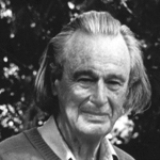
Derek Freeman

Encyclopedia
John Derek Freeman was a New Zealand
anthropologist best known for his criticism of Margaret Mead
's work in Samoa
n society, as described in her 1928 ethnography
Coming of Age in Samoa
. His effort "ignited controversy of a scale, visibility, and ferocity never before seen in anthropology."
Freeman initially became interested in Boas
ian cultural anthropology while an undergraduate in Wellington, and later went to live and work as a teacher in Samoa
. After entering the New Zealand Naval Reserve
in World War II
, he did graduate training with British social anthropologists Meyer Fortes
and Raymond Firth
at London School of Economics
. He did two and a half years of fieldwork in Borneo
studying the Iban people
. His 1953 doctoral dissertation described the relations between Iban agriculture and kinship
practices. Returning to Borneo in 1961 he suffered a nervous breakdown induced by an intense rivalry with ethnologist and explorer Tom Harrisson
. This experience that profoundly altered his view of anthropology, changing his interests to looking at the ways in which human behavior is influenced by universal psychological and biological foundations. From then on Freeman argued strongly for a new approach to anthropology which integrated insights from evolutionary theory and psychoanalysis
, and he published works on the concepts of aggression
and choice
.
This new interest in biological and psychological universals, lead him to take issue with the famous American anthropologist Margaret Mead
who had described ofSamoan adolescents as not suffering from the "coming of age" crisis which was commonly thought to be universal when the study was published in 1923. Mead argued that the lack of this crisis in Samoan adolescence was caused by the youths' greater degree of sexual freedom, and that adolescence crises were therefore not universal, but culturally conditioned. In 1966-67 Freeman conducted fieldwork in Samoa, trying to find Mead's original informants, and while visiting the community where Mead had worked he experienced another breakdown. In 1983 Freeman published his book "Margaret Mead and Samoa: The Making and Unmaking of an Anthropological Myth" in which he argued that Mead's data and conclusions were wrong and that Samoan youths suffered from the same problems as Western adolescents. He also argued that Samoan culture in fact put greater emphasis on female virginity than Western culture and had higher indices of juvenile delinquency, sexual violence and suicide. He later published "The Fateful Hoaxing of Margaret Mead" in which he argued that Mead's misunderstandings of Samoan culture were due to her having been hoaxed by two of her female Samoan informants, who had merely joked about sexual escapades that they did not in fact have.
Freeman's critique of Mead sparked intense debate and controversy in the discipline of anthropology, as well as in the general public. Many of Freeman's critics argued that he misrepresented Mead's views and ignored changes in Samoan society that had taken place in the period between Meads work in the early 1920s and his own in the 1940s, including an increasing influence of Christianity. Generally, Freeman's critique has not been accepted in the anthropological community. Several Samoan scholars who had been discontent with Mead's depiction of them as happy and sexually liberated thought that Freeman erred in the opposite direction. But Freeman's arguments were embraced enthusiastically among scholars who prefer an evolutionary approach to the study of human behavior, such as that taken in the fields of sociobiology
and evolutionary psychology
. The debate made Freeman a celebrity both inside and outside of anthropology, to an extent that in 1996 Freeman's life became the topic of the play Heretic
written by Australian playwright David Williamson
, which opened in the Sydney Opera House
. The so-called Mead - Freeman controversy spanned three decades, and only weeks before his death in 2001 Freeman published his last rebuttal of a critique of his arguments.
. Freeman later commented that if anthropology had been offered he would likely have chosen to study that. He also studied education and was issued a teacher's certificate in 1937. In 1938 he attended a graduate seminar taught by Ernest Beaglehole
, who in turn had been a student of Edward Sapir
. Beaglehole encouraged Freeman's interest in Mead
's groundbreaking 1928 work, and this sparked his interest in visiting Samoa.
During his undergraduate studies in psychology he studied the socialization of children aged 6 to 9 in Wellington, this research lead him to take a strong cultural determinist stance, even publishing an article in the student publication "Salient" stating that "the aims and desire which determine behavior are all constituted by the social environment". Also during this period he met Jiddu Krishnamurti
who instilled in Freeman an interest in free will and choice as a counterpoint to the forces of social and cultural conditioning.
fluently, being qualified by a government examination. And he was adopted into a Samoan family of the community of Sa'anapu, and received the chiefly title of Logona-i-Taga. He also made archaeological field studies around the island of Upolu
including the Falemauga Caves
and earth mounds in Vailele
village. Even though he was working as a teacher, he also had time to undertake studies of socialization in children of the same age group with which he had worked in New Zealand. Freeman also collected Samoan artefacts of material culture, which was later deposited in the Otago Museum
of Dunedin
, New Zealand of which he was made an honorary curator of ethnology. Having served in the Samoan defence force since 1941, in 1943, Freeman left Samoa to enlist in the Royal New Zealand Naval Volunteer Reserve
. He served in Europe and the far east during the war, and in September and October 1945 while his ship was accepting the surrender of Japanese troops in Borneo
, Freeman came into contact with the Iban people
. This experience inspired him to return to do fieldwork in Sarawak
.
at the London School of Economics and Political Science. During 1946-48 his research centered on manuscript sources relating to Samoa in the archives of the London Missionary Society. In 1947 he gave a lecture series at Oxford University on Samoan social structure, this brought him into contact with Meyer Fortes
who became a significant influence on his doctoral research. In November 1948, he married Monica Maitland, and shortly after the couple left for Sarawak
where Freeman would spend the next 30 months doing fieldwork among the Iban for his doctoral dissertation. In Borneo, Freeman collaborated closely with his wife, an artist, who made many ethnographic drawings of the Iban. Freeman returned to England in 1951 and was accepted into King's College
at the University of Cambridge
, where he completed his doctoral thesis on the Iban in 1953.
His thesis about Iban Agriculture has been described as "a superb piece of research" and "one of the best and most complete accounts of swidden agriculture that has yet been made" It was pioneering in utilizing quantitative data to illuminate aspects of swidden economy as well as social organization. He also described the Iban kinship system which was remarkable in being neither patrilineal or matrilineal, but allowing either kind of filiation (but not both) for any individual. Freeman described this system as "utrolineal", and the fact that the system operated based on personal choice became a driving realization for much of Freeman's later work.
He subsequently taught at the University of Otago
in New Zealand, and the University of Samoa
. In 1955, he became Senior Fellow in the Research School of the Department of Anthropology and Sociology of Australian National University
in Canberra, where he stayed until his death.
descent, in several important papers, such as Freeman (1957) and (1961). Up until this point Freeman had been trained in a framework of British social anthropology
and identified strongly with American, Boasian cultural anthropology
, but from 1960 he grew increasingly dissatisfied with that paradigm, partly because he felt that it left him unable to answer several important questions regarding Iban ritual behavior. Freeman later described how this dissatisfaction culminated when he read a passage in Victor Turner
's "Symbols in Ndembu ritual", which questioned the ability of anthropologists to form adequate opinions about psychological aspects of ritual behavior.
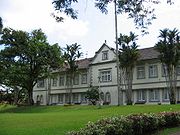 An important event in Freeman's life and career took place in 1961 when Freeman was sent to Borneo to attend to a graduate student, one Brian de Martinoir, who had run into trouble with locals while studying on central Borneo. The student (who was later described by Freeman as an impostor with fake credentials) had been subject to verbal abuse and humiliation by Tom Harrisson
, Government Ethnologist and Curator of the Sarawak Museum
, and this event had threatened his relationship with the Kajang people that he was studying. Freeman knew Harrisson, from his earlier work in Borneo in 1957 when Freeman had himself once been subject to Harrisson's fiery temper - the two men both had strong personalities and they were both strongly territorial about their research subjects.
During the stay in Kuching, Freeman developed an intense antagonism towards Harrisson, whom he believed to be a corrupting influence on the local indigenous people, and in spite of his orders from the University of Canberra to leave Harrisson be, he worked intensely to put him in a bad light with the local government, and to have him forcibly removed from Borneo. Freeman seems to have believed that through erotic statues elaborated by the local Iban and working in concert with agents of the Soviet Union to subvert the British rule of Malaysia, Harrisson was exerting a form of mind control over Freeman himself as well as over the officials of Borneo. The conflict culminated when Freeman broke into Harrisson's house while he was out, and smashed a carved wooden sculpture at the Sarawak museum. Doubting his own mental health Freeman left Borneo for England intent to see a friend who was a psychiatrist, but during a stop-over in Karachi
where he met with officials from London, he decided instead to return to Canberra. At Canberra Freeman was talked into seeing a psychiatrist by the university, he agreed on the condition that the topic of conversation would be Harrisson's madness and not his own mental state. When the psychiatrist Dr. Tenthowathan later evaluated him as being motionally unstable Freeman was incredibly offended and wrote a report denouncing the doctor as an incompetent. While there were always speculations and divided opinions about Freeman's mental health among his friends and colleagues, Freeman himself rejected such speculations entirely, stating that he was in full control of himself throughout the events in Kuching.
Freeman later himself described the events in Kuching
as a "conversion" and an "abreaction
" through which he acquired a new level of awareness, but his experiences were also diagnosed by the psychiatrist who later attended him in Canberra as a breakdown. Freeman himself described his experience as the sudden realization that most of the basic assumptions of cultural anthropology were inadequate. From then on he adopted a new, less culturalistic and more naturalistic scientific stance, incorporating elements of ethology
, primatology
neuroscience
, psychology
and evolutionary theory. He also changed the name under which he published; until that point he had published as J. D. Freeman, but from then on he published as Derek Freeman.
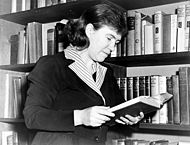 The events also affected Freeman's career by making the Malaysian government declare him persona non grata
in Borneo, the place which had been his primary research site. Freeman then traveled to Europe to study psychoanalysis
for two years, he contacted Margaret Mead
asking her to introduce him to the American Psychoanalysis milieu - which she reluctantly did. Mead, at that point, did know that Freeman privately criticized her work in Samoa, and had also heard of his reputation for being difficult to deal with. In November 1964 Mead visited the University of Canberra and she and Freeman had their only meeting. Freeman privately presented Mead with most of the critique of her work that he would later publish after her death, and at a public meeting they had a heated discussion about the importance of female virginity in Samoan culture. During this meeting Freeman made a peculiar Freudian slip
. When Mead asked why he had not brought his undergraduate thesis on Samoan social structure to her residence the night before, he replied "because I was afraid you might ask me to stay the night". Mead was by then more than 60 years old and walked with a cane, and the suggestive slip of the tongue caused hilarity in the auditorium. Freeman later commented that he had no idea why he said what he did, and that he was himself mortified at hearing his own words. This slip, as well as subsequent events in Samoa, has been used to argue that Freeman's academic relationship with Margaret Mead was complicated by a kind of complex psychological complex on the part of Freeman. Freeman later admitted that he did feel intimidated by Mead even as he was administering his harsh verbal critique of her work, and he described her as a "castrator of men" to whose power he did not want to succumb.
in American Samoa
, the location of Mead's fieldwork in the 1920'es, hoping to find some of her original informants. He did not find any, but he did interview several Chiefs who had known Mead and who were highly critical of her depictions of Samoan society. He was also told that Mead had had an affair with a Samoan man, and the men he interviewed expressed outrage at her sexual licentiousness. This information deeply impacted Freeman, who later described the discovery as deeply upsetting. He concluded that when Mead described Young Samoan women as sexually liberated she was in fact projecting onto them "her own sexual experiences as a young woman in the faraway, romantic south seas". Shortly after uncovering this information Freeman suffered another breakdown, his Samoan hosts found him wandering the beach in an agitated state. Due to his "verbally violent" behavior, the coast guard was dispatched to bring him to observation at the local hospital. Samoan witnesses ascribed the incident to spirit possession, some Americans thought of it as evidence of psychological problems, but Freeman himself dismissed those speculations attributing it to fatigue from research and possible symptoms of dengue fever
.
In 1979 Freeman also sparked a public controversy in Canberra when he protested against the Mexican
government's gift of a copy of the Aztec calendar stone to the Australian National University. Freeman believed the stone to have been an altar used for human sacrifice
, and therefore saw it as being inappropriate. Freeman stated that the Aztec
s were "the most barbaric culture in all of human history". The event caused public debate, with commentators accusing Freeman of exhibiting a double standard as he did not speak out against copies of the Roman Colloseum on the campus, and that he had never spoken similarly out against practices of human sacrifice and cannibalism amongst the Bornean and Samoan people he had studied. The controversy created an urban legend in Australia that Freeman had either doused the stone with blood in a display of protest, or that he had planned to do so - these stories are however incorrect, and Freeman in fact calmly attended the inauguration of the statue.
In the 1983 book Freeman described incongruities between Mead's published research and his observations of Samoans:
Freeman conducted research for more than forty years, describing his research as concluding in 1981 when he was finally granted access to the archives of the High Court of American Samoa
for the 1920s; consequently, his refutation was published only after Mead's death in 1978. Freeman says that he informed Mead of his ongoing work in refuting her research when he met her in person in November 1964 and engaged in correspondence with her; nevertheless, he has come under fire for not publishing his work at a time when Mead could reply to his accusations. However, when Freeman died in 2001, his obituary in the New York Times pointed out that Freeman tried to publish his criticism of Mead as early as 1971, but American publishers rejected his manuscript. In 1978, Freeman sent a revised manuscript to Mead, but she was ill and died a few months later without responding.
Freeman's 1983 critique asserts that Mead was tricked by native informants who were lying to her and that these misconceptions reinforced Mead's doctrine of "absolute cultural determinism" that entirely neglects the role of biology and evolution in human behavior, concentrating instead on the cultural influences. Freeman also argues that "Mead ignored violence in Samoan life, did not have a sufficient background in—or give enough emphasis to—the influence of biology on behavior, did not spend enough time in Samoa, and was not familiar enough with the Samoan language."
Freeman's refutation was initially met by some with accusations of "circumstantial evidence, selective quotation, omission of inconvenient evidence, spurious historical tracking and other critical observations," resulting in "major questions" about the validity and honesty of his scholarship. His New York Times obituary stated that "His challenge was initially greeted with disbelief or anger, but gradually won wide -- although not complete -- acceptance," but further said that "many anthropologists have agreed to disagree over the findings of one of the science's founding mothers, acknowledging both Mead's pioneering research and the fact that she may have been mistaken on details."
Soon after, the New York Times published the following response from Professor Louise Lamphere
, president of the American Anthropological Association
,
A detailed account published in 2009 contradicts the New York Times obituary, and concludes that Freeman cherry-picked his data and misrepresented both Mead and Samoan culture.
New Zealand
New Zealand is an island country in the south-western Pacific Ocean comprising two main landmasses and numerous smaller islands. The country is situated some east of Australia across the Tasman Sea, and roughly south of the Pacific island nations of New Caledonia, Fiji, and Tonga...
anthropologist best known for his criticism of Margaret Mead
Margaret Mead
Margaret Mead was an American cultural anthropologist, who was frequently a featured writer and speaker in the mass media throughout the 1960s and 1970s....
's work in Samoa
Samoa
Samoa , officially the Independent State of Samoa, formerly known as Western Samoa is a country encompassing the western part of the Samoan Islands in the South Pacific Ocean. It became independent from New Zealand in 1962. The two main islands of Samoa are Upolu and one of the biggest islands in...
n society, as described in her 1928 ethnography
Ethnography
Ethnography is a qualitative method aimed to learn and understand cultural phenomena which reflect the knowledge and system of meanings guiding the life of a cultural group...
Coming of Age in Samoa
Coming of Age in Samoa
Coming of Age in Samoa is a book by American anthropologist Margaret Mead based upon her research and study of youth on the island of Ta'u in the Samoa Islands which primarily focused on adolescent girls. Mead was 23 years old when she carried out her field work in Samoa...
. His effort "ignited controversy of a scale, visibility, and ferocity never before seen in anthropology."
Freeman initially became interested in Boas
Franz Boas
Franz Boas was a German-American anthropologist and a pioneer of modern anthropology who has been called the "Father of American Anthropology" and "the Father of Modern Anthropology." Like many such pioneers, he trained in other disciplines; he received his doctorate in physics, and did...
ian cultural anthropology while an undergraduate in Wellington, and later went to live and work as a teacher in Samoa
Samoa
Samoa , officially the Independent State of Samoa, formerly known as Western Samoa is a country encompassing the western part of the Samoan Islands in the South Pacific Ocean. It became independent from New Zealand in 1962. The two main islands of Samoa are Upolu and one of the biggest islands in...
. After entering the New Zealand Naval Reserve
Royal New Zealand Naval Volunteer Reserve
The Royal New Zealand Naval Volunteer Reserve is the volunteer reserve force of the Royal New Zealand Navy .-Early history:The first Naval Volunteer units were formed in Auckland and Nelson in 1858. Over the rest of the 19th century Naval Volunteer units were formed in various ports such as Bluff,...
in World War II
World War II
World War II, or the Second World War , was a global conflict lasting from 1939 to 1945, involving most of the world's nations—including all of the great powers—eventually forming two opposing military alliances: the Allies and the Axis...
, he did graduate training with British social anthropologists Meyer Fortes
Meyer Fortes
Meyer Fortes was a South African-born anthropologist, best known for his work among the Tallensi and Ashanti in Ghana.Originally trained in psychology, Fortes employed the notion of the "person" into his structural-functional analyses of kinship, the family, and ancestor worship setting a standard...
and Raymond Firth
Raymond Firth
Sir Raymond William Firth, CNZM, FBA, was an ethnologist from New Zealand. As a result of Firth's ethnographic work, actual behaviour of societies is separated from the idealized rules of behaviour within the particular society...
at London School of Economics
London School of Economics
The London School of Economics and Political Science is a public research university specialised in the social sciences located in London, United Kingdom, and a constituent college of the federal University of London...
. He did two and a half years of fieldwork in Borneo
Borneo
Borneo is the third largest island in the world and is located north of Java Island, Indonesia, at the geographic centre of Maritime Southeast Asia....
studying the Iban people
Iban people
The Ibans are a branch of the Dayak peoples of Borneo. In Malaysia, most Ibans are located in Sarawak, a small portion in Sabah and some in west Malaysia. They were formerly known during the colonial period by the British as Sea Dayaks. Ibans were renowned for practising headhunting and...
. His 1953 doctoral dissertation described the relations between Iban agriculture and kinship
Kinship
Kinship is a relationship between any entities that share a genealogical origin, through either biological, cultural, or historical descent. And descent groups, lineages, etc. are treated in their own subsections....
practices. Returning to Borneo in 1961 he suffered a nervous breakdown induced by an intense rivalry with ethnologist and explorer Tom Harrisson
Tom Harrisson
Major Tom Harnett Harrisson DSO OBE was a British polymath. In the course of his life he was an ornithologist, explorer, journalist, broadcaster, soldier, guerrilla, ethnologist, museum curator, archaeologist, documentarian, film-maker, conservationist, and writer...
. This experience that profoundly altered his view of anthropology, changing his interests to looking at the ways in which human behavior is influenced by universal psychological and biological foundations. From then on Freeman argued strongly for a new approach to anthropology which integrated insights from evolutionary theory and psychoanalysis
Psychoanalysis
Psychoanalysis is a psychological theory developed in the late 19th and early 20th centuries by Austrian neurologist Sigmund Freud. Psychoanalysis has expanded, been criticized and developed in different directions, mostly by some of Freud's former students, such as Alfred Adler and Carl Gustav...
, and he published works on the concepts of aggression
Aggression
In psychology, as well as other social and behavioral sciences, aggression refers to behavior between members of the same species that is intended to cause humiliation, pain, or harm. Ferguson and Beaver defined aggressive behavior as "Behavior which is intended to increase the social dominance of...
and choice
Choice
Choice consists of the mental process of judging the merits of multiple options and selecting one of them. While a choice can be made between imagined options , often a choice is made between real options, and followed by the corresponding action...
.
This new interest in biological and psychological universals, lead him to take issue with the famous American anthropologist Margaret Mead
Margaret Mead
Margaret Mead was an American cultural anthropologist, who was frequently a featured writer and speaker in the mass media throughout the 1960s and 1970s....
who had described ofSamoan adolescents as not suffering from the "coming of age" crisis which was commonly thought to be universal when the study was published in 1923. Mead argued that the lack of this crisis in Samoan adolescence was caused by the youths' greater degree of sexual freedom, and that adolescence crises were therefore not universal, but culturally conditioned. In 1966-67 Freeman conducted fieldwork in Samoa, trying to find Mead's original informants, and while visiting the community where Mead had worked he experienced another breakdown. In 1983 Freeman published his book "Margaret Mead and Samoa: The Making and Unmaking of an Anthropological Myth" in which he argued that Mead's data and conclusions were wrong and that Samoan youths suffered from the same problems as Western adolescents. He also argued that Samoan culture in fact put greater emphasis on female virginity than Western culture and had higher indices of juvenile delinquency, sexual violence and suicide. He later published "The Fateful Hoaxing of Margaret Mead" in which he argued that Mead's misunderstandings of Samoan culture were due to her having been hoaxed by two of her female Samoan informants, who had merely joked about sexual escapades that they did not in fact have.
Freeman's critique of Mead sparked intense debate and controversy in the discipline of anthropology, as well as in the general public. Many of Freeman's critics argued that he misrepresented Mead's views and ignored changes in Samoan society that had taken place in the period between Meads work in the early 1920s and his own in the 1940s, including an increasing influence of Christianity. Generally, Freeman's critique has not been accepted in the anthropological community. Several Samoan scholars who had been discontent with Mead's depiction of them as happy and sexually liberated thought that Freeman erred in the opposite direction. But Freeman's arguments were embraced enthusiastically among scholars who prefer an evolutionary approach to the study of human behavior, such as that taken in the fields of sociobiology
Sociobiology
Sociobiology is a field of scientific study which is based on the assumption that social behavior has resulted from evolution and attempts to explain and examine social behavior within that context. Often considered a branch of biology and sociology, it also draws from ethology, anthropology,...
and evolutionary psychology
Evolutionary psychology
Evolutionary psychology is an approach in the social and natural sciences that examines psychological traits such as memory, perception, and language from a modern evolutionary perspective. It seeks to identify which human psychological traits are evolved adaptations, that is, the functional...
. The debate made Freeman a celebrity both inside and outside of anthropology, to an extent that in 1996 Freeman's life became the topic of the play Heretic
Heretic (play)
Heretic is a 1996 play by Australian playwright David Williamson.The play explores Derek Freeman's reaction to Margaret Mead's Coming of Age in Samoa...
written by Australian playwright David Williamson
David Williamson
David Keith Williamson AO is one of Australia's best-known playwrights. He has also written screenplays and teleplays.-Biography:...
, which opened in the Sydney Opera House
Sydney Opera House
The Sydney Opera House is a multi-venue performing arts centre in the Australian city of Sydney. It was conceived and largely built by Danish architect Jørn Utzon, finally opening in 1973 after a long gestation starting with his competition-winning design in 1957...
. The so-called Mead - Freeman controversy spanned three decades, and only weeks before his death in 2001 Freeman published his last rebuttal of a critique of his arguments.
Life
Freeman was raised in Wellington, New Zealand by an Australian father and an upper-class Wellington mother, reared in Presbyterian tradition. Freeman's mother took an active interest in his education, urging him to excel. He maintained a close relationship with her for most of his adult life.Early studies
In 1934 he entered Victoria University College as an undergraduate and studied psychology and philosophy with Siegfried Frederick NadelSiegfried Frederick Nadel
Siegfried Frederick Nadel , known as Fred Nadel, was an Austrian-born British anthropologist, specialising in African ethnology.-Biography:Nadel was born in Lemberg, Galizia, the son of a lawyer...
. Freeman later commented that if anthropology had been offered he would likely have chosen to study that. He also studied education and was issued a teacher's certificate in 1937. In 1938 he attended a graduate seminar taught by Ernest Beaglehole
Ernest Beaglehole
Ernest Beaglehole was a New Zealand psychologist and ethnologist best known for his work in establishing an anthropological baseline for numerous Pacific Island cultures.-Early life and education:...
, who in turn had been a student of Edward Sapir
Edward Sapir
Edward Sapir was an American anthropologist-linguist, widely considered to be one of the most important figures in the early development of the discipline of linguistics....
. Beaglehole encouraged Freeman's interest in Mead
Margaret Mead
Margaret Mead was an American cultural anthropologist, who was frequently a featured writer and speaker in the mass media throughout the 1960s and 1970s....
's groundbreaking 1928 work, and this sparked his interest in visiting Samoa.
During his undergraduate studies in psychology he studied the socialization of children aged 6 to 9 in Wellington, this research lead him to take a strong cultural determinist stance, even publishing an article in the student publication "Salient" stating that "the aims and desire which determine behavior are all constituted by the social environment". Also during this period he met Jiddu Krishnamurti
Jiddu Krishnamurti
Jiddu Krishnamurti or J. Krishnamurti or , was a renowned writer and speaker on philosophical and spiritual subjects. His subject matter included: psychological revolution, the nature of the mind, meditation, human relationships, and bringing about positive change in society...
who instilled in Freeman an interest in free will and choice as a counterpoint to the forces of social and cultural conditioning.
In Samoa
In 1940 Freeman's wishes of traveling to Samoa came to reality when he took a position as a schoolteacher in Samoa, from April 1940 to November 1943, during which time he learned to speak the Samoan languageSamoan language
Samoan Samoan Samoan (Gagana Sāmoa, is the language of the Samoan Islands, comprising the independent country of Samoa and the United States territory of American Samoa. It is an official language—alongside English—in both jurisdictions. Samoan, a Polynesian language, is the first language for most...
fluently, being qualified by a government examination. And he was adopted into a Samoan family of the community of Sa'anapu, and received the chiefly title of Logona-i-Taga. He also made archaeological field studies around the island of Upolu
Upolu
Upolu is an island in Samoa, formed by a massive basaltic shield volcano which rises from the seafloor of the western Pacific Ocean. The island is long, in area, and is the second largest in geographic area as well as the most populated of the Samoan Islands. Upolu is situated to the east of...
including the Falemauga Caves
Falemauga Caves
The Falemauga Caves are large natural caverns in a series of lava-tunnels situated in the Tuamasaga district along the central ridge of Upolu island in Samoa. The caves have been studied by archaeologists in Samoa with evidence of human occupation in pre-history...
and earth mounds in Vailele
Vailele
Vailele is a village situated on the central north coast of Upolu island in Samoa.Vailele is in the electoral constituency of Vaimauga East in the larger political district of Tuamasaga....
village. Even though he was working as a teacher, he also had time to undertake studies of socialization in children of the same age group with which he had worked in New Zealand. Freeman also collected Samoan artefacts of material culture, which was later deposited in the Otago Museum
Otago museum
The Otago Museum is situated in Dunedin, New Zealand. It was founded in 1868 and has a collection of over two million artefacts and specimens from the fields of natural history and ethnography...
of Dunedin
Dunedin
Dunedin is the second-largest city in the South Island of New Zealand, and the principal city of the Otago Region. It is considered to be one of the four main urban centres of New Zealand for historic, cultural, and geographic reasons. Dunedin was the largest city by territorial land area until...
, New Zealand of which he was made an honorary curator of ethnology. Having served in the Samoan defence force since 1941, in 1943, Freeman left Samoa to enlist in the Royal New Zealand Naval Volunteer Reserve
Royal New Zealand Naval Volunteer Reserve
The Royal New Zealand Naval Volunteer Reserve is the volunteer reserve force of the Royal New Zealand Navy .-Early history:The first Naval Volunteer units were formed in Auckland and Nelson in 1858. Over the rest of the 19th century Naval Volunteer units were formed in various ports such as Bluff,...
. He served in Europe and the far east during the war, and in September and October 1945 while his ship was accepting the surrender of Japanese troops in Borneo
Borneo
Borneo is the third largest island in the world and is located north of Java Island, Indonesia, at the geographic centre of Maritime Southeast Asia....
, Freeman came into contact with the Iban people
Iban people
The Ibans are a branch of the Dayak peoples of Borneo. In Malaysia, most Ibans are located in Sarawak, a small portion in Sabah and some in west Malaysia. They were formerly known during the colonial period by the British as Sea Dayaks. Ibans were renowned for practising headhunting and...
. This experience inspired him to return to do fieldwork in Sarawak
Sarawak
Sarawak is one of two Malaysian states on the island of Borneo. Known as Bumi Kenyalang , Sarawak is situated on the north-west of the island. It is the largest state in Malaysia followed by Sabah, the second largest state located to the North- East.The administrative capital is Kuching, which...
.
Doctoral research in Borneo
In 1946 he received a Rehabilitation Bursary of the New Zealand government, he did two years of post-graduate studies with Raymond FirthRaymond Firth
Sir Raymond William Firth, CNZM, FBA, was an ethnologist from New Zealand. As a result of Firth's ethnographic work, actual behaviour of societies is separated from the idealized rules of behaviour within the particular society...
at the London School of Economics and Political Science. During 1946-48 his research centered on manuscript sources relating to Samoa in the archives of the London Missionary Society. In 1947 he gave a lecture series at Oxford University on Samoan social structure, this brought him into contact with Meyer Fortes
Meyer Fortes
Meyer Fortes was a South African-born anthropologist, best known for his work among the Tallensi and Ashanti in Ghana.Originally trained in psychology, Fortes employed the notion of the "person" into his structural-functional analyses of kinship, the family, and ancestor worship setting a standard...
who became a significant influence on his doctoral research. In November 1948, he married Monica Maitland, and shortly after the couple left for Sarawak
Sarawak
Sarawak is one of two Malaysian states on the island of Borneo. Known as Bumi Kenyalang , Sarawak is situated on the north-west of the island. It is the largest state in Malaysia followed by Sabah, the second largest state located to the North- East.The administrative capital is Kuching, which...
where Freeman would spend the next 30 months doing fieldwork among the Iban for his doctoral dissertation. In Borneo, Freeman collaborated closely with his wife, an artist, who made many ethnographic drawings of the Iban. Freeman returned to England in 1951 and was accepted into King's College
King's College, Cambridge
King's College is a constituent college of the University of Cambridge, England. The college's full name is "The King's College of our Lady and Saint Nicholas in Cambridge", but it is usually referred to simply as "King's" within the University....
at the University of Cambridge
University of Cambridge
The University of Cambridge is a public research university located in Cambridge, United Kingdom. It is the second-oldest university in both the United Kingdom and the English-speaking world , and the seventh-oldest globally...
, where he completed his doctoral thesis on the Iban in 1953.
His thesis about Iban Agriculture has been described as "a superb piece of research" and "one of the best and most complete accounts of swidden agriculture that has yet been made" It was pioneering in utilizing quantitative data to illuminate aspects of swidden economy as well as social organization. He also described the Iban kinship system which was remarkable in being neither patrilineal or matrilineal, but allowing either kind of filiation (but not both) for any individual. Freeman described this system as "utrolineal", and the fact that the system operated based on personal choice became a driving realization for much of Freeman's later work.
He subsequently taught at the University of Otago
University of Otago
The University of Otago in Dunedin is New Zealand's oldest university with over 22,000 students enrolled during 2010.The university has New Zealand's highest average research quality and in New Zealand is second only to the University of Auckland in the number of A rated academic researchers it...
in New Zealand, and the University of Samoa
National University of Samoa
The National University of Samoa is the only national university in Samoa. Established in 1984 by an act of parliament, the university is coeducational and provides certificate, diploma, and undergraduate degree programs, as well as technical and vocational training. About 2,000 students are...
. In 1955, he became Senior Fellow in the Research School of the Department of Anthropology and Sociology of Australian National University
Australian National University
The Australian National University is a teaching and research university located in the Australian capital, Canberra.As of 2009, the ANU employs 3,945 administrative staff who teach approximately 10,000 undergraduates, and 7,500 postgraduate students...
in Canberra, where he stayed until his death.
Kinship studies and changing heart
In the next decades Freeman worked on kinship, exploring especially the system of cognaticCognatic
Cognatic kinship is a mode of descent calculated from an ancestor or ancestress counted through any combination of male and female links, or a system of bilateral kinship where relations are traced through both a father and mother....
descent, in several important papers, such as Freeman (1957) and (1961). Up until this point Freeman had been trained in a framework of British social anthropology
Social anthropology
Social Anthropology is one of the four or five branches of anthropology that studies how contemporary human beings behave in social groups. Practitioners of social anthropology investigate, often through long-term, intensive field studies , the social organization of a particular person: customs,...
and identified strongly with American, Boasian cultural anthropology
Cultural anthropology
Cultural anthropology is a branch of anthropology focused on the study of cultural variation among humans, collecting data about the impact of global economic and political processes on local cultural realities. Anthropologists use a variety of methods, including participant observation,...
, but from 1960 he grew increasingly dissatisfied with that paradigm, partly because he felt that it left him unable to answer several important questions regarding Iban ritual behavior. Freeman later described how this dissatisfaction culminated when he read a passage in Victor Turner
Victor Turner
Victor Witter Turner was a British cultural anthropologist best known for his work on symbols, rituals and rites of passage...
's "Symbols in Ndembu ritual", which questioned the ability of anthropologists to form adequate opinions about psychological aspects of ritual behavior.
Conversion and breakdown in Kuching
Tom Harrisson
Major Tom Harnett Harrisson DSO OBE was a British polymath. In the course of his life he was an ornithologist, explorer, journalist, broadcaster, soldier, guerrilla, ethnologist, museum curator, archaeologist, documentarian, film-maker, conservationist, and writer...
, Government Ethnologist and Curator of the Sarawak Museum
Sarawak State Museum
The Sarawak State Museum is the oldest museum in Borneo. It was established in 1888 and opened in 1891 in a purpose-built building in Kuching, Sarawak...
, and this event had threatened his relationship with the Kajang people that he was studying. Freeman knew Harrisson, from his earlier work in Borneo in 1957 when Freeman had himself once been subject to Harrisson's fiery temper - the two men both had strong personalities and they were both strongly territorial about their research subjects.
During the stay in Kuching, Freeman developed an intense antagonism towards Harrisson, whom he believed to be a corrupting influence on the local indigenous people, and in spite of his orders from the University of Canberra to leave Harrisson be, he worked intensely to put him in a bad light with the local government, and to have him forcibly removed from Borneo. Freeman seems to have believed that through erotic statues elaborated by the local Iban and working in concert with agents of the Soviet Union to subvert the British rule of Malaysia, Harrisson was exerting a form of mind control over Freeman himself as well as over the officials of Borneo. The conflict culminated when Freeman broke into Harrisson's house while he was out, and smashed a carved wooden sculpture at the Sarawak museum. Doubting his own mental health Freeman left Borneo for England intent to see a friend who was a psychiatrist, but during a stop-over in Karachi
Karachi
Karachi is the largest city, main seaport and the main financial centre of Pakistan, as well as the capital of the province of Sindh. The city has an estimated population of 13 to 15 million, while the total metropolitan area has a population of over 18 million...
where he met with officials from London, he decided instead to return to Canberra. At Canberra Freeman was talked into seeing a psychiatrist by the university, he agreed on the condition that the topic of conversation would be Harrisson's madness and not his own mental state. When the psychiatrist Dr. Tenthowathan later evaluated him as being motionally unstable Freeman was incredibly offended and wrote a report denouncing the doctor as an incompetent. While there were always speculations and divided opinions about Freeman's mental health among his friends and colleagues, Freeman himself rejected such speculations entirely, stating that he was in full control of himself throughout the events in Kuching.
Freeman later himself described the events in Kuching
Kuching
Kuching , officially the City of Kuching, and formerly the City of Sarawak, is the capital and most populous city of the East Malaysian state of Sarawak. It is the largest city on the island of Borneo, and the fourth largest city in Malaysia....
as a "conversion" and an "abreaction
Abreaction
Abreaction is a psychoanalytical term for reliving an experience in order to purge it of its emotional excesses; a type of catharsis. Sometimes it is a method of becoming conscious of repressed traumatic events....
" through which he acquired a new level of awareness, but his experiences were also diagnosed by the psychiatrist who later attended him in Canberra as a breakdown. Freeman himself described his experience as the sudden realization that most of the basic assumptions of cultural anthropology were inadequate. From then on he adopted a new, less culturalistic and more naturalistic scientific stance, incorporating elements of ethology
Ethology
Ethology is the scientific study of animal behavior, and a sub-topic of zoology....
, primatology
Primatology
Primatology is the scientific study of primates. It is a diverse discipline and researchers can be found in academic departments of anatomy, anthropology, biology, medicine, psychology, veterinary sciences and zoology, as well as in animal sanctuaries, biomedical research facilities, museums and zoos...
neuroscience
Neuroscience
Neuroscience is the scientific study of the nervous system. Traditionally, neuroscience has been seen as a branch of biology. However, it is currently an interdisciplinary science that collaborates with other fields such as chemistry, computer science, engineering, linguistics, mathematics,...
, psychology
Psychology
Psychology is the study of the mind and behavior. Its immediate goal is to understand individuals and groups by both establishing general principles and researching specific cases. For many, the ultimate goal of psychology is to benefit society...
and evolutionary theory. He also changed the name under which he published; until that point he had published as J. D. Freeman, but from then on he published as Derek Freeman.
Freeman and Mead in Canberra
Persona non grata
Persona non grata , literally meaning "an unwelcome person", is a legal term used in diplomacy that indicates a proscription against a person entering the country...
in Borneo, the place which had been his primary research site. Freeman then traveled to Europe to study psychoanalysis
Psychoanalysis
Psychoanalysis is a psychological theory developed in the late 19th and early 20th centuries by Austrian neurologist Sigmund Freud. Psychoanalysis has expanded, been criticized and developed in different directions, mostly by some of Freud's former students, such as Alfred Adler and Carl Gustav...
for two years, he contacted Margaret Mead
Margaret Mead
Margaret Mead was an American cultural anthropologist, who was frequently a featured writer and speaker in the mass media throughout the 1960s and 1970s....
asking her to introduce him to the American Psychoanalysis milieu - which she reluctantly did. Mead, at that point, did know that Freeman privately criticized her work in Samoa, and had also heard of his reputation for being difficult to deal with. In November 1964 Mead visited the University of Canberra and she and Freeman had their only meeting. Freeman privately presented Mead with most of the critique of her work that he would later publish after her death, and at a public meeting they had a heated discussion about the importance of female virginity in Samoan culture. During this meeting Freeman made a peculiar Freudian slip
Freudian slip
A Freudian slip, also called parapraxis, is an error in speech, memory, or physical action that is interpreted as occurring due to the interference of some unconscious , subdued, wish, conflict, or train of thought...
. When Mead asked why he had not brought his undergraduate thesis on Samoan social structure to her residence the night before, he replied "because I was afraid you might ask me to stay the night". Mead was by then more than 60 years old and walked with a cane, and the suggestive slip of the tongue caused hilarity in the auditorium. Freeman later commented that he had no idea why he said what he did, and that he was himself mortified at hearing his own words. This slip, as well as subsequent events in Samoa, has been used to argue that Freeman's academic relationship with Margaret Mead was complicated by a kind of complex psychological complex on the part of Freeman. Freeman later admitted that he did feel intimidated by Mead even as he was administering his harsh verbal critique of her work, and he described her as a "castrator of men" to whose power he did not want to succumb.
Back to Samoa
In December 1965, Freeman returned to Samoa, staying there the next two years. Originally his research was supposed to focus on social change, especially interactions between demographic and environmental processes, and he intended to base his research in ethological and psychoanalytic theory. However, traveling to Samoa Freeman decided that his objective should rather be to refute Mead's studies of Samoan sexuality. After working for a while in Western Samoa where he had most of his connections, he traveled to Ta‘ūTau, American Samoa
Ta‘ū is the largest island in the Manu‘a Group and the easternmost volcanic island of the Samoan Islands. Ta‘ū is part of American Samoa. In the early 19th century, the island was sometimes called Opoun....
in American Samoa
American Samoa
American Samoa is an unincorporated territory of the United States located in the South Pacific Ocean, southeast of the sovereign state of Samoa...
, the location of Mead's fieldwork in the 1920'es, hoping to find some of her original informants. He did not find any, but he did interview several Chiefs who had known Mead and who were highly critical of her depictions of Samoan society. He was also told that Mead had had an affair with a Samoan man, and the men he interviewed expressed outrage at her sexual licentiousness. This information deeply impacted Freeman, who later described the discovery as deeply upsetting. He concluded that when Mead described Young Samoan women as sexually liberated she was in fact projecting onto them "her own sexual experiences as a young woman in the faraway, romantic south seas". Shortly after uncovering this information Freeman suffered another breakdown, his Samoan hosts found him wandering the beach in an agitated state. Due to his "verbally violent" behavior, the coast guard was dispatched to bring him to observation at the local hospital. Samoan witnesses ascribed the incident to spirit possession, some Americans thought of it as evidence of psychological problems, but Freeman himself dismissed those speculations attributing it to fatigue from research and possible symptoms of dengue fever
Dengue fever
Dengue fever , also known as breakbone fever, is an infectious tropical disease caused by the dengue virus. Symptoms include fever, headache, muscle and joint pains, and a characteristic skin rash that is similar to measles...
.
The beginnings of controversy
Back from Samoa in 1968 Freeman gave a paper criticizing Mead to the Australian Association of Social Anthropology. The paper contained many of the arguments later to be published in "Margaret Mead and Samoa": Freeman argued that Mead had been influenced by her strongly held belief in the power of culture as a determinant of human behavior, and that this belief had caused her to mischaracterize Samoa as a sexually liberated society when in fact it was characterized by sexual repression and violence and adolescent delinquency. In 1972 he published a note in the Journal of the Polynesian Society criticizing Mead's spelling of Polynesian words suggesting that her non-standard orthography betrayed a general lack of skills in the Samoan language. Completing his manuscript of Margaret Mead and Samoa in 1977 he wrote Mead offering her to read it before publication, but Mead was by then seriously ill with cancer and was unable to respond - she died the next year. Freeman sent the manuscript first to the University of Oxford Press for publiucation, but the editor requested several revisions which Freeman rejected. In 1982 the manuscript was accepted for publication by Harvard University Press, and it was published in 1983.In 1979 Freeman also sparked a public controversy in Canberra when he protested against the Mexican
Mexico
The United Mexican States , commonly known as Mexico , is a federal constitutional republic in North America. It is bordered on the north by the United States; on the south and west by the Pacific Ocean; on the southeast by Guatemala, Belize, and the Caribbean Sea; and on the east by the Gulf of...
government's gift of a copy of the Aztec calendar stone to the Australian National University. Freeman believed the stone to have been an altar used for human sacrifice
Human sacrifice
Human sacrifice is the act of killing one or more human beings as part of a religious ritual . Its typology closely parallels the various practices of ritual slaughter of animals and of religious sacrifice in general. Human sacrifice has been practised in various cultures throughout history...
, and therefore saw it as being inappropriate. Freeman stated that the Aztec
Aztec
The Aztec people were certain ethnic groups of central Mexico, particularly those groups who spoke the Nahuatl language and who dominated large parts of Mesoamerica in the 14th, 15th and 16th centuries, a period referred to as the late post-classic period in Mesoamerican chronology.Aztec is the...
s were "the most barbaric culture in all of human history". The event caused public debate, with commentators accusing Freeman of exhibiting a double standard as he did not speak out against copies of the Roman Colloseum on the campus, and that he had never spoken similarly out against practices of human sacrifice and cannibalism amongst the Bornean and Samoan people he had studied. The controversy created an urban legend in Australia that Freeman had either doused the stone with blood in a display of protest, or that he had planned to do so - these stories are however incorrect, and Freeman in fact calmly attended the inauguration of the statue.
Freeman vs. Mead: A self described heresy
The publication of "Margaret Mead in Samoa: the Making and Unmaking of an Anthropological Myth" sparked an intense controversy both within anthropology and in the general public. The debate which has been characterized as being "of a scale, visibility, and ferocity never before seen in anthropology."", lasted for more than a quarter of a century and has not yet died out. Dozens of articles and many monograph books have been published analyzing the arguments and the debate itself.In the 1983 book Freeman described incongruities between Mead's published research and his observations of Samoans:
Freeman conducted research for more than forty years, describing his research as concluding in 1981 when he was finally granted access to the archives of the High Court of American Samoa
High Court of American Samoa
The High Court of American Samoa is the highest court below the United States Supreme Court in American Samoa. The Court is located in the capital of Fagatogo. It consists of a Chief Justice and an Associate Justice, appointed by the United States Secretary of the Interior...
for the 1920s; consequently, his refutation was published only after Mead's death in 1978. Freeman says that he informed Mead of his ongoing work in refuting her research when he met her in person in November 1964 and engaged in correspondence with her; nevertheless, he has come under fire for not publishing his work at a time when Mead could reply to his accusations. However, when Freeman died in 2001, his obituary in the New York Times pointed out that Freeman tried to publish his criticism of Mead as early as 1971, but American publishers rejected his manuscript. In 1978, Freeman sent a revised manuscript to Mead, but she was ill and died a few months later without responding.
Freeman's 1983 critique asserts that Mead was tricked by native informants who were lying to her and that these misconceptions reinforced Mead's doctrine of "absolute cultural determinism" that entirely neglects the role of biology and evolution in human behavior, concentrating instead on the cultural influences. Freeman also argues that "Mead ignored violence in Samoan life, did not have a sufficient background in—or give enough emphasis to—the influence of biology on behavior, did not spend enough time in Samoa, and was not familiar enough with the Samoan language."
Freeman's refutation was initially met by some with accusations of "circumstantial evidence, selective quotation, omission of inconvenient evidence, spurious historical tracking and other critical observations," resulting in "major questions" about the validity and honesty of his scholarship. His New York Times obituary stated that "His challenge was initially greeted with disbelief or anger, but gradually won wide -- although not complete -- acceptance," but further said that "many anthropologists have agreed to disagree over the findings of one of the science's founding mothers, acknowledging both Mead's pioneering research and the fact that she may have been mistaken on details."
Soon after, the New York Times published the following response from Professor Louise Lamphere
Louise Lamphere
Louise Lamphere is an American anthropologist who has been distinguished professor of anthropology at the University of New Mexico since 2001. She was a faculty member at UNM from 1976-1979 and again from 1986-2009, when she became a Professor Emeritus.Lamphere received her Ph.D. from Harvard in...
, president of the American Anthropological Association
American Anthropological Association
The American Anthropological Association is a professional organization of scholars and practitioners in the field of anthropology. With 11,000 members, the Arlington, Virginia based association includes archaeologists, cultural anthropologists, biological anthropologists, linguistic...
,
- Your 5 Aug. obituary of the anthropologist Derek Freeman leaves the impression that the two books he wrote attacking Margaret Mead's work have permanently damaged her reputation. The Freeman debate has been the subject of a number of books and scholarly articles that support her views on the importance of culture for the adolescent experience, while criticizing some details of her research.
- I have taught about the controversy for the last 18 years and am still impressed by the fact that a 24-year-old woman could produce a study so far ahead of its time. Dr. Freeman studied a different island 20 years after Mead's research, and his notion that biology is more determinative than culture is oversimplified. Most serious scholarship casts grave doubt on his data and theory.
A detailed account published in 2009 contradicts the New York Times obituary, and concludes that Freeman cherry-picked his data and misrepresented both Mead and Samoan culture.
Selected Works
- 1953 Family and Kin among the Iban of Sarawak. Cambridge University.
- 1955 Iban agriculture; a report on the shifting cultivation of hill rice by the Iban of Sarawak, Colonial Office Research Study No. 19 (London: Her Majesty's Stationery Office)
- 1957. Iban pottery. Sarawak Museum Journal 8
- 1957 The family system of the Iban of Borneo. In Jack Goody (ed.) The developmental cycle in domestic groups (Cambridge Papers in Social Anthropology, No. 1), pp. 15–52. Cambridge: Cambridge University Press.
- 1960 The Iban of Western Borneo. In G.P. Murdock (ed.) Social structure in Southeast Asia, pp. 65–87. Chicago: Quadrangle Books.
- 1961. [review of] Social Stratification in Polynesia. by Marshall D. Sahlins, Man, Vol. 61, (Aug. 1961), pp. 146–148
- 1961. On the Concept of the Kindred. The Journal of the Royal Anthropological Institute of Great Britain and Ireland Vol. 91, No. 2, 1961. pp. 192–220
- 1964. Some Observations on Kinship and Political Authority in Samoa. American Anthropologist, 66: 553–568
- 1965. Samoa: A Matter of Emphasis. American Anthropologist, 67: 1534–1537.
- 1966. Social anthropology and the scientific study of human behaviour. Man. New Series, Vol. 1, No. 3 (Sep. 1966), pp. 330–342
- 1968. Thunder, Blood, and the Nicknaming of God's Creatures. Psychoanalytical Quarterly, 37:353-399
- 1969. The Sea Dayaks of Borneo before White Rajah Rule. The Journal of Asian Studies
- 1970. Report on the Iban. LSE Monographs in Social Anthropology No. 41. London: Athlone Press (first published in 1955)
- 1970. Human nature and culture. In Man and the New Biology. Australian National University Press, Canberra
- 1971. Aggression: instinct or symptom? Australian and New Zealand Journal Psychiatry. Jun;5(2):66-77.
- 1973. Darwinian Psychological Anthropology: A Biosocial Approach [with Comments and Reply] Current Anthropology Vol. 14, No. 4, pp. 373–387
- 1974. The Evolutionary Theories of Charles Darwin and Herbert Spencer [with Comments and Replies] Current Anthropology. Vol. 15, No. 3 (Sep. 1974), pp. 211–237
- 1977. Studies in Borneo Societies: Social Process and Anthropological Explanation. Man.
- 1980. Sociobiology: The ‘antidiscipline’ of anthropology. In Montagu, A. (ed.), Sociobiology Examined. Oxford University Press, New York.
- 1981 Some reflections on the nature of Iban society. Canberra: Department of Anthropology, Research School of Pacific Studies, The Australian National University.
- 1981. The anthropology of choice: An ANZAAS presidential address given in Auckland, New Zealand, on 24 January 1979. Canberra Anthropology 4(1): 82-100.
- 1983. Margaret Mead and Samoa: The making and unmaking of an anthropological myth. Cambridge: Harvard University Press. ISBN 0-14-022555-2
- 1983. Inductivism and the test of truth: A rejoinder to Lowell D. Holmes and others. Canberra Anthropology 6(2): 96-192. Special Volume: Fact and Context in Ethnography: The Samoa Controversy
- 1984. “O Rose thou art sick!” A Rejoinder to Weiner, Schwartz, Holmes, Shore, and Silverman. American Anthropologist, 86: 400–40
- 1984. Response [to Ala'ilima, Wendt and McDowell]. Pacific Studies 7(2): 140-196.
- 1985. A reply to Ember's reflections on the Freeman-Mead controversy. American Anthropologist 87(4): 910-917.
- 1985. Response to Reyman and Hammond. American Anthropologist 87(2): 394-395.
- 1986. Rejoinder to Patience and Smith. American Anthropologist 88(1): 162-167
- 1987. Comment on Holmes's "Quest for the real Samoa". American Anthropologist 89(4): 930-935.
- 1987. Review of Quest for the real Samoa: The Mead/Freeman controversy and beyond, by Lowell D. Holmes. Journal of the Polynesian Society 96(3): 392-395.
- 1989. Fa’apua’a and Margaret Mead. American Anthropologist 91:1017–22.
- 1989. Holmes, Mead and Samoa. American Anthropologist 91(3): 758-762.
- 1991. There's tricks i' th' world: An historical analysis of the Samoan researches of Margaret Mead. Visual Anthropology Review 7(1): 103-128.
- 1991. On Franz Boas and the Samoan researches of Margaret Mead. Current Anthropology 32(3): 322-330.
- 1992. Paradigms in collision: The far-reaching controversy over the Samoan researches of Margaret Mead and its significance for the human sciences. Academic Questions Summer: 23–33.
- 1996. Derek Freeman: Reflections of a heretic. The Evolutionist (an internet-only magazine), London School of Economics, http://cpnss.lse.ac.uk/darwin/evo/freeman.htm.
- 1997. Paradigms in collision: Margaret Mead’s mistake and what it has done to anthropology. Skeptic 5: 66–73.
- 1998. The fateful hoaxing of Margaret Mead: A historical analysis of her Samoan research. Boulder: Westview Press.ISBN 0-8133-3693-7
- 2001. “Words have no words for words that are not true”: A rejoinder to Serge Tcherkézoff. Journal of the Polynesian Society, 110(3):301-11
- 2001. Paradigms in collision, in Dilthey’s dream. Canberra, Australia: Pandanus
External links
Cited Works
- Margaret Mead and Samoa: The Making and Unmaking of an Anthropological Myth by Derek Freeman, Harvard University Press, 1983, ISBN 0-14-022555-2.
- "The Fateful Hoaxing of Margaret Mead: A Historical Analysis of her Samoan Research book review" by Grant McCall, Australian Journal of Anthropology, April 2001.
- "Culture, Biology, and Evolution: The Mead–Freeman Controversy Revisited" by Paul Shankman, Journal of Youth and Adolescence, Springer Netherlands, Volume 29, Number 5 / October 2000, ISSN 0047-2891: Pages 539-556.
- "Derek Freeman: 1916-2001" by Donald TuzinDonald TuzinDonald F. Tuzin was a social anthropologist best known for his ethnographic work on the Ilahita Arapesh, a horticultural people living in northeast lowland New Guinea, and for comparative studies of gender and sexuality within Melanesia. Tuzin was born in Chicago, Illinois, grew up in Winona,...
, American AnthropologistAmerican AnthropologistAmerican Anthropologist is the flagship journal of the American Anthropological Association . It is known for publishing a wide range of work in anthropology, including articles on cultural, biological and linguistic anthropology and archeology...
, September 2002, Vol. 104, No. 3, pp. 1013–1015. - "Margaret Mead: Human Nature and the Power of Culture", Library of CongressLibrary of CongressThe Library of Congress is the research library of the United States Congress, de facto national library of the United States, and the oldest federal cultural institution in the United States. Located in three buildings in Washington, D.C., it is the largest library in the world by shelf space and...
, 15 February 2006.