


Coming of Age in Samoa

Encyclopedia
Coming of Age in Samoa is a book by American anthropologist Margaret Mead
based upon her research and study of youth on the island of Ta'u
in the Samoa Islands which primarily focused on adolescent girls. Mead was 23 years old when she carried out her field work in Samoa. First published in 1928, the book launched Mead as a pioneering researcher and the most famous anthropologist in the world. Since its first publication, Coming of Age in Samoa is still the most widely read book in the field of anthropology
. The book has sparked years of ongoing and intense debate and controversy on questions pertaining to society, culture and science. It is a key text in the nature vs nurture debate as well as issues relating to family, adolescence, gender, social norms and attitudes.
The foreword is written by anthropologist, Franz Boas
.
, wrote of its significance that,
Boas went on to point out that at the time of publication, many Americans had begun to discuss the problems faced by young people (particularly women) as they pass through adolescence
as "unavoidable periods of adjustment." Boas felt that a study of the problems faced by adolescents in another culture would be illuminating.

: Are the disturbances which vex our adolescents due to the nature of adolescence itself or to the civilization? Under different conditions does adolescence present a different picture?" To answer this question, she conducted her study among a small group of Samoa
ns — a village of 600 people on the island of Ta‘ū — in which she got to know, lived with, observed, and interviewed (through an interpreter) 68 young women between the ages of 9 and 20. She concluded that the passage from childhood to adulthood (adolescence) in Samoa was a smooth transition and not marked by the emotional or psychological distress, anxiety, or confusion seen in the United States.
Mead concluded that this was due to the Samoan girl's belonging to a stable, monocultural society, surrounded by role models, and where nothing concerning the basic human facts of copulation, birth, bodily functions, or death, was hidden. The Samoan girl was not pressured to choose from among a variety of conflicting values, as was the American girl. Mead commented, somewhat satirically:
but eventually married, settled down, and successfully reared their own children.
The use of cross-cultural comparison to highlight issues within Western society was highly influential and contributed greatly to the heightened awareness of anthropology and ethnographic study in the USA. It established Mead as a substantial figure in American anthropology, a position she would maintain for the next fifty years.
As a landmark study regarding sexual mores, the book was also highly controversial and frequently came under attack on ideological and academic grounds. The National Catholic Register
argued that Mead's findings were merely a projection of her own sexual beliefs and reflected her desire to eliminate restrictions on her own sexuality. The traditionalist conservative
Intercollegiate Studies Institute
listed Coming of Age in Samoa as #1 in the list of what it thinks are the "50 Worst Books of the Twentieth Century". Anthropological critics, most notably Derek Freeman, claimed that Mead failed to apply the scientific method and that her assertions were unsupported.
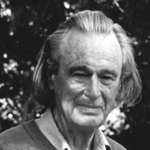 In 1983, five years after Mead had died, Derek Freeman
published Margaret Mead and Samoa: The Making and Unmaking of an Anthropological Myth, in which he challenged all of Mead's major findings. In 1988, he participated in the filming of Margaret Mead in Samoa, directed by Frank Heimans, which claims to document one of Mead's original informants, now an elderly woman, swearing that the information she and her friend provided Mead when they were teenagers was false.
Another account of Mead which Freeman attacked particularly was her claim that Samoan girls could and do lie about their status of virginity by the use of chicken blood. Freeman pointed out that virginity of the bride is so crucial to the status of Samoan man that they have specific ritual in which the bride's hymen is manually ruptured in public, by the groom himself or by the chief, making use of chicken blood impossible. On this ground, Freeman argued that Mead must have based her account on (false) hearsay from non Samoan sources.
The argument hinged on the place of the taupou system in Samoan society. According to Mead, the taupou system is one of institutionalized virginity for young women of high rank, and it is exclusive to women of high rank. According to Freeman, all Samoan women emulated the taupou system, and Mead's informants denied having engaged in casual sex as young women and claimed that they had lied to Mead.
Moreover, many field and comparative studies by anthropologists have since found that adolescence is not experienced in the same way in all societies. Systematic cross-cultural study of adolescence by Schlegel and Barry, for example, concluded that adolescents experience harmonious relations with their families in most non-industrialized societies around the world. They find that, when family members need each other throughout their lives, independence, as expressed in adolescent rebelliousness, is minimal and counterproductive. Adolescents are likely to be rebellious only in industrialized societies practicing neolocal residence patterns (in which young adults must move their residence away from their parents). Neolocal residence patterns result from young adults living in industrial societies who move to take new jobs or in similar geographically mobile populations. Thus, Mead's analysis of adolescent conflict is upheld in the comparative literature on societies worldwide.
First, these critics have speculated that he waited until Mead died before publishing his critique so that she would not be able to respond. In 1978, Freeman sent a revised manuscript to Mead, but she was ill and died a few months later without responding.
Second, Freeman's critics point out that, by the time he arrived on the scene, Mead's original informants were old women, grandmothers, and had converted to Christianity
, so their testimony to him may not have been accurate. They further allege that Samoan culture had changed considerably in the decades following Mead's original research, that after intense missionary activity many Samoans had come to adopt the same sexual standards as the Americans who were once so shocked by Mead's book. They suggested that such women, in this new context, were unlikely to speak frankly about their adolescent behavior. Further, they suggested that these women might not be as forthright and honest about their sexuality when speaking to an elderly man as they would have been speaking to a woman near their own age.
Some anthropologists criticized Freeman on methodological and empirical grounds. For example, they claimed that Freeman had conflated publicly articulated ideals with behavioral norms — that is, while many Samoan women would admit in public that it is ideal to remain a virgin, in practice they engaged in high levels of premarital sex and boasted about their sexual affairs among themselves. Freeman's own data documented the existence of premarital sexual activity in Samoa. In a western Samoan village he documented that 20% of 15-year-olds, 30% of 16-year-olds, and 40% of 17-year-olds had engaged in premarital sex. In 1983, the American Anthropological Association
held a special session to discuss Freeman's book; to which they did not invite him. Their criticism was made formal at the 82nd annual meeting of the American Anthropological Association the next month in Chicago, where a special session, to which Dr. Freeman was not invited, was held to discuss his book. They passed a motion declaring Freeman's Margaret Mead and Samoa "poorly written, unscientific, irresponsible and misleading." Freeman commented that "to seek to dispose of a major scientific issue by a show of hands is a striking demonstration of the way in which belief can come to dominate the thinking of scholars."
In the years that followed, anthropologists vigorously debated these issues. Notable scholars who challenged Freeman include Appell, Brady, Feinberg, Leacock, Levy, Marshall, Nardi, Patience, Paxman, Scheper-Hughes, Shankman, Young and Juan.
Much like Mead's work, Freeman's account has been challenged as being ideologically driven to support his own theoretical viewpoint (sociobiology
and interactionism
), as well as assigning Mead a high degree of gullibility and bias. Freeman's refutation of Samoan sexual mores has been challenged, in turn, as being based on public declarations of sexual morality, virginity, and taupou rather than on actual sexual practices within Samoan society during the period of Mead's research.
Lowell Holmes, who completed a lesser-publicized restudy commented later, "Mead was better able to identify with, and therefore establish rapport with, adolescents and young adults on issues of sexuality than either I (at age 29, married with a wife and child) or Freeman, ten years my senior."
Freeman continued to argue his case in the 1999 publication of The Fateful Hoaxing of Margaret Mead: A Historical Analysis of Her Samoan Research, introducing what he claimed was new information in support of his arguments.
Margaret Mead
Margaret Mead was an American cultural anthropologist, who was frequently a featured writer and speaker in the mass media throughout the 1960s and 1970s....
based upon her research and study of youth on the island of Ta'u
Tau, American Samoa
Ta‘ū is the largest island in the Manu‘a Group and the easternmost volcanic island of the Samoan Islands. Ta‘ū is part of American Samoa. In the early 19th century, the island was sometimes called Opoun....
in the Samoa Islands which primarily focused on adolescent girls. Mead was 23 years old when she carried out her field work in Samoa. First published in 1928, the book launched Mead as a pioneering researcher and the most famous anthropologist in the world. Since its first publication, Coming of Age in Samoa is still the most widely read book in the field of anthropology
Anthropology
Anthropology is the study of humanity. It has origins in the humanities, the natural sciences, and the social sciences. The term "anthropology" is from the Greek anthrōpos , "man", understood to mean mankind or humanity, and -logia , "discourse" or "study", and was first used in 1501 by German...
. The book has sparked years of ongoing and intense debate and controversy on questions pertaining to society, culture and science. It is a key text in the nature vs nurture debate as well as issues relating to family, adolescence, gender, social norms and attitudes.
The foreword is written by anthropologist, Franz Boas
Franz Boas
Franz Boas was a German-American anthropologist and a pioneer of modern anthropology who has been called the "Father of American Anthropology" and "the Father of Modern Anthropology." Like many such pioneers, he trained in other disciplines; he received his doctorate in physics, and did...
.
Foreword
In the foreword to Coming of Age in Samoa, Mead's advisor, Franz BoasFranz Boas
Franz Boas was a German-American anthropologist and a pioneer of modern anthropology who has been called the "Father of American Anthropology" and "the Father of Modern Anthropology." Like many such pioneers, he trained in other disciplines; he received his doctorate in physics, and did...
, wrote of its significance that,
Boas went on to point out that at the time of publication, many Americans had begun to discuss the problems faced by young people (particularly women) as they pass through adolescence
Adolescence
Adolescence is a transitional stage of physical and mental human development generally occurring between puberty and legal adulthood , but largely characterized as beginning and ending with the teenage stage...
as "unavoidable periods of adjustment." Boas felt that a study of the problems faced by adolescents in another culture would be illuminating.
Mead
Mead described the goal of her research: "I have tried to answer the question which sent me to SamoaSamoa
Samoa , officially the Independent State of Samoa, formerly known as Western Samoa is a country encompassing the western part of the Samoan Islands in the South Pacific Ocean. It became independent from New Zealand in 1962. The two main islands of Samoa are Upolu and one of the biggest islands in...
: Are the disturbances which vex our adolescents due to the nature of adolescence itself or to the civilization? Under different conditions does adolescence present a different picture?" To answer this question, she conducted her study among a small group of Samoa
Samoa
Samoa , officially the Independent State of Samoa, formerly known as Western Samoa is a country encompassing the western part of the Samoan Islands in the South Pacific Ocean. It became independent from New Zealand in 1962. The two main islands of Samoa are Upolu and one of the biggest islands in...
ns — a village of 600 people on the island of Ta‘ū — in which she got to know, lived with, observed, and interviewed (through an interpreter) 68 young women between the ages of 9 and 20. She concluded that the passage from childhood to adulthood (adolescence) in Samoa was a smooth transition and not marked by the emotional or psychological distress, anxiety, or confusion seen in the United States.
Mead concluded that this was due to the Samoan girl's belonging to a stable, monocultural society, surrounded by role models, and where nothing concerning the basic human facts of copulation, birth, bodily functions, or death, was hidden. The Samoan girl was not pressured to choose from among a variety of conflicting values, as was the American girl. Mead commented, somewhat satirically:
Reception
As Boas and Mead expected, this book upset many Westerners when it first appeared in 1928. Many American readers felt shocked by her observation that young Samoan women deferred marriage for many years while enjoying casual sexCasual sex
Casual sex or hooking up refers to certain types of human sexual activity outside the context of a romantic relationship. The term is not always used consistently: some use it to refer to any extramarital sex, some use it to refer to sex in a casual relationship, whereas others reserve its use for...
but eventually married, settled down, and successfully reared their own children.
The use of cross-cultural comparison to highlight issues within Western society was highly influential and contributed greatly to the heightened awareness of anthropology and ethnographic study in the USA. It established Mead as a substantial figure in American anthropology, a position she would maintain for the next fifty years.
As a landmark study regarding sexual mores, the book was also highly controversial and frequently came under attack on ideological and academic grounds. The National Catholic Register
National Catholic Register
Not to be confused with the National Catholic Reporter or the Catholic RegisterThe National Catholic Register is the oldest national Catholic newspaper in the United States. It was founded on 8 November 1927 by Msgr. Matthew J...
argued that Mead's findings were merely a projection of her own sexual beliefs and reflected her desire to eliminate restrictions on her own sexuality. The traditionalist conservative
Traditionalist Conservatism
Traditionalist conservatism, also known as "traditional conservatism," "traditionalism," "Burkean conservatism", "classical conservatism" and , "Toryism", describes a political philosophy emphasizing the need for the principles of natural law and transcendent moral order, tradition, hierarchy and...
Intercollegiate Studies Institute
Intercollegiate Studies Institute
The Intercollegiate Studies Institute, Inc., or ', is a non-profit educational organization founded in 1953 as the Intercollegiate Society of Individualists...
listed Coming of Age in Samoa as #1 in the list of what it thinks are the "50 Worst Books of the Twentieth Century". Anthropological critics, most notably Derek Freeman, claimed that Mead failed to apply the scientific method and that her assertions were unsupported.
Margaret Mead and Samoa
Derek Freeman
John Derek Freeman was a New Zealand anthropologist best known for his criticism of Margaret Mead's work in Samoan society, as described in her 1928 ethnography Coming of Age in Samoa...
published Margaret Mead and Samoa: The Making and Unmaking of an Anthropological Myth, in which he challenged all of Mead's major findings. In 1988, he participated in the filming of Margaret Mead in Samoa, directed by Frank Heimans, which claims to document one of Mead's original informants, now an elderly woman, swearing that the information she and her friend provided Mead when they were teenagers was false.
Another account of Mead which Freeman attacked particularly was her claim that Samoan girls could and do lie about their status of virginity by the use of chicken blood. Freeman pointed out that virginity of the bride is so crucial to the status of Samoan man that they have specific ritual in which the bride's hymen is manually ruptured in public, by the groom himself or by the chief, making use of chicken blood impossible. On this ground, Freeman argued that Mead must have based her account on (false) hearsay from non Samoan sources.
The argument hinged on the place of the taupou system in Samoan society. According to Mead, the taupou system is one of institutionalized virginity for young women of high rank, and it is exclusive to women of high rank. According to Freeman, all Samoan women emulated the taupou system, and Mead's informants denied having engaged in casual sex as young women and claimed that they had lied to Mead.
Anthropological reception and reactions
After an initial flurry of discussion, most anthropologists concluded that Freeman systematically misrepresented Mead's views on the relationship between nature and nurture, as well as the data on Samoan culture. According to Freeman's colleague Dr. Robin Fox, Freeman "seemed to have a special place in hell reserved for Margaret Mead, for reasons not at all clear at that time."Moreover, many field and comparative studies by anthropologists have since found that adolescence is not experienced in the same way in all societies. Systematic cross-cultural study of adolescence by Schlegel and Barry, for example, concluded that adolescents experience harmonious relations with their families in most non-industrialized societies around the world. They find that, when family members need each other throughout their lives, independence, as expressed in adolescent rebelliousness, is minimal and counterproductive. Adolescents are likely to be rebellious only in industrialized societies practicing neolocal residence patterns (in which young adults must move their residence away from their parents). Neolocal residence patterns result from young adults living in industrial societies who move to take new jobs or in similar geographically mobile populations. Thus, Mead's analysis of adolescent conflict is upheld in the comparative literature on societies worldwide.
First, these critics have speculated that he waited until Mead died before publishing his critique so that she would not be able to respond. In 1978, Freeman sent a revised manuscript to Mead, but she was ill and died a few months later without responding.
Second, Freeman's critics point out that, by the time he arrived on the scene, Mead's original informants were old women, grandmothers, and had converted to Christianity
Christianity
Christianity is a monotheistic religion based on the life and teachings of Jesus as presented in canonical gospels and other New Testament writings...
, so their testimony to him may not have been accurate. They further allege that Samoan culture had changed considerably in the decades following Mead's original research, that after intense missionary activity many Samoans had come to adopt the same sexual standards as the Americans who were once so shocked by Mead's book. They suggested that such women, in this new context, were unlikely to speak frankly about their adolescent behavior. Further, they suggested that these women might not be as forthright and honest about their sexuality when speaking to an elderly man as they would have been speaking to a woman near their own age.
Some anthropologists criticized Freeman on methodological and empirical grounds. For example, they claimed that Freeman had conflated publicly articulated ideals with behavioral norms — that is, while many Samoan women would admit in public that it is ideal to remain a virgin, in practice they engaged in high levels of premarital sex and boasted about their sexual affairs among themselves. Freeman's own data documented the existence of premarital sexual activity in Samoa. In a western Samoan village he documented that 20% of 15-year-olds, 30% of 16-year-olds, and 40% of 17-year-olds had engaged in premarital sex. In 1983, the American Anthropological Association
American Anthropological Association
The American Anthropological Association is a professional organization of scholars and practitioners in the field of anthropology. With 11,000 members, the Arlington, Virginia based association includes archaeologists, cultural anthropologists, biological anthropologists, linguistic...
held a special session to discuss Freeman's book; to which they did not invite him. Their criticism was made formal at the 82nd annual meeting of the American Anthropological Association the next month in Chicago, where a special session, to which Dr. Freeman was not invited, was held to discuss his book. They passed a motion declaring Freeman's Margaret Mead and Samoa "poorly written, unscientific, irresponsible and misleading." Freeman commented that "to seek to dispose of a major scientific issue by a show of hands is a striking demonstration of the way in which belief can come to dominate the thinking of scholars."
In the years that followed, anthropologists vigorously debated these issues. Notable scholars who challenged Freeman include Appell, Brady, Feinberg, Leacock, Levy, Marshall, Nardi, Patience, Paxman, Scheper-Hughes, Shankman, Young and Juan.
Much like Mead's work, Freeman's account has been challenged as being ideologically driven to support his own theoretical viewpoint (sociobiology
Sociobiology
Sociobiology is a field of scientific study which is based on the assumption that social behavior has resulted from evolution and attempts to explain and examine social behavior within that context. Often considered a branch of biology and sociology, it also draws from ethology, anthropology,...
and interactionism
Interactionism
In sociology, interactionism is a theoretical perspective that derives social processes from human interaction. It is the study of individuals and how they act within society. Interactionist theory has grown in the latter half of the twentieth century and has become one of the dominant...
), as well as assigning Mead a high degree of gullibility and bias. Freeman's refutation of Samoan sexual mores has been challenged, in turn, as being based on public declarations of sexual morality, virginity, and taupou rather than on actual sexual practices within Samoan society during the period of Mead's research.
Lowell Holmes, who completed a lesser-publicized restudy commented later, "Mead was better able to identify with, and therefore establish rapport with, adolescents and young adults on issues of sexuality than either I (at age 29, married with a wife and child) or Freeman, ten years my senior."
Freeman continued to argue his case in the 1999 publication of The Fateful Hoaxing of Margaret Mead: A Historical Analysis of Her Samoan Research, introducing what he claimed was new information in support of his arguments.
See also
- Culture of SamoaCulture of SamoaThe traditional culture of Samoa is a communal way of life based on Fa'a Samoa, the unique socio-political culture of Samoa. In Samoan culture, most activities are done together. There are 3 main parts in the Samoan culture, that is faith, family and music.The traditional living quarters, or fale ,...
- HereticHeretic (play)Heretic is a 1996 play by Australian playwright David Williamson.The play explores Derek Freeman's reaction to Margaret Mead's Coming of Age in Samoa...
- A play by Australian playwright David WilliamsonDavid WilliamsonDavid Keith Williamson AO is one of Australia's best-known playwrights. He has also written screenplays and teleplays.-Biography:...
on the controversy.
Videos
- Margaret Mead and Samoa; review of the nature vs. nurture debate triggered by Coming of Age in Samoa
Notations
- Mary Catherine BatesonMary Catherine BatesonMary Catherine Bateson is an American writer and cultural anthropologist.A graduate of the Brearley School, Bateson is the daughter of Margaret Mead and Gregory Bateson. Since 1960, she has been married to Barkev Kassarjian, a professor of business management at Babson College...
, With a Daughter's Eye. 1984 ISBN 0-688-03962-6, (2003 ppb ISBN 0-06-097573-3) - Hiram CatonHiram CatonHiram Caton was Professor of politics and history at Griffith University, Brisbane, Australia, until his retirement. He is an ethicist and AIDS denialist, a Fellow of the Australian Institute of Biology , a founding member of the Association for Politics and the Life Sciences, and was an officer...
, Editor (1990). "The Samoa Reader: Anthropologists Take Stock". University Press of America. ISBN 0-8191-7720-2. - Leonora Foerstel and Angela Gilliam (eds) (1992). Confronting the Margaret Mead Legacy: Scholarship, Empire and the South Pacific. Philadelphia: Temple University Press
- Derek FreemanDerek FreemanJohn Derek Freeman was a New Zealand anthropologist best known for his criticism of Margaret Mead's work in Samoan society, as described in her 1928 ethnography Coming of Age in Samoa...
(1983). Margaret Mead and Samoa. Cambridge, London: Harvard University Press. ISBN 0-674-54830-2. - Derek FreemanDerek FreemanJohn Derek Freeman was a New Zealand anthropologist best known for his criticism of Margaret Mead's work in Samoan society, as described in her 1928 ethnography Coming of Age in Samoa...
(1999). The Fateful Hoaxing of Margaret Mead: A Historical Analysis of Her Samoan Research. Boulder, Colorado: Westview Press. ISBN 0-8133-3693-7. - Hilary Lapsley (1999) Margaret Mead and Ruth Benedict: The Kinship of Women University of Massachusetts Press. ISBN 1-55849-181-3
- Lowell D. Holmes (1987) Quest for the Real Samoa: the Mead/Freeman Controversy and Beyond. South Hadley: Bergin and Garvey
- Howard, Jane (1984) Margaret Mead: A Life. New York: Simon and Schuster.
- Roger Sandall 2001 The Culture Cult: Designer Tribalism and Other Essays ISBN 0-8133-3863-8
- Schlegal, Alice and Herbert Barry III 1991 "Adolescence: An anthropological inquiry". New York: Free Press. ISBN 978-0029278956.
- Brad Shore 1982 Sala'ilua: A Samoan Mystery New York: Columbia University Press.
- Mary E. Virginia, "DISCovering U.S. History", Benedict, Ruth (1887–1948), online edition, (ed Detroit: Gale), 2003