


Dartmouth Medical School

Encyclopedia
Dartmouth Medical School (DMS) is the medical school
of Dartmouth College
, located in Hanover, New Hampshire
, in the United States. The fourth-oldest medical school in the United States
, Dartmouth Medical School was founded in 1797 by New England
physician Nathan Smith
and grew steadily over the course of the 19th century. In the early 1900s, it was forced to cease granting the Doctor of Medicine
(M.D.) degree. After further problems in the 1950s, the clinical M.D. program was reinstated and the school returned to national prominence for its academics and research. Several milestones in medical care and research have taken place at DMS, including the first clinical X-ray
(1896), the first intensive care unit
in the United States (1955), and the Brattleboro rat
(1961).
Today, Dartmouth Medical School continues to grant the M.D. and Doctor of Philosophy
(Ph.D) degrees, as well as a Master of Public Health
(MPH) and Master of Science
(M.S.) degrees. The school has a student body of about 620 students and more than 2,300 faculty members and researchers. As part of the Dartmouth-Hitchcock Medical Center
, DMS organizes research through over a dozen research centers and institutes, receiving more than US$100 million in grants annually. DMS is one of seven Ivy League
medical schools and is ranked
as a "top medical school" by U.S. News & World Report
for both primary care
and biomedical research
.
.jpg)
(founded 1765), the medical school of King's College
(now Columbia University
) (1767), and Harvard Medical School
(1782). The founder was Nathan Smith
, a Harvard University
-educated physician from Cornish, New Hampshire
. Noting the dearth of medical professionals in the rural Connecticut River
Upper Valley area, Smith petitioned the Board of Trustees of Dartmouth College
in August 1796 to fund the establishment of a medical school to train more physicians for the region. Though Dartmouth College
as a whole was financially strapped, the Board approved the request, and Smith began lecturing on November 22, 1797.
For much of its early life, Dartmouth Medical School consisted only of Nathan Smith and a small class of students, operating in borrowed space at Dartmouth College. Students of Smith were educated as apprentices
, and received a Bachelor of Medicine degree upon graduation. Like Dartmouth College as a whole, DMS had continual funding shortages. As time passed, however, the popularity of both the medical instruction and the basic sciences taught at the school drew undergraduates and training physicians alike. Soliciting funds from the state of New Hampshire
, Smith was able to obtain medical equipment and, by 1811, a dedicated physical plant for the school.
Smith acted as the sole administrator and instructor of the medical school until 1810, when a second faculty member was hired. Smith also revamped the curriculum, allowing the school to begin offering the Doctor of Medicine
(M.D.) degree in 1812. Smith ultimately left DMS in 1816, founding three additional schools of medicine at Yale University
, Bowdoin College
, and the University of Vermont
.
to join them. The first hospital at Dartmouth Medical School was founded by DMS alumnus Dixi Crosby in 1838, who used it to integrate academic instruction with hands-on patient care. In 1870, Carlton Pennington Frost, DMS '57, replaced Crosby as Dean of the school. Under Frost, the curriculum sustained another revamping, this time into a four-year program that included clinical and academic training. Frost also presided over the establishment of Mary Hitchcock Memorial Hospital in 1893, built to replace Crosby's defunct hospital.
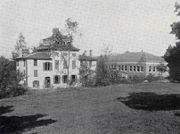 In 1908, The Carnegie Foundation for the Advancement of Teaching
conducted a survey of medical education institutions in the United States. At the time, the discipline emphasized "bedside teaching" and providing students experience with a broad variety of illnesses and patients. Dartmouth Medical School's rural location was deemed too remote for proper clinical training, and the school was advised to stop offering the Doctor of Medicine degree and only provide pre-clinical instruction. The class of 1914 was the last (until 1974) to receive the Doctor of Medicine degree; subsequent classes of students attended DMS for two years before transferring to other medical schools. The drop of clinical instruction worsened the school's problems by driving away talented faculty members.
After World War II
, the tide of the medical discipline had shifted towards research. Although Dartmouth Medical School was well regarded for preparing students for clinical education at other institutions, its faculty was criticized for its apparent disinterest in research. The school was also criticized for using Dartmouth College
's undergraduate program as a feeder school
. Based on these criticisms, DMS was placed on "confidential probation" in 1956 by the Association of American Medical Colleges
and the Council on Medical Education.
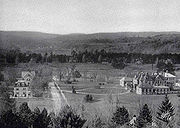 At the time of the probation, Dartmouth College had already anticipated the medical school's plight, amassing capital
to fund a revitalization of the school. In 1956, the trustees of the College formally agreed to a "refounding" of Dartmouth Medical School's academic offerings, physical facilities, and faculty. S. Marsh Tenney, DMS class of 1944, was appointed to carry out this task. Tenney more than doubled the size of the faculty and the student body, added several new departments, and oversaw the construction of five new campus buildings by 1964.
In the 1960s, due to a national shortage of physicians and government incentive
s for schools that increased their class sizes, Dartmouth Medical School graduates began to experience difficulty in trying to transfer to other medical school to complete their final two years of medical school as other medical schools had increased their class size and could not accommodate transfer students. In the meantime, Mary Hitchcock Memorial Hospital had grown to be a 400-bed medical center, and Dartmouth Medical School had established a partnership with a 224-bed Veterans Administration Hospital in White River Junction, Vermont
. The Doctor of Medicine program, now possible with the expanded local medical centers, was reinstated by a vote of the trustees in 1968. The admission of M.D. candidates resumed in 1970. Initially, the medical school curriculum was three years in length, unlike most medical schools, but it later was increased to the usual four years in 1979.
A cooperative program with Brown Medical School
began in 1981 where students received training at both medical schools. Fifteen to twenty students were selected for the program, which combined the first two years of basic science coursework at Dartmouth with the final two years of clinical coursework at Brown. The program balanced Dartmouth's greater basic science facilities than Brown, but fewer clinical facilities than available at the urban setting of Brown, which is located in Providence, Rhode Island. Graduates of the program received M.D. degrees from Brown. The program will be discontinued in 2010.
In 1991, the Dartmouth-Hitchcock Medical Center
was established on a 225 acre (0.9105435 km²) campus in Lebanon, New Hampshire
. The three-year project, completed at the cost of $228 million, served as a replacement for the Mary Hitchcock Memorial Hospital, which was partially demolished in the early 1990s. A new curriculum was introduced in 1996 entitled "New Directions." The curriculum, still in place today, seeks to promote small classes, reduce the amount of lectures, and offer students extensive interactive experience with patients. 2009 saw the successful completion of a $250 million capital campaign
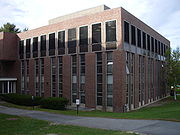
Dartmouth Medical School has facilities on the campus of Dartmouth College
, which is situated in the rural, Upper Valley town of Hanover, New Hampshire
as well as at Dartmouth-Hitchcock Medical Center
(DHMC).
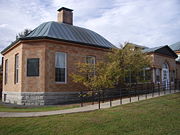
The medical school facilities at Dartmouth College sits in a complex on the north side of Dartmouth's campus and includes academic, administrative, research, and presentation facilities. DMS is served by two libraries, the Dana Biomedical Library and the Matthews-Fuller Health Sciences Library, which together offer 240,000 volumes. DMS does not offer on-campus housing; however, off-campus housing is available through Dartmouth College. In addition, the Class of 1978 Life Sciences Center is expected to be completed in August 2011 at a cost of $92 million, and as part of its design a central lawn will be created surrounded by the Remsen and Vail Laboratories and Dana.
The Dartmouth-Hitchcock Medical Center, centered in nearby Lebanon, New Hampshire
, is the umbrella medical organization of which Dartmouth Medical School is a constituent part. Mary Hitchcock Memorial Hospital, DHMC's 396-bed inpatient facility, acts as the medical school's teaching hospital
and "primary teaching site". DHMC's other constituent elements include the Dartmouth-Hitchcock Clinic (a network of physicians in Vermont and New Hampshire) and a Veterans Affairs Medical Center in White River Junction, Vermont
. In total, DHMC serves an area with a population of 1.6 million.
In addition to on-campus instruction in Hanover and Lebanon, third- and fourth-year M.D. students may choose from 75 regional sites for their required clerkships. Most clerkship facilities are located in central New England
, although students are also able to clerk at sites in Alaska
, California
, New Mexico
, and Florida
.
Dartmouth Medical School offers the four-year Doctor of Medicine
(M.D.) degree and the Doctor of Philosophy
(Ph.D) degree in certain fields. In addition, the school offers two joint-degree programs: the combination M.D./Ph.D., for which the Ph.D. can be obtained from any doctoral program at Dartmouth, and the combination MD/MBA, offered in conjunction with the Tuck School of Business
. The Dartmouth Institute for Health Policy and Clinical Practice
, one of a number of DMS research institutes, offers its own degree programs in evaluative clinical sciences, including a Master of Public Health
(MPH), a Master of Science
(M.S.), a Ph.D., post-doctoral fellowships, several joint-degree programs, and a residency program for preventive medicine
. Mary Hitchcock Memorial Hospital also offers residencies and fellowships which are administered by Dartmouth Medical School faculty.
The curriculum for the Doctor of Medicine degree spans four years, combining required courses with electives. First-year students learn human anatomy
and basic biomedical
science in classes offered by the basic science departments, while beginning a two-year course of study in clinical studies. Second-year students study pathophysiology
and take courses from almost every clinical and basic science department in the school. In their third year, M.D. candidates are required to participate in six eight-week Medical clerkship
s with area medical institutions, covering both ambulatory clinics
and hospital
s. The final year is spent on additional clerkships, the designation of an area of focus, and preparation for a post-graduation residency
. In addition to imparting medical and clinical knowledge, the M.D. program is designed to teach "interpersonal and communications skills", "professionalism", and other practical skills for a medical career.
Dartmouth Medical School also offers the Doctor of Philosophy degree to train students as biomedical research
ers and scientists. The Ph.D. is available in six fields offered by the basic science departments: pharmacology
and toxicology
, molecular
and cell biology
, immunology
, molecular pathogenesis
, systems biology
, and experimental and molecular medicine
. Research and teaching positions at DMS and its centers and institutes are available to Ph.D. candidates.
. As part of the larger institution, DMS is ultimately administered by Dartmouth's President and Board of Trustees
. The school is directly managed by a Dean who is advised by a fourteen-member Board of Overseers. , the school operates on a budget of $237 million.
Besides research conducted within the infrastructure of academic departments, research at DMS and DHMC is also organized around over a dozen research centers and institutes. The centers cover various medical subjects such as neuroscience
, oncology
(Norris Cotton Cancer Center
), psychiatry
, and pediatrics
. Funded research at Dartmouth Medical School amounted to $123 million during the 2006-2007 academic year; the school claims to be in the top 10% of American medical schools in terms of "basic science research funding on a per faculty member basis."
 In the fall of 2009, 84 students enrolled in the Doctor of Medicine program from an applicant pool of 5,294, with the Office of Admissions offering an acceptance rate of 7 percent. Applicants from the previous year had an average score in the numerically graded sections of Medical College Admission Test
(MCAT) of 34 and an average undergraduate grade point average (GPA) of 3.8. Applicants to the M.D. program are expected to have a background in chemistry
, biology
, physics
, and calculus
, and are required to have at least three years of undergraduate education.
Dartmouth Medical School is accredited by the Liaison Council on Medical Education. None of the residencies programs of Mary Hitchcock Medical Center, which are administered by Dartmouth Medical School faculty, are on probation by the Accreditation Council for Graduate Medical Education.
For 2011, Dartmouth Medical School was ranked by U.S. News & World Report
as 67th on the "Top Medical Schools - Primary Care" list and 32nd on the "Top Medical Schools - Research" list.
or minority
students. From an average class size of 75, over 60 undergraduate institutions and most of the U.S. states are represented. According to The Princeton Review
, the small class size at DMS helps to establish "a strong sense of community and collaborative spirit". The school offers about a dozen community service
, recreational, professional, and other student groups.
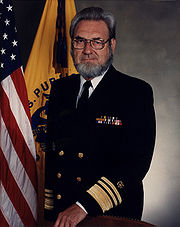
As of November 2007, Dartmouth Medical School employs a staff of 2,315 faculty and researchers: 766 full-time faculty, 1,301 part-time faculty and non-faculty instructors, and 248 research positions. The ratio of full-time, on-site faculty to students is given by the school as 2:1. Notable current faculty include Stuart Gitlow
, former Surgeon General of the United States
C. Everett Koop
, palliative care
physician Ira Byock
, former astronaut and Democratic politician Jay C. Buckey
, psychoanalyst Peter A. Olsson
, and biochemist William T. Wickner
. Notable former faculty include biochemist Mahlon Hoagland
and pathologist and geneticist Kurt Benirschke
.
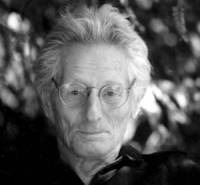
As of June 2009, Dartmouth Medical School claims 4,505 living graduates active in medicine around the world. DMS cites its required clerkships as a mechanism for allowing students to make connections and obtain real-world experience. Fourth-year students are prepared for residency with counseling classes; recent graduates have most commonly taken their residencies at Dartmouth Medical School itself, the Harvard Medical School
, the Tufts University School of Medicine
, and Brown Medical School
.
Alumni of Dartmouth Medical School who have become notable medical practitioners and researchers include physician and freethinker
Charles Knowlton
, consciousness
researcher John C. Lilly
, physician Robert O. Blood
, ophthalmologist and epidemiologist John D. Bullock, and attending physician
at the United States Capitol
John Francis Eisold
. Alumni in other fields include U.S. Representatives Richard S. Molony
and Robert Burns
, Governor of New Hampshire Noah Martin
, and television personality Ian Smith
.
Medical school
A medical school is a tertiary educational institution—or part of such an institution—that teaches medicine. Degree programs offered at medical schools often include Doctor of Osteopathic Medicine, Bachelor/Doctor of Medicine, Doctor of Philosophy, master's degree, or other post-secondary...
of Dartmouth College
Dartmouth College
Dartmouth College is a private, Ivy League university in Hanover, New Hampshire, United States. The institution comprises a liberal arts college, Dartmouth Medical School, Thayer School of Engineering, and the Tuck School of Business, as well as 19 graduate programs in the arts and sciences...
, located in Hanover, New Hampshire
Hanover, New Hampshire
Hanover is a town along the Connecticut River in Grafton County, New Hampshire, United States. The population was 11,260 at the 2010 census. CNN and Money magazine rated Hanover the sixth best place to live in America in 2011, and the second best in 2007....
, in the United States. The fourth-oldest medical school in the United States
Medical school in the United States
Medical school in the United States is a four year graduate institution with the purpose of educating physicians in the field of medicine. It provides a major part of the medical education in the United States.-History:...
, Dartmouth Medical School was founded in 1797 by New England
New England
New England is a region in the northeastern corner of the United States consisting of the six states of Maine, New Hampshire, Vermont, Massachusetts, Rhode Island, and Connecticut...
physician Nathan Smith
Nathan Smith (physician)
Nathan Smith was one of New England’s best-known and respected physicians. He was a skilled surgeon, teacher, writer, and practitioner...
and grew steadily over the course of the 19th century. In the early 1900s, it was forced to cease granting the Doctor of Medicine
Doctor of Medicine
Doctor of Medicine is a doctoral degree for physicians. The degree is granted by medical schools...
(M.D.) degree. After further problems in the 1950s, the clinical M.D. program was reinstated and the school returned to national prominence for its academics and research. Several milestones in medical care and research have taken place at DMS, including the first clinical X-ray
X-ray
X-radiation is a form of electromagnetic radiation. X-rays have a wavelength in the range of 0.01 to 10 nanometers, corresponding to frequencies in the range 30 petahertz to 30 exahertz and energies in the range 120 eV to 120 keV. They are shorter in wavelength than UV rays and longer than gamma...
(1896), the first intensive care unit
Intensive Care Unit
thumb|220px|ICU roomAn intensive-care unit , critical-care unit , intensive-therapy unit/intensive-treatment unit is a specialized department in a hospital that provides intensive-care medicine...
in the United States (1955), and the Brattleboro rat
Brattleboro rat
The Brattleboro rat is a strain of laboratory rat descended from a litter born in West Brattleboro, Vermont in 1961 without the ability to produce the hormone vasopressin, which helps control kidney function. The rats' lack of vasopressin was the result of a naturally occurring genetic mutation.The...
(1961).
Today, Dartmouth Medical School continues to grant the M.D. and Doctor of Philosophy
Doctor of Philosophy
Doctor of Philosophy, abbreviated as Ph.D., PhD, D.Phil., or DPhil , in English-speaking countries, is a postgraduate academic degree awarded by universities...
(Ph.D) degrees, as well as a Master of Public Health
Master of Public Health
The Master of Public Health and the Doctor of Public Health are multi-disciplinary professional degrees awarded for studies in areas related to public health....
(MPH) and Master of Science
Master of Science
A Master of Science is a postgraduate academic master's degree awarded by universities in many countries. The degree is typically studied for in the sciences including the social sciences.-Brazil, Argentina and Uruguay:...
(M.S.) degrees. The school has a student body of about 620 students and more than 2,300 faculty members and researchers. As part of the Dartmouth-Hitchcock Medical Center
Dartmouth-Hitchcock Medical Center
Dartmouth-Hitchcock Medical Center is New Hampshire's only academic medical center and is headquartered on a campus in the heart of the Upper Connecticut River Valley, in Lebanon, New Hampshire....
, DMS organizes research through over a dozen research centers and institutes, receiving more than US$100 million in grants annually. DMS is one of seven Ivy League
Ivy League
The Ivy League is an athletic conference comprising eight private institutions of higher education in the Northeastern United States. The conference name is also commonly used to refer to those eight schools as a group...
medical schools and is ranked
College and university rankings
College and university rankings are lists of institutions in higher education, ordered by combinations of factors. In addition to entire institutions, specific programs, departments, and schools are ranked...
as a "top medical school" by U.S. News & World Report
U.S. News & World Report
U.S. News & World Report is an American news magazine published from Washington, D.C. Along with Time and Newsweek it was for many years a leading news weekly, focusing more than its counterparts on political, economic, health and education stories...
for both primary care
Primary care
Primary care is the term for the health services by providers who act as the principal point of consultation for patients within a health care system...
and biomedical research
Biomedical research
Biomedical research , in general simply known as medical research, is the basic research, applied research, or translational research conducted to aid and support the body of knowledge in the field of medicine...
.
History
Foundation and early years
Dartmouth Medical School was founded in 1797 as the fourth medical school in the United States, following the University of Pennsylvania School of MedicineUniversity of Pennsylvania School of Medicine
The Perelman School of Medicine , formerly the University of Pennsylvania School of Medicine, was founded in 1765, making it the oldest American medical school. As part of the University of Pennsylvania, it is located in the University City section of Philadelphia, Pennsylvania. It is widely...
(founded 1765), the medical school of King's College
Columbia College of Columbia University
Columbia College is the oldest undergraduate college at Columbia University, situated on the university's main campus in Morningside Heights in the borough of Manhattan in New York City. It was founded in 1754 by the Church of England as King's College, receiving a Royal Charter from King George II...
(now Columbia University
Columbia University
Columbia University in the City of New York is a private, Ivy League university in Manhattan, New York City. Columbia is the oldest institution of higher learning in the state of New York, the fifth oldest in the United States, and one of the country's nine Colonial Colleges founded before the...
) (1767), and Harvard Medical School
Harvard Medical School
Harvard Medical School is the graduate medical school of Harvard University. It is located in the Longwood Medical Area of the Mission Hill neighborhood of Boston, Massachusetts....
(1782). The founder was Nathan Smith
Nathan Smith (physician)
Nathan Smith was one of New England’s best-known and respected physicians. He was a skilled surgeon, teacher, writer, and practitioner...
, a Harvard University
Harvard University
Harvard University is a private Ivy League university located in Cambridge, Massachusetts, United States, established in 1636 by the Massachusetts legislature. Harvard is the oldest institution of higher learning in the United States and the first corporation chartered in the country...
-educated physician from Cornish, New Hampshire
Cornish, New Hampshire
Cornish is a town in Sullivan County, New Hampshire, United States. The population was 1,640 at the 2010 census. Cornish has three covered bridges. Each August, it is home to the Cornish Fair.-History:...
. Noting the dearth of medical professionals in the rural Connecticut River
Connecticut River
The Connecticut River is the largest and longest river in New England, and also an American Heritage River. It flows roughly south, starting from the Fourth Connecticut Lake in New Hampshire. After flowing through the remaining Connecticut Lakes and Lake Francis, it defines the border between the...
Upper Valley area, Smith petitioned the Board of Trustees of Dartmouth College
Board of Trustees of Dartmouth College
The Board of Trustees of Dartmouth College is the governing body of Dartmouth College, an Ivy League university located in Hanover, New Hampshire, United States. , the Board includes twenty-three people...
in August 1796 to fund the establishment of a medical school to train more physicians for the region. Though Dartmouth College
Dartmouth College
Dartmouth College is a private, Ivy League university in Hanover, New Hampshire, United States. The institution comprises a liberal arts college, Dartmouth Medical School, Thayer School of Engineering, and the Tuck School of Business, as well as 19 graduate programs in the arts and sciences...
as a whole was financially strapped, the Board approved the request, and Smith began lecturing on November 22, 1797.
For much of its early life, Dartmouth Medical School consisted only of Nathan Smith and a small class of students, operating in borrowed space at Dartmouth College. Students of Smith were educated as apprentices
Apprenticeship
Apprenticeship is a system of training a new generation of practitioners of a skill. Apprentices or protégés build their careers from apprenticeships...
, and received a Bachelor of Medicine degree upon graduation. Like Dartmouth College as a whole, DMS had continual funding shortages. As time passed, however, the popularity of both the medical instruction and the basic sciences taught at the school drew undergraduates and training physicians alike. Soliciting funds from the state of New Hampshire
New Hampshire
New Hampshire is a state in the New England region of the northeastern United States of America. The state was named after the southern English county of Hampshire. It is bordered by Massachusetts to the south, Vermont to the west, Maine and the Atlantic Ocean to the east, and the Canadian...
, Smith was able to obtain medical equipment and, by 1811, a dedicated physical plant for the school.
Smith acted as the sole administrator and instructor of the medical school until 1810, when a second faculty member was hired. Smith also revamped the curriculum, allowing the school to begin offering the Doctor of Medicine
Doctor of Medicine
Doctor of Medicine is a doctoral degree for physicians. The degree is granted by medical schools...
(M.D.) degree in 1812. Smith ultimately left DMS in 1816, founding three additional schools of medicine at Yale University
Yale University
Yale University is a private, Ivy League university located in New Haven, Connecticut, United States. Founded in 1701 in the Colony of Connecticut, the university is the third-oldest institution of higher education in the United States...
, Bowdoin College
Bowdoin College
Bowdoin College , founded in 1794, is an elite private liberal arts college located in the coastal Maine town of Brunswick, Maine. As of 2011, U.S. News and World Report ranks Bowdoin 6th among liberal arts colleges in the United States. At times, it was ranked as high as 4th in the country. It is...
, and the University of Vermont
University of Vermont
The University of Vermont comprises seven undergraduate schools, an honors college, a graduate college, and a college of medicine. The Honors College does not offer its own degrees; students in the Honors College concurrently enroll in one of the university's seven undergraduate colleges or...
.
Expansion and difficulties
Smith's departure provided for a period of expansion, both among the faculty and the student body. Former students of Nathan Smith's replaced him on the faculty, drawing medical professionals in the northeast such as Oliver Wendell Holmes, Sr.Oliver Wendell Holmes, Sr.
Oliver Wendell Holmes, Sr. was an American physician, professor, lecturer, and author. Regarded by his peers as one of the best writers of the 19th century, he is considered a member of the Fireside Poets. His most famous prose works are the "Breakfast-Table" series, which began with The Autocrat...
to join them. The first hospital at Dartmouth Medical School was founded by DMS alumnus Dixi Crosby in 1838, who used it to integrate academic instruction with hands-on patient care. In 1870, Carlton Pennington Frost, DMS '57, replaced Crosby as Dean of the school. Under Frost, the curriculum sustained another revamping, this time into a four-year program that included clinical and academic training. Frost also presided over the establishment of Mary Hitchcock Memorial Hospital in 1893, built to replace Crosby's defunct hospital.
The Carnegie Foundation for the Advancement of Teaching
Founded by Andrew Carnegie in 1905 and chartered in 1906 by an act of the United States Congress, the Carnegie Foundation for the Advancement of Teaching is an independent policy and research center, whose primary activities of research and writing have resulted in published reports on every level...
conducted a survey of medical education institutions in the United States. At the time, the discipline emphasized "bedside teaching" and providing students experience with a broad variety of illnesses and patients. Dartmouth Medical School's rural location was deemed too remote for proper clinical training, and the school was advised to stop offering the Doctor of Medicine degree and only provide pre-clinical instruction. The class of 1914 was the last (until 1974) to receive the Doctor of Medicine degree; subsequent classes of students attended DMS for two years before transferring to other medical schools. The drop of clinical instruction worsened the school's problems by driving away talented faculty members.
After World War II
World War II
World War II, or the Second World War , was a global conflict lasting from 1939 to 1945, involving most of the world's nations—including all of the great powers—eventually forming two opposing military alliances: the Allies and the Axis...
, the tide of the medical discipline had shifted towards research. Although Dartmouth Medical School was well regarded for preparing students for clinical education at other institutions, its faculty was criticized for its apparent disinterest in research. The school was also criticized for using Dartmouth College
Dartmouth College
Dartmouth College is a private, Ivy League university in Hanover, New Hampshire, United States. The institution comprises a liberal arts college, Dartmouth Medical School, Thayer School of Engineering, and the Tuck School of Business, as well as 19 graduate programs in the arts and sciences...
's undergraduate program as a feeder school
Feeder school
Feeder school is a name applied to schools, colleges, universities, or other educational institutions that provide a significant number of graduates who intend to continue their studies at specific schools, or even in specific fields....
. Based on these criticisms, DMS was placed on "confidential probation" in 1956 by the Association of American Medical Colleges
Association of American Medical Colleges
The Association of American Medical Colleges is a non-profit organization based in Washington, DC and established in 1876. It administers the Medical College Admission Test...
and the Council on Medical Education.
From the "refounding" to present
Capital (economics)
In economics, capital, capital goods, or real capital refers to already-produced durable goods used in production of goods or services. The capital goods are not significantly consumed, though they may depreciate in the production process...
to fund a revitalization of the school. In 1956, the trustees of the College formally agreed to a "refounding" of Dartmouth Medical School's academic offerings, physical facilities, and faculty. S. Marsh Tenney, DMS class of 1944, was appointed to carry out this task. Tenney more than doubled the size of the faculty and the student body, added several new departments, and oversaw the construction of five new campus buildings by 1964.
In the 1960s, due to a national shortage of physicians and government incentive
Incentive
In economics and sociology, an incentive is any factor that enables or motivates a particular course of action, or counts as a reason for preferring one choice to the alternatives. It is an expectation that encourages people to behave in a certain way...
s for schools that increased their class sizes, Dartmouth Medical School graduates began to experience difficulty in trying to transfer to other medical school to complete their final two years of medical school as other medical schools had increased their class size and could not accommodate transfer students. In the meantime, Mary Hitchcock Memorial Hospital had grown to be a 400-bed medical center, and Dartmouth Medical School had established a partnership with a 224-bed Veterans Administration Hospital in White River Junction, Vermont
White River Junction, Vermont
White River Junction is an unincorporated village and census-designated place in the town of Hartford in Windsor County, Vermont, United States...
. The Doctor of Medicine program, now possible with the expanded local medical centers, was reinstated by a vote of the trustees in 1968. The admission of M.D. candidates resumed in 1970. Initially, the medical school curriculum was three years in length, unlike most medical schools, but it later was increased to the usual four years in 1979.
A cooperative program with Brown Medical School
Brown Medical School
The Warren Alpert Medical School is the medical school of Brown University, located in Providence, Rhode Island, United States. First established in 1811, the school was suspended after sixteen years of operation by university President Francis Wayland. The medical school was reinstated in 1975...
began in 1981 where students received training at both medical schools. Fifteen to twenty students were selected for the program, which combined the first two years of basic science coursework at Dartmouth with the final two years of clinical coursework at Brown. The program balanced Dartmouth's greater basic science facilities than Brown, but fewer clinical facilities than available at the urban setting of Brown, which is located in Providence, Rhode Island. Graduates of the program received M.D. degrees from Brown. The program will be discontinued in 2010.
In 1991, the Dartmouth-Hitchcock Medical Center
Dartmouth-Hitchcock Medical Center
Dartmouth-Hitchcock Medical Center is New Hampshire's only academic medical center and is headquartered on a campus in the heart of the Upper Connecticut River Valley, in Lebanon, New Hampshire....
was established on a 225 acre (0.9105435 km²) campus in Lebanon, New Hampshire
Lebanon, New Hampshire
As of the census of 2000, there were 12,568 people, 5,500 households, and 3,178 families residing in the city. The population density was 311.4 people per square mile . There were 5,707 housing units at an average density of 141.4 per square mile...
. The three-year project, completed at the cost of $228 million, served as a replacement for the Mary Hitchcock Memorial Hospital, which was partially demolished in the early 1990s. A new curriculum was introduced in 1996 entitled "New Directions." The curriculum, still in place today, seeks to promote small classes, reduce the amount of lectures, and offer students extensive interactive experience with patients. 2009 saw the successful completion of a $250 million capital campaign
Campus
Dartmouth Medical School has facilities on the campus of Dartmouth College
Dartmouth College
Dartmouth College is a private, Ivy League university in Hanover, New Hampshire, United States. The institution comprises a liberal arts college, Dartmouth Medical School, Thayer School of Engineering, and the Tuck School of Business, as well as 19 graduate programs in the arts and sciences...
, which is situated in the rural, Upper Valley town of Hanover, New Hampshire
Hanover, New Hampshire
Hanover is a town along the Connecticut River in Grafton County, New Hampshire, United States. The population was 11,260 at the 2010 census. CNN and Money magazine rated Hanover the sixth best place to live in America in 2011, and the second best in 2007....
as well as at Dartmouth-Hitchcock Medical Center
Dartmouth-Hitchcock Medical Center
Dartmouth-Hitchcock Medical Center is New Hampshire's only academic medical center and is headquartered on a campus in the heart of the Upper Connecticut River Valley, in Lebanon, New Hampshire....
(DHMC).
The medical school facilities at Dartmouth College sits in a complex on the north side of Dartmouth's campus and includes academic, administrative, research, and presentation facilities. DMS is served by two libraries, the Dana Biomedical Library and the Matthews-Fuller Health Sciences Library, which together offer 240,000 volumes. DMS does not offer on-campus housing; however, off-campus housing is available through Dartmouth College. In addition, the Class of 1978 Life Sciences Center is expected to be completed in August 2011 at a cost of $92 million, and as part of its design a central lawn will be created surrounded by the Remsen and Vail Laboratories and Dana.
The Dartmouth-Hitchcock Medical Center, centered in nearby Lebanon, New Hampshire
Lebanon, New Hampshire
As of the census of 2000, there were 12,568 people, 5,500 households, and 3,178 families residing in the city. The population density was 311.4 people per square mile . There were 5,707 housing units at an average density of 141.4 per square mile...
, is the umbrella medical organization of which Dartmouth Medical School is a constituent part. Mary Hitchcock Memorial Hospital, DHMC's 396-bed inpatient facility, acts as the medical school's teaching hospital
Teaching hospital
A teaching hospital is a hospital that provides clinical education and training to future and current doctors, nurses, and other health professionals, in addition to delivering medical care to patients...
and "primary teaching site". DHMC's other constituent elements include the Dartmouth-Hitchcock Clinic (a network of physicians in Vermont and New Hampshire) and a Veterans Affairs Medical Center in White River Junction, Vermont
White River Junction, Vermont
White River Junction is an unincorporated village and census-designated place in the town of Hartford in Windsor County, Vermont, United States...
. In total, DHMC serves an area with a population of 1.6 million.
In addition to on-campus instruction in Hanover and Lebanon, third- and fourth-year M.D. students may choose from 75 regional sites for their required clerkships. Most clerkship facilities are located in central New England
New England
New England is a region in the northeastern corner of the United States consisting of the six states of Maine, New Hampshire, Vermont, Massachusetts, Rhode Island, and Connecticut...
, although students are also able to clerk at sites in Alaska
Alaska
Alaska is the largest state in the United States by area. It is situated in the northwest extremity of the North American continent, with Canada to the east, the Arctic Ocean to the north, and the Pacific Ocean to the west and south, with Russia further west across the Bering Strait...
, California
California
California is a state located on the West Coast of the United States. It is by far the most populous U.S. state, and the third-largest by land area...
, New Mexico
New Mexico
New Mexico is a state located in the southwest and western regions of the United States. New Mexico is also usually considered one of the Mountain States. With a population density of 16 per square mile, New Mexico is the sixth-most sparsely inhabited U.S...
, and Florida
Florida
Florida is a state in the southeastern United States, located on the nation's Atlantic and Gulf coasts. It is bordered to the west by the Gulf of Mexico, to the north by Alabama and Georgia and to the east by the Atlantic Ocean. With a population of 18,801,310 as measured by the 2010 census, it...
.
Academics
| Dartmouth Medical School Departments | |
|
|
Dartmouth Medical School offers the four-year Doctor of Medicine
Doctor of Medicine
Doctor of Medicine is a doctoral degree for physicians. The degree is granted by medical schools...
(M.D.) degree and the Doctor of Philosophy
Doctor of Philosophy
Doctor of Philosophy, abbreviated as Ph.D., PhD, D.Phil., or DPhil , in English-speaking countries, is a postgraduate academic degree awarded by universities...
(Ph.D) degree in certain fields. In addition, the school offers two joint-degree programs: the combination M.D./Ph.D., for which the Ph.D. can be obtained from any doctoral program at Dartmouth, and the combination MD/MBA, offered in conjunction with the Tuck School of Business
Tuck School of Business
The Amos Tuck School of Business Administration is the graduate business school of Dartmouth College in Hanover, New Hampshire, in the United States...
. The Dartmouth Institute for Health Policy and Clinical Practice
The Dartmouth Institute for Health Policy and Clinical Practice
The Dartmouth Institute for Health Policy and Clinical Practice is an organization within Dartmouth College "dedicated to improving health care through education, research, policy reform, leadership improvement, and communication with patients and the public." It was founded in 1988 by John...
, one of a number of DMS research institutes, offers its own degree programs in evaluative clinical sciences, including a Master of Public Health
Master of Public Health
The Master of Public Health and the Doctor of Public Health are multi-disciplinary professional degrees awarded for studies in areas related to public health....
(MPH), a Master of Science
Master of Science
A Master of Science is a postgraduate academic master's degree awarded by universities in many countries. The degree is typically studied for in the sciences including the social sciences.-Brazil, Argentina and Uruguay:...
(M.S.), a Ph.D., post-doctoral fellowships, several joint-degree programs, and a residency program for preventive medicine
Preventive medicine
Preventive medicine or preventive care refers to measures taken to prevent diseases, rather than curing them or treating their symptoms...
. Mary Hitchcock Memorial Hospital also offers residencies and fellowships which are administered by Dartmouth Medical School faculty.
The curriculum for the Doctor of Medicine degree spans four years, combining required courses with electives. First-year students learn human anatomy
Human anatomy
Human anatomy is primarily the scientific study of the morphology of the human body. Anatomy is subdivided into gross anatomy and microscopic anatomy. Gross anatomy is the study of anatomical structures that can be seen by the naked eye...
and basic biomedical
Biomedicine
Biomedicine is a branch of medical science that applies biological and other natural-science principles to clinical practice,. Biomedicine, i.e. medical research, involves the study of physiological processes with methods from biology, chemistry and physics. Approaches range from understanding...
science in classes offered by the basic science departments, while beginning a two-year course of study in clinical studies. Second-year students study pathophysiology
Pathophysiology
Pathophysiology is the study of the changes of normal mechanical, physical, and biochemical functions, either caused by a disease, or resulting from an abnormal syndrome...
and take courses from almost every clinical and basic science department in the school. In their third year, M.D. candidates are required to participate in six eight-week Medical clerkship
Medical clerkship
In medical education, a clerkship, or rotation, refers to the practice of medicine by medical students during their latter years of study. Usually, the first half of medical school trains students in the classroom setting, and the second half takes place in a teaching hospital...
s with area medical institutions, covering both ambulatory clinics
Ambulance
An ambulance is a vehicle for transportation of sick or injured people to, from or between places of treatment for an illness or injury, and in some instances will also provide out of hospital medical care to the patient...
and hospital
Hospital
A hospital is a health care institution providing patient treatment by specialized staff and equipment. Hospitals often, but not always, provide for inpatient care or longer-term patient stays....
s. The final year is spent on additional clerkships, the designation of an area of focus, and preparation for a post-graduation residency
Residency (medicine)
Residency is a stage of graduate medical training. A resident physician or resident is a person who has received a medical degree , Podiatric degree , Dental Degree and who practices...
. In addition to imparting medical and clinical knowledge, the M.D. program is designed to teach "interpersonal and communications skills", "professionalism", and other practical skills for a medical career.
Dartmouth Medical School also offers the Doctor of Philosophy degree to train students as biomedical research
Biomedical research
Biomedical research , in general simply known as medical research, is the basic research, applied research, or translational research conducted to aid and support the body of knowledge in the field of medicine...
ers and scientists. The Ph.D. is available in six fields offered by the basic science departments: pharmacology
Pharmacology
Pharmacology is the branch of medicine and biology concerned with the study of drug action. More specifically, it is the study of the interactions that occur between a living organism and chemicals that affect normal or abnormal biochemical function...
and toxicology
Toxicology
Toxicology is a branch of biology, chemistry, and medicine concerned with the study of the adverse effects of chemicals on living organisms...
, molecular
Molecular biology
Molecular biology is the branch of biology that deals with the molecular basis of biological activity. This field overlaps with other areas of biology and chemistry, particularly genetics and biochemistry...
and cell biology
Cell biology
Cell biology is a scientific discipline that studies cells – their physiological properties, their structure, the organelles they contain, interactions with their environment, their life cycle, division and death. This is done both on a microscopic and molecular level...
, immunology
Immunology
Immunology is a broad branch of biomedical science that covers the study of all aspects of the immune system in all organisms. It deals with the physiological functioning of the immune system in states of both health and diseases; malfunctions of the immune system in immunological disorders ; the...
, molecular pathogenesis
Pathogenesis
The pathogenesis of a disease is the mechanism by which the disease is caused. The term can also be used to describe the origin and development of the disease and whether it is acute, chronic or recurrent...
, systems biology
Systems biology
Systems biology is a term used to describe a number of trends in bioscience research, and a movement which draws on those trends. Proponents describe systems biology as a biology-based inter-disciplinary study field that focuses on complex interactions in biological systems, claiming that it uses...
, and experimental and molecular medicine
Molecular medicine
Molecular medicine is a broad field, where physical, chemical, biological and medical techniques are used to describe molecular structures and mechanisms, identify fundamental molecular and genetic errors of disease, and to develop molecular interventions to correct them...
. Research and teaching positions at DMS and its centers and institutes are available to Ph.D. candidates.
Organization and research
Like the undergraduate portion of Dartmouth College, Dartmouth Medical School operates on a quarter systemAcademic term
An academic term is a division of an academic year, the time during which a school, college or university holds classes. These divisions may be called terms...
. As part of the larger institution, DMS is ultimately administered by Dartmouth's President and Board of Trustees
Board of Trustees of Dartmouth College
The Board of Trustees of Dartmouth College is the governing body of Dartmouth College, an Ivy League university located in Hanover, New Hampshire, United States. , the Board includes twenty-three people...
. The school is directly managed by a Dean who is advised by a fourteen-member Board of Overseers. , the school operates on a budget of $237 million.
Besides research conducted within the infrastructure of academic departments, research at DMS and DHMC is also organized around over a dozen research centers and institutes. The centers cover various medical subjects such as neuroscience
Neuroscience
Neuroscience is the scientific study of the nervous system. Traditionally, neuroscience has been seen as a branch of biology. However, it is currently an interdisciplinary science that collaborates with other fields such as chemistry, computer science, engineering, linguistics, mathematics,...
, oncology
Oncology
Oncology is a branch of medicine that deals with cancer...
(Norris Cotton Cancer Center
Norris Cotton Cancer Center
Norris Cotton Cancer Center is a comprehensive cancer center as designated by the National Cancer Institute, with administrative offices located within the Dartmouth-Hitchcock Medical Center in Lebanon, New Hampshire....
), psychiatry
Psychiatry
Psychiatry is the medical specialty devoted to the study and treatment of mental disorders. These mental disorders include various affective, behavioural, cognitive and perceptual abnormalities...
, and pediatrics
Pediatrics
Pediatrics or paediatrics is the branch of medicine that deals with the medical care of infants, children, and adolescents. A medical practitioner who specializes in this area is known as a pediatrician or paediatrician...
. Funded research at Dartmouth Medical School amounted to $123 million during the 2006-2007 academic year; the school claims to be in the top 10% of American medical schools in terms of "basic science research funding on a per faculty member basis."
Admissions and rankings
Medical College Admission Test
The Medical College Admission Test is a computer-based standardized examination for prospective medical students in the United States and Canada. It is designed to assess problem solving, critical thinking, written analysis, and writing skills in addition to knowledge of scientific concepts and...
(MCAT) of 34 and an average undergraduate grade point average (GPA) of 3.8. Applicants to the M.D. program are expected to have a background in chemistry
Chemistry
Chemistry is the science of matter, especially its chemical reactions, but also its composition, structure and properties. Chemistry is concerned with atoms and their interactions with other atoms, and particularly with the properties of chemical bonds....
, biology
Biology
Biology is a natural science concerned with the study of life and living organisms, including their structure, function, growth, origin, evolution, distribution, and taxonomy. Biology is a vast subject containing many subdivisions, topics, and disciplines...
, physics
Physics
Physics is a natural science that involves the study of matter and its motion through spacetime, along with related concepts such as energy and force. More broadly, it is the general analysis of nature, conducted in order to understand how the universe behaves.Physics is one of the oldest academic...
, and calculus
Calculus
Calculus is a branch of mathematics focused on limits, functions, derivatives, integrals, and infinite series. This subject constitutes a major part of modern mathematics education. It has two major branches, differential calculus and integral calculus, which are related by the fundamental theorem...
, and are required to have at least three years of undergraduate education.
Dartmouth Medical School is accredited by the Liaison Council on Medical Education. None of the residencies programs of Mary Hitchcock Medical Center, which are administered by Dartmouth Medical School faculty, are on probation by the Accreditation Council for Graduate Medical Education.
For 2011, Dartmouth Medical School was ranked by U.S. News & World Report
U.S. News & World Report
U.S. News & World Report is an American news magazine published from Washington, D.C. Along with Time and Newsweek it was for many years a leading news weekly, focusing more than its counterparts on political, economic, health and education stories...
as 67th on the "Top Medical Schools - Primary Care" list and 32nd on the "Top Medical Schools - Research" list.
Student profile and student life
Dartmouth Medical School's enrollment totaled 621 students: 315 M.D. candidates and 305 graduate students. 34 students elected to pursue the dual degree program, seeking both the M.D. and Ph.D. degrees. In addition to the student body, over 350 resident physicians and research fellows were on campus . The student population is split approximately evenly between men and women, while about 25 percent of the student body is made up of internationalInternational student
According to Organization of Economic Cooperation and Development , international students are those who travel to a country different from their own for the purpose of tertiary study. Despite that, the definition of international students varies in each country in accordance to their own national...
or minority
Minority group
A minority is a sociological group within a demographic. The demographic could be based on many factors from ethnicity, gender, wealth, power, etc. The term extends to numerous situations, and civilizations within history, despite the misnomer of minorities associated with a numerical statistic...
students. From an average class size of 75, over 60 undergraduate institutions and most of the U.S. states are represented. According to The Princeton Review
The Princeton Review
The Princeton Review is an American-based standardized test preparation and admissions consulting company. The Princeton Review operates in 41 states and 22 countries across the globe. It offers test preparation for standardized aptitude tests such as the SAT and advice regarding college...
, the small class size at DMS helps to establish "a strong sense of community and collaborative spirit". The school offers about a dozen community service
Community service
Community service is donated service or activity that is performed by someone or a group of people for the benefit of the public or its institutions....
, recreational, professional, and other student groups.
Faculty
As of November 2007, Dartmouth Medical School employs a staff of 2,315 faculty and researchers: 766 full-time faculty, 1,301 part-time faculty and non-faculty instructors, and 248 research positions. The ratio of full-time, on-site faculty to students is given by the school as 2:1. Notable current faculty include Stuart Gitlow
Stuart Gitlow
Stuart Gitlow , board-certified in general, forensic, and addiction psychiatry, is the Executive Director of the Annenberg Physician Training Program in addictive diseases.-Credentials:Gitlow has earned MD, MPH, and MBA degrees...
, former Surgeon General of the United States
Surgeon General of the United States
The Surgeon General of the United States is the operational head of the Public Health Service Commissioned Corps and thus the leading spokesperson on matters of public health in the federal government...
C. Everett Koop
C. Everett Koop
Charles Everett Koop, MD is an American pediatric surgeon and public health administrator. He was a vice admiral in the Public Health Service Commissioned Corps, and served as thirteenth Surgeon General of the United States under President Ronald Reagan from 1982 to 1989.-Early years:Koop was born...
, palliative care
Palliative care
Palliative care is a specialized area of healthcare that focuses on relieving and preventing the suffering of patients...
physician Ira Byock
Ira Byock
Ira Byock is a physician specializing in palliative care. Byock is currently the Director of Palliative Medicine at Dartmouth–Hitchcock Medical Center, Chair of Palliative Medicine and Professor in the Departments of Anesthesiology, and Community and Family Medicine at Dartmouth Medical School. ...
, former astronaut and Democratic politician Jay C. Buckey
Jay C. Buckey
Jay Clark Buckey, Jr. is an American physician, engineer, and astronaut who flew aboard one space shuttle mission as a Payload Specialist. Buckey briefly ran for the Democratic nomination to challenge New Hampshire Senator John E. Sununu, a first term Republican, when he was up for re-election...
, psychoanalyst Peter A. Olsson
Peter A. Olsson
Peter A. Olsson is an American psychiatrist, psychoanalyst and author. He is author of the book, Malignant Pied Pipers of Our Time: A Psychological Study of Destructive Cult Leaders from Rev...
, and biochemist William T. Wickner
William T. Wickner
William T. Wickner born March 13, 1946, the James C. Chilcott '20 Distinguished Professor of Biochemistry at Dartmouth Medical School, is an authority on membrane fusion and inheritance, which is a fundamental problem in eukaryotic and bacterial cell biology....
. Notable former faculty include biochemist Mahlon Hoagland
Mahlon Hoagland
Mahlon Bush Hoagland is an American biochemist who discovered transfer RNA , the translator of the genetic code.-Early life:Mahlon Bush Hoagland was born in Boston, Massachusetts, U.S. in 1921 to Hudson and Anna Hoagland...
and pathologist and geneticist Kurt Benirschke
Kurt Benirschke
Kurt Benirschke is a German-born American pathologist, geneticist and expert on the placenta and reproduction in humans and myriad mammalian species....
.
Alumni
As of June 2009, Dartmouth Medical School claims 4,505 living graduates active in medicine around the world. DMS cites its required clerkships as a mechanism for allowing students to make connections and obtain real-world experience. Fourth-year students are prepared for residency with counseling classes; recent graduates have most commonly taken their residencies at Dartmouth Medical School itself, the Harvard Medical School
Harvard Medical School
Harvard Medical School is the graduate medical school of Harvard University. It is located in the Longwood Medical Area of the Mission Hill neighborhood of Boston, Massachusetts....
, the Tufts University School of Medicine
Tufts University School of Medicine
The Tufts University School of Medicine is one of the eight schools that constitute Tufts University. Located on the university's health sciences campus in the Chinatown district of Boston, Massachusetts, the medical school has clinical affiliations with thousands of doctors and researchers in the...
, and Brown Medical School
Brown Medical School
The Warren Alpert Medical School is the medical school of Brown University, located in Providence, Rhode Island, United States. First established in 1811, the school was suspended after sixteen years of operation by university President Francis Wayland. The medical school was reinstated in 1975...
.
Alumni of Dartmouth Medical School who have become notable medical practitioners and researchers include physician and freethinker
Freethought
Freethought is a philosophical viewpoint that holds that opinions should be formed on the basis of science, logic, and reason, and should not be influenced by authority, tradition, or other dogmas...
Charles Knowlton
Charles Knowlton
Charles Knowlton was an American physician, atheist and writer.-Education:Knowlton was born May 10, 1800 in Templeton, Massachusetts. His parents were Stephen and Comfort Knowlton; his grandfather Ezekiel Knowlton, who was a Captain in the revolution and a longtime state legislator...
, consciousness
Consciousness
Consciousness is a term that refers to the relationship between the mind and the world with which it interacts. It has been defined as: subjectivity, awareness, the ability to experience or to feel, wakefulness, having a sense of selfhood, and the executive control system of the mind...
researcher John C. Lilly
John C. Lilly
John Cunningham Lilly was an American physician, neuroscientist, psychoanalyst, psychonaut, philosopher and writer....
, physician Robert O. Blood
Robert O. Blood
Robert Oscar Blood was an American physician and Republican politician from Concord, New Hampshire. He served in both houses of the New Hampshire legislature and two terms as Governor....
, ophthalmologist and epidemiologist John D. Bullock, and attending physician
Attending physician
In the United States, an attending physician is a physician who has completed residency and practices medicine in a clinic or hospital, in the specialty learned during residency. An attending physician can supervise fellows, residents, and medical students...
at the United States Capitol
United States Capitol
The United States Capitol is the meeting place of the United States Congress, the legislature of the federal government of the United States. Located in Washington, D.C., it sits atop Capitol Hill at the eastern end of the National Mall...
John Francis Eisold
John Francis Eisold
John Francis Eisold, MD was the attending physician of the United States Capitol from 1994–2009. Dr. Eisold holds the rank of Rear Admiral in the United States Navy....
. Alumni in other fields include U.S. Representatives Richard S. Molony
Richard S. Molony
Richard Sheppard Molony was a U.S. Representative from Illinois.Born in Northfield, New Hampshire, Molony studied medicine. He graduated from Dartmouth Medical School, Hanover, New Hampshire, in 1838 and commenced the practice of his profession in Belvidere, Illinois...
and Robert Burns
Robert Burns (representative)
Robert Burns was a U.S. Representative from New Hampshire.Born in Hudson, New Hampshire, Burns moved with his parents in childhood to Rumney in Grafton County. He studied medicine in Warren, New Hampshire, taught school, then attended Dartmouth Medical School in 1815. He returned to Warren and...
, Governor of New Hampshire Noah Martin
Noah Martin
Noah Martin , born in Epsom, New Hampshire to Samuel and Sally Martin. Noah graduated from Dartmouth Medical College in 1824, and began his medical practice in Somersworth. In 1825, Martin married Mary Jane Woodbury, the daughter of Dr...
, and television personality Ian Smith
Ian Smith (TV)
Dr. Ian K. Smith, M.D. is an American physician and author best known for his appearances on VH1's Celebrity Fit Club series, The View, and as a correspondent for NBC News. He is also the host of HealthWatch with Dr. Ian Smith, a nationally-syndicated daily news feature heard on American Urban...
.