
All Topics  
Smoking cessation


   Email Print
   Bookmark   Link


Smoking cessation


Smoking cessation is the effort to stop smokingTobacco smoking Summary

Tobacco smoking, often refered to as "smoking", is the act of burning the dried leaves of the tobacco plant and inhaling the...
 tobaccoTobacco Summary

Tobacco refers to a genus of broad-leafed plants of the nightshade family indigenous to North and South America, or to the ...
 products. NicotineNicotine

Nicotine is an alkaloid found in the nightshade family of plants , predominantly in tobacco, and in lower quantities in toma...
 is an addictiveAddiction

Addiction is a chronic disorder proposed to be precipitated by a combination of genetic, biological/pharmacological and soci...
 substance, especially when taken in by inhaling tobacco because of the rapid absorption through the lungs. Tobacco use is one of the major causes of death worldwide, according to the World Health OrganizationWorld Health Organization

The World Health Organization is a specialized agency of the United Nations, acting as a coordinating authority on internat...
.

Description

Research in Western countries has found that approximately 3-5% of quit attempts succeed using willpower alone (Hughes et al, 2004). The British Medical Journal and others have reviewed the evidence regarding which methods are most effective for smokers interested in breaking free of the smoking habit, and concluded that
Nicotine dependence is most effectively treated with a combination of drugs and specialist behavioural support . . .
As detailed in the Statistics section below, multi-session psychological support from a trained counselor, either individually or in groups has been shown in clinical trials to provide the greatest benefit.

An even better chance of success can be obtained by combining medication and psychological support (see below) (USDHHS, 2000). Medication or pharmacological quitting-aids that have shown evidence of effectiveness in clinical trials include medical nicotine replacement patches or gum, the tricyclic anti-depressant nortriptylineNortriptyline

Nortriptyline is a second generation tricyclic antidepressant marketed as the hydrochloride under the tradenames Aventyl'...
, bupropionBupropion

Bupropion is an antidepressant of the aminoketone class, chemically unrelated to tricyclics or selective serotonin reuptake ...
 (Zyban, or Quomem in some countries), and the nicotinic partial agonist, vareniclineVarenicline

Varenicline is a prescription medication used to treat smoking addiction....
 (Chantix in the US and Champix elsewhere).

There are many people and organizations touting what are claimed to be effective methods of helping smokers to stop. Any smoker thinking of paying money for such help would be well advised to ask whether the claims of success are backed up by independent comparative clinical trials, how the success rates have been calculated and what numbers of smokers have been included in the figures. It is very easy to make misleading claims of success rates which are not adequately supported by evidence. A separate thorough review of the evidence for each of several methods and aids for stopping smoking is available via the Cochrane Library website,

A range of population level strategies such as advertising campaignsTobacco advertising

Tobacco advertising is the promotion of tobacco use by the tobacco industry through a variety of media....
, smoking restriction policies, and tobacco taxes have been used to promote smoking cessation. Of these, raising the cost of smoking is the one that has the strongest evidence (West, 2006).

Smoking cessation will almost always lead to a longer, happier and healthier life. Stopping in early adulthood can add up to 10 years of healthy life and stopping in one's 60s can still add 3 years of healthy life (Doll et al, 2004). Stopping smoking is associated with better mental health and spending less of one's life with diseases of old age.

The most common short-term effects of stopping smoking are increased irritability, depression, anxiety, restlessness, difficulty concentrating, increased appetite, constipation, mouth ulcers and increased susceptibility to upper respiratory tract infections. These mostly last for up to 4 weeks, though increased appetite typically lasts for more than 3 months. The most obvious long-term effect is weight gain (Hughes, 2007).

Statistics

A U.S Surgeon General's report includes tables setting forth success rates for various methods, some of which are listed below, ranked by success rate and identified by the Surgeon General's table number.

  • Quitting programs combining counseling or support elements with a prescription for Bupropion SR (Zyban/Wellbutrin) found success rates were increased to , (Surgeon General's Table 25).


  • Quitting programs involving 91 to 300 minutes of contact time increased six month success rates to , regardless of other quitting method included Table 13, page 59]


  • Quitting programs involving 8 or more treatment sessions increased six month success rates to (Surgeon General's Table 14, page 60)


  • High intensity counseling of greater than 10 minutes increased six month success rates to whether added to any other quitting method, nicotine replacement, or cold turkey Table 12, page 58]


  • A physician's advice to quit can increase quitting odds by 30 percent to at six months Table 11, page 57]
  • of over-the-counter nicotine patch and gum quitters quit for at least six months

Information for smokers trying to quit

Smoking cessation services, which offer group or individual therapy can help people who want to quit. Some smoking cessation programs employ a combination of coachingCoaching

A coach is a person who supports and directs another person via encouragement and asking questions....
, motivational interviewingMotivational interviewing

Motivational interviewing refers to a counseling approach initially developed by clinical psychologists Professor William R ...
, cognitive behavioral therapy, and pharmacological counseling.

Few smokers are successful with their very first attempt. Many smokers find it difficult to quit, even in the face of serious smoking-related disease in themselves or close family members or friends. A serious commitment to arresting dependency upon nicotine is essential. The typical effort of a person that finally succeeds is the seventh to fifteenth try. Each attempt is a learning experience that moves them that much closer to their goal of eventual permanent freedom from smoking.

Some studies have concluded that those who do successfully quit smoking can gain weight. "Weight gain is not likely to negate the health benefits of smoking cessation, but its cosmetic effects may interfere with attempts to quit." (Williamson, Madans et al, 1991). Therefore, drug companies researching smoking-cessation medication often measure the weight of the participants in the study.

Major depression may challenge smoking cessation success in women. Quitting smoking is especially difficult during certain phases of the reproductive cycle, phases that have also been associated with greater levels of dysphoriaDysphoria

Dysphoria is the opposite of euphoria....
, and subgroups of women who have a high risk of continuing to smoke also have a high risk of developing depression. Since many women who are depressed may be less likely to seek formal cessation treatment, practitioners have a unique opportunity to persuade their patients to quit.

Modalities

Techniques which can increase smokers' chances of successfully quitting are:
  • Quitting "cold turkeyCold turkey

    "Cold turkey" is a slang expression describing the actions of a person who gives up a habit or addiction all at once, rather...
    ": abrupt cessation of all nicotine use as opposed to tapering or gradual stepped-down nicotine weaning. It is the quitting method used by 80 to 90% of all long-term successful quitters.
  • Smoking-cessation support and counseling is often offered over the internet, over the phone quitlineQuitline

    Quitline is a telephone helpline offering treatment for addiction and behavior change....
    s (e.g. 1-800-QUIT-NOW), or in person.
  • Nicotine replacement therapyNicotine replacement therapy

    Nicotine replacement therapy ' is the use of various forms of nicotine delivery methods intended to replace nicotine ob...
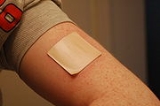
     when used for less than eight weeks helped with withdrawal symptoms, cravings, and urges (for example, transdermal nicotine patchNicotine patch

    A nicotine patch is a transdermal patch that releases nicotine into the body through the skin....
    es, gumNicotine gum

    Nicotine gum is a type of chewing gum that delivers nicotine to the body....
    , lozenges, sprays, and inhalerInhaler

    An inhaler or puffer is a medical device used for delivering medication into the body via the lungs....
    s). While nicotine has been found to have some benefit in treating nicotine addiction, other treatments were more effective. See Statistics section, above.
  • The antidepressant bupropionBupropion

    Bupropion is an antidepressant of the aminoketone class, chemically unrelated to tricyclics or selective serotonin reuptake ...
    , marketed under the brand name Zyban, helps with withdrawal symptoms, cravings, and urges. Bupropion is contraindicated in epilepsyFacts About Epilepsy

    Epilepsy is a common chronic neurological condition that is characterized by recurrent unprovoked epileptic seizures....
    , seizure disorder; anorexia/bulimia (eating disorders), patients use of psychosis drugs (MAO inhibitors) within 14 days, patients undergoing abrupt discontinuation of ethanol or sedatives (including benzodiazepines such as Valium)
  • Nicotinic receptor antagonist vareniclineVarenicline

    Varenicline is a prescription medication used to treat smoking addiction....
     (Chantix) (Champix in the UK)
  • Recently, a shot given multiple times over the course of several months, which primes the immune system to produce antibodies which attach to nicotine and prevent it from reaching the brain, has shown promise in helping smokers quit. However, this approach is still in the experimental stages.

Alternative techniques

Some 'alternative' techniques which have been used for smoking cessation are:
  • HypnosisHypnosis Summary

    Hypnosis is a psychological condition in which some people may be induced to show various differences in behaviour and think...
     clinical trials studying hypnosis as a method for smoking cessation have been inconclusive. (The Cochrane Database of Systematic Reviews 2006, Issue 3.)
  • Herbal preparationsHerbalism

    Herbalism, also known as Herbal medicine and phytotherapy, is folk and traditional medicinal practice based on t...
     such as KavaKava

    Kava is an ancient crop of the western Pacific....
     and ChamomileGerman Chamomile

    German Chamomile, also spelt Camomile, is an annual plant of the sunflower family Asteraceae....
  • AcupunctureAcupuncture

    Acupuncture or in Standard Mandarin, zhen jiu is a technique of inserting and manipulating needles into "acupuncture point...
     clinical trials have shown that acupuncture's effect on smoking cessation is equal to that of sham/placebo acupuncture. (See Cochrane Review)
  • Attending a self-help group such as Nicotine AnonymousList of Twelve-Step groups Summary

    An incomplete list of 12-Step-Groups:*ACA - Adult Children of Alcoholics...
    and electronic self-help groups such as Stomp It Out
  • Laser therapy based on acupunctureAcupuncture

    Acupuncture or in Standard Mandarin, zhen jiu is a technique of inserting and manipulating needles into "acupuncture point...
     principles but without the needles.
  • Quit meters: Small computer programs that keep track of quit statistics such as amount of "quit-time", cigarettes not smoked, and money saved.
  • Self-help booksSelf-help Summary

    The term self-help can refer to any case or practice whereby an individual or a group attempts self-improvement economical...
    . Allen CarrAllen Carr

    Allen Carr is most notable as the author of books on how to stop smoking and, as he stresses, escape nicotine addiction ....
    's book is one of the most famous. He claims success rates of approximately 90% using his method.
  • SpiritualitySpirituality

    Spirituality, in a narrow sense, concerns itself with matters of the spirit....
     Spiritual beliefs and practices may help smokers quit.
  • Smokeless tobaccoSmokeless tobacco

    Smokeless Tobacco may refer to:* Dipping tobacco, a type of tobacco that is placed between the lower or upper lip and gums....
    : SnusSnus

    Snus is a moist powder tobacco, a kind of snuff....
     is widely used in Sweden, and although it is much healthier than smoking, something which is reflected in the low cancer rates for Swedish men, there are still some concerns about its health impact.
  • Herbal and aromatherapy "natural" program formulations.
  • VaporizerVaporizer

    A vaporizer is a device commonly used to release psychoactive compounds from plant material, most commonly cannabis, althou...
    : heats to 410°F. or less, compared with 1500°F./860°C. in tip of cigarette when drawn upon; eliminates carbon monoxide and other combustion toxins
  • Smoking reduction utensil
  • Smoking herb substitutions (non-tobacco)
  • "FAUX Cigarette" or similar commercial products which can be used as alternative to smoking as well as cessation.

Physiological effects

Upon smoking cessation, the body begins to rid itself of naturally foreign substances introduced to the body through smoking. These include substances in the blood such as nicotine and carbon monoxide, and also accumulated particulate matter and tar from the lungs. As a consequence, though the smoker may begin coughing more, cardiovascular efficiency increases.

Many of the effects of smoking cessation can be seen as landmarks, often cited by smoking cessation services, by which a smoker can encourage him or herself to keep going. Some are of a certain nature, such as those of nicotineNicotine

Nicotine is an alkaloid found in the nightshade family of plants , predominantly in tobacco, and in lower quantities in toma...
 clearing the bloodstream completely in 48 to 72 hours, and cotinineCotinine

Cotinine is a metabolite of nicotine....
 (a metabolite of nicotine) clearing the bloodstream within 10 to 14 days. Other effects, such as improved circulation, are more subjective in nature, and as a result less definite timescales are often cited.

Psychological effects

As with other addictions, apart from the dependence of the body on chemical substances, a smoking addiction is often related to everyday lifestyle events, which can include thinking deeply, eating, drinking tea, coffee or alcohol, or general socializing. As a result, smokers may miss the act of smoking particularly at these times, and this may increase the difficulty inherent in a cessation attempt. As a result of a lower dopamine response from nicotine receptors in the brain, a degree of depression may ensue, along with somatic responses where the smoker feels less able to perform the day to day tasks previously related to smoking without having the usual cigarette to accompany them.

Information for healthcare professionals

Several studies have found that smoking cessation advice is not always given in primary care in patients aged 65 and older, despite the significant health benefits which can ensue in the older population.

One way to assist smokers who want to quit is through a telephone quitlineQuitline

Quitline is a telephone helpline offering treatment for addiction and behavior change....
 which is easily available to all. Professionally run quitlines may help less dependent smokers, but those people who are more heavily dependent on nicotine should seek local smoking cessation services, where they exist, or assistance from a knowledgeable health professional, where they do not. Some evidence suggests that better results are achieved when counseling support and medication are used simultaneously. Quitting with a group of other people who want to quit is also a method of getting support, available through many organizations.

Health professionals may follow the "five As" with every smoking patient they come in contact with:
  1. Ask about smoking
  2. Advise quitting
  3. Assess current willingness to quit
  4. Assist in the quit attempt
  5. Arrange timely follow-up

See also

  • Allen CarrAllen Carr

    Allen Carr is most notable as the author of books on how to stop smoking and, as he stresses, escape nicotine addiction ....
  • Nicotine AnonymousNicotine Anonymous

    Nicotine Anonymous is a twelve-step program for people wishing to quit smoking and live nicotine free....
  • Social marketingSocial marketing

    Social marketing is the application of commercial marketing concepts and techniques to target populations to achieve the goa...
  • Health promotionHealth promotion

    Health promotion is the science and art of helping people change their lifestyle to move toward a state of optimal health....
  • NicVAXNicVAX

    NicVAX is a nicotine conjugate vaccine intended to reduce or eliminate physical addiction to nicotine....
  • Nicotine replacement therapyNicotine replacement therapy

    Nicotine replacement therapy ' is the use of various forms of nicotine delivery methods intended to replace nicotine ob...
  • Tobacco cessation clinicTobacco cessation clinic

    Tobacco Cessation Clinic, is an initiative by The World Health Organization and the Ministry of Health, Government of India....
  • Tobacco and health
  • VaporizerVaporizer

    A vaporizer is a device commonly used to release psychoactive compounds from plant material, most commonly cannabis, althou...


External links

  • Helpguide is a trusted non-profit resource.